Technology (IJRASET)
The Case Study of Swarm Intelligence
Optimization Algorithm Performance
Jancy Rani.M1, Elangovan.K2, Sheela Rani.T3 1,2,3
P.G student, Department of EEE, J.J.College of engineering & technology, Trichy.
Abstract- This paper was study in swarm intelligence optimization algorithm performance nature-inspired meta-heuristic algorithm, especially those based on swarm intelligence. Have attracted much attention in the algorithm Particle Swarm Optimization (PSO), Ant Colony Optimization (ACO), Bacterial Foraging Optimization (BFO). In propose to application to optimization self-experiences with social experiences. Agents moving around in the best solution for search. Examples include flocks of birds, colonies of ants, and E. coli & Chemo taxis. Such intelligence is decentralized, self-organizing and distribution throughout an environment. Functions show that the convergences speed and accuracy of the algorithm
Keywords: Algorithms, Particle Swarm Optimization (PSO), Ant Colony Optimization (ACO), Bacterial Foraging Optimization (BFO),
I. INTRODUCTION
Meta-heuristic algorithms form an important part of contemporary global optimization algorithms, computational intelligence and soft computing. These algorithms are usually Nature-inspired with multiple interacting agents. A subset of meta-heuristics are often re-ferried to as swarm intelligence (SI) based algorithms, and these SI-based algorithms have been developed by mimicking the so-called swarm intelligence characteristics of biological agents such as birds, ant, fish, bacterial, humans and others. For example, particle swarm optimization was based on the swarming behavior of birds and fish, ant colony optimization was based on ant system aimed to solve the travelling salesman problem in goal to find the shortest trip behavior of ant, bacterial foraging optimization social foraging behavior of Escherichia coli. The algorithm has been instructed in optimal search by swarm intelligence.
II. PROPOSED METHOD
A. Particle swarm optimization
Inspired by the flocking and schooling patterns of birds and fish, Particle Swarm Optimization (PSO) was invented by Russell Eberhart and James Kennedy in 1995. Originally, these two started out developing computer software simulations of birds flocking around food sources, and then later realized how well their algorithms worked on optimization problems. Particle Swarm Optimization might sound complicated, but it's really a very simple algorithm. Over a number of iterations, a group of variables have their values adjusted closer to the member whose value is closest to the target at any given moment. Imagine a flock of birds circling over an area where they can smell a hidden source of food. The one who is closest to the food chirps the loudest and the other birds swing around in his direction. If any of the other circling birds comes closer to the target than the first, it chirps louder and the others veer over toward him. This tightening pattern continues until one of the birds happens upon the food. It's an algorithm that's simple and easy to implement. According to the PSO algorithm, a swarm of particles that have predefined restrictions starts to fly on the search space. The performance of each particle is evaluated by the value of the objective function and considering the minimization problem, in this case, the particle with lower value has more performance. The best experiences for each particle in iterations is stored in its memory and called personal best (pbest). The best value of pbest (less value) in iterations determines the global best (gbest).By using the concept of pbest and gbest the velocity of each particle
= ωVik +C1*R1*(pbest – )+ C2*R2*(gbest – ) (1)
X = + (2)
Where;
R1 and R2 two random numbers in the range of [0, 1];
C1and C2 Acceleration constant;
ω Inertia weight factor;
Technology (IJRASET)
gbest best particle position based on overall swarm's experience,
Fig.1 PSO flow chat
When searching for food birds
1) As a single birds finds a good corn sources
2) Other birds try to converge to it so that they can also grab some food.
3) Which other birds: they are the neighboring birds.
4) Who are the neighbors: neighborhood functions.
5) Birds drift together probabilistically mean sometimes they move closer and sometime they lurch away.
6) Benefit: better exploration of corn filed for good corn.
Technology (IJRASET)
B. Ant colony optimizationThis algorithm is a member of the Ant Colony Algorithms family, in swarm intelligence methods, and it constitutes some
meta-heuristic optimizations. Initially proposed by Marco Dorigo in 1992 in his PhD thesis,the first algorithm was aiming to search for an
optimal path in a graph, based on the behavior of ants seeking a path between their colony and a source of food. The original idea has since diversified to solve a wider class of numerical problems, and as a result, several problems have emerged, drawing on various aspects of the behavior of ants. Ant colony optimization algorithms have been applied to many combinatorial optimization problems, ranging from quadratic assignment to protein folding or routing vehicles and a lot of derived methods have been adapted to dynamic problems in real variables, stochastic problems, multi-targets and parallel implementations. It has also been used to produce near-optimal solutions to the travelling salesman problem. They have an advantage over simulated annealing and genetic algorithm approaches of similar problems when the graph may change dynamically; the ant colony algorithm can be run continuously and adapt to changes in real time. This is of interest in network routing and urban transportation systems.
The first ACO algorithm was called the ant system and it was aimed to solve the travelling salesman problem, in which the goal is to find the shortest round-trip to link a series of cities. The general algorithm is relatively simple and based on a set of ants, each making one of the possible round-trips along the cities. At each stage, the ant chooses to move from one city to another according to some rules:
1) It must visit each city exactly once;
2) A distant city has less chance of being chosen (the visibility);
3) The more intense the pheromone trail laid out on an edge between two cities, the greater the probability that that edge will be
chosen;
4) Having completed its journey, the ant deposits more pheromones on all edges it traversed, if the journey is short;
5) After each iteration, trails of pheromones evaporate.
Ant Colony Optimization (ACO) is the best example of how studies aimed at understanding and modeling the behavior of ants and other social insects can provide inspiration for the development of computational algorithms for the solution of difficult mathematical problems Virtual trail accumulated on path segments Path selected at random based on amount of "trail" present on possible paths from starting node Ant reaches next node, selects next path Continues until reaches starting node. Many special cases of the ACO meta heuristic have been proposed. The three most successful ones are: Ant System, Ant Colony System (ACS), and MAX-MIN Ant System (MMAS). For illustration, example problem used is Travelling Salesman Problem.
Technology (IJRASET)
C. Bacterial foraging optimizationBacterial Foraging Optimization Algorithm (BFOA) is proposed by Kevin Passino (2002), is a new comer to the family of nature inspired optimization algorithms. Application of group foraging strategy of a swarm of E.coli bacteria in multi-optimal function optimization is the key idea of this new algorithm. Bacteria search for nutrients is a manner to maximize energy obtained per unit time. Individual bacterium also communicates with others by sending signals. A bacterium takes foraging decisions after
considering two previous factors. The process, in which a bacterium moves by taking small steps while searching for nutrients, is called chemotaxis. The key idea of BFOA is mimicking chemotactic movement of virtual bacteria in the problem search space.
p : Dimension of the search space,
S : Total number of bacteria in the population,
Nc : The number of chemotactic steps,
Ns : The swimming length.
Nre : The number of reproduction steps,
Ned : The number of elimination-dispersal events,
Ped : Elimination-dispersal probability,
C(i) : The size of the step taken in the random direction specified by the tumble.
Foraging theory is based on the assumption that animals search for and obtain nutrients in a way that maximizes their energy intake E per unit time T spent foraging. Hence, they try to maximize a function like E/T (or they maximize their long-term average rate of energy intake). Maximization of such a function provides nutrient sources to survive and additional time for other important activities (e.g., fighting, fleeing, mating, reproducing, sleeping, or shelter building). Shelter building and mate finding activities sometimes bear similarities to foraging. Clearly, foraging is very different for different species. Herbivores generally find food easily but must eat a lot of it. Carnivores generally find it difficult to locate food but do not have to eat as much since their food is of high energy value. The “environment” establishes the pattern of nutrients that are available (e.g., via what other organisms are nutrients available, geological constraints such as rivers and mountains and weather patterns) and it places constraints on obtaining that food (e.g., small portions of food may be separated by large distances). During foraging there can be risks due to predators, the prey may be mobile so it must be chased and the physiological characteristics of the forager constrain its capabilities and ultimate success. Bacterial Foraging optimization theory is explained by following steps.
1) Chemo taxis: This process simulates the movement of an E.coli cell through swimming and tumbling via flagella. Biologically an E.coli bacterium can move in two different ways. It can swim for a period of time in the same direction or it may tumble and alternate between these two modes of operation for the entire lifetime
2) Swarming: An interesting group behavior has been observed for several motile species of bacteria including E.coli and S.
Typhimurium, where intricate and stable spatio-temporal patterns (swarms) are formed in semisolid nutrient medium. A group of E.coli cells arrange themselves in a traveling ring by moving up the nutrient gradient when placed amidst a semisolid matrix with a single nutrient chemo-effecter. The cells when stimulated by a high level of succinate, release an attractant aspertate, which helps them to aggregate into groups and thus move as concentric patterns of swarms with high bacterial density.
3) Reproduction: The least healthy bacteria eventually die when each of the healthier bacteria (which yielding lower value of the
objective function) asexually split into two bacteria, which are then placed in the same location. This keeps the swarm size constant.
4) Elimination and Dispersal: Gradual or sudden changes in the local environment where a bacterium population lives may occur
Technology (IJRASET)
[image:6.612.138.507.169.324.2]are killed or a group is dispersed into a new location. Over long periods of time, such events had spread various types of bacteria into every part of our environment from our intestines to hot springs and underground environments. To simulate this phenomenon in BFOA some bacteria are liquidated at random with a very small probability while the new replacements are randomly initialized over the search space. Elimination and dispersal events have the effect of possibly destroying chemotactic progress, but they also have the effect of assisting in chemo taxis, since dispersal may place the bacteria near good food sources. From a broad perspective, elimination and dispersal are parts of the population-level long-distance motile behavior.
Fig.4 Bacterial foraging optimization swarm
III. PERFORMANCES
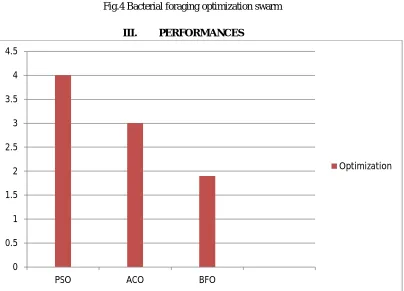
Fig. 5 Optimizations performances characters
PSO algorithm in optimization performances and ACO algorithm then BFO algorithm performances in very shortly fast performances in optimization very quickly accuracy calculated performances in algorithm best swarm in BFO performances timing very shortly time saving calculated the best path find the solution in bacterial foraging optimization algorithm Bacterial Foraging
Algorithm is based on a computational intelligence technique. Functions show that the convergences speed and accuracy of the
algorithm
0 0.5 1 1.5 2 2.5 3 3.5 4 4.5
PSO ACO BFO
[image:6.612.132.536.334.625.2]Technology (IJRASET)
IV. CONCLUSION
In this chapter, Bacterial Foraging Optimization Algorithm used for finding out the optimization speed and accuracy of performance in the batter Ant colony and Particle swarm optimization algorithms compare the performances best result in Bacterial foraging optimization good time management shortly calculated and then future any compare the best algorithm compare to ACO algorithm beat level in the case study of swarm intelligent optimization algorithm
REFERANCES
[1] Jun Li Lanzhou Jiaotong University, Lanzhou, China Analysis and Improvement of the Bacterial Foraging Optimization Algorithm Journal of Computing Science and Engineering,Vol. 8, No. 1, March 2014, pp. 1-10.
[2] Swagatam Das Bacterial Foraging Optimization Algorithm: Theoretical Foundations, Analysis, and Applications Bacterial foraging optimization algorithm (BFOA).
[3] Abraham et, a research team on the BFO algorithm carried out a series of studies, and concluded that a reproduction operator in the BFO algorithm is conducive to improve the convergence Speed of the algorithm.
[4] S. Liu, B. Liu, and Y. J. Peng, "Reconstruction of Distribution Network Based on Binary PSO and Optimal Flow Method. [5] X. Li, “A nondominated sorting particle swarm optimizer for multi-objective Optimization,” Lecture Notes in Computation. [6] Y. Shi and R. C. Eberhart, “A modified particle swarm optimizer,” in Proc. IEEE Congr. Evol. Computation.
[7] K. Deb, Multi-Objective Optimization using Evolutionary Algorithms. New York, NY, USA: Wiley, 2004.
[8] Colorni A. Dorigo M, Maniezzo V. Distributed optimization by ant colonics. Proceedings of the First European Conference on Artjficial Life. [9] Elsevier Publishing, pari. [10] Novel Approach to Nonlinear PID Parameter Optimization Using Ant Colony Optimization Algorithm.