Resolving Forward-Reverse Logistics Multi-Period Model Using Evolutionary
Algorithms
Abstract
In the changing competitive landscape and with growing environmental awareness, reverse logistics issues have become prominent in manufacturing organizations. As a result there is an increasing focus on green aspects of the supply chain to reduce environmental impacts and ensure environmental efficiency. This is largely driven by changes made in government rules and regulations with which organizations must comply in order to successfully operate in different regions of the world. Therefore, manufacturing organizations are striving hard to implement environmentally efficient supply chains while simultaneously maximizing their profit to compete in the market. To address the issue, this research studies a forward-reverse logistics model. This paper puts forward a model of a multi-period, multi-echelon, vehicle routing, forward-reverse logistics system. The network considered in the model assumes a fixed number of suppliers, facilities, distributors, customer zones, disassembly locations, re-distributors and second customer zones. The demand levels at customer zones are assumed to be deterministic. The objective of the paper is to maximize the total expected profit and also to obtain an efficient route for the vehicle corresponding to an optimal/ near optimal solution. The proposed model is resolved using Artificial Immune System (AIS) and Particle Swarm Optimization (PSO) algorithms. The findings show that for the considered model, AIS works better than the PSO. This information is important for a manufacturing organization engaged in reverse logistics programs and in running units efficiently. This paper also contributes to the limited literature on reverse logistics that considers costs and profit as well as vehicle route management.
1. Introduction
Supply chain management (SCM) has nowadays become a crucial strategy for firms to increase their profitability and stay competitive (Li et al., 2006; Tan et al., 2002). Thus, over the last decade, researchers and practitioners have increased the degree of attention paid to SCM. This has resulted in a rich stream of research mainly focused on particular management aspects of supply chains that include, among many others: supplier alliances (Lee et al., 2009; Kannan and Tan, 2004), supplier selection (Ageron et al., 2013; Viswanadham and Samvedi, 2013), supplier management (Reuter et al., 2010), involvement of suppliers (Johnsen, 2011), upstream supply chain (SC) related research (Finne and Holmström, 2013; Oosterhuis et al., 2012), supply chain resilience (Carvalho et al., 2014), manufacturer and retailers linkages (Li and Zhang, 2015; Zhao et al., 2008) and SCM practices (Narasimhan and Schoenherr, 2012; Li et al., 2006; Li et al., 2005). Traditionally, SCM research has concentrated on improving profitability, efficiency, customer satisfaction, quality and responsiveness, which had been the dominant concern for organisations (Green et al., 2012), However, in order to respond to governmental environmental regulations and the growth of customer demands for products and services that are environmentally sustainable, companies have now been forced to rethink how they manage their supply chains to also consider the environmental dimension.
forward-reverse logistics system to maximize the total expected profit and also to obtain an efficient route for the vehicle corresponding to an optimal/ near optimal solution. The proposed model is resolved using an evolutionary Artificial Immune System (AIS) algorithm.
The remainder of the paper is organised as follows: Section 2 provides a review on reverse logistics to serve as a preamble for the development of the forward-reverse logistics model proposed; the model is then introduced in Section 3 and algorithm is described in Section 4; Section 5 discusses the findings of this study and Section 6 presents the conclusions.
2. Literature Review
2.1 Emergence of Reverse Logistics
Environmental issues were largely ignored by manufacturing firms until they were forced by government agencies and regulations to implement environmentally friendly methods to reduce the CO2 emissions generated by their supply chains, production systems and practices. This led
attracting much interest, however the direction of research is now moving towards incorporating sustainability (Sarkis et al., 2010; Brix-Asala et al., 2016) and circular economy concepts in conjunction with reverse logistics (Meng, 2013; Chen et al., 2015). The next section provides a brief overview of reverse logistics definitions.
2.2 Definitions
With the increasing worldwide importance of green supply chains much research work has been carried out both in the forward logistics part of the supply chain as well as in reverse logistics (Ko and Evans, 2007; de la Fuente, 2008; El-Sayed et al., 2010; Pishvaee, Farahani, & Dullaert, 2010). Several researchers have put forward definitions of reverse logistics: Kroon and Vrijens (1994) referred to reverse logistics as the logistic management skills and activities involved in reducing, managing and disposing of hazardous and non-hazardous waste from packaging and products. Dowlatshahi (2000) defined reverse logistics as the process by which the manufacturer systematically accepts previously shipped products or parts from the point of consumption for possible recycling, remanufacturing or disposal. Rogers and Tibben-Lembke (1999) similarly defined reverse logistics as the process of planning, implementing and controlling the efficient, cost effective flow of raw materials, in-process inventory, finished goods and related information from the point of consumption to the point of origin for the purpose of recapturing value, or proper disposal. This definition was further modified by De Brito and Dekkar (2002) who emphasized the point of recovery rather than the point of origin. These definitions show a broad agreement on the main elements of reverse logistics.
2.3 Previous Research
García-Rodríguez et al. (2013) showed that application of reverse logistics can be beneficial in acquiring raw materials in developing countries as it can reduce the problem of acquisition of production inputs and mitigate environmental damage caused by the production of raw materials. A number of researchers have also investigated vehicle routing problem in reverse logistics operations (Dethloff, 2001; El-Sayed et al., 2010; Shukla et al., 2013; Tiwari and Chang, 2015; Soysal et al., 2015; Kim and Lee, 2015). Since vehicle routing is an essential element of reverse logistics operations, it is important that manufacturing organizations manage this efficiently. As indicated earlier, several researchers have attempted to optimize vehicle routing operations but studies simultaneously focused combining this with maximizing profit still remain scant (Srivastava, 2007; El-Sayed et la. 2010; Soysal et al. 2015). Thus, this paper aims to address this research gap and add to the existing knowledge and understanding in this area.
2.3.1 Reverse Logistics Costs
There are many costs involved in reverse logistics operations similar to those of forward logistics operations. Dowlatshahi (2000) emphasizes that firms should establish a cost and benefits structure for its reverse logistics system and should consider the operational costs, land fill and contingent liability costs. Dowlatshahi (2010) later explored the role of inbound and outbound transportation within the context of a reverse logistics (RL) system and puts forward eight propositions marking the importance of the transport system in reverse logistic operations. One of these propositions is related to transportation cost which proposes that the effectiveness of a transportation system in RL is positively related to the use of cost-efficient transportation rates. Bachlaus et al. (2008) designed a multi-echelon agile supply chain network with the aim of minimizing cost and maximizing plant flexibility and volume flexibility to increase the profitability of a manufacturing firm. Tsai and Hung (2009) studied the reverse logistics problem of waste electrical and electronic equipment (WEEE) focusing on treatment and recycling system optimization. They considered activity-based costing as a tool in WEEE reverse logistics management and proposed a concise supply-chain decision framework with producer responsibility. Weeks et al. (2010) carried out an empirical investigation to understand the impact of the product mix and product route efficiencies on operations performance and profitability. Their findings showed that operations management alone does not have a positive impact on profitability; rather it is the production mix efficiency and product route efficiency together that have a positive effect on profitability. More recently, Soysal et al. (2015) presented a multi-period inventory routing model that included load dependent distribution costs for a comprehensive evaluation of CO2 emission and fuel consumption, perishability, and a service
level constraint for meeting uncertain demand. Their proposed integrated model showed significant savings in total cost while satisfying the service level requirements and thus offering better support to decision makers. These studies highlight the significance of cost related issues in the overall success of a reverse logistics model.
2.3.2 Cost Optimization
simultaneous delivery and pick-up (VRPSDP). Choudhary et al. (2015) proposed a quantitative optimization model for integrated forward–reverse logistics with carbon-footprint considerations. They implemented a modified and efficient forest data structure to derive the optimal network configuration, minimizing both the cost and the total carbon footprint of the network. Their proposed method outperformed the conventional genetic algorithm (GA) for large problem sizes. Zheng and Zhang (2008) proposed a genetic algorithm to solve a vehicle routing problem with simultaneous pickup and delivery. Ko and Evans (2007) also applied a genetic algorithm-based heuristic for the dynamic integrated forward/reverse logistics network for third party logistics providers. They compared their solutions to optimal solutions using different test problems to show the efficacy of the evolutionary algorithm in resolving reverse logistics problems. Pishvaee, Farahani, & Dullaert (2010) proposed a memetic algorithm for bi-objective integrated forward/reverse logistics network design model. Their proposed algorithm outperformed the existing multi-objective genetic algorithm. A stochastic mixed integer linear programming model was put forward by El-Sayed et al. (2010) to solve forward-reverse logistics problems with the objective of maximizing total expected profit. These studies show that a variety of algorithms have been applied by researchers to resolve reverse logistics issues. In this paper El-Sayed et al.’s (2010) model is modified to include the importance of vehicle routing in a reverse logistics scenario and is solved using Artificial Immune System (AIS) and Particle Swarm Optimization (PSO) evolutionary algorithms.
Srivastava (2007) reviewed the literature on green supply chain management and observed that much research has been focused on delivering product to end customers at lower supply chain cost but limited research has been carried out on the cost of the whole supply chain including reverse logistics activities. For example, Kheljani et al., (2009) attempted to optimize the total cost of the supply chain rather than only the buyer's cost. However, the total cost of their supply chain includes only buyer's cost and suppliers’ costs.Pettersson and Segerstedt (2013) following the same line focused on measuring the Supply Chain Cost (SCC), and this study too did not take in to account the reverse logistics costs which show the gap that exists in the literature. We therefore aim to fill this research gap and contribute in this domain.
vehicle, given a fixed number of agents in the supply chain, by which costs for the entire chain can be optimized. In the remainder of the paper we put forward a model whereby total expected profit of a forward-reverse logistic situation is maximized and where the route that a vehicle should follow is determined using an AIS clonal-selection algorithm. The upcoming sections discuss the AIS algorithm more in detail.
3. Model Description
The model proposed in this study is a modification of and extension to the forward-reverse logistics network design problem proposed by El-Sayed et al. (2010). However, our proposed model is different from El-Sayed et al.’s (2010) work in a number of ways. As compared to El-Sayed et al.'s (2010) work, the major contribution of our paper is the integration of vehicle routing into modified (as compared to earlier model) network structure of forward-reverse logistics network. The flow in our model has also been modified by including recycling and repair center to handle repair parts. In addition, our study considers vehicle routing (path) integer variable as a constraint to get transportation path for the model.
The network is multi-period and multi-echelon, and consists of suppliers, facilities, distributors and first customers and in the forward direction and in the reverse direction it consists of disassembly, disposal, recycling locations, redistribution locations and second customers. The objective of the paper is to maximize profit in a reverse logistics environment while considering vehicle constraints and minimizing the cost of transportation.
The model considers a company which has a fixed number of locations for each type of agent in the supply chain. We consider two suppliers, two distributors and three customer zones, and one each of the remaining agents: facility, facility store, disassembly location, disposal center, recycling center, redistribution location and second customer zone. The company has one vehicle which every period goes from the transport depot to collect and deliver goods from one location to the other.
3.1 Network Flows
the facility or from the facility store. The distributors service the customers according to the demand. Used goods are collected from customers and shipped to the disassembly location. Here, goods are sorted and sent to the recycling and repair center. Goods for disposal are sent to the disposal location and repaired and recycled goods are sent to respective locations: goods to be remanufactured are sent to the facility; repaired goods to the redistribution centre and recycled goods to the facility from which they enter the supply chain again as raw materials. The redistribution center in turn receives remanufactured goods from the facility and repaired goods from the recycling and repair center. These used products after repairing and remanufacturing are sold to secondary customers according to demand. These are usually sold at low prices compared to fresh goods. An example for such a model is given in Figure 1.
[Insert Figure 1 here]
Costs considered at different nodes of the model are as follows:
1) Suppliers: These include material costs and transportation costs.
2) Facilities: These include manufacturing costs, remanufacturing costs, storage costs and transportation costs.
3) Facility store: These include holding costs and transportation costs.
4) Distributors: These include shortage costs, storage costs and transportation costs.
5) Disassembly locations: These include costs for disassembly operations, inspection and sorting costs, repairing costs and transportation costs.
6) Recycling Center: These include costs for recycling of materials. 7) Redistribution Centers: These include costs for transportation.
8) Disposal Locations: These include disposal costs and transportation costs.
3.2 Model Assumptions
The following are the major assumptions made with respect to the model: 1) The model is multi-period and multi-echelon.
2) The locations of the chain are fixed and the number of each location is given. 3) Cost parameters are known for each location and time period.
5) Capacity of each location is not limited.
6) The holding cost depends on the residual inventory at the end of period.
7) The path considered for the model is in the order: depot, supplier, facility, facility store, distributor, first customer zone, disassembly location, recycling center, facility, redistributors, and second customer.
8) The disposal center is assumed to be near to the disassembly location.
3.3 Model Formulation
3.3.1 Decision Variables
Q(d)(c)(t) – flow of goods from distributor(d) to first customer(c) in period ‘t’
Q(d1)(c2)(t) –.flow of goods from re-distributor(d1) to second customer(c2) in period ‘t’
Q(s)(f)(t) – flow of goods from supplier(s) to facility(f) in period ‘t’
Q(f)(d)(t) – flow of goods from facility(f) to distributor(d) in period ‘t’
Q(f1)(d)(t) – flow of goods from facility store (f1) to distributor(d) in period ‘t’
Q(l)(r1)(t) – flow of goods from disassembly location(l) to recycling center(r1) in period ‘t’
Q(f)(r1)(t) – flow of goods from facility(f) to recycling center(r1) in period ‘t’
Q(r1)(d1)(t) – flow of goods from recycling center(r1) to re-distributor center(d1) in period ‘t’
Q(c)(l)(t) – flow of goods from first customer(c) to disassembly location(l) in period ‘t’
Q(c)(r1)(t) – flow of goods first customer(c) to recycling center(r1) in period ‘t’
Q(l)(g)(t) – flow of goods from disassembly location(l) to disposal location(g) in period ‘t’
Qrm(l)(f)(t) – flow of goods from disassembly location(l) to facility(f) in period 't'
Qrd(l)(r1)(t) – flow of goods from disassembly location(l) to recycling center(r1) in period 't'
Qrd(r1)(d1)(t) – flow of goods to recycling center(r1) to re-distributor center(d1) in period 't'
Qrc(r1)(f)(t) – flow of goods from recycling center(r1) to facility(f) in period 't'
Qrc(r1)(d1)(t) – flow of goods from recycling center(r1) to re-distributor center(d1) in period 't'
I(f)(f1)(t) – flow of goods from facility(f) to store(f1) in period 't'
I(f1)(d)(t) – flow of goods from facility store(f1) to distributor location(d) in period 't'
R(f1)(t) – residual inventory at facility store(f1) in period ‘t’
R(d)(t) – residual inventory at distributor location(d) in period 't'
x(i)(j) – binary variable = 1 if vehicle take goes from location 'i' to location 'j'
= 0 if vehicle doesn’t take that path.
3.3.2 Symbols
T1 – Number of Transport Depots S – Number of Suppliers
F – Number of Facilities
F1 – Number of Facility Stores
D – Number of Distributors
C1– Number of Primary Customers L – Number of Disassembly Locations R1–Number of Recycling and Repair Centers G – Number of Disposal Locations
D1 – Number of Redistributing Locations C2 – Number of Secondary Customers
T – Total number of time periods N– Total number of Locations
MC – Material cost per unit supplied by supplier RC– Recycling cost per unit recycled
FH –Inventory holding cost per unit at facility store PC – Purchasing cost (for recycling) per unit SC– Shortage cost per unit per period
DAC– Disassembly cost per unit disassembled RMC– Remanufacturing cost per unit remanufactured RDC– Repairing cost per unit repaired
DC– Disposal cost per unit disposed
DH– Holding cost per unit per period at distribution location P(c)t– Unit priceatfirst customer c in period t
P(c2)t– Unit priceatsecond customer c2 in period t D(c}(t)– Demand of first customer c in period t D(c2}(t)– Demand of second customer c2 in period t
C(i)(j)– Transportation cost from moving from location 'i' to location 'j' RR– Returning ratio at first customer
RM – Remanufacturing ratio Rd– Redistribution ratio RD– Disposal ratio Rc– Recycling ratio
3.3.3 Objective Function
The objective is to maximize the total expected profit and to determine the path of the vehicle corresponding to that level of profit.
Total Expected Profit = Total expected income – Total expected cost
a. Total Expected Income
Total expected income = first sales + second sales
(c)t P D
1 d
C1
1 c
T
1
t (d)(c)t Q sales
First
(c2)t P D1 1 d1 C2 1 c2 T 1 t (d1)(c2)t Q sales Second
… (2)
Where Pct is unit price paid by customer ‘c’ at time ‘t’
b. Total Expected Cost
The total expected cost is the sum of the costs associated with the whole chain considering both forward and reverse logistics activities. They include costs associated with material purchase, manufacturing excluding its profits from reverse logistic activities, shortage, purchasing costs from customers for reverse chain, disassembly of materials, disposal, recycling, redistribution and remanufacturing, inventory holding and transportation.
The costs and profits are as follows:
1) Material cost
MC S 1 s F 1 f T 1 t (s)(f)(t) Q
… (3)
2) Manufacturing costs
F1 1 f1 FC D 1 d T 1 t (f1)(d)(t) I F 1 f FC D 1 d T 1 t (f)(d)(t) Q
… (4)
3) Material cost(for returned units)
) RC MC L 1 l F 1 f T 1 t ( (l)(f)(t)
Qrm
… (5)
4) Shortage Cost
)))SC D 1 d (d)(c)(t) Q (c)(t) D 1 C 1 c T 1 t ( ( (
… (6)
5) Purchasing costs
(PC) 1 C 1 c L 1 l T 1 t (c)(l)(t) Q
6) Recycling costs R1 1 r1 F 1 f ) (RC T 1
t (r1)(f)(t) Qrc
… (8)
7) Disassembly costs
(DAC) 1 C 1 c L 1 l T 1 t (c)(l)(t) Q
… (9)
8) Remanufacturing costs
(RMC) L 1 l F 1 f T 1 t (l)(f)(t) Qrm
… (10)
9) Repairing costs
L 1 l R1 1 r1 (RDC) T 1
t Qrd(l)(r1)(t)
… (11)
10)Disposal costs
L 1 l G 1 g (DC) T 1 t (l)(g)(t) Q
… (12)
11)Inventory Holding costs
(DH) D 1 d T 1 t (d)(t) R 1 F 1 1 f (FH) T 1
t (f1)(t)
R
… (13)
12)Transportation costs
(i)(j) x N 1 i N 1 j (i)(j) C
… (14)
3.3.4 Constraints
a. Balance Constraints
1) The flow of goods entering the facility from all suppliers and after recycling is equal to the sum of goods exiting from this facility to facility store and distributor:
T} ,..., 2 , 1 { t , F 1 f 1 F 1 1
f (f)(f1)(t) I F 1 f D 1 d (f)(d)(t) Q S 1 s F 1 f (s)(f)(t) Q
…(15)
2) The sum of flow of goods entering the facility store and the residual from the previous period is equal to the sum of the existing flow of goods to each distributor and the residual inventory of the current period:
T} {1,2,..., t , F1 1 f1 D 1 d (f1)(d)(t) Q F1 1 f1 (f1)(t) R F1 1
f1 (f1)(t -1) R F 1 f F1 1
f1 (f)(f1)(t) I
… (16)
3) The sum of flows entering each distributor store from the facility and facility store is equal to sum of the flow exiting to all customers:
D}
,...,
2,
1
{
d
T},
,...
2,
1
{
t
,
1
C
1
c
(d)(c)(t)
Q
(d)(t)
R
)
1
(d)(t
R
1
F
1
1
f
(f
1
)(d)(t)
I
1
F
1
1
f
(f
1
)(d)(t)
Q
… (17)4) The sum of the flows entering each customer does not exceed the sum of the current period demand and the previous period's accumulated backorders:
} 1 C ,..., 2 , 1 { c T}, ,.. 2 , 1 { t , D 1
d (d)(c)(t-1) Q
t
1
t (c)(t-1) D (c)(t) D D 1 d (d)(c)(t)
Q
… (18)
5) The sum of the flows exiting from each customer zone to disassembly locations does not exceed the sum of those entering each customer:
} 1 C ,..., 2 , 1 { c }, 12 ,... 2 , 1 { t )(RR) , D 1
d Q(d)(c)(t) (
L
1
l Q(c)(l)(t)
6) The sum of the flows entering the recycling and repair center is equal to the flows exiting as recycled for remanufacturing and redistribution:
T} ,..., 2 , 1 { t , 1 R 1 1 r 1 D 1 1
d Qrd(r1)(d1)(t) 1 R 1 1 r F 1
f Qrc(r1)(f)(t) L 1 l 1 R 1 1
r Q(l)(r1)(t)
… (20)
7) The flow exiting from disassembly location to recycling and repair center for recycling is equal to the flow entering to each disassembly location from all customers multiplied by recycling ratio: T} {1,2,..., t , R1 1 r1 F 1 f (r1)(f)(t) Qrc (Rc) C1 1 c R1 1 r1 ) (c)(r1)(t)
(Q
… (21)
8) The flow exiting from disassembly location for remanufacturing is equal to the flow entering each disassembly location from all customers multiplied by the remanufacturing ratio:
T} ,..., 2 , 1 { t , L 1 l F 1 f (l)(f)(t) Qrm (RM) 1 C 1 c ) L 1 l (c)(l)(t) Q (
… (22)
9) The flow exiting from disassembly location for redistribution is equal to the flow entering each disassembly location from all customers multiplied by the redistribution ratio:
T} ,..., 2 , 1 { t , L 1 l 1 D 1 1
d (l)(d1)(t) Qrd )(Rd) 1 C 1 c L 1 l (c)(l)(t) Q (
… (23)
10) The flow exiting from disassembly location for disposal is equal to the flow entering each disassembly location from all customers multiplied by the disposal ratio:
T} ,..., 2 , 1 { t , L 1 l G 1
g Q(l)(g)(t) (RD) 1 C 1 c L 1
l (Q(c)(l)(t))
… (24)
T} ,..., 2 , 1 { t , F 1 f 1 R 1 1
r (f)(r1)(t) Q L 1 l F 1 f (l)(f)(t) Qrm
… (25)
12)The flow entering redistribution center from the facility, recycling and the repair center is equal to the flow exiting from it to the second customer:
T} ,..., 2 , 1 { t , 1 D 1 1 d 2 C 1 2
c (d1)(c2)(t) Q 1 R 1 1 r 1 D 1 1
d (r1)(d1)(t) Q F 1 f 1 R 1 1
r (f)(r1)(t)
Q
… (26)
13) The flow entering the second customer zone from the redistribution center does not exceed the second customer demand for a particular period:
} 2 C ,.., 2 , 1 { c2 , T} ,.. 2 , 1 { t , )(t) 2 (c D 1 D 1 1
d (d1)(c2)(t)
Q
… (27)
b. Constraints for transportation path
Visit all the locations exactly once as per route assumed and should leave from a particular location after entry.
1) Transport Depot to Supplier path
T1 S 1, j {1,2,...,S} j
i , 1
i ij
x
… (28)
T1 S 1, i {1,2,...,T1} j
i , 1
j xij
… (29)
2) Supplier to Facility path
} F ,..., 2 , 1 { j , 1 F S j i , 1 i ij
x
… (30)
S F 1, i {1,2,...,S} j
i , 1
j ij
x
3) Facility to Facility Store Path } 1 F ,..., 2 , 1 { j , 1 1 F F j i , 1 i ij
x
… (32)
F F1 1, i {1,2,...,F} j
i , 1
j ij
x
… (33)
4) Facility Store to Distributor Path
} D ,..., 2 , 1 { j , 1 D 1 F j i , 1 i ij
x
… (34)
} 1 F ,..., 2 , 1 { i , 1 D 1 F j i, 1
j xij
… (35)
5) Distributor to Customer Path
} 1 C ,..., 2 , 1 { j , 1 1 C D j i , 1 i ij
x
… (36)
} D ,..., 2 , 1 { i , 1 1 C D j i , 1 j ij
x
… (37)
6) Customer to Disassembly Location path
} L ,..., 2 , 1 { j , 1 L 1 C j i , 1
i xij
… (38)
C1 L 1, i {1,2,...,C1} j
i , 1
j ij
x
… (39)
L G 1, j {1,2,...,G} j i , 1 i ij
x
… (40)
} L ,..., 2 , 1 { i , 1 G L j i , 1 j ij
x
… (41)
8) Disassembly Location to Recycling & Repair Center Location Path
} 1 R ,..., 2 , 1 { j , 1 1 R L j i , 1
i xij
… (42)
} L ,..., 2 , 1 { i , 1 1 R L j i , 1 j ij
x
… (43)
9) Repair Center Location to facility path
} F ,..., 2 , 1 { j , 1 F 1 R j i , 1 i ij
x
… (44)
R1 F 1, i {1,2,...,R1} j
i, 1
j ij
x
… (45)
10) Facility location to Redistributor location path
} 1 D ,..., 2 , 1 { j , 1 1 D F j i , 1
i xij
… (46)
} F ,..., 2 , 1 { i , 1 1 D F j i , 1 j ij
x
… (47)
11) Redistributor location to Secondary Customer location path
D1 C2 1, j {1,2,...,C2} j
i , 1
i ij
x
1, i {1,2,...,D1}
2 C 1 D
j i , 1
j ij
x
… (49)
The next section provides an overview of the algorithms in detail.
4. Algorithm Description
Solving the proposed model using conventional combinatorial techniques would be very difficult and hence this study aims to use evolutionary techniques to solve the model. Evolutionary techniques are known for resolving NP-hard combinatorial problems. Two popular evolutionary algorithms Artificial Immune System (AIS) and Particle Swarm Optimization (PSO) were applied to find solutions to the proposed model. We intend to compare the performance of these two algorithms in resolving the model, and seek to investigate which algorithm can solve the model in a lesser time. The upcoming section provides an overview of the two algorithms in detail.
4.1 Artificial Immune System (AIS) Algorithm
complex optimization problems (Shahsavar, Najafi, & Niaki, 2015; Chiang and Lin, 2013; Ko and Evans, 2007; Chan et al., 2006). In this paper, a comparison study has been performed between Artificial Immune System and Particle Swarm Optimization to solve the logistics problem considered in this paper.
The Artificial Immune System (AIS) algorithm, inspired by nature’s biological immune system was proposed by De Castro et al. (2001; 2002). The prime function of an immune system is to protect the body from unfamiliar invaders. To accomplish this task the body produces a number of antigenic receptors that combat the attacking antigens. The cells that belong to our body and which are harmless, are termed Self Antigens whereas, the disease causing cells are referred to as Nonself Antigens (Kumar et al., 2006; Chan et al., 2006). The cells and molecules of the immune system maintain constant surveillance for infecting organisms. They recognize an almost limitless variety of infectious cells and substances distinguishing them from native noninfectious cells. When a pathogen enters the body it is detected and mobilized for elimination. The system is capable of remembering each infection so that a second exposure to the same pathogen is dealt with more efficiently (Janeway, 1992). Based on this theory algorithms are developed which can be used to tackle problems of pattern recognition, memory acquisition and optimization.
4.2 Particle Swarm Optimization (PSO)
Kennedy and Eberhart (1995) developed this technique inspired by the social behavior of bird flocking. In this technique, particles are generated with their positions and velocities. These velocities change the particle positions. Each particle velocity is updated based on the performance of fitness function. In every iteration, particles are updated with their local best (pbest) and global position (gbest) of their positions and velocities.
A population is initialized with some fixed number of particles with respective position (xt) and
velocity vector (vt). Fitness value is calculated for each and every iteration for every particle.
For every iteration, individual best of the particle (pbest) and global best (gbest), i.e. best of all particles, are recorded. With respect to global best, every particle’s velocity and position are updated as given below:
V(t+1) = w x v(t) + c1 x r1x(pbest-x(t)) + c2 x r2x (gbest-x(t))
X(t+1) = x(t)+v(t+1)
where c1 and c2 are acceleration factors, and r1 and r2 are random factors whose values lie
between 0 and 1.
4.3 Pseudo Codes of both (AIS and PSO) Algorithms
Artificial Immune System Particle Swarm Optimization Initialize AB, select_n, β, p (decay)
for k = 1 to AB do
Initialize to random array values end
for m = 1 to maxim_gen do for k = 1 to AB do
affinity (l) = f(xi) end
sort (affinity)
Select_ab = x (index (1 to n)) Sum=0
Define Swarm Size(M), Max Iteration(N) Initialize Swarm population with position vector(x(t)) and velocity vectors(v(t))
for m=1 to M do fitness(f) = f(xi(t))
gbest = max(x(t) for which fitness value is higher)
end
do iteration t
for m=1 to M(iteration number =1)
for k = 1 to_n do
NC(k) = round (β* AB/k) for l = 1 to NC(k) do
MC(sum+) = Select_ab (k)+ exp(p)*tan(random term )
Affinity_MC(sum+l)= f(MC(sum+l)) end
sum=sum+NC(k) end
In AB, last d antibodies are replaced with new mutated child
end
Result = f (sort (AB (1)))
global best = position vector(gbest) end
for m to M(iteration number >1) x(t+1) = x(t)+v(t+1);
and
v(t+1) = w x v(t) + c1 x r1x(pbest-x(t)) + c2 x r2x (gbest-x(t));
end end
Select x(gbest) as the optimal value.
5. Results and Discussions
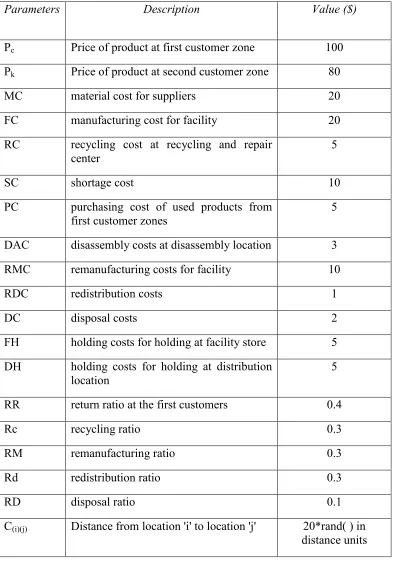
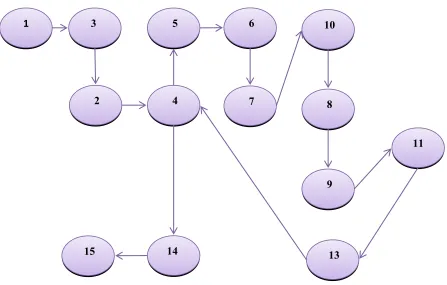
To solve the problem studied in this research, we considered a network showing one transport depot, two suppliers, one facility, one facility store, two distributors, three customers, one disassembly location, one disposal yard, one recycling center, one redistributor and one customer zone. The values of demand at customer zones and second customer zones are assumed to be deterministic. A comparison between the algorithms has been shown in graphs section below. Our findings indicate that using AIS algorithm, results are better as it resulted in optimal value with less number of iterations. The value of expected profit obtained from the AIS algorithm is $22, 7730. The values assumed for costs and sales are given in table 1. The optimal path obtained from the AIS algorithm for the optimum profit was found to be: transport depot (1) – supplier (3) supplier (2) facility (4) facility store (5) distributor (6) distributor (7) -customer zone (10) - -customer zone (8) - -customer zone (9) - disassembly location (11) - recycling and repair center (13) - facility (4) - re-distributor (14) - secondary customer zone (15). The path of the vehicle is shown in Figure 2 with circled numbers indicating respective locations in the chain.
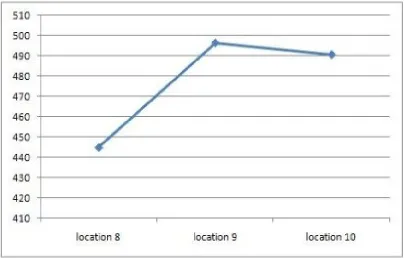
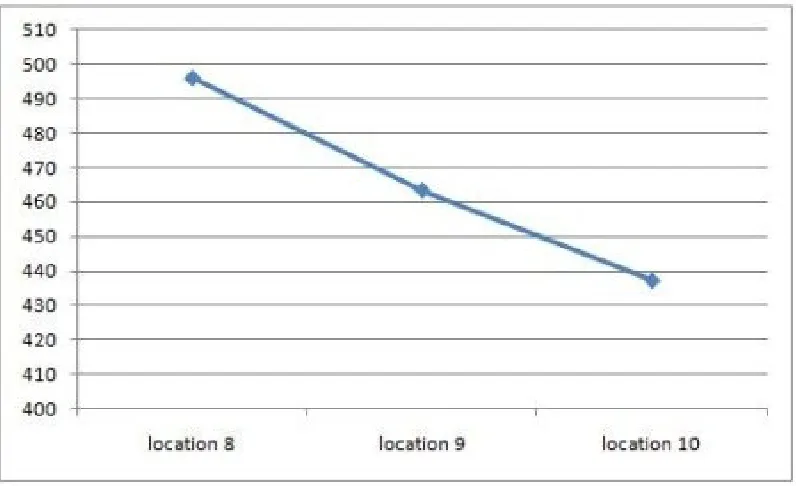
The distance between different points assumed in the code by AIS algorithm and PSO algorithm is a random number; therefore the path will differ from one run to another, as also will the amount of goods moving from one location to another. Customer demands are satisfied as shown in the graph for two periods. Demand at customer locations is considered to be 500 units per location per period. The graphs show that demand levels are nearly satisfied by the firm. The graphs shown below are the optimal values obtained by AIS algorithm.
Period 1:
[Insert Figure 3 here]
Period 2:
[Insert Figure 4 here]
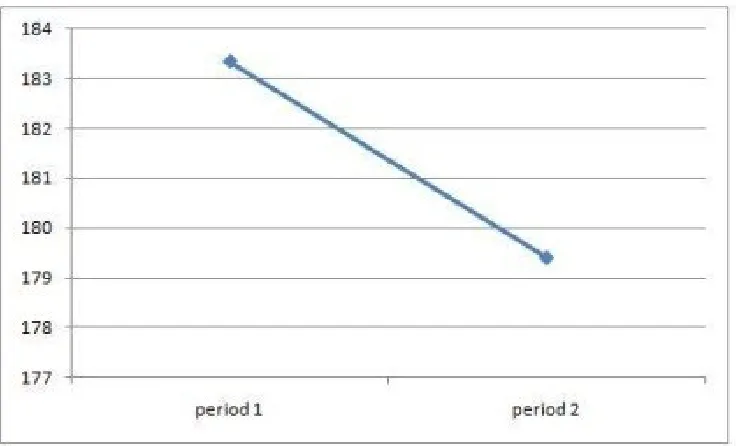
The quantity supplied for second customer locations is given in figure 5. Demand levels are assumed to be 225 units per period.
[Insert Figure 5 here]
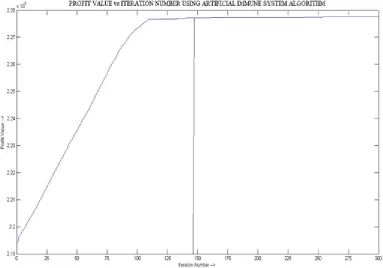
The programming code for AIS algorithm was run for 300 iterations and at a parameter setting of p = 0.005 and β = 4. The calculations were carried out using MATLAB 2007. The change in total expected profit with each iteration is shown in Figure 6.
[Insert Figure 6 here]
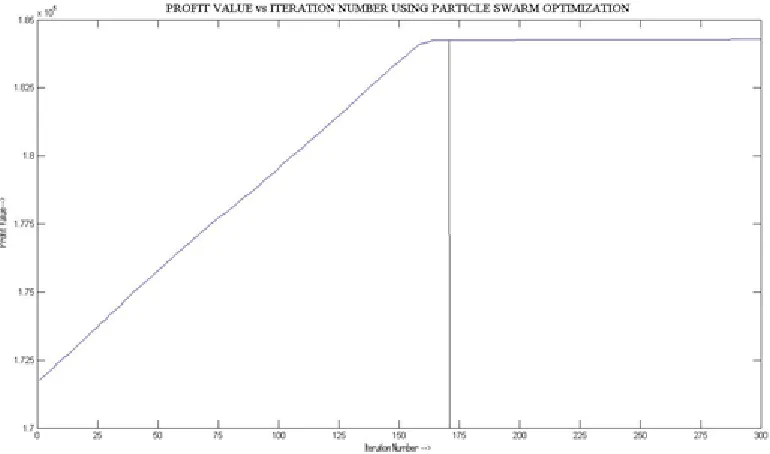
A similar test was performed using the PSO algorithm that also was run for 300 iterations using MATLAB 2007. The change in expected profit with each iteration is shown in Figure 7.
[Insert Figure 7 here]
From the analysis it is evident that AIS performs better than PSO for the model studied in this paper.
6. Concluding Remarks, Limitations and Further Research
among the research community to address reverse logistics issues. Rising environmental awareness and changing regulations has forced manufacturing industries to focus on green sustainable practices. As a result, the manufacturing industry is emphasizing the efficient handling of their reverse logistics operations while aiming at simultaneously minimizing their costs and increasing their profitability. This study therefore addresses this issue by particularly focusing on and proposing a forward and reverse logistics model based on the optimum routing of vehicles. In particular, this paper puts forward a model of a multi-period, multi-echelon, vehicle routing, forward-reverse logistics system. The network considered in the model assumes a fixed number of suppliers, facilities, distributors, customer zones, disassembly locations, re-distributors and second customer zones. The demand levels at customer zones are assumed to be deterministic. The proposed model has proved to be useful in obtaining the route of the vehicle, maximizing the profit and providing information to the firm about the quantities to be produced at the facility and amount of goods to be obtained from the supplier. This study applies the AIS and PSO algorithms to determine the optimal route and quantity produced more efficiently. This paper also shows that for the considered model, AIS works better than the PSO.
Like all researches, this paper has a number of limitations. For instance, the values of the parameters used to test the model in this paper are assumed deterministic values. Therefore, future research studies should aim at empirically testing the model and algorithm in a realistic industrial scenario. Working closely with some manufacturing organizations, collecting real data and testing should be an interesting area for future investigation. This model can be further extended to a stochastic model by considering mean and variance of demand at different customer locations. Therefore, the research has adequate scope for further extension. Some parameters were considered to be fixed to ease the solution method in this research; future work may involve testing the model by randomly generating the parameters. Vehicle routing can also be extended by considering capacity constraints for vehicle. Although this study tested the model using two evolutionary algorithms where AIS emerged as a better alternative, future work may also involve testing the model using other evolutionary algorithms and comparing the solutions with hybrid algorithms.
References
Abdulrahman, M. D., Gunasekaran, A., & Subramanian, N. (2014). Critical barriers in implementing reverse logistics in the Chinese manufacturing sectors. International Journal of Production Economics, 147 (B), 460-471.
Ageron, B., Gunasekaran, A., Spalanzani, A. (2013). IS/IT as supplier selection criterion for upstream value chain”, Industrial Management & Data Systems. 113(3), 443 – 460.
Amini, M.M., Retzlaff-Roberts, D., Bienstock, C.C. (2005). Designing a reverse logistics operation for short cycle time repair services. International Journal of Production Economics, 96(3), 367-380.
Bachlaus, M., Pandey, M. K., Mahajan, C., Shankar, R. and Tiwari, M. K. (2008). Designing an integrated multi-echelon agile supply chain network: a hybrid taguchi-particle swarm optimization approach, Journal of Intelligent Manufacturing, 19 (6), 747-761.
Bhattacharya, A., Mohapatra, P., Kumar, V., Dey, P. K., Brady, M., Tiwari, M. K., & Nudurupati, S. S. (2014). Green supply chain performance measurement using fuzzy ANP-based balanced scorecard: a collaborative decision-making approach. Production Planning & Control, 25(8), 698-714.
Carvalho, H., Azevedo, S.G., Cruz-Machado, V. (2014). Supply chain management resilience: a theory building approach. International Journal of Supply Chain and Operations Resilience, 1(1), 3-27.
Chan, F. T. S., Kumar, V. and Tiwari, M. K. (2006). Optimizing the Performance of an Integrated Process Planning and Scheduling Problem: An AIS-FLC based Approach, 2006 IEEE Conference on Cybernetics and Intelligent Systems (CIS), Bangkok, 298-305
Chan, H. K., Yin, S. and Chan, F. T. S. (2010). Implementing just-in-time philosophy to reverse logistics systems: a review, International Journal of Production Research, 48 (21), 6293 – 6313. Chen, C. X., Chen, Y., & YU, Z. B. (2005). Under the Circular Economy the Development of the Third Provider Reverse Logistics. Logistics Management, 6, 013.
Choudhary, A. K., Sarkar, S., Settur S., and Tiwari, M. K. (2015). A carbon-footprint optimization model for integrated forward-reverse logistics, International Journal of Production Economics, 164, 433–444.
Chiang, T. C., & Lin, H. J. (2013). A simple and effective evolutionary algorithm for multiobjective flexible job shop scheduling. International Journal of Production Economics, 141(1), 87-98.
De Brito, M. P. and Dekkar, R. (2002). Reverse Logistics – a framework, Econometric Institute Report, EI (38), Erasmus University Rotterdam, Econometric Institute.
De Castro, L.N. and Von Zuben, F. J. (2001). Learning and Optimization Using the Clonal Selection Principle, IEEE Trans on Evolutionary Computation, 6 (3), 239 – 251.
De Castro, L. N., and Von Zuben, F. J. (2001). aiNet: An Artificial Immune Network for Data Analysis, In Data Mining: A Heuristic approach Hussein A. Abbass, Ruhul A. Sarker, and Charles S. Newton (Eds.) Idea Group Publishing, USA, 1-37.
De Castro, L. N. and Timmis, J. (2002). Artificial Immune Systems: A Novel Paradigm to Pattern Recognition, In Artificial Neural Networks in Pattern Recognition, SOCO-2002, (University of Paisley, UK), 67-84.
de la Fuente, M. V., Ros, L., & Cardos, M. (2008). Integrating forward and reverse supply chains: application to a metal-mechanic company. International Journal of Production Economics, 111(2), 782-792.
De Giovanni, P., Reddy, P.V., Zaccour, G. (2015). Incentive strategies for an optimal recovery program in a closed-loop supply chain. European Journal of Operational Research, 249(2), 605-617..
Dethloff, J. (2001).Vehicle routing and reverse logistics: the vehicle routing problem with simultaneous delivery and pickup, OR Spectrum, 23 (1), 79-96
Diana, R. O. M., de França Filho, M. F., de Souza, S. R., & de Almeida Vitor, J. F. (2015). An immune-inspired algorithm for an unrelated parallel machines’ scheduling problem with sequence and machine dependent setup-times for makespan minimization, Neurocomputing, 163, 94-105.
Dowlatshahi, S. (2010). The role of transportation in the design and implementation of reverse logistics systems, International Journal of Production Research, 48 (14), 4199-4215
Dowlatshahi, S. (2000). Developing a Theory of Reverse Logistics, Interfaces, 30 (3), 143-155. Du, F., Evans, G.W. (2008). A bi-objective reverse logistics network analysis for post-sale service, Computers & Operations Research, 35(8), 2617-2634.
El-Sayed, M., Afia, N., and El-Kharbotly, A., (2010). A stochastic model for forward-reverse logistics network design under risk, Computers & Industrial Engineering, 58 (3), 423-431. Engin, O. and Doyen, A., (2004). A new approach to solve hybrid flow shop scheduling problems by artificial immune system,Future Generation Computer Systems, 20 (6), 1083-1095. Finne, M., Holmström, J. (2013). A manufacturer moving upstream: triadic collaboration for service delivery. Supply Chain Management: An International Journal, 18(1), 21 – 33.
García-Rodríguez, F. J., Castilla-Gutiérrez, C., & Bustos-Flores, C. (2013). Implementation of reverse logistics as a sustainable tool for raw material purchasing in developing countries: The case of Venezuela. International Journal of Production Economics, 141(2), 582-592.
Genovese, A., Acquaye, A.A., Figueroa, A., Koh, S.C.L. (2015). Sustainable supply chain management and the transition towards a circular economy: Evidence and some applications. Omega, DOI: 10.1016/j.omega.2015.05.015 (in press).
Green, K.W. Jr, Zelbst, P.J., Meacham, J. and Bhadauria, V.S. (2012). Green supply chain management practices: impact on performance. Supply Chain Management: An International Journal, 17(3), 290-305.
Hassini, E., Surti, C., Searcy, C. (2012). A literature review and a case study of sustainable supply chains with a focus on metrics. International Journal of Production Economics, 140(1), pp. 69-82.
Huang, Y.C., Wu, J.Y.C., Rahman, S. (2012). The task environment, resource commitment and reverse logistics performance: evidence from the Taiwanese high-tech sector. Production, Planning & Control, 23 (10-11), 851-863.
Jabbour, C.J.C., Neto, A.S., Gobbo Jr., J.A., de Souza Ribeiro, M., Lopes de Sousa Jabbour, A.B. (2015). Eco-innovations in more sustainable supply chains for a low-carbon economy: A multiple case study of human critical success factors in Brazilian leading companies. International Journal of Production Economics. 164, 245-257.
Janeway, C. A. Jr., (1992). The immune System Evolved to Discriminate Infectious Nonself from Noninfectious Self, Immunol Today, 13 (1), 11-16.
Johnsen, T.E. (2011). Supply network delegation and intervention strategies during supplier involvement in new product development. International Journal of Operations & Production Management, 31(6), 686-708.
Kannan, V.R., Tan, K.C. (2004). Supplier alliances: differences in attitudes to supplier and quality management of adopters and non‐adopters. Supply Chain Management: An International Journal, 9(4), 279 – 286.
Kim, J. S., and Lee, D. H. (2015). A case study on collection network design, capacity planning and vehicle routing in reverse logistics, International Journal of Sustainable Engineering, 8(1), 66-76.
Kheljani, J. G., Ghodsypour, S. H., & O’Brien, C. (2009). Optimizing whole supply chain benefit versus buyer's benefit through supplier selection. International Journal of Production Economics, 121(2), 482-493.
Ko, H. J. and Evans, G. W. (2007). A genetic algorithm-based heuristic for the dynamic integrated forward/reverse logistics network for 3PLs, Computers & Operations Research, 34 (2), 346-366.
Kroon, L. and Vrijens, G. (1994). Returnable containers: an example of reverse logistics, International Journal of Physical Distribution & Logistics Management, 25 (2), 56-68.
Kumar, V., Holt, D., Ghobadian, A., & Garza-Reyes, J. A. (2015). Developing green supply chain management taxonomy-based decision support system, International Journal of Production Research, 53 (1), 6372-6389.
Kumar, V, Prakash, Tiwari, M. K., Chan, F. T.S. (2006). Stochastic make-to-stock inventory deployment problem: an endosymbiotic psychoclonal algorithm based approach, International Journal of Production Research, 44 (11), 2245-2263.
Kumar, V., Mishra, N., Chan, F. T., and Verma, A. (2011). Managing warehousing in an agile supply chain environment: an F-AIS algorithm based approach, International Journal of Production Research, 49(21), 6407-6426.
Lee, P.K.C., Yeung, A.C.L., Cheng, T.C.E., (2009). Supplier alliances and environmental uncertainty: An empirical study. International Journal of Production Economics, 120(1), 190-204.
Li, S., Rao, S.S., Ragu-Nathan, T.S., Ragu-Nathan, B. (2005). Development and validation of a measurement instrument for studying supply chain management practices. Journal of Operations Management, 23(6), 618-641.
Li, S., Ragu-Nathan, B., Ragu-Nathan, T.S., Rao, S.S. (2006). The impact of supply chain management practices on competitive advantage and organizational performance. Omega, 34(2), 107-124.
Mishra, N., Kumar, V., and Chan, F. T. (2012). A multi-agent architecture for reverse logistics in a green supply chain, International Journal of Production Research, 50(9), 2396-2406.
Meng, Liu. (2013). Study on Establishing Reverse Logistics System in Environment of Circular Economy. Logistics Technology, 5, 66.
Mohanty, R.P., Prakash, A. (2014). Green supply chain management practices in India: an empirical study. Production Planning & Control. 25 (16), 1322-1337.
Moslehi, G., & Mahnam, M. (2011). A Pareto approach to multi-objective flexible job-shop scheduling problem using particle swarm optimization and local search, International Journal of Production Economics, 129(1), 14-22.
Narasimhan, R., Schoenherr, T. (2012). The effects of integrated supply management practices and environmental management practices on relative competitive quality advantage. International Journal of Production Research, 50(4), 1185-1201.
Oosterhuis, M., van der Vaart, T., Molleman, E. (2012). The value of upstream recognition of goals in supply chains. Supply Chain Management: An International Journal, 17(6), 582 – 595. Pan, S.Y., Du, M.D., Huang, I.T., Liu, I.H., Chang, E.E., Chiang, P.C. (2015). Strategies on implementation of waste-to-energy (WTE) supply chain for circular economy system: a review. Journal of Cleaner Production, 108(Part A), 409-421.
Pettersson, A. I., & Segerstedt, A. (2013). Measuring supply chain cost. International Journal of Production Economics, 143(2), 357-363.
Pishvaee, M. S., Farahani, R. Z., and Dullaert, W. (2010). A memetic algorithm for bi-objective integrated forward/reverse logistics network design, Computers & Operations Research, 37(6), 1100-1112.
Pérez-Cáceres, L., & Riff, M. C. (2015). Solving scheduling tournament problems using a new version of CLONALG, Connection Science, 27(1), 5-21.
Ravi, V., Shankar, R. and Tiwari, M. K. (2008). Selection of a reverse logistics project for end-of-life computers: ANP and goal programming approach, International Journal of Production Research, 46 (17), 4849 – 4870.
Ritchie, L., Burnes, B., Whittle, P., Hey, R. (2000). The benefits of reverse logistics: the case of the Manchester Royal Infirmary Pharmacy. Supply Chain Management: An International Journal, 5(5), 226 - 234
Rogers, D. S. and Tibben-Lembke, R.S. (1999).Going Backwards: Reverse Logistics Trends and Practices, Pittsburgh. PA: Reverse Logistics Executive Council: USA
Sarkis, J. (2003). A strategic decision framework for green supply chain management. Journal of Cleaner Production. 11 (4), 397-409.
Sarkis, J., Helms, M. M., & Hervani, A. A. (2010). Reverse logistics and social sustainability. Corporate Social Responsibility and Environmental Management, 17(6), 337-354.
Shukla, N., Choudhary, A. K., Prakash, P., Fernandes, K., and Tiwari, M.K., (2013). Algorithm Portfolio for Vehicle Routing Problem with Stochastic Demands and Mobility Allowance. International Journal of Production Economics, 141(1), 146-166.
Soysal, M., Bloemhof-Ruwaard, J. M., Haijema, R., & van der Vorst, J. G. (2015). Modeling an Inventory Routing Problem for perishable products with environmental considerations and demand uncertainty. International Journal of Production Economics, 164, 118-133.
Srivastava (2007), S.K. (2007), Green supply-chain management: A state-of-the-art literature review. International Journal of Management Reviews, 9(1), 53-80.
Tan, K.C., Lyman, S.B., Wisner, J.D. (2002). Supply chain management: a strategic perspective. International Journal of Operations & Production Management,22(6), 614–31.
Teodorović, D., Lučić, P., Marković, G., & Dell'Orco, M. (2006). Bee colony optimization: principles and applications. In Neural Network Applications in Electrical Engineering, NEUREL 2006, 8th Seminar on IEEE, 151-156
Teunter, R. H. (2001). A reverse logistics valuation method for inventory control, International Journal of Production Research, 39 (9), 2023 – 2035
Tiwari, A., & Chang, P. C. (2015). A block recombination approach to solve green vehicle routing problem, International Journal of Production Economics, 164, 379-387.
Tsai, W. H. and Hung, S. J. (2009). Treatment and recycling system optimization with activity-based costing in WEEE reverse logistics management: an environmental supply chain perspective, International Journal of Production Research, 47 (19), 5391-5420.
Vishwa, V. K., Chan, F. T., Mishra, N., & Kumar, V. (2010). Environmental integrated closed loop logistics model: an artificial bee colony approach. In Supply Chain Management and Information Systems (SCMIS), 2010 8th International Conference on IEEE, 1-7.
Viswanadham, N., Samvedi, A. (2013). Supplier selection based on supply chain ecosystem, performance and risk criteria. International Journal of Production Research, 51(21), 6484-6498. Wang, X., Chan, H. K., Yee, R. W., & Diaz-Rainey, I. (2012). A two-stage fuzzy-AHP model for risk assessment of implementing green initiatives in the fashion supply chain. International Journal of Production Economics, 135(2), 595-606.
Weeks, K., Gao, H., Alidaeec, B., and Rana, D. S. (2010). An empirical study of impacts of production mix, product route efficiencies on operations performance and profitability: a reverse logistics approach, International Journal of Production Research, 48 (4), 1087–1104.
White, J. A., and Garrett, S. M. (2003). Improved pattern recognition with artificial clonal selection? In Artificial Immune Systems (pp. 181-193), Springer Berlin Heidelberg.
Ying, J., Li-jun, Z. (2012). Study on Green Supply Chain Management Based on Circular Economy. Physics Procedia, 25, 1682–1688.
Zhao, X., Baofeng, H., Flynn, B.B., Yeung, J.H.Y. (2008). The impact of power and relationship commitment on the integration between manufacturers and customers in a supply chain. Journal of Operations Management, 26(3), 368-388.
Zheng Y. and Zhang G. (2008). A Genetic Algorithm for Vehicle Routing Problem with forward and reverse logistics, 4th International Conference on Wireless Communications, Networking and Mobile Computing, WiCOM '08, 1 – 4.
Table 1: Assumed parameters and their respective values
Parameters Description Value ($)
Pc Price of product at first customer zone 100
Pk Price of product at second customer zone 80
MC material cost for suppliers 20
FC manufacturing cost for facility 20
RC recycling cost at recycling and repair center
5
SC shortage cost 10
PC purchasing cost of used products from first customer zones
5
DAC disassembly costs at disassembly location 3
RMC remanufacturing costs for facility 10
RDC redistribution costs 1
DC disposal costs 2
FH holding costs for holding at facility store 5 DH holding costs for holding at distribution
location
5
RR return ratio at the first customers 0.4
Rc recycling ratio 0.3
RM remanufacturing ratio 0.3
Rd redistribution ratio 0.3
RD disposal ratio 0.1
C(i)(j) Distance from location 'i' to location 'j' 20*rand( ) in
Figures
Suppliers
2, 3
Transport Depot
1
Distributors
6, 7
Facility
4 Facility Store
5
Disposal
12 Disassembly
location
11 Customers
8, 9, 10
Second Customer Zone
15
Re-Distributor
14
Recycling & Repair Centre
13
Forward Flow Reverse Flow
1 3 5
15 2
6
4 7
14
8 10
9
13
[image:36.612.82.529.102.387.2]11