Patron: Her Majesty The Queen Rothamsted Research Harpenden, Herts, AL5 2JQ
Telephone: +44 (0)1582 763133 Web: http://www.rothamsted.ac.uk/
Rothamsted Research is a Company Limited by Guarantee Registered Office: as above. Registered in England No. 2393175. Registered Charity No. 802038. VAT No. 197 4201 51. Founded in 1843 by John Bennet Lawes.
Rothamsted Repository Download
A - Papers appearing in refereed journals
Urban, M., Cuzick, A., Seager, J., Wood, V., Rutherford, K., De Silva, N.,
Venkatesh, S. Y, Martinez, M. C., Pedro, H., Yates, A. D., Hassani-Pak,
K. and Hammond-Kosack, K. E. 2019. PHI-base - the Pathogen–Host
Interactions database . Nucleic Acids Research. Database issue.
The publisher's version can be accessed at:
•
https://dx.doi.org/10.1093/nar/gkz904
The output can be accessed at:
https://repository.rothamsted.ac.uk/item/96z12/phi-base-the-pathogen-host-interactions-database
.
© 16 November 2019, Please contact [email protected] for copyright queries.
PHI-base: the pathogen–host interactions database
Martin Urban
1, Alayne Cuzick
1, James Seager
1, Valerie Wood
2, Kim Rutherford
2, Shilpa
Yagwakote Venkatesh
3, Nishadi De Silva
4, Manuel Carbajo Martinez
4, Helder Pedro
4,
Andy D. Yates
4, Keywan Hassani-Pak
5and Kim E. Hammond-Kosack
1,*1Department of Biointeractions and Crop Protection, Rothamsted Research, Harpenden AL5 2JQ, UK,2Cambridge
Systems Biology Centre and Department of Biochemistry, University of Cambridge, Cambridge CB2 1GA, UK, 3Molecular Connections, Kandala Mansions, Kariappa Road, Basavanagudi, Bengaluru 560 004, India,4European
Molecular Biology Laboratory, European Bioinformatics Institute, Wellcome Genome Campus, Hinxton, Cambridge CB10 1SD, UK and5Department of Computational and Analytical Sciences, Rothamsted Research, Harpenden AL5 2JQ, UK
Received September 17, 2019; Revised October 01, 2019; Editorial Decision October 02, 2019; Accepted November 14, 2019
ABSTRACT
The pathogen–host interactions database (PHI-base) is available at www.phi-base.org. PHI-base con-tains expertly curated molecular and biological in-formation on genes proven to affect the outcome of pathogen–host interactions reported in peer re-viewed research articles. PHI-base also curates lit-erature describing specific gene alterations that did not affect the disease interaction phenotype, in or-der to provide complete datasets for comparative purposes. Viruses are not included, due to their ex-tensive coverage in other databases. In this article, we describe the increased data content of PHI-base, plus new database features and further integration with complementary databases. The release of PHI-base version 4.8 (September 2019) contains 3454 manually curated references, and provides informa-tion on 6780 genes from 268 pathogens, tested on 210 hosts in 13,801 interactions. Prokaryotic and eu-karyotic pathogens are represented in almost equal numbers. Host species consist of approximately 60% plants (split 50:50 between cereal and non-cereal plants), and 40% other species of medical and/or environmental importance. The information available on pathogen effectors has risen by more than a third, and the entries for pathogens that infect crop species of global importance has dramatically increased in this release. We also briefly describe the future di-rection of the PHI-base project, and some existing problems with the PHI-base curation process.
INTRODUCTION
Infectious diseases have a profound influence on every as-pect of society. Diseases are a major concern to plant, an-imal, human, and ecosystem health. Globally infectious diseases threaten food security, human community struc-tures, and the biodiversity of natural ecosystems (1–3). The increasing effects of climate change, human migra-tion, and the globalisation of the trading of fresh goods have resulted in a rise in the incidence and severity of ex-isting disease problems, as well as the emergence of a co-hort of novel pathogen species and zoonoses (4). In ad-dition, the (re)acquisition of resistance to anti-infective chemistries––coupled with a rise in legislation banning or restricting existing chemistries––means the burden of mi-crobial infections is of ever growing concern to human, an-imal and plant welfare (5,6). In the United Kingdom alone, the total economic burden from infectious diseases is esti-mated at£30 billion annually, and accounts for 7% of all deaths (7).
Infectious diseases are a consequence of complex and dy-namic interactions between pathogen virulence factors, and host cell recognition and response systems (8–10). It is in-creasingly clear that studying these interactions across the tree of life is a fertile ground for uncovering crucial biolog-ical principles that control the interaction outcome. In ad-dition, in the post-genomics era––with the ever-decreasing costs for whole genome sequencing, genome assembly, and gene prediction––there is intense scientific and commercial interest in comparative pathogen genomics, as well as whole genome protein–protein interaction predictions and com-parisons to identify functionally homologous genes, and to pinpoint species-unique genes and pathways. This increased understanding of the dynamics of a wide range of interac-tions contributes to the two predominant approaches
avail-*To whom correspondence should be addressed. Tel: +44 1582 938240; Fax: +44 1582 760981; Email: [email protected]
C
The Author(s) 2019. Published by Oxford University Press on behalf of Nucleic Acids Research.
This is an Open Access article distributed under the terms of the Creative Commons Attribution License (http://creativecommons.org/licenses/by/4.0/), which permits unrestricted reuse, distribution, and reproduction in any medium, provided the original work is properly cited.
2 Nucleic Acids Research, 2019
able for combating infectious disease: namely, stimulating the host immune system to prevent infections, and mini-mizing the use of chemicals to eliminate infectious agents (11–13).
The pathogen–host interactions database (PHI-base) was established in 2005 and is freely available atwww.phi-base. org. PHI-base contains expertly curated molecular and bi-ological information on genes proven to affect the pheno-typic outcome of pathogen–host interactions (14,15). All PHI-base entries are supported by strong experimental ev-idence from a peer reviewed publication. PHI-base cata-logues experimentally verified pathogenicity, virulence, and effector genes from fungal, protist, and bacterial pathogens which infect plant, human, animal, and insect hosts. Genes tested but found not to affect the interaction outcome are also expertly curated. In PHI-base, the term ‘interaction’ is used to describe the observable function of one gene, on one host, on one tissue type (14). Nine high-level phe-notypic outcome terms have been developed to permit the comparison of interactions across the entire tree of life (16). These terms are ‘loss of pathogenicity’, ‘reduced virulence’, ‘increased virulence’, ‘unaffected pathogenicity’, ‘effector’, ‘lethal’, ‘increased virulence (hypervirulence)’, ‘resistance to chemical’ and ‘sensitivity to chemical’. These high-level phenotypic outcome terms––although not yet supported by a formal controlled vocabulary––are particularly use-ful for bioinformaticians and biologists unfamiliar with the nuances of multiple pathogen–host interactions, but who wish to include pathogens with different lifestyles and host ranges in their comparative analyses. In addition, a PHIB-BLAST tool has been introduced to permit simple or ad-vanced BLAST queries arising from functional genomics, transcriptomics, and proteomics experimentation.
In 2017, PHI-base joined the UK node of ELIXIR’s ‘Data for Life’ project as a gold-standard ‘agricultural omics data’ provider (17). PHI-base follows the FAIR data principles in order to make data findable, accessible, in-teroperable, and reusable (18). PHI-base also reuses data provided by external resources, including PubMed, NCBI taxonomy, UniProtKB, and the Gene Ontology (GO). A number of complementary multi-species databases on pathogens exist that also provide gene function annotation (recently reviewed by (14,19,20)). PHI-base is unique in de-scribing a broad range of plant and animal pathogen–host interactions using the same controlled vocabulary consis-tently across>250 species.
In this article, we report on a major increase in PHI-base gene content, new database features, integration with com-plementary databases, and our immediate plans using new funding.
RESULTS AND DISCUSSION
Biological data
Version 4.8 of PHI-base (released in September 2019 and described in this article), contains data on 6780 genes, 13801 interactions, 268 pathogens, 210 hosts and 3454 references. This version includes 71% more interactions, each anno-tated with a phenotype, compared to PHI-base version 4.2 described in (14). Bacteria and fungal pathogens represent the majority of the interaction data, with a near 50:50 split
of entries; whilst protists, nematodes and insects represent 3.6% of the species (Table1). The fungal pathogen inter-actions are dominated by the Ascomycetes, which covers 88.5% of annotated fungal interactions (5929 interactions, 100 species); this is followed by the Basidiomycetes, which only cover 11.4% of annotated interactions (762 interac-tions, 11 species). In total, 5755 phenotype interactions de-scribing experimental data on 2320 genes from 1235 newly curated publications are included up to March 2019.
The number of pathogenic species in PHI-base was capped at 268 and includes a small number of newly emerg-ing pathogens under intense investigation. Plant infect-ing pathogens––namely bacteria, fungi, protists, nematodes and insects––represent 60% of the species in PHI-base (Ta-ble2). Amongst these, there is an almost equal split be-tween cereal and non-cereal infecting species. Woody tree infecting species provide 1004 interaction entries (7.3% of plant pathogen interactions). Amongst the 32 human and animal infecting pathogens, an increasing number are now being tested on non-vertebrate species: for example, various insects, nematodes and crustaceans. These non-vertebrate pathogen interactions now account for 23% of database en-tries (Table2).
As in previous versions of PHI-base, the highest num-ber of pathogen–host interactions tested in molecular ge-netic studies and reported in the literature are from the filamentous fungal pathogensFusarium graminearumand
Magnaporthe oryzae, which cause various diseases on sta-ple crops, such as wheat, rice and maize (Table3). The most highly represented plant-infecting bacteria are Ralstonia solanacearum, a pathogen of potato and other Solanaceae crops; andXanthomonas oryzae, a pathogen of rice. For the animal kingdom, the most frequently studied pathogens in-clude the human pathogens Salmonella enterica,Candida albicansandPseudomonas aeruginosa (Table3). Amongst the top 30 species present in PHI-base, phenotypic inter-action information––from single, double and occasionally multiple gene deletions––is provided for each species: from a minimum of 32 genes to a maximum of 1340 genes. How-ever, for the cereal infecting fungus Pyrenophora tritici-repentis, only five genes have been explored over 142 interac-tions. Overall, the 30 top species in PHI-base consist of 12 fungi, 1 protist and 17 bacteria, and together these covers 71% of total interactions and 88% of total genes.
Since 2015, there has been an emphasis on increasing the curation of pathogen gene modifications that result in a hypervirulence phenotype on the host. This has steadily risen from 112 genes (version 3.8) to 233 genes (tested in 324 interactions) (version 4.2), to 475 genes (tested in 635 interactions) (ver. 4.8). Hypervirulence phenotype interac-tions now account for 4.6% of all database entries and are particularly prevalent amongst bacterial pathogen entries (Table 1). This increasing number of hypervirulent inter-actions indicates that many additional aspects of the neg-ative regulation of key pathogenicity processes––occurring during infection and colonization of both plant and ani-mal hosts––have been identified. This gene set continues to warrant close monitoring in pathogen populations when at-tempting to explore, and then mitigate, the emergence and spread of hypervirulent pathogens associated with severe disease outbreaks (21).
Table 1. Summary of pathogen groups, interactions and phenotypes within PHI-base version 4.8
Phenotype/pathogen Bacterium Fungus Protist Nematode Insect Totals
Number of pathogens 131 112 17 6 2 268
Interactions in total 6608 6696 463 24 10 13801
Loss of pathogenicity 204 696 7 1 0 908
Reduced virulence 3054 2960 96 13 0 6123
Unaffected pathogenicity 1375 2202 60 0 0 3637
Effector (plant avirulence determinant) 1511 468 263 9 10 2261
Increased virulence (hypervirulence) 433 173 28 1 0 635
Lethal 18 156 9 0 0 183
Chemical target: resistance to chemical 7 29 0 0 0 36
Chemical target: sensitivity to chemical 6 8 0 0 0 14
Enhanced antagonism 0 4 0 0 0 4
Table 2. Summary of the number of host species and interactions within PHI-base version 4.8
Phenotype Plant Vertebrate Insect Nematode Others
Host species 131 32 24 1 22
Interactions in total 8248 4439 696 258 81
Loss of pathogenicity 650 233 15 9 1
Reduced virulence 2885 2655 386 137 60
Unaffected pathogenicity 2326 1004 193 98 16
Effector (plant avirulence determinant) 2001 233 23 1 3
Increased virulence (hypervirulence) 244 300 77 13 1
Lethal 101 80 2 0 0
Chemical target: resistance to chemical 27 3 0 0 0
Chemical target: sensitivity to chemical 13 1 0 0 0
Enhanced antagonism 4 0 0 0 0
Table 3. Top species and interactions within PHI-base version 4.8
Pathogen Interactions Genes
Loss of pathogenicity
Reduced virulence
Increased
virulence Effector
Unaffected
pathogenicity Lethal
No. of tested host species
Fusarium graminearum 1571 1340 36 516 8 0 917 94 13
Magnaporthe oryzae 1273 738 279 501 10 84 398 1 7
Ralstonia solanacearum 666 132 16 43 0 597 9 1 9
Salmonella enterica 664 412 8 381 45 108 122 0 11
Xanthomonas oryzae 512 224 3 96 24 306 83 0 3
Erwinia amylovora 450 135 34 165 55 15 181 0 5
Candida albicans 448 343 48 305 11 0 80 4 12
Pseudomonas aeruginosa* 440 220 19 218 34 4 165 0 16
Botrytis cinerea 368 147 24 205 10 4 123 0 26
Ustilago maydis 360 264 48 187 8 17 100 0 3
Aspergillus fumigatus 309 207 30 128 14 0 93 42 4
Cryptococcus neoformans 305 203 44 184 17 0 50 10 8
Pseudomonas syringae 293 170 1 53 9 191 38 1 13
Escherichia coli 264 169 1 167 15 11 69 1 13
Staphylococcus aureus 212 139 12 137 22 2 38 1 10
Fusarium oxysporum* 209 131 24 90 8 27 60 0 17
Xanthamonas campestris 180 110 11 95 4 0 39 2 8
Klebsiella pneumoniae 173 134 4 72 4 0 93 0 4
Streptococcus pneumoniae 152 106 2 110 4 0 30 6 5
Mycobacterium tuberculosis 150 112 3 64 36 1 46 0 4
Candida glabrata 148 43 0 89 6 0 52 1 3
Verticillium dahliae 145 60 14 64 9 24 34 0 16
Listeria monocytogenes 142 69 2 102 17 3 18 0 10
Pyrenophora tritici-repentis 142 5 0 3 1 138 0 0 3
Enterococcus faecalis 132 32 1 82 3 0 46 0 5
Hyaloperonospora arabidopsidis
127 70 0 1 3 123 0 0 5
Streptococcus pyogenes 121 68 0 67 19 0 33 2 7
Xanthomonas citri 119 33 6 18 3 88 4 0 6
Vibrio cholerae 117 71 1 83 2 0 31 0 6
Beauveria bassiana 108 84 4 70 8 2 24 0 11
TOTALS 9835 5971 675 4296 409 1745 2976 166
*Pathogen species able to infect both plant and animal hosts.
4 Nucleic Acids Research, 2019
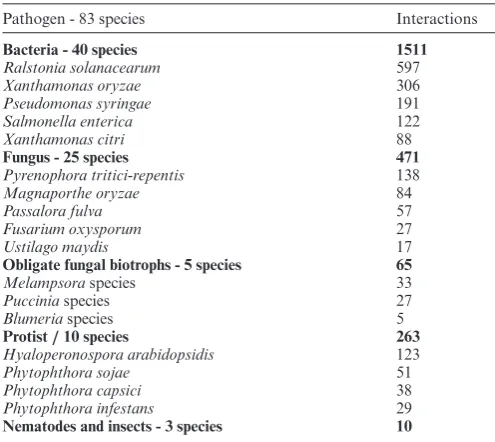
Table 4. Summary of the pathogenic species providing the most informa-tion on effectors
Pathogen - 83 species Interactions
Bacteria - 40 species 1511
Ralstonia solanacearum 597
Xanthamonas oryzae 306
Pseudomonas syringae 191
Salmonella enterica 122
Xanthamonas citri 88
Fungus - 25 species 471
Pyrenophora tritici-repentis 138
Magnaporthe oryzae 84
Passalora fulva 57
Fusarium oxysporum 27
Ustilago maydis 17
Obligate fungal biotrophs - 5 species 65
Melampsoraspecies 33
Pucciniaspecies 27
Blumeriaspecies 5
Protist/10 species 263
Hyaloperonospora arabidopsidis 123
Phytophthora sojae 51
Phytophthora capsici 38
Phytophthora infestans 29
Nematodes and insects - 3 species 10
A second major curation effort for PHI-base has been to increase coverage of pathogen effectors (14). An effector is an entity derived from a pathogenic or non-pathogenic species, that either activates or suppresses host defences or other host responses. Interactions involving effectors have risen by 35%: from 1668 (version 4.2) to 2261 (version 4.8). This category now represents 16% of the dataset, with data derived from 83 species, mostly plant pathogens (Table4). In total, 67% of the effector entries (1511 interactions) are from bacterial species; there is also a considerable number of entries from five obligate fungal rust or powdery mildew species, and one obligate protist species (Hyaloperonospora arabidopsidis). Based on data curated in PHI-base, the ex-perimental method of choice for studying effector func-tion is evaluating transient expression in a host or non-host species: transient expression tests account for 573 interac-tions across 28 pathogen species.
In 2015, nine high level phenotypic terms were introduced to the curation process, to permit researchers to explore the database across a wide range of taxonomically diverse species which exhibit varied pathogenic lifestyles (16). The phenotype term ‘reduced virulence’ is the most highly rep-resented and applies to 44% of database entries. The second most frequent term is ‘unaffected pathogenicity’, at 26%. The majority of the ‘unaffected pathogenicity’ phenotypes have been reported for plant pathogens (64%), however an increasing number (1004) are from animal pathogens (com-pared to 80 interactions in version 3.6, and 280 interactions in version 4.2). This change appears to have arisen primar-ily because, within an individual publication, the number of host species tested, or the number of pathogen genes tested has increased; also, comparative results may be included from single, double, and multiple-gene deletion mutants. The number of articles reporting entirely negative data re-mains small. These negative outcomes are usually presumed (by the respective authors) to indicate that the gene product
does not have a functional role in the pathogenic process under investigation, or that gene redundancy exists.
The high-level phenotypes for all interactions are sum-marized in Table1(for pathogen species) and Table2(for host species). A total of 183 PHI-base entries have been as-signed the ‘lethal’ phenotype, consisting of 7 plant-infecting pathogens, 12 animal-infecting pathogens and 1 insect-infecting pathogen. The majority of lethal phenotype anno-tations are for fungal species, in particularFusarium gramin-earum(94 entries), for which genome-wide single gene re-placement studies have been completed for all predicted transcription associated proteins (22), the predicted protein kinases (the kinome) (23), protein phosphatases (the phos-phatome) (24), and––most recently––the predicted plasma membrane spanning G-protein coupled receptors (25,26). In these large-scale experiments, no transformants were covered in repeat experiments, whilst transformants were re-covered for many other genes. Thus, the authors considered that the gene’s function was ‘essential for life’. The human pathogenAspergillus fumigatushas also contributed a dis-proportionately high number of lethal phenotype entries, with 42 of the 207 genes tested (20%) falling into this cat-egory where a targeted screen for essential genes has been initiated (27). However, amongst the 30 species with the most interactions in PHI-base (Table3), 17 species have no ‘lethal’ category entries, whilst a further 8 species only pro-vide 1 or 2 lethal entries.
An increasing number of interactions involving hu-man and animal pathogens are now being tested in non-vertebrate species (Table 2). In these bioassays, a wide range of insect larvae are used, including: Galleria mel-lonella (greater wax moth), Plutella xylostella (diamond-back moth), andBombyx mori(domestic silkworm); as well as adult insects, specificallyDrosophila melanogaster(fruit fly). Other studies have used the nematode Caenorhabdi-tis elegans(roundworm), the slime moldDictyostelium dis-coideum, the free-living amoebaAcanthamoeba castellanii,
or various crustaceans: such as shrimp species from the genusArtemiaandPenaeus; and bivalve species, such as oys-ters from the genusCrassostrea. The increasing adoption of the 3Rs principle (replacement, reduction, and refinement) in place of animal models is the main contributing factor to the rising number of non-vertebrate entries (28).
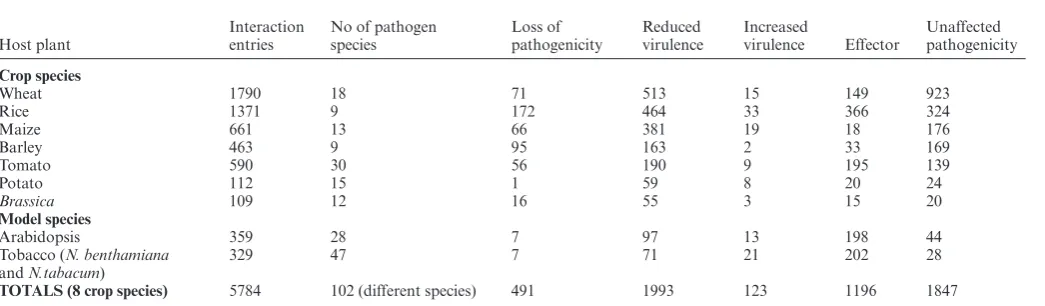
With increasing concerns over global food security, re-searchers in the international community are being encour-aged to investigate host plant-pathogen interactions in crop species, rather than just model pathosystems (29). In ad-dition, the availability of the published completed refer-ence genome for hexaploid bread wheat (Triticum aestivum) from the International Wheat Genome Sequencing Consor-tium (RefSeq v1.0) (https://www.wheatgenome.org/) (30) is increasing the pace of discovery for many wheat infecting species. Table5shows the interaction entries involving ma-jor food and feed crops: namely wheat, rice, maize, barley, tomato, potato, and Brassica. Together, these seven host plant species provide 37% of the data in PHI-base (5096 in-teractions) and involve 79 pathogenic species (60% of plant pathogen species in PHI-base). In contrast, the three model species Arabidopsis thaliana, Nicotiana benthamiana,and
Nicotiana tabacumprovide only 5% of the data (688 inter-actions). The high number of 48 pathogenic species tested
usingN. benthamianaandN. tabacumis predominantly due to the availability ofAgrobacterium-mediated transient ex-pression assays to test the function of effector proteins.
Mapping PHI-base phenotypes to Ensembl Genomes and FungiDB
PHI-base supplies phenotypic annotation for over 100 crop-plant-infecting microbial pathogens into Ensembl Genomes (31). This contribution was initiated as part of the Phy-toPath project (32). Recently, the implementation of an im-proved mapping pipeline developed by Ensembl has con-tributed to an increase in the number of genomes with PHI-base annotations by a factor of 8.7 in the total genomes of bacteria, fungi and protists compared to 2017 (De Silva
et al., NAR Database issue 2020, submitted). Also, as a result of extrapolating annotations for conserved genes to closely related species, Ensembl have now applied PHI-base annotations to over 14 000 genes in over 1000 genomes. These can provide potential clues for experimental valida-tion in other pathogens. Phenotype annotavalida-tions are also provided to FungiDB (33). FungiDB release 46 (October 2019) integrates 2633 PHI-base annotations, mapping to 1636 genes for 18 FungiDB hosted genomes. In addition to pathogen–host interaction annotations, severalin-vitro phe-notypes including growth, sporulation and penetration de-fects are displayed.
Migration to reference sequence UniProt IDs
PHI-base provides links to UniProt IDs when these ac-cessions exist in UniProt Knowledgebase (34). These links can provide further molecular protein annotation, includ-ing GO terms. However, new genomes are sequenced, and existing genomes are re-annotated. This can generate mul-tiple gene IDs and protein IDs for the same gene, caus-ing interoperability issues. We are currently migratcaus-ing to a system where we consistently use the UniProt identi-fier from the reference strain as listed by UniProt, rather than IDs from alternative (non-reference) strains. PHI-base has over 15 years of curated literature, and therefore con-tains∼11% legacy genes with no link to UniProt; here in most cases GenBank and EMBL records are referenced. For the genes originally curated with Uniprot IDs,∼10% were in the meantime moved to the UniParc sequence archive. Thus, a challenge exists to frequently review and update PHI-base records, until microbial pathogen pro-teomes become sufficiently refined and available at UniPro-tKB. In the meantime, single-species community-based efforts, such as FusariumMutantDB (https://scabusa.org/ FgMutantDb) (35), can effectively support PHI-base by providing mapping files for legacy gene IDs in several genome assemblies/strains to reference strain IDs avail-able at UniProtKB. BLAST mapping of PHI-base pro-teins using Blast2GO software (Vers. 5.2.5) (36) using de-fault parameters against the UniProtKB/TrEMBL (re-lease2019 07) identified 937 sequences without GO associa-tions. These sequences include many fungal species-specific effectors, for which currently GO terms are being created.
PHI-base BLAST tool
PHI-base has a strong focus on providing curated phe-notype data, with less emphasis on providing bioinfor-matics tools. Excellent tools for genome browsing and se-quence investigations are provided for example by Ensembl Genomes, FungiDB and other genomic resource providers (33,37). However, since 2017 we have provided an online sequence-to-phenotype BLAST search tool, called PHIB-BLAST. This allows users to map their own sequences to PHI-base accessions and the reported phenotypic outcomes are displayed in the BLAST result header, to give immedi-ate comparisons between species. Additionally, this inmation is also made available for download in FASTA for-mat, where PHI-base information is embedded in the single-line FASTA header for each protein sequence.
PHI-base usage
All of the publications citing PHI-base use are cited in the ‘about’ section of the database. Currently, 367 articles have cited PHI-base and 60% of these have been published in the past 5 years. New research investigations using PHI-base in-formation cover multiple active fields of research, including gut microbiomes, effector discovery, diagnostic markers for the early ‘in host’ detection of pathogens and finding lethal phenotypes in human pathogens to aid the drug discovery process. For those wishing to query past versions of PHI-base, these have been made available on our ‘data’ reposi-tory on GitHub (https://github.com/PHI-base). PHI-base is accessed by users in 130 countries over six continents. Over the past 3 years PHI-base usage has remained rela-tively stable at between 9000–16 000 searches and>400–600 full downloads per annum.
Outreach to inspire the next generation
To help PHI-base reach a different audience, a STEM (Sci-ence, Technology, Engineering and Mathematics) outreach article was recently published highlighting the importance of big data, bioinformatics and plant pathology (https:// futurumcareers.com/saving-plants-from-disease). This ar-ticle was aimed at an audience of 11–19-year olds to inform and enable them to consider career op-tions within these fields. Example case studies were taken from PHI-base and PhytopathDB. Accompanying worksheets (https://futurumcareers.com/Kim Hammond-Kosack-activity-sheet.pdf) were provided to stimulate dis-cussions and ideas within classrooms and beyond.
Future directions
PHI-Canto and ontologies. As reported previously (14) we have developed the multi-species web-based curation tool PHI-Canto (canto.phi-base.org). PHI-Canto is an im-plementation of the Canto community curation tool, de-veloped and used by the fission yeast database PomBase (38). In addition to supporting professional biocurators, researchers will be able to directly contribute annotations from their publications to PHI-base. PHI-Canto supports the annotation of GO, phenotypes, modifications and in-teractions.
6 Nucleic Acids Research, 2019
Table 5. Crop plant and model plant species contributions to PHI-base version 4.8
Host plant
Interaction entries
No of pathogen species
Loss of pathogenicity
Reduced virulence
Increased
virulence Effector
Unaffected pathogenicity
Crop species
Wheat 1790 18 71 513 15 149 923
Rice 1371 9 172 464 33 366 324
Maize 661 13 66 381 19 18 176
Barley 463 9 95 163 2 33 169
Tomato 590 30 56 190 9 195 139
Potato 112 15 1 59 8 20 24
Brassica 109 12 16 55 3 15 20
Model species
Arabidopsis 359 28 7 97 13 198 44
Tobacco (N. benthamiana andN.tabacum)
329 47 7 71 21 202 28
TOTALS (8 crop species) 5784 102 (different species) 491 1993 123 1196 1847
Curation in PHI-Canto involves specifying a publica-tion (using a PubMed ID), entering experimental pathogen and host genes (using UniProtKB IDs), creating geno-types (by listing alleles), annotating genogeno-types with one or more PHIPO (pathogen host interactions phenotype ontology) terms, and selecting an experimental evidence code. Pathogen–host interaction phenotypes are con-nected to the underlying genotypes of both the pathogen and the host (multi-species genotypes). Physical protein interactions––such as those identified in yeast two-hybrid or co-immunoprecipitation experiments––can also be curated which will be particularly useful in recording the direct in-teracting host targets of pathogen effectors.
Recent developments to PHI-Canto include three main improvements. First, the handling of host genes and geno-types. Second, the ability to capture increasingly complex pathogen host interactions, involving incremental changes to either, or both, the pathogen and the host. Third, mechanisms to capture single species phenotypes for the pathogen and the host. PHIPO was recently registered at the Open Biological and Biomedical Ontology (OBO) Foundry (http://www.obofoundry.org/ontology/phipo.html) to pro-mote reuse in the pathogen community.
PHI-Canto will enable accurate biocuration of pathogen–host interaction data into PHI-base by the international community. With increased PHI-Canto use this will ensure PHI-base can keep up-to-date with the ever-growing number of publications and newly devel-oped experimental techniques. Researchers interested in trialling PHI-Canto are encouraged to contact us by email ([email protected]).
Improving strain identification and disease curation. Cu-rating strain and disease names are problematic because a wide range of synonyms exist that are inconsistently used and published in different research communities. We have developed a standardized list of strains of importance to PHI-base and currently continue to revise inconsistencies in legacy data. A list of infectious disease names from PHI-base is currently being standardized to a set of external dis-ease ontologies for animals and plants. The revised nomen-clature will be used in future PHI-base releases and within PHI-Canto.
Curation of the fungicide and anti-infective literature. PHI-base is curating publications describing the target sites of some anti-infective chemistries although this has not been a high priority (Table 1). We plan to increase the cover-age of fungicide and anti-infective literature over the next 2 years. To support this work, we have curated a list of infective agents, including a description of the anti-infectives’ function, and cross-references to other databases (FRAC codes, CHEBI IDs, and CAS numbers) where avail-able. This inventory is available from our ‘data’ repository on Github (https://github.com/PHI-base). A pilot text min-ing study with Molecular Connections (PHI-base curation partner), will test bespoke machine learning algorithms us-ing the anti-infectives list to identify additional papers con-taining potential fungicide and other anti-infective targets for future curation.
Access to PHI-base annotations in graphical displays of bi-ological networks. KnetMiner (https://knetminer.org) is a digital research assistant with a Google-like search inter-face, predictive graph algorithms and interactive features to visualize biological knowledge networks (39,40). Knet-Miner mines millions of relations in a genome-scale knowl-edge network to identify novel clues about genes, gene net-works, and diseases (41,42). KnetMiner can search an in-tegrated database of crop and model organism genomes, curated databases such as PHI-base, gene expression, gene interaction information, ontologies and the scientific litera-ture to produce a ranked answer with evidence codes within seconds. The user can then interactively explore the auto generated knowledge network, hiding noisy or untrustwor-thy relations. So far knowledge networks containing PHI-base data have been developed for the cereal infecting fungal pathogens Fusarium graminearum and Zymoseptoria trit-ici.For plant and crop species, available networks include Arabidopsis, wheat and rice. In the future, our plans are to link knowledge networks for PHI-genes from Knetminer di-rectly into PHI-base.
PHI-annotations into additional databases. PHI-base cur-rently provides phenotype data to a variety of resources, in-cluding Ensembl Genomes (Protists, Bacteria and Fungi), FungiDB, Knetminer, FusariumMutantDB and GLOBI (43). Future plans include linking out to Ensembl Plants
and to the thousands of fungal genomes and hundreds of protist genomes in the MycoCosm database provided by the Joint Genome Institute (JGI) (44). One of the advantages of MycoCosm is that the genomes of pathogenic and non-pathogenic species are displayed and queried via the use of a navigation tree which assists users with minimal knowledge of taxonomic relationships and groups.
We will supply Gene Ontology annotations to GO, from where they will be distributed to other resources, including UniProtKB. PHI-base curators are working closely with the manual curation team of UniProtKB/Swiss-Prot to ensure that gene names and strains are consistent between entries, and we will explore mechanisms to share phenotype anno-tations with UniProtKB.
DATA AVAILABILITY
1. PHI-base 4:www.phi-base.org
2. PHI-base GitHub page:https://github.com/PHI-base
3. PHIB-BLAST:http://phi-blast.phi-base.org
4. PHI-wiki page: https://en.wikipedia.org/wiki/PHI-base
5. PHI-Canto (multi-species community annotation tool):https://canto.phi-base.org/
6. Linked resource - Ensembl genomes: http: //ensemblgenomes.org
7. Linked resource - FungiDB: https://fungidb.org/ fungidb/
8. Linked resource - Pombase:https://www.pombase.org/
9. Linked resource - KnetMiner:https://knetminer.org
10. Linked resource - ELIXIR UK: https://elixiruknode. org/
ACKNOWLEDGEMENTS
We thank all the species experts who contributed database annotations from their field of expertise into PHI-base. We are grateful to Dr Paul Kersey at the European Bioinfor-matics Institute (Cambridge, UK) for helpful discussions. Arathi Raguanath at Molecular Connections is thanked for her contributions to literature curation. We thank Dr Mi-dori Harris (University of Cambridge, UK) for discussing PomBase biocuration, and for advice in phenotype ontol-ogy development. We thank Drs Achchuthan Shanmuga-sundram, Evelina Basenko and the FungiDB consortium for helpful discussions on data sharing. Barnaby Norman is thanked for his contributions to the development of PHI-Canto.
FUNDING
PHI-base is funded from two UK Biotechnology and Biological Sciences Research Council (BBSRC) Grants BB/K020056/1 and BB/S020020/1. Rotham-sted authors M.U., K.H.P. and K.H.K. receive ad-ditional BBSRC grant-aided support as part of the Institute Strategic Programme Designing Fu-ture Wheat Grant (BB/P016855/1). Rothamsted au-thor A.C. receives support for the PHI-base project from Smart Crop Protection strategic programme (BBS/OS/CP/000001) funded through the BBSRC’s In-dustrial Strategy Challenge Fund. University of Cambridge
authors V.W. and K.R. are supported by the Wellcome Trust (104967/Z/14/Z). EMBL-EBI authors N.D.S., M.C.M., H.P. and A.Y. are supported by funding from the BBSRC Research Council Grants (BB/K020102/1, BB/I001077/1 and BB/S02011X/1) . This work is inte-grated into the Ensembl browser, supported in part by the Wellcome Trust (108749/Z/15/Z) and The European Molecular Biology Laboratory. Funding for open access charge: BBSRC Grant (BB/S020020/1).
Conflict of interest statement.The authors declare that the research was conducted in the absence of any commercial or financial relationships that could be construed as a potential conflict of interest.
REFERENCES
1. Brown,G.D., Denning,D.W., Gow,N.A.R., Levitz,S.M., Netea,M.G. and White,T.C. (2012) Hidden Killers: Human fungal infections.Sci. Transl. Med.,4, 1–9.
2. Fisher,M.C., Hawkins,N.J., Sanglard,D. and Gurr,S.J. (2018) Worldwide emergence of resistance to antifungal drugs challenges human health and food security.Science,360, 739–742.
3. Fisher,M.C., Henk,D.A., Briggs,C.J., Brownstein,J.S., Madoff,L.C., McCraw,S.L. and Gurr,S.J. (2012) Emerging fungal threats to animal, plant and ecosystem health.Nature,484, 186–194.
4. Myers,S.S., Smith,M.R., Guth,S., Golden,C.D., Vaitla,B.,
Mueller,N.D., Dangour,A.D. and Huybers,P. (2017) Climate change and global food systems: potential impacts on food security and undernutrition.Annu. Rev. Publ. Health,38, 259–277.
5. Bloom,D.E. and Cadarette,D. (2019) Infectious disease threats in the twenty-first century: strengthening the global response.Front. Immunol.,10, 549.
6. Hahn,M. (2014) The rising threat of fungicide resistance in plant pathogenic fungi:Botrytisas a case study.J. Chem. Biol.,7, 133–141. 7. UK Parliament. (2017)POSTNOTE. UK Parliament, Vol.545, pp.
1–5.
8. Brown,A.J.P., Gow,N.A.R., Warris,A. and Brown,G.D. (2019) Memory in fungal pathogens promotes immune evasion, colonisation, and infection.Trends Microbiol.,27, 219–230. 9. Hall,R.A. and Noverr,M.C. (2017) Fungal interactions with the
human host: exploring the spectrum of symbiosis.Curr. Opin. Microbiol.,40, 58–64.
10. Jones,J.D. and Dangl,J.L. (2006) The plant immune system.Nature, 444, 323–329.
11. Dangl,J.L., Horvath,D.M. and Staskawicz,B.J. (2013) Pivoting the plant immune system from dissection to deployment.Science,341, 746–751.
12. Fairlamb,A.H., Gow,N.A., Matthews,K.R. and Waters,A.P. (2016) Drug resistance in eukaryotic microorganisms.Nat. Microbiol.,1, 16092.
13. Spampinato,C. and Leonardi,D. (2013)Candidainfections, causes, targets, and resistance mechanisms: traditional and alternative antifungal agents.Biomed. Res. Int.,2013, 204237.
14. Urban,M., Cuzick,A., Rutherford,K., Irvine,A., Pedro,H., Pant,R., Sadanadan,V., Khamari,L., Billal,S., Mohanty,S.et al.(2017) PHI-base: a new interface and further additions for the multi-species pathogen-host interactions database.Nucleic Acids Res.,45, D604–D610.
15. Winnenburg,R., Baldwin,T.K., Urban,M., Rawlings,C., Kohler,J. and Hammond-Kosack,K.E. (2006) PHI-base: a new database for pathogen host interactions.Nucleic Acids Res.,34, D459–D464. 16. Urban,M., Pant,R., Raghunath,A., Irvine,A.G., Pedro,H. and
Hammond-Kosack,K.E. (2015) The Pathogen-Host Interactions database (PHI-base): additions and future developments.Nucleic Acids Res.,43, D645–D655.
17. Hancock,J.M., Game,A., Ponting,C.P. and Goble,C.A. (2016) An open and transparent process to select ELIXIR Node Services as implemented by ELIXIR-UK [version 2; peer review: 2 approved, 1 approved with reservations].F1000Research,5, 2894.
18. Wilkinson,M.D., Dumontier,M., Aalbersberg,I.J., Appleton,G., Axton,M., Baak,A., Blomberg,N., Boiten,J.-W., da Silva Santos,L.B.,
8 Nucleic Acids Research, 2019
Bourne,P.E.et al.(2016) The FAIR Guiding Principles for scientific data management and stewardship.Scientific Data,3, 160018. 19. Cairns,T.C., Studholme,D.J., Talbot,N.J. and Haynes,K. (2016) New
and improved techniques for the study of pathogenic fungi.Trends Microbiol.,24, 35–50.
20. Urban,M., Irvine,A.G., Cuzick,A. and Hammond-Kosack,K.E. (2015) Using the pathogen-host interactions database (PHI-base) to investigate plant pathogen genomes and genes implicated in virulence.Front. Plant Sci.,6, 605.
21. Brown,N.A., Urban,M. and Hammond-Kosack,K.E. (2016) The trans-kingdom identification of negative regulators of pathogen hypervirulence.FEMS Microbiol. Rev.,40, 19–40.
22. Son,H., Seo,Y.S., Min,K., Park,A.R., Lee,J., Jin,J.M., Lin,Y., Cao,P., Hong,S.Y., Kim,E.K.et al.(2011) A phenome-based functional analysis of transcription factors in the cereal head blight fungus, Fusarium graminearum.PLoS Pathog.,7, e1002310.
23. Wang,C., Zhang,S., Hou,R., Zhao,Z., Zheng,Q., Xu,Q., Zheng,D., Wang,G., Liu,H., Gao,X.et al.(2011) Functional analysis of the kinome of the wheat scab fungusFusarium graminearum.PLoS Pathog.,7, e1002460.
24. Yun,Y., Liu,Z., Yin,Y., Jiang,J., Chen,Y., Xu,J.R. and Ma,Z. (2015) Functional analysis of theFusarium graminearumphosphatome.New Phytol.,207, 119–134.
25. Dilks,T., Halsey,K., De Vos,R.P., Hammond-Kosack,K.E. and Brown,N.A. (2019) Non-canonical fungal G-protein coupled receptors promote Fusarium head blight on wheat.PLoS Pathog.,15, e1007666.
26. Jiang,C., Cao,S., Wang,Z., Xu,H., Liang,J., Liu,H., Wang,G., Ding,M., Wang,Q., Gong,C.et al.(2019) An expanded subfamily of G-protein-coupled receptor genes inFusarium graminearumrequired for wheat infection.Nat. Microbiol.,4, 1582–1591.
27. Hu,W., Sillaots,S., Lemieux,S., Davison,J., Kauffman,S., Breton,A., Linteau,A., Xin,C., Bowman,J., Becker,J.et al.(2007) Essential gene identification and drug target prioritization inAspergillus fumigatus. PLoS Pathog.,3, e24.
28. Tornqvist,E., Annas,A., Granath,B., Jalkesten,E., Cotgreave,I. and Oberg,M. (2014) Strategic focus on 3R principles reveals major reductions in the use of animals in pharmaceutical toxicity testing. PLoS One,9, e101638.
29. Manners,R. and van Etten,J. (2018) Are agricultural researchers working on the right crops to enable food and nutrition security under future climates?Global Environ. Change,53, 182–194. 30. IWGSC, Appels,R., Eversole,K., Stein,N., Feuillet,C., Keller,B.,
Rogers,J., Pozniak,C.J., Choulet,F., Distelfeld,A.et al.(2018) Shifting the limits in wheat research and breeding using a fully annotated reference genome.Science,361, eaar7191.
31. Kersey,P.J., Allen,J.E., Allot,A., Barba,M., Boddu,S., Bolt,B.J., Carvalho-Silva,D., Christensen,M., Davis,P., Grabmueller,C.et al.
(2018) Ensembl Genomes 2018: an integrated omics infrastructure for non-vertebrate species.Nucleic Acids Res.,46, D802–D808.
32. Pedro,H., Maheswari,U., Urban,M., Irvine,A.G., Cuzick,A., McDowall,M.D., Staines,D.M., Kulesha,E., Hammond-Kosack,K.E. and Kersey,P.J. (2016) PhytoPath: an integrative resource for plant pathogen genomics.Nucleic Acids Res.,44, D688–D693.
33. Basenko,E.Y., Pulman,J.A., Shanmugasundram,A., Harb,O.S., Crouch,K., Starns,D., Warrenfeltz,S., Aurrecoechea,C., Stoeckert,C.J. Jr., Kissinger,J.C.et al.(2018) FungiDB: An integrated bioinformatic resource for fungi and oomycetes.J. Fungi (Basel),4, E39.
34. UniProt,C. (2019) UniProt: a worldwide hub of protein knowledge. Nucleic Acids Res.,47, D506–D515.
35. Baldwin,T.T., Basenko,E., Harb,O., Brown,N.A., Urban,M., Hammond-Kosack,K.E. and Bregitzer,P.P. (2018) Sharing mutants and experimental information prepublication using FgMutantDb. Fungal Genet. Biol.,115, 90–93.
36. Gotz,S., Garcia-Gomez,J.M., Terol,J., Williams,T.D., Nagaraj,S.H., Nueda,M.J., Robles,M., Talon,M., Dopazo,J. and Conesa,A. (2008) High-throughput functional annotation and data mining with the Blast2GO suite.Nucleic Acids Res.,36, 3420–3435.
37. Karp,P.D., Ivanova,N., Krummenacker,M., Kyrpides,N., Latendresse,M., Midford,P., Ong,W.K., Paley,S. and Seshadri,R. (2019) A Comparison of Microbial Genome Web Portals.Front. Microbiol.,10, 208.
38. Rutherford,K.M., Harris,M.A., Lock,A., Oliver,S.G. and Wood,V. (2014) Canto: an online tool for community literature curation. Bioinformatics,30, 1791–1792.
39. Hassani-Pak,K. (2017)KnetMiner - an integrated data platform for gene mining and biological knowledge discovery.Dissertation. PhD, Bielefeld University, Germany.
40. Singh,A., Rawlings,C.J. and Hassani-Pak,K. (2018) KnetMaps: a BioJS component to visualize biological knowledge networks [version 1; peer review: 3 approved, 1 approved with reservations].
F1000Research,7, 1651.
41. Brandizi,M., Singh,A., Rawlings,C. and Hassani-Pak,K. (2018) Towards FAIRer biological knowledge networks using a hybrid linked data and graph database approach.J. Integr. Bioinformat.,15, 23. 42. Hassani-Pak,K., Castellote,M., Esch,M., Hindle,M., Lysenko,A.,
Taubert,J. and Rawlings,C. (2016) Developing integrated crop knowledge networks to advance candidate gene discovery.Appl. Transl. Genom.,11, 18–26.
43. Poelen,J.H., Simons,J.D. and Mungall,C.J. (2014) Global biotic interactions: an open infrastructure to share and analyze species-interaction datasets.Ecol. Informatics,24, 148–159. 44. Grigoriev,I.V., Nikitin,R., Haridas,S., Kuo,A., Ohm,R., Otillar,R.,
Riley,R., Salamov,A., Zhao,X., Korzeniewski,F.et al.(2014) MycoCosm portal: gearing up for 1000 fungal genomes.Nucleic Acids Res.,42, D699–D704.