Northumbria Research Link
Citation: Durou, Amal (2019) Automatic handwriter identification using advanced machine learning. Doctoral thesis, Northumbria University.
This version was downloaded from Northumbria Research Link: http://nrl.northumbria.ac.uk/42061/
Northumbria University has developed Northumbria Research Link (NRL) to enable users to access the University’s research output. Copyright © and moral rights for items on NRL are retained by the individual author(s) and/or other copyright owners. Single copies of full items can be reproduced, displayed or performed, and given to third parties in any format or medium for personal research or study, educational, or not-for-profit purposes without prior permission or charge, provided the authors, title and full bibliographic details are given, as well as a hyperlink and/or URL to the original metadata page. The content must not be changed in any way. Full items must not be sold commercially in any format or medium without formal permission of the copyright holder. The full policy is available online: http://nrl.northumbria.ac.uk/pol i cies.html
Automatic Handwriter Identification
Using Advanced Machine Learning
Amal Durou
Ph. D
Automatic Handwriter Identification Using
Advanced Machine Learning
Amal Durou
A thesis submitted in partial fulfilment
of the requirements of the
University of Northumbria at Newcastle
for the degree of
Doctor of Philosophy
Research undertaken in the Faculty of Engineering and
Environment
Department of Computer and Information
Sciences
Declaration
I declare that the work contained in this thesis has not been submitted for any other award and that it is all my own work. I also confirm that this work fully acknowledges opinions, ideas and contributions from the work of others.
I declare that the Word Count of this Thesis is approximately 35,514 words.
Name: Amal Durou
Signature: Durou
Date: 2019
Acknowledgments
Completing this thesis successfully has been part of my aim and ambition of lifelong learning and studying for a PhD has been challenging but the rewards are immeasurable. I have broadened my horizons and I have gained a great deal of knowledge which will help me on both personal and professional levels. First and foremost, my deepest gratitude and thanks go to God for providing me with this chance and helping me to fulfil this mission. Without His generosity, none of this or any other achievement would have been possible. AL HAMDU LELLAH.
My special thanks go to my principal supervisor Prof. Ahmed Bouridane for providing me with his continuous support, inspiration, guidance and encouragement; and for giving me the opportunity to undertake the study under his supervision. My sincere thanks also go to Dr. Somaya Al-Maadeed (Qatar University) for her very useful and insightful discussions on the subject through GrantNPRP # NPRP NPRP7-442-1-082.
Last but not the least, I would like to thank my family: my husband, my parents and to my brothers and sisters; their supplication (Duaa) is the light that illuminates my path towards achieving my dreams, for supporting me spiritually throughout writing this thesis and my life in general.
Abstract
Handwriter identification a challenging problem especially for forensic investigation. This topic has received significant attention from the research community and several handwriter identification systems were developed for various applications including forensic science, document analysis and investigation of the historical documents. This work is part of an investigation to develop new tools and methods for Arabic palaeography, which is is the study of handwritten material, particularly ancient manuscripts with missing writers, dates, and/or places. In particular, the main aim of this research project is to investigate and develop new techniques and algorithms for the classification and analysis of ancient handwritten documents to support palaeographic studies.
Three contributions were proposed in this research. The first is concerned with the development of a text line extraction algorithm on colour and greyscale historical manuscripts. The idea uses a modified bilateral filtering approach to adaptively smooth the images while still preserving the edges through a nonlinear combination of neighboring image values. The proposed algorithm aims to compute a median and a separating seam and has been validated to deal with both greyscale and colour historical documents using different datasets. The results obtained suggest that our proposed technique yields attractive results when compared against a few similar algorithms. The second contribution proposes to deploy a combination of Oriented Basic Image features and the concept of graphemes codebook in order to improve the recognition performances. The proposed algorithm is capable to effectively extract the most distinguishing handwriter’s patterns. The idea consists of judiciously combining a multiscale feature extraction with the concept of grapheme to allow for the extraction of several discriminating features such as handwriting curvature, direction, wrinkliness and various edge-based features. The technique was validated for identifying handwriters using both Arabic and English writings captured as scanned images using the IAM dataset for English handwriting and ICFHR 2012 dataset for Arabic handwriting. The results obtained clearly demonstrate the effectiveness of the proposed method when compared against some similar techniques.
The third contribution is concerned with an offline handwriter identification approach based on the convolutional neural network technology. At the first stage, the Alex-Net architecture was employed to learn image features (handwritten scripts) and the features obtained from the fully connected layers of the model. Then, a Support vector machine classifier is deployed to classify the writing styles of the various handwriters. In this way, the test scripts can be classified by the CNN training model for further classification. The proposed approach was evaluated based on Arabic Historical datasets; Islamic Heritage Project (IHP) and Qatar National Library (QNL). The obtained results demonstrated that the proposed model achieved superior performances when compared to some similar methods.
2
Publications
Journal Papers: (Published)
▪ A. Durou, I. Aref, S. Al-Maadeed, A. Bouridane and E Benkhelifa, “Writer Identification Approach Based on Bag of Words with OBI Features”, Information Processing and Management, ISSN: 03064573, Elsevier. Volume 56, Issue 2, March 2019, Pages 354-366
Conference Papers: (Published)
▪ A. Durou, A. Bouridane, and S. Almaadeed, “Text Line Extraction on Color and Grayscale Historical Manuscripts using Bilateral Filter,”.3rd International Conference on Signal, Image, Vision and their Applications (SIVA’15) University of Guelma, 2015, pp. 25–28.
▪ A. Durou, I. Aref, M. Elbendak, S. Al-Maadeed and A. Bouridane , “Improving the Performance of Offline Writer Identification using Dimensionality Reduction Techniques”. Seventh IEEE International Conference on Emerging Security Technologies 6-8 September 2017, Canterbury, UK.
Conference Papers: (Accepted and Presented in ICGS3 – Waiting for Publishing)
▪ A. Durou, I. Aref, M. Elbendak, S. Al-Maadeed and A. Bouridane, “An experimental comparison of machine learning approaches for Writer identification in handwritten documents”. 12th International Conference on Global Security, Safety & Sustainability (ICGS3). London, UK, 2019.
i
Contents
Contents ... i List of Figures ... iv List of Tables ... vi Acronyms ... vii Chapter 1 ... 1 Introduction ... 1 1.1 Overview ... 1 1.2 Motivations ... 11.3 Aims and Objectives ... 4
1.4 Contributions of the Work ... 5
1.5 Thesis outline ... 6
Chapter 2 ... 9
Background ... 9
2.1 Writing Process Development... 10
2.2 Categorisation of Writer Identification Systems ... 12
2.2.1 Writer identification vs. Writer verification ... 12
2.2.2 Offline and Online modes ... 13
2.2.3 Text-dependent and Text-independent hand writer recognition ... 14
2.3 Components of hand writer recognition systems ... 15
2.3.1 Pre-processing ... 15 2.3.2 Segmentation ... 20 2.3.3 Feature Extraction ... 24 2.3.4 Classification ... 29 2.4 Datasets Used ... 33 2.4.1 IAM Dataset ... 34 2.4.2 ICFHR-2012 Dataset ... 34
2.4.3 Islamic Heritage Project (IHP) ... 35
2.4.4 Qatar National Library (QNL) ... 36
2.4.5 Clusius Dataset ... 37
2.5 Summary ... 38
Chapter 3 ... 39
Text Line Extraction using Bilateral Filter ... 39
3.1 Introduction ... 39
ii
3.2.1 Top down methods ... 40
3.2.2 Bottom up methods ... 42
3.2.3 Hybrid methods ... 44
3.3 Proposed System ... 44
3.3.1 Medial Seam ... 45
3.3.2 Separating Seam Computation using bilateral filtering ... 46
3.3.3 Parameter Selection ... 48
3.4 Experiments ... 49
3.5 Results ... 50
3.6 Summary ... 56
Chapter 4 ... 58
Writer Identification using the Concept of Bag of Words ... 58
4.1 Introduction ... 58
4.2. Improving Approaches to Writer Identification ... 59
4.3. Proposed Methodology ... 62
4.3.1. Datasets ... 64
4.3.2 OBI Feature Extraction ... 64
4.3.3 Codebook Extraction ... 66
4.3.4 Grapheme Codebook Approach ... 67
4.3.5 Combining OBI and Grapheme Features ... 70
4.3.6 Dimensionality Reduction ... 71 4.3.7 Classification ... 73 4.4 Experimental Results ... 73 4.4.1 Single Codebook ... 74 4.4.2 Multiple Codebooks ... 75 4.5 Summary ... 84 Chapter 5 ... 85
Improving the Performance Through Dimensionality Reduction Technique ... 85
5.1 Introduction ... 85
5.2 Proposed Methodology ... 86
5.2.1 OBI Concatenate with Grapheme ... 87
5.2.2 Dimensionality Reduction Techniques ... 89
5.3 Classification ... 95
5.4 Experiments and Results ... 96
5.4.1 Measure the performance using English Dataset ... 96
5.4.2 Measure the performance using Arabic Dataset ... 98
5.5 Summary ... 99
iii
Writer Identification Using Machine Learning Approaches: A Comparative Study .... 101
6.1 Introduction ... 101
6.2 Overview of CNN ... 103
6.3 Machine Learning Workflow ... 105
6.4 Writer Identification using CNNs ... 106
6.5 Dataset ... 108
6.6 Experiments ... 108
6.6.1 Feature Selection and Extraction ... 109
6.6.2 Classification Methods ... 110
6.7 Results ... 111
6.7.1 Evaluation of Performance based on Machine Learning Model ... 112
6.7.2 Deep Learning ... 113
6.8 Summary ... 114
Chapter 7 ... 116
Writer Identification using Deep CNN Architecture ... 116
7.1 Introduction ... 116
7.2 Extracting Features and Classification using CNN ... 118
7.3 Convolutional Neural Network Model... 120
7.4 The proposed writer identification with Deep CNNs ... 122
7.4.2 Convolutional Layer ... 123
7.4.3 Pooling Layer ... 123
7.4.4 Convolutional Layer (Conv2) ... 124
7.4.5 Other Convolutional and Pooling Layers ... 124
7.4.6 Fully-connected Layer (FC) ... 124
7.5 Data Sets ... 125
7.6 Experiments and Results ... 125
7.6.1 Evaluation of Identification Performance ... 125
7.6.2 Comparison with Previous Works ... 129
7.7 Summary ... 130
Chapter 8 ... 132
Conclusion and Future Work ... 132
8.1 Summary of Thesis Contributions ... 132
8.2 Future Work ... 135
iv
List of Figures
Figure 1.1 Copybook Styles1 (A) United States (Zaner Bloser) (B) Chile (C) German ... 2
Figure 1.2 The Evolution Of Writing From Roman Square Capitals Through Medieval Gothic To Modern Handwriting ... 3
Figure 2.1 (A) Writer Identification (B) Writer Verification ... 14
Figure 2.2 Block Diagram Of Off-Line Writer Identification System ... 15
Figure 2.3 Baseline In Arabic Handwritten ... 19
Figure 2.4 (A) Sample Images (B) Thickness Normalised Versions ... 21
Figure 2.5 (A) Sub Word Components, (B) Detected Words [37] ... 24
Figure 2.6 Svm Example. Data Points Of A Two-Dimensional Classification Problem Separated By A Hyperplane. ... 31
Figure 2.7 Measure The Distance On Two Dimensions ... 32
Figure 2.9 Two Samples From Icfhr 2012 Dataset ... 35
Figure 2.10 Example Pages Of Ihp ... 36
Figure 2.11 Example Pages Of Qnl. ... 37
Figure 2.12 Sample Images Of Clusius Dataset... 38
Figure 3.1 Example Of Computed Medial Seams (Blue Lines) ... 46
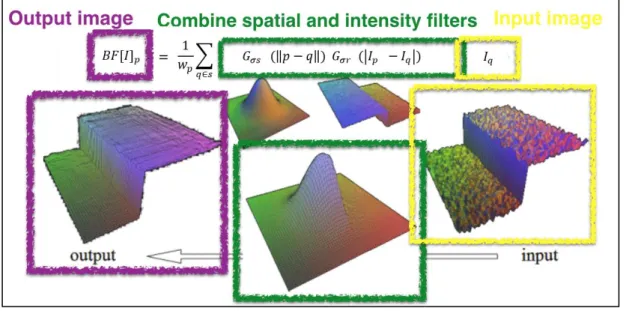
Figure 3.2 Idea Underlying Bilateral Filtering ... 47
Figure 3.3 Example Of Separating Seams (Red Lines) ... 48
Figure 3.4 The Result Of Our Algorithm: Al_Majid - Gray Image ... 52
Figure 3.5 The Result Of Our Algorithm: Al_Majid - Colour Image ... 52
Figure 3.6 The Result Of Our Algorithm: Aub - Gray Image ... 53
Figure 3.8 The Result Of Our Algorithm: Wadod - Gray Image ... 54
Figure 3.9 The Result Of Our Algorithm: Wadod – Colour Image ... 54
Figure 3.10 The Result Of Our Algorithm: Thomas Jefferson Image ... 55
Figure 3.11 The Result Of Our Algorithm: Qatar University Data ... 55
Figure 3.12 Comparison With The Approaches In [73] ,[74] ... 56
Figure 4.1 The System Overall Diagram Flow. ... 63
Figure 4.2 Obifs Computation For Scale Parameter Σ And 𝜀 [91] ... 65
Figure 4.3 Method To Calculate Obif ... 66
Figure 4.4 Grapheme Splitting Points By The Minima Heuristic [24] ... 67
v
Figure 4.6 System Performance For Codebook Size=1000 ... 75
Figure 4.7 Execution Time For Kpca Vs Kda (English Dataset) ... 77
Figure 4.8 Comparison Of The Performance For Top-1 Identification ... 78
Figure 4.9 Comparison Of The Performance For Top-5 (English Dataset). ... 78
Figure 4.10 Comparison Of The Performance For Top-10 (English Dataset). ... 79
Figure 4.11 Execution Time For Kpca Vs Kda (Arabic Dataset) ... 81
Figure 4. 12 Comparison Of The Performance For Top-1 (Arabic Dataset) ... 81
Figure 4.13 Comparison Of The Performance For Top-5 (Arabic Dataset) ... 82
Figure 4.14 Comparison Of The Performance For Top-10 (Arabic Dataset) ... 83
Figure 5.1 The Diagram Flow Of The Proposed Approach. ... 87
Figure 5.2 The Concept Of Dimensionality Reduction ... 91
Figure 5.3 System Performance For English Dataset ... 98
Figure 5.4 System Performance For Arabic Dataset ... 99
Figure 6.1 An Approach For Performing Offline Writer Identification ... 103
Figure 6.2 Flow Of Surf Algorithm ... 110
Figure 6.3 The Experiment Scheme ... 112
Figure 6.4 Performance Of Machine Learning Model Based On Surf ... 113
Figure 6.5 Performance Of Machine Learning Model Based On Bag Of Words ... 113
Figure 6.6 Identification Performance Using Alexnet Model ... 115
Figure 7.1 Proposed Approach... 118
Figure 7.2 Flow Chart Of Feature Extraction Based On Alex-Net Model ... 123
Figure 7.3 Identification Performance Of Our Proposed Approach – First Scenario ... 128
Figure7.4 Average Performance For The Dataset – First Scenario ... 129
Figure 7.5 Comparison Of The Performance Against Each Fully Connected Layer First Scenario ... 130
vi
List of Tables
Table 3.1 Parameters Selection ... 49
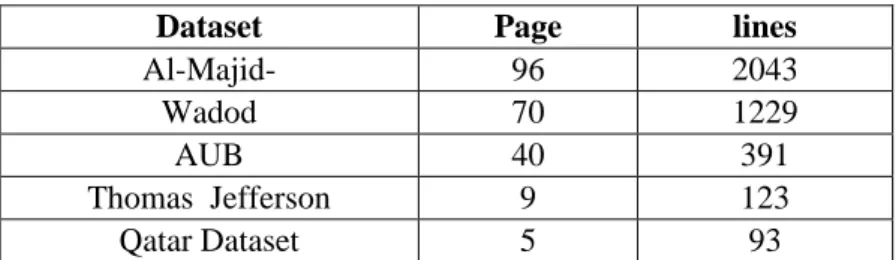
Table 3.2 Details Of The Datasets Used In Our Experiments ... 50
Table 3.3 Comparison With The Evaluation Protocol Of [75], [76]... 56
Table 4.1 Comparison Of System’s Performance With Previous Work [66] ... 75
Table 4.2 System Performance (Top-1) Versus Execution Time ... 77
Table 4.3 System Performance For Top-5 And Top-10 Identification Versus To The Performance In [66] ... 79
Table 4.4 System Performance (Top-1) Versus Execution Time For Arabic Dataset ... 80
Table 4.5 System Performance For Top-5 And Top-10 For Arabic Dataset Versus To The Performance In [66] ... 82
Table5.1 Measure System Performance Based On Different Dimension Reduction Techniques - English Dataset ... 97
Table 5.2 Measure System Performance Based On Different Dimension Reduction Techniques - Arabic Dataset ... 99
Table 6.1 System Performance (Top-1) Based On Surf ... 112
Table 6.2 System Performance (Top-1) Based On Sift ... 113
Table 6.3 Identification Performance Based On Fc Layers ... 115
Table 7.1 Identification Performance Based On Fc Layers – First Scenario ... 127
Table 7.2 Identification Performance Based On Fc Layers – Second Scenario ... 127
vii
Acronyms
Acronym Description
ANN Artificial Neural Network BIFs Basic Image Features
BoF Bag-of-Features
BoVW Bag-of-Visual Words
BoW Bag-of-Words
CNNs Convolutional Neural Networks
DBN Deep Belief Nets
DIA Document image analysis
DL Deep Learning
DNN deep neural network
DtG derivative-of-Gaussian
GPU Graphics Processing Unit
KNN K-Nearest-Neighbour
KPCA Kernel Principal Component Analysis LCPH local contour pattern histogram LLE locally linear embedding
MST Minimal spanning tree
NN Neural Networks
OBI Oriented Basic Image
viii
Acronym Description
PCA Principal Component Analysis RNN Recurrent Neural Networks SFH stroke fragment histogram
SIFT Scale Invariant Feature Transform
SOFM Kohonen Self-Organising Feature Map
SRKDA Spectral Regression Kernel Discriminant Analysis SR-KDA kernel discriminant analysis using spectral regression SURF Speed Up Robust Features
1
Chapter 1
Introduction
1.1 Overview
In recent years, there has been an increasing interest to use electronic documents over paper files, since they are inherently more secure than paper records while offering ease of retrieval and access. Despite this development, handwritten documents are still widely used by many companies and organisations because handwriting can be managed as a behavioural biometric issue. Several studies have revealed that different people have different handwriting styles, which means a handwritten document carries more information about the personality of the author that has written the document [1]. However, there is inherently a great degree of similarity in the writing styles of individuals, making it possible to distinguish the writer. Over the past few years, writer identification, which aims to determine the author of a specific document among different ones, has been an active research area and has recently been used in a large variety of real life applications such as data security in different services, financial activity, forensic science and can also be used in access control systems and the analysis of old documents [2],[3]. Although writer identification has been studied in the last few decades, it still remains one of the most important topics due to the recent development in the fields of pattern recognition and computer vision, which have led to a renewed interest in writer identification applications.
2
Handwriting is a process that has been mainly utilised for communication for centuries and its features have evolved in many ways over time. For instance, people start to learn handwriting skills at school depending on geographical location, and culture Figure (1.1). With the passage of time, unique writing characteristics have developed and progressed based on individual people and the parameters mentioned above. These individual writing characteristics can be used to recognise one person’s writing style from another, thus making it possible to identify a writer.
(a) (b) (c)
Figure 1.1 Copybook styles1 (a) United States (Zaner Bloser) (b) Chile (c) German
Moreover, compared to electronic document analysis, a handwriting document contains more information about the personality of the writer. In addition, handwriting text has the ability to show important information about the author’s status and can be
utilised at some levels to indicate the physical, mental and emotional state of the author [3]. In a handwritten text, writing movement and stroke have been shown to identify the unique characteristics of the writer [4]. In some cases, it may be that two writers share some common attributes though their styles will be similar in their entirety. This illustrates that the writing style for each individual is consistent and unique and demonstrates how the writing styles of different writers will be diverse and unique.
3
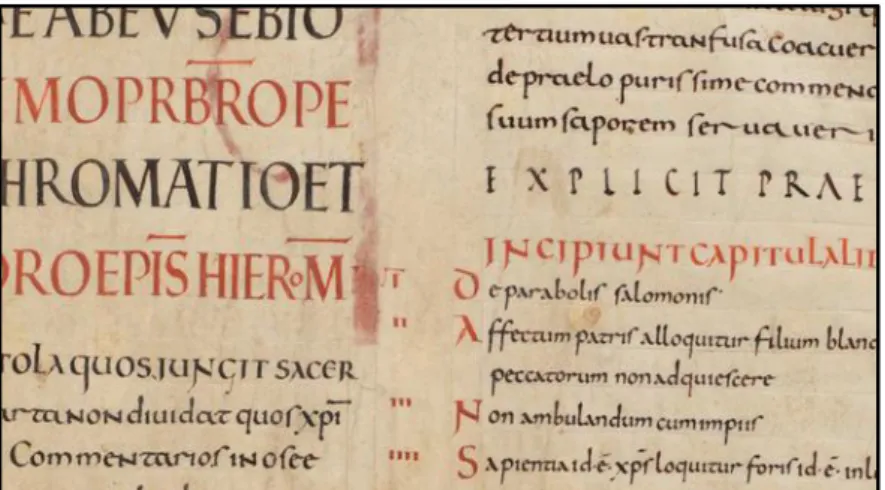
investigation of ancient manuscripts and the experts, palaeographers, are responsible to perform the process of handwriting identification. As they are able to identify the writing features of a specific scribe and are able to distinguish the type of handwritten lettering used in a given historical period, they can predict the period of the writing. Therefore, developing a computer system to perform writing identification tasks of large amounts of historical documents will be a helpful application for the historians and end-users. Typically, ancient manuscripts can be accessed and collected from archives and libraries so that the collected information from individual documents such as punctuations and abbreviations can help palaeographers identify the writer and the date of creation of the manuscript Figure (1.2). A computer system can then be designed and implemented in order to enable the palaeographers to recognise the dating and classification of historical documents.
Figure 1.2 The evolution of writing from Roman square capitals through medieval Gothic to modern handwriting
1.2 Motivations
Automated handwriter identification is an approach used to assign a handwriting script sample to one author [1], [5] and it is currently a well renowned area in the field of pattern recognition. It begins by obtaining the biometric data of each writer to extract
4
the unique and discriminative features of an individual. They are then matched against the stored features in order to get the most likely results. It has received profuse attention from the research communities and hence has become an active research topic[1], [2], [7], [8].
However, many issues are still unresolved such as the insufficiency of datasets and handwriting material in different languages. The recognition process is still an extremely challenging task due to the fact that each writer has personal handwriting patterns from different aspects such as qualities and styles that are subject to both inter-writer and intra-inter-writer variations [6]. During the last few years, significant research efforts have been made to investigate issues associated with handwriting identification. During the last few years, the research activities surrounding handwriting identification have seen a renewed interest due to the possibility of developing numerous commercial applications including forensic science, document analysis and investigation of historical documents[1], [8],[9]. This thesis aims to investiage novel identification approaches especially for the identification of ancient manuscripts.
1.3 Aims and Objectives
The main aim of this work is to develop an accurate handwritten identification system by investigating new techniques and tools for the classification and analysis of ancient documents depending on different multi-scale features extraction techniques. In addition, another aim is to deploy the proposed techniques to support palaeographic studies by automatically deriving the writer of the relevant scripts. Therefore, the general objectives are to plan, analyse, design, build, and test novel classification algorithms and tools to support the palaeographic analysis of historical Arabic manuscripts. The objectives of this research can be summarised as follows:
5
• To investigate the concept of multi-scale feature extraction at a textural/global level for use in writer identification.
• To investiaget novel methods that can effectively combine different features I norder to improve identification performance.
• To investiage and develop a robust handwriter identification system that can be used by forensic analysts to analyse noisy and distorted documents.
1.4 Contributions of the Work The key contributions of this work are:
1. Text Line Extraction for Colour and Grayscale Historical Manuscripts: A novel algorithm for the segmentation and detection of text lines of grey-scale and colour historical documents has been proposed to evaluate medial seams and separating seams. The novelty relates to an efficient method to separate the two seams using a bilateral filter approach [11].
2. Writer Identification using the concept of Bag of Words with OBI Features: Most existing handwriting identification systems use either statistical or model-based approaches. To further improve the performance, we propose to combine both approaches using Oriented Basic Image features and the concept of graphemes codebook. To reduce the resulting high dimensionality of the feature vectors a Kernel Principal Component Analysis has been used [12]. To further improve the identification performances, a number of nonlinear dimensionality reduction algorithms such as Kernel Principal Component Analysis (KPCA), Isomap, locally linear embedding (LLE), Hessian LLE and Laplacian Eigenmaps have been used and evaluated demonstrating that KPCA outperforms other techniques [13].
6
3. A Comparative Study of Machine Learning Approaches for handwriter Identification: A detailed comparative analysis approach to assess the performance of AlexNet deep learning architecture using a Support vector machine (SVM) and K-Nearest-Neighbour (KNN) has been carried out. The results have led to investigate the challenges of CNNs based methods for writer identification [14].
4. Offline Handwriter Identification using Convolution Neural Networks: A CNN architecture has been used as a feature extractor to evaluate the discriminative power of the features extracted by the connected layers of Alex-Net model. The features were evaluated separately and then combined before a nonlinear SVM is applied for classification to effectively improve the identification performances. The proposed approach was evaluated using different datasets including the Islamic Heritage Project (IHP), Qatar National Library (QNL) and Clusius datasets.
1.5 Thesis outline
The thesis is structured in eight chapters, a brief description of the contents of these chapters is given as follows:
• Chapter two gives some useful background and literature review including an overview of the main components that are required for any handwriter recognition system. The corresponding literature review relating to each contribution is also presented in the chapters.
• Chapter three discusses how to extract a text line on historical manuscripts (colour and grayscale) using a bilateral filter. An efficient method is proposed for the segmentation and detection of text lines of grey-scale and colour historical
7
documents. The algorithm emplys a bilateral filtering strategy to evaluate and separate two types: medial seams and separating seams.
• Chapter four proposes a new approach using a combination of statistical and model-based approaches using Oriented Basic Image features and the concept of graphemes codebook. To reduce the resulting high dimensionality of the feature vector, a Kernel Principal Component Analysis (KPCA) has been used. To gauge the effectiveness of the proposed method, performance analysis has been carried out using the IAM dataset for English handwriting and ICFHR 2012 dataset for Arabic handwriting.
• Chapter five describes in detail how to measure and optimise the performance of an offline text writer identification system using dimensionality reduction techniques. A variety of nonlinear dimensionality reduction algorithms such as Kernel Principal Component Analysis (KPCA), Isomap, Locally linear embedding (LLE), Hessian LLE and Laplacian Eigenmaps have been used. The performance has been evaluated based on the IAM dataset for English handwriting and ICFHR 2012 dataset for Arabic handwriting.
• Chapter six provides a comparative study of machine learning approaches for handwriter identification. It aims to assess and compare the performance of AlexNet deep learning algorithm with two machine learning classification approaches Support vector machine (SVM) and K-Nearest-Neighbour (KNN). • Chapter seven presents an efficient approach for handwriter identification using
deep learning technology by employing Alex-Net model to extract image features from the fully connected layers (FC6, FC7 or FC8) of the model providing 4096, 4096 and 1000 feature vectors, respectively. These feature vectors are then classified using an SVM model to effectively improve the identification
8
performances. The proposed approach is evaluated using different datasets including the Islamic Heritage Project (IHP), Qatar National Library (QNL) and Clusius datasets. In addition, experiments have been extended using IAM and ICFHR-2012 datasets to further demonstrate the efficacy of the proposed method. The results obtained have been compared against a few similar techniques and the analysis suggests that our method achieves superior results.
• Finally, Chapter eight highlights the conclusions of the thesis and lists several suggestions for future work.
9
Chapter 2
Background
A handwriter identification system allocates an unknown script to a specific writer from a group of possible writers. To achieve this, a one to many search procedure needs to be carried out on a large database containing handwriting samples of known writers to return a result as a list of candidates [1], [5]. The recognition process is still a very challenging task due to the fact that each person has different handwriting qualities and styles that are subject to both inter-writer and intra-writer variations [6]. During the last few years, significant research efforts have been devoted to tackling the problems associated with handwriting identification resulting in a plethora of papers, However, the topic still remains an active research area having many useful applications including forensic and historical document analysis [1]. Moreover, handwriting identification aims to simplify the task of forensic experts by providing them with semi-automated tools in order to enable them to narrow down the search to determine the final identification of an unknown handwritten sample. Therefore, an identification algorithm aims to produce a list of predicted writers of the unknown handwritten sample ranked in terms of confidence measure metrics for use by the forensic expert who will ultimately make the final decision.
These last few years have witnessed a steady rise in writer identification and verification [15]–[19]. Typically, the process to identify a writer based on a random handwritten sample can be a beneficial application and can be utilised in many different fields including forensic evidence and document analysis. This approach is different when compared to other biometric methods where there is a requirement to
10
provide evidence of material and the details of the crime [20]. Moreover, various applications have been designed and developed based on writer identification and verification [20].
There are some examples from these applications such as how to recognise ink type [15], identify the handwriting in documents and recognise the language used [21], detect the forgery processes [22]. The technique has also been demonstrated for use to analyse medieval and historical documents [23]–[26] including to identify a writer from handwritten musical scores [27] and personal handwriting script recognisers [28].
Most of the early works on writer identification were developed mainly for the English language. Recently, the research community has targeted other languages, such as Chinese, Dutch, Arabic, and Greek resulting in a significant contribution to the field as a whole [3]. Although there are many researchers working in writer identification of the Arabic language, as far as research is concerned, there are still many issues surrounding this language that are active and under investigation.
2.1 Writing Process Development
In medieval times prior to the discovery of printing press devices, texts and documents would have been created solely by hand to write or copy text onto parchment. The tools used such as quill pen and ink would have, in most cases, been made by the authors themselves. At that time, literacy and writing where not skills carried by the majority. Generally, those who were literate would have been academics or professional writers with a view to producing literature such as legal letters, religious texts, medical and scientific documents.
11
Additionally, these writers would have the sole participants in almost all of the book production process. Usually, the parchment that would have been used as the writing material was made from animal hides made from sheep or goat skin. There would be a number of processing phases to carry out in order to produce this parchment to render them suitable for use as a writing material starting from cleaning, treating, washing, and stretching the skin.
In the last phase, the books would be put together by cutting the processed hides into booklet sized pages and then bound together to create the book in a form suitable for its purpose. Normally, there are two sides of the resulting parchment, the first side is called the inner ‘flesh’ while the other side is called the outer ‘hair’ and can shape part of the page texture and colour that is used in image reproductions.
The writing of these types of manuscripts is not an easy task and can be a lengthy process. Scribes observed that the period needed to complete an average manuscript is between 4-6 sides/day, which is equivalent to 24-40 sides/week [29]. The progress rate of the composition would be impacted directly with the selected font to achieve the target work, meaning that if the font used is more formal such as Textura then the produced work will contain on wonderful and higher-quality texts. Writing by using formal fonts required the scribe to lift the pen after each stroke. While the use of cursive secretary script is faster and is perfect for writing everyday documents, the font choice mainly depends on the text material and the language in which it was written [29].
One of the identification task issues is that professional scribes can create some fonts to assign to the text that they wish to copy, thus making the identification task more difficult. Furthermore, a group of scribes may work together on a single manuscript
12
and attempt to change their personal writing styles in order to make their fonts similar. They would aim to make the writing transition process smooth and not easily detectable. From a writer identification point of view, this copying style is essentially a type of forgery and has been performed to present the manuscript in a professional manner.
2.2 Categorisation of Writer Identification Systems
Writer identification remains a challenging biometric recognition application. It is carried out as a pattern recognition problem to allocate an unknown written sample/pattern to one class (e.g., a writer) out of a set of classes (writers) [30]. The process can be defined as an algorithm/tool to assign a handwriting sample to one author/writer [1], [2].
2.2.1 Writer identification vs. Writer verification
As a general concept, writer recognition is an approach to detect the identity of a person using a computer system based on the analysis of his/her handwritten input such as paper documents. This is known as a behavioural feature. This recognition process can be illustrated as a biometric method and can be implemented in two different ways: writer identification mode or writer verification mode. In the first mode, the features of a group of known writers are extracted and stored in a database. Then, an unknown document is processed to identify the writer among the group. On the other hand, in the writer verification mode, an unknown document of a known writer is fed to the system to decide if both samples come from the same writer. This thesis is concerned with an investigation of writer identification mode [31]. A block diagram of both types has been illustrated in Figure (2.1).
13 2.2.2 Offline and Online modes
A typical writer identification system can operate in two methods: offline and online. The writing behaviour in the online mode is taken from the writer in real-time by converting it into a list of signals and directions via a writing tablet. However, for the offline mode, the scanned and digitised handwriting images are used to identify the writer [2], [32].
In more detail, in on-line mode, a written script is supplied by the user in real-time in order for the system to identify the writer (input text). This process can be done using a digitiser tablet with a special pen. A digitiser tablet (sometimes known as a graphics tablet) is a computer input device used to convert the input data (text) into a format suitable for computer processing at a constant rate [33]. In fact, there are some advantages to the on-line mode writer identification system over the off-line mode writer identification system. For example, the on-line mode is a real time system and does not need much work on the pre-processing stage [34]. The segmentation stage, as a pre-processing step, is x relatively easy to implement. Moreover, an on-line mode system can be used to process an individual’s signatures and the recognition process can be carried out using one-dimensional data. Conversely, on-line systems have some disadvantages including an inability to process text printed or handwritten documents requiring special tools.
14 Database Identification System Writer (1) Writer (n) Different Writer Query Sample Verification System Same Writer Test Sample (B) Test Sample (A)
(a)
(b)
Figure 2.1 (a) Writer identification (b) Writer verification
On the other hand, an off-line mode system can be used to recognise handwritten captured as a two-dimensional image. In this case, an optical scanner or digital camera can be used as an input tool to capture the image of the handwritten text in a suitable format. The main advantage of off-line mode systems is that the identification task is carried out using stored or computer-based data, so such systems can be used for other applications such as processing historical and ancient documents. However, off-line systems have some disadvantages, for example, they do not operate in a real time mode and usually require significant pre-processing, feature extraction and classification [35].
2.2.3 Text-dependent and Text-independent handwriter recognition
Writer identification can be categorised into two approaches; dependent and text-independent [36]. In the text-dependent method, all writers provide the same known text [7], [10] while in text-independent counterpart, the dataset contains different text and sometimes different languages. The writer features can be captured using
15
statistical parameters taken from different handwritten pages to generate a set of features that are insensitive to the text itself [26].
2.3 Components of handwriter recognition systems
A handwriter identification system consists of four main stages as shown in Figure (2.2): pre-processing, segmentation, feature extraction, and classification. It is worth noting that some of the previous works have used different approaches by merging some of these stages together, despite the fact that most of the works apply the same methodology [34].
Figure 2.2 Block diagram of off-line writer identification system
2.3.1 Pre-processing
The pre-processing stage is considered as the first step in any identification system. Sometimes, raw image data contains noise consequently deteriorating the performance of the identification thus rendering it unfeasible to process the input images. Hence, a pre-processing step is essential to remove irrelevant information (noise) to enhance the input image quality [19], [37]. To achieve this stage, a number of techniques have been proposed such as noise removal, thresholding, thinning, skew/slant correction, baseline estimation and normalisation [37] . The selection from these techniques should be based on the required recognition algorithm.
16
▪ Noise removal
Noise originates when input data (images) are created using scanners or writing tools. The effect of noise usually appears as a distortion in the image. Therefore, it is important to detect and remove the noise before starting any recognition process. There exist several approaches that can be used to remove these variations (noise) but, in particular, there are two that have been widely used in different previous works [37]; these are:
1) Filtering: filters have been designed and implemented to eliminate the noise and reduce various spurious effects so that the input image can be enhanced. Most of the filtering types are classified as spatial domain or frequency domain. There are many useful filtering operations such as sharpening, smoothing and adjusting brightness and contrast. One of the requirements is to design a linear spatial filter that can be used to modify an imageby changing all the pixel values using a linear function of the values of nearby pixels. This filter is used to create a mask and then a convolution operation is applied between the image and the mask in equation (2.1).
𝑂𝑢𝑡(𝑥, 𝑦) = ∑ ∑ 𝑤𝑖 𝑗 𝑖𝑗 𝑖𝑛𝑝(𝑥 − 𝑖, 𝑦 − 𝑗) (2.1)
where wij : pixel weight of the mask (grey level).
(i,j) : Pixel location inside the mask
Inp (x, y): The input image (original image).
2) Mathematical Morphological Operations: in image processing, this operation is a powerful tool used mainly to enhance the quality of the input images. It is very similar to the concept of convolution operation in the spatial filter, but in this approach, the
17
convolution process has been replaced by a logical operation.This operation uses the mathematical theory of depicting shapes using sets [38]. In the image processing field, the processes of erosion and dilation are used by mathematical morphology operation to examine the interaction between the target image and a structural element that has been selected. Actually, the operation of mathematical morphology is different compared to traditional linear image processing, because the mathematical morphology processes are non-linear, and therefore these processes are mainly depended on using another form of algebra that is not linear algebra [16].
▪ Thresholding
It is a simple technique used to analyse an image by partitioning it into a foreground and background. This method is performed using a threshold value. There are some advantages to this process as a less storage space is required and subsequently, the processing speed is faster. However, when we need to convert a grayscale image to a binary image, it is very important to select a suitable threshold value. The mapping function in equation (2.2) can be used as the simplest way to implement the thresholding operation [39].
𝑜𝑢𝑡(𝑥, 𝑦) = { 1 𝑖𝑓 𝐼𝑛𝑝(𝑥, 𝑦) < 𝑡ℎ𝑟𝑒𝑠ℎ𝑜𝑙𝑑
0 𝑖𝑓 𝐼𝑛𝑝(𝑥, 𝑦) > 𝑡ℎ𝑟𝑒𝑠ℎ𝑜𝑙𝑑 (2.2)
where:
Inp (x,y): The input image (original image).
Out (x, y): the output image
There are two types of thresholding techniques. The first type, called Global thresholding, which can be applied when the intensity values of the input image are sufficiently distinguished into two groups (as objects and the background). This
18
method aims to create a single threshold value that can be applied over the whole document. A histogram is utilised to compare the intensity values of the whole image and then the threshold value can be selected. Although, in some cases, the illumination level throughout the whole document is not uniform, and so, the use of global binarisation methods will act to generate marginal noise which means this method isn't suitable in these cases. Thus, to overcome this problem, local thresholding techniques have been proposed to solve this issue and it characterises the second type of thresholding technique [40]. The main idea of these techniques is to extrapolate a threshold value for each pixel based on its grayscale values of neighbouring pixels [41].
In the case of the images that have been affected with some distortion and noise e.g. poor contrast and/or complex patterns, there is a thresholding algorithm based on the selected feature can be used to binarise these images [42]. This algorithm has been established based on three steps; the first one is to set the thresholds using Otsu's algorithm [43]. Then, the texture features that have a relationship with each threshold are extracted using the run-length histogram. At the last step, the best threshold is chosen, and the desirable document texture features are maintained.
▪ Baseline estimation
Baseline estimation is an important phase in the writer identification task and sometimes called a reference line. It is an imaginary line but an essential task to extract the features of the input image. There are several baseline estimation techniques that have been proposed and centred around a baseline detection such as text normalisation, character segmentation, slant and slop correction (this has been adopted in this thesis for feature extraction). In addition, there are various potential problems that can arise
19
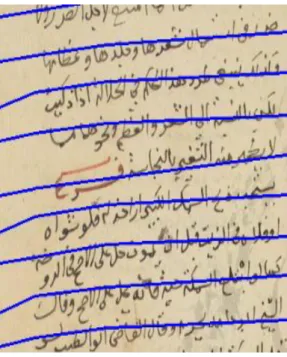
and must be resolved in order to be able to extract a baseline. For example, in the case of Arabic scripts, a baseline detection of Arabic handwritten documentation as shown in Figure (2.3) is more difficult compared to other languages. Essentially, there are numerous techniques used to detect the baseline. One of the approved techniques for printed text is called the horisontal projection [38] .
Figure 2.3 Baseline in Arabic handwritten
▪ Normalisation
In image processing, normalisation is a transformational process used to modify a specific range of pixel intensity values of certain images. It is an essential task in writer identification because the writing type is not the same style for all writers. One of the processes called size normalisation is employed to detect the character or word sizes and then modify them to a standard size [38]. Basically, there are various types of normalisation such as min-max normalisation, decimal scaling, and standard deviation method. Therefore, selecting a suitable normalisation method depends on the application at hand and the algorithm in which the normalised data will be used.
The min-max normalisation approach is a simple technique in which the data is fit in a pre-defined range as it is very common and usually more efficient. This is considered an important step in the identification stage in this work in order to address the issues relating to the differences in position and size, such as correlation and template
20
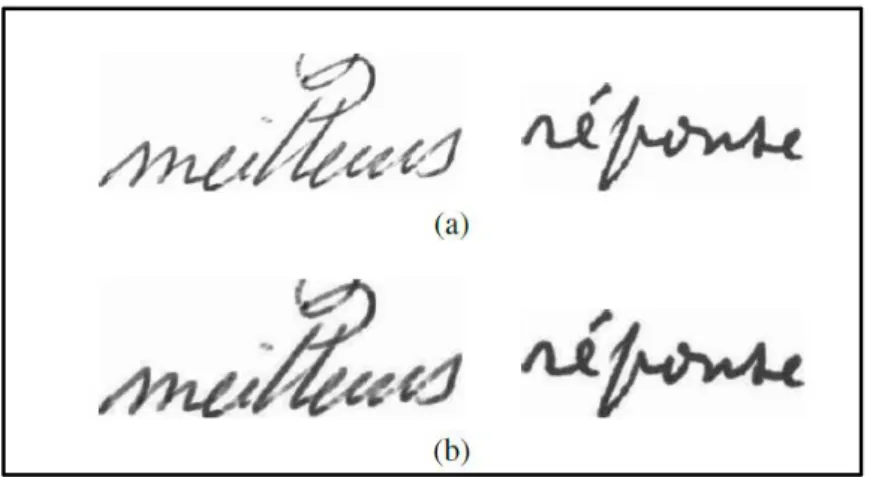
matching. In essence, it can be stated that the main purpose of the normalisation process is to manage the variation of the text in the image and then produce a uniform output image. The variations of the handwritten text (from different writers) will then be reduced. Figure (2.4) illustrates a group of samples as an example that presents different stroke thickness and their normalised versions.
2.3.2 Segmentation
In the segmentation stage the output image is split into regions or categories. The newly defined regions usually correspond to a group of objects or some parts of those objects. The main idea is to allocate each pixel of the processed image to one of the newly defined regions. The input image illustrates a page of handwritten script or printed document [37]. Hence, the image segmentation process is mainly focused around subdividing the input image to homogeneous parts that are semantically meaningful based on certain properties like intensity or texture. In a writer identification task, the segmentation stage is an essential stage because the segmentation algorithm is used to divide an image that represents a document page into lines where each line is split into words and finally the words into characters [39]. Generally, the segmentation process can be classified into two types; external segmentation and internal segmentation [34].
21
Figure 2.4 (a) Sample images (b) thickness normalised versions
External segmentation: this is used to handle page segmentation. As mentioned above, the document is divided into its basic parts, which are paragraphs, sentences, words or characters. It mainly addresses how to decompose the page layout into its logical parts [44]. Within this, there are two aspects that need consideration to accomplish the page layout analysis; structural and functional. A structural analysis deals with dividing the input document into the main components of the page such as paragraphs, lines, and words. A functional analysis looks into the basic principles used to identify the main components of the page such as title, abstract, etc. While internal segmentation is mainly used to split up the characters and letters that create words, but it can only be used with languages such as English that do not have a large amount of style variations. Therefore, it is very difficult to apply this method for Arabic texts.
➢ Line Segmentation
As the efficiency of segmentation has a direct impact on the performance of the recognition process, line segmentation must be carried out accurately and with a minimum number of errors. There exist various hand-written text line segmentation methods for extracting handwritten text such as the Hough transform [45]and horisontal projection[46]. Hough transform is a popular method for line
22
segment detection and is used to detect broken lines, however, its main problem is that the processing speed is slow. While the other method, which is horisontal projection analysis, is known as the simplest approach that can be utilised to detect text lines. The local maxima and local minima of the projection profiles have to be identified [39].
➢ Word Segmentation
Word segmentation technique is typically used after the line segmentation technique and is used to divide the separated lines into words. The main idea of this technique is to start by detecting the connected components for each line in the target document. The connected components are then classified into several clusters by combining the word boundaries. In any case, finding the word boundaries within the text line is not a reasonably easy task. Therefore, in order to get high performance word segmentation, it is important to develop an effective algorithm for detecting word boundaries. One of the conventional approaches is to find the physical gaps between connected components [47]. This approach assumes that the size of the gap between any two words must be larger than the gap size between any two characters. This is can be applied for both English and Arabic [48].
On the other hand, the Arabic language has a different style of writing compared to the other languages such as the writing direction is from the right side to left and the words are created using connected characters. But in Arabic text recognition, the word segmentation process represents an important step to achieve the recognition process of the text in an efficient manner, because if it occurs any error during the segmentation process, then this will lead to produce a recognition error
23
and reduce the overall performance of the process. Moreover, in the literature, there are two efficient methods that have been used before in some previous researches that are worked in Arabic text recognition. The first one is segmentation-based systems, while the other is segmentation free systems [49], a brief statement about both of them as following:
1- Segmentation based system: in this method, the segmentation process is classified into four phases [49]:
a. Isolated characters method: it is mainly used to recognise the isolated characters and numbers.
b. Segmenting words into characters: This method tries to segment each word into individual characters, then apply the recognition process over each character individually.
c. Segmenting words into their primitives: this method focuses to segment a sub-word or the connected components into symbols as shown in Figure (2.5(a)), the symbols represent a character, ligature, or part of a character.
d. Integration of recognition and segmentation: this method aims to accomplish the recognition process as the first step, after that the segmentation can be performed as the second step.
2- Segmentation free system: Segmentation free system: as illustrated in the figure (2.5(b)), this method focuses to carry out the recognition process over the whole word without the segmentation process.
24
Figure 2.5 (a) sub word components, (b) detected words [37]
2.3.3 Feature Extraction
Feature extraction is one of the most important stages of a pattern recognition system as it is a key process to identify and represent the different objects in the image. This process is also essential for representing the objects by using a set of features that are created as a form of a vector called a feature vector. The main purpose of this vector is to represent the objects and then at the last stage, to classify these as will be explained in the next section.
Feature extraction has been used for a long time and previous research has targeted feature extraction algorithms that were proposed and developed based on different parameters such as colour, texture, and shape. Its aim is to convert the target image into a group of features that can be used to represent that image, which means, the arbitrary data (input image) is treated and broken down to qualitative characteristics or numerical features [50].
Usually, each image has various contents and elements that are used to produce the full image such as the colour, texture, shape, etc. One of the critical procedures in the feature extraction process is a feature selection that has proven its effectiveness in many of the previous applications. In spite of various methods that have been
25
suggested to extract features in literature, it is still very difficult to select a suitable feature that is expected to produce and guarantee a high-performance system. Colour is the clearest visual feature and colour moments have been used for indexing and recovering images. Colour moments comprise three parts; the first order is called the mean, the second order is standard deviation and the third order is skewness and all of them have shown efficacy in representing colour distribution of images[51]. Stricker and Dimai [52] have proposed a method whereby subdividing images and relying on fully segmented images is the main approach. Their approach has been developed based on 5 partially overlapping, fuzzy regions. In addition, the texture is known as a powerful cue in region-based image segmentation techniques. One of the most important features in various pattern recognition is a texture feature, which is known as a low level feature. It is mainly used to describe a whole image or a region [53]. Texture analysis has long been used in various research and there are many algorithms, e.g. using Gabor wavelet features and then comparing with multiresolution texture features [54]. Due to the similarity between multi-resolution filtering methods and the process of human visual systems, the authors in [6] have proposed a method for using Gabor and Wavelet Transform techniques for texture description by using the analysis of spatial frequency content.
There are several types of features that can be examined and investigated when processing these images. The numerous features that can be examined and then employed to distinguish the main markers are general features and domain-specific features.
• General features: these types of features can be classified as independent features such as colour, texture, shape and spatial. These features are divided into:
26
1. Pixel-level features: Features can be determined at the pixel level, e.g. colour, location.
2. Local features: These types of features can be calculated across a part of the image. The specific properties within the local regions of the image are considered such as edges, lines, curves, etc [55], such as:
✓ Local Binary Pattern (LBP): this is a widely used tool in image processing and computer vision fields. As a non-parametric approach, LBP represents efficiently local structures of images by comparing each pixel with its neighbouring pixels. Tolerance is considered as one of the most important properties in the LBP approach [56].
✓ Histograms of Oriented Gradient (HOG): this is a feature
descriptor widely used across multiple domains in order to characterise objects through their shapes. In most instances, local object appearance and shape can be depicted by the distribution of local intensity gradients or edge directions [57].
✓ Speeded Up Robust Features (SURF): SURF is a feature detector and descriptor algorithm and has been classified as an effective approach in object detection and pattern recognition applications. If applied for real-time applications, the method would require a large computational complexity, which is considered as a major disadvantage of this algorithm [58]. On the other hand, due to its powerful attributes such as scale invariance, translation invariance, lighting invariance, contrast invariance, and rotation invariance, the
27
algorithm can be used as a very effective approach in several applications.
✓ Scale Invariant Feature Transform (SIFT): SIFT algorithm is
effectively used to resolve affine transformations, intensity, and viewpoint change in matching features. It has been designed based on four main steps. The first one is to evaluate a scale-space extremum by using the Difference of Gaussian (DoG). The second step is a key point localisation where the key point candidates can be localised and refined by excluding the low contrast points. Thirdly, a key point orientation is allocated based on the local image gradient and the last step is to use a descriptor generator in order to calculate the local image descriptor for each key point based on image gradient magnitude and orientation [58].
3. Global features: Here the features are calculated over the entire image, which means focused over the whole image such as intensity histogram, contour representations, shape descriptors, and texture feature, etc.
• Domain-Specific Features: An application of dependent features such as human faces, fingerprints, character recognition and conceptual features.
Customarily, the extracted features can be divided into two types. The first type relates to low-level features where the features are extracted from the original images, while the second type is called high-level features that mainly depend on low level features. As previously mentioned, the extracted features are used to create a feature vector to
28
recognise and classify the different objects inside the processed images. A brief explanation about these features is as follows;
▪ Texture: is one of the significant properties of an image. It is a robust regional descriptor and can be classified as a low-level feature. Usually, it is used for the retrieval problems. It can be used together with the colour feature to depict the contents of the images since the colour feature solely doesn’t have the capability to identify the image. There are several ways to describe the main characteristics of textures such as coarseness and regularity. There are also many ways to detect texture features such as Gabor Filter. The authors in [59] clarify that the texture is a duplicated style or model of information, which means, an organisation of structure within a constant duration. Usually, texture indicates surface characteristics and also the look of an object from different sides such as size, shape, density, arrangement, the ratio of its primary parts. The fundamental step that needed in order to collect such characteristics is called texture feature extraction, which is mainly a texture analysis process. As a result of the importance of texture information, so the texture feature extraction approach is considered essential in several image processing and computer vision applications such as remote sensing and medical image [50].
▪ Shape: is considered as an important visual and primitive feature and is normally used to describe the image content. However, the description process of the shape content has faced some problems with regard to determining the content because the comparison to find the similarity between shapes is not an easy task [60]. This leads to identifying two fundamental steps in order to retrieve and restore the image based on the shape feature. These steps are to extract the features and then to try to detect the similarity between the extracted features. In fact, there are two
29
techniques that can be used for shape-based feature extraction; the first one is region-based, here the shape is described using the entire region of an object. The second technique is contour based the utilisation of local features as boundary segments.
2.3.4 Classification
The main task of the classification phase is to allocate a sample (or a form) to a predefined class based on a relation between the data processed objects with a pre-defined class label [61]. Usually, the classification methods are essential during the learning phase because it allows the target model to learn over the training set and then each sample of the test data can be classified in an effective manner and assigned into one of the predefined classes [37]. There are many types of classification algorithms such as K-Nearest Neighbours (KNN), Neural Networks (NN) and Support Vector Machine (SVM) [62]. In the next sections, we discuss briefly each type.
▪ Artificial Neural networks (ANNs): ANNs are a computing architecture formed with a set of adaptive neurons that are connected in parallel having the ability to adapt to the changing of processed data and learn the characteristic of the input pattern. There are a lot of applications that have been developed based on this concept such as text recognition and also can be used for classification. Moreover, NNs are classified as a nonlinear system and are identified by a specific network topology that is determined by the characteristic of the neurons and the learning methodology.
▪ K-NN Classifier: It is a supervised machine learning algorithm that can be used mainly for classification and regression in pattern recognition fields. It aims to classify the objects based on the closest training examples within the feature space.
30
One of its advantages is its simple structure I nwhich the key idea is to classify the patterns based on a majority vote of its neighbours. This means the patterns are allocated to the most common class between several classes that defined based on its K nearest neighbours. The training data are a dataset of examples used for training. It has been created as vectors attached with a label for each vector to define to which class it will belong. In the first stage of the learning process, which is the training stage, the algorithm reads the feature vectors and then stores them with their class labels. After that in the classification stage, the query vector, which is a test sample (unknown sample) will be classified by allocating the most appropriate label from the labels defined in the training dataset. In this method, a distance metric is used to measure the nearest neighbours for the sample test compared to the samples defined in the training dataset [63].
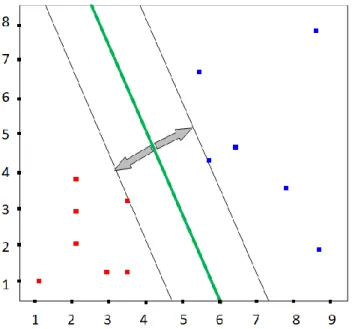
▪ Support Vector Machine (SVM): It is a supervised learning model useful for classification problems and regression analysis applications. Moreover, SVM distinguishes as a binary linear classifier that can provide a spatial illustration of the training dataset. Usually, it set up a model that can be used to map new data within the same space for classification. The main idea of this procedure is to get the best hyperplane allowing for the the split the data into two classes. A hyperplane is a linear classifier that can be constructed in a high- or infinite-dimensional space of learning patterns. Figure (2.6) shown the hyperplane in two dimensional and the support vectors are represented by all the points located close to the hyperplane.
31
Figure 2.6 SVM example. Data points of a two-dimensional classification problem separated by a hyperplane.
Moreover, there is a space located between the hyperplane and the support vector which is called the margin. If we need to classify new data, so one of the hyperplane sides will be selected to map the target data. Usually, there are differs hyperplane, that can be used to split the training dataset. The optimal hyperplane is located as far as possible from the locations of the data points [64].
▪ Euclidean Distance: is also known as Euclidean metric and distance magnitude. Its essence is to measure the exact straight-line distance between any two points in the Euclidean space [65]. The points are located on one, two or three dimensions. Figure (2.7) illustrates how to measure the distance of three individual points represented by two variables (two dimensions), variable-1 represents the x‐axis, while variable-2 is used for the y‐axis.
As shown in Figure (2.7), the Euclidean distance has been represented by the line between any two points, i.e. every two persons. In this case, there are three
32
distances that need to be measured, one for each distance between two persons. Equation (2.3) is used to evaluate the distance between each two points [65].
𝑑 = √∑𝑣 (𝑃1𝑖− 𝑃2𝑖)2
𝑖=1 (2.3)
Where, v: number of variables (in the figure (2.7), v=2).
This equation is used to calculate the difference between two points where the results are squared and finally used to calculate the summation for v variables. In the case of Figure (2.7), three distances would be calculated, which are: (P1–P2), (P1 – P3), and (P2
‐ P3).
Figure 2.7 Measure the distance on two dimensions
Equation (2.4) has been used to find the exact distance between the two variables [65]. In Figure (2.7), there are three persons (points) and the equation is used to calculate the difference between every two variables and the result would be squared and finally used to find the summation for p persons (points).
𝑑 = √∑𝑝 (𝑉1𝑖 − 𝑉2𝑖)2
33
▪ Chi-square Distances: The chi-squared distance d(x,y) is a distance between two histograms x=[x1,..,xn] and y=[y1,...,yn]. Both histograms are normalised, i.e. their
entries sum up to one. The distance measured is usually defined in equation (2.5) as follows:
𝑑(𝑥, 𝑦) = ∑(𝑥𝑖 − 𝑦𝑖)
2
(𝑥𝑖+ 𝑦𝑖)
(2.5)
This measure is often used in computer vision to compute distances between some bag-of-visual-word representations of images.
It is a simple method and depends on the normal distribution. The main step of the Chi-squared method is to calculate the square of the distance to the mean. After that, we need to check, if the underlying observations are normally distributed, so we get the chi-squared distribution [66].
▪ Manhattan Distance: It is a distance measure used to calculate the distance
between any two points along the axes at right angles. In the case of two vectors, the distance is calculated as equation (2.6).
𝑑 = ∑𝑖=1|𝑥𝑖 − 𝑦𝑖| (2.6)
for all the dimensions of the vectors [67]. For example, if we have two points such as 𝑃1(𝑥1, 𝑦1) and 𝑃2(𝑥2, 𝑦2), the distance is |𝑥1 − 𝑥2| + |𝑦 1 − 𝑦2|. This means, calculate the differences of the points coordinates and take the absolute values and finally find the summation [67].
2.4 Datasets Used
In this thesis, all the experiments have been conducted using five available datasets in order to evaluate the perfor