The Role of the Writer in Creating Narrative-Driven Digital Educational Games
by
Luke Conrad Jackson (M.Ed.)
Submitted in fulfilment of the requirements for the degree of Doctor of Philosophy
Deakin University February 2017
Acknowledgements
In writing this thesis, I have been fortunate enough to find game industry experts willing to share their time and knowledge. From pioneers and thought-leaders to educational game writers and CEOs, everybody was ready to go the extra mile to make sure that I was as well-informed as possible. I remain humbled by their participation and encouragement.
I would also like to acknowledge the support of my friends and family, who have always been willing to discuss and challenge my ideas, and ask me the ‘simple questions’ which so often led to a rethink or even a rewrite. In particular, I would like to thank my wife Kelly whose commitment to my studies has allowed me to undertake them so
enthusiastically; and my daughter Greta (one of whose first words was “PhD”) for making the last three years so much fun. Peter Melville’s input during the proofreading phase was
invaluable, as was my mother’s encouragement throughout. I would also like to mention both Gail and Jane, who have assisted with babysitting at crucial junctures. I would like to
mention Antoine, whose weekly phone calls have provided me with amazing tangents to explore, and Georgia Firth, who was always willing to assist with my research in any way she could. Finally, I would like to thank my dad, Alun, who has been my unofficial supervisor since I enrolled in the Master of Education in 2011. He has been both a mentor and
inspiration to me for his accomplishments within the academic field, and his positive attitude towards those who genuinely seek to make a contribution to knowledge.
Of course, nobody can undertake an extensive piece of work such as a PhD without university support. I would like to thank Liaison Librarian Amy Sellers and Research Support Officer Nicola Ivory, whose advice regarding search strategies was invaluable. I would also like to thank my supervisors, Associate Professor Joanne O’Mara and Professor Julianne Moss. As leaders in their respective fields, I was fortunate that they agreed to take me on as a student. They not only offered insight into my chosen topic and educational theory, but gave me opportunities to contribute to the Education faculty, as a research assistant and casual academic. This inspired me and kept me connected to the world of education during the often grueling process of researching and writing.
Abstract
In an educational setting, digital games are typically used to facilitate the acquisition of knowledge or skills, and to promote attitudinal or behavioural change. Narrative-driven digital educational games seek to enhance learning by leveraging the narrative and
mechanical affordances offered by digital games, including well-realised game worlds, sympathetic characters, and carefully-balanced reward systems. As the writer of two narrative-driven digital educational games, I have experienced first-hand the creative and logistical challenges one faces when creating games that must be both educational and entertaining. The narrative inquiry at the heart of this thesis is designed to explore these challenges by giving voice to those who are best placed to articulate them: the writers.
Ultimately, this inquiry is intended to answer the question ‘How can the writers of narrative-driven digital educational games improve these games’ potential effectiveness using action and textual elements?’ In order to address this question, I spoke first with 4 expert writers from the broader games industry, who have been responsible for writing best-selling titles and cult classics. I wanted to canvas their opinions on the opportunities, and challenges, for educational game writers. They were candid in their responses, and suggested that writing narrative-driven digital games is difficult at the best of times; writing games that find the correct balance between entertainment and education adds another layer of complexity. After speaking with these experts, I undertook two interconnected studies to further elucidate the writing process for such games.
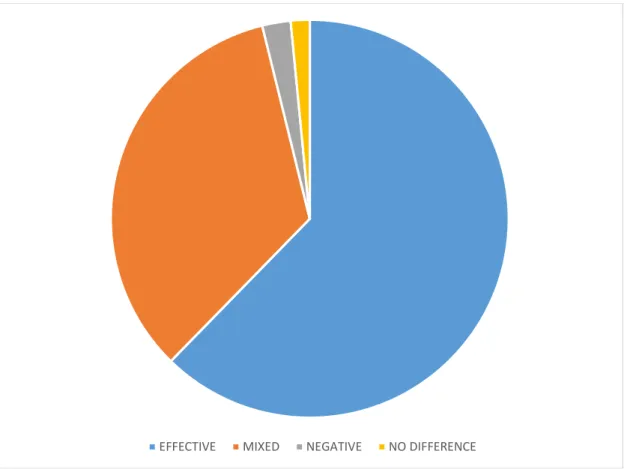
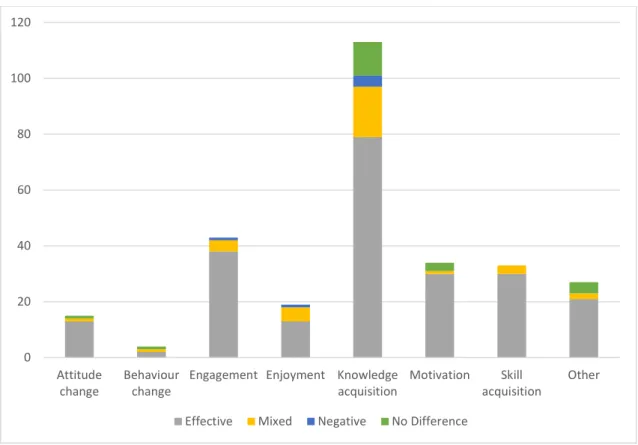
In order to address what was already known about the effectiveness of narrative-driven digital educational games within the academic literature, I conducted a critical review of 130 peer-reviewed articles in which I examined the games’ success in achieving their educational aims. The results of this review suggest that, when done well, such games have the potential to promote engagement, enjoyment, motivation, knowledge acquisition, and attitude or behaviour change with learners of any age, within a range of disciplines, and in varying contexts. More than 60% of the articles included within this review suggested that the games they tested were successful in achieving all of their educational aims, while over 30% demonstrated mixed results. In most cases where a study showed a game to have
achieved mixed results, the researchers may not have found an improvement in one area, such as knowledge acquisition, but they noted gains in others, such as engagement, motivation, and attitude change. In fact, these three outcomes were deemed to be have been achieved in over 85% of studies in which they were measured, while skill acquisition was deemed to have been effective in more than 90% of cases.
The drive to understand how and why such games work, and the skills required to bring these games to life, underpinned the second study contained within this dissertation. To explore these issues in detail, I analysed 5 highly-respected narrative-driven digital
educational games, and interviewed the writers responsible for their creation. I then
conducted a thematic analysis of game and interview data using the Games as Action, Games as Text framework (Beavis & Apperley, 2012). The findings reveal that designing such games requires specialised skills, attention to detail, and dedication on the part of those who write them.
These writers must consider not only the usual mechanical, narrative, and educational elements that the player will encounter during play, but other key features. These include creating authentic learning opportunities; fostering multiliteracies; appreciating how the underpinning ideology might best be realised through gameplay; and understanding the impact of paratexts and the gaming context on the game play experience. The findings of this study confirm the educational potential of both purely educational games and games created for both mainstream and educational purposes. They also demonstrate the value of locating educational games within a wider programme of study.
Games as Action, Games as Text (Beavis & Apperley, 2012) was originally designed as a curriculum development framework. This study represents the first time that it has been used to analyse digital games themselves, a process that has required me to define and elaborate upon some of its components. Having done so, I recommend that others use the framework to analyse educational and mainstream games, preferably in conjunction with the definitions of its features and guiding questions that I have created. I have concluded my study by providing recommendations for those who wish to build upon this work by using the framework as the basis for narrative-driven digital educational game design.
Table of Contents ACKNOWLEDGEMENTS ... III ABSTRACT ... IV TABLE OF CONTENTS ... VI LIST OF FIGURES ... IX CHAPTER 1: INTRODUCTION ... 1 1.1 Background ... 1 1.2 Rationale ... 4 1.3 Aim ... 6 1.4 Thesis structure ... 7
1.5 Importance of the study and intended audience for the findings ... 8
CHAPTER 2: LITERATURE REVIEW ... 9
2.1 The importance of Story in society and culture ... 10
2.2 The socio-cultural importance of play ... 12
2.3 Defining Narrative ... 14
2.4 Chatman’s narrative elements applied to traditional and interactive texts ... 17
2.5 Understanding games for learning ... 19
CHAPTER 3: RESEARCH METHODOLOGY ... 27
3.1 Overarching methodology: Narrative Inquiry ... 28
3.2 Method ... 30
3.3 Positioning myself in the research ... 45
3.4 Underlying assumptions... 48
3.5 Ethical issues and risks ... 49
CHAPTER 4: A CRITICAL REVIEW OF THE EFFECTIVENESS OF NARRATIVE-DRIVEN DIGITAL EDUCATIONAL GAMES... 51
4.1 Material and methods ... 51
4.2 Results ... 55
4.3 Summary ... 67
CHAPTER 5: CASE STUDY 1, HISTORY OF BIOLOGY ... 68
5.1 Games as Action ... 70
5.2 Games as Text ... 75
5.3 Summary ... 81
CHAPTER 6: CASE STUDY 2, HIGH SCHOOL STORY ... 82
6.1 Games as Action ... 83
6.2 Games as Text ... 88
6.3 Summary ... 96
CHAPTER 7: CASE STUDY 3, GLOBAL CONFLICTS: AFGHANISTAN ... 97
7.1 Games as Action ... 99
7.2 Games as Text ... 105
7.3 Summary ... 112
CHAPTER 8: CASE STUDY 4, HACK ‘N’ SLASH ... 113
8.1 Games as Action ... 115
8.2 Games as Text ... 120
8.3 Summary ... 125
CHAPTER 9: CASE STUDY 5, THE VIRTUAL DEMENTIA EXPERIENCE™ ... 127
9.1 Games as Action ... 128
9.2 Games as Text ... 133
9.3 Summary ... 137
CHAPTER 10: DISCUSSION ... 139
10.2 What does the existing academic literature suggest about the effectiveness of
narrative-driven digital educational games as educational tools? ... 142
10.3 To what extent do five best practice narrative-driven digital educational games function as action and as text? ... 146
10.4 How are narrative elements used, within these games, to promote their learning objectives?... 157
10.5 Does the analysis of the games’ construction, and interviews with their writers, support the validity of the Games as Action, Games a text framework (Beavis & Apperley, 2012) as a way of understanding game design?... 160
CHAPTER 11: CONCLUSIONS AND RECOMMENDATIONS ... 163
11.1 Strengths and Limitations ... 167
11.2 Recommendations ... 168
BIBLIOGRAPHY ... 173
APPENDICES ... 182
Appendix A: Semi-structured Interview Questions with Key Informants in March/April 2015. ... 182
Appendix B: Plain Language and Consent Form for Key Informants, March 2015. ... 184
Appendix C: Games as Action, Games as Text Definitions (Compiled by L. Jackson, 2015) ... 188
Appendix D: Guide Questions for Analysis Using Games as Action, Games as Text (L. Jackson, 2015)... 194
Appendix E: Semi-structured Interview Questions for Writers of Narrative-driven Digital Educational Games in June/July 2015. ... 204
Appendix F: Plain Language and Consent Form for Educational Game Writers, March 2015. ... 206
Appendix G: Plain Language and Consent Form for CEOs/Directors, March 2015. ... 209
Appendix H: Critical Review of the Literature Surrounding the Effectiveness of Narrative-driven Digital Educational Games ... 213
List of Figures
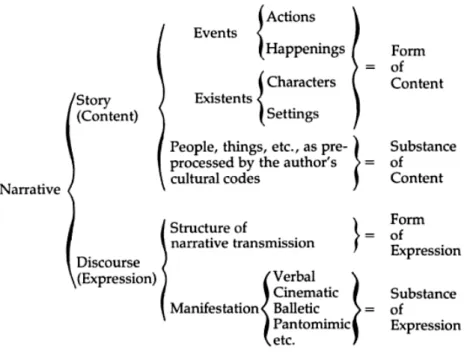
Figure 1. A Diagram of Narrative Elements (Chatman, 1980, p. 26) ... 15
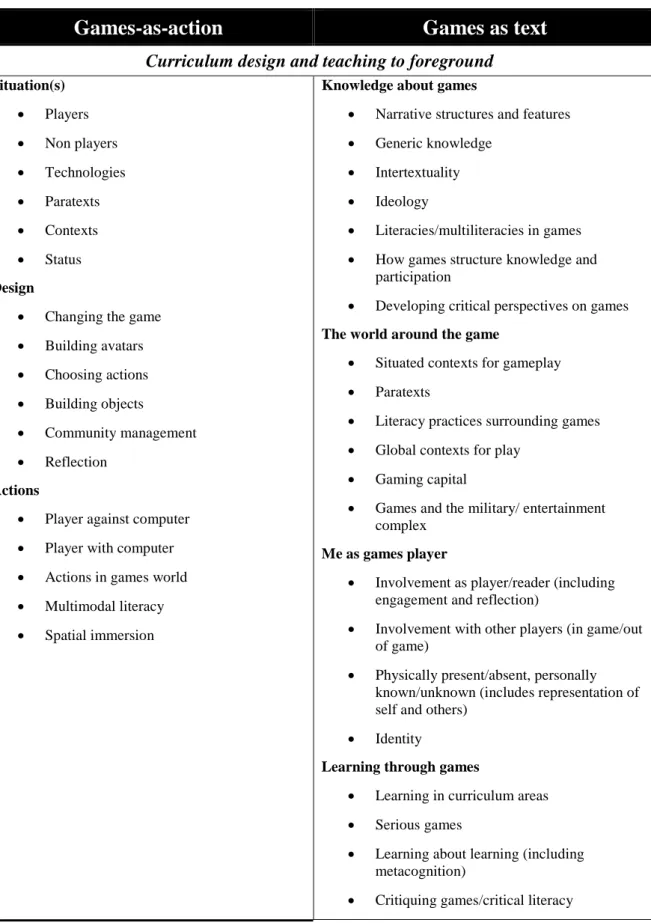
Figure 2. Games as Action, Games as Text (Beavis & Apperley, 2012, p. 12) ... 37
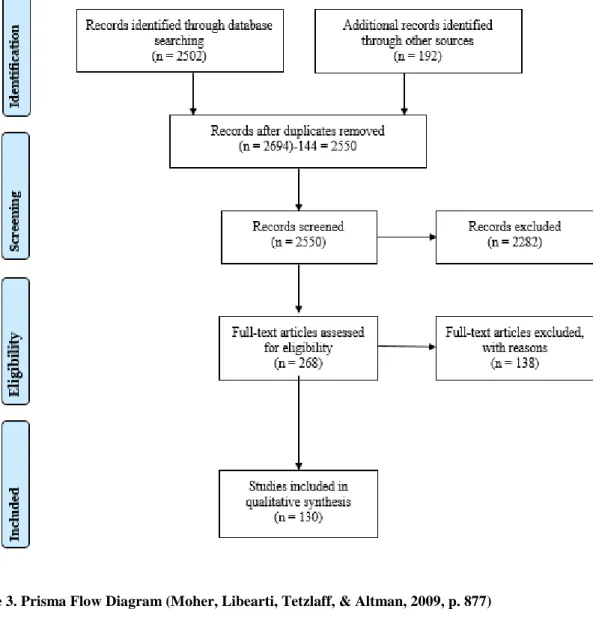
Figure 3. Prisma Flow Diagram (Moher, Libearti, Tetzlaff, & Altman, 2009, p. 877) ... 54
Figure 4. Prisma Flow Diagram (Moher, Liberati, Tetzlaff, & Altman, 2009, p. 877) ... 54
Figure 4. The effectiveness of narrative-driven educational games (L. Jackson, 2016) ... 56
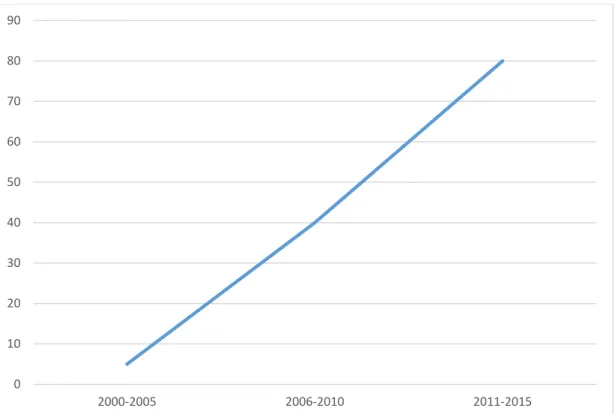
Figure 5. Synthesised articles 2000-2015 (L. Jackson, 2016) ... 57
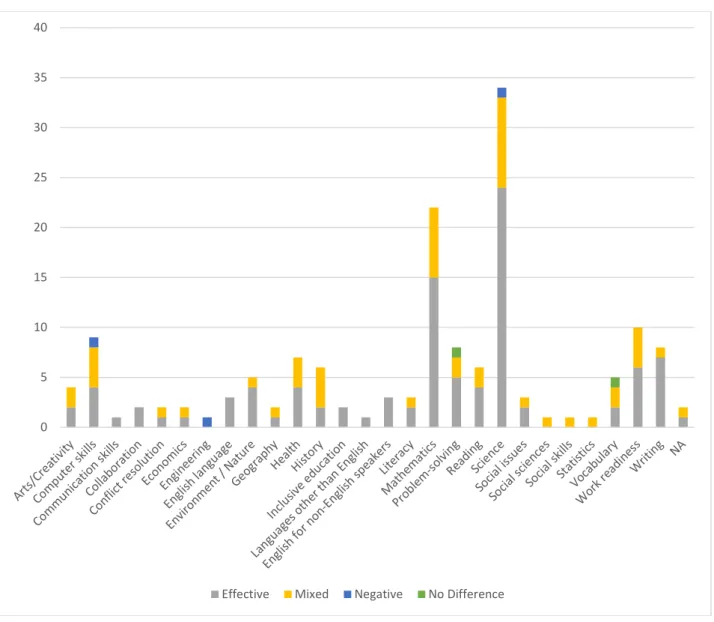
Figure 6. Effectiveness by subject area (L. Jackson, 2016) ... 59
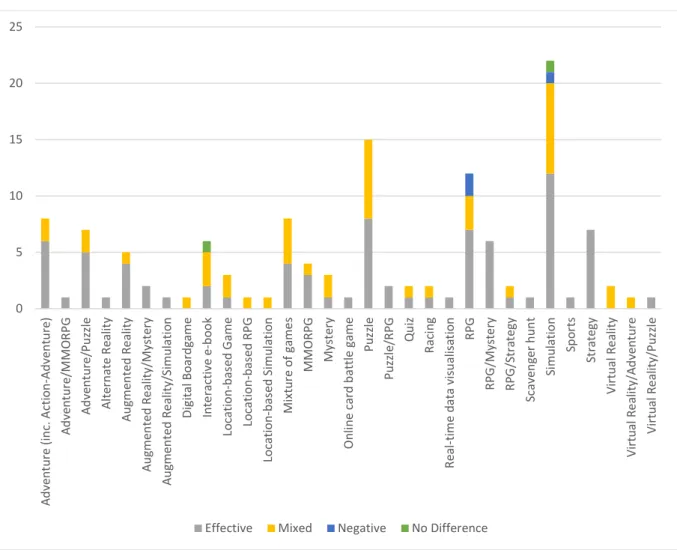
Figure 7. Effectiveness by genre (L. Jackson, 2016) ... 61
Figure 8. Effectiveness by educational outcome/s (L. Jackson, 2016) ... 66
Figure 9. Promotional image for History of Biology (Spongelab, 2010) ... 70
Figure 10. Examining a coin to discover a hidden clue (Spongelab, 2010) ... 71
Figure 11. RNA Gallery’s fictitious website contains clues to a puzzle (Spongelab, 2010) ... 78
Figure 12. A promotional image for High School Story which changes ‘theme’ depending upon the season (Pixelberry Studios, 2015) ... 83
Figure 13. One example of a school campus (Pixelberry Studios, 2015) ... 86
Figure 14. New characters of different types can be won or purchased throughout the game (Pixelberry Studios, 2016) ... 89
Figure 15. The SAT preparation quest begins (Pixelberry Studios, 2016) ... 92
Figure 16. Farooq, an elder, welcomes the player to the village (Serious Games Interactive, 2014) ... 100
Figure 17. The driving level begins (Serious Games Interactive, 2014) ... 102
Figure 18. Searching the rubble of the school for clues (Serious Games Interactive, 2014) . 105 Figure 19. Confronted by the Taliban (Serious Games Interactive, 2014) ... 108
Figure 20. Rescued by the ISAF (Serious Games Interactive, 2014) ... 110
Figure 21. A promotional image for Hack ‘n’ Slash (Double Fine Productions, 2014) ... 115
Figure 22. Alice finds her USB sword (Double Fine Productions, 2014) ... 116
Figure 23. Altering the attributes of a Swamp Turtle (Double Fine Productions, 2014) ... 118
Figure 24. Alice’s nemesis, the Evil Wizard, is intent on thwarting her progress (Double Fine Productions, 2014) ... 122
Figure 25. In Parkville, Australia, the audience sits in a purpose-built studio, watching on as a facilitator controls the game’s protagonist, Myrtle, using a Microsoft Kinect (Alzheimer’s Australia Vic, 2013) ... 130
The Role of the Writer in Creating Narrative-Driven Digital Educational Games CHAPTER 1: INTRODUCTION
In my view, compelling stories are based on a kind of basic structural logic of how stories work, around conflict, around empathy, around a detailed depiction of human relationships that we can sympathise with and struggle with. (N. Fortugno, interview, 15 April, 2015)
1.1 Background
Since I was a child, narrative – presented verbally, in books and other written media, on film and radio, and in games – has been a companion and inspiration to me. Appreciating not only the story, its characters and settings, but the way that these are constructed has, since my early twenties, become a professional concern. In keeping with the intention of narrative inquiry (Clandinin, Pushor, & Orr, 2007), I will highlight how my perception of the
importance of narrative has changed over time, by place, and due to my personal and social conditions. By doing so, I hope to illustrate how my “feelings, hopes, desires, aesthetic reactions, and moral dispositions” (Connelly, Clandinin, Green, Camilli, & Elmore, 2006, p. 480) have been shaped by narrative. It was narrative that allowed me to engage with,
understand, and find meaning within education, as both a student and a teacher. And it is narrative that has allowed me to produce works in various media to connect and communicate with readers, viewers, and players I would never otherwise meet.
1.1.1 The role of Narrative in my life as a learner
In the early years of secondary school, I was not a particularly good student. I
wouldn’t describe myself as a bad student either, but I tended to be very selective about what I spent my time on. If I liked a subject, I would work hard to complete the work to a high standard, even if it meant working in my spare time. If I wasn’t interested, though, there was nothing my teachers could do to get me to work. The subject I was least interested in was Mathematics. I don’t remember ever realising the connections between the content
knowledge I was being asked to learn, and the world around me. It seemed purely abstract, and I was unwilling to accept my teacher’s suggestion that I ‘might need it one day’ as a reason to pay attention.
Despite my general loathing for the subject, it provided me with one of my strongest memories of academic triumph from that period. A friend and I, given the opportunity to design our own project, decided to take a shared interest – our love of superheroes – and use mathematics to understand their powers. Engaged in the problem at hand by the narratives of
the hundreds of comic books we had read over the years, without any mathematical skills between us we located appropriate sources and began hypothesising, measuring and
comparing to establish the tensile strength of Spiderman’s web, the weightlifting capacity of The Incredible Hulk, and whether Flash could beat Superman in a foot race. When we received an ‘A’ for the project – my first and only A for Mathematics, needless to say – the grade hardly registered.
1.1.2 The role of Narrative in my life as a writer
I began writing seriously at the age of eighteen, and won first prize in my Secondary School’s inaugural writing competition. The school gave me a trophy and a cheque for fifty dollars - my first payment as a writer. I later used the short story as the first chapter of a novel which I worked on during the following years as I undertook a degree in creative writing. During this period, through many drafts of the fifty or so chapters contained in the book, I began to appreciate the subtle variations in structure, point of view and time, which
distinguished one writer from another. It was understanding when and how to utilise these elements of “discourse” (Chatman, 1980) that would allow me to eventually produce stories in a writing ‘voice’ of my own, including 4 ‘Young Adult’ novels that explored identity and belonging while adhering to genres from Mystery (Jackson, 2005b) to Supernatural Suspense (Jackson, 2005a) to Espionage (Jackson, 2006:2007), and a children’s picture book that explored the importance of collaboration through the experience of a group of robots (Jackson & Toniolo, 2011). I would also learn how to apply these elements of discourse to the construction of works of non-fiction including articles, reviews, and text book chapters. Accordingly, I have written more than ten chapters for Jacaranda’s award-winning History and English textbook series, and have created more than 100 online resources for ABC Splash, an initiative of the Australian Broadcasting Corporation and Education Services Australia. Today, I continue to support myself, at least in part, through my writing.
1.1.3 The role of Narrative in my life as a teacher
I began my teaching career in 1999. Over the next decade, I taught at face-to-face schools and at the Distance Education Centre Victoria (DECV), Australia’s largest provider of distance education. It was at the DECV that I honed my skills in writing curriculum materials, with all courses consisting of instructions that had to be accessible for students with a broad range of experience and expertise in the subject area. Not only did this give me an appreciation of the importance of well-written curriculum materials, but I had the
opportunity to work on many cutting-edge projects, including the Centre of Excellence project (2001), the Boys Education Lighthouse Scheme (2004), Do-It-Yourself English (2005-2009), and the development of two online-only modules for the Certificate in Business course which I created alongside other educators from around Australia in 2009.
In the Certificate in Business, the student was presented with 2D virtual office space, within which they could demonstrate their ‘competency’ in topics such as ‘Occupational Health and Safety’. Recognising that these topics were often dry and unengaging for students, I offered to use my writing skills to ‘spice up’ the content a little. A short while later, the student was enrolled in an office where tasks were driven by office politics, and where the teacher took on the role of ‘boss’, a hard taskmaster. As I pointed out to the project’s organisers, creating a sense of cohesiveness between the tasks by setting them in the same narrative ‘world’, giving some of the tasks dramatic stakes, and creating a greater sense of character within the scenario’s emails would not cost a cent more, and might just make the student persist with a task rather than giving up. At the very least, I argued, it might make them smile.
In 2010, I co-founded Comics Go Global, an online, extra-curricular, collaborative Arts-based unit. Designed to be run using asynchronous and synchronous tools including discussion boards and video conferencing, the results of a 4-year pilot were extremely positive (Jackson, Toniolo, & Bitz, 2016), with the clear majority of students successfully engaging in the narrative-driven project. My work on Comics Go Global confirmed, for me, the educational value of exploring educationally-relevant concepts through narrative.
1.1.4 The role of Narrative in my life as a game designer
Between October 2012 and June 2014, I spent most of my time working as co-creator and lead writer on two narrative-based digital educational games. Like many independent game designers, I spent my time divided between writing, managing staff, and negotiating the curriculum. These games were designed to allow year 7 and 8 mathematics students to revise and apply their mathematical knowledge and skills within a consistent narrative context. To engage as many students as possible in the games’ content and immerse them in the world of the story, I designed narratives that leveraged the suspense and intrigue inherent in the espionage genre and which included characters whom I hoped the players would relate to. While the games’ budget did not allow for the creation of multiple storylines, I attempted to give the player the impression of satisfying interactivity by placing challenges at moments of
natural tension, thereby heightening the drama, and ensuring that all mathematical problems that had to be solved advanced the player’s understanding of the story, the characters, or both.
When I first applied to undertake a PhD, I planned to use this experience as the basis for a mostly personal inquiry into the process of writing such games. However, as my research progressed and I stepped away from the game design company that I had
co-founded, using these games as the basis of such an inquiry, and foregrounding my own game writing experience over that of other people, seemed needlessly restrictive. I decided, instead, to use the challenging experience of writing these games as a springboard to investigate the complexities with writing narrative-driven digital educational games from the perspective of those working (and writing) on the cutting-edge of digital educational game design
worldwide. 1.2 Rationale
Despite the overwhelming popularity of digital games amongst teenagers and the population at large, many educational games continue to be criticised for their lack of entertainment value (Hirumi, Appelman, Rieber, & Van Eck, 2010; Plass et al., 2013; Prensky, 2005) or, conversely, for their lack of academic rigour (Gunter, Kenny, & Vick, 2008; Tobias, Fletcher, & Chen, 2015). In an extensive review of the academic literature pertaining to the effectiveness of using digital games for education, Tobias, Fletcher and Chen noted that “effective procedures for designing games that produce targeted instructional objectives while retaining their entertainment value remain elusive” (Tobias et al., 2015, p. 3). They suggested that there appear to be two “cultures” working in game-based research, often at cross-purposes, one focused on “fun”, the other on “learning”. Claiming that “finding common ground between these two cultures is neither trivial or obvious”, they insisted that “both are critical and that integrating the two in search for and development of this common ground is significant and worthy of vigorous pursuit” (Tobias et al., 2015, p. 10).
The challenges faced by writers of narrative-driven educational games were aptly summarised by Clark Abt, who coined the term ‘serious games’ in 1970. Broadly, the term refers to digital applications that are developed to impart learning through games. As manager of the Advanced Studies Department of the Raytheon Company Missile Systems Division in 1960s, Abt combined his twin interests in systems engineering and creative writing to create the drama at the heart of war gaming, a process which would ultimately lead him to work instead on arms control and disarmament. Creating these scenarios so that they would be suitably compelling and believable was a constant challenge. As he described,
“…So many uncertain factors must be oversimplified and simulated not by exactitudes but by probabilities - that is, with dramatic suspense.” Based upon this assertion, he referred to the ‘role’ that such a person must adopt if he, or she, is going to successfully write such a game: “And it does require creative effort not unlike a playwright’s to design problem situations with dramatic scenarios that best reveal solutions” (Abt, 1970, p. xiv).
In preparation for undertaking the present inquiry, I interviewed four key informants, all of whom are expert game writers, about their experience in writing for the broader games industry and, in some cases, for educational games as well. These experts, whose credentials are discussed further in chapter 3, confirmed the need for educational game writers who are writing narrative-driven games to be well-versed and highly skilled in the use of a range of narrative elements. The experts described some of the reasons that players play games, including challenge, enjoyment, frivolity and immersion, and noted that no single motivator is going to work if that is all a player is offered; it is the balance of these gameplay elements that makes a game fun. The experts also spoke about their own struggles in writing
interactive stories, including compensating for branching stories, as well as for players going ‘off-script’, thereby potentially ‘undoing’ many months of work in preparing pre-scripted scenarios which would deliver the same emotional impact to all players.
All these writers – while recognising the challenge of such an outcome – were quick to point out the benefits for players, noting that it is by choosing details such as their avatar’s look, as well as the actions they perform, that gives the player a sense of ownership over the game. They were enthusiastic about the potential for digital educational games to enhance learning, particularly as gaming hardware becomes ubiquitous, and as these games are better able to offer the player a sense of immersion. However, these experts acknowledged the difficulties inherent in attempting to write narrative-driven digital educational games because of the potential conflict between giving players a satisfying learning experience and a
satisfying gaming experience.
Despite the complexities associated with writing games that must work mechanically, narratively, and educationally, the educational game design industry today does not appear to place the same emphasis upon good writing that it does upon a well-designed User
Experience (UX) and powerful code, or high-quality educational materials. Exploring why this discrepancy exists is beyond the scope of this inquiry, but suffice to say that, until the same attention is paid to the writing process as is paid to other crucial design elements of such games, educational games’ use of narrative will continue to lag behind other game design elements.
Of course, the notion that a game has a single ‘writer’ is not necessarily the case. Some games are written by an individual, while others are written by a team, which may or may not work under the guidance of a narrative designer. Within a highly collaborative team environment, it is also possible to view much of the visual, character, and even audio design as a form of narrative design, further complicating the notion of authorship. In the interests of developing a coherent analysis of the challenges for those who are tasked with writing such games, however, I have spoken to those within a game design team who were responsible for conceptualising the game’s narrative elements as defined by Chatman (1980). This meant that I interviewed the person/s responsible for documenting the events of the game, the characters, the settings, and other narrative elements that would combine to convey the sense of a
cohesive ‘game world’. These writers’ work would underpin the creation of visual and audio assets, as well as appropriate gameplay mechanics.
1.3 Aim
As I have experienced first-hand, developing compelling digital educational games that successfully incorporate narrative elements requires many decisions to be made throughout the game development process which will ultimately affect the user’s learning outcomes, including their engagement, enjoyment, motivation, and understanding. This thesis is designed to explore the complexities associated with making these decisions by giving ‘voice’ to those who are often silent about the creative and logistical struggles associated with creating such games: the writers. Ultimately, this inquiry is designed to answer the question, ‘How can the writers of narrative-driven digital educational games improve these games’ potential effectiveness using action and textual elements?’ Answering this question requires several sub-questions to be considered:
• What can expert writers tell us about the complex nature of writing for games? • What does the existing academic literature suggest about the effectiveness of
narrative-driven digital educational games as educational tools?
• To what extent do five best practice narrative-driven digital educational games function as action and as text?
• How are narrative elements used, within these games, to promote their learning objectives?
• Does the analysis of the games’ construction, and interviews with their writers, support the validity of the Games as Action, Games a text framework (Beavis &
Apperley, 2012) as a way of understanding game design?
In order to address these questions, I have undertaken a critical review to investigate the extent to which narrative-driven digital educational games have been shown to be effective for learning. I have also interviewed the writers of five highly regarded, narrative-driven, digital educational games about their mechanical, narrative, and educational concerns when creating these games. I have analysed these interviews and the games themselves using a framework which allows for the analysis of a game’s totality, including its ‘action’ and ‘textual’ elements (Beavis & Apperley, 2012; Beavis, Apperley, Bradford, O’Mara, & Walsh, 2009). As such, this inquiry represents my attempt, not only as a researcher, but as a writer, teacher, and game designer to reveal the often-hidden complexities associated with creating games that must work mechanically, narratively, and educationally.
1.4 Thesis structure
Prior to undertaking Studies 1 and 2, I interviewed four key informants, all of whom were expert game writers. A ‘key quote’ from each expert has been used at the top of each chapter within this dissertation, including this one. These quotes are not explicitly discussed within the body of the text, but have been selected because they resonate with the ‘theme’ of the chapter, underscoring or challenging some of the ideas that follow. This reinforces the purpose of undertaking the broader inquiry: namely, to foreground the experience of game writers, whose voices are so often silent – or silenced - within the academic discourse on educational games.
Chapter 1 outlines the importance of narrative to me, as a student, writer, teacher, and game designer, and why this led me to decide to investigate the role of the writer in creating narrative-driven digital educational games. Additionally, this chapter includes the aims of the study, and the intended audience for the findings, as well as the thesis outline. Chapter 2 contains a literature review that introduces the broader concepts relating to the potential for Narrative and Play to foster education, and the way that both have changed in response to the advent of digital media. It also outlines the model I have chosen to use when analysing narrative elements in digital games, and reviews literature relating to digital games in general and for games for learning. While this literature review is relatively short, other important questions regarding what is currently known about the effectiveness of Narrative-driven Digital Educational Games has been covered in detail in Chapter 4, where they serve as both a continuation of the literature review and as data within the first of two interlinked studies.
Chapter 3 describes the method and methodology for this study, and offers insight into my research process, which has been heavily influenced by the work of Richardson and St Pierre (2008), for whom “writing is a way of knowing” (p. 962).
Chapters 4-9 represent the Results chapters of this thesis and represent two
interlocking Studies. Chapter 4 constitutes Study 1, a critical review of the effectiveness of narrative-driven educational games. In Study 2 (chapters 5-9), each chapter functions as a stand-alone case study, reporting upon one of five narrative-driven, digital educational games, and is structured in a consistent manner, finishing with a discussion of the most significant aspects of the case. These chapters have been constructed by combining
interviews with the writers of a game with the analysis of the game they have written, using the classification framework Games as Action, Games as Text (Beavis & Apperley, 2012).
Chapter 10 is designed to make sense of the data captured throughout the study by summarising the major themes to emerge from Studies 1 and 2 and relating these to the aims of the thesis. In chapter 11, I offer suggestions for further research in narrative-driven digital educational games, particularly relating to the use of the Games as Action, Games as Text framework (Beavis & Apperley, 2012).
1.5 Importance of the study and intended audience for the findings
The findings contained within this thesis offer insight into the challenges and
opportunities of using narrative in digital educational games, with my observations about the games enhanced by the first-hand accounts of those who wrote these games. It is hoped that this will provide the reader with insight into this complex area, which is at turns personal, theoretical, and practical. This should be of use to those who are conducting research using the Games as Action, Games as Text framework (Beavis & Apperley, 2012), as well as those who are researching digital educational games, particularly games that contain a strong narrative component. If the complexity of writing such games can be more fully appreciated by those within the industry, a professional writer might be given the same level of respect within an educational game design team as is currently afforded the designers of the content and the code. The knock-on effect of this, I hope, will be the creation of more engaging, narrative-driven educational games, which have the potential to dramatically improve students’ learning.
CHAPTER 2: LITERATURE REVIEW
The more interactive you make the experience - the more you allow the player with their imagination, with their thoughts, with their actions, to participate in this story and how it plays out - that makes a computer game story more compelling. And the ability to see the results of your actions and know that you’re having an effect in this world that you’re playing in. (C. Avellone, interview, July 1, 2015)
Today, the use of interactive games in Australia is so widespread that, according to PwC’s report Australian Entertainment and Media 2014-2018 (PricewaterhouseCoopers, 2014), games represented the fastest growing consumer sector of the media in 2013. Digital games come in many forms, span many genres, and appeal to almost as many girls as boys; indeed, since 2005, the proportion of the game-playing population in Australia that is female has risen from 38% to 47% (Brand, Lorentz, & Mathew, 2015). They can be found in
arcades, on consoles, on handheld and other mobile devices, online, and on computers. This breadth of games has led to their widespread use in Australia, with the latest figures from the Interactive Games and Entertainment Association (IGEA) (Brand et al., 2015) suggesting that 93% of households have a device for playing games. This number increases to 98% for houses with a family member under 18. The IGEA has shown that young people between the ages of 11 and 15 have the highest proportion of gamers, at 96%, followed by those aged 6-10 (87%) and those aged 16 to 25 (85%) (Brand et al., 2015, p. 11).
Digital games, once maligned within classrooms for their perceived potential to encourage violent behaviour (Anderson, 2004; Anderson & Bushman, 2002) and addiction (Griffiths, Davies, & Chappell, 2004), are increasingly demonstrating their relevance to education. This shift is due, in part, to the perception that such games may engage students for whom traditional learning has been problematic (Squire, 2005; Tobias et al., 2015), and because of their use by adolescents outside the classroom (Silveira, De Araújo Jr, Da Veiga, Bezerra, & Kasperavicius, 2011). When they are effective, such games have the potential to encourage the player to explore, engage in personal meaning-making and play with social boundaries (Shaffer, Squire, Halverson, & Gee, 2005). Connolly, Boyle, MacArthur, Hainey, and Boyle (2012) located 129 articles for a systematic review, focusing on the positive effects of entertainment games, games for learning, and serious games. In their conclusions, the authors reported on empirical evidence establishing the potential for games to promote positive knowledge acquisition/content understanding, and affective and motivational
outcomes. Similarly, Jabbar and Felicia (2015), whose work comprised a meta-analysis of 91 articles reporting on empirical studies undertaken between 2003 and 2014 involving students
aged 8 to 14, noted that “GBL helps students to develop skills and knowledge and strengthens their ability to handle the learning experiences provided by the games”. They suggested that “engagement is related to students’ cognitive and emotional involvement in the gameplay” (p. 767).
To better understand how such games may engage and motivate the player, create a meaningful context for their knowledge and skills, and keep them coming back for more, it is important to understand the socio-cultural importance of story, play, and narrative, and their traditional role in education. Once these have been established, we may consider the
arguments for and against using narrative-driven digital games to educate today’s students. 2.1 The importance of Story in society and culture
The significance of stories, according to these and other writers, scholars, and
thinkers, both ancient and contemporary, is summed up by Roland Barthes. In considering the importance of story, he wrote, “like life itself, it is there, international, transhistorical,
transcultural” (Barthes & Duisit, 1975, p. 237). Neil Gaiman, one of the most highly
respected writers of modern times, whose oeuvre spans comics, novels, and films, has likened the behaviour of some of our most pervasive stories to that of a virus: “Stories are ways that we communicate importantthings, but ... stories maybe reallyare genuinely symbiotic organisms that we live with, that allow human beings to advance” (Gaiman, 2015:01:58-1:02:15). The belief that stories are fundamental to human nature is shared by Bennet and Royle (2004). They offer five ways of understanding the function of stories: “1) Stories are everywhere; 2) Not only do we tell stories, but stories tell us: if stories are everywhere, we are also in stories; 3) The telling of a story is always bound up with power, with questions of authority, property and domination; 4) Stories are multiple: there is always more than one story; 5) Stories always have something to tell us about stories themselves: they always involve self-reflexive and metafictional dimensions” (p. 52).
According to philosopher Alasdair Macintyre (2013), “man is in his actions and practice, as well as in his fictions, essentially a story-telling animal” (p. 250). He believes that it is only possible for a person to wonder what they should do - which is the central, moral concern of his book Beyond Virtue - if they can understand, first, in what type of story or stories they are participating. For Macintyre, this might mean a temporary situation that a person walks into – a party, for example, or a new job – or even the story of their life itself. Each requires, of the person concerned, behaviours appropriate to “the roles into which we have been drafted” (p. 250). It is in preparing a child for understanding and possibly adopting
such roles that Macintyre argues for the importance of the fairy tales. Through these tales, of heroes and princesses and wicked stepmothers, he suggests, that we may learn how others may respond to us, and how our responses to them are likely to be construed. Rather than viewing such stories as an escape from reality, Macintyre argues for their centrality to understanding a society: “Hence there is no way to give us an understanding of any society, including our own, except through the stock of stories which constitute its initial dramatic resources” (p. 251).
Throughout his life, Anthropologist Joseph Campbell sought to understand the reasons why myth, which undoubtedly constitutes part of Macintyre’s stock of stories, were so fundamental to human existence. He defined the concept of myth differently at different points of his life, from “the search for meaning” to “the experience of meaning”, to “the experience of life” (Campbell & Moyers, 2011, p. 5). To Campbell, then, myths not only gave the reader/listener access to existential ‘truths’ but allowed them to engage more deeply with life itself:
Throughout the inhabited world, in all times and under every circumstance, the myths of man have flourished; and they have been the living inspiration of whatever else may have appeared out of the activities of the human body and mind. It would not be too much to say that myth is the secret opening through which the inexhaustible energies of the cosmos pour into human cultural manifestation. Religions,
philosophies, arts, the social forms of primitive and historic man, prime discoveries in science and technology, the very dreams that blister sleep, boil up from the basic, magic ring of myth. (Campbell, 2008, p. 1)
In 1949, Campbell popularised the concept of a cross-cultural, prototypical myth, which he described as the Hero’s Journey in his influential work The Hero with a Thousand Faces (Campbell, 2008). Campbell had found evidence of this Monomyth across the world, in all storytelling traditions. According to Campbell, in the Hero’s Journey, the story’s protagonist, the Hero/Heroine, must undertake a long journey from the ordinary world and into a world filled with danger, where she would be transformed, before returning with the elixir that her ailing homeland required. Campbell viewed the Hero’s Journey as an allusion to the rights of passage, namely: separation, initiation, and return. There were two types of deed that a hero might perform: the physical or the spiritual. The former included things like performing a courageous act in battle or saving a life; while the latter involved learning to cope with the supernormal range of experience and then returning with a message from beyond. What made somebody a hero was her willingness to give her life to something larger than herself.
For psychiatrist and psychotherapist Carl Jung, the “situations” and “figures” (which he referred to collectively as “motifs”) found in mythology were symbolic representations of inner states of being. He referred to them as “archetypes”. Archetypal situations were akin to Campbell’s rites of passage. Archetypal figures included “the shadow, the wise old man, the child (including the child hero), the mother … and her counterpart the maiden, and lastly the anima in man and the animus in woman” (Jung, 1981, p. 183).
2.2 The socio-cultural importance of play
At the turn of the 20th Century, Sigmund Freud (1908) noted that “The child’ s best-loved and most intense occupation is with his play or games” (p. 421). For Bettelheim (1987), play permitted the child “… to resolve in symbolic form unsolved problems of the past and to cope directly or symbolically with present concerns. It is also his most significant tool for preparing himself for the future and its tasks” (p. 170).
The importance of play, for children, has long been recognised at a formal, political level within the United Nations and its member States. In 1959, Principle 7 of the Declaration of the Rights of the Child stated that every child must have the opportunity for play and recreation (Assembly, 1959). This was strengthened by Article 31 of the United Nations Convention on the Rights of the Child (UNCRC): “States Parties recognize the right of the child to rest and leisure, to engage in play and recreational activities appropriate to the age of the child and to participate freely in cultural life and the arts” (Unicef, 1989, p. 9). Although the UNCRC remains the most widely ratified treaty in the history of the United Nations, the Committee on the Rights of the Child has criticised States for not taking Article 31 seriously enough. Accordingly, it prepared a General Comment in 2013 in order to raise awareness about the centrality of play and recreation in the lives of children. This General Comment also touches upon the educational role that play can have for a child:
“Play and recreation are essential to the health and well-being of children and promote the development of creativity, imagination, self-confidence, self-efficacy, as well as physical, social, cognitive and emotional strength and skills. They contribute to all aspects of learning; they are a form of participation in everyday life and are of intrinsic value to the child, purely in terms of the enjoyment and pleasure they afford.” (UN Committee on the Rights of the Child, 2013, p. 4)
Play is of crucial importance not only to children but to adults. For the philosopher Huizinga (1949), the instinct to play is a fundamental part of being human. He viewed
“Homo Sapiens” (Man the Thinker) as too restrictive a term, and felt that along with the later addition “Homo Faber” (Man the Maker) should be included a third descriptor: “Homo
Ludens” (Man the Player). Rather than attempting to measure and categorise the instinct for play, he asserted that play is inherently irrational, filled with tension, mirth, and fun, and stated: “Play cannot be denied. You can deny, if you like, nearly all abstractions: justice, beauty, truth, goodness, mind, God. You can deny seriousness, but not play” (Huizinga, 1949, p. 3). More recently, Stuart Brown, M.D., founder of the National Institute for Play (U.S.A.), who has engaged in decades of academic and clinical research into play, claimed that:
“[Play] has evolved over eons in many animal species to promote survival. It shapes the brain and makes animals smarter and more adaptable. In higher animals, it fosters empathy and makes possible complex social groups. For us, play lies at the heart of creativity and innovation. Of all animal species, humans are the biggest players of all. We are built to play and built through play.” (Brown, 2009, p. 5)
Brown (2009) asserts that adults should bring this sense of play into all situations, immersing themselves in a constant “state of play” (p. 128). Indeed, in urging adults to find the fun in every part of their lives, Brown suggests that opposite of play is not work; it is depression.
Human beings play in structured and unstructured ways. Our earliest play is often unstructured, with items found at hand, with rules improvised to promote fun and social cohesion. In this way, we learn how the world works, and how friends interact (Brown, 2009). Structured games have existed for millennia, during which time they have taken on many guises, from the athletic games of the Ancient Greeks to board games, card games, children’s games, and – most recently – computer games. For the philosopher Huizinga (1949), one of the defining features of such games is that they are played in a “magic circle” that sets the players apart from the world outside:
The arena, the card-table, the magic circle, the temple, the stage, the screen, the tennis court, the court of justice, etc., are all in form and function play-grounds, i.e.
forbidden spots, isolated, hedged round, hallowed, within which special rules obtain. All are temporary worlds within the ordinary world, dedicated to the performance of an act apart. (Huizinga, 1949, p. 10)
Huizinga (1949) defined play as having five fundamental characteristics: it offers the player freedom, is not a part of ordinary, or real, life; is distinct from ordinary life both in its locality and duration; it creates order; it is not connected with material gain (pp. 7-13). In direct response to the work of Huizinga, Caillois (1961) defined play as free from obligation, separate, uncertain, unproductive, regulated, and fictive, containing a fictitious element. He also built upon Huizinga’s work by creating a typology for games which, he suggested,
contained four types of play (Caillois, 1961, pp. 16-26). These were Agôn (competition), a “vindication of personal responsibility”; Alea (chance), “a negation of the will, a surrender to destiny”; Mimicry (simulation or role play), “deploying actions [and] submitting to one’s fate in an imaginary milieu … [and] becoming an illusory character”; and Ilinx (whirlpool, or vertigo), “pleasurable torture”. Caillois believed that combining these types of gameplay could achieve different effects with games. He also envisaged them as sitting along a
continuum that might be associated with increasing difficulty or decreasing freedom. At one end of this continuum is paidia, “diversion, turbulence, free improvisation, and carefree gaiety”; at the other is ludus, “arbitrary, imperative, and purposively tedious conventions”.
Although the sorts of digital games that today’s gamers are accustomed to would have been unimaginable in the mid-20th Century, the theories of Huizinga and Caillois remain central to our present understanding of digital games. Indeed, it is these two theorists who Salen and Zimmerman (2004) draw upon in offering their definition of what constitutes a game: “A game is a system in which players engage in an artificial conflict, defined by rules, that results in a quantifiable outcome” (p. 83). This definition will serve as the basis for discussion within this study. Salen and Zimmerman elaborate upon this definition, explaining:
The key elements of this definition are the fact that a game is a system, players interact with the system, a game is an instance of conflict, the conflict in games is artificial, rules limit player behaviour and define the game, and every game has a quantifiable outcome or goal. (Salen & Zimmerman, 2004, p. 83)
2.3 Defining Narrative
At first, it might be tempting assume that story and narrative are synonymous, but this is not the case. Narratology, the science of narrative, has borrowed from disciplines as varied as philosophy, anthropology, psychology, literary theory, film theory, and – most recently – game study, or Ludology. Any study that purports to analyse games based upon their narrative structure must, of course, elect an appropriate definition of Narrative. This study will adopt Seymour Chatman’s definitions of narrative elements. In an extension upon the dualist dichotomy between the fabula and sjuzhet proposed by the Formalists/Structuralists, Chatman suggested that narrative “… should contain (1) a form and substance of expression, and (2) a form and substance of content” (Chatman, 1980, p. 23). Put simply, “… Story is the what in a narrative that is depicted, discourse the how” (Chatman, 1980, p. 19). Chatman’s conception of narrative elements, and their relation to a narrative’s form and substance are outlined in Figure 1.
Figure 1. A Diagram of Narrative Elements (Chatman, 1980, p. 26)
By the mid-1990s, the use of Personal Computers (PCs) and the advent of the Internet was giving rise to new text forms that were fundamentally different from those that had come before. These included hypertext narrative fiction and digital games. Janet Murray’s
foundational work, Hamlet on the Holodeck (1997), posited a future filled with rich, literary texts in which the “interactors” would walk around, experiencing the fiction first-hand, thereby becoming immersed in the narrative. The move from passive consumers of broadcast media to active participants and producers of interactive media such as games could be seen as a move from readerly texts to writerly texts. According to Barthes (1974), “readerly” texts leave no room for interpretation and support the status quo, while “writerly” texts are open to interpretation or “re-writing”.
It was the role of the player as active participant that led to a public debate between Ludologists and Narratologists. Between 1999 and 2005, as theorists from both ‘sides’ of the debate attempted to define the landscape and carve out their own niche in this growing area. Inspired in part by Murray’s vision, narrative theorists (Atkins, 2003; Bolter, 1991, 2001) offered their analysis of these new texts using the tools at their disposal, those of literary and film analysis. While the work of film theory and the understanding of film offered those studying games a range of analytical tools, there were also clear examples of where adopting the language of another area of study may be unhelpful, such as pigeon-holing games based on genres that were better suited to film (Apperley, 2006).
In 1998, Gonzalo Frasca acknowledged that much of the emerging theory about computer games was found within different disciplines, and proposed the establishment of a new discipline to study such games (Frasca, 1999). It would be called Ludology, from the Latin Ludere, meaning “to play”. Well-known Ludologists of this era included Gonzalo Frasca, Markku Eskelinen, Jesper Juul, and Espen Aarseth. One of the key distinctions that these scholars sought to make was that games were defined not by their stories, but by player action/interaction, as can be seen in this foreword to Game Studies, the International Journal of Computer Game Research, the first journal of its type:
Games are both object and process; they can’t be read as texts or listened to as music, they must be played … Yet much of the industry and the academic commentators see the need for “narrative” structures in order to understand games and make games ‘better’. (Aarseth, 2001, p. 2)
In the years that followed, these and other Game Studies scholars, many of whom identified themselves as Ludologists, questioned whether games should be viewed through a Narrativist’s lens (Frasca, 1999; Juul, 2000, 2001; Pearce, 2004). Some expressed strong concern at the prospect that the study of games was being subsumed by theorists from other disciplines including narrative and film theory (Eskelinen, 2001) through a process of
“theoretical imperialism” (Pearce, 2004). However, many within the Narratology community realised that these theoretical frames would be insufficient to explore the unique aspects of games moving forward, and might result in what Flanagan called “linguistic muddling” (Pearce, 2004). Aware of the debate surrounding the use of these frames to analyse games, Jenkins (2004) suggested that it might be more appropriate to view games not as “stories”, but as “spaces ripe with narrative possibility” (p. 119).
In 2003, Frasca attempted to clarify or perhaps soften many of his own positions (Frasca, 2003), aligning them more closely with those of Narratologists. He pointed out that many of his fellow Ludologists had called for narrative to be considered alongside game mechanics from the start, a claim that can be verified by reading the literature of the time. He even suggested that this debate never took place. By 2005, the debate – such as it was - had run its course, and representatives from both sides had publicly made peace, vowing to find common ground (Frasca, 2003; Murray, 2005). This more inclusive approach to the study of digital games has taken root in the intervening years, as the field of Game Studies, and the analysis of games themselves, have broadened and become more nuanced. This has allowed issues that might otherwise have been obscured to be explored more fully. These include the narrative and ludic nexus of games (Brand, 2005); the appropriateness, and effect, of using
genre to classify games (Apperley, 2006); and how games might function both as “action”, and as “text” (Beavis, O’Mara, & McNeice, 2012).
Chatman’s (1980) definition of Narrative, including the bipartite structure of “Story” and “Discourse”, was created within the broadcast paradigm, and views the relationship between author and audience as one of transmission and reception, rather than transmission and reception/interaction. In fact, it was published six years before Nintendo released The Legend of Zelda™ (1986), which sought to push the boundaries of storytelling for
mainstream games. As such, he would presumably have had little sense that games would become one of the dominant storytelling forms of the 21st Century, which explains why they did not rate a mention within Story and Discourse (Chatman, 1980). Despite this oversight, Chatman’s model continues to be applied to the study of texts of all types today. This is due, in part, to Chatman’s belief that narrative elements work both within and across text types, or “manifestations”, making his conceptions of “Story” and “Discourse” flexible enough to be applied to digital games.
2.4 Chatman’s narrative elements applied to traditional and interactive texts
2.4.1 Events
According to Chatman (1980), an event is any physical or mental action that
contributes to the reader’s understanding of what happens in the narrative. When a character is the agent of an event, the event may be considered an action; when an event happens to the character, it is regarded as a happening. In a digital game, it is up to the player to determine which option they will take from those presented, which directly influences the actions and happenings that constitute the events of the story.
2.4.2 Characters
If an action is brought about by an agent, or affects a patient, and is plot-significant, the agent/patient should be considered characters. The principal actions that a character can perform or experience are non-verbal physical acts, speeches, thoughts, feelings, perceptions, and sensations. Characters may be actors in the story and/or narrators of it. A narrator may be overt, as in a character who is clearly taking part in the story they are now conveying to an audience. A narrator may, instead, be an intrusive outside party who, while not participating in the story proper, still has enough knowledge about it to be able to tell the audience about it. Where the narrator of a story is not identified, and there is no trace – no matter how minimal
– that the story is being told, the text could be said to be “nonnarrated” or “unnarrated”. Digital games may contain an overt narrator, or they may not; however, it is in examining character that one of the major differences between games and their more traditional
counterparts can be seen. Here, instead of witnessing the events of the story through the eyes of somebody else, whose life cannot be influenced by the presence of the reader, the player is granted the ability to control the actions of at least one character. It is through this avatar that the player will affect the game world in small or large ways.
2.4.3 Setting
Setting is “any evocation of place” (Chatman, 1980, p. 25), and may include a physical setting, or an internal place, such as a memory. In an audio/visual text, such as a digital game, the setting can be illustrated using constructed elements such as sets and props, as well as lighting and sound effects. Where it is not possible to show all the implied story space, the reader/player will need to infer, or imagine, what exists beyond the edges of the frame. Often, the setting contributes not only to locating the narrative in space and time but to establishing the mood.
2.4.4 Structure
A writer has an almost infinite number of events from within the “story” from which to choose when constructing the narrative. Therefore, he/she will choose those that give a sense of continuum; and will leave the audience to fill in the blanks. The audience does so by referring to what they know about the way that the real world works, as well as to what they know about the workings of this fictitious world based on what they have already
experienced of it as well as of texts of this type. Chatman refers to events that are “logically essential” to the functioning of the plot as “kernels”; he refers to events that are not essential to the plot as “satellites”. In digital games, notable plot structures include branching/non-branching stories; and single versus multiple endings.
2.4.5 Point of view
Traditionally, there are some different ways in which the reader/viewer might be invited to witness the events of a narrative, and to understand their significance. This is often achieved by giving the reader/viewer access to a person’s point of view. This person may have a complete understanding of all the events or only a partial understanding; they may or may not be the narrator. Because it is often easiest to relate to a character whose point of
view one has been invited to share, the point of view character is often the protagonist of the story. While the protagonist of a novel, film, or other work of fiction tends to be somebody on the page/screen whom the reader/viewer is invited to share the point of view of, in digital games it is more typical for the player themselves to take on the role of the protagonist. Because of this, they are given direct access to this character’s perceptions, cognitions, attitudes, emotions, memories, and fantasies.
2.4.6 Time
In traditional texts, there is a distinction between the events as they are experienced by the characters in the story and as they are experienced by the reader/viewer. In games, which rely on character interaction to drive the story forward, the present moment for the player is usually the same as the present moment in the life of the character, known as the “character-NOW”. Even though these two ‘presents’ are unified within games, however, the player’s perception of story-time can still be manipulated to achieve dramatic effects. According to Genette (1983), these manipulations relate to the “order”, “duration”, and “frequency” of events.
2.5 Understanding games for learning
In 1996, the New London Group created A Pedagogy of Multiliteracies: Designing Social Futures, their “manifesto” (Cope & Kalantzis, 2009), which sought to address the changing nature of literacy in an increasingly globalised and technology-rich society. The group insisted that it was time for our definition of literacy to change from focusing on a student’s ability to understand and create predominantly print-based texts, to fostering an appreciation for the consumption and creation of multimodal texts; that is, texts presented in a range of ‘modes’ that make use of ever-changing information and multimedia technologies. This process would require students to develop “multiliteracies”.
The New London Group suggested that, within this ever-changing landscape of text consumption and creation, “language and other modes of meaning are dynamic
representational resources, constantly being remade by their users as they work to achieve their various cultural purposes” (Cazden et al., 1996, p. 64). Games are rich multimodal texts (Apperley & Walsh, 2012; Beavis & O’Mara, 2010; Beavis, 2014; Beavis et al., 2012; Evans, 2004; Steinkuehler, 2010; Walsh & Apperley, 2009), in which more than “nontrivial effort” (Aarseth, 1997) is required allow the reader to interact with the text. As such, they represent what Aarseth (1997) termed “ergodic” texts, the term a portmanteu constructed from the
Greek words ergon and hodos, meaning ‘work’ and ‘path’. Like a film, many games utilise audio design, including music and sound effects, as well as casting in the form of character design, lighting, camera angles, and the composition of props and other visual elements, to help define their tone and genre. Most games contain spoken and sometimes written language, which is complemented by visuals and audio, forming a rich, ever-changing semiotic tapestry which the player must not only be able to ‘read’ as a passive audience member might in a cinema, but to ‘write’ as they participate in making choices that will allow them to progress through the game, a process that Beavis & O’Mara (2010) refer to as
“multimodal creativity” (p. 74). Another multimodal aspect of games are the “paratexts” that spring up around them (Consalvo, 2007), created by the game designers/publishers as support or extension materials, or by game players themselves in forms as varied as “reviews,
websites, forums, magazines, walk throughs, cheats, Machinima and more” (Beavis & O’Mara, p. 74).
As will be shown in Study 1, both narrative-driven digital mainstream games and those created specifically for educational purposes have the potential to foster learning in the form of enjoyment, engagement, content and skill acquisition, and even attitude and
behaviour change. Before examining the empirical evidence for ourselves, however, it is appropriate to consider some of the conclusions drawn by other researchers in the field of game theory, particularly in relation to examining why, when, and how these do or do not work. Examining meta-analyses, systematic and critical reviews of the scientific literature reveals a field in flux: publications are proliferating quickly (Boyle et al., 2016), yet there are suggestions of publication bias (Sitzmann, 2011), while the standards for study design and measurement continue to present problems for those who wish to compare cases (All, Castellar, & Van Looy, 2013; Ke, 2009; Tobias, Fletcher, Dai, & Wind, 2011; Young et al., 2012; Young, Slota, & Lai, 2012). Understanding the theory behind the educational value of games, as well as considering the contexts and purposes for which they are unsuitable, is key to making their use within the classroom as successful as possible.
2.5.1 Games and knowledge/skills acquisition
James Paul Gee, one of the world’s foremost educational game researchers, has identified thirty-six good learning principles that are incorporated into good games. The broad strokes of his argument outline some of the best features of digital games and their value for learners. Gee (2003) highlights games’ ability to operate at a level that is
(Vygotsky, 1978). This desirable challenge to difficulty ratio is key to achieving “flow” (Csikszentmihalyi, 1997), a state of spatial immersion in which the participant loses all sense of time as they engage fully in a given activity. “Good games” offer the player/learner information on demand, just in time, and within a context they can relate to. They present problems in a logical order, and allow the player to develop increasingly sophisticated skills through an ascending process of challenge and mastery, a process that he likens to the development of expertise in any domain.
Vogel, Cannon-Bowers, Bowers, and Wright (2006) evaluated 32 studies and concluded that the use of interactive games and/or simulations led to significantly higher cognitive gains and better attitudes toward learning when compared with traditional methods of learning. These benefits did not appear to be affected by gender, the age of the player, or whether the players played on their own or with others. Ke (2009) undertook a qualitative meta-analysis, and revealed that 34 out of the 65 studies within the review reported significant positive effects of computer-based games, compared with 17 which reported mixed results, 12 which reported no difference between computer games and conventional instruction, and 1 which reported that traditional teaching methods had been shown to be superior in achieving learning outcomes. Similarly, Papastergiou (2009) conducted a critical review of the empirical evidence on the use of games in health and physical education, and concluded that electronic games have the potential to improve players’ knowledge, skills, attitudes and behaviours (including fitness) in relation to health and physical exercise. Papastergiou also noted the potential for these games to foster collaboration and teamwork both in the local context, through multiplayer modes, and in the global context, through online “affinity groups”, groups of likeminded individuals which Gee (2000) suggests share “allegiance to, access to, and participation in specific practices” (p. 105).
By contrast, Clark, Yates, Early and Moulton (2010) examined numerous sources, including meta-analyses, analysing over 50 years of research, and concluded that educational media, including games, have not and will not influence motivation, learning, or work
performance. They also claimed that discovery learning, which forms the basis of educational philosophies including constructivism and problem-based learning, as well as game design, produces less effective learning outcomes and motivation than guided instruction. While the authors acknowledged that students often report high levels of motivation while playing digital games, they suggested that these claims were unreliable, since they were based upon subjective ratings, and may not lead to improved educational outcomes. Sitzmann (2011) conducted a meta-analysis of published and unpublished studies from 1976 to 2009 from 65
independent samples and more than 6,000 trainees, and revealed that those taught via games scored higher on post-training self-efficacy, declarative knowledge, procedural knowledge, and retention than those taught using traditional methods. However, while simulation participants learned more than colleagues undertaking passive training in the same material, they learned less than colleagues undertaking more active (but not simulation) training.
Reflecting the ongoing debate about the effectiveness of digital educational games, throughout 2012 two research teams held a public debate via a series of published articles. Young et al. (2012) synthesised 39 articles and found some evidence for video games’ effectiveness in Language Learning, History, and Physical Education, but not in Science or Mathematics. In response, Tobias and Fletcher (2012) offered their own findings from an earlier review of much of the same literature (Tobias et al., 2011), in which they had established that games were effective for near and far transfer so long as there was a high degree of overlap between these external tasks and those undertaken within the game. They also criticised Young et al.’s findings on the subject areas of Science and Health for failing to report some empirical studies that had reported positive results. Young et al. (2012)
responded by suggesting that, in large measure, they would add their support to the comments of Tobias and Fletcher, and suggested that the findings of both teams underscored the
importance of defining operational definitions of key gaming research terms, including game features and mechanics, and narrative structure, to allow for the more accurate comparison of results.
Two systematic reviews, conducted by members of the same team four years apart, provide some insight into the way that game research has changed over time. Connolly et al. (2012) examined the literature on computer games and serious games, looking for potentially positive impacts in students aged 14 years or above. In a review of 129 papers focusing on games designed primarily as educational tools as well as COTS games, 70 of which they deemed to have been of higher quality, they found that playing computer games is most frequently linked to knowledge acquisition and content understanding, as well as affective and motivational outcomes. Within this sample, the authors revealed that COTS games could be effective for the development of transversal competencies such as visual perceptual skills which can then be applied to a range of school subjects. Boyle et al. (2016) updated Connolly et al.’s (2012) review of the empirical evidence of the impacts and outcomes of computer games and serious games, focusing on 143 higher-quality studies, and found the most common use of games was in STEM subjects and Health. They pointed out that, since the