PUBLIC RELATIONS PRACTITIONER ASSESSMENTS OF THE ROLE ENGAGEMENT PLAYS IN ORGANIZATION TO PUBLIC RELATIONSHIPS
Stephanie L. Mahin
A dissertation submitted to the faculty of the University of North Carolina at Chapel Hill in partial fulfillment of the requirements for the degree of Doctor of Philosophy in
the School of Media and Journalism.
Chapel Hill 2017
Approved by: Lois Boynton Melissa Johnson Michael Kent
iii
ABSTRACTStephanie L. Mahin: Public relations practitioner
assessments of the role engagement plays in organization to public relationships (Under the direction of Lois Boynton)
Engagement has become a popular concept in public relations research with the rise of social media. Attempts in scholarships have been made to measure
engagement’s effectiveness of various public relationships. However, scholars have not settled on a common description and theorizing about the complexity of engagement has been slow. In addition, practitioners have been missing from the scholarly conversation about engagement.
This research relied on the in-depth interviews of twenty public relations practitioners from healthcare, higher education, sports, self-employed, and software technology industries to provide a thorough understanding of the term’s day-to-day use and how it is evaluated to help organizations develop stakeholder relationships.
iv
To the Universe
Thank you for conspiring to help me reach the end of this journey. To my grandparents, Clinton and Velma Alexis Crayton and Ada Brassfield,
v
ACKNOWLEDGEMENTS
To God, my Father, thank you for watching over Your child and seeing her through one of Your toughest assignments.
To my “love muffin,” “sweetness,” “lovie,” and the love of my life, David Mahin. You insisted that I follow my dream of obtaining a Ph.D. You encouraged and you pushed even when I pushed back. Thank you for seeing greater things in me than I saw in myself. “What are you doing the rest of your life?”
Special thanks go to the Triad Foundation and the Roy H. Park family for
providing fellowships to fund students like myself to pursue and achieve their dreams. To my committee members:
Lois Boynton, Ph.D., not only have you been my advocate-turned-advisor, you are my Shero. You gave me my first opportunity to be in the classroom. I have
observed the care and attention you give your students and it is mind-boggling. The respect they have for you is admirable. I can only hope an ounce of that goodness rubbed off on me these last three years. Thank you for the “engaging” talks and encouraging me that there is light at the end of the tunnel. This Sunkist is for you!
vi
Melissa Johnson, Ph.D., I did it! You have seen me through receiving my master’s degree and now a doctoral degree. Thank you for being a stable force that always provided great perspective. You never shied away from sharing the truth and then letting me make my own decision. I have felt you rooting for me for years. Thank you!
Michael Kent, Ph.D., thank you for taking my first Skype call and allowing me to ask all types of questions about dialogic communication and dialogic engagement. Not only did you take my first call, but also the second, and then my third. Words cannot describe how grateful I am that you took a chance to join me on this last leg of my journey.
Joe Cabosky, Ph.D., everything about you I adore. You have always been a calming force when the storm was raging. I looked forward to stopping by your office when I was a first-year student and you were a Ph.D. candidate. Our talks were invaluable and made me believe I could make it to year three. The academy and students have acquired a true gift in you. Having you join my committee meant the world to me. You “knew me when.”
To my parents, Elaine and Richard Baker, thank you for preparing me for a time such as this. Mom, I am the woman I am because of the woman you are. Thank you for your effectual prayers and for teaching me it is ok for tomorrow’s dream to be bigger than today’s reality. Dad, thank you for being a silent partner in this endeavor but always offering wisdom when asked. You helped to instill in me some very
important virtues.
vii
To my father (Crayton) and mother in-love, thank you for the calls and text messages of comfort and to remind me you were praying for me. Much love and
thanks to all my family (aunts, uncles, cousins) for your love and support. We did this together.
To my former high school business law teacher but more importantly, dear friend, Geraldine Lee, thank you and your wonderful husband, Mr. Paul Lee, for your unconditional friendship. Thank you for teaching me to believe “I can fly.”
Michon Beckwith and Jackie Crawley, if there were ever times when I needed a belly-laugh or to be reminded why I was on this journey, I knew whom to call. Thank you.
Cedelle Niles, who knew that after parting ways as undergraduates, you would pop back into my life, to help coordinate my dream wedding, and be my inspiration for pursuing a doctorate. Thank you for presenting me with all sides of the equation so that I could make an informed decision prior to beginning this journey.
To so many other friends who were my strength and encouragement. I
especially thank Dr. Chioma Ihekweazu. We made a pact on Orientation Day, that we would keep each other motivated and accountable until the end. We did that through comprehensive exams, proposal defense practices, and consistent dissertation writing sessions. We cheered and pushed each other along the way. You are a woman of your word—a brilliant one at that. I consider you my sister-friend. Thank you for keeping me P2F (primed to finish).
viii
TABLE OF CONTENTS
LIST OF TABLES... xiii
LIST OF FIGURES... xiv
CHAPTER 1: INTRODUCTION ... 1
Problem statement ... 4
Purpose of study ... 6
CHAPTER 2: PUBLIC RELATIONS PERSPECTIVES ... 8
Organization-centric perspectives: A functional approach ... 9
Organization—public relationships ... 11
Knapp's Relational Stage Model ... 12
Application of Knapp's model ... 16
Dimensions of organization—public relationships ... 17
Societal perspectives: A cocreational approach ... 19
Dialogue as communication ... 21
CHAPTER 3: ENGAGEMENT: INTERDISCIPLINARY APPROACHES ... 30
Employee engagement ... 30
External stakeholder engagement ... 38
Practicing stakeholder engagement ... 39
Dialogic engagement ... 42
CHAPTER 4: PUBLIC RELATIONS AND TECHNOLOGY ... 44
ix
Digital revolution: Practitioner and organization perspectives ... 46
Social media engagement ... 49
Interactivity versus engagement ... 51
CHAPTER 5: RESEARCH QUESTIONS AND METHOD ... 56
Research questions ... 56
Method ... 58
Participants ... 60
In-depth interviews ... 61
Data organization and management ... 64
Coding and analysis ... 65
Computer software programs for coding and data analysis ... 66
First cycle coding ... 66
Second cycle coding ... 70
Jottings and memo writing ... 72
Cooraborating validating results ... 72
Confirming and verifying findings ... 73
Reflexivity ... 74
CHAPTER 6: RESULTS ... 78
Participants ... 78
Do I want to empower them , or do I want to entertain them?” Emotion and (Re)action ... 81
Action—“We are getting them to do something, either participate in a process or modify behavior ... 82
Emotion—“Make them care . . . make them feel like they know what’s going on ... 83
x
“They move from just being interested into evangelists on your behalf” ... 85
Two-way communication—“You have my full attention, I have your full attention” ... 89
Organizational engagement—Interpersonal and virtual ... 92
Interpersonal engagement—“Call me old school”... 92
“Engagement in a sense is like a marriage” ... 95
Virtual engagement—“Discreet engagement” on social media... 98
“Behind the wall of the social media”—Loss of authenticity ... 99
“Getting a handle on the tone of conversations” ... 100
“That’s the fun part . . . there’s always something new” ... 102
“We posted it, someone read it”—But how do you measure it? ... 104
“I think it is fairly understood”—Segmented engagement ... 106
Practitioner duty ... 110
Organization expectation ... 111
“I an an auhentic representative”—Supporting the corporate vision ... 112
“Engagement was there” ... 113
“If we can measure it, we can manage it”—Measurement ... 114
Stakeholder expectation ... 122
It is based on a need ... 123
“Creating a reputation among people?” ... 123
Practitioner’s expectation of stakeholders— “They have a responsibility to . . . put forth some effort” ... 128
“Engagement lives within a relationship” ... 130
Levels of engagement ... 133
Self-expectation ... 138
xi
“Show you have listened, you care” ... 139
Stakeholder-driven engagement ... 145
CHAPTER 7: DISCUSSION OF RESULTS ... 152
Interpersonal engagement ... 154
Virtual engagement ... 157
Engagement as emotion and (re)action ... 161
The role emotions play in engagement ... 162
The role action plays in engagement ... 166
Practitioner duty ... 167
Organizational expectation ... 168
Stakeholder expectation ... 171
For the good of society ... 173
Self-expectation ... 174
Stakeholder-driven engagement ... 176
Addressing research questions ... 179
Research limitations and future research ... 191
Practical implications ... 194
xii
APPENDICES ... 197
Appendix A: Study participant recruitment and consent form ... 197
Appendix B: Interviewee guide ... 204
Appendix C: Sample jottings of stkaeholders’ role in engaging ... 206
Appendix D: Study participant follow-up ... 207
xiii
LIST OF TABLESTable 2—Steps of Knapp's Stages of Relational Development Model ... 15
Table 2.1—Dimensions of organization—public relationships ... 18
Table 2.2—Features of dialogic communication ... 23
Table 6—Study participant demographics ... 80
Table 6.1—Engagement efforts by participant ... 142
xiv
LIST OF FIGURESFigure 2—Knapp's Stages of Relational Development Model ... 14
Figure 3—Employee engagement concept model ... 35
Figure 4—Engagement attribution wheel ... 52
Figure 5—Initial cycle coding example ... 69
Figure 5.1—Second cycle coding example ... 71
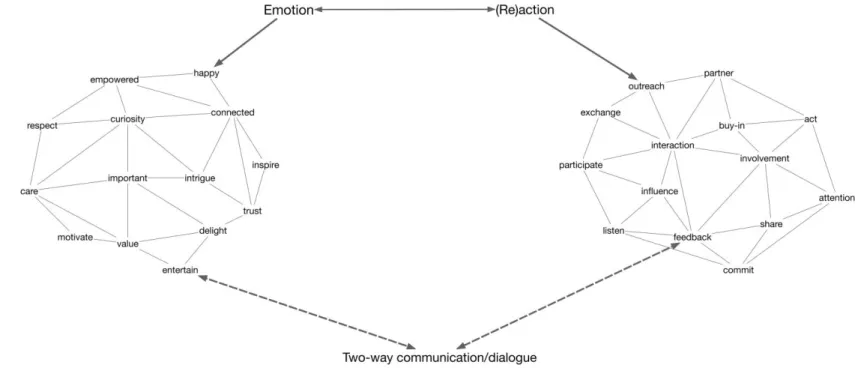
Figure 6—Engagement Foundations: Emotion and (re)action ... 88
Figure 6.1—Emotion, action, and two-way communication construct ... 91
Figure 6.2—Interpersonal engagement ... 97
Figure 6.3—Virtual engagement ... 105
Figure 6.4—Segmented engagement ... 110
Figure 6.5—Quantifiable vs. unquantfiable engagement measures ... 119
Figure 6.6—Organization expectation ... 122
Figure 6.7—Stakeholder shared experiences ... 127
Figure 6.8—High-low level engagement continuum ... 137
Figure 6.9—Practitioner self-expectation ... 140
Figure 6.10—Practitioner duty ... 145
Figure 6.11—Stakeholder-driven engagement ... 148
xv
“Engagement is like love–everyone agrees it’s a good thing, but everyone has a different definition of what it is.”
1
CHAPTER 1: INTRODUCTION
In the last line of Star Trek, The Next Generation Season One, Captain Jean-Luc Picard, commander of the Federation Starships, states to his crew, “There's still much to do; still so much to learn. Mr. La Forge—engage” (IMDb, 2016). In fact, Picard is well known for instructing his crew to “engage” after charting the next course for the starship Enterprise. This action-oriented example of “engage” implies to “move into position” or “activate.” This represents only one of a multitude of meanings for “engage” or “engagement.”
Reversing course back to this century, a Boston technology group hosted a roundtable session for nonprofit communication professionals in which the speaker, from the local National Public Radio station, described her session in the following way:
You know them, you hate them: those annoying on-air fund drives for your local National Public Radio station. But NPR stations face new challenges—as radio listenership declines and listeners migrate to online streaming and
downloadable podcasts, our ‘annoy till you give’ strategy is running out of time. We have to learn how people engage and give in a digital context, and fast. (NTEN, 2016)
2
needle,” or “corporate value” (Forbes, 2012)—terms that hold little to no tangible properties. Or has it been adopted as a permanent part of the corporate lexicon?
Currently, there are more than 100,000 LinkedIn employment openings available at organizations around the country that have included some variation of engagement in the job title or as part of the position’s description. For example, the Planned Parenthood Federation of America sought a Director of Latino Engagement who would, “focus on developing and managing key partnerships and collaborations to enhance PPFA's efforts to reach and work with Latino communities through public policy, advocacy, communications and digital efforts” (LinkedIn, 2016). Another organization searched for a Brand Engagement Director and offered this as a description of the position: “The Brand Engagement Director will develop strategies and lead the execution of employee-focused programs to drive brand-lead culture inside organizations” (LinkedIn, 2016). Yet another advertisement for California-based Manhattan Associates read:
The Engagement Director will be responsible for managing Professional Services & Consulting and Sales support for Manhattan Associates’ supply chain
software products for the Latin America group. They will oversee profit and loss/revenue goals and manage multiple inter-dependent projects. This individual will also manage the professional services team, oversee complex budget management, manage executive-client relationships, and inspire process innovation from team. (LinkedIn, 2016)
Finally, Amnesty International USA posted a job opening for a director of Online Engagement, a position in which the individual would:
3
These employment listings represent four very different job functions and each defines engagement as establishing partnerships, supporting sales, or developing strategic communication. The term engagement is never clearly defined in all four examples.
Whether it is the year 2006 or 2017, the term engagement has proven to be a broad, ill-defined term that is often used to describe itself. Engagement is used as an umbrella term that carries associations with words like participation, interaction, persuasion, dialogue, connection, and commitment. While these associations exist within academic literature, it is unclear whether engagement is a permanent part of the lexicon of practitioners and if so, how they describe elements of the term. Within corporate communication contexts, engagement (i.e., stakeholder, employee) is widely discussed as a benefit for an organization’s business practice. Deloitte and Touche, a tax, consulting, and financial advisory organization, defines stakeholder engagement as a process the organization uses “to engage” relevant stakeholders to achieve organizational outcomes (Deloitte, 2014). BSR, a global nonprofit organization, stresses that stakeholder engagement integrates diverse stakeholder feedback into every aspect of the organization’s operations. BSR suggests the stakeholder feedback process produces collaborative, inclusive, and strategic opportunities (Enright,
McElrath, & Taylor, 2016).
Additionally, professional associations (e.g., The Public Relations Society of America, The International Association of Business Communicators, International Public Relations Association) have taken interest in engagement and have taken time to inform communication professionals about the latest trends occurring with
4
therefore, discussions about engagement show no signs of slowing. A recent trade article’s headline read, “Building the right relationships through social engagement . . . ” (Castro, 2012).
The aforementioned definitions of engagement closely resemble one-way and two-way communication approaches examined throughout the public relations scholarship. Chaffee (1991) explains that clarifications of terms help link the
conceptual world with the real world. To date, the engagement phenomenon has yet to factor in the real-world perspectives of public relations practitioners. Currently, there remain gaps between the professional use and understanding of engagement and the various definitions found in public relations scholarship. This dissertation lends itself to fill that void.
Problem Statement
Public relations is both a profession and an academic field (Botan & Taylor, 2004). For decades, establishing and maintaining mutually beneficial relationships between organizations and stakeholders has been the most valued and studied
management function of public relations (Cutlip, Center, & Broom, 1994; Ledingham, 2003). Of equal value to the profession is finding ways to measure program impact and outcomes (Wright & Hinson, 2015). However, with the emergence of technological advancements, attention has shifted away from traditional management functions focused on only meeting organizational goals and toward more relational, or
5
of recognizing the essential role public relations plays in relationship building in a civil society (Taylor, 2010). Part of that role is to recognize that publics and societal groups should be partners with organizations in the meaning-making process (Botan &
Taylor, 2004; Taylor, 2010). From this perspective, public relations can help organizations engage their communities, and more.
In some ways, this shift has highlighted the term “engagement,” which has become a popular concept in which to measure its effectiveness of various public relationships (e.g., employee engagement, public engagement, consumer engagement), particularly with recent developments with social media engagement (Men & Tsai, 2014; Oh, Bellur, & Sundar, 2010). Regardless of how the term is used, practitioners and scholars seem not to have reconciled on a common description. For example, Men and Tsai (2013) explored the types of public engagement with Chinese corporations on social networking sites without ever explicitly defining engagement. On the other hand, Smith and Gallicano (2015) examined Millennials’ public engagement with organizations online by settling on one of many existing definitions.
Theorizing about the complexity of this concept has been slow. Kiousis (2002) notes Chaffee’s argument, “without explication, our words are nothing more than words, and our data add nothing to them” (p. 356). Researchers warn without a clear conceptual definition developing valid operational measures for empirical evaluations is difficult, misapplication of the concept will occur, or there is risk involved with drawing conclusions without measuring the actual concept itself (Broom, Casey, & Ritchey, 2000; Kent & Taylor, 2002; Taylor & Kent, 2014).
6
Additionally, this research attempts to broaden the conversation about engagement and its role in building relationships between organizations and stakeholders. Taylor and Kent’s (2014) conceptualization of engagement in public relations literature shows that the term is generally presented as a form of one-way communication, represents an effort by organizations to do something above and beyond normal communication behaviors, and demonstrates that engagement can help organizations to build public relationships. These examples raise questions about the disparate definitions that researchers currently use. For these reasons, Taylor and Kent’s examination of engagement is worth broadening by adding the public relations practitioner perspective.
Purpose of Study
The purpose of this study is to allow public relations practitioners to describe the characteristics of engagement, understand how practitioners use the term, and evaluate how these professionals engage stakeholders as part of day-to-day practice. While literature outlines various theoretical features of engagement, perspectives from public relations practitioners are missing from the research. Gaining an
understanding varied perspectives of practitioners or meanings they hold about the term will add a valuable layer to the literature and help scholars better theorize about the term. In a practical sense, extending theoretical explanations of engagement by hearing directly from and analyzing different professional perspectives can be useful for organizations interested in cultivating relationships with various internal and external stakeholders. That said, to do this, I will gather research data through in-depth interviews with public relations practitioners from various business,
7
An outline of the dissertation is as follows: Chapter 2 provides an overview of the long, rich history of public relations and the evolution of organization—public relationship perspectives over the years. Chapter 3 examines engagement from
internal and external stakeholder, and dialogic communication perspectives. Chapter 4 reviews the literature on how technology has influenced communication within the field of public relations highlighting discussions of social media engagement and drawing distinctions between engagement and interactivity. The Methods section, Chapter 5, describes the benefits of conducting a qualitative analysis for this type of research. The chapter outlines how the research questions will be addressed through in-depth interviews with public relations practitioners. Chapter 6 explores the themes and categories that emerged from the interviews and lays out an analysis of the
8
CHAPTER 2: PUBLIC RELATIONS PERSPECTIVES
As a field that values strategic communication to manage relationships between organizations and their stakeholders, public relations is a tale of two worlds. One world embraces a functional view of public relations as a communication activity that creates favorable information about organizations and uses cultural elites, like the media, to disseminate that information and accomplish the organization’s goals
9
Organization-Centric Perspectives: A Functional Approach
Communication activity used as a strategic management function within public relations practice has evolved over the years. Grunig and Hunt (1984) developed the four models of how organizations use communication to strategically influence and/or build relationships with stakeholder groups. The models include: publicity/press agentry, public information, two-way asymmetrical, and two-way symmetrical. Press agentry and public information are one-way models of communication used to
persuade and inform and are not concerned with stakeholder input. The organization is at the center of the relationship in this model and controls the creation and
dissemination of favorable messages about the organization. Press agentry is seen as propagandistic and public information is seen as journalistically fact-based but still avoids negativity about the organization. Conversely, way asymmetrical and two-way symmetrical approaches to communication accept stakeholder feedback. With two-way asymmetrical, the organization solicits information from stakeholders in order to understand their perspectives so the organization, in turn, can develop strategies to convince stakeholders to support the organization’s point of view on issues. The
organization is not committed to changing its own attitudes, values, or actions, and stakeholder groups have little input in actual decision-making processes. Finally, the two-way symmetrical model is considered to be the most ethical and socially
10
Hired by the International Association of Business Communicators, James Grunig (1992) examined characteristics of excellent communication departments and how excellent public relations produces effective organizations. His Excellence Study, while influential to research and the field and often credited for setting the foundation for understanding two-way communication and symmetrical communication (L.A. Grunig, J.E. Grunig, & Dozier, 2002), has not been without its critics.
Two-way symmetrical communication was proposed as an ideal approach for the field of public relations, which critics have called a utopian ideal that may not accurately represent organizational behavior (Grunig, 2001; Plowman, 1998). Grunig and his colleagues (L.A. Grunig, J.E. Grunig & Dozier, 2002) along with Murphy (1991) countered the argument by suggesting practitioners more frequently adopted a mixed motives method, which led to the mixed-motives model in public relations practice. As such, the combination of symmetrical and asymmetrical tactics creates a win-win zone. While “in the zone,” each party in the relationship maintains their own self-interests though it is in the best interest of everyone to cooperate in order to find common ground. Plowman (1998) developed mixed-motive strategies for public relations that span across the two-way asymmetrical and two-way symmetrical models. Strategies include bargaining, negotiation, mediation, compromise,
accommodation, avoidance, withdrawing, competition, contention, cooperation, and collaboration.
11
focus their efforts on negotiating, building, and strategically managing relationships with various stakeholder groups on behalf of organizations, hence, the growing interest in organization—public relationships.
Organization—public Relationships
Ferguson (1984) argued that cultivating relationships with stakeholders, rather than talking at stakeholders, should be the primary focus of scholarship and the profession. Her work marks the beginning of relationship management research; public relations theories established over the last two decades have emphasized relational approaches informed by interpersonal communication, which examines relationships from cognitive and behavioral perspectives.
Broom, Casey, and Ritchey (1997) stated the public relations profession needed a generally understood and common definition of “relationship.” “Without clearly explicated concepts [like relationship] researchers cannot make empirical observations and construct meaningful theories” (p. 13). Public relations scholars pursued help from other disciplines as they searched for an appropriate definition. For example, one approach to defining relationships is as exchanges between partners that dynamically change over time and vary with interactions (Broom, et al., 1997; Capella, 1991; Chia, 2000; Wong & Hung, 2008). Again, many of the definitions used by public relations scholars were adapted from examinations of interpersonal communication literature.
re-12
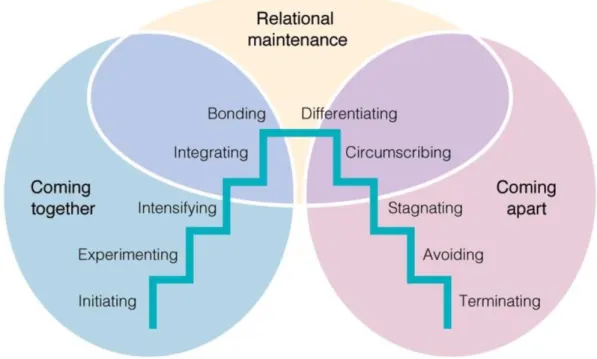
examine these complex theories and re-conceptualize them as a way to expand our understanding of organization to public relationships. Knapp’s (1978) Stages of Relational Development, for example, depicts how typical relationships between intimate partners progress over time through communication, from the small talk stage to the commitment stage. Progressive stages like these can offer additional and unique perspectives for public relations research and the profession about how
organization to public relationships are molded, grown, and perhaps dissolved. I argue in favor of applying more interpersonal communication concepts like Knapp’s to public relations research. This argument is not simply about applying the model, but
expanding models like Knapp’s to realize overlooked benefits to further advance understandings of organization-public relationships among internal and external stakeholder groups. Increasing these understandings can lead to the cultivated relationships with stakeholders of which Ferguson (1984) refers. The interpersonal communication discipline has already informed much of the relational approaches in public relations, however, applying appropriate existing models has been an approach less used.
Knapp’s Relational Stage Model
Knapp’s (1978) dual staircase model draws elements from Emerson’s (1976) social exchange framework in which an economic-oriented model of exchange characterizes communication patterns and behaviors that can at times develop into loyal and trusting commitments (Knapp & Vangelisti, 2009). These shared
13
14
Figure 2. Knapp's Stages of Relational Development Model (Knapp, 1978)
15
Table 2The steps within Knapp’s (1978) Stages of Relational Development (Fox, et al., 2013; Velten & Arif, 2016)
Steps Definition
Initiating The first interaction or making the first impression.
Experimenting Individuals are trying to find common interests and shared experiences.
Intensifying Signals that the relationship has blossomed, a certain level of comfort sets in
and relational commitment begins to manifest although individuals can remain at this stage for years and never make a solid commitment.
Integrating Coupling, or fusion begins to occur.
Bonding Refers to a public announcement of the commitment to the relationship, or
an institutionalization of it.
Differentiating The uncoupling stage.
Circumscribing To the level and quality of information exchange between parties decreases.
Stagnating The communication between parties has ended.
Avoiding Interaction between parties is prevented.
Terminating Ending the relationship.
Knapp’s (1978) staircase model provides considerations for a more robust conceptualization of the development and management of relationships within an organizational context and the cultivation of organization to public relationships. The five steps of coming together (initiating, experimenting, intensifying, integrating, and bonding) have the most promise for adding another layer to scholars and practitioners’ understanding of engagement’s role in a relationship.
16
Application of Knapp’s model.As previously outlined, the coming together steps include initiating, experimenting, intensifying, integrating, and bonding.
To demonstrate application of the model used within an organization context: Once an organization hires an employee to join its workforce, traditionally the
employee is introduced to the organizational culture, mission, and policies through an indoctrination process called orientation. The orientation process can be considered the first impression that both parties have of the other, or the initiating, “getting to know you” step. As the employee settles into her or his work role, the employee begins to meet other employees within their business unit and the organization and find common interests and shared experiences among those other employees—this can be considered the experimenting step. Once the employee has mastered her or his work role and over time, experiencing promotions, and accepts additional work
17
context can point to the moments of employee recognition expressed by the
organization. For example, employee of the month celebrations, an employee of the month premium parking space—anything that demonstrates appreciation for the employee’s dedication to the organization. Additionally, bonding can resemble the employee being gifted a service recognition award of a watch with the organization’s logo, which she or he wears faithfully.
While the criticisms are that organizations are not real entities and therefore cannot build close relationships with individuals, Knapp’s model can, however, be useful for providing the organization with a greater understanding of the nature of their relationships with stakeholders and suggest the progression (or coming apart).
That said, as the public relations field continued to evolve, more attention was paid to organization—public relationships and less on the practice of persuasive messages.
Dimensions of Organization—public Relationships
The addition of relational viewpoints to the public relations field shifted the practice away from merely influencing public opinion through messages and toward initiating, developing, and maintaining mutually beneficial relationships with
stakeholders (Bruning & Ledingham, 2000). Broom, Casey and Ritchey (2000) defined organization—public relationships as, “patterns of interaction, transaction, exchange, and linkage between an organization and its publics” that are “dynamic in nature,” and can be “tracked over time” (p. 19). This helps to place the relationship at the center of public relations research and practice. Since the shift, scholars have focused on constructing theoretical concepts and models that identify the dimensions of
relationships (Broom et al., 2000; Bruning & Ledingham, 1998; Ledingham &
18
trust, openness, investment, involvement, and commitment as dimensions that can influence behaviors in a relationship (see Table 2.1). Ledingham and Bruning
suggested these variables produced stakeholder loyalty toward the organization and vice versa.
Table 2.1
Dimensions of Organization—public Relationships
Ledingham and Bruning (1998, 2000) Hon and Grunig (1999)
Trust refers to the belief that those in the
relationship can rely on each other Control mutuality
is the degree to which parties agree on the sharing of power.
Openness is making an effort to be
transparent Trust
is the willingness to open oneself to the other believing that the organization is fair, will do what it says it will do, and that it has the ability to do what it says it will do.
Investment is the time and energy it takes to
build the relationship Commitment
is the belief that the relationship is worth it.
Involvement means parties becoming involved with the problems and problem-solving process
Satisfaction is each party feels positively about the other and the relationship.
Communal relationships mean both parties are concerned for the other and provide benefits based on the other’s need and expecting nothing in return.
Exchange relationships focus on the giving and receiving of benefits based on past or future actions of comparable benefits.
Hon and Grunig’s (1999) widely used evaluative scale measures the
perceptions of the public relationship from the viewpoints of the organization and key constituents based on control mutuality, trust, commitment, satisfaction, and communal and exchange relationships. The last two dimensions, communal and exchange
relationships, reflect the types of relationships public relations programs aim to
19
relationships are particularly important if organizations desire to be socially responsible and add value to society (Rhee, 2004).
Kent and Taylor (1998, 2002) and Heath (2006, 2013) stressed the need for theories that reflect the growing complexities of organization—public relationships and the need for these relationships to be explored from a societal perspective (Yang & Taylor, 2015). Duhé (2012) stated that relationships established and maintained on behalf of the organization should have benefits that overflow into society. These considerations of a new approach with broader perspectives took the focus off of the organization.
Societal Perspectives: A Co-creational Approach
20
Even as researchers reexamine the role and value of public relations in a fully functioning society (Heath, 2006), communication technologies have changed the new media landscape. Communities of networks or what boyd [sic] (2007) refers to as publics, are groups of individuals who share similar worldviews and values, and are interacting, sharing, and filtering information across the internet with or without input from organizations (Motion et al., 2016). Publics can freely access the information they seek.
As a result, internet technology has caused a dramatic shift for practicing modern public relations. For example, no single organization has privilege over the actions and meanings on social media and no one voice can dominate digital spaces (Bruce & Shelley, 2010); therefore, new media bring a different set of complexities to relationship-building efforts. Primarily, organizations can establish relationships with multiple publics and thus individuals can choose to be members of more than one public simultaneously (Heath, 2006, 2013; Leichty & Springston, 1993). Scholars and practitioners recognize social media are innovative tools with which to reach multiple groups (Kang, 2014; Men & Tsai, 2014; Smith & Gallicano, 2015). Therefore, it is illogical to think that one size fits all when cultivating relationships online. As a result, one-to-one, one-to-many, and many-to-many communications have become important interpersonal and social communication models to revisit. Regrettably, academic research of various social media channels including Twitter and Facebook have found that organizations still rely on the one-to-many model that employs one-way
communication strategies (Lovejoy, Waters, & Saxton, 2012; Saffer, Sommerfeldt, & Taylor, 2013; Taylor & Kent, 2014).
21
stakeholders and to involve them in business strategies that help meet organizational objectives (Grunig, 1992). Relational communication perspectives have dominated public relations theory development with ways to accomplish this goal. For more than three decades Grunig and Hunt’s (1984) four models of public relations (i.e. publicity, public information, two-way asymmetrical, and two-way symmetrical), and Grunig’s (1992) Excellence Theory, which characterizes effective public relations, have informed various other theories.
Scholars have expanded ideas from functional perspectives where practitioners strategically use communication messages to manage public relationships to more-progressive relationship-focused perspectives where organizations and communities participate in meaning-making that results in mutual growth, understanding, and respect between partners using dialogue (Broome, 2009; Kent & Taylor, 2002).
The use of dialogue between partners has been an important realization for gaining better understanding of relationships and relational perspectives. What follows is a close examination of how scholars define dialogue as communication.
Dialogue as Communication
Public relations scholars have explored dialogue to help explain how meaning is constructed through the interaction between partners in a relationship (Broome, 2009). While the goal is not to appear as the solution to a situation, the effort also should not disguise covert agendas or imbalanced power relations (Heath, Pearce, Shotter, & Taylor, 2006). As a result, dialogic theory (Kent & Taylor, 1998; 2002) has emerged in public relations as a way to provide practitioners a more focused approach to understand how dialogue can help the field expand its understanding of
22
organizations and their stakeholder groups should aspire. Dialogue emphasizes
listening and inquiry on the part of participants, and “speaking so that others want to listen; listening so that others want to speak” (Heath, Pearce, Shotter, & Taylor, 2006, p. 345).
In the communication discipline, Johannesen (1971) defined dialogue as, “communication [that] is not a one-way transmission but a two-way dialogic transaction” (p. 373). Dialogue consists of relational attitudes, principles, or orientations that individuals hold with each other during interactions (Cissna & Anderson, 1998; Johannesen, 1971; Kent & Taylor, 2002). Cissna and Anderson (1998) consider dialogue to be a communication exchange that occurs between two or more people.
Dialogic theory is rooted in the work of philosopher Martin Buber (1958) who conceptualizes two types of relationships between people as I-It and I-Thou. The I-It interaction points to the persuasive, self-centered, and exploitive nature of the speaker or observer (I). In this communicative act, there is no mutual exchange involved in the relationship because the speaker (I) is not interested in feedback from the other (It) unless the speakers’ viewpoint is furthered. The other, therefore, is seen as an object manipulated for the communicator’s own interests. Hence, the relationship lacks mutual trust and the communication can create a deceptive, pretentious, and exploitive relationship that exhibits a communication exchange characterized by prestige, persuasion, and power (Broome, 2009; Johannesen, 1971). These features closely resemble an organization’s decision to employ publicity and public information as its approach to communicate with stakeholder groups. The organization controls and disseminates the message and is not interested in feedback from stakeholders.
23
uniqueness of the other (Thou) and is concerned with experiencing the other side’s perspectives (Anderson & Cissna, 2009; Broome, 2009; Johannesen, 1971). Both communicators are interested in exchanges that reflect directness and spontaneity. Dialogic partners have mutual respect for each other, which in turn encourages mutual growth and development. What is described as an I-Thou relationship reflects more of the two-way symmetrical model of communication in public relations.
Communicators who use this model have the goal of managing conflict by soliciting stakeholder feedback in order to promote mutual understanding and negotiate solutions (Plowman, Briggs, & Huang, 2001). See Table 2.2 for other features of dialogic communication that reflect symmetrical approaches.
Table 2.2
Features of Dialogic Communication (Anderson & Cissna, 2009; Broome, 2009)
Feature Description
Genuineness Directness, honesty, straight-forwardness; avoiding
facades.
Accurate empathic understanding
Seeing the issue from the other’s point of view.
Unconditional positive regard Valuing the other person’s uniqueness and individuality;
mutual trust.
Presentness Avoiding distractions and bringing full concentration to the
encounter.
Spirit of mutual equality Viewing each other as people, not as objects; avoiding
superiority and power.
Supportive psychological climate Allowing free expression; listening without anticipating,
interfering, competing, refuting, or warping meanings.
24
with the intention of establishing mutual relations between self and others. Next, technical dialogue is a direct response to a functional need in the communication, or a communication encounter that fulfills a specific purpose such as a greeting. Finally, monologue, which is often disguised as dialogue, is essentially a one-way conversation between two individuals. Anderson and Cissna (2009) underscore that the problem with monologues is not that the person fails to hear a message; rather, they fail to listen to the message as an active participant in the communication encounter. Buber never promoted dialogue over monologue. Instead, he found value in both types of communication and suggested they both bring value to an interaction, though
differently. In the end, “genuine communication relies as much on difference and gaps between people as on the friendly sounding goal of interpersonal closeness or bonding” (p. 6). The potential value of both monologue and dialogue can be seen in the mixed-motives model of public relations (Grunig, Grunig, & Dozier, 2001; Murphy, 1991; Plowman, 1998).
Buber’s (1958) early explanation of dialogue focused on how individuals could move toward more meaningful and genuine interactions. Because dialogue is rooted in interpersonal communication, the assumption is that dialogue occurs as a person-to-person interaction rather than organization to stakeholder group (Taylor & Kent, 2014). However, as scholars explain, dialogue’s value of interpersonal interaction and emphasis on meaning making, co-creation of reality, and understanding, mirror the goals of public relations to create, negotiate, and maintain relationships among
25
Noordin (2012) argue, for example, public relations managers have been less likely to relinquish control over a communication situation even though it is required to achieve dialogue. Hence, the focus of dialogue should be on the quality of the
interaction more than the end result, which resembles the purpose of true debate—for the communicator to better understand their own and the other party’s perspectives (Kent & Taylor, 2002). “Dialogue is a dimension of communication quality that keeps communicators more focused on mutuality and relationship than on self interest, more concerned with discovering than disclosing, more interested in access than in domination” (Anderson, Cissna, and Arnett, 1994, p. 2). Consensus, however, does not mean dialogue has occurred. As Kent and Taylor (2002) explain, “dialogue cannot . . . make an organization behave morally or force organizations to respond to publics . . . [but] a dialogic communication orientation does increase the likelihood that publics and organizations will better understand each other and have ground rules for communication” (pp. 24, 33). Because dialogue can explain the quality of
communicative exchanges (Cissna & Anderson, 1998) and is dedicated to truth and mutual understanding (Taylor & Kent, 2014), dialogue is an attractive form of communication to public relations practitioners.
26
five strategies for web designers to create online spaces for cultivating lasting dialogic relationships with stakeholders. The model includes allowing feedback from audiences through a dialogic loop, providing valuable information that is easy to navigate,
encouraging visitors to repeatedly return to the site, and keeping them on the site. Since Kent and Taylor (1998; 2002) developed this dialogic framework, subsequent studies have attempted to determine whether or not organization websites support dialogic features (Bortree & Seltzer, 2009; Rybalko & Seltzer, 2010; Waters & Jamal, 2011). Kent, Taylor, and White (2003) argued that the more an organization depends on its stakeholders to achieve its mission, the more the organization needs to design and utilize dialogic features on its website; however, dialogue through the internet is a difficult task. Most nonprofits, for example, have done well to design websites that meet basic technical requirements; however, many do not show they are committed to engaging in dialogue with their stakeholders. For instance, after examining the
Facebook pages of environmental groups, Bortree and Seltzer (2009) stated that advocacy groups were missing a significant opportunity “to build mutually beneficial relationships with stakeholders” (p. 318). Waters (2007) indicated that the top
nonprofit organizations incorporate a variety of web-based communication strategies to connect with current and potential donors that help nonprofits meet fundraising and philanthropic goals.
For-profit organizations also have struggled to employ the dialogic principles conceived by Kent and Taylor (1998). Rybalko and Seltzer (2010) investigated online relationship building by examining the use of Twitter by Fortune 500 companies to facilitate dialogic communication. Companies committed to providing ongoing
27
failed to provide useful information for stakeholders, apart from basic branding information and links to the company website, the authors argued that facilitating interpersonal communication between a company representative and stakeholders on the site was a more important effort.
Additionally, in the field of higher education, practitioners use web-based tools as an important part of their communication and relationship-building strategies (McAllister, 2012). After analyzing dialogic principles on community college websites, McAllister-Spooner and Kent (2009) found sites that tapped into some of their sites’ interactive potential such as having useful information online, easy navigation, encouraging return visits, and providing a means for dialogic feedback, were strong predictors of dialogic communication. Additionally, McAllister (2012) found that communication professionals in higher education make a distinction between the value of website and social media tools to build relationships. They believe providing information is the most-important function of their websites, while social media is best used to engage and interact with specific stakeholder groups (i.e., potential students).
In an effort to expand and strengthen their initial web-based perspectives of the value of dialogic communication, Kent and Taylor (2002) provided five underlying dialogic principles specifically for the public relations field: risk, mutuality, empathy, commitment, and propinquity. A brief explanation of each principle follows:
Risk relates to a willingness to interact with stakeholders on their own terms and involves being open to unanticipated experiences and consequences, which in turn means being vulnerable. And while there may be great relational risks between parties who engage in dialogue, there may also be great rewards.
28
Empathy relates to an atmosphere of support and trust. Practitioners experience “walking in the shoes” of their stakeholder groups.
Commitment describes characteristics of dialogic encounters such as
genuineness, authenticity, commitment to an ongoing conversation (not to sway the other but as a way to understand them), and commitment to trying to interpret what others say and feel. There is willingness from participants to work and struggle to understand the other’s viewpoint.
Propinquity involves real-time interactions and a focus on a continued and shared future between dialogic partners. “Publics are consulted and considered on matters that affect them” (p. 27).
In summary, if organizations are truly going to construct dialogic spaces for internal or external stakeholder groups, management must be willing to take risks, make an empathic commitment to partners while working toward a common future. This requires organizations to reflect on their existing organizational processes. Then, they must negotiate how much control they are willing to relinquish and how many resources will be applied in order to achieve true two-way, give-and-take
communicative relationships with stakeholders that: 1) improve understanding among parties, 2) make decisions that benefit both parties, and 3) foster elements of a fully functioning society (Heath et al., 2006; Taylor & Kent, 2014). Relationships remain a central focus in public relations discourse. Researchers have given more attention to empirical measures of the features of relationships than modernizing our definition and understanding of them.
29
perspectives, that include dialogue and dialogic communication, to help the field advance and survive in a globally oriented world.
30
CHAPTER 3: ENGAGEMENT: INTERDISCIPLINARY APPROACHES
Researchers from the fields of marketing, business management, organizational communication, public relations, and mass communication have attempted to define engagement. Many attempts have addressed how engagement might exist with certain conditions established. For example, how do people involve themselves emotionally and psychologically in their work or as a member of an organization? How do people involve themselves emotionally and psychologically with a product or brand? How do people interact with products and organizations in online spaces? Most of the
literature focuses on internal and external stakeholders such as employees, activist groups, and consumers, and engaging them via specific channels such as social media.
This section of the literature review examines the varying conceptions of engagement imbedded within definitions of employee engagement, external
stakeholder engagement, social media engagement, and dialogic engagement. What follows is a review of relevant literature that pulls from each of these areas in order to identify engagement’s essential features.
Employee Engagement
Interest in employee engagement has grown in the last two decades,
particularly among internal communication managers (Welch, 2011). In 2013, a study of U.S. chief corporate communicators found employee engagement to be an important strategic trend confronting organizations (Goodman, Genest, Bertoli, Templo, &
31
From an organizational communication perspective, employee engagement is often coupled with concepts that stimulate the cognitions and emotions of employees like organizational commitment and organizational citizenship behavior (Robinson, Perryman, & Hayday, 2004).
Organizational commitment describes an individual’s attitude and attachment to the organization for which they work. Some researchers describe employee
involvement as the “emotional or intellectual commitment to the organization,” or “the amount of discretionary effort exhibited by employees in their jobs” (Saks, 2006, p. 601). Robinson and colleagues (2004) suggest there are at least two types of
commitment employees can have. Affective commitment refers to satisfied and engaged employees who are willing to “go beyond the call of duty for the good of the organization” (p. 7). Structural commitment means the employee and employer relationship is viewed as a transactional exchange where employees provide labor in return for fair pay from the organization.
The other term, organizational citizenship behavior, refers to the voluntary and informal behaviors that involve employees doing good for the organization outside of their assigned work roles which includes sportsmanship, loyalty, initiative, and self-development (Robinson, et al., 2004; Saks, 2006). Researchers credit overall
organizational successes and high customer satisfaction and loyalty ratings to an engaged workforce (Jose & Mampilly, 2014; Saks, 2006; Shuck & Wollard, 2010). Organizational behavior scholar, William A. Kahn (1990, 1992) developed some of the earliest theoretical constructions of employee engagement.
32
experiences of themselves and their work contexts influenced moments of personal engagement and disengagement” (p. 702). He explored how employees engaged and disengaged themselves at work where personal engagement involves the “harnessing of organization members’ selves to their work roles; in engagement, people employ and express themselves physically, cognitively, and emotionally during role performances” (p. 694). Conversely, personally disengaged employees withdraw physically,
emotionally, or cognitively during work tasks. In other words, different conditions at work can cause varying degrees of attachment or detachment to the work at hand. Additionally, Kahn argued that three psychological conditions—meaningfulness,
safety, and availability—shape how employees personally engage or disengage while at work. May, Gilson, & Harter (2004) tested these psychological conditions by surveying employees and managers of a midwestern insurance company about their perceptions of themselves, their coworkers, jobs, and supervisors. They found that
meaningfulness, availability, and safety were positively related to engagement.
Psychological meaningfulness refers to “return on investment” for the employee. Employees who found their work challenging and personally meaningful were highly engaged (May, Gilson, & Harter, 2004; Saks, 2006). Psychological safety, on the other hand, describes employees who feel they can show or bring more of themselves into their work without fear of negative consequences to their self-image, status, or career. Employees found safety through rewards and recognition and from supportive
supervisor relations. Finally, psychological availability is explained as the resources – physical, emotional, and psychological—that employees need in order to invest
themselves in various roles required for work.
33
personal energies and become physically, cognitively, and emotionally involved in their work. Kahn, however, cautions that psychological presence is more than simple
motivation but is instead authentication—bringing one’s entire self, or increasing the depths of one’s expressions of experienced feelings, thoughts, and beliefs into their organizations. The psychological conditions are important for understanding what leads employees to feel engaged. Kahn’s research is framed primarily around factors that predict engagement but does not fully explain what engagement is nor offers ways to operationalize it.
Saks (2006) extended Kahn’s (1990, 1992) theoretical framework of employee engagement. He found that employees who said they believe the organization values their contributions were more engaged, which Saks said is evident because they were more focused on their job and worked toward helping the organization reach its goals. Those whose jobs involved antecedents such as high levels of autonomy, skill variety, task significance, and receiving feedback from coworkers or supervisors were also more engaged in their jobs. Those employees who felt they could express themselves in their work were more likely to report they felt a greater connection to the organization. Finally, Saks found a consequence of an engaged employee was that they were more likely to have a more trusting and higher quality relationship with their employers.
On the other hand, Schaufeli, et al. (2002) examined dimensions that underlie engagement and burnout since the concepts are polar opposites. They define
34
inspiration, pride, and challenge;” and absorption, “being fully concentrated and happily engrossed in one’s work, whereby time passes quickly and one has difficulties with detaching oneself from work” (pp. 74–75). Known predominantly within the human services field, burnout is explained as emotional exhaustion, or mental weariness as the result of a depletion of emotions due to demanding interpersonal contact with others (Schaufeli et al., 2002; Schaufeli & Bakker, 2004). As such, the opposite dimensions of engagement’s vigor, dedication, and absorption are burnout’s exhaustion, cynicism, and low levels of professional efficacy.
To illustrate how the personal and work-related engagement components mentioned above tie together, Welch (2011) constructed a model that takes an organization-level look at employee engagement and its value to internal corporate communication. Figure 3 provides a condensed version of Welch’s model that
highlights only the key features of Kahn’s (1990, 1992) and Schaufeli, et al.’s, (2002; Schaufeli & Bakker, 2004) definitions of engagement. In particular, Welch’s (2011) model connects Kahn’s emotional, cognitive, and physical components of engagement with the positive opposites of employee burnout outlined by Schaufeli et al. (2002)— dedication, vigor, and absorption—each linking back to Kahn’s requirements of psychological, or full, presence; meaningfulness, availability, and safety.
35
Figure 3. Employee engagement concept modelFigure 3. Employee engagement concept model. This figure illustrates the key features of employee engagement in internal corporate communications.
Another concept tied to employee engagement is organizational identification (Lau & May, 1998; Rice, Marlow, & Masarech, 2012; Trahant, 2009), which Mael and Ashforth (1992) describe as “the perception of oneness with or belongingness to an organization, where the individual defines him or herself in terms of the organization in which he or she is a member” (p. 104). Organizational psychologists explain
organizational identification as an affective and cognitive bond between the
36
Mael & Ashforth, 1992). The stronger, more positive bond employees have with their organization, the more engaged, dedicated, and satisfied they are in their work. Conversely, the less bonded employees feel, or the less they identify with their organization, the less engaged and connected they are with their work.
Referring back to Knapp’s (1978) model of a relationship coming together, the final step is bonding from which engagement emerges. The stage is comparable to “getting engaged.” Knapp likens engagement to being committed to a common future; engaged employees see a shared future with their workplace. The very act of bonding or engagement, according to Knapp, can change the nature of a relationship.
According to research by both Robinson et al. (2004) and Rice et al. (2012), the idea of win-win situations is also related to employee engagement. The approach emphasizes the give-and-take between organizations and employees. For example, the organization provides career growth and development opportunities, and provides work-life balance for employees in order to engage them, and the employee repays by doing more to help the organization become successful. Maximum contribution, according to Rice, et al., occurs when organizations are committed to employee
satisfaction through compensation, career development, rewards and recognition, and meaningful work. Then, as employees achieve their career aspirations and fit work into the broader context of their lives, they attain maximum satisfaction. The authors conclude that engagement occurs when employees develop a sense of belonging and meaning to the organization’s goals, and the organization, in turn, provides clearly defined work priorities and expectations.
37
win-win proposition for employees and organizations. Organizations must work to nurture, maintain, and grow positive experiences with employees through cultivating two-way relationships. In turn, employees choose to work with their colleagues in order to improve job performance in a way that benefits the organization.
In summary, definitions of employee engagement have overlapped with terms such as commitment, identification, involvement, and citizenship behavior. Many of the concepts are either precursors to or consequences of engagement (Robinson et al., 2004; Saks, 2006; Shuck & Wollard, 2010; Welch, 2011). The presence or absence of certain psychological characteristics such as absorption, vigor, and dedication, for example, can cause employees to become more or less engaged with their work and organization (Kahn, 1990, 1992; Saks, 2006, Schaufeli et al., 2002, Schaufeli & Bakker, 2004). Additionally, how an organization’s goals align with employees’ values can lead to how well employees bond with the organization, how satisfied they will be in their jobs, and as a result, how engaged they become. Engagement in this context is an ongoing process that consists of two states of mind—affect and cognition. The level of emotional and cognitive engagement influences the level of commitment and sense of belonging employees have with organizations, which in turn leads to a sense of job satisfaction and investment in the organization.
38
External Stakeholder EngagementWhile employees are considered a primary stakeholder group of any organization, and stockholders are generally considered the most important
stakeholder group (Alexander & Miesing, 2004; Greenwood, 2007), the discussion of engagement in this section of the literature review expands beyond employees and stockholders to include external groups such as governments, media, suppliers, consumers, social and environmental activists, non-governmental organizations (NGOs), and communities (Andriof et al., 2002). Theoretic perspectives of stakeholder engagement draw from the business ethics, social accounting, and human resource management traditions including accountability (Gray, 2002); decision-making and governance (Van Buren, 2001); risk management (Deegan, 2002); and control (Owen, Swift, Humphrey & Bowerman, 2000). Additionally, the corporate social responsibility literature addresses building trust with external stakeholders to meet moral
obligations (Greenwood, 2007); however, corporate social responsibility is not the focus of the discussion about external stakeholder engagement. Unlike employee engagement, the focus of external stakeholder engagement is less on isolating and defining constructs of engagement, but rather, on how stakeholder engagement morphed into existence and its broader impact on organizations.
Current conceptual frameworks of stakeholder engagement also referred to as stakeholder relations and stakeholder relationships provide a way for external groups’ concerns to be acknowledged and their expectations met (Devin & Lane, 2014)
39
more so than an organizational effort to manage stakeholder expectations in an attempt to meet its long-term business goals.
In their study of small-to-medium-sized companies in New Zealand, Bruce and Shelley (2010) found that these organizations had more dialogue with a broad range of stakeholders than did their corporate counterparts. In fact, stakeholder
communication and stakeholder engagement, while closely related, emerged from interviews with company leaders as two important themes. Stakeholder
communication refers to effective dialogue between organizations and stakeholders that contribute to the success of the organization. This two-way symmetrical approach highlights the organization’s willingness to not only listen to feedback, but also
respond to customer concerns. Similarly, stakeholder engagement is “a process [that enables] voices to be heard without one voice dominating dialogue” (p. 33).
Communicators felt that by engaging in dialogue with both internal and external stakeholders, their ability to listen and respond to their customers was enhanced. In turn, dialogue used tactically as part of the engagement process informed businesses’ practice and enhanced market performance. The effort to be “socially responsible” through engagement also represents a two-way symmetrical exchange between organizations and their stakeholders.
Practicing stakeholder engagement.
40
Hence, successful collaborative partnerships between parties occur when agreed-upon norms, rules, and cooperative interactions are used to determine the issues of interest to discuss. These attempts at collaborations are particularly
noticeable when examining the tensions between organizations and activists (Smith & Ferguson, 2001). Activists, as an active stakeholder group, typically seek to change organizations in some manner (Coombs & Holladay, 2012). Organizations realize that these groups have gained more power with the development of computer-mediated technologies, social and environmental performance and stakeholder perception of corporate responsibility (Alexander, et al., 2004; Andriof et al., 2002).
Lawrence (2002) investigated the impact of stakeholder engagement by
examining mid-1990s initiatives of the multinational oil company Royal Dutch/Shell with activist stakeholders. The corporation needed to improve its social and
environmental performance and improve the public’s perception of the organization’s corporate citizenship in the face of sharp public scrutiny after two events that led to separate consumer boycotts. First, Shell looked for ways to dispose of an aging oil storage buoy in the North Sea. They made plans to sink it in the Atlantic; however, environmentalists from Greenpeace were concerned about how toxic residue would harm marine life. As a result, members of Greenpeace occupied the buoy for three weeks. Negative publicity and public opinion forced Shell to change its plans. In the second circumstance, and just a few months after the buoy incident, a Nigerian
human rights activist leader and eight of his colleagues were executed. The leader had been critical of Shell’s preservation practices of the Niger River delta and its lack of revenue-sharing practices with citizens in the oil-producing regions where they did business. Environmentalists and human rights activists as well as community
41
to stop the execution. In both instances, Shell needed to rebuild its reputation and repair relations among various stakeholders. Additionally, the organization needed to somehow acknowledge that it understood society’s expectations of them.
Engaging in open, interactive dialogue with the NGOs was a risk. Using a dialogic strategy threatened public failure, loss of control, and setting expectations that extend beyond what the company may be able to produce. Nonetheless, Shell developed a series of stakeholder engagement initiatives that included discussions with human rights activists with Catholic-based NGO, Pax Christi International, and well-known human rights NGO, Amnesty International. Over a three-year period, Shell met with members of the two NGOs in face-to-face meetings and public forums. The organization responded to the groups’ recommendations by revising their existing human rights policies in which they pledged support to speak out on “matters
affecting the company or its stakeholders” (p. 193). Dialogic partners like Shell and its stakeholders must be motivated, have goals, and have the resources to engage. Shell was motivated because these two substantial crises threatened its reputation and societal standing. As a result, Shell invested resources needed to work directly with the activist groups to set goals that would help them reach common ground.
Thus far, employee and stakeholder engagement have frequently been described as processes that produce certain behavioral outcomes or orientations that