University of Warwick institutional repository:
http://go.warwick.ac.uk/wrap
A Thesis Submitted for the Degree of PhD at the University of Warwick
http://go.warwick.ac.uk/wrap/76586
This thesis is made available online and is protected by original copyright.
Please scroll down to view the document itself.
Games Based Learning
By
Roy Michael Benson
(BSc, PGCE, MSc)
A thesis submitted in partial fulfilment of the requirements for the
degree of
Doctor of Philosophy in Education
University of Warwick, Centre for Education Studies
4
Table of Contents
LIST OF FIGURES... 9
LIST OF TABLES ... 10
ACKNOWLEDGEMENTS ... 11
DECLARATION ... 12
ABSTRACT ... 13
ABBREVIATIONS ... 14
CHAPTER 1: INTRODUCTION ... 16
1.1 INTRODUCTION ... 16
1.2 MOTIVATION /RATIONALE FOR THE THESIS ... 16
1.3 RESEARCH OBJECTIVES ... 17
1.4 DEFINING THE THESIS RESEARCH QUESTIONS ... 17
1.5 THESIS HYPOTHESES ... 18
1.6 FINDINGS SUMMARY ... 19
1.7 RESEARCH INFLUENCES ... 20
1.8 THESIS STRUCTURE ... 23
1.9 CONCLUSION ... 25
CHAPTER 2: GAMES BASED LEARNING LITERATURE REVIEW ... 26
2.1 INTRODUCTION ... 26
2.2 ABRIEF HISTORY OF EDUCATIONAL GAMING ... 26
2.2.1 Computer Literacy Project ... 28
2.2.2 Edutainment ... 30
2.2.3 e-Learning ... 32
2.3 GAMES BASED LEARNING /SERIOUS GAMES... 34
2.4 WHY GAMES BASED LEARNING?... 35
2.4.1 Repetition ... 35
2.4.2 Skills Development ... 36
2.4.3 Personalised Learning ... 37
2.4.4 Motivation ... 38
2.4.4.1 Motivational Theories ... 42
2.4.5 21st Century Students ... 46
2.5 WHAT IS A „GAME‟? ... 48
2.6 WHAT IS AN EDUCATIONAL OR „SERIOUS‟GAME? ... 49
2.7 SO WHAT IS A „GAME‟?... 51
2.8 GAME GENRES ... 55
2.9 CRITICISM OF GAMES BASED LEARNING ... 59
2.9.1 General Criticism ... 59
2.9.2 Education Barriers ... 60
2.10 CONCLUSION ... 62
CHAPTER 3: GBL IMPLEMENTATION LITERATURE REVIEW ... 64
3.1 INTRODUCTION ... 64
3.2 APPROACHES TO IMPLEMENTING GAMES BASED LEARNING ... 65
3.3 COMMERCIAL OFF THE SHELF (COTS)GAMES ... 66
3.3.1 COTS Game Selection ... 69
5
3.4 DEVELOPING EDUCATIONAL SOFTWARE ... 73
3.5 GENERAL DESIGN METHODOLOGIES ... 74
3.5.1 User Centred Design ... 75
3.5.2 Instructional Design (ADDIE) ... 77
3.6 DESIGNING GAMES... 79
3.7 GAMES DESIGN PRINCIPLES ... 80
3.7.1 Narrative ... 80
3.7.1.1 The Hero‟s Journey ... 82
3.7.2 Challenge ... 83
3.7.3 Attractive Graphics & Sound ... 86
3.7.4 Schell‘s ‗100 Lenses‘ ... 87
3.8 EDUCATIONAL GAMES DESIGN ... 89
3.8.1 General Discussion ... 90
3.8.2 Educational Game Design (Malone and Lepper) ... 92
3.8.3 Educational Games Design Principles ... 93
3.8.3.1 Gee‟s „Principles of Learning‟ ... 96
3.8.4 Learning Theories ... 97
3.8.4.1 Behaviourism ... 98
3.8.4.2 Cognitivism ... 98
3.8.4.3 Constructivism ... 100
3.8.4.4 Humanism ... 102
3.8.4.5 Vygotsky‟s „Social Development Theory‟ ... 103
3.8.4.6 Flow Theory ... 104
3.8.5 Learning Theory Based Games Design ... 105
3.8.5.1 Multiple Intelligences ... 107
3.8.5.2 Gagné‟s Nine Events of Instruction ... 109
3.9 EDUCATIONAL GAME IMPLEMENTATION ... 111
3.10 EDUCATIONAL GAME DEVELOPMENT TOOLS ... 112
3.11 EDUCATIONAL GAME DESIGN FRAMEWORKS ... 114
3.12 THEORETICAL EGDFRAMEWORKS ... 115
3.12.1 Four-Dimensional (4D) Framework ... 115
3.12.2 Game Object Model ... 117
3.13 IMPLEMENTED EGDFRAMEWORKS („PROOF OF CONCEPT‟)... 118
3.13.1 iSpiral Framework ... 118
3.13.2 JaBInT (Java-based Intelligent Tutoring)... 119
3.14 GBLFRAMEWORK FLAWS ... 120
3.14.1 Technical Practicality ... 120
3.14.2 Financial Practicality ... 121
3.14.3 Academic Practicality ... 121
3.15 CONCLUSION ... 122
CHAPTER 4: METHODOLOGY ... 124
4.1 INTRODUCTION ... 124
4.2 RESEARCH METHODOLOGY ... 125
4.2.1 Research Paradigm / Philosophical Position ... 125
4.2.1.1 Which Paradigm?... 126
4.2.1.2 Thesis Paradigm ... 128
4.2.2 Qualitative and Quantitative Research ... 129
4.2.3 Ethical Considerations (BERA Guidelines) ... 130
4.2.3.1 Responsibilities to Research Participants ... 130
4.2.3.2 Responsibilities to Research Sponsors ... 133
4.2.3.3 Responsibilities to Educational Researchers ... 134
4.2.3.4 Responsibilities to the Wider Audience ... 134
6
4.3 RESEARCH METHODS (BACKGROUND) ... 138
4.3.1 Sampling ... 138
4.3.2 Questionnaire Design ... 140
4.3.3 Observations ... 142
4.4 QUESTIONNAIRE BASED SURVEY ... 143
4.5 GAME REVIEW /DESIGN PILOT ... 144
4.5.1 Game Review ... 144
4.5.2 Game Review Considerations ... 146
4.5.2.1 Content... 147
4.5.2.2 Commercial Availability ... 147
4.5.3 Final Software Selection ... 148
4.5.4 Design Pilot ... 148
4.6 GAME DESIGN /DEVELOPMENT ... 152
4.6.1 Implementation / Development ... 154
4.7 PROTOTYPING PILOT /MAIN STUDY ... 157
4.7.1 Selecting a Primary School ... 157
4.7.2 Pilot / Main Study Game Selection ... 158
4.7.3 Prototyping Pilot / Main Study ... 159
4.7.4 Technical / ICT Usage Issues ... 160
4.8 CONCLUSION ... 161
CHAPTER 5: QUESTIONNAIRE BASED SURVEY / GAME REVIEW ... 163
5.1 INTRODUCTION ... 163
5.2 QUESTIONNAIRE BASED SURVEY ... 163
5.2.1 Sample Groups ... 164
5.2.2 Teacher Questionnaire ... 165
5.2.3 Parent Questionnaire ... 166
5.2.4 Pupil Questionnaire ... 167
5.2.4.1 Pupil Questionnaire Results ... 170
5.2.5 Questionnaire Based Survey Conclusions ... 171
5.3 GAME REVIEW ... 171
5.3.1 Present a Question – Select an Answer ... 172
5.3.1.1 Shooting / Target Style Games ... 173
5.3.1.2 „Whac-A-Mole‟ Style Games ... 173
5.3.1.3 Quiz Style Games ... 174
5.3.1.4 Navigation / Maze Style Games ... 175
5.3.2 Present a Question – Input an Answer ... 177
5.4 CONCLUSION ... 180
CHAPTER 6: DESIGN PILOT ... 182
6.1 INTRODUCTION ... 182
6.2 DESIGN PILOT /SAMPLE GROUP ... 182
6.2.1 General Observations... 183
6.2.2 Specific Observations / Grading Sheet Feedback ... 185
6.2.3 ‗Unpopular‘ / Un-played Games ... 186
6.2.4 Tran Towers ... 188
6.2.5 Donkey Kong Jr Math 2 ... 189
6.2.6 Math Man ... 191
6.2.7 Math Explorer 2 ... 192
6.2.8 MathsBall ... 193
6.2.9 Math Magic ... 195
6.2.10 Math Balls ... 198
7
6.4 CONCLUSION ... 201
CHAPTER 7: PROTOTYPING PILOT / MAIN STUDY ... 202
7.1 INTRODUCTION ... 202
7.2 GAME DESIGN /DEVELOPMENT ... 203
7.3 FINAL GAME SELECTION ... 203
7.3.1 Pyramid Panic ... 204
7.3.1.1 Space Maze Panic / Block Panic ... 205
7.3.2 194X ... 206
7.3.2.1 294X / 1982 ... 207
7.3.3 Moon Maths ... 208
7.3.4 Math Balls ... 208
7.3.5 Math Magic ... 209
7.4 PROTOTYPING PILOT /MAIN STUDY BACKGROUND ... 210
7.4.1 Overview ... 210
7.4.1.1 Sample Group ... 211
7.4.1.2 Pilot / Study Environment ... 211
7.4.1.3 Main Study Scope ... 212
7.4.2 Technical Issues (General) ... 212
7.4.3 ICT Usage Issues ... 213
7.4.4 Development Issues ... 215
7.5 PROTOTYPING PILOT ... 218
7.5.1 Background / Overview ... 218
7.5.2 Observations ... 218
7.5.3 Questionnaire Results ... 219
7.5.4 Prototyping Pilot Summary ... 220
7.6 MAIN STUDY ... 221
7.6.1 Background / Overview ... 221
7.6.2 Observations ... 222
7.6.3 Questionnaire Results ... 224
7.6.4 Main Study Summary ... 235
7.7 CONCLUSION ... 237
CHAPTER 8: ADDRESSING THE RESEARCH QUESTIONS... 239
8.1 INTRODUCTION ... 239
8.2 RESEARCH QUESTION 1... 240
8.2.1 Game Design and Development ... 240
8.2.2 Are the Author‘s Games Fun? ... 242
8.2.3 Conclusion ... 244
8.3 RESEARCH QUESTION 2... 246
8.3.1 Main Study Findings ... 247
8.3.2 Conclusion ... 248
8.4 RESEARCH QUESTION 3... 250
8.4.1 Main Study Findings ... 254
8.4.2 Conclusion ... 257
8.5 RESEARCH QUESTION 4... 258
8.5.1 Conclusion ... 265
8.6 RESEARCH QUESTION 5... 266
8.6.1 Defining the Research Question ... 267
8.6.2 Identifying Gaps within the Literature ... 267
8.6.2.1 Institutional Level Support for Games Based Learning... 268
8.6.2.2 Practical Implementation Issues ... 268
8
8.6.4 Addressing the Lack of Institutional support ... 270
8.6.4.1 Creation of a UK Centric GBL Trade Body ... 270
8.6.4.2 Alternative Approaches to Funding ... 272
8.6.5 Practical Implementation Issues ... 274
8.6.5.1 Lack of I.T. Support / Resources... 274
8.6.5.2 Lack of Centralised GBL Resources ... 275
8.6.5.3 Who Develops Educational Games? ... 276
8.6.6 Addressing Practical Implementation Issues ... 277
8.6.6.1 Hire „Gaming‟ Technicians and Eschew 3D Graphics ... 277
8.6.6.2 Creation of an Education „App Store‟ ... 280
8.6.6.3 Education/Industrial GBL Collaboration ... 286
8.6.7 Conclusion ... 287
8.7 CONCLUSION ... 289
CHAPTER 9 – CONCLUSIONS AND REFLECTIONS ... 291
9.1 INTRODUCTION ... 291
9.2 THESIS CONTRIBUTIONS ... 291
9.2.1 Redefining the Need for High Fidelity Graphics ... 291
9.2.2 ‗Real World‘ GBL Development / Usage ... 293
9.3 THESIS FINDINGS ... 295
9.4 IMPLICATIONS ... 297
9.5 THESIS LIMITATIONS ... 298
9.6 FUTURE RESEARCH... 299
9.6.1 Perceptions of Games Based Learning ... 300
9.6.2 Learning Theory Research ... 301
9.6.3 Gamification ... 301
9.6.4 Thesis Research ... 302
9.7 THESIS REFLECTIONS ... 303
9.7.1 Research Questions ... 303
9.7.2 The Practicalities of Educational Game Development ... 310
9.7.3 Personal Reflection ... 313
9.8 CONCLUSION ... 314
REFERENCES ... 316
APPENDIX A: QUESTIONNAIRE BASED SURVEY (KSA) ... 350
APPENDIX B: GENERIC ADDIE DESIGN ... 365
APPENDIX C: GAME SPECIFIC ADDIE DESIGNS ... 374
APPENDIX D: PROTOTYPING PILOT / MAIN STUDY - GAME USER GUIDES... 384
APPENDIX E: PROTOTYPING PILOT / MAIN STUDY - QUESTIONNAIRES ... 389
9
List of Figures
Figure 2.1: EDSAC Simulator running „Noughts and Crosses‟ ... 27
Figure 2.2: Atari 2600 VCS ... 28
Figure 2.3: Basic Math ... 28
Figure 2.4: The BBC Micro (Model B) ... 29
Figure 2.5: Donkey Kong Jr Math ... 31
Figure 2.6: Math Blaster ... 31
Figure 2.7: Game Based Learning Model ... 36
Figure 2.8: Maslow's Hierarchy of Needs ... 43
Figure 2.9: Trivial Pursuit ... 54
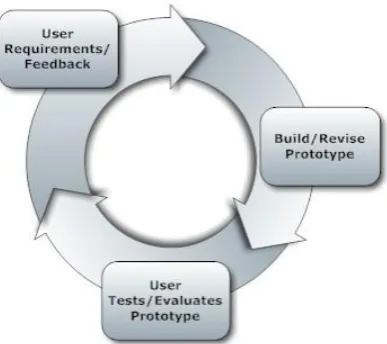
Figure 3.1: The Prototyping Paradigm ... 76
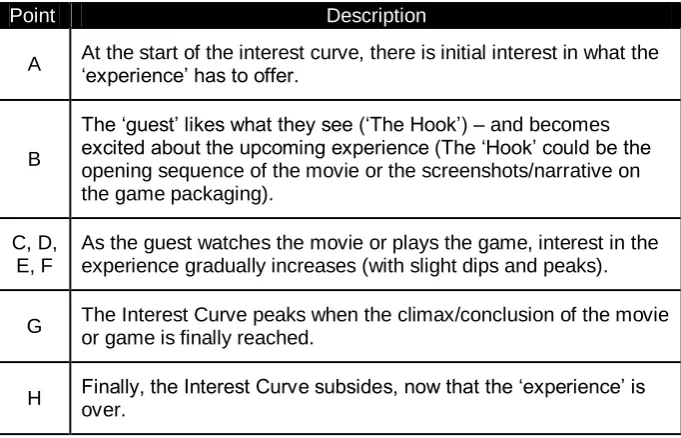
Figure 3.2: Schell‟s „Interest Curve‟ ... 81
Figure 3.3: „The Hero‟s Journey‟ / „Three Act Structure‟ ... 83
Figure 3.4: Zone of Proximal Development ... 103
Figure 3.5: Model of Flow ... 105
Figure 4.1: Early Prototype of „Gauntlet‟ ... 156
Figure 4.2: Educational version of „Pyramid Panic‟ ... 156
Figure 4.3: Final version of „Pac-Man‟ ... 158
Figure 4.4: Final version of „BombJack‟ ... 158
Figure 7.1: Pyramid Panic ... 204
Figure 7.2: Space Maze Panic ... 206
Figure 7.3: Block Panic... 206
Figure 7.4: 194X... 206
Figure 7.5: 294X... 208
Figure 7.6: 1982 ... 208
Figure 7.7: Moon Maths... 210
Figure 7.8: Math Balls ... 210
Figure 7.9: Math Magic ... 210
Figure 8.1: Flappy Birds ... 251
Figure 8.2: Minecraft Characters ... 251
Figure 8.3: PEGI Ratings ... 281
Figure 8.4: Google Play App Store ... 282
Figure 8.5: Linux Mint Software Manager ... 282
Figure 8.6: Google Play App Description (Math Workout) ... 282
10
List of Tables
Table 2.1: Game Genres. ... 55
Table 2.2: Commonly available Educational Games by Genre ... 56
Table 2.3: Game Styles ... 58
Table 3.1: Schell‟s „Interest Curve‟... 82
Table 3.2: Sample of Schell‟s (2010) „100 Lenses‟ ... 87
Table 3.3: Educational Game Design Principles (Various) ... 94
Table 3.4: Gee‟s „Principles of Learning‟ (Gee 2007) ... 97
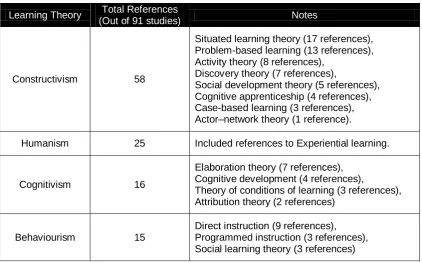
Table 3.5 Learning theories used within „game-assisted learning‟ studies ... 106
Table 3.6: Most „popular‟ learning theories on which to base educational game design ... 106
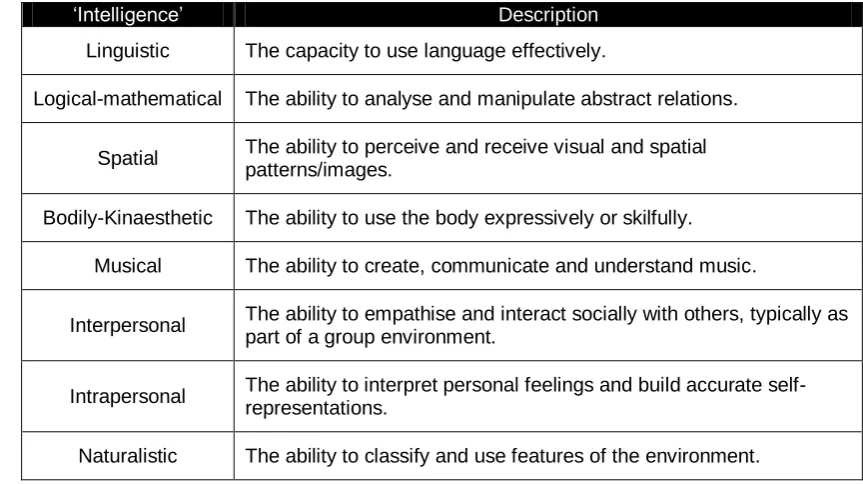
Table 3.7: Gardner‟s „Multiple Intelligences‟ ... 107
Table 3.8: „Multiple Intelligence‟ Game Design... 108
Table 3.9: Gagné‟s „Nine Events of Instruction‟ ... 109
Table 3.10: Kellar‟s ARCS Model of Motivational Design ... 110
Table 3.11: Gagné / Keller Mapping to „Common Elements‟... 110
Table 3.12: Game Engines referenced within the literature ... 112
Table 3.13: de Freitas‟s Four Dimensional Framework ... 116
Table 4.1: Definitions of Epistemology ... 126
Table 4.2: Game Development Software Comparison Matrix ... 153
Table 4.3: Initial Game Designs ... 154
Table 6.1: „Game Style Grading Sheet‟ Grades ... 185
Table 8.1: Author Developed Games ... 254
Table 8.2: Most „fun‟ Games ... 255
Table 8.3: Quality of Graphics ... 255
11
Acknowledgements
I would like thank both my supervisors, Assoc Prof Dr Sue Johnston-Wilder and Assoc Fellow Dr Sean Neill for their (long distance) support and guidance over the duration of my research, a task made more challenging due to my overseas work commitments for much of this time period.
I would also like to express my gratitude to the University of Warwick/Centre for Education Studies for granting me the opportunity to undertake my research degree with such a prestigious organisation.
12
Declaration
13
Abstract
The aim of this thesis is to investigate whether it is possible for a teacher (as a non-game developer) to create educational computer games that could be considered „fun‟ to play. The influences of game genre and graphical fidelity on this process are also investigated, along with the practicalities and barriers that constrain the (mainstream) use of computer games within the education system.
A literature review was conducted into the motivations for using educational games, the educational and conventional approaches to games design, and finally the development frameworks/software tools available for the purposes of implementation.
Building upon the literature review, a questionnaire based survey and a games design pilot were conducted in order to establish what constitutes educational games design „best practice‟. Based on the feedback/results obtained, a small number of educational games were developed (using the package „GameMaker‟) and piloted for use within the subsequent main study.
The main study consisted of a series of educational game playing sessions (supported by questionnaires) aimed at addressing the thesis research questions. The results of the study (in combination with an additional literature review) suggest the following:
It is possible for teachers (as non-game developers) to create „fun‟ educational computer games, although this may not always be the most practical or preferred approach.
Low fidelity graphics do not negatively impact the successful use of computer games within an educational environment.
Educational games can be used practically within the education system, but with constraints and barriers preventing their mainstream adoption, unless schools, government and educational game advocates work together towards a shared vision.
Due to limitations within the study, the influence of genre on the use educational games remains unresolved.
14
Abbreviations
2D Two Dimensional 3D Three Dimensional
ADDIE Analysis Design Development Implementation Evaluation AI Artificial Intelligence
ANGILS Alliance for New Generation Interactive Leisure and Simulations BBC British Broadcasting Corporation
BECTA British Educational Communications and Technology Agency CBM Commodore Business Machines
CLP Computer Literacy Project
COTS Commercial Off The Shelf (Software) CP/M Control Program for Microcomputers CRB Criminal Records Bureau
CRT Cathode Ray Tube DfE Department for Education DGBL Digital Game Based Learning DOS Disk Operating System
EDSAC Electronic Delay Storage Automatic Calculator ENC English National Curriculum
FCA Financial Conduct Authority GBL Game Based Learning GML Game Maker Language GOM Game Object Model GPS Global Positioning System GUI Graphical User Interface HCI Human Computer Interaction HoS Head of School
HTML Hyper Text Markup Language I.T. Information Technology
IBM International Business Machines ICT Information Communication Technology ID Instructional Design
KSA Kingdom of Saudi Arabia LAN Local Area Network
LMS Learning Management System
M.I.T Massachusetts Institute of Technology MDE Model Driven Engineering
NES Nintendo Entertainment System NPC Non Player Characters
OOP Object Oriented Programming OS Operating System
OS/2 Operating System/2 PC Personal Computer
PEGI Pan European Game Information) SDT Social Development Theory SG Serious Games
SGA Serious Games Association
SGDF Serious Game Development Framework SGI Serious Game Institute
SLT Social Learning Theory SNES Super NES
15
Abbreviations (Cont.)
TV Television
16
Chapter 1: Introduction
1.1 Introduction
Games Based Learning might be considered a broad term, but generally refers to the use of computer games within education. This could be through the use of explicitly educational games or the educational reuse of existing commercial games. The most frequently cited arguments for the use of Games Based Learning, is that it engages and motivates learners in a way that „traditional‟ schooling fails to do, and that the current school education system is „broken‟ and is in need of repair (in part, through the use of „Serious Games‟) (Prensky 2006, Shaffer 2008, Gee 2007).
Within this introductory chapter, the author discusses his motivation/rationale for undertaking research within the area of Games Based Learning. After outlining the thesis objectives, the thesis research questions are presented along with the author‟s hypotheses for the outcomes to these questions. A summary of the research findings is presented, followed by a discussion on the thesis research influences. The chapter concludes with a description of the thesis structure in terms of the remaining chapters.
1.2 Motivation / Rationale for the Thesis
Having conducted an initial literature review into the area of Games Based Learning (GBL), the author‟s motivation for the thesis was based on an observation derived from the current literature.
17 Therefore, the motivation behind the thesis is to contribute to the limited research on how teachers (as non-game developers) can design, develop and deliver educational computer games. This is a broad subject area, and therefore the thesis research has focused on the practical aspects of developing educational (maths) computer games for use within the UK education system.
1.3 Research Objectives
Games Based Learning is an evolving area, and while academic research has focused on the pedagogic aspects of computer game design and selection, there currently appears to be a lack of formal standards or guidelines guiding the implementation and use of GBL within the UK education system.
With this viewpoint in mind, the author has concentrated his area of research (for reasons of practicality) on the following over-arching research question:
Is it possible for a teacher to design and implement a computer game based on GBL principles and National Curriculum Objectives?
1.4 Defining the Thesis Research Questions
Having identified the research objectives (1.3 Research Objectives), the author embarked on the first part of the literature review. The literature subsequently helped shape the author‟s thinking, leading to the refinement of the objectives into a set of formal research questions.
These formalised questions refine the original over-arching research question, and broadly relate to two areas: firstly, the development of educational computer games, and secondly, the broader issue of Games Based Learning and its practical use within the education system.
18 The research questions:
1. Is it possible for a teacher (as a non-game developer) to create „fun‟ educational computer games, based on what are (currently) considered good GBL design principles?.
2. Which type, format or genre of game is most suited for use in Games Based Learning?
3. Does the quality of the computer graphics (2D or 3D) have an impact on the successful use of a computer game within an educational environment?
4. How can Games Based Learning be used practically within the education system? 5. How can the current barriers, preventing the mainstream adoption of Games Based
Learning, be addressed?
Research questions 4 and 5 proved to be particularly challenging to define, and needed to be re-defined during the course of the literature review. With the benefit of hindsight, both research questions were originally too narrowly focused, and subsequently needed to be broadened in order to allow them to be addressed in sufficient depth.
1.5 Thesis Hypotheses
Reflecting the research questions, the thesis offers the following hypotheses:
Research Hypothesis 1: It should be possible for a teacher (as a non-game developer) to create „fun‟ educational computer games. However, the challenge will derive from balancing the elements of „fun‟ and education in such a way that one element does not overpower the other (i.e. fun, but not educational or educational, but not fun).
Research Hypothesis 2: Certain formats or genres of computer game are better suited to educational use, in comparison to other format/genre types.
19 Research Hypothesis 4: While Games Based Learning may have an educational role to play, there will be practical issues (political, technical etc.) that affect how this role is implemented within the education system.
Research Hypothesis 5: Based on the previous hypothesis that there will be a role for Games Based Learning (within the education system), the hypothesis for this question is that there will be barriers that prevent this role from being a mainstream one (as advocated by GBL proponents). It may be possible to address some of these barriers, but potentially, not all.
1.6 Findings Summary
The thesis findings are discussed in greater detail within Chapter 9 (9.3 Thesis Findings), however, a summary of these findings is included within this chapter, for completeness.
Research Question 1 – It is possible for a teacher (as a non-game developer) to develop „fun‟ educational computer games. However, expecting (non-game developer) teachers to develop educational games may not be the preferred or the most practical approach to delivering GBL into the classroom.
Research Question 2 – has only been partially addressed, and therefore the author cannot state which type, format or genre is most suited for use in Games Based Learning. However, the literature exhibits a slight bias towards the (3D) simulation genre.
Research Question 3 – Based upon the literature review and the results of the Main Study, the author would state that computer games can utilise low-fidelity graphics and can still be used successfully within an educational environment.
20 Research Question 5 – The author has identified a number of gaps within the current literature (relating to barriers preventing the mainstream adoption of GBL), and suggests that they may be addressed (via reference to non-GBL literature) through the following actions:
The foundation of a UK centric GBL trade body, in order to promote the interests of GBL.
The eschewing of games with high-fidelity 3D graphics, thereby allowing the reutilisation of existing (older) school computers/
The creation of an „Educational App Store‟ to potentially centralise GBL resources
Collaboration between the education sector and the games industry, facilitated by the proposed UK centric GBL trade body.
1.7 Research Influences
From the beginning, the thesis research was influenced by the author‟s commitment to addressing the thesis research questions. Therefore, the discussion within this section broadly follows the outline of the thesis research questions, as identified within the previous section (1.4 Defining the Thesis Research Questions).
The first research question asks whether a teacher (as a non-game developer) can develop „fun‟ educational computer games. From a theoretical perspective, this could be considered a broad question, crossing several research disciplines.
21 While many researchers advocate educational games design based upon recognised learning theories, the author was unable to source many practical examples of this in practice – the majority of the literature being influenced (directly and indirectly) by the work of Malone & Lepper (1987) (Chapter 3). Given the commonality between games design principles and the work of Malone & Lepper (which in turn is based on the motivational properties of computer games), the author was influenced to design of a series of educational computer games based on „classic‟ games design principles (such as those documented by Habgood & Overmars 2006).
It was the author‟s hypothesis that, given this commonality, it would be possible to „blend‟ educational content into the game mechanics (or „motivational properties‟) of a computer game in such a way as to create an evenly balanced game where neither „fun‟ nor „education‟ overwhelmed the other. As documented within Chapter 8 and Chapter 9, the author was only partially successful in this respect.
Whilst the literature on games design was informative, it was also mostly theoretical. This motivated the author to conduct a Design Pilot (Chapter 6) as a mechanism to obtaining practical design guidance (from a target group of learners) on what makes a „good‟ educational game.
22 The influence of graphical fidelity on educational gaming was of interest to the author, and this forms the basis of the third research question (Chapter 7 / Chapter 8). Overlapping with the first research question, the author reviewed the literature on games design and games development software (4.6 Game Design / Development), ultimately leading to the selection of the application „GameMaker‟ as the development tool of choice. The consumer nature of „GameMaker‟ was ideally suited to the author as a non-game developer.
The literature on graphic fidelity focused on the development of educational games utilising 3D game engines or gave preference to the use of 3D graphics. Yet this aspect was at odds with one of the literature‟s criticisms of GBL, namely the lack of „3D capable‟ I.T. resources (within the education sector) needed to run reasonably modern 3D games. This contradiction influenced the author to create (relatively) higher-fidelity and low-fidelity versions of the games used in the field work for the thesis, in order to establish whether a game‟s graphical fidelity impacts its successful use as an educational game.
As part of addressing the research questions, the author conducted a Prototyping Pilot, followed by a Main Study (consisting of a series of „game playing‟ sessions). The Prototyping Pilot allowed the author to refine/prototype the games, while the Main Study served to provide feedback (via observation and questionnaires) designed to address Research Questions One, Two and Three (Chapter 7).
23 Finally, the author‟s „journey‟ through the development of the thesis, informs the reflective discussion within Chapter 9. The reflection encompasses the research questions, before logically leading to discussions on the thesis findings, future research and the limitations of the thesis.
1.8 Thesis Structure
The thesis can be broadly split into three parts. The first part discusses the area of Games Based Learning and the methodologies that can be used in order to design educational computer games. The second part discusses the experiences and results of the author‟s journey to design, develop and then trial run a series of educational computer games, aimed at the primary school level. The final part of the thesis explicitly addresses the identified research questions, through a combination of reference to the literature, the results of trialling the author‟s games and new contributions to the pool of existing Games Based Learning knowledge.
The thesis is therefore broken down into the following chapters:
Chapter 2
Chapter 2 presents the first half of the literature review and is primarily concerned with setting the background for the thesis research. After a brief review of educational computing (i.e. educational games, e-learning), the literature on Games Based Learning is reviewed. Of note, within the literature, is the difficulty in trying to arrive at a consistent and universally accepted definition of what a computer „game‟ actually is.
Chapter 3
24
Chapter 4
Chapter 4 begins with a discussion on the author‟s chosen research methodology. The author then discusses his research methods for addressing the thesis research questions, which in turn, also serve as an overview of Chapters 5 to 8.
Chapter 5 / Chapter 6
Chapter 5 and Chapter 6 discuss the initial part of the author‟s methodological approach to addressing the thesis research questions. The author conducted both a Questionnaire Based Survey (Chapter 5) and a Design Pilot (Chapter 6), the primarily purposes of which were to obtain feedback (from a sample group) on educational game design „best practice‟, in turn informing the design of the author‟s educational games.
Chapter 7
Chapter 7 discusses the latter part of the author‟s methodological approach to addressing the thesis research questions. Utilising the feedback from the Design Pilot, in combination with the use of games design principles and the ADDIE instructional design methodology, the author designed/developed a series of educational game prototypes for use within a Prototyping Pilot and subsequently, a Main Study. The Main Study was designed to assist in the addressing of thesis Research Questions 1 to 3.
Chapter 8
In the penultimate chapter, the author explicitly addresses the thesis research questions, through a combination of references back to the literature review and discussion of the feedback/results from the Main Study.
Chapter 9
25
1.9 Conclusion
After a brief introduction to the subject area of Games Based Learning and its argued benefits for education, this chapter concentrates on describing the thesis in terms of rationale, research influences and thesis structure.
The rationale for the thesis is based on the observation that the literature is presumptive of the role that teachers will play within the development of educational games, and this observation is reflected in the defining of the research objectives, research questions and the thesis hypothesis. Whilst discussed in greater detail within Chapter 9, a summary of the thesis findings is also presented within this chapter, for completeness.
The author discusses the influences for the thesis research, which broadly follows the outline of addressing the research questions. Finally, the chapter concludes with a brief discussion on the thesis structure, followed by an overview of each thesis chapter.
26
Chapter 2: Games Based Learning Literature Review
2.1 Introduction
This chapter begins with a brief review of educational gaming, from the early examples of mainframe computer games, to the more recent marketing of „edutainment‟ titles. Evolving from this background, the remainder of this chapter is dedicated to reviewing the current literature on Games Based Learning – the educationally focused use of traditional computer games and so-called „Serious Games‟. As part of the literature review, the difficulties in defining what a „game‟ is, are discussed, before the author provides his own interpretation based on both the literature and personal experiences. Related to the definition of a game, the type or „genre‟ of computer game is discussed along with commentary on the preferred genre for use with educational/serious games.
The chapter concludes by examining the criticisms directed towards Games Based Learning, as identified within the literature.
2.2 A Brief History of Educational Gaming
27 The earliest computer-based games are often considered to be „Noughts and Crosses‟ (1952, Figure 2.1) and „Tennis for Two‟ (1958) (Goldberg 2012a, Spencer 2004a, Djaouti et al. 2011). Ironically, despite being regarded as „games‟, both were originally written by
academics, partly out of academic curiosity and partially as a means of demonstrating the capabilities of these new mainframe computers. It could be argued therefore that these „games‟ were the first occurrences of „educational computer games‟, although perhaps not explicitly recognised as such at the time (Cross 2007).
Figure 2.1: EDSAC Simulator running „Noughts and Crosses‟ (Campbell-Kelly 2006)
By the 1970‟s, the falling cost of electronic components led Atari Corporation to develop its „Video Console System‟ (1977, Figure 2.2), which is credited with creating the home videogame market (Spencer 2004b, Goldberg 2012b, Retro Gamer 2006a). The „Video Console System‟ (VCS) provided colour graphics and a greater range of games (through interchangeable „game cartridges‟) for consumers to play with, from within the comfort of their own homes.
28 Figure 2.2: Atari 2600 VCS (AtariAge 2013a) Figure 2.3: Basic Math (AtariAge 2013f) By the dawn of the 1980‟s, the era of the games console was beginning to fade (Bevan 2008), giving way to what could be considered the „home computer revolution‟. Compared with their console counterparts, the home computer offered greater power, flexibility and (in addition to the evitable computer gaming usage) the proposal of being „educational‟. These new „home‟ computers were marketed as being versatile products (Allen 2006), allowing adult consumers to produce spread sheets, write reports and educate their children. Companies, such as Atari Corporation and Commodore Business Machines (CBM) took the early lead in this burgeoning new market, but would soon be joined by other companies looking for a piece of this new high-tech gold rush (Allen 2008).
2.2.1 Computer Literacy Project
In a move that was unusual for the time (i.e. a publically funded company engaging in commercial practices), the British Broadcasting Corporation (BBC) announced its intention to promote literacy in this new computer technology, through the „Computer Literacy Project‟ (BCS 2012, Smith 2011, Blyth 2012, Hammond et al. 2009). Running (officially) between 1979 and 1983, the BBC stated:
29 In order to realise this vision, the BBC planned to produce educational books and a ten-part TV series („The Computer Programme‟) revolving around a specially produced „microcomputer‟ which would feature a standardised BASIC programming language.
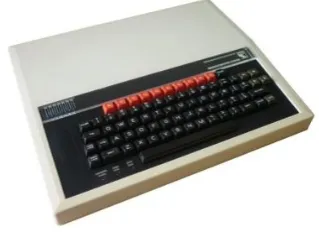
[image:28.595.239.399.283.406.2]The BBC published a tender for the development, manufacture and distribution of the proposed microcomputer which, with the government‟s support, would also be used within the UK education system to promote computer literacy. Eventually Acorn Computers would win the tender, and the subsequently produced computer would be known generically as the „BBC Micro‟ (Figure 2.4) (Carroll 2008, Crookes 2013, Goodwin 2007).
Figure 2.4: The BBC Micro (Model B) (Centre for Computing History 2013)
Unsurprisingly, given its educational nature, a considerable amount of maths related software was developed for the BBC Micro, during its lifetime.
30 Other notable titles developed during this period (typically based upon the adventure game genre) included „L - A Mathemagical Adventure‟, „Granny‟s Garden‟, „Giant Killer‟ and (puzzle game) „Maths With A Story 1‟ (Abbot 2000, Hammond et al. 2009, Tan 2010, Acorn Electron World 2013, Topologika 2014).
Today, modern maths-based games are available through a wide variety of outlets, primarily the Internet (Bowland Maths 2014, Manga High 2014, BBC 2014d) and through the „app stores‟ associated with both Apple and Google Android based mobile phones and Tablet PC‟s (Jary 2014). However, in a testament to their historical influence, the pioneering games of the BBC Micro‟s era (such as „L - A Mathemagical Adventure‟ and „Granny‟s Garden‟) are still commercially available in their original formats (for use with software based BBC Micro „emulators‟, 4Mation 2014a) and have also been redeveloped for use on modern (i.e. Microsoft Windows based) computers (ATM 2014, 4Mation 2014b) – potentially serving the educational needs of a newer generation of learners.
2.2.2 Edutainment
As the 1980‟s drew to a close, the „8 bit‟ generation of microcomputers were gradually replaced with more powerful ‟16 bit‟ variants, (Commodore Amiga, Atari ST, Acorn Archimedes) and in what would be a recurring theme, the ‟16 bit‟ market gave way to a new generation of home videogame consoles (Day 2007, Cusick 2004, Reed 2010).
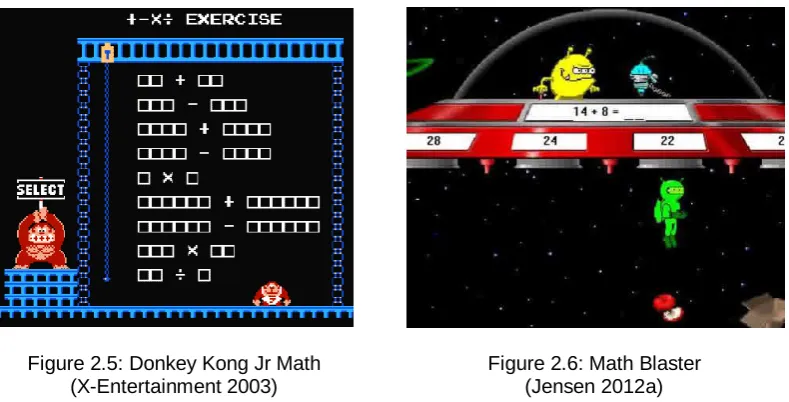
31 Figure 2.5: Donkey Kong Jr Math
(X-Entertainment 2003)
Figure 2.6: Math Blaster (Jensen 2012a)
On the more „serious‟ side of computing, the IBM PC was representing the „traditional‟, and possibly more „educational‟ computer system (Milne 2013). As time progressed, and the cost of computer components began to fall, manufacturers began adding Compact Disc (CD) Readers and sound output circuit boards (otherwise known as CD-ROM readers and „Sound Cards‟) to the increasingly more powerful PC architecture (Milne 2013).
32 This was due to a number of factors (Klopfer & Osterweil 2013, Cross 2007, Panoutsopoulos, Sampson & Mikropoulos 2014, Dondlinger 2007, Minović, Milovanović & Starcevic 2013, Stowell & Shelton 2008, Hong et al. 2009):
Edutainment titles were considered just regular videogames with educational content „bolted-on‟ as an afterthought – resulting in games that were neither (educationally) motivating nor playable. Bruckman (1999) (in Bourgonjon & Van Looy 2012) refers to this concept of edutainment as „„chocolate-covered broccoli‟‟.
Titles that attempted to be genuinely educational were often poorly designed, with a lack of interactivity and „simplistic‟ computer graphics and audio.
Most titles were considered not particularly well suited to conveying more complex educational material, while at the same time criticised for using a simplistic „drill and skill‟ format.
Later titles fell into the trap of the using „celebrity‟ or „Hollywood movie‟ tie-in licences in order to increase sales – resulting in what Klopfer & Osterweil (2013) consider to be „lazy‟ edutainment products.
Finally, the rise and development of the (then) fledgling Internet, would eventually provide access to lower cost, and in many cases, free educational games.
2.2.3 e-Learning
At the beginning of the literature review process, early searches concentrated on the most logical (and frequent) terms used to describe the research area, namely „Games Based Learning‟ (GBL) and „Educational Games‟.
33 Although there is some disagreement on what „e-learning‟ actually is (Pailing 2002, Dublin 2004), the predominant view is that anything involving computers (and more often internet web sites) could be regarded as „e-learning‟. In recent years, as it has become apparent that e-learning has not replaced more traditional education (i.e. books and teachers), there has been a shift towards so called „Blended Learning‟ (Stewart 2002, Baldwin-Evans 2006, Bele & Rugelj 2007, Hofmann & Miner 2008).
Blended Learning (sometimes referred to as „e-learning 2.0‟ or the „refuge of e-learning‟) is considered by some to be an enhanced version of e-learning, but more often is generally regarded as teaching using a mixture of new and traditional technologies/methods (Canon 2003, Mortera-Gutièrrez 2006, Trasler 2002, Vaughan 2007, Welker & Berardino 2005).
Driscoll (2002) defines blended learning as:
“To combine or mix modes of Web-based technology (e.g. live virtual classroom, self-paced instruction, collaborative learning, streaming video, audio, and text) to accomplish an educational goal.
To combine various pedagogical approaches (e.g. constructivism, behaviourism, cognitivism) to produce an optimum learning outcome with or without instructional technology.
To combine any form of instructional technology (e.g. videotape, CD-ROM, Web-based training, film) with face-to-face instructor lead training.
To mix or combine instructional technology with actual job tasks in order to create a harmonious effect of learning and working.” (Driscoll 2002, p.1).
34
2.3 Games Based Learning / Serious Games
The terms „Games Based Learning‟, „Serious Games‟ and to a lesser extent „Educational Games‟ all seem to be interchangeable and broadly describe games that are designed to be fun/playable and educational at the same time. Michael & Chen (2006) refer to this as „Stealth Education‟, while Prensky (2006) coins the phrase „unforced learning‟.
Although Ayiter (2008) considers it important that any Serious Game is aligned with a recognised learning theory or pedagogical model, it seems (from the literature) that many Serious Games have not been designed in this way. As a consequence, most literature in this area concentrates on the educational qualities/principles found within computer games, whether they are explicitly designed to be educational or not.
As will be discussed shortly (2.5 What is a ‗Game‘?), defining what a „game‟ constitutes (let alone a „Serious Game‟) is fraught with difficulty. However, given the broadness afforded by the literature, it could be argued that Serious Games are not a new concept, but a contemporary refining of education, mixed with technology. Early examples of modern „Serious Games‟ include military modified versions of Atari‟s Battlezone (1980) arcade game for US Army tank training („The Bradley Trainer‟) and id Software‟s Doom (1993) aka
35
2.4 Why Games Based Learning?
2.4.1 Repetition
Most researchers in the field (Including Pannese & Carlesi 2007, Annetta 2008 and Gee 2007) agree that one of the most educational aspects of computer games is „repetition‟.
Most games have a level of difficulty that will require the game player to practice several times, before he/she has mastered the task (this could be a specific task or a „level‟ within the game).
For most players, this repetition is almost automatic and without question, if the player fails to complete Level 1 of a game, they will often practice until they can successfully progress to the next level. Gee (2007) argues that this process is fundamental to learning, and that the following sequence actually takes place:
1. The player experiences/explores/plays the game, or as Gee puts it „probes‟ the virtual world that the game creates.
2. Having explored the „game world‟, the player will reflect on what they have discovered.
3. Having reflected, the player will develop a hypothesis on how the „game world‟ operates.
4. With this hypothesis in mind, the player „re-probes‟ the game world in order to test whether the hypothesis is correct or not.
5. In the event of the hypothesis being incorrect (i.e. the player fails to make progress or complete the current level), the player will then start from the beginning and re-probe, reflect and then re-develop/re-test their hypothesis.
Both Gros (2007) and Annetta (2008) express the view that this process is similar to the „Drill and Practice‟ or rote memorisation of traditional teaching. Gee is not alone in proposing this „probe – re-probe‟ view (Martens, Gulikers & Bastiaens 2004, Gros 2007, Wideman et al.
36 Figure 2.7: Game Based Learning Model (Garris, Ahlers, & Driskell 2002)
2.4.2 Skills Development
Along a similar principle, there are views within the literature that game playing can help develop and improve a range of skills (Gros 2007, Boyle, Connolly & Hainey 2011, Phillips & Popović 2012, Ke 2008, de Freitas & Liarokapis 2011, Connolly, Stansfield & McLellan 2006, Hwang et al. 2012, Carolyn Yang & Chang 2013, Dondlinger 2007, Annetta, Folta & Klesath 2010, Boyle, Connolly & Hainey 2011, Tang, Hanneghan & El Rhalibi 2009, Demirbilek & Tamer 2010, Sardone & Devlin-Scherer 2010), including:
Power of observation.
Attention span.
Collaboration.
Creative thinking.
Faster processing of information.
Problem solving.
Spatial navigation/representation.
Tracking multiple objects simultaneously.
Increased retention of information.
37 Both Prensky (2006) and Michael & Chen (2006) list a number of skills/abilities, that they assert, games already teach:
Hand/Eye co-ordination.
Curiosity – players learn to test, seek out new information.
Cognitive Skills.
Improved „Visual Selective Attention‟ (being able to focus/concentrate on a specific object amidst a „sea‟ of other objects).
Improved Visual Memory.
„Situational Awareness‟ (the ability to process information from many sources).
Multitasking.
Probably the most (recent) prominent example of a „Serious Game‟ is America‘s Army, both a recruitment tool and a form of military training developed by the United States Army (Michael & Chen 2006). The game takes recruits through the process of basic training (such as riflemanship, hand-to-hand combat and the use of incendiary devices), and in turn serves to show gamers and would-be recruits what basic army training is actually like. In a military context, Michael & Chen (2006) suggest that America‘s Army allows recruits to develop the required basic skills/abilities before they begin the real life basic training:
Improved ability to multi-task.
Improved Target differentiation.
Target Prioritisation.
Teamwork with limited communication.
Desensitisation (shooting human targets).
Willingness to take aggressive action.
2.4.3 Personalised Learning
Closely related to practice and repetition, is the concept of „personalised learning‟.
38 More sophisticated commercial games incorporate a degree of Artificial Intelligence (AI) that can offer „dynamic balancing‟. Dynamic Balancing involves a game‟s internal „game engine‟ monitoring the player‟s progress throughout the game (or game level) and dynamically adjusting the level of difficulty (or challenge) based on an assessment of the player‟s current performance (Schell 2010).
From a pedagogic point of view, this design feature is appealing as it theoretically allows for automated „personalised learning‟ – the dynamic adaption of educational challenge, dependent on the individual player‟s current skill – effectively the computer game equivalent of differentiation (Sherry 2013, Faure & Ray 2011, Bourgonjon & Van Looy 2012, Condie et al. 2007, Royle 2009, Hwang et al. 2012). However, as will be noted in Chapter 3 (3.7.2 Challenge), attempting to implement dynamic balancing within computer games can be a challenging (and potentially flawed) process.
2.4.4 Motivation
The other main argument for the educational use of computer games is that they generate high levels of engagement and therefore lead to interested and motivated learners (Vogel, Vogel et al. 2006, Paras & Bizzocchi 2005, Tobias, Fletcher & Wind 2014, Chee 2007, Gros 2007, Denis & Jouvelot 2005, Charles, Bustard & Black 2009, Melero, Hernández-Leo & Blat 2011, Gee 2007, Shaffer 2008, Annetta, Folta & Klesath 2010, Ott & Tavella 2009, Ott & Tavella 2010).
39 But how do we define „motivation‟?
“In layman‘s terms being motivated is commonly taken to mean being ‗energised‘ to work willingly toward some valued goal, and having the desire to put in sufficient effort to succeed.” (Westwood 2004, p.31).
Or more concisely:
“To be motivated means to be moved to do something” (Ryan & Deci 2000a, p.54). In this context, games players are willing to spend hours of their own time in order to master a certain game feature, a level (within a game) or the game itself. This could, in part, be due to the fact that players/learners are free to explore the virtual game world in safety, with little worry for their well-being and safe in the belief that any mistakes made will be confined to the (relative) privacy of the virtual world (Gee 2007, Shaffer 2008). Contrast this with the fear or feeling of embarrassment which is frequently associated with a pupil being singled out (within the classroom) in order to answer a teacher‟s question in front of the entire class, especially if the pupil does not know the answer.
The virtual worlds that games offer, can sometimes be in themselves educational. For example, World War II themed games (such as the successful Call of Duty and Medal of Honour series) can be very immersive and historically accurate, allowing the player to experience „the world at war‟ in a way that traditional movies, such as Saving Private Ryan, cannot (Gee 2007).
40 In terms of computer games, this „control‟ is enabled through the ability to adjust several aspects of a game, and its „game play‟. For example, many games provide options to adjust the level of game difficulty (easy, normal, hard), the player control mechanisms (keyboard, mouse, joystick) and aspects of the virtual environment (floor/wall texture detail, the amount of lighting). In turn, Gee (2007) argues that these levels of control allow game players to customise a game to reflect their own preferred (learning) style of play.
In the context of the motivational properties of computer games, Malone and Lepper put forward the following properties that they argue can create a motivating environment1 (Malone & Lepper 1987, Lepper & Malone 1987):
Challenge.
Curiosity.
Control (Learner Agency).
Fantasy.
Competition/Co-operation.
(Peer) Recognition.
Other researchers have expanded upon Malone and Lepper‟s original work, suggesting additional computer game based „motivational‟ properties (Vogel, Greenwood-Ericksen et al. 2006, Orvis, Horn & Belanich 2008, Phillips & Popović 2012, Amory et al. 1999, Dickey 2005, Dondlinger 2007, Watson, Mong & Harris 2011, Erhel & Jamet 2013, Charles, Bustard & Black 2009), including:
Flow (3.8.4.6 Flow Theory).
Rewards.
Scores.
Fantasy Narrative.
Good quality sound and graphics.
Provision of Feedback (positive and negative).
Elements of „surprise‟ (Although Sardone & Devlin-Scherer (2010) do not actually define what could be considered a „surprise‟).
The pace/speed of a game (which Jennett et al. (2008) argue also creates an element of challenge).
1
41 The literature on motivation distinguishes between two types: Intrinsic/Endogenous motivation and Extrinsic/Exogenous motivation.
Intrinsic or endogenous motivation could be considered internal to the individual. A person chooses, (or is motivated) to engage in an activity because they find it inherently interesting and seek to participate due to deriving „fun‟ and enjoyment from the activity (Deci & Ryan 1985, Ryan & Deci 2000a, Paras & Bizzocchi 2005, Sardone & Devlin-Scherer 2010). Within an educational setting, this is the preferred type of motivation that learners will ideally exhibit towards learning activities, resulting in „higher quality learning‟ (Ryan & Deci 2000a).
In contrast, extrinsic or exogenous motivation is considered external to the individual. With this type of motivation, a person will participate in an activity (regardless as to whether they find it interesting or not) because they feel obliged or required to do so. For example, few learners are intrinsically motivated to sit an exam, but are extrinsically motivated to do so, because they recognise that it is a requirement for successfully completing their course of education – such as a training programme or a degree course (Ryan & Deci 2000a, Rieber 1996, Erhel & Jamet 2013).
As noted previously, Malone & Lepper and subsequent researchers regard „fantasy‟ as an important aspect of motivation, with Rieber (1996) regarding „endogenous fantasy‟ as “an important first step towards intrinsic motivation” (Rieber 1996, p.50).
However, Habgood, Ainsworth & Benford (2005a, 2005b) take issue with the emphasis placed (within the literature) on the prominence of fantasy within motivational game design, stating (in connection with the game „BreakOut‟):
“Whether the game uses the fantasy context of a bat and ball or (as in a later interpretation of the game) a space ship and energy bolt, it makes no difference to the fundamental gaming activity” (Habgood, Ainsworth & Benford 2005a, p. 8)
42 Outside the body of their respective work, the author was unable to source additional literature challenging this viewpoint, with the exception of Echeverría et al. (2012) who note that this viewpoint does contradict established research on the inclusion of fantasy within computer games i.e. the work of Malone & Lepper (1987) and Rieber (1996).
2.4.4.1 Motivational Theories
While „motivation‟ can be described in terms of properties (such as challenge, curiosity etc.), theories have been developed to formalise the use of motivation within an educational context. For the purposes of completeness, this section concludes with a brief discussion on the most cited motivation theories, that of Maslow („Hierarchy of Needs‟) and Deci & Ryan („Self Determination Theory‟).
Maslow's Hierarchy of Needs
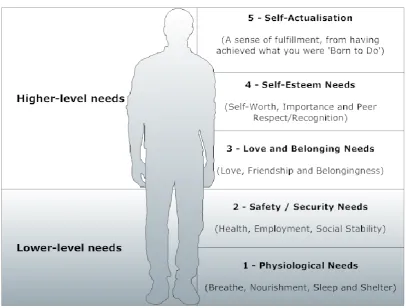
Abraham Maslow's „Hierarchy of Needs‟ postulates that human beings have „needs‟, which when addressed, will lead to satisfaction and well-being (Maslow 1943). Maslow's hierarchy is frequently depicted diagrammatically, composed of five „needs‟ (Figure 2.8). At the lower end of the hierarchy (Levels 1 and 2), are the „basic‟ human needs that need to be satisfied before an individual (or a learner, in an educational context) can begin to address the needs at the higher end of the hierarchy (Levels 3 – 5).
Level 1 - Physiological Needs
At the lowest level in Maslow's Hierarchy, are the basic needs that all human beings require to be satisfied in order to live and to be able to function healthily. These needs include the ability to breathe, the need for nourishment (food and water), sleep and shelter.
Level 2 – Safety / Security Needs
43 Figure 2.8: Maslow's Hierarchy of Needs (Adapted from Maslow 1943)
Level 3 – Love and Belonging Needs
After the satisfaction of both physiological and safety needs, the next level of needs to be satisfied are those relating to belongingness – the need for love, friendship, fitting into a peer group and a general sense of belonging. As Maslow states:
“He will hunger for affectionate relations with people in general, namely, for a place in his group, and he will strive with great intensity to achieve this goal. He will want to attain such a place more than anything else in the world and may even forget that once, when he was hungry, he sneered at love” (Maslow 1943, p.381).
Level 4 – Self-Esteem Needs
44
Level 5 – Self-Actualisation
The final level of Maslow‟s hierarchy is that of Self-Actualisation – the successful fulfilling of an individual‟s purpose or meaning in life or as Maslow observes:
“A musician must make music, an artist must paint, a poet must write, if he is to be ultimately happy. What a man can be, he must be. This need we may call self-actualization.” (Maslow 1943, p.382)
Parallels with Control or Learner Agency could be drawn here, as Self-Actualisation might be considered the desired (or successful) outcome of the control that the learner has asserted
over their learning process – they have attained that which they set out to achieve.
As one of the oldest motivation theories, Maslow‟s Hierarchy has been subjected to several critiques, and as a consequence has drawn several criticisms. The most significant criticism is that Maslow‟s theory is just that – a theory, with little or no empirical evidence to support the existence of the hierarchy, nor the specific ordering of the needs within the hierarchy (Wahba & Bridwell 1976, Kaur 2013, Kremer & Hammond 2013).
Neher (1991) and Trigg (2004) both argue that the hierarchy focuses too much on the individual‟s needs, and therefore downplays the role of social interaction (Level 4) and cultural influences on people‟s „needs‟ in general. Reflecting both these criticisms, Denning 2012 argues that:
“Needs are not hierarchical. Life is messier than that. Needs are, like most other things in nature, an interactive, dynamic system, but they are anchored in our ability to make social connections.” (Denning 2012).
45
Self Determination Theory (SDT)
As with Maslow's Hierarchy of Needs, Self Determination Theory (Deci & Ryan 1985, Ryan & Deci 2000b, Deci & Ryan 2000, Deci & Ryan 2013) postulates that human beings have psychological needs, which need to be addressed in order to ensure satisfaction and well-being. Deci & Ryan identified these needs as:
Competence – The desire and confidence to develop and master new skills.
Relatedness – A sense of belonging, within a supportive environment.
Autonomy – Freedom of choice for the individual to engage in activities within their control.
Upon examining these needs, a degree of commonality can be seen with the previously discussed literature. For example, it could be suggested that Relatedness reflects Maslow‟s
needs of Belongingness (Level 3) and Self-Esteem (Level 4), while Autonomy reflects the principle of Control or Learner Agency (i.e. in the context of Malone & Lepper‟s motivational principles or Gee‟s views on „preferred (learning) style of play‟). While not a motivational theory per se, it might be argued that Deci & Ryan‟s Competence also touches upon Vygotsky‟s Zone of Proximal Development and the mastery of new skills (3.8.4.4 Vygotsky‘s ‗Social Development Theory‘).
Self Determination Theory itself actually consists of five „sub-theories‟ (Deci & Ryan 1985, Deci & Ryan 2000):
1. Basic Psychological Needs Theory (BPNT) – describes the psychological needs that are required for intrinsic motivation and psychological well-being.
2. Cognitive Evaluation Theory (CET) – describes intrinsic motivation. 3. Organismic Integration Theory (OIT) – describes several types of extrinsic
motivation, such as the motivation for rewards or out of self-esteem.
4. Causality Orientations Theory (COT) – describes the differences in what motivates individuals (i.e. driven by self-interest, for rewards, or out of anxiety).
5. Goal Contents Theory (GCT) – distinguishes between intrinsic and extrinsic goals. Intrinsic goals may be altruistic (i.e. for the wider community), whereas extrinsic goals may be egoistic, such as the pursuit of „power‟ or fame.
46 Referring to the CET sub-theory, Deci & Ryan (2000) postulate that environments or tasks that are perceived (negatively) as „controlling‟ will undermine an individual‟s self-determined motivation. McLellan (2009) and McCally (2010) argue that this view is at odds with current education systems, where the use of formal testing and (extrinsic) rewards (both of which might be perceived as „controlling‟ by learners) are common practice.
If subscribing to Deci & Ryan‟s view, then in theory, education systems (through the use of „controlling‟ exams or tests) should be de-motivating learners en masse, which McLellan (2009) disputes due to a lack of supporting evidence.
2.4.5 21st Century Students
One of Prensky‟s (2001, 2006) most commonly quoted arguments for Games Based Learning, is that of the „Digital Native‟. Prensky argues that today‟s 21st
century learner has grown up in a considerably different environment to that of the pre-21st century learner. These so-called „Digital Natives‟ have grown up surrounded by all pervasive technology – mobile phones, MP3 players, digital cameras, Personal Computers, laptops, games consoles and more recently the Tablet Computer (e.g. the iPad).
It is Prensky‟s contention that such a digital upbringing, has in turn, created a new generation of learners that think and learn differently from their pre-21st century counterparts (so-called „Digital Immigrants‟) and therefore they need to be educated differently.
47 The concept of this „gamer‟ or „net‟ generation (Furió et al. 2013) does not go unchallenged though. Bennett, Maton & Kervin (2008) argue that Prensky‟s work is often uncritically referenced within the literature and describe the „grand claims‟, made by „Digital Native‟ advocates, as a form of academic „moral panic‟.
Studies conducted since Prensky‟s early work (Prensky 2001) suggest that today‟s „digital natives‟ do not differ significantly from previous generations (i.e. digital immigrants) in terms of their IT / ICT usage (Smith 2012, Thang et al. 2014). Where there are differences, these can be attributed to the social-economic status of the „native‟ or their level of IT access at school or college (Bennett, Maton & Kervin 2008, Smith 2013, Gu, Zhu & Guo 2013, Eynon 2010, Demirbilek 2014, Dietrich & Balli 2014).
Bekebrede, Warmelink & Mayer (2011) argue that the extensive use of different media and technology does not automatically make today‟s learners „different‟ and that they have witnessed (in the context of Higher Education) “no fundamental change in learning style preferences” (Bekebrede, Warmelink & Mayer 2011, p.1522).
Bekebrede, Warmelink & Mayer also make the point that:
“Interestingly, Prensky recently introduced some amendments to his original theory of digital natives and immigrants (2009), suggesting that the distinction between the two was losing ground.” (Bekebrede, Warmelink & Mayer 2011, p.1523).
48 At the time of writing, while there is disagreement (within the literature) around Prensky‟s definition of the „Digital Native‟, there is a consensus that the concept warrants additional academic research (Bennett, Maton & Kervin 2008, Eynon 2010, Smith 2012, Smith 2013, Gu, Zhu & Guo 2013, Thang et al. 2014, Demirbilek 2014).
2.5
What is a ‘Game’?
What do we mean by the term „game‟?
The author regarded this as a somewhat simple term, in the context of computers, i.e. computer games. However, during subsequent literature reviews (into Games Based Learning, and related areas), it became apparent that there is little agreement on what might constitute a (computer) „game‟ (Wilson et al. 2009, Hwang et al. 2012, Mislevy et al. 2012, Dempsey et al. 2002, Shute & Ke 2012). It is the opinion of this author, that this lack of agreed definitions is a recurring theme throughout the area of Games Based Learning. Starting with pure (non-educational) definitions of a „game‟, Perry & DeMaria (2009) define a „game‟ as offering a “series of choices – or decisions” (Perry & DeMaria 2009, p. xxvi), whereas Schell (2010) takes a more pragmatic approach, arguing that many have tried to define what a „game‟ is, but that most have failed to successfully do so. He offers 12 definitions of what a game actually „is‟, before finally settling on: “A game is a problem-solving activity, approached with a playful attitude.” (Schell 2010, p.37). Koster (2005)