Ecosystem-Inspired Enterprise Modelling Framework for
Collaborative and Networked Manufacturing Systems
Amjad Fayoumi Computing and Technology Nottingham Trent University Nottingham, Clifton, NG11 8NS, UK
Fayoumi A. (2016). Ecosystem-Inspired Enterprise Modelling Framework for Collaborative and Networked Manufacturing Systems. Computers in Industry, Elsevier, http://dx.doi.org/10.1016/j.compind.2016.04.003
Abstract: Rapid changes in the open manufacturing environment are imminent due to the increase of customer demand, global competition, and digital fusion. This has exponentially increased both complexity and uncertainty in the manufacturing landscape, creating serious challenges for competitive enterprises. For enterprises to remain competitive, analysing manufacturing activities and designing systems to address emergent needs, in a timely and efficient manner, is understood to be crucial. However, existing analysis and design approaches adopt a narrow diagnostic focus on either managerial or engineering aspects and neglect to consider the holistic complex behaviour of enterprises in a collaborative manufacturing network (CMN). It has been suggested that reflecting upon ecosystem theory may bring a better understanding of how to analyse the CMN. The research presented in this paper draws on a theoretical discussion with aim to demonstrate a facilitating approach to those analysis and design tasks. This approach was later operationalised using enterprise modelling (EM) techniques in a novel, developed framework that enhanced systematic analysis, design, and business-IT alignment. It is expected that this research view is opening a new field of investigation.
2
1 Introduction
From the beginning of the Industrial Revolution, manufacturing has experienced a series of changes in paradigm: Quantity of production, cost reduction, quality of production, customisation, lean manufacturing, knowledge- and collaboration-oriented manufacturing, and most recently crowdsourcing and cloud-based manufacturing [1]. The manufacturing environment is usually complex, hard to predict and composed of many interdependent systems, It is also characterised by rapid change and uncertainty, which makes analysing and designing practices rather challenging. Manufacturing value and supply networks in complex socio-economic systems [2, 3] typically show characteristics such as multi-scale interactions with high contingency and nonlinearity, emergent behaviour, pattern formation, and self-organisation. Clearly, the new socio-economic landscape and production techniques have led to increased efficiency, speed, and accuracy; but at the same time, they have increased the complexity of the way companies do and manage business. It is difficult to manage and control these emergent forces and technology on the one hand, and the increasing number of influencing factors on the other; even the most optimistic information and communication technology (ICT) design initiatives have been less than successful in achieving the desired manufacturing and business goals. Complex and nonlinear behaviours entail unfamiliar flows and unexpected sequences; they are mostly not visible or understandable, and are sometimes uncontrollable or uncertain. These kinds of complex behaviours cannot be envisaged by designers, or managed by operators, without extensive modelling and simulation.
In this context, many modelling and simulation approaches were adopted; some influenced by computer science approaches, and some inspired by operations research. Enterprise modelling approaches provide a holistic view of an enterprise’s structural, functional, and behavioural aspects, and allow for better operational design, business-IT alignment, and performance measurement. In fact, they also offer a foundation for business and technical development and advancement – although some other approaches were adopted in similar contexts, such as soft system methodology [4], systems thinking [5], and operation simulations [6]. However, these approaches can be advanced by reworking their theoretical and practical use to better fit with the notion of collaborative and networked manufacturing ecosystems.
The research presented in this paper draws on a theoretical discussion and proposes developing a “framework” to better understand the complex and evolvable nature of the collaborative manufacturing network (CMN). The design of this framework takes into consideration the agility and effectiveness of the holistic analysis to design enterprises and their underlying information systems, and suggests practices that support modelling and simulation in the digital era. To this end, this research is founded on connecting the principles underpinning two research domains, namely those of (a) ecosystem theory, and (b) enterprise modelling, and this novel research view opens a new field of investigation. The main research questions this paper aims to answers are:
1. What lessons can we learn from ecosystem theory to better understand the collaborative
manufacturing network environment?
3
The paper is organised as follows: Section two briefly reviews the current approaches and state of the art in collaborative networked manufacturing analysis and design, and discusses their limitations and the challenges facing CMN enterprises. Section three describes the research methodology used in this paper, and section four discusses the utility of ecosystem theory. Section five reviews and then introduces the enterprise modelling framework in terms of its conceptual perspectives, process, and supportive tools. Finally, section six provides a set of concluding remarks, and recommends a direction for future work.
2 Challenges Faced by CMN Enterprises
4
On the information systems side, Montreuil, Frayret and D'Amours [7] suggest that agent-based simulation is required for their developed NetMan framework in order to optimise and predict network behaviour. Wang [12] presents an IS framework to support collaborative manufacturing services which considers interesting technical capabilities such as ontology use (OWL) and semantic software services (WSDL-S). We also can find in [13] an approach to measuring the impact of implementing new “RFID” technology on cost reduction in networked manufacturing; the authors suggest that implementing RFID can improve the overall manufacturing operation and positively influence the total supply chain cost.
Although the previous studies have inspired and helped to formalise emergent thinking in the manufacturing domain, most manufacturing enterprises still optimise their activities locally rather than performing global network optimisation [14]. Also, the manufacturing enterprises in many countries fail to cope with environmental changes, which implies a failure in increasing innovation and service sustainability to a level that lives up to global market demand. This may result in increasing the risk of losing markets, or at minimum losing customer trust.
The final critical issue is related to risks taken during the decision-making process in CMN; since the CMN is highly dynamic, many decisions need to be made continuously, and changing strategic choices might bring serious risk and losses to different levels of enterprise granularity. Previous literature did not address the alignment issue among theories, practices, tools, and information systems development. Therefore, a systematic and semantic approach using intensive modelling and simulation is required to support decision-making during both enterprise design and operation.
3 Research Methodology
5
but more formally stated than, the “justificatory knowledge” proposed as an addition to ISDT. It provides a logical step that bridges the conceptual distance between kernel theory constructs and artefact features.
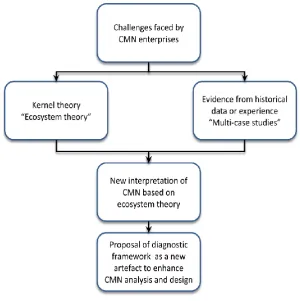
The resulting diagnostic framework is both an output and part of the design process. “Both the design product and the design process may specify kernel theories, typically defined as ‘natural science theories from other disciplines‘ [19] that suggest either the meta requirements or the construction process”. In this case, the kernel theory employed during the framework design process was ecosystem theory from the natural sciences. Thus, the historical cases and scenarios led to a novel interpretation that helped to generate new artefacts; specifically, the diagnostic framework for CMN enterprise modelling and simulation as a design result.
[image:5.595.147.448.264.566.2]
Fig. 1. Research approach.
4 Exploring Ecosystem Theories
The analysis of literature on CMN highlights the need for a comprehensive model using a systematic process to analyse and design collaborative networked manufacturing enterprises. The limitations in
the current approaches have motivated our work to explore theories of ecosystemdomain in order to
6
between organisms in such a system. This section provides a short introduction to the domain’s influence on our work.
4.1 Lessons Learned From Ecosystem Theory
An ecological community is a group of trophically similar, sympatric species that actually or potentially compete in a local area for the same or similar resources. Hubbell presented an explanatory theory that is formulated entirely in terms of chance [20, 21]. Ecosystem theory also relies heavily on a central metaphor, which is that an ecosystem imposes a process through which multiple agents adapt to survive in competition for finite resources. There are some approaches that apply biological and ecological theories to the IT domain [22-24]. Early ecological approaches explored by Fidel [25] “suggests that … analysis should begin with, and be driven by, an explicit
analysis of the constraints that the environment imposes on action”. The central reason to focus on
environment is because the collective distributed intelligence of the whole system is always greater than the total knowledge of any sole part [25]. The main property of an ecosystem is that it is an environment of distributed heterogeneous organisms or agents in distributed and remote geographical locations, and they inhere in nature to produce a community which has an amount of population [26-28]. Many principles of ecology and natural science – such as symbiosis, natural selection, self-organisation, gene duplication and gene robustness – can all be considered as aspects of the evolution of the enterprise socio-technical system. An understanding of such principles can help to clarify the nature of the CMN systems. For example, Yu argues that using gene duplication as a metaphor helps in the design of better enterprises and contributes to their success [23, 24]. All the concepts of ecosystem theory may influence the manufacturing enterprise’s product, process, strategy, technical mechanism, performance, and location.
The following draws analogies between the principles found in ecosystems [22] and their counterpart examples from manufacturing enterprises.
7
joint venture which enabled Starbucks to finally enter the Indian market, whilst Tata’s investment of resources and market knowledge was rewarded by a share in the profits of one of the biggest coffee-shop brands in the world. Another model can be found in IT product warehouse partnerships; the reseller is both a dealer and a customer, benefitting from promotion, training, technical support, and advice from the manufacturer, in return for generating more sales by presenting the products to the end customer as part of a proposed solution. Nevertheless, enterprises need to be aware of the impacts and impact levels of the symbiotic relationship, since there are some harmful or detrimental relationship types, which will be discussed later in this section.
Natural selection: Only the best and most robust survive. The environment is able to select the best among alternatives – be they systems, enterprises, products, agents, or groups – to perform specific tasks. An enterprise should deliver good products or services to satisfy valued customers in order to survive; otherwise, it will be eliminated due to market competition. Natural selection is enforced by many internal and external drivers, e.g. customer demand, changes in the economic landscape, skills emigration, habitat, and cultural evolution. For instance, in the 2008 financial crisis, many manufacturing companies were not able to maintain the stability of their manufacturing activities. Even enterprises as large as General Motors declared themselves bankrupt, and the collapse of Lehman Brothers bank is considered the largest bankruptcy filing in U.S. history. Enterprise activities are subject to natural selection; after the joint venture between Starbucks and Tata, Tata have replaced the coffee supplied from the international market with local Indian coffee, which cut logistic costs and supported the local economy whilst still offering high-quality coffee to customer. Disneyland has also announced that a new Asian local supplier will supply to their park in Hong Kong during both construction and operation. This type of business decision can be considered natural selection, as enterprises want the option that best suits their value-creation process. Cost, time, quality, benefit, creativity, brand recognition, increased profit, waste, and environmental friendliness are all drivers of the natural selection process.
Self-organisation: The enterprise’s internal activities, strategy, and innovation form their image and
8
can also self-organise based on geographical location; ABB Dubai mainly focusses on renewable energy products and projects for smart and sustainable cities, while in some European countries their range of products and services concentrates on robotics, automation, and green technology.
Gene duplication: Creating or generating an extra copy of the gene may give rise to completely new materials or products which in turn will support the evolutionary process. The manufacturing enterprise aims to create a stable version of a product design which can become a basis for further development and innovation. This can then either add features which fit into new environments, circumstances, or places, or it can re-use the same design within another product that can offer new functionalities or features. On a strategic level, enterprises can establish new divisions, or even new enterprises, that duplicate the original enterprise’s business model with a higher proportion of experimental activities, and more agility for targeting new markets and customers. The new version is considered a clean facsimile of the original company, and previous activities have less impact on its image. Adopting such a strategy will drastically reduce strategic and operational costs and risks. There are two types of gene duplication. Firstly, the accidental: Many inventions were discovered inadvertently, such as Velcro, penicillin, anaesthesia, 3M Post-it notes, the microwave, and X-rays. Secondly, the planned: For example, in 2000 Al Safi announced a partnership with Danone, allowing the transfer of expertise and skills, and giving Danone the opportunity to enter the Saudi market with a well-established brand. Al Safi continued producing products under their own brand as well as testing the market with new products under the Al Safi-Danone name. This exploratory period saw a number of products introduced to, and then withdrawn from, the market in line with levels of demand. Another example can be found in Google, when they decided to enter the DARPA Grand Challenge for robotic vehicles in 2004, which led to them evolving a completely new unit concerned with the development of a new, smart, self-driving car. In the automotive industry, Mercedes, Land Rover, and other car manufacturers opened assembly – and some parts-manufacturing – facilities in the Middle East to serve the local market, especially with regards to upgraded specifications that meet the climate and environmental conditions of the region, e.g. air conditioning, engine cooling, air filtration, and localised GPS. Similarly, many IT companies – namely IBM, Microsoft and Oracle – have also established research centres in the Middle East and North Africa to localise their core products and conduct research that concerns local customers. However, other companies have taken a different approach, and have decided to take advantage of the advancement of technology by offering their digital or customised products and services through the internet where possible.
9
from other companies producing alternative devices that are attractive in terms of both price and quality. Coca-Cola remains one of the three strongest brands in the world, even after decades of market changes and shifts in consumer trends. Technological robustness is also relevant; electrical and mechanical devices have operated on the same principles since their introduction, with only minor changes stemming from either natural selection or gene duplication. Robustness can also be found in processes, such as Toyota’s production system, which has been a benchmark for many other companies across multiple sectors.
As there are characteristics of an ecosystem environment, there are also specific relationships among the agents within an ecosystem, system, or enterprise. The following list gives a summary of such relationships, and provides examples from the manufacturing domain.
Mutualism: Both systems benefit from the relationship. This kind of relationship is considered a goal for each enterprise operating in a collaborative networked environment. Traditional partnerships between two companies (e.g. joint-venture, supplier, sub-contractors, distributor, retailer, and legal advisor) see both companies exchange values. Mutualistic relationships can also exist between two industries or departments, such as the interaction between the IT and production industries or departments.
Commensalism: One system benefits from the relationship, whilst the other is unaffected. Governments have created many services to benefit society, but on examination of each particular project or service it can be difficult to identify the value returned to the government. Most charitable and voluntary work is also characterised by this type of relationship. For example, non-profit national libraries, public parks, and open museums are some examples that benefit the consumer with no specific value returned. In a strategic business partnership, there is also a chance of commensal relations when one partner is learning from the other, and the other is not affected. In the manufacturing industry, there are some incubators that are interested in supporting, advising and assessing manufacturing start-ups and SMEs for free.
10 Amensalism: One system is harmed by the relationship, whilst the other is unaffected. An example would be government policies and tariffs that influence the business activities of some enterprises. Some governments have established new policies for customer protection or green practices, which don’t directly affect the government but put pressure on the enterprise and lower its profits. Humans have an amensal relationship with their environment, which invariably suffers as a result of human activities. For instance, air pollution caused by power generating plants, automobiles, or metal smelters often causes severe damage to lichens and plants in the affected area, whereas humans are not harmed by this activity. Sometimes, joint ventures can be characterised by amensalisim, when a partner company is not able to take advantage of the relationship and learn the core competencies while the other partner suffers due to allocating resources and assets to the joint venture [29]. Also, in some cases, the relationship between non-profit organisations and enterprise might restrict the business while the real benefit goes to third parties like employees. An example of this can be seen when Oxfam put pressure on Nike to improve the welfare and rights of its workers.
Competition: Both systems are harmed by the relationship. While this kind of relationship is unwanted, it is however a necessity in an ecosystem environment. When two systems or agents compete for resources, market or customers, practically they are both harmed until they establish “game rules” as a kind of agreement protocol. If this situation is not arranged, it is possible that one of the systems will be completely eliminated at some point of the competition. For instance, competition between Apple and Samsung took many phases – legal, political, and marketing – to win the biggest market share, while prices were reduced and investment in R&D increased. In many cases, competitors reach an ethical agreement in order to maintain the prices at a certain level, but this is going to harm a third party – in this case the customer, who is the main beneficiary of a competitive relationship between producers.
11
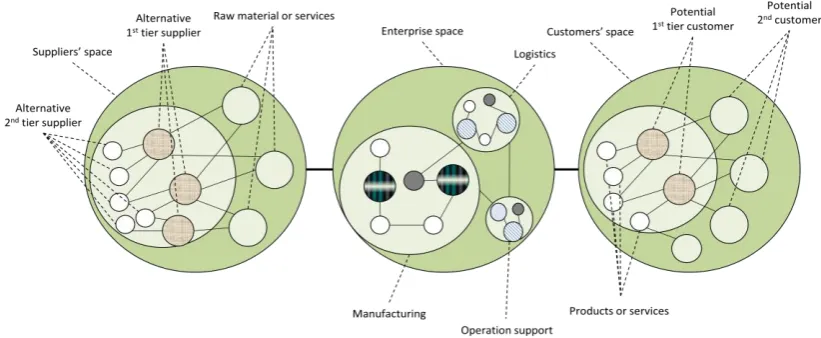
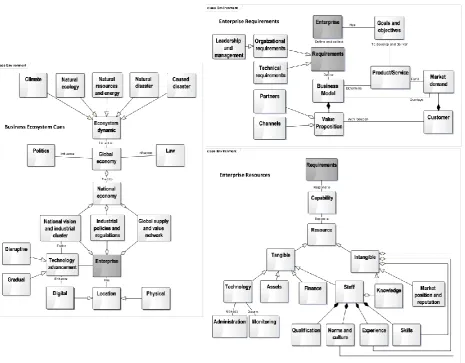
Fig. 2. Collaborative and networked manufacturing ecosystem.
Two understandings emerge from applying ecosystem theory in CMN. Firstly, the planned or unplanned evolution of an organisation must be studied in light of its interactions with its environment. Factors such as skill and capability emigration and new disruptors – like the Internet – can fundamentally change the enterprise habitat. Mobile phones, for instance, altered the way people communicate, do business and interact, in addition to initiating new business models. All in all, the new direction of analysis through so-called “ecosystem thinking” is suggested [28] to be highly influenced by the systems thinking approach [5, 30]. Secondly, considering a CMN as an integrated ecosystem suggests that it is necessary to understand the context in which the CMN is operating. This bottom-up approach advocates looking at interactions based upon the nature of the technical system and developing a method to suit the particular enterprise. Interaction between the enterprise and its context is important in this approach. Enterprise-ecology interaction, enterprise-economy interaction, enterprise-social interaction and enterprise-business trend interaction are all among the issues of concern [31].
12
system. It highly depends on the configuration of the networked system nodes as well as on the relationships and dependencies between those nodes, which make the socio-technical properties consistently dynamic and the subject of change.
Nowadays, in the Internet era, some new business models and organisation structures – such as collaborative value networks, networked and open design and innovation, supply networks, global market outsourcing and offshoring – become crucial. Practices such as customer relationship management, social network analysis, global business and economies analysis, consumer behaviour analysis, trend forecasting and resources analysis were developed to support strategic decision-making. Such practices become more powerful and more effective in the digital era of Web 2.0 and onward, where a substantial quantity of quality data is available to support business analysis and design. With regard to the supportive technical aspects, work has been proposed in terms of software evolution, particularly in fitness algorithms, evolutionary genetic algorithms, and multi-agent systems [26, 35]. However, it is important to build upon the theoretical foundation with practices and technology, and therefore an approach for analysis and design based on enterprise modelling will be discussed in the coming sections of this paper.
5 Enterprise Modelling Framework for CMN Systems
5.1 EM Background and Related Work
Enterprise modelling (EM) is an abstract representation and description of an enterprise’s elements and sub-elements. Researchers in the domain approach enterprise modelling from various standpoints, sometimes combining more than one perspective to fulfil enterprise needs. According to [36], EM is the art of externalising enterprise knowledge, which adds value to the enterprise. Enterprise can be a single private, government, networked, virtual, or smart organisation. The aim of using enterprise modelling techniques is to reduce enterprise design complexity, increase coherence, align business and IT, analyse operations, and optimise and re-engineer both enterprise structure and behaviour. According to Loucopoulos and Kavakli [37], enterprise modelling is about describing, in some formal way, a social system with its agents, work roles, goals, responsibilities and the like. Earlier examples of techniques and formalisms for employing enterprise models are addressed in a requirements specification.
13
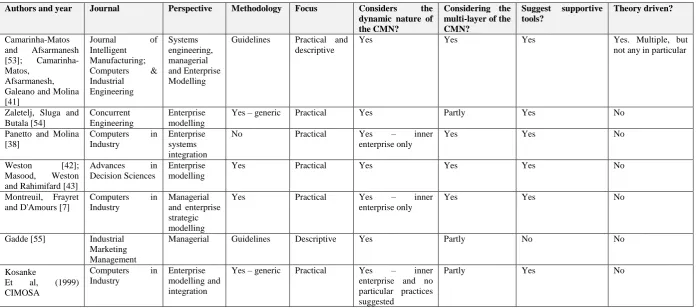
and informal modelling techniques, and a number of views of vertical and horizontal layers. However, it seems rather generic, and the literature does not seem to present a complete implementation for the suggested framework, nor any clear guidelines for why and when we should use a particular modelling tool in the real world. In another approach, Weston [42] and Masood, Weston and Rahimifard [43] have proposed a comprehensive model-driven manufacturing enterprise approach, which contains elements of structural and behavioural abstract modelling for both simulation and optimisation. This method is powerful, but it is only based on industrial experience and practices, lacking a grounding in complex systems theories. Nor does it propose any way of aligning models to the underlying information systems needed for manufacturing enterprises.
In a corresponding effort, international bodies have developed a number of standards relevant to EM. The goal was to standardise EM concepts, their representation, and the ways to implement EM systems in order to increase robustness, expressiveness, and interoperability. Organisations such as the International Organization for Standardization (ISO) and International Electrotechnical Commission (IEC) have developed standards that cover areas such as modelling and engineering, systems and subsystems, IT services, and infrastructures [44]. For instance, standards such as IEC/ISO 62264 for enterprise control systems integration and ISO 14258 for industrial automation systems provide concepts and rules for enterprise models. But the most important ones are ISO 19439:2006 [45] on enterprise modelling frameworks and ISO 19440:2007 [46] on enterprise modelling constructs. There are also several standards covering different levels of enterprise architecture and modelling, such as ISO 15704, ISO 15745, ISO 18629, ISO/IEC 15288, and ISO/IEC 15414 [44]. However, IEC/ISO 42010 (IEEE 1471) is another important standard as it identifies an enterprise architecture description metamodel. The Object Management Group (OMG) has a variety of standards important for modelling manufacturing enterprises, such as: Unified Modelling Language (UML), UML Profile for Business Process Definition, SysML, and UPDM. The Business Process Management Initiative (BPMI.org) organisation has introduced the Business Process Modelling Language (BPML) and the Business Process Query Language (BPQL) to enhance and standardise the development of business process management systems [44].
Table 1 below provides a summary and evaluates the relevant approaches which are considered academic research outputs.
Table 1: CMN current state of the art – literature analysis
5.2 Ecosystem-Inspired EM Framework
14
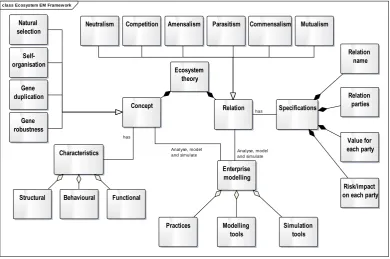
Fig. 3. The conceptual model of ecosystem-inspired EM framework
The framework designed in this paper can be considered a diagnostic framework, which helps to better understand:
The relationships and communication patterns among manufacturing enterprises;
the environmental and contextual constraints;
the nature and direction of evolution;
the tangible and intangible value of design-driven manufacturing activities; and
how to build suitable infrastructure that is configurable and scalable.
This conceptualisation will lead to a framework that employs the features of an ecosystem by focusing on structural, behavioural, and functional aspects of the theory, paying special attention to the quality and performance of both the design and the operation. In an attempt to offer the maximum capability, the actual constructs of an ecosystem environment were mapped onto our suggested enterprise modelling framework in the following manner:
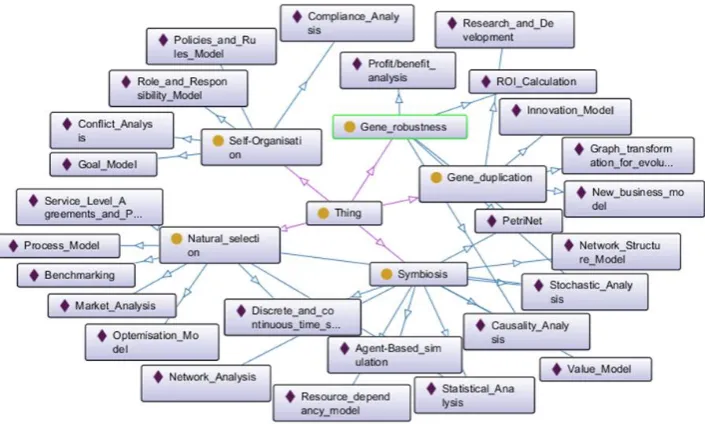
1. Symbiosis is a notion driven by capability and resources; manufacturing networks are
interdependent in a complex service network. Practices of network structure modelling, resources and resource dependency modelling, value modelling, impact modelling, and causality modelling can be of help in analysing designs for a symbiosis network.
2. Natural selection is a market-driven process; manufacturing enterprises select their suppliers, partners, and alliances based on market availability. Market customers are able to choose between desired and undesired products the same way, and therefore the manufacturing
class Ecosystem EM Framew ork
Ecosystem theory
Relation Concept
Characteristics
Structural Behavioural Functional
15
company produces this product. Practices of market analysis, benchmarking, service level agreement, and operational modelling can be used to offer more insight about natural selection during design and operation.
3. Self-organisation is a goal-driven behaviour. Manufacturing enterprises will need to be agile and flexible in terms of fulfilling roles and responsibilities, enforcing rules and policies in order to achieve the desired goals and position themselves in the market. Goals, roles, responsibilities, policies, and rules can be modelled – and exceptional scenarios analysis, conflict analysis, compliance analysis employed – in order to govern the self-organisation process.
4. Gene duplication is concerned with sustainability. There is gene duplication if the enterprise wants to explore new potential to maintain or improve their market position, sustaining current production while trying to build a new business division that can explore new products or markets. If the company wants to minimise risk, research and development activities can be an alternative. Innovation models can capture the essential knowledge of this activity.
5. Gene robustness is concerned with value generation. A gene is robust only if it has the ability to
survive during the evolutionary process, continuing to create the value that allows the enterprise to operate under different circumstances. Thus the value is robust while potential new capabilities are added to its offering, or introduced to the environment by another competitor. Portfolio management, benefit matrices, and ROI calculation are some potential practices to measure this process.
16
Fig. 4. Semantic map of ecosystem constructs associated to EM practices and tools.
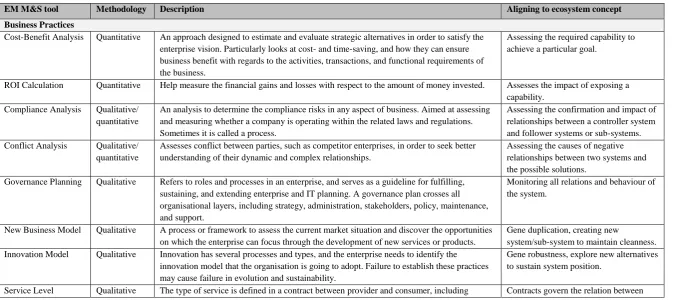
Table 2: CMN best practices for EA modelling and simulation
5.3 Domain Knowledge (The Metamodel)
17
Fig. 5. CMN ecosystem metamodel.
5.4 The Framework Details
In order to deliver a practically successful modelling framework for CMN enterprises, enterprise planning must be supported using a set of modelling and simulation tools that facilitate understanding of the current and future requirements of both the market and of the business itself. This will allow the enterprise to reduce costs, increase the quality and efficiency of the manufacturing process, and achieve other objectives. Most importantly, it offers a valuable insight on their business and its environment, which will help in making the right operational and strategic decisions in future.
18
modernisation, or optimisation; therefore, a feedback to modelling, design, and simulation is necessary for the technical design and architecture to consider new opportunities or threats.
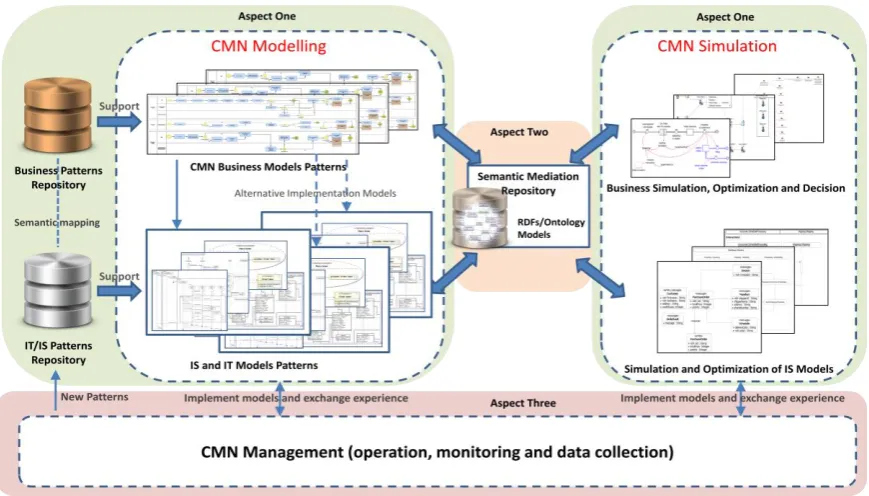
The framework will be a model driven by business and IT development, which means that business models will be semantically aligned to IT models. However, the semantic is designed differently in different enterprise modelling or enterprise architecture frameworks, which can then be used as a reference architecture for the semantic alignment. The business models are also linked semantically to several alternative IT models, allowing different implementation choices that fit and respond to the criteria the enterprise has identified as best. The models also offer simulation and optimisation capabilities, and allow for the development of operation performance matrices.
Three aspects of the modelling platform are best used to implement such a framework. The first is concerned with modelling and simulation capabilities, employing business analysis and design models and IS/IT design and implementation models. Taking into account the available capabilities and motivational elements, the enterprise will select the optimum manufacturing network architecture and the settings that conform to business goals and objectives. The architecture will be fulfilled by several sub-models for strategy, operations, manufacturing, delivery, and customer services. Each existing pattern “model” will be combined with details about where and when the model should be implemented, and what constraints are associated with the model. Examples include motivational modelling, process modelling, network modelling, resources and capabilities modelling, organisational modelling, and rules and policies modelling. Furthermore, prediction analysis, dynamic simulation, sensitivity analysis, statistical analysis, and probability analysis provide business-simulation capabilities. Once the suitable network and operation configuration has been selected, several IT/IS implementation models are linked to this business network configuration. They provide a variety of implementation choices, which the company can select based on which best fits their needs and the capabilities of the enterprise. These include service-oriented architecture, ubiquitous distributed architecture, cloud-based platforms, and mobile devices; IT modelling capabilities such as software modelling, system modelling, implementation modelling, deployment modelling, and network and infrastructure modelling; and IT simulation capabilities like validation and verification modelling, optimisation analysis, model consistency checking, stress analysis, and performance analysis.
The second aspect is concerned with interoperability amongst the modelling and simulation tools. This can be ensured through using ontology RDFs/OWL and semantic mapping of the modelling and simulation tool metamodels [47, 48]. It is ensured that models with either the same or different levels of granularity are linked together semantically, a holistic design made easier by using and reusing model patterns in plug-and-play form that allows rapid searches and deployment, such as the pattern-based techniques that have been used in modelling complex systems [49], e.g. strategy-to-operation, or operation-to-IS, or to machines.
19
recuperating simulation models by increasing analysts’ experience with the implementation environment, its scenarios and conditions; and secondly by increasing knowledge and awareness about business and IT design, which will support better implementation for various business models with different emergent technologies. Optimisation models will help to optimise “as-is” operation through exploring new directions for “to-be” operation models. Data can be gathered using sensors, actuators, IoTs and machine-to-machine communication, or in the form of big data to enhance analysis and simulation capabilities. Reconfiguration decisions can benefit from ecosystem theory concepts and relations, setting up the platform to avoid unwanted configurations and adopt the optimum one. This aspect involves continuous assessment and evaluation, and the designer needs to update adaptability rules and constraints as necessary. Figure 6 illustrates the components of the suggested framework.
[image:19.595.82.517.265.513.2]
Fig. 6. Manufacturing enterprise modelling framework.
5.5 Implementation Process for the Proposed Approach
It is difficult to decide on the concrete steps for employing enterprise modelling, simulation, and analysis techniques. Firstly, every company has different goals and objectives for using them; for instance, some enterprises focus on particular problems, whereas others look for a holistic view of the current state “as-is” and some focus on the future state “to-be”. Secondly, enterprises vary in their states, size, capabilities, scale, and complexity. However, the following guidelines provide a logical sequence for using the framework:
1. Strategic design, business goals and objectives, and the related KPIs.
2. Reasoning and simulation about business strategy, and assessing enterprise risks and
20
3. Designing network architecture, deciding the right topology of the collaborative network (for
both services and products, and horizontal and vertical integration), and assessing all relations according to ecosystem theory relationship types.
4. Exploration of network design options, and the reasoning process to choose the optimum one.
5. Developing responsive business value chain and supply chain activities (including
operations, rules, decisions, and constraints).
6. Operational simulation, assessing and evaluating performance and potential bottlenecks.
7. Designing software and information systems that respond to business processes.
8. IS/IT and systems simulation to verify, validate, and check performance.
9. Developing and deploying software applications and the underlying systems and technology,
including any physical systems.
10. Continuous monitoring, requirements capturing, gap analysis, strategic alignment, and
performance evaluation.
[image:20.595.109.491.338.666.2]The logical steps to implement the proposed approach of enterprise modelling are described as an analysis and design loop in figure 7.
21
6 Discussion and Conclusion
Traditional manufacturing practices have been challenged to the degree that in order to remain competitive, enterprises have been forced to react to the patterns of change where dealing with past, present, and future decisions is concerned. This paper has discussed how CMN enterprises share some characteristics with natural ecosystems, and has developed framework notions that also benefit from ecosystem theory, which are then reflected by the framework architecture and enterprise modelling and simulation tools. It then proposes the analysis and design of internal and external aspects, and the use of enterprise modelling tools to align manufacturing strategy, operation, and information systems.
From an analysis and design point of view, simple and rigid analytics and design mechanisms are inefficient because the CMN environment is characterised by dynamism, nonlinearity, and complexity. In such a multi-scale and multi-level environment, knowledge that is often fragmented in different places and in different forms – both tacit and explicit – also depends on temporal, situational, and subjective perspectives. Such knowledge needs to be gathered, codified, and made explicit in such a manner that it can be subjected to analysis in a systematic and systemic way. Despite the fact that enterprise knowledge is recognised by many as the most important factor in successful business evolution, considerably less attention has been paid to the way this knowledge can be developed and used effectively in order to manage manufacturing enterprises towards their change in an evolving context. It can be assumed that a combination of design, simulation, and business practice is required for the successful use of enterprise knowledge based on the notions inspired by ecosystem theory. There are a number of concepts and relationships in ecosystem theory that need to be understood – both individually and in relation to one other – in order to comprehend and analyse the complex and dynamic behaviour of the system. However, rather than focusing on what algorithms and techniques are about, the focus needs to be shifted onto how these algorithms and techniques are related to one another, and how they describe different aspects of a multi-scale system’s collective behaviour.
This paper presents a novel enterprise modelling framework for analysing and designing evolvable and complex CMN enterprises. The framework proposes a diagnostic set of practices, models and simulation tools aimed at contributing towards building mature CMN enterprises that are able to understand and incorporate external changes within their inner manufacturing and business design. The framework is a hybrid one that aims to conceptualise a dynamic and complex world, through sense-making of the perceived issues within a modelling framework that is based on conceptual modelling for simulation, optimisation, and information systems implementations. The framework suggests a way, with instances, for ecosystem constructs to (a) simulate the quantitative preserved issues in order to improve managerial insight and decision-making, (b) model the CMN business environment, (c) consider the capability of ontology for knowledge mapping, and service-oriented systems for adaptation and self-configuration, and (d) utilise pattern-based techniques to enhance reusability and agility.
22
research approaches, where the research occurs in the real natural environment, and the designed artefacts are context-based, where it evolved within the timeframe [16]. There are three possible directions this work could take in future. The first would include more detailed classifications of ecosystem theory, investigating both the optimum settings and configurations for each enterprise in specific sets of circumstances, and what negative configurations the business should avoid. The second would use case studies to implement the framework and compare the differences in how analysis and design objectives vary from one manufacturing enterprise to another, allowing better decisions based on empirical findings to be made in future. The third would involve implementing the framework as an enterprise modelling tool that allows the design of CMN systems. Lessons can be learned from an early project, ComVantage [51, 52], investigating further the technical specifications of the suggested framework to develop a tool that has conceptual graphical notations, simulation, optimisation, and IS-development or integration capabilities.
Table 2: CMN current state of the art – literature analysis
Authors and year Journal Perspective Methodology Focus Considers the dynamic nature of the CMN?
Considering the multi-layer of the CMN?
Suggest supportive tools?
Theory driven?
Camarinha-Matos and Afsarmanesh [53]; Camarinha-Matos,
Afsarmanesh, Galeano and Molina [41]
Journal of Intelligent Manufacturing; Computers & Industrial Engineering Systems engineering, managerial and Enterprise Modelling
Guidelines Practical and descriptive
Yes Yes Yes Yes. Multiple, but
not any in particular
Zaletelj, Sluga and Butala [54]
Concurrent Engineering
Enterprise modelling
Yes – generic Practical Yes Partly Yes No
Panetto and Molina [38]
Computers in Industry
Enterprise systems integration
No Practical Yes – inner enterprise only
Yes Yes No
Weston [42]; Masood, Weston and Rahimifard [43]
Advances in Decision Sciences
Enterprise modelling
Yes Practical Yes Yes Yes No
Montreuil, Frayret and D'Amours [7]
Computers in Industry
Managerial and enterprise strategic modelling
Yes Practical Yes – inner enterprise only
Yes Yes No
Gadde [55] Industrial Marketing Management
Managerial Guidelines Descriptive Yes Partly No No
Kosanke
Et al, (1999) CIMOSA
Computers in Industry
Enterprise modelling and integration
Yes – generic Practical Yes – inner enterprise and no particular practices suggested
24
Table 2: CMN best practices for EA modelling and simulation
EM M&S tool Methodology Description Aligning to ecosystem concept
Business Practices
Cost-Benefit Analysis Quantitative An approach designed to estimate and evaluate strategic alternatives in order to satisfy the enterprise vision. Particularly looks at cost- and time-saving, and how they can ensure business benefit with regards to the activities, transactions, and functional requirements of the business.
Assessing the required capability to achieve a particular goal.
ROI Calculation Quantitative Help measure the financial gains and losses with respect to the amount of money invested. Assesses the impact of exposing a capability.
Compliance Analysis Qualitative/ quantitative
An analysis to determine the compliance risks in any aspect of business. Aimed at assessing and measuring whether a company is operating within the related laws and regulations. Sometimes it is called a process.
Assessing the confirmation and impact of relationships between a controller system and follower systems or sub-systems. Conflict Analysis Qualitative/
quantitative
Assesses conflict between parties, such as competitor enterprises, in order to seek better understanding of their dynamic and complex relationships.
Assessing the causes of negative relationships between two systems and the possible solutions.
Governance Planning Qualitative Refers to roles and processes in an enterprise, and serves as a guideline for fulfilling, sustaining, and extending enterprise and IT planning. A governance plan crosses all organisational layers, including strategy, administration, stakeholders, policy, maintenance, and support.
Monitoring all relations and behaviour of the system.
New Business Model Qualitative A process or framework to assess the current market situation and discover the opportunities on which the enterprise can focus through the development of new services or products.
Gene duplication, creating new
system/sub-system to maintain cleanness. Innovation Model Qualitative Innovation has several processes and types, and the enterprise needs to identify the
innovation model that the organisation is going to adopt. Failure to establish these practices may cause failure in evolution and sustainability.
Gene robustness, explore new alternatives to sustain system position.
25
Agreement services, detention, details, roles and responsibilities, etc. Sometimes the term “SLA” refers to the constricted performance and delivery time.
two systems.
Benchmarking Qualitative/ quantitative
A method that helps to compare a company’s business processes, practices, and performance matrices to those of another company, or to the industrial standard practices adopted by some particular companies.
Cloning some feature of other sustained systems.
Market Analysis Qualitative/ quantitative
Studies the desirability and the dynamics of a specific market within a particular industry. It contributes to industrial and organisation context analysis which offers valuable information to strategic design.
System contextual awareness and explorations.
Strategic Business Planning
Qualitative An organisation’s practice for defining the strategic direction, by assessing and studying several business aspects to support decision-making. Such decisions are relevant to adopting tactical practices, allocating resources to pursue the strategy. It involves some elements of directives for control, and guidelines for implementing and maintaining the strategy. It also includes some other practices such as goal-setting and gap analysis.
Self-organising, system setup, short-term and long-term goals, and compatibility.
Capacity Planning Qualitative/ quantitative
A process of defining the manufacturing and production capacity required by a particular organisation in order to meet the dynamic change of its products and services.
Natural selection, adopting features that allow sustainability of the system and checking their compatibility. Supportive Modelling Techniques
Value Modelling Qualitative/ quantitative
Modelling and calculation of value flow between inter- and intra-manufacturing enterprise entities.
Goal Modelling Qualitative Capture, model, and decompose enterprise goals from high-level strategic goals, through operational goals, to ISs goals in an aligned and systematic manner. Includes identification of KPIs for each particular goal.
Role and Responsibility Modelling
Qualitative Models which roles and responsibilities can be fulfilled by organisations, units, or individual agents, and assigns particular responsibilities to each.
Policies and Rules Modelling
Qualitative This includes structural and behavioural directives and constraints, and the way they enforce particular business objectives.
Process Modelling Qualitative Modelling of inter- and intra-business processes and aligning them to goals, rules, and roles.
26
Dependency modelling
quantitative the resources are dependent on each other.
Concepts Modelling Qualitative Models business concepts, generic interactions, the structure of collaborative manufacturing networks, domain concepts, and product or service concepts.
System Design Modelling (UML/SysML)
Qualitative Analysis and design of software, hardware, and manufacturing machines using the well-known object-oriented modelling standards UML and SysML.
Supportive Analysis/Simulation Techniques Graph Transformation
(Evolution Analysis)
Quantitative A technique based on graph theory that automatically creates a new graph out of the original designed graph using graph-generating algorithms. It has numerous applications, including illustrating the state and the evolution of the collaborative manufacturing network.
PetriNet Quantitative PetriNet is a mathematical modelling language for the description of distributed and dynamic systems. It is a type of directed bipartite graph, where every node represents either a transition or a place.
Causality Analysis Qualitative/ quantitative
A technique to test whether a hypothesis can answer why something happens and what effect it has. It can be by observing directly or indirectly the underlying causes of the event, problem, or condition in terms of cause and effect. It can use statistical techniques to test the similarity of time series, for example, or can be a qualitative observation.
Change Impact Analysis
Quantitative/ qualitative
Examines the impact of change on any network node, system, or component in the entire CMN system.
Network Analysis Quantitative Network analysis may adopt different theories, and therefore the perspective of the analysis will be different. For example, there is social network analysis, biological-based theory analysis, link analysis, centrality measure, and assortative and disassortative mixing.
Statistical Analysis Quantitative Statistics is the “study of the collection, analysis, organisation, interpretation, and presentation of data” [56]. It deals with all aspects of data, including the planning of data collection in terms of the design of surveys and experiments.
Stochastic Analysis Quantitative Used for forecasting, and to predict different scenarios when some variables in the mathematical model are random. Usually the variables are kept random to generate different outputs; the random variables can be constrained using historical data. The Monte Carlo method is one of the most well-known stochastic analysis approaches, and it is used to model systems that behave randomly.
Agent-based Simulation
27
Discrete and Continuous Simulation
Quantitative Both are types of dynamic simulation. Continuous simulation sets up variables that are changing consistently in continuous manner and not roughly from one state to another, with an infinite number of potential states. In a discrete simulation, the variables change only at a countable number of points in time, or based on particular events that trigger the change in state.
Genetic Algorithm Quantitative An algorithm used for optimisation, based on Darwinian evolutionary theory. It uses a combination of random alteration and crossover and selection procedures – natural selection – to breed or generate new and better models or solutions from an originally random starting population or sample [57].
Multi-objective Optimisation
Quantitative Concerned with mathematical optimisation problems, where more than one objective function needs to be optimised or solved
simultaneously. A typical example of such a problems is increasing performance and reducing costs. It can use linear, nonlinear, discrete, continuous, or subjective techniques.
Data Analytics Quantitative/ Reasoning/ Logic
28
References
[1] Z. Bi, L. Wang, Manufacturing Paradigm Shift Towards Better Sustainability, Cloud Manufacturing, Springer2013, pp. 99-119.
[2] D. Tapscott, Creating Value in the Network Economy, Ediciones Granica SA2000.
[3] N. Nohria, R. Gulati, What is the optimum amount of organizational slack?: A study of the relationship between slack and innovation in multinational firms, European Management Journal, 15 (1997) 603-611.
[4] P. Checkland, Soft systems methodology: a 30-year retrospective, (1999).
[5] J.D. Sterman, Business Dynamics: Systems Thinking and Modeling for a Complex World, Irwin/McGraw-Hill Boston2000.
[6] M. Jahangirian, T. Eldabi, A. Naseer, L.K. Stergioulas, T. Young, Simulation in manufacturing and business: A review, European Journal of Operational Research, 203 (2010) 1-13.
[7] B. Montreuil, J.-M. Frayret, S. D'Amours, A strategic framework for networked manufacturing, Computers in industry, 42 (2000) 299-317.
[8] S. Lee, G. Park, B. Yoon, J. Park, Open innovation in SMEs—An intermediated network model, Research policy, 39 (2010) 290-300.
[9] Y. Zhang, M. Gregory, Y. Shi, Global engineering networks: the integrating framework and key patterns, Proceedings of the Institution of Mechanical Engineers, Part B: Journal of Engineering Manufacture, 221 (2007) 1269-1283.
[10] Y. Zhang, D. Fleet, Y. Shi, J.S. Srai, M. Gregory, Network integration for international mergers and acquisitions, European Journal of International Management, 4 (2010) 56-78.
[11] Y. Zhang, M. Gregory, Managing global network operations along the engineering value chain, International Journal of Operations & Production Management, 31 (2011) 736-764.
[12] Q. Wang, Networked collaborative manufacturing mode based on manufacturing services, intelligent information technology application, 2008. IITA'08. Second International Symposium on, IEEE, 2008, pp. 218-222.
[13] V. Modrák, V. Moskvich, Impacts of RFID implementation on cost structure in networked manufacturing, International Journal of Production Research, 50 (2012) 3847-3859.
[14] D.T. Tohmatsu, The challenge of complexity in global manufacturing: Critical trends in supply chain management, Deloitte Touche Tohmatsu Global Benchmark Study Report, (2003).
[15] K. Peffers, T. Tuunanen, M.A. Rothenberger, S. Chatterjee, A design science research methodology for information systems research, Journal of management information systems, 24 (2007) 45-77.
[16] R. O'Keefe, Design Science, the design of systems and Operational Research: back to the future [quest], Journal of the Operational Research Society, 65 (2013) 673-684.
[17] W. Kuechler, V. Vaishnavi, A framework for theory development in design science research: multiple perspectives, Journal of the Association for Information systems, 13 (2012) 395-423.
[18] M.Q. Patton, Qualitative Evaluation and Research Methods, SAGE Publications, inc1990.
[19] S.T. March, G.F. Smith, Design and natural science research on information technology, Decision support systems, 15 (1995) 251-266.
[20] S.P. Hubbell, The Unified Neutral Theory of Biodiversity and Biogeography (MPB-32), Princeton University Press2001.
[21] D. Alonso, R.S. Etienne, A.J. McKane, The merits of neutral theory, Trends in ecology & evolution, 21 (2006) 451-457. [22] J. Bosch, From software product lines to software ecosystems, Proceedings of the 13th International Software Product Line Conference, Carnegie Mellon University, 2009, pp. 111-119.
[23] L. Yu, S. Ramaswamy, Software and biological evolvability: a comparison using key properties, Software Evolvability, 2006. SE'06. Second International IEEE Workshop on, IEEE, 2006, pp. 82-88.
[24] L. Yu, S. Ramaswamy, J. Bush, Software evolvability: an ecosystem point of view, Software Evolvability, 2007 Third International IEEE Workshop On, IEEE, 2007, pp. 75-80.
[25] R. Fidel, Human Information Interaction: an Ecological Approach to Information Behavior, MIT Press2012.
[26] G. Briscoe, P. De Wilde, Digital ecosystems: evolving service-orientated architectures, Proceedings of the 1st International Conference on Bio Inspired Models of Network, Information and Computing Systems, ACM 17, 2006, pp. 17. [27] G. Briscoe, S. Sadedin, G. Paperin, Biology of applied digital ecosystems, Digital EcoSystems and Technologies Conference, 2007. DEST'07. Inaugural IEEE-IES, IEEE, 2007, pp. 458-463.
[28] G. Briscoe, Complex adaptive digital ecosystems, Proceedings of the International Conference on Management of Emergent Digital EcoSystems, ACM, 2010, pp. 39-46.
[29] H.H. Horaguchi, Collective Knowledge Management: Foundations of International Business in the Age of Intellectual Capitalism, Edward Elgar Publishing2014.
[30] P. Checkland, Systems Thinking. Rethinking Management Information Systems: An Interdisciplinary Perspective. W Currie and R. Galliers, Oxford, Oxford University Press, 1999.
[31] M. Jarke, P. Loucopoulos, K. Lyytinen, J. Mylopoulos, W. Robinson, The brave new world of design requirements, Information Systems, 36 (2011) 992-1008.
[32] E. Mumford, The story of socio‐technical design: Reflections on its successes, failures and potential, Information Systems Journal, 16 (2006) 317-342.
29 [34] J. Lee, M. Ghaffari, S. Elmeligy, Self-maintenance and engineering immune systems: towards smarter machines and manufacturing systems, Annual Reviews in Control, 35 (2011) 111-122.
[35] J.R. Jiao, X. You, A. Kumar, An agent-based framework for collaborative negotiation in the global manufacturing supply chain network, Robotics and Computer-Integrated Manufacturing, 22 (2006) 239-255.
[36] F.B. Vernadat, Enterprise Modeling and Integration: Principles and Applications, Chapman & Hall London1996. [37] P. Loucopoulos, E. Kavakli, Enterprise modelling and the teleological approach to requirements engineering, International Journal of Cooperative Information Systems, 4 (1995) 45-79.
[38] H. Panetto, A. Molina, Enterprise integration and interoperability in manufacturing systems: Trends and issues, Computers in industry, 59 (2008) 641-646.
[39] K. Kosanke, F. Vernadat, M. Zelm, CIMOSA: enterprise engineering and integration, Computers in industry, 40 (1999) 83-97.
[40] L.M. Camarinha-Matos, Collaborative networked organizations: status and trends in manufacturing, Annual Reviews in Control, 33 (2009) 199-208.
[41] L.M. Camarinha-Matos, H. Afsarmanesh, N. Galeano, A. Molina, Collaborative networked organizations–Concepts and practice in manufacturing enterprises, Computers & Industrial Engineering, 57 (2009) 46-60.
[42] R.H. Weston, Model driven integrated decision-Making in manufacturing enterprises, Advances in Decision Sciences, 2012 (2012).
[43] T. Masood, R. Weston, A. Rahimifard, A model-driven approach to enabling change capability in SMEs, The International Journal of Advanced Manufacturing Technology, 69 (2013) 805-821.
[44] D. Minoli, Enterprise Architecture A to Z: Frameworks, Business Process Modeling, SOA, and Infrastructure Technology, CRC Press2008.
[45] I.O.f.S. ISO, ISO 19439:2006: Enterprise Integration – Framework for Enterprise Modelling, Geneva, 2006. [46] I.O.f.S. ISO, ISO 19440:2007: Enterprise Integration – Constructs for Enterprise Modelling, Geneva, 2007.
[47] A. Fayoumi, P. Loucopoulos, A. Fayyoumi, Hybrid enterprise modelling: integrating modelling mechanisms for socio-Technical systems analysis and design, Journal of Software Engineering and Applications, 2014 (2013).
[48] D. Karagiannis, H.-G. Fill, P. Höfferer, M. Nemetz, Metamodeling: Some application areas in information systems, Springer2008.
[49] R.S. Kalawsky, D. Joannou, Y. Tian, A. Fayoumi, Using architecture patterns to architect and analyze systems of systems, Procedia Computer Science, 16 (2013) 283-292.
[50] Y. Zhang, G.Q. Huang, T. Qu, S. Sun, Real-Time work-in-Progress management for ubiquitous manufacturing Environment, Cloud Manufacturing, Springer2013, pp. 193-216.
[51] T. Münch, R. Buchmann, J. Pfeffer, P. Ortiz, C. Christl, J. Hladik, J. Ziegler, O. Lazaro, D. Karagiannis, L. Urbas, An innovative virtual enterprise approach to agile micro and SME-based collaboration networks, Collaborative Systems for Reindustrialization, Springer2013, pp. 121-128.
[52] J. Ziegler, M. Graube, J. Pfeffer, L. Urbas, Beyond app-chaining: mobile app orchestration for efficient model driven software generation, Emerging Technologies & Factory Automation (ETFA), 2012 IEEE 17th Conference On, IEEE, 2012, pp. 1-8.
[53] L.M. Camarinha-Matos, H. Afsarmanesh, A comprehensive modeling framework for collaborative networked organizations, Journal of Intelligent Manufacturing, 18 (2007) 529-542.
[54] V. Zaletelj, A. Sluga, P. Butala, A conceptual framework for the collaborative modeling of networked manufacturing systems, Concurrent Engineering, 16 (2008) 103-114.
[55] L.-E. Gadde, Distribution network dynamics and the consequences for intermediaries, Industrial Marketing Management, 43 (2014) 622-629.
[56] J.W. Kuzma, S.E. Bohnenblust, Basic statistics for the health sciences, McGraw-Hill2005.