Conceptions of Teaching and Learning Interactions Among Industry Practitioners Taught by Practitioner-Tutors: A Case Study of Part-time MBA Students in Singapore Sadanand Varma
September 2019
This thesis is submitted in partial fulfilment of the requirements for the degree of Doctor of Philosophy.
Conceptions of Teaching and Learning Interactions Among Industry Practitioners Taught by Practitioner-Tutors: A Case Study of Part-time MBA Students in Singapore Sadanand Varma
This thesis results entirely from my own work and has not been offered previously for any other degree or diploma.
Candidates are required to make a declaration at the front of the thesis that the word-length conforms to the permitted maximum. If it exceeds this, the declaration must also include confirmation that this has been approved on behalf of the University (currently by the PVC (Education).
Sadanand Varma
Conceptions of Teaching and Learning Interactions Among Industry Practitioners Taught by Practitioner-Tutors: A Case Study of Part-time MBA Students in Singapore
Doctor of Philosophy, September 2019
Abstract
Private graduate management education in Singapore is an expanding space that is experiencing an influx of students who are industry practitioners pursuing an MBA on a part-time basis. This influx has created an associated demand for faculty, which is largely being filled by part-time faculty, or ‘Local Counsellors’. These Local Counsellors are drawn from industry as practitioner-tutors, and are expected to connect theoretical content to local industry practice. This situation has created a new phenomenon where industry practitioners are being taught by industry practitioners, which is distinctly different from traditional teacher-student teaching and learning interactions. Both parties engage in teaching and learning interactions with a wealth of industry experience and knowledge, resulting varying degrees of expectations that contribute to conceptions of teaching and learning effectiveness. This thesis, therefore, is an exploration of the conceptions of these students that combines phenomenography with Bourdieu’s metaphorical concepts of social practice, namely, field, habitus, capital, and doxa.
Table of Contents
Abstract ... i
Acknowledgments ... vi
List of Tables ... vii
1 Chapter One Teaching, Learning and the Private Higher Education Landscape1 1.1 Introduction...1
1.2 The Global Schoolhouse Project...2
1.3 Context of this Research ...4
1.3.1 Overview ... 4
1.3.2 Structure of the Part-time MBA Programme ... 5
1.4 My Methodological Approach ... 10
1.5 Relevance of this Research ... 16
1.6 Structuring the Thesis ... 17
2 Chapter Two Graduate Management Education in an Evolving Higher Education Landscape ... 22
2.1 Overview ... 22
2.2 The Changing Face of Higher Education... 22
2.2.1 Greater Accessibility to Higher Education ... 23
2.2.2 Defining Graduate Management Education ... 24
2.2.3 Emphasis on Student Learning and Experience ... 31
3 Chapter Three Phenomenography – Ways of Understanding Teaching and Learning Interactions ... 35
3.1 Overview ... 35
3.2 Phenomenography – Discovering Variations in Meaning ... 35
3.3 Students Conceptions of Teaching and Learning Interactions – Phenomenographic and Others ... 42
3.3.1 Overview of the Literature... 42
3.3.2 Students’ Conceptions of Teaching ... 44
3.3.3 Students’ Conceptions of Learning ... 50
3.3.4 Importance of Peer Learning ... 54
3.3.5 The Influence of Culture on Conceptions ... 55
3.4 What Phenomenography Tells Us and What It Does Not ... 56
4 Chapter Four Situating Bourdieu in this Research ... 60
4.1 Overview ... 60
4.2 Teaching and Learning Interactions as Socially Situated Practices ... 60
4.3 Teaching and Learning Interactions – A Bourdieuian Perspective ... 63
4.4 Power and Dominance ... 72
4.5 Bourdieu as a Theoretical Lens ... 73
5 Chapter Five Designing and Conducting the Research ... 78
5.1 Context of the Research ... 78
5.2 The Phenomenography Approach ... 78
5.2.1 My Ontological and Epistemological Assumptions ... 78
5.2.2 Relating Phenomenography to Bourdieu ... 80
5.2.3 My Methodological Approach ... 82
5.3 Research Challenges... 99
5.3.1 Power Asymmetry ... 99
5.3.3 Perception and Objectivity as a Researcher ... 105
5.3.4 Generalisability of My Research Findings ... 109
5.4 My Reflections on the Research Experience ... 110
6 Chapter Six Conceptions of Teaching and Learning Interactions Being ‘Effective’ 113 6.1 The Four Conceptions of Teaching and Learning Interactions Being ‘Effective’ ... 113
6.2 The Meaning Behind These Conceptions ... 118
7 Chapter Seven An Interpretation of the Conceptions ... 166
7.1 Setting the Context ... 166
7.2 Qualities of the Local Counsellor... 167
7.2.1 Overview ... 167
7.2.2 Discussion... 167
7.2.3 New Insights ... 170
7.3 Students’ Experiences During Teaching and Learning Interactions ... 172
7.3.1 Overview ... 172
7.3.2 Discussion... 172
7.3.3 New Insights ... 177
7.4 Learning and Development ... 179
7.4.1 Overview ... 179
7.4.2 Discussion... 179
7.4.3 New Insights ... 181
7.5 Phenomenographic Perspectives of Conceptions – Some Key Thoughts ... 182
7.6 A Bourdieuian Perspective of Conceptions ... 184
7.6.1 Shaping Conceptions Through Habitus ... 184
7.6.2 Social Capital, Collaboration and Peer Learning ... 188
7.6.3 Power Asymmetry ... 189
7.7 Concluding Thoughts ... 190
8 Chapter Eight Conclusion ... 191
8.1 Overview ... 191
8.2 What I Set Out to Do ... 191
8.3 What I Discovered ... 194
8.3.1 Conceptions of ‘Effective’ Teaching and Learning Interactions ... 194
8.3.2 Relating Conceptions to Phenomenography and Professional Learning ... 196
8.3.3 Bourdieuian Perspectives of Conceptions ... 200
8.4 Contribution to Knowledge ... 202
8.4.1 Practitioner Students’ Orientation to Teaching and Learning Interactions – Student or Practitioner? ... 202
8.4.2 Local Counsellor as an Industry Practitioner Role Model ... 205
8.5 Methodological Contribution ... 207
8.6 Areas for Further Research ... 208
Appendix One Local Counsellor Class Evaluation Form ... 224
Appendix Two Participant Information Sheet ... 226
Appendix Three Consent Form ... 229
Appendix Four Research Interview Guide ... 230
Appendix Five Ways of Experiencing Teaching & Learning as Being Effective ... 233
Acknowledgments
Firstly, I would like to express my sincere gratitude to my Supervisor, Dr. Kirsty Finn, for her continuous support of my PhD thesis journey, for her patience, motivation, and ability to always give me a fresh perspective of my work. Her guidance helped me in all the time of researching and writing of this thesis. I could not have imagined having a better Supervisor for my PhD.
Besides my Supervisor, I would like to thank Dr. Jo Warin, who continued motivating and guiding me in my thesis writing, when standing in for Dr. Finn, and a special mention to Professor Paul Ashwin for introducing me to the wonderful world of phenomenography.
I would also like to express my sincere thanks to the many people who have shared their knowledge and advice during the programme, namely, Dr. Ann-Marie Houghton, Dr. Jan McArthur, Dr. Brett Bligh, Professor Murray Saunders, Professor Paul Trowler, and Dr. Mantz Yorke, all of whom contributed to an amazing PhD journey.
List of Tables
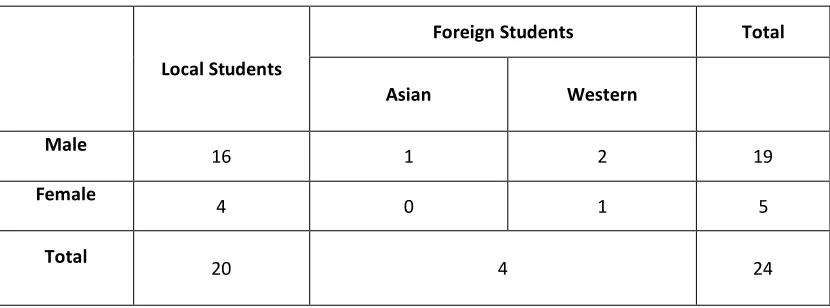
Table 1. 1 Demographic Distribution of Sample Participants ... 85 Table 1. 2 Outcome Space for Students’ Conceptions of Teaching and Learning
1
Chapter One Teaching, Learning and the Private Higher Education
Landscape
1.1 Introduction
1.2 The Global Schoolhouse Project
The privatisation and continued massification of the global higher education sector presents higher education as a competitive enterprise, which was seen as being worth US$2 trillion. A significant proportion of the demand for this international higher education was expected to come from Asia given its demographics and its state of growth (Altbach, Reisberg, & Rumbley, 2009; Becher & Trowler, 2001; Yeo, 2003). The potential of this phenomenon was recognised by the Singapore Government as it sought to restructure its economy for the 21st Century through a series of initiatives that was intended to transform what was largely manufacturing-based, to one that was knowledge-based (Olds, 2007). To leverage on the opportunities presented by this changing higher education landscape, the Education Workgroup of the Economic Review Committee initiative in 2003 recommended in its report that Singapore establish a vision of becoming a ‘Global Schoolhouse’ (Ministry of Trade and Industry Singapore, 2010). The outcomes of this vision included developing the local universities through collaborative agreements with premier global universities, as well as growing the private higher education market, through internationalised foreign university programmes, targeting one hundred and fifty thousand students by the end of 2015 (Waring, 2014).
quality Western higher education (Altbach et al., 2009). These PHEIs present alternative higher education options for students who are unable to gain a place in the local higher education institutes due to the limited capacity. This access to a basic degree also acts as a pipeline to post-graduate education, which is viewed as a means for career advancement (Tight, 2012). The local post-graduate education market has also seen a similar influx of internationalized Masters level and MBA programmes, both full-time as well as part-time. MBAs in particular, which fall within the realm of graduate management education, are considered by potential students as ‘elite’
academic qualifications that carry the promise of career advancement and attractive emoluments. For the PHEI’s, MBA programmes are regarded as cash cows that unfortunately lead these institutions towards a market-driven rather than academic orientation (Ghoshal, 2005; Gosling & Mintzberg, 2004). A market-driven approach also means that bottom lines determine strategy, and curriculum is not spared in this respect as Universities adopt a cookie-cutter approach where the nuances of culture and diversity are not fully integrated into these programmes, or in the worst case completely left out (Kelo, 2007).
part-time faculty, who are industry practitioners, bring valuable industry experience, they are at the same time perceived as being less skilled or schooled in teaching as they are not required to have any formal training in teaching (Abbas & McLean, 2001; Becher & Trowler, 2001; Wagoner, 2007). This raises questions related to quality of delivery and its impact on student learning. The measure of their professional competence is their academic qualifications as well as their industry experience, while the measure of their effectiveness during teaching and learning interactions are derived through post-module feedback from students, which is largely an indication of students’ level of satisfaction with the teaching and learning interaction. In this instance students’ perception of effective teaching and learning is important since potential MBA students, who now tend to be more discerning, quite often make their decision to enroll in an MBA programme based on the advice and information provided by past students (Nicholls, Harris, Morgan, Clarke, & Sims, 1995).
1.3 Context of this Research
1.3.1 Overview
specialist education. Teaching and learning interactions during an MBA programme, however, fall within the realm of graduate management education, also sometimes referred to as business management education, which adopts a generalist approach focusing on delivering a suite of broad-based subjects that enable students to become better managers at the workplace. Hence, the learning for MBA programmes is a product of contextualization and synthesis of theoretical management concepts to local workplace application. While there seems to be a substantive amount of literature on teaching and learning effectiveness from varying perspectives, as well as literature on professional education, the same cannot be said for graduate management education; thus this research seeks to fill this important gap. In doing so, the aim is to provide a unique, phenomenographic approach that can yield insights into part-time graduate management students’ conceptions of effective teaching and learning, focusing on the particular relational dynamic in which both parties are industry practitioners. My interest in this research was mooted by my own experiences as a Local Counsellor (tutor) for the University of Strathclyde part-time MBA programme conducted in Singapore by the YMCA Education Centre, which is a local PHEI. I was interested in what these students desired from their teaching and learning interactions, and how that knowledge could be deployed to improve their teaching and learning experience.
1.3.2 Structure of the Part-time MBA Programme
theoretical content, suggested pedagogy, as well as assessment requirements, are designed by the University. Assessments generally comprise an examination and a work-based assignment, each carrying fifty percent of the marks for the subject, while three of the modules are assessed primarily on course work. Examinations are set and marked by the University, while prerogative is given to Local Counsellors to customize the work-based assignments and course work, as long as the changes fulfil the learning outcomes established by the University. Local Counsellors also mark these work-based assignments, with second marking done by the University. The MBA programme delivery is carried out through a combination of intensive weekend module seminars, and local counselling sessions that are the equivalent of tutorials.
this is not the primary task of the Local Counsellor as the time afforded for tutorials is barely sufficient to guide the students on their workplace assignments.
The University uses the unique term ‘LocalCounsellor’ to describe all local tutors who support their internationalized MBA programmes. These Local Counsellors are drawn from the local industry because of their experience and track record, and are industry practitioners who are current in their respective domains. These industry practitioners, who will also be referred to in this thesis as practitioner-tutors, possess a minimum education qualification of a Masters Degree or MBA or equivalent, with some Local Counsellors holding PhD qualifications. The Local Counsellors are approved and appointed by the University, based on their academic and industry qualifications, and are therefore considered as part-time faculty. There is one Local Counsellor appointed per subject, although, in some instances, a single Local Counsellor may take on two subjects, which brings the pool to about ten to thirteen Local Counsellors. The Local Counsellors are responsible for conducting the local counselling sessions, which is a term the University uses for tutorials, to complement the academic contact time provided by the University lecturers who fly into Singapore to conduct weekend intensive module seminars.
students have multiple industry experience, while on the rare occasion there will be students who are professionals such as doctors and lawyers. Common to all these students is their level of maturity and industry experience. Their industry experience, in many instances, may position them as subject matter experts in their domain, within teaching and learning interactions, sometimes on par with or greater than the Local Counsellors. This creates a unique situation where time MBA students and part-time faculty, who are both industry practitioners, interact during local counselling sessions in what is referred to this thesis as teaching and learning interactions. The maturity and experience of these students will result in varying conceptions of teaching and learning interactions with their Local Counsellor as being ‘effective’.
blank, so I have a ‘score’ for each of the areas assessed by the students but no further information that might inform my practice for improvement. The feedback is also conducted at the end of the module when it is not possible to use the feedback for mid-module adjustment. Furthermore, feedback at the end of the module is not viewed as benefitting the students, hence their response of just providing quantitative indicators without qualitative inputs. What is not quite clear from the feedback is what part-time MBA students in Singapore, who are industry practitioners, actually want from their Local Counsellors, who are also industry practitioners, when it comes to the teaching and learning interactions that occur in the local counselling sessions. In short, little is known about the particular practitioner-to-practitioner dynamic of this teaching and learning interaction.
1.4 My Methodological Approach
My epistemological assumption in this research is that when people experience a phenomenon, they make sense of their experiences. They do this by assigning meaning to these experiences, which include understanding of artefacts such as practices associated with that phenomenon. In some sense they construct meaning through interaction with the phenomenon and the external world that contextualises that phenomenon (Gray, 2013). Therefore, in order to understand what people do or how they feel about a phenomenon, we need to understand how they interpret or make meaning of that phenomenon. Every person experiencing that phenomenon will make meaning of it in different ways, depending on past experiences and current perceptions, which would then result in multiple conceptions or qualitatively different variations in meaning for the same phenomenon.
Using these assumptions as a background, I framed the following research questions to unearth the data I needed to find:
b. How do the conceptions of these teaching and learning interactions compare with (i) phenomenographic studies on conceptions of effective teaching, and (ii) literature on professional learning?
c. How do the concepts of Pierre Bourdieu illuminate the social and cultural complexities of industry practitioners being taught by industry practitioners, which phenomenography cannot?
The term ‘teaching and learning interactions’ in these research questions represent any interaction students experience as a result of interacting with the Local Counsellor during the local counselling sessions that have an influence on shaping their perceptions of teaching and learning as being ‘effective’. The notion of effectiveness of teaching and learning interactions has also been described using a number of adjectives ranging from ‘good’,‘effective’, and ‘quality’ rather interchangeably but for the purpose of this study the adjective ‘effective’ will be used as the descriptive benchmark (Alhija, 2017). The term ‘professionallearning’ has been used to describe the learning that occurs during teaching and learning interactions, which contribute directly or indirectly to workplace practice.
this research question is the interdependence of teaching and learning, which suggests that these two phenomena are more suitably explored in relation to one another rather than as separate, mutually exclusive phenomenon (Feldman & Orlikowski, 2011; Fernández-Río, 2016; Haerens, Kirk, Cardon, & De Bourdeaudhuij, 2011). Also a key context in this research question is one of industry practitioners being taught by industry practitioners. The object of this research, however, was the Local Counsellor, and therefore the focus was on how students’ views of the Local Counsellor, and the manner in which he or she conducted teaching and learning interactions, influenced conceptions of teaching and learning interactions as being ‘effective’.
The second question aimed to discover how students’ qualitatively different variations in conceptions of teaching and learning interactions were in congruence or dissonance with literature on phenomenographic studies on conceptions of teaching and learning interactions, as well as literature on graduate management education and postgraduate education in general.
The third question uses Pierre Bourdieu’s concepts of field, habitus, doxa, and capital to illuminate the complexities of the conceptions that phenomenography, due to its decontextualised nature, cannot. An assumption here is that teaching and learning interactions are socially-situated practices that are more complex than students’ conceptions suggest.
University of Strathclyde MBA programme conducted in Singapore. All students were current industry practitioners. I selected phenomenography as it has proven to be an effective approach for seeking variation because my intention was to capture the range of understandings across the sample, and not the conception of any particular individual, where the “structure and essential phenomenon of the differing ways of experiencing the phenomenon are retained” while the “specific worlds of the individuals have been abandoned” (Marton & Booth, 1997, p. 114). The analysis focused on deriving conceptions from a pool of meanings describing teaching and learning in ways these part-time MBA students in Singapore have experienced it (Akerlind, 2005b; Åkerlind, Bowden, & Green, 2005). These meanings were codified as categories of description and then further analysed to determine structural and referential relationships in the form of outcome spaces to provide a framework to represent their structural and referential relationships (Åkerlind et al., 2005; Ashwin, 2005; Yates, Partridge, & Bruce, 2012).
additional lens to understand these conceptions, as socially-situated practices, set within specific cultural and contextual nuances. The intention was to leverage on complementary approaches to enhancing understanding of the knowledge that was unearthed in this research (Åkerlind, 2018).
expectations of the students do not match the practices established by the University or Local Counsellor.
interactions within such a social practice setting, which eases making sense of the link between theory and practice (Grenfell, 2014).
1.5 Relevance of this Research
The phenomenon investigated in this thesis, where industry practitioners are taught by practitioner-tutors, will likely be a mainstay in private graduate management education, and this body of work contributes to the limited literature that is available. The results of this research are immediately targeted at the main stakeholders of the University of Strathclyde part-time MBA programme in Singapore, namely the Strathclyde Business School that is the originator of the programme, YMCA Education Centre as the PHEI that runs the internationalised programme in Singapore, the University module coordinators who are responsible for the design of the curriculum and the associated pedagogy, as well as other Local Counsellors who tutor on the programme. More than this, however, the results will also be significant for the ways they will influence student feedback design, in terms of customisation in relation to specific modules, and the potential of these insights being ploughed back to curriculum and delivery design, and also influencing Local Counsellor selection and re-engagement. In the same vein, these results might effectively be utilised in the design of future induction and continuous training programmes for Local Counsellors, and eventually influence operating guidelines and policies for Local Counsellors.
Strathclyde part-time MBA cohorts in Singapore, most other part-time MBA students on other internationalised programmes in Singapore that are in the same band as the University of Strathclyde, are likely to have similar expectations. Hence the findings presented in this thesis will have value and usability amongst scholars of internationalisation, and other internationalised programmes that may benefit from the findings and conclusions stated in this thesis.
1.6 Structuring the Thesis
This section will provide a brief overview of the remaining chapters to facilitate ease of navigation through the thesis for the reader.
different ways in which these students conceptualise teaching and learning interactions with their Local Counsellor as being ‘effective’. The use of
phenomenography as an approach to understand these variations are then discussed in Chapter Three, which will further explore phenomenography as a methodology and method in its ontological and epistemological forms, the major critique surrounding its use as a research approach, and a justification of its relevance as an approach in this thesis. The decontextualised nature of the conceptions discovered through phenomenography, however, may not adequately illuminate the complexities behind these conceptions. Chapter Four will then discuss how Bourdieu’s metaphorical concepts of field, habitus, doxa, and capital, can complement phenomenography to understand the complexities behind the conceptions of teaching and learning interactions experienced by students from a social practice perspective (Bourdieu, 1977, 1985, 1989, 1990b; Grenfell, 2014). A key assumption in Chapter Four is that the teaching and learning interactions are socially situated practices where part-time MBA students and the Local Counsellor are viewed as actors or agents operating in a space with implicit and explicit rules, enacting practices based on their past experiences and their inherent ability to influence that space (Reckwitz, 2002). The discussions in Chapters Two, Three and Four, therefore, suggest a reasonable examination of literature related to phenomenography, teaching and learning interactions, and Bourdieu’s Field Theory, rather than a comprehensive analysis of all available literature in these fields of study.
considerations, as well as challenges that I had experienced. The design adopted a phenomenographic approach, which allowed the discovery of variations of conceptions of effective teaching and learning. The subjective and non-dualistic ontological assumptions of phenomenography imply that industry practitioner students’ experience of teaching and learning interactions with practitioner-tutors in graduate management education are conceptualised through those very exact interactions that result in varying conceptions of teaching and learning interactions being ‘effective’. These conceptions, which are the research object of phenomenography, are also its central form of knowledge. Hence, phenomenography’s ontological assumptions are also its epistemological assumptions (Marton, 1981, 1988; Marton & Booth, 1997). The decontextualised nature of these conceptions, however, tend to obscure complexities associated with cultural nuances, and this is where Bourdieu’s metaphorical concepts of field, habitus, capital, and doxa enable a deeper understanding of teaching and learning interactions as socially-situated practices (Bourdieu, 1977, 1984, 1990b; Grenfell, 2014; Säljö, 1997; Webb, 1997). The Chapter rounds off by reflexively engaging in some of the key challenges in the research design and process, such as power asymmetry between my position as the researcher and the students as participants, memory and experience recall by students, my own objectivity as a researcher since I am very much an insider, and finally the generalizability, or more appropriately the usability, of the results.
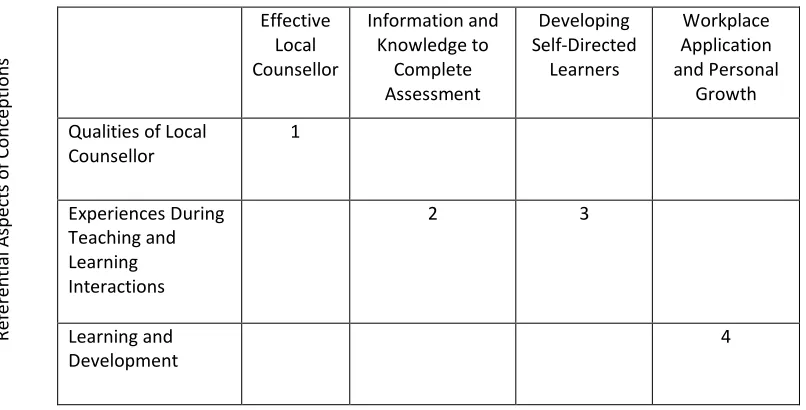
provision of adequate information and knowledge to address students’ knowledge gaps and concerns; enabling students to become self-directed learners through interactive dialogue and peer learning during teaching and learning interactions; and, mobilizing students’ ability to apply classroom knowledge within and beyond the workplace. Each of these conceptions are discussed in detail with supporting quotations that provide a flavour of the context of these conceptions. The structural relationships between these conceptions are then described in the form of an outcome space that describes teaching and learning as being effective as a function of the qualities of the Local Counsellor, students’ experiences during teaching and learning interactions, and students’ conceptions of learning.
be prevalent in all of the Local Counsellors all of the time, which in practice is a near impossibility. Nevertheless, this insight provides a glimpse into the mind of these part-time MBA students which presents a better understanding on how their needs might be met in such teaching and learning interactions where both student and teacher are industry practitioners. Essentially, the analysis in Chapter Seven suggests that teaching and learning interactions being ‘effective’ is a function of congruence, or incongruence, between students’ expectations, shaped by past experiences, and their actual experiences in these interactions.
2
Chapter Two Graduate Management Education in an Evolving
Higher Education Landscape
2.1 Overview
Chapter Two is the first of three chapters that will cumulatively explore conceptions of teaching and learning interactions within the context of graduate management education where time students who are industry practitioners are taught by part-time practitioner-tutors drawn from industry, as well as make a case for the use of phenomenography, complemented with Bourdieu’s Field Theory, as methodological and theoretical approaches in this thesis. Chapter Two, specifically, will explore the changes to the higher education landscape that has mooted a proliferation of internationalised Western undergraduate and postgraduate programmes in Asia, and more specifically Singapore, and the associated slant towards student-centredness. This Chapter will also explore what these changes mean for graduate management education in general, and more specifically for MBA programmes.
2.2 The Changing Face of Higher Education
part-time faculty drawn from industry, the manner in which graduate management education is being defined, and the increased emphasis on student learning and experience.
2.2.1 Greater Accessibility to Higher Education
Universities, which were once the domain of the elite, are now accessible to the larger masses, even those from lower socio-economic groups who previously had the greatest challenge in terms of access to higher education, including postgraduate education (Ashwin, 2006a; Reay, 1998). This phenomenon is partly attributable to two broad trends in the evolving higher education landscape: the internationalisation of university programmes due to changes in higher education student funding; and, a greater demand for industry-ready graduates.
education increasingly ‘borderless’ and therefore potentially more accessible globally (Altbach et al., 2009).
Expansion of the service economy and the emergence of the knowledge economy have also created a demand for better-educated employees to meet the challenges of these sectors. Therefore, marketization of such degree programmes on a global scale implies an associated value that attracts the intended students. Contemporary higher education curricula, particularly graduate management courses like the MBA, must accordingly adopt pedagogical practices that attend to the cognitive and affective needs of mature students who are likely to possess substantive industry experience, and also be more discerning in their choice of higher education qualifications that can contribute directly to their educational experience, career progression, and development. In a similar vein, practitioner-tutors drawn from industry now take on an important role in fulfilling students’ expectations, and their ability to engage
students who are also industry subject matter experts will determine students’ conceptions of effectives in teaching and learning interactions. As Ramsden (2008) aptly puts it, higher education must evolve in order to provide students qualifications and experiences that allow them to transit seamlessly into the workplace and be industry-ready.
2.2.2 Defining Graduate Management Education
specifically undergraduate professional education, such as those in disciplines like medicine, nursing, and law, while business education research seems to focus largely on graduate management education, also sometimes referred to in business literature as business management education, such as the MBA. Raelin (1990) puts forth the argument that management is not a profession in its purest sense and hence should not be deemed so, which further distinguishes it from professional education, although the disciplines associated with management education have clearly defined professional associations. Graduate management education is a generalist programme, where the goal of programmes such as the MBA is to provide students with broad-based business understanding, and develop their skills as managers, so as to improve their career prospects in the longer term. Hence, business schools teaching graduate management programmes tend to focus primarily on ensuring that their students meet the needs of the industry as managers (Aistrich, Saghafi, & Sciglimpaglia, 2006; Garvin, 2007). Professional education, on the other hand, suggests a more focused ‘vocational’ approach determined by the specific discipline
Hodgson (2005) suggests, adult learners generally tend to determine their own learning agenda, and depending on their orientation to the education that they are receiving they will adopt appropriate learning strategies, which may sometimes be independent of the teacher. I would emphasise that independence, in this respect, does not suggest the absence of the teacher but rather a redefinition of traditional teacher roles. The agendas students adopt may not always be aligned to what is prescribed in the curriculum and this will create a natural tension between what they desire to learn versus what they need to learn in order to fulfil the requirements of the graduate management programme. This tension inevitably influences adult students’ perceptions of effectiveness during teaching and learning interactions. However, despite their vast experience in the working world, which endow them with industry domain expertise, adult students pursuing graduate management education generally lack the requisite theoretical knowledge to successfully complete their education, which further exacerbates anxieties associated with learning and performance since many of these adults re-enter the educational environment after a lapse of several years of their undergraduate education (Fragoso et al., 2013; Kember & Kwan, 2000; Ross‐Gordon, 2003).
increasingly recruiting practitioners from business and professions, harnessing on their experience to offer alternative and contemporary perspectives, instead of just those from the traditional academic route (Currie & Knights, 2003; Oyewo, 2016; Prince, Burns, Lu, & Winsor, 2015; Shreeve, 2009). There also appears to be a trend of moving away from fulltime to part-time teaching, including the rise of “gypsy scholars” who teach part-time as a career (Becher & Trowler, 2001, p. 16). Practitioner-tutors, who possess industry experience and currency, bring talent not easily found amongst fulltime faculty, but at the same time are viewed as less skilled or schooled in teaching (Regan, 2006; Shreeve, 2009; Wagoner, 2007). This might inevitably lead to pedagogical inconsistencies that may inadvertently derail any value proposition that may be derived from the tacit experience and knowledge presented by the practitioner-tutor. Furthermore, their part-time status precludes them from being inducted into the norms and practices of academia, which may cause tensions when it comes to traditional notions of appropriateness of practices in teaching and learning interactions.
Abbas and McLean (2001) and Shreeve (2009) make compelling arguments that these practitioner-tutors, nevertheless, serve as a vital link between education and the real world, and my own experience suggests the same. Practitioner-tutors’ “adaptive expertise”, derived in a social context that is distinct from theoretical knowledge, and their ability to contextualise business problems and situations using their own lived experiences, lend credibility to the link between theory and practice, which is the value proposition students are looking for (Tenenberg, 2010, p. 75).
Holt, Mackay, and Smith (2004) argue that as a result of this phenomenon universities are no longer able to monopolise knowledge creation, particularly in graduate management education where students’ ability to deploy classroom knowledge in the
2.2.3 Emphasis on Student Learning and Experience
to trigger interest and learning, while the conversations with the practitioner-tutor help to connect knowledge from everyday life to what is taught in the graduate management programme.
non-traditional students. The value of collective learning cannot be understated in adult learning, or more specifically graduate management education, as it is synonymous to the way in which these students learn and grow in the workplace.
There are also some very practical issues that need to be contended with in relation to student-centred teaching and learning. Ashwin, Abbas, and McLean (2015) argue that at the macro level, marketization will drive larger higher education intakes to offset the effects of the cuts in university funding. The associated increase in student numbers, and therefore potentially larger classes, is likely to cause a lean towards more lectures and exams, rather than small group work and work-based assignments. The resulting pressure on churning out numbers and bell curves that discourage more qualitative approaches to teaching and learning interactions may likely create additional tension between academic and administrative requirements, as managerialism determines how higher education institutions are run. Hence, implementation will inevitably be challenged by resource availability, prioritisation and allocation, as well as the prevailing mental models of students, faculty, and administrators.
3
Chapter Three Phenomenography
–
Ways of Understanding
Teaching and Learning Interactions
3.1 Overview
To understand how graduate management students, who are practitioners, conceptualise teaching and learning interactions with their practitioner-tutor as being ‘effective’, we first need to understand the qualitatively different variations of understanding teaching and learning, hence the employment of phenomenography in this research. The context of these teaching and learning interactions are ones that occur in graduate management education where students who are industry practitioners are being taught by faculty who are also industry practitioners. This Chapter will discuss the employment of phenomenography as an approach for investigating teaching and learning interactions, informed largely by the work of Marton (1981, 1986, 1988, 1994), and supported by the works of Entwistle (1997) and Åkerlind (2008, 2012, 2018), amongst others. This Chapter will also examine the various ways in which phenomenography has been deployed to examine such conceptions, comparing the related insights with non-phenomenographic approaches, and then briefly discuss the rationale of the use of phenomenography in this research.
3.2 Phenomenography – Discovering Variations in Meaning
Phenomenography’s ontological assumptions are subjectivist and non-dualistic (Marton & Booth, 1997). This implies that there is no dividing line between the individual, or ‘inside world’, and the phenomenon, or the ‘outside’ world.
Phenomenography does not make a separation between the subject and object as distinct entities but rather two parts of a whole where experience of a phenomenon is constituted as a result of the relationship between the individual and the phenomenon; hence, conceptions of reality arise from this interaction. Following this line of thought, an industry practitioner student’s experience of teaching and learning interactions with practitioner-tutors in graduate management education are conceptualised through those very exact interactions that result in various conceptualisations of those teaching and learning interactions being ‘effective’. In other words, the phenomenon being experienced is “not constructed by the learner, nor is it imposed”, but the phenomenon is “constituted as an internal relationship
meanings of understanding the phenomenon. In this instance, the central form of knowledge in phenomenography are these conceptions (Svensson, 1997). Therefore,
phenomenography’s ontological assumptions are also its epistemological
assumptions.
Marton (1981, p. 187) also suggests that “different conceptions are not necessarily related to differences between individuals but may equally be well related to differences within individuals”. In other words, other than how variations of a
phenomenon are experienced between different individuals, the contextual nature in which a phenomenon is experienced by an individual may change as the context changes. Hence, a following argument is that a student, who is an industry practitioner, interacting with another industry practitioner, who is practitioner-tutor in teaching and learning interactions may well hold different conceptions of that interaction if it occurs within a workplace or professional setting. This arises from the probably different expectations this student might hold of that practitioner-tutor in these different contexts. While it might be near impossible to describe the individual’s
conception of his or her interactions with such a practitioner-tutor in a reliable manner, due to these ‘internal shifts’ in conception, it is possible to describe
conceptions of teaching and learning interactions with a practitioner-tutor in a reliable manner. Such conceptions, or categories of description, are more generalisable in varying contexts. In this sense, phenomenography attempts to capture qualitative variations in perceptions of the world rather than perceptions of individuals.
qualitatively different ways in which students experience teaching and learning interactions, the results are organised logically in an outcome space that represent a structural and referential relationship. The structural aspect or dimension represents how the phenomenon is experienced by the actor, in this case students, while the referential aspect or dimension represent the students’ focus. The outcome space allows the researcher to articulate the “span of generative possibilities” for relating to
the phenomenon (Ekeblad & Bond, 1994, p. 155). The categories of description that constitute the outcome space each represent a distinctly different way of experiencing the phenomenon being researched but are also related to each other in an inclusively hierarchical manner, where less complex conceptions are subordinated to the more complex conceptions. The contextual nature of the conception in the representation of the outcome space remains implicit. However, Ashworth and Lucas (2000) and Bowden (1996) highlight the danger of the researcher imposing the structure of his or
her outcome space on the data rather than allowing the data to emerge in a manner
that constitutes the outcome space. The outcome space reflects both the data as well
as the researcher’s judgment, and in this respect it must be acknowledged that the
“outcome space is inevitably partial” (Åkerlind, 2012, p. 121). The responsibility of the
researcher, therefore, is not to attempt to develop the ‘correct’ outcome space but to
ensure that the outcome space is as complete as possible so that it represents the
structural and referential aspects of conceptualisations of teaching and learning
interactions being ‘effective’ in a meaningful manner.
Säljö (1996) critiques phenomenography in that it removes context from the individual
more specifically directed at deep and surface approaches to learning using
phenomenography; he puts forth the proposition that phenomenography “appears to
have no particular view of humanity and the social consequences of education”. His
argument claims phenomenography’s relatively sterile focus where the emphasis is
only on second order understanding in the meanings behind conceptions of a
phenomenon. Phenomenography, according to this understanding, investigates
conceptions of phenomena using a Husserlian perspective, where the conceptions are
devoid of historical or cultural influence, and researchers are expected to ‘bracket’
their bias. This is not quite possible since the researcher’s attempt at bracketing will
inevitably be shaped by his or her own historical and cultural experiences. These are
difficult arguments to challenge, particularly in graduate management education,
where mature students with industry and life experience will inevitably impose their
cultural and historical experiences when describing conceptions as a result of their
teaching and learning interactions (Popper, 2012). Perhaps what is more pertinent
here, as Åkerlind (2018) argues, is understanding the importance of complementary
approaches to research rather than one approach being suggested better than
another. This presents the opportunity of complementing phenomenographic
research with social practice theories, for example, to capture nuances or complexities
that might have been possible to capture through phenomenography.
Another critique is phenomenography’s validity and reliability. Validity and reliability have positivist origins that are near impossible to impose on an interpretive process
that “can never be objective and, in phenomenographic terms, represents the data as
enhanced in a number of ways ranging from participant validation of transcripts to
adopting the practice of getting participants to review the categories of description to
see if they are recognisable in relation their conceptions of the phenomenon. While
the former is useful to ensure that the actual words and meanings of the individual
participants have been accurately captured, the analysed output in the form of
categories is usually intended for a larger audience and may not always resonate with
the individual participants. Reliability may be addressed through dialogic reliability
checks with fellow researchers, whereas for individual researchers of
phenomenography, the practical approach would be to exercise reflexivity during the
research in order to provide the transparency required to mitigate any reliability
concerns, especially in terms of process. Hence the focus of the researcher must be to
ensure that any interpretation was defensible in terms of the phenomenographic
approach to collecting and analysing the data. As an extension of this line of thought,
Marton’s (1986) reflection on the replicability of research results is instructive. He uses
the analogy of the probability two people finding the same flowers on an island versus
them finding the flowers once they know what the flowers look like. This is the very
challenge in phenomenography as the research is a process of discovery, or one of
exploration as Svensson (1997) suggests, which is difficult to replicate, but once the
categories have been discovered other researchers will be able to use the research
output. Therefore, the true test is not phenomenography’s “theoretical purity, but its
value in producing useful insights into teaching and learning”, which should be the
Marton (1986) refers to phenomenography as a research specialisation, which is essentially a combination of an approach and an orientation. As an approach, phenomenography is exploratory and interpretive in its derivation of categories, and as an orientation it is focused on human-world relations. Despite the various critique of phenomenography, however, it has proven to be an effective approach for seeking variation and its use in research has seen a dramatic increase in areas beyond higher education (Tight, 2016). In my opinion, therefore, phenomenography remains an appropriate choice for this research since it has already been widely used, and continues to be used, as an established methodology in higher educational research (Prosser et al., 2000; Tight, 2012; Yates et al., 2012). I will now discuss how conceptions of teaching and learning interactions have been expressed in phenomenographic as well as general research on teaching and learning, with a focus on graduate management education.
3.3 Students Conceptions of Teaching and Learning Interactions – Phenomenographic and Others
3.3.1 Overview of the Literature
2006b; Martin & Balla, 1991; Marton & Booth, 1997; Prosser, Trigwell, & Taylor, 1994), as separate studies, with some studies investigating both students’ and academics’ conceptions within the same piece of research (Trigwell & Reid, 1998). Phenomenographic studies of postgraduate student experience, particularly graduate management experience, is limited, although existing literature adopts strands in terms of academics’ conceptions (Ginns, Kitay, & Prosser, 2008; Gonzalez, 2009; Watkins, 2004), students’ conceptions (Blummer, Watulak, & Kenton, 2012; Cliff, 1998; Diehm & Lupton, 2012; Hallett, 2010; Pimpa, 2009; Watland, 2007), and professional education (Alves de Lima et al., 2005; Shreeve, 2009, 2010; Stenfors-Hayes, Hult, & Dahlgren, 2011).
conclude with a discussion on what phenomenography as a research approach is able to tell us, and what it cannot.
3.3.2 Students’ Conceptions of Teaching
about catering to the learning needs of students to help them achieve the required grades. These conceptions are not surprising as postgraduate students, although generally goal-oriented in their behaviour, also lack the necessary theoretical and academic knowledge, due to the lapse of time from their undergraduate education, even though they might be industry or domain experts.
These ideas resonate with the earlier discussion on graduate management students in Chapter Two (Fragoso et al., 2013; Kember & Kwan, 2000; Merriam, 2001a; Ross‐ Gordon, 2003; Salomon & Perkins, 1998). Hallett’s (2010) study also discovered two learner-centred conceptions, which was the development of students, and fulfilling students’ potential, which suggest a developmental orientation to teaching. It is also
important to note that Hallett’s study does emphasise the need for tutors to
learning interactions as an enabler for effective learning, which is not explicitly featured in similar undergraduate research.
Phenomenographic studies of undergraduate students’ experience take on a number
of strands. Trigwell and Reid (1998) in their phenomenographic study of higher education work-based learning programmes discovered that students conceived their experience in four ways, namely, the acquisition of knowledge tools that could be used at the workplace, knowledge that gave them a better understanding of their workplace hence their ability to perform better in their jobs, knowledge that culminated in a qualification, and developing understanding to enable them to contribute to their organisation. These conceptions varied from personal gain, which is the ability to use knowledge and qualifications for effective workplace functioning, to personal growth and development in service of organisational growth. Students’ conceptualisation of teaching as personal gain or being teacher-centred are also reflected in the phenomenographic study of student teachers by Paakkari et al. (2010) as ‘ways of experiencing teaching’, such as the transferring of knowledge and skills, supporting
the active processing of knowledge, and supporting the transformation of conceptions. In the same study, the ‘ways of experiencing teaching’ were also described as
supporting holistic personal growth, and, building a learning community with the
students. Similarly, Ashwin’s (2005) phenomenographic study described student’s conceptions of Oxford tutorials as transfer of relevant content knowledge, verification of tutor’s perspective of the ‘correctness’ of knowledge, knowledge as a contested
space for the tutor to develop students’ thinking, and knowledge as a collaborative
teacher-centred perspectives, while the last two conceptions represented a student-centred perspective.
A common strand running through these various studies is that the ways in which students experience teaching and learning interactions may be represented as a hierarchical relationship where at the ‘lower’ end, it is rudimentary and utilitarian in nature, subordinated to the ‘higher’ end, which is about holistic development. In very broad terms, the ‘lower’ conceptions suggest a teacher-centred approach, whereas the student is the focus of teaching when teaching results in students having the space to co-create and internalise knowledge that is useful at the workplace and beyond. Interestingly, these conceptions generally express an outcome-based representation of conceptions, even at the ‘higher’ end where the focus is on application in practice and personal development. Issues related to the tensions experienced by part-time adult students, and the importance of attending to their emotional needs do not seem to feature prominently in these phenomenographic studies.
learning interactions in terms of teacher competence and teacher attitude. Additionally, it was important to these students that the teacher be personable, approachable and supportive in order to be able to create a conducive learning environment, which also implied willingness to provide consultation on course work outside of curriculum time. Hativa (2015) adds to these characteristics with the notion of empathy, which was particularly important in graduate management education where students’ work-family-study tensions play an important factor in shaping conceptions of teaching and learning interactions. These ideas resonate with much of the research findings by Trigwell and Prosser (1991).
practitioner-tutors as industry and domain competence does not necessarily equate to pedagogical competence (Regan, 2006; Shreeve, 2009; Tenenberg, 2010).
Another series of studies describe these conceptions in terms of actions carried out by the tutor or teacher. The conception of teaching as actions by the teacher has been described by Pratt (1997a) as techniques adopted, or specific duties adopted by the teacher in teaching and learning interactions. Trigwell and Prosser (1991), in an early study of first year nursing students indicated that teaching and learning interactions that promote or encourage deep learning is likely to improve learning outcomes and experience. Specifically, the students sampled described teaching as behaviours that tutors exhibited during teaching and learning interactions, such as creating opportunities for the interaction of ideas, creating time for consultation on project work, perhaps even beyond the curricular time, providing students with adequate feedback, and demonstrating empathy for the challenges students faced while pursuing a higher education degree. Feldman’s (1976) study also highlighted the importance of teachers stimulating interest and providing quality feedback as a necessary teaching and learning interaction construct. The notion of stimulating interest was elaborated in Goldstein and Benassi’s (2006) study of students’ and instructors’ beliefs about excellent lecturers in higher education. Students in this study highlighted the importance of the lecturer creating a safe teaching and learning environment that encouraged students to think and explore alternative perspectives independently.
and Goldstein and Benassi (2006) represent undergraduate students’ conceptions, these actions during teaching and learning interactions are also representative of the expectations of graduate management and professional students. The practitioner-tutor’s ability to connect with students, both at the personal and well as professional levels, tapping on their mutual industry experience, is an important determinant of teaching and learning effectiveness (Barker & Stowers, 2005). In this sense, practitioner-tutors generally tend to adopt a participative approach to teaching and learning interactions with graduate management students, which also reflects these students’ preferences for such engagement. Such an approach facilitates immediate transfer of knowledge from classroom to workplace, and in many instances from workplace back to the classroom as an iterative process of reciprocal transfer of knowledge (Currie & Knights, 2003; Prince et al., 2015). The key emphasis here is the attention to emotional needs during teaching and learning interactions, which is equally relevant in graduate management education. Inevitably, these perceptions will translate into expected norms in teaching and learning interactions, hence, conceptualisations of teaching and learning interactions being ‘effective’.
3.3.3 Students’ Conceptions of Learning
interactions seem to focus largely on learning rather than their conceptions of good or effective teaching, and these have been expressed in literature in a number of ways. Booth (1997), in her phenomenographic study of changes to pedagogy in undergraduate computer science education, defined learning as the shift from ‘knowing’ to ‘doing’. This could only be facilitated if content was taught in a manner that is understood and useful to the students, as opposed to communicating content for the purpose of teaching, which is a value proposition that teaching and learning interactions, between students and faculty who are both industry practitioners, offer. The importance of real-world application of theory at the workplace and beyond, cannot be understated. These ideas are manifested in the phenomenographic study of the conceptions of the quality of learning of higher education students in Rwanda (Mbabazi Bamwesiga et al., 2013). Although this study focused on conceptions of quality of learning, which were derived from student satisfaction, the insights are a useful perspective for understanding how students conceptualise teaching and learning interactions as ‘effective’. One perspective from the Rwanda study was the possession and demonstration of knowledge, both in the classroom, and in the case of part-time undergraduate students, in the workplace, particularly when students are viewed at their workplace more positively than someone who did not possess the same level or understanding of knowledge. Another perspective was students’ ability to
the immediate time and space of teaching and learning interactions. This conception of the enduring impact of learning affirms a previous longitudinal phenomenographic study by Marton, Dall'Alba, and Beaty (1993) that not only replicated the findings in Saljo’s (1979) non-phenomenographic study but added a sixth conception where learning was considered ‘effective’ when it resulted in students’ personal growth and
change. However, a major critique of this study’s conception of personal change is that it actually represented only a philosophical rather than a practical academic conception of learning (Cliff, 1998). Nevertheless, the ability to deploy classroom theory in the workplace, as well as the personal growth and change that occurs in the process, present credible motivation for any student embarking on graduate management education.
of the student is to achieve the minimal requirements of the programme or module. It is also important to note that students’ approaches to learning are also influenced by
their conceptions of learning. These approaches have been described in various ways in literature (Marton, Dall'Alba, & Beaty, 1993; Mbabazi Bamwesiga et al., 2013) and reflect an alignment with literature on students’ conceptions of teaching (Ashwin, 2005; Paakkari et al., 2010; Trigwell & Reid, 1998).
Similar to students’ conceptions of teaching, it is useful to examine student conceptions of learning from non-phenomenographic research as a complementary perspective. In an early study of adult students Saljo (1979) identified five qualitatively different conceptions of learning. These conceptions range between a reproducing orientation to one that seeks meaning. Learning described as increasing knowledge, memorizing and reproducing, and applying facts or procedures are essentially reproducing orientations, similar to surface approaches to learning. Learning, described as understanding meaning, and, making sense of meaning to understand reality, suggest meaning-oriented perspectives, as a result of the greater awareness of the purpose of learning, similar to deep approaches to learning. Saljo (1979) also discovered that students may not stay in one orientation all the time and may shift from surface to deep or ‘regress’ from deep to surface depending on the contextual
also be challenged by contextual and emotional demands placed on these students.
3.3.4 Importance of Peer Learning
3.3.5 The Influence of Culture on Conceptions
The role of culture or cultural influence, though discussed, is frequently neglected in discussions of teaching and learning processes. Culture or cultural influence may arise from a number of sources ranging from ethnicity, geography, industry, or even undergraduate educational discipline, especially in the case of graduate management students. Teaching and learning constitute human interaction within a social space that is more complex than teaching or learning by itself (McLean & Blackwell, 1997; McLean & Bullard, 2000). Therefore, the pitfalls associated with adopting an ethnocentric approach to teaching and learning interactions, especially in internationalised graduate management programmes cannot be understated. Clarke and Flaherty (2002) in their comparative international study of adult post-graduate marketing students in the People’s Republic of China (PRC), the United States (US), and the United Kingdom (UK) indicated varying preferences in the use of tools in teaching and learning interactions. PRC students preferred a structured approach involving lectures and homework, which allowed them space to ‘digest’ the knowledge
in their own time instead of discussions. Unlike their UK and US counterparts, PRC students also held their University Professors in higher regard than guest lecturers, hence a preference for academics rather than practitioners. PRC students also believed that building relationships with their Professors also enabled a better learning environment.
learning interactions originating from one cultural perspective cannot be universally applied. These arguments support the importance of contextualisation of theory in graduate management education that is directly related to the cultural nuances of the host country that the programme is being taught, assuming that the student cohort is homogenous (Pimpa, 2009). However, Charlesworth (2007) emphasises that while such studies draw a link between culture and learning, it is not clear how cultural nuances impact learning styles. From a practical perspective, contextualisation to culture is not as simple as it seems as many graduate management programmes try to draw a demographic mix of students that represent multiple cultures and workplace perspectives to improve overall learning experience. Since it is unlikely that conceptions of a ‘good’ teacher or practitioner-tutor, or teaching and learning interactions being ‘effective’, will be the same across cultures, such mixed student demographics will inevitably lead to trade-offs made in teaching and learning interactions, and the associated conceptions of effectiveness (Pratt et al., 1999).
3.4 What Phenomenography Tells Us and What It Does Not
particularly important because they reinforce memory, and allow recall of contextualised experience in a meaningful manner that forms individual conceptions of teaching and learning effectiveness. Graduate management students, in particular, have to manage a number of emotions ranging from managing time to juggling work, studies and family life, and also the emotions associated with understanding what they have learned in class within the context of their workplace. The manner in which these adults cope with these emotions influence their learning mind-set, and their approach and orientation towards teaching and learning interactions.
Marton, Dall'Alba, & Beaty, 1993; Mbabazi Bamwesiga et al., 2013). These conceptions of learning do not appear as sufficiently explicit in postgraduate research but demonstrate overlaps with conceptions of teaching. I would argue that in a context where industry professionals are taught by practitioner-tutors, factors like domain credibility, experience and track record, practitioner-tutors’ behaviours and techniques, workplace deployment of classroom knowledge, as well as development of students as industry practitioners, would bolster positive experiences in teaching and learning interactions. Hence, the relevance of these insights for graduate management education.
Non-phenomenographic studies of postgraduate student experience express teacher attitude and competence in terms of domain expertise, approachability, being personable and supportive, and demonstrating empathy (Hativa, 2015; Tootoonchi et al., 2002), which also reflect the importance of attending to the emotions of students. I would argue that the findings, from both phenomenographic and general studies, are relevant for any student teaching and learning experience. However, none of these studies are specific to graduate management education, particularly within the context of student industry practitioners who are taught by part-time practitioner tutors drawn from industry, hence the area for investigation in this thesis, specifically in terms of practitioner-tutor qualities, actions during teaching and learning interactions, and conceptions of learning.