ON THE GENUS OF THEk-ANNIHILATING-IDEAL HYPERGRAPH OF
COMMUTATIVE RINGS
K. Selvakumar and V. Ramanathan
Department of Mathematics, Manonmaniam Sundaranar University, Abishekapatti,
Tirunelveli 627 012, Tamil Nadu, India
e-mails: selva [email protected]
(Received 21 February 2017; after final revision 20 August 2017; accepted 11 July 2018)
LetRbe a commutative ring andk an integer greater than 2 and letA(R, k)be the set of all k-annihilating-ideals ofR. Thek-annihilating-ideal hypergraph ofR, denoted byAGk(R), is
a hypergraph with vertex setA(R, k), and for distinct elements I1, I2, . . . , Ik inA(R, k), the
set{I1, I2, . . . , Ik} is an edge ofAGk(R)if and only if k Q
i=1
Ii = (0)and the product of any
(k−1)elements of the set{I1, I2, . . . , Ik}is nonzero. In this paper, we characterize all Artinian
commutative nonlocal ringsRwhoseAG3(R)has genus one.
Key words :k-zero-divisor hypergraph;k-annihilating-ideal hypergraph; incidence graph; toroidal graph.
1. INTRODUCTION
The study linking commutative ring theory with graph theory has been started with the concept of the zero-divisor graph of a commutative ring. LetR be a commutative ring and Z(R)∗ be the set of all nonzero zero-divisors ofR. The zero-divisor graph ofR, denoted Γ(R), is the simple graph withZ(R)∗ as the vertex set and two distinct verticesx andy are joined by an edge if and only if
xy = 0. This definition was introduced by Beck, Anderson and Livingston in [5, 6, 13] and later
[1, 2, 14, 15, 28, 30, 32]. From this view, Selvakumar et al. [26] introduced a hypergraph called
k-annihilating-ideal hypergraph of a commutative ringR. For a commutative ringR andk ≥ 2a
fixed integer, a nonzero proper idealI1 inR is said to be ak-annihilating-ideal inR if there exist (k−1)distinct nonzero proper idealsI2, I3, . . . , IkinRdifferent fromI1such that
k Q
i=1
Ii = (0)and
the product of any(k−1)elements of{I1, I2, . . . , Ik}is nonzero. ByA(R, k)we denote the set of
allk-annihilating-ideals ofR. Thek-annihilating-ideal hypergraphAGk(R)ofR is defined as the
hypergraph with the vertex setA(R, k), and for distinct elementsI1, I2, . . . , Ik inA(R, k), the set
{I1, I2, . . . , Ik}is an hyperedge ofAG3(R)if and only if
k Q
i=1
Ii = 0and the product of any(k−1)
elements of{I1, I2, . . . , Ik}is nonzero. Note that the graph constructed by2-annihilating-ideals is
exactly the same as the annihilating ideal graph of a ring. In [26], it is shown that for any Artinian reduced nonlocal ringR with at least three maximal ideals, AGk(R) ∼= Hk(Zn2) for n ≥ 3 and 3≤k≤n.
Throughout this paper, we assume thatRis an Artinian commutative nonlocal ring,A(R, k), its
k-annihilating-ideals fork≥3. We denote the ring of integers modulonbyZn, the nilpotency of the
ideal byηand the field withqelements byFq. For basic definitions on rings, one may refer [8, 22].
2. PRELIMINARIES
In this section, we summarize notation, concepts and results related to the planarity of a graph and hypergraph which will be needed in the subsequent sections.
By a graphG= (V, E), we mean an undirected simple graph with vertex setV and edge setE. A graph in which each pair of distinct vertices is joined by the edge is called a complete graph. We use
Knto denote the complete graph withnvertices. Anr-partite graph is one whose vertex set can be
partitioned intorsubsets so that no edge has both ends in any one subset. A completer-partite graph is one in which each vertex is joined to every vertex that is not in the same subset. The complete bipartite graph (2-partite graph) with part sizesmandnis denoted byKm,n. A graphGis said to be
planar if it can be drawn in the plane so that its edges intersect only at their ends. A subdivision of a graph is a graph obtained from it by replacing edges with pairwise internally-disjoint paths.
By a surface we mean a compact connected topological space such that each point has a neigh-borhood homeomorphic to an open disc inR2. We denote bySnthe surface obtained from the sphere S0by addingnhandles. It is known that every orientable surface is homeomorphic to precisely one
of the surfacesSn (n ≥ 0). The number nis called the genus of the surfaceSn. The purpose of
realization of G and a subspace ofS. One may think of an embedding of a graph Ginto S as a drawing ofGonSwith no edge crossings. An embedding ofGintoSis cellular if each component ofS−G(i.e. each face) is homeomorphic to an open disc inR2. An embedding in which all faces have boundary consisting of exactly three edges is called a triangulation. The genus of a graphG is minimumnsuch thatGcan be embedded inSnand embeddings ofGinSnare called minimum
genus embeddings. Note that every minimum genus embedding ofGis cellular. This is one of the reasons why in the remaining of this paper when we say that a graph is embedded in a surface, we will assume that it is cellularly embedded. Note that graphs of genus0are planar graphs and graphs of genus1 are toroidal graphs. One of the most remarkable theorems in topological graph theory, known as Euler’s formula, states that ifGis a finite connected graph withnvertices,eedges and of genusg, thenn−e+f = 2−2g, wheref is the number of faces obtained whenGis cellularly embedded inSg.
Euler’s formula can be used in combination with some combinatorial identities and other inequal-ities to show the nonexistence of certain embeddings. Further note that ifHis a subgraph of a graph
G, theng(H) ≤g(G). For details on the notion of embedding a graph in a surface, see [7, 16, 20,
21].
A hypergraph H consists of a vertex set V(H) and an edge setE(H) where each edge is an (unordered) set of vertices. A hypergraph may be used to model relationships with more flexibility than graphs. An edge in a graph joins exactly two elements of the vertex set, but an edge in a hypergraph joins any number of vertices. The hypergraphHis called ak-uniform whenever every edgeeofHis of sizek. The number of edges containing a vertexv∈V(H)is its degreedH(v). For basic definitions on hypergraphs, one may refer [17]. The incidence graphI(H)ofHis a bipartite graph with vertexV(H)∪E(H)and a vertexv ∈ V(H)is adjacent to a vertex u ∈ E(H) if the hypervetex v is incident with the hyperedge u in H. The genus g(H), of a hypergraph H is the genus of its incidence graph; i.e. g(H) = g(I(H))(cf. [33]). For basic definitions on graphs and hypergraphs, one may refer [17, 18].
The following are useful in the sequel of this paper and hence given below:
Proposition 2.1 — [27, Proposition 2.7]. If (R,m)is a local ring and there is an ideal I ofR
such thatI 6=mifor everyi,thenRhas at least three distinct non-trivial idealsI, J andKsuch that
I, J, K6=mifor everyi.
Theorem 2.2 — [18, Kuratowski]. A graphGis planar if and only if it contains no subdivision
Theorem 2.3 — [33, Corollary 2]. A hypergraph is planar if and only if its incidence graph is
planar.
Lemma 2.4 — [34].g(Kn) = l
(n−3)(n−4) 12
m
ifn≥3. In particular,g(Kn) = 1ifn= 5,6,7.
Lemma 2.5 — [34].g(Km,n) = l
(m−2)(n−2) 4
m
ifm, n≥2. In particular,g(K4,4) =g(K3,n) = 1
ifn= 3,4,5,6. Alsog(K5,4) =g(K6,4) =g(Km,4) = 2ifm= 7,8,9,10.
Lemma 2.6 — [34]. IfGis a graph withnvertices,medges, girthgrand genusg, then
m(gr−2) 2gr −
n
2 + 1≤g.
Lemma 2.7 — [34, Euler formula]. IfGis a finite connected graph withnvertices,medges, and genusg, thenn−m+f = 2−2g, where f is the number of faces created whenGis minimally embedded on a surface of genusg.
Theorem 2.8 — [33, Corollary 1]. For any hypergraphH,g(H) =g(I(H))
3. GENUS OFk-ANNIHILATING-IDEAL HYPERGRAPHS
In this section, we focus on genus of3-annihilating-ideal hypergraphs. We characterize all finite commutative non-local ringsR with identity with respect to the nilpotency of ideals in R whose
AG3(R) has genus one. Using the Euler characteristic formula and a technique of deletion and
insertion, we are able to successfully exclude some cases of higher genus. As mentioned earlier, Selvakumar et al. [26] determined all finite commutative non-local ringsR for which AG3(R) is planar.
Forn≥2a fixed integer, we recall from [4] and [9] that a proper idealI ofRis called a strongly
n-absorbing ifI1I2· · ·InIn+1 ⊆I for idealsI1, I2, . . . , In+1ofR, then there arenof theIiswhose
product is inI. In view of [4, 9], we first start with some remark.
Remark 3.1 : LetR be a ring. ThenAGk(R) is completely disconnected (i.e., no edges) if and
only if{0}is a strongly(k−1)-absorbing ideal ofR. In particular, ifR=F1×F2, whereF1andF2 are some fields, thenAG3(R)is completely disconnected. The proof is clear by definition and note that{0}is a strongly2-absorbing ideal ofR.
Recall the following results regarding the planarity ofk-annihilating-ideal hypergraph of commu-tative rings which are essential to examine the genus ofk-annihilating-ideal hypergraph.
Theorem 3.3 — [26]. LetR=F1× · · · ×Fn,where eachFi is a field and3≤k≤n.Then the
following are true.
(i) For any k,3< k < n,AGk(R)is non-planar.
(ii)AG3(R)is planar if and only ifR=F1×F2×F3.
(iii) Forn≥4,AGn(R)is planar if and only ifR=F1× · · · ×Fn.
Theorem 3.4 — [26]. LetR=R1× · · · ×Rnbe a nonlocal ring, where each(Ri,mi)is a local
ring but not a field. ThenAG3(R)is planar if and only ifn= 2and both rings in the decomposition
have exactly one nonzero proper ideal.
Theorem 3.5 — [26]. LetR =R1× · · · ×Rn×F1× · · · ×Fn, (m, n ≥ 1)be a finite ring,
where each(Ri,mi)is a local ring but not a field and eachFj is a field. ThenAG3(R)is planar if
and only ifRis isomorphic to one of the following.
(i)R1×F1×F2,whereR1has exactly only one nonzero ideal.
(ii)R1×F1,with the following properties:
(a)m41 = (0)such thatm1,m21andm31are only the nonzero proper ideals ofR1.
(b)m3
1 = (0)such thatm1andm21are only the nonzero proper ideals ofR1.
Theorem 3.6 — Let R = F1 × · · · ×Fn be a ring with identity, where each Fi is a field and n≥3.ThenAG3(R)is planar org(AG3(R))≥2.
PROOF: Ifn= 3, then by Theorem 3.3(ii),AG3(R)is planar. Suppose thatn≥4. LetGbe a subhypergraph ofAG3(R)induced byΩ1={x1, . . . , x10} ⊆ A(R,3), wherex1 = (0)×(0)×F3×
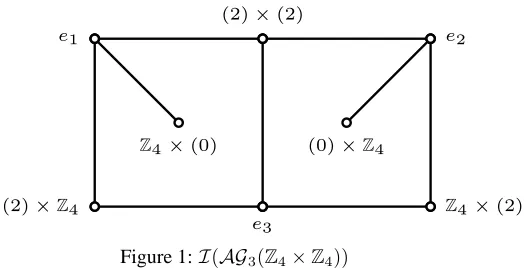
[image:5.612.175.438.121.255.2]F4×(0)× · · · ×(0),x2=F1×(0)×F3×(0)× · · · ×(0),x3=F1×(0)×(0)×F4×(0)× · · · ×(0), Figure 1:I(AG3(Z4×Z4))
e1
(2)×(2)
e2
(2)×Z4
e3 Z
4×(2)
x4 =F1×(0)×F3×F4×(0)× · · · ×(0),x5 = (0)×F2×F3×(0)× · · · ×(0),x6 = (0)×F2× (0)×F4×(0)× · · · ×(0),x7= (0)×F2×F3×F4×(0)× · · · ×(0),x8 =F1×F2×(0)× · · · ×(0),
x9 =F1×F2×F3 ×(0)× · · · ×(0),x10 = F1×F2×(0)×F4×(0)× · · · ×(0). ThenI(G)
is a subgraph ofI(AG3(R)),|V(I(G))| ≥32,|E(I(G))| ≥66andgr(I(G)) = 4. By Lemma 2.6,
g(I(G))>1and sog(I(AG3(R)))>1, a contradiction. 2
Next, we study two lemmas which are needed in the following theorem. We apply insertion and deletion argument for investigating the3-annihilating-ideal hypergraphAG3(R) is either planar or has genus at least two in the following lemma.
Lemma 3.7 — LetR=R1×R2be a ring, where(R1,m1)and(R2,m2)are local rings such that
η(m1) = 2andη(m2) = 3.Theng(AG3(R))≥2.
PROOF: LetA(R,3) = {x1, . . . , x8}andE(AG3(R)) ={e1, . . . , e10},wherex1 =R1×(0),
x2 = (0)×m2,x3 =m1×m2,x4 =R1×m2,x5=m1×m22,x6=R1×m22,x7 = (0)×R2,x8 = m1×R2 ∈ A(R,3),e1 = {x1, x3, x8}, e2 = {x1, x5, x8},e3 = {x2, x3, x4},e4 = {x3, x6, x8},
e5 = {x4, x6, x7}, e6 = {x4, x5, x8}, e7 = {x4, x5, x7}, e8 = {x5, x6, x8}, e9 = {x5, x6, x7},
e10={x3, x6, x7} ∈E(AG3(R)). It is observed thatI(AG3(R))contains a subdivision ofK3,3and
so thatg(AG3(R))≥1.
Suppose thatg(AG3(R)) = 1.Then by Theorem 2.8,g(I(AG3(R))) = 1.LetG=I(AG3(R)),
G0 = G− {x
1, x2, e1, e2, e3} − {e10x6, e4x6, e5x7}andG00 =G0− {e9}.ThenG00is isomorphic to the subdivision ofK3,3 and hence g(G00) = 1.Since g(G00) ≤ g(G0) ≤ g(G), we obtain that
g(G0) = 1.Note that|V(G0)| = 13and|E(G0)| = 18.Then By Euler’s formula 2.7, there are9
faces when drawingG0 on a torus. Fix a representation forG0 and let{F10, . . . , F50}be the faces of
G0 corresponding to this representation. Note thatG00 is isomorphic to the subdivision ofK3,3.So
that the cellular embedding ofG00inS1 has 3 faces. LetF100, F200, F300be the faces ofG00obtained by deletinge9and all the edges incident withe9from the representation ofG0.Then{F10, . . . , F50}can be recovered by insertinge9and all the edges incident withe9 into the representation corresponding to{F100, F200, F300}.Note thatx6e8, x6e9 ∈E(G0).Hencex6, e8, e9should be inserted to the same face, sayFm00 ofG00to avoid crossings. Note thate8xi ∈E(G0)fori= 5,8ande9xi ∈E(G0)fori= 5,7.
So thatx5, x7 andx8 should be boundary vertices of the face Fm00.Since x4e6, x4e7 ∈ E(G0). If
x4, e6, e7 lie on different faces of cellular embedding of G1 in S1, we get an edge crossing. So
thatx4, e6, e7 should be inserted to the same face Fm00 of G00 to avoid crossings. We observe that e7x7, e6x8 ∈E(G0).Ife
Consider the following edges of G0, f1 = e9x5, f2 = e8x5, f3 = e9x6, f4 = e8x6, f5 =
e9x7, f6 =e8x8, f7 =e7x5, f8 =e6x5, f9 =e7x4, f10 =e6x4, f11 =e7x7, f12=e6x8.Then
we obtain the Figure 2 by insertingx4, x6, e6, e7, e8, e9andf1, . . . , f10.However from the Figure 2, there is no way to insertf11andf12without crossings. Hence we conclude thatg(AG3(R))≥2. 2
In the following lemma, we investigate thatAG3(R)is planar or has genus at least two for non-local commutative ringRhaving exactly two maximal ideals whose nilpotency is two.
Lemma 3.8 — Let R = R1×R2 be a ring, where(R1,m1) and(R2,m2) are local rings such thatη(m1) = 2 = η(m2).IfR1 orR2has nonzero ideals different from their maximal ideals, then
g(AG3(R))≥2.
PROOF: Without loss of generality, assume thatR1 has a nonzero ideal different from mi1 for 1≤i≤2.Then by Proposition 2.1,R1has at least three distinct non-trivial idealsI, JandK such
thatI, J, K 6= mi1 for1 ≤ i≤ 2.LetA(R,3) = {x1, . . . , x11}andE(AG3(R)) = {e1, . . . , e26}, where x1 = R1 ×(0), x2 = m1 ×m2, x3 = I ×m2, x4 = J ×m2, x5 = K ×m2, x6 =
R1 ×m2, x7 = (0)×R2, x8 = m1 ×R2, x9 = I ×R2, x10 = J ×R2, x11 = K ×R2 ∈
A(R,3) and e1 = {x1, x9, x10}, e2 = {x1, x3, x10}, e3 = {x1, x4, x9}, e4 = {x1, x9, x11},
e5 = {x1, x3, x11}, e6 = {x1, x5, x9}, e7 = {x1, x8, x9}, e8 = {x1, x3, x8}, e9 = {x1, x2, x9},
e10 = {x1, x10, x11}, e11 = {x1, x4, x11}, e12 = {x1, x5, x10}, e13 = {x1, x8, x10}, e14 =
{x1, x4, x8}, e15 = {x1, x2, x10}, e16 = {x1, x8, x11}, e17 = {x1, x5, x8}, e18 = {x1, x2, x11},
e19={x1, x3, x9},e20={x1, x4, x10},e21={x1, x5, x11},e22={x1, x2, x8},e23={x3, x6, x7},
e24 = {x4, x6, x7},e25 = {x5, x6, x7}, e26 = {x2, x6, x7} ∈ E(AG3(R)).LetG = I(AG3(R)),
G0 = G− {x
1}.It is observed thatdeg(x1) = 22inI(AG3(R)).LetΩ = {x3, x4, x5, x6, x7, x9,
x11, e1, e3, e5, e20, e21, e23, e25}.Then the induced subgraph ofG0 induced byΩcontains a subdi-Figure 2: The faceFm00
x5
x7 x8
x4 e7
e6
e11 e12
[image:7.612.202.402.120.329.2]vision ofK3,3 and henceg(G0) ≥ 1.Note that|V(G0)| = 36and|E(G0)| = 56.Then by Euler’s formula 2.7,G0 has20faces in which there is no face of length greater than or equal to 22. Hence there is no way to insertx1inG0without crossings. Thusg(AG3(R))≥2. 2
Next, we study thatAG3(R)is planar or has genus at least two for the nonlocal ringRwhich is the finite product of local rings.
Theorem 3.9 — Let R = R1 × · · · ×Rn, (n ≥ 2), where each(Ri,mi) is a local ring with mi 6= (0).ThenAG3(R)is either planar or has genus at least two.
PROOF: Suppose thatn≥3.Since eachRiis a local ring, there exists an idealIiinRisuch that I2
i = (0)for alli.LetGbe a subhypergraph ofAG3(R)induced byΩ ={x1, . . . , x8}, wherex1 = (0)×(0)×R3×(0)×· · ·×(0),x2 =R1×R2×I3×(0)×· · ·×(0),x3=R1×(0)×I3×(0)×· · ·×(0),
x4 =R1×I2×I3×(0)× · · · ×(0),x5 = (0)×R2×I3×(0)× · · · ×(0),x6 = (0)×I2×I3×(0)×
· · · ×(0),x7 =R1×R2×I3×(0)× · · · ×(0)andx8 =I1×R2×I3×(0)× · · · ×(0)∈ A(R,3).So
thatI(G)is a subgraph ofI(AG3(R)),|V(I(G))| ≥25, |E(I(G))| ≥51andgr(I(G)) = 4.Then by Lemma 2.6,g(I(G))>1and sog(AG3(R))≥2.It follows thatn= 2and soR=R1×R2.If m1orm2has nilpotency greater than or equal to 3, then by Lemma 3.7, we get thatg(AG3(R))≥2.
So we conclude thatη(m1) = η(m2) = 2.By Lemma 3.8 and Theorem 3.4,AG3(R) is planar or
g(AG3(R))≥2. 2
In the following theorem, we deal with3-annihilating-ideal hypergraph for an Artinian ring which is a finite product of local rings and fields having at least three maximal ideals.
Theorem 3.10 — LetR=R1× · · · ×Rn×F1× · · · ×Fmbe a ring with at least three maximal
ideals,m≥1, n≥1where each(Ri,mi)is a local ring withmi 6= (0)and eachFjis a field. Then AG3(R)is planar or has genus at least two.
PROOF: Case 1 :n+m≥4.
It shows thatAG3(F1× · · · ×Fn× · · · ×Fn+m) is a subhypergraph ofAG3(R) and as in the Proof of Theorem 3.6, we observe thatg(AG3(F1 × · · · ×Fn× · · · ×Fn+m)) ≥2.It follows that g(AG3(R))≥2.
Case 2 :n+m= 3.
Suppose n = 2 and m = 1. It shows that R = R1 ×R2 ×F1. Since R1 andR2 are local rings, there exists a non-trivial idealI1 inR1 andI2 inR2 such thatI12 = (0) =I22.LetH be the subhypergraph ofAG3(R).Letx1 = R1 ×I2 ×F1,x2 = R1 ×(0)×F1, x3 = R1×I2×(0),
x4 = I1×I2 ×(0),x5 = I1×R2×F1,x6 = (0)×R2×F1, x7 = I1×R2×(0) ∈ A(R,3)
e6 ={x2, x4, x7},e7 ={x3, x4, x5},e8 ={x3, x4, x6},e9 ={x3, x4, x7} ∈E(H).It is observed
thatI(H)contains a subdivision ofK3,3.It shows thatg(AG3(R))≥1.
ConsiderH1=I(H)andH0 =H− {x4}.ThenH0is a subdivision ofK3,3and the cellular em-bedding ofH0inS1has 3 faces. Next, we proceed to prove thatg(H1)≥2by a deletion and insertion argument. Note thatH0is a subdivision ofK3,3in which each9edgesx1x5, x1x6, x1x7, x2x5, x2x6,
x2x7, x3x5, x3x6, x3x7 ofH0is subdivided by a single edgee1, . . . , e9respectively.
NowH1 can be obtained fromH0 by insertingx4 and all edges incident withx4.Since x4ei ∈ E(H1)for alli= 1, . . . ,9,there is no way to insertx4in the cellular embedding ofH0inS1without
crossings. Therefore, we conclude thatg(H1)≥2and so thatg(AG3(R))≥2.
Suppose m = 1 andn = 2.ThenR = R1×F1 ×F2.Assume thatη(m1) = t ≥ 3.LetG be the subhypergraph ofAG3(R) induced by Ω1 = {x1, . . . , x10} ⊆ A(R,3),wherex1 = (0)×
F1 ×F2,x2 = m1×(0)×(0),x3 = m1×(0)×F2,x4 =m1×F1 ×(0),x5 = m1×F1×F2,
x6 = mn1−1 ×(0)×F2,x7 = mn1−1×F1×(0), x8 = mn1−1 ×F1 ×F2,x9 = R1×(0)×(0),
x10 =R1×(0)×F2,x11 =R1×F1×(0)∈ A(R,3).ThenI(G)is a subgraph ofI(AG3(R)),
|V(I(AG3(R)))| ≥35,|E(I(AG3(R)))| ≥72andgr(I(AG3(R))) = 4.By Lemma 2.6,g(G)≥2
and so thatg(AG3(R))≥2.
Next, let us assume that η(m1) = 2. If R1 has no nonzero proper ideals different from m1, then by Theorem 3.5(i), AG3(R) is planar. If R1 has a nonzero proper ideal different from m1, then by Proposition 2.1, R1 has at least three ideals different from m1, sayI, J, K.Let H be the subhypergraph ofAG3(R)induced byΩ2 ={x1, . . . , x7} ⊆ A(R,3),wherex1 =R1×(0)×F2,
x2 =I×F1×F2,x3 =J×F1×F2,x4=K×F1×F2,x5 =I×F1×(0),x6=J×F1×(0),
x7 = K ×F1 ×(0) ∈ A(R,3). Then it is easy to observe that I(H) contains a subdivision of
K3,3andx1is adjacent to all edges in subhypergraphHofAG3(R).Hence as before, we prove that
g(AG3(R))≥2. 2
Theorem 3.11 — LetR=R1×F1,where(R1,m1)is a local ring withm1 is principal andF1
is a field. ThenAG3(R)is toroidal if and only if the nilpotency ofm1is five.
PROOF: Assume thatAG3(R)is toroidal. Suppose thatη(m1) =n ≥6.Sincem1 is principle, m1 = hai for somea ∈ R∗1 and so m1, m21, . . ., mn1−1 are only non-trivial ideals in R1. Let G
be a subhypergraph ofAG3(R)induced byΩ1 ={x1, . . . , x10} ⊆ A(R,3),wherex1 =m1×(0),
x2 =mn1−4×(0),x3=m1n−3×(0),x4 =mn1−2×(0),x5 =R1×(0),x6 =m1×F1,x7 =mn1−4×F1,
x8 = mn1−3 ×F1, x9 = mn1−2 ×F1, x10 = mn1−1 ×F1 ∈ A(R,3) and lete1 = {x1, x6, x9},
{x1, x2, x3},e8 = {x1, x2, x8},e9 = {x2, x6, x8}, e10 = {x2, x7, x8},e11 = {x2, x3, x7}, e12 =
{x3, x6, x7}, e13 = {x2, x3, x6}, e14 = {x5, x6, x10}, e15 = {x5, x7, x9}, e16 = {x5, x7, x10},
e17 = {x5, x8, x9}, e18 = {x5, x8, x10} ande19 = {x5, x9, x10} ∈ E(AG3(R)).It follows that
I(G)contains a subdivision ofK3,3and henceg(G)≥1.
Suppose that g(G) = 1. Then by Theorem 2.8, g(I(G)) = 1.Let H = I(G), H0 = H −
{x4, x5, x10, e4, e5, e8, e9, e11, e14, e16, e18, e19} − {x5e15, x2e10, x3e12, x2e13, x1e7, x5e17}andH00 =H0− {e
2, e15} − {e10x7}.HenceH00is isomorphic to the subdivision ofK3,3and sog(H00) = 1. Since g(I(G)) = 1, g(H) = 1. Since g(H00) ≤ g(H0) ≤ g(H), we obtain that g(H0) = 1. Note that|V (H0)|= 17and|E(H0)|= 32.Then by Euler’s formula 2.7, there are15faces when drawingH0 on a torus. Fix a representation ofH0and let{F10, . . . , F150 }be the set of all faces ofH0 corresponding to this representation. We observe thatH00is the subdivision ofK
3,3 and this graph has3faces. Write the faces ofH00asF100,F200andF300obtained by deletinge2ande15and all the edges incident withe2,e15and the edgee10x7from the representation ofH00.Then{F10, . . . , F150 }can be recovered by insertinge2ande15and all the edges incident withe2, e15and the edgee10x7 into the representation corresponding to{F100, F200, F300}.Note thatx8e2, x8e10∈E(H0).Hencex8, e2ande10 should be inserted to the same faceFm00 ofH00 to avoid crossings. Sincee2xi ∈ E(H0)fori = 1,7
ande10xi ∈E(H0)fori= 1,7.Hencex1, x2andx7should be boundary vertices of the faceFm00.We
observe thatx9e3, x9e15∈E(H0).Ifx7, e3ande15lie on different faces of cellular embedding ofH0 inS1, we get an edge crossing. Hencex7, e3 ande15should be inserted to the same face of cellular embedding ofH0 inS1.Moreovere1xi ∈ E(H0)fori = 1,9ande17xi ∈ E(H0)fori = 8,9.If e1, e17, x8 andx9 lie on the face different fromFm00,we get an edge crossing. So thate1, e17, x8 and
[image:10.612.251.447.524.711.2]x9should be inserted to the same faceFm00 ofH00.
Figure 3: The faceFm00 x7
x1 x2
e2 e15 e3 e10
x9
Consider the edgesf1 = e2x8,f2 = e10x8,f3 = e2x1,f4 = e2x7, f5 = e10x2,f6 = e10x7,
f7 = e15x9, f8 = e3x9, f9 = e15x7, f10 = e3x7, f11 = e1x1 andf12 = e1x9 ∈ E(G). After
insertingf1, . . . , f10intoFm00,we obtain the Figure3.However, it is easy to see from Figure3, we
cannot insertx1, e1 andf11, f12into Fm00 without crossings. Hence we conclude thatg(H) ≥2and
henceg(AG3(R)) ≥ 2which is a contradiction. Thus we conclude thatη(m1) = 5.The converse
follows from Figure 4. 2
Theorem 3.12 — LetR=R1×F1,whereR1is a local ring with maximal idealm1of nilpotency
two andF1 is a field. ThenAG3(R) is toroidal if and only ifR1 has exactly three nonzero proper
ideals different fromm1.
PROOF: Assume thatAG3(R)is toroidal. SupposeR1has no ideals different fromm1.Then it is clear thatA(R,3) =∅. Hence let us assume thatR1has at least four nonzero proper idealsI1, I2, I3 andI4 different fromm1.LetGbe a subhypergraph ofAG3(R) induced byΩ1 ={x1, . . . , x6} ⊆
A(R,3)wherex1 =R1×(0),x2 =m1×F1,x3=I1×F1,x4 =I2×F1,x5 =I3×F1,x6=I4×
F1 ∈ A(R,3)and lete1 = {x1, x2, x3},e2 = {x1, x2, x4},e3 = {x1, x2, x5},e4 ={x1, x2, x6},
e5 = {x1, x3, x4}, e6 = {x1, x3, x5}, e7 = {x1, x3, x6}, e8 = {x1, x4, x5}, e9 = {x1, x4, x6},
ande10 = {x1, x5, x6} ∈ E(AG3(R)).Note that I(G) contains a subdivision ofK3,3 and hence
g(G)≥1.
Suppose thatg(G) = 1. Then by Theorem 2.8,g(I(G)) = 1.LetH =I(G),H0 =H− {e8} −
{e4x2, e5x1, e6x1}andH00 =H0− {x6, e4, e7, e9, e10}.HenceH00is isomorphic to the subdivision
[image:11.612.121.494.116.336.2]ofK3,3and henceg(H00) = 1.Suppose thatg(H) = 1.Hence we conclude thatg(H0) = 1and by Figure 4: The embedding ofAG3(R)inS1
m1×(0)
m21×(0) m31×(0)
R1×(0)
m1×F1
m21×F1 m
2 1×F1
m31×F1
m41×F1 e1
e2 e3
e4
e5
e6
e7
Euler’s formula 2.7, there are9faces when drawingH0 on torus. Fix a representation forH0and let
{F0
1, . . . , F90}be the set of faces ofH0corresponding to this representation. SinceK3,3has three faces,
H00has three faces. LetF00
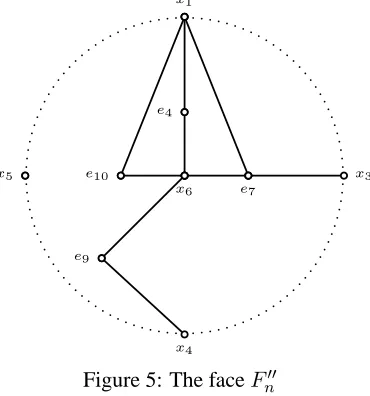
1, F200, F300be the faces ofH00obtained by deletingx6, e4, e7, e9, e10and all edges incident withx6, e4, e7, e9, e10from the representation ofH0.Again{F10, . . . , F90}be recovered by insertingx6, e4, e7, e9, e10and all the edges incident withx6, e4, e7, e9, e10into the representation corresponding to{F100, F200, F300}.LetFn00 be the face ofH00into whichx6, e4, e7, e9, e10are inserted during the recovering process fromH00toH0.
Sincex6ei ∈E(H0)fori = 4,7,9,10.So thatx6, e4, e7, e9, e10should be inserted to the same faceFn00ofH00to avoid crossings. Note thatx1e4, x1e7, x1e9, x1e10, x3e7, x4e9, x5e10, x6e4, x6e7,
x6e9, x6e10 ∈ E(H0).Ifx1, x3, x4 andx5 are not in the same face of cellular embedding ofH0 in
S1,then we get an edge crossing. Hencex1, x3, x4, x5lie on the boundary vertices of the faceFn00of H00.Consider the edgesf
1 =x1e4, f2 = x6e4, f3 =x1e7, f4 =x3e7, f5 = x6e7, f6 =x4e9, f7 =
x6e9, f8 = x1e10, f9 = x6e10, f10 = x1e9, f11 = x5e10 ∈ E(G).Then we obtain the Figure5by
insertingx6, e4, e7, e9, e10andf1, . . . , f9intoFn00.However from the Figure5, we see that there is no
way to insertf10andf11intoFn00without crossings. We get a contradiction. So thatg(H) ≥2and
henceg(AG3(R))≥2.
Thus we observe from Proposition 2.1,R1 has exactly three nonzero proper idealsI1, I2 andI3 different from the maximal idealm1.
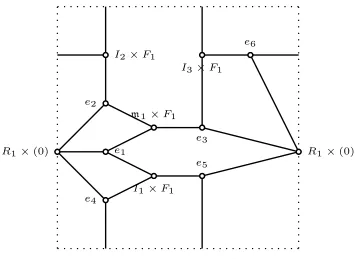
[image:12.612.252.437.410.608.2]The converse follows from Figure 6. 2
Figure 5: The faceFn00 x1
x3
x4 x5
e7 e10
x6
e9
ACKNOWLEDGEMENTS
The authors are deeply grateful to the referee for careful reading of the manuscript and helpful sug-gestions. The work reported here is supported by the UGC Major Research Project (F. No. 42-8/2013(SR)) awarded to K. Selvakumar by the University Grants Commission, Government of India.
REFERENCES
1. G. Aalipour, S. Akbari, R. Nikandish, M. J. Nikmehr, and F. Shaveisi, On the coloring of the annihilating-ideal graph of a commutative ring, Discrete Math., 312 (2012), 2620-2626.
2. G. Aalipour, S. Akbari, R. Nikandish, M. J. Nikmehr, and F. Shaveisi, Minimal prime ideals and cycles in annihilating-ideal graphs, Rocky Mountain J. Math., 43(5) (2013), 1415-1425.
3. M. Afkhami and K. Khashyarmanesh, The cozero-divisor graph of a commutative ring, Southeast Asian Bull. Math., 35 (2011), 753-762.
4. D. F. Anderson and A. Badawi, Onn-absorbing ideals of commutative rings, Comm. Algebra, 39 (2011), 1646-1672.
[image:13.612.135.490.122.381.2]5. D. F. Anderson, A. Frazier, A. Lauve, and P. S. Livingston, The zero-divisor graph of a commutative ring, II, in: Ideal Theoretic Methods in Commutative Algebra, Columbia, MO, 1999, Dekker, New York, 2001, 61-72.
Figure 6: The embedding ofAG3(R)inS1 R1×(0)
e4
e1 e2
I2×F1
I1×F1
m1×F1
e5 e3 I3 ×F1
e6
6. D. F. Anderson and P. S. Livingston, The zero-divisor graph of a commutative ring, J. Algebra, 217 (1999), 434-447.
7. D. Archdeacon, Topological graph theory: A survey, Congr. Numer., 115 (1996), 5-54.
8. M. F. Atiyah and I. G. Macdonald, Introduction to commutative algebra, Addison-Wesley Publishing Company, 1969.
9. A. Badawi, On2-absorbing ideals of Commutative rings, Bull. Austral. Math. Soc.,, 75 (2007), 417-429.
10. A. Badawi, On the total graph of a ring and its related graphs: A survey, Recent Advances in Commuta-tive Rings, Integer-Valued Polynomial and Polynomial Functions, Fontana, Macro, Sophie, Glaz, Sarah (Eds.), 2014, Springer.
11. A. Badawi, On the annihilator graph of a commutative ring, Comm. Algebra, 42(1) (2014), 108-121, doi: 10.1080/00927872.212.707262.
12. A. Badawi, On the dot product graph of a commutative ring, Comm. Algebra, 43 (2015), 43-50, doi: 10.1080/00927872.2014.897188.
13. I. Beck, Coloring of commutative rings, J. Algebra 116 (1988), 208-226.
14. M. Behboodi and Z. Rakeei, The annihilating-ideal graph of commutative rings I, J. Algebra Appl., 10(4) (2011), 727-739.
15. M. Behboodi and Z. Rakeei, The annihilating-ideal graph of commutative rings II, J. Algebra Appl., 10(4) (2011), 741-753.
16. R. Belshoff and J. Chapman, Planar zero-divisor graphs, J. Algebra, 316(1) (2007), 471-480.
17. C. Berge, Graphs and hypergraphs, North-Holland Publishing Company, Londan, 2003.
18. G. Chartrand and L. Lesniak, Graphs and digraphs, Wadsworth and Brooks/ Cole, Monterey, CA, 1986.
19. Ch. Eslahchi and A. M. Rahimi, Thek-zero divisor Hypergraph of a commutative ring, Int. J. Math. and Math. Sciences, 2007 (2007), Article ID 50875, (15 pages), http://dx.doi.org/10.1155/2007/50875.
20. A. Gagarin and W. Kocay, Embedding graphs containingK5-subdivisions, Ars Combinatoria, 64 (2002),
33-50.
21. A. Gagarin, W. Myrvold, and J. Chambers, Forbidden minors and subdivisions for toroidal graphs with noK3,3’s, Electron. Notes in Discrete Math., 22 (2005), 151-156.
22. I. Kaplansky, Commutative rings, rev. ed., University of Chicago Press, Chicago, 1974.
23. H. R. Maimani, M. Salimi, A. Sattari, and S. Yassemi, Comaximal graph of commutative rings, J. Algebra, 319 (2008), 1801-1808.
27. K. Selvakumar and P. Subbulakshmi, On the genus of the graph associated to a commutative ring, Dis-crete Math. Algorithm Appl., 9(4) (2017), 1750058:11pp, doi:10.1142/S1793830917500586.
28. F. Shaveisi and R. Nikandish, The Nil-graph of Ideals of a commutative ring, Bull. Malays. Math. Sci. Soc., 39 (2016), 3-11.
29. N. O. Smith, Planar zero-divisor graphs, Int. J. Comm. Rings, 2(4) (2002), 177-188.
30. T. Tamizh Chelvam and K. Selvakumar, Central sets in the annihilating graph of a commutative ring, J. Combin. Math. Combin. Comput., 88 (2014), 277-288.
31. T. Tamizh Chelvam, K. Selvakumar, and V. Ramanathan, On the planarity of thek-zero-divisor hyper-graphs, AKCE Inter. J. Graphs and Combin., 12 (2015), 169-176.
32. T. Tamizh Chelvam and K. Selvakumar, On the connectivity of the annihilating-ideal graphs, Discuss. Math. Gen. Algebra Appl., 35(2) (2015), 195-204, doi:10.7151/dmgaa.1241.
33. T. R. S. Walsh, Hypermaps versus bipartite maps, J. Combin. Theory B, 18 (1975), 155-163.
34. A. T. White, Graphs, groups and surfaces, North-Holland, Amsterdam, (1973).
25. K. Selvakumar and V. Ramanathan, Classification of nonlocal rings with projective 3-zero-divisor hy-pergraph, Ricerche Math., 66(2) (2017), 457-468.