The Emotion Sign: Human Motion Analysis
Classifying Specific Emotion
Yuichi Kobayashi
Toppan Printing Co.,ltd./ Information Technology Research Lab., Tokyo, Japan Email:[email protected]
Abstract—We examine the relationship between human motion and emotions. With recent improvement of sensing technologies, although precise human motion can be measured, the amount of data grows enormously. In this paper, we propose a new analysis method which can describe large amount of data rationally. This method can be used to classify human motions associated with specific emotions. Our approach to motion data analysis is to apply higher order singular value decomposition (HOSVD) directly to motion data. HOSVD can generate a compact vector which specifies each emotion common among people. Experimentally, we obtained motion capture data for “gait” and “standing” actions related to six basic emotions. Human gait motion was also created with an animator. For these motion data, our analysis showed that our method can classify the human motions specific to each emotion.
Index Terms — HOSVD, human motion, motion analysis, classification, emotion, gait action, motion capture data
I. INTRODUCTION
The spreading popularity of sensing technology and the growing demand for security measures mean that the opportunity to measuring human motion is growing rapidly. Now, new methods for analyzing the measured human motion data are urgently needed.
Human dynamics can be used to recognize what the individual is doing. A large amount of papers has attempted to recognize human actions from video images. A work based on blurred optic flow has been presented [1], where the blurred motion channels are computed and spatio-temporal correlation is used for matching with a database. A hierarchical model[2] which reasons with belief networks and HMMs (hidden Markov models) with features such as position and velocity as action descriptors.
Recently, some approaches detect the body parts using a method inspired tracking approaches using a motion capture system. In this field, the major interests lie in a motion interpretation[3] or the dynamics of humans[4] devoted to rather simple actions such as walking, running and sitting. Another significant studies deal with action primitives, action grammars and the close relationship between action recognition and action synthesis[5].
While, in the field of digital archiving study, for the purpose of handing down intangible cultural heritage, especially recording artistic data, the studies to classify
dance performances or to structuralize them have been proposed[6],[7].
As shown in these literatures, most of motion analysis methods have been based on the learning model such as HMM[8] or the neural network model[9]. On the other hand, the methods based on tensor analysis model[10],[11] also have been proposed, which use an algebraic procedure. These methods are used to cluster the training data into several distinct classes and to find representative exemplar for each class.
We have studied the mechanism of human impressions mainly from still images and our current interest is to study human impressions for time-variant stimuli – motion, from the viewpoint of “Kansei” information processing.
Our goal is to analyze human motion specific to emotion. For this purpose, we focus on the “human motion signature” approach proposed by Vasilescu [12]. This approach assumes people identified by individualizing their movements from sample motions. To apply such a method, a corpus of motion data spanning multiple persons and actions is organized as a higher order array or tensor defining multilinear operators over a set of vector spaces.
HOSVD is applied to this array and a person-specific vector called a “human signature” is extracted from what is common between actions.
In this paper, we propose a motion analysis method to identify emotions by individualizing human motion data associated with several emotions common among subjects.
II. ANALYSISMETHOD
A. Higher Order SVD
Given a corpus of human motion data from different persons and for different emotions, we decompose the data into two separate subspaces – the person subspace and the emotion subspace.
We use a third-order tensor RN K T
A to represent
the human motion configuration, where N is the number of persons, K is the number of emotions, and T is the number of frames of one feature time sample. We can decompose tensor
A
using the higher order singular value decomposition known as the N-mode singular value decomposition (SVD). N-mode SVD is a generalization of SVD that orthogonalizes N spaces as a mode-n product of N orthogonal spaces:N N n
n
U
U
U
U
1 2 2 3L
L
1
A
(1)Here, A is core tensor which governs interaction
between the mode matrices
U
n forn
,1
L
,
N
. Mode matricesU
ncontain orthonormal vectors spanning the column space of matrix A(n) that results from the mode-nflattening of A.
The N-mode SVD algorithm for decomposing A is
1. for
n
,1
L
,
N
, calculate matrixU
n in (1)by calculating the SVD of the flattened matrix A(n)
and setting
U
n to be the left matrix of the SVD. 2. solve for the core tensor as follows:T N N T n n T
T U U U
U1 2 2L L
1 A
S (2)
This can be calculated in a matrix representation – e.g., T n n N n n T
n (n) 1 2 2 1)
(n) U A (U U U U U
S L L
– where is the matrix Kronecker product.
Suppose that given motion sequences of several persons, we can define a data set tensor D with sizeP E J , where P is the number of persons, E is the number of emotions and J is the number of frames for a joint feature time sample:
J E P 2 3 1
S
D (3)
The person matrix T
H n p
p p1L L
P , whose person
specific row vectors T
n
p span the space of the person parameters, encodes per-person invariances across emotions. The emotion matrix E e1LemLeE T ,
whose emotion specific row vectors T m
e
span the space of the emotion parameters, encodes the invariances for each emotion across the different persons. The joint angle matrixJ, whose row vectors span the space of the joint feature sample, contains the eigen motions normally computed by PCA.J E 3 2 S
B (4)
defines a set of basis matrices for all the motion features associated with all emotions.
J P 3 1 S
C (5)
defines a set of basis matrices for all the motion features associated with all persons. After extractingS,E,andJ,
we have a generative model that can observe the motion
data of a new person performing one of these emotions e and synthesize the remaining emotions for this new person through the equation
T e 1p B Dp,e
where
B
eS
2e
eT 3J
andD
p,e is aT 1
1 tensor; flattening this tensor in the person mode yields the matrix Dp,e(person) , which can be denoted as
T e
d . A complete set of new persons is synthesized as
T
p
1
B
D
p (6)If several emotions T ek
d
are observed, the person’s parameters are computed as1 ) (person ek T ek
T
d
B
p
(7)Similarly, given a known person with an unknown emotion, we can synthesize all the persons in the database with the same emotion:
T e 2 C
De (8)
If several persons are observed displaying the same emotion dpk, the emotion parameters are computed as
1 ) (emotion pk T pk
T d C
e (9)
B. Emotion feature extraction process
The process of our emotion feature extraction is as follows:
1. to measure motion capture data with the gait action expressing each emotion.
2. to collect all the subjects’ motion data for the same emotion.
3. to apply the HOSVD to the motion data, which span the space of all subjects, all emotions, and one feature time sample.
4. to generate an emotion feature vector from gait motion data for each emotion through (9).
5. to compare emotion feature vectors for various features – position, velocity and acceleration – and to extract a feature specific to each emotion.
III. HUMAN MOTION AND EMOTION
A. The action
First, we considered the action for analysis. In our daily life, we perform an enormous range of actions. It is important to decide which basic action can be used to identify each emotion. We focused on daily actions common to many people and robust actions which seldom change to other actions when associated with various emotions. We selected gait action after considering these points.
B. The emotion
the literature of psychology, two kinds of definition are relevant. One is from Plutchik’s psychoevolutionary theory of emotion. He defined eight primary emotions: acceptance, anger, anticipation, disgust, joy, fear, sadness and surprise. The other is from Ekman and Friesen’s research on a universal facial expression. They defined six primary emotions: anger, disgust, fear, joy, sadness and surprise.
We extracted the six emotions common to both of the above lists. To test whether people can identify each emotion by observing human gait motions, we then conducted an experiment.
IV. EXPERIMENT
A. Experiment procedure
Material: Video sequences of the six emotions (anger, disgust, fear, joy, sadness and surprise). Three actors and three actresses from a theater company acted out each emotion. Two takes were recorded. Two video sequences were synthesized for each take, with 5-s parts extracted from each video and synthesized into a single video sequence.
Subjects: 10 female and 10 male university students (age:21.3 1.8) participated in the experiment.
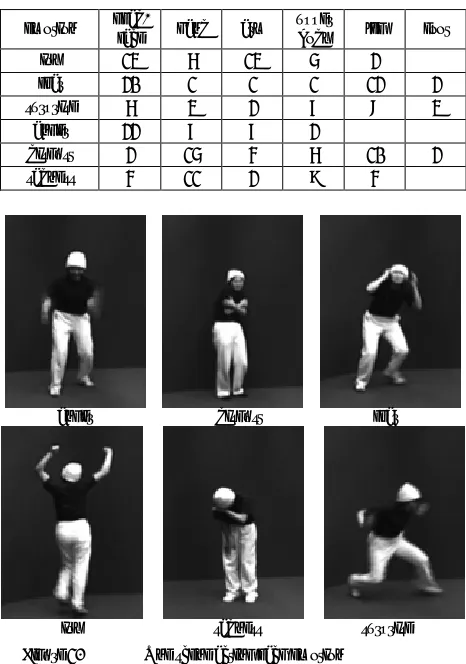
Method 1: A three-level rating scale method was used. A subject observed each act and gave a score of 1 to the most appropriate emotion from among the six emotions. Fig. 1 shows examples of a video sequence.
Method 2: Subjects were asked to give score in three levels – 0 to 2 – to parts of the body how much he or she focused on, when identifying emotion from a video scene. B. Experimental Results
Table I shows the degree to which each emotion was correctly identified, calculated by averaging the score over all subjects, regarding a score 1 as correctness of 100. These results indicate that people can identify basic emotions when observing only the associated human motion.
TABLE I. CORRECTNESS OF IDENTIFIED EMOTION
emotion average score emotion average score joy 95.0 sadness 84.6 surprise 92.5 anger 97.5 fear 84.6 disgust 71.6
TABLE II. PRINCIPAL COMPONENTS OF THE EXPERIMENTAL RESULTS
emotion axis 1st 2nd axis axis 3rd axis 4th axis 5th joy -0.94 0.07 -0.13 0.14 -0.16 fear 0.28 -0.82 -0.01 0.28 -0.08 other 0.15 0.62 -0.00 0.20 -0.05 surprise 0.15 0.07 0.92 0.12 -0.13 anger 0.10 -0.01 -0.07 -0.97 -0.05 disgust 0.13 0.03 -0.09 0.06 0.96
sadness 0.46 0.28 -0.53 0.20 -0.40 eigenvalue 1.26 1.16 1.15 1.14 1.14 contribution
rate(%) 18.0 16.5 16.5 16.3 16.3
TABLE III. EXPERIMENTAL RESULTS : TOTAL SCORES OF EACH FOCUSED PART OF THE BODY WHEN IDENTIFYING EMOTIONS
emotion head, face hand arm upper body leg foot joy 13 6 13 5 2
fear 20 1 1 1 12 2 surprise 6 3 2 7 8 3
anger 22 7 7 2
disgust 2 15 4 6 10 2 sadness 4 11 2 9 4
anger disgust fear
joy sadness surprise Figure 1. One scene acting each emotion
Table II shows the principal components for all the subjects’ scores. These results indicate that we can distinguish among the emotions.
Table III shows the total score which subjects gave to each part of the body when identifying emotions. These results indicate that joy is identified with the motion of hands and arms, fear is with that of legs, disgust is with that of hands and legs, sadness is with that of hands and upper body and surprise is with that of whole body.
V. HUMAN MOTION MEASUREMENT
A. Motion Capturing
We did three experiments: one to measure long-term walking and the other to measure short-term walking and short-term standing.
1) Long-term gait motion
Equipment: A Vicon 612 motion-capturing system was used. The 3D positions of 30 body parts were simultaneously detected at a rate of 30 times per second.
Marked areas: right and left front of the head, back of the head, clavicle, sternum, 7th cervical vertebrae, 10th thoracic vertebrae, right and left shoulders, upper arms, elbows, wrists, mid-fingertips, waist, thighs, knees, ankles, heels and toes.
Indication: Subjects walked in one direction around an area of about 10 square meters while showing each emotion and each motion was recorded.
2) Short-term gait motion and standing motion Equipment: A Motion Star Wireless system was used. The 3D positions of 18 body parts were simultaneously detected at rate of 60 times per second. The subject wore a hub system, which wirelessly sent 3D information from each sensor to the server.
Marked area: forehead, throat, sternum, lower back, right and left shoulders, elbows and wrists, right and left sides of the waist, knees, heels and toes.
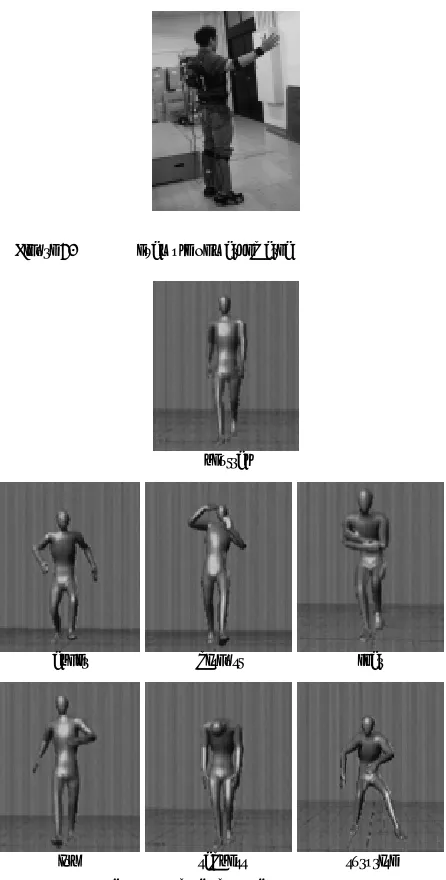
Fig. 2 shows an example of the marked areas.
Subjects: walked on a wooden platform that was about 10 square meters in area. We asked the subject to walk with an emotion that was either a neutral emotion or one of the six basic emotions. We also asked the subject to stand with an emotion that was either a neutral emotion or one of the six basic emotions.
Figure 2. example of marked area
neutral
anger disgust fear
joy sadness surprise Figure 3. Examples of created human motion with emotion
B. Motion Creation
Human motion includes many subtle differences between each movement, if it is the same person performing the same action. In pilot data, such differences can constitute noise, which interferes with analysis. To avoid noise, one solution is to create human motions artificially. We asked an animator to create human gait motions for each emotion with a human body model which was captured by our motion capture experiment. All the human motions were created using “Motion Builder 7.0.” Fig. 3 shows examples of the created human gait motions with emotion.
VI. HUMAN MOTION ANALYSES
A Analyses of human motion - motion capture data To analyze the motion capture data, we focused on the movement of the midpoint between the right and left shoulders, elbows, wrists, knees, heels and toes. For these points, the position, velocity, and acceleration were analyzed.
Figure 4. Emotion feature vectors for the lateral orbit of the midpoint between the right and left elbows
Figure 5. Emotion feature vectors for the lateral velocity of the midpoint between the right and left shoulders
Although we first analyzed the movement of each marker and that of three joint angles – the angle between the body and upper arm, the upper arm and forearm, and the upper and lower leg, we could not extract any significant result of analysis. All matrix computation was done using Matlab 7.0.
1) Analyses of long-term gait motion data
First, for each marked area, we applied HOSVD to long-term – lasting about 30s – gait motion data and extracted emotion feature vectors for each feature.
We used seven emotional states – the six basic emotions and one neutral emotion – and the dimension of each emotion feature vector was 7.
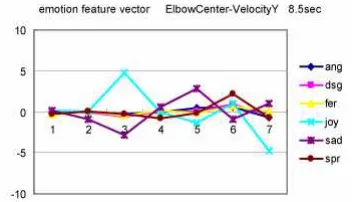
Examples of emotion feature vectors for some features are shown in Figs. 4 to 6. These graphs are differences between each emotion feature vector and neutral feature vector. “ang”, “dsg”, “fer”, “joy”, “sad” and “spr” mean anger, disgust, fear, joy, sadness and surprise, respectively.
Fig. 4 shows emotion feature vectors for the lateral position of the midpoint between the right and left elbows. Surprise and joy emotion could be identified individually. We also found that the values for surprise and joy were most different, meaning the motion of surprise is most different to that of joy in lateral position.
Fig. 5 shows emotion feature vectors for the lateral velocity of the midpoint between the right and left shoulders. In this case, joy and disgust could be identified individually. We also found that the values for joy and disgust were opposite in sign, meaning the motion of one was opposite to that of the other.
Fig. 6 shows emotion feature vectors for the anteroposterior acceleration of the midpoint between the right and left wrists. As shown, joy emotion could be identified solely.
2) Analyses of short-term gait motion data
Next, for each marked area, we applied HOSVD to short-term – about 3 s long – gait motion data and extracted emotion feature vectors for each feature.
Fig. 7 shows emotion feature vectors for the anteroposterior velocity of the midpoint between the right and left knees. Fear could be clearly separated from the other emotions, suggesting that the anteroposterior velocity of the knee motion characterizes fear.
Fig. 8 shows the anteroposterior acceleration of the midpoint between the right and left heels. In this case, disgust could be separated from the other emotions, suggesting that the anteroposterior acceleration of the midpoint between the right and left heels is a characteristic motion for disgust.
Figs. 9 and 10 show emotion feature vectors for the anteroposterior velocity and acceleration of the midpoint between the right and left shoulders, respectively. Sadness could be separated from the others by velocity and anger could be by acceleration. As shown in these
cases, the change of the position is characteristic for sadness and the change of the velocity is characteristic for anger linking motion between the right and left shoulders in the moving direction.
3) Analyses of short-term standing motion data Finally, for each marked area, we applied HOSVD to short-term – about 3 s long – standing motion data and extracted emotion feature vectors for each feature.
Figure 7. Emotion feature vectors for the anteroposterior velocity of the midpoint between the right and left knees
Figure 8. Emotion feature vectors for the anteroposterior acceleration of the midpoint between the right and left heels
Figure 9. Emotion feature vectors for the anteroposterior velocity of the midpoint between the right and left shoulders
Fig.11 and Fig.12 show emotion feature vectors for the anteroposterior position and the vertical position of the midpoint between the right and left shoulders individually. In both cases, fear could be identified clearly. This means that the position of shoulder in vertical and moving direction is characteristic to fear. Fig.12 also shows that the values for surprise and fear were opposite in sign, meaning the motion of one was opposite to that of the other.
Figure 11. Emotion feature vectors for the anteroposterior position of the midpoint between the right and left shoulders
Figure 12. Emotion feature vectors for the vertical position of the midpoint between the right and left shoulders
Figure 13. Emotion feature vectors for the lateral acceleration of the midpoint between the right and left wrists
Figure 14. Emotion feature vectors for the vertical acceleration of the midpoint between the right and left wrists
Fig.13 and Fig.14 show emotion feature vectors for the lateral and the vertical acceleration of the midpoint between the right and left wrists individually. In both cases, surprise could be identified clearly. This means that the acceleration of wrist in lateral and vertical direction is characteristic to fear.
B. Analyses of created motion data
For each marked area, we then applied HOSVD to the gait motion data created by an animator and extracted emotion feature vectors for each feature.
Fig. 15 and Fig. 16respectively show emotion feature vectors for the anteroposterior velocity and the vertical acceleration of the midpoint between the right and left elbows with long-term data. Joy and sadness, respectively, could be separated from the other emotions and are opposite in sign, suggesting that the anteroposterior velocity and the vertical acceleration of the elbow motion characterizes joy and sadness, and elbow motions are extremely different between joy and sadness. We can easily imagine these results from observing scenes in Fig.3. Joy scene shows a large swinging arms which gives a large velocity in anteroposterior and a large acceleration in vertical direction. While, sadness shows a less movement of arms which gives a less velocity and acceleration.
Figure 15. Emotion feature vectors for the anteroposterior velocity of the midpoint between the right and left elbows
Figure 16. Emotion feature vectors for the vertical acceleration of the midpoint between the right and left elbows
VII. DISCUSSION
A Feature extraction common between people
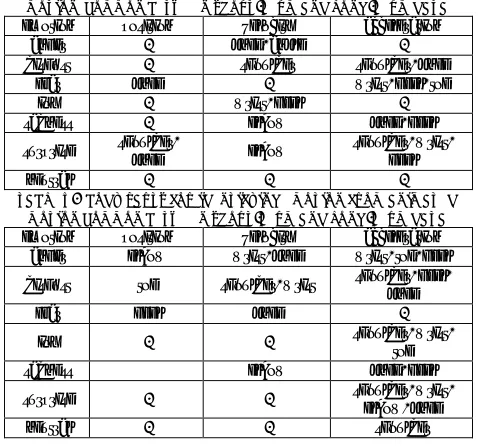
properties. In the case of human motion, the following properties were common to the short-term and long-term data. Anger is characterized by the velocity of legs. Disgust is characterized by shoulder’s motion. Fear is characterized by distal portions’ acceleration. Joy is characterized by the velocity of hands and foot. Sadness is characterized by the acceleration of legs and foot. Surprise is characterized by whole-body motion.
In the case of animated motion, Table V shows the following properties.
Anger is characterized by the velocity of knees and ankles. Disgust is characterized by shoulder’s motion. Fear is characterized by heel position and knee velocity. Joy is characterized by the acceleration of hands and foot. Sadness is characterized by the acceleration of legs and foot. Surprise is characterized by the acceleration of whole-body portions.
We then compared the motion features extracted from human motion and animated motion for each emotion. Table VI shows the common features obtained from the short-term data. This table reveals the following properties. The velocity and acceleration of the wrists characterizes anger and joy, that of the shoulders characterizes disgust and joy, that of the knees characterizes sadness, that of the elbows characterizes surprise. The position, velocity and acceleration of the wrists characterize disgust.
Table VII shows the common features between human and animated motion from the long-term data. We found the following properties. The position, velocity and acceleration of the elbows characterize anger. The velocity and acceleration of the shoulders characterize disgust. The position and acceleration of the shoulders characterize surprise.
By comparing these results with the results shown in Table III, the following properties are extracted specific to each emotion.
Anger is characterized by the motion of arm and hand which is analyzed from elbows and wrists. Disgust is characterized by that of hand and leg which is analyzed from wrists and knees. Fear is characterized by that of leg which is analyzed from knees. Joy is characterized by that of arm which is analyzed from elbows and shoulders. Though sadness is characterized by that of hand and upper body, it is analyzed from elbows and knees. Surprise is characterized by global motion of the body which is analyzed from that of most parts of the body.
Table VIII shows the features extracted from the standing motion data. We found the following properties. Most movements were shown around shoulder part and legs’ movements were rarely extracted. This suggests that emotional expressions are concentrated on upper body parts and more restricted in case of standing than in walking. Abrupt movements are characteristic to anger and surprise and the acceleration of shoulder, wrists or knees are extracted well. Disgust is characterized by the motion of wrists in lateral direction and shoulders’ vertical motion, which suggests the motion of holding
elbows high position and shaking forearms or bending an upper body.
TABLE IV. BODY PARTS FOR IDENTIFYING EMOTION FROM HUMAN MOTION COMMON BETWEEN SHORT-TERM AND LONG-TERM DATA
emotion position velocity acceleration anger - knee, ankle - disgust - shoulder shoulder, knee
fear knee - wrist, heel, toe joy - wrist, heel - sadness - elbow knee, heel surprise shoulder, knee elbow shoulder, wrist, heel
neutral - - -
TABLE V. BODY PARTS FOR IDENTIFYING EMOTION FROM ANIMATED MOTION COMMON BETWEEN SHORT-TERM AND LONG-TERM DATA
emotion position velocity acceleration anger elbow wrist, knee wrist, toe, heel disgust toe shoulder, wrist shoulder, heel, knee
fear heel knee - joy - - shoulder, wrist, toe sadness elbow knee, heel surprise - - shoulder, wrist, elbow, knee
neutral - - shoulder
TABLE VI. BODY PARTS FOR IDENTIFYING EMOTION FROM SHORT-TERM DATA COMMON BETWEEN HUMAN AND ANIMATED MOTION
emotion position velocity acceleration anger - wrist wrist, heel, toe disgust elbow, wrist shoulder, wrist shoulder, wrist, knee
fear - knee wrist joy - shoulder, wrist shoulder, elbow, wrist, knee sadness - elbow, knee knee, heel surprise wrist elbow shoulder, elbow, wrist
neutral - - shoulder
TABLE VII. BODY PARTS FOR IDENTIFYING EMOTION FROM LONG-TERM DATA COMMON BETWEEN HUMAN AND ANIMATED MOTION
emotion position velocity acceleration anger elbow elbow, knee, ankle elbow disgust - elbow, knee shoulder, shoulder
fear knee - shoulder ,elbow joy - - - sadness - elbow, wrist knee surprise shoulder - shoulder, knee, wrist
neutral - shoulder
TABLE VIII. BODY PARTS FOR IDENTIFYING EMOTION FROM SHORT
-TERM DATA OF HUMAN STANDING MOTION
emotion position velocity acceleration anger wristshoulder, elbow , shoulder, toe shoulder, elbow disgust shoulderelbow , wrist wrist
Fear is characterized by shoulder motion and leg’s velocity, which suggests the motion of twisting and bending an upper body and wiggling legs with a sideward stepping. Surprise is characterized by global motion of the body which is analyzed from that of most parts of the body. These features are associated with a springing back. B Feature extraction specific to person
Finally, we applied our method to each person data and analyzed person specific motion features. The analysis results of person-T (female) data are shown in tables IX to XI and those common between all subjects data are shown in XII to XIV.
These tables show the body parts which each motion could be characterized with and bold face shows the dominant parts which have strong affection.
Anger is characterized with shoulder swing and vertical motion of foot and knee in moving direction. These are associated with kicking and punching actions.
Disgust is characterized with shoulder and knee motions, which are associated with squirming and fast stepping actions.
Fear is characterized with shoulder and knee motion, which are associated with actions like stepping back and backing lower.
Joy is characterized with shoulder, arm and knee motion in moving and vertical direction. These are associated with swinging limbs largely and periodically. Sadness is characterized with positions of shoulders, elbows and knees. These are associated with a little swinging-limbs motion which is contrasting to the gait motion with the other emotions.
TABLE IX. BODY PARTS FOR IDENTIFYING EMOTION : PERSON-T DATA LATERAL DIRECTION
emotion position velocity acceleration anger - heel heelshoulder, ,wrist disgust - - knee
fear - shoulder, elbow wrist joy - shoulderwrist, knee ,elbow - sadness heel - elbow
surprise - heel elbow
TABLE X. BODY PARTS FOR IDENTIFYING EMOTION : PERSON-T DATA ANTEROPOSTERIOR DIRECTION
emotion position velocity acceleration anger - knee knee disgust - knee, toe shoulder, wrist, toe
fear knee toe -
joy - toe knee, heel, toe sadness knee elbow heel surprise knee, heel heel -
TABLE XI. BODY PARTS FOR IDENTIFYING EMOTION : PERSON-T DATA VERTICAL DIRECTION
emotion position velocity acceleration anger - knee, heel, toe - disgust - - toe
fear - - - joy - - elbow, knee, heel sadness - wrist, heel, toe elbow
surprise - elbow, knee elbow
Surprise is characterized with whole body parts’ motion which are associated with the action like springing back.
From the comparison between tables IX to XI and XII to XIV, personal motion features specific to person-T are extracted such as the more elbow’s motion in lateral and vertical direction.
Totally, acceleration is related with quick movements or powerful actions, and velocity is related with any continuous or sustained movements such as periodical swinging-limbs action.
From these analyses, our method can extract motion features from human motion specific to each emotion.
VIII. CONCLUSION
We have proposed a motion analysis method for identifying emotions from human motion. A human motion data is a large amount of data because it needs to be described both spatially and temporally. Our method is based on applying HOSVD(higher order singular value decomposition) to a tensor space which spanned by subjects, features and emotions of human motion data. Each human motion data consists of space-temporal features – such as position, velocity or acceleration of several body parts like joints. To analyze human emotional motion with our method, human motion is measured with a motion capture system and a 3d-animated motion data is also collected. We applied our method to the “gait” and “standing” motion data thus obtained, and analyzed the emotional features.
Experimentally, we found that our method can extract emotion-specific features which can be used to separate one emotion from other emotions.
TABLE XII. BODY PARTS FOR IDENTIFYING EMOTION : ALL SUBJECTS DATA : LATERAL DIRECTION
emotion position velocity acceleration anger - - shoulder disgust - shoulder, toe shoulder
fear elbow, wrist shoulder, - - joy elbow, shoulder, toe shoulder, wrist - sadness knee - elbow surprise elbow elbow, wrist -
TABLE XIII. BODY PARTS FOR IDENTIFYING EMOTION : ALL SUBJECTS DATA : ANTEROPOSTERIOR DIRECTION
emotion position velocity acceleration anger - - shoulder disgust - elbow, toe shoulder, knee
fear heel heel, toe elbow
joy knee shoulder, knee shoulder, wrist sadness - wrist toe
surprise - elbow -
TABLE XIV. BODY PARTS FOR IDENTIFYING EMOTION : ALL SUBJECTS DATA : VERTICAL DIRECTION
emotion position velocity acceleration anger - shoulder knee
disgust - knee shoulder, toe
We also found that anger and joy remain the acceleration of wrists and foot in moving and vertical direction which are intrinsic to a gait motion. Anger is characterized with the velocity of wrists in lateral and vertical direction, which are associated with a punching action. Joy is characterized with the acceleration of shoulders in moving and vertical direction, which is associated with a skipping action. Disgust is characterized with the velocity and acceleration of shoulders in all direction and those of wrists in moving and vertical direction, which are associated with twisting and shaking actions. Fear is characterized with the velocity of knees and the acceleration of wrists and foot, which are associated with an wiggling action. Sadness is characterized with little movements. Surprise is characterized with the acceleration of most body parts, which are associated with a springing-back action.
Our method can describe a large amount of data set with several compact feature vectors, only by applying to a tensor data space which is spanned with a specific feature and the other properties.
Our future work will be to measure a greater variety and larger amounts of human motion data, and to analyze and extract motion features specific to each emotion more precisely toward the description of individual emotion. References
[1] A.A.Efros, A.C.Berg, G.Mori and J.Malik, “Recognizing action at a distance,” Proceedings of ICCV, Vol.2, pp.726-733, Oct 2003.
[2] N.Robertson and I.Reid, “Behaviour Understanding in Video : A Combined Method,” Proceedings of ICCV, Vol.1, pp.808-815, Oct 2005.
[3] O.C.Jenkins and M.Mataric, “Deriving action and behavior primitives from human motion capture data,” Proceedings of IROS, Vol.3, pp.2551-2556, Oct 2002.
[4] J.W.Davis and H.Gao, “An expressive three-mode principal components model for gender recognition,”
Journal of Vision, Vol.4, No.5, pp.362-377, 2004.
[5] S.Calinon and A.Billard, “Stochastic gesture production and recognition model for a humanoid robot,” Proceedings of ICIRS, Vol.3, pp.2769-2774, Sept 2004.
[6] M.Yoshimura, K.Hachimura and Y.Marumo, “Comparison of Structural Variables with Spatio-temporal Variables Concerning the Identifiability of Okuri Class and Player in Japanese Traditional Dancing,” Proceedings of ICPR,Vol.3, pp. 308-311, Aug 2006.
[7] A.Nakazawa, S.Nakaoka, K.Ikeuchi and K.Yokoi,
“Imitating human dance motions through motion structure analysis,” Proceedings of ICIRS, Vol.3, pp.2539-2544, 2002.
[8] C.Chang and C.-L.Huang, “The model-based human body motion analysis system,” Image and Video Computing, Vol.18, issue14, pp.1067-1083, Nov 2000.
[9] C.Rigotti, P.Cerveri, G.Andreoni, A.Pedotti and G.Ferrigno, “Modeling and Driving a Reduced Human Mannequin through Motion Captured Data:A Neural Network Approach,” IEEE Trans. on Systems, Man, and Cybernetics – part A, Vol.31, No.3, pp.187-193, May 2001. [10]L.D.Lathauwer, B.de Moor and J.Vandewalle, “A
multilinear singular value decomposition,” SIAM Journal on Matrix Analysis and Applications, 21(4), pp.1253-1278, 2000.
[11]L.D.Lathauwer, B.de Moor and J.Vandewalle, “On the best rank-1 and rank-(r1,r2,…,rn) approximation of higher-order tensors,” SIAM Journal on Matrix Analysis and Applications, 21(4), pp.1324-1342, 2000.
[12]M.A.O.Vasilescu, “Human Motion Signatures: Analysis, Synthesis, Recognition,” Proceedings of ICPR, Vol.3, pp.456-460, Aug 2002.
Yuichi Kobayashi received his B.S. in physics and M.S. in environmental science from Tsukuba University, Japan, in 1985 and 1987. He also received Ph.D degree in Global Information Telecommunication Study from Waseda University, Japan, in 2007. He is currently a senior researcher at Toppan Printing Co.,ltd, Japan. His research interests are appearance based