ISSN 2250-3153
MODELING AND ANALYSIS OF A TRUCK
MULTI-LEAF TANDEM MULTI-LEAF SPRING USING FEA
Sk. Rizvana
*, Dr. M. Sri Rama Murthy
*, D. SatyaNarayana
*, A. S. Ganapathi
**
Department of Mechanical Engg. Sir C R Reddy College Of Engineering., Eluru, Andhra Pradesh, India.
Abstract- In four wheelers, heavy weight trucks, railways automobiles the leaf spring is one of the main components and it provides a good suspension and it plays a vital role in automobile application. It carries lateral loads, brake torque, driving torque in addition to shock absorbing. The leaf spring assembly serves to absorb and store energy, and then to release. Leaf springs are made out of flat plates usually of semi-elliptical shape.
The truck multi-leaf tandem leaf spring is modelled in Creo Parametric 2.0 and analysis is carried out by using ANSYS15.0. A comparative study has been made between composite and steel leaf spring with respect to weight, cost and strength. The steel tandem leaf spring is compared with composite tandem leaf spring, composite master leaf tandem leaf spring, and steel master leaf tandem leaf spring. The later is compared with the composite mono leaf spring. The modal and harmonic analysis for the five different variations is performed and compared.
Index Terms- Creo parametric 2.0, design optimization, lateral loads, leaf spring, weight reduction.
I.
I
NTRODUCTIONA leaf spring is a simple form of spring commonly used for the suspension in wheeled vehicles. Originally called a laminated or carriage spring, and sometimes referred to as a semi-elliptical spring or cart spring, it is one of the oldest forms of springing, dating back to medieval times.
A leaf spring takes the form of a slender arc-shaped length of spring steel of rectangular cross-section. The centre of the arc provides location for the axle, while tie holes are provided at either end for attaching to the vehicle body. For very heavy vehicles, a leaf spring can be made from several leaves stacked on top of each other in several layers, often with progressively shorter leaves. Leaf springs can serve locating and to some extent damping as well as springing functions. While the interleaf friction provides a damping action, it is not well controlled and results in stiction in the motion of the suspension. For this reason some manufacturers have used mono-leaf springs.
A leaf spring can either be attached directly to the frame at both ends or attached directly at one end, usually the front, with the other end attached through a shackle, a short swinging arm. The shackle takes up the tendency of the leaf spring to elongate when compressed and thus makes for softer springiness. Some springs terminated in a concave end, called a spoon end (seldom used now), to carry a swivelling member.
There were a variety of leaf springs, usually employing the word "elliptical". "Elliptical" or "full elliptical" leaf springs referred to two circular arcs linked at their tips. This was joined to the frame at the top centre of the upper arc, the bottom centre was joined to the "live" suspension components, such as a solid front axle. Additional suspension components, such as trailing arms, would usually be needed for this design, but not for "semi-elliptical" leaf springs as used in the Hotchkiss drive.
II. PROBLEM IDENTIFICATION
Due to its large volume production, it is only logical that optimization of the tandem leaf spring for its weight or volume will result in large-scale savings. It can also achieve the objective of reducing the weight of the vehicle component, thus reducing inertia loads, reducing vehicle weight and improving vehicle performance and fuel economy. So considering automobile development and importance of relative aspect such as fuel consumption, weight, riding quality, and handling, hence development of new material is necessary in the automobile industry.
ISSN 2250-3153
and therefore, save environment. Weight can be reduced through several types of technological improvements, such as advances in materials, design and analysis methods, fabrication processes and optimization techniques, etc.
III.
MODELING OF TANDEM LEAF SPRING ASSEMBLYThe modeling of the tandem leaf spring assembly is done in Creo Parametric 2.0.
Introduction to Creo Parametric:
Creo Parametric is a computer graphics system for modeling various mechanical designs and for performing related design and manufacturing operations. The system uses a 3D solid modeling system as the core, and applies the feature-based, parametric modeling method. In short, Creo Parametric is a feature-based, parametric solid modeling system with many extended design and manufacturing applications.
Creo Parametric is the first commercial CAD system entirely based upon the feature-based design and parametric modeling philosophy. Today many software producers have recognized the advantage of this approach and started to shift their product onto this platform.
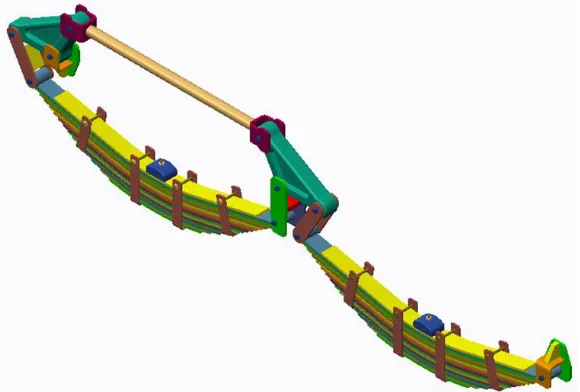
[image:2.612.163.453.293.489.2]The model is as shown in the figure 1 as shown below:
Fig 1. Tandem Leaf spring assembly model
Creo Parametric was designed to begin where the design engineer begins with features and design criteria. Creo Parametric's cascading menus flow in an intuitive manner, providing logical choices and pre-selecting most common options, in addition to short menu descriptions and full on-line help. This makes it simple to learn and utilize even for the most casual user. Expert users employ Creo Parametric's "map keys" to combine frequently used commands along with customized menus to exponentially increase their speed in use. Because Creo Parametric provides the ability to sketch directly on the solid model, feature placement is simple and accurate.
IV. ANALYSIS OF TANDEM LEAF SPRING ASSEMBLY
ISSN 2250-3153
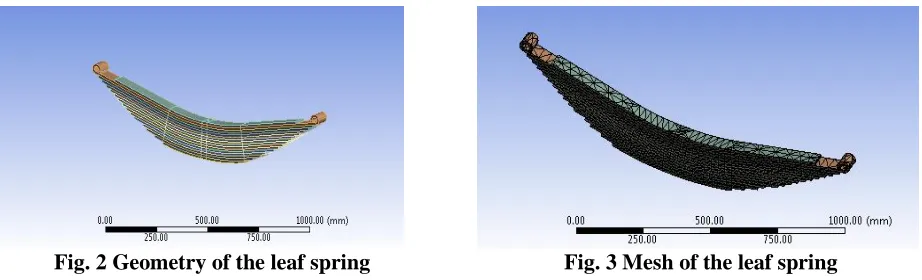
[image:3.612.81.542.63.203.2]Fig. 2 Geometry of the leaf spring
Fig. 3 Mesh of the leaf spring
[image:3.612.107.544.246.409.2]The analysis is carried out for the Structural steel material and the composite material for the leaf spring assembly. The Boundary Conditions are given as the force of 62275N and is shown in the Fig . The base material is Structural steel.
Fig. 4 Boundary conditions of the leaf spring
The deformation and Equivalent Stress reports for the steel leaf spring are are as shown in the Fig. 5 and Fig. 6 respectively.
[image:3.612.77.307.459.604.2]Fig. 5 Deformation of the steel leaf spring
Fig.6 Equivalent Stress of the steel leaf spring [image:3.612.323.531.460.590.2]
ISSN 2250-3153
[image:4.612.82.565.54.196.2]Fig. 7 Deformation of the composite leaf spring Fig.8 Equivalent Stress composite leaf spring
Also the analysis is carried out for the leaf spring assembly which consists of different shape optimisations. The deformation of and the Equivalent Stress reports for the master composite leaf spring are shown in the Fig. 9 and Fig. 10 respectively.
[image:4.612.77.296.270.422.2]Fig. 9 Deformation of the master composite leaf spring Fig.10 Equivalent Stress of the master composite leaf spring
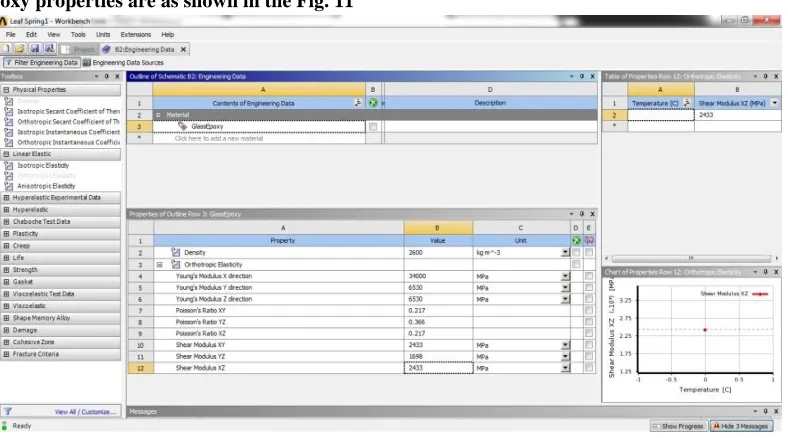
The Glass Epoxy properties are as shown in the Fig. 11
[image:4.612.322.543.272.420.2] [image:4.612.129.523.468.687.2]ISSN 2250-3153
V. RESULTSANDDISCUSSION
The analysis of leaf spring assembly is done. The modal and harmonic analysis is carried out in Ansys 15.0. The results for the leaf spring assembly for various considerations are as shown below:
S. No. Materials Weight
(N)
Total Deformation(mm)
Equivalent Stress (N/mm2)
1 Structural Steel Multi leaf spring 840.59 0.190 123.64
2 Composite multi leaf spring ( S Glass Epoxy )
278.13 2.893 126.25
3 Composite master leaf spring (S Glass Epoxy) & remaining steel
785.76 0.749 159.95
4 Steel master leaf spring & remaining composite ( S Glass Epoxy)
332.45 1.347 138.73
5 Composite mono leaf spring ( S Glass Epoxy ) (105mm Thickness)
269.20 4.815 111.68
VI. CONCLUSION
The modelling of the Tandem Leaf spring is done in Creo Parametric 2.0 modelling software and the analysis is performed using Ansys 15.0. The analysis results obtained for master composite leaf spring are comparably better than Steel leaf spring. Taking weight into consideration, Composite leaf spring assembly results are better than that of Steel Leaf spring assembly. But as there might be friction between two surfaces which may cause to wear and tear situation, it may not be practically possible to use a complete composite leaf spring assembly. Taking stress and deformation into consideration, master composite leaf spring can be used as the stress results and deformation results are better compared to the steel leaf spring assembly. Further, mono composite leaf spring is modelled and analysis is performed. Mono composite leaf spring is giving better results compared to the master composite leaf spring with respect to strength, weight and deformation. Modal analysis and Harmonic analysis is done on all the cases to check the frequencies for various modes and mode shapes. Composite mono leaf spring is observed to be better than the steel leaf spring assembly.
REFERENCES
[1] Prof. N. P. Dhoshi, Prof. N. K. Ingole, Prof .U. D. Gulhane, “Analysis and Modification of Leaf Spring of Tractor Trailer Using Analytical and Finite Element Method”, International Journal of Modern Engineering Research (IJMER), Vol.1, Issue.2, pp-719-722, ISSN: 2249-6645.
[2] B. Vijaya Lakshmi, I. Satyanarayana, “Static and Dynamic Analysis on Composite Leaf Spring in Heavy Vehicle”, International Journal of Advanced Engineering Research and Studies, E-ISSN2249–8974, IJAERS/Vol. II/ Issue I/Oct.-Dec.,2012/8084.
[3] T. N. V. Ashok Kumar, E. Venkateswara Rao, S. V. Gopal Krishna, “Design and Material Optimization of Heavy Vehicle Leaf Spring”, IJRMET Vol. 4, Issue Spl – 1, Nov 2013- April 2014.
ISSN 2250-3153
[5] Avani B. Londhe, “FEA and Analytical Analysis of Natural Fibers Composite Leaf Spring”, International Journal of Mechanical Engineering and Research, ISSN No. 2249-019, Volume 3, Number 4 (2013), pp. 355-360.
[6] Parkhe Ravindra, Mhaske Raman, Belkar Sanjay, “Modeling and Analysis of Carbon Fiber Epoxy Based Leaf Spring under the Static Load Condition by Using FEA”,International Journal of Emerging Science and Engineering (IJESE) ISSN: 2319-6378, Volume-2, Issue-4, February 2014.
[7] Sebastian John, Martin Dannemann, Pawel Kostka, Jana Ehlig2, Niels Modler, “Development of an adaptive composite leaf spring” , Inter-noise 2014.
[8] R M Patil, S M Hatrote, A K Pharale, V S Patil, G V Chiniwalar and A S Reddy, “Fabrication and Testing of Composite Leaf Spring for Light Passenger Vehicle”, International Journal of Current Engineering and Technology, ISSN 2277 – 4106, Special Issue-3, April 2014.
[9] M.Venkatesan, D.Helmen Devaraj, “Design and Analysis of Composite Leaf Spring In Light Vehicle”, International Journal of Modern Engineering Research (IJMER), Vol.2, Issue.1, Jan-Feb 2012 pp-213-218.
[10] Pankaj Saini, Ashish Goel, Dushyant Kumar, “Design and Analysis of Composite Leaf Spring for Light Vehicles”, International Journal of Innovative Research in Science, Engineering and Technology, Vol. 2, Issue 5, May 2013.
[11] R D V Prasad, R.Sai Srinu , P.Venkata rao, “Design & Analysis of Mono Composite Leaf Spring”, International Journal of Scientific Research Engineering & Technology (IJSRET), Volume 2 Issue2 pp 103-107 May 2013.
[12] Amol Bhanage, “Design Simulation Comparison of Mono Leaf Spring Using SAE 1045– 450– QT and E- Glass Epoxy materials for Automotive Performance”, International Journal of Inventive Engineering and Sciences (IJIES) ISSN: 2319– 9598, Volume-2, Issue-1, December 2013.
AUTHORS
First Author – Sk. Rizvana, M. Tech, CAD/CAM, Department of Mechanical Engg,Sir C R Reddy College Of Engineering.
Second Author – Dr. M. Sri Rama Murthy, Professor, Department of Mechanical Engg. Sir C R Reddy College Of
Engineering.
Third Author – D. SatyaNarayana, Sr. Assistant Professor, Department of Mechanical Engg. Sir C R Reddy College Of
Engineering.
Fourth Author – A. S. Ganapathi, Associate professor, Department of Mechanical Engg. Sir C R Reddy College Of
Engineering.