University of South Carolina
Scholar Commons
Theses and Dissertations
2015
Geographic Accessibility to Health Services and
Neonatal Mortality Among Very Low Birthweight
Infants in South Carolina
Portavia Featherstone
University of South Carolina - Columbia
Follow this and additional works at:https://scholarcommons.sc.edu/etd
Part of theEpidemiology Commons
This Open Access Thesis is brought to you by Scholar Commons. It has been accepted for inclusion in Theses and Dissertations by an authorized administrator of Scholar Commons. For more information, please [email protected].
Recommended Citation
Geographic Accessibility to Health Services and Neonatal Mortality Among Very Low Birthweight Infants in South Carolina
by
Portavia Featherstone
Bachelor of Arts College of Charleston, 2010
Submitted in Partial Fulfillment of the Requirements
For the Degree of Master of Science in Public Health in
Epidemiology
The Norman J. Arnold School of Public Health
University of South Carolina
2015
Accepted by:
Jihong Liu, Director of Thesis
Jan Marie Eberth, Reader
Daniela Nitcheva, Reader
ii
© Copyright by Portavia Featherstone, 2015
iii DEDICATION
iv
ACKNOWLEDGEMENTS
I would like to thank my thesis chair, Dr. Jihong Liu, and committee members Dr. Jan
Marie Eberth, and Dr. Daniela Nitcheva for their guidance and endless support
v ABSTRACT
Introduction: Infant mortality is commonly denoted as a marker of population health
with more than half of all infant deaths occurring during the neonatal period (0-27 days)
of infancy. Mortality for infants born very low birthweight (<1500 grams) is markedly
higher than the babies born with normal birthweight (2500-4000 grams). The purpose of
this research project was to assess geographic access to perinatal health services and the
risk of neonatal death among infants born with very low birth weight.
Data and methods: The linked birth and death records of a retrospective cohort of very
low birthweight (<1500 grams) infants born in South Carolina between the years 2010
and 2012 were used (n=3191). We assessed the impact of travel time from maternal
residence to delivery hospital and travel time from maternal residence to the nearest
prenatal care provider (obstetricians/gynecologists, community health center, or rural
health clinic). Logistic regression modeling was performed with adjustments for maternal
characteristics (race, age, chronic/gestational hypertension, chronic/gestational diabetes
mellitus, smoking, prenatal care), newborn characteristics (gestational age, birthweight,
gender, NICU admission at birth), and the birth in a level III hospital.
Results: There were a total of 563 neonatal deaths in this population and the neonatal
vi
associations of travel time from maternal residence to delivery hospital and to a closest
prenatal care provider with neonatal death after adjusting for confounders. However, we
found that a one-week increase in gestational age (OR: 0.61 [95% CI: 0.57-0.65]) and
non-Hispanic Black mothers (versus non-Hispanic White mothers) (OR: 0.65 [95% CI:
0.45-0.94]), were associated with the lower odds of neonatal death, while non-NICU
admission at birth (OR: 5.99 [95% CI: 4.05-8.84]) was associated with an increased odds
of neonatal death.
Conclusion: Althoughwe did not find that travel time was associated with neonatal
mortality among very low birthweight infants, our study identified a few significant
correlates for neonatal deaths in this birthweight group. Future studies should investigate
the role of geographic access to care on mortality during other periods of infancy and
vii
TABLE OF CONTENTS
DEDICATION ... iii
ACKNOWLEDGEMENTS ... iv
ABSTRACT ...v
LIST OF TABLES ... ix
LIST OF FIGURES ...x
LIST OF ABBREVIATIONS ... xi
CHAPTER 1 INTRODUCTION ...1
BACKGROUND ...1
AIMS...7
CHAPTER 2 LITERATURE REVIEW ...9
LITERATURE REVIEW SEARCH CRITERIA ...9
LITERATURE REVIEW ...10
PURPOSE OF STUDY...14
CHAPTER 3 METHODS ...17
STUDY DESIGN AND DATA SOURCE ...17
STUDY POPULATION ...17
viii
STATISTICAL ANALYSES ...20
CHAPTER 4 RESULTS ...27
AIM 1 ...29
AIM 2 ...30
CHAPTER 5 DISCUSSION ...44
SUMMARY ...44
STRENGTHS ...46
LIMITATIONS ...48
CONCLUSION ...50
ix LIST OF TABLES
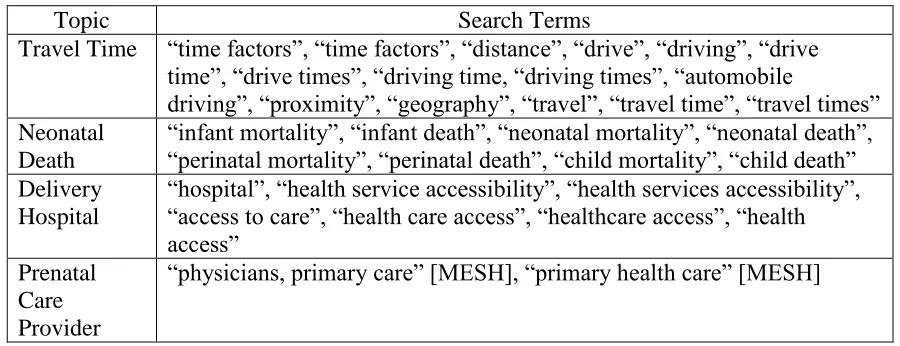
Table 2.1. Literature Review Search Criteria ...16
Table 3.1. Licensed Perinatal Hospitals in South Carolina ...23
Table 4.1. Neonatal mortality rates for very low birthweight infants in South Carolina, 2010-2012 ...33
Table 4.2. Neonatal mortality by neonatal period for very low birthweight infants in South Carolina, 2010-2012 ...33
Table 4.3 Neonatal mortality by cause of death for very low birthweight infants in South Carolina, 2010-2012 ...34
Table 4.4. Neonatal death by maternal, newborn, and hospital characteristics in SC mothers with VLBW infants, 2010-2012 ...35
Table 4.5. Travel time to delivery hospital by maternal, newborn, and hospital characteristics in South Carolinian mothers with VLBW infants, 2010-2012 ...37
Table 4.6. Association of travel time from maternal residence to delivery hospital and neonatal mortality among very low birthweight infants in South Carolina, 2010-2012 ..39
Table 4.7. Travel time to closest prenatal care provider by maternal and newborn characteristics in South Carolinian mothers with VLBW infants, 2010-2012 ...41
x LIST OF FIGURES
Figure 1.1 South Carolina Health Care Access – Perinatal Regions ...8
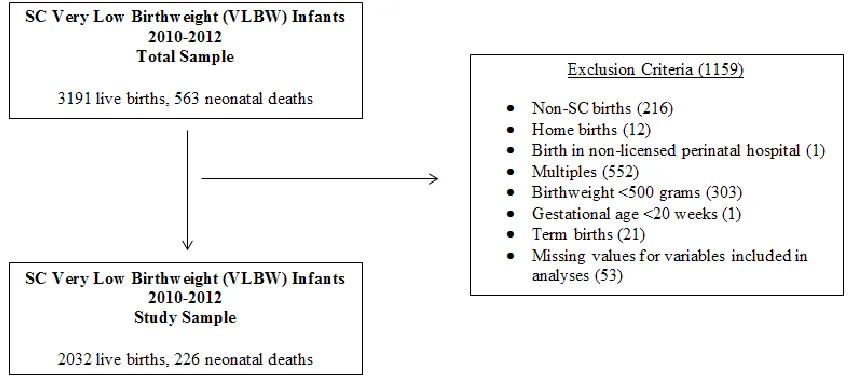
Figure 3.1 Exclusion Criteria ...24
Figure 3.2 South Carolina Health Care Access – Perinatal Hospitals ...25
xi
LIST OF ABBREVIATIONS
CHC ... Community Health Center
CI... Confidence Interval
ICD ... International Classification of Diseases
RHC ... Rural Health Clinic
RPC ... Regional Perinatal Center
1 CHAPTER 1
INTRODUCTION
Background
Infant Mortality
Infant mortality is commonly denoted as a marker of population health. It is
defined as death occurring within the first year of life. The infancy period is divided into
two main categories: neonatal and post-neonatal. The neonatal period is characterized as
life up to 27 days after birth, while the post-neonatal period focuses on infancy beyond 27
days up to one year. Studies usually differentiate between the two periods when assessing
birth outcomes and predictors of health. The social, environmental, and biological factors
of the mother during preconception through pregnancy and delivery has the strongest
influence on perinatal and neonatal health(Association of Maternal and Child Health
Programs [AMCHP], 2013) Morbidity and mortality in the post-neonatal period is
primarily attributed to environmental factors following birth such as an infant’s sleep
environment and access to ongoing health care(AMCHP, 2013).
A recent publication by the National Center for Health Statistics showed that in
2010, 6.14 infants per 1000 live births died within the first year in the United States,
2
National Center for Health Statistics [NCHS], 2014).The neonatal and post-neonatal
mortality rates were reported at 4.05 deaths per 1000 live births and 2.10 deaths per 1000
live births, respectively(Matthews & MacDorman, 2013). More than half of all infant
deaths occur during the neonatal period of infancy (Matthews & MacDorman, 2013; S.C.
Department of Health and Environmental Control [SC DHEC], 2014). For the state of
South Carolina (SC), mortality rates for infants are higher than the national average.
Infant deaths per 1000 live births were 7.4 in 2010 and 7.6 in 2012 (SC DHEC, 2014).
Neonatal and post-neonatal deaths for South Carolina exhibited a similar trend with most
deaths occurring within 28 days after birth.
Prematurity and Low Birthweight
Among the reasons for infant death, prematurity, marked by a gestational age of
less than 37 weeks, and low birthweight (≤ 2500 grams) remains two of the leading
causes (Matthews & MacDorman, 2013; SC DHEC, 2014). Prematurity and low
birthweight prevalence have declined in past years but remain higher than national goals
outlined in Healthy People 2020(U.S. Department of Health and Human Services [US
DHHS], 2014). In the United States, 12% of all infants were born prematurely in 2010
(Matthews & MacDorman, 2013). For the same year, the prevalence of infants born low
birthweight was 8.2% and 1.47% for very low birth weight (< 1500 grams) nationally
(Matthews & MacDorman, 2013). Mortality for infants born very low birthweight is
markedly higher than normal birthweight babies at 222.15 deaths per 1000 live births in
the United States and 194.7 deaths per 1000 births for the state of SC in 2010 (Matthews
3
Gestational age and birthweight are important indicators of child health and
recently have been found to be associated with the development of diabetes and
cardiovascular diseases in adulthood(Harder, Rodekamp, Schellong, Dudenhausen, &
Plagemann, 2007; Leeson, Kattenhorn, Morley, Lucas, & Deanfield, 2001). In infancy,
premature and very low birthweight infants commonly suffer from respiratory disorders,
heart problems, and brain hemorrhaging(March of Dimes Foundation, 2014). In 2007,
the costs associated with prematurity exceeded 26 billion US dollars(March of Dimes
Foundation, 2013). For these reasons it is important to study factors associated with
increased mortality among infants with very low birth weight.
Health Care Access
Health care access has an important role to play in the health of populations. The
Institute of Medicine (IOM) defines access as “the timely use of personal health services
to achieve the best possible health outcomes” (Millman, 1993). The IOM also outlines
three types of barriers that threaten the timely access of needed health services: structural,
financial, and personal(Millman, 1993). Of particular interest to this research study,
structural barriers focus on the availability, organization, and transportation components
in accessing health services.
A regionalized perinatal system was established by the March of Dimes
Committee on Perinatal Health in 1976(March of Dimes Foundation, 2010). The purpose
of this organized system is to increase access to risk-appropriate care for the most
vulnerable infants. The perinatal system in the state of South Carolina is divided into four
regions – Piedmont, Midlands, Pee Dee, and Low Country (Figure 1.1)(S.C. Department
4
within perinatal systems are based on the type of specialized care provided to infants and
mothers and are divided into three categories – level I (basic), level II (intermediate), and
level III (advanced)(Millman, 1993). For high-risk neonates, level III facilities are most
capable of providing the necessary services and are recommended for the delivery of all
very low birthweight infants(SC DHHS, 2014). There are a total of seven level III
perinatal facilities in South Carolina, five of which are regional perinatal centers(SC
DHEC, n.d.a). Each perinatal region in South Carolina has at minimum one regional
perinatal hospital (Figure 1.2)(SC DHEC, n.d.a). Numerous studies have shown that
premature and very low birthweight infants have better health outcomes in advanced care
hospitals with high patient volumes (Chung et al, 2011; Cifuentes et al., 2002; Menard,
Liu, Holgren, & Sappenfield, 1998; Phibbs et al., 2007; Warner, Musial, Chenier, &
Donovan, 2004). Despite these recommendations only 80% of very low birthweight
infants born in the state of South Carolina in 2012 were delivered in a level III facility
(SC DHEC, n.d.b).
Prenatal care involves a close monitoring of the mother and fetus’ health status
through the assessment of important risk factors in pregnancy such as weight gain,
pregnancy history, infection, family history of diseases, pregnancy-related complications,
as well as lifestyle factors(March of Dimes Foundation, 2010). Prenatal care allows for
early detection of pregnancy complications that if left untreated can lead to an increase in
risk for factors associated with infant death and other adverse birth outcomes such as
prematurity and low birthweight (March of Dimes Foundation, 2014; Millman, 1993).
Vintzileos, Ananth, Smulian, Scorza, & Knuppel (2002) reported that among infants born
5
receive prenatal care during pregnancy as compared to those mothers who did receive
prenatal care during pregnancy. Alexander and Kotelchuck (2001) present some of the
challenges in assessing the role of prenatal care and evaluating its benefit to maternal and
infant health outcomes and suggests for the improvement of current definitions on the
quality and measurement of this health service for women of varying socioeconomic,
cultural, and medical backgrounds. Despite these challenges, prenatal care is regarded as
a fundamental preventive tool in affecting maternal and infant health. The utilization of
this health service is included in national goals by the U.S. Department of Health and
Human Services to improve maternal, infant, and child health (US DHHS, 2014).
According to the National Center of Health Statistics, roughly 86% of U.S. mothers
received prenatal healthcare from an obstetrician between the years 2009 and 2010
(Uddin, Simon, & Myrick, 2014). Family physicians are also capable of providing the
necessary care. It is therefore important to recognize the availability of prenatal care
providers and geographic access to perinatal health services as a potential access barrier
for mothers and evaluate its impact on birth outcomes among high-risk infants.
Geographic Information System and Health Outcomes
Geographic information systems (GIS) are designed to “map, model, query, and
analyze large quantities of data within a single database according to their location” (U.S.
Environmental Protection Agency [US EPA], 2014).
When modeling health care access between two points, the most commonly used GIS
measures include Euclidean “straight line” distance, road travel distance, and road travel
time. Haynes, Jones, Sauerzapf, & Zhao (2006) compared GIS estimates for travel time
6
(Haynes et al., 2006). They found a strong correlation between GIS estimates of travel
time and actual drive time (r = 0.856) as well as straight line distance (r = 0.935),
indicating sufficiency of using either measure (Haynes et al., 2006). Phibbs and Luft
(1995) reported similar findings in an earlier study but stated that travel time is the
preferred measure for hospitals in urban settings or studies with relatively small sample
sizes(Phibbs & Luft, 1995). Other studies report Euclidean distances as crude
assessments of travel burden. Among rural populations, road travel time based on GIS
estimates was found to more closely reflect actual drive time as compared to straight-line
distance(Jordan, Roderick, Martin, & Barnett, 2004). When comparing travel distances
over larger geographic areas, straight line distance was shown to be a poor approximation
for actual journey times(Shahid, Bertazzon, Knudtson, & Ghali, 2009).
Many studies have used GIS to model access to care or health-seeking behaviors.
Distance measures are utilized in studies evaluating access to emergency services,
primary care, and health services related to disease screening (Carr, Branas, Metlay,
Sullivan, & Camargo, 2009; Cervigni, Suzuki, Ishii, & Hata, 2008; Fryer et al., 1999;
Huang, Dignan, Han, & Johnson, 2009; Khan et al., 2011; Pedigo & Odoi, 2010;
Yamashita & Kunkel, 2010). Some other studies have evaluated the impact of road
distance traveled to health facilities on either perinatal, neonatal, or infant mortality in
both developed (Lisonkova et al., 2011; Pasquier et al., 2007; Pilkington, Blondel,
Drewniak, & Zeitlin, 2014)and developing (Armstrong Schellenberg et al., 2008;
Kashima et al., 2012; Lohela, Campbell, & Gabrysch, 2012; Malqvist, Sohel, Do,
Eriksson, & Persson, 2010)
7
namely travel time to health care services, and studied its impact on mortality in infancy
(Combier et al., 2013; Dummer & Parker, 2004; Grzybowski, Stoll, & Kornelsen, 2011;
Moisi et al., 2010; Okwaraji, Cousens, Berhane, Mulholland, & Edmond, 2012; Ravelli et
al., 2011; Schoeps, Gabrysch, Niamba, Sie, & Becher, 2011). Of those studies that
utilized a distance- or time-based measure of access, there were vast differences in
sample size, exclusion/inclusion criteria, and geographic region of study. The outcome
and exposure variables were also defined differently between studies. Such differences
may have contributed to inconclusive results (see Chapter 2). The objective of this study
is to investigate the association between travel time to health services, namely prenatal
care providers and delivery hospitals, and neonatal mortality among very low birthweight
infants (<1500 grams), a high-risk infant group, born in South Carolina between the years
2010 and 2012.
Aims
Geographic accessibility to health services were measured in the following ways:
1. Travel time from maternal residence to the hospital of delivery
2. Travel time from maternal residence to the closest prenatal care provider (i.e.,
8
9 CHAPTER 2
LITERATURE REVIEW
Literature Review Search Criteria
The PubMed (Medline) database was utilized to search for previous research
studies on travel time to delivery hospital and to the prenatal care provider on neonatal
mortality. The search queries are listed in Table 2.1. Each search query included all key
terms for travel time, neonatal death, and delivery hospital or prenatal care provider. We
included all research studies published between the years 2000 and 2014. The
bibliographies of articles selected for further review were additionally scanned for
relevant studies.
Prior Studies on Infant Mortality and Travel Time to Delivery Facility
Many studies have evaluated the effect of distance traveled to access health
services on perinatal, neonatal, and infant mortality. Not many of those studies have
utilized a time-based measure of access, and none have examined its impact on neonatal
mortality among a high-risk infant group. Of the seven studies analyzed in this literature
review, three concluded a null association (Combier et al., 2013; Dummer & Parker,
2004; Okwaraji et al., 2012) between the travel time to nearest perinatal hospital or actual
delivery facility and infant death, while four studies found positive associations
(Grzybowski et al., 2011; Moisi et al., 2010; Ravelli et al., 2011; Schoeps et al., 2011)
10 Literature Review
Developed Countries
Dummer and Parker (2004) reported an overall null association between travel
time from home to the nearest general or pediatric hospital and risk of infant death in
England for all time periods: 1950-1959, 1960-1969, 1970-1979, 1980-1993. This was a
population-based cross-sectional study that utilized the Cumbrian Births Database (CBD)
which comprises live births, stillbirths, and infant deaths. A total of 4,489 infant deaths
occurred in this cohort of 287,993 births. The investigators mentioned that a limitation of
theirstudy was the lack of current data. The built environment, such as the development
of roadways and the location of services, is always changing. Therefore, it can be
difficult to make inferences based on studies that assess geographical barriers to health
during differing time periods.
A French population-based cross-sectional study by Combier et al. (2013)
reported an insignificant positive association between travel time to closest maternity
ward and perinatal mortality (stillbirths and neonatal deaths combined). Data came from
hospital discharge summaries of 111,001 deliveries from linked files of mothers and
children as well as socioeconomic factors and gestational age provided by the maternity
wards. Postal codes served as the geographic unit to define women’s residence which
impeded the ability to conduct detailed analyses by geographic region. Travel time
calculations were based on ambulance drive times which may confound the observed
associations. An additional limitation was the potential migration of mothers outside of
11
In a population-based Dutch cohort study by Ravelli et al. (2004), a vehicular
travel time of at least 20 minutes to the delivery hospital was positively associated with
overall infant mortality in both the crude (OR: 1.22; 1.07-1.39) and adjusted (adjusted
OR: 1.17; 1.002-1.36) models. Additionally, travel time of at least 20 minutes to the
delivery hospital was positively associated with infant deaths within 24 hours of birth
(adjusted OR: 1.51; 1.13-2.02) and 0-7 days after birth (adjusted OR: 1.37; 1.12-1.67) but
not beyond the first week during the neonatal period (adjusted OR: 1.24; 0.67-2.27). The
study was based on linked birth and death files from the perinatal registry of the
Netherlands (PRN). A few limitations presented by the authors included the lack of
information on cause of death, actual drive times, and place of departure for mothers at
the start of labor.
Grzybowski, Stoll, and Kornelsen (2011) developed a hierarchical logistic
regression model to evaluate associations between travel time to the nearest referral
maternity center and perinatal mortality (stillbirths and early neonatal deaths). A travel
time of at least 240 minutes from maternity services was found to be positively associated
with perinatal mortality (adjusted OR: 3.17; 1.45-6.95). The study population lived in
remote villages and communities in a mountainous area of Canada. The multilevel
analysis allowed investigators to control for individual maternal risk factors as well as
group level factors such as social vulnerability and the proportion of indigenous groups in
their sample. Travel method is not mentioned in the study. 43
Developing Countries
Moïsi et al. (2010) conducted a prospective cohort study that utilized data
12
Surveillance System (Epi-DSS) in a predominantly rural area (n=93,216 children) of
Kenya. The multivariate proportional-hazards model indicated a slightly insignificant
decrease in risk of infant mortality with increasing pedestrian (Hazards Ratio (HR) per 60
minutes: 0.98; 0.95-1.02) and vehicular (HR per 30 minutes: 0.98; 0.93-1.03) travel time
to the nearest hospital. A few limitations noted by the authors of this study were potential
migration of high-risk pregnancies, the assumption that mothers traveled to the nearest
hospital, and the inability to adjust for HIV status and socioeconomic factors.
In a prospective study by Schoeps, Gabrysch, Niamba, Sié, & Becher (2011)
travel time (pedestrian) to the closest health facility and risk of under-5 mortality was
assessed. The adjusted hazard mortality ratio for children under five years of age was
1.12 (1.07-1.17) for every additional hour spent in walking. This study was conducted in
the rural country of Burkina Faso where health facility density is low and there are no
forms of emergency or public transportation. Distance measures were based on pedestrian
mode of travel and were derived by trained researchers with knowledge of the study area.
Alternative weighted distance measures were calculated using ArcView software for
sensitivity analyses. Study results are potentially biased if derived estimates do not reflect
actual travel times.
A cross-sectional study conducted in Ethiopia by Okwaraji et al. (2011) consisted
of rural dwellers from a small city with a single health center. Data were collected by
trained staff that conducted in-house interviews with eligible women. Adjusted Poisson
regression models showed an increased rate of under-5 mortality for pedestrian travel
times of 2.5-3.5 hours (RR: 3.1; 1.3-7.4) and 3.5-6.5 hours (RR: 2.5; 1.1-6.2) to the single
13
the neonatal and post-neonatal period were not possible due to the small sample size of
the study population (n = 2,058 households). The investigators mentioned their exclusion
of children of women that died. The nature of this selection bias threatens the external
validity in populations experiencing high maternal mortality found in many developing
countries like Ethiopia(World Health Organization [WHO], 2014).
Limitations
It is important that the exposure and outcome is defined similarly among reviewed
studies. Of the studies included in the literature review, none of the studies assessed
neonatal mortality strictly but included neonatal deaths in much broader categories
classified as under-5 mortality (Okwaraji et al., 2012; Ravelli et al., 2011; Schoeps et al.,
2011)perinatal mortality (stillbirths and neonatal deaths) (Dummer & Parker, 2004;
Grzybowski et al., 201; Moisi et al., 2010), or total infant mortality(Combier et al., 2013;
Okwaraji et al., 2012). Significant associations between travel time to the delivery
hospital or closest health facility and perinatal and under-5 mortality were reported by
Grzybowski et al. (2011), Okwaraji et al. (2012), Ravelli et al. (2011), and Schoeps et al.
(2011). None of the studies that utilized a time-based measure of access evaluated the
outcome for a high-risk infant group such as those born very low birthweight.
Most studies included in this literature review consisted of sample sizes between
50,000 and 750,000 births. Mode of travel varied among studies making it challenging to
make fair comparisons. Infants born preterm or beyond medical delineations of viability
are at increased risk for experiencing adverse health outcomes (March of Dimes
Foundation, 2014; Arzuaga & Lee, 2011).The study by Ravelli et al. (2011) only
14
Combier et al. (2013) included births beyond 20 weeks and 22 weeks gestation,
respectively. In an attempt to reduce further bias, pregnancies that were complicated or
resulted in birth defects,multiples, or stillbirths were excluded (Combier et al. (2013);
Dummer & Parker (2004); Grzybowski et al. (2011); Moisi et al., (2010).Most studies
included maternal age, parity, and ethnicity for maternal characteristics. Similar
constructs for socioeconomic status (SES) were household wealth, social class, and social
vulnerability. Maternal education served as a proxy measure for SES in a rural African
nation study(Okwaraji et al., 2012). Environmental factors, such as the degree of
urbanization, were also controlled for in studies by Ravelli et al. (2011) and Combier et
al. (2013). Hospital level and volume have been shown to impact birth outcomes and
were additionally adjusted for in the study by Ravelli et al. (2011).
Purpose of Study
According to the U.S. Census Bureau’s urban-rural classification, roughly 92% of
the total land area of South Carolina met rural standards in 2010 and one third of SC total
population reside in rural areas(U.S. Census Bureau, 2011). As compared to other states,
South Carolina has the fourth highest rates of both preterm and low birthweight births
(Martin, Hamilton, Osterman, Curtin, & Matthews, 2013). The statewide infant mortality
rate is consistently higher than the national average(Matthews and MacDorman, 2013;
NCHS, 2014). There are clear racial disparities in health outcomes, and with an
increasing minority population, the gaps in health achievement will continue to broaden
if changes are not made.
The purpose of this research project is to assess geographic access to health
15
Carolina. To my knowledge, this will be the first study to model neonatal mortality
through the evaluation of travel time from home to delivery hospital and the nearest
provider of maternity care for very low birth weight infants, a high-risk infant group. In
addition to demographic factors, linked birth and death records will allow for the
inclusion of other variables such as maternal demographics and risk factors in pregnancy,
newborn characteristics, and hospital-level factors. This thesis will seek to explain
geographic barriers to health services among very low birthweight infants in South
16 Table 2.1 Literature Review Search Terms
Topic Search Terms
Travel Time “time factors”, “time factors”, “distance”, “drive”, “driving”, “drive time”, “drive times”, “driving time, “driving times”, “automobile
driving”, “proximity”, “geography”, “travel”, “travel time”, “travel times” Neonatal
Death
“infant mortality”, “infant death”, “neonatal mortality”, “neonatal death”, “perinatal mortality”, “perinatal death”, “child mortality”, “child death” Delivery
Hospital
“hospital”, “health service accessibility”, “health services accessibility”, “access to care”, “health care access”, “healthcare access”, “health access”
Prenatal Care Provider
17 CHAPTER 3
METHODS
Study Design and Data Source
We utilized a retrospective cohort study design to analyze the associations
between (i) travel time from maternal residence to delivery hospital, and (ii) travel time
from maternal residence to the closest prenatal care provider (obstetrician/gynecologist,
community health center, or rural health clinic) and neonatal death among very low
birthweight infants in South Carolina. The data were obtained from the linked birth and
death certificate records provided by the South Carolina Department of Health and
Environmental Control (SC DHEC) for all live births who had very low birth weight
(<1500 grams) born in the state of South Carolina between the years 2010 and 2012.
Birth and death certificate records were linked with provider data for
obstetricians/gynecologists, community health center/rural health clinics, and the hospital
of delivery. All birth and death records were de-identified by SC DHEC and exported to
SAS prior to release to the research investigator.
Study Population
The study population included 3,191 births of very low birthweight infants in
South Carolina occurring between the years 2010 and 2012. Among them, an estimated
18
deaths occurred during the neonatal period (< 28 days). For both aims, we excluded
infants with a birthweight less than 500 grams (n=303), gestational age less than 20
weeks (n=1), term pregnancies (n=21), home births (n=12), births occurring out of state
(n=216), births occurring in a non-licensed perinatal hospital (n=1), and those with
missing values for variables included in analyses (n=53). Pregnancies resulting in
multiple births violated the assumption of independent observations and were therefore
excluded (n=552). The resulting sample size was 2032 live births and 226 neonatal deaths
(Figure 3.1). The analytic study sample comprised of all singleton births with pregnancy
duration between 20 and 36 weeks.
Measures
Outcome Variable
The outcome variable of interest is all-cause neonatal mortality defined as death
within 28 days of birth. The death record will provide cause of death based on
International Classification of Diseases, 10th Revision.
Exposure Variable
The exposure of interest for Aim 1 is travel time (minutes) from maternal
residence to delivery hospital and for aim 2 is travel time from maternal residence to
closest prenatal care provider (obstetrician/gynecologist, community health center, or
rural health clinic). Travel time calculations were derived using ArcGis 10.2 (ESRI,
Redlands, CA) Network Analyst Extension prepared by South Carolina Department of
Health and Environmental Control (SC DHEC) staff.
I. Maternal Residence
The physical address of the mother was based on place of residence provided on the birth
19
II. Perinatal (Delivery) Hospital
The physical address of the perinatal hospital where the delivery took place (n=47) was
provided by the South Carolina Hospital Association. Levels of perinatal designations are
based on the Division of Health Licensing Regulations at DHEC(Hospital and
Institutional General Infirmaries, 2010).There are five hospital-level designations for
perinatal hospitals in South Carolina – level I, level II, level II Enhanced, level III, and
level III Regional Perinatal Center (RPC) (Figure 3.2). Level II and level II Enhanced
perinatal hospitals were combined into one category for analyses (Table 3.1). Level III
and level III RPC perinatal hospitals were combined into one category for analysis
(Menard et al., 1998) (Table 3.1).
III. Prenatal Care Providers
The physical addresses of all licensed obstetricians/gynecologists (n=519) in 2011 were
provided by the South Carolina Revenue and Fiscal Affairs Office. Physicians with
missing address (n=11) or P.O. Box listing (n=5) were removed (3%). The final data set
included a total of 503 obstetricians/gynecologists. The physical addresses of community
health centers and rural health clinics were provided by the South Carolina Primary
Health Care Association (SCPHCA) and the South Carolina Office of Rural Health
(SCORH), respectively. There were a total of 110 community health centers and 118
rural health clinics in the state of South Carolina between the years 2010 and 2012.
Included in our sample were community health centers (n=19) and rural health clinics
(n=8) that provided prenatal care to mothers during pregnancy (Figure 3.3). Information
on each of the prenatal care providers was linked to birth and death records. Travel time
20
hospital, obstetrician/gynecologist, community health center, rural health clinic. A final
de-identified dataset was released to the research investigator for analyses.
Covariates
The characteristics of the study population were obtained from the birth and death
records for each infant. Maternal characteristics were retrieved from the birth record of
the newborn which included the maternal race (non-Hispanic White, non-Hispanic Black,
Hispanic and others), maternal age (<20 years, 20-24 years, 25-29 years, 30-34 years, and
35 years or more), chronic/gestational hypertension (yes or no), chronic/gestational
diabetes mellitus (yes or no), smoking (yes or no). Newborn characteristics retrieved
from the birth and death records of the infant included gestational age (very preterm:
20-33 weeks, preterm: 34-36 weeks), birthweight (500-999 grams, 1000-1499 grams),
gender (male or female), NICU admission at birth (yes or no), age at death, and cause of
death. Hospital characteristics retrieved from the birth record included hospital of
delivery.
Statistical Analysis
Neonatal mortality rates were presented by year of birth and neonatal period.
Maternal, newborn, and hospital characteristics were described by travel time categories
and neonatal death. Associations were tested using the chi-square test for categorical
variables and one-way ANOVA for continuous variables. Percentages were presented for
categorical variables. The mean and respective standard deviations were presented for
continuous variables. Travel time and maternal factors (maternal race, maternal age,
chronic/gestational hypertension, chronic/gestational diabetes mellitus, smoking),
21
hospital-level factors (birth in a level III delivery hospital) were individually tested for
interaction. The interaction model, for instance, included travel time and maternal age
and a travel time by maternal age interaction term. The significance was tested with the
Wald test. We tested for significant interactions at the 0.05 level. Simple logistic
regression models were performed for the crude analysis of the travel time variable with
neonatal death (Model I). Model II adjusted for all possible confounding factors.
Furthermore, Models III and IV adjusted for variables significant at a p-value of 0.1 and
0.05, respectively. A p-value of <0.05 was considered statistically significant. Odds ratios
(ORs) were presented with the 95% confidence intervals (CI) for the travel time variable
and all possible confounding factors. All statistical analyses were performed in SAS
Version 9.3 (SAS Institute, Cary. NC).
To determine appropriate categories for the travel time variable, we plotted
neonatal death against every 10th percentile of travel time. The mortality pattern was
evaluated for each percentile. Adjacent travel time categories were combined if the rate
of mortality was similar. According to the neonatal mortality pattern by travel time
percentile from maternal residence to delivery hospital, the travel time variable was
categorized into four classes: less than 10 minutes, 11-30 minutes, 31-50 minutes, and
greater than 50 minutes. When analyzing travel time from maternal residence to nearest
prenatal care provider, travel time calculations were derived for each provider type.
Given we are interested in the access to prenatal care provider in general, we decided to
combine obstetrician/gynecologist, community health center, and rural health clinic
information into a single provider variable coded as “prenatal care provider.” The
22
The travel time variable was categorized into three classes: 10 minutes or less, 11-20
minutes, and more than 20 minutes. The travel time variable was additionally assessed
23
Table 3.1 Licensed Perinatal Hospitals in South Carolina
Perinatal Designation (SC DHEC) Hospital Perinatal Designation for Analyses
Level I – Community
Chesterfield General Hospital, Clarendon Memorial Hospital, Colleton Medical Center, Greer Memorial Hospital, Hilton Head Hospital, Kershaw Health, Laurens County Hospital, Marlboro Park Hospital, McLeod Medical Center-Dillon, McLeod Loris Hospital, Newberry Memorial Hospital, Oconee Medical Center, Roper – Mt. Pleasant, Upstate Medical Center, Village Hospital, Wallace Thomson Hospital
Level I
Level II – Specialty
Aiken Regional Medical Center, Anmed Health Women’s & Children, Baptist Easley Hospital, Beaufort Memorial Hospital, Bon Secours – St. Francis Xavier, Carolina Pines Regional Medical Center, CHS Marion County, Conway, East Cooper Regional Medical Center, Georgetown Memorial Hospital, Grand Strand Regional Medical Center, Lexington Medical Center, Mary Black Memorial Hospital, Providence Hospital North East, Roper Hospital, Springs Memorial Hospital, St. Francis – Eastside Hospital, Summerville Medical Center, Toumey Hospital, Trident Regional Medical Center,
The Regional Medical Center-Orangeburg,
Waccamaw Community Hospital, Women’s Center of the Carolinas Hospital
Level II
Level II – Enhanced Specialty
Piedmont Medical Center
Level III – Subspeciality
Palmetto Health – Baptist, Self Regional Healthcare
Level III Level III RPC –
Regional Perinatal Center
25
26
27 CHAPTER 4
RESULTS
Neonatal Mortality in Total Population
There were a total of 3,191 live births and 563 deaths among very low birthweight
infants in South Carolina between the years 2010 and 2012 (Table 4.1). The overall
neonatal mortality rate was 17.64 deaths per 100 live births. The neonatal mortality rate
was higher for the years 2011 and 2012 (18.42 and 18.38 deaths per 100 live births,
respectively) than that for the year 2010 (16.21 deaths per 100 live births).
Mortality by Neonatal Period
The majority of the neonatal deaths occurred during the early neonatal period
(474 deaths) as defined by birth to 7 days (Table 4.2). A total of 412 very low
birthweight infants died within 24 hours after birth with a marked neonatal mortality rate
of 12.91 deaths per 100 live births. The early neonatal period exhibited a higher neonatal
mortality rate than for the late neonatal period (8-27 days) yielding a mortality rate of
14.85 deaths per 100 live births in early neonatal period as compared to 2.79 deaths per
100 live births in the late neonatal period.
Causes of Death
The causes of neonatal death in our sample are outlined in Table 4.3. The majority
28
(88.10%) with 9.24% and 2.66% attributed to congenital abnormalities and all other
causes, respectively. One-third of all neonates in our sample died due to disorders
related to length of gestation and fetal malnutrition (33.04%) while complications of
pregnancy and labor and delivery were responsible for one-fifth of all neonatal deaths
(21.49%).
Neonatal Mortality in Study Sample
The study sample included 2032 live births with 226 births resulting in neonatal
deaths (Table 4.4). The neonatal mortality rate of the study sample was 11.12 deaths per
100 live births. Regarding maternal characteristics, the mean age of mothers in the
sample was 26.37 (SD=6.28) and 25.67 (6.41) among mothers whose neonates died.
More than half of the mothers in the sample were non-Hispanic Black (58.81%), while
non-Hispanic White and Hispanic and others represented 34.15% and 7.04%,
respectively. For behavioral factors, 27.90% of mothers had chronic/gestational
hypertension, 7.38% had chronic/gestational diabetes mellitus, and 14.81% smoked
during pregnancy. With the exception of maternal race, maternal age, and smoking
status, the neonatal mortality rate differed by chronic/gestational hypertension status
(p-value<0.0001) and chronic/gestational diabetes mellitus status (p-value=0.0191). For
newborn characteristics, greater proportions of infants were 20-33 weeks gestation at
birth at (96.26%), weighed 1000-1499 grams (56.45%), were males (51.33%), and were
admitted to the NICU at birth (86.96%). The neonatal mortality rate was highest for
infants with a lower gestational age at birth value=0.0164), lower birthweight
(p-value<0.0001), male infants (p-value=0.0164), and for infants not admitted to the NICU
29
a level III hospital (81.84%). However, the neonatal mortality rate was highest for
infants not born in a level III hospital (p-value<0.0001).
Aim 1. Travel time from maternal residence to delivery hospital
In our sample, 20.32% of mothers traveled 10 minutes or less to the hospital of
delivery, 37.80% traveled 11-30 minutes, 18.21% traveled 31-50 minutes, and 23.67%
traveled more than 50 minutes (Table 4.5). Regarding maternal characteristics,
non-Hispanic Black mothers were more likely to travel 10 minutes or less (25.94%) to the
delivery hospital or more than 50 minutes (25.94%) to the delivery hospital
(p-value<0.0001) than non-Hispanic White mothers (10.95%, 20.32%, respectively) and
mothers of Hispanic and other racial/ethnic groups (18.88%, 20.98%, respectively).
Mothers with chronic/gestational hypertension were more likely to travel 31-50 minutes
(21.16%) or more than 50 minutes (26.46%) to the delivery hospital (p-value=0.0086)
than mothers without chronic/gestational hypertension (17.06, 22.59%, respectively).
Among characteristics of the newborn, mothers whose neonates were admitted to the
NICU at birth were slightly more likely to travel 11-30 minutes (38.20%), 31-50 minutes
(18.51%) or more than 50 minutes (23.94%) to the delivery hospital (p-value=0.0475)
than mothers whose neonates were not admitted to the NICU at birth. For hospital-level
factors, mothers who delivered in a level III hospital were more likely to travel more
than 50 minutes (25.86%) to the delivery hospital (p-value<0.0001) than mothers who
did not deliver in a level III hospital.. No other significant differences noted by travel
time to the delivery hospital.
30
Interactions with travel time were individually tested for all possible confounders
but none were statistically significant at the 0.05 level. Crude and adjusted odds ratios
predicting neonatal death among very low birthweight infants are presented in table 4.6.
Model I presents results of the crude analysis of travel time from maternal residence to
the delivery hospital and neonatal mortality. The adjusted models include all variables
(Model II), variables with a value=<0.1 (Model III), and variables with a
p-value=<0.05 (Model IV). In both the crude and adjusted analyses we found no
significant associations between travel time (categorical) from maternal residence to the
delivery hospital and neonatal death among very low birthweight infants in South
Carolina between the years 2010 and 2012. However, we found that a one-week increase
in gestational age (OR: 0.61 [95% CI: 0.57-0.65]) and non-Hispanic Black mothers
(versus non-Hispanic White mothers) (OR: 0.65 [95% CI: 0.45-0.94]), were associated
with lower odds of neonatal death, while non-NICU admission at birth (OR: 5.99 [95%
CI: 4.05-8.84]) was associated with an increased odds of neonatal death. When modeling
travel time as a continuous variable, the results of the crude and adjusted did not yield
significant results for travel time from maternal residence to the delivery hospital and
neonatal death among very low birthweight infants in South Carolina between the years
2010 and 2012 (not shown).
Aim 2. Travel time from maternal residence to nearest prenatal care provider
An obstetrician/gynecologist in a private office setting was the closest prenatal
care provider for 80% of mothers while community health centers that provided prenatal
care were closest for 15% of mothers and rural health clinics that provided prenatal care
31
10 minutes or less to the closest prenatal care provider, 24.70% traveled 11-20 minutes,
and 13.48% traveled more than 20 minutes (Table 4.7). Regarding maternal
characteristics, non-Hispanic Black mothers were more likely to travel 10 minutes or
less (67.20%) to the closest prenatal care provider (p-value<0.0001) than non-Hispanic
White mothers (49.71%) and less likely than mothers of Hispanic and other racial/ethnic
groups (75.52%). As compared to mothers who did not smoke during pregnancy,
mothers who smoked were more likely to travel 11-20 minutes (30.23%) and more than
20 minutes (14.95%) to reach the closest prenatal care provider (p-value=0.0210). No
other significant differences were noted by travel time to the closest prenatal care
provider.
Logistic Regression Analyses
Interactions with travel time were individually tested for all possible confounders
but none were statistically significant at the 0.05 level. Crude and adjusted odds ratios
predicting neonatal death among very low birthweight infants are presented in table 4.8.
Model I presents results of the crude analysis of travel time from maternal residence to
the closest prenatal care provider and neonatal mortality. The adjusted models include
all variables (Model II), variables with a p-value=<0.1 (Model III), and variables with a
p-value=<0.05 (Model IV). In both the crude and adjusted analyses we found no
significant associations between travel time (categorical) from maternal residence to the
nearest prenatal care provider and neonatal death among very low birthweight infants in
South Carolina between the years 2010 and 2012. As with Aim 1, we also found that a
one-week increase in gestational age (OR: 0.59 [95% CI: 0.55-0.63]) and non-Hispanic
32
were associated with the lower odds of neonatal death. When modeling travel time as a
continuous variable, the results of the crude and adjusted did not yield significant results
for travel time from maternal residence to the closest prenatal care provider and neonatal
death among very low birthweight infants in South Carolina between the years 2010 and
33
Table 4.1. Neonatal mortality rates for very low birthweight infants in South Carolina, 2010-2012
Number of Live Births
Number of Deaths
Neonatal Mortality Rate
(per 100 live births)
2010 1104 179 16.21
2011 1064 196 18.42
2012 1023 188 18.38
2010 - 2012 3191 563 17.64
Table 4.2. Neonatal mortality by neonatal period for very low birthweight infants in South Carolina, 2010-2012
Neonatal Period Number of Live
Births
Number of Deaths
Mortality Rate (per 100 live
births)
Early (birth-7 days) 3191 474 14.85
Within 24 hours of birth 3191 412 12.91
Late (8-27 days) 3191 89 2.79
34
Table 4.3. Neonatal mortality by cause of deatha for very low birthweight infants in South Carolina, 2010-2012 (n=563)
Cause of Death (ICD-10 Code)
Number of Deaths
Proportionate Mortality, %
Originating in Perinatal Period (P00-P96) 496 88.10%
Length of Gestation and Fetal Malnutrition (P05-P08)
186 33.04%
Complications of Pregnancy, Labor/Delivery (P00-P04)
121 21.49%
Perinatal Infections (P35-P39) 39 6.93%
Respiratory Distress (P22) 34 6.04%
Necrotizing Enterocolitis (P77) 23 4.09%
Hemorrhagic and Blood Disorders (P50-P61)
16 2.84%
Hypoxia and Birth Asphyxia (P20-P21) 13 2.31%
Other Causesb 64 11.37%
Congenital Abnormalities (Q00-Q99) 52 9.24%
All Other Causesc 15 2.66%
Total 563 100%
a
Based on International Classification of Diseases (ICD), 10th Edition
b
Death due to birth trauma (P10-P15), hydrops fetalis not due to hemolytic disease (P83.2), other respiratory conditions in perinatal period (P23-P28), other perinatal conditions (P290,P291,P293,P780,P960,P968)
c
35
Table 4.4. Neonatal death by maternal, newborn, and hospital characteristics in SC mothers with VLBW infants, 2010-2012
Study Population
All
Women, Neonatal
Deaths p-value
a
Neonatal mortality rate
per 100 live births
Total n = 2032 226 11.12
% (n) % (n)
Maternal Characteristics
Maternal Age, % (n) 0.4663
< 20 years 12.94
(263)
14.16 (32)
12.17
20-24 years 31.89
(648)
35.40 (80)
12.35
25-29 years 24.11
(490)
24.34 (55)
11.22
30-34 years 19.00
(386)
15.04 (34)
8.81
≥ 35 years 12.06
(245)
11.06 (25)
10.20
Maternal Age, mean (years) 26.37
(6.28)
25.67 (6.41)
0.0741
Maternal Race 0.1376
Non-Hispanic White 34.15
(694)
34.07 (77)
11.10
Non-Hispanic Black 58.81
(1195)
55.75 (126)
10.54
Hispanic & Others 7.04
(143)
10.18 (23)
16.08
Chronic/Gestational HTN, % (n) <0.0001
Yes 27.90
(567)
11.06 (25)
4.41
No 72.10
(1465)
88.94 (201)
13.72
Chronic/Gestational DM, % (n) 0.0191
Yes 7.38
(150) 3.54 (8)
5.33
No 92.62
(1882)
96.46 (218)
11.58
Smoking, % (n)
Yes 14.81
(301)
11.06 (25)
0.0922 8.31
No 85.19
(1731)
88.94 (201)
11.61
36
Gestational Age, % (n) 0.0164
Very Preterm (20-33 weeks) 96.26
(1956)
99.12 (224)
11.45
Preterm (34-36 weeks) 3.74
(76) 0.88 (2)
2.63
Gestational Age, mean (weeks) 28.14
(3.02)
24.92 (2.87)
<0.0001
Gender, % (n) 0.0164
Male 51.33
(1043)
58.85 (133)
12.75
Female 48.67
(989)
41.15 (93)
9.40
NICU Admission, % (n) <0.0001
Yes 86.96
(1767)
60.62 (137)
7.75
No 13.04
(265)
39.38 (89)
33.58
Birth in Level III Hospital, % (n) <0.0001
Yes 81.84
(1663)
69.47 (157)
9.44
No 18.16
(369)
30.53 (69)
18.70
a
37
Table 4.5. Travel time to delivery hospital by maternal, newborn, and hospital characteristics in SC mothers with VLBW infants, 2010-2012
Study Population Travel time to delivery hospital (minutes)
p-valuea
≤ 10 11-30 31-50 > 50
Total (n) 413 768 370 481
% (n) 20.32 37.80 18.21 23.67
Maternal Characteristics
Maternal Age, % (n) 0.0853
< 20 24.71
(65) 33.08 (87) 20.15 (53) 22.05 (58)
20-24 20.37
(132) 34.57 (224) 20.52 (133) 24.54 (159)
25-29 21.43
(105) 41.22 (202) 16.33 (80) 21.02 (103)
30-34 18.65
(72) 40.16 (155) 16.06 (62) 25.13 (97)
≥ 35 15.92
(39) 40.82 (100) 17.14 (42) 26.12 (64)
Maternal Age, mean (years) 25.64
(5.98) 26.73 (6.18) 25.98 (6.28) 26.72 (6.61) 0.0115
Maternal Race, % (n) <0.0001
Non-Hispanic White 10.95
(76) 46.54 (323) 22.19 (154) 20.32 (141)
Non-Hispanic Black 25.94
(310) 32.22 (385) 15.90 (190) 25.94 (310)
Hispanic & Others 18.88
(27) 41.96 (60) 18.18 (26) 20.98 (30) Chronic/Gestational HTN, % (n) 0.0086
Yes 17.11
(97) 35.27 (200) 21.16 (120) 26.46 (150)
No 21.57
(316) 38.77 (568) 17.06 (250) 22.59 (331) Chronic/Gestational DM, %
(n)
0.0887
Yes 13.33
(20) 36.67 (55) 21.33 (32) 28.67 (43)
No 20.88
(393) 37.89 (713) 17.96 (338) 23.27 (438)
Smoking, % (n) 0.1732
Yes 16.94
(51) 40.20 (121) 21.26 (64) 21.59 (65)
No 20.91
38 Newborn Characteristics
Gestational Age, % (n) 0.5572
Very Preterm (20-33 weeks) 20.30 (397) 37.83 (740) 18.40 (360) 23.47 (459)
Preterm (34-36 weeks) 21.05
(16) 36.84 (28) 13.16 (10) 28.95 (22) Gestational Age, mean
(weeks) 28.15 (3.01) 28.24 (3.02) 28.01 (2.94) 28.06 (3.09) 0.6151
Gender, % (n) 0.1476
Male 19.27
(201) 40.17 (419) 17.83 (186) 22.72 (237)
Female 21.44
(212) 35.29 (349) 18.60 (184) 24.67 (244)
NICU Admission, % (n) 0.0475
Yes 19.35
(342) 38.20 (675) 18.51 (327) 23.94 (423)
No 26.79
(71) 35.09 (93) 16.23 (43) 21.89 (58) Hospital Characteristics
Birth in Level III Hospital, % (n)
<0.0001
Yes 19.78
(329) 36.32 (604) 18.04 (300) 25.86 (430)
No 22.76
(84) 44.44 (164) 18.97 (70) 13.82 (51) a
39
Table 4.6. Association of travel time from maternal residence to delivery hospital and neonatal mortality among very low birthweight infants in South Carolina, 2010-2012 (N = 2032)
Neonatal Mortality
Model Ia Model IIb Model IIIc Model IVd
OR (95% CI) OR (95% CI) OR (95% CI) OR (95% CI) Travel Time to Delivery
Hospital
≤10 minutes Reference Reference Reference Reference
11-30 minutes 0.79
(0.54,1.14) 0.78 (0.50,1.23) 0.79 (0.50,1.23) 0.78 (0.50,1.23)
31-50 minutes 1.06
(0.70,1.61) 1.13 (0.68,1.89) 1.11 (0.67,1.83) 1.09 (0.66,1.81)
≥50 minutes 0.75
(0.50,1.14) 0.78 (0.48,1.29) 0.77 (0.47,1.27) 0.74 (0.45,1.21) Maternal Characteristics
Maternal Age, years 0.99
(0.97,1.02) Maternal Race
Non-Hispanic White Reference Reference Reference
Non-Hispanic Black 0.62
(0.42,0.90)
0.65 (0.45,0.94)
0.65 (0.45,0.94)
Hispanic & Others 1.17
(0.63,2.17) 1.25 (0.68,2.28) 1.24 (0.68,2.27) Chronic/Gestational Hypertension
No Reference
Yes 0.84
(0.51,1.37) Chronic/Gestational DM
No Reference
Yes 0.62
(0.26,1.50) Smoking
No Reference
Yes 0.77
(0.46,1.30) Newborn Characteristics
Gestational Age, weeks 0.62
(0.58,0.66) 0.61 (0.57,0.66) 0.61 (0.57,0.65) Gender
Male Reference
40
(0.62,1.20) NICU Admission
No 5.34
(3.56,8.00)
5.43 (3.63,8.14)
5.99 (4.05,8.84)
Yes Reference Reference
Birth in Level III Hospital
No 1.39
(0.93,2.09)
1.44 (0.96,2.14)
Yes Reference Reference
a
Crude model
b
Adjusted for all possible confounding factors
c
Adjusted for variables with p-value<0.1
d
41
Table 4.7. Travel time to closest prenatal care provider by maternal and newborn characteristics in SC mothers with VLBW infants, 2010-2012
Study Population Travel Time (minutes) p-valuea
≤ 10 11-20 >20
Total 1256 502 274
% (n) 61.81 24.70 13.48
Maternal Characteristics
Maternal Age, % (n) 0.1332
< 20 years 60.84 (160) 25.10 (66) 14.07 (37)
20-24 years 60.34 (391) 24.07 (156) 15.59 (101)
25-29 years 62.45 (306) 27.55 (135) 10.00 (49)
30-34 years 65.80 (254) 21.24 (82) 12.95 (50)
≥ 35 years 59.18 (145) 25.71 (63) 15.10 (37)
Maternal Age, mean (years) 26.43 (6.22) 26.32 (6.24) 26.21 (6.62) 0.8539
Maternal Race, % (n) <0.0001
Non-Hispanic White 49.71 (345) 36.89 (256) 13.40 (93)
Non-Hispanic Black 67.20 (803) 19.08 (228) 13.72 (164)
Hispanic & Others 75.52 (108) 12.59 (18) 11.89 (17)
Chronic/Gestational HTN, % (n) 0.5462
Yes 60.67 (344) 24.51 (139) 14.81 (84)
No 62.25 (912) 24.78 (363) 12.97 (190)
Chronic/Gestational DM, % (n) 0.8432
Yes 60.00 (90) 26.67 (40) 13.33 (20)
No 61.96
(1166) 24.55 (462) 13.50 (254)
Smoking 0.0210
Yes 54.82 (165) 30.23 (91) 14.95 (45)
No 63.03
(1091) 23.74 (411) 13.23 (229) Newborn Characteristics
Gestational Age, % (n) 0.4882
Very Preterm (20-33 weeks) 62.07
(1214) 24.54 (480) 13.39 (262)
Preterm (34-36 weeks) 55.26 (42) 28.95 (22) 15.79 (12)
Gestational Age, mean (weeks) 28.10 (3.00) 28.19 (3.04) 28.20 (3.11) 0.7979
Gender, % (n) 0.3262
Male 60.50 (631) 26.08 (272) 13.42 (140)
Female 63.20 (625) 23.26 (230) 13.55 (134)
a
42
Table 4.8. Association of travel time from maternal residence to closest prenatal care provider and neonatal mortality among very low birthweight infants in South Carolina, 2010-2012 (N = 2032)
Neonatal Mortality
Model Ia Model IIb Model IIIc Model IVd
OR (95% CI) OR (95% CI) OR (95% CI) OR (95% CI) Travel Time to Closest
Prenatal Care Provider
≤10 minutes Reference Reference Reference Reference
11-20 minutes 1.02
(0.73,1.14) 0.99 (0.68,1.44) 1.02 (0.70,1.48) 1.02 (0.70,1.48)
>20 minutes 1.07
(0.71,1.61) 1.10 (0.69,1.75) 1.11 (0.70,1.76) 1.10 (0.69,1.73) Maternal Characteristics
Maternal Age, years 0.99
(0.96,1.01) Maternal Race
Non-Hispanic White Reference Reference Reference
Non-Hispanic Black 0.66
(0.46,0.95)
0.71 (0.51,1.00)
0.71 (0.51,1.00)
Hispanic & Others 1.14
(0.63,2.07) 1.23 (0.69,2.19) 1.24 (0.70,2.22) Chronic/Gestational Hypertension
No Reference Reference
Yes 0.70
(0.43,1.12)
0.66 (0.42,1.05) Chronic/Gestational DM
No Reference
Yes 0.69
(0.30,1.54) Smoking
No Reference
Yes 0.75
(0.46,1.25) Newborn Characteristics
Gestational Age, weeks 0.60
(0.56,0.65) 0.60 (0.56,0.64) 0.59 (0.55,0.63) Gender
Male Reference
Female 0.82
(0.60,1.11)
a
43
b
Adjusted for all possible confounding factors
c
Adjusted for variables with p-value<0.1
d
44 CHAPTER 5
DISCUSSION
Summary
Our study was the first to assess the impact of travel time from maternal residence
to delivery hospital and to the closest prenatal care provider among a high-risk infant
group. We did not find a significant association between travel time from the maternal
residence to the delivery hospital or to the closest prenatal care provider and neonatal
mortality among very low birthweight infants in South Carolina between the years 2010
and 2012. Our study found other significant correlates of neonatal mortality in this high
risk population. For example, we found an increase in gestational age and admission to a
neonatal intensive care unit (NICU) at birth decreases the risk of neonatal death, which
was also noted in previous studies that assessed neonatal mortality (Cifuentes et al., 2002;
Bacak, Baptiste-Roberts, Amon, Ireland, and Leet (2005). It is important to note that for
infants born near the lower gestational age limits of viability, the physician’s decision to
admit to the NICU at birth may have depended on factors such as the likelihood of
survival and the appropriateness of intervention (Arzuaga & Lee, 2011). Therefore,
NICU admission at birth may be in favor of neonates born closer to term with promising
survivability. Furthermore, our study also study showed decreased odds of neonatal death
among non-Hispanic Black mothers as compared to non-Hispanic White mothers after
adjusting for maternal and newborn factors. The neonatal mortality rate was also lowest
45
reported similar findings in their study conducted among extremely low birth weight
infants only. In separate studies analyzing racial differences in infant death, non-Hispanic
Black mothers exhibited higher rates of neonatal mortality as compared to other racial
groups, however, these differences were not significant after adjusting for maternal and
newborn characteristics (Hessol & Fuentes-Afflick, 2005; Kitsantas & Gaffney, 2010).
Unlike prior studies, our sample did not include infants weighing less than 500 grams or
those born before 20 weeks gestation, which we found to have consisted of a higher
proportion of births and subsequent deaths to non-Hispanic Black mothers potentially
explaining the differences between our study and some previous studies. In terms of all
neonatal deaths and not solely among very low birthweight infants, non-Hispanic Black
mothers exhibit higher rates of neonatal mortality than mothers of other racial groups,
primarily due to a higher prevalence of prematurity and low birthweight among
African-American infants (Matthews & MacDorman, 2013; SC DHEC, 2014). Although the
leading causes of death are relatively the same for all racial groups, disorders related to
short gestation and low birthweight are the leading causes of neonatal death and death
under 1-year for infants born to non-Hispanic Black mothers whereas congenital
anomalies are reported as the primary cause of death among infants born to non-Hispanic
White mothers (Matthews & MacDorman, 2013; SC DHEC, 2014).
This study is consistent with Combier et al. (2013), Dummer and Parker (2004),
and Moisi et al. (2010) that travel time is not associated with neonatal mortality, while
studies by Gryzbowski et al. (2011), Okwaraji et al. (2012), Ravelli et al. (2011), and
Shoeps et al. (2011) found a significant association with under-5 mortality and perinatal
46
for several reasons. There can be vast difference in travel time by geographic region and
mode of transport. It is important to distinguish between industrialized and developing
nations as many developing nations do not have the infrastructure in place to provide
emergent ambulatory services to a hospital or healthcare facility. In such studies,
pedestrian travel was the most common form of transport (Combier et al., 2013; Moisi et
al., 2010; Okwaraji et al, 2012). The majority of studies consisted of a much larger
sample size(Combier et al., 2013; Dummer & Parker, 2004; Grzybowski et al., 2011;
Moisi et al., 2010; Okwaraji et al., 2012; Ravelli et al., 2011). Consistent with Combier et
al. (2013), and Grzybowski et al. (2011), we excluded births less than 20 weeks gestation.
As with Ravelli et al. (2011), Combier et al. (2013), and Grzybowski et al. (2011), we
also excluded pregnancies resulting in multiple births. The outcome variable was defined
differently between studies as well which included perinatal (Dummer & Parker, 2004;
Grzybowski et al., 2011; Moisi et al., 2010), infant (Combier et al., 2013; Okwaraji et al.,
2012), and under-5 mortality (Okwaraji et al., 2012; Ravelli et al., 2011; Schoeps et al.,
2011). Beyond maternal and newborn factors, several studies adjusted for social and
environmental factors (Combier et al., 2013; Dummer & Parker, 2004; Grzybowski et al.,
2011; Moisi et al., 2010; Okwaraji et al., 2012; Ravelli et al., 2011). Unique to our study
is the focus on access to care for a high-risk infant group.
Strengths
This research study utilized linked birth and death data files. Linked data is
advantageous in that multiple maternal and neonatal characteristics can be assessed
concurrently. Linked files presents a more comprehensive picture of the circumstances