University of South Carolina
Scholar Commons
Theses and Dissertations
12-14-2015
Beyond Ideals: Proslavery Reforms on a
Nineteenth-Century Cotton Plantation
Kevin R. Fogle
University of South Carolina - Columbia
Follow this and additional works at:https://scholarcommons.sc.edu/etd
Part of theAnthropology Commons
This Open Access Dissertation is brought to you by Scholar Commons. It has been accepted for inclusion in Theses and Dissertations by an authorized administrator of Scholar Commons. For more information, please [email protected].
Recommended Citation
B
EYONDI
DEALS:
P
ROSLAVERYR
EFORMS ON AN
INETEENTH-C
ENTURYC
OTTONP
LANTATIONby
Kevin R. Fogle
Bachelor of Science James Madison University, 2002
Master of Arts
University of South Carolina, 2008
Submitted in Partial Fulfillment of the Requirements
For the Degree of Doctor of Philosophy in
Anthropology
College of Arts and Sciences
University of South Carolina
2015
Accepted by:
Kenneth G. Kelly, Major Professor
Charles R. Cobb, Committee Member
Kimberly E. Simmons, Committee Member
S. Melinda Spencer, Committee Member
ACKNOWLEDGEMENTS
Every phase of the Witherspoon Island Project from site survey and excavation to
analysis and writing was made possible with the support of my committee, my
colleagues, numerous volunteers, my students, my friends, and my loving family.
The advice and constant availability of my chair, Ken Kelly, helped make this
dissertation a reality. Ken’s guidance and inspiration helped craft this project over the
course of many meetings, site visits, quick chats, and countless emails. I also owe a debt
of gratitude to my committee members Charlie Cobb, Kim Simmons, and Mindi Spencer
whose feedback and creative ideas helped strengthen and shape this project in many
unique ways. Thank you for the many hours of reading and reviewing required.
I want to thank Nina Rice for introducing me to Chip Helms and for inviting me
out on my first trip to the Pee Dee region back in the fall of 2008. Chip’s passion and
knowledge of the Darlington area convinced me that a project in this region was both
viable and necessary. With his help I was able to tour several potential sites before finally
connecting with the Howard family, the owners of Witherspoon Island. Huge thanks to
the entire Howard family, especially Charles Howard Sr. and Chase Howard for opening
their homes, providing material support and allowing me to conduct my research on
Witherspoon Island.
family stories with me and for taking the time to answer my many queries. I am also
extremely grateful to the descendants of J.D. Witherspoon who also have shared their
stories and family records that helped to enrich this project.
Funding for fieldwork and analysis was provided by several anonymous donors
and grants from the Archaeological Society of South Carolina, the Southern Studies
Program, and the Department of Anthropology. Their combined support for the
Witherspoon Island Project helped make this important project feasible.
I am indebted to many past and present students in the Department of
Anthropology who supported me by offering advice, pertinent sources, and most
importantly by assisting me in the field and in the lab. Special thanks go out James
Nyman, Diane Wallman, Dave Rigtrup, Kelly Goldberg, Brooke Kenline, Jeremy
Vanderknyff, Nick Younginer, Jeremy Vanier, Brooke Brilliant, and Colin Partridge who
spent many days helping with various facets of this project. Thank you to Diane Wallman
for your amazing work on the zooarchaeological assemblage. Thank you to James
Nyman for taking on an advanced leadership role in the field when I needed it most. I
also need to thank my Anth. 391 classes for their help processing artifacts, the students
and volunteers in my 2010 field school for their labor, and both Colin Partridge and
Rachel Jones for undertaking their senior theses on Witherspoon Island assemblages. All
of your help means more than I can possibly express here.
The Darlington County Historical Commission is an amazing institution and I
want to especially thank Doris, Gail and Kaye for your vast knowledge of both the Pee
out to Scott Wilds and Renee Brown-Bryant for your knowledge of Darlington County –
your legwork and research advice has been invaluable to me.
I also need to thank my supportive family. My parents instilled a sense of wonder
and possibility in me from an early age – the completion of this dissertation shows that
those vital lessons are still paying dividends. Finally, I need to thank my supportive wife
and son for their love and unwavering belief in me throughout this long and rewarding
ABSTRACT
The last four decades of the antebellum period witnessed the rise of a
proslavery plantation reform movement aimed at preserving slavery in the face of
increasing abolitionist pressure. Reformers promoted the image of ideal enslaved
households operating as part of efficient modern plantations ruled by reason, benevolent
management techniques, and scientific agriculture. Where implemented, reforms resulted
in numerous changes to plantation life both around the home and in the fields. Slaves
who bore the brunt of these changes struggled to resist plantation reforms or grudgingly
accepted them depending on the impact upon established daily routines and any potential
benefits bondsmen may have foreseen.
Utilizing a novel integrated landscape and household framework, this dissertation
examines two neighboring slave quarter sites that were excavated between 2009 and 2012
on Witherspoon Island, a large nineteenth-century cotton plantation located in Darlington
County, South Carolina. Looking at both the dwellings and surrounding yard space
associated with these contested landscapes, this study seeks to understand what reforms
may have been adopted by planter John Dick Witherspoon and their impact on the
plantation’s vibrant enslaved community. Specifically, this dissertation examines the
material and symbolic impact of labor reforms on enslaved inhabitants, their dwellings
and associated landscapes through the lens of dwelling architecture, household sanitation,
humane, I argue that the core of the reform movement was concerned with developing a
better means to physically control slaves across the plantation landscape both in the fields
PREFACE
This dissertation attempts to understand the lives of the enslaved individuals on
Witherspoon Island through the lens of nineteenth-century plantation reforms. To do so,
this study relies heavily on primary and secondary documentation which contains racist
language and derogatory terminology common to the antebellum period. All quotations
from these documents are unaltered to give readers a true sense of the meaning and
TABLE OF CONTENTS
ACKNOWLEDGEMENTS ... iii
ABSTRACT ... vi
PREFACE ... viii
LIST OF TABLES ...x
LIST OF FIGURES ... xi
CHAPTER 1:INTRODUCTION ...1
CHAPTER 2:PROSLAVERY REFORMS AND WITHERSPOON ISLAND ...33
CHAPTER 3:WITHERSPOON ISLAND HISTORY AND FIELDWORK ...52
CHAPTER 4:REFORMS TO HEALTH,HYGIENE, AND HOUSING ...91
CHAPTER 5:ECONOMIC CONTROLS ON WITHERSPOON ISLAND ...130
CHAPTER 6:FOODWAYS AND DIETARY REFORMS ON WITHERSPOON ISLAND ...178
CHAPTER 7:CHRISTIAN ENLIGHTENMENT AND MORAL REFORMS ...229
CHAPTER 8:DISCUSSION ...254
LIST OF TABLES
Table 6.1 Class Representation of Faunal Remains from Antebellum Contexts at Cabin Sites 1 & 2 by Number of Identified Species and Total Weight ...220
Table 6.2 Species Representation from Antebellum Contexts at Cabin Site 1 by NISP, Weight, and Minimum Number of Individuals...221
Table 6.3 Fish Species Representation from Antebellum Contexts at Cabin Site 1 by NISP and Minimum Number of Individuals ...224
Table 6.4 Ethnobotanical Results Showing Plant Remains Recovered from Antebellum Contexts at Cabin Site 1 ...225
Table 7.1 Mechanicsville Baptist Church Membership Among Witherspoon
LIST OF FIGURES
Figure 3.1 1911 Department of Agriculture Drainage Map, Witherspoon Island ...84
Figure 3.2 Cabins on Witherspoon Island circa 1912 ...85
Figure 3.3 Total Artifacts Recovered from Survey Loci 1 & 3 ...86
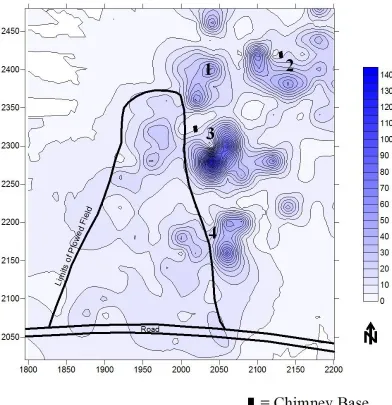
Figure 3.4 Machine Cut Nail Distribution with Labeled Concentrations 1, 2, & 3 ...87
Figure 3.5 Witherspoon Island Base Map Showing Cabin Site 1, Cabin Site 2, the Hunt Lodge, and the Limits of the Modern Field and Clearing...88
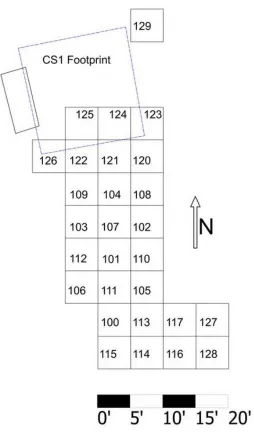
Figure 3.6 Cabin Site 1 Base Map, View to the North ...89
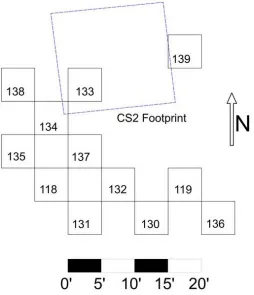
Figure 3.7 Cabin Site 2 Base Map, View to the North ...90
Figure 5.1 Percentages of Earthenware Vessels by Cabin Site and Decorative Style ...177
Figure 6.1 Survey of Food-Related Property Belonging to Former Marlboro District Slaves from All Claim Files ...226
Figure 6.2 Number of Livestock Raised on Witherspoon Island Plantation in 1850 and 1860 based on Federal Census Data ...227
Figure 6.3 Food Crops (by Bushel) Witherspoon Island Plantation based on Federal Census Data ...228
CHAPTER
1
INTRODUCTION
Husband and wife, Hooper and Lucretia raised eleven children, eight of whom
were born into bondage on Witherspoon Island plantation. The lives of Hooper, Lucretia,
their children, and hundreds of their fellow bondsmen were shaped by a prominent
plantation reform movement in the late antebellum period (Darlington District Sales and
Appraisal Book 1860, Darlington County Historical Commission, Darlington, South
Carolina). Utilizing a novel integrated landscape and household framework, this
dissertation examines two neighboring slave quarter sites that were excavated between
2009 and 2012 on Witherspoon Island, a large nineteenth-century cotton plantation
located in Darlington County, South Carolina. Looking at both the dwellings and
surrounding yard space associated with these contested landscapes, this study seeks to
understand what reforms may have been adopted by planter John Dick Witherspoon and
their impact on the plantation’s vibrant enslaved community.
The nineteenth-century plantation reform movement was aimed at preserving the
economic institution of slavery. In the face of rising abolitionist pressure, reform
proponents promoted the image of ideal enslaved households operating as part of
efficient modern plantations ruled by reason, benevolent management techniques, and
scientific agriculture (Berlin 2003; Breeden 1980; Oakes 1982). Where implemented,
or grudgingly accepted them depending on the severity of their impact upon established
daily routines and any potential benefits bondsmen may have foreseen. Specifically, this
dissertation examines the material and symbolic impact of labor reforms on enslaved
inhabitants, their dwellings and associated landscapes through the lens of dwelling
architecture, household sanitation, slave diet, religious instruction, and market access for
slaves. While many of the reforms regarding improved housing, diet or sanitation may
have appeared outwardly humane, I argue that the core of the reform movement was
concerned with developing a better means to physically control slaves across the
plantation landscape both in the fields and in the private lives bondsmen worked to
create.
Our current understanding of this agricultural reform movement comes primarily
from period reform publications, various plantation records created by slave holders, and
elements of showcase model plantations that survive today. While these sources may
speak to agricultural reforms and best practices, archaeological and historic research at
Witherspoon Island has the ability to see how these ideal practices played out from
multiple perspectives on an absentee cotton plantation altering enslaved landscapes, lives
and communities.
Both the archaeological record and historic resources associated with the
Witherspoon plantation are ideal for this study. The two excavated slave quarter sites
were found in exceptional unplowed contexts which perfectly preserved hundreds of
intact yard features offering amazing details regarding the use of the landscape and the
potential implementation of reforms. The historic resources are also unparalleled and
reform-related topics which were of specific interest to planter John Dick Witherspoon.
Together these two resources offer a unique opportunity to examine late antebellum
reforms on a working plantation in remote location far removed from public view that
was not built as a showpiece estate.
The examination of proslavery reforms not only helps to elucidate the daily lives
and struggles of enslaved individuals who resided on Witherspoon Island, it also offers a
chance to help dispel some of the influence of the reform rhetoric which is present within
the lingering ‘Lost Cause’ narrative. The proslavery reform movement heavily promoted
a message calling for the creation of the plantation as an institution that would be
beneficial to both planters and slaves alike where reforms acted as an instrument for the
physical and moral improvement of the enslaved population (Berlin 2003; Breeden
1980).
This well-known and widespread reform propaganda helped lay the groundwork
for a postbellum portrayal of the idyllic Old South where slaves and master coexisted in
harmony. In this reimagined history, most slaves received the best possible care available
- living a life a free of wants in conditions often better than the poor farmers or factory
workers of the period (Berlin 2003:204; Joyner 1984:124). This misguided image of
slavery as a “benign institution” has been championed by supporters of the ‘Lost Cause’
from the end of the Civil War to the present day, in effect glossing over the history and
harsh realities of millions of individual enslaved laborers whose forced labors built the
southern plantation economy (Thompson 2013:51-57). This dissertation seeks to examine
the true impact of these proslavery reforms across the plantation landscape when
movement which were less concerned with supposedly humanistic goals and more
focused on improving slave discipline, preserving invested capital in human property and
increasing the profitability of the plantation system (for a discussion of the origins and
maintenance of the ‘Lost Cause’ narrative see Foster 1987; Osterweis 1973; Rable 1994).
This opening chapter will review the cultural landscape theory and household
methodology adopted in this dissertation to help examine the influence of antebellum
proslavery reforms on the plantation landscapes of Witherspoon Island plantation.
Landscape as Discourse Materialized
The plantation landscapes I examine in this dissertation are viewed as discourse
materialized, a theoretical and analytical perspective developed by cultural geographer
Richard Schein. As the name suggests, Schein theorizes that cultural landscapes are the
material manifestation of varied competing social discourses both concurrently and
diachronically (Schein 1997; Schein 2004). When merged with a contextual household
archaeology methodology, the resulting interdisciplinary approach offers historical
archaeologists an important multi-scalar perspective for the analysis of diverse cultural
landscapes at the household scale. Such an interdisciplinary approach is unfortunately
rare in mainstream landscape archaeology and both geographers and archaeologists stand
to benefit from increased awareness and collaboration.
To contextualize this innovative landscape perspective, it is crucial to briefly
Carl Sauer and the Berkeley School of Geography in the first part of the twentieth
century (Schein 1997). During the late nineteenth and early twentieth centuries, the
discipline of geography was entirely focused on studies guided by the theoretical
perspective of environmental determinism. By the 1920s, a gradual critique of this
deterministic approach was building within geography (Winberry 1997).
It was Carl Sauer who introduced the concept of the landscape in his famous article
Morphology of the Landscape. Originally published in 1925, this paper is one of the
foundational works of cultural geography. In Morphology, Sauer defines the landscape as
the new unit of analysis for geography and firmly rails against the environmental
determinism that characterized the geographic theory of the period (Sauer 1963). The
article develops a morphologic method to observe and record landscapes. Sauer argues
that geographic interest in the landscape must study the interaction of culture and nature.
He divides landscapes into two groups: natural landscapes and cultural landscapes (Sauer
1963). According to Sauer, natural landscapes were the untouched physical elements of
the landscape including geologic composition, landforms, climates, and vegetation. Sauer
treated natural landscapes as the setting for cultural expression. Sauer argued that the
“cultural landscape is fashioned from a natural landscape by a culture group” where
“culture is the agent, the natural area is the medium and the cultural landscape is the
result” (Sauer 1963:343). New cultural landscapes, according to Sauer, are built directly
upon the remains of past cultural landscapes (1963).
To study these phenomena, Sauer called for a historical geography whose goal
was to reconstruct these former cultural landscapes. While Sauer’s definitions refer
element of landscapes which cannot be captured by positivist scientific studies (1963).
Sauer’s approach could be summed up as an examination of the cultural “elements of the
landscape, their ultimate origin, how they came to be a part of the present day landscape,
whether by diffusion, migration, or even persistence as palimpsests from previous
landscapes” (Winberry 1997:5).
Sauer’s conceptualization of culture drew heavily on the work of anthropologist
Alfred Kroeber, a fellow Berkeley professor (Duncan 1980). For Kroeber and other
anthropologists of the period (especially Robert Lowie and Leslie White), “culture was
viewed as an entity above man, not reducible to actions by the individuals who are
associated with it, mysteriously responding to laws of its own” (Duncan 1980:182). This
understanding of culture as a superorganic entity was a central hallmark of early cultural
landscape research.
Sauer’s landscape approach quickly gained an academic following and became
known as the Berkeley School approach (Lewis 1979:14). A good example of a Berkeley
School landscape study is Kniffen’s 1936 Louisiana House Types paper. A former
student of Sauer, Fred Kniffen sought to legitimize the study of cultural landscapes with
his research into culturogeographic regions based on a “quantitative and qualitative
consideration of the cultural forms of the landscape” (Kniffen 1936:179).
Culturogeographic region was a term coined by Kniffen which refers to a “geographic
region where only cultural forms are considered” (1936:179). In Louisiana House Types,
Kniffen looked at the architecture in Louisiana and argued that variation in house design
reflected “the imprint of varied cultural stains” (1936:179). This was principally a
history of the state. The Berkeley School was primarily concerned, not with the process
of creating of landscapes, but the physical landscapes themselves. Adherents utilized a
diachronic approach which involved both documentary and site analysis of landscapes
(Winberry 1997). While the Berkeley school approach received sporadic critiques in the
1940s concerning the definition of the landscape, it remained the dominant approach to
landscapes until the new cultural geography of the 1980s (Winberry 1997).
Updated landscape approaches in the 1960’s and 1970’s built upon the existing
Berkeley tradition examining new spaces such urban and contemporary landscapes and
explored symbolic aspects of the landscape (Schein 1997:660-661). J.B. Jackson argued
that cultural landscapes can be seen as a “concrete, three-dimensional, shared reality”
(1997: 302). His work helped to shift the traditional focus of landscape studies away from
colonial landscapes and settlement studies to everyday vernacular landscapes including
urban cityscapes, drive-in theaters and trailer parks (Jackson 1997). For Jackson, these
everyday landscapes had inherent value and meaning both in the past and present. In a
pioneering work from the 1950s, Jackson’s Westward Moving House offered a parable
that traced a fictional family from the pioneer forefathers arriving in New England to the
modern 1950s family. The story examined the changing ideologies towards landscapes
and nature, architectural implications, and views of societal relations (Jackson 1994).
This study was some of the first research to explicitly explore ideology and meaning
associated with the landscape. While there was little analysis of this ideology, it was an
important first step for geographers.
The 1960s and 1970s also saw a building critique of the Berkeley School that
criticized traditional landscape studies for their reliance on the outdated concept of the
superorganic culture, lack of social theory, and positivist methods (Wagstaff 1987).
Adherents called for new approaches that were not centered on descriptive studies with
antiquarian roots. They argued for landscapes to be treated as “complex expressions;
formed in different media and allowing for a broader interpretation of context” that
included “an awareness of the social and political underpinnings of human behavior”
(Winberry 1997:8).
A seminal work by geographer James Duncan helped to eradicate the
superorganic conceptualization of culture from geographic research (1980). In the paper,
Duncan argued Kroeber’s concept of culture “reifies the notion of culture assigning it
ontological status and causative power” which treats “social organization as
unproblematic” (1980:181). While the borrowing of theory from other disciplines is vital
for vibrant geographic research, Duncan argued that geographers had “chosen a theory
which has come under devastating attack and has since been long rejected by the vast
majority of anthropologists” (1980:182). In the superorganic, “the individual is largely
absent, consensus prevails, deviance is ignored; it is a world untouched by intracultural
conflict” (Duncan 1980:191). Duncan called for cultural geography to shift towards an
individualist perspective looking at societal relations and contextual landscape
interactions (Duncan 1980).
Geographers such as Denis Cosgrove (1984), Stephen Daniels (1989), Pierce
Lewis (1979) and James Duncan (1980) led this humanistic post-processual turn in
cultural geography. This new wave of cultural geographers were influenced by a wide
The specific definition of cultural landscape remained much the same according to
Winberry as “those works of man that are inscribed into the Earth’s surface” but the
approach and interpretation was vastly different from Sauer’s historical descriptive
approach (1997). This new breed of cultural geographers argued that “all human
landscape has cultural meaning, no matter how ordinary that landscape may be” (Lewis
1979:12). New themes emerged as a part of this movement including treating landscape
as a visual representation (Cosgrove and Daniels) and reading landscape as text (Duncan
and Lewis).
The work of Cosgrove and Daniels brought ideology to bear on cultural
landscapes, looking at how power relations were structured through control of visuality.
Daniels and Cosgrove both utilized neo-Marxist perspectives in their landscape studies.
For example, Denis Cosgrove looked at the shifting understanding of land between late
feudalism to early capitalism in Europe and argued that the western concept of the
landscape cannot be separated from the historical origins of capitalism. Cosgrove
describes landscapes as “a way of seeing the world” which is entirely based on the
“visual experience” (1998:13-14). For Cosgrove, landscape “is an ideological concept”
which “represents a way in which certain classes of people have signified themselves and
their world through their imagined relationships with nature, and through which they
have underlined and communicated their own social role and that of others” (1998:15).
Landscapes were linked to the development of geometric perspective (birds-eye view) in
landscape painting that strongly influenced fields such as mapmaking and surveying.
Perspective allowed elites to obtain visual mastery over their property and subjects
argues that landscapes as cultural images are part and parcel of ideology working to
naturalize and obscure exploitative social relationships (1998). To analyze past
understanding of the landscape geographers such as Cosgrove and Daniels examined
contemporary representations of the land, architecture and the historical record rather
than study physical landscapes. Research in the vein of Cosgrove often falls prey to a
Eurocentric bias that denies the possibility of non-western spaces functioning as true
landscapes.
Textual approaches suggest that the “human landscape is our unwitting
autobiography, reflecting our tastes, our values, our aspirations, and even our fears, in
tangible, visible form (Lewis 1979:12). Pierce Lewis suggests that “like books,
landscapes can be read, but unlike books they were not meant to be read” (1979:12).
Drawing on linguistic and poststructural theory, these approaches were primarily
concerned with the creation of landscape as text, the meaning of the text, and how these
texts may influence human behavior (Duncan and Duncan 1988:120). James Duncan and
Nancy Duncan argued that “one of the most important roles that the landscape plays is
ideological, supporting a set of ideas and values, unquestioned assumptions about the
way a society is, or should be organized” (1988:123). If the landscape is read as a text,
then unaware readers may base their interpretations on an “ingrained cultural framework”
which works to indoctrinate these almost unconscious readers into the existing social
structure (Duncan and Duncan 1988:123). Thus landscapes mediate ideology and work to
naturalize power structures. Duncan and Duncan suggest that geographers must critically
read cultural landscapes in a way that does not consciously, or unconsciously, replicate
is weakened by the fact that this approach can be seen as reifying text as a physical
structure rather than as an interpretive metaphor.
Since the inception of the humanistic cultural geography in the 1980s there has
been a wide variety of research in geographic landscape studies. Recent approaches have
explored gendered / sexualized landscapes (Hayden 1999; McDowell 2008; Rose 1993;
Walby 2009); landscapes of belonging and exclusion (Duncan and Duncan 2001; Price
2004; Schein 2009); wilderness and cultural landscapes (Cronon 1995; Lane 2004;
Massey 2006; Robbins and Sharp 2003); landscapes of race (Hoelscher 2004; Popke
2001; Pred 2001; Weyeneth 2005) and landscapes of social memory (DeLyser 1999;
McDowell 2008; Mills 2006).
Richard Schein’s discourse materialized approach utilized in this dissertation builds
off the work of the post-processual cultural geographers to examine the processes behind
cultural landscapes that work to naturalize, reproduce, and contest social practices
(Schein 2009). For Schein, discourses are understood to be “shared meanings which are
socially constituted ideologies, sets of ‘common sense’ assumptions” (Duncan 1990:12).
Discourse materialized builds upon the idea that cultural landscapes mediate ideology.
According to Schein, every individual choice behind any cultural landscape is rooted
within some form of discourse. When a choice results in a physical landscape expression,
the landscape literally becomes discourse materialized (Schein 1997). Multiple discourses
are present in all landscapes and offer “competing social and visual disciplines or
strategies that combine to constrict or limit human action within and interpretation of any
conceptualization of cultural landscapes as dynamic palimpsests composed of past and
present materialized discourses that never remain static (Schein 1997:661).
Theorized in this way, the cultural landscape is both materially disciplined by
specific discourses such as zoning laws or homeowners’ association regulations and
continuously engaged by individuals who can choose to accept, deny, or overlook these
discourses. By acknowledging contestation through individual human agency, Schein
provides a means to challenge and potentially change dominant discourses in all
landscapes (Schein 1997).
Schein’s research (like Mitchell 1996), runs counter to the strictly ideological
approaches to visual representations of landscapes (i.e. Cosgrove 1984; Daniels 1989)
which tend to gloss over the creation and maintenance of material landscapes. The
discourse materialized approach adopts a poststructuralist position while retaining a
degree of the geographic empirical tradition using historically and spatially
contextualized data to understand the social implications of the landscape (Schein 2004).
Within this framework, cultural landscapes are not merely fixed representations of
ideologies, but also the product of dynamic social relations that are continuously
changing the material face of everyday spaces (Mitchell 2002).
One criticism of Schein’s discourse materialized approach is that the discursive
relationship between discourses and the landscapes is represented as a relatively
straight-forward homogeneous process (Steele 2007). Steele argues that the relationship is not
“structured or neat, but characterized by heterogeneous fluxes and flows of socio-cultural
reject or ignore discourses overlooks the fact that many day to day decisions partially
reside in the realm of the subconscious.
Legitimate critiques aside, I argue that the strength of the discourse materialized
approach is its inclusive nature that allows scholars to approach a wide range of concerns
beyond traditional hegemonic power relations, including nuanced issues of gender,
memory, race, identity, and belonging. Schein’s approach clearly shows the importance
of both temporal and geographic context for understanding the ever-changing landscapes
that surround us all. Additionally, the flexible multi-scalar nature of the discourse
materialized framework allows broad global and national-level discourses to be fruitfully
studied within cultural landscapes at many scales (Schein 1997). Such a multi-scalar
perspective is ideal for landscape studies like this dissertation where I attempt to examine
the local and individual impact of the broad national / regional nineteen-century reform
discourse on a single cotton plantation.
The Landscape in Historical Archaeology
My usage of Schein’s theoretical and analytical perspective on cultural landscapes
(and that of most modern cultural landscape research within the field of geography)
represents a significant departure from the treatment of landscapes by mainstream
historical archaeology in North America. Landscape archaeology has been defined as “a
framework for modeling the ways that people in the past conceptualized, organized, and
manipulated their environments and the ways that those places have shaped their
landscapes utilize a wide array of methods to analyze past landscapes including:
archaeological excavations, the documentary record, topographic analyses, floral and
pollen studies, ethnographic sources, and remote sensing surveys (Yamin and Metheny
1996).
The origins of landscape archaeology are linked to the development of settlement
archaeology in the mid-twentieth century (Knapp and Ashmore 1999). Settlement
archaeology was inspired by the work of Julian Steward's ecological approach which
sought to examine the environmental factors that shaped prehistoric cultural change
(Trigger 1989). Work in Peru by Gordon Willey (1953) was the first true functional
settlement study (Shackel 2003a:4-5). Settlement work before Willey’s research had
treated "settlement patterns… as evidence of relations between human groups and the
natural environment" as part of ecological adaptation process (Trigger 1989:282).
Willey's research rejected the full scope of Steward's ecological determinism and sought
to analyze patterns of settlement and the built environment as a "source of information
about many aspects of human behavior" including the "economic, social, and political
organization of ancient societies" (Trigger 1989:282-284). The understanding that
cultural factors shape the environment would become a central tenant of early landscape
studies as archaeologists worked to challenged deterministic approaches that privileged
environmental factors (Shackel 2003a:4-5).
The landscape concept emerged as critique of scale in archaeology that
challenged the traditional archaeological unit of analysis, the site (Branton 2009).
Landscape proponents argued that site-level analyses had traditionally been associated
(Green 1997). Thus landscape archaeology was to be an inclusive examination of “all of
the natural and cultural features that exist both within and outside human settlements:
houses, bridges, waterways, trees, grass, mountains, and other settlements” (Orser
1996:368).
Processual archaeologists built upon the early theme of human environment
interaction and studied “what people did to the landscape and how it aided or constrained
them” (Knapp and Ashmore 1999:7). These processual approaches treated landscapes as
a material object of study, knowable through empiricist methods (Branton 2009).
According to Paul Shackel, the processual landscape studies in historical archaeology
were primarily particularistic in nature, attempting only to “document and reconstruct
historic landforms” (Shackel et al. 1998:212). Throughout the 1980s and 1990s,
processual landscape studies in historical archaeology were largely focused on two
research areas: estate landscapes (Hudgins 1990; Kelso 1990; Mascia 1996; Weber et al.
1990; Yamin and Bridges 1996) and formal garden archaeology (Beaudry 1996; Brown
and Samford 1990; Gleason 1994; McKee 1996; Sanford 1990; and Weber 1996). The
focus on elite gardens and estates was partially due to available funding during this era
and the strong links between historical archaeology and the historic preservation
movement (Yentsch 1996). These studies were critiqued for not examining the meanings
of landscapes (Knapp and Ashmore 1999) and for overlooking the vernacular landscapes
that shaped the experience of common people in the past (Yentsch 1996).
The processual landscape approach in archaeology seems to have directly
mirrored the Berkeley landscape tradition in geography. Both approaches treated
which lacked social theory. If these processual studies referenced geographers, it was
often only to define the concept of the landscape from the work of Carl Sauer or J.B.
Jackson. Archaeologists seem to have acknowledged that geographers studied cultural
landscapes, but few of the geographic interpretive models or theories were ever seriously
applied.
In the 1980s and early 1990s several landscape studies in archaeology challenged
the status quo by focusing on the meaning of cultural landscapes from both structuralist
and critical archaeology perspectives (Hudgins 1990; Kryder-Reid 1996; Leone 1996;
Mrozowski and Beaudry 1990). A good example is Mark Leone’s work at William
Paca’s garden from the 1980s. Leone utilized a Marxist-based critical archaeology
approach to examine the ideology embedded in the formal garden of an Annapolis estate
(1996). Leone argued that ideology functioned "to disguise the arbitrariness of the social
order, including the uneven distribution of resources” while attempting to reproduce the
existing social structure (1996:272). Leone suggested that the intentional geometric
design of Paca's garden worked to symbolize power over nature serving as an active
metaphor for the justification of inequality in everyday social relations (Leone 1996).
Leone’s work at Paca’s garden paralleled the research of Denis Cosgrove (1984) in
cultural geography. Both scholars examined the ideology embedded in landscapes and
focused on top-down elite perspectives utilizing the same social theories. While Leone’s
work is quite similar to the landscape research of the humanistic cultural geographers, he
does not cite or incorporate the work of a single geographer.
The innovative studies by Leone and others helped to usher in a new
as political, social, and personal statements (De Cunzo and Ernstein 2006).
Post-processual approaches to landscape draw on a diverse set of social theory such as
phenomenology, structuration, agency theory and gender theory to help decode symbolic
meanings of landscape (Knapp and Ashmore 1999). Typical post-processual studies
examine “the active role of individuals in constructing and interpreting the world around
them, and in continually reshaping culture and society” (Knapp and Ashmore 1999:7).
Landscapes are often treated as polyvalent and multivocal entities (De Cunzo 2003). For
most of these studies, landscapes are understood to be “relational entities constituted by
people in their engagement with the world” (Thomas 2001:176). This relational view
means that each individual may have ascribed different meanings to landscape based on
their unique experiences. Recent post-processual approaches have moved beyond estates
and gardens and now deal with a wide array of topics including: landscapes of gender
(De Cunzo 2003; Lewis 2003; Rotman 2003); sacred landscapes (Kryder-Reid 1996;
Savullis 2003 Strang 1999; Tacon 1999); urban landscapes (Dawdy 2000; Derry 2000;
Gums and Shorter 2000; Spencer-Wood 2003); landscapes of inequality (Delle 1999;
Joseph 2000; Young 2003) and landscapes of belonging and erasure (Guernsey 2008;
Shackel 2003b; Smith 2008).
Many archaeologists acknowledge the importance of interdisciplinary work with
cultural geography, but serious geographic engagement is still lacking in North American
landscape archaeology. Over the last two decades there have been several isolated studies
that were able to successfully incorporate geographic landscape scholarship both in
defining landscapes and in the analysis of archaeological data (Derry 2000; Hood 1996;
notable exception to the near exclusion of geographic theory in the current archaeological
literature is Yu-Fi Tuan’s humanistic theorization of the concepts of space and place (see
Tuan 1977) which has been quite influential among archaeologists since the 1990s (Blake
2007:215-218; Vis 2009: 79-81).
Barbara Little’s study of power laden landscapes in Annapolis (1998) is a good
example of successful geographic engagement in archaeology. Her research relied on
anthropological theory, cultural geography, and social theorists to explore the movement
of printer businesses upon the cityscape according to historic fluctuations in Annapolis'
power structures (1998). Looking to the work of postmodern geographer Edward Soja,
Little argued that "the constitution of society is both spatial and temporal" and that
spatiality is a social construct specific to a certain time and place (1998:226). According
to Little, there exists a continuing question of scale within archaeological research. Little
believes that a single scale offers limited interpretive power and argues (like Soja) that "it
is essential to take advantage of the insights that can be gained by shifting and comparing
scales of analysis" (1998:227). This study does a nice job defining space and
incorporating a wide range of theory and landscape perspectives in the actual analysis.
In contrast, a volume by Angele Smith and Amy Gazin-Schwartz entitled
Landscapes of Clearance: Archaeological and Anthropological Perspectives (2008) is a
case where interpretive engagement with geography could have significantly benefited
landscape archaeologists. In this volume, Smith and Gazin-Schwartz take a landscape
archaeology approach to study the "social processes involved in clearing the landscapes
past and present and the significance and meaningful impact of these actions" (Smith
communities of people try to negotiate different interpretations of the same landscape"
2008:14). She focuses specifically on colonial and postcolonial landscape settings where
removals of individuals and erasures of the landscape were common occurrences. This
same topic has been explored in detail by cultural geographers Patricia Price (2004) and
Alison Blunt (2003) who looked at physical removal of populations and the smoothing of
the landscape to eradicate traces of past individuals who resided there. Price’s concept of
landscape smoothing concerns the intentional erasure of borders and boundaries in the
dominant representations of the landscape in an effort to maintain power and control over
space (2004:45-49). These geographic studies directly parallel the research in Smith and
Gazin-Schwartz’s volume, but are not referenced by a single study in their volume.
Increased cooperation between geography and archaeology in North America will
allow for more complex and realistic interpretations of archaeological landscapes. Both
disciplines stand to benefit from scholarly engagement. Working together, archaeologists
and geographers can hopefully create innovative interpretive approaches to the
landscapes rather than produce duplicative research in isolation. Archaeological research
also has much to offer geographic landscape interpretation. As B.K. Roberts once
suggested "visible landscapes are like icebergs, only a small proportion of their real
substance lies above the ground" (1987:83). For geographers, archaeological data is one
of the few resources available that can offer clues to the use and meaning of buried
landscapes (Roberts 1987). While methodologies must remain different out of necessity,
useful interdisciplinary interpretive models can be developed and shared between the two
When considering Schein’s discourse materialized approach, both the historical
contextualization and multi-scalar implications make this framework particularly
well-suited for historical archaeologists concerned with the social implications of cultural
landscapes. Schein’s understanding of landscapes can be thoughtfully extrapolated to the
logical conclusion that not only are landscape features physically materialized by various
discourses but so too is the material culture that makes up these features as it was used or
left behind by the individual agents that inhabited, managed or visited these spaces
(Beaudry et al 1991).
The dynamic landscape of becoming that Schein envisions also poses a significant
challenge, however. It is a fundamental question relating to the scale of analysis. For
archaeologists, the multitude of competing discourses that impacted the archaeological
landscape over a wide temporal span can be extremely difficult to discern at a broad site
wide level. When considering the expansive plantation landscapes on Witherspoon Island
it became necessary to address the issue of scale in my research. This was accomplished
by narrowing my focus to the spatial and social scale of the household landscape which is
composed of an enslaved dwelling and the immediate associated yard space.
The Houseyard Landscape
Over the last two decades households have become a common data source for
macro-landscape research conducted at the settlement, community and regional scales
(Brandon and Barile 2004; Pluckhahn 2010; Spencer-Wood 2002). Less common are
(Trifkovic 2006). A household level perspective makes it possible to populate the
landscape with individuals instead of monolithic social entities (Trifkovic 2006:258).
When considering the study of household landscapes, the challenge for archaeologists is
not to treat such spaces as unique isolates. These intimate household landscapes both in
the past and present are intricately coupled to their local communities or regions.
The decision to examine the small scale landscapes composed of the enslaved
dwelling and yard space in this dissertation study is not an arbitrary choice as these
landscapes represent an important cultural pattern. Known as houseyards, these cultural
landscapes were a common feature found on plantations in the Caribbean and southern
United States (Armstrong 1990; Westmacott 2001; Wilkie 1996b). Sidney Mintz
popularized the concept of a house and yard pattern in Caribbean Transformations, an
ethnographic study of Afro-Caribbean culture in Jamaica and the surrounding islands
(1974). Mintz wrote that “the house is far more than a fabrication of wood and thatch, the
yard far more than a locale for the house. Together, house and yard form a nucleus within
which the culture expresses itself, is perpetuated, changed and reintegrated” (Mintz
1974:231-232). He went on to suggest that yard space was understood to be “an
extension of the house” where “the limits of the yard represent the outer walls of the
house itself” (Mintz 1974:249). According to Mintz, yard space functioned as the center
of household life for enslaved Africans and their descendants. The ubiquitous nature of
these yards both in plantation and post-emancipation settings suggests a continuity of
these cultural landscapes which make them an important locus of anthropological and
Within the houseyard, the physical dwelling was primarily used for sleeping and
the yard was the focal point of all social life (Anderson 2004a:29). The yards are found
directly outside of the habitations and have space dedicated for a number of activities
including: food production, meal preparation, domestic chores, leisure activity,
socialization, spiritual activities, childcare, and on occasion burial (Heath and Bennett
2000; Wilkie and Farnsworth 2005:157-208).
Historic accounts from planters, plantation visitors, and slave narratives can be
used to illustrate the houseyard pattern, but the inherent biases in these sources must be
kept in mind (Thomas 1995). One of the most comprehensive visitor accounts comes
from Fredrick Olmsted’s travels throughout the southern United States during the 1850s.
When visiting a rice plantation in Georgia, Olmsted recorded the physical features and
typical layout of the enslaved houseyards. According to Olmsted, “Between each
tenement and the next house, is a small piece of ground, enclosed with palings, in which
are coops of fowl with chickens, hovels for nests, and for sows with pig. There were a
great many fowls in the street. The negroes' swine are allowed to run in the woods, each
owner having his own distinguished by a peculiar mark. In the rear of the yards were
gardens, a half-acre to each family” (Olmsted 1953:184-185).
Yards were often considered the private space of both enslaved and free
inhabitants (Mintz 1974:245; Vlach 1993b:15-16; Westmacott 1992:44). Houseyards
were bounded landscapes typically enclosed by either some type of fence (commonly a
wooden paling fence) or some sort of intentional boundary created by earthen barriers
(ditches, gullies, or natural slopes) or vegetation planted (bamboo or other tall foliage) to
shown that historic houseyard on plantations were often physically oriented in ways to
conceal yard activities from the planter and overseers (Armstrong and Kelly 2000; Fesler
2001; Wilkie 2000; Wilkie and Farnsworth 2005).
Ethnographic studies and historical sources attest to the commonality of yard
features and behaviors in West African cultures and at sites of African enslavement in the
Atlantic (Anderson 2004a; Mintz 1974; Pulsipher 1993; Samford 2004; Westmacott
1992). Westmacott (1992) and others argue that the houseyard pattern represents a
cultural system brought to plantations in the Caribbean and the Southeast by enslaved
Diasporic African populations. These yards are not identical in form or function, but were
modified over time for the diverse environments within these wide spread regions (Heath
and Bennett 2000:38). Even after the end of slavery, the houseyard pattern continued to
be a common element of African American domestic space well into the twentieth
century (Westmacott 1992).
As such a culturally important space, the houseyard in antebellum contexts is a
vital nexus to examine the intersection of enslaved influences on the landscape and the
wishes of the plantation management. A contested space, the houseyard landscape was
certainly viewed differently by both planters and slaves who likely attached drastically
different meanings to the intimate spaces within and around the dwelling (McKee 1992;
Stewart-Abernathy 2004; Vlach 1995). The physical manifestation of these landscapes in
their form, function, and general upkeep by both management and individual slaves
“involved a continuous discourse” which “resulted in multiple and possibly hybrid
Recent archaeological studies of enslaved houseyard spaces have examined a
wide range of topics from foodways (McKee 1999; Pulsipher 1993; Whit 2007; Yentch
2007), spiritual aspects of the yard (Edwards-Ingram 1998; Wilkie and Farnsworth 2005),
houseyard burial practices (Armstrong and Fleishman 2003), activity areas within the
yard (Anderson 1998; Anderson 2004a; Armstrong 1990; Armstrong and Kelly 2000;
Fesler 2004; Franklin 2004; Heath 1999; Heath and Bennett 2000; Neiman et al. 2000;
Wilkie 2000; Wilkie and Farnsworth 2005); yard maintaince and sweeping (Adams 1987;
Adams 1990; Agha 2004; Heath and Bennett 2000; Orser 1988; Thomas and Thomas
2004; Wilkie 2000); and ethno-archaeological studies of yardspace (Anderson 1998;
Brabec and Anderson 2007; Gundaker 1993). The treatment of houseyards from an
explicit landscape perspective like Schein’s discourse materialized approach has not been
undertaken by historical archaeologists to date.
Narrowing the scale of the landscape to the houseyard level does not fully solve the
methodological issues posed by a discourse materialized perspective. If we elect to
conceptualize a cultural landscape as a dynamic palimpsest of multiple materialized
discourses, archaeologists must also achieve fine-grained control over landscape features.
Archaeology and the Household
Contemporary household archaeology, especially a contextual household
methodology, may provide a viable solution to the issue of landscape control when
Plantation that were inhabited and altered by enslaved individuals and then tenant farmers
over the course of the nineteenth century.
Household archaeology is a methodological and theoretical approach to domestic
sites that can address diverse research interests from household demographics and
socioeconomic relationships to use of space and architectural design. Interest in
household archaeology can be traced to the popularity of domestic sites as a locus of
archaeological study (Beaudry 1999; King 2006). The concept of the household has been
subject to ongoing debate since the inception of household research in anthropology.
Definitions for a household range from the physical dwelling in which a group of
individuals reside all the way to ephemeral feelings associated with a dwelling area
(Barile and Brandon 2004). While no agreed upon definition for a household exists, I
argue that multiple household definitions serve as a strength for this field which allows
for creativity and innovation in anthropological approaches to domestic settings.
Academic study of the household can be traced to the early social anthropological
studies of kinship and family in the late nineteenth century. Popular cross-cultural studies
attempted to reveal the universal building blocks of society shared amongst the world’s
cultures. These early anthropologists often used the terms household and family
interchangeably with no accepted definitions for either concept (Yanagisako 1979). By
the second half of the twentieth century, anthropologists began attempting to explicitly
define and differentiate the concept of the household and family. A foundational study by
Donald Bender defined family strictly along kinship lines and argued the household
consisted of “a residence group that carries out domestic functions” (1967:493). This
circumstances where family members were not directly involved in domestic functions or
where residents of a dwelling may not have been related (Bender 1967).
Capitalizing on the household trend in social anthropology, archaeologists gradually
became interested in the household as the core unit of social organization and economic
activity. While the beginnings of household archaeology follow different paths for
prehistoric and historic archaeologists, both groups initially shared the Binford’s goal of
identifying cultural regularities (Tringham 2001).
A session at the 1981 Society for American Archaeology conference initiated the
official beginnings of household archaeology as a viableapproach to domestic sites. The
SAA session, chaired by William Rathje and Richard Wilk, brought together a wide array
of archaeologists who attempted to adapt existing household literature from cultural
anthropology. A joint paper by Rathje and Wilk coined the term “household
archaeology” and offered a new theoretical direction for future household research. The
publication of the session papers in the American Behavioral Scientist (1982) helped to
disseminate household archaeology to a broad audience. The household archaeology of
1980s and early 1990s was primarily characterized by two broad theoretical schools:
processual approaches and structuralist approaches. Both approaches attempted to follow
the advice of Bender (1967) by separating culturally defined co-residence patterns from
domestic function which they believed had value for cross-cultural studies (Barile and
Brandon 2004).
For processualists, the household was utilized as the most basic unit to investigate
cultural patterns (Breen 2003). The household was seen as an adaptive mechanism where
and natural environments (King 2006:299-300). In a sense, the household was being
treated as mid-range theory for processual archaeologists (Wilk and Rathje 1982).
Wilk and Rathje argued that the household was the level where “social groups
articulate directly with economic and ecological processes” (1982:618). They defined the
household as the “product of a domestic strategy to meet the productive, distributive, and
reproductive needs of its members” (Wilk and Rathje 1982:618). Accordingly, the
household could be divided into three elements: social organization, associated material
culture, and behavioral elements. They suggested that archaeologists were in a unique
position to speak directly to both the material and behavior aspects of the household. The
emphasis on broad patterns and relationships led to processual archaeologists focusing on
material remains largely independent of specific archaeological contexts. Detailed
contexts were often deemed too site-specific, and linking material remains to these
contexts was largely overlooked in analysis (Beaudry 1999). The processual approach
resulted in the examination of functional households as entities far removed from the
associated inhabitants (Barile and Brandon 2004).
James Deetz was also a presenter at the 1981 SAA household archaeology session
and his paper offered a structuralist approach to households that focused on ideology.
This approach developed from a contemporary critique of processual household
approaches which argued that “social groups and their social behavior were not just
found reflected in artifact patterns, they had become those patterns” (King 2006:300).
Deetz argued that if folklorists such as Glassie and historians such as Vlach could decode
standing homes for clues to cultural and ideological change, then archaeologists at some
structuralist approach to household archaeology saw households and related
archaeological deposits as "reflective of the shared beliefs and behavior of "the
inhabitants, which "embodies the world of the society at large" (1982:721). Deetz argued
(with support from Glassie) that the "behavioral and psychological dimensions of the
family must in some way be expressed, however covertly, in artifactual form and texture"
which allows archaeologists to extrapolate their findings to the larger society (1982:718).
An outgrowth of the structuralist approach to household was a critical materialist
framework interested in the social power within the dwelling from a Marxist theoretical
position. The critical approach came to prominence during the late 1980s with the
Annapolis school led by Leone and Potter (King 2006). Household analysis from a
critical framework maintained a structural definition of the household and treated the
meaning of material culture as coded messages that reflect changing ideology in relation
to economics and class structure. Household archaeology from this perspective (e.g.
Leone 1988; Shackel 1993) was particularly concerned with issues such as inequality of
household wealth, access to consumer goods, and evidence of resistance and domination
within the material record.
The larger critique of critical, structural and processual household approaches is
that they tended to neglect individual variation in the archaeological record and instead
looked for evidence of broad patterns or overarching mindsets (Breen 2003). King nicely
sums this critique by arguing that each of these approaches relied on normative models of
human behavior where “households become ‘faceless blobs’, that is, undifferentiated and
Within household archaeology a post-positivist critique of processual and structural
approaches led to an interest in the “role of individuals in the construction and alteration
of society and social life” in a realistic manner that does not accept hyper-individualism
or downplay the complex societal constraints placed on these actors (Wesson 2008:2) To
reach the individual there was a popular theoretical swing towards post-structural
theoretical frameworks such as gender (Anderson 2004; Brandon 2004; Dale 2015;
Goldberg 1999; Hendon 1996; Lawrence 1999; Lyons 1989; Creek and Seifert 1994;
Spencer-Wood 2004) and agency studies (Battle 2004; Stewart-Abernathy 2004; Wesson
2008). Other important developments with the field include contextual household
approaches (Beaudry 1995; Breen 2003; Breen 2004; Groover 2004; Mrozowski et al.
1996; Wheeler 1995), household cycle studies (Alexander 1999; Anderson 2004; Frankel
and Webb 2006; Groover 2001; Nyman and Kenline 2015), and multi-scalar household
research (Anderson 2004; Barile 2004; Barna 2015; Freter 2004; and Reeves 2015). The
wide variety of the theoretical and methodological approaches being employed in current
household archaeology directly correlates with the multitude of household definitions that
can be found in the burgeoning literature. There has become a clear consensus over the
last decade that no working definition can be found that will ever encompass the varied
manifestations of the household as a social unit (Barile and Brandon 2004; Fogle et al.
2015; Pluckhahn 2010). Definitions of a household and diverse landscapes they embodies
inevitably vary and should be flexible both with regard to each site and to the goals of the
archaeological research.
Like other recent approaches to the household, a contextual household
Initially developed by Mary Beaudry, this method called for “a holistic; contextual
approach to the archaeology of historic households that is in direct contrast to the
partiative and synchronic studies common in the past" (Beaudry 1989:84). The
household, according to Beaudry should be seen as a "critical social unit and vital
medium for understanding innumerable aspects of social life" (2004:254). A contextual
approach incorporates a broad range of interdisciplinary data "aimed at linking household
cycles and family histories to the depositional histories of domestic sites through close
attention to site formation processes and site structure" (Beaudry 1999:117). These
approaches take advantage of technical developments that can offer new lines of
household-level evidence including, pollen studies (Archer et al. 2006), chemical /
element residue analyses (Hjulstrom and Isaksson 2009), micro-stratigraphic research
(Archer et al. 2006), and a variety of remote sensing techniques (Arnold et al. 1997).
Beaudry suggests that such an approach offers important clues to everyday household
actions from the ground up that reveal individual variability which is a true hallmark of
the archaeological record (Beaudry 1999). The detailed focus on individual households
with a contextual approach has drawn comparisons to work being done in the field of
microhistory by our colleagues in history (Beaudry 2015:5; Cobb 2015:192).
Microhistoric studies like many household approaches work from the ground-up to
explore “the local perspective” as a means to elucidate “global patterns and wider
narratives, as well as offering unique insights into phenomena and patterns that may lay
outside the macrohistorical narratives or flatly contradict them” (Brooks et al. 2008:4).
A good example of a contextual approach is Wheeler’s (1995) study of a
1980s, the Rider-Woods site was the home of a widow for nearly forty years. The initial
interpretation of the site's occupant fit a 'poor widow' stereotype solely based on ceramics
and faunal remains recovered from the home’s privy. Wheeler refutes this initial
interpretation which did not take into account the required maintenance of privies which
significantly impacted stratigraphic deposits. Utilizing a micro-stratigraphic analysis,
Wheeler was able to link individual strata from a backyard midden to several discrete
temporal periods. Detailed analysis of the recovered material culture from the widow’s
occupation period combined with a close re-examination of primary documents helped
refute the flawed interpretation showing that the widow in question was actually quite
wealthy and fashion forward for the period. Wheeler argued that the errors made during
the initial interpretation were the result of common misconceptions and biased excavation
strategies that only placed trust in the chronology of the down-cut features. Her study
shows the value of a contextual approach that combines detailed site-specific analyses
with extensive documentary research to help reveal a microhistory of the household and
its occupants.
Merging a contextual household methodology with a discourse materialized
landscape perspective can provide the necessary level of control over the archaeological
landscape to allow researchers to examine the various competing discourses that created
that unique space. Such a combined approach challenges the simplistic notion of
landscape as built environment so common to landscape archaeology and can be used to
bring a wide range of multi-scalar discourses to bear on complex archaeological deposits
across diverse cultural landscapes such as the proslavery reform discourse that is the
In Chapter 2, I provide an overview of the proslavery plantation reform discourse
exploring both the rise of the movement and the impact it may have had across the
southern plantation economy. The second chapter also reviews previous research on the
subject by historians and examines the potential contribution of historical archaeologists
CHAPTER 2
PROSLAVERY REFORMS AND WITHERSPOON ISLAND
Utilizing a contextual household approach, this dissertation examines a multifaceted
antebellum plantation reform discourse that is intricately wound through the houseyard
landscapes of Witherspoon Island Plantation. This chapter works to explore the genesis,
impact, and previous scholarship relating to this influential reform movement helping to
convey the need for greater research into the nineteenth-century plantation reforms from
an archaeological perspective.
The origins of the antebellum plantation reform discourse are linked to the close of
the international slave trade in the United States in 1808 and the budding abolition
movement in the north that placed the institution of slavery under escalating scrutiny
(Aptheker 1989:1-3; Ford 2009). In the face of the increasing attacks on slavery, southern
planters and political figures actively worked to defend slave-based economic systems
that supported their way of life (Finkelman 2007).
Slaveholders utilized a wide range of historical, moral, spiritual and economic
arguments to support a southern culture built around the ownership of other human
beings (Finkelman 2007:99). For example, proslavery historians drew upon both classical
and biblical civilizations and argued that all great societies in history had been built upon
slaveholding (Daly 2002:31-35; Finkelman 2007:102). Economic arguments suggested
materials, like cotton, were produced in slave-based economies (Finkelman
2007:106-107).
The core of the proslavery philosophy rested on the inherently racist argument
that “if southern slavery was humane and generous, and rooted in Christianity, then it
could easily be justified to the entire world as an institution beneficial, not only to the
master class, but to the slaves themselves” (Finkelman 2007:105). Supporters argued that
if slavery was to survive, it would have to shift away from the common aloof patriarchal
system of management to a more paternalistic system where engaged masters functioned
as sympathetic father-figures to dependent slaves (Morgan 1987:76-79; Ford
2009:143-149). Paternalistic planters in this vision of the plantation would be responsible for
providing slaves with Christian enlightenment and healthy environments where obedient
enslaved families could live happily and hopefully multiply (Ford 2009:147).
Paternalism was not a new idea taken up by planters. The conceptualization of the
plantation as one large sprawling family with the planter functioning as the head of the
household had existed long before the nineteenth century. With the increasing abolitionist
pressure in the last four decades of the antebellum period, paternalistic ideology on
plantations became increasingly common (Berlin 2003:204). This shift towards
paternalist management meant that the purview of planters shifted from concerns about
the systems of labor in the fields to the “most intimate aspects of slave life” from housing
to the cleanliness of individual bondsmen (Berlin 2003:205).
Defenders of slavery contended that slaves within these types of paternalistic
systems lived in circumstances significantly better than those of contemporary lower