University of South Carolina
Scholar Commons
Theses and Dissertations
2015
Tree-Sway Frequency And The Turbulent
Co-Spectral Gap In A Dense Canopy Environment
Katherine L. Ertell
University of South Carolina
Follow this and additional works at:https://scholarcommons.sc.edu/etd
Part of theGeography Commons
This Open Access Thesis is brought to you by Scholar Commons. It has been accepted for inclusion in Theses and Dissertations by an authorized administrator of Scholar Commons. For more information, please [email protected].
Recommended Citation
TREE
-
SWAY FREQUENCY AND THE TURBULENT CO-
SPECTRAL GAP IN A DENSE CANOPY ENVIRONMENTBy
Katherine L Ertell
Bachelor of Science Valparaiso University, 2012
Submitted in Partial Fulfillment of the Requirements
For the Degree of Master of Science in
Geography
College of Arts and Sciences
University of South Carolina
2015
Accepted by:
April Hiscox, Director of Thesis
Greg Carbone, Reader
Sarah Battersby, Reader
A
CKNOWLEDGEMENTSThank you to my wonderful family—Mom, Dad and Andy—for your endless support for
my crazy dreams and passions that have now turned into a career that I love and look
forward to each and every day. I could not have done it without your direction. You all
truly are the best role models I could have ever asked for.
Thank you to my wonderful Graduate Advisor, Dr. April Hiscox, for your constant
encouragement and patience as I juggled moving far from home and getting my first job
all in the last two years. I could not have accomplished this without your guidance.
Thank you to my readers, Greg Carbone and Sarah Battersby, for sharing your expertise
and helpful feedback in this project.
Thank you to my undergraduate professors at Valparaiso University, Dr. Teresa
Bals-Elsholz and Dr. Bharath Ganesh-Babu, who pushed me to pursue my Masters degree at
the University of South Carolina and helped me to find my niche in the field of
A
BSTRACTToday, knowledge of canopy turbulence comes solely from field observations.
However, measurements or field observations that are taken at a specific location within
the canopy cannot accurately capture the interaction of the wind and the canopy it
crosses. Without this complete picture of the atmosphere, the temporal fluctuations that
exist in turbulent flows cannot be understood. From an atmospheric perspective, the
complex structure of forests significantly influences turbulence in the atmospheric
boundary layers (ABL) by consistently imposing both mechanical and thermal forces.
This study explores the temporal and spatial characteristics of tree-sway motions and
their aerodynamic interactions with coherent turbulence wind fields in a forest (Howland
Forest, ME). Flux calculations from tower data, such as in this experiment, require the
researcher to choose a timescale to define fluctuations, however since the atmosphere
typically contains motions and coherent vertical transports on a multitude of timescales;
the selection of it is not always straightforward. This study will aid in answering whether
or not there is a correlation between average stem sway frequency and the turbulent
co-spectral gap in a forest environment. Results were achieved by using a multi-resolution
decomposition (MRD) technique to find a day-time specific time scale and then
examining the tree's frequencies at that time scale through a Fourier transform to
determine if MRD can find an appropriate time scale of coherent motions. Through a
mapping comparison, the sub-mesoscale motions of a canopy atmosphere and their effect
coherence was seen when examining motion on time scales greater than the co-spectral
gap, which would include meso and sub meso scale motions. Frequency proved to be a
good variable for mapping the wind. Overall this work highlights the usefulness of
dynamic maps for displaying data and better understanding rapidly changing spatial
patterns that may have been missed otherwise. This will eventually lead to incorporating
canopy motion physics into bigger climate models, as well as providing an explanation to
T
ABLE OFC
ONTENTSACKNOWLEDGEMENTS ... iii
ABSTRACT ... iv
LIST OF FIGURES ... vii
LIST OF SYMBOLS ... viii
LIST OF ABBREVIATIONS ... ix
CHAPTER 1:INTRODUCTION……….1
OBJECTIVES ...11
CHAPTER 2:METHODS ...14
DATA...14
DATA ANALYSIS ...17
DATA PRE-PROCESSING ...18
DATA SELECTION ...18
IDENTIFICATION OF TIME SCALE ...20
IDENTIFYING TREE MOTION ...26
DYNAMIC MAPPING ...27
CHAPTER 3:RESULTS ...29
CHAPTER 4:CONCLUSIONS AND DISCUSSIONS ...37
REFERENCES ...39
L
IST OFF
IGURESFIGURE 2.1:TREE MODEL ...15
FIGURE 2.2:WIND ROSE ...16
FIGURE 2.3:MRD2011-05-27 ...24
FIGURE 2.4:MRD2011-05-30 ...25
FIGURE 3.1:FFT2011-05-27 AT GAP SCALE ...29
FIGURE 3.2:FTT2011-05-27 AT DOUBLE GAP SCALE ...31
FIGURE 3.3:FREQUENCY CHANGE MAP 12011-05-27 AT GAP SCALE ...32
FIGURE 3.4:WIND DIRECTION AND SPEED PLOT 2011-05-27 ...33
FIGURE 3.5:FREQUENCY CHANGE MAP 12011-05-27 AT DOUBLE GAP SCALE ...33
FIGURE 3.6:FREQUENCY CHANGE MAP 22011-05-27 AT GAP SCALE ...34
FIGURE 3.7:FREQUENCY CHANGE MAP 22011-05-27 AT DOUBLE GAP SCALE ...35
L
IST OFS
YMBOLSVERTICAL LENGTH SCALE
h CANOPY HEIGHT
TS SONIC TEMPERATURE
u, v, w WIND COMPONENT
u’w’ VERTICAL KINEMATIC TURBULENT FLUX DENSITY OF THE X-DIRECTION
(STREAMWISE) MEAN MOMENTUM (ΡU)
( )
s h h
L
IST OFA
BBREVIATIONSCHAPTER
1:
I
NTRODUCTIONWind flow within forest canopies is important for studies of atmospheric waves
(Lee and Barr, 1997) and turbulence exchange (Finnigan, 2000). In the boundary layer,
transport of quantities such as moisture, heat, momentum, and pollutants is dominated in
the horizontal direction by the mean wind and in the vertical direction by turbulence.
Turbulent winds drive scalar dispersion and exchanges of heat and mass between plants
and their surrounding atmospheric environment (Moneith, 1981). These exchange
processes and their influences on the physiological functions of terrestrial plants continue
to be significant components of global hydrological and carbon cycles (Monsi et al.,
1973, Baldocchi et al., 2002, Law et al., 2002).
More than a third of the Earth’s surface is covered by vegetation. Vegetation
repeatedly influences the climate through the exchanges of energy, water, carbon dioxide,
and other chemicals found in the atmosphere. These particular exchanges and their
associated wind transport aid in furthering the accuracy of climate models today.
However, understanding and quantitatively analyzing the wind flow in the lowest section
of the boundary layer becomes even more complex due to the inherent thermal and
mechanical influence of the canopy elements (Raupach et al., 1996). Understanding the
processes driving vegetation–atmosphere exchange would aid in a clearer understanding
problems which arise in agricultural and natural resource management, including
catastrophic wind damages to crops and forests (Foster and Boose, 1992).
Forest ecosystems are structurally more complex, and live much longer than
agricultural crops. They therefore continuously adapt to local wind conditions over many
years. The susceptibility of a forest canopy to wind forces is strongly linked to not only
its structure (Canham and Loucks 1984) but also its thigmic response to wind induced
bending stresses (Telewski and Pruyn 1998, Henry and Thomas 2002). Investigations
into the relationship between forest canopy structures and their thigmic responses to local
wind regimes are only in their infancy (Rudnicki et al. 2004). Catastrophic windstorms at
a landscape scale (Boose et al. 1994) are predicted to increase the frequency and size of
forest disturbances in the near future (Peterson 2000). Even with that pressing
knowledge, uncertainties remain regarding the interactions between changing forest
disturbance dynamics and predicted climate change patterns. (Dale et al. 2001). A
mechanistic understanding of the dynamics of individual tree stability and failure (Baker
1995, James et al. 2006) is critical to predict how forest structures and functions (e.g.,
succession) would respond to future global environmental changes, in particular more
frequent and stronger windstorms—before they occur (Emanuel 2005, Trapp et al. 2007).
From an atmospheric perspective, the dynamic and complex construction of
forested ecosystems has significant influences on turbulence structures in the atmospheric
boundary layers (ABL). A forest canopy consistently imposes energy in both mechanical
and thermal forces. The lower layer of the atmosphere responds directly to changes in
an hour or less. Examples of these forces or changes that can influence the ABL are:
frictional drag, evaporation and transpiration, heat transfer, pollutant emission, and
terrain induced flow modification.
In Roland Stoll’s An Introduction to Boundary Layer Meteorology (1988), he
explains that wind in the boundary layer can be divided into three categories: mean wind,
turbulence, and waves. Each can exist separately, or in presence of any others within the
boundary layer of the atmosphere. Mean wind, often connected to advection, is
characterized as very rapid horizontal transport. Rapid horizontal winds on the order of 2
to 10m/s are often found in the ABL. Turbulent fluxes can be defined loosely as the
collection of links between random fluctuations in velocity and scalars that effectively
transport energy from the Earth’s surface into the troposphere. Waves are winds that
transport little heat, humidity, and other scalars, but effectively transport momentum and
energy. Waves can serve as an initiator of turbulence as they often cause enhanced wind
shears in localized regions. In the boundary layer, unlike the rest of the atmosphere, there
is an abundance of turbulence near the surface. In the canopy roughness sublayer (CRSL)
(Kaimal and Finnigan 1994), a layer that extends upward from z=h (vertical=canopy
height) to about 2h (twice the canopy height), turbulence characteristics, momentum
transfer, and the transport, diffusion and deposition of scalars and particles are strongly
influenced by canopy morphology.
In the lowest 10% of the ABL, called the “atmospheric surface layer” (ASL ), a
series of assumptions are made to describe turbulent wind behavior. We may assume that
fluctuating turbulent velocities U,v,w in the x,y,z directions, respectively. The term U’w’,
the vertical kinematic turbulent flux density of the x-direction (streamwise) can be used
to show turbulence in the ASL. When the ASL is turbulent, then U′w′ will be constant
with height. The assumption of a constant vertical flux allows the use of these constant
fluxes as parameters in a set of relationships known as Monin–Obukhov Similarity
Theory (MOST). Work over the last several years by Patton and Finnigan (2009), and
Vickers and Mahrt (2002), has shown that MOST is not always applicable, particularly at
night in canopies.
Under these conditions, the downward turbulent momentum flux u′w′ continually
decreases. This is can be attributed to that mean streamwise momentum (ρu), which is the
momentum absorbed through the aerodynamic drag on the plants. Therefore, within the
canopy, the similarity scaling leading to the log-law and MOST is no longer applicable.
This means that there is not a direct connection between scalar turbulent fluxes and scalar
local gradients. A basic understanding of the nature of canopy turbulence can make this
difference more clear.
Turbulence, the gustiness superimposed on the mean wind, can be visualized as
consisting of irregular swirls or motion called eddies. Turbulence can also be thought of
as a collection of many different sized eddies all superimposed on each other. The
turbulence spectrum is therefore made up of the relative strength of these different scale
eddies. Almost all of the boundary layer turbulence is caused or generated by forcings from the earth’s surface. An example of this is solar heating. On sunny days, the ground
classified as large scale eddies. Obstacles such as trees and buildings affect the flow by
deflecting it, causing turbulent wakes adjacent to, but downwind from an obstacle.
Information on the size of eddies and on the scale of motions in the boundary
layer is needed to understand turbulence. Unfortunately, capturing a snap shot picture of
the ABL is not an easy task. Canopy sized turbulent eddies have been reported in
previous studies (Raupach, Finnigan et al. 1996), however, the turbulent eddies-- which
are influenced by the motion of the canopy elements-- remain poorly explored due to lack
of detailed understanding of tree motions. Improved understanding of turbulence
structures and modeling of turbulent transport and diffusion in the CRSL are needed to
understand the flux exchanges within and above a canopy (Gardiner, 1995).
When questions of plant canopy turbulence first appeared, researchers assumed it
could be treated like boundary layer turbulence with a few additions of fine scale eddies
that were generated by obstacles. By the 1970s, it had become clear that the dominant
eddies in plant canopy turbulent flows are much larger than the added plant element size
researchers had considered. After discovering that the addition would not account for the
difference, it took more than two decades of research to account for the generated canopy
drag that is caused by the plant elements rather than as friction on the ground (Finnigan,
2000).
However, it wasn’t just as simple as incorporating canopy drag. The distribution of
mean velocity in the canopy air is not only due to canopy drag, but instead is the result of
Canopy drag varies with height and depends on both the foliage distribution as well as
the velocity field itself in a particular forest or terrain. Similarly, the within-canopy
distribution of scalar concentrations results from a balance between turbulent transfer and
the distribution of scalar sources and sinks. As Patton and Finnigan note (2012), the
location of these scalar sources/ sinks are determined by three factors: (1) solar radiation
as it filters through the foliage, (2) the biological state of the plants such as their access to
soil water, and (3) the ambient concentrations of temperature, humidity, CO2, and other
scalars in the canopy airspace. Recent research (Rudnicki, 2004) also suggests that the
motion of canopy elements may also play a role, although this is difficult to measure.
To fully understand spatial wind fields, it would be necessary to take
measurements at many locations. This is often not possible and it is easier to make
measurements at one point in space over a long period of time. In 1938, G. I. Taylor suggested that, “for some special cases, turbulence can be considered to be frozen as it
advects past a sensor. Thus, the wind speed could be used to translate turbulence
measurements as a function of time to their corresponding measurements in space.” However, Powel and Elderkin pointed out in 1974 that “turbulence is not really “frozen”
and Taylor’s simplification is thus useful only for those cases where the turbulent eddies
evolve with a timescale longer than the time it take the eddy to be advected past a sensor.”
Raupach and Thom (1981) state that second-order closure models provide the best
hope to replace local-diffusion theory which is seriously deficient in the canopy, and that
the majority of ensemble average models at various orders of closure for airflow in the
CRSL (Wilson and Shaw 1977, Katul et al. 2004) do not consider plant motions. It is
currently unclear how much of the reported discrepancies between measured and
modeled velocity variances near the canopy top (Wilson and Shaw 1977) could be due to
ignoring plant waving in these models.
Experimental findings later underscore the importance of modeling wind-driven
plant motion. Finnigan and Mulhearn (1978) argued:
“Although the motions of individual wheat and barley stalks are excited by a turbulent wind, single stalks vibrate at a particular and well defined natural frequency, which enables them to be treated as resonant cantilevers, whose elastic properties can be measured by well-established engineering techniques”.
The simple model that Finnigan and Mulhearn (1978) developed was able to simulate
the influence of vegetation density observed in a wind tunnel experiment indicating that
the effect of the waving stalks is seen as a strong peak at the waving frequency in the
power spectrum of streamwise velocity fluctuations. This peak is completely absent in
the case of a sparse model canopy (Finnigan and Mulhearn, 1978).
Other studies have explored the use of laboratory simulations where much of the
turbulence work has been performed in laboratory tanks, usually using a liquid such as
water to simulate an environment—or a forest terrain in this case. Although there has
been some success in laboratory studies, there have only been a select few that simulate
larger phenomena. Wind tunnels have also been used to observe the flow of neutral
adequately simulate the typical daytime and nighttime boundary layer characteristics.
(Finnigan et al, 2009)
One unique approach of handling extreme wind events involves simulations of the
dynamic response of trees to the wind. (Lee, 2000). It is recognized that wind damage to
trees is most likely to occur at high wind speeds and when the excitation frequency
(frequency of wind gusts) coincides with the natural frequency of sway vibrations. The
resonance is considered to occur if the spectral peak frequency of the velocity time series
matches the natural frequency of sway vibrations (Mayer, 1989; Gardiner, 1994; Wood,
1995; Peltola, 1996).
One of the most striking examples of wind-induced plant motions, which is of most
interest in this study, is the honami (in Japanese, “ho” = “cereal”, “nami” = “wave”),
which refers to ocean-wave-like motions of cereal crops on windy days observed over a
half century ago. Several field observations (Finnigan and Mulhearn 1978) provided
some of the earliest qualitative and quantitative evidences on the significant aerodynamic
interactions between waving plants and CRSL turbulence. Analyses of movie films of
waving stalks in a barley (Finnigan and Mulhearn 1978) and a wheat field (Finnigan
1979) drew the following picture: when a honami event took place, the crop field was
divided into patches of coherent waves with abrupt and arbitrary phase differences
between adjacent patches. Individual patches were 15-20h (h is mean stalk height) in
downwind extent, 5-6h in the crosswind extent, and retained their identity for about 5
seconds on average. Five distinct crests were seen in any patch so that the wavelength is
a crest at a point in space) is 4 (Finnigan and Mulhearn 1978) to 1.8 (Finnigan 1979)
times the mean velocity at the canopy top. These spatial and temporal characteristics
suggest that honami events are one of the first records of canopy motion that are driven
by large coherent wind gusts.
Another, more recent, example is an experiment in a dense spruce forest
(Gardiner 1994), which also showed that momentum transport and tree motions are
dominated by intermittent sweep/ejection events associated with honami waves moving across the forests. Gardiner’s (1994) spectral analysis indicated that trees efficiently
absorb energy at the resonant frequency and short-circuit the inertial energy cascade.
A noteworthy theoretical development reviewed in Finnigan (2000) is the proposal by
Raupach et al. (1996) that the CRSL is more analogous to a plane-mixing-layer (PML)
than a boundary layer as originally believed. This is mainly based on common features
observed in both types of flows: an inflection point in the mean velocity profile, similar
ratios between components of the Reynolds stress tensor, the relative role of sweeps and
ejections, length scales of active turbulence, and that dominant large eddies are the results
of an instability in the ABL due to the inflected mean velocity profile. A vertical length
scale: , where and are the mean velocity and its vertical
gradient at the canopy top, is used to distinguish the inactive ( ), active ( ) and
fine-scale ( ) turbulence. The effect of vegetation density is such that is around
0.1h, 0.5h and h for dense, moderate and sparse canopies. A main effect of the large
inactive eddies is to make the active canopy-scale eddies intermittent. Each large-scale
(
)
s h h
L =U ¶ ¶U z Uh
(
¶ ¶U z)
hs
L
>>
s
L
gust initiates a “wave packet” of several canopy-scale coherent eddies with a streamwise
separation of ( ), which varies from instance to instance of
large-scale gusts.
However, the PML analogy is incomplete for a CRSL that is embedded in the ABL.
There is distinct asymmetry above and below the inflection point near the canopy top.
Different interpretations (Finnigan and Shaw 2000, Watanabe 2004) of the relation
(interactions, mechanisms) between the large-scale gusts from the outer part of the ABL (Finnigan 1979) and the “wave packet” or train of several canopy-scale eddies (Raupach
et al. 1996) remain to be reconciled and fully understood. Interactions between buoyancy forces and “inflectional instability” need to be further investigated. Both earlier (Finnigan
and Mulhearn 1978, Finnigan 1979) and more recent (Py et al. 2005) experiments in and
above short crops observed that the wavelength of honami waves increases with
increasing mean wind speed.
Previous linear models are only a small step towards a full understanding of the
canopy wave dynamics because, in reality, shear-generated waves can quickly grow out
of the linear phase. One feature evident of almost all canopy wave events is the existence
of a monochromatic wave frequency.
A key factor of the equation is still missing. Although oscillations of free-swaying
plants and trees have been explored (Mayer 1987, Milne 1991, Gardiner 1992, Speck and
Spatz 2004), tree sway within a dense forest remains poorly understood. This is primarily
due to complex sway damping factors (Milne 1991, Rudnicki et al. 2008) and the
x mLs
difficulty of quantifying group sway (Mayer 1987, Gardiner 1992). More recently,
Rudnicki et al. (2008) reported that the sway frequency for a group of slender trees
(experiencing many intense crown collisions) decreases with increasing wind speed but
did not change for a group of stout trees (experiencing few and light collisions), and that
collisions between adjacent trees enhance damping and reduce sway energy. Previous
work at this field site has shown that distribution of sway frequency over the canopy
closely matched the associated spatial distribution of slenderness. (Rudnicki, Personal
Communication)
Modeling a forest canopy flow under very stable conditions (intermittent turbulence
regime) is a challenging task. (Lee, 2000). The prominent problem arises from the
difficulty in finding an interval suitable for performing the Reynolds averaging when the
turbulence is globally intermittent (Mahrt, 1999). Because static stability plays an
important part in the flow dynamics, a successful model must include a proper
parameterization of the heat exchange between the air and the plants. Mahrt et al. (2001)
discovered a spectral gap, which delineated turbulence and mesoscale motions by
examining what is known as the multi-resolution (MR) spectra (variances) of the wind
components for a variety of different tower datasets. This spectral gap is the key to
understanding the dynamic atmosphere of a forest environment.
OBJECTIVES
A large hole exists between forest meteorology studies-- which traditionally are
concerned with microscale processes (about 1 km)-- and everyday mesoscale
several tens of kilometers. In principle, mesoscale flow models are the desirable tool for
studies of wind and turbulence in complex terrain, but the cost of running such models
for wind damage assessment is prohibiting. With such a large variety of scales involved
in a complex terrain of a forest and the tremendous variability in the vertical element of a
canopy a large array of sensors including airborne platforms and remote sensors would be
required to understand all the motions in a forest canopy. The relatively large costs have
limited the scope of many field experiments and only a few general-purpose, large scales
boundary layer experiments have been conducted. (Finnigan et al, 2009) Therefore, it
remains an open question whether the mesoscale models can generate accurate wind
fields near the tree canopy (Lee, 2000).
This work examines the temporal and spatial characteristics of tree-sway motions and
their aerodynamic interactions with coherent turbulence wind fields in a forest. These
steps are aimed to answer my hypothesis that there is a correlation between average (or
local) sway frequency and the turbulent co-spectral gap in a forest environment.
1) Test the hypothesis by using a multi-resolution decomposition technique to
find a night-time specific time scale and then.
2) Examine the tree’s fundamental peak frequencies at that time scale through a
Fourier transform.
3) Determine if this is a successful way of finding representing the scale of
coherent motions which occur in the boundary layer of the atmosphere.
4) Dynamic map frequency changes of trees to identify coherent atmospheric
The focus of this particular project will be to further investigate the aerodynamic
interactions between tree sway motions and CRSL wave turbulence in and above a
CHAPTER
2:
M
ETHODSDATA:
All wind and tree-sway data used in this research project were collected at the
Howland Forest in Maine, USA, approximately 35 miles north of Bangor (45.238◦ N– 68.664◦ W, elevation of 48 m). It is the site of an AMERIFLUX tower as well as a
number of other instruments (Hollinger et al., 1999). The topography of the site is very
flat with a long and uniform fetch. The region is categorized as Acadian plain and lies in
the Penobscot River flood plain. The site is a relatively, evenly aged stand of old growth
trees, approximately 130 years old, with a species mix dominated by red spruce and
eastern hemlock. The study area is a circle with a diameter of 150m. All trees within the
study area with a diameter at breast height (DBH) greater than 10 cm were tagged; and
their species, tag number, and DBH were recorded. A total of 1615 trees were included in the survey. The trees’ horizontal and vertical positions were measured relative to a site
datum using a Leica (TCR 307) total station and recorded with a Trimble data logger
running Survey Pro software (Tripod Data Systems). Tree height was measured using an
Impulse Laser Rangefinder (Laser Technology Inc., Centennial, CO) and the average
canopy height in the measurement area is 20.6 meters. Using a nominal grid spacing of
10 meters, the dominant or co-dominant tree in each grid was instrumented with a
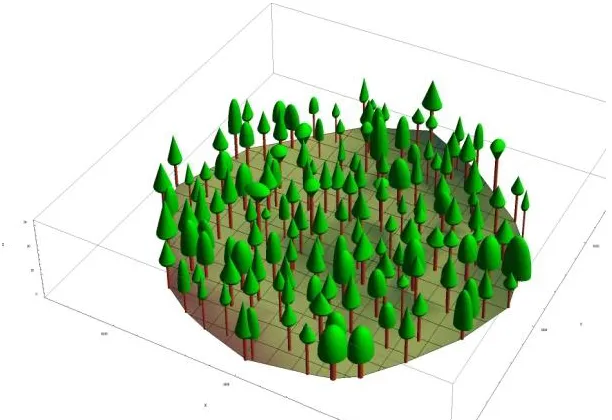
clinometer to measure tree stem displacement. Figure 2.1 shows a computer-generated
Figure 2.1: A computer generated model of the instrumented trees based on tree height, species and crown measurements.(Courtesy of M. Rudnicki, The University of
Connecticut)
This work is part of a larger study designed to understand the interactions
between tree sway and turbulence in the canopy (Granucci et al., 2013). The tower
arrangement was chosen based on the predominant wind flow from west to east seen at
Figure 2.2: Wind direction distribution for 30-minute averages of winds measured above canopy during daytime convective conditions.
Each tower at the site was equipped with three CSAT3 sonic anemometers
(Campbell Scientific, Inc., Logan, Utah). Each component of the wind speed (u, v, w)
and sonic temperature (TS) was sampled at 10Hz. For this work, data from the central
tower was utilized. The anemometers were mounted at heights of 21.4m, 15.1m, and
8.0m on a 27.5m tall, triangle frame tower (Model 25G, Rohn, Peoria, IL). The top
anemometer was mounted just above the canopy, within the CRSL. The middle
anemometer was placed near the center of the live crown and the bottom was mounted
just below the live crown. All anemometers were mounted pointing north. Instruments
were operated nearly continuously from August of 2009 to December 2011.
Tree sway on the site was measured using biaxial clinometers (Model 900,
Applied Geomechanics) mounted just below the live crown height, an approximate height
ideal for tree sway measurement because their response time is much faster than tree
sway velocities and they were easily attached to the tree’s stem. A total of 149 trees were
equipped with clinometers. Clinometer data was stored as raw voltage values and
converted to displacement values in meters using calibrations for each individual sensor.
DATA ANALYSIS
To test the hypothesis, the collected data went through several analysis steps. The
first of these steps was to use the turbulent wind measurements to identify a potential gust
frequency time step. The appropriate time step, which was determined by the MRD
method (Vickers and Marht, 1997), depends on the average wind speed of each particular
night, and therefore cannot be satisfied with a generic timescale for the entirety of the
experiment, like many researchers have assumed before (Raupach, 1989; Shaw, 1992).
Once the corresponding time step was determined, that period was used to find the
change in the fundamental peak frequency of each individual tree over the course of the
night. The fundamental peak frequency of each tree was found by using the Fast Fourier
Transform Method. Performing a Fast Fourier Transform on each individual tree gives a
picture of the universal motion of the trees, at the predetermined time scale, throughout
the forest. The changes in the determined peak frequencies were then dynamically
mapped to help identify coherent structures—proposed at the predetermined time scale.
For comparison, the FFT was also be performed on a timescale double of that found by
the MRD, the resulting dynamic maps were compared to the original maps. For this
work a visual comparison was used to identify coherency. A more quantitative analysis
the gap-scale time step will show that the data revealed more coherencies in tree motion
than those at the longer timescale.
A. DATA PRE-PROCESSING
Prior to analysis for this experiment, the angular tree sway data were normalized
and converted to displacement in order to assess the quality of the data in meters. Data
sets were normalized to a zero resting position by identifying an eight hour time period
with very low winds speeds (average 0.23m/s), with this average angle subtracted from
the data sets used in the analysis. Displacement in meters was then calculated from the
normalized tilt angle using the equations specified in Rudnicki et al (2001). The x and y
displacements were then resolved into a single horizontal displacement of the center of
gravity of the live crown. Center of gravity for each tree was assumed to be half the live
crown height (Long and Smith, 1992), which was calculated by subtracting the sensor
mount height from the total tree height.
B. DATA SELECTION
Since the work presented here is exploratory, only a small subset of the data was
used. The selection was made primarily on the time of day as well as the season (keeping
in mind snow covered trees). During the daytime the atmosphere is very unstable which
makes the majority of wind events smaller and not as widespread. Unstable air gives way
to rising motion and rising motion will affect heat fluxes, causing wind events to be more
spread out vertically rather than horizontally during the night. Also, in the evening the
that linger over night elongated and therefore condensing all of the associated energy into
a smaller and long time scale. For this reason, the events should be more recognizable at
night. Also, as a result of the nocturnal jet, the turbulence found at nighttime in the static
boundary layer sometimes occurs in relatively short bursts and can cause mixing
throughout the entire layer.
Vickers and Mahrt (2001) speculated that:
“When relating these fluxes to the local mean wind shear and temperature stratification, as in similarity theory, the prescribed timescale would ideally include transports on all turbulence timescales and exclude all mesoscale and larger motions. Mesoscale motions do not obey similarity theory and are poorly sampled on time scales of a few hours or less. Including mesoscale transport in calculated fluxes potentially degrades similarity relationships (Smedman 1988). This degradation is expected to be most significant for stable conditions, where the turbulent fluxes are small and inclusion of the mesoscale contribution can dramatically change the magnitude and even the sign of the calculated flux. In unstable conditions the turbulent flux is much larger, and therefore inadvertent inclusion of mesoscale transport is thought to have less impact on the calculated flux.”
This lead this project to look more closely at nighttime data, rather than daytime, so that there is a better change of “catching” some of the elongated eddies events that
enter the study area and pass by the towers.
Typically, these eddies are categorized best in high wind speed events, but for
purposes of this study we want to make sure to reduce the miscellaneous changes in
fundamental frequencies that may have been brought on by collisions in the upper
canopy. Without a collision factor we would ideally use high wind speed days, but will
use moderate wind speed days in hopes of catching coherency, but eliminating the
Given these criteria two nights were selected for analysis. Both were chosen for
the moderate average wind speeds following previous studies, which suggested eddies
were more visible when winds were higher and/or more turbulent. Thirty minutes
averages of horizontal wind speed, U, were examined for the entire study period. Two
nights were chosen based on sustained winds greater than 1.5m/s. These two nights were
May 27, 2011, which had an average wind speed of 3m/s and May 30, 2011, which had
an average wind speed of 2.4m/s.
C. IDENTIFICATION OF TIME SCALE
Flux calculations from tower data require the researcher to choose a
timescale to define the fluctuations. The calculated flux includes all scales of motion
from the smallest resolved by the instrumentation up to the specified averaging timescale,
and therefore, the calculated flux depends on the choice of the research. Differences in a
selection of a timescale may contribute to some of the differences between studies,
especially for the stable boundary layer. For example, while studying similarity
relationships, one might attempt to remove all non-turbulent contributions to the fluxes,
while for balancing surface energy budgets one might want to include heat fluxes at
larger timescales, regardless of their origins. Since the atmosphere typically contains
motions and coherent vertical transports (fluxes) on a wide range of timescales, the
cospectral gap varies in the literature, where a typical value is ~30-40 seconds. (Vickers
and Mahrt, 1997)
The scale dependence of the flux often reveals a cospectral gap region that
separates the turbulent scales of the cospectra from the mesoscale transport (Smedman
and Hogstrom 1975; Stull 1990). These mesoscale flows can include deep convection,
large roll vortices and local circulations due to topographical or surface heterogeneity. In
stable flows, mesoscale motions can include internal gravity waves, drainage flows, and
other less known motions. Wave-turbulence interactions at timescales as small as a few
hundred seconds have been observed to cause both gradient and counter gradient heat
fluxes in very stable conditions (Smedman 1988; Sun et al. 2002).
When relating fluxes to the local mean wind shear and temperature stratification,
as in similarity theory, the prescribed timescale would ideally include transports on all
turbulence timescales and exclude all mesoscale and larger motions. Mesoscale motions
do not obey similarity theory and are poorly sampled on time scales of a few hours or less
(Mahrt et al. 2001). Including mesoscale transport in calculated fluxes potentially
degrades similarity relationships (Smedman 1988). This degradation is expected to be
most significant for stable conditions, where the turbulent fluxes are small and inclusion
of the mesoscale contribution can dramatically change the magnitude and even the sign
of the calculated flux. In unstable conditions the turbulent flux is much larger, and
therefore inadvertent inclusion of mesoscale transport is thought to have less impact on
One method of choosing a timescale is Multi-resolution decomposition (MRD)
(Vickers and Mahrt, 2006). A multi-resolution decomposition was applied to the raw
anemometer data for each night to find the cospectral gap scale-- the timescale that
separates turbulent and mesoscale fluxes of heat, moisture, and momentum between the
atmosphere and the surface. It is desirable to partition the flux because turbulent fluxes
are related to the local wind shear and temperature stratification through similarity
theory, while mesoscale fluxes are not. Use of the gap timescale to calculate the eddy
correlation flux removes contamination by mesoscale motions, and therefore improves
similarity relationships compared to the usual approach of using a constant averaging
timescale.
Multiresolution analysis applied to a time series decomposes the record into
averages on different time scales and represents the simplest possible orthogonal
decomposition. Multiresolution (MR) spectra yield information on the scale dependence
of the variance as do Fourier spectra, but unlike Fourier spectra, MR spectra satisfy
Reynold’s averaging at all scales and do not assume periodicity (Howell and Mahrt
1997). The location of the peak of MR spectra in the time scale domain depends
primarily on the timescale of the fluctuations, while the peak of Fourier spectra depends
on the periodicity. Howell and Mahrt (1997) found that Fourier spectra tend to be shifted
to larger scales because local MR spectra respond to event widths, whereas the global
Fourier spectra are influenced by the time between events. Mahrt et al. (2001) found a
spectral gap delineating turbulence and mesoscale motions by examining MR spectra
hypothesize that it is the turbulent scale motions that cause coherent tree motion and
therefore that the time scale of the peak MR spectra is the ideal averaging time to
determine tree movement frequency.
To objectively find the gap timescale, Vickers and Mahrt developed an automated
algorithm. The algorithm scans the MR cospectra beginning with the shortest averaging
timescale and progressing to longer timescales. The first peak in the cospectra is
identified by a decrease in magnitude with increasing scale and is associated with
turbulence. The gap between turbulence and mesoscale motions is identified when the
cospectra either increase or level off at an averaging time scale longer than the scale
associated with the turbulence peak. A leveling off is identified when the accumulative
flux changes by 1% or less with an increase in timescale. For this work the gap was
defined as the peak after the first increase. The top sonic anemometer on the two towers
serves as a good representation of the entire forest site to find a more ideal integration
time. Python code for computing the MRD and identifying the gap scale is included in
Appendix A.
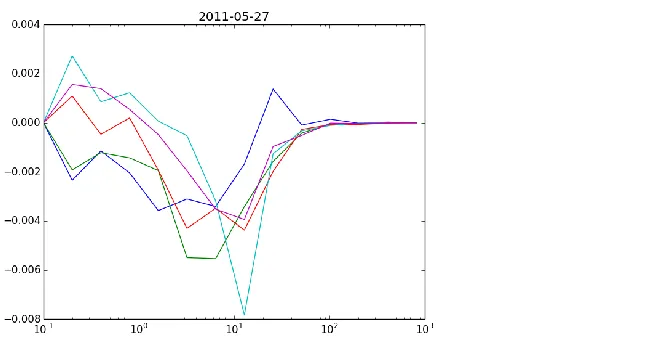
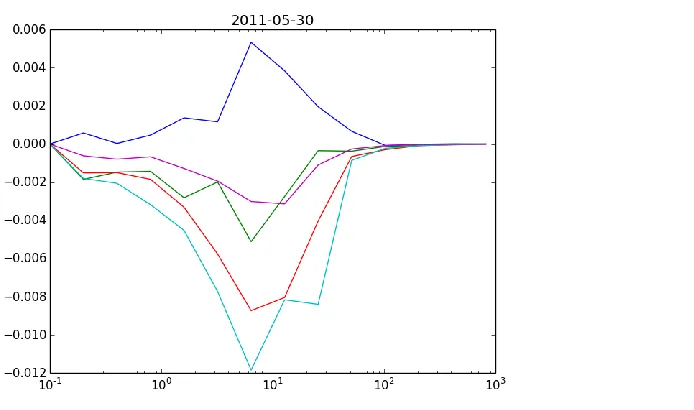
Figure 2.3 and 2.4 show the MRD calculated for the two test case days, using
data from top anemometers and beginning the calculation one hour after sunset. In Figure
2.3 the gap is identified as 18.56 seconds. This is the average peak from all five hour
segments for the evening. Figure 2.4 show a longer gap of 53.76 seconds for the second
day, May 30, 2011. Each colored line on the graph represents thirty minutes of wind
data. The y-axis is the total heat flux cospectra calculated for each time scale. Heat flux,
measure of vertical motion in the atmosphere. Vertical motion in an atmosphere is also
another way to think of energy in the atmosphere. It takes energy for air to rise vertically.
The x-axis is a time scale measurement on a log scaled axis. The time scale is simply
saying that that is the amount of time that it took for an event (eddy) to pass the tower
and its associated sonic anemometer. The amount of time essentially is an indicator to the
size of an event, and therefore, how much energy the event is possibly holding or moving
throughout our forest. These events, especially the ones that occur in the aforementioned
gap are affecting the natural fluxes in a forest on a day-to-day basis.
Figure 2.4: The multi-resolutional decomposition found the gap on May 30, 2011 from 1800-2100. The average of all 5 hours is 53.76 seconds.
The differences between these two gaps can be accounted for by looking at the
average wind speed for those two time frames. The average wind speed for May 27, 2011
was slightly higher than the average wind speed for May 30, 2011, confirming that a
different gap scale is needed in the same environment based on difference timeframes.
On May 30, 2011, one of the lines also appears to have a heat flux in the opposite
directions. This is the first of the 30 minute averages, and although the heat flux is in the
opposite directions (possibly due to the sun still setting/ radiation differences) the gap
that is found using the MRD will not be affected because it is taking the average of all of
the gaps found and the gap appears to be on the same time frame as the other 30 minute
D. IDENTIFYING TREE MOTION
Like all physical structures, trees have a natural mode of frequency and are
susceptible to resonant loading. Therefore, understanding their periodic motion is
fundamental to understanding the absorption and dissipation of wind energy (Rudnicki et
al, 2008). Several studies have combined spectra from measurements of wind gusts with
spectra characterizing tree sway in order to construct mechanical transfer functions.
These types of studies reveal that wind gusts at or near the tree’s natural sway frequency
are efficiently transformed into tree motion and may induce resonance (Gardiner 1992;
White et al.1976).
The Fourier transform method takes advantage of the fact that continuous signals
can be decomposed to a sum of weighted sinusoidal functions. A Fast Fourier Transform
(FFT) can be applied to each tree to detect the fundamental mode of frequency over the
course of a particular time period. In previous studies the dominant frequency from each
Fourier transformed data segment were identified by applying a cutoff of any frequency
below 0.2 Hz and then automatically selecting the frequency with the highest power. The
resulting frequencies are assumed to represent the fundamental mode of tree vibration. In
this study an FFT was performed for each time segment identified by the MRD. That is
for every 18.5 seconds of tree data for the first day that was picked a single FFT was
computed. The frequency with the highest power was taken as the tree vibration due to
turbulence. This process effectively creates a time series of frequency values for each
In previous studies (Rudnicki et al. 2008), smoothing functions were used to find
an interpretable result. In Rudnicki’s study (2008) a Daniell filter was used for all of the
trees to minimize leakage and retain detail (Bloomfield 2000). A Daniell filter is a
smoothing process for displacement data, which helps to identify fundamental
frequencies. However, while the Daniell filter was useful for spectral loss, when
applying it to the sway data in this experiment, small changes in frequency from time step
to time step were lost. This is likely because of the short time periods that are being
examined in this experiment. Because this study is not only examining the fundamental
frequencies of the trees, but rather the changes in frequency, the Daniell filter was not
used. Instead a simple 5-point moving averaged was applied to the fourier power spectra
to aid in automated identification of the fundamental frequency in each time step. All
time series calculations, including the MRD and FFT were made using Python version
2.6 on a desktop PC. All the code can be found in Appendix A.
E. DYNAMIC MAPPING
In order to visualize how the fundamental frequency of each individual tree was
changing over time, the change in frequency was mapped and categorized based on either
an increase or a decrease in frequency. The study area was plotted according to exact
latitude and longitude coordinates into a layer in ArcMap. The frequency data was
imported into ESRI’s ArcMap and “joined” to the tree layer based on the tree id number,
Once the data was geolocated a spatial interpolation was preformed for each time step
(every 18.56 seconds for the first day and every 53.76 seconds for the second day). This
turns the 149 individual time series of frequency changes into a series of maps. The
analysis was done by batching all of the information for each tree and time period
together and running the Natural Neighbor interpolation to give a complete picture of the
entire data area.
The Natural Neighbor method is a geometric estimation technique that uses
natural neighborhood regions generated around each point in the data set. Like the
inverse distance weighting (IDW), this interpolation method is a weighted-average
interpolation method. However, instead of finding an interpolated point's value using all
of the input points weighted by their distance, Natural Neighbors interpolation creates a
Delauney Triangulation of the input points and selects the closest nodes that form a
convex hull around the interpolation point. It then “weighs” their values by proportionate
area. This method is most appropriate where sample data points are distributed with
uneven density. It is a good general-purpose interpolation technique and has the
advantage that you do not have to specify parameters such as radius, number of neighbors
or weights. This technique is designed to honor local minimum and maximum values in
the point file and can be set to limit overshoots of local high values and undershoots of
local low values. The method thereby allows the creation of accurate surface models from
C
HAPTER3:
R
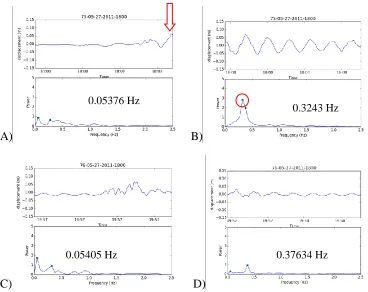
ESULTSFigure 3.1 shows an example of the process of converting tree displacement to
changes in frequency. The figure shows the raw time signal and the FFT for trees # 75
and #76. Both are located near the center of the plot. By looking at the figure it can be
observed that the chosen time scale for this particular night finds a change in for the onset
and offset of gusts.
A) B)
C) D)
Figure 3.1: FFT Results May 27, 2011 -- The purpose of comparing these two variables is to identify the onset of a gust in the forest (indicated by the arrow in Figure 3.1A) and then observe what happens to the peak frequency of that time frame(circled in Figure 3.1B) when the displacement is changing. Each top panel shows the displacement over a
period of time. The bottom panels show the corresponding frequency change (power)— 0.05376 Hz
0.3243 Hz
both on the x-axis. The peak frequency in the lower panel is denoted by a dot. The change in this peak frequency is the mapable variable for the animations. A&B Tree 75 from
18:00:00.01 to 18:00:37.22 C&D Tree 76 from 19:57:00.01 50 19:57:37.22
Figure 3.1 clearly indicated that there is a change in the tree’s peak frequency
upon the arrival of a gust. In Figures 3.1A and 3.1B it can be observed that the peak
frequency of the tree is increased from 0.05Hz to 0.32Hz with the onset and occurrence
of a gust. The same is true in Figures 3.1C and 3.1D, which show the tree movement and
frequency for a time later in the evening. Here the frequency changes from its resting
level of 0.05Hz to a movement frequency of 0.37Hz. This indicates that a positive change
in frequency is a good parameter for the identification of a gust affecting a tree in the
forest. This was further analyzed to see if the apparent increase in the fundamental
frequency does not just occur in one place, at one tree, but rather in groups, which can be
identified throughout the study area.
In order to identify coherency at the MRD calculated time step, the FFT was also
performed at another record length, which is double that of the spectral gap calculated
using MRD. This was done as a control comparison. For May 27, 2011 this was a record
length of 37 seconds and for May 30, 2011 a record length of 106 seconds was used. The
output of the longer time FFT was also mapped using the same steps mentioned above.
Figure 3.2 shows the results for the same starting time presented in Figure 3.1. Thus, the
left panels of Figure 3.2 show the combined time series of panels A&B of Figure 3.1 and
the right panel shows the next 106 seconds. When the record time is doubled the figures
of a gust (Webb et al, 1980), like the gap scale figures previously showed. This was true
for the majority of the plots at the longer time length.
Figure 3.2: FFT Results May 27, 2011—double record length. The left panel shows the combined time series of the top panels of Figure 3.1 and the right panel shows the combined time series of the bottom panels of Figure 3.1. Tree 75 is from 18:00:00.01 to
18:00:37.22 and Tree 76 is from 19:57:00.01 50 19:57:37.22. As the Red circles indicate, there is no detection of a peak frequency in these examples.
Because the main goal of this thesis was to determine coherency in the data, only
a subset of each night was mapped for visual aid. For each night the first 30 minutes of
data was compiled into an animated map. This captures the occurrence of a moderate to
high wind speed on each day, which as previously discussed, should yield more apparent
gusts. Viewing of the animations, revealed an interesting picture of the forest. The
animations are attached on an included CD. Static images from the animations are shown
below for discussion. In all of the maps, shades of blue represent a decreasing change in
frequency from the previous time step and the shades of red indicate an increase in
frequency.
When observing the animations the movement of the gusts through the forest site
becomes more apparent—particularly at the gap time scale. As shown in the static
images, there are some instances in the time frame that I examined where a gust
impression was apparent and a gust moved through the site, but it only appeared at the
gap time scale animation and was completely missed, or virtually non-existent in the
longer time step animation. The color changes between a decrease in frequency (blue)
and an increase in frequency (reds) are usually very well coordinated—if there was a
major increase as a gust moved through a section of a forest in one frame in the next
frame there is a corresponding decrease in frequency as the tree begins to return back to
its natural frequency. Overall movement in the animations corresponds with the wind
direction observed by the central tower on the research site.
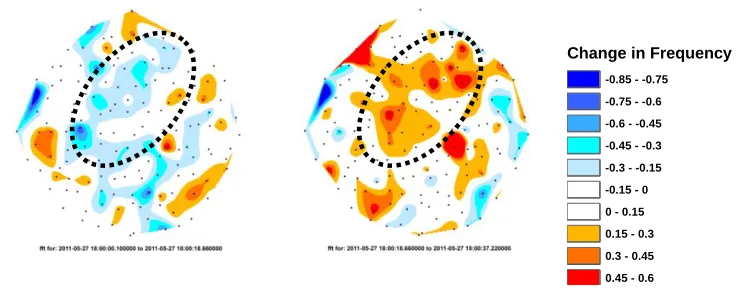
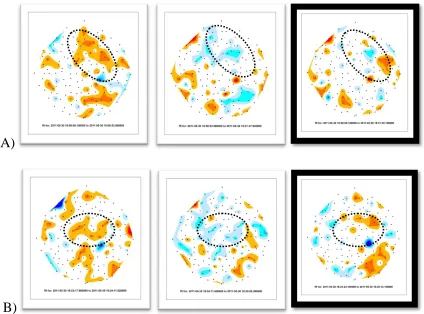
Figure 3.3: Static images of the frequency changes occurring from 2011-05-27 18:00:00.01 to 18:00:37.22 at the gap time scale. During this time wind direction was predominantly from the northwest. Each image represents the frequency found from an
18 second record
Change in Frequency
-0.85 - -0.75
-0.75 - -0.6 -0.6 - -0.45
-0.45 - -0.3
-0.3 - -0.15 -0.15 - 0
0 - 0.15 0.15 - 0.3
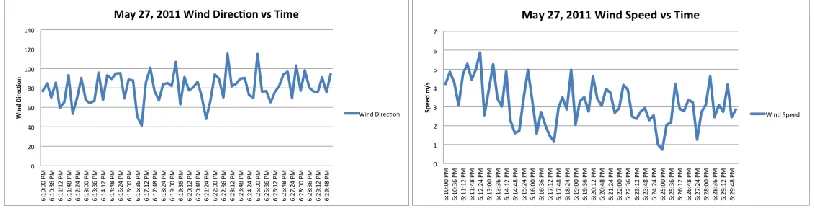
Figure 3.4: Plots of the Wind Direction and Wind Speed corresponding with the time periods looked at in the attached animations.
Figure 3.5: Static image of the frequency changes occurring from 2011-05-27 18:00:00.01 to 18:00:37.22 at double the gap time scale.
Figure 3.3 shows results from May 27th when computing frequency changes at the
gap-scale. In the first image, a predominant decrease in frequency is seen through the
center of the plot (highlighted with the dashed circle), with some areas of increase on the
outer edges. In the second image a predominant increase in frequency is seen—which can
be attributed to a response to the previous decrease in the time step before. This
momentary decrease is interpreted as a gust moving the canopy. The wind speed shown
in Figure 3.4 confirms this. Figure 3.5 shows the results of the computed frequency
Change in Frequency
-0.85 - -0.75
-0.75 - -0.6
-0.6 - -0.45 -0.45 - -0.3
-0.3 - -0.15 -0.15 - 0
0 - 0.15 0.15 - 0.3
changes at double the gap-scale on May 27th, 2011. The absence of any frequency
increase or decrease indicates that the frequency changes are lost when computing
frequency at times longer than the gap-scale. The decrease and subsequent increase in
frequency would not have been detected and instead, the data would have just showed an
overall decrease between those two time steps. Essentially, the tree’s response to the gust
occurring at the time is lost, and the bounce back, return to normalcy, or increase in
frequency is not detected at double the gap scale.
A second example from May 27th is shown in Figure 3.6 below.
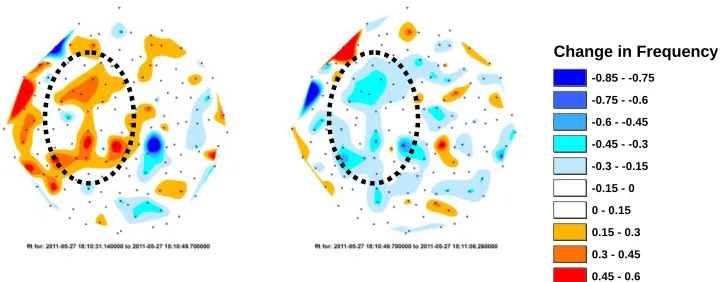
Figure 3.6: Static images of the frequency changes occurring from 2011-05-27 18:10:31.14 to 18:11:08.26 at the gap time scale
Change in Frequency
-0.85 - -0.75
-0.75 - -0.6 -0.6 - -0.45
-0.45 - -0.3 -0.3 - -0.15
-0.15 - 0 0 - 0.15
0.15 - 0.3
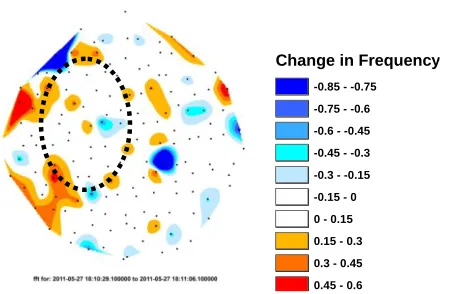
Figure 3.7: Static image of the frequency change occurring from 2011-05-27 18:10:29.14 to 18:11:06.26 at double the gap time scale
In the first two images above, there is an apparent gust impression occurring
between the time steps of 18:10:31.14- 18:10:49.7 and 18:10:49:7- 18:11:08:26, however
no gust is identifiable in Figure 3.7, which shows the computed frequency change when
using double the gap-scale for the computation window. This is expected and apparent
because of the theory proposed above that the gusts and coherent motions will be more
visible at a time scale that is determined by MRD, rather than an averaged time scale for
the entire study time.
On the night of May 30th, the wind speed was 2.4m/s and the gap-scale was longer
(53.76 seconds). Overall the results are similar with more coherency and subtle changes
in tree motion seen when using the proposed gap-scale as a window-length versus a
longer period. Figure 3.8 below shows several static images from this night. These
images are interesting because even though the average wind speed for this night was
slightly slower than the previous date chosen, coherent motions can still clearly be seen at
Change in Frequency
-0.85 - -0.75
-0.75 - -0.6 -0.6 - -0.45
-0.45 - -0.3 -0.3 - -0.15
-0.15 - 0
0 - 0.15 0.15 - 0.3
the gap scale and are completely overlooked at the double time step (highlighted with
dashed circle). This indicates that choosing an appropriate time scale for these gusts is
even more important when the wind speed is not as high.
A)
B)
Figure 3.8: (A) Static images of the frequency changes occurring from 2011-05-30 18:00:00.01 to 18:01:47.62 at the gap time scale with the outlined image showing the
same time frame, but double the gap time scale (B) Static images of the frequency changes occurring from 2011-05-30 18:23:17.86 to 18:25:05.38 at the gap time scale
C
HAPTER4:
D
ISCUSSION/
C
ONCLUSIONThe results presented in chapter three confirm the original hypothesis that
coherent motions in a forest canopy are occurring on turbulent time scales. Less
coherence is seen when examining motion on time scales greater than the co-spectral gap,
which would include meso and sub meso scale motions. This further proves that
identifying the importance of a time scale is imperative to predicting the response of trees
in a forest environment. In this particular case, frequency proved to be a good variable for
mapping the wind and capturing the occurrence of the small-scale gusts. Overall this
work highlights how helpful dynamic maps can be for displaying rapidly changing spatial
patterns. As a preliminary analysis this work also highlights a number of other future
research directions.
Several aspects of this study could be improved in the future. When looking back
at the mapping outputs, a particular tree is always highlighted. After looking more into
the specifics of this tree it is clear that it is much bigger than the surrounding trees, hence
causing the FFT to highlight it more often. This could also have something to do with the
method of peak detection algorithm that was chosen—another method might have been
better or more accurate. Also, more standardization of the data might have prevented this.
Also, because of the limitations of this study, only two days out of several years of data
were used. Expanding the time frame would have given us a better look at the differences
remains unclear as to whether this method will work for moderate wind speed days, when
the changes in frequency are not as noticeable, as only days with high winds speeds were
chosen for this particular study.
The animations that were created for this project were a great start, but there
needs to be more flexibility in controlling the time step as well as the time frame that can
be looked at. If the time step could be customized and changed to start later in the time
frame it would ensure that any gust, at any point in the forest can be captured. This means
that you could track the movement of a gust from its entrance to the research site until it
exits—still using the gap scale. If a tool like this could be created, it would help to apply
these findings to other areas, not just forests so that researchers can get an idea of how
small-scale winds interact on a variety of different terrains.
The more immediate take away from this study pertains to the specific field of
micrometeorology and forestry. Now that I have proved that there is coherency occurring
in the boundary layer at particular time scales, the next step is to figure out what can
define this coherency and how to move forward into defining exactly what constitutes as
spatial correlation, i.e. a certain number of trees moving in the same direction, etc.
Identifying areas that are spatially correlated would help in forestry management/damage
predictions.
There has long been an underlying assumption in meteorology that sub synoptic-scale
phenomena such as turbulence might be responsible for the difficulty in making quality
meteorology involves the search for accurate turbulence parameterization schemes for
larger-scale numerical forecast models. Progress made from this project will build a
foundation, in both field experimental design and numerical model development, for
pursuing investigations of these interactions in more complex situations in the near
R
EFERENCESAmiro, B. D. “Comparison of Turbulence Statistics Within Three Boreal Forest Canopies.” Boundary-Layer Meteorology 51, no. 1–2 (April 1, 1990): 99–121. doi:10.1007/BF00120463.
Baker, C.J. “The Development of a Theoretical Model for the Windthrow of Plants.”
Journal of Theoretical Biology 175, no. 3 (August 7, 1995): 355–372.
doi:10.1006/jtbi.1995.0147.
Baldocchi, D. D. & Hutchinson, B. A. 1987 Turbulence in an almond orchard: vertical variation in turbulence statistics. Boundary-Layer Meteorol. 40, 177–146.
Baldocchi, Dennis D., and Tilden P. Meyers. “Turbulence Structure in a Deciduous Forest.” Boundary-Layer Meteorology 43, no. 4 (June 1, 1988): 345–364. doi:10.1007/BF00121712.
Banta, R., R. Newsom, J. Lundquist, Y. L. Pichugina, R. L. Coulter,and L. Mahrt, 2002: Nocturnal low-level jet characteristics over Kansas during CASES-99.Bound.-Layer Meteor., 105, 221–252.
Bloomfield P (2000) Fourier analysis of time series: an introduction. Wiley, New York
Bohm, M., Finnigan, J. J. & Raupach, M. R. 2000 Dispersive fluxes and canopy flows: just how important are they? In Proceedings of 24th Conference on Agricultural and Forest Meteorology, American Meteorological Society, Davis, CA.
Boose, Emery R., David R. Foster, and Marcheterre Fluet. “Hurricane Impacts to Tropical and Temperate Forest Landscapes.” Ecological Monographs 64, no. 4 (November 1994): 369. doi:10.2307/2937142.
Brunet, Y., J. J. Finnigan, and M. R. Raupach. “A Wind Tunnel Study of Air Flow in Waving Wheat: Single-point Velocity Statistics.” Boundary-Layer Meteorology 70, no. 1–2 (July 1, 1994): 95–132. doi:10.1007/BF00712525.
Businger, J. A., J. C. Wyngaard, Y. zumi, and E. F. Bradley, 1971:Flux profile relationships in the atmospheric surface layer. J.Atmos. Sci., 28, 181–189.
Canham and Loucks 1984 Ecol 65 803 809 Pdf Free Ebook Download. Accessed April
Cellier, P., and Y. Brunet. “Flux-gradient Relationships Above Tall Plant Canopies.”
Agricultural and Forest Meteorology 58, no. 1–2 (March 1992): 93–117.
doi:10.1016/0168-1923(92)90113-I.
Colorado, Atmospheric Studies Program Area J. C. Kaimal Chief, Wave Propagation Laboratory Environmental Research Laboratories National Oceanic and Atmospheric Administration Boulder, and Center for Environmental Mechanics J. J. Finnigan Head, Australia National Oceanic and Atmospheric Administration Boulder Colorado.
Atmospheric Boundary Layer Flows : Their Structure and Measurement: Their
Structure and Measurement. Oxford University Press, 1993.
Dale, V. H., L. A. Joyce, S. McNulty, R. P. Neilson, M. P. Ayres, M. D. Flannigan, P. J. Hanson, et al. Climate Change and Forest Disturbances, 2001.
http://www.treesearch.fs.fed.us/pubs/30125.
David Foster, and Emery R. Boose. “Patterns of Forest Damage Resulting from Catastrophic Wind in Central New England, USA” (n.d.).
Dyer, A., 1974: A review of flux-profile relationships. Bound.-Layer Meteor., 7, 363– 372.
Dwyer, M. J., Patton, E. G. & Shaw, R. H. 1997 Turbulent kinetic energy budgets from a large-eddy simulation of airflow above and within a forest. Boundary-Layer Meteorol. 84,23–43.
Emanuel, Kerry. “Increasing Destructiveness of Tropical Cyclones over the Past 30 Years.” Nature 436, no. 7051 (August 4, 2005): 686–688.
doi:10.1038/nature03906.
Finnigan 2000 Annual Review Fluid Mech Pdf Free Ebook Download. Accessed April 8,
2013. http://ebookbrowse.com/finnigan-2000-annual-review-fluid-mech-pdf-d131921957.
Finnigan, John. “Turbulence in Plant Canopies.” Annual Review of Fluid Mechanics 32, no. 1 (2000): 519–571. doi:10.1146/annurev.fluid.32.1.519
———. “Turbulence in Plant Canopies.” Annual Review of Fluid Mechanics 32, no. 1 (2000): 519–571. doi:10.1146/annurev.fluid.32.1.519.
Gao, W., R. H. Shaw, and K. T. Paw U. “Observation of Organized Structure in
Turbulent Flow Within and Above a Forest Canopy.” In Boundary Layer Studies and
Applications, edited by R. E. Munn, 349–377. Springer Netherlands, 1989.
Gardiner B (1992) Mathematical modelling of the static and dynamic characteristics of plantation trees. In: Franke J, Roeder A (eds) Mathematical modelling of forest ecosystems. Sauerlander, Frankfurt, pp 40–61
Gardiner, B. A. “Wind and Wind Forces in a Plantation Spruce Forest.” Boundary-Layer
Meteorology 67, no. 1–2 (January 1, 1994): 161–186. doi:10.1007/BF00705512.
Henry, Hugh A. L., and Sean C. Thomas. “Interactive Effects of Lateral Shade and Wind on Stem Allometry, Biomass Allocation, and Mechanical Stability in Abutilon
Theophrasti (Malvaceae).” American Journal of Botany 89, no. 10 (October 1, 2002): 1609–1615. doi:10.3732/ajb.89.10.1609.
Howell, J. F., and L. Mahrt, 1997: Multiresolution flux decomposition.Bound.-Layer Meteor., 83, 117–137
Irvine, M. R., B. A. Gardiner, and M. K. Hill. “The Evolution Of Turbulence Across A Forest Edge.” Boundary-Layer Meteorology 84, no. 3 (September 1, 1997): 467–496. doi:10.1023/A:1000453031036.
James, Kenneth R, Nicholas Haritos, and Peter K Ades. “Mechanical Stability of Trees Under Dynamic Loads.” American Journal of Botany 93, no. 10 (October 2006): 1522–1530. doi:10.3732/ajb.93.10.1522.
Kaimal, J. C., and J. J. Finnigan, 1994: Atmospheric Boundary Layer Flows: Their Structure and Measurements. Oxford University Press, 289 pp.
Katul, G G, A Porporato, R Nathan, M Siqueira, M B Soons, D Poggi, H S Horn, and S A Levin. “Mechanistic Analytical Models for Long-distance Seed Dispersal by Wind.”
The American Naturalist 166, no. 3 (September 2005): 368–381. doi:10.1086/432589.
Katul, G., and B. Vidakovic, 1996: The partitioning of attached and detached eddy motion in the atmospheric surface layer using Lorentz wavelet filtering. Bound.-Layer Meteor., 77, 153–172.
Law, Beverly. “Carbon Dynamics in Response to Climate and Disturbance: Recent Progress from Multi-scale Measurements and Modeling in AmeriFlux” (n.d.).
Mahrt, L., 1998: Flux sampling strategy for aircraft and tower observations. J. Atmos. And Oceanic Technol., 15, 416-429.
Marshall, B. J., C. J. Wood, B. A. Gardiner, and R. E. Belcher. “Conditional Sampling Of Forest Canopy Gusts.” Boundary-Layer Meteorology 102, no. 2 (February 1, 2002): 225–251. doi:10.1023/A:1013181714844.