Technology (IJRASET)
Co-Primary Multi-Operator for Optimal Resources
and Spectrum Sharing For Small Cell Networks
D.Punitha, Prof. K.A. DattathreyaM.E(P.hd)
Abstract: To deal with the challenge of providing higher data rates within limited spectral resources, the case of multiple operators sharing a common pool of radio resources is considered.Three algorithms are proposed to address co-primary multi-operator radio resource sharing under heterogeneous traffic in both centralized and distributed scenarios. The performance of these algorithms is assessed through extensive system-level simulations for two indoor small cell layouts. It is assumed that the spectral allocations of the small cells are orthogonal to the macro network layer and thus only the small cell traffic is modeled. The main performance metrics are user throughput and the relative amount of shared spectral resources. The numerical results demonstrate the importance of coordination among co-primary operators for an optimal resource sharing. Also maximizing the spectrum sharing percentage generally improves the achievable throughput gains over non-sharing.
Keywords---PRB-Physical Resource Block CQI-Channel Quality Informative CS-Capacity Source
I. INTRODUCTION
Wireless cellular systems are experiencing a growth data rate demands from users and it is expected that this trend will continue to speed up in the near future. Even though the fourth generation (4G) is still in its infancy, yet growing rapidly, the interest has already moved toward fifth generation (5G) networks. The continuing growth in demand for better coverage and capacity enhancements is pushing the industry to look ahead at how networks can meet future extreme capacity and performance demands.
5G mobile communication systems are expected to revolutionize everything seen so far in wireless systems. The requirements for 5G vary by application but will include data rates ranging from very low sensor data to very high video content delivery, stringent low latency requirements, low energy consumption, and high reliability. All of these technological requirements are expected to be achieved while keeping similar or lower cost than today’s technologies. 5G is likely to integrate enhancements in legacy radio access technologies with new developments in the areas of multiple access,waveform design, interference management, access protocols, network architecture and virtualization, massive MIMO, full-duplex radio technology, low latency, device-to-device (D2D) and machine type communication (MTC).
In addition to radio access technology advances, network capacity and connectivity can be improved by network densification (mainly via small cell deployment) and by harnessing broader spectrum allocations. In addition to small cell deployments, there are many other techniques and systems that can improve coverage and data rates, in densely populated indoor environments. These techniques include the deployment of radio remote heads (RRHs), distributed antenna systems (DAS), WiFi access points, etc. The use of LTE small cells offers several advantages over such systems. Compared to DAS, LTE small cells are both cheaper and less complex to deploy, and compared to WiFi, LTE small cells offer better performance, more efficient use of resources, and are well designed to support a substantial number of users.
II. SMALL CELL NETWORKS
A. Small Cell
Technology (IJRASET)
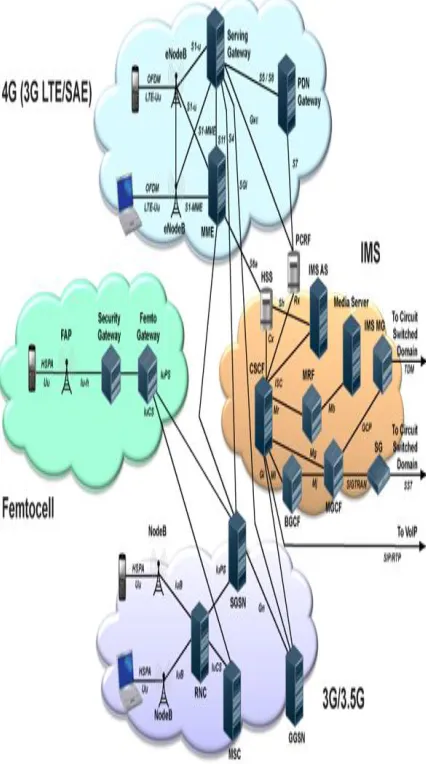
Fig 2.1 The Architecture of a small cell networks.
B. Implementing small cell networks
The implementation of small cell networks requires many decisions to be made, some of which can be far reaching and likely long-lasting. Largely, these decisions revolve around the type of network (3gor 4g) and the nature of the problem to be solved (for example, improved coverage or increased capacity). This part focuses on those issues related to spectral management and core network connectivity.
1) Coverage or Capacity: As a coverage solution, metro cells are usually deployed in areas with poor or non-existent macro coverage to deliver superior voice and packet data services. These include both in-building locations, such as event centers, and offices, as well as outdoor locations, such as the edge of suburban (coverage limited) cells or small rural towns. Traditionally, coverage holes such as these are very expensive to fill using conventional macro cell sites. The ability to cover them also depends on the band being used, especially for mobile network operators (MNOs) having Long Term Evolution (LTE) in the upper bands.
Technology (IJRASET)
3) Placement of Cells: Effective use of metro cells within an LTE shared carrier environment depends on optimal placement while
considering the exclusion zones mentioned above. With optimal placement among concentrated traffic hotspots, capacity gains upwards of 400 percent are achievable using only four metro cells per macro cell. Placing metro cells too close into the macro cell center causes them to compete with the macro and dramatically reduces their effectiveness. Good small cell planning necessitates that hotspots be well understood because these are the best locations to place metro cells and achieve the greatest return on investment (ROI).
[image:4.612.197.433.169.312.2]III. CQI MODELING
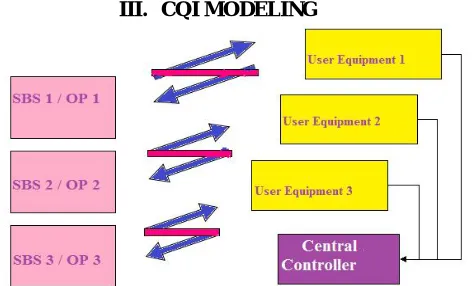
Fig 3.1 CQI Modeling of with and without sharing of OPs
For each user the CQI is estimated from the received signal with SINR calculated for every PRB.when the SBS supports COPSS users have to calculate CQI over the other operator’s bandwidth. Here user equipment is required to receive/request reference signals from the other operators SBS.In this case a user can only receive wide band reference signals from other OPs SBSs ,because spectrum sharing is up to the user they may share are not the bandwidth .This means that v user can only estimate if there are other OPS' SBS is nearby but they may not estimate the SINR accurately for each PRB when spectrum is shared. With accurate channel quality information (CQI) estimations, we propose three centralized algorithm for CoPSS. The proposed algorithms use moderate amount of shared information among OPs/SBSs and they do not require long iterative information exchange processes. Backhaul links between SBs or connections to the central controller.
A. Central Controller
The central controller has the responsibility to control the entire network. In a randomly deployed network, there can be large number of users collecting information from sensor nodes. As a different scenario, here we use small cell base station network. The main objective of our paper is the usage of minimum bandwidth also to increase the capacity of small cell networks.
All the data’s sensed are recorded and controlled by the base station. The users communicate with the corresponding small base stations with different levels of packet rate to ensure the use of bandwidth efficiency. The packet rate differs with 25%, 50%, 75% of data transmission to determine the bandwidth efficiency.
B. COPSS Alogrithm
1) To minimize signaling overhead, in this work it is assumed that each SBS/OP starts allocating PRBs from the beginning or from the end of its bandwidth.
2) Arbitrary allocations could require detailed resource allocation information exchange, significantly increasing the signaling overhead.
3) The three types of algorithm for spectrum sharing are
a) random sharing
b) equal sharing
c) Connection based sharing
IV. SPECTURM
Technology (IJRASET)
connections in the hands of the public.Specturm is divided in to different bands to avoid interfernce so our local radio station doesn’t interfere with our mobile phone calls also.Different types of specturm are
A. Licensed Specturm
Licensed specturm bands are allowed to be only by the company that holds a license, which is given out by the regulatory authority. For example: radio stations 89.7
B. Unlicensed Specturm
The bands of the specturm are used by any one has a compliant device that follows basic guide lines set by the regulators.Unlicensed user allows multiple people to broadcast on the same frequency at the same time.For example: anyone without a license can set up a wifi router, which uses 2.4 GHZ and 5GHZ bands.The wifi 802.11 stands defines how mobile communicate with a wifi router without causing interfernce with other devices.
V. MATHEMATIC EXTRACTION FOR CQI AND COPSS
It is assumed that the SBSs communicate with each other if the distance is less than or equal to 50 meters.Let Gl=(Vl,El) denote the
graph,where l=[0,...L] is the number of graph, the number of vertices in the graph (in this case SBSs) is Vl ={V0,...Vn}and the
edges in the graph (viis connected to SBS vj) El={(vi,vj)}.let K={1,...,K} denotes the set of OPs.we define function of operators (.)
which maps SBS vito respective operator, i.e. ¥ vi ,op(vi) ϵ K. If a graph has an vertices we have an n×n matrix A which is called an
adjacency matrix.The matrix a is defined by
Given that vjis the selected SBS, the available free shared PRBs from OP k to any SBS vjare given by:
Therefore we define new set v+ = {vi|BWU(vi) = 1} which includes all the overloaded SBSs. Here, free shared PRBs from OP k to SBS vjare and the total amount of free PRBs for SBS vjis Ʃ k ∈K wjk.
We let N(vi) denotes the set of neighbor vertices of vi and from (4) we define two different sets, Nol (vi) for overloaded neighbors,
and N nol (vi) for not overloaded neighbors,
Technology (IJRASET)
respectively. Now we can define free shared PRBs wj from neighbors ˇ Ki to SBS vj ,
Now we can define free shared PRBs wj from neighbors to SBS vj as
The round trip-delay in the coordination methods is 5 ms and it is assumed that each OP uses the same maximum allowed sharing percentage.2 Backhaul links between SBSs or connections to the central controller are assumed to be ideal.
Fig.3:2 Central controller optimization of small base cell station
Technology (IJRASET)
It shows the mean throughput of full buffer users for each CoPSS algorithm with sharing percentage from 0% to 100%. When the results are compared with the fixed layout results it can be clearly seen that the achieved rates are higher because users are now closer to SBS. When 0% of the bandwidth is shared mean throughput is 7.0 Mb/s.
Fig. 3.3 UEs SINR with and without CQI coordination and in the receiver when the fixed layout is used.
CQI Coordination for CoPSS cumulative distribution functions (CDFs) of SINR as estimated for the CQI with and without coordination, and as experienced at the receiver, when 50% bandwidth is shared. The SINR in the CQI and in the receiver is the mean SINR over the allocated PRBs. It is assumed that UE can report the PRB based CQI information and SBS then averages out the SINR with allocated PRBs and then selects one MCS level that is used for the transmission. The CDF shows that when the users are able to receive information about the bandwidth utilization of other SBSs/OPs in the vicinity SINR increases 3 dB (between 0 dB and 15 dB).
VI. CONCLUSION
In this paper the results reveal the altmost importance of channel quality signaling among OPs to take full advantage of shared resources. It also shows that, the connection based centralized and distributed scenarios outperform simpler random and equal sharing schemes.
REFERENCES
[1] Petri Luoto, Pekka Pirinen, Mehdi Bennis,Sumudu,Samarakoon,SimonScott,and Matti Latva-aho,"Co-Primary Multi-Operator Resource Sharing for Small Cell Networks" Senior Members, IEEE,ON WIRELESS COMMUNICATIONS, VOL. 14, NO.6,JUNE 2015(Base paper)
[2] B.Aazhang,J. Lilleberg, and G. Middleton, “Spectrum sharing in a cellular system,”in Proc. IEEE 8th Int. Symp. SpreadSpectrum Techn. Appl., pp.355–359 Aug. 2004.
[3] P.Ahokangas etal., “Defining co-primary spectrum sharing—A new business opportunity for MNOs?”in Proc. 9th Int. Conf. CROWNCOM, pp.395–400Jun. 2014.
[4] “Technical specification group radio access network, spatial channel model for multiple input multiple output (MIMO) simulations,” Cedex,France, 3GPP Tech. Rep.25.996 v6.1.0, 2003.
[5] “Guidelines for evaluation of radio interface technologies for IMT advanced,”Geneva, Switzerland, Rep. ITU-R M.2135-1, 2008. [6] X. He, K. Niu, Z. He, and J. Lin, “Link layer abstraction in MIMO-OFDM system,” in Proc. IWCLD , pp. 41–44Sep. 2007.
[7] P.Luoto, P. Pirinen, and M. Latva-aho,“Energy efficient load sharing in LTE-A hetnets,” inIEEE 9th Int. Conf. WiMob, pp. 119–123,Oct. 2013.
[8] T. Haataja, H. Pennanen, J. Leinonen, A. Tölli, and M. Latva-aho “Space Frequency Scheduling in TDD Based LTE-Advanced MIMO-OFDMA Systems,” in Proc. IEEE 73rd VTC Spring,pp.1–5,May 2011.
[9] H. Pennanen, T. Haataja, J. Leinonen, A. Tölli, and M. Latva-aho, “System level evaluation of TDD based LTE-Advanced MIMO-OFDMA systems,” in Proc. IEEE GC Wkshps,, pp. 809–813, Dec. 2010.