University of Twente
School of Management and Governance Chair of Technology Management
1st Supervisor Dr. Matthias de Visser
2nd Supervisor Dr. Michel L. Ehrenhard 3rd Supervisor (TU Berlin)
Julian Alexandrakis
Master Thesis
Designing an app prototype for employee business
travel using value-based requirements engineering
Student: Sascha Burg 2128888
Table of Contents
Index of Figures ... iii
1. Introduction: Knowledge workers have requirements towards a changing, digital workplace ... 1
2. Theory ... 5
2.1 The digital workplace creates new opportunities for employees and management ... 5
2.2 Business travel requires the use of mobile IT ... 7
2.2.1 Mobile travel applications gain more importance for their users ... 8
2.2.2 All-in-one mobile solutions are the most relevant trend for business travel ... 9
2.3 Business processes: understanding, managing and modelling processes is critical ... 11
2.3.1 Business process management involves process design across three subtasks ... 11
2.3.2 Business process modeling offers decision makers different approaches to choose from ... 14
2.3.3 Business Process Modeling Notation (BPMN) ... 14
2.3.4 Integrated Definition diagrams (IDEF) ... 16
2.3.5 Petri Nets ... 17
2.4 Software product management involves all stakeholders ... 18
2.5 Requirements management: The path from stakeholder requirements to product requirements ... 19
2.6 The requirements engineering process as the cornerstone of the product design process ... 19
2.6.1 Requirements engineering in the problem domain is the focus of this thesis ... 21
2.6.2 Requirements engineering process: statement of need and stakeholder identification ... 21
2.6.3 Requirements engineering process: operational scenario establishment ... 22
2.6.4 Requirements engineering process: sources of capturing stakeholder requirements .. 23
2.6.5 Requirements engineering process: writing and structuring stakeholder requirements ... 24
2.6.6 Creativity in the requirements engineering process ... 26
2.7 Value-based requirements engineering (VBRE) ... 26
2.7.1 Stakeholder values consist of beliefs and attitudes towards externalities ... 27
2.7.2 Stakeholder motivations translate to personal goals ... 27
2.7.3 Stakeholder emotions are reactive responses to externalities ... 28
2.7.4 Two methods of VBRE: expert and novice ... 28
2.8 Prototype design: creating a solution based on stakeholder requirements ... 29
2.8.1 Prototype categories range from simple to complex solutions ... 30
3. Methodology ... 33
4. Results ... 38
4.1 The current business travel process varies across individual employees but always incorporates three main phases ... 38
4.1.1 Workshop participants initially separate the business travel process into 64 process steps across eleven phases ... 38
4.1.2 Interviewees refine the CJM by providing additional steps, touchpoints, and pain points ... 40
4.1.3 By incorporating the company travel guideline, the complete business travel process can be visualized using BPMN diagrams ... 41
4.2 Requirements engineering yields the most relevant requirements employees have towards the business travel process ... 43
4.2.1 Workshop participants and interviewees provide an initial list of requirements for optimization of the business travel process... 43
4.2.2 Survey participants validate the relevance of the initial requirements while adding additional requirements ... 43
4.2.3 Applying value-based requirements engineering (VBRE) presents the final requirements document. ... 44
4.3 Artifact development for the two most relevant use cases, based on the employee requirements ... 45
4.3.1 The use case template as the cornerstone of the prototype development ... 45
4.3.2 The preliminary deliverable: feature mock-ups for two use cases ... 45
4.4 The final deliverable is achieved after one iteration ... 47
5. Discussion & Conclusion ... 49
5.1 This thesis contributes to requirements engineering by including creative processes for requirement discovery and solution development... 49
5.2 Discussion of the results ... 50
5.3 Limitations ... 53
5.4 Future research and conclusion ... 53
Bibliography ... 55
Annexure 1: Tables ...iv
Annexure 2: CJM ... xx
Index of Figures
Figure 1: Business Travel Trends ... 10
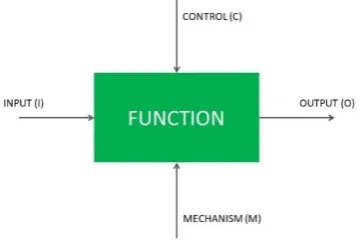
Figure 2: IDEF0: ICOM illustration ... 16
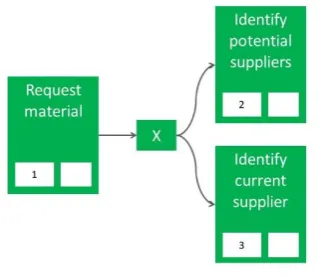
Figure 3: IDEF3: UOB illustration ... 17
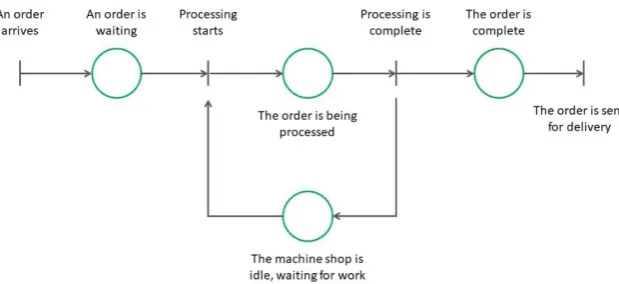
Figure 4: Basic Petri Net ... 18
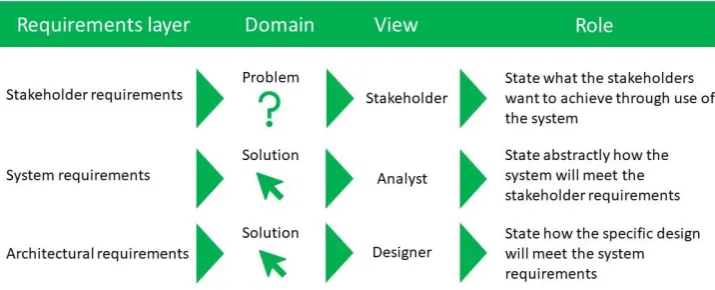
Figure 5: Problem and Solution Domain ... 20
Figure 6: VBRE novice mode ... 29
Figure 7: DSR model ... 33
Figure 8: DSR application steps ... 34
Figure 9: CJM from workshop ... 38
Figure 10: CJM after the third iteration ... 41
Figure 11: BPMN diagram - before the business trip ... 42
Figure 12: BPMN diagram - during the business trip ... 42
Figure 13: BPMN diagram - after the business trip ... 42
Figure 14: Mockup use case 1 ... 46
Figure 15: Mockup use case 2 ... 46
Figure 16: Final mockup use case 1 ... 47
1. Introduction: Knowledge workers have requirements
towards a changing, digital workplace
New technologies and applications introduced in our private lives continuously merge into our work life.1 These technological advances have been on the agenda of managers of
knowledge workers for the past decade, raising questions of how to best cope with their implications.2 A digital workplace, if sought and supported by the organization, provides its
employees with different ways of working that can have a positive effect on effectivity, productivity and overall employee engagement.3 The design of the digital workplace,
however, is still a problem for many organizations as finding the optimal balance between organizational agility and organizational control is a challenging task.4 Additionally,
organizations must consider the needs of their employees when digitalizing the workplace. Constant connectivity through digital tools, for example, makes it hard for employees to draw the line between their work and personal life.5
In the field of managed travel, the transition to digital tools is accelerating fast.6 As
mentioned before, travelers are adopting travel-related apps and tools from their private lives. As a result, business travelers expect new services to be included in their professional lives as well.7 Next to that, they are also incorporating emerging trends such as the sharing
economy.8 It has been found that travelers comply with change if it helps them in making
their lives easier.9 Travel managers display a similar level of openness towards change as
long as new services are cost-effective and safe.10 Technological advances and innovations
that unfold across various tools and services promise a smarter, faster, and better experience for all stakeholders involved.11 This requires industry players to incorporate new ways of
1See Attaran, M., Attaran, S. & Kirkland (2019) 2See Köffer (2015)
3See Meister & Willyerd (2010) 4See Köffer (2015)
5See Kossek (2016) 6See CWT (2015)
7 See CWT (2015)
buying, managing, and experiencing travel.12 Doing so poses a challenging task for travel
managers across all industries.13
Company S is a stock-listed corporation with various facilities around the globe and over 137.000 employees worldwide. Their field of expertise lies in the digitalization of energy management and technical automatization. Overall, the company has already implemented a wide variety of digital tools to support a digital workplace for its employees. However, different branches across countries require employees to conduct alternative business processes and activities that frequently reach their limits when it comes to realizing digitalization potentials. In late 2018, Management of one of its branches, hereinafter referred to as SE, initiated the "Young Potentials" program that assigned a group of students to research digitalization potentials for SE. Their findings indicated that the highest digitalization potentials lie in the domains of business travel and networking. An expected result, considering that most of SE's sales activities require business travel with sales managers visiting clients, fairs, or suppliers in order to market their products. Their need for assistance in business travel matters is further strengthened by the fact that they used to have dedicated personal for planning and managing travel activities which is no longer the case. Additionally, SE is currently restructuring its business travel environment by transitioning from a combustion engine to an electric car fleet, which brings new challenges for travel activities. The research goal of this thesis is to further develop the digitalization process of SE in the travel domain by gathering the requirements of SE and its employees towards a digital travel solution.
Research question:
"How can stakeholder requirements and values be incorporated in the prototype design of a digital business travel solution?”
The following paragraphs offer definitions of core variables and concepts mentioned in the research question:
For a system or application to work correctly, a set of functional and non-functional
requirements needs to be included in software development.14 In regards of this master
thesis, functional requirements are defined as requirements that "(...) specify the inputs (stimuli) to the system and the outputs (responses) from the system, and behavioral
relationships between them (…)."15 Non-functional requirements, defined as: "A
requirement on a service that does not have a bearing on its functionality, but describes attributes, constraints, performance considerations, design, quality of service, environmental considerations, failure, and recovery,"16 are not researched in this thesis.
Stakeholders of SE in the context of the thesis addresses Human Resources and Travel departments of SE on the one hand, and employees of SE on the other hand. For the different methodologies applied in this thesis, the author uses individual employee samples. However, they all share the following characteristics: They are frequent travelers, meaning they have at least one business-related trip every single week. They recognize SE's current travel policy and the associated processes and software tools. Additionally, they reside in Germany, conduct the majority of their business travel within Germany, Switzerland, and Austria, and are associated with one of the four main company facilities in Germany.
The author chooses to develop a digital solution based on three circumstances. First, prior
research by the 'young potential' program already identified the need for a software-based solution during a workshop with stakeholders of SE. Second, the employee sample of the research share the characteristic of being mobile workers, therefore, requiring mobile IT to serve their needs during business travel. Third, the author of this thesis has working experience in the software product management domain and is capable of combining theoretical research and practical knowledge. Based on the second circumstance, the solution developed in this research requires to work on mobile devices, namely laptops and smartphones.
Business travel in the context of this thesis refers to a business-related task, that requires the employee to travel from point A to point B and return to point A eventually. A business trip
14See Chung & do Proda Leite (2009) 15Glinz (2007), p. 2
2. Theory
2.1 The digital workplace creates new opportunities for employees
and management
The digital workplace and its associated concepts are beneficial to organizations that aim at optimizing knowledge worker productivity.17 Research even suggests that because of an
accelerated, globalized world, organizations are forced to acknowledge and act upon the continuous development of digital work by providing a suitable environment.18 Practice
organizations and consultancies have been addressing the digital workplace as a whole; however, research by scholars focussed on related topics instead.19 Köffer (2015) conducted
a literature review on the academic body of knowledge of the digital workplace intending to provide practical implications for organizations on designing digital tools and applications.20
Moreover, recent research points out that promoting digital work is not exclusively about introducing new IT but rather about restructuring current work practices with the use of new IT.21
The literature review by Köffer (2015) yielded four critical concepts within the field of the
digital workplace: collaboration, compliance, mobility, and stress and overload.22
Collaboration describes the use of technology, such as group support systems or social
media, to foster interaction between employees.23Compliance relates to well-meaning,
non-compliant behavior that occurs when ignoring IT guidelines or misusing technology at
work.24Mobility is about the management of mobile IT for employees at the workplace as
well as empowering mobile workers in their business processes.25 Stress and overload
originate from technology overuse at work, leading to information overload, technostress,
and work-life conflict.26 As the research goal of this thesis lies within the digitalization of
17See Köffer (2015) 18See Köffer (2015) 19See Köffer (2015) 20See Köffer (2015)
21See Dittes, Richter, Richter & Smolnik (2019) 22See Köffer (2015)
business travel processes, the author describes the concept of mobility thoroughly in the next paragraph.
The location of where employees work changed considerably over the past years, with many organizations partially or fully withdrawing from a traditional office space.27 In parallel,
many employees feel that the duration of business trips and time spent commuting is too high.28 Several studies indicate that these developments can be associated with an increase
in mobility of work.29 As for practical recommendations, Köffer (2015) suggests first to
acquire individual requirements of employees depending on their business processes, tasks, and job roles.30 As a result, organizations achieve a match between the challenges of the job
and the type of mobile technology applied as a solution.31 Based on prior research, mobile
work has not reached maturity in organizations.32 Therefore, Köffer (2015) suggests an open
exchange of work practices among departments and employees and to emphasize working together more closely.33 Support in forms of guidelines and trainings on how to use mobile
IT is an example of an open exchange of work practices.34 Literature also highlights that
mobile IT should offer user-liberation, meaning to empower mobile IT use for employees, to grant room for experimentation, and to incentivize mobile IT adoption.35
Scholars of recent publications provide additional recommendations for organizations to include in their digital workplace. Dittes et al. (2019) emphasizes the importance of regularly reviewing the use of digital work as well as its impact.36 Inappropriate use of mobile IT, for
example, should lead to adjustments and redesigns of current activities and their underlying digital tools.37 Building upon the argument of fostering an open exchange, as mentioned by
Köffer (2015), a transfer from a command and control leadership style to an open and collaborative organizational culture must develop as well.38 Consequently, open exchange
between departments and employees must be allowed by middle management without them
acting as information filters.39 Lastly, involving employees in the introduction process of
Mobile IT is of high importance.40 Beneficial effects of early involvement include high
employee motivation and early access to valuable user feedback.41
While these recommendations are valuable for fostering digital work in organizations, they all display somewhat of a managerial perspective. Technological design of solutions for digital work, however, is almost not discussed in the reviewed literature. For this thesis, parts of the technological design of a digital workplace solution, namely a software prototype to support employees within the business travel process, serves as the final deliverable. In order to provide the theoretical background to work towards that deliverable, it must first be identified what business travel means and what kind of findings recent research yields in the domain of digitalizing the business travel process.
2.2 Business travel requires the use of mobile IT
Today's global economy requires companies to engage in international business activities often through the means of incorporating business travel for their employees.42 In 2014,
business travel covered 14% of the international tourism market.43 Although we find
ourselves in the age of increased IT-usage, it appears that, especially in the corporate environment, face-to-face communication still plays a crucial role.44 In order to define the
term business travel, it must be clarified that authors often use it correspondently with the term business tourism. However, Swarbrooke & Horner (2001) deny their synonymic use and define business travel as: "the movement of business travelers from place 'A' to place 'B'", including business-related day trips of employees.45 Business tourism, on the other
hand, describes broader aspects of business travel and presupposes being away from home for multiple days.46
39See Dittes et al. (2019) 40See Dittes et al. (2019) 41See Dittes et al. (2019)
42See Unger, Uriely & Fuchs (2016) 43See Unger et al. (2016)
44See Unger et al. (2016)
Literature suggests two categories of business travelers and up to four phases of the business trip.47 The first category occasionally travels to meetings, events, or corporates, while the
second category is engaged in recurring business travel with remote target destinations every day.48 Regarding the four phases of a business trip, 1) trip preparations, 2) passenger
experience, 3) destination experience, and 4) homecoming, it was found that they often occur in a cyclical matter as the preparations for the upcoming trip are conducted in the homecoming phase of the current trip.49 Lenz, Gewald & Coccorullo (2015) distinguish
between three phases that have intersections with Unger et al. (2016), "pre-trip" and "on-trip", but add post-processing as a third phase.50
2.2.1 Mobile travel applications gain more importance for their users
Scholars agree that today's workforce consists of individuals from four major generations, namely the "Silent Generation", "Baby Boomers", "Generation X" and "Generation Y."51
Within the workplace, these generations differ in six areas, including their work-value, attitudes, personality, career expectations and experience, as well as their understanding of teamwork and leadership.52 Many researchers have shown the advantages of mobile
technology in travel-related matters. For the user, these are namely its convenience, personalization, immediate access to information, and money savings, as well as its innovative, entertaining and pragmatic character.53 Scholars have also researched the
obstacles of mobile travel technology. For the company, these include high entry and usage costs, data security issues, lack of suitable technology, and the lack of relevant services and features.54 Although there are obstacles, there is a need for travel applications. It was found
recently that 70% of business travelers have travel applications installed on their smartphones and 82% claim to have used at least one of those for their last business trip.55
Research that focuses on the use of mobile applications in the business travel context, however, is scarce to this date.56
47See Unger et al. (2016) 48See Unger et al. (2016) 49See Unger et al. (2016)
50See Lenz, Gewald & Coccorullo (2015) 51See Douglas, Lubbe & van Rooyen (2018) 52See Douglas et al. (2018)
2.2.2 All-in-one mobile solutions are the most relevant trend for business travel
Most business travelers use their smartphones to serve the purpose of locating destinations, providing navigation assistance, communication with travel agents, as well as reading user reviews, and engaging in social media platforms.57 Mobile travel applications focus on
travel-related tasks that help business travelers throughout their entire travel lifecycle. The CWT Travel Management Institute (2014) present which corporate and other features are most beneficial for users across three distinct phases of the business travel process: pre-travel, during pre-travel, and post travel.58 These features are illustrated in table 1.
Next to these possible features, the CWT Travel Management Institute (2015) identified the
five most critical developments and trends that impact managed travel in the future.59 Their
study consisted of 65 interviews with travel management experts from various fields and an online survey with 1080 travelers and 127 travel managers from international corporates. In the following, these trends will be explained briefly. Figure 1 illustrates all trends and technologies of the study in an impact-maturity matrix.
Mobile technology, as the most critical trend, includes various applications that address a specific topic and provide solutions. However, key developments in this area aim at providing all-in-one "power apps" that can be used across multiple devices. Such power apps also include wearable technologies as well as location-based services, such as enabling users
to access a hotel room without a key.60
Customization is another rising trend. Through the integration and analysis of Big Data, social media, and other data sources, solutions and services can be built based on the traveler's actions and behavior. Customization has positive impacts on both the travel
experience and the services' objectives itself.61
Sharing economy brands such as Airbnb and Uber continue to adjust their services to match
the demands of the business travel market. As a result, the sharing economy becomes
57See Douglas et al. (2018) 58See CWT (2014) 59See CWT (2015)
60 See CWT (2015)
another viable trend for managed travel that provide travelers alternative solutions for accommodation and ground transport. Also, safety and expense management issues towards
those services are decreasing.62
New booking solutions emerge based on the needs of travel managers to increase travel efficiency further and reduce travel cost. Such new booking solutions include fare and rate tracking technologies but also proactive tools that help with real-life rebooking during trip interruptions.63
In order to simplify processes, compliance, and fraud protection, travel managers have an
interest in new payment solutions as well. All-in-one payment solutions that focus on one
[image:14.595.136.525.378.622.2]central payment system and can be used with all relevant suppliers are gaining importance in the future.64
Figure 1: Business Travel Trends
Source: based on CWT Travel Management Institute (2015)
After introducing recent developments and trends in the business travel domain, it becomes clear that there is a business need for such applications to be included in organizations that
deal with business travel. However, the question arises how organizations can implement these trends into their existing business processes. Furthermore, it must be understood how organizations manage business processes in general. This is discussed in the next chapter 2.3.
2.3 Business processes: understanding, managing and modelling
processes is critical
Standardized business processes and their development and implementation lies in the focus of organizations.65 A business process has the potential to form and manage the behavior of
both: users and stakeholders, through its regulatory power.66 Chinosi & Trombetta (2012)
define a business process as a set of actions that follow a predetermined order, which ultimately leads to achieving a business goal.67 Typically, organizations execute these
actions within an organizational structure with clear definitions of roles and their interactions with one another.68 Business processes range from being carried out in a single
organizational team to processes that span across multiple organizations.69
2.3.1 Business process management involves process design across three
subtasks
In order to build and sustain the regulatory power of various business processes, organizations need to manage them systematically through applying business process management.70 Researchers across the domains of business administration and computer
science have been showing interest in the field of business process management for the past years.71 Beneficial effects of business process management include operational benefits,
such as cost savings, increased velocity, higher consistency, and better quality of service.72
Strategic benefits, such as a higher reaction time to changes in the environment, increase organizational performance.73 Additionally, business process management inherits the
potential of being a driver of innovation, further stressing the need for organizations to
65See Reif, Kugler, Brodbeck (2018) 66See Reif et al. (2018)
67See Chinosi & Trombetta (2012) 68See Chinosi & Trombetta (2012) 69See Chinosi & Trombetta (2012) 70See Reif et al. (2018)
71See Mahendrawathi, Hanggara & Astuti (2019) 72See Reif et al. (2018)
implement valuable and sustainable business processes.74 For managers of organizations,
Reif et al. (2018) identified four relevant phases of managing business processes: process design, process implementation, process application, and process follow-up.75 Process
design, being the crucial phase for this thesis, is explained in detail in the next paragraph.
Reif et al. (2018) define process design as "the design of new processes or the redesign of existing processes" and suggest to split the design process into three individual subtasks:
process development, process characteristics, and process description.76 Especially the
process of redesign, also referred to as business process improvement (BPI), is interesting
for organizations as it yields beneficial effects with reduced costs and time.77 Within process
development, organizations should enable users and stakeholders to actively contribute to
the development of the new process or process redesign.78 Through allowing user
participation, managers receive information about processes, that are highly practical and
stem from a stakeholder that understands how the process should be in reality.79 Meeting the
needs of users is of utter importance and requires managers to understand their demands and
requirements.80 Moreover, acceptance of and commitment to a given process arises when
users recognize that the process provides value within their daily work.81 Lastly, process
development requires managers to include the new process into the existing process
environment.82 The purpose of incorporating the process lies in avoiding process isolation,
making it easier for users to have touchpoints with the process, as well as avoiding process
duplication, abandoning multiple approaches to work on a given task.83
Process characteristics are properties a process should display in order for users to
understand, accept, and apply them.84 The first property, usability, requires a process to be
unambiguous and coherent while being written in the language users of the process can
understand.85 As a result, the process is more comfortable to transfer into daily practice and
74See Reif et al. (2018) 75See Reif et al. (2018)
76Reif et al. (2018), p. 1137; as well as see Reif et al. (2018) 77See Beerepoot, van de Weerd & Reijers (2019)
offers higher recall value.86 The second property, goal-orientation, emphasizes the
importance for users to be able to identify when and where process decisions are necessary.87
The process should support users in their decision-making and propose clear instructions for
solving problematic situations.88 Additionally, the process should provide information on
how to apply time management and scheduling and include realistic milestones that involve
other process stakeholders.89 By doing so, the process promotes individual decision-making
and optimizes time management as well as teamwork.90 Furthermore, the process should
display the property of being binding to all process users.91 Consequently, every process
must have an owner that represents, maintains, and enforces the process towards its
stakeholders.92 Lastly, process standardization and adaptability should be properties of a
suitable process.93 A standardized process is beneficial due to its impact on establishing
routines, reducing the effort on process application and documentation.94 However, too
much standardization is counterproductive, which is why a process should have a modular structure that allows process alteration when different stakeholders use it under varied
circumstances and in diverse environments.95
Process description, as the final step of process design, requires organizations to introduce a process description to the process users.96 This step should include the description of
initiators and deadlines of a process and cover critical issues within the process, such as
outlining roles, work steps, inputs, and outcomes.97 Moreover, organizations need to
illustrate dependencies between processes and stakeholders as well as the process's
background, functionality, and content.98 Besides, the process description itself must be
usable, accessible to all stakeholders, clearly formulated, structurally organized, visually
appealing, and provide additional information, such as example processes, if needed.99
2.3.2 Business process modeling offers decision makers different approaches
to choose from
“Business Process Modeling is the activity of representing processes of an enterprise, so that the current (“as is”) process may be analyzed and improved for the future (“to be”).”100 Large
organizations typically inherit a complicated and progressive nature which requires the development of suitable models to better understand their structures and processes.101
Especially the introduction of new processes or improvements of such, demand a comprehensive understanding of how organizations behave.102 Depending on the goal a
study aims towards, different business process models can be applied in order to provide information elements to its users. However, a satisfactory model should stimulate at least one perspective, whether it is functional (what), behavioral (when and how), organizational (where and by whom) or informational (data).103
2.3.3 Business Process Modeling Notation (BPMN)
BPMN is a notation of business processes that translates into a Business Process Diagram (BPD) which makes the business processes understandable for different stakeholders of the organization.104 A standardized BPMN helps with seamlessly transitioning from business
process design to the actual implementation of the process.105 A basic BPD has four distinct
categories that are needed to model a business process:106
1. Flow objects107
a) Event: Start, Intermediate and End of a business process are events that are visualized as circles. These events require either a trigger or a result to be included in the model.
b) Activity: Tasks and Sub-Processes within a business process are defined as activities and are represented by a rectangle with rounded corners. Activities can be dependent or independent from other activities.
100Chinosi & Trombetta (2012), p. 126 101See Giaglis (2001)
102See Giaglis (2001) 103See Giaglis (2001) 104See White (2004) 105See White (2004)
c) Gateway: A Gateway is used to fork, merge and join paths within the business process. It is represented by a diamond shape.
2. Connecting Objects108
a) Sequence Flow: A Sequence Flow is used to display the sequence of aforementioned activities in a certain process. It is illustrated as a solid arrow.
b) Message Flow: Being shown as a dashed arrow, the goal of the Message Flow is to model the flow of messages between different entities or roles in the process. c) Association: A dotted line with a line arrowhead represents an Association that is
handling the association of text, data and other artifacts with the earlier described flow objects.
3. Swimlanes109
a) Pool: A participant, whether entity or role, is represented by a Pool. It serves as a graphical border to separate activities of different participants. In order to illustrate collaboration or task dependencies between actors in a process, pools are a suitable method of visualization.110
b) Lane: The purpose of a Lane is the organization of different activities within an individual pool. It is splitting a pool in multiple lanes that illustrate different categories.
4. Artifacts111
a) Data Object: Connected to activities by using associations, Data Objects aim at clarifying how data is produced or required by activities. It is represented as a sheet-icon.
b) Group: A Group is an asset that is not affecting the Sequence Flow but serves documentary and analytic purposes. A dash-lined, rounded corner rectangle is the graphical illustration of a group.
c) Annotation: Annotations enable creators of a model to present additional text information to the reader. They are applied as a c-shaped box that connects to a flow object through a dotted line.
BPMN has been iterated continuously, adding new elements across the four categories. The latest version is BPMN 2.0 which introduced new characteristics and altered the properties of elements.112
2.3.4 Integrated Definition diagrams (IDEF)
Integrated Definition (IDEF) diagrams were first introduced in 1981 and had their origin in Integrated Computer-Aided Manufacturing (ICAM).113 Meeting the requirements of
business process models necessitated two distinct methods of IDEF diagrams to develop: IDEF0 and IDEF3.114 IDEF0 intends to obtain information about what functions a given
system has to offer, but also includes constraints and required in- and outputs.115 One of the
[image:20.595.245.427.359.479.2]perks of IDEF0 is its simplicity, which is visualized in figure 2. Four arrows represent the notational construct ICOM (Input-Control-Output-Mechanism) that is used to reflect the activities of an organization.116
Figure 2: IDEF0: ICOM illustration Source: based on Bosilj-Vuksic et al. (2001)
IDEF3, on the other hand, used expert knowledge to illustrate how a specific system or organization works.117 IDEF3 represents processes in a structured sequence that connects
several events or activities. It also shows the relation between events and situations by including causalities and preconditions and is often scenario-driven.118 Similar to IDEF0,
112SeeChinosi & Trombetta (2012)
113See Bosilj-Vuksic, Gialis & Hlupic (2001) 114See Bosilj-Vuksic, Gialis & Hlupic (2001) 115See Jeong, Wu & Hong (2009)
IDEF3s strength lies in its simplicity. The notational construct, in this case, is called the Unit of Behavior (UOB) and is illustrated in figure 3.119
Figure 3: IDEF3: UOB illustration Source: based on Bosilj-Vuksic et al. (2001)
2.3.5 Petri Nets
Petri nets (PN), introduced by Carl Adam Petri in 1962, are a method for modeling demanding and dynamic systems.120 As one of the most popular methods of modeling such
systems, PN offer characteristics such as simplicity, representational power, synchronization and resource sharing, as well as its ability to perform mathematical analysis.121 Additionally,
PN can be applied for different abstraction levels and have been used successfully in diverse fields of application.122 Figure 4 shows an example of a simple PN. The circles represent
places while the bars indicate transitions.123 Arrows, also referred to as arcs, connect places
and transitions and indicate their direction.124 PN extensions have been developed over the
years to increase their usability in different areas further but will not be addressed in this thesis.125
119See Bosilj-Vuksic, Gialis & Hlupic (2001) 120See Sheng & Prescott (2017)
121See Bosilj-Vuksic, Gialis & Hlupic (2001) 122See Sheng & Prescott (2017)
123See Sheng & Prescott (2017) 124See Sheng & Prescott (2017)
Figure 4: Basic Petri Net
Source: based on Sheng & Prescott (2017)
2.4 Software product management involves all stakeholders
In the previous chapter, this thesis highlighted how organizations should design, characterize, and describe business processes. Given the research goal of designing a software-based prototype for optimizing the business travel process for SE employees, the author is addressing the concept of software and software product management (SPM) in this chapter. The prevailing authority in creating new products or product alterations is
software.126 According to Hull et al. (2017), software achieves this authority based on three
trends:127
It allows for any system to reach levels of arbitrary complexity, enabling organizations to
develop complex products.
It allows for instant distribution, allowing worldwide and instant distribution of new
products or product updates.
It allows to off-the-shelf components that empower organizations to get access to technology
that they would otherwise need to develop on their own.
SPM is a method that involves internal and external stakeholders to conduct product-related tasks, such as the management of requirements, the definition of the product, and the planning of its releases.128 Ebert (2014) claims that "no matter what business you're in, you're
also in the software business."129 In the late 90s, software started to become acknowledged
126See Hull, Jackson & Dick (2017) 127See Hull et al. (2017)
128See Vlandeeren, van de Weerd & Brinkkemper (2013)
as a standard product for various companies.130 While many known practices of the physical
product management apply for software products, there are specific opportunities and
challenges that software product management practitioners need to be aware of .131 One of
these opportunities, for instance, is the possibility to distribute multiple products without
additional costs for the company.132 However, organizations should be aware of the fact that
managing software products is a demanding task due to its diverse stakeholders, lengthy lists
of requirements, and its dynamically changing environment.133 A product, whether software
or physical, must stimulate a need for its users while incorporating the organization's
business vision.134 As a valid measurement or contract mechanism, practitioners should
develop and document product requirements that allow for market, business, and technical
judgment.135 In chapter 2.5 and 2.6, this thesis explains how organizations should manage
requirements, especially for software products.
2.5 Requirements management: The path from stakeholder
requirements to product requirements
"Requirements management entails the activities of gathering, identifying and revisiting incoming requirements and organizing them by keeping in mind mutual dependencies, existing core assets, product lines and themes."136 Requirements management starts by
collecting requirements from internal and external stakeholders and then translating them into product requirements.137 The next chapter provides in-depth insights on how the optimal
process of this translation should unfold in practice.
2.6 The requirements engineering process as the cornerstone of the
product design process
This chapter represents the theoretical focus of the underlying master's thesis, as the final deliverable almost exclusively consists of inputs in the form of stakeholder requirements. In their study, Maglyas, Nikula, Smolander & Fricker (2017) identified that requirements
130See Van de Weerd, Brinkkemper, Nieuwenhuis, Versendaal & Bijlsma (2006)
131See Van de Weerd et al. (2006)
132See Van de Weerd et al. (2006)
133See Vlandeeren et al. (2013) 134SeeEbert (2014)
135SeeEbert (2014)
136Van de Weerd et al. (2006), p. 4
engineering (RE) is one of six core product management activities.138 RE is a crucial part of
the complete system engineering process, as it outlines the problem and serves as the basis
for subsequent development procedures.139 Requirements should define what a system or
product must accomplish to satisfy the needs of its stakeholders.140 Incomplete requirements
or a lack of stakeholder involvement are the main reasons for product failure.141 Generally,
the easiest method of displaying requirements for everyone to understand is to express them
in natural language.142 However, doing so poses a challenge as it requires practitioners to
refrain from formal or technical jargon.143 Melegati, Goldman, Kon & Wang (2019) identify
three key activities of RE which are elicitation, analysis and negotiation, and documentation
and validation.144 Hull et al. (2017) distinguish two different domains within the overarching
concept of system engineering.145 The problem domain is concerned about identifying
stakeholder needs, modeling their business processes, and developing stakeholder
requirements.146 The solution domain is dedicated to defining system requirements and
architectural design.147 In the following chapters, the focus lies on providing theoretical
[image:24.595.151.509.422.567.2]implications of the problem domain, i.e., the collection of stakeholder requirements.
Figure 5: Problem and Solution Domain Source: based on Hull et al. (2017)
138See Maglyas, Nikula, Smolander & Fricker (2017) 139See Hull et al. (2017)
140See Hull et al. (2017) 141See Hull et al. (2017) 142See Hull et al. (2017) 143See Hull et al. (2017)
144See Melegati, Goldman, Kon & Wang (2019) 145See Hull et al. (2017)
2.6.1 Requirements engineering in the problem domain is the focus of this
thesis
Within the problem domain, it is critical to understand its operational nature when studying
requirements.148 Therefore, requirements engineering in the problem domain should focus
on the stakeholder's perspective and allow them to formulate sentences, such as: "I want to
be able to (...)."149 After defining their needs, requirement engineers must model
requirements in a fashion that stakeholders can understand and are willing to validate. For this task, practitioners should refrain from using technical models and consider modeling
scenarios that are based on practical use cases.150 After identifying and coping with possible
constraints, the process ultimately leads to the creation of stakeholder requirements.151 In
practice, this whole process incorporates several sub-processes that requirement engineers should consider when aiming at a sustainable formulation of stakeholder requirements. The author of this thesis explains these sub-processes in chronological order within the subsequent paragraphs.
2.6.2 Requirements engineering process: statement of need and stakeholder
identification
The starting point of the process is the identification of the statement of need.152 This
statement can come in the form of any medium, for example, through an e-mail from senior management, and usually includes the need for a new product, process, or redesign of
either.153 After defining a set of use scenarios and the scope that surround the statement of
need with the customer, for example, an organization that commissions a consultancy to do so, the first activity is to identify the involved stakeholders.154 A stakeholder can be an
individual or organization that is affected by the product or has a direct responsibility or opinion about it.155 For this master's thesis, the author identifies two main stakeholders: managers and system users. Managers are people with direct involvement in budgeting
development and operation of the product.156 Their involvement yields beneficial effects
towards guaranteeing a fit between the proposed solution and the organizational processes
and culture.157 System users, as one of the most important stakeholder group, directly operate
within the environment of where the new product is introduced.158 Including system users,
helps requirement engineers to acquire relevant information from a practical perspective on
issues surrounding that environment See Hull et al. (2017). Requirement engineers should also
consider how to approach each of the stakeholders, as in some cases, direct access may be
hindered, or a representative of a stakeholder group must be selected.159
2.6.3 Requirements engineering process: operational scenario establishment
Discussing stakeholder requirements without a mutual understanding of their applicationdomain is unfruitful.160 Therefore, operational or use scenarios help all stakeholders involved
to base their discussions on a common ground.161 Hull et al. (2017) define a scenario as a:
"the sequence of results produced (or states achieved) through time for the stakeholders."162
Thinking about their job and its attached processes support users in identifying issues with the current system in place.163 Including the time dimension yields various benefits for
stakeholders, such as identification of overlapping and missing elements within the proposed
scenario.164 Requirement engineers should begin with identifying the final goal of a scenario
and then conclude intermediate steps to achieve that goal together with the stakeholders.165
The purpose of a scenario is to derive capabilities the proposed solution needs to provide and to organize them into a hierarchy while refraining from answering how they will be
provided.166 Hull et al. (2017) point out that there are several ways of modeling operational
processes. In chapter 2.2.3, business process modeling, the author of this thesis discusses a possible way of modeling such operational processes. An alternative method, customer journey mapping, is introduced in the methodology chapter.
2.6.4 Requirements engineering process: sources of capturing stakeholder
requirements
In the domain of capturing requirements, the following chapter provides information on what methods practitioners can apply to collect stakeholder requirements. Organizations can rely on a variety of sources when it comes to identifying stakeholder requirements. The author of this thesis identifies four distinct sources of requirements, as presented by Hull et al.
(2017), that are important for this research. The first source, requirement workshops have
proven to be a valuable method of gathering and capturing requirements in a short period of
time.167 Stakeholders should be engaged in contributing requirements by making the
workshop as accessible as possible and by educating them about the expectations and goals
of the workshop in advance.168 Hull et al. (2017) suggest to present a given scenario which
stakeholders should discuss and also criticize interactively. Requirement engineers should rapidly process alterations to the scenario and compose an updated version during the workshop. This new scenario is then presented to stakeholders once more, starting a new
iteration of the process that may be repeated multiple times.169
The second source, extracting requirements from informal documents, describes the process
of screening various types of documents, for example, letters, action lists, guidelines, and
studies, to uncover hidden requirements.170 It is crucial to not only unveil the requirements
but also to document the origin of these requirements.171 Lastly, Hull et al. (2017)
recommend that practitioners validate requirements collected in that manner by one of the stakeholders.
Third, stakeholder interviews, can be used to get access to real-world requirements from
human beings. Practitioners should note that the extraction of these requirements is not a technical but somewhat human task and involves speaking about the stakeholder's world in
a voice they understand.172 Hull et al. (2017) recommend to interview stakeholders about
steps of their work processes and to refrain from discussing final products or designs.
Additionally, requirements engineers should not be afraid to ask seemingly obvious
questions as they often are no experts within the stakeholder's business processes.173
Lastly, requirements from prototypes allow stakeholders to get a first impression of what
solution may be possible.174 When creating original systems, prototypes can be extremely
valuable.175 The development of prototypes should have the goal of providing a better
understanding of previously uncovered stakeholder requirements.176 Therefore, the design
of prototypes should be a sub-project to requirements engineering that has individual
stakeholder requirements.177 The author provides further information on prototypes in
chapter 2.8.
2.6.5 Requirements engineering process: writing and structuring stakeholder
requirements
After identifying the stakeholder requirements, practitioners may need to (re)write them in
a consistent language.178 As requirements engineering is a process of technical nature, a
specific type of writing must be applied to make requirements document both: readable and
processable.179 The typical form of writing a stakeholder requirement is that of a capability
description that states a capability required by a specific stakeholder or stakeholder group in
a specific environment.180 According to Hull et al. (2017), such a capability requirement has
the following composition:
The <stakeholder type> shall be able to <capability>
with the possible addition of constraints that result in appending
within <performance> of <event> while <operational condition>.
Within the context of this thesis, a suitable example would translate to:
The employee shall be able to find work colleges within 5 kilometers of the project location
while on a business trip.
The use of "shall" specifies that the text excerpt represents a requirement.181 Additionally,
including "should" and "may" allows the association of varying priorities within requirement
documents.182 Direct language and the use of established and acknowledged terminology is
vital for writing requirements.183 Additionally, practitioners should write one requirement at
a time and guarantee its testability.184 Aside from the wording, requirement engineers should
meet the criteria, presented in table 2.
From a business perspective, it is valuable to organize the complete set of requirements into a thought-out, structured document for review and management purposes.185 Typically, such
documents are hierarchical, allowing for classification of requirements based on their position in the document. When models, such as stakeholder scenarios are available, requirement engineers can derive a heading structure for the requirements document based on hierarchical steps within the scenario.186 Also, attributes may be used to describe
requirements further and provide additional background information.187 Including attributes
enables additional document management possibilities, such as filtering, sorting, and controlling.188 The central concept of structuring requirements documents lies in the
formulation of individual use scenarios.189 Hull et al. (2017) advise requirements engineers
to combine individual use scenarios to create one single main scenario, providing an overview of the entire system and uncovering possible issues with it.190 If combining
scenarios is not possible, the structure of the stakeholder requirements document should
adapt to the chronological order in which individual scenarios are experienced by the stakeholders.191
2.6.6 Creativity in the requirements engineering process
The previous chapters present a sequence of processes based on the works of Hull et al. (2017) that practitioners can use to establish the requirements engineering process in the problem domain successfully. The author of this thesis uses these processes to guide his research in the methodology chapter. However, it must be said that there are a variety of alternative requirements engineering practices that can function as substitutes or additions to the above-mentioned processes. Aldave, Vara, Granada & Marcos (2019), for example, reference crowd requirements engineering, where users review all requirements and send them to other users for review while providing additional requirements. Other alternatives include requirements engineering using agile methods, as well as including special requirement elicitation techniques.192 Recently, research introduced the methodology of
value-based requirements engineering (VBRE), which is introduced in the following chapter, as it finds application in this thesis.
2.7 Value-based requirements engineering (VBRE)
Practitioners continuously recognize that new systems must be compatible with stakeholders' beliefs and values to be adopted successfully.193 The presence of studies focusing on
stakeholders' emotions during requirements engineering is scarce, although negative stakeholder emotions can be associated with low system acceptance and use after introduction.194 While value has often been measured in terms of monetary dimensions in
many studies, other values such as politics, conflicts between stakeholders, fear of process automation, and culture exist in every organization and must be considered as well.195 As
awareness of these problems is critical, Thew & Sutcliffe (2018) suggest to include values, motivations, and emotions (VMEs) into the requirements engineering process. Values and motivations serve as inputs to the specification of requirements, and emotions should be treated as means for analysis purposes.196 Doing so can maximize the value of a given
software release or iteration.197 Gaining insight into the values, motivations, and emotions
of stakeholders is a challenging task, as they usually do not disclose such personal information directly.198 Table 3 shows different values, motivations and emotions and
provides their description and implication for practitioners.
2.7.1 Stakeholder values consist of beliefs and attitudes towards externalities
The concept of value ranges from ambition and worth to judgment of valuables of life.199
Psychology defines values as: "beliefs and attitudes held by people about other people, organisations or artefacts (...)."200 Additionally, values can yield potential benefits of their
application, including economic, social, political, moral, religious, or aesthetic values.201
When discussing stakeholder values, it is essential to understand that values desire are tacit knowledge, meaning they are difficult for the stakeholder to articulate but can be identified as such when confronted with.202 As a result, practitioners should compose questionnaires
around existing knowledge of the stakeholders, including topics surrounding their background, perception of groups involved, job satisfaction, and personal values.203
The process of the VBRE method can be separated into different modes; expert and novice. For the purpose of this thesis, the novice mode will be explained briefly. In a first step, the project circumstances are analysed by the researcher, which leads to a first draft of VMEs of the stakeholders’.204 These initial VMEs must then be challenged or supported by finding
evidence through interviews or other methods, refining the understanding of the actual VMEs. In a final step, these VMEs are then referred to a table of scientifically researched VMEs which leads to the formulation of functional and non-functional requirements.205
2.7.2 Stakeholder motivations translate to personal goals
Motivations have their roots in an individual's personality and translate to high-level, persistent personal goals.206 For practitioners, it is critical to be aware of such motivations
as they can contribute towards the understanding of stakeholder requirements.207
Motivations are especially useful for identification of potential stakeholder conflicts that can help decision-makers to define a mutual set of values when negotiating.208 In most
organizations, values and motivations of the individual stakeholder are positive; however, they can be adverse if external parties like colleagues, the environment, or specific features are involved. These negative associations can point out issues within the design that need to be addressed.209
2.7.3 Stakeholder emotions are reactive responses to externalities
Contrary to values and motivations, emotions define as: "reactive responses to events, objects and artifacts."210 Such an emotional effect can be the result of introducing a new
software tool that changes present business processes or ways of working.211 Researchers
found that stakeholders often do not disclose emotions directly. Instead, they can be retrieved by enabling storytelling and from analyzing speech patterns.212 One possibility of enabling
storytelling is to ask stakeholders about their experiences and feelings during a given scenario.213
2.7.4 Two methods of VBRE: expert and novice
The process of VBRE allows for two different modes.214 In expert mode, the classification
of values, motivations, and emotions is conducted via training courses and through experience.215 After classifying the VMEs, requirements engineers can formulate
appropriate questionnaires and construct scenarios, storyboards, and prototypes that incorporate the internalized taxonomy.216 Iterations are also part of the expert mode,
indicating that the time resources needed for this mode are more significant than for the novice mode.217 In novice mode, the project circumstances are analyzed by the researcher,
which leads to a first draft of VMEs of the stakeholders'.218 These initial VMEs must then
be challenged or supported by finding evidence through interviews or other methods, refining the understanding of the actual VMEs.219 After annotation of the results,
requirements engineers need to identify relevant VME categories and their dependencies, causations, and contrast between different stakeholders and, if possible, relate them to already existing functional and non-functional requirements.220 Figure 6 illustrates the
[image:33.595.211.471.238.416.2]novice mode.
Figure 6: VBRE novice mode Source: based on Thew & Sutcliffe (2018)
2.8 Prototype design: creating a solution based on stakeholder
requirements
At the end of the theory chapter, the author of this thesis presents a few options that practitioners have in order to design prototypes based on the requirements elicited using concepts and methods from the previous chapters. In order to visualize and communicate ideas to a group of stakeholders, a prototype is a suitable tool.221 There are multiple
variations of how a prototype can be developed with different levels of advancement. A mutual characteristic that all of these variations share is the ability to produce feedback.222
219See Thew & Sutcliffe (2018) 220See Thew & Sutcliffe (2018) 221See Berger (2011)
According to Hull et al. (2017), prototyping has three essential issues: 1) the prototype is providing too much detail, causing too much time spent developing it, 2) the prototype is pushed towards implementation too early, 3) the prototype is too impressive and
stakeholders want to use it operationally.223 When properly managing stakeholder
requirements, the first two issues should not occur. The third issue can be countered through assuring the imaginary nature of a prototype, for example, by focusing on individual use cases instead of a complete product.224 The following chapter provides an
overview of existing prototype categories. The concept of a use case and its importance for prototyping is explained in the subsequent chapter.
2.8.1 Prototype categories range from simple to complex solutions
Literature defines a variety of prototype categories that can be used to visualize ideas and concepts for stakeholders to receive feedback. Berger (2011) points out that the wording "prototype" can be misleading as it does not have to be technical in order to produce feedback. The following categories are listed by complexity, beginning with the most accessible category.
A Conceptual Model is the most basic form of prototype, as it tries to describe the ideas of the users in a conceptual workflow without the need to be technically feasible or realistic (Berger, 2011). Creators of such prototypes often need to explain their approach as it not visualized in any way.225
The Low-Fi Prototype already introduced a basic workflow that tries to include operational processes.226 However, functionality and technical feasibility are still not provided.227
Users and designers are involved in creating this prototype.228 Typically, this category
already offers paper-based visualization, which helps users with understanding the prototype better.229
The next category, Mock-Up, is exclusively created by the designer and often advances the prototype to a digital medium.230 The Mock-Up should be visually unappealing to avoid
the problem of users committing too early.231 While functionality is still absent, the
workflow closely resembles the actual operational processes.232
A Dummy, also Click Dummy, represents the next iteration of prototypes. It is still created by the designer and lacks technical feasibility.233 However, the Click Dummy offers a
refined visual design and represents the operational workflow accurately.234 In order to
visualize the prototype digitally, practitioners often use browser-based solutions that can be used on any system or device.235
Next, the High-Fi Prototype incorporates software developers and designers into the prototype design process. As a result, the digital High-Fi Prototype distinguishes itself from the Click Dummy through the ability to provide most of the proposed functionality across operational workflows.236 Additionally, the way of how the prototype is used
resembles the modality of the final product.237
The software developers exclusively generate the Alpha Grade Version that includes most of the proposed functions but lacks a refined visual design.238 The goal of this prototype is
to demonstrate and test the basic functions that should be included in the final product.239
The most advanced prototype category, Beta Version, provides a polished solution, including functionality, feasibility, and visual design that works in the same way as the final product.240 Additionally, the workflow is fully operational.241 In practice, Beta
Versions are used to test prototypes for bugs and other issues and help solving them.242
2.8.2 Use case development is best conducted via natural language
In order to translate the requirement specification from the VBRE process to viable prototypes, use cases are formulated. A use case is defined as "a goal-oriented set of interactions between external actors and the system under consideration."243 Researchers
claim that the most suitable way of representing the behavior of a use case is to include natural language.244 They argue that natural language allows all kinds of stakeholders to
understand the use case.245 However, there is no alignment on a specific textual description
for a use case, resulting in the emergence of various templates and meta-models.246 Textual
refinement of a use case can be achieved using the use case template that is described in table 4.247
243 Malan & Bredemeyer (2001), p. 1
244See Siqueira (2018) 245See Siqueira (2018) 246See Siqueira (2018)
3. Methodology
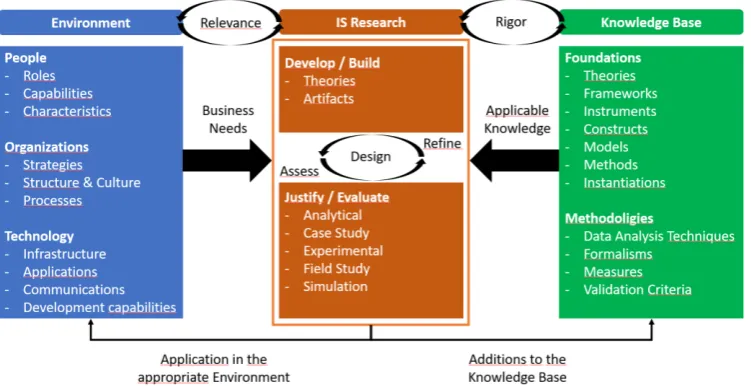
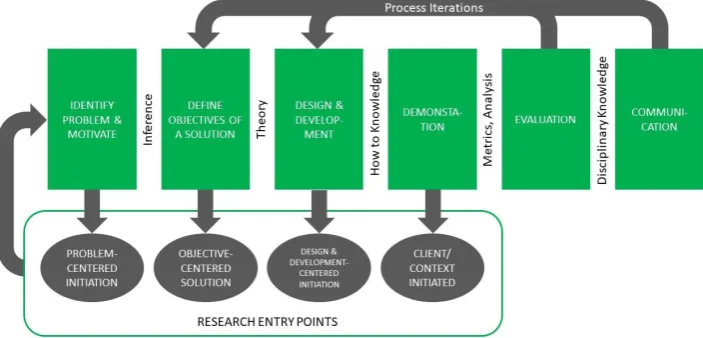
This master thesis aims at identifying requirements of employees towards a digital network and travel solution. The author decided to use the design science research (DSR) methodology as it originates from the ambition to improve a given environment by introducing innovative artifacts and the process of building them.248 Hevner (2007) separates
DSR in three cycles, as seen in figure 7. In addition to that, Peffers, Tuunanen, Rothenberger & Chatterjee (2007) formulated a structured process of how to apply the DSR methodology, as illustrated in figure 8.249 Together, these insights build the methodological framework of
[image:37.595.147.523.325.518.2]this master thesis. In the following, the author describes the research design along the DSR methodology by formulating four subordinate research questions.
Figure 7: DSR model Source: based on Hevner (2007)
248See Hevner (2007)