Peer Study Final Report
Future Trends in Distributed Simulation and
Distributed Virtual Environments
Steffen Straßburger Thomas Schulze Richard Fujimoto
PREFACE
The study has been initiated by the Fraunhofer IFF in Magdeburg and was created by an independent team of researchers, including Prof. Richard Fujimoto (Georgia Tech, Atlanta), Prof. Steffen Strassburger (University of Ilmenau, Germany) and Prof. Thomas Schulze (University of Magdeburg, Germany). Its content is further based on the opinions of 61 experts who completed a survey on the subject of the study.
The authors of this study would like to express their acknowledgements to all experts who have contributed to this study, either by completing the survey questionnaire or by providing valuable discussion on the topics of this survey.
We would especially like to thank Mr. Rick Severinghouse (Chair of the SISO Executive Committee) who supported the distribution of this survey through SISO channels as well as Mr. Bill Waite who supported the success of this survey by its distribution to the SimSummit member organizations.
Special thanks go also to our interview partners from the University of Michigan and the Virginia Modeling, Analysis and Simulation Center who helped to shape the final version of the questionnaire.
Finally, we would like to assure that we have taken all possible measures and scientific diligence to safeguard a fair and unbiased judgment in the evaluation of the survey results and in the creation of an objective survey. However, we must also add the disclaimer that not all statements and interpretations can be free from the personal opinions of the authors, especially in the interpretation of the answers to the open questions of the survey.
Please feel free to contact us about the results of this study. We would be happy to start an open dialogue about all of the statements and conclusions.
TABLE OF CONTENTS
Preface...iii
Table of Contents ...v
Index of Figures ...vii
Index of Abreviations ...ix
1 Introduction...1
2 Survey on Future Trends in Distributed Simulation and Distributed Virtual... Environments ...3
2.1 Introduction...3
2.2 Survey Evaluation...4
2.2.1 Part 1: Evaluation of the relevance of the technologies (DS/DVE) today ... and in future...4
2.2.2 Part 2: Research Challenges and Trends ... 15
3 Summary and Conclusions ... 25
References ... 27
Appendix A: Terms of Reference... 29
Appendix B: List of Survey Participants... 31
INDEX OF FIGURES
Figure 1: Classification of Participants with regard to their Organization 3 Figure 2: Relationship of Participants to DS/DVE Technologies 4
Figure 3: Potential Applications for Process Improvements 5
Figure 4: Current Adoption of DS/DVE-Technologies in Industry and Defense 8 Figure 5: Maturity and Relevance of DS/DVE Standards and Protocols 16
INDEX OF ABREVIATIONS
DIS Distributed Interactive Simulation
DS Distributed Simulation
DVE Distributed Virtual Environment
DWTP Distributed Worlds Transfer and Communication Protocol
HLA High Level Architecture
IEEE Institute of Electrical and Electronics Engineers
Mu3D Multi-User 3D Protocol
PADS Parallel and Distributed Simulation
PDU Protocol Data Unit
RTI Runtime Infrastructure
SISO Simulation Interoperability Standards Organization
SIW Simulation Interoperability Workshop
UDP User Datagram Protocol
C h a p t e r 1
1INTRODUCTION
The survey, along with this entire study, was initiated by the Fraunhofer IFF in Magdeburg and was conducted by an independent researcher team under the leadership of authors of this study.
The survey was aligned with an attempt to establish an “Innovation and Research Center for Distributed, Interoperable Virtual Reality and Simulation” in Magdeburg, Germany which follows a national German funding scheme1. Although this constituted the background and motivation for this study, its results are independent and are therefore expected to be of value to the entire Distributed Simulation (DS) / Distributed Virtual Environment (DVE) community.
The intention of this survey was to assess the current status in the fields of distributed simulation and distributed virtual environments and to identify new trends and research challenges in these fields.
The motivation for this survey and study is multifaceted. On one hand, computer simulation and interactive virtual reality based visualizations have already established themselves as useful tools. On the other hand, there is an increasing complexity of both product development and production processes. This requires new methods for planning, evaluating, and controlling the underlying systems.
Technologies such as distributed simulation and distributed virtual environments (which are already used rather frequently in the defense sector) could also be key enablers for addressing complexity issues in non-military applications. They can be the basis for simulating complex systems by integrating heterogeneous sub-components which cannot be executed as a monolithic application on one computer. They can connect all involved stakeholders even if they are located on different sites around the world.
The survey collected opinions concerning the current state-of-the-art, relevance, and the research challenges that must be addressed to advance and strengthen these technologies to a level where they are ready to be applied in day-to-day business.
1 “Centers for Innovation Competence” is a funding instrument of the German Federal Ministry of Education and Research
exclusively targeted towards the former east-German states. Its intention is to establish internationally recognized research centers in dedicated basic research areas.
C h a p t e r 2
2SURVEY ON FUTURE TRENDS IN DISTRIBUTED SIMULATION AND DISTRIBUTED VIRTUAL ENVIRONMENTS
This section reports in detail about the results of the survey conducted on the topic of future trends in distributed simulation and distributed virtual environments.
2.1 Introduction
The survey was officially conducted in the period from September 15, 2007 until October 15, 20072. The survey was designed to be distributed and completed in electronic form. The survey was mainly targeted towards the experts in the fields of DS/DVE. Invitations to complete the survey were therefore distributed through relevant conference distribution lists like the Winter Simulation Conference (WSC), the Principles of Advanced and Distributed Simulation Conference (PADS), the IEEE International Symposium on Distributed Simulation and Real-Time Applications (DS-RT), and the Annual Conference of the German Simulation Society (ASIM). Furthermore the survey invitation was posted on the homepage of the Simulation Interoperability Standards Organization (SISO) and distributed to its members. It was also distributed to members of the SimSummit organization whose membership includes government, industry, and academia organizations concerned with Modeling and Simulation, especially for defense applications.
The survey questionnaire was completed by 61 individuals. The majority of the respondents (67%) classified themselves as working in research organizations. 20% are from industry and 10% from defense. As the main intention of this study was to focus on the research aspects of the DS/DVE fields the distribution of participants agrees with our objective.
Research 67% Industry 20% Defence 10% Other 3% Research Industry Defence Other
Figure 1: Classification of Participants with regard to their Organization
The participants were also asked to classify themselves with regard to their relationship to distributed simulation and distributed virtual environments (Figure 2). The responses show that 92% of the participants are directly involved with these topics, either as researcher/developer (79%) or as practitioners (13%). 79% 13% 8% Researcher/Developer Practitioner
Not directly involved
Figure 2: Relationship of Participants to DS/DVE Technologies
The answers of the participants can thus be expected to give substantiated statements towards the state-of-the-art of the research in the fields as well as towards open research questions. The actual survey consisted of two main parts, which will both be discussed in detail in the next section. While the first part addressed the relevance of DS/DVE technologies today and in the future, the second part focused on the open research challenges and the latest trends in these areas.
2.2 Survey Evaluation
This section reports and discusses the results of each question of the survey. All questions which asked for a rating or classification typically operated on a scale from 0 (none) to 5 (very high). Exceptions to this rule are pointed out in the text. As the survey design intentionally included several open questions and possibilities to comment, the answers to those questions are clustered and also reported.
2.2.1 Part 1: Evaluation of the relevance of the technologies (DS/DVE) today and in future
Part 1 of the survey was intended to address the relevance of DS/DVE technologies today and in the future. Its intention was to assess the relevance of these technologies for practical applications. Furthermore, these questions attempt to identify those fields where the experts expect these technologies to have the highest economical potential and to identify the kind of applications that will derive the most benefit.
Question 1.1: Please rate the future relevance of the following potential applications of the DS/DVE technologies for improving internal processes within companies (including their suppliers) or other organizations. Please give grades in the range from (5) = highest relevance to (0) = no relevance!
Question 1.1 queried the future relevance of DS/DVE technologies to potential applications focusing on the process side of companies and other organizations. The questions suggested
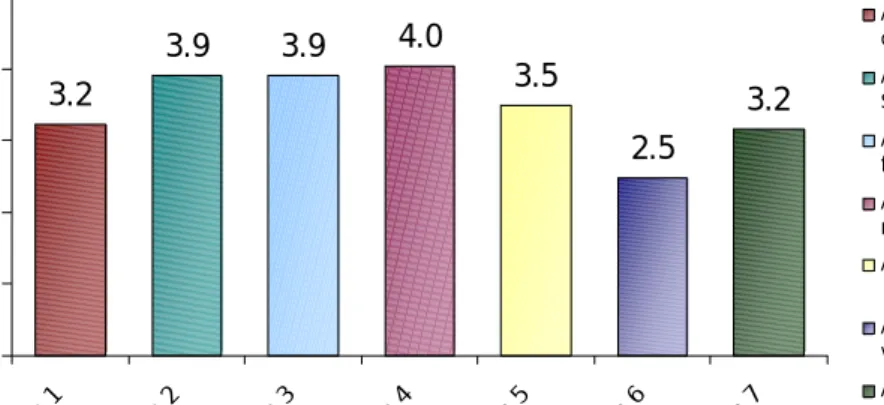
some examples for potential applications of DS/DVE technologies for improving processes and asked the experts to rate them. The results are shown in Figure 3.
3.2 3.9 3.9 4.0 3.5 2.5 3.2 0 1 2 3 4 5 App licat ion 1 App licat ion 2 App licat ion 3 App licat ion 4 App licat ion 5 App licat ion 6 App licat ion 7 Re le v a n c e
Application 1: DVEs for improving the communication between company sites Application 2: Distributed Training Sessions
Application 3: Joining computer resources for complex distributed simulations Application 4: Integrating heterogeneous resources for distributed simulations Application 5: Distributed Design Reviews
Application 6:DVEs as a replacement of video conferencing technologies Application 7: DVEs as an enhancement of video conferencing technologies
Figure 3: Potential Applications for Process Improvements
The diagram shows that from the suggested choices applications 2, 3 and 4 are attributed the highest relevance. The highest rated application (no. 4) suggests the application of distributed simulation to integrate heterogeneous resources and is followed by no. 3 that involves the application of distributed simulation to join computer resources for complex distributed simulations. Both types of scenarios can be anticipated to play an important role in companies that have become sufficiently complex that they require the integration of simulation applications spanning several geographically distinct locations.
Application no. 2 which involves distributed training sessions is also assigned a high future relevance. This is also easily understandable, since distributed virtual training sessions are a straight-forward means of joining geographically distributed experts to conduct training or to provide remote assistance.
These three applications are followed by application 5 (“Distributed Design Reviews”) which still receives a ranking of 3.5 indicating that many participants still consider this a relevant topic for the future.
The usage of DVEs as a replacement of video conferencing technologies is not considered as being highly relevant for the future, however, DVEs are attributed some relevance as an enhancement of video conferencing technologies. The future could therefore bring about some mixed form of DVEs and video conferencing, e.g., by combining the traditional video feed with some interactive 3D view of the items to be discussed, or by integrating the video feed into the virtual world.
Question 1.2: In which areas do you see additional relevant applications of the technologies for improving internal processes within companies (including their suppliers) or other organizations?
Question 1.2 was designed as an open-ended question and queried for any additional relevant applications for improving processes within organizations.
The answers have been clustered into the four categories: integration aspects, product development, production, and miscellaneous. The following briefly summarizes the responses
1. Integration aspects
• Distributed simulation (DS) allows geographic separation of simulation tools (and resources) from the points where they are needed.
• Different company locations and their suppliers can join their simulation resources and thus improve their cooperative processes (e.g. supply chains).
• Distributed Design (not only Distributed Design Reviews) but the entire design process is an application for both DS and DVE.
• DVEs can enable better communication between various project participants (manager, architects, designer, end-user, …).
2. Product Development
• Remote product testing, e.g., in settings where the product simulator is at one location different from the product testers, can be an important future application of DS/DVEs. This applies for both product development as well as for product marketing.
• Knowledge protection in multiple-component product models can be assured with distributed simulation technology. This is highly relevant for joint product development where multiple companies develop individual components of products. Typically, companies want information concerning their component to be protected while still allowing it to be used in conducting simulations of the entire product. Distributed simulation offers the potential for companies to protect their intellectual property by providing their component behavior as a black box model that can be integrated in a distributed simulation of the overall product.
• Virtual assembly / product integration before physical prototypes exist 3. Production
• Distributed planning of manufacturing lines (join planning of suppliers and OEMs)
• Direct process control of automated production processes (simulation based Command&Control center)
4. Miscellaneous
• Distributed Virtual Environments as Market Places for Sub Contractors on the Internet
• 3D web: Current 2D web will be combined with DVE capabilities (e.g., as known from applications such as Second Life)
• Real-time decision making using DS/DVE
• Analysis and feedback for developing interpersonal skills for management and teamwork
• Changing current business processes to achieve greater orientation around end-user needs
Question 1.3: How do you rate the relevance of the technologies distributed simulation and distributed virtual environments for improving the life cycle of future products (e.g. for the product development, the product operation, or product maintenance)?
While the first two questions focused on the process side of organizations, question 1.3 queried for the relevance of DS/DVE technologies in improving the life cycle of future
products. The participants were asked to rate relevance on a scale from 0 (none) to 5 (very
high).
The mean value of all answers is 3.9 indicating high relevance.
This question was answered by 98% of the participants. The standard deviation of all answers is rather low (0.9), indicating a high level of agreement among the participants.
The comments entered by the majority of the participants indicate that they can envision DS/DVE technologies in many areas of the life cycle of future products, including the design, testing, acquisition, training and maintenance of products. A special interest is attributed to the product development and testing phases of the product life cycle.
Arguments given in favor of this statement include the general trend towards globalization. As products are often composed of parts developed and manufactured by multiple enterprises, integrating simulation models of such parts is a key point to produce realistic simulations of the entire product. This obviously applies especially to very complex products in high tech industries such as automotive, aircraft, and aerospace.
Several comments decidedly attribute DVE technology a high relevance for distributed design reviews in globally distributed enterprises, a finding already confirmed by question 1.1.
Several people have also indicated their conviction that distributed virtual training technologies will play an important future role for the operation and maintenance life cycle phase of a product.
A few people have expressed their doubts that DS/DVE technologies will see use in applications that go beyond usage in a specific product life cycle phase. This argumentation is quite reasonable when considering the current state-of-the-art in existing base technologies and IT tools. There certainly is a lack of easy-to-use and easy-to-adapt standards for such solutions. Only if such standards will be created and accepted by leading tool vendors and an accompanying methodology is established the usage of DS/DVE technologies can become commonplace during the entire life-cycle of future products.
Question 1.4: How would you rate the current adoption of the technologies in industry and defense?
This question attempted to capture the current relevance of DS/DVE technologies. The experts were queried for their opinion concerning the current adoption (i.e. the practical application) of these technologies in industry and in defense. As a majority of the experts work in research institutions, their answers can, of course, only constitute a somewhat subjective judgment of practical adoption. Still the responses provide an impression about the ratio in which industry and defense differ in their usage of DS/DVE technologies.
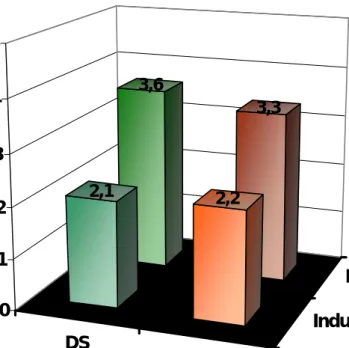
Figure 4 shows the mean value of the responses concerning DS and DVE technology adoption in each sector (industry/defense), respectively. As expected it can be seen that the military domain already makes good use (between medium and high) of distributed simulation and distributed virtual environments. The reasons for this are quite obvious as military training and acquisition are typical applications which are expected to highly rely on DS/DVE-technologies. Also, domain standards such as HLA and DIS originate in the defense community. DS DVE Industry Defence 3,6 3,3 2,1 2,2 0 1 2 3 4 5
Current Adoption
Figure 4: Current Adoption of DS/DVE-Technologies in Industry and Defense
Even though there is already some good adoption of DS/DVE technologies in the defense community, it is interesting that the degree of adoption in military applications is not rated between “very high” or “high”. This may indicate the existence of technological barriers (thus indicating more research is needed), as well as organizational issues that prevent more widespread usage. This is supported by some respondents who indicated that HLA - which should constitute the leading edge of standards in the military DS/DVE domain- is said to have suffered from some degree of fragmentation in the US Department of Defense, the original creator of HLA, resulting in the creation of additional standards (e.g., TENA). It is certainly true that even in defense today use of DS/DVE technologies has not yet reached its fullest potential.
The low usage of DS/DVE in industry, combined with the answers from questions 1.1 through 1.3 suggest that industrial usage may be limited by a lack of good technical solutions and the need for more basic research in this area. It may, for instance, indicate that existing solutions are focused on the needs of the defense community and may not sufficiently take into account requirements in industry.
Some participants also indicated that DS/DVE technologies are missing recognition in industry. This is not only due to technical reasons which may prevent the usage, but also a problem of acceptance and appreciation. Prejudices exist in industry concerning cost as well as the invasive and disruptive character of DVEs. These problems must be overcome, along with the issue of establishing clear business cases to cover the return on investment (ROI). This lies in line with comments on needed improvements towards technical issues such as the need for seamless integration of DS/DVE with existing industrial IT infrastructures and their applications and processes.
Question 1.5: Which economical potential do you see in the technologies? Please give us your opinion which areas might have the highest economical potential.
Question 1.5 attempts to estimate the economical potential of DS/DVE technologies. The answers cannot provide any quantitative prediction; rather they can only give a qualitative assessment across the opinions of the respondents.
This average value for the economic potential is 3.7.
Considering our scale from 0 to 5 which rates 3 as “medium” and 4 as “high”, this is a rather high rating. This confirms that our experts believe that DS/DVE technologies do have a significant economical potential.
The standard deviation for this value is low (0.98) compared to that of other questions. This indicates good agreement among the participants on this issue.
The experts where also asked to identify areas where they expect the highest economic potential. Many participants indicated the defense sector as the one with the highest economic potential. Applications here include mission training and rehearsal, decision support, and technology acquisition. This rating is obvious, as the defense sector is already aligned with these technologies and the military constitutes the world’s largest contractor in the simulation market.
Besides defense, many participants identified the Manufacturing Sector as well as Product Development as areas with high economic potential.
Furthermore the entire area of Distant Learning Technologies (which includes advanced distributed training solutions) is mentioned by many participants as having high economic potential.
Several participants also identified new emerging markets with an increasing economic potential. These markets include the areas of Emergency and Security Management, Homeland Security, and Global Environmental Problems.
Further responses include the gaming industry and consumer applications as well as product marketing.
A few participants also argued that the economic potential is limited because of the expense related to using these technologies. This is an issue that certainly needs to be addressed, especially if the technologies are to be used by small companies that cannot afford high investments in hardware or software.
Question 1.6: Which future developments do you expect in the cooperation between OEMs and their suppliers which could make the application of technologies like distributed simulation and distributed virtual environments inevitable? Which other technologies might be required?
This question attempted to stir up thinking in non-technical directions in order to identify societal or industrial trends which could influence DS/DVE technology usage. Some participants commented on the phrasing of the question, esp. the word “inevitable” which has a rather strict meaning. This phrasing was chosen on purpose to encourage thinking in controversial directions. One sample train of though envisioned during the setup of the questionnaire was along the lines that “if the future shortage of fuel and fossil resources will lead to less travel”, then “there will be an absolute necessity for more virtual cooperation in DVEs”.
Not all responses in fact commented on future developments in the cooperation between OEMs and their suppliers. Those which have done so can be clustered into the categories “business environment” and “success stories”.
The category “business environment” includes three main categories:
• Globalization: Economic incentives and increasing competition has lead to the forming of industrial clusters (aka globalization). This most obviously requires increased cooperation among OEMs and builds a demand for DS/DVE technologies.
• IPR Protection: With globalization and increasing cooperation among companies comes an increased need for the protection of intellectual property rights (IPR). This will increase the need for secure component-based distributed simulation in which companies can join their component models without revealing their internal knowledge and expertise.
• Try-before-buy: There will be an increased usage of the try-before-buy approach, i.e., selecting the right sub-components for integration in the final product from a given range of options by investigating the component’s functionality and interplay with the final product using DS/DVE technologies.
The answers in the cluster “success stories” indicate quite consistently that such stories are needed to overcome psychological barriers. Also, convincing pilot applications are needed to demonstrate the positive effects of these technologies. It was further commented that technological advances must be triggered by a customer demand.
Most respondents did not in fact comment on the future developments in the cooperation between OEM and supplier, but commented on technical factors which will positively influence the adoption of DS/DVE. Again, these answers have been clustered into two categories, “ready and robust solutions” and “technological advances.”
In the cluster “ready and robust solutions” several commented that reliable standards are indispensible for a more widespread application of DS/DVE technologies by OEMs and their suppliers. Furthermore the issue of semantic interoperability must be addressed, at least within a given application domain. This requires standardized ontologies which provide
out-of-the-box semantic interoperability, not only syntactic connectivity which can already be achieved today. Also, trustworthy tools which address these issues are needed.
In the cluster of technological advances several commented on the need for secure high bandwidth and fast network/communication technologies to enable OEM-supplier cooperation based on DS/DVE technology. Furthermore the adoption and emulation of game technologies were suggested to simplify the use and to reduce the entry barriers which today prevent people from applying those technologies.
An interesting comment suggested the introduction of an interim technology between traditional 2D (paper) documents and 3D environments in order to help people to become accustomed the new 3D technologies.
Furthermore, many commented on the need to reduce the cost for equipment needed to adopt these technologies.
Question 1.7: We are interested in your opinion about the distributed virtual online community “Second Life”. Q1.7.1: Will the concepts applied there get any industrial relevance? Q1.7.2: Which weaknesses do you see (technical, conceptual …)?
The virtual online community “Second Life”3 has received significant media coverage in the past and can be considered a trendy end-user version of a DVE. Second Life (SL) is available free of charge to any interested end-user. The creator, Linden Lab, provides client software which is available for Windows, Linux, and MAC operating systems. Second Life’s vision is to create a second reality in which real users (represented by avatars) can interact in a persistent three-dimensional world.
The number of registered SL users is in the range of 11.5 Million, but it has to be noted that only a fraction of this number is regularly active in SL. Users in SL can buy “land” in the virtual world in order to create their own “properties”. The creation of 3D geometries for this property can be done using primitives (cubes, spheres, cones,…) and simple tools provided by SL. On the technical side, SL is hosted by a powerful central server pool comprising several thousands of computers. Each server performs the physics simulation (collisions, interactions,…) of a dedicated region of SL’s virtual world whereas the clients simply visualize the server data. Assets (e.g. 3D objects) created by users are stored in a separate server farm, currently comprising 24 Terabytes of storage capacity.
Question 1.7 of the survey tries to look behind the hype and questions the suitability of the concepts behind SL for serious industrial applications (Q1.7.1) and identifies its weaknesses (Q1.7.2).
The responses towards the industrial relevance of SL are (with very few exceptions) quite consistent. The consensus is that its current and future industrial relevance lies mainly in areas such as advertising, marketing and entertainment. Its potential for improving communications is specifically considered relevant for the communication of companies with their customers. Only very few respondents see potential for using SL for improving communication within companies.
3 Second Life is developed and distributed by the company Linden Lab. For more information please refer to
More serious industrial applications are questioned by many respondents. This unsuitability is attributed to technical as well as to conceptual issues. On the technical side it was pointed out that fidelity and resolution in SL are not appropriate for “serious” applications. SL is considered less effective than video conferences and not effectively usable for collaborative design and development efforts.
Specific conceptual problems are seen concerning privacy issues. SL provides too little user verification and options for separation serious usage from personal activities. One participant answered exemplarily that “you cannot keep naked avatars out of your business meeting”. However, it was also stated that other DVE products are emerging which may better address the needs of business uses.
Question 1.7.2 elaborated on opinions towards the technical and conceptual weaknesses in SL. On the technical side, several again stated a lack of fidelity and resolution as well as missing security mechanisms. This includes missing user verification and control.
Further in this line the issue of scalability and bandwidth requirements and the lack of compressing technologies are considered as technical weaknesses. The scalability issue arises from the central server pool in which each server performs the physics simulation for a certain region in second life. This limits the number of clients which can concurrently stay in a region.
In addition to these issues the respondents mentioned the limited graphics capabilities of SL as a problem. This includes the inability to build content with standard 3D tools and the missing possibilities to import content created with such tools into SL.
Several people also criticized that SL is not based on open standards and has closed interfaces. This limits the possibility to integrate it with other industrial applications. Also, the available protocols and scripting capabilities, e.g., for component motion are considered insufficient by some respondents.
On the conceptual side the interactions of the kind enabled by SL are most beneficial when done in real time between participants (like a telephone call). However synchronizing participation across global time zones makes this difficult (imagine a conference call between Japan, USA and Germany - who stays up late and who comes in early?). This is a problem which is valid for any DVE based communcation.
Specific critiques on the conceptual side of SL include its unfocused character – it provides no appropriate tools for (say) engineering tasks, or any other serious industrial task.
Another noted problem addresses the relation of the virtual money in SL and real money. This relation is depending on one single company which makes it a difficult base for making real business.
In summary, the majority of the survey respondents consider SL as a DVE for entertainment and social interaction (for which it in fact was created). Its value for industry is mostly limited to company presentations and marketing purposes. Conceptual and technical issues currently prevent more serious industrial usage.
Question 1.8: Could you name a potential non-military “Killer Application”, i.e. an application which obviously requires DS or DVE technologies to implement it, and which has a significant practical relevance?
This question attempted to identify potential “break-through” applications which would push the DS/DVE market forward. Answers were restricted to non-military domains, since the military domain already has some very convincing use cases for those technologies.
The answers have been clustered into the following categories:
1. Decision support systems for homeland security/catastrophes/crisis situations:
Many answers of the participants fall into this category. The envisioned decision support systems are complex and networked IT systems which provide the operator/decision maker with simulation support for such crisis simulations. Possible application scenarios include the simulation of the effects of a crisis (e.g. on complex critical infrastructures) and potential counter measures, e.g., for rescue operations.
As this simulation capability is required on demand this creates the need for powerful simulation capabilities (possibly on massively parallel architectures) and the integration of heterogeneous components for the simulation (life data feeds, data bases, geographical information systems, and multiple command and control centers).
Another envisioned part of such decision support systems is a module for the virtual training (and possibly remote assistance) for rescue teams.
2. Virtual Training Applications in general
As virtual training applications are quite successful applications for DVEs in the military domain it is obvious to look for applications of this technology in industrial domains as well. Nominations in this category suggest virtual training in truly geographically and internationally distributed contexts (e.g. for the International Space Station, ISS) and training applications which combine one or multiple users with real and simulated equipment.
3. Space exploration
Nominations in this category suggest the application of DS/DVE as a Command and Control tool for remote operations, especially in space exploration missions. With these technologies it becomes possible to send humans virtually where they cannot go physically.
4. Virtual Meetings
As this is one of the most obvious DVE applications several people nominated this as a killer application. Such virtual meetings are suggested for technological development and design teams, for project progress meetings, as well as for social interaction and entertainment.
5. Industrial Supply Chain Simulation
The necessity for distributed simulation applications for global supply chain simulation and optimization is motivated by the need for know-how protection. As the individual members of a supply chain typically do not want to reveal knowledge about their internal processes to the others a traditional (monolithic) supply chain simulation model cannot be built. DS provides a means for each participant in the supply chain to submit their supply chain node model as a black box into the overall distributed supply chain simulation.
The following nominations have been suggested by very few (or even single) users, but they are included here as they suggest some interesting applications apart from the mainstream. 6. Emulation
Applications in this area require the coupling of real equipment with simulated parts of reality. The purpose is here typically to test the equipment. Complex application scenarios contain multiple real controllers which are connected to a DVE allowing testing by multiple people.
7. Virtual Travel at Street Level
This nomination is a derivation of existing DVE concepts like Second Life. Here, it is suggested to create a DVE which models the real earth. In the DVE one could then meet and travel in synthetic 3D environment as realistic as the images known from Google Earth or Google Street View.
8. Real Estates and Home Design
This nomination suggests the usage of DVE technology to enable customers to visualize and virtually enter future houses in the actual environment in which they will be built. It is argued that if a potential buyer of an existing property could visualize the (future) house within its actual environment or the potential buyer of a new house could "see" it and use VR to select colors, designs, styles and landscaping, the resulting increase in sales would be significant.
9. Cultural Education
This nomination suggests creating history and art museums as a DVE in which artifacts are displayed in the real context in which they existed. An alternative may combine traditional museums with real objects with an artificial environment generating distributed mixed reality systems.
10. Sales Activities
Virtual shopping malls in which 3D products with dynamic properties can be tested are suggested as a future sales instrument. In the case of car sales this may, for instance, enable the customer to virtually enter the car, view it from all angles, change its configuration, and even drive it on any road in the world.
2.2.2 Part 2: Research Challenges and Trends
Whereas the first part of the survey focused on the relevance of DS/DVE technologies for practical applications, the second part analyses open research challenges in this as well as current and possible future trends.
Question 2.1: Which research activities are you and your institution currently conducting in the field of distributed simulation and distributed virtual environments?
This question was intended to identify topics that are currently under investigation by researchers active in the DS/DVE fields. The answers can be clustered into the categories “application areas for DS/DVE technologies,” “research in base technologies,” and “interdisciplinary activities.” Some exemplary and typical nominations are mentioned below for each of the categories.
Participants who are working in application areas for DS/DVE technologies mentioned homeland security, emergency management, manufacturing & logistics, military simulation (training, weapons), and complex technical or natural systems (particle, material, climate) as application areas in which they are active applying DS or DVE approaches.
Those who conduct research towards developing base technologies perform research in the following exemplary areas:
• effects of wide area network latency of real-time and interactive distributed simulations
• combination of discrete event simulations with DS and DVE
• fundamental interoperability mechanisms
• synchronization algorithms
• distributed haptic DVEs
Interdisciplinary activities which are addressed by a number of participants include the integration of game technology with advanced simulation technologies (e.g., to leverage the strengths of each), the work on simulation based Command and Control (C2) systems, as well as agent-based approaches for decision making in DS/DVE.
Question 2.2: What would you consider as the specific strengths / unique selling points of your institution in the context of the fields under investigation?
This question has been included for reasons of identifying success factors for research in DS/DVE. As this question provided highly individualized answers, they cannot be summarized in greater detail here.
Something that became obvious was that often the interdisciplinary character of the research activities is considered a specific strength, either through interdisciplinary research groups or through close cooperation with industry.
Question 2.3: How would you rate the maturity and practical relevance of the following standards/protocols?
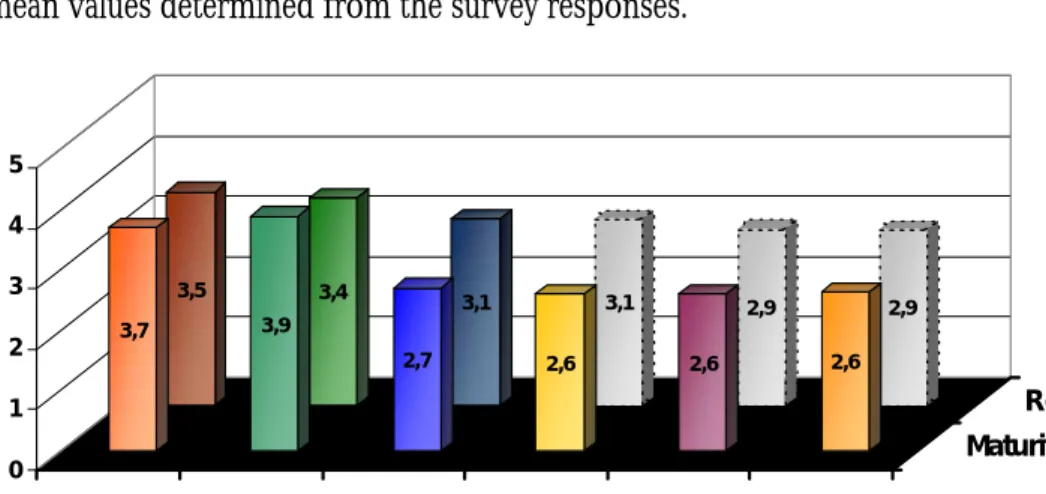
This question asked for a rating of the maturity and the practical relevance of selected standards and protocols which each play an important role in the DS/DVE market. Figure 5 lists the mean values determined from the survey responses.
3,5 3,4 3,1 3,1 2,9 2,9 3,7 3,9 2,7 2,6 2,6 2,6 HLA DIS XMSF VRTP DW TP Mu3 D Maturity Relevance Very High – 5 High – 4 Medium – 3 Low – 2 Very Low – 1 None – 0
Figure 5: Maturity and Relevance of DS/DVE Standards and Protocols
While the answers concerning the maturity of the standard can be considered quite objective, the values for the practical relevance are only significant for HLA, DIS and (to a certain degree) XMSF. This is due to the fact that the sample size varies quite significantly in the rating of the standards/protocols, i.e., if a standard was not known to a participant it did not receive a rating. HLA and DIS are known and have been rated by more than 80% of the participants. XMSF was still known by approximately 50% of the participants.
VRTP, DWTP and Mu3D on the other hand were only known by a minority of the participants (VRTP: 34%, DWTP: 21%, Mu3D: 18%). Therefore the statements concerning the practical relevance of these protocols are questionable. Because they are known by only a minority of the participants, one could question if the rating of their practical relevance is meaningful.
The main conclusions which can be drawn from the results shown in Figure 5 are that HLA and DIS are the leading standards in the DS/DVE sector and that both already have a rather high maturity. On the other hand, their practical relevance is rated between medium and high (3.5 and 3.4 respectively), a value which is relatively high, but might be expected to be even higher considering that both standards have been on the market for more than 10 years (HLA) or 15 years (DIS).
The other standards, esp. VRTP, DWTP and Mu3D are attributed a rather low maturity and do only have a minor practical relevance (as explained above).
For XMSF the evaluation of the rating and the comments indicate that while the concepts of XMSF did have quite a good recognition in the community, XMSF itself however does not seem to be supported any longer as an on-going activity.
The participants were also asked to comment on the specific weaknesses which they would attribute to the standards and protocols. The following lists the weaknesses attributed to HLA and DIS.
Weaknesses of HLA:
• No load-balancing as part of the standard
• Poor Scalability
• Too much reliance on peer-to-peer structures, large DVEs may be better with client-server structures where multiple client-servers are peers of each other
• Covers only syntactic interoperability (not semantic)
• Standard is too “heavy“, i.e. very complex, difficult to learn and thus time consuming to adopt and use
Weaknesses of DIS
• PDU broadcast concept allows no interest management (publish/subscribe) and no load balancing
• Limited conceptual versatility (i.e. only applicable to real-time simulations)
• Restriction to a single domain (military training simulations)
• Limitations of the standard lead to proprietary modifications and custom implementations that do not allow re-use outside original application
In conclusion, the most critical issue concerning DIS is its limitation towards a certain niche of the simulation market (real-time, mostly military training applications) and its broadcast mechanism. HLA as current state-of-the-art standard is attributed to at least the perception of limited scalability and the fact that it only addresses the syntactic, but not the semantic interoperability issues.
Question 2.4: How would you rate the maturity of the following underlying base technologies needed to implement DS/DVE applications and their significance for advancing the fields of DS/DVE?
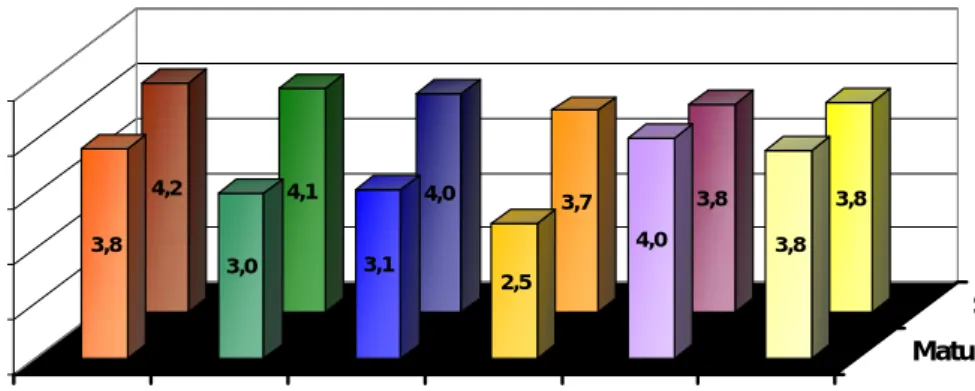
This question is an attempt to identify the most promising research areas concerning base technologies for DS/DVE applications. To do so the survey participants were asked to rate the current maturity of certain base technologies as well as their significance for advancing the fields of DS/DVE. The results are displayed in Figure 6.
4,2 4,1 4,0 3,7 3,8 3,8 3,8 3,0 3,1 2,5 4,0 3,8 0 1 2 3 4 5 Net wor k T ech nol ogie s Dist rib uted Sim ula tion Mi ddlew are Hu m an-Com pute r-Inte rfac es Sem antic W eb Grap hic s H ard ware High P erform ance C om putin g Maturity Significance Very High – 5 High – 4 Medium – 3 Low – 2 Very Low – 1 None – 0
Figure 6: Maturity and Significance of Base Technologies
To interpret the diagram with the objective of identifying the interesting and promising research areas, one should look for the base technologies which currently have the lowest degree of maturity, but still have a high rating towards its significance for advancing the fields of DS/DVE.
In this sense, this indicates that distributed simulation middleware, human-computer-interfaces, and the semantic web (as a placeholder for approaches supporting semantic interoperability) are the fields rated as the most promising areas of research.
On the other hand, as the maturity rating of graphics hardware is already high, there are no breakthroughs in this area to be expected, unless some completely new paradigm develops (e.g. "no triangles needed any more"). A similar observation applies to the area of network technologies.
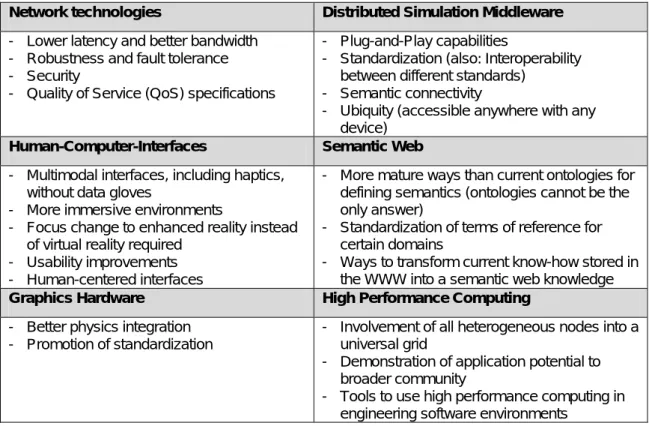
Besides these statistics it is also interesting to look at the comments provided by the respondents concerning the improvements needed within each of the base technologies. Table 1 lists the most important nominations of the respondents.
Network technologies Distributed Simulation Middleware
- Lower latency and better bandwidth
- Robustness and fault tolerance
- Security
- Quality of Service (QoS) specifications
- Plug-and-Play capabilities
- Standardization (also: Interoperability between different standards)
- Semantic connectivity
- Ubiquity (accessible anywhere with any device)
Human-Computer-Interfaces Semantic Web
- Multimodal interfaces, including haptics, without data gloves
- More immersive environments
- Focus change to enhanced reality instead of virtual reality required
- Usability improvements
- Human-centered interfaces
- More mature ways than current ontologies for defining semantics (ontologies cannot be the only answer)
- Standardization of terms of reference for certain domains
- Ways to transform current know-how stored in the WWW into a semantic web knowledge
Graphics Hardware High Performance Computing
- Better physics integration
- Promotion of standardization
- Involvement of all heterogeneous nodes into a universal grid
- Demonstration of application potential to broader community
- Tools to use high performance computing in engineering software environments
Table 1: Required Improvements for each of the Base Technologies for DS/DVE Applications
Question 2.5: How would you rate the overall maturity of the technologies and solutions developed in the fields of distributed simulation and distributed virtual environments?
This question asked for the opinion of the participants about the overall maturity of the technologies and solutions in the DS/DVE areas. The possible answers included the following options:
4 – Very mature and already applied for many practical applications 3 – Mature, but not applied widely yet
2 – In the process of maturing
1 – Technologies exist, but still have significant weaknesses 0 – Academic research/prototypes
The mean value of all answers according to this scale is 2.1.
Our interpretation for this value is that DS/DVE technologies have been around for some time; however there are still weaknesses and technological issues which need to be resolved and more basic research is needed to bring them to a wide-spread and cost-efficient usage. Some comments provided by the participants indicate that there are no standardized products and off-the-shelf solutions available upon which to build. A few have also commented that there are some proprietary application fields (especially military) within which technologies are already quite mature.
Question 2.6: Which research challenges in the research fields (DS/DVE) would you consider “Grand Challenges” which must be solved in order to advance the field significantly?
This question tries to identify the “Grand Challenges” which, if solved, will advance the fields of DS/DVE significantly. Grand Challenges are generally considered very complex problems in a certain research field, for which currently no solution exists. On the other hand, a problem for which it is known (or generally believed) that no such solution can ever exist (e.g., a problem which a mathematical proof shows to be unsolvable) cannot be considered a Grand Challenge4.
The answers provided by the respondents of the survey do not all qualify as Grand Challenges, however, the most interesting and appealing problems are listed and briefly discussed in the following.
1) Solving the intrinsic conflict between desire for high interactivity / response times and
the need for maintaining consistency in DVEs
A well known problem of DVEs is the need to maintain consistency among all users. Consider, for instance, a situation, in which a user tries to grab a virtual part in his local representation of the DVE. To make sure that he can in fact grab it and that no other user can do so at the same time, the DVE would need to implement some locking mechanism which needs to synchronize with all participants before the user can actually grab the part. This would, in the worst case, cause a delay of two times the travel time which a message needs on the network between this participant and the participant with the slowest network connection. This is in strong conflict with the objective of giving the user a fast response time, i.e., for being realistic there should be no noticeable delay between his intention of grabbing the part and the action taking place.
2) Easy to use synchronization algorithms which idealistically solve the "zero lookahead
problem"
Efficient synchronization algorithms are the key factor for any parallel or distributed simulation. The topic of synchronization algorithms has been on the research agenda for quite a number of years. Several protocols (conservative, optimistic, hybrid) have been developed in the past which all work better or worse depending on the type of application. The implementation and usage of optimistic protocols is quite complicated and cannot be easily done in any commercial off-the-shelf simulation software. Conservative protocols, on the other hand, are rather simple to use. However, their performance highly depends on how much lookahead5 can be extracted from the participating simulations (the more the better). Often the participating simulations of the DS are so closely interconnected that a lookahead value of zero is required. In that case the conservative protocols lead to a serialization of the entire distributed simulation with the obvious severe performance implications. This is the intrinsic problem that needs to be solved in this Grand Challenge.
4 This excludes futuristic visions, like the “Holodeck” known for the science fiction show “Star Trek” from the list, as it
would require quantum leaps in physic which currently no one truly believes to be feasible.
5 Lookahead is a well-known term in the DS area which refers to the amount of time which a simulation can look into its
3) True plug-and-play simulation capabilities
So far today no standard (not even HLA) has enabled simulation packages to be coupled in a true plug-and-play fashion. What is needed is a standard approach to couple the distributed models and gain acceptance for this standard by industry (simulation tool vendors as well as end-users). Only this can lay the basis for effortless integration of distributed and independently developed simulators. This also requires approaches for interoperability between multi-level resolution models, i.e., models which operate on different levels of detail.
4) Automatic or semi-automatic semantic interoperability between domains (ontologies,
standard reference models, metamodels)
This Grand Challenge could be considered a sub-challenge of the previous one. In order to achieve plug-and-play interoperability between simulations, some methodology for gaining semantic interoperability between domains (or even within a domain) must be established. So far, standards like HLA have mainly addressed the syntactic interoperability between simulation systems.
5) DVEs of the future
Several suggestions have been made towards requirements for the DVE of the future. They include:
- Improvement of network performance to allow realistic interaction between
attendees of a DVE meeting, plus new technologies to allow the interaction with the environment realistically in terms of Computer-Human-Interaction.
- Realistic real-time visualization with full account of underlying physics and integration
of voice and sounds
- Living Dynamic Worlds, i.e., the creation of a world that is constantly active and
evolving, even if there are no human players participating
- Use of city-sized large-scale mobile nodes in reasonable speed.
6) Platform and information/data handling technologies to support multi-user, multi-role,
multi-viewpoint-simulations
7) Unification of discrete and continuous simulation theory and practice
While on the first view this suggestion of a Grand Challenge does not seem to be directly related to the DS/DVE fields, a solution to this issue would, of course also have significant impact in the way distributed simulations could be treated.
Question 2.7: Which findings and results would you expect from an external research group in order to advance the field significantly?
This question was naturally (and rightfully so) motivated by the attempt of the Fraunhofer IFF as the initiator of this study to determine the expectations of the research center which it is about to establish. The answers to this question apply for any research group that wants to make a “difference,” i.e., to advance the field significantly.
First, the community obviously expects solutions to the grand challenges introduced in the previous section. Second, the community expects the unification of research, development, utilization, and education in DS/DVE.
The setting of a research and development agenda of research for short and long term goals in these areas is expected. This includes the identification of important trends, the creation of a forum for prime players to interact and collaborate, the definition of reference models, and the definition of standard approaches.
Finally, the research group is also expected to expand the predominant application fields of DS/DVE to industry, design, manufacturing, and the consumer sector by demonstrating how research translates into real use and by integrating its findings with a variety of needs in industry, manufacturing, health care, security, environment, and education.
Question 2.8: Would you consider collaboration in distributed virtual environments a viable topic for the future or will personal meetings with physical attendance of all participants always be preferable?
This question was intended as a validation if the participants consider DVE based collaboration viable at all. The question was answered by more than 90% of the participants. Among those who have answered 95% consider collaboration in DVEs as a viable topic for
the future. This confirms again that research in this area continues to have a high relevance
in the future.
In the second part of this question statistics were collected concerning whether meetings with physical attendance of the participants would always be preferable. 74% answered that at least
sometimes physical meetings are indeed preferable. Only 23% insisted that personal meetings
are always preferable.
Question 2.9: Can you name interesting trends, solutions, and actors in the areas of DS/DVE which you would consider drivers in these fields?
This last main question of the survey gave the participants the opportunity to name anything which they considered drivers influencing the future of DS/DVE. The answers were structured into trends, solutions, and actors and are reported accordingly.
• Trends:
– Increasing popularity of Personal Computing Devices – Service oriented architectures
– Ambient networks – Open source solutions
– Rising importance of homeland security and critical infrastructure protection – Ubiquity of visual media
– Expectation of instant easy communication (cell phone, I-pod, email, …) – Augmented reality systems
– Introduction of haptic and other multimodal interfaces
• Solutions:
– SISO draft standard for Simulation Package Interoperability – German Armed Forces' Simulation & Test Environment (SuT Bw) – VBS2.com (Virtual Battlespace 2)
– HLA (High Level Architecture for Modeling and Simulation) – MDA (Model Driven Architecture)
– DEVS (Discrete Event System Specification)
• Actors/Participants: – Gaming Industry
– Defense Agencies (US DOD, German Armed Forces' IT-Agency) – SISO (Simulation Interoperability Standards Organization)
C h a p t e r 3
3SUMMARY AND CONCLUSIONS
This study has investigated future trends in the fields of distributed simulation and distributed virtual environments. It was designed as a peer study taking into account the opinions of more than 60 leading experts in the fields under investigation. This has been accomplished in the forms of executing a survey, conducting interviews with selected experts, and evaluation of related publications.
The survey results show that both DS and DVE are characterized as having a high practical relevance for improving both the processes within organizations and the overall product life cycle of future products. The greatest practical relevance is considered to be in the areas of joining and integrating (possibly heterogeneous) computer resources for conducting complex distributed simulations as well as in the execution of distributed training sessions.
Important applications are also considered to be in the areas of production planning and control, product development, and the general integration of geographically distributed computing resources for stakeholders. DS/DVE technologies are also attributed to having a considerable economic potential.
The survey indicates that the current adoption of DS/DVE technologies in industry today is limited. While the defense sector already makes better usage of those technologies, a lower industrial usage may be attrtibuted to the need to articulate a clear business case for the adoption of the technologies. Although there is a high economical potential and a high practical relevance of certain applications there are a limited number of success stories and publications articulating the return on investment in using these technologies.
On the other hand, technological immaturities in these technologies exist and have been reported in this study, preventing wide-spread usage of both technologies. These immaturities help explain the different levels of usage of DS/DVE in industry vs. defense: Because the existing solutions and standards are focused on the needs of the defense community they may not take into account commercial requirements to a sufficient degree. This is in large part confirmed by the study, e.g., by revealing that there are no plug-and-play capable standards for industrial usage of DS/DVE or that there is no automatic interoperability between domains because of the lack of semantic interoperability.
As this is the case, any industrial usage must overcome the need to perform a costly integration of the needed tools, a fact that prevents a more widespread usage even if the practical application (e.g., a distributed design review) exists. That there still are significant technical and conceptual weaknesses is also confirmed by the assessment of the study that DS/DVE technologies are generally considered to still be “in the process of maturing”. Further, certain grand challenges have been identified that will, if solved, significantly leverage and stimulate the usage of DS/DVE. These include
• solutions to the intrinsic conflict in DVEs between the desire for high interactivity and the need to maintain consistency,
• easy-to-use synchronization algorithms for DS which solve the “zero lookahead” problem,
• true plug-and-play simulation capabilities,
• (semi-) automatic semantic interoperability between domains.
This study has also revealed that there are, in fact, already some instances of DVEs which are quite successful outside the defence sector. One example of such a DVE is Second Life used for social interaction and entertainment. Their industrial usage, however, is typically limited to marketing purposes for larger companies. More serious industrial usage is prevented by conceptual and technical weaknesses.
New applications areas that could drive the DS/DVE market forward include areas such as decision support systems for homeland security and crisis management, virtual training applications, space exploration, and virtual meetings.
Some trends which can influence the development of the DS/DVE fields are the increasing popularity of personal computing devices, the existence of ambient networks as well as the expectation of instant and easy communications. While this may lead to new forms of accessing and using these technologies, this also imposes new research requirements, as solutions and algorithms for the special requirements of this form of usage need to be developed. As an example, algorithms for participating in DVEs under the special requirements and conditions of a mobile phone (low power consumption profile, unreliable communication, limited display size, easy interaction mechanisms) would be required.
As for the industries and participants which will drive future innovation in these fields, it is certainly the defense industry will have a leading role as well as the gaming industry. The gaming industry in general already has some very good proprietary solutions for implementing DVEs. However, their decision makers have little interest in revealing their solutions or in standardization efforts. On the contrary, the quality of their solutions contributes largely to the success of their products and is thus almost always considered as proprietary intellectual property.
On the other hand, this study also shows a growing interest and need for these technologies in other industries. Especially any high-tech industry (e.g., the automotive and aeronautics industries, as well as manufacturing) will see an increasing demand for their application. This increasing demand is directly derived from the trend toward globalization. As products are often composed of parts developed and manufactured by multiple enterprises, DS and DVE technologies will make significant contributions in product development as well as in production.
Based on this growing interest standardization bodies such as the Simulation Interoperability Standards Organization through its product development groups (PDG) have begun to develop standardized solutions for enabling better DS/DVE interoperability in selected non-military applications. Examples include the Commercial Off-the-Shelf Simulation Package Interoperability (CSPI) and the Core Manufacturing Simulation Data (CSMD) PDGs.
REFERENCES
[1] Fujimoto, Richard. Parallel and Distributed Simulation Systems. Wiley Interscience,
2000. ISBN 0471183830
[2] Boer, Csaba. Distributed Simulation in Industry. PhD Thesis, Erasmus University
Rotterdam, The Netherlands, 2005. ISBN 9058920933.
[3] Strassburger, Steffen. Distributed Simulation Based on the High Level Architecture in Civilian Application Domains. SCS-Europe BVBA, 2001, ISBN 1565552180.
[4] SimSummit Survey on US DoD M&S Management/Leadership. Final Technical
Report. August 1, 2007. Available online at http://www.sim-summit.org/Final1Aug2007.pdf [accessed December 14, 2007].
[5] IEEE 1516-2000: IEEE Standard for Modeling and Simulation (M&S) High Level Architecture (HLA) - Framework and Rules.
[6] IEEE 1516.1-2000: IEEE Standard for Modeling and Simulation (M&S) High Level Architecture (HLA) Federate Interface Specification.
[7] IEEE 1516.2-2000: IEEE Standard for Modeling and Simulation (M&S) High Level Architecture (HLA) - Object Model Template (OMT) Specification.
[8] The Extensible Modeling and Simulation Framework (XMSF). The Moves Institute, Monterey, USA. https://www.movesinstitute.org/xmsf/xmsf.html [accessed December 14, 2007].
[9] Brutzman, Don. Virtual Reality Transfer Protocol (VRTP).
http://web.nps.navy.mil/~brutzman/vrtp [accessed December 14, 2007].
[10] Broll, Wolfgang and Schick, Daniel. DWTP—a basis for networked VR on the
Internet. VRML 98: Third Symposium on the Virtual Reality Modeling Language.
[11] Galli, Ricardo and Luo, Yuhua. Mu3D: a causal consistency protocol for a collaborative
VRML editor. 2000. Proceedings of the 5th Symposium on Virtual Reality Modeling Language (Web3D-VRML). Monterey, California, USA.
APPENDIX A: TERMS OF REFERENCE
This section defines some general terms as well as standards and protocols used frequently within this study.
HLA The High Level Architecture (HLA) is a general
purpose architecture for distributed computer simulation systems. The creation of HLA was initiated by the U.S. Defence Modeling and Simulation Office with the main objective of supporting interoperability and reuse of simulations. Unlike DIS, HLA provides support for a wide range of simulation applications. Communication between HLA simulations is managed by a runtime infrastructure (RTI). The three key components of HLA (framework and rules [5], federate interface specification [6], object model template [7]) are standardized in the IEEE 1516 standard series.
DIS Distributed Interactive Simulation (DIS) is an IEEE
standard for conducting real-time platform-level wargaming simulations across multiple host computers and is used worldwide especially by military organizations.
XMSF The Extensible Modeling and Simulation Framework
(XMSF) is a set of Web-based technologies, applied within an extensible framework that enables a new generation of modeling & simulation applications to emerge, develop and interoperate [8].
VRTP The virtual reality transfer protocol (VRTP) was and
attempt to provide client, server, multicast streaming and network-monitoring capabilities in support of networked 3D graphics and large-scale virtual environments [9].
DWTP The Distributed Worlds Transfer and Communication
Protocol (DWTP) is a protocol for shared virtual environments on the internet [10].
Mu3D The multi-user 3D protocol (MU3D) is an XML based
protocol for exchanging interaction data in distributed 3D applications. Its core functionality provides a causal consistency protocol for collaborative VRML editors [11].
APPENDIX B: LIST OF SURVEY PARTICIPANTS
Name Organization
Adeline Uhrmacher University of Rostock, Germany
Alan Marshall Queens University Belfast, UK
Albert Albers Universität Karlsruhe (TH), Germany
Alexander Verbraeck Delft University of Technology, The Netherlands
Anders Mattson Crisis Management Support AB, Sweden
Andreas Junghanns QTronic GmbH, Germany
Andreas Tolk Old Dominion University, USA
Antonio F. Gómez Skarmeta University of Murcia, Spain
Bill Waite The AEgis Technologies Group, USA
Boleslaw Szymanski Rensselaer Polytechnic Institute, USA Bora I. Kumova Izmir Institute of Technology, Turkey
Brad Dillman DRDC Atlantic, Canada
Braulio Adriano de Mello URI-Universidade Regional Integrada, Brasil
Bruce W. Fowler AMERDEC, USA
Csaba A. Boer TBA BV, The Netherlands
Daniele Gianni Imperial College, UK
Dannie Cutts The AEgis Technolgies Group, USA
David Jefferson Lawrence Livermore National Lab, USA
Dean S. Hartley III Hartley Consulting, USA
Emiliano Casalicchio University of Roma Tor Vergata, Italy
Erik Dirkx Vrije Universiteit Brussel, Belgium
Franklin Lue DRDC Toronto, Canada
gholamreza Akbari Zadeh Iran University Of Science and Technology, Iran Hans-Peter Menzler Wehrtechnische Dienststelle 91, Germany Helge Hagenauer Universität Salzburg, Austria
Howard Fry Northrop Grumman, USA
Jacob Baal-Schem Tel-Aviv University, Israel
Janis Britals Incontrol Enterprise Dynamics, The
Netherlands