A Monthly Double-Blind Peer Reviewed Refereed Open Access International e-Journal - Included in the International Serial Directories
International Journal in Management and Social Science
http://www.ijmr.net.in
email id- [email protected]
Page 83 A FACTOR ANALYTIC APPROACH ONLINE SHOPPING BEHAVIOR IN ENGINEERING STUDENTSDr.Shiney Chib, Professor & Research Head, Datta Meghe Institute of Management
Studies,Nagpur.
Krunal Parekh, Assistant Professor, Datta Meghe Institute of Management Studies,Nagpur.
Ruhita Joge, Student, Datta Meghe Institute of Management Studies,Nagpur.
ABSTRACT
The rapid growth of Internet and E-commerce use has triggered off many changes in our life. It has
brought promised change, challenges and even bright future, not only to consumers but also to
companies, suppliers and middlemen. But still there are still many “ifs” and “buts”, that we find
people whispering relating to its potentiality, impact and implications on business and social lives.
This paper is an empirical study to know the factors that influence the online purchase behavior. A
sample of 180 respondents was drawn from various Management Colleges, in Nagpur city. The
major objective of the study was to find out respondents’ preferences and overall opinion on Online
Buying. The research tool used was a structured questionnaire. The results of the study revealed
that online shopping experience, its features and benefits significantly affect online shopping of
young students, and at the same time the perceived risk in terms of quality of products, privacy,
security, money and product guarantee/warrantee discourages the students to shop online.
Keywords: Internet, E-commerce, Online Shopping, Consumer Behaviour
Introduction
Today the rapid growth of Internet and E-commerce has triggered off many changes in our life. This
has brought promised change, challenges and even bright future, not only to consumers but also to
companies, suppliers and middlemen. There are still many “ifs” and “buts” that we find people are
whispering relating to its potentiality, impact and implications on business and social lives of all. The
advent of internet is one of the major breakthroughs in the field of IT in 1995, not many of us could
guess or correctly perceive the power and potentiality of it. Seen as just a source of information, it
grew merely as an extension of our library but very soon it captured uses relating to communication
that took a very faster, economical and personalized one. Though many among us regarded it as
expensive and perceived it to be restricted mainly to commercial applications, with the birth of
faster processors, better browsers, easy to use graphical interfaces and fall in the prices of its
A Monthly Double-Blind Peer Reviewed Refereed Open Access International e-Journal - Included in the International Serial Directories
International Journal in Management and Social Science
http://www.ijmr.net.in
email id- [email protected]
Page 84 Internet: The Current ScenarioOne of the recent surveys by NASSCOM predicted its phenomenal growth both in terms of internet
connections and actual hours of its usage. From a mere 1 million subscribers in 1995, internet
connections are predicted to rise to as much as 50 million by the end of 2003. One of the growing
areas of E-commerce is Online Buying. More and more consumers are turning to the World Wide
Web for their shopping needs, which gives them access to either local or international products with
just a click of the mouse. The theme of anytime anywhere shopping appeals to consumers who
cannot take time off their busy schedules to go out and shop. Keeping this in mind, many online
shops have sprung up in cyberspace offering products right from books, music CDs, household
goods, groceries to furniture and cars. The consumers can also avail of a variety of services for
communication, consultancy and so on. But even with all its advantages, online buying still raises
many questions – Are the transactions secure enough? Does the consumer get the goods he has
ordered? And so on. These unanswered questions have raised many issues on the potentiality and
utility of Online Buying.
Table:1: World Internet Users And Population Statistics
World Regions Population
(2011)
Internet
Users
Penetration Users Growth
2000 - 2008
Africa 1037524058 139875 242 13.5 % 2 988.4 %
Asia 3879740877 1016799076 26.2 % 789.6 %
Europe 816 426 346 500 723 686 61.3 % 376.4 %
Middle East 216 258 843 77 020 995 35.6 % 2 244.8 %
North America 347 394 870 273 067 546 78.6 % 152.6 %
Latin America/Caribbean 597 283 165 235 819 740 39.5 % 1 205.1 %
Australia/Oceania 35 426 995 23 927 457 67.5 % 214.0 %
World Total 6930055154 2267233742 32.7 % 528.1 %
A Monthly Double-Blind Peer Reviewed Refereed Open Access International e-Journal - Included in the International Serial Directories
International Journal in Management and Social Science
http://www.ijmr.net.in
email id- [email protected]
Page 85 Internet Usage: Indian ScenarioGraph :1:Internet Usage: Indian Scenario
Source.www.eMarketer.com
The Internet is an extremely important new technology, and it is no surprise that it has received so
much attention from entrepreneurs, executives, investors, and business observers (Porter, 2001). It
has become an essential business platform for trading, distributing and selling products between
organizations, among organizations and consumers, and even between consumers. This has brought
e-commerce to an entirely new level. (Corbit et al., 2003)
Graph :1:Ecommerce Growth Usage: Indian Scenario
Source:http://yourstory.com/2014/01/digital-commerce-india/
The investments to this new media and e-commerce profits are continuously increasing every year
and that is one of the reasons to follow this new technology and try to describe and analyze Internet 40.7 49.7
62 73.3
85.8 96.8
0 20 40 60 80 100 120
2008 2009 2010 2011 2012 2013
A Monthly Double-Blind Peer Reviewed Refereed Open Access International e-Journal - Included in the International Serial Directories
International Journal in Management and Social Science
http://www.ijmr.net.in
email id- [email protected]
Page 86 user’s behaviour. Modern organizations are under increasing pressure from stakeholders to find newways to compete effectively in dynamic markets and changing customer preferences .The
marketplace has never been as dynamic and muddled as we enter the twenty-first century.
This dynamism is a result of great changes in the following: The structure of markets.
The mobility of individuals and the great increase in global travel. The growth of information technology and its impact on marketing. The nature of marketing segments.
Strategic alliances and networks between organizations. (Ranchhod, 2004)
Objective of The Study
The basic objective of this study is to identify the key factors influencing online shopping behavior of
students pursuing Engineering education.
Literature Review
Ranchod (2004) predicted the impact of information technology on marketing. We can add the
impact on business in general because the growth of new technologies results in the growth of
business faster than before. Electronic commerce is the use of advanced electronic technology for
business. Both parties of business information, product information, sales information, service
information and electronic payment and other activities are achieved with mutually agreed trading
standards through the network, the advanced information processing tools, and the computer.
Online shopping or online retailing is a form of electronic commerce whereby consumers directly
buy goods or services from a seller over the Internet without an intermediary service. (Tao, Li,
Dingjun, 2011). Ramanathan et al. (2012) describes previous interpretation of e-commerce simply as
transactions over the Internet. However, over the years, e-commerce has been interpreted to
include a variety of organizational activities including selling, buying, logistics, and/or other
organization-management activities via the Web or doing business over information networks.
(Ramanathan et al., 2012). The emergence of e-commerce as a way of doing business has created an
environment in which the needs and expectations of business customers and consumers are rapidly
changing and evolving. (Clarke, Flaherty, 2005). In the last decade, the growth and generalization of
Internet use has made it possible to increase sales through e-commerce websites. (Iglesias-Pradas
et. al, 2012) .All marketers try to identify consumers’ buying behaviour. But they are in opposite to
sophisticated customers who are able to use and analyze more information sources than before and
to make the best buying decision. They are more comfortable than in previous years because they
A Monthly Double-Blind Peer Reviewed Refereed Open Access International e-Journal - Included in the International Serial Directories
International Journal in Management and Social Science
http://www.ijmr.net.in
email id- [email protected]
Page 87 difficult to persuade customers to buy company’s products. The combination of these factors caninfluence the final price. The analysis of consumer behaviour is a key aspect for the success of an
business. However, the behaviour of consumers in the Internet market, changes as they acquire
e-purchasing experience.(Hernándes et al., 2010) Customer behaviour does not necessarily remain
stable over time since the experience acquired from past purchases means that perceptions change.
Consumer decision process is so generic that it can be applied to consumer behaviour in any
channel, including the Internet. (Roberts, 2008)
Research Methodology
Population and Sample: The population of the study was Nagpur city, the second capital of
Maharashtra state. Sample frame was students pursuing Engineering course. 200 questionnaires
were distributed to the students of selected Engineering institutes. These institutes involved the ,
institutes situated in the heart of the city as well as the outskirts of Nagpur also. Final semester
students were administered the questionnaire. Out of 200 questionnaires, 180 were returned, with
the conversion rate being approximately 90%. Only 180, completely answered questionnaire were
considered the purpose of this study. The collected data was analyzed with the help of SPSS 20.0.
Factor Analysis is the basic tool that was considered for data analysis.
Development of Instrument: The questionnaire included questions/variable extracted from the
literature review. The questionnaire was divided into two; first part was the questions related to
demographic details of the respondents and the second part included 32 items, and the responses
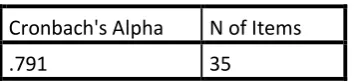
was measured with 5 point Likert Scale. Reliability test was conducted thereafter. Cronbach’s alpha
was .791, representing a reasonable level of reliability.
Table : 3 : Reliability Statistics
Cronbach's Alpha N of Items
.791 35
Data Analysis: The survey results are organized as follows. In the first section, the demographic
profile of the respondent was presented. The second part concluded with the data analysis of the
responses with respect to the perception of the respondents.
RESULT AND ANALYSIS
Demographic Characteristics: Table 4 exhibits the demographic traits associated with the
respondents considered for the purpose of the study. It was observed that 64.4% were male and
A Monthly Double-Blind Peer Reviewed Refereed Open Access International e-Journal - Included in the International Serial Directories
International Journal in Management and Social Science
http://www.ijmr.net.in
email id- [email protected]
Page 88 2.8 % were from 24-26 category. There were no respondents from above 26 yrs category. 92 %respondents belonged to urban area, 5% from semi urban area and 3% from rural locality.
Table : 4 : Demographic characteristics of the Respondents Variables and categories N=180 %
Age
20-22 117 65
22-24 61 34
24-26 2 1
Above 26 0 0
Gender
Male 121 67
female 59 33
Locality
Rural 4 2
Semi-urban 54 30
Urban 122 68
Source: Primary Data
Results: Consumer expectations and perceptions towards online shopping were examined with
respect to the perceived usefulness and risk. Factor analysis was conducted in order to identify the
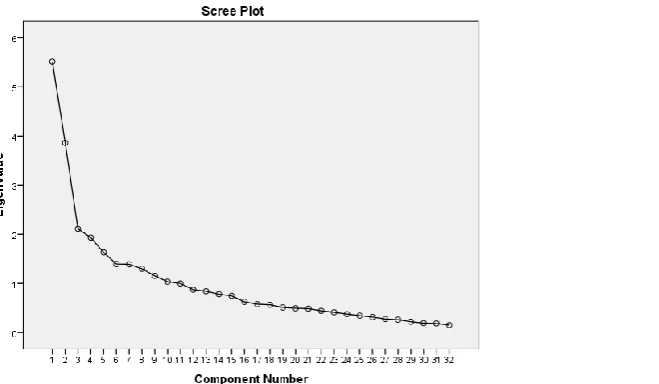
factors that affect online shopping behavior. Factors were identified using the Eigen value criteria
that suggests extracting factors with Eigen value greater than 1.0 Principal Component Analysis and
Varimax Rotation were considered for obtaining a component matrix. For confirming the adequacy
and sphericity of the data set, Kaiser-Meyer-Olkin(KMO) and Bartlett’s Test values were also
obtained. Refer to table No. 5.
Table: 5 :KMO and Bartlett's Test
Kaiser-Meyer-Olkin Measure of Sampling Adequacy. .702
Bartlett's Test of Sphericity
Approx. Chi-Square 1919.023
df 496
Sig. .000
Source: Primary Data
KMO score is 0.702. It is above the recommended value of 0.5. Further Bartlett’s Test of Sphericity
exhibits significance value of less than 0.05 (.000). Thereby ensuring the appropriateness of factor
A Monthly Double-Blind Peer Reviewed Refereed Open Access International e-Journal - Included in the International Serial Directories
International Journal in Management and Social Science
http://www.ijmr.net.in
email id- [email protected]
Page 89 Table :6:Exploratory Factor AnalysisSr.No. Items Factors
1 2 3 4
1. There may be difference in the quality ordered and
received .806
2. Possibilities of getting cheated is more in case of online
shopping .761
3. It is very difficult to exchange the product in case of
defects .731
4. Goods may get damaged, during transportation .711 5. There is chance of getting hacked the personal and
confidential information .676
6. Cash on delivery is not available in maximum occasions .631 7. It’s difficult to rely on the delivery boy who comes for
product delivery .601
8. Sometimes, the products delivered may be
expired/second hand/outdated .583
9. The company may charge more than , what is the
actual price .556
10. Possibilities of receiving the product late is a common
problem in case of online shopping .545 11. Online payment through credit cards may result in
hacking possibilities more .514
12. Product exchange involves cumbersome process .806 13. I am very keen to adopt new things .796 14. I feel internet has made life easy .751 15. Internet facility is blessing in case of emergencies .687
16. I does surfing conveniently .627
17. I enjoy surfing net in order to explore new things .601 18. Internet act as a very common communication media
among youngsters
A Monthly Double-Blind Peer Reviewed Refereed Open Access International e-Journal - Included in the International Serial Directories
International Journal in Management and Social Science
http://www.ijmr.net.in
email id- [email protected]
Page 9019. Online shopping is 24x7 .785
20. Online shopping showcases variety of products and
brands .753
21. It is very convenient to depend on online shopping .628 22. I prefer to buy from , the shop of my choice .621 23. I prefer cash payment instead plastic money .611
24. Online shopping saves time .601
25. Online shopping facilitates product comparison .589
26. Online shopping is very easy .816
27. Online shopping offer more discounts and gifts than the
traditional shopping .778
28. Online ordering layout is easy and convenient .747 29. Internet is very convenient in providing the information .695 30. Online buying information is clear, precise and easy to
understand .611
31. Prices offered through online shopping is less than the traditional shops
.589
32. Online buying provides more reliable and varied information easily
.532
Extraction Method: Principal Axis Factoring ,Rotation Method: Varimax with Kaiser Normalization. Source: Primary Data
In total 32 variables were considered for study and the variables were converged into 4 factors.
Factor 1 was loaded with 12 variables. These variables were related to the risk/threats associated
with online shopping. So the Factor 1 is labeled as ‘Perceived Risk’. Factor 2 loaded on 7 variables,
related to attitude of consumer in using internet. Hence factor 2 is labeled as ‘Internet Traits’.
Factor 3 was loaded with 7 variables, and it was labeled as ‘Attitudinal Traits’. Factor 4 was named
as ‘Convenience’ and 7 variables get loaded. Consumer behavior with respect to online shopping
among the Engineering students can be concluded as follows with the given model.
Limitation of the study :Only Engineering students were taken into consideration. Study was limited
to college of Nagpur only. Perceived Risk
Internet Traits
Attitudinal Traits
Convenience
Consumer behavior in MBA
A Monthly Double-Blind Peer Reviewed Refereed Open Access International e-Journal - Included in the International Serial Directories
International Journal in Management and Social Science
http://www.ijmr.net.in
email id- [email protected]
Page 91 Future Research : The same topic can be studied by taking the respondents from all spheres andwith more sample size and more variables. Can be carried out as a national study, and also as
International study , by having a comparison with respondents of other countries also.
CONCLUSION:
Study showed that the consumer behavior with respect to online shopping is dependent of 4 main
factors , namely ‘Perceived Risk’, ‘Internet Traits’, ‘Attitudinal Traits’ and ‘Convenience’. This
research will help the marketers , as it highlights the factors important in internet purchasing in the
context of Nagpur city and that too in Youngsters. Youngsters are very keen to experiment and to
embrace the new technologies and techniques. So marketers should focus on how to reduce risk in
online shopping. Providing an information navigation facility based on such risk-reduction strategies
, such as money-back guarantee, cash on delivery option, timely delivery of goods, desirable
purchasing experience etc. decreases consumers perceived risk and increase their purchase on the
internet.
REFERENCES:
Clarke, I. & Flaherty, T. (2005). Advances in electronic marketing. Hershey, PA: Idea Group
Pub.http://dx.doi.org/10.4018/978-1-59140-321-0
Corbitt, B. J., Thanasankit, T. & Yi, H. (2003). Trust and e-commerce: a study of consumer
perceptions. Electronic Commerce Research and Applications. 2(3), 203-315. http://dx.doi.
org/10.1016/S1567-4223(03)00024-3
Hernández, B., Jiménez, J. & Martín, M. J. (2010). Customer behavior in electronic commerce:
The moderating effect of e-purchasing experience. Journal of Business Research, 63 (9-10),
964–971. http://dx.doi.org/10.1016/j.jbusres.2009.01.019
Chaffey, D., Johnston, K., Ellis-Chadwick, F. & Mayer, R. (2006). Internet Marketing.Strateg
y,Implementatiton and Practice. New York: Pearson Education.
InternetWorldStats. (2012) World Internet Users and Population Stats. Retrieved September
20, 2012 from http://www.Internetworldstats.com/stats.htm
Porter, M. E. (2001) Strategy and the Internet. Harvard Business Review, 79(3), 62-78. Ramanathan, R., Ramanathan, U. & Hsiao, H.-L. (2012). The impact of e-commerce on
Taiwanese SMEs: Marketing and operations effects. International Journal of Production
Economics. 140(2), 934–943. http://dx.doi.org/10.1016/j.ijpe.2012.07.017
Ranchhod, A. (2004). Marketing Strategies: A Twenty-first Century Approach. Harlow:
Prentice
A Monthly Double-Blind Peer Reviewed Refereed Open Access International e-Journal - Included in the International Serial Directories
International Journal in Management and Social Science
http://www.ijmr.net.in
email id- [email protected]
Page 92 Roberts, M. L. (2008). Internet marketing: integrating online and offline strategies. Mason:Thomson.Sung, T. K. (2006). E-Commerce critical success factors: East vs. West. Technological
Forecasting and Social Change, 73(9), 1161-1177. http://dx.doi.org/10.1016/j.techfore.2004.09.002
Tao, Z., Li, Z. & Dingjun, Ch. (2011). The Predicting Model of E-commerce Site Based on the
Ideas of Curve Fitting. 2011 International Conference on Physics Science and Technology
(ICPST 2011), 22, 641-645. http://dx.doi.org/10.1016/j.phpro.2011.11.099
The Nielsen Company. (2008) Over 875 Million Consumers have Shopped Online - the
Number of Internet Shoppers up 40% in Two Years. Retrieved September 15, 2012 from
http://nz.nielsen.com/news/OnlineShopping.shtml
Zott, Ch., Amit, R. & Donley, J. (2000). Strategies for Value Creation in E-Commerce: Best
Practice in Europe. European Management Journal, 18(5), 463-475.