Structure-Based Design of 3
‑
(4-Aryl
‑
1
H
‑
1,2,3-triazol-1-yl)-Biphenyl
Derivatives as P2Y
14
Receptor Antagonists
Anna Junker,
†Ramachandran Balasubramanian,
†Antonella Ciancetta,
†Elisa Uliassi,
†Evgeny Kiselev,
†Chiara Martiriggiano,
†Kevin Trujillo,
†Giorgi Mtchedlidze,
†Leah Birdwell,
†Kyle A. Brown,
‡T. Kendall Harden,
‡and Kenneth A. Jacobson
*
,††
Molecular Recognition Section, Laboratory of Bioorganic Chemistry, National Institute of Diabetes and Digestive and Kidney
Diseases, National Institutes of Health, Bethesda, Maryland 20892-0810, United States
‡
Department of Pharmacology, University of North Carolina, School of Medicine, Chapel Hill, North Carolina 27599, United States
*
S Supporting InformationABSTRACT:
UDP and UDP-glucose activate the P2Y
14receptor
(P2Y
14R) to modulate processes related to in
fl
ammation, diabetes, and
asthma. A computational pipeline suggested alternatives to naphthalene of
a previously reported P2Y
14R antagonist (
3
, PPTN) using docking and
molecular dynamics simulations on a hP2Y
14R homology model based on
P2Y
12R structures. By reevaluating the binding of
3
to P2Y
14R
computationally, two alternatives, i.e., alkynyl and triazolyl derivatives,
were identi
fi
ed. Improved synthesis of
fl
uorescent antagonist
4
enabled
a
ffi
nity quanti
fi
cation (IC
50s, nM) using
fl
ow cytometry of P2Y
14R-expressing CHO cells.
p
-F
3C-phenyl-triazole
65
(32) was more potent
than a corresponding alkyne
11
. Thus, additional triazolyl derivatives
were prepared, as guided by docking simulations, with nonpolar aryl
substituents favored. Although triazoles were less potent than
3
(6),
simpler synthesis facilitated further structural optimization. Additionally,
relative P2Y
14R a
ffi
nities agreed with predicted binding of alkynyl and triazole analogues. These triazoles, designed through a
structure-based approach, can be assessed in disease models.
■
INTRODUCTION
Extracellular uridine-5
′
-diphosphate (
1
) and uridine-5
′
-diphos-phoglucose (
2
,
Chart 1
) activate the P2Y
14receptor (P2Y
14R), a
G protein-coupled receptor (GPCR) belonging to the
rhodopsin-like
δ
-branch, to modulate cell functions related to
in
fl
ammation, diabetes, asthma, and other diseases.
1,2This
receptor subtype is a member of the P2Y
12R-like subfamily of
nucleotide receptors, which inhibit the production of 3
′
,5
′
-cyclic
adenosine monophosphate (cAMP) through G
iprotein. The
P2Y
14R promotes hypersensitivity in microglial cells,
3
the
mobility of neutrophils,
4the release of mediators from mast
cells,
5in
fl
ammation in renal intercalated cells,
6and mixed e
ff
ects
in insulin function.
7,8Thus, approaches to novel antagonists of
nucleotide signaling at the P2Y
14R would be desirable for
exploration as novel therapeutics. The P2Y
14R is also present in
the CNS, where it suppresses release of matrix
metal-loproteinase-9 (MMP-9) and tumor necrosis factor (TNF)
from astrocytes.
9Only a limited set of P2Y
14R antagonists are currently known.
Several chemotypes based on naphthoic acid and
pyrido[4,3-d
]pyrimidine were reported originally in patents to provide
potent P2Y
14R antagonists, which however displayed low oral
bioavailability.
10−13One of those naphthoic acid derivatives,
4-(4-(piperidin-4-yl)-phenyl)-7-(4-(tri
fl
uoromethyl)-phenyl)-2-naphthoic acid (PPTN,
3
), was pro
fi
led pharmacologically at the
entire family of eight P2YRs and found to display high a
ffi
nity
and selectivity (IC
50= 0.4 nM at P2Y
14R and >10
μ
M at other
P2YR subtypes).
14We demonstrated that the piperidine group
of
3
was a suitable site for chemical derivatization and chain
extension to prepare high a
ffi
nity
fl
uorescent probes of the
P2Y
14R. This conclusion was supported by molecular modeling
and ligand docking, which showed the piperidine ring facing
outward at the surface of the receptor.
15One such probe,
4
,
displayed exceptionally high a
ffi
nity and low nonspeci
fi
c binding
when used as a tracer in a
fl
ow cytometric assay of the P2Y
14R in
whole Chinese hamster ovary (CHO) cells expressing the
receptor.
Although previous approaches to modeling of P2YRs were
subject to high uncertainty, we now have appropriate templates
to obtain detailed docking predictions and structural
explan-ations of previously determined structure
−
activity relationship
(SAR) within the P2Y
12R-like subfamily, e.g., uracil nucleotides
binding to the P2Y
14R.
16In the present study, a human (h)
P2Y
14R homology model based on recent hP2Y
12R X-ray
structures
17,18served as a template to conduct docking and
Received: January 10, 2016
Published: June 22, 2016
Article
molecular dynamics (MD) simulations. The immediate goal was
to suggest bioisosteric alternatives to the hydrophobic and
unwieldy naphthalene ring of
3
that would maintain a similar
orientation of the piperidine and 4-(tri
fl
uoromethyl)-phenyl
substituents when bound to the receptor and therefore preserve
receptor a
ffi
nity. We sought to simultaneously reduce the
molecular weight and avoid the high lipophilicity of
3
that
contributes to its low solubility and di
ffi
culty of puri
fi
cation.
13■
RESULTS
The macromolecular starting point of our study is a previously
obtained hP2Y
14R MD-re
fi
ned homology model based on the
agonist-bound hP2Y
12R X-ray structure (PDB ID: 4PXZ).
16−18The reference antagonist structure
3
(PPTN) has been docked
into the model by using an Induced Fit Docking (IFD) protocol
(see Methods section), and the complex has been re
fi
ned by
subjecting it to 10 ns of membrane MD simulations. With respect
to the starting agonist-bound hP2Y
14R homology model
(Supporting Information,
Figure S1
A),
16the re
fi
ned structure
used in this study (Supporting Information,
Figure S1
B) featured
a larger binding cavity extending toward the extracellular side.
The adaptation of the binding site to the antagonist structure
caused a rearrangement of the position of transmembrane
domain (TM)2 and TM7 with respect to the TM bundle
(Supporting Information,
Figure S2
A): in particular, TM7 was
pushed outward, whereas the axis of TM2 became slightly bent
toward TM3. Moreover, the extension of the binding site region
toward the extracellular side reoriented the
fi
rst and second
extracellular loops (ECL1 and ECL2, respectively) away from the
TM bundle (Supporting Information,
Figure S2
B,C). Notably,
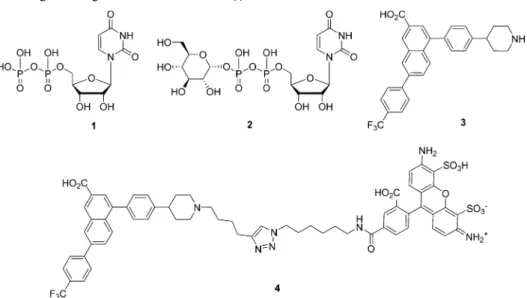
Chart 1. Agonist and Antagonist Ligand Probes of the P2Y
14R
aaEndogenous agonists1and2have functional EC
50values at the hP2Y14R of 160 and 261 nM, respectively.45Antagonist3is highly potent at the hP2Y14R (KBfrom Schild analysis = 0.434 nM)14but suffers from adverse physicochemical properties (highly hydrophobic/amphipathic) that make dissolution and purification difficult. Fluorescent antagonist4is highly potent at the hP2Y14R (functionalKi= 0.080 nM).15.
the di
ff
erences described above in the MD re
fi
ned agonist- and
antagonist-bound hP2Y
14R homology models mirror those
experimentally observed for the hP2Y
12R X-ray structures.
17,18Therefore, the
fi
nal hP2Y
14R MD-re
fi
ned structure (
Supporting
Information
) has been used as a template for all subsequent
docking simulations.
Starting from this re
fi
ned template, we developed a
computa-tional pipeline comprising three subsequent phases (
Figure 1
):
(i) bioisostere search, (ii) compound screening, and (iii) hit
selection. The bioisostere search stage envisaged the use of
docking runs followed by 30 ns of MD simulations to identify
linking groups as suitable replacements of half of the naphthalene
ring while preserving the ligand
−
receptor interactions observed
for the reference compound. The selection of the linkers has
been mainly guided by the knowledge gained in a previous study
that led to the design of highly potent A
3adenosine receptor
(A
3AR) agonists.
19Once a new sca
ff
old was found, a small library
of hypothetical compounds was screened by means of docking
simulations. Pose
fi
ltering and hit selection were based upon
ligand
−
receptor complementarity and optimal overlap between
ligand functional groups and computed protein interaction sites.
In the
fi
rst instance, the parent structure
3
was redocked into
the MD-re
fi
ned model. The corresponding pose (
Figure 2
A)
showed an overall root-mean-square deviation (RMSD) value
with respect to the
fi
nal MD snapshot of 0.42 Å (data not
shown). In the predicted binding mode, the ligand resided in the
orthosteric binding site in an orientation similar to that
previously reported for hP2Y
14R antagonist probes:
15the
2-naphthoic acid carboxylate bridged Lys77
2.60(according to
conventional TM numbering
20), Lys277
7.35, and Tyr102
3.33,
while the piperidine group pointed outward with the nitrogen
atom establishing a H-bond interaction with the backbone of
Gly80
2.63. The docking pose has been subjected to 30 ns of
membrane MD simulation, and the RMSD with respect to the
starting structure has been computed (
Figure 2
B, magenta line);
this analysis served as a con
fi
rmation of the docking pose stability
as well as a reference to compare newly proposed compounds
containing bioisosteres of the naphthalene. During the MD
simulation, compound
3
exhibited an average RMSD of 3.76 Å
that can be ascribed mainly to motion of the solvent-exposed
piperidine ring. As shown in the trajectory visualization
(Supporting Information,
Video S1
), the naphthalene core
with its carboxylate group is well anchored in the binding site
during the 30 ns time frame by a tight H-bond network
established with Lys77
2.60, Lys277
7.35, and Tyr102
3.33. However,
the distal piperidine nitrogen suddenly moved apart from the
pose predicted by docking and approached the backbone of
Ile170 in the second extracellular loop (EL2) through the
interplay of water molecules.
The
fi
rst proposed alternative structure was an alkyne
derivative (
11
,
Scheme 1
) containing a
p
-CF
3-phenyl group,
similar to
3
. The compound was docked into the MD-re
fi
ned
hP2Y
14R homology model and then subjected to 30 ns of MD
simulations. In the resulting pose (
Figure 2
C), the tri
fl
uor-omethylphenyl group was buried in a deep hydrophobic pocket,
and the carboxylate group interacted with Lys77
2.60, Tyr102
3.33,
and Lys277
7.35as in the docking pose of
3
(
Figure 2
A). Although
during the MD simulations of the hP2Y
14−
11
complex, the
ligand atoms displayed an average RMSD value (3.79 Å) close to
the one observed for the reference compound, the corresponding
graph suggested that compound
11
was less stable than
3
in the
binding pocket (
Figure 2
B, orange and magenta lines,
respectively). In particular, in the
fi
rst 15 ns of simulation,
compound
11
experienced an increasing deviation from the
starting pose, leading to a higher root-mean-square
fl
uctuation
(RMSF = 1.52 vs 1.16 Å for compounds
11
and
3
, respectively).
The trajectory analysis (Supporting Information,
Video S2
)
revealed that, after a few ns, the piperidine ring of derivative
11
moved from the docking pose to establish an H-bond interaction
with the backbone of Ile170
EL2and Gln169
EL2in a way similar to
that observed for the reference compound. On the other hand,
after approximately 12 ns, the side chain of Tyr102
3.33moved to
engage the tri
fl
uoromethylphenyl group in a T-shaped
π
−
π
stacking interaction. This movement caused a weakening of the
H-bond network around the carboxylate moiety of
11
that
increased the number of water molecules surrounding the group
during the trajectory.
On the basis of the analogy observed for the docking poses and
trajectory analyses of compound
11
with respect to the reference
structure
3
, we synthesized
11
using both Sonogashira
21and
Suzuki
22cross-coupling reactions (
Scheme 1
). In particular, a
Sonogashira coupling reaction of a iodo arene
5b
with
4-(tri
fl
uoromethyl)phenylacetylene (
6
) in the presence of
tetrakis-(triphenylphosphine)palladium yielded derivative
7
. Compound
5b
was obtained by esteri
fi
cation of a commercial precursor
5a
.
The 3-hydroxy group of
7
was then converted to the
corresponding aryl tri
fl
ate
8
using tri
fl
ic anhydride and pyridine.
A Suzuki cross-coupling reaction between
8
and dioxaborolane
derivative
9
, prepared by conventional Suzuki
−
Miyaura
reaction
23in the presence of
tetrakis(triphenylphosphine)-palladium catalyst, a
ff
orded compound
10
. Finally, removal of
the
N
-Boc protecting group followed by hydrolysis of the ester
provided derivative
11
. This route would allow a wide variety of
substitutions to be introduced at a late stage in the synthetic
sequence because of the commercial availability of numerous
arylacetylene derivatives.
On the basis of the suggestion that the replacement of the
naphthoic acid core of
3
with an alkynyl group might lead to the
loss of an anchoring hydrogen bond with Tyr102
3.33, other
alternatives were considered as well. A similarly versatile
synthetic approach could be used for introducing arylacetylene
moieties in the form of 1,2,3-triazoles by copper-catalyzed [2 + 3]
cycloaddition
24with an azido group present on the core of the
molecule. The corresponding triazole derivative containing a
p
-CF
3-phenyl group (
65
,
Scheme 2
) was subjected to the same
computational protocol described for compound
11
(docking
followed by 30 ns of MD simulations). The resulting docking
pose (
Figure 2
D) suggested a placement of compound
65
in the
binding site similar to that predicted for
3
and
11
, which
encompassed a tight H-bond network around the carboxylate
group with the piperidine ring solvent-exposed. On the other
side, a slightly higher placement within the binding site enabled
compound
65
to establish an additional
π
−
π
stacking interaction
with the side chain of His184
5.36, while the piperidine ring was
anchored by an H-bond with the Ile167
EL2backbone.
MD simulations of the hP2Y
14−
65
complex resulted in lower
average RMSD and RMSF values of 3.48 and 0.70 Å, respectively
(
Figure 2
B, dark-green line). After a few ns (Supporting
Information,
Video S3
), the ligand moved deeper in the binding
site and was stabilized by persistent
π
−
π
stacking interactions
established between the triazole group and Tyr102
3.33and
Scheme 1. Synthesis of an Alkynyl Derivative 11 as a P2Y
14R Antagonist
aaReagents and conditions: (a) CH
between the tri
fl
uoromethylphenyl group and His184
5.36. A
π
−
cation interaction between the triazole ring and the side chain of
Arg253
6.55further contributed to stabilizing the ligand position
during the 30 ns time frame. Conversely to what was observed for
compounds
3
and
11
, the piperidine ring moved toward
Gly80
2.63. The carboxylate group of
65
maintained a stable
position, and the water molecules surrounding the carboxylate
group of
11
were not observed during the simulation of the
hP2Y
14−
65
complex.
On the basis of these favorable predictions, using a strategy
similar to
Scheme 1
, triazolyl derivative
65
and its analogues were
synthesized starting from the 3-amino-5-bromobenzoic acid
(
12
) and 4-(4-bromophenyl)piperidin-4-ol (
16
,
Scheme 2
). The
carboxylic group of
12
was
fi
rst converted to the methyl ester
13
,
and then the amine function was protected to give Boc-derivative
14
. The palladium-catalyzed condensation of aryl bromide
14
with bis(pinacolato)-diboron under basic conditions a
ff
orded
dioxaborolane
15
. The acid-catalyzed dehydration of
16
yielded
alkene
17
, which was reduced to provide compound
18
.
Derivative
19
was obtained by coupling
18
with compound
15
under Suzuki conditions.
22The conversion of the amino group of
19
to a tri
fl
uoroacetamide
20
was accomplished using tri
fl
uoro-acetic anhydride in the presence of triethylamine. Removing the
N
-Boc protecting group of
20
gave the amine
21
. Compound
21
was converted into aryl azide
22
from an arenediazonium tosylate
that was generated in situ and subsequent addition of sodium
azide.
25The protected 1,2,3-triazolyl derivatives
23
−
63
were
synthesized via an azide
−
alkyne Huisgen cycloaddition (
“
click
Scheme 2. Synthesis of Triazolyl Derivatives as P2Y
14R Antagonists
aaReagents and conditions: (a) CH
Scheme 3
aaReagents and conditions: (A) (a) TsCl, NEt
reaction
”
) involving aryl azide
22
, various alkynes, Cu(II)sulfate
salt, and sodium ascorbate.
26One-pot hydrolysis of the
tri
fl
uoroacetamide and the ester in the presence of KOH yielded
compounds
64
−
104
, which were puri
fi
ed by semiprep HPLC
and isolated either as acetate or triethylammonium salts.
The synthesis of
fl
uorescent antagonist
4
as previously
reported
15su
ff
ered from a low yield in the
fi
nal click
cycloaddition step to link the azide-functionalized
fl
uorophore
and the alkyne-functionalized pharmacophore. Given the
unusually high a
ffi
nity of
4
and its low nonspeci
fi
c character,
we explored an alternate synthesis of
4
. This was necessary to
provide a su
ffi
cient supply of
fl
uorescent probe
4
for use in
routine assays, which we needed for the new putative antagonists
11
and
64
−
104
. A more e
ffi
cient route consisted of forming an
amide as the ultimate or penultimate step. Thus, the
pharmacophore was functionalized with an extended amine
through a preformed triazole linker to provide intermediate
113
(
Scheme 3
A). The coupling of AlexaFluor488
fl
uorophore
27and
pharmacophore was attempted by two methods, either: (1)
condensation of the
fl
uorophore as a 5-carboxylic acid
115
to the
ethyl ester-protected derivative
113
of the pharmacophore
followed by ester saponi
fi
cation, or (2) by reaction of the
fl
uorophore that was activated in situ as a
N
-succinimidyl ester
116
with the amino derivative
114
, having a deprotected
carboxylic acid (
Scheme 3
B). However, only the second
synthetic route provided compound
4
and at the same time
improved the reaction yield compared to the previous synthetic
method.
15Furthermore, we explored a di
ff
erent
fl
uorescent
antagonist analogue for possible use in screening, e.g.,
130
containing a cyanine-5 (Cy5)
fl
uorophore, but this compound
was considerably less potent at the hP2Y
14R in comparison to
4
(
Supporting Information
).
Alkyne derivative
11
was tested in a functional assay of
antagonism of the agonist-induced inhibition of cAMP
production in the presence of 30
μ
M forskolin in Chinese
hamster ovary (CHO-K1) cells stably expressing the hP2Y
14R
(P2Y
14R-CHO cells, using an EC
80concentration of agonist
2
of
316 nM).
14Under these conditions, the IC
50values for
11
was
5690
±
1440 (
n
= 3). Thus, this alkyne derivative was shown to
be an antagonist with considerably less a
ffi
nity than reference
antagonist
3
.
Although the alkyne
11
was not deemed a high priority lead
compound because of its moderate potency, the triazoles
achieved higher a
ffi
nity. Compound
65
and the other newly
synthesized triazole derivatives were assayed in a
fl
ow cytometry
competition assay using whole cells (P2Y
14R-CHO), and
fl
uorescent antagonist ligand
4
(20 nM) as a tracer.
Figure 3
A
shows typical
fl
ow cytometry traces in the presence of
representative triazole inhibitors at a single concentration. The
antagonist a
ffi
nities of the various analogues were compared by
this method,
fi
rst by screening at a relatively high single
concentration of inhibitor (3
μ
M) to identify the most potent
analogues. The reference compound
65
inhibited
fl
uorescent
labeling by 92%; thus, it appeared to be a suitable highly potent
lead compound for exploring the SAR in this series. Those IC
50values of triazole analogues inhibiting the
fl
uorescent labeling by
80% or greater were determined in full concentration
−
response
curves, which were sigmoidal, as shown for representative
compounds in
Figure 3
B.
Selection of favored terminal aryl groups in the triazole series,
other than 4-F
3C-Ph (
65
), was based on predictions arising from
the docking of a library of 57 hypothetical triazole derivatives
(Supporting Information,
Table S1
), which could be easily
synthesized by the same route as for
65
. The criteria underlying
the hit selection are reported in
Table 1
and are based upon
ligand
−
receptor complementarity and overlap of sca
ff
old
functional groups with computed receptor interaction sites
(Supporting Information,
Table S2
). Initially, selected entries
66
−
75
were synthesized for testing using the
fl
uorescent
hP2Y
14R assay. On the basis of the SAR determined for the
initial set, a second group of P2Y
14R antagonists
76
−
104
was
prepared (
Table 2
) and evaluated similarly for the ability to
inhibit
fl
uorescent binding at the hP2Y
14R.
The compounds that at 3
μ
M displayed inhibition of >80% of
the
fl
uorescent ligand (
4
, 20 nM) binding to the P2Y
14R tended
to be phenyl derivatives with 4-CF
3(
65
), 4-Cl (
70
), 4-Br (
71
),
4-n
-Pr (
77
), 4-
i
-Pr (
78
), 4-
t
-Bu (
79
), 4-
n
-pentyl-O (
82
), 4-OCF
3(
84
), and 3,4-F
2(
90
) substituents. Also, a 5-bromothien-2-yl
derivative (
75
) nearly completely inhibited P2Y
14R
fl
uorescent
labeling. The compounds that displayed inhibition of 60%
−
80%
contained a thien-3-yl (
72
) or 5-chlorothien-2-yl group (
74
) or
were phenyl derivatives with 4-C
2H
5(
66
), 4-CH
3(
76
), 4-
t
-Bu
(
79
), 3-CF
3(
80
), 3-OCF
3(
85
), 4-F (
87
), 3,5-diF (
91
),
4-COCH
3(
94
), and benzofuran-2-yl (
101
) substituents. Among
the weakest compounds, with <20% inhibition were 4-CH
2OH
(
67
), 2-OCH
3(
83
), 3-OH (
96
), and 3-NH
2(
97
) phenyl
analogues and pyridyl (
98
), pyrazinyl (
99
), and thiazolyl (
102
)
analogues. Both unsubstituted phenyl analogue
64
and the
cyclohexyl analogue
103
inhibited P2Y
14R binding in the
intermediate range. Thus, recognizable patterns of SAR were:
polar groups, H-bond donor groups, and heteroatom (especially
N) substitution of an aryl ring were not well tolerated, while
nonpolar phenyl substituents and especially
para
-substitution of
the phenyl ring were favored.
The IC
50values of the compounds that were examined in the
fl
uorescent assay with full concentration
−
response curves are
given in
Table 3
. The IC
50values of the reference naphthoic acid
3
was 6.0 nM, and the values for 10 triazoles ranged from 31.7
nM (
65
) to 481 nM (
78
). The potencies were in the rank order
of:
3
>
65
>
77
>
75
>
71
,
82
,
84
>
79
,
90
,
76
,
70
>
78
.
The most potently binding triazole derivative
65
was shown in
measurements of cAMP to be an antagonist at the P2Y
14R
expressed in CHO cells, similar to known and potent antagonist
3
(
Figure 3
C). P2Y
14R agonist
2
(1
μ
M) was applied in the
absence or presence of antagonist
3
(1
μ
M) or compound
65
(1
μ
M) to cells stimulated with 30
μ
M forskolin. As expected,
compound
2
signi
fi
cantly decreased forskolin-induced cAMP
levels, but in the presence of either compound
3
or
65
, P2Y
14R
agonist
2
did not inhibit cAMP accumulation. We also studied
the e
ff
ect of compound
65
on calcium mobilization induced by
several other P2YRs.
65
(up to 10
μ
M) was inactive as either
agonist or antagonist at the hP2Y
1R and hP2Y
6R expressed in
1321N1 astocytoma cells (Supporting Information,
Figure S4
).
Compounds
11
,
65
, and
74
were separately evaluated by the
Psychoactive Drug Screening Program (PDSP)
28at various
P2YRs and found to be inactive (10
μ
M) as agonist or antagonist
at human P2Y
1, P2Y
2, P2Y
4, and P2Y
11Rs (calcium transients)
expressed in 1321N1 astrocytoma cells and protease-activated
receptor (PAR)1 expressed in mouse KOLF cells.
O
ff
-target activities for selected compounds were measured by
the PDSP.
28Compounds
3
and
11
each showed only a few o
ff
-target interactions at <10
μ
M. At these sites, the measured
K
ivalues (
μ
M) of
3
were 6.79 (D
3dopamine receptor) and 2.75 (
δ
-opioid receptor), and the
K
ivalues (
μ
M) of
11
were 1.46 (
σ
1receptor) and 3.60 (
σ
2receptor). All other receptors, channels,
and transporters in the standard diverse screen of the PDSP were
not signi
fi
cant (i.e., <50% binding inhibition at 10
μ
M). A
representative triazole derivative (
74
) showed no o
ff
-target
interactions, but the tri
fl
uoromethyl analogue (
65
) bound
weakly (
K
i,
μ
m) at H
1histamine (0.17) and
α
2A(1.56) and
α
2C(1.32) adrenergic receptors. Thus, only a few o
ff
-target
interactions were detected in these chemical series.
■
DISCUSSION
The aim of this project was the synthesis of a library of novel
triazole-based structures as possible antagonists of the P2Y
14R
having improved physicochemical properties. A triazole moiety
was proposed as an alternative bioisosteric replacement for the
Table 1. Selection of Terminal Aryl Group Based on Docking
and Molecular Dynamics Simulation of Various Triazole
Derivatives
caPercent inhibition at 3μM of binding offluorescent antagonist4(20 nM) in P2Y14R-CHO cells (n= 3). NS, not synthesized.bStructure in
Chart 1.cAll ligands were docked to a 10 ns molecular dynamics
naphthoic acid core of the potent P2Y
14R antagonist
3
. On the
basis of the results previously achieved with the same
substitutions for A
3AR agonists,
19alkyne derivatives and triazole
derivatives were considered for components of the core to mimic
the favorable interactions present in the naphthoic acid series. By
docking to a homology model of the receptor, the envisaged
structures were predicted to occupy the same binding site within
the P2Y
14R as
3
, maintaining a similar orientation of the
Table 2. Second Group of Triazolyl P2Y
14R Antagonists That Was Prepared Based on Expanding the SAR Found in
Table 1
aPercent inhibition at 3μM of binding offluorescent antagonist4(20 nM) in P2Y
piperidine and 4-(tri
fl
uoromethyl)-phenyl substituents within
the ligand binding pocket and preserving the a
ffi
nity. Docking
and MD simulation have suggested that the triazole sca
ff
old can
form additional interactions that stabilize the ligand within the
receptor binding pocket. A
p
-CF
3-phenyl group bearing triazole
(
65
) proved to be of higher a
ffi
nity than the corresponding
alkyne (
11
); thus, the triazoles were explored in detail.
The synthetic route to the triazole series was versatile to allow
the introduction of a wide range of functional groups on a
terminal aryl substituent late in the synthesis. Both Suzuki and
click cycloaddition reactions were applied sequentially to a
benzoic ester moiety. The triazole derivatives were prepared by a
late-stage diversi
fi
cation strategy, introducing the 1,2,3-triazole
moiety at the end of the synthetic sequence by a copper-catalyzed
[2 + 3] cycloaddition between an azide moiety and various
arylacetylene derivatives. The choice of arylacetylene derivatives
was initially guided by docking and MD studies. The overall yield
from aniline
12
to protected azide
22
was 15%, with the last two
steps (click reaction and deprotection) of variable, but usually
high yield. One unexpected result was the hydrolysis of the
cyanophenyl group during the last deprotection step to a
3-carboxyphenyl group (
92
).
These new compounds were assayed in a convenient
fl
ow
cytometric
fl
uorescence competition assay with our previously
reported antagonist probe
4
in P2Y
14R-CHO cells, con
fi
rming
the general docking predictions. Moreover, the expanded SAR
exploration (
Table 2
) provided greater insight. The terminal aryl
group attached to the triazole required hydrophobic substitution
for high a
ffi
nity, as the unsubstituted phenyl analogue (
64
) was
weak in P2Y
14R binding. The general preference for substitution
of a phenyl ring at this position was
p
- >
m
-
≥
o
-, as evidenced
with the methoxy analogues (
81
>
68
≥
83
) and the
fl
uoro
analogues (
87
>
88
≈
89
). Similarly, there was a preference for
p
-over
m
- substitution in tri
fl
uoromethyl (
65
>
80
) and
tri
fl
uoromethoxy (
84
>
85
) analogues. Thus, there is a
hydrophobic pocket that tolerates considerable steric bulk, e.g.,
the 4-
tert
-butyl analogue (
79
), in this region of the receptor, as
predicted in ligand docking to the P2Y
14R homology model.
However, introducing polar groups to form predicted H-bonding
interactions with speci
fi
c groups surrounding this aryl ring failed
to enhance a
ffi
nity. This trend could be explained by the
observation that a residue side chain (Ser187
5.39) that was
predicted in the docking simulation to form H-bonds with the
ligand polar groups was not available for ligand interaction when
analyzed in the dynamic context of the membrane-embedded
solvated receptor (data not shown). The most potent
compounds, with IC
50values ranging from 32 to 131 nM, had
substituents: 4-CF
3-
ϕ
65
> 4-
n
-propyl-
ϕ
77
> 5-Br-thienyl
75
>
4-Br-
ϕ
71
, 4-
n
-pentyloxy-
ϕ
82
, and 4-CF
3O-
ϕ
84
. Substitution
of the 4-CF
3group of
65
with 4-CH
3in
76
considerably lowered
the a
ffi
nity 7-fold (IC
50237 nM). These a
ffi
nities were not as
potent as reference compound
4
(IC
506.0 nM) in the same assay.
The lead molecule
3
is a highly selective antagonist of the
P2Y
14R;
14although selectivity of these antagonists with respect
to P2Y
12R and P2Y
13R remains to be determined, several
derivatives were shown to be inactive at all P2Y
1-like receptors.
The physicochemical properties of the triazole derivatives
remain to be determined experimentally. However, an online
tool for calculating small-molecule pharmacokinetic and toxicity
properties predicted some advantage;
3
(2.7
μ
M solubility
predicted) would be 100% bound to human plasma protein and
65
(6.9
μ
M solubility predicted) would be 1.5% unbound.
29The
triazole ring bene
fi
ted from increased polarity and additional
H-bond accepting groups compared to the naphthalene core of
3
.
The cLogP of
3
is 5.65, which is more hydrophobic than the
optimal range of
∼
2
−
4, while the corresponding triazole
derivative
65
had a cLogP of 4.59. The halogen substitution of
a potent 3,4-di
fl
uorophenyl analogue
90
might impede potential
oxidation by CYP450 enzymes in the liver.
■
CONCLUSION
In conclusion, we have used structural insights to discover a new
sca
ff
old 3-(4-aryl-1
H
-1,2,3-triazol-1-yl)-biphenyl) for P2Y
14R
antagonists. The high a
ffi
nity among members of this chemical
series of triazole derivatives provides new tools to aid in our
understanding of P2Y
14R pharmacology and potentially could
lead to clinically useful drug candidates for in
fl
ammatory,
endocrine, and other conditions.
■
EXPERIMENTAL SECTION
Chemical Synthesis.Reagents and Instrumentation.The proton and carbon nuclear magnetic resonance spectra were recorded using Bruker 400 MHz, Bruker 500, or Bruker 600 NMR spectrometer. Purification offinal compounds was performed by preparative HPLC (column: Luna 5μm C18(2) 100 Å, LC column 250 mm×4.6 mm). Method A: eluent 0.1% TFA in water−CH3CN from 100:0 to 70:30 in 45 min with a flow rate of 5 mL/min. Method B: eluent 10 mM triethyammonium acetate buffer−CH3CN from 80:20 to 20:80 in 40 min, then 10 mM triethyammonium acetate buffer−CH3CN from 20:80 to 0:100 in 10 min with aflow rate of 5 mL/min. Purities of all tested compounds were≥95%, as estimated by analytical HPLC (column: Zorbax SB-Aq 5μm analytical column, 150 mm×4.6 mm; Agilent Technologies, Inc.). Method: eluent 5 mM triethyammonium phosphate monobasic solution−CH3CN from 90:10 to 0:100 in 20 min, then triethyammonium phosphate monobasic solution−CH3CN from 0:100 to 90:10 in 5 min with aflow rate of 1 mL/min. Peaks were detected by UV absorption (254 nm) using a diode array detector. All derivatives tested for biological activity showed >95% purity in the HPLC system. Analytical thin-layer chromatography was carried out on Sigma-Aldrich TLC plates, and compounds were visualized with UV light at 254 nm. Silica gelflash chromatography was performed using 230−400 mesh silica gel. Unless noted otherwise, reagents and solvents were purchased from Sigma-Aldrich (St. Louis, MO). Compound3was synthesized as reported.14 Low-resolution mass spectrometry was performed with a JEOL SX102 spectrometer with 6 kV Xe atoms following desorption from a glycerol matrix or on an Agilent LC/MS 1100 MSD, with a Waters (Milford, MA) Atlantis C18 column.
High-Table 3. Potencies of P2Y
14R Antagonists in Flow Cytometry
Assay Determined with Full Concentration
−
Response
Curves
compd P2Y14R potency, IC50(nM)a
3 6.0±0.1
65 31.7±8.0
70 290±88
71 115±15
75 91±4
76 237±90
77 72.4±14.0
78 481±81
79 224±64
82 162±25
84 131±39
90 228±63
resolution mass spectroscopic (HRMS) measurements were performed on a proteomics optimized Q-TOF-2 (Micromass-Waters) using external calibration with polyalanine. cLogP was calculated using ChemDraw Professional (PerkinElmer, Boston, MA, v. 15.0).
6-Amino-9-(2-carboxy-4-((6-(4-(4-(4-(4-(3-carboxy-6-(4-(trifl uoromethyl)phenyl)-naphthalen-1-yl)phenyl)piperidin-1-yl)- butyl)-1H-1,2,3-triazol-1-yl)hexyl)carbamoyl)-phenyl)-3-iminio-5-sulfo-3H-xanthene-4-sulfonate (4).To a solution of AlexaFluor 488 115(4.44 mg, 7.08 μmol) andN,N-diisopropylethylamine (1.34μL, 7.72μmol) in dry DMF (400μL), TSTU (2.42 mg, 7.72μmol) was added at 0°C. The resulting mixture was allowed to warm up at rt and stirred for 2−3 h. Then, a solution of114(4.5 mg, 6.44μmol) andN,N -diisopropylethylamine (1.30μL, 7.08μmol) in dry DMF (300μL) was added, and the reaction was stirred overnight at rt. After removal of the solvent, the residue was purified by preparative HPLC (method A,Rt= 24.9 min). The product 4 was obtained as an orange solid after lyophilization (0.8 mg, 10%). MS (ESI,m/z) 1212 [M−H]−. ESI-HRMS calcdm/zfor C62H57F3N2O12S21212.3462, found 1212.3459 [M−H]−. HPLC purity 96.1% (Rt= 5.7 min).
4′-(Piperidin-4-yl)-5-((4-(trifluoromethyl)phenyl)ethynyl)-[1,1′ -bi-phenyl]-3-carboxylic Acid Hydrochloride (11). Lithium hydroxide (aqueous 0.5M, 70μL, 25μmol) was added to a solution of10(13 mg, 23μmol) in methanol (0.2 mL), and the mixture was heated at reflux for 1.5 h. During this time,10was completely consumed. The mixture was allowed to cool to 23°C and acidified with hydrochloric acid (1 M) until pH 1. The acidified mixture was stirred for additional 2 h before solvents were removed under reduced pressure. The residue was subjected to column chromatography (silica gel), eluting with chloroform/ methanol/acetic acid 100/10/1 (v/v) mixture. Hydrochloric acid (1 M) was added to fractions containing the product, and the solvent was removed under reduced pressure to provide the desired product11as a hydrochloride salt (3.1 mg, 28%). MS (ESI,m/z) 450 [M + H]+.1H NMR (400 MHz, DMSO-d6):δ(ppm) = 8.24 (s, 1H), 8.11 (t,J= 1.63 Hz, 1H), 8.08 (s, 1H), 7.85 (s, 1H), 7.79 (td,J= 1.51, 7.78 Hz, 1H), 7.73 (td,J= 1.38, 7.53 Hz, 1H), 7.69 (d,J= 8.03 Hz, 2H), 7.41 (t,J= 7.65 Hz, 1H), 7.35 (d,J= 8.28 Hz, 2H), 3.26 (br. s., 2H), 3.10−3.19 (m, 2H), 2.87 (d,J= 12.55 Hz, 3H), 2.42 (dt,J= 2.64, 7.22 Hz, 2H), 2.33 (td,J= 1.79, 3.70 Hz, 1H).
General Procedure A: Click Cycloaddition Reaction.To a solution of aryl azide (22, 1 equiv) and aryl alkyne (1.5 equiv) in 2 mL of THF:water (1:1), sodium ascorbate (freshly prepared 1 M aqueous solution) and CuSO4(0.5 equiv) were sequentially added. The resulting reaction was vigorously stirred for 12 h at rt. The reaction mixture was then concentrated in vacuo and purified by flash chromatography (hexane:ethyl acetate = 6:4).
Methyl 5-(4-Phenyl-1H-1,2,3-triazol-1-yl)-4′
-(1-(2,2,2-trifluoroacetyl)piperidin-4-yl)-[1,1′-biphenyl]-3-carboxylate (23). Yellow solid. MS (ESI,m/z) 535 [M + H]+. ESI-HRMS calcd for C29H26F3N4O3535.1952, found 535.1957 [M + H]+.
Methyl 5-(4-(4-(Trifluoromethyl)phenyl)-1H-1,2,3-triazol-1-yl)-4′ -(1-(2,2,2-trifluoroacetyl)piperidin-4-yl)-[1,1′ -biphenyl]-3-carboxy-late (24).Orange solid 6.9 mg (99%). MS (ESI,m/z) 603 [M + H]+. ESI-HRMS calcd for C30H25F6N4O3603.1825, found 603.1831 [M + H]+.
Methyl 5-(4-(4-(Ethylphenyl)-1H-1,2,3-triazol-1-yl)-4′ -(1-(2,2,2-trifluoroacetyl)piperidin-4-yl)-[1,1′-biphenyl]-3-carboxylate (25). Yellow solid 2.8 mg (43%). MS (ESI, m/z) 563.2 [M + H]+. ESI-HRMS calcd for C31H30F3N4O3563.2270, found 563.2274 [M + H]+. Methyl 5-(4-(4-(Hydroxymethyl)phenyl)-1H-1,2,3-triazol-1-yl)-4′ -(1-(2,2,2-trifluoroacetyl)piperidin-4-yl)-[1,1′ -biphenyl]-3-carboxy-late (26).Yellow solid 1.6 mg (25%). MS (ESI,m/z) 565.2 [M + H]+. ESI-HRMS calcd for C30H28F3N4O4565.2063, found 565.2068 [M + H]+.
Methyl 5-(4-(3-Methoxyphenyl)-1H-1,2,3-triazol-1-yl)-4′ -(1-(2,2,2-trifluoroacetyl)piperidin-4-yl)-[1,1′-biphenyl]-3-carboxylate (27). Yellow solid 4 mg (80%). MS (ESI, m/z) 565.1 [M + H]+. ESI-HRMS calcd for C30H28F3N4O4565.2063, found 565.2056 [M + H]+.
Methyl 5-(4-(4-Aminophenyl)-1H-1,2,3-triazol-1-yl)-4′ -(1-(2,2,2-trifluoroacetyl)piperidin-4-yl)-[1,1′-biphenyl]-3-carboxylate (28). Yellow solid 1.7 mg (27%). MS (ESI, m/z) 550.2 [M + H]+. ESI-HRMS calcd for C29H27F3N5O3550.2066, found 550.2075 [M + H]+.
Methyl 5-(4-(4-Chlorophenyl)-1H-1,2,3-triazol-1-yl)-4′ -(1-(2,2,2-trifluoroacetyl)piperidin-4-yl)-[1,1′-biphenyl]-3-carboxylate (29). Yellow solid 3.6 mg (55%). MS (ESI, m/z) 569.2 [M + H]+. ESI-HRMS calcd for C29H2535ClF3N4O3569.1567, found 569.1561 [M + H]+.
Methyl 5-(4-(4-Bromophenyl)-1H-1,2,3-triazol-1-yl)-4′ -(1-(2,2,2-trifluoroacetyl) piperidin-4-yl)-[1,1′-biphenyl]-3-carboxylate (30). Yellow solid 3.8 mg (54%). MS (ESI, m/z) 613.1 [M + H]+. ESI-HRMS calcd for C29H2579BrF3N4O3613.1062, found 613.1057 [M + H]+.
Methyl 5-(4-(Thiophen-3-yl)-1H-1,2,3-triazol-1-yl)-4′ -(1-(2,2,2-trifluoroacetyl)piperidin-4-yl)-[1,1′-biphenyl]-3-carboxylate (31). Yellow solid 4.2 mg (67%). MS (ESI,m/z) 541.1 [M + H]+.
Methyl 5-(4-(Thiophen-2-yl)-1H-1,2,3-triazol-1-yl)-4′ -(1-(2,2,2-trifluoroacetyl)piperidin-4-yl)-[1,1′-biphenyl]-3-carboxylate (32). Yellow solid 1.6 mg (26%). MS (ESI, m/z) 541.2 [M + H]+. ESI-HRMS calcd for C27H24F3N4O332S 541.1521, found 541.1523 [M + H]+.
Methyl 5-(4-(5-Chlorothiophen-2-yl)-1H-1,2,3-triazol-1-yl)-4′ -(1-(2,2,2-trifluoroacetyl)-piperidin-4-yl)-[1,1′-biphenyl]-3-carboxylate (33).Brown solid. MS (ESI,m/z) 575 [M + H]+. ESI-HRMS calcd for C27H23F3N4O3SCl 575.1131, found 575.1132 [M + H]+.
Methyl 5-(4-(5-Bromothiophen-2-yl)-1H-1,2,3-triazol-1-yl)-4′ -(1-(2,2,2-trifluoroacetyl)-piperidin-4-yl)-[1,1′-biphenyl]-3-carboxylate (34).Orange solid 5.1 mg (72%). MS (ESI,m/z) 619 [M + H]+. ESI-HRMS calcd for calcd for C27H23F3N4O3S79Br 619.0626, found 619.0618 [M + H]+.
Methyl 5-(4-(4-Methylphenyl)-1H-1,2,3-triazol-1-yl)-4′ -(1-(2,2,2-trifluoroacetyl)piperidin-4-yl)-[1,1′-biphenyl]-3-carboxylate (35). Yellow solid 4 mg (80%). MS (ESI, m/z) 549.2 [M + H]+. ESI-HRMS calcd for C30H28F3N4O4549.2114, found 549.2119 [M + H]+.
Methyl 5-(4-(4-Propylphenyl)-1H-1,2,3-triazol-1-yl)-4′ -(1-(2,2,2-trifluoroacetyl)piperidin-4-yl)-[1,1′-biphenyl]-3-carboxylate (36). Yellow solid 5 mg (76%). MS (ESI, m/z) 577.2 [M + H]+. ESI-HRMS calcd for C30H28F3N4O4577.2427, found 577.2421 [M + H]+.
Methyl 5-(4-(4-Isopropylphenyl)-1H-1,2,3-triazol-1-yl)-4′ -(1-(2,2,2-trifluoroacetyl)piperidin-4-yl)-[1,1′-biphenyl]-3-carboxylate (37).Colorless oil 4 mg (60%). MS (ESI,m/z) 577.2 [M + H]+. ESI-HRMS calcd for C30H28F3N4O4577.2427, found 577.2417 [M + H]+.
Methyl 5-(4-(4-(tert-Butyl)phenyl)-1H-1,2,3-triazol-1-yl)-4′ -(1-(2,2,2-trifluoroacetyl)piperidin-4-yl)-[1,1′-biphenyl]-3-carboxylate (38).Yellow solid 5.5 mg (81%). MS (ESI,m/z) 591.2 [M + H]+. ESI-HRMS calcd for C33H34F3N4O3591.2583, found 591.2589 [M + H]+.
Methyl 5-(4-(3-(Trifluoromethyl)phenyl)-1H-1,2,3-triazol-1-yl)-4′ -(1-(2,2,2-trifluoroacetyl)piperidin-4-yl)-[1,1′ -biphenyl]-3-carboxy-late (39).Yellow solid 6.15 mg (89%). MS (ESI,m/z) 603.1 [M + H]+. ESI-HRMS calcd for C30H25F6N4O3603.1831, found 603.1825 [M + H]+.
Methyl 5-(4-(4-Methoxyphenyl)-1H-1,2,3-triazol-1-yl)-4′ -(1-(2,2,2-trifluoroacetyl)piperidin-4-yl)-[1,1′-biphenyl]-3-carboxylate (40). Yellow solid 3.2 mg (49%). MS (ESI, m/z) 565.2 [M + H]+. ESI-HRMS calcd for C30H28F3N4O4565.2063, found 565.2062 [M + H]+. Methyl 5-(4-(4-(Pentyloxy)phenyl)-1H-1,2,3-triazol-1-yl)-4′ -(1-(2,2,2-trifluoroacetyl)piperidin-4-yl)-[1,1′-biphenyl]-3-carboxylate (41).Pale-yellow oil 5.7 mg (81%). MS (ESI,m/z) 621.2 [M + H]+. ESI-HRMS calcd for C34H36F3N4O4621.2689, found 621.2687 [M + H]+.
Methyl 5-(4-(2-Methoxyphenyl)-1H-1,2,3-triazol-1-yl)-4′ -(1-(2,2,2-trifluoroacetyl)piperidin-4-yl)-[1,1′-biphenyl]-3-carboxylate (42). Yellow solid 6.5 mg (99%). MS (ESI, m/z) 565.1 [M + H]+. ESI-HRMS calcd for C30H28F3N4O4565.2063, found 565.2061 [M + H]+. Methyl 5-(4-(4-(Trifl uoromethoxy)phenyl)-1H-1,2,3-triazol-1-yl)-4′-(1-(2,2,2-trifluoroacetyl)piperidin-4-yl)-[1,1′ -biphenyl]-3-carboxy-late (43).Yellow solid 3.4 mg (48%). MS (ESI,m/z) 619.1 [M + H]+. ESI-HRMS calcd for C30H25F6N4O4619.1780, found 619.1784 [M + H]+.
Methyl 5-(4-(3-(Trifl uoromethoxy)phenyl)-1H-1,2,3-triazol-1-yl)-4′-(1-(2,2,2-trifluoroacetyl)piperidin-4-yl)-[1,1′ -biphenyl]-3-carboxy-late (44).Yellow solid 6 mg (84%). MS (ESI,m/z) 619.2 [M + H]+. ESI-HRMS calcd for C30H25F6N4O4619.1780, found 619.1778 [M + H]+.
ESI-HRMS calcd for C29H2535ClF3N4O3569.1567, found 569.1570 [M + H]+.
Methyl 5-(4-(4-Fluorophenyl)-1H-1,2,3-triazol-1-yl)-4′ -(1-(2,2,2-trifluoroacetyl)piperidin-4-yl)-[1,1′-biphenyl]-3-carboxylate (46). Yellow solid 3.9 mg (61%). MS (ESI, m/z) 553.1 [M + H]+. ESI-HRMS calcd for C29H25F4N4O3553.1863, found 553.1855 [M + H]+. Methyl 5-(4-(3-Fluorophenyl)-1H-1,2,3-triazol-1-yl)-4′ -(1-(2,2,2-trifluoroacetyl)piperidin-4-yl)-[1,1′-biphenyl]-3-carboxylate (47). Yellow solid 4.5 mg (77%). MS (ESI, m/z) 553.2 [M + H]+. ESI-HRMS calcd for C29H25F4N4O3553.1863, found 553.1872 [M + H]+. Methyl 5-(4-(2-Fluorophenyl)-1H-1,2,3-triazol-1-yl)-4′ -(1-(2,2,2-trifluoroacetyl)piperidin-4-yl)-[1,1′-biphenyl]-3-carboxylate (48). Yellow solid 4.9 mg (71%). MS (ESI, m/z) 553.2 [M + H]+. ESI-HRMS calcd for C29H25F4N4O3553.1863, found 553.1866 [M + H]+. Methyl 5-(4-(3,4-Difluorophenyl)-1H-1,2,3-triazol-1-yl)-4′ -(1-(2,2,2-trifluoroacetyl)piperidin-4-yl)-[1,1′-biphenyl]-3-carboxylate (49).Pale-yellow solid 4.23 mg (65%). MS (ESI,m/z) 571.1 [M + H]+. ESI-HRMS calcd for C29H24F5N4O3571.1769, found 571.1758 [M + H]+.
Methyl 5-(4-(3,5-Difluorophenyl)-1H-1,2,3-triazol-1-yl)-4′ -(1-(2,2,2-trifluoroacetyl)piperidin-4-yl)-[1,1′-biphenyl]-3-carboxylate (50).Yellow solid 4.2 mg (63%). MS (ESI,m/z) 571.1 [M + H]+. ESI-HRMS calcd for C29H24F5N4O3571.1769, found 571.1762 [M + H]+.
Methyl 5-(4-(4-Cyanophenyl)-1H-1,2,3-triazol-1-yl)-4′ -(1-(2,2,2-trifluoroacetyl)piperidin-4-yl)-[1,1′-biphenyl]-3-carboxylate (51). Yellow solid 6 mg (94%). MS (ESI, m/z) 560.2 [M + H]+. ESI-HRMS calcd for C30H25F4N5O3560.1909, found 560.1913 [M + H]+.
Methyl 5-(4-(4-Acetylphenyl)-1H-1,2,3-triazol-1-yl)-4′ -(1-(2,2,2-trifluoroacetyl)piperidin-4-yl)-[1,1′-biphenyl]-3-carboxylate (53). Yellow solid 4.45 mg (67%). MS (ESI,m/z) 577.2 [M + H]+. ESI-HRMS calcd for C31H28F3N4O4577.2063, found 577.2056 [M + H]+.
Methyl 5-(4-(3,4-Dimethoxyphenyl)-1H-1,2,3-triazol-1-yl)-4′ -(1-(2,2,2-trifluoroacetyl)piperidin-4-yl)-[1,1′-biphenyl]-3-carboxylate (54).Yellow solid 5.65 mg (83%). MS (ESI,m/z) 595.2 [M + H]+. ESI-HRMS calcd for C31H30F3N4O5595.2168, found 595.2173 [M + H]+. Methyl 5-(4-(3-Hydroxyphenyl)-1H-1,2,3-triazol-1-yl)-4′ -(1-(2,2,2-trifluoroacetyl)piperidin-4-yl)-[1,1′-biphenyl]-3-carboxylate (55). Yellow solid 5.15 mg (81%). MS (ESI,m/z) 551.2 [M + H]+. ESI-HRMS calcd for C29H26F3N4O4551.1906, found 551.1901 [M + H]+.
Methyl 5-(4-(3-Aminophenyl)-1H-1,2,3-triazol-1-yl)-4′ -(1-(2,2,2-trifluoroacetyl)piperidin-4-yl)-[1,1′-biphenyl]-3-carboxylate (56). Yellow solid 2.4 mg (38%). MS (ESI, m/z) 550.2 [M + H]+. ESI-HRMS calcd for C29H27F3N5O3550.2066, found 550.2056 [M + H]+. Methyl 5-(4-(Pyridin-4-yl)-1H-1,2,3-triazol-1-yl)-4′ -(1-(2,2,2-trifluoroacetyl)piperidin-4-yl)-[1,1′-biphenyl]-3-carboxylate (57). Yellow solid 2.3 mg (37%). MS (ESI, m/z) 536.2 [M + H]+. ESI-HRMS calcd for C28H25F3N5O3536.1909, found 536.1913 [M + H]+. Methyl 5-(4-(Pyrazin-2-yl)-1H-1,2,3-triazol-1-yl)-4′ -(1-(2,2,2-trifluoroacetyl)piperidin-4-yl)-[1,1′-biphenyl]-3-carboxylate (58). Yellow solid 3.5 mg (57%).
Methyl 5-(4-(Furan-2-yl)-1H-1,2,3-triazol-1-yl)-4′ -(1-(2,2,2-trifluoroacetyl)piperidin-4-yl)-[1,1′-biphenyl]-3-carboxylate (59). Yellow solid 3 mg (50%). MS (ESI, m/z) 525.1 [M + H]+. ESI-HRMS calcd for C27H24F3N4O4525.1750, found 525.1744 [M + H]+.
Methyl 5-(4-(Benzofuran-2-yl)-1H-1,2,3-triazol-1-yl)-4′ -(1-(2,2,2-trifluoroacetyl)piperidin-4-yl)-[1,1′-biphenyl]-3-carboxylate (60). Brown solid 4 mg (60%). MS (ESI, m/z) 575.2 [M + H]+. ESI-HRMS calcd for C31H26F3N4O4575.1906, found 575.1909 [M + H]+.
Methyl 5-(4-(Thiazol-2-yl)-1H-1,2,3-triazol-1-yl)-4′ -(1-(2,2,2-trifluoroacetyl)piperidin-4-yl)-[1,1′-biphenyl]-3-carboxylate (61). Yellow solid 4.6 mg (74%). MS (ESI, m/z) 542.1 [M + H]+. ESI-HRMS calcd for C26H23F3N5O332S 542.1474, found 542.1465 [M + H]+.
Methyl 5-(4-Cyclohexyl-1H-1,2,3-triazol-1-yl)-4′ -(1-(2,2,2-trifluoroacetyl)piperidin-4-yl)-[1,1′-biphenyl]-3-carboxylate (62). Yellow solid 5.4 mg (87%). MS (ESI, m/z) 541.2 [M + H]+. ESI-HRMS calcd for C29H32F3N4O3541.2427, found 541.2419 [M + H]+. Methyl 5-(4-Cyclopropyl-1H-1,2,3-triazol-1-yl)-4′ -(1-(2,2,2-trifluoroacetyl)piperidin-4-yl)-[1,1′-biphenyl]-3-carboxylate (63). Yellow solid 5.7 mg (99%). MS (ESI, m/z) 499.2 [M + H]+. ESI-HRMS calcd for C26H26F3N4O3499.1957, found 499.1959 [M + H]+.
General Procedure B: Deprotection of Piperidine N and Ester Hydrolysis. To a solution of protected ester (1 equiv) in 2 mL of MeOH:H2O (1:1), KOH (10 equiv) was added, and the resulting mixture was heated at 50°C for 12 h. After removing the solvents under reduced pressure, the mixture was purified by semipreparative HPLC (method B).
5-(4-Phenyl-1H-1,2,3-triazol-1-yl)-4′-(piperidin-4-yl)-[1,1′ -biphen-yl]-3-carboxylic Acid (64).Semipreparative HPLC: method B,Rt= 25.7 min. The product was obtained as a white solid by lyophilization (1.9 mg, 26%). MS (ESI, m/z) 425 [M + H]+. ESI-HRMS calcd for C26H25N4O2425.1978, found 425.1980 [M + H]+. HPLC purity 97% (Rt= 8.9 min).1H NMR (400 MHz, MeOD):δ(ppm) = 8.94 (s, 1H), 8.29 (d,J= 8 Hz, 2H), 7.88 (d,J= 8 Hz, 2H), 7.68 (d,J= 8 Hz, 2H), 7.39−7.43 (m, 2H), 7.31−7.35 (m, 3H), 2.90−2.96 (m, 5H), 1.94−1.97 (m, 2H), 1.77−1.80 (m, 2H).
5-(4-(4-(Trifluoromethyl)phenyl)-1H-1,2,3-triazol-1-yl)-4′ -(piperi-din-4-yl)-[1,1′-biphenyl]-3-carboxylic Acid (65). Semipreparative HPLC: method B, Rt = 30.2 min. The product was obtained as a white salt by lyophilization (0.5 equiv CH3CO2H-salt, 6.01 mg, 99%). MS (ESI,m/z) 493.1 [M + H]+. ESI-HRMS calcd for C
27H24F3N4O2 493.1851, found 493.1853 [M + H]+. HPLC purity 99% (R
t= 12.6 min), mp 280−288°C d.1H NMR (600 MHz, DMSO-d
6):δ(ppm) = 9.66 (s, 1H), 8.39 (t,J= 1.6 Hz, 1H), 8.28 (t,J= 1.6 Hz, 1H), 8.22 (d,J= 8.1 Hz, 2H), 8.15 (t,J= 1.6 Hz, 1H), 7.88 (d,J= 8.1 Hz, 2H), 7.75 (d,J= 8.3 Hz, 2H), 7.41 (d,J= 8.3 Hz, 2H), 3.20−3.15 (m, 2H), 2.76 (td,J= 3.2, 12.1 Hz, 3H), 1.88 (s, 1.5 Hacetate), 1.77 (qd,J= 4.2, 12.9 Hz, 4H).13C NMR (150 MHz, DMSO-d6):δ(ppm) = 167.1, 146.5, 145.9, 143.9, 140.7, 137.1, 136.5, 134.4, 128.4, 128.2, 127.4 (2C), 127.2, 126.9 (2C), 126.0 (2C), 125.9 (2C), 125.2, 121.1, 119.2, 117.9, 55.0, 46.1 (2C), 41.7, 40.0, 33.4 (2C).
5-(4-(4-Ethylphenyl)-1H-1,2,3-triazol-1-yl)-4′ -(piperidin-4-yl)-[1,1′-biphenyl]-3-carboxylic Acid (66). Semipreparative HPLC: method B,Rt= 27.0 min. The product was obtained as a white solid by lyophilization (0.5 equiv CH3CO2H-salt, 3.4 mg, 93%). MS (ESI,m/ z) 453.2 [M + H]+, ESI-HRMS calcd for C
28H29N4O2453.2291, found 453.2294 [M + H]+. HPLC purity 98% (R
t= 11.5 min).1H NMR (500 MHz, DMSO-d6):δ(ppm) = 9.42 (s, 1H), 8.37 (s, 1H), 8.25 (s, 1H), 8.13 (s, 1H), 7.90 (d,J= 8.0 Hz, 2H), 7.75 (d,J= 7.9 Hz, 2H), 7.41 (d,J = 7.9 Hz, 2H), 7.35 (d,J= 8.0 Hz, 2H), 3.20 (d,J= 12.0 Hz, 2H), 2.81− 2.71 (m, 3H), 2.66 (q,J= 7.6 Hz, 2H), 1.90 (s, 1.5Hacetate), 1.85−1.70 (m, 4H), 1.23 (t,J= 7.6 Hz, 3H).13C NMR (125 MHz, DMSO-d6):δ (ppm) = 167.1, 147.3, 143.8, 142.4, 137.8, 137.0, 128.8, 128.4 (2C), 127.9, 127.4 (2C), 126.9 (2C), 125.4 (2C), 125.2, 119.4, 119.0, 117.6, 28.0, 15.5.
5-(4-(4-(Hydroxymethyl)phenyl)-1H-1,2,3-triazol-1-yl)-4′ -(piperi-din-4-yl)-[1,1′-biphenyl]-3-carboxylic Acid (67). Semipreparative HPLC: method B, Rt = 23.3 min. The product was obtained as a white solid by lyophilization (2 equiv CH3CO2H-salt, 1.4 mg, 87%). MS (ESI, m/z) 455.2 [M + H]+. ESI-HRMS calcd for C
27H27N4O3 455.2083, found 455.2081 [M + H]+. HPLC purity 96% (R
t= 8.42 min).1H NMR (500 MHz, DMSO-d6):δ(ppm) = 9.45 (s, 1H), 8.39 (s, 1H), 8.24 (s, 1H), 8.12 (s, 1H), 7.94 (d,J= 7.7 Hz, 1H), 7.73 (d,J= 7.8 Hz, 1H), 7.44 (d,J= 7.8 Hz, 2H), 7.37 (d,J= 7.7 Hz, 2H), 4.55 (s, 2H), 3.05 (d,J= 12.0 Hz, 2H), 2.72−2.53 (m, 3H), 1.77−1.51 (m, 10H (6Hacetate)). 13C NMR (125 MHz, DMSO-d6): δ (ppm) = 176.0 (2Cacetate), 167.8, 147.6, 147.1, 143.9, 142.9, 141, 137.4, 136.9, 129.2, 127.7 (2C), 127.3 (2C), 127.2, 127.2 (2C), 125.4 (2C), 119.9, 119.4, 118.1, 63.0, 46.9 (2C), 42.5, 39.4, 34.4 (2C), 24.7 (2Cacetate).
5-(4-(3-Methoxyphenyl)-1H-1,2,3-triazol-1-yl)-4′ -(piperidin-4-yl)-[1,1′-biphenyl]-3-carboxylic Acid (68). Semipreparative HPLC: method B,Rt= 23.2 min. The product was obtained as a white solid by lyophilization (1 equiv CH3CO2H-salt, 2.4 mg, 67%). MS (ESI,m/z) 455.2 [M + H]+. ESI-HRMS calcd for C27H27N4O3455.2083, found 455.2083 [M + H]+. HPLC purity 99% (Rt= 10.1 min).1H NMR (500 MHz, DMSO-d6):δ(ppm) = 9.52 (s, 1H), 8.42 (s, 1H), 8.33 (s, 1H), 8.19 (s, 1H), 7.78 (d,J= 7.8 Hz, 2H), 7.63−7.52 (m, 1H), 7.42 (m, 3H), 6.95 (d,J= 8.1 Hz, 1H), 6.81 (s, 1H), 3.84 (s, 3H, CH3), 2.90 (m, 3H), 1.91 (m, 4H). Proton signals for 2-CHpiperidine, 6-CHpiperidine and 3-CHpiperidine, 5-CHpiperidine are hidden under the H2O and DMSO-d6 signals.13C NMR (500 MHz, DMSO-d
168.7, 160.3, 147.7, 145.9, 141.3, 137.8, 137.3, 132.2, 130.7, 127.9 (2C), 127.5, 127.4 (2C), 120.5, 119.5, 119.1, 118.1, 114.5, 111.0, 55.7 (2C), 44.6 (2C), 30.8, 29.5 9 (1Cacetate).
5-(4-(4-Aminophenyl)-1H-1,2,3-triazol-1-yl)-4′ -(piperidin-4-yl)-[1,1′-biphenyl]-3-carboxylic Acid (69). Semipreparative HPLC: method B,Rt= 17.4 min. The product was obtained as a white solid by lyophilization (1 equiv CH3CO2H-salt, 2.84 mg, 95%). MS (ESI,m/ z) 440.2 [M + H]+. ESI-HRMS calcd for C
26H26N5O2440.2087, found 440.2094 [M + H]+. HPLC purity 96% (R
t= 8.38 min).1H NMR (500 MHz, DMSO-d6):δ(ppm) = 9.21 (s, 1H), 8.38 (s, 1H), 8.24 (s, 1H), 8.11 (s, 1H), 7.77 (d,J= 7.9 Hz, 2H), 7.69 (d,J= 8.2 Hz, 2H), 7.43 (d,J = 7.9 Hz, 2H), 6.95 (d,J= 8.2 Hz, 1H), 5.36 (s, 2HNH2), 3.10 (d,J= 12.0 Hz, 2H), 2.75−2.59 (m, 4H), 1.79 (d,J= 12.0 Hz, 2H), 1.65−1.51 (m, 2H).
5-(4-(4-Chlorophenyl)-1H-1,2,3-triazol-1-yl)-4′ -(piperidin-4-yl)-[1,1′-biphenyl]-3-carboxylic Acid (70). Semipreparative HPLC: method B,Rt= 22.7 min. The product was obtained as a white solid by lyophilization (1 equiv CH3CO2H-salt, 3.3 mg, 99%). MS (ESI,m/z) 459.2 [M + H]+. ESI-HRMS calcd for C
26H2435ClN4O2459.1588, found 459.1588 [M + H]+. HPLC purity 98.4% (R
t= 11.4 min), mp 223−227 °C.1H NMR (500 MHz, DMSO-d6):δ(ppm) = 9.49 (s, 1H), 8.34 (s, 1H), 8.24 (s, 1H), 8.10 (s, 1H), 8.01 (d,J= 8.6 Hz, 2H), 7.72 (d,J= 8.4 Hz, 2H), 7.58 (d,J= 8.6 Hz, 2H), 7.38 (d,J= 8.4 Hz, 2H), 3.08 (d,J= 12.2 Hz, 2H), 2.69−2.59 (m, 3H), 1.81−1.70 (m, (3Hacetate), 5H), 1.60 (qd,J= 3.8, 12.4 Hz, 2H).13C NMR (500 MHz, DMSO-d6):δ(ppm) = 173.6 (1Cacetate), 167.6, 145.0, 146.6, 144.2, 141.1 (2C), 137.5, 136.9, 133.0, 129.7, 129.5 (2C), 127.8 (2C), 127.5 (2C), 127.3 (2C), 120.6, 119.6, 118.3, 49.0, 46.5 (2C), 42.2, 33.9 (2C), 23.6 (1Cacetate).
5-(4-(4-Bromophenyl)-1H-1,2,3-triazol-1-yl)-4′ -(piperidin-4-yl)-[1,1′-biphenyl]-3-carboxylic Acid (71). Semipreparative HPLC: method B,Rt= 24.2 min. The product was obtained as a white acetate salt by lyophilization (1 equiv CH3CO2H-salt, 3.5 mg, 99%). MS (ESI, m/z) 503.1 [M + H]+. ESI-HRMS calcd for C
26H24N4O279Br 503.1083, found 503.1080 [M + H]+. HPLC purity 98.4% (R
t= 11.4 min).1H NMR (500 MHz, DMSO-d6):δ(ppm) = 9.53 (s, 1H), 8.35 (s, 1H), 8.22 (s, 1H), 8.10 (s, 1H), 7.95 (d,J= 8.4 Hz, 2H), 7.72 (d,J= 7.9 Hz, 4H), 7.38 (d,J= 7.9 Hz, 2H), 3.08 (d,J= 12.0 Hz, 2H), 2.72−2.60 (m, 3H), 1.84 (s, 3Hacetate), 1.76 (d,J= 12.0 Hz, 2H), 1.60 (qd,J= 3.8, 12.4 Hz, 2H).13C NMR (125 MHz, DMSO-d6):δ(ppm) = 173.3 (1Cacetate), 167.6, 147.3, 146.9, 144.9, 141.3, 137.9, 137.2, 132.7 (2C), 130.4, 128.1 (2C), 128.0 (2C), 127.7, 127.5 (2C), 121.9, 120.9, 119.8, 118.4, 47.0 (2C), 42.6, 34.4 (2C), 22.9 (1Cacetate).
5-(4-(Thiophen-3-yl)-1H-1,2,3-triazol-1-yl)- 4′ -(piperidin-4-yl)-[1,1′-biphenyl]-3-carboxylic Acid (72). Semipreparative HPLC: method B,Rt= 22.3 min. The product was obtained as a white acetate salt by lyophilization (1 equiv CH3CO2H-salt, 3.77 mg, 99%). MS (ESI, m/z) 431.1 [M + H]+. ESI-HRMS calcd for C
24H23N4O232S 431.1542, found 431.1548 [M + H]+. HPLC purity 99% (R
t= 9.7 min).1H NMR (500 MHz, DMSO-d6):δ(ppm) = 9.40 (s, 1H), 8.39 (s, 1H), 8.27 (s, 1H), 8.13 (s, 1H), 8.05−8.01 (m, 1H), 7.77 (d,J= 7.8 Hz, 2H), 7.69 (d,J = 5.0 Hz, 1H), 7.43 (d,J= 7.8 Hz, 2H), 3.11 (d,J= 12.0 Hz, 2H), 2.76− 2.63 (m, 3H), 1.87−1.76 (m, (3Hacetate), 6H), 1.63 (qd,J= 3.8, 12.0 Hz, 2H).13C NMR (125 MHz, DMSO-d
6):δ(ppm) = 173.3 (1Cacetate), 166.9, 146.6, 144.3. 143.8, 140.6, 137.2, 136.5, 131.8, 127.4 (2C), 126.9, 126.8 (2C), 125.8, 121.3, 119.5, 119.0, 117.5, 46.5 (2C), 42.1, 33.9 (2C), 23.8 (1Cacetate), 11.8.
5-(4-(Thiophen-2-yl)-1H-1,2,3-triazol-1-yl)-4′ -(piperidin-4-yl)-[1,1′-biphenyl]-3-carboxylic Acid (73). Semipreparative HPLC: method B,Rt= 21.8 min. The product was obtained as a white acetate salt by lyophilization (0.5 equiv CH3CO2H-salt, 2.2 mg, 99%). MS (ESI, m/z) 431.2 [M + H]+. ESI-HRMS calcd for C
24H23N4O232S 431.1542, found 431.1538 [M + H]+. HPLC purity 97% (R
t= 8.9 min).1H NMR (400 MHz, DMSO-d6):δ(ppm) = 9.42 (s, 1H), 8.40 (s, 1H), 8.33 (s, 1H), 8.24 (d,J= 2.0 Hz, 1H), 7.81 (d,J= 7.9 Hz, 2H), 7.61 (d,J= 5.0 Hz, 1H), 7.56 (d,J= 3.6 Hz, 1H), 7.45 (d,J= 7.9 Hz, 2H), 7.19 (dd,J= 3.6, 5.1 Hz, 1H), 2.89−3.01 (m, 2H), 2.76−2.68 (m, 3H), 2.05−1.85 (m, (1.5Hacetate), 5H).13C NMR (150 MHz, DMSO-d6):δ(ppm) = 167.5, 145.5, 143.3, 141.8, 137.4, 137.3, 132.8, 128.5, 127.8 (2C), 127.7 (2C), 127.4, 126.4, 125.1, 119.6, 44.1 (2C), 40.5, 39.3, 29.9 (2C), 29.5.
5-(4-(5-Chlorothiophen-2-yl)-1H-1,2,3-triazol-1-yl)-4′ -(piperidin-4-yl)-[1,1′-biphenyl]-3-carboxylic Acid (74).Semipreparative HPLC: method B,Rt= 28.6 min. The product was obtained as a white solid by lyophilization (0.5 equiv CH3CO2H-salt, 2.8 mg, 38%). MS (ESI,m/z) 465 [M + H]+. ESI-HRMS calcd for C24H22N4O2SCl 465.1152, found 465.1151 [M + H]+. HPLC purity 98% (Rt= 10.6 min).1H NMR (400 MHz, DMSO-d6):δ(ppm) = 9.34 (s, 1H), 8.25 (d,J= 2.4 Hz, 1H), 8.19 (s, 1H), 8.02 (d,J= 2.4 Hz, 1H), 7.65 (d,J= 8.1 Hz, 2H), 7.36−7.29 (m, 3H), 7.13 (d,J= 3.8 Hz, 1H), 3.12 (d,J= 12.0 Hz, 2H), 2.76−2.63 (m, 3H), 1.83−1.61 (m, (1Hacetate), 5H).
5-(4-(5-Bromothiophen-2-yl)-1H-1,2,3-triazol-1-yl)-4′ -(piperidin-4-yl)-[1,1′-biphenyl]-3-carboxylic Acid (75).Semipreparative HPLC: method B,Rt= 27.2 min. The product was obtained as a white solid by lyophilization (0.5 equiv CH3CO2H-salt, 2.31 mg, 52%). MS (ESI,m/z) 509.1 [M + H]+. ESI-HRMS calcd for C24H22N4O2SBr 509.0647, found 509.0648 [M + H]+. HPLC purity 98% (Rt= 11.8 min), mp 271−275 °C.1H NMR (500 MHz, DMSO-d6):δ(ppm) = 9.43 (s, 1H), 8.35 (s, 1H), 8.29 (s, 1H), 8.12 (s, 1H), 7.74 (d,J= 7.9 Hz, 2H), 7.48−7.35 (m, 3H), 7.33−7.27 (m, 1H), 3.23 (d,J= 12.0 Hz, 2H), 2.87−2.71 (m, 3H), 1.96−1.66 (m, (1.5Hacetate), 5H).13C NMR (125 MHz, DMSO-d6):δ (ppm) = 173.0, 167.8, 146.5, 142.4, 141.2, 137.6, 136.9, 134.9, 131.9, 127.9 (2C), 127.6, 127.4 (2C), 125.6, 119.8, 119.6, 119.3, 118.6, 111.5, 72.7, 46.0 (2C), 33.3 (2C), 29.2.
5-(4-(4-Methylphenyl)-1H-1,2,3-triazol-1-yl)-4′ -(piperidin-4-yl)-[1,1′-biphenyl]-3-carboxylic Acid (76). Semipreparative HPLC: method B,Rt= 24.4 min. The product was obtained as a white solid by lyophilization (1 equiv CH3CO2H-salt, 3.31 mg, 94%). MS (ESI,m/ z) 439.2 [M + H]+. ESI-HRMS calcd for C27H27N4O2439.2134, found 439.2133 [M + H]+. HPLC purity 99% (Rt= 10.8 min), mp 280−286 °C.1H NMR (600 MHz, DMSO-d6):δ(ppm) = 9.40 (s, 1H), 8.36 (s, 1H), 8.22 (s, 1H), 8.10 (s, 1H), 7.88 (d,J= 8.0 Hz, 2H), 7.72 (d,J= 8.2 Hz, 2H), 7.38 (d,J= 8.2 Hz, 2H), 7.31 (d,J= 8.0 Hz, 2H), 3.10 (d,J= 12.4 Hz, 2H), 2.72−2.62 (m, 3H), 2.36 (s, 3H), 1.84 (s, 3Hacetate), 1.81− 1.73 (m, 2H), 1.63 (qd,J= 3.7, 12.4 Hz, 2H).13C NMR (150 MHz, DMSO-d6):δ(ppm) = 173.2, 167.5, 147.7, 146.9, 144.5, 141.0, 137.9, 137.6, 137.0, 129.9 (2C), 128.2, 127.8 (2C), 127.3 (2C), 125.7, 119.8, 119.5, 118.1, 46.7 (2C), 42.3, 40.5, 34.1 (2C), 22.8, 21.4.
5-(4-(4-Propylphenyl)-1H-1,2,3-triazol-1-yl)-4′ -(piperidin-4-yl)-[1,1′-biphenyl]-3-carboxylic Acid (77). Semipreparative HPLC: method B,Rt= 23.7 min. The product was obtained as a white solid by lyophilization (0.5 equiv CH3CO2H-salt, 4.5 mg, 98%). MS (ESI,m/ z) 467.2 [M + H]+. ESI-HRMS calcd for C29H31N4O2467.2447, found 467.2454 [M + H]+. HPLC purity 99.5% (Rt= 12.8 min).1H NMR (600 MHz, DMSO-d6):δ(ppm) = 9.42 (s, 1H), 8.38 (s, 1H), 8.28 (s, 1H), 8.14 (s, 1H), 7.89 (d,J= 8.0 Hz, 2H), 7.76 (d,J= 7.2 Hz, 2H), 7.43 (d,J = 7.2 Hz, 2H), 7.32 (d,J= 8.0 Hz, 2H), 3.27−3.17 (m, 2H), 2.84−2.75 (m, 3H), 2.61 (t,J= 7.6 Hz, 2H), 1.90 (s, 1Hacetate), 1.87−1.77 (m, 4H), 1.64 (h,J= 7.4 Hz, 2H), 0.92 (t,J= 7.4 Hz, 3H).13C NMR (150 MHz, DMSO-d6):δ(ppm) = 149.5, 147.2, 142.2, 128.9 (2C), 127.9 (2C), 127.3 (2C), 125.3 (2C), 119.3, 40.0 (2C), 37.0 (2C), 24.0, 13.6.
5-(4-(4-Isopropylphenyl)-1H-1,2,3-triazol-1-yl)-4′ -(piperidin-4-yl)-[1,1′-biphenyl]-3-carboxylic Acid (78). Semipreparative HPLC: method B,Rt= 18.1 min. The product was obtained as a white solid by lyophilization (1 equiv CH3CO2H-salt, 3.55 mg, 97%). MS (ESI,m/ z) 467.2 [M + H]+. ESI-HRMS calcd for C29H31N4O2467.2447, found 467.2440 [M + H]+. HPLC purity 98% (R
t= 12.5 min).1H NMR (500 MHz, DMSO-d6):δ(ppm) = 9.48 (s, 1H), 8.42 (s, 1H), 8.29 (s, 1H), 8.17 (s, 1H), 7.96 (d,J= 7.8 Hz, 2H), 7.79 (d,J= 7.8 Hz, 2H), 7.48−7.40 (m, 4H), 3.18 (d,J= 12.0 Hz, 2H), 3.00 (hept,J= 7.0 Hz, 1H), 2.81− 2.70 (m, 3H), 1.90 (s, 2Hacetate), 1.84 (d,J= 12.0 Hz, 2H), 1.71 (qd,J= 4.0, 12.0 Hz, 2H), 1.30 (d,J= 7.0 Hz, 4H). 13C NMR (125 MHz, DMSO-d6): δ(ppm) = 172.5 (1Cacetate), 167.1, 148.4, 147.3, 146.4, 143.9, 140.6, 137.2, 136.6, 128.0, 127.4 (2C), 126.9 (4C), 125.4 (2C), 119.4, 119.0, 117.7, 45.9 (2C), 41.6, 39.4, 39.0, 33.3 (2C), 23.8 (1Cacetate), 22.0.
5-(4-(4-(tert-Butyl)phenyl)-1H-1,2,3-triazol-1-yl)-4′ -(piperidin-4-yl)-[1,1′-biphenyl]-3-carboxylic Acid (79). Semipreparative HPLC: method B,Rt= 31.1 min. The product was obtained as a white solid by lyophilization (1 equiv CH3CO2H-salt, 5.03 mg, 99%). MS (ESI,m/z) 481.3 [M + H]+. ESI-HRMS calcd for C