StyleCounsel: Seeing the (Random) Forest
for the Trees in Adversarial Code
Stylometry
byChristopher McKnight
A thesis
presented to the University of Waterloo in fulfillment of the
thesis requirement for the degree of Master of Mathematics
in
Computer Science
Waterloo, Ontario, Canada, 2018
c
I hereby declare that I am the sole author of this thesis. This is a true copy of the thesis, including any required final revisions, as accepted by my examiners.
Abstract
Authorship attribution has piqued the interest of scholars for centuries, but had historically remained a matter of subjective opinion, based upon examination of handwriting and the physical document. Midway through the 20th Century, a technique known as stylometry was developed, in which the content of a document is analyzed to extract the author’s grammar use, preferred vocabulary, and other elements of compositional style. In parallel to this, programmers, and particularly those involved in education, were writing and testing systems designed to automate the analysis of good coding style and best practice, in order to assist with grading assignments. In the aftermath of the Morris Worm incident in 1988, researchers began to consider whether this automated analysis of program style could be combined with stylometry techniques and applied to source code, to identify the author of a program.
The results of recent experiments have suggested this code stylometry can successfully iden-tify the author of short programs from among hundreds of candidates with up to 98% precision. This potential ability to discern the programmer of a sample of code from a large group of possible authors could have concerning consequences for the open-source community at large, particularly those contributors that may wish to remain anonymous. Recent international events have suggested the developers of certain anti-censorship and anti-surveillance tools are being targeted by their governments and forced to delete their repositories or face prosecution.
In light of this threat to the freedom and privacy of individual programmers around the world, and due to a dearth of published research into practical code stylometry at scale and its feasibility, we carried out a number of investigations looking into the difficulties of applying this technique in the real world, and how one might effect a robust defence against it. To this end, we devised a system to aid programmers in obfuscating their inherent style and imitating another, overt, author’s style in order to protect their anonymity from this forensic technique. Our system utilizes the implicit rules encoded in the decision points of a random forest ensemble in order to derive a set of recommendations to present to the user detailing how to achieve this obfuscation and mimicry attack. In order to best test this system, and simultaneously assess the difficulties of performing practical stylometry at scale, we also gathered a large corpus of real open-source software and devised our own feature set including both novel attributes and those inspired or borrowed from other sources.
Our results indicate that attempting a mass analysis of publicly available source code is fraught with difficulties in ensuring the integrity of the data. Furthermore, we found ours and most other published feature sets do not sufficiently capture an author’s style independently of the content to be very effective at scale, although its accuracy is significantly greater than a random guess. Evaluations of our tool indicate it can successfully extract a set of changes that would
result in a misclassification as another user if implemented. More importantly, this extraction was independent of the specifics of the feature set, and therefore would still work even with a more accurate model of style. We ran a limited user study to assess the usability of the tool, and found overall it was beneficial to our participants, and could be even more beneficial if the valuable feedback we received were implemented in future work.
Acknowledgements
This work benefitted from the use of the CrySP RIPPLE Facility at the University of Water-loo.
I would like to thank my supervisor Ian Goldberg for his guidance, encouragement, and res-olute attention to detail. Our weekly meetings were a great help in nudging me toward the finish line, while the many opportunities for personal development offered throughout the duration of my programme were priceless. Truly my eyes have been opened to a world beyond that with which I was familiar, and I shall never look back.
To the members of my committee, Mike Godfrey and Yaoliang Yu, I am very grateful for your time, expertise and valuable feedback.
Being able to use the private study rooms at Waterloo Public Library while writing this thesis was priceless.
Finally, I would like to thank Radio X and all its DJs for keeping my sanity during long hours of coding and writing, particularly Johnny Vaughan and his “4til7 Thang” (even Little Si).
Dedication
For my loving and supportive wife Katya, whose tireless drive and work ethic was a constant inspiration, and our son James, whose companionship on many contemplative early morning walks helped get me though even the darkest hours of this arduous journey.
Table of Contents
List of Tables x List of Figures xi 1 Introduction 1 2 Motivation 4 3 Background 83.1 The Federalist Papers . . . 8
3.2 The Morris/Internet Worm . . . 10
4 Literature Review 12 4.1 Authorship Attribution of Natural Language . . . 12
4.1.1 Early Work . . . 12
4.1.2 Computer-Assisted Studies . . . 14
4.1.3 Internet-Scale Authorship Attribution . . . 20
4.2 Plagiarism Detection . . . 27
4.2.1 Intrinsic Plagiarism Detection . . . 28
4.2.2 Authorship Verification . . . 29
4.3 Authorship Attribution of Software . . . 29
4.3.2 Executable Code Attribution . . . 39
4.4 Defences Against Authorship Attribution . . . 42
5 Implementation and Methodology 51 5.1 Contributions . . . 51
5.2 Background . . . 53
5.2.1 Choice of Programming Language . . . 53
5.2.2 Eclipse IDE . . . 54
5.2.3 Weka Machine Learning . . . 55
5.2.4 Random Forest . . . 55
5.2.5 GitHub . . . 58
5.3 Obtaining Data . . . 58
5.3.1 The GitHub Data API . . . 59
5.3.2 Rate Limiting . . . 60
5.3.3 Ensuring Sole and True Authorship . . . 63
5.3.4 Removing Duplicate and Common Files . . . 64
5.3.5 Summary of Data Collection . . . 65
5.4 Feature Extraction. . . 66 5.4.1 Node Frequencies. . . 68 5.4.2 Node Attributes . . . 71 5.4.3 Identifiers . . . 71 5.4.4 Comments . . . 73 5.4.5 Other . . . 74
5.5 Training and Making Predictions . . . 75
5.6 Making Recommendations . . . 75
5.6.1 Requirements . . . 76
5.6.2 Parsing the Random Forest . . . 79
5.6.4 Presenting to the User . . . 92
5.7 Using the Plugin . . . 93
5.8 Pilot User Study. . . 98
5.8.1 Study Details . . . 98
6 Results 100 6.1 Conducting Source Code Authorship Attribution at the Internet Scale . . . 100
6.2 Extracting a Class of Feature Vectors That Can Systematically Effect a Classifi-cation as Any Given Target . . . 107
6.3 Pilot User Study. . . 113
6.3.1 Results . . . 113
6.3.2 Experiences with Manual Task . . . 114
6.3.3 Experiences with Assisted Task . . . 115
6.3.4 Summary of User Study . . . 117
7 Conclusions 119 7.1 Future Work . . . 122
7.2 Final Remarks . . . 124
References 127
APPENDICES 141
List of Tables
5.1 Repositories per author . . . 66
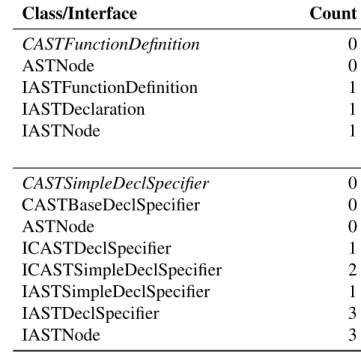
5.2 Node class hierarchy counts . . . 70
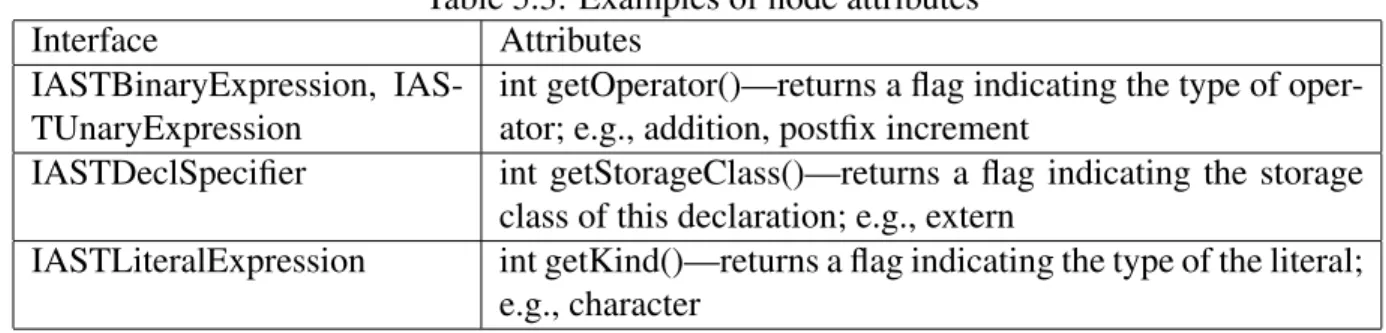
5.3 Node attributes . . . 71
List of Figures
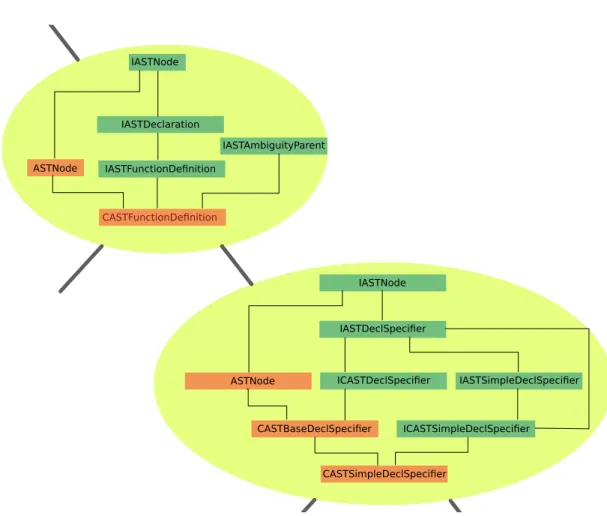
5.1 Node class hierarchy . . . 69
5.2 Plugin menu . . . 94
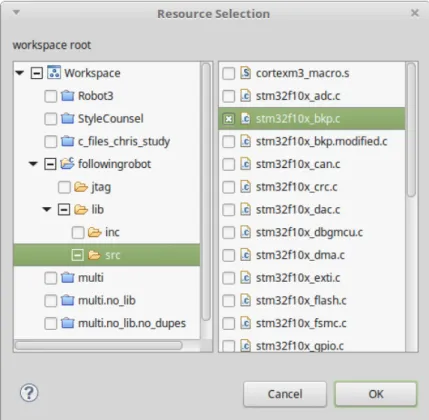
5.3 Resource selection dialog for training . . . 95
5.4 Resource selection dialog for evaluation . . . 96
5.5 Individual file output . . . 97
5.6 Aggregate output . . . 97
5.7 Overall recommendations view . . . 97
5.8 Sample recommendations—statements . . . 98
5.9 Sample recommendations—unary expressions . . . 98
6.1 Identifying the author of each file. . . 101
6.2 Identifying the author of each repository . . . 102
6.3 Identifying the author of each repository—breakdown. . . 104
6.4 Identifying the author of each file from reduced dataset . . . 108
6.5 Identifying the author of each repository from reduced dataset . . . 109
6.6 Evaluating recommendations against forests of varying sizes . . . 111 6.7 Evaluating recommendations produced from various positions in derived intervals112
Chapter 1
Introduction
Authorship attribution is a topic that has been of interest to researchers and society in general for a considerable time. For example, in 1568, Mary, Queen of Scots, was believed guilty of murdering her second husband, Lord Darnley, largely due to evidence contained in the “Casket Letters”, which naturally she claimed were forgeries [Bla34]. Despite considerable interest in the episode and attempts to analyze the content of the letters, there is no clear consensus and the destruction of the originals has left the true authorship of the letters an unanswered question. Furthermore, the authorship of twelve of the Federalist Papers [Ada74] previously claimed by Hamilton in 1810 were disputed by Madison in 1818, a claim which most researchers investigating the matter concur with [MW63,TSH96,HF95,BS98]. Finally, claims that Shakespeare did not really write his plays date back to the mid-19th century [EW13], although most experts do not subscribe to this idea and it is not generally taken seriously. Whether for the purposes of plagiarism detection, disputes over intellectual property rights, proving forgery of wills or other legal documents, criminal cases involving threatening letters or ransom notes or identifying cases of ghost writing or pen names, the use cases for authorship attribution are varied and diverse.
The dawn of electronic communications and the Internet precipitated a revolution in writing and self-publishing, greatly simplifying and vastly scaling the process of communicating be-tween groups of people, allowing for the first time asynchronous communications on a massive scale almost instantaneously and at considerably lower cost. Whether sending email, blogging, participating in forums, IRC/chatrooms, instant messaging or social media, the possibilities for self-expression have been growing exponentially for the past 30–40 years. This explosion of data in the public domain, particularly written text, has resulted in even greater demand and interest in the identification of certain authors. The use cases for authorship attribution have grown to encompass new areas, such as cyber bullying [PH06, VVC08], fake news [CRC15, RCCC16] and more sinister purposes, such as the identification and subsequent persecution of political
bloggers [Boy05], among others. Additionally, new techniques have also been developed for analyzing this data with the assistance of computers, which is both a convenience and a necessity given the quantity of data involved.
Along with increasing the instances and quantity of written documents being published, the digital revolution has also changed what information can be inferred from writing samples. For example, there are no longer physical documents to examine, eliminating many of the cues used by forensic document examiners, such as handwriting analysis, type of paper, covert printer coding [Fou17], etc. That is not to say that less information can be inferred, however; on the contrary, in many cases more information is available for those with an advantageous position on the software platform, cloud, network, or physical computer to observe. Even those without privileged access can infer information that would not have been available before, such as dates and times of publication, document metadata, date of creation of the user account, as well as domain registration or possibly contact details for the author, such as email address or twitter handle. Moreover, there are many known techniques for the identification of users on a network that do not rely on the content of communications, even those taking measures to protect their identity, most of which are far beyond the scope of this work, however. One technique that is applicable to both traditional physical document analysis and modern, digital document analysis, isstylometry, a branch of which is the topic of this thesis.
Stylometry is defined as “the statistical analysis of literary style” [Hol98], and as such is concerned solely with the content of the document, rather than the method of delivery or the media containing it. Stylometry techniques tend to focus on syntactical features, such as choice of words, spelling, preference for certain grammatical structures and even layout. Stylometry has been the subject of a number of research studies looking at both closed- and open-class cases, real-world and fabricated data sets and use cases ranging from the canonical Federalist Papers disputed authorship [MW64] to more modern scenarios such as identifying the authors of tweets [BMA13]. While much research has been conducted on establishing stylometry as a viable method for the identification of authors, very little has been conducted into its resistance to conscious attempts at subverting it. Of the few studies that have been conducted, the results seem to suggest it is rather easy for an informed individual to thwart the analysis [KG06, BAG12], which may largely be a result of the underlying machine learning algorithms employed, that are known to be susceptible to evasion attacks [BNJT10], rather than a by-product of this particular problem domain.
Just as stylometry attempts to carry out authorship attribution through an analysis of the style in which a sample of writing has been composed, its equivalent in terms of software,code stylometry[CIHL+15], attempts to identify the programmer that wrote some sample of computer code through an analysis of theirprogrammingstyle. It achieves this by examining their source code or executable artifacts in order to discover common features that together may reveal a
“fingerprint” of the author’s style, such as their preference for certain logical structures, data types, use of comments and naming conventions to name but a few. The origins of this idea date back to the early 80s when researchers and educators were interested in the analysis of coding style for the purposes of grading students’ assignments or just assessing whether some program adheres to an agreed-upon standard of “good style” [Mee83, TC84]. Following the Internet/Morris Worm incident in 1988 [Orm03], a report was published that attempted to profile the author of the worm based on an examination of the reverse-engineered code [Spa88], casting style analysis as a forensic technique in addition to a code quality metric. This triggered a number of additional studies throughout the 1990s into using stylistic analysis as a forensic or deanonymization technique, even being dubbed “software forensics” at one point [Spa92].
Despite a substantial body of prior work on program authorship attribution, only one paper we are aware of [SZK18] (independent and concurrent work to ours) has yet investigated how robust the techniques are to adversarial modifications aimed at obfuscation of style or imitation of someone else’s style, and how difficult or realistic this is. Our thesis statement is as follows:
Source code authorship attribution is fragile and prone to misclassification of files that have been deliberately altered to disguise one’s identity. Furthermore, it is possible to deterministically derive a set of changes to elicit such a misclassification, but following this advice in a realistic setting can be difficult for users.
To that end, this thesis offers as contributions an examination of code stylometry techniques, along with the results of applying such techniques in a real-world setting. We developed a sys-tem namedStyle Counselto assist programmers in obscuring their coding style and mimicking someone else’s, achieved through an analysis of the decision trees contained in a random forest classifier. The name “Style Counsel” is derived from the intended behaviour of the system, to “counsel” users on their style.1 We evaluate the effectiveness of our random forest analysis algo-rithm against a corpus of real-world data. Finally, we present the results from a pilot user study conducted to determine the ease with which a programmer can imitate someone else’s coding style with and without the assistance ofStyle Counsel.
1The Style Councilis also the name of a new wave pop band formed by Paul Weller in 1983 shortly afterThe
Chapter 2
Motivation
The threat to individuals’ freedom and privacy online from both state and industry actors is grow-ing year-on-year, resultgrow-ing in an increasgrow-ingly censored Internet and World-Wide Web. Accordgrow-ing to the Web Index 2014 report [JFF+14], 90% of the countries they surveyed became less free with
regards to political journalism between 2007 and 2013. They stated:
“the overall environment for freedom of expression has deteriorated in the overwhelming majority of Web Index countries.”[JFF+14]
They also highlighted the trend of declining press freedom in countries that had previously scored highly in this measure:
“in 14 countries, including the US, UK, Finland, New Zealand, and Denmark, scores fell by 20% or more.”
While it should be pointed out that there is a limit to how low a country can score, which the worst scoring countries in previous years are probably approaching, it is still a concerning development that, rather than setting a positive example for others, the affluent West with its supposed ideals of democracy, liberty and egalitarianism seems to be in a race to the bottom with regards to freedom online with countries governed by oppressive regimes. Further evidence of a growing global censorship problem can be seen in Google’s 2017 transparency report [Goo17], where the number of content removal requests received by Google from governments spiked to 22,515 in 2016 from 8,398 in 2015 and 6,845 in 2014, and over the same period user information requests from governments rose from 61,838 in 2014, to 76,042 in 2015 and 90,493 in 2016.
Looking in more detail at two specific countries, the US and UK, there have been some high-profile policy changes towards more surveillance, less corporate regulation and aggressive
denouncing of the use of strong encryption in certain applications. In December 2016, the UK In-vestigatory Powers Act 2016 came into effect [UK16a], which allows, among other provisions, for the warrantless seizure of Internet connection records from Connection Service Providers (CSPs) by a wide range of government departments, which includes the NHS, Ambulance Ser-vice and Food Standards Agency as well as various law enforcement and security/intelligence agencies among the roughly 50 departments listed. It is unclear to what ends these three agen-cies would need to access members of the public’s browsing history and other metadata, nor why their needs would be so imperative and/or covert that they should bypass due process and judicial scrutiny. The act also compels CSPs to keep Internet connection records of their customers for one year and places a legal obligation on them, once served with a“targeted equipment inter-ference warrant”, to “take all steps for giving effect to the warrant”[UK16b]. In March 2017, the US congress voted to repeal the Federal Communication Commission’s (FCC) Broadband Consumer Privacy Proposal that prevented ISPs from storing their customers’ metadata for the purposes of targeted advertising [Fun17]. This means that, as well as receiving a monthly sub-scription for Internet connectivity, ISPs will also be able to profit from harvesting and maintain-ing customer profiles containmaintain-ing personal and sensitive information, in order to target them with advertising. Furthermore, as there is a limited degree of competition amongst ISPs, consumers may have no alternative in their area but to use an ISP that monitors their activity. Following the Charlie Hebdo Paris attacks, in January 2015 then UK Prime Minister (PM) David Cameron called for “the legal power to break into the encrypted communications of suspected terror-ists” [WMT15], then, in 2017, the Home Secretary Amber Rudd directly criticized WhatsApp for the use of strong encryption in its messaging app, saying:
“It is completely unacceptable. There should be no place for terrorists to hide. We need to make sure that organizations like WhatsApp, and there are plenty of others like that, don’t provide a secret place for terrorists to communicate with each other.”[Spa17]
Both these stances, along with the FBI’s legal battle with Apple in 2015/16 [Gro16], failed to address either the privacy concerns of millions of innocent people, the technical and administra-tive infeasibility of implementing such a system and the security implications regarding criminals reverse-engineering and exploiting backdoors or gaining access to systems and databases con-taining private keys, certificates or other cryptographic artifacts used for access. Furthermore, the terms “criminal” and “terrorist” are subjective and dependent on whose laws and which per-spective you hold, as well as changing over time. If one country is able to coerce companies into providing backdoor access or using deliberately weak encryption, regardless of how well intentioned their motives may be, it will set a precedent that other countries will follow, where being a human rights advocate or political opponent may be enough to be labelled a criminal or terrorist [GP16].
that interest in protecting their identity and circumventing censorship among both technical and non-technical users has risen markedly in recent years [Cam15]. A Pew Research Center report from 2013 found that“86% of internet users have tried to use the internet in ways to minimize the visibility of their digital footprints”and use of personal VPNs is at an all-time high [NI17], al-though it pays to carry out due diligence checks on the VPN provider before trusting it with your privacy and security [Rob17]. Depending on the threat model and with a responsible provider, VPNs are useful for preserving privacy against local adversaries, however. Anonymizing overlay networks such as Tor and I2P can provide for greater protections against more powerful adver-saries. In addition to these well-known examples, a number of tools have been developed to meet the increased demand and changing threat landscape, in many cases published as open-source software by individuals who took little if any precautions to protect their identity. The proliferation and efficacy of such tools have prompted some authorities to clamp down on their usage and target the developers, who play a crucial role, often represent a single point of failure in the development and dissemination of the tool and, with few resources or legal backing, are easily intimidated.
A leaked Chinese police report, posted in a news article on the site globalvoices.org [Lam16] references the classification of certain circumvention tools by authorities in Xinjiang province as “second class violent and terrorist software”, in connection with the arrest of a citizen whose only crime was to download the software in question, believed to be a VPN. Compare the lan-guage used by the former Xinjiang Communist party chief Zhang Chunxian: “90 percent of terrorism in Xinjiang comes from jumping the wall. Violence and terrorism keep happening due to the videos on the internet.”[Lam16], with the UK Home Secretary Amber Rudd’s comments on WhatsApp, above. In the case of Chunxian a link is being made between the wider, uncen-sored Internet and radicalization, while Rudd links end-to-end encryption with helping terrorists to operate. In both cases, a clear link is being made between the use of anti-censorship and privacy-enhancing technologies and terrorism. This rhetoric helps to provide justification for legislation that targets the use of such technology and could position its developers as being part of a terrorist supply network, or even worse of collaborating or “arming” terrorists, which considering encryption used to be subject to arms export controls in the US [Cen92] is not as unlikely as it may seem.
There are several cases of developers being treated as individuals of suspicion, intimi-dated by authorities and/or coerced into removing their software from the Internet. In the US, Nadim Kobeissi, the Canadian creator of Cryptocat (an online secure messaging application) was stopped, searched and questioned by Department of Homeland Security officials on four separate occasions in 2012 about Cryptocat and the algorithms it employs [SOS12]. In November 2014, Chinese developer Xu Dong was arrested, primarily for political tweets supporting the occupy and umbrella movement in Hong Kong, but also because he allegedly“committed crimes of
de-veloping software to help Chinese Internet users scale the Great Fire Wall of China”[Cha14] in relation to software produced by his“Maple Leaf and Banana”brand, which includes a proxy for bypassing the Great Firewall. In August 2015, the Electronic Frontier Foundation (EFF) re-ported that Phus Lu, the developer of a popular proxy service hosted on Google’s App Engine, called GoAgent, had been forced to remove all their code from GitHub and delete all their tweets on Twitter [O’B15]. This followed a similar incident reported on greatfire.org a few days ear-lier involving the creator of ShadowSocks, another popular proxy used in China to “scale the wall”, known pseudonymously as clowwindy. According to the article reporting this incident, clowwindy posted a note afterwards that said: “the police contacted him and asked him to stop working on the tool and to remove all of the code from GitHub” [Per15], which was subse-quently removed. The README file for the project now simply says “Removed according to regulations”. Earlier in March 2015, GitHub was subjected to“the largest DDoS that they have ever dealt with”[Bud15], which has been linked to the Chinese government [BLL+15] and has
been suggested was in an attempt to bully the site into removing repositories that contravened their censorship regulations. As GitHub uses HTTPS, which encrypts the payload of the HTTP request, including the actual resources being requested, it is hard to discern which repositories are being requested and possibly easier to try to persuade GitHub to remove the offending material. As the environment turns hostile towards the developers, many of them may opt to disguise their identity and authorship attribution techniques such as code stylometry could be deployed in order to identify them from other code they may have published using their real identity. Even the threat of such techniques could be enough to instill a chilling effect in open-source contribu-tors who otherwise may have been willing to contribute their time and effort into assisting with censorship resistance tools and privacy-enhancing technologies.
Chapter 3
Background
Of the applications of authorship attribution, none has been as influential, yet so wildly different in nature, as the disputed Federalist Papers and the Internet worm incident. The disputed Feder-alist Papers have become something of a benchmark dataset in text-based authorship attribution, consisting of a large corpus of mostly single-author writing where most of the papers are known to have been written by one of three authors, with the authorship of twelve papers being disputed between two of the three authors. The Internet worm incident was a major computer security event in 1988 that brought the Internet to its knees and sparked a manhunt for the author(s) of the software responsible, prompting a forensic analysis of the program binary in which the behaviour of the worm was documented and characteristics of the author(s) were guessed at, giving rise to the practice of malware analysis and software authorship analysis.
3.1
The Federalist Papers
The Federalist Papers were written and published in 1787 and 1788 by three authors, Alexan-der Hamilton, James Madison and John Jay. Initially they went by the collective pseudonym of “Publius” (although, it should be pointed out, most of the papers were written singularly, not collectively, by each author) and the group’s real identity was not revealed until a French language version named them in 1792 and subsequently an American edition named them in 1802 [Ada74]. The aim of the papers was to convince the American public to support the ratifi-cation of the US constitution. It is not clear whether the use of a pseudonym was due to security concerns by the authors or so as not to unduly influence the reader with familiar names that may impart either a positive or negative bias in their interpretation of the arguments set forth; i.e., to make the writing seem more “pure”.
Of the 85 papers, 51 are now credited to Hamilton, 29 to Madison and five to Jay, although the authors themselves originally maintained that they were written collectively, until 1810 when a list compiled by Hamilton before his death in 1802 was used as the basis for crediting each paper with a (single) author. Originally, this list asserted that Hamilton was the sole author of 63 papers, however Madison disputed these assignations in 1818 with his own list that put him as the sole author of 29 and Hamilton 51 papers, respectively. Madison diplomatically suggested that Hamilton had made a mistake“owing doubtless to the hurry in which [Hamilton’s] memorandum was made out.”[Ada74].
While there were historical studies of these events in the following years that claimed either Hamilton or Madison as the authors of the disputed papers, it was not until 1963 that Mosteller and Wallace took a scientific approach to the problem [MW63]. This is perhaps the best-known and highly cited paper examining the Federalist Papers from an authorship attribution perspec-tive, and since then the Federalist Papers have been used many times as the dataset for various authorship analysis studies using statistical methods.
There are several good reasons why this case has become thede factodataset for authorship attribution research. First, the data is easily accessible, being publicly available online. Second, the writing is of historical and cultural significance in the US, where much of the research is conducted. Third, it involves a genuine case of disputed authorship,which has never been con-clusively resolved, for while statistical studies such as these certainly lend weight to one side or the other they do not provide incontrovertible proof. Fourthly, there is a large corpus of ground truth data based on the undisputed papers and presumably other works these authors wrote dur-ing their lives. Finally, there are only three (or two if you assume Jay wrote none of the disputed papers based on his silence over the matter) authors to consider, greatly simplifying the task at hand.
One reason why this dataset may not be a good choice for testing new techniques of at-tribution is precisely because the authorship of the disputed papers is not known conclusively. Grahamet al.[GHM05] claim that:“Juola (1997) demonstrated a technique that, using samples as small as 500 characters, can correctly classify all the disputed Federalist Papers”; however, without the original authors and no further evidence to settle the dispute, this is not a claim that should be made, especially when one considers that the authorship labels that have been assigned to the disputed papers in modern times are themselves based on statistical analyses of style. All that could be claimed is that this technique concurred with the other statistical studies for the disputed papers. An additional issue with basing a research study and statistical style analysis on the Federalist Papers alone is they were written during a specific period by three authors with similar educational backgrounds who were trying to write in a certain style, the spectatorstyle, described by Mosteller and Wallace as“complicated and oratorical”[MW64]. In order to ex-tract an essence or measure of writing style that is universal and applicable in practice, it would
be desirable to include samples of writing from many authors, on a variety of topics, over a pe-riod spanning decades, if not centuries. Many of the features discovered as being significant for discriminating between Hamilton, Madison and Jay, may not apply to more modern writing, or may not scale with the number of authors. For example, Mosteller and Wallace included variance between uses of the wordswhileand whilst, but in modern usage while massively outnumbers whilst.
3.2
The Morris/Internet Worm
The Internet, or Morris, Worm as it is alternatively known, was a computer worm1 launched in November 1988 by Robert T. Morris that shut down a large proportion of the Internet as it propa-gated, consuming bandwidth on the network and CPU time on any host it infected (often multiple times), preventing them from running any other processes. After systems were patched and the worm was purged from the Internet, the hunt for the author(s) of the worm began in earnest. One of the most prominent figures in the coordination effort, Eugene Spafford, published a report within weeks that carried out a technical analysis of the worm and a profile of its author(s) based on how they had written the code [Spa88]. The analysis was conducted on two decompiled and one disassembled version of the worm binary and is primarily concerned with the vulnerabilities the worm exploited as well as its structure and behaviour, however there is also a section towards the end that critiques the programming style the worm was written in and makes inferences about the author’s level of expertise, their intentions, programming experience and even mental state. It should be pointed out that Morris was already a suspect by this time, having revealed one of the vulnerabilities (a buffer overflow2in thefingerdprocess) to staff at Carnegie Mellon University the previous year, and was eventually arrested, tried, convicted under the 1986 Computer Fraud and Abuse Act and sentenced to three years’ probation in 1990 [Mar90].
The analysis and subsequent report about the Internet Worm was significant in two respects: First, it represents one of the first published malware analyses. At the time, antivirus software as a concept was still in its infancy, only just emerging from being a purely research topic to commercial endeavours [Coh87,Coh88] and the Common Vulnerabilities and Exposures (CVE) 1A worm is a type of malware that is able to spread from computer to computer, typically over a network, without requiring any action on the part of the user, making them far more virulent than other types of malware.
2A buffer overflow is caused when input data that is written to memory is too large for the data structure that has been allocated to contain it. In this case, without proper bounds checking, an attacker can overwrite other memory locations immediately following the buffer on the stack, including the return address pointer, effectively allowing them to control execution flow and redirect the instruction pointer to their own carefully constructed code contained in the input data.
database,3which systematized the dissemination of information on software vulnerabilities, was
over ten years away from being realized. Second, it precipitated an interest in authorship attribu-tion of software amongst the research community. Clearly, there was an appetite amongst policy makers and law enforcement to apprehend and punish computer criminals, including malware authors, to act as a deterrent to others, and academia, reliant as it is on sharing data and use of the Internet for collaboration, also had a vested interest in curbing behaviour such as this.
Chapter 4
Literature Review
As a research topic, authorship attribution has been, and continues to be, popular, with dozens of papers published each year since 2007. Indeed, rather than becoming exhausted, interest has in fact been growing year-on-year to 99 papers published in 2016.1 As might be expected, most
of the research has been from the field of Computer Science (40%), with Linguistics (17%) and Literature (15%) also featuring prominently.
In the sections that follow, we first look at relevant papers in the realm of authorship attribu-tion of natural language texts, its applicaattribu-tions and techniques. Following this, we will discuss papers in the area of plagiarism detection and the closely related problem of authorship validation that are relevant to authorship attribution. Next, we will review research conducted into software authorship attribution on both source code and binaries, before progressing to a discussion of defences, including adversarial approaches to defeating authorship attribution.
4.1
Authorship Attribution of Natural Language
4.1.1
Early Work
Before computers were available to researchers as a tool for processing large quantities of data and performing rapid calculations, studies in authorship attribution were characterized by their consideration of only a single metric/feature at a time. This is because the size of the datasets involved means a great deal of time has to be invested just to catalogue and categorize the data,
leaving little appetite to calculate more than one measure. One of the earliest known scholarly works looking at statistical features for author identification was published in 1887 by Menden-hall [Men87]. The paper seeks to position average word length distributions as a distinguishing characteristic, crediting the mathematician Augustus De Morgan for inspiration, and analyzes the works of a number of authors to produce example distributions. The intuition behind this idea is that the distribution carries information as to the preferred vocabulary of the author. There are hundreds of thousands of words in the English language, but only 28 categories by word length2, with the majority being between four and eight characters in length. It is hard to
imag-ine a measure that compresses this much information into such a simple representation, even when presented as a distribution rather than just the raw mean value, could be very effective as a discriminator when taken over all but the most trivial of samples. The paper presents some example distributions (termedcharacteristic curves of composition) from the selected authors, however there are significant similarities between the distributions. Brinegar [Bri63] applies this same technique to the“Quintus Curtius Snodgrass”letters that are believed to have been writ-ten by Mark Twain under a pen name. The results of this study suggested that Twain was not the author of the ten letters in question. This result is cast into doubt by more recent research, however, as Holmes [Hol94] writes that Smith3 [Smi83] found the average word length varied
greatly depending on the genre and era in which it was written (and presumably the intended audience and topic also influenced the measure), by a far greater degree than it varied by author, rendering the approach ineffective for attribution.
A contemporaneous study to Brinegar’s by Mosteller and Wallace [MW63] looked at other statistical measures that may capture consistent differences between authors, applied to the Fed-eralist Papers case. The authors used Bayesian inference based on the usage of certain high-frequency function words, such as articles, prepositions and conjunctions, which they selected based on their non-contextuality and common usage, meaning that they would appear in all works by the authors and not be dependent on the subject of the paper. They also documented their efforts with using other sets of words, including those sourced from frequency lists of large, unrelated corpora and the federalist papers themselves. They found that the function words pro-vided the best discriminatory power. As previously noted in Section3.1, this work was seminal in the field of authorship attribution and represented a herculean effort by the researchers who, not having access to computers, had to perform their analysis by hand.
Holmes [Hol94] cites Bailey4 [Bai79] as attempting to formalize the attribution process as
a forensic discipline with conditions given for the candidate author set, size of samples and the 2The longest non-technical, uncoined word found in dictionaries isantidisestablishmentarianismat 28 charac-ters.
3Paper could not be sourced 4Paper could not be sourced
type of features that should be considered. Holmes [Hol94] also conducts an exhaustive overview of the many metrics that were proposed in the early literature, including word lengths, number of syllables, sentence length, type of speech, function words, information entropy and so on. The general consensus with several of these features, such as word length (discussed above) and sentence length, is they are not representative of authorial style and should be discarded. But in many cases, there are conflicting results, depending on the text in question and the corpus being analyzed, its age, genre, etc. This disparity and lack of a clear consensus of features that produce consistent results is concerning for the discipline as a whole and suggests writing style may be too complex to be summarized in one or just a few features. Smith [Smi90] exposes some inconsistencies in four papers and offers the following cautious advice on the use of authorship attribution outside of a purely academic context:
1. The onus of proof lies entirely with the person making the ascription.
2. The argument for adding something to an author’s canon has to be vastly more stringent than for keeping it there.
3. If doubt persists, an anonymous work must remain anonymous.
4. Avoidance of a false attribution is far more important than failing to recognize a correct one.
5. Only works of known authorship are suitable as a basis for attributing a disputed work. 6. There are no short-cuts in attribution studies.
4.1.2
Computer-Assisted Studies
With computers becoming more widely accessible to researchers, statistical analyses of large texts could more easily be accomplished, with a higher dimensionality in the features ex-tracted, leading to the use of multivariate techniques, machine learning and AI. Holmes and Forsyth [HF95] revisited the Federalist Papers with three new stylistic measures combined with three modern analysis methods to compare their effectiveness with the original Mosteller and Wallace paper. The first technique looked at a six-variable system where each variable was a measure of vocabulary richness. This system was proposed in a previous paper [Hol92]. The six variables were:
1. Honor´e’sR-function [Hon79], calculated from the total number of words in a sample, how many words appeared just once (hapax legomena) and how many unique words a sample of text contains.
2. Hapax Dislegomena (the number of words appearing twice in a sample), divided by the total number of words, as suggested by Sichel’s work [Sic86].
3. Yule’s Characteristic K [Yul14], which assumes word selection in any given text sample are events that can be modelled with a Poisson distribution. Holmes points out that the efficacy of this measure for authorship attribution had previously been questioned by Tal-lentire [Tal72] and not recommended for univariate studies, but as this was a multivariate approach, decided to include it.
4. Brunet’s W index [Bru78], which is simply NV−α, where N is the size of the sample, V is the number of unique words in the sample and α is a constant termα = 0.17(Brunet suggested0.165 ≤α≤0.172).
5. & 6. The α andθ parameters of the Sichel Distribution [Sic75], a distribution based on observed word frequencies that estimates the probability that a word was observed exactly r times (in this case, where r is the actual observation) given the size of the sample, N. Pollatschek and Radday [PR81] showed that these parameters control the head and tail of the distribution, respectively.
These scale well with the size of the sample as the terms in the formulae are dependent on the total number of words N, and due to Zipf’s law [Pow98] the proportion of hapax legom-ena/dislegomena remains approximately consistent with changingN. To confirm that this was the case, however, the authors calculated correlation coefficients for each variable with respect to the length of the corresponding text samples and found only one variable had a significant correlation, theHapax Dislegomena, which they subsequently removed from the study. To these vocabulary richness variables they applied a principal component analysis, the results of which showed a clear divide between Hamilton and Madison, with Hamilton demonstrating a richer vo-cabulary in his papers and the jointly authored documents demonstrating the richest vovo-cabulary of all, leading Holmes and Forsyth to wonder whether collaboratively written documents always demonstrated a richer vocabulary.
The second technique they evaluated used principal component analysis applied to word frequency lists of function words (a similar set of words as used by Mosteller and Wallace), a technique previously proposed by Burrows [Bur92]. The final technique used a genetic algorithm approach to automatically detect patterns, using the BEAGLE system [For81]. Holmes and Forsyth described this system as an early precursor to genetic programming [Koz92], as it is able to automatically derive rule sets, each rule of which may be equated to a Boolean expression in a larger program.
In all three approaches to the problem, Madison was indicated as being the most likely author of the disputed papers. They found the first two techniques produced clear clustering, that, being constructed from a principal component analysis, were easily discernible to the human eye. They found the second technique, the word frequency analysis, worked best with larger lists of the common function words, and gave worse results with the original 30 function words used by Mosteller and Wallace. In contrast, they concluded that the genetic algorithm approach worked better with the original 30 words. They also noted that evolutionary computing approaches to authorship attribution had been underutilized.
It does not appear that this comment regarding the underutilization of evolutionary comput-ing in authorship attribution studies was heeded by the research community as no other papers appear to have investigated this approach, while machine learning techniques have come to dom-inate. Tweedieet al.[TSH96] evaluated the use of neural networks (NN) applied to the federalist papers. The inputs to their NN were word frequencies of a subset of eleven function words from the original 30 used by Mosteller and Wallace, chosen for having the most discriminatory power. They left considering other features as future work, choosing instead to carry out this initial study with the function words that were already proven to be effective, which also enables a bet-ter comparison to be drawn between the results of the two studies. Their results were consistent with other studies on the federalist papers with regards to attribution of the disputed papers.
Diederichet al.[DKLP03] investigated using Support Vector Machines (SVM) applied to a corpus of articles from the German newspaper Berliner Zeitung covering a three-month period from December 1998–February 1999 of politics, economics and local affairs categories with lengths exceeding 300 words. This gave them a corpus of 2,652 documents containing 1.9 million words, approximately 120,000 of which were unique. With this corpus, they then trialled two different feature extraction methods. The main difference between the first method they tried and any others hitherto used was the authors did not attempt to condense or summarize the information contained in the word frequencies to only a small subset of chosen words, word types, hapax (dis-)legomena, etc., but rather they used the frequencies for all the words found in the texts. This is an advantage of SVM and other classifiers that use kernel methods. Kernel methods allow for the use of raw feature values, without requiring them to first be converted to feature vectors, providing some form of similarity measure has been defined for evaluating the relative differences between values. This means feature vectors of very large dimensionality can be processed efficiently, eliminating the need for feature reduction. They experimented with several different frequency calculation methods, including relative frequency (the standard measure one associates with frequency) andterm frequency-inverse document frequency(tf-idf) a measure used in information retrieval to rank documents relative to some search terms by their importance or relevance. This is achieved by first calculating the frequency of the term in the document (term frequency) and scaling it by the total number of documents divided by how many
documents contain that term, expressed logarithmically. The net result of this is that common words that appear in every document; e.g., “the”, will have a tf-idf of 0 (because it appears in every document, hence the idf value will be log(1) = 0), and terms that are rare overall but appear often in the current document will have high tf-idf values. Their second feature extraction methodology took over 800 function words appearing more than nine times in the corpus and tagged them according to their syntactical role and calculated the relative frequency of the tagged words and bigrams of the tagged words. Their conclusions were that SVMs were:
“especially suited for this task as the feature spaces have very high dimensions, most features carry important information and the data for specific instances is sparse.”[DKLP03]
They highlighted the fact that when the feature space does not need to be compacted, as with SVMs, choosing a subset of words, such as function words, to focus on during feature extraction results in worse performance. This makes intuitive sense, as there will be a loss of information when considering only part of the content versus the entire document; however this is not true for non-kernel method classifiers where there is a trade-off between improvement in performance from the information gained with additional features and degradation in performance from high-dimensionality. As SVM does not suffer from the curse of dimensionality [RNI10] this trade-off does not need to be made, although caution should still be exercised here to avoid the classifi-cation being based too much on the topic rather than the author. Certain words are going to be more correlated with topic than others, particularly nouns and to a lesser extent verbs. As this study was focused specifically on articles about the same three topics, and journalists typically write articles about only one topic, this effect may not have been apparent with this particular dataset, but could become problematic with other datasets.
Luyckz and Daelemans [LD05] also investigated applying machine learning to a corpus of newspaper articles; this time the source was De Standaard, a Dutch-language Belgian newspaper, and two authors in particular. Their study differed from Diederichet al. in the method of fea-ture extraction and classifiers used. For feafea-ture extraction they usedshallow text parsingwith the Memory-Based Shallow Parser [DVdB05], which involves chunking [Abn91] sentences into lex-ical units and labelling the tokens within each chunk according to their word type and syntactlex-ical purpose. With this parsed data, they created nine different feature sets based on frequency distri-butions of parts-of-speech, basic verb forms, verb forms, noun phrase patterns, function words and the 20 most informative5words, as well as a readability score, a combination of all the feature
sets and a combination of the syntax-based features and readability score. Regarding the machine learning models they used Weka’s6 Neural Network classifier and TiMBL [DZVDSVDB04], a type of memory-based learning algorithm, similar tok-NN. Based on a three-class problem
(au-5Informative in this respect refers to a measure ofmutual information. [Seb02] 6
thors A, B and O for “other”), their results indicated that the combined feature set performed best with an averageF1score of 71.3%, with the combination of syntax-based features and readability scoring 61.7%. Of the single syntax-based feature sets, the parts-of-speech frequency distribu-tion scored best with 50.6%, and the funcdistribu-tion words performed best of the lexical features with 63.9%, which was also the second best overall.
With much of the work performed in isolation against disparate data, it is not easy to de-termine which features and which analysis technique is best suited to authorship attribution. Grieve [Gri07] attempted to resolve this question with regards to the best features by testing 39 different feature sets independently with the same dataset using the same classification algorithm. The 39 feature sets fall under the following categories:
• Average word length (2 sets) • Average sentence length (4 sets) • Vocabulary richness (11 sets) • Character frequency (4 sets) • Word frequency (3 sets) • Punctuation frequency (5 sets) • Word 2- and 3-grams (2 sets) • Character n-grams (8 sets)
For the corpus, opinion columns in the British newspaperThe Telegraphbetween 2000 and 2005 were used. This was to satisfy the requirement that the intended audience the author was writing for remain stable and the time frame is narrow enough that the author’s style is unlikely to evolve much during the period. The researchers also attempted to control for the demographics of the authors by selecting columnists with similar age, political opinion, ethnicity, class, education and nationality. They noted that some of the authors had different social backgrounds even if overall the demographics of the group were consistent. In total, then, the corpus of newspaper columns represented the writings of 40 authors. For evaluation, a succession of leave-one-out tests were conducted where an author and one of their texts were selected at random, before carrying out a chi-squared analysis to determine the confidence that the text in question was drawn from each author’s corpus. Then, the output values from the chi-squared test were ordered in ascending order and the lowest value was taken to be the most likely author according to the
feature being evaluated. The precision of this test (total successful predictions divided by total predictions) is then reported as the success rate of that particular feature. The evaluation is carried out on all forty authors, then on permutations of twenty, ten, five, four, three and two authors, the results of which are averaged for presentation. The results of the study suggest features based on punctuation have the most discriminatory power, with character n-grams also producing favourable results. Average word and sentence lengths performed poorly, which is consistent with other studies, but vocabulary richness measures also produced poor results, which contrasts with Holmes and Forsyth’s earlier work [HF95] that had positive results, albeit when using the vocabulary richness measures in a multivariate, rather than a univariate system. It should be noted that all of the features tested produced better results than random guessing, and combining measures that represent different aspects of the content, such as punctuation with character n-grams, would almost certainly improve the predictive power. The authors of this study go on to perform a combination test where the best 16 features were selected and two voting mechanisms were implemented, the first where each feature had an equal vote and the second where features’ votes were weighted depending on their performance in the individual evaluations. The results of these combination tests demonstrated that considering multiple features does indeed improve the precision overall, especially when weighting the votes of each individual feature by its own predictive power.
Jockers and Witten [JW10] also conducted a comparative study, this time however, they were interested in determining which machine learning algorithm was best suited for authorship attribution. For their tests, the feature sets and author data were kept consistent so a controlled comparison could be made between the classification algorithms. The corpus used in this paper was the federalist papers and two feature sets were evaluated, one containing all words and word bigrams common to all three authors (dimensionality 2,907) and the second containing words and word bigrams that were found with a minimum frequency in the texts (dimensionality 298). Five classification methods were tested: Delta [Bur02],k-NN, SVM, Nearest Shrunken Centroids (NSC) [THNC03] and Regularized Discriminant Analysis (RDA) [Fri89]. Delta is an algorithm that was designed expressly for the purpose of authorship attribution, while the other methods are general classifiers. The procedure for using Delta involves a feature selection step, therefore it was not run on the full 2,907- and 298-dimension feature matrix, but rather on a subset of lower dimensionality. NSC and RDA also perform dimension-reduction, butk-NN and SVM are run on the entire feature set. Their evaluation was carried out using 10-fold cross validation and came to the conclusion that nearest shrunken centroids gave the best overall performance as there were no classification errors in the cross validation for either the full or reduced dataset, whereas all the other classifiers experienced at least one misclassification. SVM performed particularly badly and gave the worst performance overall, which is in contrast to the conventional wisdom on authorship attribution (and other Natural language Processing—NLP—applications) where
SVM is considered to be a useful algorithm due to its kernel-method nature as discussed earlier in this section. This result should merit further investigation, possibly using a different evaluation method rather than cross validation or a different feature set, which could have a big impact on overall performance.
Overall, we can see that the use of computers enabled researchers to conduct studies involv-ing far more complex statistical models, with multivariate systems and machine learninvolv-ing over sometimes thousands of variables, whereas before the advent of computers in this line of re-search, studies typically focused on just one or two features at a time. It is interesting to note, however, that the size of the datasets typically were no bigger than the earlier studies, despite the relative ease with which a computer would be able to process larger corpora compared with a human. Indeed, often the classic federalist papers corpus was used, cementing its position as the standard by which new features and algorithms would be benchmarked against. We will see in the next section, however, that more recent papers have begun exploring datasets of varying sizes, both in the quantity of samples, the number of authors and length of each sample.
4.1.3
Internet-Scale Authorship Attribution
In this Internet age, we see a trend in authorship attribution research for papers focusing on two factors that underline the challenges of the modern era: large quantities of data, particularly with respect to the number of authors, and smaller sizes of individual samples. There is also a shift in the applications, both implied and explicit, from authorship disputes; e.g., for copyright purposes, to criminal investigations; e.g., spam/phishing emails or cyberstalking/trolling.
Koppel et al. [KSAM06] first looked at this problem, using a corpus consisting of blogs (where each blog refers to all the posts in that blog, rather than a single blog entry) from 18,000 authors. In their first experiment, they took 10,000 blogs and their last n posts that together constitute at least 500 words (they referred to these as “snippets”) were used as the test set and the remaining posts used for training. With these training/test sets, they applied several metrics from the information retrieval arena, which were:
• tf-idf over content words
• “binary” idf over content words7
7It is not clear what is meant by binary idf; no reference was provided and the term was not found in any other paper. It could be referencing a system where each term is either present (1) or not present (0) in the corpus, although in this case it would not be an inverse frequency.
• tf-idf on “stylistic features (function words and strings of non-alphabetic, non-numeric characters)”8
They evaluated these metrics by ranking the authors by how highly they scored for each snippet. The number one ranked author was taken to be that metric’s classification. They reported their results as a type of cumulative distribution frequency where the x-axis represented the rankrand the y-axis the percentage of snippets for which the correct author was ranked in the toprranks. They found “binary” idf performed best, with 42% of snippets placing the correct author as the number one rank, increasing to approximately 50% whenr = 10. In their second experiment, they used ameta-learningapproach [VD02] to enable an estimation of the degree of confidence in a particular classification. They achieved this through training an SVM classifier on various metadata about each snippet and the ranked authors, such as the absolute similarity between the snippet and the top ranked author, the degree of similarity between each of the top k authors and a comparison with the rankings produced by the other metrics (tf-idf on content and stylistic features). The output of this meta-learner was used by the main classifier to decide whether to attempt a classification or to return “Don’t Know” [KSAM06]. They tested this meta-learning approach on the remaining 8,000 blogs that were not part of the first experiment and were able to report, for a limited subset of 31.3% of cases that it attempted a classification it correctly predicted the true author (number one rank) in 88.2% of cases.
Luyckx and Daelemans [LD08] conducted a study with 145 authors and (relatively) short passages of around 1,400 words sourced from student essays on a particular topic (a documen-tary on artificial life), which were subsequently split into ten equal parts. Their aim was to investigate the effect of increasing the number of authors being considered on the classification accuracy, to determine which classifiers perform well with limited sample sizes, experiment with different feature sets and compare authorship verification, which is the binary-class version of authorship attribution, with the standard multi-class scenario. They used a chi-squared analysis to perform feature selection/reduction (to 50 features) on word and part-of-speechn-grams that had been elicited by the Memory-Based Shallow Parser (see Section4.1.2) [DVdB05], function word frequencies and two vocabulary richness measures in the Flesch-Kincaid readability score and type-token ratio. To evaluate the effect of increasing numbers of authors they randomly generated 100 permutation subsets of two, five and ten authors, then one random subset of 50 and 100 authors, before finally testing with all 145 authors using the TiMBL [DZVDSVDB04] memory-based learning algorithm. To evaluate which classifiers are best suited to limited sample sizes, they incrementally increased the size of the corpus, performing 5-fold cross validation at each increment with the following classifiers: TiMBL, Maxent [Le04] and SVO, a variant of 8Again, no further explanation is offered for which function words or how many they used, nor for how the strings of non-alphabetic and non-numeric characters were derived.
SVM implemented in Weka. All results were reported with respect to different feature sets, one containing the word and part-of-speechn-grams, one containing the function word frequencies and one containing the vocabulary richness measures, as well as combinations of these. For the authorship validation evaluation, they simply took each author in turn and labelled all other authors with the negative class, again performing 5-fold cross validation. Their results for the increasing number of authors experiment found that there was a sharp drop in theF1 score once the number of authors being considered was greater than 20. They also found that as the number of authors increases, there is a greater performance improvement from including more features than with fewer authors, which would be expected, as the more classes there are to differentiate, the more information is required to differentiate between them. When experimenting with limit-ing data to different degrees, they did not find a clear difference between uslimit-ing the three different classifiers; they had theorized that the lazy memory-based learner TiMBL would outperform the eager Maxent and SVO classifiers with less training data. For the author verification problem, where the task is to determine if a sample being assessed was written by a single target author or by someone (anyone) else among the 144 other authors, i.e. not the author, they found memory-based learning gave the best precision, but a poor recall. Overall, this paper gives a thorough treatment to more realistic applied problems with authorship attribution and helps to highlight its limitations and possible overestimation of its accuracy in previous results. This study was followed up with another by the same authors in 2011 [LD11] with two larger corpora, the first in English taken from the Ad-Hoc Authorship Attribution competition [Juo04] and the second in Dutch taken from the Dutch Authorship Benchmark corpus [Hal07] and the same corpus as above [LD08]. Their results were much the same and served to reinforce the earlier conclusions. Sanderson and Guenter [SG06] chose to focus on the relative performance of long and short samples, with a dataset of 50 authors consisting of newspaper journalists that had written articles on more than one topic and had at least 10,000 words to their name. They were interested in the two-class problem, where a text is classified as either being written by the target author or not. To this end, they chose ten authors to constitute the background dataset (the negative, or general, class) and used the remaining 40 authors as their evaluation set. This meant that each iteration of the experiment involved the writing of eleven authors in total: ten “background” au-thors representing the general class and one under evaluation), which is fairly limited. In terms of training data size they started with 28,000 characters (approximately 5,000 words) per author and then reduced this incrementally to 1,750 characters while simultaneously reducing the test size in line with this to determine the effect on accuracy of having smaller samples to work with. They also tested the effect of reducing the test size but maintaining the training size. For their first classification algorithm they utilized a Markov Chain approach that calculated the sum of the probabilities of seeing each token (character or word) given the previous sequence of m to-kens, the product of these various sequence probabilities is then taken for the entire document,
smoothed to prevent divide by zero errors according to interpolated Moffat smoothing [CG96] then normalized by the size of the sample and finally taken as a log likelihood ratio. Their second classification algorithm was SVM customized with a kernel function that had been devel-oped specifically to be used as a similarity measure between word and text sequences of varying lengths (a parameter,τ, is used to determine the maximum sequence length and all sequences of lengthl ≤ τ are evaluated), weighted so longer sequences are more significant [CGGR03]. For the experiments with the Markov chain approach, they found that chains of order two gave the best results (meaning the current and previous two states were considered when determining the probability of the next transition) and decreasing both the training/test data together gave worse performance than just reducing the test data alone. In their experiments with SVM and the custom kernel function, they tried training/test data sizes of 7000, 14000, and 28000 and also varying sample sizes (“chunks”), with samples of 500 characters being most effective across all training/test data sizes. They also obtained the best results with τ = 4 over the character-based kernel, which they found to be comparable to the Markov chain with order two. In a final experiment, they investigated a technique known as unmasking, first proposed by Koppel and Schler [KS04]. With unmasking, features are iteratively removed from a one-class learning model to assess the speed at which the classification degrades for a particular instance. The intu-ition is that the greater the accuracy drop with each feature removed, the more reliant the model is on just a few features for its classification. This lack of depth indicates that the instance may be a borderline case and the classification superficial. Note that this technique only works for the one-class problem, where “degrade” means that classification switches from positive to negative, or vice versa. For example, a text may be classified as not being written by the suspected author, but after excluding a relatively few features may classify positively. Their conclusions were that unmasking was significantly less effective for shorter texts and should not be used.
Iqbal et al. [IHFD08], Layton et al. [LWD10], Koppel et al. [KSA11], Bhargava et al. [BMA13] and Afroz et al. [ACIS+14] have all looked at authorship attribution from a re-alistic, applied perspective (“in the wild”), mostly focusing on the forensic use case, citing cy-bercrime as the main motivation. The common themes of these papers are short text samples and large numbers of potential authors. Iqbalet al.[IHFD08] were interested in identifying the authors of emails, and coined the term“write-print”to be the authorial version of a fingerprint. Just as a fingerprint contains features that are highly distinguishing (not truly unique, but close to), so the write-print would contain the features that were unique, or highly distinguishing, to an author out of the set of authors in the corpus. The write-print features for an author would be derived from a much larger set of potential features (the “universe”U) that were scanned for in the author’s emails, with only those present being retained. Then, features (or patterns of fea-tures) that were found to be common amongst all authors were also removed, leaving only the pattern of features that are singular to that author. In this way, the algorithm is searching for the
idiosyncratic aspects of an individual’s writing. This is a very different approach to other works where variations in feature values that are common to all authors are preferred. This, they argued, would make the results more admissible in court as “forensic” evidence, due to its distinctive na-ture. Their features were represented as simple bit strings, where each bit encoded a Boolean indicating if that feature was present or not. The resulting sparse vector could then be translated into a set of nominal values using the feature names. It should be pointed out that the features themselves were not binary by nature, however, but were standard continuous values, such as rel-ative frequencies, whose values had been discretized into partitions of configurable width. This discretized feature space is an advantage with training data consisting of smaller samples, as it requires less precision and so is less susceptible to noise. They used as their dataset the publicly available Enron emails,9 which is almost certainly characterized by a great deal of similarity in
terms of topic and content, making this approach even more desirable over statistical methods, which would no doubt be influenced by the use of common signatures or other boilerplate footer text. In their experiments, they were able to achieve a maximum “accuracy” (precision) of 90% when distinguishing between six authors and using 20 emails per author as training data.
Laytonet al. [LWD10] and Bhargava et al. [BMA13] were interested in an even more ex-treme example of a corpus of short texts, tweets, again motivated by cybercrime investigations. Tweets are the messages users of the micro blogging platform Twitter post, and were at the time restricted to no more than 140 characters. In their case, Layton et al. wanted to determine whether a technique previously used for source code attribution, known as SCAP [FSG+07], would work in this domain. SCAP employs character n-grams, but taken at the byte level to also extract control characters and whitespace. Charactern-grams is a metric often found in au-thorship attribution research, but instead of an exhaustive feature vector containing all possible combinations, resulting in a sparse matrix, SCAP takes just the top Loccurringn-grams found in each author’s training set as its model. To perform classification, it finds the author whose set ofn-grams are closest to the set extracted from the document(s) being evaluated. The distance metric employed is simply the number of elements found in the intersection between the au-thor’s topLn-grams and the document(s) being evaluated. To reduce similarity between author models, thesilhouette coefficient [Rou87] is used to determine the degree of overlap between authors’ models. A model demonstrating a high degree of overlap with its neighbouring models may need to be reduced to one or more sub-models, by calculating the silhouette coefficient be-tween subsets of its feature space and eliminating the sub-models with a high degree of inte