SUPPLEMENT ARTICLE
Impact of a Primary Care Intervention on Physician
Practice and Patient and Family Behavior: Keep ME
Healthy—The Maine Youth Overweight Collaborative
Michele Polacsek, PHD, MHSa,b, Joan Orr, CHESa, Lisa Letourneau, MD, MPHc, Victoria Rogers, MDd, Robert Holmberg, MD, MPHe, Karen O’Rourke, MPHa,f, Cindy Hannon, MSWb, Kenneth A. Lombard, MDd, Steven L. Gortmaker, PHDb
aMaine Harvard Prevention Research Center, Augusta, Maine;bDepartment of Society, Human Development, and Health, Harvard School of Public Health, Boston,
Massachusetts;cMaineHealth, Portland, Maine;dThe Kid’s Coop, Barbara Bush Children’s Hospital at Maine Medical Center, Portland, Maine;eNorumbega Pediatrics,
Bangor, Maine;fMaine Center for Public Health, Augusta, Maine
The authors have indicated they have no financial relationships relevant to this article to disclose.
ABSTRACT
OBJECTIVE.To evaluate the effect of a pediatric primary care– based intervention, on improved clinical decision support and family management of risk behaviors for childhood overweight.
METHODS.An experimental field trial was conducted with 12 intervention sites in urban and rural areas of Maine and nonrandomized control sites. Change was assessed by using clinical and parent measures from 9 intervention and 10 control sites before and during the Maine Youth Overweight Collaborative intervention. Longitudinal information was collected from chart audits of patients aged 5–18 years (n⫽600), systematic samples of parents collected before (n⫽346) and during (n⫽
386) the intervention in 12 sites, and systematic samples of parents in 9 intervention (n⫽235) and 10 control (n⫽304) sites collected during the intervention. Surveys of health care providers (n⫽14 and 17) before and during the intervention were also collected. Teams worked over 18 months to implement improvements in clinical decision support, including tracking BMI percentiles, identification of overweight patients, appropriate laboratory tests, counseling of families and patients use of a behavioral screening tool, and other improvements following the chronic-care model targeting patients aged 5 to 18 and their families.
RESULTS.Large changes occurred in clinical practice from before to during the Maine Youth Overweight Collaborative: increases in assessment of BMI (38%–94%), BMI percentile for age and gender (25%– 89%), use of the 5-2-1-0 behavioral screening tool (0%– 82%), and weight classification (19%–75%). Parent surveys indicated improvements in providers’ behavior and rates of counseling. Intervention providers reported improvements in knowledge, attitudes, self-efficacy, and practice.
CONCLUSIONS.The Maine Youth Overweight Collaborative intervention improved clin-ical decision support and family management of risk behaviors, indicating a prom-ising primary care– based approach to address overweight risk among children and youth.Pediatrics2009;123:S258–S266
T
HE PREVALENCE OFchildhood overweight* is increasing rapidly in the United States and now affects at least 16% of children and adolescents,1with even higher rates among subpopulations of minority, economicallydisadvan-taged2,3 and rural children.4Overweight is associated with significant health problems in this age group and is an
important early risk factor for much of adult morbidity and mortality. The rapid increase in the prevalence of childhood and adolescent overweight portends an increase in associated chronic disease. An estimated 60% of overweight 5- to 10-year-olds already have 1 associated cardiovascular disease risk factor, or hyperinsulinemia, and more than 20% have 2 or more associated cardiovascular disease risk factors.5The incidence of type 2 diabetes, until
recently thought to have an almost exclusively adult onset, has increased dramatically among youth.6Overweight
and sedentary children and adolescents are also more likely than their peers to have adverse lipid levels, hyperten-sion, orthopedic problems, and social stigmatization.7
These increases in overweight among children and adolescents call for intervention strategies that are
broad-*We define overweight following the Centers for Disease Control and Prevention (CDC) definition during the Maine Youth Overweight Collaborative (MYOC): children with BMI values atⱖ95th percentile of the gender-specific BMI growth charts. These children are now categorized as obese (see www.cdc.gov/nccdphp/dnpa/bmi/childrens㛭BMI/about㛭childrens㛭BMI.htm).
www.pediatrics.org/cgi/doi/10.1542/ peds.2008-2780C
doi:10.1542/peds.2008-2780C
This work is solely the responsibility of the authors and does not represent official views of the Centers for Disease Control and Prevention.
Key Words
obesity, overweight, child, primary care, chronic-care model
Abbreviations
MYOC—Maine Youth Overweight Collaborative
NICHQ—National Initiative for Children’s Healthcare Quality
CDC—Centers for Disease Control and Prevention
TV—television OR— odds ratio CI— confidence interval
Accepted for publication Feb 18, 2009
Address correspondence to Michele Polacsek, PHD, MHS, Maine Harvard Prevention Research Center, Maine Center for Public Health, 1 Weston Ct, Augusta, ME 04330. E-mail: [email protected]
based, including multiple sectors of society.8–10One
im-portant focus for intervention is the primary health care setting, where providers already see most children and youth in the United States. This setting may be oppor-tune for creating awareness and motivating change to reduce overweight risk. Current gaps in both care and provider attitudes highlight the opportunities that exist in this area.11Providers are not widely measuring BMI
percentiles for children, delivering preventive behavioral messages, or providing appropriate medical evaluation for overweight. There is also a documented lack of pro-vider confidence (or self-efficacy) for addressing over-weight in children and addressing lifestyle issues with children and their families.12–16 Unfortunately, there is
very limited evidence for effective clinical interventions to prevent or treat overweight in primary care settings or to routinely deliver preventive messages related to healthy nutrition and physical activity.17–19
The Maine Youth Overweight Collaborative (MYOC) is a primary care– based intervention implemented over 18 months that targets youth aged 5 to 18 years and their families. The intervention took place at 12 sites in both urban and rural areas of Maine. Intervention ma-terials were designed to follow the conceptual frame-work of the chronic-care model following the Institute for Healthcare Improvement’s Breakthrough Series Col-laborative model.20–23
This report focuses on evidence for improvement in 2 important aspects of this model of clinical practice: im-proved clinical decision support and family management of risk behaviors. Improvements in clinical decision sup-port included tracking BMI percentiles, identification of overweight patients, and use of a behavioral screening tool. Family management of risk included counseling of families and patients on 5-2-1-0 behavioral goals: en-couraging ⱖ5 servings of fruits and vegetables daily; limiting screen time to ⱕ2 hours daily; ⱖ1 hour of physical activity daily, and; avoiding (0) sugar-sweet-ened beverages. Other goals included overall practice and provider improvements following the chronic-care model.
MYOC Intervention
Theoretical Framework
The MYOC intervention was designed to implement im-provements in clinical decision support among children and youth aged 5 to 18 years, counseling of families and patients on 5-2-1-0 behavioral goals, and overall practice and provider improvements following the chronic-care model.20–22Successful learning collaborative models have
been developed for asthma, diabetes, and other chronic diseases.24–29In partnership with the Maine Harvard
Pre-vention Research Center, the Maine Center for Public Health established the MYOC in collaboration with the Maine Chapter of the American Academy of Pediatrics. We used the American Academy of Pediatrics policy statement for prevention of pediatric overweight and obesity30 as a guide for the MYOC. Although evidence
from randomized trials is lacking to support any partic-ular primary care strategy to prevent or treat the
devel-opment of overweight among children and youth,31,32we
used expertise gained from research conducted by the Harvard Prevention Research Center, the National Ini-tiative for Children’s Healthcare Quality (NICHQ), the Centers for Disease Control and Prevention (CDC), and others who have documented effective strategies for re-ducing overweight in developing the MYOC key-change package focused on the 5-2-1-0 behavioral targets.31,33,34
We followed the approach of Rollnick et al35,36in
adapt-ing elements of motivational interviewadapt-ing for brief in-terventions to promote health behavior change that con-siders the time constraints of busy primary care settings. Materials were developed or adopted to enhance main-tenance of behavior change.37
Intervention Components and Tools
Each intervention site participating in the MYOC re-ceived packages of tools for clinical decision support and counseling and self-management support for families and patients. All tools and the key-change package and evaluation logic model are available online.38
Clinical Decision Support
Tools for clinicians included the Pediatric Obesity Clini-cal Decision Support Chart38 with an algorithm and
guidelines for the prevention and management of over-weight; guidelines for medical evaluation of overweight patients and hypertension management; reference labo-ratory values and blood pressure and BMI percentile charts; a discussion of limitations of the BMI; and guide-lines for effective communication with families, includ-ing tips for brief, focused advice and brief negotiation around the 5-2-1-0 behavioral targets. Practices worked to assess BMI percentiles on all children aged 5 to 18 years annually and to follow the expert panel recom-mendations for medical assessment of overweight pa-tients, which included checking fasting lipid profiles and a liver function panel (alanine aminotransferase/aspar-tate aminotransferase) if the patient was overweight and agedⱖ10 years and fasting blood glucose if the clinician identified more than 1 risk factor for diabetes.
Practice teams were encouraged to develop clinical information systems to track outcomes and improve care; they were provided an Excel- or Access- (Mi-crosoft, Redmond, WA) based overweight population registry developed by the MYOC and NICHQ. If practices had an electronic medical record system, they were pro-vided technical support and encouraged to develop a registry; track key clinical metrics for overweight pa-tients (eg, BMI, blood pressure, goal setting, follow-up); and identify patients who would benefit from proactive care (eg, patients who had not been seen in⬎6 months or needed referral to a specialist).
Counseling and Self-management Support for Families and Patients
behav-ioral goals. Additional tools have been added since the MYOC, including goal-setting worksheets and goal trackers for families to chart 5-2-1-0 behaviors and par-ent/child flipcharts with healthy lifestyle tips, all of which are also available on the Web site.38
The 5-2-1-0 behavioral screening tool is a 1-page survey for parents or youth to complete in the waiting room. The screen was designed to be simple to complete (all questions are answered with “yes” or “no”; eg, “I watch TV [television], videos, or play computer games less than 2 hours per day.”) Questions cover fruit and vegetable intake, family meals and daily breakfast, TV and other screen time, whether a TV is in the bedroom, physical activity, and sugar-sweetened beverage, milk, and fast-food consumption. The screening tool and poster were designed to focus parent/provider discussion around 5-2-1-0 evidence-based risks.
Practice teams were encouraged and supported (through learning sessions, bimonthly calls, site visits, other communications and tools) to routinely deliver 5-2-1-0 healthy lifestyle messages to all patients during annual preventive care visits; to assess patient readiness to change by asking questions related to the importance of and confidence in making change; to promote self-management skills with patients; and to assist patients with setting self-management goals for behavior change. Other supports provided, but not evaluated in this analysis, included health care system support and the promotion of leadership on youth overweight among health care system leaders, including public and private payers. Participating practice teams were asked to in-clude senior leaders at learning sessions and at the final celebration. They were also asked to keep senior leaders within their respective organizations informed about their MYOC activities and progress toward MYOC goals. In addition, the MYOC also worked to assist in health care system redesign or identifying the care team in the practice and clarifying roles for each team member.
Teams consisted of at least 3 persons from each prac-tice and were required to include a physician, a second clinician (eg, nurse), and an administrative staff leader. The concept of the team approach is central to the chronic-care model and an important premise underly-ing the ability of the practice to implement MYOC sys-tem changes. Team members were asked to make joint decisions about patient tracking, assessment, education, and follow-up, with decisions tailored to the needs, con-text, and skills of each team. Before the first learning session, teams were asked to identify and clarify roles and expectations for each team member. Teams were asked to set up regular meetings to assess team function-ing and plan improvements. Teams were asked to pro-vide care for overweight patients by using planned care follow-up visits and to use alternative models of care to support overweight patients (eg, telephone follow-up or group visits).
The MYOC also encouraged sites to partner with com-munities and with 1 or more community organizations with the potential to affect healthy lifestyles for children. As part of this community outreach, practices were en-couraged to form alliances and partnerships with state
programs, Healthy Maine Partnership sites, local agen-cies, schools, faith organizations, businesses, and others to inform and support individuals and their treatment plans.
MYOC Implementation
The MYOC was implemented by using the Breakthrough Series Collaborative model developed by the Institute for Healthcare Improvement.23MYOC work was guided by a
steering committee that met 7 times (once before the MYOC started and quarterly thereafter). Steering-com-mittee members represented providers; provider organi-zations; specialists and other clinical experts; community organizations; payers; academic partners; the Maine Center for Disease Control; and the NICHQ. The steering committee convened an expert panel to review existing literature and protocols and develop the key-change package.
Twelve practices participated in the MYOC for 18 months (November 2004 through April 2006). The practices provide significant levels of care for the un-derserved and represent ⬃25% of pediatric groups statewide. Practices were self-selected and included geographic locations throughout the state, including 1 pediatric and 1 family practice residency program, 9 primary care pediatric practices, and 1 family practice. Approximately 58% of Maine children are eligible for MaineCare (Medicaid), and ⬃10% are underinsured or uninsured.39 The estimated numbers of pediatric
patients in MYOC practices averaged 7200 (range: 3000 –18 000), and the number of providers averaged 7 (range: 3–23).
Each site was requested to send the 3-member mul-tidisciplinary team (provider leader/champion, another medical staff, and administrator) to three 11⁄2-day
learn-ing sessions. Durlearn-ing November and December 2004, par-ticipating practices began collecting baseline chart data to identify performance gaps (the difference between current and desired performance) in their practice. Dur-ing the first learnDur-ing session in November 2004, teams were taught the chronic-care model and concepts of quality improvement, including the model for improve-ment (a specific approach to quality improveimprove-ment that emphasizes the use of small, incremental tests of change).23 They were provided materials and
METHODS
Design
The design of this evaluation was quasi-experimental,40
meaning that we lacked randomized control sites. Data were collected before the intervention began in inter-vention sites in November 2004 (pre-MYOC) and then after 16 to 17 months of implementation in spring 2006 (during MYOC). The primary study contrast is between measures collected before and during implementation of the MYOC. We contrast, for example, the percentage of charts of youth aged 5 to 18 years with no BMI percen-tile assessed and hypothesized that there would be im-provements in the intervention sites from pre-MYOC to during the MYOC. From parent/caretaker (parent) sur-veys collected before and during the MYOC, we likewise expected improvements in the percentage reporting counseling on 5-2-1-0 behavioral targets.
We also used a quasi-experimental design, with dur-ing-MYOC intervention data (fall 2006) from parent surveys in 9 intervention and 10 control sites with mea-sures of provider counseling on 5-2-1-0 topics. We hy-pothesized that parent reports from intervention sites would show more evidence of clinician counseling on 5-2-1-0 topics compared with controls. Our evaluation was designed to collect data by using relatively low-intensity, low-cost collection methods over the first 18 months of the MYOC; a larger outcome evaluation is now ongoing by using follow-up BMI data.
Data
Data were collected via chart reviews, surveys of par-ents, and surveys of providers participating in the MYOC. The study received institutional review board approval by the Harvard School of Public Health Com-mittee on Human Subjects.
Chart Reviews
In March 2006, staff in the MYOC sites reviewed charts for the last 70 well-child visits in each site for patients aged 5 to 18, including at least 10 charts per provider (or
⬍10 per provider spread equally among a number of providers equaling⬍7). Data were gathered for the most recent well-child visit and for the last well-child visit before 2005. We created a longitudinal data set to ex-amine change over time for the same subjects from pre-MYOC (before November 2004) to during the MYOC (January 2005 to March 2006). Data included assessment of weight and height, BMI, BMI percentile, overweight weight classification, and blood pressure and diagnosis of overweight.
Chart review data were abstracted by site personnel onto data forms. Age was calculated by using birth date and date of examination; gender was noted from the chart. We defined overweight following CDC guidelines at the time and used CDC SAS software (www.cdc.gov/ NCCDPHP/dnpa/growthcharts/resources/sas.htm).
Charts for 896 patients were reviewed in spring 2006; of these, 600 were the appropriate age (5–18) with gen-der assessed, a visit during the MYOC, and a docu-mented pre-MYOC visit (before November 2004). These
data comprise a longitudinal sample with data before and after initiation of the MYOC (see Table 1).
Parent/Caretaker Surveys Before and During the MYOC
A brief baseline parent/caretaker survey (parent survey) was developed consisting of 4 items to assess parents’ awareness of ever having heard lifestyle messages around the 5-2-1-0 theme from their child’s provider or nurse in the office. Both pre-MYOC and during-MYOC surveys included the same 4 questions: (1) “Has a doctor, nurse, or anyone else in this office ever talked to you about nutrition?” (yes/no); (2) “Has a doctor, nurse, or anyone else in this office ever talked to you about phys-ical activity or exercise?” (yes/no) (3) “Has a doctor, nurse, or anyone else in this office ever talked to you about TV viewing or other screen time?” (yes/no) and (4) “Has a doctor, nurse, or anyone else in this office ever talked to you about sugar-sweetened drinks?” (yes/ no). In October 2004, staff mailed parent surveys to participating MYOC practices that distributed the sur-veys in waiting rooms to parents of children at the onset of well-child visits. Practices were asked to collect sur-veys from the first 50 parents of patients presenting for well-child visits.
For the during-MYOC parent survey, items were added to include questions about the last well-child visit, goal setting and attainment, and perceived quality of the advice received concerning 5-2-1-0 messages. Questions included: “Did a doctor, nurse, or anyone talk with you about sugar-sweetened drinks at your child’s last visit?” Follow-up questions included: “Did you and your child set a goal of no sugar-sweetened drinks for your child?
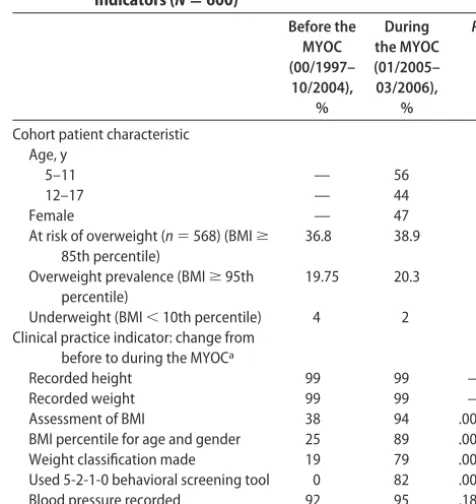
TABLE 1 Cohort Chart Review Data: Keep ME Healthy Before and During MYOC Intervention Change in Clinical Practice Indicators (Nⴝ600)
Before the MYOC (00/1997– 10/2004),
%
During the MYOC (01/2005– 03/2006),
%
P
Cohort patient characteristic Age, y
5–11 — 56
12–17 — 44
Female — 47
At risk of overweight (n⫽568) (BMIⱖ 85th percentile)
36.8 38.9
Overweight prevalence (BMIⱖ95th percentile)
19.75 20.3
Underweight (BMI⬍10th percentile) 4 2 Clinical practice indicator: change from
before to during the MYOCa
Recorded height 99 99 —
Recorded weight 99 99 —
Assessment of BMI 38 94 .0001
BMI percentile for age and gender 25 89 .0001 Weight classification made 19 79 .0001 Used 5-2-1-0 behavioral screening tool 0 82 .0001
Blood pressure recorded 92 95 .18
”Did you and your child make any sugar-sweetened drink-related changes?“ and ”How would you rate the quality of the advice you received about sugar-sweet-ened drinks at that visit? (poor, fair, good, very good, excellent)?” Similar questions asked about nutrition, physical activity, and TV and other screen time. We have no data documenting reliability of these questions. These items were developed to be simple to use in clinical settings. There were no reports from practices to indicate that parents had difficulty answering. Practices were mailed the surveys in mid-February 2006 and asked to return completed surveys by March 2006. Practices were asked to distribute surveys to the first 70 parents of patients presenting for well-child and other acute visits. We excluded acute visits.
A total of 346 surveys were available for analysis before the MYOC (October/November 2004), and 386 were available during the MYOC (February/March 2006). Data to estimate response rates to these surveys were not collected.
During-MYOC Parent Survey: Intervention and Control Sites
A during-MYOC parent survey was administered to par-ents of patipar-ents aged 0 to 18 years visiting an MYOC or control site during November 15, 2006, to December 31, 2006, for a well-child or acute visit. Up to 100 surveys were handed out at each site (average: 73). We esti-mated an overall 97% response rate; 96% for interven-tion and 98% for control sites. We dropped from analysis surveys with unclear age, children with no previous visit to the practice, those outside of ages 5 to 18 during the MYOC, and those without complete data for the vari-ables studied, for a final sample of 539. Survey questions asked about 5-2-1-0 behaviors replicated from the dur-ing-MYOC survey already described.
Provider Surveys Before and During the MYOC
A paper-and-pencil provider survey, consisting of 40 items, was developed to measure provider knowledge, attitudes, self-efficacy and practices around key MYOC objectives including measurement and tracking of height and weight, BMI percentile calculation, overweight clas-sification, behavioral goal setting around 5-2-1-0 behav-iors, brief motivational interviewing, and working with local community organizations to support patients. Sur-vey respondents were asked how strongly they agreed or disagreed with statements on a Likert-type (1–5) scale. All MYOC providers were asked to complete the survey before the first MYOC learning session in November 2004 and a follow-up in March 2006. The during-MYOC survey included all the pre-MYOC questions as well as additional questions exploring providers’ experiences with specific aspects of the MYOC, such as trainings, administering the 5-2-1-0 screening form, keeping a registry, ordering appropriate laboratory tests, positive effects of the collaborative, and challenges.
Data Collection at the Primary Care Sites
Pre-MYOC and during-MYOC data were collected in the original 12 MYOC sites. In the fall of 2006, 10 additional
new sites were selected to participate in a second MYOC; these sites were also self-selected and can be considered similar to the original MYOC sites in demonstrating an interest in improving systems of care related to youth overweight. Nine of the original 12 MYOC sites partici-pated in this new phase. During-MYOC parent-survey data were gathered in sites, with the 10 new sites serving as controls. The 9 MYOC sites and the 10 control sites appear to be similar on a number of characteristics. The MYOC sites reported an average of 4600 children as having a medical home at that site, and control sites reported an average of 4400; the average percentage of patients with MaineCare was 45% in the 9 MYOC sites and 34% in the control sites. To check for potential differences, we also compared the 9 MYOC sites with the 3 MYOC sites not participating in the new collaborative by using parent-survey data from spring 2006. We ex-amined questions about each of the 5-2-1-0 behaviors at the child’s last visit. There were no significant differences between groups.
Statistical Methods
The primary hypothesis was of substantial change in MYOC sites over time in the outcomes selected under the counterfactual assumption that, in the absence of the MYOC, there would have been no or minimal change. For analysis of change in rates, we tested for a change in proportions over time, taking into account clustering of observations within site by using SAS SURVEYMEANS.41
This approach takes into account the intraclass correla-tion of responses within sites. For analyses of change in parental/caretaker reports within sites, we tested for dif-ferences in proportions from before and during the MYOC, taking into account the clustered observations within sites by using the LOGISTIC procedure in SUDAAN.42We used SAS SURVEYLOGISTIC for analysis
of differences in rates among intervention and control sites, controlling for age of child and also taking into account the clustered design. Provider surveys were given to a census of participants in the MYOC and, as such, were not subject to sampling variability, so descrip-tive results are reported without statistical tests for dif-ferences.
RESULTS
Change in Chart Review Data From Before to During Implementation of the MYOC
Chart review data (Table 1) indicate that during the MYOC visit, 20.3% of this sample was classified as over-weight on the basis of over-weight, height, age, and gender documented in the chart. There were no significant in-creases noted in assessment of blood pressure (from 92% to 95%) or height or weight (from 99% to 99% for both) from before to during the MYOC. There were large shifts in assessment of BMI (38%–94%; P ⬍ .0001), BMI percentile for age and gender (25%– 89%;P⬍ .0001), and weight classification by provider (19%–75%; P ⬍
Changes in Parent/Caretaker Surveys From Before to During the MYOC
The parent-survey results indicate improvements in the rate at which providers talked about 5-2-1-0 messages after initiation of the MYOC. Before the MYOC, between 54% and 74% of parents reported ever having someone in the pediatric office talk to them about nutrition, phys-ical activity or exercise, TV or screen time, and sugar-sweetened drinks. During the intervention, as indicated by the logistic regression results, the rates improved for talking about nutrition (odds ratio [OR]: 4.0 [95% con-fidence interval (CI): 2.1–7.7]; P⬍.0002), physical ac-tivity or exercise (OR: 2.1 [95% CI: 1.2–3.7];P⫽.02), TV or screen time (OR: 2.7 [95% CI: 1.4 –5.3];P⬍.005), and sugar-sweetened drinks (OR: 3.7 [95% CI: 1.9 –7.1];
P⬍.0004) (see Table 2).
Additional questions in the during-MYOC survey asked parents about their last well-child visit, whether a doctor or a nurse talked with them about the 5-2-1-0 topics, whether they set goals to change these behaviors, and whether behavior changes were made. Most parents reported a doctor or a nurse discussing these topics with them at the last visit. Forty-nine percent of the parents reported setting a goal ofⱖ5 fruits and vegetables per day; 26% reported making nutrition changes; 40% re-ported setting a goal of at least 1 hour of physical activity per day; 15% reported making physical activity changes; 38% reported setting a goal ofⱕ2 hours of screen time
per day; 12% reported making TV/screen changes; 32% reported setting a goal of drinking no sugar-sweetened beverages; and 17% reported making changes in these drinks (see Table 3). These results, thus, provide some evidence that the intervention may be affecting change in these risk behaviors. In addition, when asked to rate the quality of the advice they received, more than half of the parents rated the quality of advice in each of these areas as good, very good, or excellent.
During-MYOC Parent Survey: Intervention Versus Control Sites
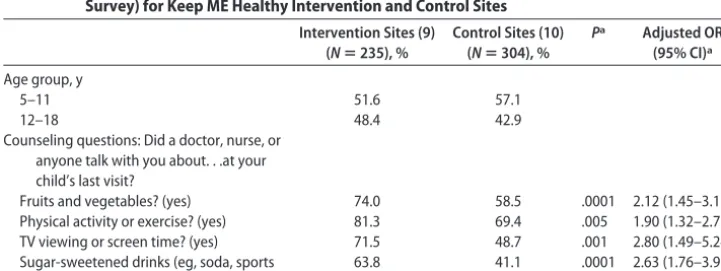
During-MYOC surveys of parents were conducted in the late fall (November/December) of 2006 in 9 MYOC and 10 control sites. Similar age distributions were observed in the intervention and control sites. Adjusted logistic regression results indicate that parents at the interven-tion sites compared with controls reported higher rates of counseling at the last well-child visit concerning fruits and vegetables (OR: 2.12;P⬍ .0001), physical activity (OR: 1.90; P ⬍ .005), TV (OR: 2.80; P ⬍ .001), and sugar-sweetened drinks (OR: 2.63;P⬍.001).
Provider-Survey Results
Fourteen providers (representing 88% of MYOC team providers at baseline) completed the pre-MYOC provider survey, whereas 17 providers (representing 100% of MYOC team providers) completed the survey at the
TABLE 2 Parent Recalls of Behavioral Issues Discussed During Clinical Visits: Keep ME Healthy Intervention Sites Before and During the Intervention
Question: Has a Doctor, Nurse, or Anyone in This Office Ever Talked to
You About. . .
Before Intervention (October 2004) (Nⴝ341), % Yes
During Intervention (February-March 2006) (Nⴝ378), %
Yes
Pa Odds Ratio (95% CI)a
Nutrition? 74 92 .0002 4.0 (2.1–7.7)
Physical activity or exercise? 78 88 .02 2.1 (1.2–3.7)
Television viewing or other screen time? 58 79 .005 2.7 (1.4–5.3)
Sugar-sweetened drinks? 54 82 .0004 3.7 (1.9–7.1)
aThe statistics take into account clustering of observations within sites. Odds ratios are from logistic regressions comparing
preinterven-tion and during-intervenpreinterven-tion results.
TABLE 3 Parent Recalls of Behavioral Issues Discussed at Last Visit of Child (Aged 6 –18 at Time of Survey) for Keep ME Healthy Intervention and Control Sites
Intervention Sites (9) (Nⴝ235), %
Control Sites (10) (Nⴝ304), %
Pa Adjusted OR (95% CI)a
Age group, y
5–11 51.6 57.1
12–18 48.4 42.9
Counseling questions: Did a doctor, nurse, or anyone talk with you about. . .at your child’s last visit?
Fruits and vegetables? (yes) 74.0 58.5 .0001 2.12 (1.45–3.11) Physical activity or exercise? (yes) 81.3 69.4 .005 1.90 (1.32–2.72) TV viewing or screen time? (yes) 71.5 48.7 .001 2.80 (1.49–5.24) Sugar-sweetened drinks (eg, soda, sports
drinks, juice drinks, or fruit punch)? (yes)
63.8 41.1 .0001 2.63 (1.76–3.92)
Surveys were completed in 2006.
aAdjusted for age composition by using multivariable logistic regression and taking into account the clustering of observations within
final MYOC learning session in May 2006 (during the MYOC). All providers were aware of the American Academy of Pediatrics recommendation to track BMI percentile for age and gender annually for all children and adolescents. Increases were observed in indicators from pre to post: 64% and 94% knew the correct BMI percentile range for at risk for overweight, and 93% and 100% knew the correct BMI percentile range for over-weight at baseline and after the test, respectively. Al-though this was a small sample of providers, results indicate increases in provider-perceived self-efficacy in addressing weight with all patients, as well as nutrition, physical activity, screen time, sugar-sweetened bever-ages, behavioral goal setting, and brief, focused negoti-ation. More providers reported behavioral goal-setting with overweight patients, and more reported using mo-tivational interviewing.
Awareness of specific community resources increased from 50% to 88%. At the latter survey, 87% of providers reported the 5-2-1-0 behavioral screen as useful or very useful with all patients, and 93% of providers considered the survey useful or very useful for use with overweight patients. Only 40% of providers considered keeping a registry or performing recommended laboratory tests on overweight patients to be useful or very useful.
DISCUSSION
This evaluation of the MYOC documents the success of clinicians in 12 sites located throughout Maine in effec-tively changing practices that can identify, prevent, and treat childhood overweight. Study results indicate large changes in clinical practice from before to during imple-mentation of the MYOC: increases in assessment of BMI percentile for age and gender, use of the 5-2-1-0 behav-ioral screening tool, and weight classification. Indepen-dent parent surveys indicate improvements in providers discussing the 5-2-1-0 behavioral targets: nutrition, TV time, physical activity, and sugar-sweetened drinks from before to during the MYOC. Control sites were identi-fied, and during-MYOC intervention data from parent surveys indicate higher rates of counseling at the last well-child visit for all the 5-2-1-0 targets in intervention versus control sites (fruits and vegetables, physical activ-ity, TV, and sugar-sweetened drinks). Consistent with these data, providers at the intervention sites reported improvements in knowledge, attitudes, self-efficacy, and practice, including medical evaluation of overweight pa-tients, counseling on 5-2-1-0 targets, use of goal setting, and motivational interviewing.
This quasi-experimental study has several limitations. It was not possible to randomly assign the intervention to sites; thus, there is always the potential for unmea-sured differences between the intervention and control sites in explaining the observed differences. Although we have clear evidence for change in clinical measures from before during the MYOC, the study lacks a compa-rable control group for these analyses to ascertain the level of change that might have been expected in the absence of the MYOC. The very large changes observed over such a short period of time, however, argue for a clear intervention effect.
The pre-MYOC and during-MYOC parent surveys also indicate substantial increases in counseling around 5-2-1-0 behavioral targets by intervention-site provid-ers. Again, however, we do not have a true randomly assigned control group; thus, some of the change could have happened in the absence of the MYOC. To mini-mize expense and respondent burden, we also did not collect detailed background data concerning the pediat-ric patients or their parents. We relied on a systematic sampling plan within sites (consecutive patients), large samples, and control sites to improve our estimates of impact. Thus, there is the potential for unmeasured con-founding variables to bias results.
Our measures asked parents to recall counseling ei-ther at any point in the past or at the last well-child visit and were developed to be inexpensive and easy to ad-minister. We do not have formal data indicating reliabil-ity or validreliabil-ity. Low reliabilreliabil-ity would tend to bias our results to the null. Follow-up data from the second par-ent survey indicated, however, that between 12% and 26% of children changed targeted 5-2-1-0 behavior, indicating that the counseling received may have been having an effect. Another methodologic concern is the potential for measurement error in assessment of weight, height, and, hence, calculation of overweight.
Although we did not successfully collect data in the first parent surveys that would allow estimation of re-sponse rates, our during-MYOC parent survey (con-ducted in the late fall of 2006) achieved a response rate of 98%. These data indicate little problem with response bias. Because the data were clustered within site, our analyses took the clustering into account in estimating changes over time and differences between the interven-tion and control sites.
Although this evaluation provides good evidence for improved process of care within MYOC sites, the ques-tion remains as to whether the MYOC can effectively reduce overweight in the population via improved pre-vention and treatment. We are in the midst of a long-term follow-up to document the effect on outcomes over the 3 years after MYOC implementation.
One final issue is that of generalizability of results. It may be that the initial MYOC sites are relatively unique “early adopters.”43In follow-up evaluation work we will
be able to document how the next collaborative sites fare in their implementation.
CONCLUSIONS
The MYOC intervention improved clinical decision sup-port and family management of risk behaviors, indicat-ing a promisindicat-ing primary care– based approach to improv-ing diet, physical activity, reducimprov-ing TV viewimprov-ing, and overweight risk among children and youth.
ACKNOWLEDGMENTS
does not represent official views of the Centers for Dis-ease Control and Prevention.
Contributing MYOC physician champions were Pam Dietz, MD (Ambulatory Care Center–The Barbara Bush Children’s Hospital at Maine Medical Center, Portland), Lisa Ryan, DO (Bridgton Pediatrics, Bridgton), Denise Cogle, MD (Central Maine Medical Center Family Prac-tice Residency Clinic, Lewiston), David McDermott, MD, and Gretchen Huot, MD (Dover-Foxcroft Family Medi-cine, Dover-Foxcroft), Sydney Sewall, MD, MPH (Ken-nebec Pediatrics, Augusta), Jonathan Fanburg, MD, MPH (Maine Coast Pediatrics, Ellsworth), Andrea Tracy, MD (Martins Point Brunswick Pediatrics, Bruns-wick), Robert Holmberg, MD, MPH (Husson Pediatrics, Bangor), Donald Burgess, MD, FAAP (Prime-Care Pedi-atrics, Kennebunk), Chuck Danielson, MD, and Cynthia Kalagher, CPNP (Waterville Pediatrics, Waterville), Kate Herlihy, MD, and Jill Gabrielson, MD (Western Maine Pediatrics, Norway), Carol Mansfield, MD, MPH, and H. Burt Richardson, MD (Winthrop Family Pediatrics Cen-ter, Winthrop).
We thank the 12 physician practices participating in the MYOC, as well as Arthur Sobol, Brian Robertson, and Taliser Avery for assistance with the data. We also thank Scott Gee of Kaiser Permanente for support in the development of patient handouts and other MYOC ma-terials and training, and we thank the children, youth, and families for their participation in the MYOC.
REFERENCES
1. Ogden CL, Carroll MD, Flegal KM. High body mass index for age among US children and adolescents, 2003–2006.JAMA. 2008;299(20):2401–2405
2. Strauss RS, Pollack HA. Epidemic increase in childhood over-weight, 1986 –1998.JAMA.2001;286(22):2845–2848 3. Freedman DS, Ogden CL, Flegal KM, Khan LK, Serdula MK,
Dietz WH. Childhood overweight and family income.
Med-GenMed.2007;9(2):26
4. Liu J, Bennett KJ, Harun N, et al. Overweight and Physical
Inactivity Among Rural Children Aged 10–17: A National and State
Portrait. Columbia, SC: South Carolina Rural Health Research
Center; 2007
5. Freedman DS, Dietz WH, Srinivasan SR, Berenson GS. The relation of overweight to cardiovascular risk factors among children and adolescents: the Bogalusa Heart Study.Pediatrics. 1999;103(6 pt 1):1175–1182
6. Fagot-Campagna A, Pettitt DJ, Engelgau MM, et al. Type 2 diabetes among North American children and adolescents: an epidemiologic review and a public health perspective.J Pediatr. 2000;136(5):664 – 672
7. US Department of Health and Human Services. The Surgeon General’s Call to Action to Prevent and Decrease Overweight and
Obesity. Rockville, MD: US Department of Health and Human
Services, Public Health Service, Office of the Surgeon General; 2001
8. Stokols D. Translating social ecological theory into guidelines for community health promotion.Am J Health Promot.1996; 10(4):282–229
9. Sallis JF, Bauman A, Pratt M. Environmental and policy inter-ventions to promote physical activity.Am J Prev Med. 1998; 15(4):379 –397
10. Story M, Kaphingst KM, Robinson-O’Brien R, Glanz K. Creat-ing healthy food and eatCreat-ing environments: policy and environ-mental approaches.Annu Rev Public Health.2008;29:253–272
11. Bertakis K, Azari R. The impact of obesity on primary care visits.Obes Res.2005;13(9):1615–1623
12. Kolagolta L, Adams W. Ambulatory management of childhood obesity.Obes Res.2004;12(2):275–283
13. Perrin E, Flower K, Garrett J, Ammerman A. Preventing and treating obesity: pediatricians’ self-efficacy, barriers, resources, and advocacy.Ambul Pediatr.2005;5(3):150 –156
14. Perrin E, Flower K, Ammerman A. Pediatricians’ own weight: self-perception, misclassification, and ease of counseling.Obes Res.2005;13(2):326 –332
15. Wald E, Ewing L, Clus, Goldstrohm S, Cipriani L, Colborn K. Establishing a family-based intervention for overweight chil-dren in pediatric practice. Ann Fam Med. 2005;3(suppl 2): S45–S47
16. Katz S, Feigenbaum A, Pasternak S, Vinker S. An interactive course to enhance self-efficacy of family practitioners to treat obesity.BMC Med Educ.2005;5(1):4
17. Dietz WH, Gortmaker SL. Preventing obesity in children and adolescents.Annu Rev Public Health.2001;22:337–353 18. Barlow SE; Expert Committee. Expert committee
recommen-dations regarding the prevention, assessment, and treatment of child and adolescent overweight and obesity: summary report.
Pediatrics.2007;120(suppl 4):S164 –S192
19. Agency for Healthcare Research Quality.Guide to Clinical
Pre-ventive Services. 3rd ed. Rockville, MD: Agency for Healthcare
Research and Quality; 2008. AHRQ publication 03– 0007. Available at: www.ahrq.gov/clinic/uspstfix.htm. Accessed March 31, 2009
20. Bodenheimer T, Wagner EH, Grumbach K. Improving primary care for patients with chronic illness. JAMA. 2002;288(14): 1775–1779
21. Bodenheimer T, Wagner EH, Grumbach K. Improving primary care for patients with chronic illness: the chronic care model, part 2.JAMA.2002;288(15):1909 –1914
22. Wagner EH, Austin BT, Davis C, Hindmarsh M, Schaefer J, Bonomi A. Improving chronic illness care: translating evidence into action.Health Aff (Millwood).2001;20(6):64 –78
23. Kilo CM. A framework for collaborative improvement: lessons from the Institute for Healthcare Improvement’s Breakthrough Series.Qual Manag Health Care.1998;6(4):1–13
24. Wagner EH, Glasgow RE, Davis C, et al. Quality improvement in chronic illness care: a collaborative approach.Jt Comm J Qual
Improv.2001;27(2):63– 80
25. Heinrich P, Homer CJ. Improving the care of children with asthma in pediatric practice: the HIPPO project. Helping Im-prove Pediatric Practice Outcomes. Pediatr Ann. 1999;28(1): 64 –72
26. Ovretveit J, Bate P, Cleary P, et al. Quality collaboratives: lessons from research. Qual Saf Health Care. 2002;11(4): 345–351
27. Harwell TS, McDowall JM, Gohdes D, Helgerson SD; Montana Diabetes Health Center Team. Measuring and improving pre-ventive care for patients with diabetes in primary health cen-ters.Am J Med Qual.2002;17(5):179 –183
28. Stockwell DH, Madhavan S, Cohen H, Gibson G, Alderman MH. The determinants of hypertension awareness, treatment and control in an insured population.Am J Public Health.1994; 84(11):1768 –1774
29. Von Korff M, Gruman J, Schaefer JK, Curry SJ, Wagner EH. Collaborative management of chronic illness.Ann Intern Med. 1997;127(12):1097–1102
30. Krebs NF, Jacobson MS; American Academy of Pediatrics, Committee on Nutrition. Prevention of pediatric overweight and obesity.Pediatrics.2003;112(2):424 – 430
31. Dietz WH, Robinson TN. Overweight children and adolescents.
New Engl J Med.2005;352(20):2100 –2109
Campbell KJ. Interventions for preventing obesity in children.
Cochrane Database Syst Rev.2005;(3):CD001871
33. Gortmaker SL, Peterson K, Wiecha J, et al. Reducing obesity via a school-based interdisciplinary intervention among youth: Planet Health.Arch Pediatr Adolesc Med.1999;153(4):409 – 418 34. Whitaker RC. Obesity prevention in pediatric primary care: four behaviors to target.Arch Pediatr Adolesc Med.2003;157(8): 725–727
35. Rolllnick S, Mason P, Butler C.Health Behavior Change: A Guide
for Practitioners. Edinburgh, Scotland: Churchill Livingston; 1999
36. Emmons KM, Rollnick S. Motivational interviewing in health care settings: opportunities and limitations. Am J Prev Med. 2001;20(1):68 –74
37. Bouton ME. A learning theory perspective on lapse, relapse, and the maintenance of behavior change.Health Psychol.2000; 19(1 suppl):57– 63
38. Maine Center for Public Health. Keep ME Healthy. Available at: www.mcph.org/Major㛭Activities/keepmehealthy.htm. Ac-cessed January 12, 2009
39. The Maine Children’s Alliance.Maine Kids Count 2006. Augusta, ME: Maine Children’s Alliance; 2006
40. Shadish WR, Cook TD, Campbell DT.Experimental and
Quasi-experimental Designs for Generalized Causal Inference. Boston, MA:
Houghton Mifflin Company; 2002
41. SAS Institute Inc. SAS OnlineDoc 9.1.3. Available at: http:// support.sas.com/documentation/onlinedoc/91pdf/index㛭 913.html. Accessed March 3, 2009
42. Shah BV, Barnwell BG, Bieler GS.SUDAAN User Manuals. Vols I and II. Research Triangle Park, NC: Research Triangle Insti-tute, 1997
DOI: 10.1542/peds.2008-2780C
2009;123;S258
Pediatrics
Karen O'Rourke, Cindy Hannon, Kenneth A. Lombard and Steven L. Gortmaker
Michele Polacsek, Joan Orr, Lisa Letourneau, Victoria Rogers, Robert Holmberg,
Collaborative
The Maine Youth Overweight
−−
Family Behavior: Keep ME Healthy
Impact of a Primary Care Intervention on Physician Practice and Patient and
Services
Updated Information &
http://pediatrics.aappublications.org/content/123/Supplement_5/S258
including high resolution figures, can be found at:
References
#BIBL
http://pediatrics.aappublications.org/content/123/Supplement_5/S258
This article cites 32 articles, 6 of which you can access for free at:
Subspecialty Collections
b
http://www.aappublications.org/cgi/collection/infectious_diseases_su Infectious Disease
following collection(s):
This article, along with others on similar topics, appears in the
Permissions & Licensing
http://www.aappublications.org/site/misc/Permissions.xhtml
in its entirety can be found online at:
Information about reproducing this article in parts (figures, tables) or
Reprints
http://www.aappublications.org/site/misc/reprints.xhtml
DOI: 10.1542/peds.2008-2780C
2009;123;S258
Pediatrics
Karen O'Rourke, Cindy Hannon, Kenneth A. Lombard and Steven L. Gortmaker
Michele Polacsek, Joan Orr, Lisa Letourneau, Victoria Rogers, Robert Holmberg,
Collaborative
The Maine Youth Overweight
−−
Family Behavior: Keep ME Healthy
Impact of a Primary Care Intervention on Physician Practice and Patient and
http://pediatrics.aappublications.org/content/123/Supplement_5/S258
located on the World Wide Web at:
The online version of this article, along with updated information and services, is
by the American Academy of Pediatrics. All rights reserved. Print ISSN: 1073-0397.