A Practical Approach to Classifying and
Managing Feeding Dif
fi
culties
Benny Kerzner, BSc, MBBCh, FCPa, Kim Milano, MS, RDb, William C. MacLean, Jr, MD, CMc, Glenn Berall, MD, FRCPC, MBAd, Sheela Stuart, BA, MS, PhDa, Irene Chatoor, MDe
abstract
Many young children are thought by their parents to eat poorly. Although the majority of these children are mildly affected, a small percentage have a serious feeding disorder. Nevertheless, even mildly affected children whose anxious parents adopt inappropriate feeding practices may experience consequences. Therefore, pediatricians must take all parental concerns seriously and offer appropriate guidance. This requires a workable classification of feeding problems and a systematic approach. The classification and approach we describe incorporate more recentconsiderations by specialists, both medical and psychological. In our model, children are categorized under the 3 principal eating behaviors that concern parents: limited appetite, selective intake, and fear of feeding. Each category includes a range from normal (misperceived) to severe (behavioral and organic). The feeding styles of caregivers (responsive, controlling, indulgent, and neglectful) are also incorporated. The objective is to allow the physician to efficiently sort out the wide variety of conditions, categorize them for therapy, and where necessary refer to specialists in thefield.
Parents of young children worldwide are concerned about feeding difficulties. When asked, more than 50% of mothers claim that at least 1 of their children eats poorly; this implicates∼20% to 30% of children.1–4These perceived
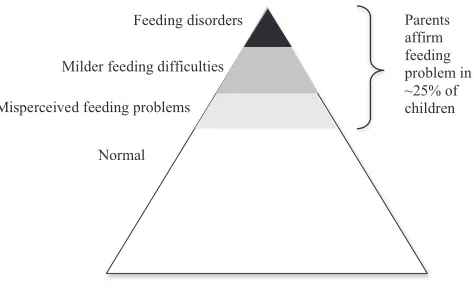
feeding problems encompass a broad range, from mild (so-called picky eating) to severe (as seen in autism). The pediatrician seeking to resolve these concerns needs a comprehensive approach, one that extends beyond the guidelines more suited for subspecialists and multidisciplinary teams, who are confronted by the more severe end of the spectrum: the so-called“feeding disorders”(Fig 1).
Feeding disorders are recognized in the psychiatricDiagnostic and Statistical Manual of Mental Disorders, Fifth Edition(DSM-V) and medical
International Statistical Classification of Diseases and Related Health Problems coding systems.5–7Classifications of
these disorders dating back to the
1980s tend to reflect the discipline of the authors and often lack an agreed-upon nomenclature.8–11Those from
the pediatric medical community generally focus on well-defined organic conditions, but do not emphasize a systematic approach to behavioral issues.8,9Classifications from the
psychiatricfield12focus more on
behavioral problems, whose diagnostic labels are necessarily“constructs,” (ie, models devised on the basis of clinical observation, subject to variability, but nonetheless affording opportunity to institute appropriate therapy).
Bryant-Waugh et al,6as well as Kreipe
and Palomaki,13in excellent reviews
explaining the most recent DSM-V classification, concluded that early childhood feeding disorders should be grouped under the umbrella term “avoidant/restrictive food intake disorder.”They recognize 3 fundamental, aberrant feeding behaviors: children eating too little,
Departments ofaPediatric Gastroenterology, Hepatology,
and Nutrition, andePsychiatry, Children’s National Medical
Center, The George Washington School of Medicine and Health Sciences, Washington, District of Columbia;
bPediatric Nutritional Consultant, Geneva, Illinois;cFAAP
Gastroenterology, Hepatology, and Nutrition, Nationwide Children’s Hospital, College of Medicine, The Ohio State University, Columbus, Ohio; anddDepartment of Paediatrics,
North York General Hospital, Department of Paediatrics and Nutritional Sciences, University of Toronto, Toronto, Ontario, Canada
Dr Kerzner developed the original concept for the current classification and after discussions with all authors refined it. He wrote thefirst draft and subsequent revisions; Ms Milano and Dr MacLean participated in discussions and refinement of the original concept, and shared in the writing of the
first draft and subsequent revisions; Drs Berall, Chatoor, and Stewart participated in discussion and refinement of the original concept and commented on early drafts; and all authors approved thefinal manuscript.
www.pediatrics.org/cgi/doi/10.1542/peds.2014-1630
DOI:10.1542/peds.2014-1630 Accepted for publication Oct 15, 2014 Address correspondence to Benny Kerzner, BSc, MBBCh, FCP, Department of Pediatric
Gastroenterology, Hepatology, and Nutrition, Children’s National Medical Center, 111 Michigan Ave NW, Washington, DC 20010. E-mail: bkerzner@cnmc. org
PEDIATRICS (ISSN Numbers: Print, 0031-4005; Online, 1098-4275).
eating a restricted number of foods, or displaying a fear of eating. With rare exception,14recent
classifications have not identified parental misperception as a distinct subcategory of feeding difficulty, but it clearly is a clinical problem needing resolution. We concur with Davies et al15that feeding difficulties must
be conceptualized as a relational disorder between the feeder and the child and that the caregivers’feeding styles must therefore be incorporated into the management of these problems.
The primary care provider needs an approach that (1) is straight forward and easy to use in the office setting, (2) integrates both organic and behavioral perspectives, (3) accounts for the wide spectrum of severity that both the child and feeder display, and (4) incorporates the impact of parenting and feeding styles. This article describes a comprehensive classification that recognizes the above issues and details a systematic screening and management sequence that allows the pediatrician to distinguish the key characteristics of each feeding difficulty and then provide appropriate management. Although our focus is on those children who resist oral feeding, the practitioner should keep in mind that well-nourished, and even obese children, can have feeding difficulties. Pediatricians should be aware that feeding difficulties often emerge during a child’s feeding transitions
(moving from breast to bottle or cup, when complementary foods are introduced, or when self-feeding begins)16–18and guidance during
these developmental phases is particularly helpful.
NOMENCLATURE
An agreed-upon nomenclature is fundamental for any classification. The terms below, frequently used in the literature without uniformity, are used in this article as follows:
Neophobia: Defined as“the rejection of foods that are novel or unknown to the child.”Such rejection is seen in all omnivores and resolves with repeated exposures.19
Picky eating8,19,20: A moniker that has
inconsistent definitions and mean-ings in different countries. Various criteria for picky eating are used by different authors and in some cul-tures include“fussy”children with poor appetite.2,21Others view it as
a mild form of more overt sensory disturbances.12It generally
con-notes a mild or transient problem. Although it is not considered a“medical condition,”it requires the attention of the primary care provider.
Feeding disorder8,20,22: A term
con-noting a severe problem that results in substantial organic, nu-tritional, or emotional con-sequences. It equates to avoidant/ restrictive food intake disorder di-agnoses in the DSM-V and the
International Statistical Classifica-tion of Diseases and Related Health Problems, 10th Revision.
Feeding difficulty4: A useful umbrella
term that simply suggests there is a feeding problem of some sort. In essence, if the mother says there’s a problem, there is a problem.
IDENTIFICATION OF FEEDING DIFFICULTIES
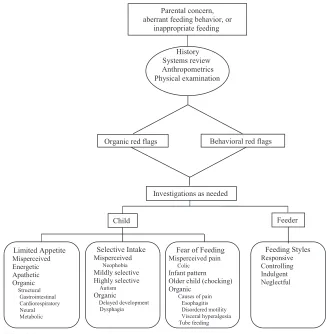
Our approach to identifying and managing feeding difficulties is illustrated by the algorithm shown in Fig 2. If a parent voices concern about a child’s feeding, that is sufficient to require constructive resolution of the issue by the pediatrician. Additional features that may indicate
a dysfunctional feeding interaction are listed in Table 1. When it is apparent that a potential feeding difficulty exists, a complete history and physical examination, including carefully done anthropometrics and a brief dietary assessment, are necessary with special attention to serious redflags, defined as medical and behavioral symptoms and signs that require prompt attention and in many instances referral for in-depth investigation/specialized treatment.
Organic Red Flags
Probably the most critical are indications of dysphagia and
aspiration (Table 1). In the nonverbal child, dysphagia and odynophagia may present with food refusal. Features that suggest incoordinate swallowing may be overt
(eg, coughing or choking). Aspiration can be“silent”or more subtle (eg, wheezing). Evaluation of dysphagia requires identifying which phase of deglutition (oral, pharyngeal, or esophageal) is disorganized23and is
best handled by oral motor specialists. Although generally less urgent, growth failure, diarrhea, and vomiting also need resolution. They necessitate consideration of the full range of causes, which might require help from a pediatric
gastroenterologist. Be aware that
FIGURE 1
failure to thrive is in many societies more often a feature of behavioral problems than of organic disease. Virtually every child suspected of organic disease might benefit from a basic laboratory evaluation (eg, a complete blood count, metabolic panel, sedimentation rate, or
C-reactive protein and urine analysis). Screening for infections and
conditions such as celiac disease has differing regional imperatives.24
Behavioral Red Flags
Whether or not organic issues are identified, behavioral redflags should be sought because they may coexist. The behavioral redflags help select those children who will need more intensive and prompt support and are most likely to benefit from intervention by experts in behavior modification (Table 1).25They also
addressed the parents’feeding style,
noting that when it is forceful or mechanistic (independent of the child’s positive or negative feedback) feeding difficulties are likely. Complex problems with both organic and behavioral redflags will benefit from early referral to centers that have multidisciplinary feeding teams, when available. Milder cases improve with the services of a pediatric nutritionist.
CLASSIFICATION AND MANAGEMENT OF THE CHILD’S FEEDING DIFFICULTY
Our conceptualization of feeding difficulties is represented by a pyramid (Fig 1). Of the∼25% of children identified by parents to have feeding difficulties, only an estimated 1% to 5% at the apex meet criteria for a feeding disorder.26,27The other
∼20% of children are represented further down the pyramid.28In this
latter group, differentiating“normal” children with concerned parents from children with mild, but recognizable and treatable conditions is
challenging, but necessary.
Our criteria for a practical, systematic classification of feeding difficulties are shown in Table 2. We classify children based on the parents’ expressed concerns about their child’s feeding/eating behavior, which fall into 3 principal categories: those not eating enough (limited appetite); those eating an inadequate variety of foods (selective intake); and those afraid to eat (fear of feeding). Each category has subcategories to acknowledge that such concerns may be a misperception on the part of the parents or primarily behavioral or organic, both with a spectrum ranging from mild to severe (Fig 2). Because feeding is a transaction influenced by both the child’s behavior and the parents’feeding technique, we also include the 4 fundamental feeding
FIGURE 2
An approach to identifying and managing feeding difficulties.
TABLE 1 Presenting Features of Feeding
Difficulties
Suggestive Symptoms/Signsa,b,c Prolonged mealtimes
Food refusal lasting,1 mo Disruptive and stressful mealtimes Lack of appropriate independent feeding Nocturnal eating in toddler
Distraction to increase intake Prolonged breast or bottle-feeding Failure to advance textures
Organic Red Flagsa Dysphagia
Aspiration
Apparent pain with feeding Vomiting and diarrhea Developmental delay
Chronic cardio-respiratory symptoms Growth failure (failure to thrive)
Behavioral Red Flagsc Foodfixation (selective, extreme dietary
limitations)
Noxious (forceful and/or persecutory) feeding Abrupt cessation of feeding after a trigger event Anticipatory gagging
Failure to thrive
Redflags: signs/symptoms that require prompt attention and in many instances referral for in depth investigation or specialized treatment.
styles that have the potential to positively or negatively affect every feeding problem.
THE CHILD’S FEEDING DIFFICULTY
The following section describes the 3 fundamental feeding difficulties in a way that facilitates categorization and assessment of severity so as to select appropriate intervention. Implicit in the discussion is the idea that children may exhibit more than 1 feeding problem and the necessary interventions will then need to be prioritized.
Children With Limited Appetite
These children range from those who are eating appropriately, but appear to eat too little (misperception), to those with overt organic disease.
Misperceived
The most important characteristic of misperceived poor appetite is excessive parental concern despite normal growth. Parents commonly perceive genetically small children with correspondingly“small” appetites as poor eaters. Saarilehto et al4drew attention to this
possibility in a study of over 400 children in which 30% were described as poor eaters by their parents. The children were somewhat smaller than children in the control group. However, intake relative to body size was equivalent to normal eaters and appropriate to meet
nutrient needs. Parents fail to appreciate that growth rate slows toward the end of thefirst year and into the second with a concomitant decrease in appetite. Misperception can be the basis of a feeding difficulty if anxious parents adopt
inappropriate feeding practices.
The Energetic, Active Child With Limited Appetite
These children are repeatedly alluded to as nonorganic failure to thrive29,30
and nutritional growth
retardation.31,32Chatoor et al12,33
characterized them in detail and refer to them as having“infantile anorexia.” These problems develop during the transition to self-feeding;
characteristically, these children are active, energetic, curious, and far more interested in playing and talking than eating. They refuse to remain seated during meals, eat small amounts, and frequently fail to gain weight. There is no underlying organic explanation. A hallmark is conflict between parent and child, which if unresolved may hinder the child’s ability to reach his or her optimal cognitive potential.34
This reflects conflict in the home environment, rather than low nutrient intake.35
The Apathetic, Withdrawn Child
These children are inactive,
disinterested both in eating and their environment, and communicate poorly with their caregivers.36They
may appear undemanding37and
often fail to make eye contact, babble, or talk. They and their caregivers appear depressed and often interact poorly. Malnutrition is evident in these children. Malnutrition itself may be a cause of depression and anorexia, creating a vicious cycle in which anorexia and poor nutrition exacerbate each other.
Organic Disease
In our approach to identifying these children, we employ Burklow et al’s38
modification of Rudolph and Link’s9
classification to prompt consideration
of the more relevant conditions: structural, gastrointestinal, cardiorespiratory, neural, and metabolic. A history and physical examination identify a significant percentage of these children, but a high degree of suspicion for conditions with subtle presentations is important (eg, food allergy and, in some regions, celiac disease). Conditions causing pain in response to feeding (eg, esophagitis, gastritis, more subtle motility disorders, and even constipation) are relevant. Gastroesophageal reflux is
a consideration, but is infrequently the root of the problem,39whereas
eosinophilic esophagitis is emerging as a more prominent cause.40
Management of Limited Appetite
Treatment generally focuses on emphasizing the contrast between hunger and satiety. In the case of misperception, parents must be encouraged to accept the child’s own interpretation of hunger and satiety. This requires persuading them that the child is growing normally by demonstrating a normal growth pattern, explaining growth potential (using midparental height
calculations41) and reviewing basic
feeding guidelines (Table 3).
The energetic child with limited appetite needs help to recognize and respond appropriately to hunger and satiety. A feeding schedule that encourages hunger is essential: a maximum of 5 meals (including
TABLE 2 Criteria for an“Ideal”Classification of Feeding Difficulties
Systematically categorizes
•behavioral issues
•organic conditions
•caregiver feeding styles
Separates misperceived, mild, and severe conditions
Conditions are
•readily recognized
•identified by familiar and accurate terminology
•logically related to each other
•manageable in number
Specific treatment options are available for each condition
TABLE 3 Feeding Guidelines for All Children
Avoid distractions during mealtimes (television, cell phones, etc)
Maintain a pleasant neutral attitude throughout meal
Feed to encourage appetite
•limit meal duration (20–30 min)
•4–6 meals/snacks a day with only water in between
Serve age-appropriate foods
Systematically introduce new foods (up to 8–15 times)
Encourage self-feeding Tolerate age appropriate mess
snacks) per day with nothing but water in between. Parents must model healthy eating, adhere to the feeding schedule, and set limits for mealtime behavior, including appropriate discipline. A mealtime “time-out”is often effective; parents offer the child attention in response to positive eating behavior, but withdraw attention by turning away when the behavior is unacceptable.42
Growth failure associated with poor appetite often necessitates enriching the diet calorically including the addition of nutritional supplements.
Providing adequate nutrition and supportive interaction with an experienced feeder is sufficient to improve the apathetic child with limited appetite. This may be achieved through early childhood intervention programs or child protection services; sometimes this necessitates hospitalization.
With organic disease, the medical condition influencing appetite must be addressed and, if possible, resolved. Management is often complex requiring alternate feeding routes (eg, enteral tube or intravenous feeding, which further suppress appetite).43,44
Children With Selectivity
Children who are considered to be selective range from those who are eating appropriately for their stage of development (misperception) to sensory-related aversions to organic disease.
Misperception
Neophobia is frequently misperceived by parents as inappropriate
selectivity. However, it is a normal behavior that begins at the end of the first year of life, peaks between 18 to 24 months and eventually resolves. Most children accept new foods, especially bitter vegetables, only after repeated exposures.19,45
Mild Selectivity
Mild selectivity includes a large amorphous group of children, often
referred to as“picky eaters.”These children consume fewer foods than average. Wright et al3found that as
toddlers they tried the same number of foods as“nonproblem”eaters, but liked far fewer of them. Dovey et al19
noted that unlike neophobia, repeated exposure to rejected foods tends not to result in acceptance by picky eaters. These children typically grow and develop normally and have adequate energy and nutrient intakes.1,2
The major concern for them is not their nutrition,1,3,46but family
discord centered around coercive feeding and subsequent behavioral consequences. Chatoor et al34
reported that conflict around feeding resulted in a lower Bayley Mental Developmental Index independent of the child’s nutritional status. In a study of children defined by their parents as picky, Jacobi et al2showed
a higher incidence of subsequent behavioral problems, including anxiety, depression, aggression, and delinquency. The problem may well be bidirectional: poor behavior prompting coercive and indulgent feeding practices, which in turn aggravate the behavior and may result in long-term problems.
Highly Selective
Here the consequences are severe enough to consider it a feeding disorder. These children limit their diet to,10 to 15 foods.47Chatoor12
refers to these children as having “sensory food aversions”: a refusal to eat whole categories of foods related to their taste, texture, smell,
temperature, and/or appearance. This problem can interrupt development of normal oral motor skills. Some of these children may have additional sensory manifestations, including adverse responses to loud noises, bright lights, and textures on skin. Autism is an extreme example. Up to 90% of autistic children have feeding problems, the vast majority of whom are selective.48In our experience,
feeding difficulties have been the
presenting issue in some autistic children and should be considered when there are questionable social interactions.
Organic
Selective eating may be the consequence of medical conditions and is often seen in children with developmental delay due to anoxia, chromosomal, mitochondrial, and inexplicable causes of neurologic damage.49,50Selectivity may be
related to hypersensitive or hyposensitive responses to the sensory properties of food and/or delayed development of oral motor skills.51,52Children with organic
selectivity due to motor disorders tend to accept objects placed in their mouths, but have difficulty with all textures, both liquid and solid; the highly selective child due to sensory processing deficits gags in
anticipation of objects touching their mouth and then rejects only certain textures, mainly solid foods.49
Management of Selectivity
With misperception, educating parents to have reasonable
expectations and counseling them to consistently and repeatedly expose children to new foods is needed. Foods must often be offered 8 to 15 times without pressure to achieve acceptance.1In the mildly selective
child, other simple techniques may be needed, such as“hiding”pureed vegetables in sauces, using“dips”to enhanceflavor, modeling eating, giving foods appealing names, involving children in food preparation, and presenting it in attractive designs.53–56In contrast,
the highly selective child frequently requires a more intense and systematic approach to increasing variety. Behavioral therapists have documented the effectiveness of a number of these methods
a similar one, is effective.47In more
severe cases,“fading”and“shaping” (gradually altering the taste, color, texture, and exposure to the food) are coupled with positive
reinforcement.57–60In children with
delayed oral motor development, the oral motor therapist may also have a critical role.
Children with organic disease and those with autism are frequently resistant to treatment. They may be nutritionally vulnerable with more extreme eating behaviors.48,50,61,62
Treatment therefore is best managed by specialists and includes hunger inducement coupled with nutritional supplementation and sensory integration approaches (eg, tactile exposure on skin, and then oral motor desensitization, and shaping and fading).42,63In cases of
hyposensitivity, stronglyflavored foods and beverages may be better accepted and worth trying. Providing heightened oral sensation with spicy foods may improve incoordinate swallowing in some.64,65
Children With Fear of Feeding
Any severely aversive feeding-related experience may cause fear of feeding. Such experience might be ongoing or conditioned by past events, justifying Chatoor’s12term“post traumatic.”
Three distinct patterns are discernible: fear of feeding after a single event, notably choking; fear of feeding in the young child who has been subjected to painful or
unpleasant oral procedures; and fear of feeding in children who are tube-fed or have missed feeding
milestones, lack experience, and/or feel threatened when food is introduced orally.
Misperception
Some infants with excessive crying behavior are misperceived to be hungry and fearful of feeding as they resist the bottle or breast. Most of them are crying for other reasons, possibly an inability to calm
themselves, so called disordered state
regulation or colic. In almost all cases, they are receiving adequate amounts of food.66
Fear of Feeding in the Infant
Painful feeding is surmised in an apparently hungry infant who eagerly starts feeding and then after a few swallows, rears off the nipple in apparent pain, but will eat contentedly when sleepy. In time, overt fear of feeding emerges and merely presenting the breast or bottle, approaching the feeding environment or high chair induces resistance and crying in these children.
Fear of Feeding in the Older Child
This is seen in the child who chokes, gags, or vomits on food and then ceases to eat, most often solids. This has been termed functional
dysphagia, choking phobia, or phagophobia.12,67,68Sometimes it is
the result of a parent forcefully feeding the child,12and frequently it
can be severe enough to result in weight loss.
Organic
Any organic condition resulting in significant pain with feeding has the potential to cause a fear of feeding. Tube-feeding dependent children are a prominent example, as is
odynophagia due to esophagitis. More subtle causes like gastroparesis and disordered small bowel motility are now associated with feeding problems.69,70
Management of Fear of Feeding
The main goal is to reduce anxiety associated with feeding/eating. With misperception of the crying infant, the principal treatment is
reassurance, a systematic appraisal and treatment of the causes of discomfort in the child as well as the alleviation of the feeder’s anxiety. When there is actual fear of feeding in an infant, pediatricians must identify and resolve the cause of pain and decondition the infant’s fear. Feeding
can initially be done when the infant is starting to fall asleep, allowing establishment of a sleep-feeding schedule to provide adequate nutrition.12The feeding environment
and equipment may need to be altered to improve acceptance of foods. In some children, earlier transition to the cup or solid foods is helpful.
Reassurance is the key to recovery with fear of feeding in the older child. If initial counseling fails, then the use of anxiolytic medication,71positive
reinforcement with rewards, cognitive behavioral therapy, or psychiatric referral may be
required.67,68In addition, liquid oral
supplements are often necessary to support the child nutritionally as textures are gradually advanced. In selected cases, contrast studies or endoscopy are warranted to exclude underlying pathology.
With organic disease, resolution may require the cause to be identified and treated. Often the original insult may have resolved and visceral
hyperalgesia and/or anticipatory anxiety may persist. In enterally fed children, severe appetite suppression complicates the issue.44These
problems require more complex treatment, such as hunger inducement,42oral motor
desensitization, and a gradual nonthreatening exposure to food,58
and in almost all instances should be referred to specialists competent in these approaches. Specialized techniques proven to be effective by behavioral therapists include distraction to avoid gagging,49use of
a chaser to overcome“pocketing” (food retained in the cheeks),72
following the mouth of the child with the spoon, or guiding the child physically to accept food.73Recently,
medications to suppress visceral hyperalgesia have helped establish normal feeding in tube-fed children.74
THE CAREGIVER’S FEEDING STYLE
influence of caregiver feeding styles is therefore an essential part of management. Parental feeding practices are based on 4 well-described parenting and feeding styles.77,78 These styles are
influenced by cultural norms, parental concern, and child
characteristics.79–81We refer to the
preferred style as responsive. The remaining 3 (controlling, indulgent, and neglectful) generally have negative consequences.
Responsive feeders follow the concept of a division of responsibility; the parent determines where, when, and what the child is fed; the child determines how much to eat.82
Responsive feeders guide the child’s eating instead of controlling it. They set limits, model appropriate eating, talk positively about food, and respond to the child’s feeding signals.76A responsive feeder
arranges the schedule to induce appetite or by rewarding the achievement of goals, but does not resort to unpleasant coercive techniques. This feeding style has been reported to result in children eating more fruits, vegetables, and dairy products and less“junk food,” resulting in a lower risk of becoming overweight.76,83–85
Controlling feeders are common; approximately half of all mothers and a greater proportion of fathers employ these methods.86These
caregivers ignore the child’s hunger signals and may use force,
punishment, or inappropriate rewards to coerce the child to eat.78
These practices initially appear effective, but become
counterproductive, resulting in poor adjustment of energy intake, consumption of fewer fruits and vegetables, and a greater risk of under- or overweight.76,83–85
Indulgent feeders cater to the child. They tend to feed the child whenever and whatever the child demands, often preparing special or multiple foods. This feeder feels it is
imperative to meet the child’s every need, but by doing so ignores that child’s hunger signals and sets no limits.78Consequences of these
feeding practices include lower consumption of appropriate foods (eg, milk) that contain important nutrients and a disproportionate consumption of items high in fat, increasing the risk of becoming overweight.76,83–85
Neglectful feeders abandon the responsibility of feeding the child and may fail to offer food or set limits. When feeding their infants, they may avoid eye contact and appear detached. Older toddlers are often left to fend for themselves. Neglectful parents ignore both the child’s hunger signals and other emotional and physical needs. They may have emotional issues, developmental disabilities, depression, or other conditions that make it difficult for them to feed their child
effectively.78,87Neglect may be severe
enough to result in failure to thrive. In at least 1 study of older children, a greater risk of obesity was associated with these feeding practices.88
Pediatricians can readily differentiate feeding styles by asking 3 questions: How anxious are you about your child’s eating? How would you describe what happens during mealtime? What do you do when your child won’t eat? Responses from neglectful parents will be vague; controlling parents will describe pressuring/forcing their child to eat. Indulgent parents will describe pleading, begging, and preparing special foods. Another way to assess mealtime interactions is to have the parents videotape part of it, something easily accomplished with smart phones.
General feeding guidelines (Table 3), which help caregivers become more responsive feeders and prevent counterproductive feeding practices, should be part of anticipatory guidance for all children.
Pediatricians should adjust their instructions based on the parent’s feeding style. Controlling parents should be guided to offer foods in a noncoercive way, rather than on the specific amounts or types of foods to be given. Advice to indulgent or neglectful parents should be more structured and precise.
Time is at a premium during clinic visits; we have provided
Supplemental Material of resources: books, articles, and Web sites that provide guidelines for anticipatory guidance, appropriate meal time interactions, nutrition ideas, and other tools.
DISCUSSION
Parents deserve guidelines to prevent and/or resolve feeding difficulties, whether mild or severe. Health care professionals, therefore, need a systematic approach to assessing and managing feeding difficulties in the primary care setting, where parentsfirst seek help. The current classification reduces the diagnostic groups to 3, determined by parents’ presenting concerns, integrates both organic and behavioral subcategories in each group, and incorporates feeding styles into the evaluation. It should allow the practitioner to tailor therapy specifically to the problem, addressing both the child’s behavior and the parents’feeding practices. Mild conditions should be resolved within the confines of the office. Severe feeding difficulties or feeding disorders may require specialists to resolve the problem. Proper
classification facilitates more targeted referrals to the appropriate individual specialists or multidisciplinary teams.
a continuum without well-defined divisions. Also, children may have more than 1 feeding difficulty, and more than 1 medical condition, all of which complicate management.
The caregiver leaving the
pediatrician’s office should have an understanding of whether the feeding problem is one of limited appetite,
selectivity, fear of feeding, or a combination of them. Specific guidelines for mealtimes, feeding practices, and limit setting should be clear and based on the parent’s feeding style. Caregivers should also have the confidence to carry out the appropriate intervention, understand the risks of coercive feeding, and have
reasonable expectations of goals and outcomes.
ACKNOWLEDGMENTS
We thank Drs Paul E. Hyman and Robert L. McDowell, Jr for helpful comments on an earlier draft of the article.
FINANCIAL DISCLOSURE:All authors have received honoraria from Abbott Laboratories for speaking at conferences on the diagnosis and management of feeding disorders in young children. Drs Kerzner, MacLean, and Chatoor are currently carrying out a clinical study funded by Abbott Laboratories to assess the ability of pediatricians to correctly classify young children with feeding problems in the office setting. Dr MacLean retired from Abbott Laboratories 11 years ago; he owns no stock in Abbott Laboratories. Employees of Abbott Laboratories had no input into the ideas expressed in this article, nor the writing of the article.
FUNDING:No external funding.
POTENTIAL CONFLICT OF INTEREST:All authors have received honoraria from Abbott Laboratories for speaking at conferences on the diagnosis and management of feeding disorders in young children. Drs Kerzner, MacLean, and Chatoor are currently carrying out a clinical study funded by Abbott Laboratories to assess the ability of pediatricians to correctly classify young children with feeding problems in the office setting. Dr MacLean retired from Abbott Laboratories 11 years ago; he owns no stock in Abbott Laboratories.
REFERENCES
1. Carruth BR, Ziegler PJ, Gordon A, Barr SI. Prevalence of picky eaters among infants and toddlers and their caregivers’decisions about offering a new food.J Am Diet Assoc. 2004; 104(1 suppl 1):s57–s64
2. Jacobi C, Agras WS, Bryson S, Hammer LD. Behavioral validation, precursors, and concomitants of picky eating in childhood.J Am Acad Child Adolesc Psychiatry. 2003;42(1):76–84
3. Wright CM, Parkinson KN, Shipton D, Drewett RF. How do toddler eating problems relate to their eating behavior, food preferences, and growth? Pediatrics. 2007;120(4). Available at: www.pediatrics.org/cgi/content/full/120/ 4/e1069
4. Saarilehto S, Lapinleimu H, Keskinen S, Helenius H, Talvia S, Simell O. Growth, energy intake, and meal pattern in five-year-old children considered as poor eaters.J Pediatr. 2004;144(3):363–367
5. American Psychiatric Association. Diagnostic and Statistical Manual of Mental Disorders. 5th ed, text rev. Washington, DC: American Psychiatric Association; 2013
6. Bryant-Waugh R, Markham L, Kreipe RE, Walsh BT. Feeding and eating disorders in childhood.Int J Eat Disord. 2010;43(2): 98–111
7. World Health Organization.ICD-9: International Statistical Classification of Diseases and Related Health Problems. 9th ed. New York, NY: World Health Organization; 1977
8. Kedesky JH, Budd KS.Childhood Feeding Disorders: Biobehavioral Assessment and Intervention. Baltimore, MD: Paul Brookes Publishing Company; 1998
9. Rudolph CD, Link DT. Feeding disorders in infants and children.Pediatr Clin North Am. 2002;49(1):97–112, vi
10. Woolston JL. Eating disorders in infancy and early childhood.J Am Acad Child Psychiatry. 1983;22(2):114–121
11. O’Brien S, Repp AC, Williams GE, Christophersen ER. Pediatric feeding disorders.Behav Modif. 1991;15(3): 394–418
12. Chatoor I.Diagnosis and Treatment of Feeding Disorders in Infants, Toddlers, and Young Children. Washington, DC: Zero to Three; 2009
13. Kreipe RE, Palomaki A. Beyond picky eating: avoidant/restrictive food intake disorder.Curr Psychiatry Rep. 2012; 14(4):421–431
14. Kerzner B. Clinical investigation of feeding difficulties in young children: a practical approach.Clin Pediatr (Phila). 2009;48(9):960–965
15. Davies WH, Satter E, Berlin KS, et al. Reconceptualizing feeding and feeding disorders in interpersonal context: the case for a relational disorder.J Fam Psychol. 2006;20(3):409–417
16. Coulthard H, Harris G, Emmett P. Delayed introduction of lumpy foods to children during the complementary feeding period affects child’s food acceptance and feeding at 7 years of age.Matern Child Nutr. 2009;5(1):75–85
17. Shim JE, Kim J, Mathai RA; STRONG Kids Research Team. Associations of infant feeding practices and picky eating behaviors of preschool children. J Am Diet Assoc. 2011;111(9): 1363–1368
18. Disantis KI, Collins BN, Fisher JO, Davey A. Do infants fed directly from the breast have improved appetite regulation and slower growth during early childhood compared with infants fed from a bottle?Int J Behav Nutr Phys Act. 2011;8:89–100
19. Dovey TM, Staples PA, Gibson EL, Halford JCG. Food neophobia and‘picky/fussy’ eating in children: a review.Appetite. 2008;50(2–3):181–193
21. Wardle J, Guthrie CA, Sanderson S, Rapoport L. Development of the children’s eating behavior questionnaire.J Child Psychol Psychiatry. 2001;42(7):963–970
22. Manikam R, Perman JA. Pediatric feeding disorders.J Clin Gastroenterol. 2000; 30(1):34–46
23. Arvedson JC. Assessment of pediatric dysphagia and feeding disorders: clinical and instrumental approaches.Dev Disabil Res Rev. 2008;14(2):118–127
24. Liacouras CA, Piccoli DA.Pediatric Gastroenterology and Nutrition: The Requisites. Philadelphia, PA: Saunders/ Churchill/Mosby; 2008
25. Levine A, Bachar L, Tsangen Z, et al. Screening criteria for diagnosis of infantile feeding disorders as a cause of poor feeding or food refusal.J Pediatr Gastroenterol Nutr. 2011;52(5):563–568
26. Esparó G, Canals J, Jané C, Ballespí S, Viñas F, Domènech E. Feeding problems in nursery children: prevalence and psychosocial factors.Acta Paediatr. 2004; 93(5):663–668
27. Dahl M, Sundelin C. Early feeding problems in an affluent society. I. Categories and clinical signs.Acta Paediatr Scand. 1986;75(3):370–379
28. Benjasuwantep B, Chaithirayanon S, Eiamudomkan M. Feeding problems in healthy young children: prevalence, related factors and feeding practices. Pediatr Rep. 2013;5(2):38–42
29. Chatoor I, Egan J. Nonorganic failure to thrive and dwarfism due to food refusal: a separation disorder.J Am Acad Child Psychiatry. 1983;22(3):294–301
30. Drotar D, Eckerle D. The family environment in nonorganic failure to thrive: a controlled study.J Pediatr Psychol. 1989;14(2):245–257
31. Lifshitz F. Nutrition and growth.J Clin Res Pediatr Endocrinol. 2009;1(4):157–163
32. Wudy SA, Hagemann S, Dempfle A, et al. Children with idiopathic short stature are poor eaters and have decreased body mass index.Pediatrics. 2005;116(1). Available at: www.pediatrics.org/cgi/ content/full/116/1/e52
33. Chatoor I, Hirsch R, Ganiban J, Persinger M, Hamburger E. Diagnosing infantile anorexia: the observation of mother-infant interactions.J Am Acad Child Adolesc Psychiatry. 1998;37(9):959–967
34. Chatoor I, Surles J, Ganiban J, Beker L, Paez LM, Kerzner B. Failure to thrive and cognitive development in toddlers with infantile anorexia.Pediatrics. 2004; 113(5). Available at: www.pediatrics.org/ cgi/content/full/113/5/e440
35. Drotar D. Sampling issues in research with nonorganic failure-to-thrive children.J Pediatr Psychol. 1990;15(2): 255–272
36. Baker-Henningham H, Hamadani JD, Huda SN, Grantham-McGregor SM. Undernourished children have different temperaments than better-nourished children in rural Bangladesh.J Nutr. 2009;139(9):1765–1771
37. Wright C, Birks E. Risk factors for failure to thrive: a population-based survey. Child Care Health Dev. 2000;26(1):5–16
38. Burklow KA, Phelps AN, Schultz JR, McConnell K, Rudolph C. Classifying complex pediatric feeding disorders. J Pediatr Gastroenterol Nutr. 1998;27(2): 143–147
39. Chen IL, Gao WY, Johnson AP, et al. Proton pump inhibitor use in infants: FDA reviewer experience.J Pediatr Gastroenterol Nutr. 2012;54(1):8–14
40. Mukkada VA, Haas A, Maune NC, et al. Feeding dysfunction in children with eosinophilic gastrointestinal diseases. Pediatrics. 2010;126(3). Available at: www.pediatrics.org/cgi/content/full/126/ 3/e672
41. Wright CM, Cheetham TD. The strengths and limitations of parental heights as a predictor of attained height.Arch Dis Child. 1999;81(3):257–260
42. Linscheid TR. Behavioral treatments for pediatric feeding disorders.Behav Modif. 2006;30(1):6–23
43. DeSomery CH, Hansen BW. Regulation of appetite during total parenteral nutrition.Nurs Res. 1978;27(1):19–24
44. Stratton RJ, Elia M. The effects of enteral tube feeding and parenteral nutrition on appetite sensations and food intake in health and disease.Clin Nutr. 1999;18(2): 63–70
45. Pliner P. Development of measures of food neophobia in children.Appetite. 1994;23(2):147–163
46. Galloway AT, Fiorito L, Lee Y, Birch LL. Parental pressure, dietary patterns, and weight status among girls who are
“picky eaters”.J Am Diet Assoc. 2005; 105(4):541–548
47. Fraker C, Fishbein M, Cox S, Walbert L. Food Chaining: The Proven 6-Step Plan to Stop Picky Eating, Solve Feeding Problems and Expand Your Child’s Diet. New York, NY: Marlowe & Company; 2007
48. Volkert VM, Vaz PCM. Recent studies on feeding problems in children with autism.J Appl Behav Anal. 2010;43(1): 155–159
49. Palmer MM, Hyman MB. Assessment and treatment of sensory- versus
motor-based feeding problems in very young children.Infants Young Child. 1993;6(2):67–73
50. Hyman P. Role of development in infant and toddler food refusal.Perspectives on Swallowing and Swallowing Disorders (Dysphagia). 2010;19(3):64–67
51. Cermak SA, Curtin C, Bandini LG. Food selectivity and sensory sensitivity in children with autism spectrum disorders.J Am Diet Assoc. 2010;110(2): 238–246
52. Freuler A, Baranek GT, Watson LR, Boyd BA, Bulluck JC. Precursors and trajectories of sensory features: qualitative analysis of infant home videos.Am J Occup Ther. 2012;66(5): e81–e84
53. Fisher JO, Mennella JA, Hughes SO, Liu Y, Mendoza PM, Patrick H. Offering“dip” promotes intake of a moderately-liked raw vegetable among preschoolers with genetic sensitivity to bitterness.J Acad Nutr Diet. 2012;112(2):235–245
54. Pliner P, Stallberg-White C.“Pass the ketchup, please”: familiarflavors increase children’s willingness to taste novel foods.Appetite. 2000;34(1):95–103
55. Zampollo F, Kniffin KM, Wansink B, Shimizu M. Food plating preferences of children: the importance of presentation on desire for diversity.Acta Paediatr. 2012;101(1):61–66
56. Leahy KE, Birch LL, Fisher JO, Rolls BJ. Reductions in entrée energy density increase children’s vegetable intake and reduce energy intake.Obesity (Silver Spring). 2008;16(7):1559–1565
control.Infant Child Adolesc Nutr.2010; 2(5):299–304
58. Toomey KA, Ross ES. SOS approach to feeding.Perspectives on Swallowing and Swallowing Disorders (Dysphagia). 2011; 20(3):82–87
59. Piazza CC, Patel MR, Santana CM, Goh HL, Delia MD, Lancaster BM. An evaluation of simultaneous and sequential
presentation of preferred and nonpreferred food to treat food selectivity.J Appl Behav Anal. 2002;35(3): 259–270
60. Kerwin ME. Empirically supported treatments in pediatric psychology: severe feeding problems.J Pediatr Psychol. 1999;24(3):193–214, discussion 215–216
61. Hyman SL, Stewart PA, Schmidt B, et al. Nutrient intake from food in children with autism.Pediatrics. 2012;130(suppl 2):S145–S153
62. Emond A, Emmett P, Steer C, Golding J. Feeding symptoms, dietary patterns, and growth in young children with autism spectrum disorders.Pediatrics. 2010; 126(2). Available at: www.pediatrics.org/ cgi/content/full/126/2/e337
63. Ledbetter JR, Gast DL. Feeding problems in children with autism spectrum disorders: a review.Focus Autism Other Dev Disabl. 2006;21(3):153–166
64. Lepp M, McKenzie M, Miller H, et al. The effects of sensory-based treatment of drooling in children: a preliminary study. Phys Occup Ther Pediatr. 1998;18:85–95
65. Leow LP, Huckabee ML, Sharma S, Tooley TP. The influence of taste on swallowing apnea, oral preparation time, and duration and amplitude of submental muscle contraction.Chem Senses. 2007; 32(2):119–128
66. Barr RG, Kramer MS, Pless IB, Boisjoly C, Leduc D. Feeding and temperament as determinants of early infant crying/ fussing behavior.Pediatrics. 1989;84(3): 514–521
67. Okada A, Tsukamoto C, Hosogi M, et al. A study of psycho-pathology and treatment
of children with phagophobia.Acta Med
Okayama. 2007;61(5):261–269
68. McNally RJ. Choking phobia: a review of the literature.Compr Psychiatry. 1994; 35(1):83–89
69. Rasquin A, Di Lorenzo C, Forbes D, et al. Childhood functional gastrointestinal disorders: child/adolescent.
Gastroenterology. 2006;130(5):1527–1537
70. Davis AM, Bruce AS, Mangiaracina C, Schulz T, Hyman P. Moving from tube to oral feeding in medically fragile nonverbal toddlers.J Pediatr Gastroenterol Nutr. 2009;49(2):233–236
71. Banerjee SP, Bhandari RP, Rosenberg DR. Use of low-dose selective serotonin reuptake inhibitors for severe, refractory choking phobia in childhood. J Dev Behav Pediatr. 2005;26(2):123–127
72. Vaz PC, Piazza CC, Stewart V, Volkert VM, Groff RA, Patel MR. Using a chaser to decrease packing in children with feeding disorders.J Appl Behav Anal. 2012;45(1):97–105
73. Ahearn WH, Kerwin ML, Eicher PS, Shantz J, Swearingin W. An alternating treatments comparison of two intensive interventions for food refusal.J Appl Behav Anal. 1996;29(3):321–332
74. Zangen T, Ciarla C, Zangen S, et al. Gastrointestinal motility and sensory abnormalities may contribute to food refusal in medically fragile toddlers. J Pediatr Gastroenterol Nutr. 2003;37(3): 287–293
75. Galloway AT, Fiorito LM, Francis LA, Birch LL.‘Finish your soup’: counterproductive effects of pressuring children to eat on intake and affect.Appetite. 2006;46(3): 318–323
76. Savage JS, Fisher JO, Birch LL. Parental influence on eating behavior: conception to adolescence.J Law Med Ethics. 2007; 35(1):22–34
77. Baumrind D. Current patterns of parental authority.Dev Psychol Monograph, Part 2. 1971;4(1):1–103
78. Hughes SO, Power TG, Orlet Fisher J, Mueller S, Nicklas TA. Revisiting
a neglected construct: parenting styles in a child-feeding context.Appetite. 2005; 44(1):83–92
79. Hughes SO, Anderson CB, Power TG, Micheli N, Jaramillo S, Nicklas TA. Measuring feeding in low-income African-American and Hispanic parents. Appetite. 2006;46(2):215–223
80. Arredondo EM, Elder JP, Ayala GX, Campbell N, Baquero B, Duerksen S. Is parenting style related to children’s healthy eating and physical activity in Latino families?Health Educ Res. 2006; 21(6):862–871
81. Ventura AK, Birch LL. Does parenting affect children’s eating and weight status?Int J Behav Nutr Phys Act. 2008; 5(1):15–27
82. Satter EM. The feeding relationship.J Am Diet Assoc. 1986;86(3):352–356
83. Patrick H, Nicklas TA, Hughes SO, Morales M. The benefits of authoritative feeding style: caregiver feeding styles and children’s food consumption patterns. Appetite. 2005;44(2):243–249
84. Patrick H, Nicklas TA. A review of family and social determinants of children’s eating patterns and diet quality.J Am Coll Nutr. 2005;24(2):83–92
85. Nicklas TA, Baranowski T, Baranowski JC, Cullen K, Rittenberry L, Olvera N. Family and child-care provider influences on preschool children’s fruit, juice, and vegetable consumption.Nutr Rev. 2001; 59(7):224–235
86. Conrade G, Ho R. Differential parenting styles for fathers and mothers; differential treatment for sons and daughters.Aust J Psychol. 2001;53(1): 29–35
87. O’Brien LM, Heycock EG, Hanna M, Jones PW, Cox JL. Postnatal depression and faltering growth: a community study. Pediatrics. 2004;113(5):1242–1247
DOI: 10.1542/peds.2014-1630 originally published online January 5, 2015;
2015;135;344
Pediatrics
Irene Chatoor
Benny Kerzner, Kim Milano, William C. MacLean Jr, Glenn Berall, Sheela Stuart and
A Practical Approach to Classifying and Managing Feeding Difficulties
Services
Updated Information &
http://pediatrics.aappublications.org/content/135/2/344
including high resolution figures, can be found at:
References
http://pediatrics.aappublications.org/content/135/2/344#BIBL
This article cites 82 articles, 11 of which you can access for free at:
Subspecialty Collections
http://www.aappublications.org/cgi/collection/nutrition_sub
Nutrition
http://www.aappublications.org/cgi/collection/gastroenterology_sub
Gastroenterology following collection(s):
This article, along with others on similar topics, appears in the
Permissions & Licensing
http://www.aappublications.org/site/misc/Permissions.xhtml
in its entirety can be found online at:
Information about reproducing this article in parts (figures, tables) or
Reprints
http://www.aappublications.org/site/misc/reprints.xhtml
DOI: 10.1542/peds.2014-1630 originally published online January 5, 2015;
2015;135;344
Pediatrics
Irene Chatoor
Benny Kerzner, Kim Milano, William C. MacLean Jr, Glenn Berall, Sheela Stuart and
A Practical Approach to Classifying and Managing Feeding Difficulties
http://pediatrics.aappublications.org/content/135/2/344
located on the World Wide Web at:
The online version of this article, along with updated information and services, is
http://pediatrics.aappublications.org/content/suppl/2015/01/02/peds.2014-1630.DCSupplemental
Data Supplement at:
by the American Academy of Pediatrics. All rights reserved. Print ISSN: 1073-0397.