Original Research Article
Patterns of antenatal care services utilization in rural Amroha, Uttar
Pradesh: a community based cross sectional study
Bhaskar K. Watode
1, Anurag Srivastava
2*, Rajeev Kumar
3INTRODUCTION
Antenatal care (ANC) services are considered to be the crucial element in the primary health care delivery system of a country.
ANC can be defined as the care provided by skilled health-care professionals to pregnant women and adolescent girls in order to ensure the best health conditions for both mother and baby during pregnancy. The components of ANC include: risk identification; prevention and management of pregnancy-related or
concurrent diseases; and health education and health promotion.1
Approximately 303,000 women and adolescent girls died from pregnancy and childbirth-related complications in 2015.1.2 World Health Organization (WHO) estimates suggested that almost all of the maternal deaths (99%) and child deaths (98%) occurred in developing countries. These maternal deaths could have been prevented if the pregnant women or adolescent girls had been able to access quality ANC.3
ABSTRACT
Background: Antenatal care (ANC) services are considered to be the crucial element in the primary health care delivery system of a country. World Health Organization (WHO) estimates suggested that almost all of the maternal deaths (99%) and child deaths (98%) occurred in developing countries. These maternal deaths could have been prevented if the pregnant women or adolescent girls had been able to access quality antenatal care. The objectives of the present study were conducted in rural parts of district Amroha, Uttar Pradesh for assessing the patterns of utilization of the ANC services and to ascertain the factors influencing utilization of ANC services.
Methods: The present study was a cross sectional in nature. Recently delivered women were selected as study subject. A multi-stage stratified sampling design with random approaches had been used. Total 360 subjects included in the study.
Results: Respondents age, education, occupation, socio economic status, family type and family size were the factors that influenced the utilization of the ANC services. With 100% ANC registration, sub centre was the most preferred place for registration. 76.9% of woman received more than 3 ANC visits. 315 (87.5%) and (71.9%) respondents received 2 doses to TT vaccine and more than 100 IFA tablets respectively.
Conclusions: Utilization of ANC services are on rise in rural parts of Amroha, Uttar Pradesh. Still significant proportions of women are doesn’t return to health facility after the ANC registration. Intensification of efforts is needed to cater this left out group through improving community awareness and motivation.
Keywords: Recently delivered woman, Antenatal care, Utilization
Department of Community Medicine, 1Teerthankar Mahaveer Medical College and Research Center, Moradabad,
2
Government Institute of Medical Sciences, Greater Noida, 3Medical Officer, Shamli, Uttar Pradesh, India
Received: 27 June 2019
Accepted: 13 August 2019
*Correspondence:
Dr. Anurag Srivastava,
E-mail: [email protected]
Copyright: © the author(s), publisher and licensee Medip Academy. This is an open-access article distributed under the terms of the Creative Commons Attribution Non-Commercial License, which permits unrestricted non-commercial use, distribution, and reproduction in any medium, provided the original work is properly cited.
There are stark differences between rural and urban areas especially in terms of health care infrastructure and services offered. Although the utilization rates of maternal health care in India have been increasing over the past few years, large disparities between states, regions and households can be noticed. This disparity could be related to several factors, an important one being non-utilization or under-utilization of maternal health-care services, especially amongst the rural population. The reason behind the poor utilization of health care services by the mothers was found to be associated with many factors like, inaccessibility, illiteracy, cultural factors which have significant relationship as a determinant of maternal and child health.4
In this article, major three component of ANC services i.e., number, place and time of ANC visits, receiving days of iron tablets and numbers of TT vaccinations are investigated. Special focus is given on the socio-demographic variables of respondent mothers.
The present study was carried out in the rural area of Amroha district, Uttar Pradesh with the following objectives to study the patterns of utilization of the ANC services and to ascertain the factors influencing utilization of ANC services.
METHODS
The present study was a cross sectional study conducted in the rural area of Amroha district for a period of one year from July 2015 to June 2016 to know the utilization of health care services during antenatal period among recently delivered women (RDW) refers only to women of reproductive age (15 to 49 years) who have delivered a live baby within the past 12 months prior to the conduct of this study.
The required sample size for the study among the RDW was calculated based on the standard formula for one point sample estimation:
To ensure coverage of minimum required sample size for estimating various outcome indicators the value of ‘P’ (maternal health care service utilization) is taken as 64%.5 With the above assumption the required sample size at 95 percent level of confidence with 5 percent of permissible error in the estimates, is worked out as:
The survey was conducted to find out at least 354 recently delivered women from each selected rural area but for the convenience purpose 360 RDW included in the study.
A multi-stage stratified sampling design with random approaches had been used.
Selection of primary sampling units (PSUs): PSUs, which where villages in the field practice area of rural health training center, with probability proportional to population size (PPS) at the first stage.
Second stage
After selection of 18 PSUs, the number of households selected per village was fixed at 20. Each selected village was divided into 4 quadrants and from each quadrant, 5 RDWs were selected randomly for the interviews. In each village, to select the required number of respondents the field supervisor was moved to the centre of the quadrant and selects a household randomly. In the contacted household, it was verified whether the household have RDWs. If the child and the mother were present there then the household was selected and the structured questionnaire was canvassed. If not, the investigator has moved to the immediate next household for the similar enquiry. This process was continued till the required sample size of 5 mothers in each quadrant was achieved.
Ethical approval
The study received the ethical clearance from the Institutional Ethical Review Committee.
Data analysis
Primary data was collected by face-to-face interviews from RDW. Visits was made to all selected 18 villages with the help of Medico Social Worker (MSW). Data was compiled on excel sheet and presented in tabular form. Data analysis was done with the help of statistical software SPSS (version 23.0). Chi-square test and other appropriate statistical test were applied. The differences were considered to be statistically significant at p<0.05 level.
RESULTS
Socio demographic profile of study population: majority of the RDW were in the age group of 21-25 years (52.8%). Mean age was 25.35±3.51 years.
Table 1: Distribution of RDW according to socio-demographic variables (n=360).
Socio-demographic variable Frequency %
Age category (in years)
≤20 14 3.9
21-25 190 52.8
26-30 139 38.6
31-35 14 3.9
>35 3 0.8
Respondent’s occupation
Housewife 290 80.4
Farmer 56 15.6
Other 14 4
Respondent’s education
Illiterate 198 55.0
Just literate 38 10.6
Primary 32 8.9
Secondary 44 12.2
High school 14 3.9
Intermediate 13 3.6
Graduate 15 4.2
Post graduate 6 1.7
Socio-economic status
I 10 2.8
II 38 10.6
III 83 23.1
IV 180 50.0
V 49 13.6
Type of family
Nuclear 206 57.2
Joint 154 42.8
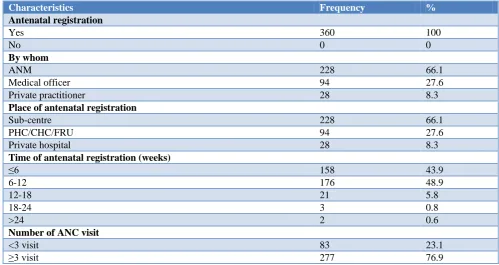
Table 2: Distribution of RDW according to antenatal registration (n=360).
Characteristics Frequency %
Antenatal registration
Yes 360 100
No 0 0
By whom
ANM 228 66.1
Medical officer 94 27.6
Private practitioner 28 8.3
Place of antenatalregistration
Sub-centre 228 66.1
PHC/CHC/FRU 94 27.6
Private hospital 28 8.3
Time of antenatal registration (weeks)
≤6 158 43.9
6-12 176 48.9
12-18 21 5.8
18-24 3 0.8
>24 2 0.6
Number of ANC visit
<3 visit 83 23.1
Table 3: Distribution of RDW according to services received during ANC (n=360).
Characteristics Frequency %
No. of TT received
None 22 6.1
1 23 6.4
2 315 87.5
No. of IFA tablets received
No IFA 31 14.2
<100 53 13.9
≥100 276 71.9
No. of IFA consumed (N=329)
No. IFA 14 4.3
<100 56 17.0
≥100 259 78.7
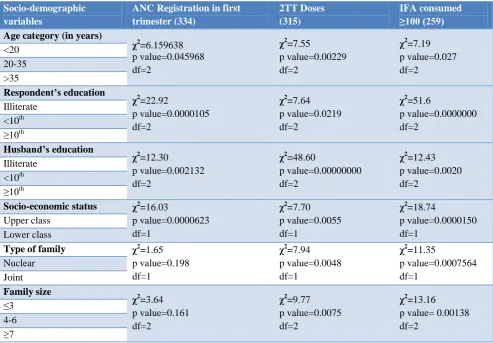
Table 4: Association table between socio-demographic variable and ANC registration in first trimester, TT doses and IFA consumed (n=360).
Socio-demographic variables
ANC Registration in first trimester (334)
2TT Doses (315)
IFA consumed ≥100 (259)
Age category (in years)
χ2 =6.159638 p value=0.045968 df=2 χ2 =7.55 p value=0.00229 df=2 χ2 =7.19 p value=0.027 df=2 <20 20-35 >35 Respondent’s education χ2 =22.92 p value=0.0000105 df=2 χ2 =7.64 p value=0.0219 df=2 χ2 =51.6 p value=0.0000000 df=2 Illiterate <10th ≥10th Husband’s education χ2 =12.30 p value=0.002132 df=2 χ2 =48.60 p value=0.00000000 df=2 χ2 =12.43 p value=0.0020 df=2 Illiterate <10th ≥10th
Socio-economic status χ2
=16.03 p value=0.0000623 df=1 χ2 =7.70 p value=0.0055 df=1 χ2 =18.74 p value=0.0000150 df=1 Upper class Lower class
Type of family χ2
=1.65 p value=0.198 df=1 χ2 =7.94 p value=0.0048 df=1 χ2 =11.35 p value=0.0007564 df=1 Nuclear Joint Family size χ2 =3.64 p value=0.161 df=2 χ2 =9.77 p value=0.0075 df=2 χ2 =13.16 p value= 0.00138 df=2
≤3 4-6 ≥7
Distribution of RDW’s according to antenatal registration. In the present study 100% women registered for antenatal care. Maximum ANC registration (66.1%) done by ANM at sub centre. Nearly half of the women (48.9%) registered at the time of 6-12 weeks. Majority of the RDW’s (76.9%) received ≥3 numbers of antenatal visits (Table 2).
age, educational status, education of the husband, socioeconomic status (p value <0.05). However respondent’s type of family and family size was not found to be statistically associated with their ANC registration within first trimester (p value >0.05). RDWs with 2 tetanus toxoid doses were having statistically significant association with their age, education, husbands education, socio economic status, type of family and family size (p value <0.05). RDWs with ≥100 IFA consumed doses were having statistically significant association with their age, education, husbands education, socio-economic status, type of family and family size (p value <0.05) (Table 4).
DISCUSSION
This study explored the factors influencing the utilization of ANC services among the recently delivered women in rural areas of district Amroha.
The socio-demographic data revealed that maximum women 52.8% were in the age group of 21-25 years followed by the 38.6% in the 26-30 years group. In the present study, majority 80.4% women were housewives and rest 70 (19.6%) was doing other works like farming and teaching. 55% of the respondent mothers were found to be illiterate. Our study findings are comparable to the findings by Baruah et al with 54.78% women in 21-25 years age group while Gupta et al noted 94.3% of housewives in their study.6
In the present study, the socio-economic status of women shows that majority 63.6% respondent were found in lower middle and lower class followed by 33.7% in middle class and upper middle class while 2.8% in upper class. The findings are in line with the study findings by Gogoi et al.7
Mostly women 57.2% were belong to nuclear family and rest 42.8% were belongs to joint family. These findings are in accordance with study findings by Dahal et al mentioning 42.9% and 57.1% belonged to nuclear family and joint family respectively.8
In the present study, it was observed that 100% RDW’s registered for antenatal care. The similar studies conducted had shown lower ANC registration rates i.e., Gupta et al (96.4% ANC registration), Srivastava et al
(88.6% ANC registration).9,10 Maximum (66.1%) antenatal registrations were done by ANM at sub-centre while rest 27.6% by Medical Officer at PHC/CHC/FRU and 8.3% by private practitioner at private hospital. These findings were consistent with study observation by Shidhaye et al which stated 19% at Private health services and 81% at Government health services (sub-centre/PHC/RH).11 The study explored 48.9% women registered at the time of 6-12 weeks followed by 43.9% at ≤6 weeks, 5.8% at 12-18 weeks and only 1.4% at the time of 18-≥24 weeks.
Out of 360 respondents, 76.9% women had ≥3 numbers of antenatal visits and rest 23.1% women had less than 3 antenatal visit. These findings are consistent to the study findings by Singh KM et al with 52.6% women had ≥3 numbers of antenatal visits.12 87.5% women received 2 TT vaccines and 23 (6.4%) women received 1 TT injections and only 22 (6.1%) women did not receive any TT vaccine. These findings are comparable to the study findings by Sahni et al which reported86.74% pregnant females received 2 doses of TT.13
Out of total respondents 71.9% women received ≥100 IFA tablets and 13.9% women received <100 IFA tablets. 78.7% consumed ≥100 IFA tablets and 17% women consumed <100 IFA tablets and only 4.3% women did not consume any IFA tablets. The comparatively lower values were recorded in a study byBaruah et al quoting 0.28% had no IFA, 65.97% had ≥100 IFA and 33.75% had <100 IFA.6
RDW with the ANC registration within the first trimester were having statistically significant association with their age, educational status, education of the husband, socioeconomic status (p value <0.05). In a study conducted by Gudayu et al on logistic regression analysis reviewed that first ANC registration timing in weeks was having significant association with maternal age in years.14
RDWs with 2 tetanus toxoid doses were having statistically significant association with their age, education, husbands education, socio economic status, type of family and family size (p value <0.05). RDWs with ≥100 IFA consumed doses were having statistically significant association with their age, education, husbands education, socio-economic status, type of family and family size (p value <0.05). The consistent findings noted in study by Dahal which revealed that number of TT doses were significantly associated with educational status, parity while number of IFA tablet consumption was significantly associated with types of family, educational status, parity.8
CONCLUSION
Limitations
The study findings are applicable to the rural population of Amroha and may be generalized with caution.
ACKNOWLEDGEMENTS
The authors would like to thank all the respondents, field staff and my colleagues who gave their contribution for completion of this study.
Funding: No funding sources Conflict of interest: None declared
Ethical approval: The study was approved by the Institutional Ethics Committee
REFERENCES
1. WHO, USAID. WHO recommendations on antenatal care for a positive pregnancy experience. Geneva: World Health Organization; 2018.
2. Alkema L, Chou D, Hogan D, Zhang S, Moller AB, Gemmill A, et al. Global, regional, and national levels and trends in maternal mortality between 1990 and 2015, with scenario-based projections to 2030: a systematic analysis by the UN Maternal Mortality Estimation Inter-Agency Group. Lancet. 2016;387(10017):462-74.
3. WHO. Fact sheet: Maternal mortality: Geneva: World Health Organization; 2016. Available at: http://www.who.int/mediacentre/factsheets/fs348/en /index.html. Accessed on 20 June 2019.
4. Agarwal P, Singh MM, Garg S. Maternal health care utilization among women in an urban slum in Delhi. Indian J Community Med. 2007;32(3):203-5. 5. International Institute for Population Sciences.
National Family Health Survey (NFHS 3). Deonar, Mumbai, India: International Institute for population Sciences (IIPS) and Macro International; 2007. 6. Baruah A, Boruah B, Das BR. Socio-demographic
factors affecting the antenatal care service
utilization in Assam. Indian J Basic Appl Med Res. 2016;5(2):796-804.
7. Gogoi G, Ahmed FU. Effect of maternal nutritional status on the birth weight among women of tea tribe in Dibrugarh district. Indian J Community Health. 2007;32(2):120-2.
8. Dahal RK. Utilization of antenatal care services in rural area of Nepal. Int J Collab Res Intern Med Public Health. 2013;5(2):120-31.
9. Gupta RK, Kumar A, Pandey A. Maternal Health Care In Rural And Urbanized Villages Of Delhi - A Comparative Study. Indian J Community Health. 2015;27(01):46-51.
10. Srivastava A, Mahmood SE, Mishra P, Shrotriya VP. Correlates of Maternal Health Care Utilization in Rohilkhand Region, India. Ann Med Health Sci Res. 2014;4(3):417-25.
11. Shidhaye PR, Nagaonkar SN, Shidhaye RR. Study of utilization of maternal health care services by rural women in Tertiary Care Teaching Hospital. Indian Med Gazette. 2014;7(2):74-8.
12. Singh KM, Singh JV, Ahmad N, Kumari R, Khanna A. Factors Influencing utilization of ASHA Services under NRHM in relation to maternal health in rural Lucknow. Indian J Comm Med. 2010;35(3):414-19. 13. Sahni B, Sobti S. Utilization of antenatal care
among pregnant females registered at sub centre level in a rural area of Jammu in India. International J Healthcare Biomed Res. 2013;1(4):269-78. 14. Gudayu TW, Woldeyohannes SM, Abdo AA.
Timing and factors associated with first antenatal care booking among pregnant mothers in Gondar Town; North West Ethiopia. BMC Preg Childbirth. 2014;287(14):1471-2393.