This may be the author’s version of a work that was submitted/accepted for publication in the following source:
Li, Terry, Ng, S, &Skitmore, Martin
(2012)
Public participation in infrastructure and construction projects in China: From an EIA-based to a whole-cycle process.
Habitat International,36(1), pp. 47-56.
This file was downloaded from: https://eprints.qut.edu.au/50404/
c
Consult author(s) regarding copyright matters
This work is covered by copyright. Unless the document is being made available under a Creative Commons Licence, you must assume that re-use is limited to personal use and that permission from the copyright owner must be obtained for all other uses. If the docu-ment is available under a Creative Commons License (or other specified license) then refer to the Licence for details of permitted re-use. It is a condition of access that users recog-nise and abide by the legal requirements associated with these rights. If you believe that this work infringes copyright please provide details by email to [email protected]
Notice:Please note that this document may not be the Version of Record
(i.e. published version) of the work. Author manuscript versions (as Sub-mitted for peer review or as Accepted for publication after peer review) can be identified by an absence of publisher branding and/or typeset appear-ance. If there is any doubt, please refer to the published source.
Revised Paper for
Habitat International
Public Participation in Infrastructure and Construction
Projects in China: From an EIA-based to a Whole-cycle
Process
(Manuscript No.: HABITATINT-D-10-00184)
Terry H.Y. Li 1 S. Thomas Ng 2 Martin Skitmore 3
Please contact: Dr. S. Thomas Ng
Department of Civil Engineering The University of Hong Kong
Pokfulam Road, Hong Kong
Tel: Int+ (852) 2857 8556 Fax: Int+ (852) 2559 5337 Email: [email protected]
Version 2g
1
Research Student, Department of Civil Engineering, The University of Hong Kong, Pokfulam Road, Hong Kong, Email: [email protected]
2
Associate Professor, Department of Civil Engineering, The University of Hong Kong, Pokfulam Road, Hong Kong, Email: [email protected]
3
PUBLIC PARTICIPATION IN INFRASTRUCTURE AND CONSTRUCTION PROJECTS IN CHINA: FROM AN EIA-BASED TO A WHOLE-CYCLE PROCESS
Abstract
Many governments world-wide are increasingly encouraging the involvement of interested
individuals, groups and organisations in their public infrastructure and construction (PIC)
projects as a means of improving the openness, transparency and accountability of the
decision-making process and help improve the projects’ long-term viability and benefits to
the community. In China, however, the current participatory mechanism at the project level
exists only as part of the environmental impact assessment (EIA) process. With an increasing
demand for PIC projects and social equality in China, this suggests a need to bring the
participatory process into line with international practice.
The aim of this paper, therefore, is to identify the weaknesses of EIA-based public
participation in China and the means by which it may be improved for the whole life-cycle of
PIC schemes. To do this, the results of a series of interviews with a diverse group of experts
is reported which analyse the nature and extent of existing problems of public participation in
EIA and suggestions for improvement. These indicate that the current level of participation
in PIC projects is quite limited, particularly in the crucial earlier stages, primarily due to
traditional culture and values, uneven progress in the adoption of participatory mechanisms,
the risk of not meeting targets and lack of confidence in public competence. Finally, a
process flowchart is proposed to guide construction practitioners and the community in
Keywords: Public participation, future direction, infrastructure and construction projects,
Introduction
It is a truism that every decision or action made by a public agency affects citizens to a
certain degree. This is particularly the case for public infrastructure and construction (PIC)
projects, as the provision of these types of facilities can be controversial and may affect the
interests of stakeholders in many parts of society. Therefore, it is very important for these
stakeholders that the project initiators (e.g. government) do their best to convey their plans
and solicit opinions before any PIC projects commence and right through to the end of the
project cycle (Shan & Yai, 2011). A common approach to actively involving relevant
stakeholders in the decision process is by public participation (André et al, 2006).
Public participation in advanced economies usually involves the collection and analysis of
public opinions throughout the project cycle (i.e. the planning, design, construction, operation
and demolition of PIC facilities) to help decision-makers establish the most apposite solutions
satisfying the broad interests of society (IFC, 1998). However, public participation in
developing countries is still in its infancy. In China, for instance, public participation is
applied to urban planning only or those schemes entailing an environmental impact
assessment (EIA) (Zhang & Jennings, 2009). In view of the macro nature of urban planning
initiatives, the EIA-based public participation process is currently the only means available
for the public to voice its concerns at the project level (Plummer & Taylor, 2004).
The current participatory process in China is unlikely to be thorough and flexible enough to
realise the true spirit of public participation while it is bound by the EIA framework, however.
As a result, there are many controversial PIC projects in China, such as the Nu River Dam
experience accumulated from the existing EIA-based public participation process does
provide a useful basis for the development of a more transparent, democratic and
comprehensive participatory process to cope with the rapid expansion of PIC projects in the
country and the increasing expectations of social equality.
This paper, therefore, considers the possibility of introducing a more comprehensive public
participation for PIC projects in China by examining the practices and weaknesses of the
country’s current EIA-based public participatory process. A brief introduction to public
participation is presented followed by an account of its emergence in China and the
philosophy underlying EIA-based public participation for PIC projects. A series of
interviews is then described in which the problems, and suggestions for improvement, of
EIA-based public participation are extracted. Finally, a process flowchart of the various
stages of a PIC project is proposed as a guide toward a whole-cycle public participation
process in the future.
Literature review
According to Arnstein (1969:216), public participation is a channel for “the redistribution of
power that enables the have-not citizens … to be deliberately included in the future”.
Consequently, public participation requires project initiators to acknowledge that “the public
has the right to be informed early and to be pro-actively involved in a meaningful way in
proposals which may affect their lives and livelihoods” (Enserink & Koppenjan, 2007:463)
and more importantly to involve “the individuals and groups that are positively or negatively
According to Creighton (2005), public participation in principle involves every person,
although it may not be possible to reach all the individuals and some may not be interested in
being involved. However, it is necessary to ensure that the participants that are involved
represent those who are directly, or indirectly, are affected by the proposed project and those
who can positively or negatively influence the project outcomes (Lizarralde, 2011). These
include the (i) government / project initiators; (ii) lay public who are affected by, or have
interest in, the proposed project; (iii) private organisations, such as the design institutes and
construction companies; (iv) professional organisations and educational institutions; and (v)
pressure groups such as the NGOs and mass media.
By involving the public effectively in the decision making process, the chance of project
success may increase due to (i) a reduction in project time and cost (Creighton, 2005); (ii) the
development of more innovative plans and solutions through the incorporation of the
collective wisdom of the community (CCSG, 2007); (iii) the accomplishment of the needs or
concerns of a cross-section of society without sacrificing the project goals (Woltjer, 2009);
(iv) an acceptance of the community, which can increase the legitimacy government
decisions (Moore & Warren, 2006); (v) an opportunity to promote mutual learning
(Manowong & Ogunlana, 2008); (vi) a desire to protect individual and minority rights
(Plummer & Taylor, 2004); (vii) an achievement of sustainable project lifecycle management
(Varol et al, 2011); and (viii) the promotion of collaborative governance (Enserink &
Koppenjan, 2007).
Despite its merits, public participation can be challenging to implement when it is newly
worry that an overactive citizenry could lead to social disorder and conflict (Shan & Yai,
2011). However, the success of public participation depends not just on the genuine attitude
of the project organisers in soliciting public opinion, it also requires the careful planning and
organisation of every participatory activity (IFC, 1998). In the absence of appropriate
methods and targeting of the right groups of people, the participation process can be
administratively costly and meaningless as the decisions made are open to challenges and
criticisms (Creighton, 2005).
While public participation may take different forms – not least public hearings, surveys,
workshops, advisory committees, etc., participatory activities can be classified according to
different levels of participation (Plummer & Taylor, 2004; Rowe & Frewer, 2005). Arnstein
(1969), for example, recommended that public participation be divided into eight levels,
ranging from the most elementary level of ‘non-participation’ to ‘tokenism’ and ultimately
‘citizen power’. According to this classification, informing and consulting the public fall
within the ‘tokenism’ level, whereas attaining the ‘citizen power’ level would require the
development of a partnership between the project initiator and the community. Since public
participation is still a relatively new concept in China, it usually takes the form of informing
members of the public of their rights, responsibilities and options rather than inviting
them to voice their opinions (Shan & Yai, 2011). Viewed in this way, it is clear that such
a “tokenism” participatory approach does not guarantee that public views will be heeded by
Emergence of public participation in China
The well-known ‘principle of mass participation’, long established by the Chinese
government and Chinese Communist Party (CCP), is fundamentally different from public
participation in international discourse: the former imposes an obligation on the people to
cooperate with and support the government in the implementation of policies, plans or
projects, while the latter emphasises the rights of people to be informed, consulted and heard
in the decision-making process. According to the Western notion of public participation, the
government is not only responsible for informing people about proposed policies, plans or
projects and supervising their implementation, but also obligated to ensure public access to
information, decision-making and judicial redress (Zhao, 2010). However, such differences
may not necessarily lead to an insurmountable gap: theoretically, there is no conflict between
the international notion of public participation and China’s political regime, in which the
country is purportedly for the people and where the government represents the people’s
wishes (Chen et al, 2007). Chinese law also makes possible the development of the
international practice of public participation as, according to the Chinese Constitution 1982,
“the people manage state affairs, economic and cultural affairs, and social affairs through
various means in accordance with law” (Zhao, 2010).
Public participation in the built environment development in China started in the 1980s with
development projects funded by international financial organisations, as it is a fundamental
requirement of these organisations to conduct a public participation exercise as part of their
Institutionalisation of public participation
It was in the Circular on Strengthening the Management of EIA for Construction Projects
funded by international financial organisations issued in 1993, that public participation was
first expressly emphasised in China. Public participation became a formal component of EIA
in the Regulation on Environmental Management of Construction Projects that was adopted
in 1998, in which developers of construction projects were required to solicit the views of the
work units and residents in the vicinity of the proposed projects when preparing the
environmental impact report (Zhao, 2010). To further emphasise the importance of public
participation, an updated version of the EIA Law was passed in 2002 and became effective in
2003, in which the participation of relevant units, experts and the public in the environmental
impact assessment is encouraged. In 2006, the Ministry of Environmental Protection
promulgated the Provisional Measures on Public Participation in Environmental Impact
Assessment, considered by Chinese scholars and practitioners alike as a marked advance on
the 2002 EIA Law, for the regulation stipulates more detailed directions regarding who and
how to conduct public participation in the EIA process (Zhang & Jennings, 2009). In the
meantime, the promulgation of the Regulation on the Disclosure of Government Information
and Measures on the Disclosure of Environmental Information in 2007 ensures further
enhancement of participatory rights during the EIA process.
Current practice
Since the reforming and opening-up policy was implemented in 1978, there has been
increased communication and cooperation between China and the international community.
by international bodies made public managers at all levels of the Chinese government
become increasingly aware of the value of public input in making decisions that have to
balance the needs of the environment and development (Zhao, 2010). Government officials
expect that, in addition to having a positive impact on the enforcement of environmental
policies, public participation will also help avoid protests on environmental issues (Zhang &
Jennings, 2009).
Bureaucratic structure
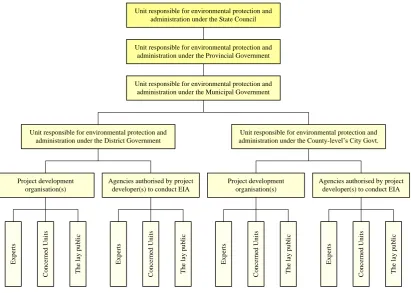
Figure 1 illustrates the current bureaucratic structure of public participation in the EIA
process for construction projects in China, brought about as a result of the Provisional
Measures on Public Participation in Environmental Impact Assessment (MEP, 2006).
< Figure 1 >
The department charged with administering environmental protection under the State Council
(i.e. Ministry of Environmental Protection of the People’s Republic of China) heads the
bureaucratic structure and, according to EIA law promulgated in 2002, is responsible for
handling the examination and approval of EIA documents for construction projects that (i)
are of a special nature, such as nuclear facilities or top-secret projects; (ii) straddle the border
between provincial-level regions; or (iii) require examination and approval (of the project) at
the national level (NPC, 2002).
The power to examine and approve the EIA documents of any construction projects not being
government of the provinces, autonomous regions and municipalities directly under the
Central Government. In case of conflicting conclusions by authorities in two or more
affected regions (including sub-regions within provinces), the authority at the next level
higher is authorised to handle examination and approval (NPC, 2002).
Construction work units, or their entrusted EIA organisations, are responsible for conducting
public participation exercises during the EIA process by such means as public surveys,
consulting professional opinions, seminars, discussions and hearings to openly seek public
opinion. Members of the public from whom opinion is sought should include concerned
units or their representatives (e.g. units, affected residents’ committees, labour unions, the
Women’s Federation, the Disabled Persons’ Federation, religious community, NGOs,
research institution, etc), experts on environmental, technical, social, economic and public
health issues and the lay public of different ages, genders, nationalities and with different
educational backgrounds, professions and religious beliefs (MEP, 2006).
Research methodology
Despite a greater awareness of their rights, few people in China have been exposed to the
comparatively highly democratic systems of the Western world. As a result, it would not be
meaningful to conduct a questionnaire survey of Chinese people as the results may be biased
towards the EIA-based participatory process they are accustomed. In view of the paucity of
published data describing the mechanism of public participation in China (and of the need to
capture the knowledge and detailed opinions of the stakeholders involved in the participatory
to interact more thoroughly with the experts to identify ways to improve the mechanism of
public participation.
As a result, interviews were conducted with twenty-four experts representing a cross-section
of the community, including the government, private sector, professional organisations,
pressure groups, NGOs, the general public, and academia. To ensure the usefulness of the
interview findings, the interviewees were selected according to the purposive sampling
approach. The key criterion for selecting the interviewees was the extent to which they
possess adequate knowledge and practical experience of the existing public participation
process.
Table 1 summarises the profiles of the interviewees. All the interviewees are at senior
management level and have ample hands-on experience in public participation, indicating
that their opinions should be sufficiently relevant to the research.
< Table 1 >
The interview questions were designed to cover three essential aspects of public participation
namely: (i) the experience of EIA-based public participation in China; (ii) the potential for
implementing whole project life participatory mechanisms for PIC schemes; and (iii)
recommendations for future improvement. In the first section, interviewees were asked to
evaluate the current practice of public participation in terms of its scope, participatory level,
and related legislation and guidelines. In the second section, interviewees were invited to
comment on the stages within the project cycle that most necessitate the participation of the
were encouraged to recommend possible solutions for resolving the problems associated with
the existing public participation process, and on the possible means of increasing the chance
of success of comprehensive participation.
Results
Table 2 summarises the main results of the interviews in terms of bureaucratic structure,
capacity of the general public, participation process, legislation and personnel attributed to
the various participants involved. These are reorganised below in the more general terms of
(i) culture; (ii) current level of participation; (iii) reasons for lack of participation; and (iv)
suggested improvements.
< Table 2a >
< Table 2b >
Culture
As expected, several of the interviewees pointed out that the traditional Chinese ‘principle of
mass participation’, where the focus is on participating in the implementation of government
policies, plans or projects is somewhat different from the Western concept of ‘participation’,
where the focus is on the development of the policies themselves. In such a situation, of
course, simply transplanting a Western approach into a country with such a long history of
compliance is likely to be naive in the extreme – a point made by an overwhelming majority
Current level of participation
In view of these cultural issues, therefore, it is not surprising to hear that participation, in the
Western sense, is rather limited in PIC projects in China. For some interviewees, notably
from the general public and pressure groups, this was a major complaint – typically,
“decision-makers choose not to conduct public participation most of the time”. There was
concern that the views of the affected general public are hardly incorporated into the final
decisions, and they can do nothing but participate in the execution of the plan. A particular
issue raised was the lack of participation currently possible in the early stages of project
development, when most of the major decisions are made.
Reasons for lack of participation
Interviewees attributed lack of participation to three major issues: (i) uneven progress in the
adoption of participatory mechanisms; (ii) risk of not meeting targets; and (iii) lack of
confidence in public competence.
Only one interviewee, from a private sector organisation, was not sure whether public
participation could help the proposed project in achieving the anticipated goals, i.e. satisfying
the majority of the local public. The major reason given was that they are currently working
in the area of urban renewal, where the development of public participation is still very
Some interviewees from government departments, on the other hand, admitted that public
participation is sometimes ignored by government officials as there is a view that involving
the general public places risks on achieving anticipated quantitative economic targets. While
these risks are perhaps an inevitable outcome within a planned economy, they were also seen
as directly related to promotion opportunities. Likewise, 20 of the total 24 interviewees
believed that conducting public participation activities might lead to cost increase and time
delay.
Public competence in contributing to decision-making is viewed from two distinct
perspectives. On one hand, some interviewees from government departments and private
sector organisations thought suggestions made by the general public to be of questionable
value and public participation may not help facilitate the proposed project. This was
countered by interviewees from the general public and NGOs, who queried the validity of
this position and considered that there should at least be a channel through which their voices
could be heard. It was also suggested that current participatory methods for PIC projects in
China are too limited and usually only take the form of consulting specialists. From the
perspective of general public and pressure groups, this is unreasonable as most of the time the
issues raised by the specialists are not something that the affected public really care about.
Secondly, several interviewees believed that the perceived lack of value in the general
public’s comments was not their fault, but rather attributed it to the poor quality of the project
information provided to them, as well as the use of unsuitable participatory methods.
In addition to calls for addressing the above, suggested improvements to the current
participatory process comprise the need for (i) better timing; (ii) more sophisticated means of
input; and (iii) support.
The Provisional Measures on Public Participation in Environmental Impact Assessment
expressly stipulates that the earliest timing for the affected general public to participate in the
proposed project is before submission of the EIA report for approval. However, most of the
interviewees agree that this is too late in the decision-making process to be sufficiently
effective. Even the interviewees from government departments partly accept this criticism
and admit that participation is restricted at the beginning (i.e. project identification stage)
solely to expert involvement. As a result, interviewees almost always advocated the
implementation of public participation in the whole cycle of PIC project development and
believed that, by integrating this from the very beginning, the proposed project could be
initiated and proceed more smoothly and satisfactorily (as evidenced in the cases of the
Xiamen PX project) (Zhang & Jennings, 2009).
In elaborating this further, a large majority of the interviewees believed that a process
flowchart of public participation throughout the project cycle is needed to guide the
construction practitioners responsible for planning or organising public participation
activities and improve overall project efficiency. Interviewees from government departments
and private sector organisations suggested that such a process flowchart should be
comprehensive enough and sufficiently flexible to be applied to different types of projects. It
was also suggested that the scope of the general public’s involvement should be clearly
specified in the flowchart as interviewees from government department and private sector
balance the perceived tension between representativeness of participants and the effectiveness
of the whole project.
In addition, interviewees from the general public and pressure groups thought that diversified
participatory methods should be applied at the same time and compared with the traditional
one-way participatory methods – preferring a two-way information-exchange platform (e.g.
public forum) through which to interactively engage with decision-makers.
It was also noted by many that younger Chinese environmental NGOs, established in the
mid-1990s, have played a significant role in the environmental public participation movement
in China to date. However, according to the comments raised by several interviewees, it was
considered that Chinese NGOs should accept more responsibility in: encouraging the lay
public to exercise their participatory rights in the decision-making process; organising the
public to voice their concerns in an effective manner; providing all environmental
stakeholders (e.g. government, private sectors, the lay public, etc.) with technical support and
legal guidance; and most importantly, serving as a “watchdog” to supervise the overall
participatory process. Interviewees from the general public, professional organisations and
pressure groups in particular commented that, with the current bureaucratic structure of
public participation in China, it is currently rather vague which party will serve as the
“watchdog” to oversee public participation activities and how such participatory exercises
should be supervised.
Similarly, closer cooperation with the mass media was also highly recommended by seven
interviewees. They argued that, although almost all the Chinese mass media is traditionally
changed dramatically with the transition to a more open political system and market
economy. This suggests an area of future potential in promoting further public participation
in China.
Discussion
A recurring ‘problem’ highlighted in the survey is that of the traditional Chinese culture of
compliance and its associated autocratic mode of governance and decision making. For a
country that aspires to the pragmatism of “two systems” of open market and central planning,
some shortfall in community participation and influence are to be expected. From a Western
viewpoint, with such marked contradictions, it is surprising in many ways that the system
works at all!
Severe limitations to public participation in the selection of leaders and development of
public policy, and yet the legislated requirement for public participation in PIC projects is
clearly confusing in the minds of the populace. At what point in the continuum of decision
making does public participation change from being acceptable (and legal) to unacceptable
(and illegal)? And how can this position be effectively clarified in a system where even the
basis of what is acceptable and unacceptable is unquestionable by the general population?
This indeed is a dilemma that has been faced by leaders and guardians across the millennia
and a universal normative position has never been agreed. Rather, decisions on participation
have largely been informed by the shifting ideologies of leaders and governments, and by the
That the older interviewees made sense of the situation by describing it as a natural state
within Chinese cultural tradition is unsurprising, as it does at least offer some rationale
behind the present status quo and provides answers to what might be tolerated or not
tolerated in a new situation. Younger interviewees, on the other hand, appeared likely to be
more concerned with just ‘getting on’ with the current tasks at hand and perhaps less mindful
(or fearful) of some of the possible consequences.
Apart from the fundamental incongruities brought about by the combination of its ideology
and pragmatism, the necessary inflexibility inherent in China’s centrally planned economy
would seem to account for many of the issues concerning the timing of the participation
process. As some of the interviewees were at pains to point out, the risk to government
officials of not achieving planned deadlines (together with a limited public accountability for
their actions) is great enough for them to err on the side of curtailing public participation to a
minimum.
This phenomenon is not solely a Chinese one however. Most countries recognise that
consultation is a time-consuming and expensive business and, with little obvious immediate
personal benefit to the decision-makers involved, a chore that most would wish to avoid. The
depth of participation often valued in Western approaches to participation has also been
generally related to perceived gains for decision-makers, in the sense of greater economic
development and political legitimacy. In countries where demands for more wide-spread and
earlier participation within the EIA process have been prevalent, and especially where
organised civil resistance has been a real possibility for poorly planned projects, the
legitimacy of decision-makers’ social contracts have often hinged upon broad scale
national budget expenditure have also relied on participation depth to eschew major public
backlash against centralised decision-making. While these comparisons cannot yet be
applied directly to the Chinese EIA process, such broader scale political and economic
movements should also not be ignored when examining the future of public participation in
PIC projects in China.
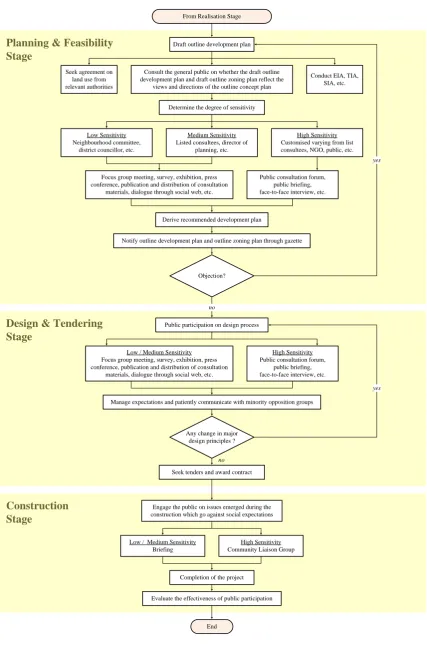
Figure 2 shows the envisaged comprehensive public participation process for PIC schemes in
China. Unlike the existing EIA-based approach, public participation is conducted throughout
the project cycle, including the: (i) preparation; (ii) envisioning; (iii) realisation; (iv) planning
and feasibility; (v) design and tendering; and (vi) construction stages. This corresponds with
the international practice, such as that of the International Association for Public Participation
and Community Development Society (Enserink & Koppenjan, 2007), so as to prevent
planning, design or even construction being dominated by the ideas of particular project
personnel.
Another essential feature is the introduction of project sensitivity in the decision making
process – analogous to the practice of the Hong Kong Special Administrative Government
(CEDD, 2009). A proposed project is first classified according to one of various sensitivity
levels to determine how comprehensive the participatory activities should be during different
project stages to ensure appropriate resources and time are allocated for involving the public
commensurate with the project’s complexity and potential impact on the community.
< Figure 2a >
The experience of the UK’s Voluntary and Community Sector and the Government of
Canada reaffirms the view that the representativeness of participants and the participatory
techniques adopted help determine the successfulness of public participation (CCSG, 2007).
Therefore, it is not only crucial to have a balanced composition of participants at various
stages of participation, but also essential to ensure the participatory activities meaningfully
capture the necessary opinions at different project stages. For instance, representatives from
professional institutions and the affected regions should be invited during the preparation and
envisioning stages to identify the most critical technical and social concerns – while a
cross-section of participants, including the NGO and watchdogs, would help result in a consensus
at the planning and feasibility or the design and tendering stages. More importantly, the
project initiators need to work together with the community to derive the most suitable
methods for public participation – by inviting participants to comment on the participatory
activities for example. In this way, it is expected that a fair and transparent participation
atmosphere can be created to promote mutual trust (DEC, 2011).
Conclusions
This paper has revealed some of the existing problems of public participation for PIC projects
in China and has pointed out some possible future directions for improvement. Though the
traditional Chinese perception of “mass participation” is different to the international notion
of public participation, there is nothing to suggest that either the Central Government of
China or the Chinese people are unwilling to accept Western-style participatory mechanisms.
development of public participation in China in terms of the bureaucratic structure, public
capacity, process management, legislation, personnel, etc.
It is clear that simply replicating the Western participatory mode would not work in Chinese
practice due to its unique social, political, cultural and environmental background. However,
two major areas identified by the interviewees as priorities for improving current Chinese
practice are strengthening the role of NGOs and mass media as “watchdogs”, and the
introduction of whole-cycle participatory mechanisms. To ensure the participatory process is
relevant to the project situation, the project initiators are advised to carefully consider the
sensitivity level, participants’ scope, supervision parties and participatory techniques. By
first classifying a project according to its sensitivity, decision-makers can allocate appropriate
time and resources to involve the community and maximise the prospects of success.
Unlike the Western world, current public participation in China is relatively weak and lacks
public scrutiny. It is essentially dominated by a shibboleth of experts with little serious
attempt to incorporate the views of outsiders. As a result, a governing party such as the
National or the Local People’s Congress in China normally share the same interests as the
decision-makers i.e. the Central Government – a situation counter to the true spirit of public
participation. Furthermore, it is likely that a lack of literacy and/or communication skills
prevents the participation of those at the ‘grass-root’ level under the current system. This
suggests that more thought is needed in finding ways to enable people from minority groups
to take part in the decision process.
The essence of public participation is a process of building consensus among diversified
pressure groups / watchdogs. Should there be a gap between the policy makers and wider
society, one must try to minimise such differences in order to reach a consensus. As noted,
however, even in the West, public participation in decision making rarely occurs naturally at
the behest of decision-makers and some form of legislation is invariably needed to procure its
REFERENCES
André, P., Enserink, B., Connor, D. & Croal, P. (2006). Public Participation International
Best Practice Principles, Special Publication Series No. 4. Fargo: IAIA.
Arnstein, S.R. (1969). A ladder of citizen participation. Journal of the American Institute of
Planners, 35(4), 216-224.
CCSG. (2007). From Consultation to Civic Engagement: The Road to Better Policy-making
and Governance in Hong Kong. Centre for Civil Society and Governance, HKU. Available
from: http://www.bauhinia.org/publications/BFRC-CES-Report.pdf Accessed 03.11.10.
CEDD. (2009). Public Consultation/Engagement Guidelines. Civil Engineering and
Development Department, Hong Kong.
Chen, Q., Zhang, Y. & Ekroos, A. (2007). Comparison of China’s environmental impact
assessment (EIA) law with the European Union (EU) EIA Directive. Environmental
Monitoring and Assessment, 132(1-3), 53-65.
Creighton, J.L. (2005). The Public Participation Handbook: Making Better Decisions
through Citizen Involvement. San Francisco: Jossey-Bass.
DEC. (2011). Principles for public participation. Department of Environment and
IFC. (1998). Doing Better Business through Effective Public Consultation and Disclosure: A
Good Practice Manual. Washington: Environment Division of International Finance Corp.
Enserink, B. & Koppenjan, J. (2007). Public participation in China: sustainable urbanization
and governance. Management of Environmental Quality: An International Journal, 18(4),
459-474.
Lizarralde, G. (2011). Stakeholder participation and incremental housing in subsidized
housing projects in Colombia and South Africa. Habitat International, 35(2), 175-187.
Manowong, E. & Ogunlana, S.O. (2008). Critical factors for successful public hearing in
infrastructure development projects: a case study of the On Nuch waste disposal plant project.
International Journal of Construction Management, 8(1), 37-51.
MEP. (2006). Provisional Measures on Public Participation in Environmental Impact
Assessment. Ministry of Environmental Protection, People’s Republic China. (in Chinese)
Moore, A. & Warren, A. (2006). Legal advocacy in environmental public participation in
China: raising the stakes and strengthening stakeholders. China Environment Series, 8, 3-23.
NPC. (2002). Environmental impact assessment law of People’s Republic of China. National
People’s Congress, People’s Republic China. (in Chinese)
Plummer, J. & Taylor, J.G. (2004). Community Participation in China: Issues and Processes
Rowe, G. & Frewer, L.J. (2005). A typology of public engagement mechanisms. Science,
Technology, & Human Values, 30(2), 251-290.
Shan, C. & Yai, T. (2011). Public involvement requirements for infrastructure planning in
China. Habitat International, 35(1), 158-166.
Varol, C. Ercoskun, O.Y., & Gurer, N. (2011). Local participatory mechanisms and collective
actions for sustainable urban development in Turkey. Habitat International, 35(1), 9-16.
Woltjer, J. (2009). Concepts of participatory decision-making in Dutch infrastructure
planning. In: J. Woltjer (Eds.), Public Participation and Better Environmental Decisions
(pp.153-163). London: Springer.
Zhang, X. & Jennings, E. (2009). Public participation in environmental policy making in
China: a case study. In Proceedings: The annual meeting of the Midwest Political Science
Association 67th Annual National Conference. Chicago: MPSA.
Zhao, Y. (2010). Public participation in China’s EIA regime: rhetoric or reality? Journal of
Unit responsible for environmental protection and administration under the State Council
Unit responsible for environmental protection and administration under the Provincial Government
Unit responsible for environmental protection and administration under the Municipal Government
Unit responsible for environmental protection and administration under the District Government
Unit responsible for environmental protection and administration under the County-level’s City Govt.
Project development organisation(s)
Agencies authorised by project developer(s) to conduct EIA
Project development organisation(s)
Agencies authorised by project developer(s) to conduct EIA
E x p er ts C o n ce rn ed U n it s T h e la y p u b li c E x p er ts C o n ce rn ed U n it s T h e la y p u b li c E x p er ts C o n ce rn ed U n it s T h e la y p u b li c E x p er ts C o n ce rn ed U n it s T h e la y p u b li c
Start
Form a consultation team
Government
representatives Consultancy team
Other project team members
How sensitive the project is ?
Draw up public participation strategy
Invite comments on the public participation strategy
Revise public participation strategy
Approved by relevant bureau?
no
Consult general public to identify their visions and desire for the development of concept plans
Development option 1 Development option 2 Development option n Development option 3 yes
The public to comment on the derived options
Select and modify the development option according to the concerns of the general public
Another round of public participation focusing on the selected development option
Adequate support to proceed?
Prepare outline concept plan
no
Consult the general public on outline concept plan to see if it meets the principles derived and match their visions
Adequate support to proceed?
no
Go to Planning and Feasibility Stage
Preparation Stage Envisioning Stage Realisation Stage yes yes
low or medium high
Draft outline development plan
Consult the general public on whether the draft outline development plan and draft outline zoning plan reflect the
views and directions of the outline concept plan
Objection?
Planning & Feasibility Stage
From Realisation Stage
Conduct EIA, TIA, SIA, etc. Seek agreement on
land use from relevant authorities
Medium Sensitivity Listed consultees, director of
planning, etc. Determine the degree of sensitivity
Low Sensitivity Neighbourhood committee,
district councillor, etc.
High Sensitivity Customised varying from list consultees, NGO, public, etc.
Derive recommended development plan
Notify outline development plan and outline zoning plan through gazette Focus group meeting, survey, exhibition, press
conference, publication and distribution of consultation materials, dialogue through social web, etc.
Public consultation forum, public briefing, face-to-face interview, etc.
yes
Public participation on design process
Low / Medium Sensitivity Focus group meeting, survey, exhibition, press conference, publication and distribution of consultation
materials, dialogue through social web, etc.
High Sensitivity Public consultation forum,
public briefing, face-to-face interview, etc. no
Any change in major design principles ?
Manage expectations and patiently communicate with minority opposition groups
yes
Seek tenders and award contract
Design & Tendering Stage
Engage the public on issues emerged during the construction which go against social expectations
Low / Medium Sensitivity Briefing
High Sensitivity Community Liaison Group
Completion of the project
Evaluate the effectiveness of public participation
End
Construction Stage
no
Table 1: The profile of the interviewees
Group No. Position Organisation
Government Department
A Deputy Director Provincial Bureau B Director Municipal Commission C Deputy Director Municipal Commission D Deputy Director Provincial Bureau E Deputy Director Municipal Bureau General
Public a
F The Lay Public N.A. G The Lay Public N.A. H The Lay Public N.A. I The Lay Public N.A. J The Lay Public N.A.
Private Sector K Project Manager Real Estate Corporation
L Assistant Manager Engineering Consulting Corporation M General Manager Construction Company
N Assistant Manager Architectural & Engineering Design Company O General Manager Construction Company
Professional Organisations / Universities
P Associate Professor Educational Institution Q Professor Educational Institution R Professor Educational Institution S Deputy Director National Research Centre T Director Research Centre
Pressure Groups (NGOs)
U Member NGO
V Director Environmental Group W Member Environmental Group X Member Environmental Group
a
Table 2a: Existing problems in public participation practice in construction projects in China
Category Description Interviewee
A B C D E F G H I J K L M N O P Q R S T U V W X
Bureaucratic Structure
o Most of the government representatives are not used to the participatory approach as the administrative culture is traditionally organised in a strictly hierarchical way and government always act as the leading role in the top-down management framework.
o The institutional weaknesses of environmental branch in China at all administrative levels lead to insufficient resources, understaffing and lack of training which bring a negative impact on public participation in EIA for construction projects.
o The legal advocates including public and private sector attorneys, NGOs, prosecutors and other governmental advocates, and legal aid centres have not played a significant role in the supervision of the public participation exercise in EIA in China to date.
o The role that the Chinese NGOs are currently playing in the public participation practice is rather minor and limited in bringing public pressure on development projects.
Public Capacity
o Due to the insufficient support of environmental experts and environmental NGOs, the public stills lack environmental
consciousness and knowledge and their competence to contribute in any way to EIA is still questioned.
Process o The general public are only involved in the EIA process of construction projects rather than throughout the whole project cycle.
o Access to information is restricted though Article 4 of the EIA Law requires EIA reports to be made public and the Provisional Measures on Public Participation in Environmental Impact Assessment require a more systematic and accessible disclosure process (Articles. 8-11).
o The time when releasing project information (before EIA is conducted) is too late as many important decisions have been made and the whole participation therefore becomes ex post facto.
o The place of participation is not always convenient or easily accessible.
o The representativeness of the participants involved in public participation programmes can hardly be guaranteed.
Table 2b: Existing problems in public participation practice in construction projects in China (cont’d)
Category Description Interviewee
A B C D E F G H I J K L M N O P Q R S T U V W X
Process (cont’d)
o Public participation occurs for too short period which means people do not have enough time to go through all the project-related information and to understand them especially when they are written in overly technical language.
o The general public raise their comments mainly through reports, letters and visits and the interactive techniques adopted during the participation process is still insufficient.
o Timely response to the public is still insufficient which may adversely affect the accountability of the government.
o The Western mode of public participation is entirely copied without considering the actual situation of China.
Legislation o Defined standards (e.g. appropriate representativeness of the participants) are still missing which may create loopholes for government officials, developers, and concerned work units.
o The Provisional Measures on Public Participation in Environmental Impact Assessment and the Measures on the Disclosure of Environmental Information provide technical supports rather than the operable articles.
o A definite regulation of legal obligation about public participation is still missing.
o Legislation on the supervision of the participatory process and on the penalty for improper activities during the participation process is still insufficient.
Personnel o Practitioners with sufficient experience in planning and organising participatory exercise are still lacking in government organisations, construction and environmental impact assessment units.
o Legal experts in public participation are still insufficient. Others o The traditional Chinese culture of being conservative negatively affects
the effectiveness and efficiency of the participatory exercise.
o Overemphasised economic development leads to the neglect of environmental protection and therefore brings an adverse impact to public participation in EIA.