University of South Carolina
Scholar Commons
Theses and Dissertations
2015
Soil Arsenic and Lead Concentrations and Preterm
Birth: Investigating Racial Disparities, Sources,
Neighborhood Effects, and Spatial Patterns
Pamela Harley Thornton Davis University of South Carolina - Columbia
Follow this and additional works at:https://scholarcommons.sc.edu/etd Part of theEpidemiology Commons
This Open Access Dissertation is brought to you by Scholar Commons. It has been accepted for inclusion in Theses and Dissertations by an authorized administrator of Scholar Commons. For more information, please [email protected].
Recommended Citation
S
OIL ARSENIC AND LEAD CONCENTRATIONS AND PRETERM BIRTH:
INVESTIGATING RACIAL DISPARITIES
,
SOURCES,
NEIGHBORHOOD EFFECTS,
ANDSPATIAL PATTERNS
by
Pamela Harley Thornton Davis
Bachelor of Science
University of South Carolina, 2001
Master of Arts in Teaching University of South Carolina, 2003
Master of Science in Public Health University of South Carolina, 2006
Submitted in Partial Fulfillment of the Requirements
For the Degree of Doctor of Philosophy in
Epidemiology
The Norman J. Arnold School of Public Health
University of South Carolina
2015
Accepted by:
Jihong Liu, Major Professor
C. Marjorie Aelion, Committee Member
James B. Burch, Committee Member
Bo Cai, Committee Member
Suzanne McDermott, Committee Member
D
EDICATIONTo my son, Cole…you are one of the main reason I decided to pursue my PhD,
and my primary source of motivation during the entire process. Ray Bradbury wrote in
the unfortunately titled novel Something Wicked This Way Comes, “She’s immortal. She
has a son.” My immortality comes not only from being your mother, but also from the
A
CKNOWLEDGEMENTSI would first like to thank my dissertation advisor, Dr. Jihong Liu. You provided
invaluable ideas, comments, and suggestions, without which this work would not have
been possible. Thank you so much for working with me even though I know I did not
make it easy at all times. Thanks as well to Dr. Jim Burch, for making me think very
critically about my methodology throughout the dissertation process; this has made me a
better epidemiologist. Thanks also to Dr. Bo Cai; I have worked with you for many years,
and you helped me develop my interest in spatial epidemiological methods. I also
appreciate your assistance on topics unrelated to my dissertation. I cannot begin to
express my gratitude for all that the three of you have done for me, as well as all the time
you have put into reading and commenting on my dissertation during this entire process. I
hope to count you all as colleagues for many years to come.
Special thanks as well go to Dr. Suzanne McDermott. Without you, the primary
and secondary data used in this dissertation research would not have been available to
me. I have enjoyed working with you for the past 10 years, and hope that our professional
relationship can continue. Additionally, extra special thanks also go to my mentor, and
both supervisor and employer from 2004-2014, Dr. Marjorie Aelion. You took a chance
on me as a graduate student and have taught me so much about research, writing, and
professionalism in the academic world. I will forever been grateful for the opportunities
I would also like to thank Heather Kirby and Dennis Dickerson at the South
Carolina Revenue and Fiscal Affairs Office for compiling and linking that data used for
this research. Thanks also to Lynn Shirley, formerly of the Department of Geography at
USC, for your help with my numerous GIS-related dissertation questions.
Last but certainly not least, I would like to thank my husband Jason, my parents,
and all of my family and friends who have been there for me through this process.
Completing my dissertation would not have been possible without the love, support, and
A
BSTRACTPreterm birth, generally defined as birth at <37 weeks of gestation, is an important
public health issue that has multiple risk factors related to characteristics of both the
mother and her environment. The purpose of this dissertation was to examine potential
sources of spatially interpolated (kriged) environmental concentrations of arsenic (As)
and lead (Pb) in residential soils and preterm birth in a Medicaid population of mothers
giving birth in South Carolina (SC) from 1996-2001. The first objective was to
investigate if a racial disparity existed for estimated soil As and Pb concentrations, after
adjusting for proximal and distal sources of these metals (including distance and direction
to industrial facilities) in a subset of SC Medicaid mothers living in areas of SC where
soil samples were collected and analyzed for these metals. The second objective was to
test the hypothesis that estimated soil As and Pb concentrations were associated with
increased odds of early (<34 weeks) and late (34-36 weeks) preterm births in the same
subset of SC Medicaid mothers, after adjusting for individual and neighborhood level risk
factors, and examine if measure of neighborhood deprivation and racial residential
segregation modified these associations. The third objective was to examine if early and
all preterm births, aggregated at the county level, varied spatially and/or temporally in SC
for all Medicaid mothers giving birth from 1996-2001 in Bayesian models.
For the first objective, black mothers had significantly higher estimated As and Pb
percent of Census block group are covered by roads) were more strongly associated with
estimated soil As and Pb concentrations than composite As and Pb releases from
industrial facilities categorized by distance from and direction to Census block groups in
which maternal residences were located.
For the second objective, estimated soil concentration of neither As nor Pb were
associated with increased odds of early or late preterm birth after adjusting for maternal
and neighborhood level risk factors. Only individual level covariates were associated
with these birth outcomes, and associations were stronger for early as compared to late
preterm births. Neighborhood deprivation and racial residential segregation were not
associated with either early or late preterm birth in adjusted models, nor did they modify
the main associations of interest.
Results from the final objective showed that Bayesian models including spatial
and temporal parameters had a better fit, for both early and all preterm births, than those
only containing temporal parameters, in the aggregate spatial-temporal analysis at the
county level for all SC Medicaid mothers. Some counties in SC had significant risk of
early and all preterm births over multiple years, and aggregate county measures of
maternal demographics and conditions during pregnancy were associated with increased
risk of early and all preterm births by both county and year.
These findings indicate the importance of proximal, historic metal sources to
current residential soil concentrations, as well as the racial disparity in soil As and Pb
concentrations in the studied locations of SC. They also show that accounting for the
distance and direction to industrial facilities releasing these metals does not impact the
of early and late preterm births were not associated with estimated residential soil As and
Pb concentrations, and only maternal risk factors were significantly associated with these
outcomes in the study population. Finally, taking into account the spatial relationship
between counties in SC improved risk estimates of early and all preterm births at the
county level for Medicaid mothers in SC. These finding have implications in the areas of
environmental justice, environmental contaminant risk assessment, environmental
T
ABLE OFC
ONTENTSDEDICATION ... iii
ACKNOWLEDGEMENTS ... iv
ABSTRACT ... vi
LIST OF TABLES ...x
LIST OF FIGURES ... xii
CHAPTER 1:INTRODUCTION ...1
CHAPTER 2:METHODS ...15
CHAPTER 3:ARSENIC AND LEAD IN SOILS: INVESTIGATING POTENTIAL SOURCES AND RACIAL DISPARITIES AMONG PREGNANT WOMEN IN SOUTH CAROLINA ...27
CHAPTER 4:ASSOCIATIONS BETWEEN SOIL ARSENIC AND LEAD CONCENTRATIONS AND EARLY AND LATE PRETERM BIRTHS IN MOTHERS FROM SOUTH CAROLINA ...55
CHAPTER 5:EXAMINING SPATIAL AND TEMPORAL PATTERNS OF EARLY AND ALL PRETERM BIRTHS IN MOTHERS FROM SOUTH CAROLINA USING BAYESIAN METHODS: AN EXPLORATORY ANALYSIS ...87
CHAPTER 6:SUMMARY ...113
REFERENCES ...128
APPENDIX A:SUPPLEMENTARY TABLES ASSOCIATED WITH CHAPTER 3 ...168
APPENDIX B:SUPPLEMENTARY TABLES ASSOCIATED WITH CHAPTER 4 ...170
L
IST OFT
ABLESTable 2.1 Sampling area characteristics...26
Table 3.1 Mean estimated soil arsenic (As) and lead (Pb) concentrations (standard deviation) for maternal and neighborhood (United States Census 2000 block group) variables and p-value for differences in estimated soil
As and Pb concentrations by category ...48
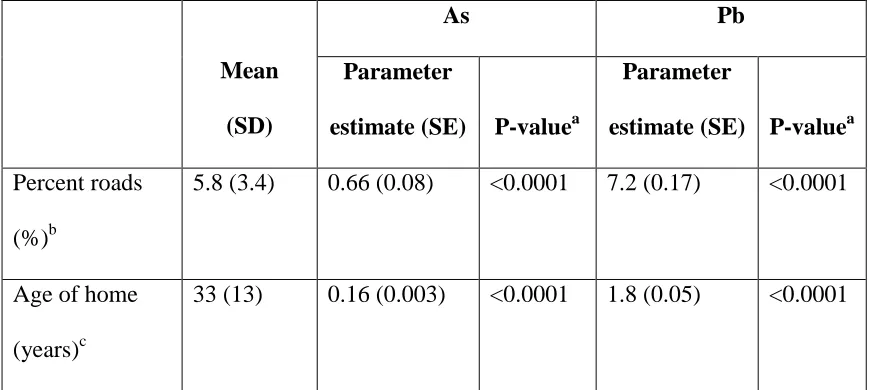
Table 3.2 Means (standard deviation) and ranges of continuous neighborhood (United States Census 2000 block group) variables, parameter estimates (standard errors), and p-values for crude associations with estimated soil
arsenic (As) and lead (Pb) concentrations ...49
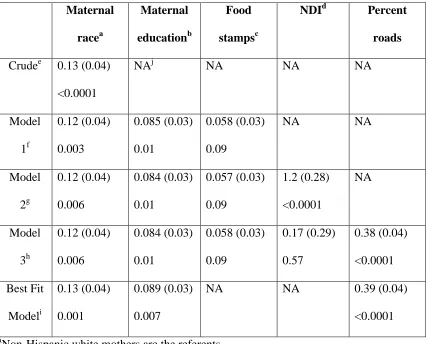
Table 3.3A Parameter estimates (standard error) and p-values for risk factors
of estimated soil arsenic (As) concentrations ...50
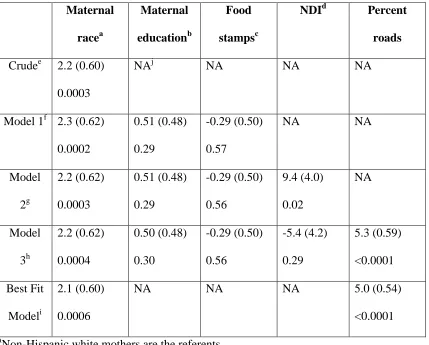
Table 3.3B Parameter estimates (standard error) and p-values for risk factors
of estimated soil lead (Pb) concentrations ...51
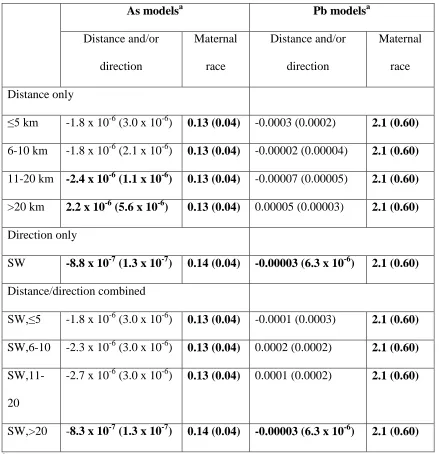
Table 3.4 Parameter estimates (standard error) for average composite annual releases of arsenic (As) and lead (Pb) from Environmental Protection Agency (EPA) Toxics Release Inventory (TRI) facilities categorized by distance
and/or direction, and maternal race in As and Pb best fit models ...52
Table 4.1 Sampling area type, date sampled, and approximate area ...76
Table 4.2 Number (percent) of mothers for categorical variables by preterm
birth category, and p-values of category comparisons ...77
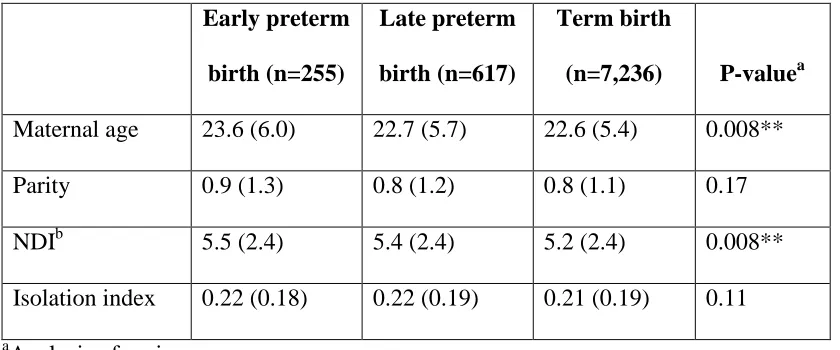
Table 4.3 Means (standard deviation) for continuous variables by preterm
birth category, and p-values of category comparisons ...79
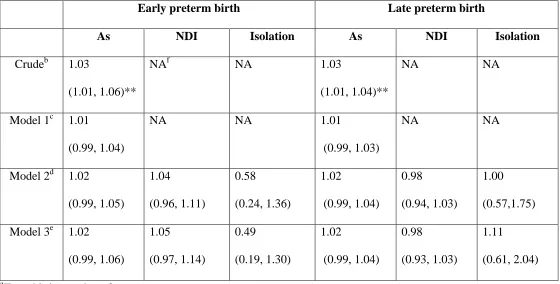
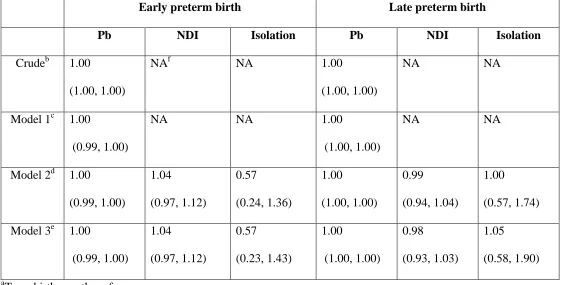
Table 4.4A Odds ratios (95% confidence interval) for arsenic (As), the neighborhood deprivation index (NDI), and the isolation index in the crude
model, and Models 1-3, for preterm birth categories ...80
Table 4.4B Odds ratios (95% confidence interval) for lead (Pb), the
neighborhood deprivation index (NDI), and the isolation index in the crude
Table 4.5 Parameter estimates (standard error) for arsenic (As), lead (Pb), the neighborhood deprivation index (NDI), and the isolation index in crude
models and Models 1-3 for the continuous weeks of gestation outcome ...84
Table 5.1 Initial values and prior distributions for all parameters in Bayesian
Poisson spatio-temporal models ...104
Table 5.2 Mean and median exposure parameter estimates, and 95% credible intervals for early and all preterm births in individual exposure spatio-temporal
models ...105
Table 5.3 Significant mean exposure parameter estimates (95% credible interval) for adjusted spatio-temporal and adjusted temporal only models of
early and all preterm births ...106
Table 5.4 Deviance information criteria (DIC) values for crude spatio-temporal, adjusted spatio-temporal, and adjusted temporal models of early and all preterm
births ...107
Table A.1 Comparisons between study population mothers and all Medicaid mothers giving birth from 1996-2001 for categorical variables examined in
Chapter 3 ...168
Table A.2 Comparisons between study population mothers and all Medicaid mothers giving birth from 1996-2001 for continuous variables examined in
Chapter 3 ...169
Table B.1 Comparisons between study population mothers and all Medicaid mothers giving birth from 1996-2001 for categorical variables examined in
Chapter 4 ...170
Table B.2 Comparisons between study population mothers and all Medicaid mothers giving birth from 1996-2001 for continuous variables examined in
L
IST OFF
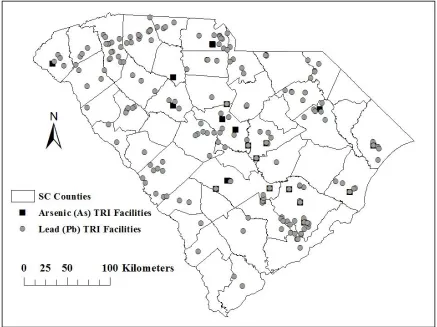
IGURESFigure 3.1 Locations of arsenic- (As) and lead- (Pb) emitting Environmental Protection Agency (EPA) Toxics Release Inventory (TRI) facilities reporting
releases in South Carolina from 1996-2011...53
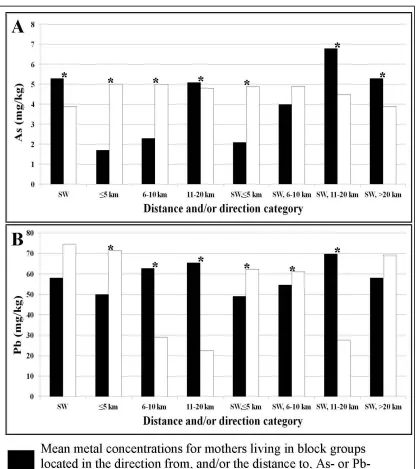
Figure 3.2A-B Comparisons of mean estimated soil A) arsenic (As) and B) lead (Pb) concentrations at maternal residences categorized by block group centroid distance and/or direction from As- or Pb-emitting Toxics Release Inventory
(TRI) facilities ...54
Figure 4.1 Schematic of data linkages, exclusions, and restrictions utilized to
finalize study population (n=8,108) ...86
Figure 5.1 South Carolina (SC) county names and locations ...108
Figure 5.2 Crude standardized ratios (SR) of observed to expected early preterm births by county and year (categorized into even intervals) for Medicaid mothers
in South Carolina (SC), 1996-2001 ...109
Figure 5.3 Crude standardized ratios (SR) of observed to expected all preterm births by county and year (categorized into even intervals) for Medicaid mothers
in South Carolina (SC), 1996-2001 ...110
Figure 5.4 Estimated risk ratios (RR) of early preterm birth by county and year (categorized into intervals from Figure 5.2) for Medicaid mothers in South Carolina (SC), 1996-2001, from Bayesian Poisson spatio-temporal model
adjusted for maternal race, pregnancy hypertensive disorders, and mother’s age ...111
Figure 5.5 Estimated risk ratios (RR) of all preterm births by county and year (categorized into intervals from Figure 5.3) for Medicaid mothers in South Carolina (SC), 1996-2001, from Bayesian Poisson spatio-temporal model
C
HAPTER1
INTRODUCTION
Statement of Problem
Preterm birth, defined as birth at <37 weeks of gestation, is a significant public
health problem in the United States (US), with a reported 2010 prevalence of 12%
(MOD, 2013). For that same year, the prevalence of preterm birth in South Carolina (SC)
was 14.2% (MOD, 2013). Early preterm birth (<34 weeks of gestation) accounted for
3.5% and 4.5% of births in the US and SC, respectively, in 2010 (MOD, 2013). Risk
factors for preterm birth are numerous, and can be grouped into three general categories.
Maternal factors can include age, race/ethnicity, SES, and amount of stress, as well as
smoking, alcohol use, and drug use during pregnancy (Chen et al., 2011; Chien et al.,
2011; Clausson et al., 1998; Di Renzo et al., 2011; Erickson et al., 2001; Meis et al.,
1998; Menon et al., 2011; Misra et al., 2010; Ofori et al., 2008; Savitz and Murnane,
2010; Sparks, 2009; Zeitlin et al., 2001). This category can also include medical
conditions of both the mother and fetus. Neighborhood factors relate to where the mother
lives, and can include neighborhood measures of SES, racial residential segregation,
crime, socioeconomic status (SES) and, neighborhood deprivation (Bell et al., 2006;
Mason et al., 2009; Messer et al., 2006a, 2006b; O’Campo et al., 2008). Environmental
factors are associated with characteristics of both the mother and where she lives, and
et al., 2009; Malmqvist et al., 2011); these environmental factors pose a potential
exposure risk to mothers, and contaminants with a long residence time in the environment
are of special concern. Preterm birth can be an indicator of numerous future negative
health outcomes throughout the life course (Kajantie et al., 2010; Keijzer-Veen et al.,
2010; Norman, 2010; Skilton et al., 2011), with neurological disorders most common
(Denouden et al., 1990; Fawke, 2007; Geldof et al., 2012; Jungmann, 2006; Wood et al.,
2005). Given these, decreasing the prevalence of preterm birth is one of the main
maternal, infant, and child health objectives for Healthy People 2020 (US DHHS, 2013).
Numerous studies have identified racial disparities in preterm birth, particularly
between non-Hispanic white and non-Hispanic black (further referred to as white and
black) mothers (Kramer et al., 2010b; Kramer and Hogue, 2009; Landrine and Corral,
2009; Menon et al., 2011; Paul et al., 2008; Schempf et al., 2011). This disparity persists
even after controlling for well-known risk factors for preterm birth, including SES,
maternal infection during pregnancy, and previous preterm birth. In SC alone, the 2010
prevalence of preterm birth for black mothers was 19%, almost 1.5 times the prevalence
for white mothers (12%; MOD, 2013). The racial disparity is even more pronounced for
early preterm birth, with prevalence of 2.6% for white mothers and of 5.3% for black
mothers in SC in 2010 (MOD, 2013). Racial disparities have also been observed for
neighborhood measures (Do, 2009; Farmer and Ferraro, 2005) and for environmental
concentrations of both arsenic (As) and lead (Pb; Aelion et al., 2012, 2013; Gee and
Payne-Sturges, 2004; Hicken et al., 2011). Unfortunately, most studies cannot fully
explain (through adjustment of additional measures/variables) the observed racial
When examining racial disparities in preterm birth, as well as exposures to As and
Pb in soils, both individual level and neighborhood level risk factors should be
considered, as individual risk factors alone do not fully explain racial disparities.
Therefore, it makes sense to utilize methodological techniques that can correctly assess
risk factors at multiple levels. Hierarchical linear modeling (HLM), has been employed
extensively with respect to birth outcomes (Auger et al., 2009; Bell et al., 2006; Culhane
et al., 2002; Diez Roux and Mair, 2010; Kramer et al., 2010a; Mason et al., 2009; Messer
et al., 2010, 2012; Nkansah-Amankra et al., 2010a, 2010b). However, no studies have
evaluated associations of both individual and neighborhood characteristics, along with
concentrations of metals in soils, and preterm birth outcomes using this technique.
Likewise, no studies have investigated racial disparities in the potential for exposure to
As and Pb in soils using this methodology.
While HLM can be used to describe disparities in terms of place, as this method
accounts for individuals living in the same “neighborhood”, this type of modeling does
not account for spatial relationships among the neighborhoods. Diez-Roux and Mair
(2010) suggested that more advanced spatial methods are necessary in neighborhood
research. As a result, numerous recent publications (Cech et al., 2007; English et al.,
2003; Gray et al., 2011; South et al., 2012; J. Tu et al., 2012; W. Tu et al., 2012; Wu et
al., 2004) have examined birth outcomes using spatial methods, though few have
Literature Review
Preterm birth: a significant public health problem
Preterm birth is an important public health problem in the US for a variety of
reasons. First and foremost, preterm birth is associated with a number of health effects
that may continue throughout life. In a review of preterm birth-associated morbidity and
mortality into adulthood, Saigal and Doyle (2008) noted that while children born at 32-36
weeks of gestation often have better outcomes than those born very preterm (at <32
weeks of gestation), negative neurological and behavioral effects are still extremely
common in later preterm birth children. Second, the prevalence of preterm birth in the US
far exceeds that of most industrialized nations. The 2010 prevalence rate (per 100 live
births) in the US was 12%, while the prevalence rates in Australia, Canada, the United
Kingdom, and France were all <8% (MOD Global Action Report, 2013). Third, the
medical cost of care for preterm infants in the US far exceeds that of full term infants.
Russell et al. (2007), using national hospitalization data from 2001, found that preterm
and low birth weight infants, who only accounted for 8% of all infant hospital deliveries,
transfers, and readmissions that year were responsible for almost half ($4.8 billion) of all
infant hospitalization costs. Average cost per stay was $14,500 more, and average length
of stay was 10 days longer for preterm/low birth weight infants as compared to infants
with no complications. Given these, preventing preterm birth is extremely important for
the health of individuals from infancy through adulthood.
About one third of preterm births are medically indicated; determination is based
on the type of complication present, and the risks and benefits to both the mother and
and due to premature labor and/or the premature rupture of membranes (PROM;
Goldenberg et al., 2008). Additionally, multiple biological pathways can play a role
(Romero et al., 2006), and it can be difficult to fully assess all of these pathways.
Therefore, it is important to identify risk factors that can be determined before or in early
pregnancy in order to prevent spontaneous preterm births.
The bulk of literature on preterm birth risk factors has focused on maternal or host
factors. Goldenberg et al. (2008) noted that preterm birth is now considered a
multi-mechanistic syndrome that can be linked to a variety of causes. One main cause is the
presence of infections, such as bacterial vaginosis or sexually transmitted infections (STI)
during pregnancy (Bastek et al., 2011; French et al., 2006; Hitti et al., 2007; Mann et al.,
2010; Petit et al., 2012; Randis, 2010). It is thought that these types of infections can
trigger immune responses, which can ultimately lead to spontaneous preterm birth.
Additionally, genetic susceptibility to preterm birth may occur through infection (Himes
and Simhan, 2008), which may also corroborate the increased risk for preterm birth if a
mother previously gave birth to a preterm infant, or if she was born preterm herself
(Hsieh et al., 2005; Varner and Esplin, 2005). Other specific maternal risk factors
associated with preterm birth include maternal demographics (e.g., race and SES;
Culhane and Goldenberg et al., 2011; Kramer et al., 2010b; Kramer and Hogue, 2009;
Landrine and Corral et al., 2009; Menon et al., 2011; Paul et al., 2008; Schempf et al.,
2011) and maternal behaviors such as smoking during pregnancy (Baba et al., 2012;
McCowan et al., 2009) alcohol use during pregnancy (Patra et al., 2011), illegal drug use
2008; Mikkelsen et al., 2008), and lack of leisure-time physical activity (Domingues et
al., 2009).
Social determinants of health and the racial disparity in preterm birth
Social determinants of health include any social conditions which may impact an
individual’s health and specific health outcomes (Braveman et al., 2011; Link and
Phelan, 1995). While most research focuses on proximate causes of disease, social
conditions are considered more distal or “upstream”. These social determinants of health
may indirectly impact an individual’s health and are considered fundamental causes of
disease (Braveman et al., 2011; Link and Phelan, 1995; Phelan et al., 2010).
Unfortunately, black and other minority individuals often live in neighborhoods of lower
SES due to persistent racial residential segregation or unfair housing practices, and
generally have less wealth, less access to health care, and a lower quality of education as
compared to white individuals (Adler and Rehkopf, 2008; Braveman, 2006). These social
determinants of health can inflict a disproportionate amount of stress on black
individuals, which may potentially explain some of the racial disparities that exists for
numerous health outcomes, including preterm birth. Both Culhane et al. (2002) and
Dolan (2010) found that black mothers reported experiencing more stress than white
mothers during pregnancy; additionally, stress itself is also a risk factor for preterm birth
(Kramer et al., 2011). This example illustrates the importance of social determinants of
health with respect to the racial disparity in preterm birth, and indicates that they may be
Neighborhood preterm birth risk factors and the role of place
To investigate the relationships between social health determinants and preterm
birth, as well as other outcomes of interest, neighborhood characteristics are often used as
proxy measures. The most common neighborhood unit in the preterm birth literature is
the US Census tract, mainly due to the availability of desirable variables at that level.
Neighborhood research has shown that direct US census measures such as income (Auger
et al., 2009; Diez Roux et al., 2001; Kaufman et al., 2003), education (Auger et al., 2011;
Diez Roux et al., 2001; Messer et al., 2008), employment (Grady, 2006; Messer et al.,
2008), proportion of rental units (Grady, 2006), and proportion of different
race/ethnicities (Diez Roux and Mair, 2010; Landrine and Corral, 2009) have been
associated with preterm birth. Researchers have also developed measures based on factor
analysis of numerous Census variables, such as the neighborhood deprivation index
(NDI; Mason et al., 2009; Messer et al., 2006a, 2006b), and have also incorporated
measures of racial residential segregation into models as proxy measures for social
determinants of health (Grady, 2006; Kramer et al., 2010b). While limitations are
associated with the use of geopolitical boundaries, the data associated with these
boundaries can still provide researchers with information on the neighborhood where an
individual lives. Therefore, the neighborhood, and its associated data, can encompass
social determinants of health, most of which are difficult to measure directly.
Environmental risk factors for preterm birth and racial disparities in environmental
exposures
One aspect of where an individual lives, which is often neglected in neighborhood
deprivation), is the presence of environmental contaminants, even though exposure to a
variety of these contaminants have been found to be associated with preterm birth. These
include compounds in air pollution (Malmqvist et al., 2011; Miranda et al., 2009; Wu et
al., 2004), pesticides (Miranda et al., 2009; Pathak et al., 2010; Stillerman et al., 2008),
organic compounds (Miranda et al., 2009; Stillerman et al., 2008), and metals like Pb
(Andrews et al., 1994; Baghurst et al., 1999; Bellinger et al., 1991; Jelliffe-Pawlowski et
al., 2006; Miranda et al., 2009; Torres-Sanchez et al., 1999; Wu et al., 2004) and As
(Myers et al., 2010). Environmental contaminants are, therefore, an important exposure
risk that is an undeniable part of one’s neighborhood. They are also intrinsically tied to
social determinants of health (Bircher and Kuruvilla, 2014; Prochaska et al., 2014).
Racial disparities in exposure to environmental contaminants have been
recognized for years, prompting a 1994 presidential executive order aimed at bringing
environmental justice to low income and minority populations (Brulle and Pellow, 2006).
However, despite legislation, disparities still persist. Lead (Pb), a common anthropogenic
metal found throughout the environment with a number of associated negative health
effects, has been found in the US in higher concentrations in black individuals as
compared to whites, (Hicken et al., 2011; Jones et al., 2009; Kaplowitz et al., 2010) and
in soils of locations where the majority proportion of the population is black (Aelion et
al., 2012, 2013; Campanella and Mielke, 2008). Arsenic (As), while generally found in
low concentrations in soils in the US, has still also been measured in higher
concentrations in black individuals (Caldwell et al., 2009), and in soils with a higher
proportion of black individuals in the population (Aelion et al., 2012). Exposure routes
soil, as well as ingestion of contaminated dust, soils, or water. Given the complex nature
of describing the risk of preterm birth when considering maternal/host risk factors,
neighborhood measures as proxies for social determinants of health, and exposure to
environmental contaminants, it is necessary to employ multilevel modeling techniques
that can take into account risk factors at these different levels.
Neighborhood modeling for preterm birth: place versus space
When considering neighborhoods in a statistical model, there are two potential
modeling options: taking place into account and/or space into account (Arcaya et al.,
2012). HLM generally takes only place into account, and is used in the majority of
preterm birth neighborhood research (Luke, 2004); it accounts for individuals residing
within the same geographic or geopolitical boundary the researchers choose. However,
HLM does not take into account the spatial relationship among neighborhood units unless
specific spatial parameters are included. Without these, one may be potentially excluding
information that could explain some of the variation observed in a model not taking space
into account. Therefore, spatial multilevel models provide an important extension to the
traditional HLM preterm birth neighborhood research methods, especially considering
preterm birth prevalence is known to vary spatially at the national, state, and county
levels (Miranda et al., 2009; South et al., 2012; Warren et al., 2012). Bayesian statistical
models can additionally offer flexibility in spatial modeling due to the inherent
dependence between observations (Bhat et al., 2011; Smith et al., 2010; Warren et al.,
Scope of Study
The overall objectives of this research were to examine if black mothers had
higher estimated soil As and Pb concentrations at their residences than white mothers,
examine if estimated concentrations of these metals in soils were associated with
increased odds of preterm birth, and investigate spatial and temporal relationships of
preterm birth, all within a high-risk Medicaid population of mothers (low income and
high minority composition) from SC. The first step was to investigate the racial disparity
in potential for exposure to As and Pb in soils using estimated soil concentrations of these
metals at maternal residences within a Medicaid population of mothers in SC, controlling
for individual and neighborhood SES measures, and anthropogenic sources of As and Pb.
The next step was to investigate associations between estimated soil As and Pb
concentrations (as a surrogate for maternal exposure), and preterm birth (divided into
early and late preterm birth categories) in this same population. Both of these steps
involved implementation of HLM using both individual level and US Census 2000 block
group level risk factors to assess associations between the main outcomes and exposures.
The third step was to compare early to all preterm birth (aggregated at the county level)
in all SC Medicaid mothers using temporal and/or spatial Bayesian models, and compare
spatio-temporal and temporal only models for these outcomes.
Specific Aims and Research Questions
Specific Aim 1: Investigate the existence of a racial disparity in estimated soil As and Pb
Research Question (RQ) 1.1: After controlling for both individual and
neighborhood SES measures, will black mothers have higher estimated
concentrations of As and Pb in soils at their maternal residence as compared to
white mothers?
RQ 1.2: After additionally controlling for known sources of As and Pb in soils in
SC (including distance, directionality, and outputs from industrial point sources,
age of homes, and road coverage), will black mothers have higher estimated As
and Pb in soils at their residences as compared to white mothers in the study
population?
RQ 1.3: If observed, will the racial disparity in estimated soil As or Pb
concentrations be modified by neighborhood deprivation at the US Census 2000
block group level in the study population?
Specific Aim 2: Examine associations between estimated soil As and Pb concentrations at
maternal residences and categorical early (<34 weeks of gestation) and late (34-36 weeks
of gestation) preterm births, as well as continuous weeks of gestation, in a Medicaid
population of mothers in SC.
RQ 2.1: After controlling for known individual and neighborhood level preterm
birth risk factors, are estimated soil As and Pb concentrations associated with
increased odds of early and/or late preterm births in the study population?
RQ 2.2: Is the association between either estimated soil As or Pb concentrations
and early and/or late preterm births modified by racial residential segregation
(proxied by the isolation index) at the US Census 2000 block group level in the
RQ 2.3: Is the association between either estimated soil As or Pb concentrations
and early and/or late preterm birth modified by neighborhood deprivation at the
US Census 2000 block group level in the study population?
Specific Aim 3: Examine early preterm births and all preterm birth in SC Medicaid
mothers using temporal and spatial Bayesian models at the county level.
RQ 3.1: Do early and/or all preterm births, aggregated at the county level, vary
spatially and/or temporally in SC Medicaid mothers by county, after adjusting for
aggregated and county level preterm birth risk factors?
RQ 3.2: After accounting for the spatial relationship between counties,
temporality, and preterm birth risk factors, does a racial disparity (as measured by
the proportion of black study population mothers within a county) exist with
respect to early and/or all preterm births in this study population?
RQ 3.3: Are risk factors for early and all preterm births in spatial/temporal models
different?
Significance of Study
Specific Aim 1
This study was one of the first to examine the existence of a racial disparity in
estimated soil As and Pb concentrations at maternal residences using HLM in a Medicaid
population of mothers, while controlling for known sources of As and Pb in the
environment and both individual and neighborhood measures of SES. This is also, to our
knowledge, one of the first studies to take into account both distance to and direction
disparity in estimated soil As and Pb concentrations after controlling for anthropogenic
sources, and both distance to and direction from these sources, this may indicate that
there are other reasons why black (or white) mothers live in areas with higher estimated
soil As and Pb concentrations. This may be related to proxy measures of social
determinants of health, such as neighborhood deprivation, or other neighborhood SES
measures. Therefore, investigating if the disparity in either estimated As or Pb soil
concentrations varies by neighborhood SES measures may elucidate the importance of
social determinants of health to racial disparities of environmental contaminants, and the
potential for exposure.
Specific Aim 2
While individual level maternal risk factors, individual level environmental
exposures, and neighborhood level risk factors for preterm birth have been investigated
independently in the literature, little is known about how environmental exposures to
metals in soils like As and Pb can impact odds of early and late preterm births after
adjusting for maternal and neighborhood risk factors. Additionally, Burris et al. (2011)
specifically recommended examining environmental exposures whenever investigating
birth outcomes. Modification of the association between both early and late preterm birth,
and estimated soil As or Pb concentrations by either racial residential segregation or
neighborhood deprivation, were also examined. These analyses may help further explain
how neighborhood measures can impact the association between environmental
contaminants and preterm birth, and may elucidate if preterm birth risks are different for
Specific Aim 3
This study was the first to examine early and all preterm births in SC Medicaid
mothers in spatial and temporal aggregate Bayesian models at the county level. Given
that national and regional spatial variability in preterm birth that has been reported
(Miranda et al., 2009), it makes sense to add spatial parameters to models at more local
levels, such as the county level. Bayesian analysis also offers advantages over frequentist
analysis, including the ability to apply prior belief about distributions of parameters that
are being estimated in the model. Differences in risk factors for early and all preterm
birth in the Medicaid study population were also examined; it was also investigated if a
racial disparity was present for early and/or all preterm births in spatial/temporal models,
and if spatio-temporal models of these outcomes are a better fit for the data than temporal
only models.
Study Outline
This dissertation is divided into six chapters. The first chapter provides the aims
of the research, including research questions, as well as the scope and significance of the
research. The second chapter provides the methodology for each aim. The third, fourth,
and fifth chapters contain Specific Aims 1, 2 and 3, respectively. The final chapter
contains a summary of the manuscript findings, public health implications, future
C
HAPTER2
METHODS
Study Background
The population and associated data sets used for this study are from a
retrospective cohort study initiated in 2006, which aimed to examine associations
between maternal exposure to residential soil metal concentrations and both intellectual
disability (ID) and developmental delay (DD) in children in a Medicaid population of
mother-child pairs. For the retrospective cohort study, information on mothers (and their
children) who were enrolled in Medicaid during pregnancy in South Carolina (SC) from
1996-2001 was obtained from both SC birth certificates and Medicaid billing records
(Kim et al., 2009, 2010; Liu et al., 2010; McDermott et al., 2011, 2014a, 2014b; Zhen et
al., 2008, 2009). Medicaid is a federal assistance program that is run by the state, and
which offers insurance coverage to medically verified pregnant women throughout
pregnancy and up to 60 days postpartum (SC DHHS, 2013). For current pregnancy
enrollment, women must be at or below 185% of the poverty level, which is equivalent to
an income of $3,631 per month for a family of four (SC DHHS, 2013). Presently,
approximately half of all women that give birth in SC are enrolled in Medicaid (SC
DHEC, 2013). Additionally, coverage can continue for children up to age 19 if the family
is at or below 200% of the poverty level (SC DHHS, 2014).
ID and DD diagnoses from service files (Liu et al., 2010; McDermott et al., 2011, 2014a,
2014b; Zhen et al., 2008, 2009). The maternal addresses for these mothers at each month
of pregnancy were geocoded using ArcGIS software (ESRI, 2013) by the SC Revenue
and Fiscal Affairs Office (SC RFA). Using these geocoded addresses, and the ID and DD
diagnoses, Bayesian local likelihood cluster analysis (Zhen et al., 2008) was used to
identify nine areas in SC that had a significantly higher ID and/or DD prevalence rate
than the state background rate (~3.5%) for all Medicaid mothers. Two areas were also
identified to serve as control locations (prevalence was not significantly higher than the
state background rate. All nine case locations contained a gradient of risk, however, and
details of all 11 areas, including ID/DD prevalence rates, area (in km2), and date sampled
for soils, are shown in Table 2.1.
A regular 120-node grid was laid out over each of the 11 sampling areas;
distances between grid nodes ranged from 0.5 km in the smaller sampling areas up to 3
km in the largest sampling area. Single grab surface soil samples (~25 g) were collected
as close to each grid node as possible (with sampling locations recorded using a GPS
device), and soil samples were analyzed for nine metals (including total As and Pb) using
inductively coupled plasma optical emission spectroscopy (ICP-OES) by an independent
environmental laboratory. Arsenic and Pb concentrations were reported in mg/kg dry
weight. The soil sampling protocol and analytical details have been described elsewhere,
(Aelion and Davis, 2007; Aelion et al., 2008, 2009a, 2009b, 2012, 2013, 2014; Davis et
al., 2009, 2014). Arsenic and Pb were chosen for this research because both have been
shown to be associated with preterm birth in other studies, and both had relatively few
concentration results were received from the lab, these concentrations (in conjunction
with their geocoded sampling location) were used to spatially interpolate (krige) soil
metal concentrations at each mother’s geocoded address during each month of pregnancy
by the SC RFA (Liu et al., 2010; McDermott et al., 2011). Kriging model details can be
found in Zhen et al. (2008, 2009). For this dissertation, only kriged soil As and Pb
concentrations at the mother’s residence at month 6 of pregnancy were used as a
surrogate for maternal exposure. This month was chosen as it maximized the size of the
study population, and also captured most mothers prior to the occurrence of a preterm
birth. The spatially interpolated soil As and Pb concentrations were chosen as surrogates
of exposure due to the retrospective nature of the study, lower analytical costs as
compared to biomarkers, the fact that soil and biological concentrations of these metals
have been found to be correlated in other studies (Díaz-Barriga et al., 1993; Hinwood et
al., 2004; Thornton et al., 1990), and because soil is considered a relevant route of
exposure to metals in soils (Calderón et al., 2003; Caussy et al., 2003).
Study Population
This Medicaid population is considered high-risk for preterm birth because of the
low income requirements for coverage, and due to its high proportion of minority
mothers. For Specific Aim 3, the study population consisted of all mothers who gave
birth while enrolled in Medicaid in SC from 1996-2001. For Specific Aims 1 and 2, the
study population consisted of a subset of the entire SC Medicaid population for this same
time period; specifically, those mothers that were living in one of the 11 sampling areas
These are the only mothers with estimated soil As and Pb concentrations at their
residence at month 6 of pregnancy. For all aims, mothers were excluded if information on
any of the following variables was missing or unknown: mother’s race, mother’s age,
baby birth weight, baby gender, and gestational age (~1.3% of mothers). Mothers were
also linked to the US Census 2000 block group in which their residence at month 6 of
pregnancy was located for Specific Aims 1 and 2, and their county of residence during
month 6 of pregnancy for Specific Aim 3; if this linkage was not possible, they were also
excluded from any analyses. The study population was also restricted to only black and
white mothers, and did not include mothers with babies that had improbable birth weights
(<500 g; n=39) or gestational ages (<21 weeks; n=15). All analyses were also restricted
to a mother’s first baby temporally, if she had more than one child while enrolled in
Medicaid in SC from 1996-2001. Additional sources of data included the SC Department
of Social Services (SC DSS), and the US Census Bureau (US Census 2000 Summary File
3; US Census, 2002).
Specific Aim 1
Variables
For Specific Aim 1, the main outcomes of interest were estimated As and Pb soil
concentrations at the mother’s geocoded address during month 6 of pregnancy (in
mg/kg). These outcomes were modeled as continuous concentrations, and were modeled
separately given that concentrations of these metals were highly correlated (r = 0.71,
p<0.0001). The main exposure of interest was maternal race, dichotomized and restricted
At the individual level, both maternal education (dichotomized to less than a high
school education and at or above a high school education) and receipt of food stamps
during pregnancy were included. A high school diploma or greater and no receipt of food
stamps during pregnancy served as the reference levels for these variables. At the
neighborhood (US Census 2000 block group) level, the neighborhood deprivation index
(NDI) as described by Messer et al., (2006b) was calculated. This index takes into
account a variety of US Census measures, including education, poverty, unemployment,
and income, at the neighborhood level of analysis, and higher values indicate more
deprivation. Given many of these variables are highly correlated, using the NDI should
avoid multicollinearity among US Census 2000 block group SES measures in the
analysis. The NDI was dichotomized to below, and at or above the median; values below
the median served as the reference level. To proxy proximal sources of As and Pb, two
different measures were chosen. Percent block group area covered by roads was
estimated based on total road length and average road width from a TIGER road file (US
Census, 2013). Home age (block group median year home built subtracted from the year
2000) was also calculated. Percent coverage of roads served as a proxy measure of
historic use of leaded gasoline, while home age proxied historic use of residential leaded
paint. Both were treated as continuous measures.
While both percent of coverage by roads and home age may proxy potential
sources of environmental Pb (and As to some extent), more distal anthropogenic sources
of both As and Pb in the environment were also examined. Using the Environmental
Protection Agency (EPA) Toxics Release Inventory (TRI), all facilities with emissions of
on-site releases of both As and Pb (in thousands of pounds) were calculated. Facility
locations were mapped in ArcMap (ESRI, 2013) and both the distance to, and
directionality of TRI facilities to US Census 2000 block group centroids in which
mothers resided was determined. For each distance and/or direction category of interest,
average annual releases from As- or Pb-emitting facilities within that category were
summed. Thus, how composite annual on-site releases of As and Pb impact estimated soil
As and Pb concentrations at the mother’s block group of residence during month 6 of
pregnancy categorized by distance only, direction only, and distance/direction was able to
be examined. Additional details on variables used and data sources are available in
Chapter 3.
Statistical methods
For all Specific Aim 1 analyses, SAS Version 9.4 was used (SAS Institute, 2010).
The first step was to assess all exposures for multicollinearity, using both outcomes.
After this analysis, it was determined that home age should not be included in any models
due to its collinearity with multiple exposures. For the continuous As and Pb outcomes,
PROC MIXED was used; maximum likelihood estimation was implemented, and the
intercept was allowed to vary by neighborhood (US Census 2000 block group). The crude
model contained only the main exposure of interest (mother’s race). Model 1 contained
other individual level risk factors/confounders. Model 2 further contained the NDI and
Model 3 further added percent roads. Model 4 contained an interaction term between
maternal race and the NDI. The best fit model was then identified using a backwards
elimination procedure, and variables were only retained if they remained significant
removal. To examine the impact of TRI average annual on-site releases on estimated soil
As and Pb concentrations, composite annual on-site As and Pb TRI categorized by
distance only, direction only, and distance/direction combined, were examined
individually in the best fit models previously identified for each outcome of interest.
Additional methodological details for Specific Aim 2 are available in Chapter 3.
Specific Aim 2
Variables
The main outcome of interest for Specific Aim 2 was preterm birth, which was
divided into two categories: births of <34 weeks of gestation (early preterm) and births
from 34-36 weeks of gestation (late preterm). Births at >36 weeks of gestation were
considered term births and used as the reference category. The continuous outcome of
weeks of gestation was also examined; both birth categories and weeks of gestation were
based on the clinical estimates of gestation on birth certificates. The main exposures of
interest were estimated soil As and Pb concentrations (in mg/kg), which were continuous
and modeled separately for the categorical and continuous birth outcomes. Other
examined risk factors for preterm birth were at both the individual and neighborhood
level, and determination of inclusion of them in models was based on observation of a
significant crude association with either soil As or Pb estimated concentrations. This was
to help prevent unnecessary adjustment. Individual level risk factors that were examined
included maternal race, maternal education, and receipt of food stamps during pregnancy
(the same as from Specific Aim 1), parity (number of previous children), baby gender
care began (dichotomized to starting within the first trimester, or starting after the first
trimester). Behaviors and conditions during pregnancy were also examined, including
smoking during pregnancy (yes or no), and presence of pregnancy-related hypertension
(included diagnoses of gestational hypertension, preeclampsia, and eclampsia). Infection
was also examined, and was dichotomized based on the presence or absence of any one
of the following conditions: bacterial urinary tract infection, genital herpes, gonorrhea,
chlamydia, trichomoniasis, chorioamnionitis, candidiasis, cervicitis, or pelvic
inflammatory disease. Data sources for the majority of maternal demographics,
conditions, and behaviors during pregnancy were from a combination of birth certificates
and Medicaid billing records.
Neighborhood level risk factors at the US Census 2000 block group level included
if the majority (>50%) of the block group population lived in urban areas (dichotomized),
and the continuous NDI that was calculated for Specific Aim 1. Racial residential
segregation was also examined, and the isolation index (Massey and Denton, 1988) was
chosen to proxy this social determinant of health. The isolation index was calculated
using the following formula:
xP*x = Σ[xi/X]*[xi/ti] (1)
where xi = total black population of the US Census 2000 block group, X = total black
population (total number) of the US Census 2000 tract, and ti = total population of the US
more isolation. Additional details on data sources and variables used (including reference
levels) are located in Chapter 4.
Statistical methods
For all Specific Aim 2 analyses, SAS Version 9.4 was used (SAS Institute, 2010).
The first step was to assess all exposures for multicollinearity, using both outcomes; no
variables were identified that posed a collinearity issue. For the categorical preterm birth
outcome, PROC GLIMMIX was used with a cumulative logit link function, a
multinomial distribution to account for the multiple birth categories, and Laplace’s
estimation. For the weeks of gestation outcome, PROC MIXED was used with maximum
likelihood estimation. For both outcomes, the intercept was allowed to vary by
neighborhood (block group). The crude models included only As or Pb, as these were the
main exposures of interest, and were modeled separately. Model 1 further included all
other individual level risk factors. Model 2 further included all neighborhood level risk
factors, and Model 3 additionally included interaction terms between As or Pb
concentrations and both racial residential segregation (isolation index) and the NDI. This
same method was followed for both outcomes of interest (categorical birth and
continuous weeks of gestation), and best fit models for both outcomes were determined
as for Specific Aim 1. Additional methodological details are available for Specific Aim 2
Specific Aim 3
Variables
For Specific Aim 3, the main outcome of interest was the estimated risk of
preterm birth at the SC county level for all mothers in SC giving birth while enrolled in
Medicaid from 1996-2001. Early preterm births were defined as <34 weeks (as in
Specific Aim 2) and all preterm births were defined as <37 weeks of gestation. This
analysis was done at the aggregate county level because, due to privacy concerns, access
to the actual geocoded address of mothers during month 6 of pregnancy was not allowed.
Without this information, the spatial relationship among individuals could not be
examined and, therefore, the spatial relationship among counties was instead assessed.
Additionally, the county level was chosen as birth counts at the US Census 2000 block
group and tract were too low to ensure valid results. Individual level risk factors were
aggregated to the county level, and included proportion of study population mothers that
were black, mean mother’s age, proportion of mothers with less than a high school
education, proportion of mothers beginning prenatal care after the first trimester,
proportion of mothers receiving food stamps, and proportions of mothers with other risk
factors for preterm birth (infection, pregnancy-associated hypertension, alcohol use
during pregnancy, tobacco use during pregnancy, and previous preterm birth). The mean
county NDI (as calculated from Specific Aim 1), and the county percentage of the
population that was urban were also included as neighborhood level risk factors. To
account for the spatial relationship between counties, the number of adjacent neighbors
row standardized weights (Bivand et al., 2015). Additional variable details are located in
Chapter 5.
Statistical methods
For Specific Aim 3, both R Version 3.1.1 (R Core Team, 2014) and WinBUGS 14
(Lunn et al., 2000) were used for all statistical analyses, and SAS Version 9.4 (SAS
Institute, 2010) was used to prepare the county level data set. The standardized ratios
(SR) for both early and all preterm births (observed to expected early or all preterm
births) by year were first calculated by county, and 95% confidence intervals for these
SRs were also calculated using the Poisson exact method. Crude spatial/temporal
Bayesian Poisson models were then examined for both birth outcomes to identify
significant risk factors (based on 95% credible interval not containing 1). Only significant
exposures for each outcome were included in adjusted spatial/temporal and temporal only
models; however, maternal race was included regardless of significance. The deviance
information criterion (DIC) values from crude and adjusted spatio-temporal and adjusted
temporal only models were compared to determine the best fit model for each birth
outcome. Additional methodological details, including prior distributions and initial
Table 2.1 Sampling area characteristics. Sampling Area Case or Controla Month/Year Sampled Approximate
Area (km2)
IDb
Prevalence
DDc
Prevalence
Area 1 Control 06/2006 490 0.023 0.16
Area 2 Case 12/2006 120 0.037 0.20
Area 3 Case 07/2007 100 0.017 0.51
Area 4 Case 11/2007 130 0.041 0.24
Area 5 Case 04/2008 60 0.052 0.21
Area 6 Case 07/2008 90 0.12 0.36
Area 27 Case 07/2010 100 0.081 0.21
Area 23 Case 12/2010 80 0.072 0.30
Area 22 Case 01/2011 110 0.052 0.17
Area 31 Case 06/2011 80 0.051 0.23
Area 99 Control 10/2011 100 0.037 0.17
a
Case: ID/DD prevalence rate significantly (p<0.05) higher than the state background
rate for all SC Medicaid mothers; Control: ID/DD prevalence rate not significantly
higher than state background rate
b
ID: intellectual disability
c
C
HAPTER3
ARSENIC AND LEAD IN SOILS: INVESTIGATING POTENTIAL SOURCES AND RACIAL
DISPARITIES AMONG PREGNANT WOMEN IN SOUTH CAROLINA
Abstract
Exposure to arsenic (As) and lead (Pb) has been associated with adverse health
outcomes, and high-risk populations can be disproportionately exposed to these metals in
soils.The objectives of this study were to examine whether racial disparities (between
non-Hispanic black and white mothers) were present in estimated soil As and Pb
concentrations at residences in South Carolina (SC) Medicaid mothers during pregnancy,
and determine if the disparities persisted after controlling for anthropogenic sources of
these metals including composite annual releases categorized by distance and direction of
the residence block group from industrial facilities. Arsenic and Pb soil concentrations
were kriged at maternal residences in 11 SC locations, and covariates included maternal
and Census block group level SES measures. Distance and direction from EPA Toxics
Release Inventory (TRI) facilities to block groups in which mothers resided were also
identified. Consistent racial disparities were observed for estimated residential soil As
and Pb concentrations, though the disparity was stronger for Pb (betas from adjusted
models 0.12 and 2.2 for As and Pb, respectively, all p<0.006). Road coverage in block
groups was more closely associated with estimated soil As and Pb concentrations than
non-Hispanic black mothers in this study population had elevated residential As and Pb soil
concentrations, after adjusting for SES, and that historic inputs from leaded gasoline
contributed more to current soil As and Pb concentrations than more recent industrial
releases.
Introduction
Exposure to metals in soils has the potential to impact human health, and metals
such as arsenic (As) and lead (Pb) are pervasive and long-lived in this environmental
medium (Aelion et al., 2014; Nriagu and Pacyna, 1988). While As occurs naturally in the
environment, elevated soil concentrations are often due to inputs from anthropogenic
sources, such as mining, smelting, and other industrial activities (Hinwood et al., 2004;
Luo et al., 2008). Arsenic can also leach into soils from chromated copper arsenate
(CCA) treated wood (Mielke et al., 2010; Shalat et al., 2006), which was routinely used
in residential areas until the early 2000s. In contrast, the presence of Pb in soils is most
often the result of anthropogenic inputs, especially in residential locations. Soil Pb
concentrations are strongly associated with the historic use of leaded gasoline
(Datko-Williams, 2014; Kayhanian, 2012) and lead-based paints (Mielke et al., 2008; Mielke and
Reagan, 1998), as well as industrial practices (Landsberger et al., 1999; Luo et al., 2009).
Arsenic or Pb exposure can elicit neurological (Ahamed et al., 2008; Bellinger,
2008; Llop et al., 2013; Mukherjee et al., 2005; Naujokas et al., 2013; Pabello and
Bolivar, 2005), and cardiovascular impacts (Balakumar and Kaur, 2009; Kim et al., 2008;
Moon et al., 2013; Poreba et al., 2011), as well as adverse reproductive outcomes
2006; Myers et al., 2010; Mukherjee et al., 2005; Torres-Sanchez et al., 1999; Yang et al.,
2003). Contaminated soils can become a component of household dust (Hinwood et al.,
2004; Petrosyan et al., 2004), and the contribution of soil to house dust can range from a
third up to 50% (Calabrese and Stanek, 1992; StellaLevinson, 2008). Since household
dust can then be inadvertently ingested or inhaled (Caussy et al., 2003), monitoring As
and Pb soil contamination, especially in residential areas, can be important for preventing
exposure in these settings.
High-risk populations, such as those of racial/ethnic minorities and lower
socioeconomic status (SES), are often disproportionately exposed to As and Pb in soils
(Aelion et al., 2012, 2013; Calderón et al., 2003; Calderon et al., 2004; Campanella and
Mielke, et al., 2008; Diawara et al., 2008; Mielke et al., 1999) and, therefore, they are
potentially more susceptible to any associated health impacts. This may result from living
in neighborhoods located on prior industrial sites, or in close proximity to industries
and/or high volume roadways (McClintock, 2012; Pellow, 2000). This highlights the
importance of examining neighborhood features when assessing high-risk populations
and their potential exposure to environmental contaminants like As and Pb.
This study used environmental sampling to examine the presence of a racial
disparity in estimated soil As and Pb concentrations at the residences of mothers during
pregnancy who gave birth while enrolled in the South Carolina (SC) Medicaid program
from 1996-2001 (Aelion et al., 2008, 2009a, 2009b, 2012, 2013, 2014; Davis et al., 2009,
2014; McDermott et al, 2011, 2014a, 2014b; Liu et al., 2010; Zhen et al., 2008, 2009),
after controlling for individual and neighborhood level SES measures. It was
Pb concentrations at their residence relative to non-Hispanic white mothers, after
controlling for individual SES measures. Since individual SES may not fully explain the
disparity in estimated soil As and Pb concentrations for the study population, it was also
hypothesized that neighborhood deprivation (a composite measure of US Census SES
indicators, with higher values indicating more deprivation) would be positively
associated with higher concentrations of both As and Pb, and that neighborhood
deprivation would modify the association between estimated soil As and Pb
concentrations and maternal race. It was hypothesized that non-Hispanic black mothers
living in neighborhoods with higher deprivation (as compared to non-Hispanic black
mothers in neighborhoods with lower deprivation) would have higher estimated soil As
and Pb concentrations in their neighborhoods. Given these assumptions, additional
analyses were performed to evaluate whether the racial disparity in estimated soil As and
Pb concentrations would be attenuated in neighborhoods with more deprivation.
Proximal and distal sources of As and Pb were also expected to impact
concentrations in residential soils; if racial/ethnic minorities live at locations in closer
proximity to more sources, then their residential soil metal concentrations may be higher.
Sources investigated included road coverage and median home age (proximal), as well as
composite annual releases of As and Pb from facilities (distal) in SC, categorized by both
distance to and direction from maternal residences. It was hypothesized that releases from
facilities would be positively associated with estimated soil As and Pb concentrations at
maternal residences in the path of prevailing winds (i.e., southwest of facilities releasing
As and Pb into the atmosphere in SC), and that the racial disparity in potential exposure
As and Pb in the analysis. It was also hypothesized that associations would be stronger
for releases from facilities located in closer proximity to maternal residences.
Associations between soil metal concentrations and distance from industrial facilities
have been observed (Aelion et al. 2008a; Bermudez et al., 2009; Douay et al., 2007), but,
to our knowledge, no studies have examined the relationship between soil metal
concentrations and industrial releases categorized by both the direction and distance from
industrial sources of metal emissions.
Methods
Study Design and Population
This study utilized data sets from a retrospective cohort study initiated in 2006
that examined associations between maternal exposure to residential soil metal
concentrations and both intellectual disability (ID) and developmental delay (DD) among
children in a Medicaid population of mothers giving births to singletons (Kim et al.,
2009, 2010; Liu et al., 2010; McDermott et al., 2011, 2014a, 2014b; Zhen et al., 2008,
2009). For the retrospective cohort study, information on mothers and children in SC who
were enrolled in Medicaid during pregnancy from 1996-2001 was obtained from SC birth
certificates, Medicaid billing records, and the SC Department of Social Services (SC
DSS). United States (US) Census 2000 block group level data for SC were also utilized.
Eleven areas in SC were selected for sampling based on prevalence of ID/DD in
SC Medicaid mothers for the time period of interest, and nine of these areas had an
elevated prevalence that was significantly higher than then statewide background
using Bayesian local-likelihood cluster analysis of geocoded maternal residences during
month of pregnancy (Zhen et al., 2008, 2009), ranged in size from 60-490 km2 (mean of
130 km2) and were sampled for soils from 2006 to 2011. The exact geographic locations
of the maternal addresses and sampling areas are undisclosed to protect participant
confidentiality.
In each of the 11 areas, a regular 120-node grid was laid out and single grab
surface soil samples of approximately 25 g were collected as close to each grid node as
possible; the geographic location of each sample was also obtained using a GPS device.
Soil sample locations were selected to maximize the probability of collecting undisturbed
native soil with no visible contamination or previous development. Samples were
analyzed for total As and Pb using inductively coupled plasma optical emission
spectroscopy (ICP-OES) by an independent environmental laboratory. Both the soil
sampling protocol and metals analyses procedures have been previously described
(Aelion et al., 2008, 2009a, 2009b, 2012, 2013, 2014; Davis et al., 2009, 2014);
concentrations were reported in mg/kg dry weight. These measured soil metal
concentrations (and their geocoded sampling locations) were then used to spatially
interpolate soil metal concentrations at each mother’s geocoded address by month of
pregnancy using the ordinary kriging method; kriging methodological details are
described in detail in Zhen et al., (2008, 2009).
Mothers were excluded if they were missing maternal age, maternal race, baby
birth weight, baby gender and gestational age (~1.3% of mothers). Mothers were also
excluded if their infant had an improbable clinical estimates of gestation (<21 weeks,
black and non-Hispanic white (henceforth referred to as black and white) mothers, to
mothers whose residence at month 6 of pregnancy was spatially linked with the US
Census 2000 block group in which the residence was located, and to only the first birth of
a mother (temporally) if she gave birth to more than one child during the study period.
Additionally, maternal education was imputed for mothers missing this data (14%) using
the maximum likelihood method (Alison, 2012).
Variables
Estimated soil As and Pb concentrations at the mother’s address at month 6 of
pregnancy were used as the main outcome variables of interest for characterization of
potential for environmental exposure to these metals. Maternal race was the main
independent variable, with white mothers set as the reference category. Individual and
neighborhood level measures of SES were included as covariates in the statistical models.
At the individual level, maternal education was dichotomized to less than a high school
education or a high school diploma or above (reference category) and utilization of food
stamps during pregnancy (from SC DSS records) was also examined, with the reference
category being no food stamp receipt during pregnancy.
The neighborhood deprivation index (NDI) was derived from US Census 2000
block group data as a contextual measure of SES (Messer et al., 2006b). A principal
component analysis (PCA) was performed on 20 US Census 2000 variables identified at
the block group level. After identifying 10 variables with factor loadings greater than or
equal to the median (proportion of the population with less than a high school education,
proportion of population unemployed, proportion of households renter-occupied,