ScholarWorks @ Georgia State University
Business Administration Dissertations Programs in Business Administration
5-5-2019
Job Aid or Job Slayed? The Perceived Impact of
Artificial Intelligence on Medical and Legal Work
Jessica Louise HelstenGeorgia State University
Follow this and additional works at:https://scholarworks.gsu.edu/bus_admin_diss
This Dissertation is brought to you for free and open access by the Programs in Business Administration at ScholarWorks @ Georgia State University. It has been accepted for inclusion in Business Administration Dissertations by an authorized administrator of ScholarWorks @ Georgia State University. For more information, please [email protected].
Recommended Citation
Helsten, Jessica Louise, "Job Aid or Job Slayed? The Perceived Impact of Artificial Intelligence on Medical and Legal Work." Dissertation, Georgia State University, 2019.
PERMISSION TO BORROW
In presenting this dissertation as a partial fulfillment of the requirements for an advanced degree from Georgia State University, I agree that the Library of the University shall make it available for inspection and circulation in accordance with its regulations governing materials of this type. I agree that permission to quote from, copy from, or publish this dissertation may be granted by the author or, in her absence, the professor under whose direction it was written or, in his absence, by the Dean of the Robinson College of Business. Such quoting, copying, or
publishing must be solely for scholarly purposes and must not involve potential financial gain. It is understood that any copying from or publication of this dissertation that involves potential gain will not be allowed without written permission of the author.
NOTICE TO BORROWERS
All dissertations deposited in the Georgia State University Library must be used only in accordance with the stipulations prescribed by the author in the preceding statement.
The author of this dissertation is: Jessica L. Helsten
J. Mack Robinson College of Business Georgia State University
Atlanta, GA 30302-4015
The director of this dissertation is: Dr. Nathan Bennett
J. Mack Robinson College of Business Georgia State University
Job Aid or Job Slayed? The Perceived Impact of Artificial Intelligence on Medical and Legal
Work
by
Jessica L. Helsten
A Dissertation Submitted in Partial Fulfillment of the Requirements for the Degree
Of
Executive Doctorate in Business
In the Robinson College of Business
Of
Georgia State University
GEORGIA STATE UNIVERSITY
ROBINSON COLLEGE OF BUSINESS
Copyright by Jessica L. Helsten
ACCEPTANCE
This dissertation was prepared under the direction of the JESSICA L. HELSTEN
Dissertation Committee. It has been approved and accepted by all members of that committee,
and it has been accepted in partial fulfillment of the requirements for the degree of Doctor of
Philosophy in Business Administration in the J. Mack Robinson College of Business of Georgia
State University.
Richard Phillips, Dean
DISSERTATION COMMITTEE
Dr. Nathan Bennett (Chair)
Dr. Charlotte Alexander
ACKNOWLEDGEMENTS
To my family, friends, colleagues, classmates, and professors who cheered me on and
especially to Carrington and Greg who supported and encouraged me along this journey and who
TABLE OF CONTENTS
ACKNOWLEDGEMENTS ... iv
LIST OF TABLES ... vi
LIST OF FIGURES ... vii
I CHAPTER I: INTRODUCTION ... 1
II CHAPTER II: LITERATURE REVIEW ... 7
II.1 Man vs. Machine ... 7
II.2 The Knowledge Worker in Danger ... 8
II.3 Enter the Supercomputer ... 9
II.4 Artificial Intelligence and Projected Job Displacement ... 12
II.5 Previous Literature on Perceptions of Technology and Knowledge Workers ... 14
II.6 Summary ... 15
III CHAPTER III: MODEL DEVELOPMENT ... 17
IV CHAPTER IV: METHOD ... 28
IV.1 Dependent Variables ... 32
IV.2 Independent Variable ... 32
IV.3 Moderators ... 33
IV.4 Control Variables ... 34
V CHAPTER V: RESULTS ... 36
VI CHAPTER VI: DISCUSSION AND CONCLUSION ... 58
APPENDIX ... 69
Appendix A: Survey Instrument ... 69
Appendix B: Full Correlations Table... 76
REFERENCES ... 77
LIST OF TABLES
Table 1: Variable summary ... 26
Table 2: Demographic characteristics for the total sample (N = 150) ... 30
Table 3: Description of demographic variables ... 35
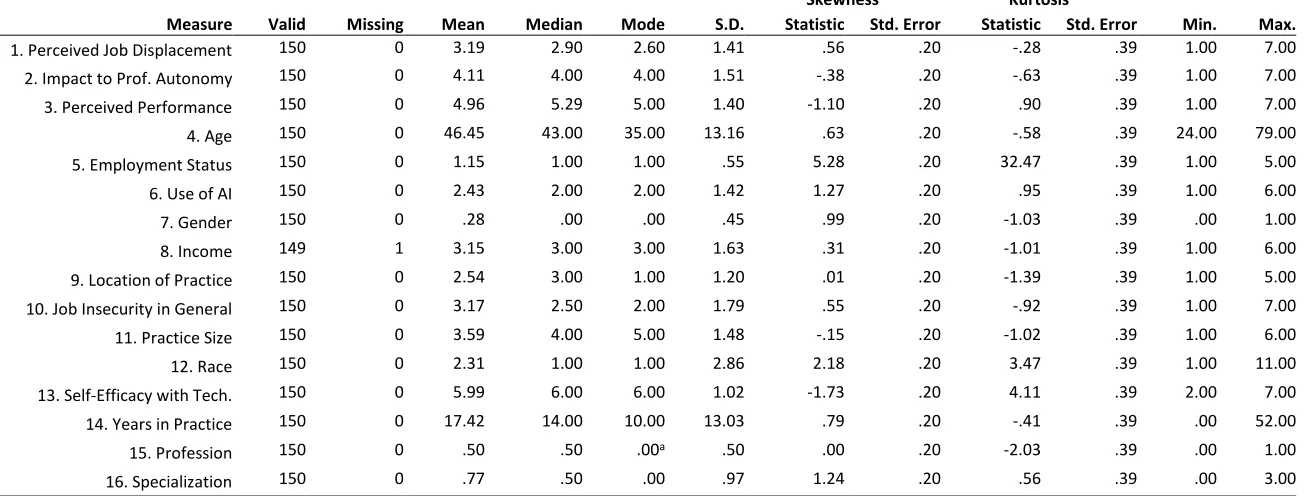
Table 4: Descriptive statistics for the target sample (N = 150) ... 38
Table 5: Factor loadings of items (N = 150) ... 43
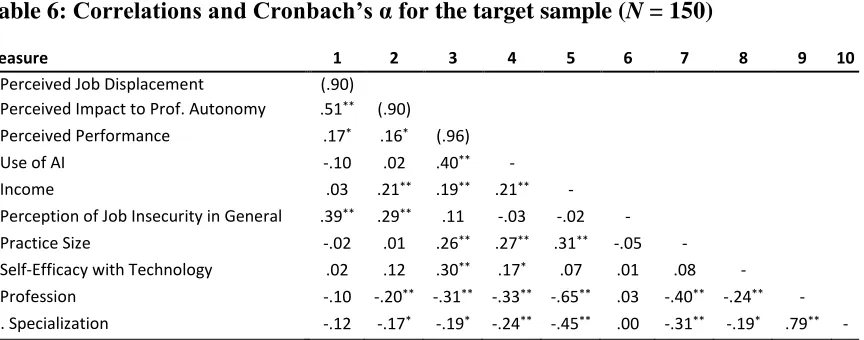
Table 6: Correlations and Cronbach’s α for the target sample (N = 150) ... 44
Table 7: Summary of hierarchical regression analysis for perceived job displacement associated with AI (N = 150) ... 51
Table 8: Summary of hierarchical regression analysis for perceived impact to professional autonomy (N = 150) ... 53
Table 9: Summary of hierarchical regression analysis, split by profession (N = 150) ... 55
LIST OF FIGURES
Figure 1: GDP per capita and median household income growth ... 3 Figure 2: Employment affected by computerization ... 13 Figure 3: Research model ... 23 Figure 4: Likelihood of recommending radiology as a specialization with a future (N = 75)
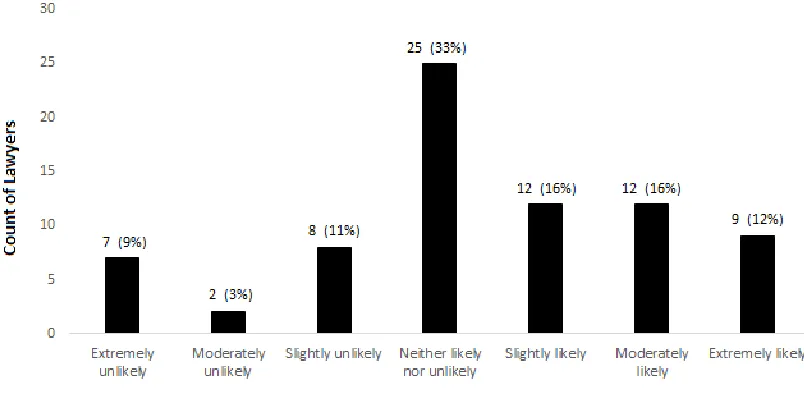
... 45 Figure 5: Likelihood of recommending contract law, transactional law, or mergers and
acquisitions law as a specialization with a future (N = 75) ... 46 Figure 6: Impact of AI on radiology jobs (N = 75) ... 47 Figure 7: Impact of AI on contract law, transactional law, or mergers and acquisitions law
ABSTRACT
Job Aid or Job Slayed? The Perceived Impact of Artificial Intelligence on Medical and Legal
Work
by
Jessica L. Helsten
May 2019
Chair: Nathan Bennett
Major Academic Unit: Executive Doctorate in Business
Advances in technology are traditionally seen as beneficial to society. According to the
MIT Technology Review article “How Technology is Destroying Jobs,” this was the case until
the year 2000 (Rotman, 2013). Previous research (e.g.,Walter & Lopez, 2008) has shown a
relationship between perceived threat to professional autonomy and intention to use technology
among physicians. This study expands the scope of highly-skilled, well-educated professionals to
consider the perceptions of artificial intelligence held by physicians and lawyers and the
relationship these perceptions have with perceived job displacement and perceived impact to
professional autonomy. The purpose of this quantitative research study was to make an empirical
contribution to the body of knowledge studying job displacement and professional autonomy by
presenting the findings of survey data from 75 physicians specializing in radiology and 75
lawyers specializing in contract, transactional, and mergers and acquisitions law in the United
States. Survey results suggest that physicians, for the most part, perceive artificial intelligence as
a job aid; whereas, the majority of lawyers perceive that artificial intelligence will have a neutral
impact on their jobs. Practical implications of the survey results are to provide education for
e-discovery, fraud detection, and due diligence performance. For physicians, who are more
comfortable with the idea of using artificial intelligence in their work, more applications for
human plus machine partnerships should be further explored.
INDEX WORDS: Artificial intelligence, Physicians, Lawyers, Job displacement, Professional
I CHAPTER I: INTRODUCTION
Economists and others have debated how technological progress since the Industrial
Revolution of the 1700s has affected workers (Mokyr, Vickers, & Ziebarth, 2015). In his article
“How Technology is Destroying Jobs,” Rotman (2013) argues that technological innovations
have been replacing jobs since the Industrial Revolution. In 1900, nearly half (41 percent) of
American workers and 22 million animals were engaged in labor intensive agricultural work on
rural farms (Dimitri, Effland, & Conklin, 2005). Due to technological innovation—the
mechanization of farms and the use of tractors in place of work animals—the percentage of
Americans working in agriculture dropped to only 2 percent by the year 2000 (Dimitri et al.,
2005). Technological innovations during the Industrial Revolution displaced some workers such
as the artisan weaver with his hand loom or the agricultural worker on the rural farm but
introduced new jobs in the manufacturing sector such as the factory worker in a textile mill—that
is, the growth of the manufacturing sector drove the creation of new jobs and increased
employment, absorbing workers displaced by textile and farm mechanization (Ford, 2015).
Similar to what happened to the agricultural sector and partly due to increasing
automation, the proportion of Americans employed in manufacturing has dropped from 30
percent in the “Golden Age of Capitalism” (1945 to the mid-1970s) to around 8 percent today
(Holzer, 2017; Rotman, 2013). Fortunately, around this same postwar period, the service sector
burgeoned, providing manufacturing workers, displaced by factory mechanization, opportunities
for employment (Ford, 2015). According to Fuchs (1965), the US was the first country to
become a “service economy” with more than fifty percent of the working populace not
(1965), is comprised of “trade, finance, insurance, and real estate; personal, professional,
business, and repair services; and general government” (p.344).
Four years later in 1969, Drucker invented the term “knowledge worker” to define these
service economy workers as people who apply “productive work ideas, concepts and information
rather than manual skill or brawn” (Reinhardt, Schmidt, Sloep, & Drachsler, 2011, p. 158).
Knowledge workers are highly educated professionals who use their intelligence and creative
thinking abilities to solve problems. They must constantly stay abreast of the latest information
and techniques in their respective fields (Reinhardt et al., 2011). Hagel III, Brown, and Davison
(2010) describe traditional knowledge workers as “engineers, scientists, architects, educators,
researchers, coders, [and] artists” (p. 1).
Since the year 2000, there has been a widening gap between job growth and productivity
in the US (Rotman, 2013). Rotman (2013), using real median household income as a proxy for
job growth and real gross domestic product (GDP) per capita as a proxy for productivity, defines
the gap between job growth and productivity as the gap between these two measures. The graph
below from the Federal Reserve Bank of St. Louis illustrates the trend of GDP per capita and
median household income growth, adjusted for inflation, for the years 1993 to 2016. The trend
lines show that in the year 2000, the gap between GDP and median income was 7.1. That gap
had increased to 30.4 by the year 2014 and reversed course slightly to 25.7 by 2016. Median
income decreased slightly between 2000 and 2014 as GDP increased, showing greater income
inequality, i.e., increases in productivity were not translating to increases in income for
Figure 1: GDP per capita and median household income growth
Source: Federal Reserve Bank of St. Louis1
In the US, knowledge workers with a professional degree have the lowest unemployment
(1.6 percent) and the highest mean usual weekly earnings ($1,745) 2. A June 2018 article in The
Atlantic refers to physicians, lawyers, . . . and assorted other professionals as the “New American
Aristocracy,” “the 9.9 Percent,” with a net worth of between $1.2 million and $10 million
(Stewart, 2018, p. 1). Holders of professional degrees, such as physicians and lawyers, earn the
most over their work-life, an average of $4.4 million (Longley, 2017). Physicians and lawyers
enjoy double-digit returns on education investment over their working lifetimes, 16-18 percent
and 23 percent, respectively (Weeks & Wallace, 2002).
In 1955, Dartmouth math professor John McCarthy coined the term artificial intelligence
(AI) (Brynjolfsson & McAfee, 2017). Today, an assortment of “applications and techniques fall
under the broad umbrella of AI, ranging from neural networks to speech/pattern recognition to
genetic algorithms to deep learning” (Jarrahi, 2018, p. 578). These applications and techniques
represent a substantial opportunity in business not seen since the advent of smartphones and
tablet computers (McCracken, 2017). Unlike traditional software that must be physically
reprogrammed to adjust to the changing requirements of the user community, artificial
intelligence technology is able to learn and adapt without reprogramming (Brynjolfsson &
McAfee, 2017). “AI can drink from the firehose” (Hall, 2016, p. 24) digesting and analyzing vast
amounts of both structured and unstructured data to form hypotheses with accompanying
confidence levels (Arruda, 2017; T. A. Patel et al., 2017; Tsang et al., 2017). As an example,
IBM’s Watson Health is an AI clinical decision support system with the advertised capability of
using patient information to assist physicians in diagnosing disease and recommending treatment
(Rotman, 2013; Tsang et al., 2017). As an example of the application of IBM Watson Health,
“oncologists at Memorial Sloan-Kettering Cancer Center in New York are using IBM’s Watson
supercomputer to provide chronic care and cancer treatment diagnostics by accessing knowledge
from 600,000 medical evidence reports, two million pages of text from 42 medical journals, and
1.5 million patient records and clinical trials in the field of oncology” (MGI, 2013, p. 45).
The job tasks available to human workers have changed since the Industrial Revolution
and the debut of automation. Up to now, the impact has primarily affected manual laborers;
however, in the 21st century, technology has developed to a level of sophistication where it
increasingly mimics the cognitive capabilities of humans. In the past, education was a means for
workers to acquire new skills, stemming the destructive effects of technological substitution for
human labor (Frey & Osborne, 2017).
Due to their ability to use their intelligence and creative thinking abilities to solve
problems, well-educated professionals have been relatively immune to the onslaught of job
automation. The combination of “information inflation” (big data); low-cost, high-power
computing; and recent advances in artificial intelligence show this is changing (Barry, 2013).
research, analyze, write, and argue—not unlike an academic, a journalist, or an accountant. So
when software comes along that's smarter or more efficient at those tasks than a human with a
JD, it spells trouble” (p. 1). Along the same lines, Ford (2015) predicts that more education and
training will not necessarily ensure effective protection against job automation in the coming
years, unlike in the past..
Nearly 40 years ago, Schrank (1981, p. 133) asked the question, “What will happen to
blue-collar workers when robots take over their jobs? Will there be nothing left but some old
clothes on a peg and a few mementos kept around in museums of the industrial era?” In the 21st
century, with the latest advances in artificial intelligence threatening the job tasks of knowledge
workers, what will happen to white-collar workers? What sector will arise to absorb those
workers displaced by ubiquitous artificial intelligence? Ford (2015) warns that a significant
number of college-educated, white-collar workers will find that their jobs are in the crosshairs as
predictive algorithms and automation are swiftly advancing in capability. Knowledge workers,
whose jobs were mostly unaffected by the first and second Industrial Revolutions, may find their
jobs changing substantially, if not entirely eliminated by recent advances in automation and
artificial intelligence.
With this knowledge of the changing job landscape for highly-educated knowledge
workers, the purpose of this study is to conduct an examination into the attitudes of skilled
professionals toward artificial intelligence with regard to job displacement and professional
autonomy. To that aim, the objective of this research is to study the perceived impact of artificial intelligence on job tasks for knowledge workers such as physicians3 and lawyers. This is an
3 The term physician is used to denote medical doctor throughout the paper to distinguish from lawyers who may also be doctors, that is, Doctor of
important question because physicians and lawyers make huge investments in their education
and training and expect lucrative returns on those investments.
To control for specialization, only radiologists and lawyers specializing in contract,
transactional, and mergers and acquisitions law were studied since these specializations are most
impacted by current capabilities of AI technology that is available on the market. As evidence of
this claim, Enlitic, a startup company committed to “revolutionizing diagnostic healthcare,” has
developed an AI system that analyzes medical images such as CT scans and x-rays for malignant
tumors with 50 percent more accuracy in a comparison test against three human radiologists (The
Economist, 2016). Expert advice doling supercomputers are an example, thanks to AI, of how
jobs that are now being performed by highly trained white-collar workers can be automated. “[A]
highly trained and specialized radiologist may now be in greater danger of being replaced by a
machine than his own executive assistant” (The Economist, 2016). AI began encroaching on the
domain of legal professionals when in 2010, “machine learning [a subset of AI] reached a point
where software could, with guidance from senior lawyers, effectively take over the
time-intensive task of legal discovery, in which one party in a lawsuit combs through its documents to
determine what it must show to the other side before trial. This is a job [task] that junior lawyers,
paralegals, or—increasingly—less expensive contract lawyers had traditionally done . . .”
(Byrnes, 2015, p. 64).
Will a medical or law degree be worth the time and financial investment if AI can
perform the same job tasks more quickly and cheaply? What specializations will be worth
pursuing in the medical and legal fields that will value both human and machine contribution? In
the next chapter follows a review of previous literature on technological advancements and the
II CHAPTER II: LITERATURE REVIEW
The aim of the literature review that follows is to give context for this study by reviewing
the impact of past technological innovations and exploring the convergence of modern
technological capabilities with highly-skilled human professional job tasks leading to the
question of how knowledge workers perceive the impact of AI on their job tasks. The review that
follows is delineated into five sections: “man vs. machine,” “the knowledge worker in danger,”
“enter the supercomputer,” “artificial intelligence and projected job displacement,” and
“previous literature on perception of technology and knowledge workers.” The first section, man
vs. machine, discusses the advent of machines and automation and the impact this has had on job
tasks performed by humans over the past 300 years. The second section, the knowledge worker
in danger, discusses the attributes of knowledge workers and the latest advances in technology
that could potentially replace knowledge worker job tasks. The third section, enter the
supercomputer, discusses artificial intelligence offerings in the medical and legal spheres. The
fourth section, artificial intelligence and projected job displacement, discusses two studies that
looked at the job tasks of physicians and lawyers and compared them to current technologies to
calculate what percentage of job tasks could be automated. The final section, previous literature
on perceptions of technology and knowledge workers, presents findings from a qualitative study
that analyzed fingerprints technicians’ perceptions of the automation of their job tasks, as well
as, the transformational impact of automation on pilots.
II.1 Man vs. Machine
Humans have been leveraging their physical might and complex mental capabilities for
millennia to perform tasks necessary to their survival and prosperity. The Industrial Revolution
has been dubbed the First Machine Age by Brynjolfsson and McAfee (2014, pp. 7-8); a time
when “[m]achines take away the dirty and dangerous—industrial equipment from looms to the
cotton gin, relieves humans of onerous manual labor” (Davenport & Kirby, 2015, p. 64). Human
brawn or muscle power was steadily replaced with machine power (Brynjolfsson & McAfee,
2014).
Davenport and Kirby (2015) delineate three automation eras—the first of which is the
Industrial Revolution. The second era, the 20th century, is described as the era in which
“[m]achines take away the dull—automated interfaces, from airline kiosks to call centers, relieve
humans of routine service transactions and clerical chores” (Davenport & Kirby, 2015, p. 64).
The third era, the 21st century, is described as the era in which “[m]achines take away
decisions—intelligent systems, from airfare pricing to IBM’s Watson, make better choices than
humans, reliably and fast” (Davenport & Kirby, 2015, p. 64). Brynjolfsson and McAfee (2014)
call this third era the Second Machine Age, marked by the advent of computers and other
advanced technologies capable of replacing human mental power.
II.2 The Knowledge Worker in Danger
Knowledge workers are professionals that “think for a living” (Megill, 2013). The bulk of
knowledge worker job tasks have required skills that, up until recently, a computer could not
match. These abstract tasks are characteristic of professional, managerial, and technical jobs and
require highly-educated and analytical workers capable of inductive reasoning, skillful
communication, and the ability to achieve mastery of a domain (Autor, 2015).
Job tasks performed by knowledge workers were protected by Polanyi’s Paradox, i.e., if a
human cannot describe the steps to break down a task in such a way that can be programmed,
overcome Polanyi’s Paradox and, in turn, are replacing job tasks that heretofore could only be
done by knowledge workers. The extraordinary progress in artificial intelligence over the past
few decades is often attributed to Moore’s Law (Bruun & Duka, 2018). Moore’s Law was named
for Gordon Moore who in 1965 observed that computer processing capability doubles every 18
months. “[I]f we set the starting point as the 1960s, 32 doublings each at an interval of 18
months, brings us to the start of the twenty-first century . . . after which point exponential
growth yields explosive results” (Bruun & Duka, 2018, p. 2). Current artificial intelligence
technology is capable of consuming vast amounts of data and making connections between data
points; it can be trained to understand, form hypotheses, and learn from experience, like humans
(MGI, 2013). “[H]ighly trained analysts and other so-called knowledge workers are seeing their
work circumscribed by decision-support systems that turn the making of judgments into a
data-processing routine” (Carr, 2014, p. 17).
II.3 Enter the Supercomputer
International Business Machines (IBM) Watson is arguably the most high-profile AI on
the market today. IBM Watson is an advanced supercomputer marrying AI and complex
analytical software to perform as a “question answering” machine. In 2011 on the popular game
show Jeopardy!, IBM Watson competed against “two of the best knowledge workers” in the
game show industry (Brynjolfsson & McAfee, 2014, p. 16) and won. In the years following that
victorious moment, the application of IBM Watson has expanded into several industries
including the medical and legal fields with Watson Health and ROSS Intelligence, respectively.
IBM’s vision for Watson Health, is to take the enormous amounts of personal and academic
health data that is generated every single day and, using IBM Watson, uncover insights that will
being used for job tasks traditionally performed by human lawyers e.g., legal research, searching
legislation and case law to answer questions (Mills, 2016; Remus & Levy, 2015; Sobowale,
2016). ROSS Intelligence usesthe natural language processing and cognitive computing
capabilities of IBM Watson to forecast the result of court cases, assess legal precedents, and
suggest materials for case preparation (Nelson & Simek, 2016).
Interest in the application of AI in the medical field dates to the early 1970s when
researchers turned to the technology to examine challenging problems in medicine and biology
(V. L. Patel et al., 2009). From the early 1970s to mid-1980s, expert systems, an approach to AI
that uses the knowledge of domain experts to create computer programs specific to a field or
industry, were used in bank loan screening, medical, and sales applications. By the mid-1990s,
however, expert systems fell out of favor as these systems came to be perceived as slow and
clumsy (Foote, 2016). In 1991, the Institute of Medicine set the goal that computers would be
used by all physicians in their practices by the year 2000 to improve patient care (Evans, 2016).
By 2001, 18 percent of physicians were using electronic health record (EHR) systems (BHR,
2015). From the 1970s to today, considerable progress has been made as computing speed and
memory has increased exponentially and as the use of EHRs has expanded (Bennett & Hauser,
2013).
An exhaustive list of all of the AI clinical decision support systems (CDSS) on the
market today is beyond the scope of this study; however, some examples are as follows: Enlitic
is a startup company that develops CDSS products that use deep learning, a subset of machine
learning, to help diagnose cancer by processing medical data, images, patient histories and EHRs
(Brynjolfsson & McAfee, 2017). MOTTE is an AI CDSS developed by researchers at Houston’s
employed to examine mammography and pathology reports from 543 patients with invasive
breast cancer. The AI was able to detect breast cancer subtypes with 99 percent accuracy, 30
times faster than it would take a clinician to manually review the data (T. A. Patel et al., 2017).
In the legal profession, AI is being used in contract review and creation, document search
for information relevant to litigation (e-discovery), fraud detection, and due diligence
performance (Mangan, 2017). Lawgeex is a software platform which uses machine learning to
compare an uploaded new contract to its database of similar contracts, learning as it performs the
review (Mangan, 2017). The software provides a report, noting where the contract deviates from
similar contracts (Abramowitz, 2016). LawGeex (2018) conducted a study comparing the
performance of 20 US lawyers experienced in contract review and corporate law against that of
the LawGeex AI in recognizing issues in five non-disclosure agreements (NDAs). The results of
the study were that the AI had a 6 percent error rate versus a 15 percent error rate for the human
lawyers. RAVN ACE sifts through documents to identify and extract items of interest in
minutes—a task it would take a human days to complete (Mangan, 2017). The accuracy of
RAVN ACE was tested by using it to analyze a deal that had already been completed. RAVN
ACE failed to identify some of the items in the contracts that were identified by the human
contract reviewers; conversely, it identified some items that had previously been missed
(Mangan, 2017). UK investigators from the Serious Fraud Office used RAVN ACE to review
documents pertaining to a bribery and corruption case involving Rolls-Royce. It took just 50
days for RAVN ACE to review 30 million documents (Ambrogi, 2017). The software COIN
(Contract Intelligence) was used by JP Morgan for document review. COIN took seconds to
From the above examples, it is clear that AI has a foothold in both medical and legal
professions. It is already changing practice and getting better every year. Who knows how far it
can go? Will it replace part, or all of the work humans currently do today? The next section tells
us what economists and business consultants have to say on the matter.
II.4 Artificial Intelligence and Projected Job Displacement
Much of the current literature by economists and business consultants on artificial
intelligence and automation focuses on job elimination by 21st century technologies. According
to the US Council of Economic Advisers’ February 2016 annual report, an estimated 4 percent of
jobs that pay more than $40 an hour could be automated. Frey and Osborne (2017) studied 702
occupations from the US Department of Labor’s O*NET and listed the probability of
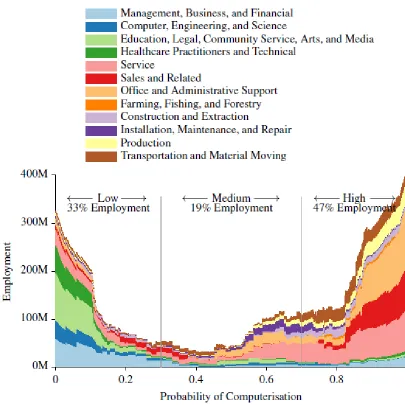
computerization of those jobs. Frey and Osborne found that, in the next decade or two, 47
percent of jobs in the US are at high-risk of being displaced by automation. Figure 2 below
Figure 2: Employment affected by computerization
Source: Frey and Osborne (2017).
Knowledge worker jobs had a low susceptibility to computerization according to their
study. The probability of physicians’ and surgeons’ jobs being replaced by technology was 0.42
percent and these professions ranked 15th least likely to be replaced out of 702 occupations. The
probability of lawyers’ jobs being replaced by technology was 3.5 percent and this profession
ranked 115th least likely to be replaced out of 702 occupations. Telemarketers had the highest
Remus and Levy (2015) analyzed data from Sky Analytics, a company that provides data
broken down by tasks and number of hours spent on tasks from invoices for law firms. Remus
and Levy categorized the tasks based on the current ability of computer technology to perform
the tasks. They found that 13 percent of job tasks performed by lawyers could be automated in
the next five years. An analysis by the McKinsey Global Institute of data from the O*NET
database of the US Department of Labor found that almost a quarter of the work performed by
physicians and lawyers could be automated using current technology (MGI, 2017).
II.5 Previous Literature on Perceptions of Technology and Knowledge Workers
If AI can potentially perform up to 25 percent of their job tasks, it is important to know
how physicians and lawyers perceive this encroachment. People's perceptions of technology's
usefulness correlate positively with their willingness to accept and use this technology (F. D.
Davis, 1989). As an example from the literature, C. J. Davis and Hufnagel (2007) studied novice
and expert occupationally certified fingerprint technicians (FPT) and their reactions to and
perceptions of the automation of their work and the altering of their work processes. According
to their findings, novice FPTs liked the new system since it flattened the expertise-based
hierarchy and put them on an even playing field with the experts. Use of the National Automated
Fingerprint Identification System (NAFIS) offered the novices new challenges. It also gave them
a more significant and visible role in the process of identifying criminals. The expert FPTs,
however, perceived the new system as a black box since the algorithms it employed to match
crime scene fingerprints with suspected criminals were proprietary, which also made testifying in
court difficult since the experts could not explain how the system came to the conclusions that it
did. The expert FPTs felt the NAFIS reduced their creativity since they were bound by the rules
be done. Additionally, the system presented challenges to enculturation since part of the
apprenticeship activities that were used to train novices in the past could now be done by the
system.
Other perceptions of the transformational impact of technology on knowledge workers
can be found in aviation. Carr (2014, p. 52) writes:
“[T]he job of the commercial pilot has lost its aura of romance and adventure. The storied
stick-and-rudder man, who flew by a sense of feel, now belongs more to legend than to
life. On a typical passenger flight these days, the pilot holds the controls for a grand total
of three minutes—a minute or two when taking off and another minute or two when
landing. What the pilot spends a whole lot of time doing is checking screens and
punching in data. ‘We’ve gone from a world where automation was a tool to help the
pilot control his workload,’ observes Bill Voss, president of the Flight Safety Foundation,
‘to a point where the automation is really the primary flight control system in the
aircraft.’ Writes aviation researcher and FAA advisor Hemant Bhana, ‘As automation has
gained in sophistication, the role of the pilot has shifted toward becoming a monitor or
supervisor of the automation.’”
II.6 Summary
Over the last 300 years, machines have steadily replaced human laborers in performing
job tasks. A race to gain ever-increasing levels of education characterized the 20th century as
technological advances led to the replacement of manual laborers with machines and the creation
of highly skilled white-collar jobs (Frey & Osborne, 2017). These white-collar jobs are under
siege by the latest advances in artificial intelligence in the 21st century; will well-educated
and the control, autonomy, and economic benefits that status confers (Z. Walter & Lopez, 2008)?
Or, will AI, augment these professionals’ specialized skills and training, benefiting client and
professional, alike? Economists and business consultants have taken an empirical approach by
analyzing job task characteristics and the current capabilities of AI, thereby offering predictions
of what the percentage of the impact could be of the latest advances in technology on job tasks.
What is missing from the literature is the perceptions of those impacted. Until we begin to
understand the perceptions of the impact of artificial intelligence held by professionals, an
important piece of the job displacement and professional autonomy discussion will be missing.
Until we understand their perspective, we will not know if efforts will need to be made to make
professionals more aware of the benefits of using AI to increase their acceptance and adoption of
the technology or if new entrants into the professions will need to be steered into other
specializations not displaced by AI. Will AI adoption in the medical and legal professions follow
the same trajectory as that of fingerprint reading or the aviation industry, removing autonomy
and relegating physicians and lawyers to “monitors or supervisors of automation?” This study
attempts to address the lacuna in the current literature of perceptions of the impact of artificial
intelligence technology on job tasks in the medical and legal fields. In the next chapter, the
research question, hypotheses, theoretical underpinnings, and research model for this study are
III CHAPTER III: MODEL DEVELOPMENT
The advent of predictive analytics produced by AI machine learning algorithms presents
a real threat to the sort of specialized knowledge work that distinguishes and protects
professionals such as physicians and lawyers. On the medical front, AI has a potential impact on
any medical specialty that involves pattern recognition, e.g., analysis of medical images, to make
medical diagnoses. “Deep learning [a subset of AI] is agnostic to the type of image data used and
could be adapted to other specialties [other than dermatology], including ophthalmology,
otolaryngology, radiology and pathology” (Esteva et al., 2017, p. 118). Esteva et al. (2017)
compared the diagnostic performance of an AI referred to as a CNN (convolutional neural
network) against 21 human experts (dermatologists). The CNN was trained with 129,450 clinical
images and was found to be just as accurate as the board-certified dermatologists in classifying
skin cancer. Liu et al. (2017), using a CNN to detect tumors, found that the CNN had a detection
rate of 92.4 percent accuracy compared with a rate of 73.2 percent for human pathologists.
On the legal front, AI is reducing the opportunities of junior lawyers to get on-the-job
training through document review (Winick, 2018); this has been the traditional means by which
junior lawyers have learned the craft (Simpson, 2016). A study comparing results from an
exhaustive manual review of documents by human lawyers and technology-assisted review
processes, which used AI to sort relevant (responsive) from non-relevant (non-responsive)
documents, found that the technology-assisted processes achieved superior results (Grossman &
Cormack, 2011). According to Frey and Osborne (2017), tasks that have been the domain of
contract and patent lawyers are gradually being taken on by complex algorithms. Need for
reviewing attorneys may wane as predictive coding, AI machine learning software that
determines the relevance of discovery documents, makes discovery more efficient and cost
How will well-educated professionals fair in the 21st century, the third era of automation,
in which machines take away decisions, making reliable and fast choices better than humans
(Davenport & Kirby, 2015)? A 2015 Altman Weil survey4 of legal professionals at the level of
managing partner or chair asked their opinion as to whether they could foresee a Watson-like
system replacing jobs in their firm over the next five to ten years. The survey results revealed
that 35 percent of respondents could foresee replacement of first year associates, 19.2 percent
replacement of second- and third-year associates and 6.4 percent replacement of fourth through
sixth year associates. Without these entry level positions, how will young lawyers gain the
experience to become seasoned professionals? Whereas AI may be a job-killer in the legal field,
it can alternatively be construed as a much-needed job aid in the medical field. Contrary to
conventional wisdom, more experience is inversely related to quality of patient care due, in part,
to outdated knowledge and less inclination to adhere to the latest advances in technology,
standards of practice and clinical care guidelines (Choudhry, Fletcher, & Soumerai, 2005;
Tsugawa, Newhouse, Zaslavsky, Blumenthal, & Jena, 2017). A 2017 study of physicians who
treat hospitalized patients found that years of experience, as measured by number of years out of
residency, is positively correlated with patient mortality (Tsugawa et al., 2017). AI could put the
most current treatment options at physicians’ fingertips, providing consistent quality of care to
patients, regardless of the physicians’ years of experience. Application of AI to data from EHRs
of Centerstone Research Institute patients resulted in 30-35 percent more favorable patient
outcomes at 50 percent of the cost compared to the traditional treatment-as-usual
case-rate/fee-for-service model of healthcare (Bennett & Hauser, 2013). The following research hypotheses
were tested on the basis of the findings from the above-mentioned studies:
Hypothesis 1a (H1a): Perceived performance of AI is positively correlated with
perceived job displacement associated with AI.
Hypothesis 1b (H1b): Profession and specialization moderate the relationship between
perceived performance of AI and perceived job displacement associated with AI such that the relationship is much stronger for lawyers.
Z. Walter and Lopez (2008), studying physicians and their perceptions of electronic
medical records and clinical decision support systems, contend that professionals such as
physicians and lawyers enjoy privileged status as sole purveyors of esoteric knowledge and
expertise. This status grants these professionals autonomy, control of resources, and economic
benefits. The results of their study found a statically significant, negative relationship between
perceived threat to professional autonomy and behavioral intention to use the technology.
Far more research has been conducted on physicians and technology acceptance (see
Aggelidis & Chatzoglou, 2009; Chau & Hu, 2002; Egea & Gonzalez, 2011; Holden & Karsh,
2010; Melas, Zampetakis, Dimopoulou, & Moustakis, 2011; Z. Walter & Lopez, 2008; Yi,
Jackson, Park, & Probst, 2006; Zoltan & Chapanis, 2007) than on lawyers and technology
acceptance. A study of attitudes towards computers of certified public accountants, pharmacists,
lawyers and physicians found that, in general, lawyers had the least experience with computers.
Lawyers were also “most likely to describe computers with negative terms, such as
depersonalizing, formal and difficult” (Zoltan & Chapanis, 2007, p. 55). Innovation has not come
swiftly to the legal profession because it is bound by tradition and holds a privileged status in
society (Simpson, 2016). “[T]he working practices of lawyers … have not changed much since
the time of Charles Dickens” (Susskind & Susskind, 2015, p. 67). Z. Walter and Lopez (2008)
behavioral intention to use technology among other types of professionals as an area for further
research. Perhaps there is an opportunity to fill a gap in the body of knowledge. From the
above-mentioned previous studies’ findings, the following hypotheses were developed and tested:
Hypothesis 2a (H2a): Perceived performance of AI is positively correlated with
perceived impact to professional autonomy.
Hypothesis 2b (H2b): Profession and specialization moderate the relationship between
perceived performance of AI and perceived impact to professional autonomy such that the relationship is much stronger for lawyers.
The theoretical underpinnings for the current study borrow from the technology
acceptance model (TAM) and the job characteristics model (JCM). TAM is the most widely used
model in information systems research to explain and predict system-user acceptance, adoption,
and usage (Aggelidis & Chatzoglou, 2009; Gefen, Karahanna, & Straub, 2003; Gregor, 2006;
Schepers & Wetzels, 2007; Tong, Wong, & Lee, 2015). TAM was developed by Fred Davis in
1989 as an outgrowth of the theory of reasoned action (TRA) from social psychology (see Ajzen
& Fishbein, 1980; Fishbein & Ajzen, 1975) to address a shortage of reliable and validated
measurement scales for explaining and predicting computer technology usage behavior (F. D.
Davis, 1989; F. D. Davis, Bagozzi, & Warshaw, 1989). From a practical perspective, the ability
to explain and predict system usage with validated measures provides benefits to many
stakeholders such as managers, vendors and end-users in deciding on the best system and system
features as well as maximizing productivity gains from user acceptance and usage of said system
(F. D. Davis, 1989).
Davis’ original 1989 TAM model consisted of two independent variables: perceived
intention to use. The validity and reliability of the questionnaire and measurement scales used by
Davis have been confirmed by several replication studies (see Adams, Nelson, & Todd, 1992;
Hendrickson, Massey, & Cronan, 1993; Segars & Grover, 1993; Subramanian, 1994; Szajna,
1994). A subsequent study by F. D. Davis et al. (1989) found that TAM explained 47 percent of
the variance in behavioral intention to use technology.
The extended technology acceptance model (TAM2) was created by Venkatesh and
Davis to gain further understanding of user technology acceptance and adoption (Venkatesh &
Davis, 2000). “TAM2 incorporates additional theoretical constructs spanning social influence
processes (subjective norm, voluntariness, and image) and cognitive instrumental processes (job
relevance, output quality, result demonstrability, and perceived ease of use)” (Venkatesh &
Davis, 2000, p. 187).
As another extension to TAM, Gefen et al. (2003) examined knowledge-based
familiarity. They defined familiarity as the “experience with the what, who, how, and when of
what is happening” (Gefen et al., 2003, p. 63). Research supports the idea that older workers
prefer what is familiar to them and have greater difficulty adapting to change (Morris &
Venkatesh, 2000). Morris and Venkatesh (2000) hypothesized that age is negatively correlated
with both short-term and long-term system usage. The results of their study suggest that there is
a negative correlation between age and system usage in the short and long term. Ahmad et al.
(2011) found age to have a statistically significant effect on the TAM construct relationships.
Yi and Hwang (2003) extended TAM by incorporating the intrinsic motivation variable
from social psychology, self-efficacy, to predict the usage of web-based information systems.
The researchers identified two aspects of self-efficacy: general computer self-efficacy and
to have a more powerful effect. The findings from Yi and Hwang (2003) showed a significant,
positive influence of application-specific self-efficacy on system usage. Kwon, Choi, and Kim
(2007) examined how the individual characteristic, self-efficacy, affected the user acceptance of
GPS-based technology. The results of their study were mixed, that is, self-efficacy had a positive
effect on perceived ease-of-use but no effect on perceived usefulness.
Research studies by Schepers and Wetzels (2007) and Ahmad et al. (2011) considered the
moderating effects of such factors as type of respondents, type of technology, culture, gender and
age. A meta-analysis of 63 TAM research studies found that type of respondent was a significant
moderator of the relationship between perceived usefulness and behavioral intention to use
technology (Schepers & Wetzels, 2007).
Chau and Hu (2002) applied the technology acceptance model (TAM) and the theory of
planned behavior (TPB) in studying the usage intentions of telemedicine technology of 400+
physicians. The study chose the perceived usefulness, perceived ease of use and behavioral
intention constructs from TAM. The final construct from the original TAM, system
adoption/usage, was excluded from the research model, the researchers citing previous studies as
justification for behavioral intention as a dependent variable. The results of their study found that
TAM explained 42 percent of the variance in behavioral intention, whereas, TPB explained 37
percent. Z. Walter and Lopez (2008), also studying physicians’ perceptions of technology
applied in the medical field, introduced a new construct from the job characteristics model to the
technology acceptance model specific to the concerns of highly-skilled professionals—perceived
threat to professional autonomy.
From the preceding literature it is clear that AI is a threat to certain specializations in the
and legal fields show that AI preforms on par or superior to humans. The perceptions held by
physicians and lawyers in affected specializations of the disruptive impact of AI is unknown.
TAM and JCM have been used in the past by researchers to examine the perceptions of
physicians of technologies such as telemedicine and clinical decision support systems. This study
extends that research by applying TAM to physicians’ perceptions of AI while also adding a less
researched professional in this space, the lawyer, for contrast and comparison. Building on the
above-cited examples of studies that have used TAM and JCM to understand perceptions of
technology, the below research model was constructed to understand the perceptions held by
physicians and lawyers with regard to job displacement and impact to professional autonomy
[image:35.612.71.478.342.581.2]associated with AI.
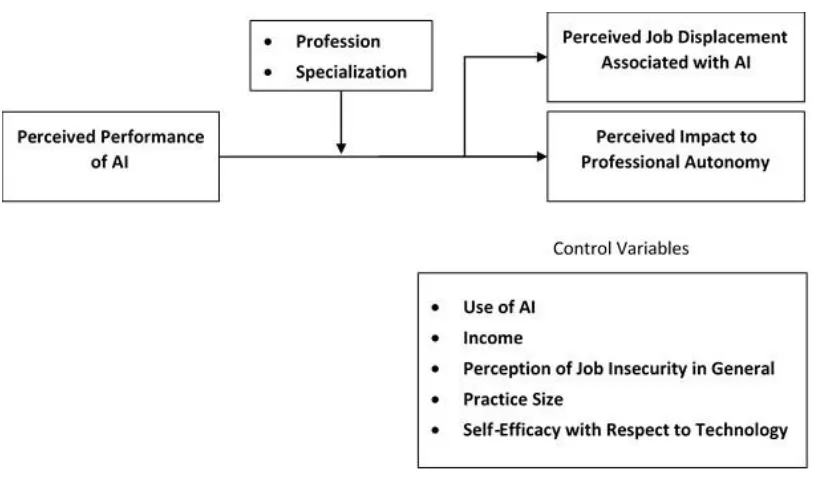
Figure 3: Research model
Source: Inspired by (Agarwal & Prasad, 1998; Chao & Kozlowski, 1986; F. D. Davis, 1989; F. D. Davis et al., 1989; Gefen et al., 2003; Venkatesh & Davis, 2000; Z. Walter & Lopez, 2008; Yi & Hwang, 2003).
Figure 3 above depicts the model for this research study, borrowing one construct from
the technology acceptance model (TAM): perceived usefulness, two constructs from the
constructs from the job characteristics model: job displacement and autonomy. Researchers Z.
Walter and Lopez (2008) added autonomy, a construct from the job characteristics model (JCM)
to TAM in their study of physicians’ acceptance of clinical decision support systems, renaming
the construct: perceived threat to professional autonomy; this study will refer to this construct as
perceived impact to professional autonomy.
The following TAM and TAM2 constructs related to hands-on experience have been
excluded from the model: perceived ease of use, subjective norm, voluntariness, image, and
result demonstrability, since survey participants of this study will not be given access to any AI
systems. Additionally, in the Chau and Hu (2002) study of physicians, perceived ease of use did
not have a statistically significant influence on behavioral intention to use technology. This
finding coincides with Venkatesh and Davis (2000) who found that perceived ease of use is a
less consistent predictor of behavioral intention across studies and over time. Subjective norm
was also not found to have a statistically significant influence on behavioral intention. In the
final analysis, Chau and Hu (2002) found perceived usefulness to be the most important factor
influencing the acceptance of telemedicine technology by physicians. The salience of perceived
usefulness to physician acceptance was confirmed by Yi et al. (2006).
As mentioned above, Chau and Hu (2002) did not find a statistically significant
relationship between perceived ease of use and subjective norm with behavioral intention to use
technology for physicians. The research findings of Chau and Hu (2002) also seem to suggest
that the social influence constructs from TAM2 such as subjective norm, voluntariness, and
image might not be applicable to physicians, as physicians are more likely to come to their own
personal digital assistant (PDA) acceptance of physicians, also found the relationship between
perceived ease of use and behavioral intention to be non-significant.
Familiarity, self-efficacy, age and years in practice have been studied in the literature in
relation to the traditional TAM measures. Perception of job insecurity has been studied in the
literature in relation to the traditional JCM constructs. To control for other explanations of the
perceptions of the survey participants toward AI, these variables were measured in this study.
Perceived performance of AI is the independent variable in this study. Job relevance and
output quality are antecedents to the variable perceived usage in the TAM2 model. In this study,
the three variables were averaged to represent the measure perceived performance of AI. There is
precedent in the literature. Chiu, Tsai, and Fan Chiang (2013) studied the relationship between
job characteristics and attitudes toward web-based continuing learning (AWCL) among nurses.
In their study, AWCL was an average of TAM variables perceived usefulness, perceived ease of
use, affection, and behavior.
The moderating effects of profession and specialization were also examined in this study.
The variables use of AI, income, perception of job insecurity in general, practice size, and
self-efficacy with respect to technology were control variables. Demographic information on the
survey participants, such as, age, employment status, gender, location of practice, race, and years
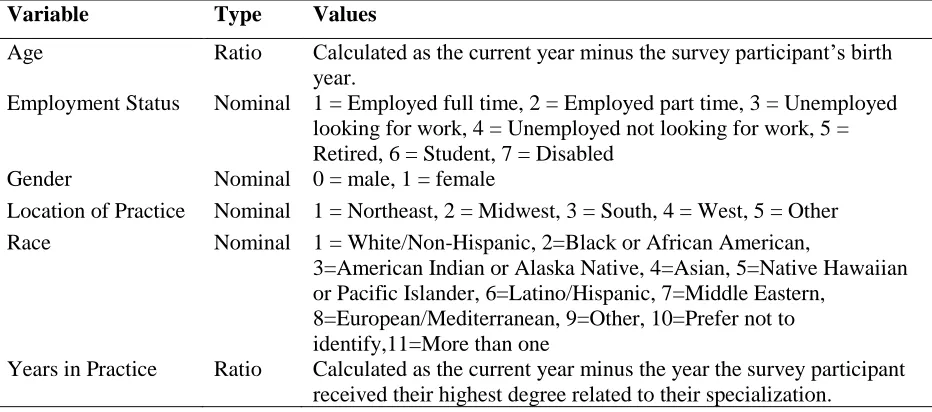
in practice was also captured. The variables for this study are defined in Table 1. Since the
current study asks questions pertaining to participants’ opinions, all dependent and independent
Table 1: Variable summary
Variable Definition
Dependent Variables (DV)
Perceived Job Displacement The extent to which an individual believes that his or her job security is at risk (Chao & Kozlowski, 1986).
Perceived Impact to Professional Autonomy
The extent to which an individual believes that using a specific system would reduce his or her control over the conditions, processes, procedures or content of his or her work (Z. Walter & Lopez, 2008).
Independent Variable (IV)
Perceived Performance An average of perceived job relevance, perceived output quality and perceived usefulness.
Subscales of Perceived Performance
Perceived Job Relevance The extent to which an individual believes that the AI technology applies to his or her job (Venkatesh & Davis, 2000).
Perceived Output Quality
The extent to which an individual believes that the AI technology will perform tasks well (Venkatesh & Davis, 2000).
Perceived Usefulness The extent to which an individual believes that using AI technology would improve the performance of his or her job (F. D. Davis, 1989) .
Moderator(s)
Profession The vocation of the survey participant, either physician or lawyer. Specialization The area of professional expertise of the survey participant, limited to
radiology, contract law, transactional law or mergers & acquisitions law.
Control Variables (CV)
Use of AI How recently has the survey participant been exposed to AI in a work setting.
Income The survey participant’s income. Perception of Job Insecurity in
General
The feeling or overall concern of an employee that his or her job is at risk or that he or she is likely to experience involuntary job loss in the not too distant future (Schumacher, Schreurs, Van Emmerik, & De Witte, 2016). Practice Size The number of workers with the same specialization in the survey
participant’s practice. Self-Efficacy with Respect to
Technology
An individual’s judgement of his or her ability to perform a specific task (Yi & Hwang, 2003).
Demographic Variables
Age The number of years since the survey participant was born.
Gender The gender, male or female, with which the survey participant identifies. Location of Practice The geographical region in the US in which the survey participant
practices their specialization.
Race The one or more ethnicities with which the survey participant identifies. Years in Practice The number of years since the survey participant received their highest
degree related to their specialization (Z. Walter & Lopez, 2008).
To conclude this chapter, the technology acceptance model (TAM) is the most commonly
used model in information systems research to explain and predict technology usage behavior.
Modifications and extensions to the model have continued since its original debut. Several
studies researching technology acceptance of physicians have been done; far fewer have studied
lawyers. Chau and Hu (2002) caution against generalizing their findings of the technology
acceptance of physicians to other professionals. The current study presents an opportunity to gain
more insights into the perceptions held by physicians and lawyers of artificial intelligence
technology in the medical and legal fields by testing hypotheses derived from the literature that
examine the relationships between perceived performance of AI and perceived job displacement
associated with AI and perceived performance of AI and perceived impact to professional
IV CHAPTER IV: METHOD
A survey panel, recruited by Qualtrics, was used in this study to gather a sample of
radiologists and lawyers specializing in contract, transactional, or mergers and acquisitions law
in the US. Use of survey panels for online surveys has become increasingly popular in social
science research (Boas, Christenson, & Glick, 2018). Opt-in online panels present an advantage
over conventionally sourced samples to survey difficult to reach populations such as white-collar
workers (Brandon, Long, Loraas, Mueller-Phillips, & Vansant, 2014). “When the research
question requires more narrowly focused samples with specific expertise and domain knowledge,
the researcher can buy the contact information for these subpopulations and solicit responses
directly” (Brandon et al., 2014, p. 9). S. L. Walter, Seibert, Goering, and O'Boyle (2016)
compared response patterns and relationships among variables from studies using samples from
online panel sources (e.g., StudyResponse, MTurk, Qualtrics) versus conventionally sourced
samples. The researchers’ results suggest that the response patterns, as well as the relationships
between variables, are similar for online panels and conventionally sourced samples. According
to a study conducted by Boas et al. (2018), Qualtrics provides the most demographically
representative sample compared with other online recruiters such as Facebook and Amazon
Mechanical Turk.
Study participants were selected from among those who had volunteered or registered to
participate in Qualtrics online surveys and were recruited based on profession, specialization,
gender and years in practice. Participants were compensated for their participation in the study
based on their panelist agreement with Qualtrics. Due to the fact that the sample for this study
was not a probability sample, but rather was based on respondents who initially opted-in to
participate in the panel, calculation of the estimates of sampling error was not possible(AAPOR,
A total of 316 invitations to take part in the study were sent to physicians specializing in
radiology. The target gender distribution of radiologists for recruitment was 75 percent male and
25 percent female to match the percentage of active male and female radiologists in the US
(AAMC, 2015) so that a representative sample of radiologists was achieved. To solicit a range of
years in practice, Qualtrics added a recruitment filter of 23 radiologists with 0-5 years in
practice, 29 radiologists with 6-15 years in practice and 23 radiologists with 16+ years in practice
at my request. The online survey was attempted by 166 (53 percent) physicians; 147 surveys
were completed, resulting in an initial response rate of 47 percent. Of the 147 surveys that were
completed, 72 were from physician respondents (49 percent) who were ultimately ineligible from
participation for choosing a specialization other than radiology. After the data quality checks, the
effective sample size was 75 for physician radiologists.
Panel demographic data was not available to identify contract, transactional, and mergers
and acquisitions lawyers a priori. As a result, invitations to participate were extended to 1,122
lawyers in order to be certain to include the necessary number of specialists required. The target
gender distribution of lawyers for recruitment was 64 percent male and 36 percent female to
match the population of male and female lawyers in the US (ABA, 2018) so that a representative
sample of male and female lawyers was achieved. At my request and to solicit a range of years in
practice, Qualtrics added a recruitment filter of 23 lawyers with 0-5 years in practice, 29 lawyers
with 6-15 years in practice and 23 lawyers with 16+ years in practice to solicit a range of years in
practice to ensure variability in the data for this variable. The online survey was attempted by
771 (69 percent) lawyers; 634 surveys were completed, representing a response rate for lawyers
of 57 percent. Of the 634 surveys, 559 were from lawyer respondents (88 percent) who were
mergers and acquisitions law. After the data quality checks, the effective sample size was 75 for
lawyers specializing in contract, transactional, or mergers and acquisitions law.
The age of physician survey respondents ranged between 29 and 79 years, the mean age
for physicians was 47.4 years (SD = 12.2 years). The age range for the target sample of lawyer
specializations—contract, transactional, and mergers and acquisitions law—was 24 to 78 years,
the mean age was 45.5 years (SD = 14.1 years). Additional demographic data for the survey
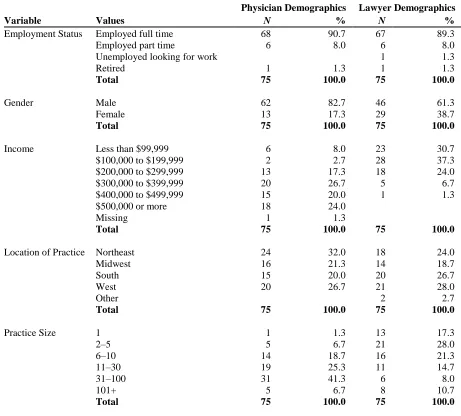
[image:42.612.68.529.302.718.2]respondents is summarized in Table 2 below.
Table 2: Demographic characteristics for the total sample (N = 150)
Physician Demographics Lawyer Demographics
Variable Values N % N %
Employment Status Employed full time 68 90.7 67 89.3
Employed part time 6 8.0 6 8.0
Unemployed looking for work 1 1.3
Retired 1 1.3 1 1.3
Total 75 100.0 75 100.0
Gender Male 62 82.7 46 61.3
Female 13 17.3 29 38.7
Total 75 100.0 75 100.0
Income Less than $99,999 6 8.0 23 30.7
$100,000 to $199,999 2 2.7 28 37.3
$200,000 to $299,999 13 17.3 18 24.0
$300,000 to $399,999 20 26.7 5 6.7
$400,000 to $499,999 15 20.0 1 1.3
$500,000 or more 18 24.0
Missing 1 1.3
Total 75 100.0 75 100.0
Location of Practice Northeast 24 32.0 18 24.0
Midwest 16 21.3 14 18.7
South 15 20.0 20 26.7
West 20 26.7 21 28.0
Other 2 2.7
Total 75 100.0 75 100.0
Practice Size 1 1 1.3 13 17.3
2–5 5 6.7 21 28.0
6–10 14 18.7 16 21.3
11–30 19 25.3 11 14.7
31–100 31 41.3 6 8.0
101+ 5 6.7 8 10.7
Race White/Non-Hispanic 52 69.3 65 86.7
Black or African American 2 2.7
Asian 9 12 1 1.3
Latino/Hispanic 3 4 5 6.7
Prefer not to identify 6 8
More than one 3 4 4 5.3
Total 75 100.0 75 100.0
Specialization Contract Law 52 69.3
Mergers and Acquisitions Law 6 8.0
Transactional Law 17 22.7
Radiology 75 100.0
Total 75 100.0 75 100.0
Years in Practice 0-5 years 16 21.3 17 22.7
6-15 years 31 41.3 33 44.0
16+ years 28 37.3 25 33.3
Total 75 100.0 75 100.0
Since this research study involves human subjects, approval was sought from Georgia
State University's Institutional Review Board (IRB) before participants were contacted. After
IRB approval was received, emails were sent to the sample of potential participants. The emails
contained a link to the online survey. Prospective participants were made aware that the purpose
of the study was to analyze their views on medical and legal artificial intelligence technology
and that they were being invited to participate because of their professional status as a physician
or lawyer. Participants were compensated according to their panelist agreement. They were
informed that participation is completely voluntarily and that their responses will be kept
confidential. Participants were provided with the author’s contact information should they have
questions or concerns about the study and were thanked for their participation. Overall, the
survey was estimated to take about 10 minutes to complete.
The survey consisted of 35 questions. Participants were asked their opinions of the job
displacement, impact to professional autonomy, job relevance, output quality and usefulness of
AI on a 7-point Likert scale. To control for alternative explanations for the survey respondents’
general, practice size, and self-efficacy with respect to technology. Additionally, survey
participants were asked demographic questions, such as, age, employment status, gender,
location of practice, race, and years in practice. The measures for this study are further described
below:
IV.1 Dependent Variables
Perceived job displacement. Participants were asked five items adapted from Chao and
Kozlowski (1986) for the construct: perceived job displacement. The items were measured on a
seven-point Likert scale and read as follows: “AI will reduce my job security”; “I fear that
someday I will lose my job to AI”; “AI will make me less useful as a worker”; “The introduction
of AI will slowly displace radiologists/contract lawyers/transactional lawyers/mergers and
acquisitions lawyers”; “The use of AI will mean less and less work for radiologists/contract
lawyers/transactional lawyers/mergers and acquisitions lawyers.” Responses were averaged to
form a total score for perceived job displacement (α = .90).
Perceived impact to professional autonomy. Participants were asked two items for
perceived impact to professional autonomy adapted from the Z. Walter and Lopez (2008)
perceived threat to professional autonomy construct. The items and scales read as follows:
“Using AI may decrease my control (professional discretion) over the day-to-day decisions I
make on the job” (1 = Extremely Unlikely, 7 = Extremely Likely); “Using AI may decrease my
professional discretion over course of action decisions.” Responses were averaged to form a total
score for perceived impact to professional autonomy (α = .90).
IV.2 Independent Variable
Perceived performance. The perceived performanceconstructis a composite of
Perceived job relevance. Participants were asked two items adopted and adapted from Venkatesh
and Davis (2000) measuring perceived job relevance. The items were measured on a seven-point
Likert scale and read as follows: “I can foresee usage of AI being important in my job”; “I can
foresee usage of AI being relevant in my job”.
Perceived output quality. Participants were asked two items adopted and adapted from
Venkatesh and Davis (2000) measuring perceived output quality. The items and scales read as
follows: “The quality of the output I would get from AI technology would be high” (1 = Extremely
Unlikely, 7 = Extremely Likely); “I would have no problem with the quality of the AI technology’s
output.”
Perceived usefulness. Participants were asked four items adopted and adapted from F. D. Davis
(1989) measuring perceived usefulness. The items and scales read as follows: “Using AI in my
job would improve my performance” (1 = Extremely Unlikely, 7 = Extremely Likely); “Using AI
in my job would increase my productivity”; “AI in my job would enhance my effectiveness”; “I
would find AI useful in my job.” Responses were averaged to form a total score for perceived
performance (α = .96).
IV.3 Moderators
Profession. Participants were asked about their profession. Profession is coded: 0 =
physician, 1 = lawyer.
Specialization. Participants were asked about their primary professional area of
specialization. Participants were provided a list of specializations from which to choose (0 =