Geschke Center
Master's Theses Theses, Dissertations, Capstones and Projects
Winter 12-16-2016
The Electoral Success of Communist-Successor
Parties in the Czech Republic and Romania
Harley L. Roe
University of San Francisco, [email protected]
Follow this and additional works at:https://repository.usfca.edu/thes
Part of theComparative Politics Commons,Eastern European Studies Commons, and theSoviet and Post-Soviet Studies Commons
This Thesis is brought to you for free and open access by the Theses, Dissertations, Capstones and Projects at USF Scholarship: a digital repository @ Gleeson Library | Geschke Center. It has been accepted for inclusion in Master's Theses by an authorized administrator of USF Scholarship: a digital repository @ Gleeson Library | Geschke Center. For more information, please [email protected].
Recommended Citation
Roe, Harley L., "The Electoral Success of Communist-Successor Parties in the Czech Republic and Romania" (2016).Master's Theses. 203.
UNIVERSITY OF SAN FRANCISCO
The Electoral Success of
Communist-Successor Parties in the Czech
Republic and Romania
How party reimaging, coalition building, corruption and
scandal, party leadership, EU accession, and social indicators
impact party support
By Harley Roe 11/23/2016
Signatures Page
The Electoral Success of Communist-Successor Parties in
the Czech Republic and Romania
In Partial Fulfillment of the Requirements for the Degree MASTER OF ARTS
in
INTERNATIONAL STUDIES By Harley Roe
November 23, 2016
UNIVERSITY OF SAN FRANCISCO
Under the guidance and approval of the committee, and approval by all the members, this thesis project has been accepted in partial fulfillment of the requirements for the degree.
APPROVED:
________________________ ___________
Advisor Date
________________________ ___________ Academic Director Date
Table of Contents
List of Figures ... iii
Acknowledgments ... iii
Introduction ... 1
Historical Background and Summary of Political Systems ... 5
Literature Review ... 9
Methodology... 21
Party Reimaging ... 27
Coalition Building ... 37
EU Accession ... 44
Corruption and Scandal ... 51
Party Leadership ... 59
Social Indicators ... 64
Conclusion ... 70
List of Figures
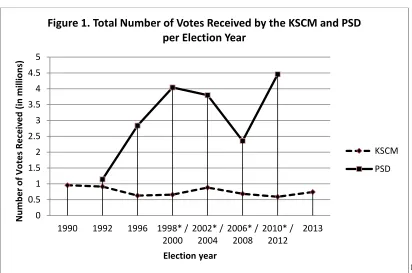
Figure 1. Total Number of Votes Received by the KSCM and PSD per Election Year. ... 8
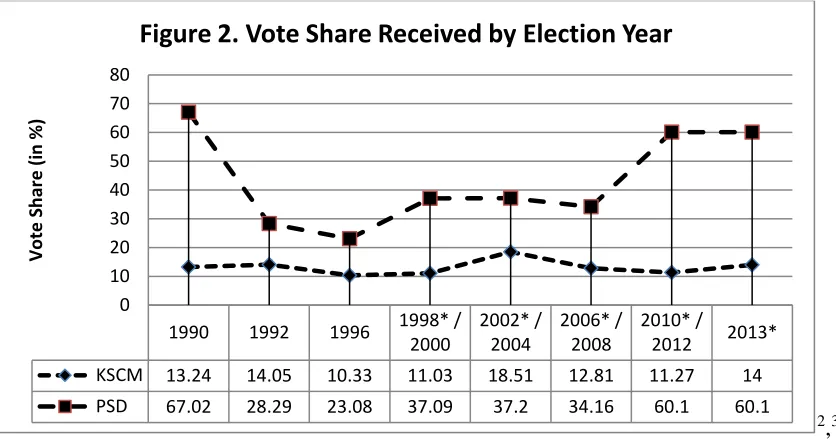
Figure 2. Vote Share Received by Election Year ... 9
Figure 3. Representation of Political Party Orientation on the Political Spectrum ... 11
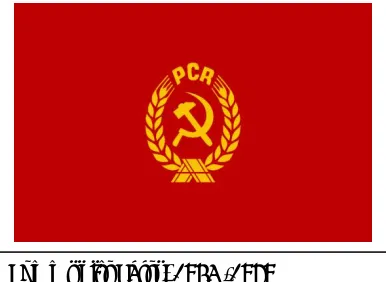
Figure 4. Party Reimaging through Logo Change ... 29-30 Figure 5. Comparisson of EU Parliamentary Elections in the CR and Romania ... 50
Figure 6. Comparison of Czech and Romanian Perceptions of Transparency ... 52
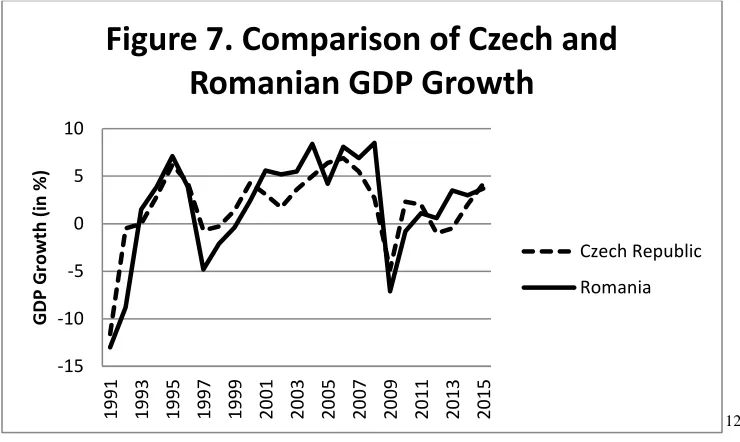
Figure 7. Comparison of Czech and Romanian GDP Growth ... 65
Acknowledgments
There is one person that I must thank first and foremost for her years of support, Krystal
Whitney. She has pushed me to be the very best version of myself and has given me the drive to pursue the things that are most important to me. For being my partner and confidant, I dedicate this project to her.
To my grandparents, Fred and Judy Quinn, for giving me the foundation and work ethic needed to always push myself. I will never in my life work as hard as those two, giving me the love and resources to be able to be the kind of person I have always wanted to be.
I must also toast Dr. Bill Goldman for his guidance over the last year. I know I was not the easiest person to advise, but he took the time to read every draft, answer every question, and even take a call at 8pm.
Introduction
The wave of democratization that swept across East and Central Europe in 1989
introduced multiparty politics to most states in the region. Multiparty systems allow for the
representation of numerous political positions. Even after the collapse of communism in the
region, communist parties and their successor parties still play essential roles in national politics.
In Romania, the Social Democratic Party (PSD), dominates the political scene with a social
democratic platform; meanwhile in the Czech Republic (CR), the Communist Party of Bohemia
and Moravia (KSCM) is often excluded from national politics despite a significant voter base.
Both countries have instituted parliamentary-style legislatures that are elected by proportional
representation, which makes it easy to compare the two. The question that guides my research is:
what drives electoral success of communist-successor parties in the Czech Republic and
Romania? Put more plainly, what makes people vote for communist-successor parties after their
original incarnations were discredited after the fall of the Berlin Wall?
This project explores the most influential social factors that impact the electoral success
of the KSCM and PSD. These factors are reimaging strategies, party leadership, coalition
building, corruption and scandal, EU accession, and social indicators (such as fluctuating GDP).
I begin by analyzing election results in the Czech Republic and Romania using a theory known
as “electoral volatility.” This will make the data comparable across election cycles. From there, I
will compare the election data to the six social and political factors that influence voter behavior.
“Communist-successor party” is a concept expanded by Andres Bozoki and John
Ishiyama 2002). This brings up an important concept: party lineage. Communist-successor
parties can be considered the “descendants” of the parties previously in control of the Czech
Republic and Romania. The PSD is the current incarnation of the Frontul Salvarii Nationale
(FSN), which was a breakaway faction of the Communist Party of Romania. Top leaders in the
Communist Party formed their own faction within the party to lead the 1989 revolution to
overthrow the dictator, Nicolae Ceausescu. Although it can be difficult to track the “lineage” of
communist-successor parties, it is important to follow how these parties change through the years
in order to see how they influence the new democracies in which they find themselves.
The important point to emphasize here is that the FSN was in fact a communist-successor
party because it originated from within the Romanian Communist Party. It splintered off only
when the whole party was threatened by the increasing political turmoil in Romania. The leader
of the FSN, Ion Iliescu, was a member of Ceausescu’s inner circle for years; Iliescu’s reasoning
for leading the opposition is almost irrelevant to this narrative. He took communist party leaders
and formed a faction of moderate communists that capitalized on the unrest quickly enveloping
the country in 1989. However, it is worth mentioning that in both the Czech Republic and
Romania, many of the parties comprising the leftist bloc can be considered communist-successor
parties because their leadership often consists of moderates from the original communist regime.
I chose the Czech Republic and Romania as the centers of my analysis because of both a
personal connection to both countries as well as how their histories are similar in their mutual
totalitarian pasts. Prior to 1989, both countries were dominated by a centralized
communist/totalitarian party. Yet at the point of collapse of communism, these countries’
histories diverged. The CR underwent a passive transition known as the Velvet Revolution,
transition was much more violent, and involved a splinter group of the communist party leading
a revolt against Nicolae Ceausescu. The method of transition in both countries played a vital role
in the electoral outcomes of the communist-successor parties that emerged after 1989.
This project is timely due to the fact that the Czech KSCM has been approached by the
dominant left-wing party, the CSSD, to be in a legislative coalition after the 2016 elections. After
almost 30 years in political isolation, the KSCM is once again coming to the fore of national
politics. Not only have the communists failed to fade into political obscurity, they have emerged
as potential coalition partners – which means that remnants of the previous totalitarian regime
will once again have a voice in politics at both the legislative and executive levels. As for the
Romanian PSD, the party has been gathering strength for the past three decades, and is
seemingly impervious to scandalous events and economic crises. Being the leading leftwing
party, the PSD is a model of success for post-communist transitional parties, and the factors
producing that success are important units of analysis that can be applied to parties throughout
the region, and across the globe. While the topic of communist-successor parties may not be
new, it plays an important role in national politics, and the dominance of these parties cannot be
overlooked.
Major findings in this project include the importance of the interdependencies of each of
the six factors and the importance of party history in determining voter loyalty. When analyzed
alone, some factors may appear to have little sway on electoral success. Yet some factors work
together, such as reimaging and coalition building, ensure success during elections. On the other
hand, some negative factors are mitigated by the presence of others; for example, corruption can
be counterbalanced by party leadership. Political parties utilize strategies such as coalition
simultaneously managing the detrimental effects of social indicators and scandal. Party history,
in this case meaning the role that the party played in the country’s transition to democracy, is a
powerful influence that can mitigate the negative impacts of poor economic performance and the
prevalence of corruption in these new democracies. Similarly, party history ensures a consistent
voter base due to historical ties and social benefits associated with the previous regimes. These
findings identify factors that political parties can use to predict their own success.
The most successful factors in determining electoral viability are reimaging and coalition
building. If a party can identify strong coalition partners, or absorb smaller similarly-aligned
parties through mergers, then they expand the party’s influence within the country. In order to do
so, the party must identify policies that will make it more attractive to not just voters, but to
potential coalition partners. In the case of communist-successor parties, this means having to
moderate their platforms from a strictly socialist to a social democratic program, while
additionally distancing itself from its totalitarian origins. Realistically, parties cannot achieve
strong electoral success without adjusting their platforms to market themselves to a broader
audience.
Reimaging is the most important of the six factors because the PSD has undergone
numerous restructurings and logo changes in attempt to distance itself from its communist roots.
Coalition building is the second-most important factor, especially in the case of Romania. In
multiparty systems it is essential for minority parties to band together in order to become viable
in their respective systems. However, they become susceptible to spatial contagion when
corruption and scandal harm coalition partners. EU accession and membership are linked with
policies and opening up to the global market was a shock to many citizens in both countries. A
discussion of the other four factors will follow.
My findings contribute to the study of post-communist transitions and how parties
function in these newly democratic systems. It can serve as a strategic model for
communist-successor parties in neighboring countries. Also, a model of post-communist elections gives an
insight into voter behavior in multiparty systems and how it can be influenced by a political party
as well as external factors. The findings in this project can be expanded to other countries in the
region to analyze other communist-successor parties as well as the impacts that democratization,
privatization, and globalization have on voter behavior. This research offers the basis for a model
that predicts the social and party conditions that are most conducive to communist party electoral
success. By looking at election results, we can see how the population reacts to various social
factors. My project will also help us understand the status of reconciliation in the Czech Republic
and Romania. Both the KSCM and the PSD have managed to remain relevant in national politics
despite their respective histories of totalitarianism.
Historical Background and Summary of Political Systems
In the CR, the entire public sphere was controlled by the communist party from 1948
until 1989. The Velvet Revolution was sparked by student protests in November 1989, which
was followed by a series of roundtable talks between the previous communist regime and a
conglomerate of activist groups known as Civic Forum. One of the last actions of the Czech
the newly established democratic system. Romania was also under totalitarian control until 1989,
but under a much more ruthless regime. During the Romanian revolution, a group of communists
in Nicolae Ceausescu’s inner circle, led by Ion Iliescu, broke away to lead the political battle
associated with the transition. This group became known as the National Salvation Front (FSN),
which would become wildly popular in national politics during the first free elections in 1990.
Through the usage of reimaging strategies, the FSN eventually evolved into the PSD, the biggest
political player in Romanian politics.
Since the transition, the KSCM and PSD have had varying degrees of success. The
KSCM averages 13% of the share of votes each election, ranging from as low as 10% to as high
as 18% (ECPR 2016). These figures place the KSCM within the top five parties every single
election, even reaching as high as the second-most popular party in one election. So while 13%
of the vote may seem minimal to someone from a dual party system, its significance in a
multiparty system cannot be overlooked. The PSD, on the other hand, averages just over 41% of
the vote each election, ranging from a low of 23% to a high of 67% just after the 1989 revolution
(ECPR 2016). However it is important to note that even though the PSD averages 41%, this is
due to two outlier elections in 1990 and 2012 that resulted in the PSD and its coalition, the USL,
taking well over 60% of the vote share.
The transition to democracy in the CR happened in almost an instant. For the first few
years, the CR and Slovakia remained together as the Czechoslovak Republic due to the fact that
the two countries had been unified since the end of the First World War. Yet in 1993, the two
parted ways and became independent countries; the KSCM stayed in the CR while a new party
formed in Slovakia out of communist bureaucrats that were active there. The newly formed
of expression, and the freedom to choose one’s occupation – all of which were denied or heavily
restricted by the previous regime. The result was a vibrant political culture that sought closer
relationships with Western Europe and the United States. Despite the rapidity of the transition,
the political sphere was mired in corruption, especially when it came to the privatization process
(Oreskovic 2012).
Electoral reform in Romania after the transition was a slow-moving process. The first
election in 1990 did not have a minimum threshold for candidates in the national legislature.
Thresholds prevent parties that have little support from getting candidates into national offices,
and are a common tool among modern democracies. The 1990 election had eighty parties seek
office, while eight of those actually won seats with less than one percent of the vote (Giugal et al.
2011). Thresholds were later instituted, standing at a minimum of 5% for single parties and 8%
for coalitions. While Romania did implement the rule of law and other essential freedoms, the
process was slower and heavily criticized due to the prevalence of cronyism, nepotism, and
bribery.
In many multiparty systems, the president is elected by national vote, and then selects a
prime minister to form a cabinet, which is subsequently approved by the national legislature.
Occasionally, the prime minister is selected from the “opposition,” the party with the
second-most votes, in effort to balance the government. In the CR, this practice was used for second-most of
Vaclav Havel’s presidency – six of the last eleven prime ministers were selected from the
opposition Czech Social Democrat Party (CSSD). This becomes more apparent when we
consider that opposition movements tend to contrast the ruling parties in terms of political
alignment. For example, Civic Forum in the Czech Republic leaned to the right, favoring free
FSN, however, was a leftwing party because it was simply a faction from within Romania’s
communist party that broke away during the 1989 upheaval. While this project focuses primarily
on the legislature, the role the executive plays in party politics as well as influencing voter
behavior cannot be ignored.
1
1 Due to election years that diverge after 1996, Czech election years will be marked with an asterisk (*).Data
compiled from the Political Data Yearbook 2016 and local election result reports. The 1990 Romanian election is left out of this dataset because it skews the graph results. That year, the FSN received over 9.5 million votes, an outlier that could not be compensated for within the graph.
0 0.5 1 1.5 2 2.5 3 3.5 4 4.5 5
1990 1992 1996 1998* / 2000 2002* / 2004 2006* / 2008 2010* / 2012 2013 N u m b e r o f Vo te s R e ce iv e d (i n m ill io n s) Election year
Figure 1. Total Number of Votes Received by the KSCM and PSD per Election Year
KSCM
2,3
The CR typically has higher voter turnout than Romania does, a large reason why looking
at the vote share of each communist-successor party is so important. Figure 1 shows how voter
participation varies in both countries over time. Voter participation is a precarious tool because it
only reflects the aggregate number of votes received, not the percentage shared amongst all
participating parties. If we looked at only number of votes received by a party, then the data
would be skewed from year to year. Looking at vote share percentage is more useful because it
shows how many seats a party would receive; since vote share is always based off of 100%, it is
more reliable in years where voter turnout has dwindled. Figure 2 demonstrates the vote share of
the two subject parties. Vote share paints a more accurate picture of electoral success because it
shows how much of the voting population supports the party.
Literature Review
2 Data compiled from the Political Data Yearbook 2016 and local election result reports.
3 At the time of writing, Romania has not held its 2016 election; the 2013 data reflects the results from the
previous election.
1990 1992 1996 1998* / 2000 2002* / 2004 2006* / 2008 2010* / 2012 2013* KSCM 13.24 14.05 10.33 11.03 18.51 12.81 11.27 14 PSD 67.02 28.29 23.08 37.09 37.2 34.16 60.1 60.1
0 10 20 30 40 50 60 70 80 Vo te Sh ar e (i n % )
This project sits at the heart of political science and comparative politics theory. Spatial
competition is an important theory that seeks to explain the ways that parties function in
multiparty systems. Two approaches to the theory exist. The first explains that parties are
singular actors that can adjust and adapt their platforms to suit the values of their electorates
(Budge & Robertson 1981, 211). This means that the party is completely autonomous and can
adjust its platform without external influences. Policies promised to the electorate can be
modified once the party is in office; the initial platform is only a starting point that gives the
party initial direction (Budge & Robertson 1981, 150). Platforms are viewed as merely a preview
of what the party seeks to accomplish. This approach perceives parties as lacking accountability
to their electorates.
The second approach to spatial competition is developed by Alan Ware. While he
acknowledges the ability of parties to adapt, he also argues that external pressures on a party
limit its ability to make changes to its platform. Ware views parties as “prisoners of their own
history as an institution” (Ware 1996, 18). Parties do have some autonomy, but are captive to
their historical backgrounds. Spatial competition states that if parties were truly free to decide
their own platforms and ideologies, then the left-right spectrum would be reduced to a narrow
field dominated by centrist parties that only slightly lean to one side or another (Ware 1996). In
order to compete effectively for votes, parties in multiparty systems must remain spread out
along the spectrum to attract the maximum number of voters.
There is a middle ground between the two theories of spatial competition, covered by
Anthony Downs in An Economic Theory of Democracy (1956). Downs explores rational voter
behavior as well as the ways that parties and governments interact with their electoral bases, and
aware of the relationship between its policies and the ways that people vote (Downs 1956, 31).
This challenges Ware’s view that parties are trapped by their own ideology and must adopt
policies that are generally expected of them. Instead, the party-voter relationship can be looked at
in terms of a producer-consumer relationship (Downs 1956, 37). Using Harold Hotelling’s law of
rational economic behavior, Downs develops a model to explain the processes a voter goes
through to make a rational political decision.
Hotelling found that businesses that were evenly spaced apart from each other on a street
would perform better because they attracted the same number of customers (Hottelling 1929).
This happened because the customers came from opposite directions on the street, and the
businesses had strategically placed themselves on the part of the street that maximized their
potential foot traffic. Downs took this theory and applied it to politics, turning the street into the
political spectrum, the customers into voters, and businesses into political parties. The resulting
Hotelling – Downs Model of Political/Spatial Competition looks like this:
4
Figure 3. [Representation of Political Party Orientation on the Political Spectrum].
Parties that draw nearer to the center have the greatest chance of attracting voters from
their respective side of the political spectrum. However, the voters that sit at the fringes of the
spectrum may be less likely to vote for a party that moves closer to the center because the
likelihood that they share the same values is decreased (Downs 1956). A model of the US would
show the two dominating parties near the center of the spectrum, but multiparty systems can look
wildly different with a multitude of viable parties.
Downs’ work contrasts that of Alan Ware in that Downs does not consider party ideology
static or constant. To Downs, political parties can be viewed similarly to businesses in that their
marketing strategies evolve and adapt to changes in consumer behavior. In this case, the
consumer is the voter, and parties adjust themselves along the political spectrum in order to
attract the most votes possible. In any system, two parties would not be able to occupy the same
space on the spectrum, meaning they cannot share identical platforms, because those two parties
would share the same pool of voters. It is easier for a party to find a different pool, so they adjust
policies to attract different voters, which dispels Ware’s belief that parties are entirely captive to
their political histories.
The Hotelling-Downs (HD) Model has been used to describe the distribution of votes
along the political spectrum in various cases. A recent study in September 2010 used the HD
Model to suggest that candidates in run-off style executive elections will adapt their policies after
each successful round in order to attract the voters loyal to failed candidates (Brusco et al. 2010).
A Run-off style election consists of multiple rounds, allowing numerous candidates to compete,
yet each round has minimum percentage threshold that each candidate must reach. If they fail to
reach that threshold they are eliminated from the race; their voters are left then to pick between
the remaining candidates. Brusco et al. discovered that candidates would adjust some of their
confidence (Brusco et al. 2010). This study is important not just as an example of the HD Model,
but also as an example of a reimaging strategy.
Another modern interpretation of the HD Model comes from Claude Hillinger and his
work on rational choice and democracy. While the HD Model is useful to visualize the
distribution of parties, it does not do enough to predict voter behavior. If it did, elections could
easily be predicted by simply counting party membership just before an election. Hilinger states
that if voters were only guided by their preferences, then the distribution of votes would not
reveal a dominant trend of one or two parties (Hillinger 2004). In other words, some voters may
prefer one candidate, but vote for the one that has the higher chance of winning so that they do
not feel as though their vote was thrown away. This behavior often results in trends that do not
actually reflect voter preference. So if the HD Model is to be used, it must be coupled with an
analysis of the factors that influence the distribution of votes along the political spectrum.
Spatial contagion is another useful theory that can be used to explain the ways that parties
shift themselves along the political spectrum to maximize their viability. It can be best applied to
multiparty systems where there are multiple parties sitting adjacent to one another on the
political spectrum. If two or more parties are ideologically similar (or adjacent on a left-right
political spectrum) and one of those parties fails in an election, then those similar parties suffer
in future elections (Willams & Whitten 2015). Similarly, if a party has won seats and performs
poorly in the public eye, then other parties associated with it suffer in subsequent elections. The
theory also states that voter behavior does not “occur in an ideological vacuum; rather, voters
make their decisions after observing signals from carefully thought-out platforms that reflect
party strategy” (Williams & Whitten 2015, 311). This means that voter behavior is reactive to
party because it fits their particular political views, but instead the voters make observations
about a party’s performance and make influenced decisions.
Those decisions are observed by political parties, which then make adjustments to their
policies to appear more attractive to their constituents. In another sense, parties make policies to
win elections, rather than winning to make policies (Downs 1956). This implies that the goal of
the political party as a structure is to win elections, not necessarily to make policies. The policies
are just a mechanism to attract voters who agree with those policies. However, this line of
thought is dangerous because it may oversimplify party motivations. If the parties’ true goals
were only to win elections, then minority parties would have little reason to exist because smaller
parties have little chance in winning elections. Downs seeks to explain this by using Adam
Smith’s example of the Economic Man, “…it is not from the benevolence of the butcher, the
brewer, or the baker, that we expect our dinner, but from regard to their own interest” (Smith
1776 in Downs 1956, 28). Politicians will enact policies that they believe will win them votes,
benefiting others while serving their own self-interests. Smaller parties thus find policy niches
that are not covered by larger parties, meaning they seek to attract voters that want to vote for
policies not promised by other parties. This theory will be useful in explaining why a party might
choose to adopt a platform that is generally unpopular to the majority of the population.
The democratic systems present in the Czech Republic and Romania would be described
by the political scientist Giovanni Sartori as pluralistic systems. These are systems with more
than two parties that gain popular support during legislative elections (Sartori 1976). A version
of this system is the polarized pluralistic system, where the distribution of votes moves away
from the center of the political spectrum. When a system is polarized, the distribution of power
immediate aftermath of democratization, Romania and the Czech Republic exemplified this
distribution, but the majority of those parties at opposing ends of the spectrum lost popular
support. The communist-successor parties in each country held on, but only as a result of several
factors including historic party membership and opposition to the liberalization of the country
and economy (Pink 2010). Looking at the social factors that keep the communist voter base
strong is a key aspect of this project. Political geography is a subfield of political science that is
particularly useful when studying the electoral success of any party. Colin Flint and Peter
Taylor’s work, Political Geography: World-economy, Nation-state and Locality, provides
extensive research on this concept. Political geography seeks to explain the distribution of voters
during national elections (Flint & Taylor 2007). To see where a particular party’s voter base is
centralized can give a lot of information about demographics and even reasons why people vote
the way they do. Some examples include labor movements that may be more popular in
working-class regions, fiscal conservativism in more affluent regions, and historical ties to certain parties
and ideologies.
Electoral volatility is “the degree of change in voting behavior between elections”
(Oxford Reference 2016). It refers to the fluctuation in votes received by a party from one
election to the next. No party in a legitimate democracy anywhere maintains a consistent voter
base; there are external and internal factors that attract and repel voters which need to be
examined. Volatility can be calculated by the Pedersen Volatility Index, developed by Mogens
Pedersen in 1979. Pedersen suggests that short-term changes in party format influence the
volatility of a party’s electoral base (Pedersen 1979). Although Pedersen developed the theory of
with free elections. The Volatility Index and the equation used to calculate it will be discussed
later.
Theoretical concepts such as spatial competition and spatial contagion are useful to
understand the ways in which political parties adjust themselves along the political spectrum in
order to solicit votes. With these concepts in mind we can begin a discussion of more concrete
ideas that pertain specifically to the Czech Republic and Romania. The three major theoretical
concepts guiding this research are spatial competition, spatial contagion, and electoral volatility.
These, coupled with the five factors that influence voter behavior (party reimaging, social factors
like GDP, party leadership, EU accession, and coalition building) will allow me to examine
election result data and deduce which influence people to vote for communist-successor parties.
A brief look at the factors that can influence a voter’s decision on a thematic level can help us
understand the strategies used by the KSCM and the PSD.
Reimaging is a relatively new concept in the literature about communist-successor
parties. Strategies that change the outward appearance of the party, such as changing the logo or
leadership, can present a “reformed” party that people may not even associate with the previous
totalitarian administration (Guigal et al. 2011). Other strategies include internal restructuring of
the party itself, which include a shift in party platform that moderates its beliefs in order to cast a
larger net to attract votes (Markovic 2013). Aurelian Guigal’s work on the electoral makeup of
Romania’s post-communist parties provides an excellent example of these techniques in the form
of the PSD.
For example, the history of the PSD in Romania can be traced back to its first iteration,
al. point out that the National Salvation Front underwent a transformation process over the
course of a decade that included renaming the party, changing the logo, and even splitting up
only to reform in later years (Guigal et al. 2011). These examples demonstrate the ways that a
communist-successor party can restructure to become more viable during national elections, and
might provide a model for other parties seeking to change their electoral fortunes.
What Guigal et al. fail to consider is party reimaging and the effects that rebranding a
party can have on its electoral success. Considering that no party has technically won a majority
of seats in a subsequent election in Romania, they prematurely assume that this is a signal of
volatility during national elections. I believe that there is instead a pattern behind the apparent
volatility that is caused by party reimaging. At first glance it may appear that there is a new
leading leftist party in Romania each election cycle, but a closer examination may reveal that
there is similar party leadership (potentially identical) between new and old parties. Examining
election result data for each cycle must be coupled with an inspection of party dynamics as well
as the underlying social factors that catalyze the “rebirth” of the Romanian leftist parties in new
election cycles.
Downs also identifies several strategies that parties can use to win support. The first of
these strategies is the usage of coalition-building among minority parties. Coalitions function to
unite parties that take a contrary stand to a ruling party or government (Downs 1956, 55). More
accurately, coalitions are partnerships between parties that share a common set of beliefs or at
least sit adjacent to each other on the political spectrum. Political parties that have small, yet
significant membership can unite with other parties that either contrast the majority ruling party
or align similarly along the political spectrum in order to be successful in winning seats. This
parties and moderating its beliefs to attract more voters (Downs 1956, 59-60). This is an
important strategy in multiparty systems; it allows for a diversity of parties while still pitting
only a few groups against each other during election cycles.
Coalition building is further covered by Elizabeth Bakke and Nick Sitter, particularly in
the Czech Republic in Why do parties fail? Cleavages, government fatigue and electoral failure
in the Czech Republic, Slovakia and Hungary 1992– 2012. They believe that coalitions moderate
more radical member parties, creating a balanced, moderated super-party that acts more or less as
a singular unit (Bakke & Sitter 2013). The electoral success of coalition members contributes to
the broader success of the coalition as a whole. Voters associate coalition members with one
another, which can either be a boon or a detriment to the coalition. If one member party performs
well in an election and is popular while in power, then voters may be more likely to vote for
other coalition partners (Bakke & Sitter 2013). Coalitions allow fringe parties on the ends of the
political spectrum to have a better chance in winning seats in the legislature because it can
distribute voter confidence among members.
The difference between the utilization of certain strategies is an interesting point of
analysis. There is tension between the values of coalition building and reimaging when
comparing the KSCM and the PSD. On the one hand, the KSCM underwent minor structural
change after it formed in 1989; the logo remained and the party even kept the word
“communist” in its name; whereas the PSD restructured at least five times, altering the name and
logo with each new iteration. Similarly, a key strategy of the PSD is coalition building, where it
joins up with other left-wing parties to form the bulk of the leftist opposition in Romania. The
KSCM has had little presence in the Czech Republic’s coalitions in both the legislature and the
Michal Pink looks at the general makeup of the electoral base of the Czech leftist parties.
He demonstrates that support for the KSCM generally comes from low-income regions along the
periphery of the country (Pink 2010). If there is an external factor not directly associated with
party politics, such as income or national GDP, then individual party strategy might be limited in
its impact on voter behavior. I will use this evidence to explore the impact that fluctuations in
GDP, the Gini coefficient and HDI have on the voter base. If there is a rise in inequality, this
may attract more voters to the KSCM. Conversely, a rise in per capita GDP may influence voters
to make decisions based on more conservative fiscal policy.
EU accession is an interesting point of analysis: it differs from the other four points in
that it impacts the Czech elections only until 2004, but impacts the Romanian elections until
2007, the countries’ respective years of accession. High socioeconomic gains expected by the
populations of both countries were met with little reward in the initial years of EU membership
(Andreev 2009). While the governing parties pleaded for patience as economic reforms
blanketed both countries, voters began to look elsewhere. This dissatisfaction shifted the
distribution of votes in subsequent elections and allowed other populist and fringe parties to
become more viable (Andreev 2009). This may explain sudden increases in the voter turnout of
the KSCM and PSD-predecessor parties just after EU accession. While the Czech Republic was
quickly able to adapt to EU membership and benefit economically from its undervalued
currency, Romania struggled to adapt and experienced numerous economic setbacks in the initial
years of membership (Andreev 2009). EU membership is a factor linked with the socioeconomic
factors like GDP because membership forced various economic policies that may have been
The nature of leadership and how it influences both party and voter behavior cannot be
ignored. Leadership can best be described as “the ability to influence voters to adopt certain
views as expressing their own will” (Downs 1956, 87). Charismatic leaders that are involved
with popular social movements can be very influential, and can have a big impact on election
results. Considering the popularity of Vaclav Havel and Ion Iliescu, the first presidents elected
after the Czech Republic and Romania’s respective revolutions, party leadership must be
examined to demonstrate the roles it plays in legislative elections.
Closely tied to leadership is the issue of corruption and the perception thereof. Voters
give their support to parties and leaders that they believe will best represent their interests in
government. Parties involved in scandal can impact voter behavior on a national scale. Countries
that report higher levels of perceived corruption also report less voter turnout (Sunderstom &
Stockemer 2015). The actual level of corruption in government matters less than the public’s
perception of corruption. Sunderstom & Stockemer demonstrate that the perception of corruption
“reduces the value of the civic duty of voting” (2015, 2). Conversely, less corruption equals
increased voter participation. Corruption is an important aspect of the electoral process, and
examining how it impacts voter behavior in the Czech Republic and Romania may reveal shifts
in allegiances from one party to another.
Election result data is publically available, and the European Journal of Political
Research compiles result data since 1989 in a database called the “Political Data Yearbook.” The
database collects election data from each EU member state (minus Croatia, plus the UK), and
breaks down each general election by party and percentage of votes received. Most of the data
for each country is up-to-date to the recent elections in 2013. To date, the 2016 elections in the
allotted after October/November 2016. The Political Data Yearbook will be a useful source, as it
takes the guesswork out of gathering election results.
Methodology
My research indicates that the factors that influence the electoral success of
communist-successor parties are (ranked in order of most influential to least influential):
1. Party Reimaging
2. Coalition Building
3. Party Leadership
4. Corruption & Scandal
5. EU Accession
6. Social Indicators
The purpose of this study is to explore the overall impact of these factors on the electoral
success of the communist-successor parties in the CR and Romania. I will compare events
associated with each of these factors against election results for each year. For example, if a
party entered into a coalition, I will see if that marked any fluctuation in vote share received.
Each section will include a detailed explanation of the factor, followed by an analysis of the
factor’s impact, then a comparison of the CR and Romania’s respective experience with that
factor. The conclusion section will then discuss the overall importance of each factor as well as
discuss their interdependencies.
The literature has pointed out that these six factors are very influential on overall party
individually. Therefore, this study will explore their impact not just on communist-successor
parties, but on elections in transition countries. Throughout the process, other factors may be
revealed, but my study will only focus on the aforementioned factors. In fact, it is my hope that
other influential factors are discovered, establishing a foundation for future studies on
post-communist elections.
When discussing election results, I look at two figures. The most important figure is “vote
share” or the percentage of total votes that the party receives. For example, a vote share of 20%
means that party received 20% of the total national vote. The second figure is voter turnout, or
the total number of votes that a party receives. While closely related, the two figures can differ in
correlation. Some election cycles might experience low voter turnout, so relying just on
aggregate votes received may be misleading. Similarly, comparing the number of votes is
difficult because Romania has a much larger population, and thus has a higher number of
available votes per election. The percentage of vote share is a clearer way to show actual party
success, and is a better tool to compare parties in countries of different sizes.
While both the Czech Republic and Romania were democratized in the same year, their
respective election years do not match up after 1996. This is because the Czech Republic held
emergency elections in 1998 that altered their subsequent election years. For the tables and
figures throughout this project, Czech election years will be marked with an asterisk (*),
meanwhile Romanian election years will not have a symbol. From here, it is important to explore
the concept of electoral volatility in greater detail as it pertains to the CR and Romania
The Volatility Index developed by Mogens Pedersen is a useful tool to analyze the degree
of change in a party’s electoral base. By adding the change in percentage of each party from one
election to the next, then dividing by two, we can come up with a figure by which to compare
PSD and KSCM electoral success each election. Scott Mainwaring provides an example of its
usage, “if Party A wins 43% in Election 1 and 53% in Election 2, while Party B declines from
57% to 47%, volatility equals 10 + 10 divided by two, or ten” (Mainwaring 1998). The equation
is as follows:
5
Where n is the number of parties in an election, p is the percentage of votes received by the party
(i) in a period of time (t). This is then subtracted by the percentage received in time (t+1).
(Concha 2014).
Or put much more simply:
(|A| + |B|) / 2 = X
Where A is the absolute value of Party A’s change in percentage of votes gained or lost, B is the
absolute value of Party B’s change in percentage of votes gained or lost, and X is the outcome.
By calculating this percentage, I can see to what extent each party is attracting or losing voters,
5Formula cited from Eduardo Olivares Concha’s report, Institutionalization of party systems: a cross-regional
but more importantly, I can see where the new votes are coming from and where the lost votes
are going.
A few election years warrant particular attention due to their unique outcomes for each
communist-successor party. The 1996 election was a big year for both communist-successor
parties. It technically marked the first true elections in the Czech Republic since the split with
Slovakia three years prior. In the Czech Republic, the Social Democrats emerged as the bulk of
the opposition to the Civic Democrats who had been in power through the transition period. With
a viable leftwing opposition, the KSCM lost 30% of its voter base; the drop from 14% to 10% of
the vote was not the most dramatic shift in vote shares in KSCM history, but it did result in the
lowest turnout in the party’s history. (see Figure 2). That year, the Czech Social Democrats
(CSSD) had a strong year, tipping the scales from the right to the left. This was also the same
year that the KSCM experienced its first decrease in vote share. While the KSCM lost 3.72% of
the vote share, the CSSD increased by 19.91% of the national vote. This means that in a year
where the leftwing had major support, the KSCM actually lost votes. Using the Volatility Index,
the 1996 election for the KSCM looks like:
(|3.72| + |19.91|) / 2 = 11.82
With 11.82% volatility, the KSCM was likely deemed too radical by left-leaning voters.
If voters had a more centrally-aligned party that had a better chance of opposing the rightwing
ODS party, than that would draw some of the more moderate voters away from the KSCM. From
1996 onward, the CSSD has been the major opposition party to the ODS. The KSCM has
The 2002 elections marked a high point for both the Christian Democrat Party (KDU) as
well as the KSCM. That year, both parties received the highest percentage of vote share that
either had ever experienced, and neither have been able to achieve a similar level of success
since. The KSCM received 18.51% of the vote, making it the second-strongest party in the
country, meanwhile the KDU received 14.27%, drawing votes away from both the ODS and
CSSD parties.
2004, the year of Czech accession to the EU, reversed the outcome of the previous
election. The KSCM and KDU lost significant amounts of the vote share (5.7% and 7.04%
respectively). Meanwhile, the ODS and CSSD parties took back their vote shares, with ODS
emerging with 35.38% of the vote. This was the ODS’s strongest performance in an election
since the Velvet Revolution. That year, since the ODS absorbed most of the fluctuation in votes,
KSCM volatility looked like:
(|5.7| + |10.91|) / 2 = 8.305
Exploring the reasons why the KSCM experienced high amounts of electoral volatility in some
years, but not others, is a core aspect of this project. Similarly, analyzing the electoral volatility
of the PSD will allow me to draw connections between the various factors, as well as rank them
by level of impact on election results.
The PSD has generally had more success than the KSCM during national legislative
elections, but has also experienced degrees of volatility much higher than those of the KSCM.
After the revolution, the FSN emerged with 67% of the vote, largely because it was seen as a
beacon of democracy and voters associated it with the rebellion against Ceausescu. As electoral
parties, the PSD experienced high levels of electoral volatility, especially in the early years. In
1992, the FSN had already split into two parties; Ion Iliescu took loyal members and founded the
FDSN, which temporarily split the vote. Additionally, the center-right party, the National Liberal
Party (PNL), consolidated support and formed the Democratic Convention of Romania coalition.
In other words, the predecessor to the PSD lost support to two major parties that year, and the
volatility looked like:
(|38.73|+|13.1|+|10.38| / 2 = 31.11
The high degree of electoral volatility in 1992 was just the beginning of a period of
fluctuation that lasted until the 2000 elections. The PDSR, successor of the FDSN and
predecessor to the PSD, had been merging with smaller parties for years. The rightwing parties
had additionally been losing ground to the dominant PDSR. While the PDSR took 37.2% of the
vote, the PNL and the Democratic Convention of Romania were left with roughly 7.5% of the
total vote share. That year, while volatility was very high, it was mostly to the benefit of the
PSD:
(|14.01|+|23.22|) / 2 = 18.62
Between 2000 and 2012, the PSD managed to maintain between 34% and 37% of the
vote share, meaning the party experienced relatively low levels of electoral volatility. However,
in 2012, the PSD formed a coalition with the PNL and a few other parties. The resulting USL
coalition took almost 61% of the vote share that year, the biggest success of the PSD since the
revolution. It is difficult to calculate volatility in this scenario because the PNL had historically
been opposed to the PSD; the two parties were in constant competition for seats, but after they
this only applied to the Romanian legislature; in fact, a candidate from the PSD and one from the
PNL competed against each other during the presidential election, resulting in the collapse of the
coalition after 2012.
Understanding that electoral volatility exists in both the CR and Romania is important to
demonstrate the relevance of this research. If some years are more volatile than others, than it is
essential to explore the factors that cause that volatility. Since vote share fluctuates from year to
year, then this indicates a shift in support, however minute. Perhaps the party has direct influence
over voter behavior through reimaging strategies or coalition building; maybe the parties’ actions
or leadership can influence behavior; or maybe external factors such as GDP fluctuations have a
greater impact. From here, an in-depth analysis of each factor will rule out those least influential,
highlight the most influential, and uncover new factors for future study.
Party Reimaging
Reimaging refers to a party’s ability to restructure its outward appearance in order to
accomplish two goals, revision and expansion. First, a party can distance itself from unpopular
policies or scandalous events that could harm the party’s performance in national elections. This
is in effort to preserve its existing voter base; it demonstrates a “fresh start” to wary voters in the
aftermath of events deemed unpopular in the public eye. Second, reimaging gives the party the
opportunity to expand its voter base by attracting new voters. Often this is accomplished by
moderating policies that may have been considered too extreme by citizens who sit more towards
the center of the political spectrum (Markovic 2013). Reimaging consists of some or all of the
leadership; shifting the party platform; reevaluating its own history; and to lesser extent,
coalition building. The last component will be covered in further detail in the next section. An
analysis of which strategies each party has used will be useful in deducing how voters react to
particular stimuli controlled by the party.
The KSCM is slow to adapt to changing political climates; their usage of reimaging
strategies is minimal in comparison to other communist-successor parties in the region. The way
the ruling communist party handled the Velvet Revolution allowed the party to exist in some
fashion after the transition. By conceding to the demands of Civic Forum, it was allowed to
continue operating as a political party until the split of Czechoslovakia in 1993. In the first free
elections in 1990, the original Communist Party of Czechoslovakia (KSC) made a strong
showing, earning just over 13% of the vote, see Figure 2. Even before democratization, the
trajectory of Czechoslovakia was clearly heading toward division, so one of the KSC’s final acts
as ruling party was to create a separate party that would operate within the soon-to-be-formed
Czech Republic. The result was the Communist Party of Bohemia and Moravia (KSCM), which
would continue to play a major role in the country’s politics.
Due to its oppressive history, the KSC was outlawed soon after the formation of the
Czech Republic, leaving the KSCM as the sole representative of the former communist regime
within the Czech Republic. The series of events leading up to the 1993 banishment of the KSC
demonstrated several reimaging strategies. Introducing a new party in the wake of political
unrest is an example of changing party leadership: the KSCM was originally a mere extension of
the KSC, but with new leaders that were not directly associated with the KSC’s central
democratic structure because it had a “new face” – a new name, logo, and party leadership that
presented the KSCM as a different party.
Interestingly enough, the newly formed KSCM did little to distance itself from its
totalitarian origins. It did not change its name, even deciding to keep the word “communist”
within the name. There were attempts by moderates within the party to introduce a social
democratic platform in 1990 and 1992, but there was always more support for maintaining a
communist platform (Markovic 2013). This does not mean that the current KSCM actively
supports the decisions made by its predecessor. While the party leadership may debate from time
to time about how exactly to address the events of the past, there is a general trend to discredit
some of the more extreme abuses. This dichotomy is interesting because it demonstrates a desire
to continue toward a goal of communism, while basically stating that the first attempt from
1945-1989 was a good idea in theory, but was simply executed poorly.
Figure 4. Party Reimaging through Logo Change
1A. Romanian Communist Party, 1965 -1989
PCR Logo.
https://commons.wikimedia.org/wiki/File:Flag_of_PCR.svg
2A. National Salvation Front, 1989-1992
FSN Logo.
4A. Party of Social Democracy in Romania, 1993 – 2001
PDSR Logo.
Http://www.crwflags.com/fotw/flags/ro%7Dpsd.html
5A. Social Democratic Party, 2001 – Present
PSD Logo. Http://www.psd.ro/, Bucharest
1B. Communist Party of Czechoslovakia, 1948 – 1989
KSC Logo.
Https://commons.wikimedia.org/wiki/File:Emblem_of_the_C ommunist_Party_of_Czechoslovakia.svg
2B. Communist Party of Bohemia and Moravia, 1989 – Present
KSCM Logo Http://www.globalsecurity.org/military/world/europe/cz-politics-kscm.htm
3A. Democratic National Salvation Front, 1992 - 1993
Balancing the desire to create a new socialist republic with the need to function within
the present democratic system is reflected in the party’s symbol. Symbols are important to easily
identify a party in media, and are often indicative of a party’s ideology. The KSCM maintains
the red star that was used by the KSC for a half century; see Figure 4, 1B and 2B. If the party
leadership had wanted to completely distance itself from its roots, then it would have adopted a
new logo that avoided recycling symbols from the previous logo. The KSCM intentionally
reminds voters of its past by referencing the former logo and ideology. While at first glance this
is counterintuitive, the KSCM’s strongest support comes from former members of the previous
communist party. While these voters may not agree with totalitarianism, they received social
benefits from the previous regime, such as guaranteed employment. With this in mind, the
KSCM highlights the aspects of its past that would be well-received by voters, without having to
change its platform entirely.
Additionally, the youth division of the KSCM, the Communist Youth Union (KSM), was
banned from 2006 to 2010 because it advocated for the public ownership of the means of
production through revolutionary action (March 2011). The actions of the KSM were deemed
illegal by the newly elected government in 2006 based on the 1993 law, the Act on Illegality of
the Communist Regime and on the Resistance Against It. This is the same law that banned the
KSC from participating in national politics. Despite being directly opposed by the executive and
by the majority of the legislative branch for years, the KSCM did not moderate its platform to
attract votes or to appease the rest of the government. It has actively resisted reimaging itself, but
has been able to consistently garner support from at least 10% of the population every single
On the other hand, the PSD in Romania has utilized numerous reimaging strategies;
changing its outward appearance almost every other election cycle. Namely, internal volatility
has caused numerous fractures within the party, producing several iterations of the same party
over the years. The National Salvation Front (FSN) was itself a splinter group formed within the
Romanian Communist Party: Ion Iliescu, a prominent leader within the party who favored party
reform, led a faction of other party members in the wake of the growing unrest in Romania in the
latter half of 1989.
Whenever a new edition of the party emerged, the logo changed with it; see Figure 4, 2A
through 5A. The one consistency the reader will note is that the rose is present in each logo. If
the party had wanted to become a “new” party, abandoning the logo should have been the first
step. Yet despite whatever internal conflicts persisted between moderates and radicals, the PSD
always maintained some outward link to its past. One possibility is that each edition of the PSD
has wanted to remind its voter base of its roots within the Romanian Revolution and the
democratization process.
Another way to reimage a party is to change the name. The PSD has changed its name
five times over the course of the last three decades, usually as a result of internal conflict
between party factions. The National Salvation Front fractured in 1992 due to ideological
differences between then-President Petre Roman and Ion Iliescu. A posterchild for the FSN
movement, Iliescu took most of the party leadership with him to form a new party, the
Democratic National Salvation Front (FDSN). Without Iliescu, the FSN shambled along until
reforming itself into the Democratic Party (PD), which would become a major challenger in the
leftist-bloc of the country in later years. The new FSN leadership would consist of a new group
The FDSN outperformed the outdated FSN during the 1992 elections, but still only managed to
win a little over 28% of the vote, see Figure 2. This was because numerous minority left-wing
parties competed in the 1992 elections, splitting the vote between the FDSN, FSN, and at least
three other smaller parties.
Splitting the party is a dangerous maneuver because now both parties share a pool of
voters. Yet in the case of the FDSN, reimaging drew attention away from the radicals who
lingered in the FSN. In essence, the FDSN was able to remove members of the party elite who
did not share the same vision as Iliescu. While reimaging may not have had much immediate
impact on voter turnout, it allowed the party to shift its platform to a social democratic one that
would be more attractive to voters. In that regard, reimaging had prolonged success that allowed
the future versions of the FDSN to pursue a program that it could market effectively.
It is important to note that the early years of the Romanian communist-successors were
marked not with the immediate adoption of Western democratic values, but instead focused on
the reformation of the Communist party (Giugal et al. 2011). This means that there was a belief
by many members that the FSN would continue along a path of socialism, eventually bringing
about a more socially just form of communism. Lessons learned from the 1992 elections
prompted quick response from the FDSN. In 1993, the FDSN joined forces with several smaller
parties to create the Party for Social Democracy in Romania (PDSR) (Lovatt & Lovatt 2001).
For the next eight years, the PDSR became a left-wing powerhouse in legislative elections,
Despite receiving the largest share of votes in the 2000 elections, the PDSR merged with
the Romanian Social Democratic Party (PSDR6) in 2001. The result was the Social Democratic
Party (PSD), and marked the final merger the PSD has undergone; for the last fifteen years, the
PSD has utilized coalitions instead of mergers. While the PSD has brought in numerous partners
over the years, it has stressed that its social democratic platform remain at the core of the party’s
values. The various policies implemented by the PSD have only varied slightly to adjust to
public sentiment, but has rarely adopted the policies of its merger partners. Basically, the PSD
absorbs other parties, regardless of their size or structure.
This is all the more interesting considering the party’s leadership structure over the years.
All of the iterations of the PSD maintained the same structure and even the same party
leadership. With this in mind, it is simple to trace the lineage of the PSD back to the FSN,
considering Iliescu’s involvement. Further, the remnants of the communist party that were not
prosecuted ended up following Iliescu over to the FSN. In other words, save for a few prominent
members, the FSN was comprised of the exact same individuals that had been leading the
totalitarian regime of Nicolai Ceausescu. The PSD has consistently managed to change its
outward appearance while doing little to restructure itself internally. There is a dichotomy within
the PSD that balances the desire for party reform while also reminding the public that this party
had always been involved with the democratization process of Romania.
Reimaging allows the party to distance itself from scandalous events. Reimaging also
compensates for the loss of support by absorbing the voter bases of smaller parties. By
consolidating the left bloc, the PSD reduces the number of viable options that a voter has during
6 It is important to note the difference between the PDSR and the PSDR, although the names are strikingly similar,
an election. They can either vote for the PSD or one of the minority parties that do not receive
much support, or completely shift their political alignment and vote right. The PSD ensures
support by blocking viable alternatives through the use of mergers. For example, after 2004,
voters no longer had the PSDR and PDSR to choose from, but instead had the new PSD to
represent the Romanian left.
The KSCM and PSD are almost polar opposites on the subject of reimaging. The KSCM
has resisted change, and has avoided major alterations in its platform for the entirety of the
Czech Republic’s transition to democracy and well after. The PSD’s platform shifted from a
revisionist stance on communism to a social democratic program that casts a much wider net.
This explains why the KSCM and PSD have such polarized opinions on the usage of reimaging.
The KSCM has a consistent and loyal voter base, minimizing the need to adjust its platform or
outward appearance. The PSD on the other hand, while making up the majority of Romania’s
leftwing bloc, is more vulnerable to electoral volatility.
The PSD’s vulnerability is important because the party makes consistently strong
showings during elections, yet if national support ever swung to the right the PSD would be
devastated. The PSD must constantly maintain a popular favorability with the public, which
means it has to match its policies to public sentiment. A good example of this is the EU
accession process. Romanian citizens generally favored accession, thus persuading the PSD to be
more cooperative with the EU’s reformative suggestions. For the KSCM, popular support has
never been the goal. The party leadership understands that they will likely not see a majority of
support, but instead cultivate a strong relationship with a small niche in the political spectrum. In
other words, the KSCM has fewer people to disappoint, and has little actual governance, while
Reimaging is an important component of determining voter turnout. However, the PSD
has exemplified that reimaging is only used when there is internal conflict within the party (with
little consideration given to voters), or when the party wants the strength of additional parties.
Reimaging capitalizes on the successes of a party in one of two ways. First, if a party splits, the
new party conveys the message of “rebirth” and that the present leadership is cohesive in its
beliefs. Or, reimaging occurs as a result of two or more parties merging together to form a
stronger party, with the message being that together these parties can achieve even greater
success.
Parties reimage themselves not when they are fearful of losing votes, but instead when
they feel that their strength can be found in a “new” party, casting aside members with whom
they clashed and bringing in new partners with whom they either agree or can easily control. The
results of party reimaging are closer to the root of rationalizing the electoral success of
communist-successor parties. In other words, the reimaging process itself does little to influence
voters in the case of the PSD; other technical processes such as coalition building are the engines
that determine electoral success.
While at first glance one would assume that every party should undertake reimaging
strategies in order to achieve success at the polls. However, we must also consider that the
dynamics in multiparty systems allow for party specialization in a sense. The KSCM can
maintain a rigidly communist platform and still win votes, and therefore is quite influential in
parliamentary politics. The PSD’s focus encompasses executive politics, and thus had to reimage
in order to be successful in more than one branch. Niche platforms work well in systems that can
the KSCM may not have a chance at holding executive office, but can monopolize the votes on
its specific end of the political spectrum.
Coalition Building
Coalitions are legislative partnerships that occur in multiparty systems. Coalitions seek to
pass legislation by joining their electoral strength. It is important to note that although coalition
partners work together, the parties involved remain their own entities with separate
organizational structures and leaderships. As a result, parties involved may not agree on every
piece of legislation, but are committed to a common set of values. Some partnerships result in
mergers, where two or more parties joined forces permanently - committing to a single
leadership structure and continued mutual support. I will discuss both coalitions and mergers
where applicable.
The KSCM has both resisted involvement with other parties, and been excluded from
partnerships, for most of its existence. There is little room for compromise within its national
platform, so partnering with other parties has been a challenge for years. Often considered a
radical party, the KSCM has also been actively excluded from coalitions, particularly those
which focus on the executive branch. Some parties, such as the CSSD, have even implemented
an official ban on partnering with the KSCM, making it almost impossible for the communists to
establish coalitions. In fact, the KSCM has been unable to establish formal coalition ties with any
party since the transition (Pehe 2002). This may change as relations thaw between parties, or
when parties become more desperate for support. As time goes by, political parties may
![Figure 3. [Representation of Political Party Orientation on the Political Spectrum].](https://thumb-us.123doks.com/thumbv2/123dok_us/8924521.1844955/17.612.154.502.467.574/figure-representation-political-party-orientation-political-spectrum.webp)