POLYUNSATURED FAT INTAKE AND PROSTATE CANCER
Daniel O. Koralek, MA, MS
A dissertation submitted to the faculty of the University of North Carolina at Chapel Hill in partial fulfillment of the requirements for the degree of Doctor of Philosophy in the Department of Epidemiology.
Chapel Hill 2008
Approved by:
Jane C. Schroeder, DVM, PhD Michael F. Leitzmann, MD, DrPH Charles Poole, ScD
iii ABSTRACT
DANIEL O. KORALEK: A Prospective Study of Polyunsaturated Fat Intake and Prostate Cancer
(Under the direction of Dr. Jane C. Schroeder)
While the burden of prostate cancer is high, few well-established risk factors exist. Recent efforts have focused on elucidating the role of diet in prostate
carcinogenesis, including the roles of individual fatty acids. Evidence has been inconsistent for the relations between specific fatty acids and prostate cancer risk. However, recent evidence suggests that high intakes of alpha-linolenic acid may increase prostate cancer risk while high intakes of longer chain omega-3 fatty acids may reduce prostate cancer risk. We investigated the relations between incident prostate cancer and intakes of specific polyunsaturated fatty acids and their ratios within the screening arm of the Prostate, Lung, Colorectal, and Ovarian Cancer Screening Trial and in the National Institutes of Health-AARP Diet and Health Study, two large prospective cohort studies of diet and cancer. Cox proportional hazards models were used to estimate hazard ratios and their 95% confidence intervals. In the PLCO population, we found that intake of linoleic acid, the most common !-6 fatty acid, was inversely associated with total prostate cancer
v
ACKNOWLLEDGEMENTS
I would like to thank my dissertation advisor, Jane Schroeder, for her
patience, guidance, and support throughout the process of my doctoral dissertation.
I would like to thank Michael Leitzmann, Richard Hayes, and Arthur Schatzkin for
once again giving me the privilege to work with them. In addition, I would like to
thank the members of my dissertation committee, Charlie Poole, Jessie Satia, and
Joseph Su, for their helpful comments and suggestions during the dissertation
process.
Grattitude should also be extended to Leslie Caroll, Matt Moore, and Michael
Spriggs of Information Managament Systems for contributions to the data
management aspects of this project. In addition, I am indebted to my supervisor at
GlaxoSmithKline, Deanna Hill, for her support and understanding during times
when deadlines for my dissertation approached. I would like to also acknowledge
the financial support afforded by both Andy Olshan through the cancer
epidemiology training grant and Michael O’Malley through the Cancer Control
Education Program.
I would like to thank the volunteers in the PLCO and NIH-AARP studies, for
without their generous commitments to these studies, there would have been no
data to analyze.
I owe great thanks to the support of my family and friends, particularly my
DEDICATION
“We are at the very beginning of time for the human race. It is not
unreasonable that we grapple with problems. But there are tens of thousands of
years in the future. Our responsibility is to do what we can, learn what we can,
improve the solutions, and pass them on.”
vii
TABLE OF CONTENTS
LIST OF TABLES... ix!
LIST OF FIGURES... xi!
LIST OF ABBREVIATIONS ... xii!
REVIEW OF THE LITERATURE ... 1!
A. Introduction and Historical Background ... 1
B. Review of the Literature ... 2
STATEMENT OF SPECIFIC AIMS... 21!
A. Specific Aims ... 21
B. Hypotheses and Rationale... 25
METHODS ... 28!
A. Overview of Methods... 28
B. Study Design ... 29
C. Methods ... 37
D. Power Estimation... 45
RESULTS ... 47!
A. Paper 1: Analysis among males participants in the screening arm of the Prostate, Lung, Colorectal, and Ovarian Cancer Screening Trial ... 47
B. Paper 2: Analysis among male participants in the National Institutes of Health-AARP Diet and Health Study ... 65
DISCUSSION ... 87!
B. Synthesis of Results of the Two Studies... 88
D. Public Health Significance of Findings... 96
E. Conclusions ... 97
Tables ... 99!
Figures ... 132!
ix
LIST OF TABLES
Table 1. Major polyunsaturated fatty acids, their abbreviations,
numerical notations, and structures... 99
Table 2. Selected results from prior studies of total polyunsaturated fatty acids and prostate cancer... 100
Table 3. Selected results from prior studies of linoleic acid and arachidonic acid and prostate cancer. ... 102
Table 4. Selected results from prior studies of alpha-linolenic acid and prostate cancer... 104
Table 5. Selected results from prior studies of docosahexaenoic acid and eicosapentaenoic acid and prostate cancer. ... 106
Table 6. Selected results from prior studies of trans-fatty acids and prostate cancer ... 108
Table 7. Selected results from prior studies of ratios of polyunsaturated fatty acids and prostate cancer. ... 109
Table 8. Selected baseline characteristics (SD) of men in the screening arm of the PLCO Trial. ... 110
Table 9. Selected baseline characteristics (SD) of male participants in the NIH-AARP Diet and Health Study. ... 111
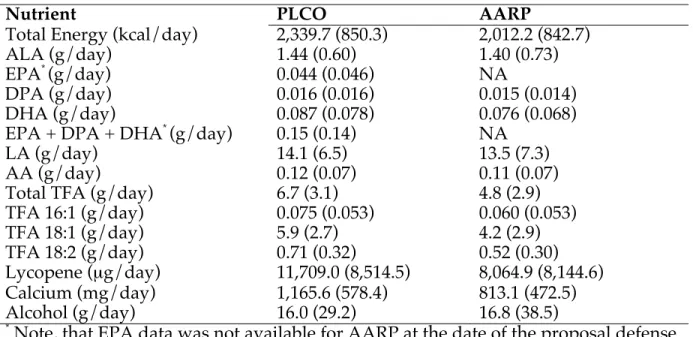
Table 10. Comparison of intakes of selected nutrients (SD) in the PLCO and NIH-AARP studies... 112
Table 11. Comparison of the PLCO and NIH-AARP Studies... 113
Table 12. Power estimates for main effect analyses in the PLCO population... 113
Table 13. Power estimates for main effect analyses in the AARP population. ... 114
Table 14. Timeline for Completion of the Dissertation... 115
Table 15. Contributions and correlations of energy-adjusted intakes of major polyunsaturated fatty acids among 29,594 male participants in the screening arm of the PLCO Cancer Screening Trial in the year prior to randomization... 116
Table 17. Hazard ratios and 95% confidence intervals for total prostate cancer in relation to intakes of major polyunsaturated fatty acids and trans fatty acids (TFAs) in the screening arm of the PLCO
Cancer Screening Trial. ... 118 Table 18. Hazard ratios and 95% confidence intervals for low-grade
prostate cancer (Gleason sum < 7) in relation to intakes of major polyunsaturated fatty acids and trans fatty acids (TFAs) in the
screening arm of the PLCO Cancer Screening Trial. ... 120 Table 19. Hazard ratios and 95% confidence intervals for high-grade
prostate cancer (Gleason sum ! 7) in relation to intakes of major
polyunsaturated fatty acids and trans fatty acids (TFAs) in the screening
arm of the PLCO Cancer Screening Trial ... 122 Table 20. Contributions and correlations of energy-adjusted intakes
of major polyunsaturated fatty acids among 287,468 male participants in the
NIH-AARP Diet and Health Study. ... 124 Table 21. Selected baseline characteristics of 29,594 male participants in the
screening arm of the PLCO Cancer Screening Trial and 287,468 male
participants in the NIH-AARP Diet and Health Study... 125 Table 22. Hazard ratios and 95% confidence intervals for incident prostate
cancer in relation to intakes of major polyunsaturated fatty acids
and trans fatty acids (TFAs) in the NIH-AARP Diet and Health Study. ... 126 Table 23. Hazard ratios and 95% confidence intervals for advanced prostate
cancer in relation to intakes of major polyunsaturated fatty acids and
trans fatty acids (TFAs) in the NIH-AARP Diet and Health Study... 128 Table 24. Hazard ratios and 95% confidence intervals for fatal prostate
cancer in relation to intakes of major polyunsaturated fatty acids and
xi
LIST OF FIGURES
Figure 1. Prostate cancer incidence in the United States from
1975-2003 (from (3)). ... 132 Figure 2. Prostate cancer mortality in the United States from
1975 – 2003 (from(4))... 132 Figure 3. Mechanistic model for relations between polyunsaturated
fatty acids and prostate carcinogenesis (adapted from (19))... 133 Figure 4. States represented in the PLCO Cancer Screening Trial... 134 Figure 5. States represented in the NIH-AARP Diet and Health Study. ... 134 Figure 6. Conceptual diagram, sharing features of a Directed Acyclic
Graph, for the associations between dietary intakes of major
LIST OF ABBREVIATIONS
AA Arachidonic Acid
ALA Alpha-linolenic Acid
ATBC Alpha-Tocopherol and Beta-Carotene Trial CARET Carotene and Retinol Efficacy Trial
CI Confidence Interval COX Cyclooxygenase
CSFII Continuing Survey of Food Intake by Individuals DGLA Dihomo-gamma-linolenic Acid
DHA Docosahexaenoic Acid DHQ Diet History Questionnaire DPA Docosapentaenoic Acid DQX Diet Questionnaire EPA Eicosapentaenoic Acid GLA Gamma-linolenic Acid
HEPE Hydroxyeicosapentaenoic Acid HETE Hydroxyeicosatetraenoic Acid HODE Hydroxyoctadecadienoic Acid HPEPE Hydroperoxyeicosapentaenoic Acid HPETE Hydroperoxyeicosatetraenoic Acid ICR Interaction Contrast Ratio
IMS Information Management Systems, Inc.
xiii LOX Lipoxygenase
LT Leukotriene
MEC Multiethnic Cohort Study NCI the National Cancer Institute NCOA National Change of Address NIH the National Institutes of Health
NSAID Non-steroidal Anti-inflammatory Drug
PG Prostaglandin
PHS Physician’s Health Study
PIN Prostatic Intraepithelial Neoplasia PLA2 Phosopholipase A2
PLCO Prostate, Lung, Colorectal and Ovarian Cancer Screening Trial PSA Prostate Specific Antigen
PUFA Polyunsaturated Fatty Acid
RR Relative Risk
SD Standard Deviation
SEER Surveillance, Epidemiology, and End Results TFA Trans-Fatty Acid
TX Thromboxane
!-3 Omega-3
CHAPTER I
REVIEW OF THE LITERATURE
A. Introduction and Historical Background
Prostate cancer is the most common cancer and second leading cause of cancer-related death among men in the United States, accounting for 218,890 new cases and 27,050 deaths in 2007(1). In 2002, the age-standardized incidence rate of prostate cancer in the United States was 124.8 cases/100,000 men and the
age-standardized morality rate was 15.8 deaths/100,000 men (both rates age-standardized to the 2002 World population)(2). Age-standardized prostate cancer incidence has trended upwards over the past three decades, with a sharp peak after the
widespread implementation of Prostate Specific Antigen (PSA) testing (Figure 1)(3). Age-standardized prostate cancer mortality continued to increase with a similar trend when PSA testing was introduced, but has shown a small, but steady, decline during the past decade (Figure 2)(4), suggesting that the introduction of PSA
screening mainly diagnosed latent tumors that were unlikely to impact mortality. While prostate cancer incidence and mortality vary by race, trends over the past few decades do not differ substantially by race.
While the burden of prostate cancer is high, there are few established risk factors(5). The most widely accepted risk factors for prostate cancer are
2
more than 44,000 pairs of twins in Denmark, Finland, and Sweden suggested that 42% (95% confidence interval, CI, = 29 – 50) of prostate cancer risk can be attributed to inherited risk factors(6), but only a small number of genes have been associated with prostate cancer, including the androgen receptor gene and Cytochrome P17(7). Increasing prostate cancer incidence and mortality among Japanese men that have migrated to the United States(8, 9) and increasing rates of prostate cancer within Asian countries (that traditionally have low rates of prostate cancer) suggest that lifestyle factors such as diet and physical activity may contribute substantially to the risk of prostate cancer(10). Studies of lifestyle factors including diet (total energy intake, fat intake, and the intake of micronutrient intakes including lycopene and other antioxidants), physical activity, comorbid conditions (e.g. diabetes), and body size have generated conflicting findings(7).
Autopsy studies have suggested that nearly 30% of men aged 30 – 40 and 65% of men aged 60 – 70 have small cancers of the prostate(11). However, while the lifetime risk of prostate cancer is high, many tumors may be slow-growing cancers with little potential to cause clinically relevant disease or death. On the other hand, the risk of prostate cancer mortality increases with tumor grade and stage at
diagnosis(12). Therefore, aggressive prostate cancer may be a greater public health concern than total prostate cancer, and many epidemiologic studies have estimated associations separately for case-subtypes characterized by stage, grade, and/or mortality(7).
B. Review of the Literature
particular interest are the roles that polyunsaturated fatty acids (PUFAs) may play. Due to a combination of changes in livestock feeding routines, emphasizing grains, and the perceived health benefit of using cooking oils high in PUFAs, PUFA
consumption has increased substantially in the United States(14). Coupled with the perceived health benefits of PUFAs and negative health effects of saturated fat consumption, processed food producers have increased the use of artificially produced trans fats (TFAs), which are now thought to confer potential negative effects on a variety of health outcomes(15). A number of epidemiologic studies have attempted to elucidate relations between specific polyunsaturated and trans fatty acids and prostate cancer, although the evidence has been relatively inconsistent.
B.1. Polyunsaturated Fatty Acids
Fatty acids are a primary building block of phospholipids and glycolipids, two important classes of biological molecules, that modify proteins (to form
4
are classified as essential fatty acids(19) and must be supplied through diet.
Furthermore, unsaturated fatty acids may be chemically modified through chemical means, such as the partial hydrogenation of vegetable oils, or in limited quantities through natural processes in the cow gut, to include carbon-carbon double bonds in the trans-fatty acids (TFA)(20). Fatty acids can be identified by two numbers
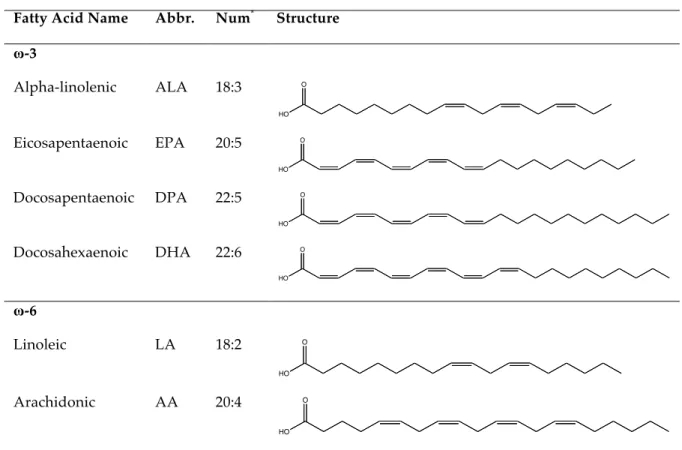
indicating the length of the hydrocarbon chain and the number of double bonds found within the chain (Table 1). For example, a fatty acid labeled “18:0” has a hydrocarbon chain with 18 carbon atoms and no carbon-carbon double bonds, while a fatty acid labeled “18:2” also has 18 carbon atoms, but would include two carbon-carbon double bonds.
PUFA intake has been a recent focus of research because of the potential benefits that this class of fatty acids, or specific types of PUFAs, may have on health outcomes, including cardiovascular disease and cancer(14, 21, 22). PUFAs account for approximately 7% of total energy intake and 20% of energy intake from fats among adults in the United States(14). PUFAs are most generally sub-classified by the location of the first double bond, counting from the methyl group end (the ! -end). The majority of naturally occurring polyunsaturated fatty acids have double bonds in the third or sixth position (!-3 and !-6, respectively)(14).
Major !-3 fatty acids include "-linolenic acid (ALA; 18:3), eicosapentaenoic acid (EPA; 20:5), docosahexaenoic acid (DHA; 22:6), and docosapentaenoic acid (DPA; 22:5)(). Major !-6 fatty acids include linoleic acid (LA; 18:2) and arachidonic
approximately 10% of energy from PUFAs(14). DHA and EPA, two of the so-called “fish fats,” get a great deal of publicity even though they account for less than 2% of energy from PUFAs(14). Most !-3 fatty acids consumed in the US are from
terrestrial sources, including vegetable seeds and oils, however the long-chain !-3 fatty acids, DHA and EPA are most commonly found in fatty fish that obtain these fatty acids by consuming algae and other microscopic organisms(14). The most common dietary sources of DHA and EPA are fatty fish such as salmon and
tuna(14). It is important to note that although intake of the !-3 fatty acid ALA has increased substantially in recent decades in the US(23) there also has been an
increase in the ratio of !-6 to !-3 fatty acids(14). This shift in the ratio of dietary !-6
to !-3 fatty acids consumed in the US has been influenced by increased consumption of modern vegetable oils and the increased use of grains for livestock production,
which favors oils rich in !-6 fatty acids (such as safflower and sunflower oils) and oils rich in ALA (such as canola oil)(14).
Metabolism of the major PUFAs is highly interrelated (Figure 3)(19). Because humans lack the sufficient enzymes to introduce necessary double bonds into
hydrocarbon chains, both ALA and LA are essential fatty acids(14). ALA can be converted into EPA and DHA in limited quantities(24). However, because ALA and LA metabolic pathways compete for the same enzymes, this interconversion is limited by both the amounts of !-3 fatty acids consumed and by the ratio of !-6 to
!-3 fatty acids(24). DPA can be formed as a metabolic intermediary between EPA
6
B.2. Potential Mechanisms for Prostate Carcinogenesis
A number of mechanisms have been proposed to explain potential relations between polyunsaturated fat intake and prostate cancer risk(19). For example, fatty acids may modulate prostate carcinogenesis through the modification of membrane phospholipid composition(25), by increasing lipid peroxidation(26), by modulating cell signaling activity(27-29) or cytokine production(30), and by interfering with androgen activity(31). Some of these mechanisms support a greater role of !-3 fatty
acids and their metabolic byproducts on carcinogenesis, while others support a greater role for !-6 fatty acids; therefore evidence of both positive and negative
effects of each class of fatty acids may be consistent with roles through different carcinogenic mechanisms.
Perhaps, the strongest hypothesis for the role of dietary intakes of PUFAs in prostate carcinogenesis concerns the effects of intakes on the production of
metabolic intermediates relevant to pathogenesis. As previously noted, ALA and LA, the primary !-3 and !-6 PUFAs in the diet, compete for the same metabolic enzymes that are used produce EPA and AA, respectively (Figure 3)(19). Therefore, increased concentrations of LA relative to ALA will limit conversion of ALA to EPA and DHA and increase conversion of LA of AA. EPA and AA subsequently
compete for the same metabolic enzymes (Cyclooxygenases; COXs and Lipoxygenases; LOXs) that are used to form prostaglandins (PGs) and other eicosanoids(19). In addition, high dietary intakes of !-3 fatty acids increase their
Hypotheses regarding fatty acids and inflammation suggest a greater
carcinogenic potential of !-6 fatty acids and their intermediates. Specifically, AA-derived eicosanoids, including prostaglandin E2, have been shown to stimulate prostate tumor growth in both prostate tumor cell lines(33) and animal models(34, 35) and long-chain !-6 fatty acids (LA) have been shown to enhance growth of
human prostate tumor cell lines(36). In addition, AA has been shown to up-regulate COX-2 and COX-1(37), which may increase inflammation-mediated carcinogenesis, while !-3 fatty acids have been shown to suppress COX-2(38-40).
Potential carcinogenic mechanisms related to oxidative stress suggest a negative effect of the !-3 fatty acid ALA that may be indirectly related to LA-mediated inhibition of ALA metabolism to DHA and EPA. In particular, ALA has been shown to enhance #-oxidation(41), a process which generates hydrogen
8
(another oil rich in ALA) did not show a reduction in chemically induced prostate tumorgensis as compared with rats fed corn oil(44).
One in vitro study showed that ALA increased growth of the TSU, LNCaP, and PC-3 prostate tumor cell lines(45). However, two studies using DU-145 cells found that ALA increased apoptosis at physiological ALA concentrations(46) and suppressed cell proliferation(47). This latter study also showed that urokinase-type plasimongen activator, an important protease enzyme thought to enhance
carcinogenesis, production was inhibited by ALA(47). A fourth study found that ALA decreased androgen receptor capacity and increased estrogen receptor capacity in the DU-145 cell line(48), suggesting that ALA may modulate steroid hormone receptor binding. These apparent inconsistencies may be due to variations in cell growth conditions and/or differences in the concentrations of ALA and types of serum used in the cell culture medium(49).
Mechanisms for associations between trans fatty acid (TFA) intake and prostate cancer are less clear. One study found that cis-9, trans-11 conjugated linoleic acid, a naturally occurring trans-fat, inhibited the progression of the cell cycle from the G1 to S phase of DU-145 cell lines, a potential beneficial effect on tumor progression(50). Similarly, tumor necrosis factor (TNF)-" inhibited apoptosis was increased in LNCaP cell lines exposed to this same isomer(51). Hydrogenated fats, the source of the majority of trans-fatty acids in the diet, have been shown to increase production of inflammatory cytokines(15) and other markers of
inflammation(52) in humans. Additionally, a recent study found that serum concentrations of trans-fatty acids were associated with increased systemic
and oils, may increase prostate cancer risk through a systemic inflammatory response.
B.3. Total Polyunsaturated Fatty Acid, Total !-3 Fatty Acid, and Total !-6 Fatty Acid Intakes and Prostate Cancer
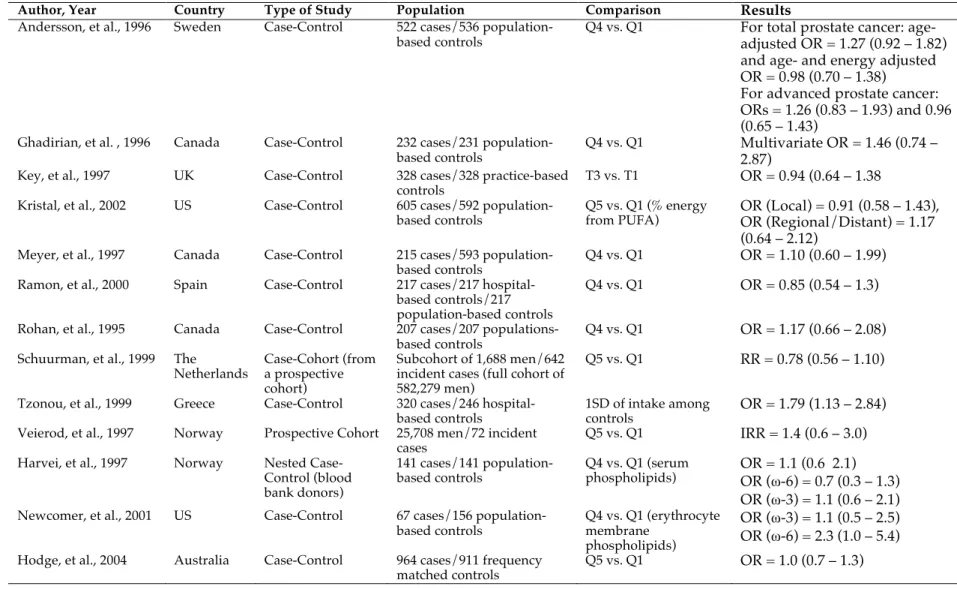
Overall, the evidence has been fairly inconclusive for an association between total PUFA intake and prostate cancer risk (Table 2). One prospective cohort(54) and two case-control(55, 56) studies found an increased risk of prostate cancer with increased dietary intake of PUFAs, while two case-control studies found an inverse association(57, 58), and two cohort(59, 60) and six case-control (61-66) studies found no association. Newcomer, et al. reported that !-3 fatty acid intake was not
associated with prostate cancer risk, but high !-6 fatty acid intake increased risk (OR
comparing the 4th quintile of !-6 fatty acid intake to the 1st quintile = 2.3; 95% CI = 1.0 – 5.4)(67). Harvei, et al. conducted a nested-case control study of serum
phospholipids concentrations of blood bank donors and found no association
between prostate cancer and concentrations of total PUFAs or !-3 fatty acids, but a small inverse association with !-6 fatty acid concentrations(68). In an analysis of the
Multiethnic Cohort (MEC), Park, et al. found reported that total PUFA intake and total !-6 FA intake were not associated with either total or advanced prostate
cancer(60). However, they found a slightly reduced risk of advanced prostate cancer with increased intake of total !-3 FA (RR comparing the 5th to 1st quintiles = 0.90; 95% CI 0.76 – 1.08)(60). In an analysis of the Carotene and Retinol Efficacy Trial (CARET), Neuhouser, et al. found substantially stronger positive associations
10
family history of prostate cancer than among men with no family history of prostate cancer(59)
Because studies of general fatty acid consumption, or classes of fatty acids, and prostate cancer have yielded inconclusive findings, and the fact that evidence suggests that specific fatty acids may act through different mechanisms, recent efforts have focused on studying the relations between specific fatty acids and prostate cancer.
B.4. Linoleic Acid and Arachidonic Acid and Prostate Cancer
As with studies of total PUFAs and prostate cancer, studies of the !-6 fatty acid LA have been inconclusive (Table 3). Two case-control studies found an
increase in prostate cancer risk with increased dietary intake of LA(63, 65), while one case-cohort(58) and one case-control(69) study found an inverse association, and two case-control(57, 66) and one cohort(70) study found no associations. A case-control study in Australia found no association between AA intake and prostate cancer risk(66). Furthermore, in an analysis of the Health Professionals Follow-up Study, Giovannucci, et al. reported a stronger inverse association between dietary intake of LA and advanced prostate cancer than with total prostate cancer (RRs comparing the 5th
quintile with the 1st
addition, Leitzmann, et al. also found no association between dietary intake of AA and total or advanced prostate cancer(72).
A case-control study nested within the Alpha-Tocopherol and Beta Carotene Trial (ATBC) found an inverse association between prostate cancer and serum concentrations of LA and positive associations between prostate cancer and both serum concentrations and dietary intakes of AA(70). One case-control study nested within the Physician’s Health Study (PHS) (73) found an inverse association
between plasma cholesterol ester concentrations of LA, but not AA, and prostate cancer risk, while two other case-control studies found positive associations between erythrocyte membrane(67, 74) and adipose tissue(74) concentrations of LA. In a case-control nested within the PHS, Chavarro, et al. reported that whole blood concentrations of LA were associated with a reduced risk of prostate cancer,
regardless of aggressiveness (as measured by stage, grade, and a combination of the two), but concentrations of AA were associated with increased risk of aggressive prostate cancer(75).
B.5. Alpha-linolenic Acid and Prostate Cancer
Studies of intake of the !-3 fatty acid ALA and prostate cancer generally
support a positive association (Table 4). Three case-control(57, 69, 76) studies found a positive association between ALA intake and prostate cancer risk. The
Giovannucci, et al. analysis(71) of the Health Professionals Follow-up Study found a positive association (RR comparing the 5th
quintile to the 1st
12
may have weaker effects for localized prostate tumors than advanced tumors. One case-cohort study(58) found an inverse association between prostate cancer risk and ALA intake (RR comparing the 5th quintile to the 1st quintile = 0.76, 95% CI = 0.66 – 1.04) and one case-control study(66) one cohort study(60) also found a modest inverse association between ALA intake and prostate cancer risk. Leitzmann, et al. found divergent effects for ALA intake and organ-confined and advanced prostate cancers, suggesting that ALA may act to promote tumor progression(72).
We conducted an analysis of prostate cancer and ALA intake from specific food sources in the screening arm of the Prostate, Lung, Colorectal, and Ovarian Cancer Screening Trial(49). ALA was not associated with total (RR comparing 5th to 1st quintile of ALA intake = 0.94; 95% CI = 0.81 – 1.09) or advanced prostate cancer risk (either by stage or grade). We also did not find any associations between prostate cancer risk and ALA intake from any specific food source.
Six case control studies(67, 68, 70, 73-75) evaluated ALA biomarkers, rather than dietary intake of ALA, and prostate cancer risk. A case-control study nested within the PHS found that increased plasma cholesterol concentrations of ALA were associated with increased prostate cancer risk(73). Of the four case-control
between prostate cancer risk and either serum concentrations of ALA or dietary intake of ALA(70). In their analysis of PHS data, Chavarro, et al. reported stronger positive associations between high blood concentrations of ALA and non-aggressive prostate cancers (either by stage or a combination of stage and grade), but similar positive associations for low and high grade tumors(75).
B.6. Docosahexaenoic Acid and Eicosapentaenoic Acid and Prostate Cancer
Studies dietary intakes of the long chain !-3 fatty acids DHA and EPA and prostate cancer generally suggest no associations (Table 5). One case-control(62) and one cohort study(60) found no associations between dietary intakes of DHA and EPA and either local or distant prostate cancer while another(66) found an inverse association between EPA intake and prostate cancer (OR = 0.8; 95% CI = 0.6 – 1.11) and no association between DHA intake and prostate cancer. One case-cohort study(58) found no association between dietary intakes of either EPA or DHA and prostate cancer risk, while another(76) found that DHA and EPA consumption was inversely associated with prostate cancer risk (OR comparing the 4th quartile of consumption to the 1st
= 0.70; 95% CI = 0.51 – 0.97). The initial analysis of the Health Professionals Follow-up Study(71) found no association between prostate cancer risk and DHA and EPA intake. However, the follow-up analysis by Leitzmann, et al. (72) suggests that DHA and EPA intakes may be inversely associated with prostate cancer risk, particularly with advanced cases. The analysis of DHA and EPA dietary intakes in ATBC found possible positive associations between dietary intakes of both EPA and DHA and prostate cancer risk.
Studies of biomarkers of DHA and EPA have more consistently been
14
than studies of dietary intakes (Table 5). This may partially be the result of
interconversion of ALA to these long-chain !-3 fatty acids since serum
acids may not be indicative of dietary intakes. They may also not be as representative of long-term intakes of these fatty acids as dietary assessment methods.
B.7. Trans-fatty Acids and Prostate Cancer
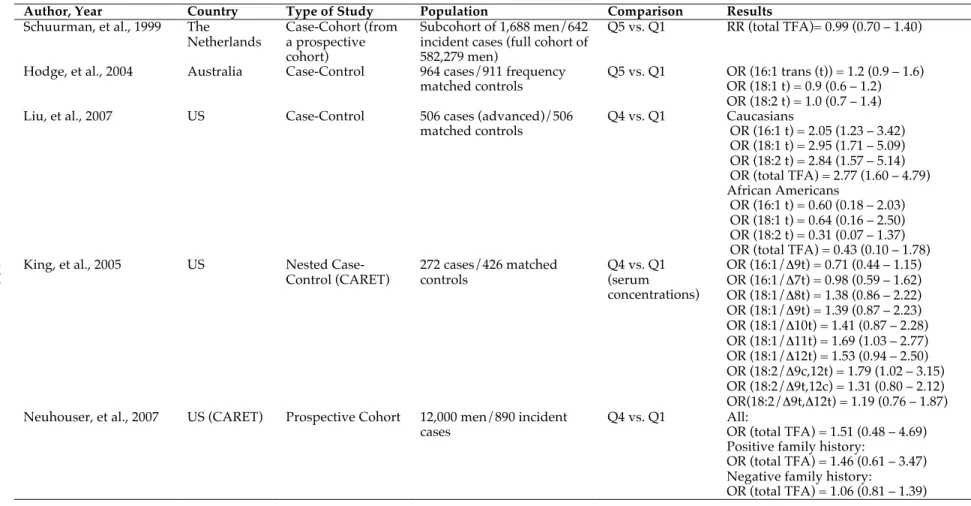
Few studies have investigated relations between TFA intake and prostate cancer risk (Table 6). One case-cohort study(58) found no association between total TFA intake and prostate cancer risk while a case-control study in Australia (66) found a modest positive association between dietary intake of the fatty acid 16:1 TFAs and prostate cancer (RR = 1.2; 95% CI = 0.9 – 1.6) and no associations between 18:1 and 18:2 TFAs. Liu, et al. published a case-control study(79) and found positive associations between advanced cancer and intakes of 16:1, 18:1, 18:2 and total TFAs among Caucasians, but the suggestion of inverse associations among African Americans. Intriguingly, they found that a functional mutant of the RNASEL gene modified this association among Caucasians while the mutation alone was not associated with prostate cancer risk. In their analysis of CARET data(59),
Neuhouser, et al, found that total TFA intake was positively associated with prostate cancer risk among men with a family history of prostate cancer, but not among men without a family history.
16
B.8. Ratios of Polyunsaturated Fatty Acids and Prostate Cancer
As discussed previously, the mechanisms for which PUFA intake may modulate prostate carcinogenesis are highly interrelated(19). For example, it is known that conversion of ALA to DHA and EPA is inefficient(81) and is modulated by dietary intakes of ALA as well as concentrations of DHA and EPA(19).
Furthermore, it is hypothesized that competition for metabolic enzymes that synthesize AA from LA and DHA and EPA from ALA may influence the
concentrations of these long-chain metabolites and their influence on prostate cancer
risk(19). Furthermore, because the long-chain !-3 and !-6 fatty acids compete for the same enzymes (and act in opposite directions on prostate cancer risk), the relative amounts of these classes of fatty acids may be more influential on prostate cancer risk than the absolute intakes(19).
Few studies have reported associations between ratios of PUFAs and prostate cancer (Table 7). A nested case-control study of serum concentrations of fatty acids and prostate cancer by Harvei, et al.(68) generally found inverse associations
between increasing ratios of !-6 fatty acids to !-3 fatty acids and prostate cancer risk. In their analysis of PHS data(75), Chavarro, et al. found a modest inverse association between the ratio of serum concentrations of !-6 fatty acids to !-3 fatty acids and a modest positive association between the ratio of serum concentrations of AA to EPA. In their analysis of the MEC study, Park, et al.(60) found no associations between high ratios of dietary intakes of !-6 fatty acids to !-3 fatty acids and total or
advanced prostate cancer. Hedelin, et al.(76) found positive associations between
their analysis of the Health Professionals Follow-up Study, Leitzmann et al.(72) found no association between the ratios of dietary intakes of LA to ALA and a positive association between the ratio of LA to EPA and DHA (RR comparing the 5th quintile to the 1st
quintile = 1.14; 95% CI = 0.98 – 1.33). They also found an inverse association between the ratio of LA to ALA and advanced prostate cancer and a positive association between the ratio of LA to EPA and DHA and advanced prostate cancer. Most likely, these results are driven by the associations between prostate cancer and ALA, EPA, and DHA, detailed previously.
B.9. Summary of the Prior Literature
A number of studies have investigated associations between prostate cancer and either dietary intakes or biological levels of PUFAs and results are somewhat conflicting. In general, studies support positive associations between ALA and prostate cancer risk and inverse associations with DHA and EPA. However, it is important to note that the majority of studies are retrospective in nature and may be limited by differential recall of diet based on case status, changes in diet as a result of their cancer diagnosis, or in the case of biomarker studies, changes in biological concentrations of fatty acids as a result of the cancer, although biomarker measures of PUFAs have been shown to correlate fairly well with dietary intakes(77).
One difficulty that arises in comparing studies of diet is that dietary assessments vary in their ability to measure complete dietary intakes(82) which makes it difficult to compare categories of intake across studies that use different assessment methods. Therefore, most studies compare ranked intakes (e.g.
18
PUFA intakes from food frequency questionnaire and diet record was 0.47 and 0.53 after energy intake was adjusted for(83). However, neither assessment method is perfect. Not only are there differences in assessment by method, but also different instruments within the same approach can provide different estimates. Subar, et al. found in a comparison of the Block, Willet, and NIH Diet History Questionnaire (DHQ) that adjustment for energy intake increased the comparability of the three food frequency questionnaires(84). We know, for example, that the dietary
assessment used in the screening arm of the PLCO Screening Trial did not include items on the types of cooking oils used. Because vegetable oils are large sources of ALA in the diet, our intake data is expected to be lower than that generated by a food frequency questionnaire (FFQ) that did inquire about cooking oils. A further discussion of the comparability of the two food frequency questionnaires used in the proposed dissertation research can be found in the methods chapter.
Furthermore categories of nutrient intakes by quantile may not be directly comparable across studies as absolute intakes of nutrients in studies may vary across different populations. For example, if the distributions of intakes in two populations differ substantially, individuals who would have been classified in the 5th
quintile of intake in one population might be equivalent to individuals in the fourth quintile of another study (based on absolute intakes).
Given that PUFA intakes may act to promote tumor growth(19) and that screening is believed to have increased the detection of slow growing tumors(3, 4) recent studies have focused on elucidating relations between PUFA intake and more aggressive or fatal prostate cancers(49, 72). Furthermore, studies with sufficient power (49, 72, 79) have stratified analyses by both potential biological modifiers (e.g. the COX inhibiting non-steroidal anti-inflammatory drugs, NSAIDs) and other purported risk factors for prostate cancer (e.g. race).
While biological levels of PUFAs may be more related to biologic
mechanisms, dietary intakes are more relevant in terms of primary prevention as biological concentrations are modifiable through dietary intakes. Godley, et al. found correlations between erythrocyte membrane concentrations and FFQ
estimates of EPA and DHA consumption of 0.44 and 0.41, respectively and between adipose tissue concentrations and FFQ estimates of 0.38 and 0.32, respectively(77). These correlations are similar to estimates of the correlations between erythrocyte membrane and adipose tissue concentrations of these same PUFAs(77). Biological concentrations are only modifiable as a function of dietary intakes.
Few large prospective studies have comprehensively examined relations between dietary intakes of specific PUFAs and their ratios, and prostate cancer risk. The majority of studies, including our prior analysis of ALA intake in the PLCO study, has focused on one subset of PUFAs (e.g. long-chain !-3 fatty acids) and have
not thoroughly investigated the entire set of interrelated nutrients and prostate cancer risk. Few studies have investigated dietary intakes of TFAs.
20
how not only individual polyunsaturated fatty acids may influence prostate cancer risk, but also the role that ratios of these fatty acids may influence risk.
CHAPTER II
STATEMENT OF SPECIFIC AIMS
A. Specific Aims
Although prostate cancer is the most common cancer and second leading cause of cancer-related death among men in the United States(1), few established risk factors exist(85). The most widely accepted risk factors for prostate cancer are non-modifiable, including race and family history of prostate cancer(85). However, wide geographic variation in prostate cancer incidence and mortality rates suggests an etiologic role for lifestyle factors(85). Evidence has supported a role for
environmental factors associated with a western lifestyle in prostate cancer
etiology(85). Studies of dietary consumption of fats and prostate cancer have been inconclusive(86). Recent interest has focused on consumption of specific fatty acids in association with prostate cancer risk(13, 21, 87). Increases in polyunsaturated fat intakes in the western diet, particularly in !-linolenic acid (ALA) and linoleic acid (LA), the most common omega-3 (!-3) and omega-6 (!-6) fatty acids(14),
respectively, have correlated with increases in prostate cancer incidence, even prior to the widespread introduction of prostate specific antigen (PSA) testing. A number of epidemiologic studies have investigated the relations between total
22
!-linolenic acid (ALA, 18:3, !-3), and docosahexaenoic acid (DHA, 22:6, !-3) and
eicosapentaenoic acid (EPA, 22:5, !-3) (62, 67, 68, 70-74, 88-90). Although results of these studies have been inconclusive, they generally suggest a modest inverse association between long-chain !-3 fatty acids (DHA and EPA) and prostate cancer, and modest positive associations between the short chain !-6 and !-3 fatty acids (LA and ALA, respectively) and prostate cancer. These associations are biologically plausible as LA is metabolized to arachidonic acid (AA, 20:4, !-6) by the same
enzymes that synthesize EPA and DHA from ALA(19). Eicosanoids formed as metabolites of AA, including prostaglandins and thromboxanes, have been
implicated in prostate growth and inflammation(19). Furthermore, ALA has been shown to have the ability to increase oxidative damage, potentially promoting carcinogenesis(19). Because of this enzymatic competition, it is thought that the ratio of !-6 to !-3 fatty acid consumption may be more important than the absolute intakes of specific PUFAs(19). An additional strong hypothesis suggests that EPA and DHA may inhibit prostate carcinogenesis by competing for a second set of enzymes, such as COX-2, that are used to form eicosanoids from AA(19). Few studies have reported on relations between trans-fatty acids (TFAs) and prostate cancer(58, 66, 79, 80), but data suggest that there may be a positive association. A positive association is plausible as TFAs from partially hydrogenated have been hypothesized to increase an inflammatory response(15, 52, 53).
in the National Institutes of Health (NIH) – AARP (formerly the American Association of Retired Persons) Diet and Health Study(94).
Specific aims of this study were to:
1. Estimate associations between prostate cancer incidence and dietary intakes of !-3 and !-6 fatty acids (ALA, DHA, DPA, LA, and AA) and their ratios and dietary intakes of trans-fatty acids (TFAs) among men in the screening arm of the PLCO trial.
2. Assess the degree to which these associations are modified by race, body mass index (BMI), which may affect fatty acid metabolism, total energy intake, and non-steroidal anti-inflammatory drug (NSAID) use.
3. Evaluate these associations separately for prostate cancer cases classified according to stage and grade.
4. Estimate the associations between prostate cancer incidence and dietary intakes of !-3 and !-6 fatty acids (ALA, DHA, DPA, LA, and AA) and their ratios and dietary intakes of TFAs among men in the NIH-AARP Diet and Health Study.
5. Assess the degree to which these associations are modified by race, BMI, and NSAID use.
6. Evaluate these associations separately for advanced and fatal prostate cancer cases.
Study aims one, two, and three were addressed through analyses of data
24
sites throughout the United States (Birmingham, AL, Denver, CO, Detroit, MI, Honolulu, HI, Marshfield, WI, Minneapolis, MN, Pittsburgh, PA, Salt Lake City, UT, St. Louis, MO, and Washington, DC)(93). Participants were recruited from the general populations by advertisements, direct mailings, and other means(93). The PLCO screening arm enrolled 38,350 men between the ages of 55 and 74 years from 1993 through 2001 and will follow-up men for a variety of endpoints, including prostate cancer, for at least 13 years(93). All men were free of cancer at baseline. To date, nearly 1,900 prostate cancer cases have been ascertained, including 285 tumor classified as “advanced” (clinical stage greater than or equal to T3b, N1, or M1)(49). Because we have precise data on time-to-event, associations were estimated using Cox proportional hazards models(95) using age as the underlying time metric(96). Furthermore, the proportional hazards model is free of distributional assumptions and only relies on the proportional hazards assumption being held. To estimate effects between nutrients and tumor stage and/or grade, we fit separate models for each outcome of interest.
Aims four, five, and six were addressed through analyses of data collected from the baseline questionnaires of the NIH-AARP Diet and Health Study(94). The NIH-AARP Diet and Health Study enrolled 340,148 men aged 50-71 years between 1995 and 1996 in six states (CA, FL, PA, NJ, NC, and LA) and two metropolitan areas (Atlanta, GA and Detroit, MI)(94). Participants were recruited through direct
mailings to AARP members and will be followed-up for at least 10 years for a variety of endpoints, including prostate cancer(94). More than 10,000 prostate cancer cases have been ascertained through the first five years of follow-up (2000)(50). Associations will be estimated using Cox proportional hazards
nutrients and tumor stage and/or fatality, we fit separate models for each outcome of interest. Study results may be used to help clarify the role that dietary intakes of specific polyunsaturated fats in prostate carcinogenesis and suggest avenues for primary prevention through the identification of modifiable risk factors for this high burden disease in men.
B. Hypotheses and Rationale
Hypotheses and rationales for each aim of the proposed study are:
Aim 1: ALA intake will not be related to either total or advanced prostate cancer as
our prior analysis of ALA and prostate cancer in PLCO yielded null findings and only approximately 20 additional cases have been ascertained through additional case-ascertainment during the same follow-up period. However, modest changes in the effect sizes may occur after additional control for intakes of other PUFAs. DHA and EPA intake will be associated with a reduced risk of prostate cancer,
particularly among advanced cases, as the majority of prior studies have found an inverse association with increased DHA and EPA and one may expect a stronger effect with advanced cases given the hypothesis that DHA and EPA may have antiproliferative effects. LA intake, and to a lesser extent AA intake, will be associated with a small increase in prostate cancer risk, consistent with the prior literature. Because of the null findings for ALA intake in PLCO, we expect that the ratio of LA/ALA intake will most likely have a modest positive association given the similarities in the PLCO population with the study of these ratios in the Physician’s Health Study. A high ratio of LA to DHA + EPA intake will be
26
prostaglandin synthesis from DHA and EPA. Due to the interrelated metabolism of these PUFAs, a more thorough investigation of the associations of ALA along with other PUFAs may shed greater insight into the true relations with prostate cancer. Aim 2: Because NSAID use may be of too small a dose relative to intake, and
self-reported use may not accurately reflect true use over the etiologically relevant time period, and NSAID use (and NSAIDs COX inhibitory properties) did not previously modify our relations between ALA intake and prostate cancer, we do not expect that it will modify our associations. However, it is possible that these associations will differ with the other individual fatty acids. Similarly, neither BMI nor race strongly modified risk in our previous analysis, and will be unlikely to modify the current associations. In general, prior studies have either been underpowered to conduct stratified analyses or have not reported substantial effect measure modification by other known risk factors for prostate cancer. In order to remain consistent with the literature, we will evaluate modification by other purported risk factors for prostate cancer.
Aim 3: If associations are present in PLCO, we may expect that they would be
stronger for advanced prostate cancer cases (either high stage or grade or a combination of the two). We did not see any associations with ALA intake and advanced prostate cancer in PLCO. We did not, however, comprehensively analyze the role that other PUFAs, and their ratios, had on prostate cancer incidence.
However, associations in studies that investigated advanced prostate cancer separately tended to be stronger than those with total cases. Furthermore, these associations are plausible considering some of the proposed mechanisms for
Aim 4: Considering the body of literature, we would expect that ALA intake will be
associated with prostate cancer risk in the AARP cohort, particularly with advanced and fatal cases of prostate cancer. The AARP study used an enhanced dietary questionnaire that may better distinguish variability in dietary PUFA intakes, in similar populations. Similarly, we expect that DHA and EPA intake will be associated with a reduced risk of prostate cancer. Consistent with the body of literature, we would expect that the ratio of LA to DHA + EPA will be positively associated with prostate cancer risk and the ratio of LA to ALA intake will not be associated with prostate cancer risk.
Aim 5: As with the PLCO population, we do not expect substantial modification
between PUFA intakes and prostate cancer by NSAID use, race, or BMI. In order to remain consistent with the literature, we will evaluate modification by other
purported risk factors for prostate cancer.
Aim 6: As with PLCO, we expect that associations will be stronger with advanced
CHAPTER III
METHODS
A. Overview of Methods
We prospectively investigated relations between prostate cancer and dietary intakes of PUFAs within two large cohort studies, the screening arm of the Prostate, Lung, Colorectal, and Ovarian (PLCO) Cancer Screening Trial(97) and the NIH-AARP Diet and Health Study (NIH-AARP)(94). Diet was assessed at baseline in both cohorts using semi-quantitative food frequency questionnaires (FFQs). Additional data on potential confounders and effect measure modifiers were collected at baseline through extensive background questionnaires. We used a second risk factor questionnaire to collect additional data on potential covariates from AARP participants approximately six months after enrollment. In addition, it was possible to treat screening behavior as a time-varying covariate during follow-up of
B. Study Design
B.1. The Screening Arm of the PLCO Cancer Screening Trial
B.1.a. Study Population
The Prostate, Lung, Colorectal, and Ovarian Cancer Screening Trial is a multi-site (Birmingham, AL, Denver, CO, Detroit, MI, Honolulu, HI, Marshfield, WI, Minneapolis, MN, Pittsburgh, PA, Salt Lake city, UT, St. Louis, MO, and
Washington, DC; Figure 4) clinical trial sponsored by the National Cancer Institute (NCI) that was designed to test the effectiveness of screening for these four cancers and to identify early markers and etiologic determinants of cancer(93). Participants were recruited from the general population through direct mailings, advertisements, and other means and were enrolled between November 1993 and June 2001(98). A total of 38,350 men (Table 8) between the ages of 55 and 74 years were enrolled into the screening arm of the trial. Men in the screening arm of the PLCO trial were screened annually, beginning at baseline and continuing through year 5, by prostate specific antigen (PSA) test and were also screened annually through year 3, by digital rectal exam (DRE). Study participants provided written informed consent. The institutional review boards of the NCI and the ten participating screening centers approved the study. Current analyses were exempted from institutional review board review at the University of North Carolina as the research was deemed “non-human subject research.”
30
= 2,471), underwent an initial screen but did not have subsequent contact (n = 1,458), did not complete the baseline or dietary questionnaire (n = 7,493), reported an
energy intake in the top or bottom 1% of the reported energy intake distribution (n = 634), or completed their baseline after 30 September, 2002 (n = 71). After exclusions, 29,592 men were eligible for our proposed analyses. The men in the final analytic cohort do not differ substantially from those men excluded from analysis with respect to age, level of education, smoking status, and family history of prostate cancer(49). For these analyses, men were followed-up from completion of the baseline questionnaire until the date of diagnosis, death, date of last questionnaire return, or the end of the study period (30 September, 2002), whichever date came first.
B.1.b. Exposure Assessment
At baseline, participants completed a self-administered semi-quantitative 137-item food frequency questionnaire (FFQ) (DQX;
http://www.cancer.gov/prevention/plco/DQX.pdf), which inquired about usual diet over the year prior to completing the questionnaire. The DQX is a grid based FFQ which asked for frequency of consumption for all 137 food items and the usual portion size for 77 items. Gram weights per portion size (small, medium, large) were estimated using data from two 24-hour diet recalls administered in the 1994-1996 Continuing Survey of Food Intake by Individuals (CSFII)(99). For TFA intakes, gram weights were estimated using data from the Nutrition Data System for
groups, and the wording used for the DQX incorporated elements of both
database(99) and cognitive(101, 102) research. The DQX was not validated in this population, however both the Block and Willett FFQs from which the DQX was based have been validated in similar populations(84). No data is available for PUFA intakes from supplements such as flax seed or fish-oil capsules.
Food items relevant to PUFA intake that were specifically queried for included fried fish, tuna (including tuna salad and tuna casserole), shellfish (including shrimp, crab, and lobster), and other fish (either broiled or baked). However, the questionnaire did not inquire about specific fats typically used for frying, sautéing, or baking. Responses to the individual food items were converted to average daily intakes of specific fatty acids, including ALA, LA, DHA, DPA, EPA, and AA. Average daily intakes of each fatty acid were then combined in order to estimate the total daily intake of each of these fatty acids.
B.1.c. Outcome Assessment
32
autopsy data, and supporting medical/pathologic records were used to confirm the diagnosis and stage and grade information for participants who were reported as deceased by next of kin or the study center directly. Additionally, the National Death Index (NDI) was used to increase completeness of the data. Only confirmed prostate cancer cases will be included in our analysis(97). Due to the ongoing nature of the PLCO Cancer Screening Trial, prostate cancer mortality data is unavailable for these analyses. Through September of 2002, nearly 1,900 incident prostate cancer cases have been ascertained(49). Case ascertainment is believed to be virtually complete. Men were undergoing a standardized screening regimen and death certificate, autopsy data, and supporting medical/pathologic records were used to confirm diagnosis, including tumor stage and grade. Gleason grades are based on biopsy or prostatectomy Gleason scores, whichever value was greater.
B.1.d. Covariate Assessment
B.2. The NIH-AARP Diet and Health Study
B.2.a. Study Population
The NIH-AARP Diet and Health Study is a prospective cohort study
designed to investigate relations between diet and a variety of health outcomes(94). Between 1995 and 1996, 3.5 million current members of the AARP, aged 50 – 71 who resided in one of six US states (CA, FL, PA, NC, NJ, and LA) or one of two
metropolitan areas (Atlanta, GA and Detroit, MI) were invited to join the study (Figure 5). Over 500,000 individuals returned the initial mailed questionnaire, including 340,148 men (Table 9). A supplementary risk factor questionnaire was subsequently mailed to respondents during the latter half of 1996. The institutional review board of the NCI has approved the NIH-AARP Diet and Health Study. Current analyses were exempted from institutional review board review at the University of North Carolina as the research was deemed “non-human subject research.”
34
completion of the baseline questionnaire until the date of diagnosis, death, or end of the study period. Because detailed data is unavailable for men who have moved out of the study area, there was no censoring for this event.
B.2.b. Exposure Assessment
At baseline, participants completed a grid-based version of the Diet History Questionnaire (DHQ; http://riskfactor.cancer.gov/DHQ/)(94). The DHQ queried participants on the frequency of consumption and typical portion size of 124 food items during the past year prior to completion of the survey. The DHQ included an additional 21 questions on consumption of low-fat foods and food preparation practices, including types of oils and fats used(94). Like the DQX, the DHQ nutrient database is based on national dietary data from the CSFII(99) and NDSR(99, 100).
A separate calibration sub-study was conducted within the AARP
cohort(104). Of the 2,053 cohort participants enrolled into the calibration sub-study, 1,986 provided two separate 24-hour dietary recalls (approximately 1-month apart), while the rest provided a single 24-hour recall. All 2,053 sub-study participants received a second DHQ in October of 1996, of which 1,415 were returned. PUFA intakes were fairly well correlated with 24-hour dietary recalls, particularly after nutrients were adjusted for energy intake (r = 0.53)(83). No data is available on PUFA intakes from supplements, such as flax seed or fish-oil capsules.
Like the DQX, the DHQ inquired about fish consumption, including
consumption of tuna (including tuna salad and casserole), fried fish, and other types of seafood. However, the DHQ also queried participants on the types of fats and oils used in cooking, which are common sources of PUFAs in the diet.
B.2.c. Outcome Assessment
Identification of incident prostate cancer cases in the AARP cohort has been conducted through passive follow-up(105, 106) via linkage of the NIH-AARP cohort database with state cancer registries in the eight participating states(107). The AARP cohort database has been matched to the National Change of Address (NCOA) database maintained by the US Postal Service(105) and additional information on address changes has been obtained through direct reporting by study participants in follow-up questionnaires and through data received through US Postal Service processing of undeliverable mail(105). Within three years of follow-up, 98% of AARP cohort members either remained at the same address or relocated within one of the eight AARP states(107) and it has been estimated that over 95% of the cohort met these same criteria over the first five years of follow-up. Therefore, the
overwhelming majority of participants remained in follow-up for ascertainment of prostate cancer.
self-36
reported cancer incidence, approximately 90% of all incident caners were validly identified using the registry-based approach(105), potentially the result of
incomplete registry linkage and delayed reporting of cases to the registries. Clinical or pathological tumor stage data(103) was obtained from registry data. However, Gleason grade is unavailable for incident cases of prostate cancer in the AARP cohort. Furthermore, data released in time for the analysis to be completed will have further linkage to cancer registries in Arizona, Texas, and Nevada, the three states in which the largest number of AARP participants have relocated to outside of the eight AARP states and follow-up was extended for incidence through 2003 and for cause-specific mortality through 2005.
B.2.d. Covariate Assessment
C. Methods
C.1. Classification of Nutrient Intakes and Methods for Energy Adjustment We considered both continuous and categorical (quintiles, based on the distribution of nutrient intakes among the non-cases) classifications of nutrient exposures, including dietary intakes of ALA, LA, AA, EPA, DHA, and the sum of EPA and DHA. Furthermore, we considered the intakes of major classes of trans-fatty acids (TFAs; trans-16:1, trans-18:1, and trans-18:2), separately and in
combination, when correlations were sufficiently weak as to preclude colinearity. Additionally we used splines to explore potential dose-response curves(106).
We used three different approaches to control for energy intake in our
analyses(82): a standard model including unadjusted nutrient intakes and terms for energy intake, the residual method, and the nutrient energy-density method.
Briefly, standard models included term(s) for the nutrient whose effect is being modeled (categorical or transformed continuous), energy intake (categorical or transformed continuous), and any covariates used.
38
intakes. When energy intake is also strongly correlated with the outcome, but not a substantial intermediate, it is said to be appropriate to include terms for energy intake into the final models(82).
For nutrient energy-density models(82) we calculated the percentage of total energy consumed that is accounted for by each nutrient (Density variable = kcal from macronutrient / total kcal). Models incorporating these nutrient density variables also included terms for total energy intake.
In addition to estimating effects of individual fatty acid intakes, we separately estimated effects of ratios of !-6 to !-3 fatty acid intakes, including the ratios of AA+LA:ALA+DHA+EPA, LA:ALA, and LA:EPA+DHA+DPA as categorical and continuous exposures.
C.2. Classification of Covariates
C.2.a. PLCO
and/or ibuprofen use (never/<2 tablets/week/2+ tablets/week), physical activity (hours of “vigorous exercise”/week), and race (white/African American/Asian or Pacific Islander/Other). Furthermore, detailed screening behavior is available for participants during the first five years of enrollment in the PLCO trial, including the date of DRE and PSA blood draw. Because follow-up data is available for screening history, total numbers of screens were treated as a time-varying covariate in our models. We evaluated patterns of missing data to determine the best method of accounting for this. Missing values for these covariates were estimated using multiple imputation methods based on known values of covariates used in our analysis(108, 109). In the case of PLCO data, the only covariate that was missing in a substantial number of individuals was BMI.
C.2.b. AARP
40
109). Subjects who completed the supplemental risk factor questionnaire do not differ substantially from subjects who did not with respect to many of the covariates under investigation. However, we compared estimates from the entire cohort with those in each group as well as evaluated confounding and effect measure
modification by factors queried on the supplemental risk factor questionnaire among men for whom that data is available.
C.3. Statistical Analysis
C.3.a. PLCO and AARP
We first presented descriptive statistics for the study populations, including distribution of covariates by major exposure categories (means for continuous covariates, proportions for categorical covariates). Additionally, we described patterns of missing data for covariates.
Because we had individual level data on time to event, we used Cox proportional hazards models(95, 110) to estimate age-adjusted and multivariable-adjusted hazard ratios (HRs) and 95% confidence intervals (95% CIs) using STATA 10.0 (STATACorp, College Station, TX). A strength of the proportional hazards model is that it is free of distributional assumptions and only relies on the
assumption that the hazards for each of the exposure levels are proportional over the entire observation period(110). Because age is a stronger risk factor for prostate cancer than time in study, we used age as the underlying time metric in our
We constructed causal diagrams, including features of directed acyclic graphs (DAGs; Figure 6) to help identify potential confounding relationships between these covariates and the dietary polyunsaturated fat-prostate cancer relationship and determine potential adjustment sets(111). Potential confounders were included in multivariable models as appropriate to each main exposure being examined and we assessed the degree to which covariates acted as confounders by estimating the change in the ratio of precision and bias(112-114). Briefly, after adding a covariate to the model, we calculated the ratio of the change in variance of the point estimate for the main exposure divided by the change in the parameter estimate for the point estimate (on the log-scale). A large value for this ratio indicates relatively decreased precision with little change in the point estimate, and indicates that the covariate should not remain included in the model as a potential confounder. Due to the substantial statistical power afforded by the large sample sizes, we considered
keeping covariates that did not appear to change the parameter estimates if they also did not reduce the precision of our estimates using the same diagnostic criteria as above. Furthermore, to maintain consistency with study guidelines, we include standard covariates for studies of diet and prostate cancer within PLCO and AARP, as appropriate, so long as substantial precision was not lost (using the method described previously). Both age-adjusted and multivariable-adjusted effect estimates (HRs and 95%CIs) were presented.
42
We tested whether the proportional hazards assumption had been violated in each model by visual inspection(110), by adding a time interaction with each
covariate(110), and by the method of Grambsch and Therneau (a test of the linearity of the Schoenfeld residuals)(115). In cases where the proportional hazards
assumption was violated, measures were be taken to relax the assumption, such as adding an interaction between the exposure and time into the model(110).
We assessed multiplicative interactions (hazard ratio modification) by including multiplicative interaction terms in our proportional hazards models and comparing the stratum-specific HRs and 95% CIs and additive interactions (risk difference modification) by estimating the interaction contrast ratio (ICR)(116, 117) as both simulations by Li, et al.(118) and our own simulation studies (data not published) suggest that the ICR is a more robust assessment of additive interactions within proportional hazards models than either the attributable proportion due to additive interaction (AP) or the synergy index (S). We examined additive and multiplicative interaction by calculating the difference between the actual and expected interactions (based on a common-reference category)(91). Covariates considered as effect measure modifiers included age at baseline (categorized being below or above the population median), BMI (overweight+/not overweight), race (white/black/other), state of residence/PLCO study center, and family history of prostate cancer (yes/no). Note, that while BMI is technically on the pathway
between individual polyunsaturated fatty acids (Figure 6), individual fatty acids do not provide for a substantial amount of total energy intake (e.g. LA, which
energy from other sources. Thus, any bias induced, should have been fairly minimal and offset by the potential advantages gained by assessing BMI as a confounder and/or effect measure modifier.
Certain covariates, particularly total energy intake, physical activity, and body size, may have been misclassified. To assess the degree to which exposure misclassification may have biased our results, we conducted sensitivity analyses(91). Briefly, the potentially misclassified exposures were reclassified given hypothetical misclassification rates (sensitivity and specificity) and hazard ratios were estimated using the reclassified covariates. These new estimates were then used to evaluate the degree to which effect estimates may have been biased due to misclassification of these covariates by providing bounds to how far the point estimates may have changed given reasonable estimates for how misclassified the data could have been. To investigate the degree to which subclinical manifestations of undiagnosed
prostate cancer may have affected our estimates by altering dietary behaviors, we conducted a sub-analysis whereby we removed all subjects who were lost to follow-up or diagnosed with incident prostate cancer within one year of entry into the study. While this period is short relative to tumor progression, it removed latent tumors that were diagnosed as the result of a first screen in the PLCO population.
C.3.b. PLCO-specific statistical analysis
44
number of men were lost to follow-up with regards to prostate cancer diagnosis. To control for adherence to the prostate cancer screening regimen, we used a time-varying covariate equal to the number of prostate cancer screens that an individual had completed at a given time point in the proportional hazards model.
Due to the ongoing nature of the PLCO trial, information was not available on prostate cancer mortality in this cohort. However, confirmed clinical or
pathological stage and grade information (whichever grade was higher if both are available will be used) was available for virtually all prostate cancer cases. We considered as separate end points all prostate cancer cases, regionally invasive or metastatic cases (" T3b, N1, or M1), organ-confined cases or cases with minimal
extraprostatic extension (T1b – T3a and N0M0), cases with high Gleason sum (" 7), and cases with low Gleason sum (<7). Additionally, we considered advanced (meeting either the high stage or high Gleason criteria) and non-advanced (meeting neither criteria) cases. All additional assessed outcomes were evaluated in separate models.
C.3.c. AARP-specific statistical analysis
Person-time of follow-up accrued from the date of return of the baseline questionnaire until the date of prostate cancer diagnosis, death, or the end of the study period (31 December, 2003). As discussed previously, the passive
ascertainment methods used in AARP resulted in incomplete case ascertainment. However, it is unlikely that loss to follow-up was associated with dietary fatty acid intake. Approximately 60% of eligible AARP participants completed the
completed both questionnaires differ from participants who completed only the baseline questionnaire and we compared the complete cohort estimates with estimates confined to participants who completed both questionnaires.
We considered separate endpoints of total prostate cancer cases, fatal cases (including cases identified through registry data that subsequently died from prostate cancer after the study period, between 2003 and 2005, localized or organ-confined cases (Stage T1a – T2b and N0 M0), and men with extraprostatic disease (Stage T3 or T4, N1 or M1). A separate set of sensitivity analyses were conducted by excluding T1a cancers from the localized disease group and T3a cancers from the extraprostatic disease group. All additional assessed outcomes were evaluated in separate models. Because it has been estimated that approximately 11% of incident cancer cases will be missed through the cancer registry ascertainment
procedure(107), we conducted sensitivity analyses to determine the degree to which misclassification of this nature may have biased our estimates (in a similar manner to the methods used for misclassification of exposure).
D. Power Estimation
We estimated statistical power for Cox proportional hazards models using Power Analysis and Sample Size (PASS) 2005 (NCSS, Kaysville, UT) which uses the methods developed by Schoenfeld(119) and Hsieh and Lavori(120).
46
These estimates correlate well with empirical evidence from our prior study of ALA intake and prostate cancer risk in the PLCO population(49).