REGIONAL AND SPECIES LEVEL RESPONSES OF SCLERACTINIAN CORALS UNDER GLOBAL CHANGE WITHIN THE CARIBBEAN SEA
Colleen Bove
A dissertation submitted to the faculty at the University of North Carolina at Chapel Hill in partial fulfilment of the requirements for the degree of Doctor of Philosophy in the
Environment, Ecology, and Energy Program.
Chapel Hill 2020
ii © 2020 Colleen Bove
iii ABSTRACT
Colleen Bove: Regional and species level responses of Scleractinian corals under global change within the Caribbean Sea
(Under the direction of Karl D. Castillo)
Human-induced global change has caused rapid increases in ocean temperature (warming) and declines in seawater pH (acidification), and are expected to have negative impacts on tropical reef-building corals globally. Abnormally high seawater temperatures disrupt the symbiosis between corals and their algal endosymbiont in a process known as ‘coral bleaching.’ During such bleaching events, calcification rates decline and physiological processes deteriorate. Additionally, corals rely heavily on elevated seawater pH in order to support and maintain production of their calcium carbonate skeletons. Together, changes in ocean temperatures and seawater pH pose serious threats to coral reefs, foundational
ecosystems that provide habitat for countless essential fisheries, while also acting as natural buffers from storms and providing major economic support for tropical coastal communities. Identifying how these global scale stressors impact Caribbean coral reefs is critical in
understanding community composition and coral abundance on future reefs.
iv
response to experimental ocean acidification and warming, and performed quantitative assessment of experimental design effects on coral calcification rates. I then conducted a 93-day simulated ocean acidification and warming mesocosm experiment to identify growth (Chapter 2, 4) and physiological (Chapter 3) responses of several species of common Caribbean corals. The results from this work highlight the diversity of responses of Caribbean corals to projected global change at individual and species levels, as well as between the coral host and algal endosymbiont. Overall, the variation in growth and
v
vi
ACKNOWLEDGEMENTS
I am so extremely thankful for all the support from everyone I have received
throughout the years that has helped me get to this point. Thank you so much to my advisor Karl Castillo for recognizing and encouraging my excitement for research and coral reefs from the beginning. Thank you to James Umbanhowar and Mike Piehler for serving on my committee and providing extensive support and guidance over the last five years, and especially to committee members Justin Ries and Sarah Davies for hosting me in your labs, allowing me to conduct the research questions I sought to address. Additionally, thank you so much to my mentors Alina Szmant, Jaye Cable, John Bruno, and Emily Eidam who answered countless questions about being a scientist, a mentor, and an overall better person, you all helped me so much more than you know.
Thank you to all my wonderful Northeastern friends, Isaac Westfield, Amanda Dwyer, Francis Choi, Sara Williams, Louise Cameron, Sara Schaal and many others, for welcoming me into your community and supporting me along my entire journey. To all my colleagues and friends, JP Rippe, Justin Baumann, Kaylyn Gootman, Shelby Ziegler, and so many others, I thank you for being my sanity and sounding board for everything, and
vii
TABLE OF CONTENTS
LIST OF TABLES ... xi
LIST OF FIGURES ... xii
LIST OF ABBREVIATIONS ... xiii
INTRODUCTION ... 1
CHAPTER 1: META-ANALYSIS REVEALS REDUCED CORAL CALCIFICATION UNDER PROJECTED OCEAN WARMING BUT NOT UNDER ACIDIFICATION ACROSS THE CARIBBEAN SEA ... 5
Study selection ... 8
Data extraction and preparation ... 8
Calculation of effect size ... 10
Statistical analyses ... 11
Overall calcification response ... 12
Calcification response of Florida Keys versus Belize corals ... 13
Temperature and aragonite saturation state impacts on calcification rates across studies ... 13
Experimental design impacts on coral calcification rate in studies ... 13
Ocean warming, but not acidification, independently impairs calcification of Caribbean reef-building corals ... 15
Introduction ... 5
Methods ... 8
Results ... 12
viii
Calcification responses to global change stressors vary by
region within the Caribbean ... 17
Experimental design considerations and recommendations for future research ... 20
CHAPTER 2: COMMON CARIBBEAN CORALS EXHIBIT HIGHLY VARIABLE RESPONSES TO FUTURE ACIDIFICATION AND WARMING ... 30
Experimental design ... 33
Measured and calculated parameters ... 34
Quantification of calcification and linear extension ... 34
Colony-level effects of basal calcification rate on calcification response to stress ... 35
Statistical analyses ... 36
Calcification rates ... 36
Colony-level calcification response to stress ... 37
Linear extension ... 38
Caribbean corals exhibit nonlinear calcification responses to pCO2 and temperature ... 38
Faster-growing colonies may be more vulnerable to pCO2 and thermal stress ... 41
All coral species, except S. siderea, exhibited net skeletal dissolution under the highest pCO2 ... 42
Siderastrea siderea and P. astreoides maintain constant rates of linear extension under pCO2 and thermal stress ... 44
Conclusions ... 23
Introduction ... 30
Materials and methods ... 33
Results ... 36
ix
Experiments reveal corals’ differential resilience to future
oceanic change ... 45
CHAPTER 3: GLOBAL CHANGE ALTERS CORAL HOLOBIONT PHYSIOLOGY AND SUGGESTS FUTURE SHIFTS IN CARIBBEAN CORAL REEF DIVERSITY ... 50
Experimental design ... 54
Host and symbiont physiological measurements ... 55
Statistical analysis of coral holobiont physiology ... 57
Siderastrea siderea transcriptome preparation and differential gene expression analysis ... 58
Weighted gene co-expression network analysis and module gene ontology enrichment ... 59
Coral host and algal endosymbiont physiology ... 60
Principal component analysis of coral holobiont physiology ... 61
Siderastrea siderea host and algal endosymbiont transcriptomic responses to temperature and pCO2 ... 62
Weighted gene correlation network analysis ... 63
Coral host total energy reserves show little change under simulated global change ... 65
Algal endosymbionts exhibit productivity loss under ocean acidification ... 66
Species-specific holobiont physiology highlights overall response to ocean acidification ... 70
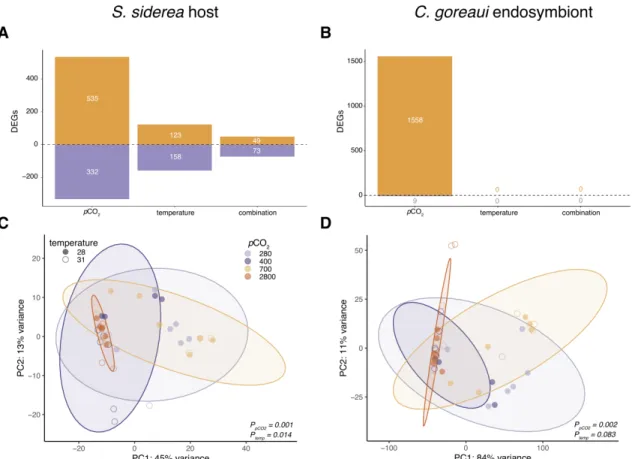
Siderastrea siderea coral host exhibits greater transcriptomic response to global change stressors ... 72
Introduction ... 50
Methods ... 54
Results ... 60
x
CHAPTER 4: EXTREME OCEAN ACIDIFICATION ALTERS SKELETAL
MORPHOLOGY IN A CARIBBEAN REEF-BUILDING CORAL ... 82
Experimental design ... 84
Assessment of corallite height and infilling ... 85
Septa and septal peak rugosity ... 86
Statistical analyses ... 86
Corallite height and percent skeletal infilling ... 87
Septal peak rugosity ... 88
Septal ridge rugosity ... 88
Qualitative assessment of septa alterations due to treatment ... 88
Ocean acidification drives greater differences in corallite morphology than warming ... 89
Morphological plasticity of corallites determined by natal reef environment ... 93
Future directions and implications ... 94
APPENDIX 1: SUPPLEMENTAL DESCRIPTIONS AND FIGURES – CHAPTER 1 ... 103
APPENDIX 2: SUPPLEMENTAL DESCRIPTIONS AND FIGURES – CHAPTER 2 ... 113
APPENDIX 3: SUPPLEMENTAL DESCRIPTIONS AND FIGURES – CHAPTER 3 ... 150
APPENDIX 4: SUPPLEMENTAL DESCRIPTIONS AND FIGURES – CHAPTER 4 ... 166
REFERENCES ... 178
Conclusions ... 75
Introduction ... 82
Methods ... 84
Results ... 87
xi
LIST OF TABLES
xii
LIST OF FIGURES
Figure 1.1 Map of meta-analysis study sites ... 24
Figure 1.2 Global effect size of meta-analysis treatments ... 25
Figure 1.3 Regional effect size of meta-analysis treatments ... 26
Figure 1.4 Magnitude analysis of temperature on calcification rates ... 27
Figure 1.5 Magnitude analysis of aragonite saturation state on calcification rates ... 28
Figure 2.1 Net coral calcification rates ... 46
Figure 2.2 Colony-level calcification response to treatment ... 47
Figure 2.3 Coral linear extension rates ... 48
Figure 3.1 Coral host and algal endosymbiont physiology ... 76
Figure 3.2 Coral holobiont physiology principal component analyses ... 77
Figure 3.3 Siderastrea siderea host and algal endosymbiont gene expression ... 78
Figure 3.4 WGCNA analysis of Siderastrea siderea host gene expression ... 79
Figure 3.5 Summary of physiological responses to treatment ... 80
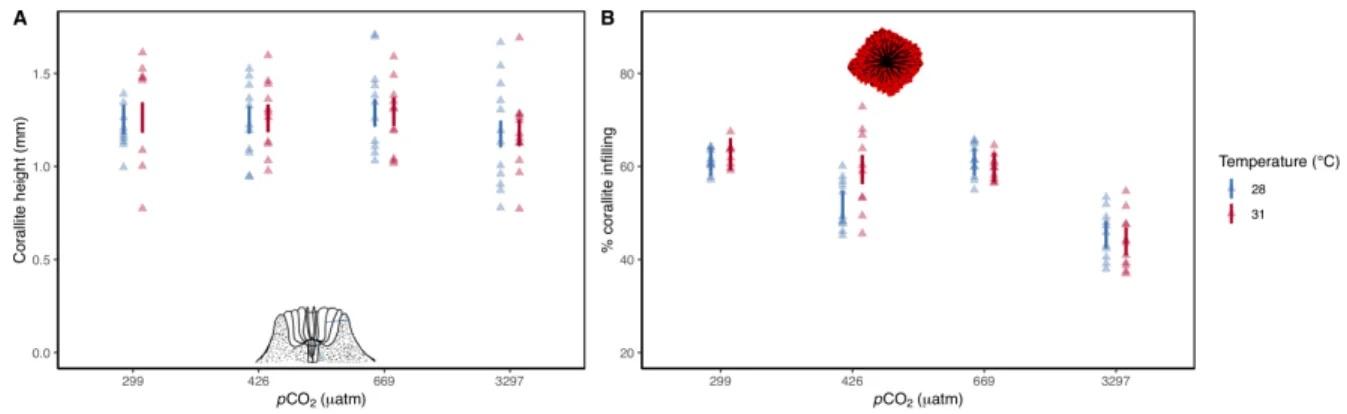
Figure 4.1 Diagram of corallite height and infilling methodology ... 96
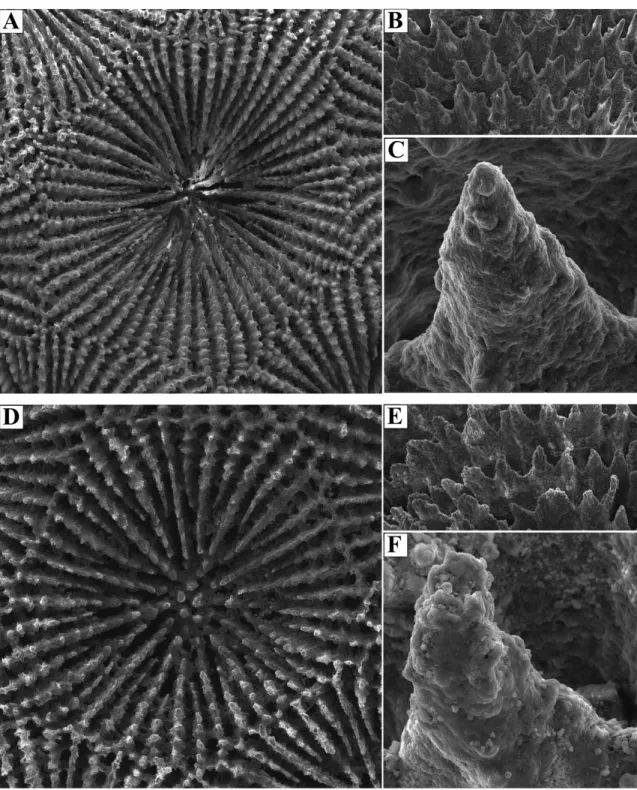
Figure 4.2 Representative SEM image of corallite morphology ... 97
Figure 4.3 Corallite height and infilling in response to temperature and pCO2 ... 98
Figure 4.4 Representative SEM images of control versus extreme treatment morphology ... 99
xiii
LIST OF ABBREVIATIONS
SE Standard error
AIC Akaike's information criterion ATP Adenosine triphosphate BP Biological processes
C Celsius
Ca2+ Calcium
CaCO3 Calcium carbonate CC Cellular component CO2 Carbon dioxide
DEG Differentially expressed genes DIC Dissolved inorganic carbon FDR False discovery rate
GO Gene ontology
H+ Hydrogen / proton
HCO3- Bicarbonate
IPCC Intergovernmental Panel on Climate Change MBRS Mesoamerican Barrier Reef System
MF Molecular function
N Sample size
PC Principal component
xiv QE Residual heterogeneity
QM Test of moderators
s Standard deviation
SEM Scanning electron microscope SMD Standard mean difference SST Sea surface temperature T0 Initial time point
T90 Final time point TA Total alkalinity
µatm Micro atmospheres
WGCNA Weighted gene co-expression network analysis Y Mean calcification response
1
INTRODUCTION
Increasing atmospheric carbon dioxide from anthropogenic sources is of growing concern as global average pCO2 concentrations have now surpassed 400 μatm, and are rapidly approaching 410 μatm (Tans and Keeling 2017). Even with significant reductions in anthropogenic carbon emissions, associated atmospheric warming will likely exceed 2.0°C by the end of the century (Mauritsen and Pincus 2017, Raftery et al. 2017). This rapid change in atmospheric pCO2 has resulted in negative and often irreversible impacts on both terrestrial and marine ecosystems worldwide (Solomon et al. 2009, Pecl et al. 2017). In terrestrial ecosystems, rising surface temperatures have posed serious threats to many animals that are unable to cope with increasingly common and abnormally high thermal stress events (Caruso et al. 2014, Gunderson and Stillman 2015, Urban 2015, Pacifici et al. 2017). Similarly, marine ecosystems around the world are under unprecedented threats from global change stressors, especially ocean warming and ocean acidification (Sabine et al. 2004, Hoegh-Guldberg et al. 2007, Doney et al. 2009, Burrows et al. 2011).
2
globally (Hughes et al. 2017b). Abnormally high seawater temperatures disrupt the symbiosis between corals and their endosymbiotic photosynthetic algal endosymbiont (Symbiodiniaceae) in a process known as ‘coral bleaching’ (Glynn 1991, Brown 1997). During thermal bleaching, calcification rates decline and physiological processes deteriorate (Jokiel and Coles 1977, Grottoli et al. 2006, Castillo et al. 2014, Davies et al. 2016). As a result, mortality rates increase due to the strong dependence of corals on their endosymbionts, which can contribute up to 100% of their daily metabolic requirements (Muscatine et al. 1981). The breakdown of this important symbiosis during acute ocean warming events impacts the ability of reef-building corals to counter additional environmental stressors.
Along with ocean warming, rising atmospheric pCO2 drives an increase in CO2 dissolution into the world’s oceans, increasing bicarbonate ion concentrations [HCO3−] in seawater and reducing surface ocean pH, commonly referred to as ocean acidification (Orr et al. 2005). Calcifying marine organisms, especially reef-building corals, rely heavily on elevated seawater pH (relative to environmental seawater) and supersaturated aragonite saturation state (Ωar) at the site of calcification to precipitate their calcium carbonate (CaCO3) skeletons and shells (Orr et al. 2005, Schneider and Erez 2006, Doney et al. 2009). Studies have shown negative growth responses (Reynaud et al. 2003, Jury et al. 2010, Krief et al. 2010, Ries et al. 2010, Comeau et al. 2013b, Bove et al. 2019), a parabolic calcification response (Castillo et al. 2014), and no growth response (Reynaud et al. 2003, Jury et al. 2010, Bove et al. 2019) to increasing pCO2 concentrations.
3
(Carricart-Ganivet et al. 2012, Chua et al. 2013, Castillo et al. 2014, Venti et al. 2014, Davies et al. 2016, Okazaki et al. 2017), however, the interaction of the two stressors may further complicate coral reef responses to climate change. For example, some studies have found the combination of pCO2 and temperature to cause a more negative growth response in corals than either stressor alone (Reynaud et al. 2003, Agostini et al. 2013, Horvath et al. 2016, Prada et al. 2017), while other studies report no interactive response (Edmunds et al. 2012, Schoepf et al. 2013, Okazaki et al. 2017, Bove et al. 2019). Numerous explanations have been suggested for the wide array of responses, including differences in heterotrophy rates or food availability (Edmunds 2011, Towle et al. 2015, Brown et al. 2018), evolutionary divergence and its role in the calcification process (Brown and Edmunds 2016), minute physiological control of the chemistry in the calcifying fluid (Agostini et al. 2013, Holcomb et al. 2014, Barott et al. 2015, Cai et al. 2016), and differences in experimental design and manipulation (Cornwall and Hurd 2016).
4
Caribbean reef-building corals under projected global change, it is imperative to build a region-wide understanding of the growth responses of corals under simulated global change conditions through synthesis of multiple comprehensive studies.
5
CHAPTER 1: META-ANALYSIS REVEALS REDUCED CORAL CALCIFICATION UNDER PROJECTED OCEAN WARMING BUT NOT UNDER ACIDIFICATION
ACROSS THE CARIBBEAN SEA1
Introduction
Reef-building corals provide the three-dimensional framework for tropical coral reef ecosystems across the globe, supporting many important ecological and economic goods and services (Costanza et al. 2014). However, coral reefs globally are experiencing declines in diversity and abundance (Pandolfi et al. 2003), raising concerns for the overall health of these essential ecosystems. Such changes in coral reef ecosystems are especially evident
throughout the Caribbean Sea (Alvarez-Filip et al. 2009, Schutte et al. 2010). Declines in carbonate production rates (Perry et al. 2013) and reduced coral cover (Cote et al., 2005) on Caribbean reefs have shifted these ecosystems to less structurally complex reefs dominated by algae, sponges, and gorgonians (Norstrom et al. 2009). Over the past two decades, ocean warming and acidification have been identified as two of the primary stressors causing this shift and therefore there have been widespread efforts to better understand how coral reefs will likely respond to projected increases in these two human-induced global change stressors (Stoltenberg et al. , Kleypas et al. 1999, Doney et al. 2009, Enochs et al. 2016).
The Intergovernmental Panel on Climate Change (IPCC) has projected that sea surface temperatures in the Caribbean region could rise between 0.6 and 3.0°C by the end of
1 This chapter previously appeared as an article in Frontiers in Marine Science. The original citation is as
follows: Bove C.B., Umbanhowar J., and Castillo K.D. “Meta-analysis reveals reduced coral calcification under
projected ocean warming but not under acidification across the Caribbean Sea” Frontiers in Marine Science, 7,
6
the 21st century (ocean warming), and atmospheric pCO2 will surpass 600 μatm, causing surface ocean pH to decrease by 0.1–0.3 pH units (ocean acidification) (IPCC 2014). These projections pose significant threats to reef-building corals throughout the Caribbean, causing mass mortality events, reducing recruitment, deteriorating key physiological processes, and lowering coral calcification rates (Jokiel and Coles 1977, Grottoli et al. 2006, Davies et al. 2016, Okazaki et al. 2017). Despite the consensus that global change will negatively affect Caribbean reef-building corals, the extent of these impacts vary widely by species, region, or measured physiological response parameter (Harvey et al. 2013). A great example of such variation in coral responses to ocean acidification and warming is seen in Okazaki et al. (2017) where some species exhibited no response to ocean acidification or warming while other corals in the same experiment exhibited reduced calcification under one or both stressors. Furthermore, a study conducted by Kenkel et al. (2015) demonstrated a variety of physiological responses (i.e., calcification and Symbiodiniaceae physiology) of corals under ocean warming even within a single species. Understanding the variability in coral responses depicted in previous studiesunder projected ocean acidification and warming will improve our ability to predict how coral reef ecosystems will be impacted under global change stressors.
Meta-analyses are valuable tools for combining the findings from multiple studies to summarize results across the literature (Gurevitch and Hedges 1999). Although the use of meta-analyses to better understand biological responses to ocean acidification and warming are common (Kroeker et al. 2010, Harvey et al. 2013, Kelley and Lunden 2017), few have focused specifically on reef-building corals (Chan and Connolly 2013). Further, those
7
(Harvey et al. 2013). Because these two stressors are not likely to act on reef-building corals independently from one another (Halpern et al. 2007), analyses that investigate the combined effects of acidification and warming provide a more realistic view of the future of tropical coral reefs. Caribbean coral reefs are experiencing region-wide declines more severely than reefs in the Red Sea and the Australian Great Barrier Reef (Pandolfi et al. 2003, Gattuso et al. 2014), highlighting the need to study coral reefs on more local scales. Because of projected further declines in Caribbean coral reefs, a better understanding of how these global stressors are impacting reef-building corals within this ocean basin is necessary for predicting the future success of these important marine ecosystems.
8 Methods
Study selection
Experimental studies conducted in the Caribbean Sea were identified using Google Scholar with the following search terms: "Caribbean coral," "ocean acidification," "ocean warming," “experiment,” “manipulation,” “control,” and “calcification.” Studies derived from the search were examined, and those that presented all of the following information were included in the meta-analysis: coral species, location of specimen collection, control and experimental temperature and/or control and experimental pCO2 values, method of experimental manipulation, duration of exposure to treatment conditions, and calcification rate. Studies altering ocean acidification treatments with acid additions (i.e., hydrochloric acid) were excluded from this meta-analysis because these do not represent ecologically relevant changes in carbonate chemistry. Several other studies that met these criteria not present in the literature search were also included in the meta-analysis. Studies were collected for analysis until September 2018.
Data extraction and preparation
9
other experimental parameters outside of acidification and warming were only utilized in this study when these external factors were considered to be under ambient conditions to prevent confounding results (Chan and Connolly 2013). In studies that reported calcification over time, only the final growth rate was used in this analysis.
For consistency in treatment analysis, only pCO2 concentrations were used as the measure of acidification manipulation because of the potentially large variation in pH scale based on measurement methods (Zeebe and Wolf-Gladrow 2001). The wide variety of reported experimental pCO2 values were categorized into one of the two categories: control or high. Below current-day or extreme pCO2 treatments from selected studies were not included in this analysis. In experiments in which more than one elevated pCO2 treatment was used to represent projected scenarios, the higher concentration treatment was selected for the meta-analysis. The pCO2 treatment considered as current-day or ambient for each
experiment was categorized in the ‘control’ group, despite variations in pCO2 concentrations due to experimental design (380 – 513 μatm). Similarly, temperature treatments were
categorized as either ‘control’ when reported to represent current-day or ambient conditions (26 – 30.6 °C), or as ‘elevated’ in experiments testing warming scenarios (30 – 32 °C). No study selected analysed the impact of multiple warming levels.
Calcification rate was chosen as the response parameter in this meta-analysis due to its common use as a stress response in manipulations experiments on Caribbean corals. Mean calcification rate, standard error, and sample size of each experiment was extracted from all included studies for the desired treatments. When raw data were not reported, values were mined from the literature using Web Plot Digitizer for analysis
10
treatments and therefore were excluded from this analysis because of potential bias from additional unknown stressors.
Calculation of effect size
Calcification rates in response to independent ocean acidification and warming treatments were measured for each experiment using standard mean differences (SMD), or Hedge’s G, to establish the proportion of change between the treatment and control. SMDs were used in this analysis because of the presence of negative calcification rates in some treatments. Analyses were performed in the R (R Core Development Team 2016) package metafor (version 2.0–0) (Viechtbauer 2010) to calculate effect sizes (SMD) per experiment.
The interaction strength of ocean acidification and warming was determined using methods for factorial meta-analysis (Crain et al. 2008, Harvey et al. 2013). Only studies that reported outcomes for a fully factorial experiment including acidification (YOA), warming
(YOW), the combination of the two (Yboth), and a control (YC) were used to calculate the
interaction effect size. The interaction strength was calculated as
SMDboth = !(Yboth- YOW)- (YOA- TC)
2s $
where Y is the mean calcification response for the denoted treatment, and s is the pooled standard deviation. Control values are denoted by subscript C, ocean acidification is denoted by subscript OA, warming is denoted by subscript OW, and the combination treatment is represented by subscript both. The sample variance of the effect size was calculated as
sN 2 (SMDboth)=
1 NOA +
1 NOW +
1 Nboth +
1 NC +
SMDboth2
2 (NOA+ NOW + Nboth + NC)
11 Statistical analyses
A random effects model was implemented using the metafor package (function rma.mv) to calculate the mean effect of each treatment on calcification to account for variation in responses due to species and study design. To assess the effects of study design parameters on resulting calcification rates in either acidification or warming studies, two fully additive random effects models (function rma.mv) were fit with magnitude change between control and treatment, irradiance (µmol photons m-2 s-1), and duration (days) as continuous predictors, and seawater (natural versus artificial) and feeding (2 times a week, 3 times a week, or no data) were assessed as discrete predictors. An additional model was used to compare effect sizes of corals by region. For this model, only corals collected from the Florida Keys or Belize were considered because of the larger sample sizes from these regions. Random intercepts of study and species within treatment were included to account for potential correlation among results due to these factors. When the 95% confidence intervals of each estimated mean do not overlap zero, the effect size is considered clear statistical evidence. A test of moderators (QM) was used to determine differences between variables (temperature and/or region). Additionally, tests for residual heterogeneity (QE) were performed, with QE signifying that additional moderators not considered may be impacting the study results (Tables S1.2, S1.3).
12
scaled temperature, and experiment duration as predictors with random slopes for study and species. We also fit a quadratic effect of temperature. Model selection using AICc was completed with random effects for species and study. A similar analysis was performed using reported aragonite saturation state (ΩArag) of each treatment to better assess ocean
acidification on calcification rates.
Results
In total, eleven studies met the standards of this meta-analysis, including the responses of thirteen Caribbean coral species collected from five different countries across the Greater Caribbean Sea (Figure 1.1; Table S1.1). Of the studies selected, only four performed fully factorial ocean acidification and warming experiments, and one performed two independent acidification and warming experiments. The most studied coral species from the Caribbean region were Porites astreoides (5 studies), Acropora cervicornis (4 studies), and Siderastrea siderea (4 studies). Finally, the Florida Keys and Belize were the two most-studied regions within the wider Caribbean fitting the criteria of this meta-analysis.
Overall calcification response
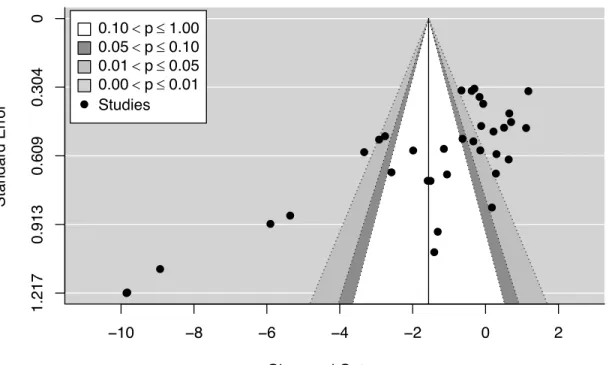
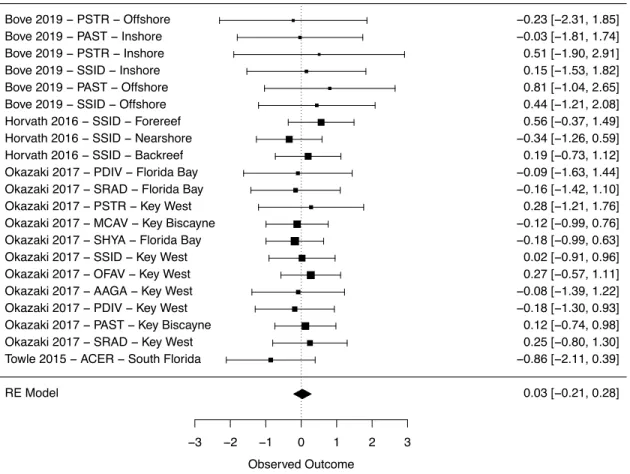
Meta-analysis of the dataset revealed that calcification rates of Caribbean corals were reduced by ocean warming but not ocean acidification (Figure 1.2; Figure S1.2). However, the 95% confidence interval of the combination of ocean warming and acidification
13
Calcification response of Florida Keys versus Belize corals
Corals from Belize only exhibited clearly reduced calcification rates under ocean warming (Figure 1.3A; Table S1.3), while acidification, warming, and the combination of both stressors did not clearly alter experimental calcification rates of corals from the Florida Keys (Figure 1.3B; Table S1.3). Further, the resulting QE suggests there is significant
between-study variation (Table S1.3).
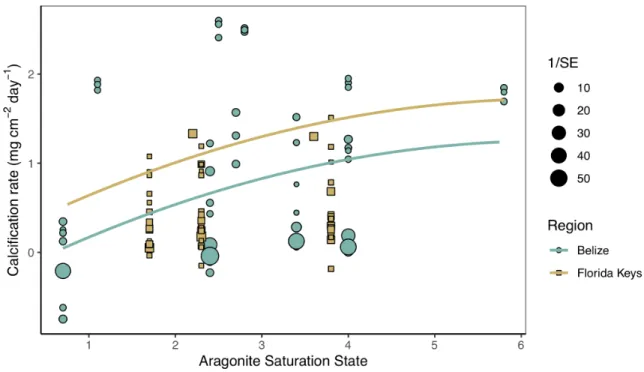
Temperature and aragonite saturation state impacts on calcification rates across studies Secondary analysis of mean calcification rates (mg cm−2 day−1) against treatment temperature across all Florida and Belize studies revealed a parabolic response to
temperature (Figure 1.4; Tables S1.4, S1.5). Similarly, mean calcification rates across ΩArag resulted in a nonlinear response to acidification (Figure 1.5; Tables S1.6, S1.7). Both nonlinear trends in response to temperature and ΩArag were a result of treatment rather than region (Tables S1.6, S1.7), suggesting regional differences identified in the meta-analysis were due to experimental designs employed to represent current regional environmental differences.
Experimental design impacts on coral calcification rate in studies
Quantification of experimental design parameters within warming studies identified that magnitude of treatment, irradiance, seawater type used, and feeding frequency all clearly impacted calcification rates (
14
effect sizes, suggesting a less negative effect of treatment. Studies that employed higher irradiance levels in their systems demonstrated more negative effects of treatment light level. Finally, studies that reported feeding their corals twice a week were less impacted by
warming treatment than those feeding three times a week, however, studies with no data on feeding were the least affected by treatment. Duration of experiment was deemed redundant in the model and was thus dropped.
Within the acidification studies, irradiance, seawater type used, feeding frequency, duration, and the interaction of duration with treatment magnitude impacted effect sizes, while magnitude alone was not clearly different (
Table 1.1). Studies using natural seawater, employing higher irradiance levels, and those with longer durations resulted in great effect sizes, suggesting they lessened the effects of acidification treatment on calcification responses. Similar to warming studies, acidification studies in which feeding corals was conducted twice a week exhibited less negative
responses to treatment than those feeding three times a week, with studies reporting no feeding data exhibiting the least negative responses to treatment. Finally, coral calcification responses were less impacted by acidification in studies with longer duration of exposure and a greater pCO2 change.
Discussion
15
Keys and Belize, were further assessed for differences in calcification responses to ocean acidification, warming, and the combination of both stressors.
Ocean warming, but not acidification, independently impairs calcification of Caribbean reef-building corals
Ocean warming alone induced an overall adverse effect on calcification rates of the Caribbean corals analysed in this meta-analysis, contrasting a previous meta-analysis
assessing coral calcification rates from multiple ocean basins (Harvey et al. 2013). However, increased bleaching, mortality, and declines in coral growth in response to warming is well-documented throughout the Caribbean Sea in field studies and reviews (Hughes et al. 2003, Hoegh-Guldberg et al. 2007, Carricart-Ganivet et al. 2012), supporting the overall reduced calcification rates to warming observed in the current meta-analysis. While there is evidence that suggests coral calcification rates, along with other physiological processes, increase along with warming seawater temperatures (Lough and Barnes 2000), the physiological advantages of warmer waters diminish when a thermal maxima is reached (Bahr et al. 2018, Silbiger et al. 2019). Ocean warming has also been closely associated with coral bleaching (Brown 1997) and since corals receive a significant proportion of their energetic need from their algal endosymbionts (Muscatine et al. 1981), it is likely that the loss of algal
16
Ocean acidification did not clearly reduce calcification rates of Caribbean corals, contradictory to the findings of previous meta-analyses that have investigated the
calcification response of tropical corals to ocean acidification from various other ocean basins (Kroeker et al. 2010, Chan and Connolly 2013, Harvey et al. 2013, Kroeker et al. 2013). Coral calcification is influenced by the ΩArag of seawater, with higher ΩArag (lower pCO2) often promoting faster calcification rates (Langdon and Atkinson 2005). This
aragonite-calcification relationship is most likely driven by corals’ ability to control ΩArag at their calcification site by pumping Ca2+ into the calcifying fluid from the surrounding seawater, removing two protons (H+) in the process, finally converting HCO3− to CO32− (Cohen and McConnaughey 2003, Allemand et al. 2010, Ries 2011, Von Euw et al. 2017). Thus, even under low aragonite saturation (high pCO2 ) corals that are able to elicit strong control over this process are likely to be more resilient against the effects of ocean
acidification, although it may be energetically costly (Davies et al. 2016) and may impair other physiological processes. It is therefore likely that corals included in this meta-analysis that did not exhibit reduced calcification rates in association with simulated ocean
acidification may have stronger control of their calcifying fluid to maintain comparable growth rates. Overall, corals from the studies included in the current meta-analysis exhibited variable responses under experimental seawater acidification, highlighting the diversity of responses to stress on the individual and species levels (Comeau et al. 2014, Okazaki et al. 2017, Bove et al. 2019).
17
combination of acidification and warming (Towle et al. 2015, Horvath et al. 2016, Okazaki et al. 2017, Bove et al. 2019), however, the sample size for the interaction term was very low. With this small samples size in conjunction with only about 17% of Caribbean reef-building coral species analysed in the current study, the potential for synergistic or additive effects should not be ignored. Because synergistic relationships can be unpredictable, especially when additional stressors are introduced (Harvey et al. 2013), it is important that additional combined stressor experiments be conducted to better understand the response of Caribbean reef-building corals to these interrelated stressors.
Calcification responses to global change stressors vary by region within the Caribbean Coral calcification responses to ocean acidification, warming, and the combination of the two stressors varied between corals collected from the Florida Keys and those collected from Belize. Corals from the Florida Keys did not exhibit clearly reduced calcification rates under independent ocean acidification and warming, or the combination of ocean
18
(Marshall and Baird 2000, Guest et al. 2012) and may act as a potential pathways of adaptation or acclimatization to projected global change. Although statistically clear effect sizes may be due to variations in natal environments, differences in experimental treatment levels may also confound these results. Indeed, further analysis studies identified that treatment level predominately drove resulting calcification rates, not specifically collection region. Further, the resulting model fit to the calcification rates across temperature exhibited a quadratic fit, similar to what would be expected for a thermal performance curve (Portner et al. 2006). Reef-building corals generally exhibit a threshold response to ocean warming when a particularly high temperature or prolonged exposure to warming water causes bleaching, reduced growth rates, and mortality (Glynn 1996, Brown 1997). However, the treatment temperatures used in the Florida and Belize experiments represent warming scenarios specific to the corresponding region, highlighting already-present warming patterns of these regions. Indeed, elevated temperatures employed in studies using Belize corals were 1–2 °C higher than the elevated temperatures used in Florida experiments (31–32 versus 30 °C), reflecting differences in annual mean temperatures (Castillo and Lima 2010, Okazaki et al. 2017). Additionally, the temperatures employed in the Florida Keys studies were
representative of the bleaching threshold for the region (Manzello et al. 2007), while the Belize studies used end-of-century projections. Corals are known to live within a narrow thermal range (Kleypas et al. 1999) and the Florida studies tested the upper end of that
19
Overall coral calcification rates in response to region and treatment ΩArag across ocean acidification studies was also assessed, again resulting in a nonlinear response to changing seawater chemistry. Because response of corals to ocean acidification is heavily dependent on extent of seawater chemistry change, duration, and individual colony
20
Experimental design considerations and recommendations for future research
With such variation in study implementation and lingering gaps in the literature, results from this meta-analysis may not capture all underlying causes of calcification
responses to ocean acidification, warming, and the combination of stressors. Several gaps in simulated global change studies using corals were identified in this meta-analysis including coral collection sites, variety of species included, and experimental design differences. Although corals from the Florida Keys and Belize were heavily represented in the meta-analysis, only a single study collected corals from reefs south of Belize (Jury et al. 2010) and in the Eastern Caribbean (Bedwell-Ivers et al. 2017). This scattered sampling leaves much of the Caribbean understudied in regards to how coral reefs may respond to ocean acidification and warming as the two stressors continue to co-occur. Additionally, only about 17% of Caribbean coral diversity was represented, leaving out a significant percentage of coral species from the region, including several dominant reef-building species. Without having a better understanding of the calcification responses of other species within the Caribbean, meta-analyses like this will not be able to accurately predict potential reef-wide responses to global change. Future studies should consider what regions and species within the Caribbean have been extensively studied in similar ocean acidification and warming experiments and aim to expand outside of these regions and/or species in designing experiments.
21
22
Interestingly, the present meta-analysis identified that higher irradiance levels in warming studies were associated with more negative effects of warming on calcification rates, while higher irradiance in acidification studies potentially acted as a rescue effect in response to treatment, contrary to Chan and Connolly (2013). These results suggest that the combination of high light levels with warming seawater temperatures may exacerbate bleaching-associated reduced growth rates (Brown 1997), while higher light levels may alleviate the negative impacts of ocean acidification by stimulating photosynthesis of the coral algal endosymbionts (Suggett et al. 2013). In addition to different responses to
irradiance between the two study types, experimental duration did not play a role in warming studies while longer acidification experiments exhibited slightly less negative responses to treatment, differing from the meta-analysis performed by Chan and Connolly (2013).
However, longer acidification experiments with greater treatment magnitude exhibited more negative responses to treatment, likely indicative of ocean acidification being a chronic stressor while ocean warming is generally associated with acute stress events (Hoegh-Guldberg et al. 2007). As further experiments are designed, care should be taken to use ecologically-relevant experimental durations that appropriately address questions being addressed. In order to understand how corals respond under chronic acidification and acute warming stress, future experiments should consider conducting such research on the scale of months to years as possible. The recommendations put forth in this study should be
23 Conclusions
Overall, results from this meta-analysis suggest the sensitivity of Caribbean corals to ocean warming, while also identifying several current knowledge gaps and potential
opportunities for future research. Specifically, this analysis highlights the need for further studies including the combination of ocean acidification and warming, as well as expanding the research to additional Caribbean reef-building coral species and regions. Furthermore, although differences in calcification responses between the Florida Keys and Belize were detected in this meta-analysis, further analysis determined this difference was largely
attributed to the treatments employed, highlighting the significance of experimental protocols in measured results. The studies reviewed in the current analysis exhibit a wide range of experimental designs, including variations in duration, feeding, irradiance, treatment levels, and even seawater. These variations in experimental implementation play a major role in the results of the current meta-analysis and suggest that consideration of previous experimental designs should be made when designing new experiments to make the results more
comparable. Additionally, future meta-analyses of Caribbean corals should include additional parameters outside of calcification, such as bleaching, metabolism, and survival. The
24 Figure 1.1 Map of meta-analysis study sites
Coral collection sites of all included studies with experimental study represented by colour and treatments represented by shape: acidification only (circle), warming only (triangle), and the combination of acidification and warming (square). The lower left insert displays close-up of the Belize collection sites and the close-upper right insert displays the Florida Keys
25
Figure 1.2 Global effect size of meta-analysis treatments
26
Figure 1.3 Regional effect size of meta-analysis treatments
27
Figure 1.4 Magnitude analysis of temperature on calcification rates
Mean calcification rate (mg cm−2 day−1) of corals from each warming study by treatment temperature (°C) with the linear mixed effects model quadratic fit by region and
28
29
Estimate Lower 95% CI Upper 95% CI
Warming Experiments
Intercept -29.39 -39.56 -19.22
Magnitude (°C) * 10.34 5.58 15.1
Irradiance * -0.24 -0.34 -0.14
Seawater (natural) * 29.77 19.72 39.82
Feeding (3x) * -3.54 -4.97 -2.12
Feeding (N.D.) * 87.16 49.69 124.64
Acidification Experiments
Intercept -2.03 -2.78 -1.28
Magnitude (µatm pCO2) 0.000 -0.003 0.003
Irradiance * 0.009 0.004 0.014
Seawater (natural) * 2.39 1.14 3.64
Feeding (3x) * -15.04 -22.61 -7.48
Feeding (N.D.) * 3.61 0.28 6.94
Duration * 0.21 0.09 0.32
Magnitude x days * -0.0005 -0.0007 -0.0003
Table 1.1 Experimental design effect sizes
30
CHAPTER 2: COMMON CARIBBEAN CORALS EXHIBIT HIGHLY VARIABLE RESPONSES TO FUTURE ACIDIFICATION AND WARMING2
Introduction
Increasing carbon dioxide (CO2) from anthropogenic sources is of growing concern as global average atmospheric pCO2 has now increased from a pre-industrial level of 280 μatm to 410 μatm (Tans and Keeling 2017). This rapid change has resulted in negative and often irreversible impacts on both terrestrial and marine ecosystems (Solomon et al. 2009, Pecl et al. 2017). In terrestrial ecosystems, rising surface temperatures pose serious threats to animals and plants that are unable to cope with hotter, longer, and more frequent thermal stress events (Fitter and Fitter 2002, Caruso et al. 2014). Marine ecosystems are under similarly intense pressure from ocean warming and acidification (Hoegh-Guldberg et al. 2007), affecting everything from biogeochemical cycling to habitat and population structure (Hoegh-Guldberg and Bruno 2010).
Ocean warming is a major concern for marine organisms, especially at lower latitudes where sea surface temperature is predicted by the Intergovernmental Panel on Climate
Change (IPCC) to rise between 0.6 and 3.0°C by the end of the 21st century (Stocker et al. 2013). Reef-building corals in these low-latitude regions, including the Caribbean, are already living within a degree of their thermal maxima (Jokiel and Coles 1977) and are therefore considered to be at particular risk (Somero 2010). Abnormally high seawater
2 This chapter previously appeared as an article in Proceedings of the Royal Society B – Biological Sciences.
The original citation is as follows: Bove C.B., Ries J.B., Davies S.W., Westfield I.T., Umbanhowar J., and Castillo K.D. “Common Caribbean corals exhibit highly variable responses to future acidification and
31
temperatures disrupt the symbiosis between the coral animal and its algal endosymbiont (Symbiodiniaceae) (LaJeunesse et al. 2018) through a process known as ‘coral bleaching’ (Glynn 1991), resulting in deterioration of corals’ physiological processes (Jokiel and Coles 1977, Grottoli et al. 2006, Castillo et al. 2014). Mortality rates increase due to the strong dependence of corals on their endosymbionts, which contribute up to 100% of their daily metabolic requirements (Muscatine et al. 1981), impacting the corals’ ability to withstand additional environmental stress.
Rising atmospheric pCO2 is not only warming surface seawater, but also causing more CO2 to dissolve into oceans, reducing carbonate ion concentration [CO3−2], pH, and aragonite saturation state (ΩA) of seawater—a process known as ocean acidification (Orr et al. 2005). The IPCC projects that atmospheric pCO2 will surpass 600 μatm by 2100, which would cause surface ocean pH to decrease by 0.1 – 0.3 (Stocker et al. 2013). Scleractinian corals rely heavily on elevated pH and ΩA at their site of calcification to form calcium carbonate skeletons (Al-Horani et al. 2003, Cohen and McConnaughey 2003, Ries 2011, Venn et al. 2013), making it harder for some species to maintain conditions within these sites that are supportive of skeletal formation under acidification (McCulloch et al. 2012).
32
explanations for the wide array of responses include differences in experimental design (Cornwall and Hurd 2016), evolutionary divergence amongst corals with respect to
mechanisms of calcification and/or resilience to acidification (Brown and Edmunds 2016), and differences amongst coral species’ physiological control of calcifying fluid chemistry (Ries 2011, Agostini et al. 2013, Holcomb et al. 2014, Barott et al. 2015). Moreover, although studies have investigated the effects of increasing pCO2 on coral calcification and health, fewer have investigated the combined effects of temperature and pCO2.
In isolation, warming has been shown to more negatively impact coral calcification than pCO2 (Carricart-Ganivet et al. 2012, Castillo et al. 2014, Venti et al. 2014, Davies et al. 2016, Okazaki et al. 2017). However, numerous studies have observed that the combination of pCO2 and temperature causes a more severe negative response in corals than either stressor alone (Edmunds et al. 2012, Agostini et al. 2013, Schoepf et al. 2013, Horvath et al. 2016, Okazaki et al. 2017), although few studies report a truly synergistic interaction
between warming and acidification. This highlights the importance of studying the response of multiple coral species to global change scenarios under a common suite of conditions. Using multiple species in the same experiment minimizes differential outcomes that arise from differences in experimental design, allowing for direct comparison among species. The few studies that have investigated multiple coral species have yielded important insights into reef-community-level responses to acidification and warming, including projecting rates of whole-reef accretion under future IPCC scenarios (Okazaki et al. 2017).
Here we investigate the independent and combined effects of ocean acidification and warming on four abundant and widespread Caribbean scleractinian coral
33
tenuifolia―in a 93-day laboratory experiment. These four species were selected because they span a range of skeletal morphologies (foliate—domical), possess similar life history
strategies (Szmant 1986), and occupy similar depth and geographic ranges (Veron 2000). Corals collected from the Belize Mesoamerican Barrier Reef System (MBRS) were reared under projected temperature and pCO2 stress with the aim of characterizing the effects of future global change on a suite of genetically and morphologically diverse Caribbean coral species.
Materials and methods Experimental design
Six colonies of S. siderea, P. strigosa, P. astreoides, and U. tenuifolia were collected from inshore and offshore reef environments along the southern portion of the Belize MBRS (see Appendix 2 for details of coral collection, Figure S2.1). Forty-eight coral colonies were transported to Northeastern University’s Marine Science Centre in Nahant, Massachusetts, and sectioned into eight comparably sized fragments, and placed into aquaria for a recovery period of 23 days. After recovery, temperature and pCO2 was adjusted gradually over a 20-day interval until target experimental conditions were approximately achieved for each treatment (temperature: 28 and 31°C; pCO2: 280, 400, 700, 2800 µatm). Coral fragments were acclimated to treatment conditions for 30 days and then maintained in each
34
10 years of in situ records (Castillo and Lima 2010, Castillo et al. 2012, Baumann et al. 2016)) and projected end-of-century annual mean temperature (31°C) (Stocker et al. 2013). The extreme pCO2 treatment was formulated at a value approaching that predicted for year 2500 (Stocker et al. 2013), and was selected to push the corals closer to their physiological limits. Experimental tanks were illuminated on a 10:14 h light:dark cycle with
photosynthetically active radiation of ca. 300 μmol photons m–2 s–1 (see Appendix 2 for detailed experimental conditions and maintenance; Figures S2.2, S2.3).
Measured and calculated parameters
Temperature, salinity, and pH were measured every other day throughout the experiment (Table 2.1). Water samples were obtained every ten days for measurement of total alkalinity (TA) and dissolved inorganic carbon (DIC) and analysed with a VINDTA 3C (Marianda Corporation, Kiel, Germany). Temperature, salinity, TA, and DIC were used to calculate carbonate parameters using CO2SYS (Pierrot et al. 2006) with Roy et al. (1993) carbonic acid constants K1 and K2 (Roy et al. 1993), Mucci’s (1983) value for the
stoichiometric aragonite solubility product (Mucci 1983), and an atmospheric pressure of 1.015 atm (Table 2.1; Figure S2.4; Tables S2.2, S2.3). The two temperatures at a given pCO2 level exhibited slight differences in carbonate chemistry because the solubility of CO2 in seawater varies with temperature.
Quantification of calcification and linear extension
35
every 30 days throughout the experiment (see Appendix 2 for empirical derivation of buoyant weight–dry weight relationships for all four coral species and for survivorship; Figures S2.5, S2.6).
Extension was quantified from vertical cross sections of the corals as the total area of skeleton above the calcein dye line incorporated into coral skeletons at the beginning of the experiment, divided by the length of the region of active growth (see Appendix 2 for detailed methodology; Figure S2.7). Linear extension was not quantified for U. tenuifolia or P. strigosa because their irregular skeletal morphologies rendered the method too inaccurate.
Colony-level effects of basal calcification rate on calcification response to stress Recent work has shown that coral species that calcify faster are generally more vulnerable to the effects of ocean acidification than slower calcifying species (Comeau et al. 2014)—raising the possibility that similar trends exist within species amongst colonies with differing calcification rates. Colony-specific relationships between basal calcification rate and response to pCO2 and thermal stress were investigated by assessing correlation between the random effect of colony on each colony’s calcification rate within the control treatment (pre-industrial pCO2 at 28°C) versus each colony’s calcification response to pCO2 or thermal stress (i.e., change in calcification rate between the control treatment and the stress
36
calculated for all species together, as the study lacked the statistical power to assess this correlation within individual species.
Statistical analyses
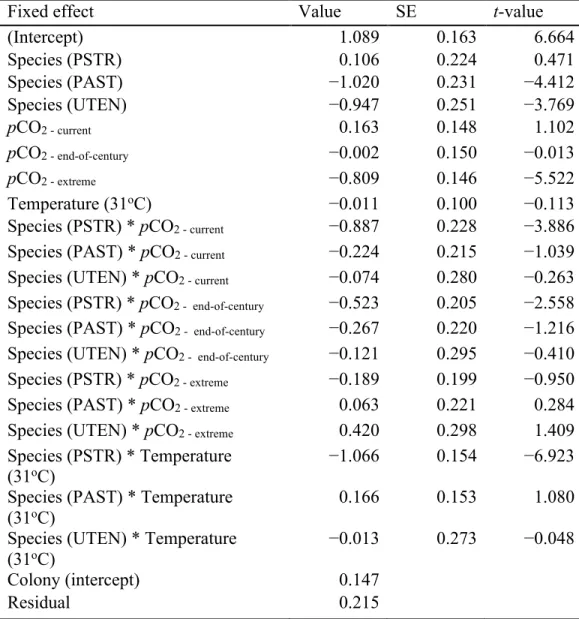
Three-way mixed-model analyses of variance selected using AIC (Table S2.4) were used to assess impacts of pCO2 and temperature on calcification and linear extension (lme4 (1.1-12)) (Bates et al. 2015b). Parametric bootstraps were performed to model 95%
confidence intervals with 1500 iterations (Wilcox 2010). Significant differences between treatments were defined as non-overlapping 95% confidence intervals. Because reef environment was not a significant predictor of any parameter, colonies were pooled across reef environments and these effects were not further addressed (see Appendix 2 for detailed analyses; Tables S2.12, S2.13). To further evaluate the effects of acidification and warming on U. tenuifolia, survival rates were assessed using a Kaplan-Meier estimate of survival (survfit, survival, 2.39-5) (Therneau 2015b). Cox proportional hazard models, with colony nested within tank as a random effect, were performed using coxme (2.2-5) (Therneau 2015a).
Results
Calcification rates
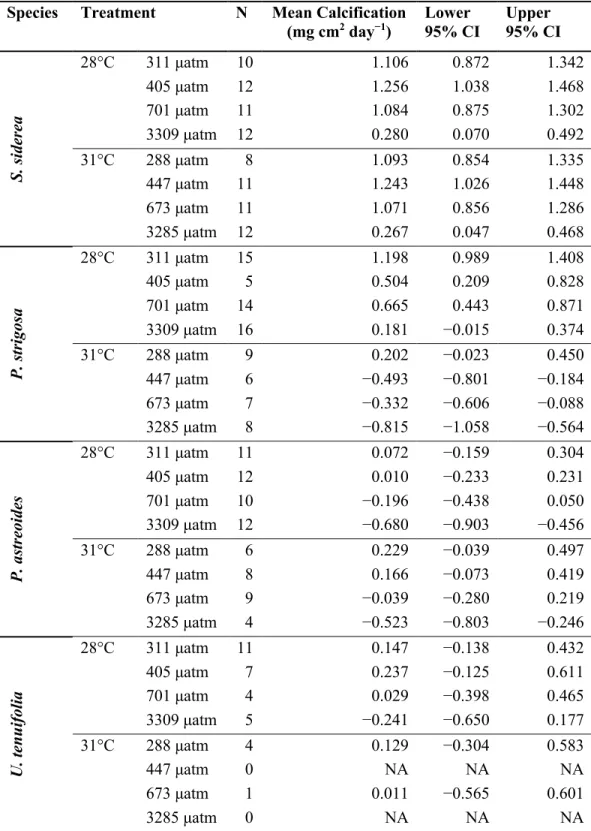
All four coral species exhibited nonlinear declines in calcification rate with increasing pCO2 (Figure 2.1). Notably, S. siderea maintained positive net calcification across all
37
Porites astreoides yielded negligible net calcification or net dissolution in all treatments except under pre-industrial pCO2 at 31°C (Figure 2.1C), and U. tenuifolia exhibited net calcification in all treatments except under the extreme pCO2 treatment (Figure 2.1D). Temperature had no significant effect on S. siderea or P. astreoides calcification rates; however, elevated temperature significantly reduced calcification rate in P. strigosa under all pCO2 conditions (Figure 2.1; Tables S2.5, S2.6). The effect of temperature on calcification rates of U. tenuifolia could not be quantified due to low survival in the elevated temperature treatments.
Colony-level calcification response to stress
A negative slope of the correlation between random effects of colony on calcification rate in the control treatment (pre-industrial pCO2 at 28°C) versus those in the stress
treatments (Figure 2.2) would support the hypothesis that faster calcifying colonies (relative to the treatment mean) under control conditions calcify slower (relative to the treatment mean) under pCO2 and thermal stress (Figure 2.2). While the best estimates of these correlations were negative, only the 75% credible intervals, and not the 95% credible
38 Linear extension
Siderastrea siderea and P. astreoides exhibited positive linear extension rates in all treatments. Neither temperature, nor pCO2, nor their interaction had a significant impact on linear extension rates of S. siderea or P. astreoides (Figure 2.3; Tables S2.7, S2.8).
Discussion
Caribbean corals exhibit nonlinear calcification responses to pCO2 and temperature
39
for maintaining stable rates of calcification is determined, at least in part, by the energetic costs of regulating ionic concentrations at the coral’s site of calcification (Ries 2011, Davies et al. 2016, Von Euw et al. 2017).
Increased temperature had no significant effect on calcification rates of either S. siderea or P. astreoides (Figures 2.1A, 2.1C). Similarly, in a prior study, S. siderea from the Florida Keys demonstrated stability in calcification rates with a temperature increase from 27°C to 30.3°C (Okazaki et al. 2017). However, two studies on S. siderea from the Belize MBRS reported reduced calcification rates with a temperature increase from 28°C to 32°C (Castillo et al. 2014, Horvath et al. 2016). Other studies have also reported reduced
calcification for P. astreoides under thermal stress (Kenkel et al. 2013a, Okazaki et al. 2017), although the present study found that an increase in temperature from 28°C to 31°C did not significantly impact calcification rate of this species. These apparent discrepancies in coral species’ calcification responses to warming may arise from evaluating temperature effects across different portions of these species’ thermal performance curves. Rates of biological processes, including calcification, are known to increase with increasing temperature to a maximum before declining with continued temperature increases, resulting in a thermal performance curve (Portner et al. 2006), which are typically parabolic in shape. It is possible that the two temperatures investigated in the present experiment are symmetrically
distributed about this species’ optimal temperature, resulting in equivalent calcifications rates at both temperatures.
40
assessing temperature effects across different portions of this species’ thermal performance curve (28 – 31°C versus 27.0 – 30.3°C in prior study). Differences in populations may also contribute to these discrepancies amongst studies with respect to a species’ calcification responses to temperature (Marshall and Baird 2000) and pCO2 (Manzello et al. 2012, Melendez and Salisbury 2017).
The effect of temperature on U. tenuifolia calcification rate could not be fully
evaluated due to low survival at 31°C, although these results highlight the thermal sensitivity of this species—as previously observed on the Belize MBRS after thermal bleaching events (Aronson et al. 2000, Aronson et al. 2002) (Figure S2.6D, Tables S2.9, S2.10, S2.11). Previous studies suggest that the susceptibility of U. tenuifolia to thermal stress arises from lack of compensatory stress responses (Lesser 1997, Feder and Hofmann 1999, Robbart et al. 2004, Seemann et al. 2012), including insufficient production of heat shock proteins to protect against thermal events (Robbart et al. 2004) and reduced endosymbiont
photosynthesis due to oxidative stress induced by warming (Lesser 1997). Owing to its reliance on endosymbiont photosynthesis over heterotrophy for energy (Seemann et al. 2012), oxidative bleaching may effectively starve this species of nutrition.
41
synergistic, effects on calcification rates (Horvath et al. 2016). Thus, the evidence to date suggests that scleractinian corals exposed to both pCO2 and thermal stress rarely experience effects that are truly synergistic. Finally, calcification rates in the present study were generally comparable to those reported for corals from the Florida Keys (Okazaki et al. 2017) and Belize (Horvath et al. 2016).
Faster-growing colonies may be more vulnerable to pCO2 and thermal stress
Colonies that exhibited faster calcification in the control treatment (pre-industrial pCO2 at 28°C) tended to exhibit slower calcification in the elevated-pCO2 and elevated-temperature treatments, suggesting a trade-off in which faster calcifying colonies may be more vulnerable to the negative impacts of pCO2 and thermal stress on calcification. Unsurprisingly, this correlation was weakest when comparing pre-industrial to present-day pCO2 treatments—the two most similar treatments. This variation in calcification rates was evident across the four coral species, which is consistent with previous literature suggesting that divergent calcification strategies exist across populations (Szmant and Gassman 1990, Rinkevich 1996, Metcalfe and Monaghan 2001, Arnott et al. 2006, Leong and Pawlik 2010). Our analysis provides preliminary support for two end-member strategies of calcification: (1) fast calcifying colonies that divert more energy towards flourishing during favourable
environmental regimes but flounder during periods of environmental stress (potentially due to lack of energetic reserves) and (2) slower calcifying colonies that store more energy during environmentally favourable conditions, yet are able to continue calcifying under
42
These divergent calcification strategies within coral populations may confer stability to populations faced with environmental stress over both short and long timescales. Over short timescales, these strategies increase the probability that at least some colonies (faster calcifiers) flourish when conditions are favourable, while ensuring that there are also survivors (slower calcifiers) during unfavourable times that allow populations to persist (Conover and Schultz 1995). Over longer timescales, these divergent strategies may provide a high-degree of genotypic variability upon which natural selection can act, thereby
facilitating the evolution of the population toward optimal weightings of these calcification strategies (Arnott et al. 2006), depending on the magnitude and duration of the environmental perturbation [e.g., short-term anthropogenic cycles (Hughes et al. 2003) vs. medium-term glacial cycles (Daly 1915) vs. longer-term secular trends in pCO2 trends associated with tectonics (Honisch et al. 2012)]. Although populations of coral species that exhibit these divergent calcification strategies could become more tolerant of anthropogenic stressors in the future, they would also become slower growing through time. Although our current study was not designed to specifically address colony-level calcification responses, our analysis demonstrates a potential trade-off within species that may allow populations to persist under projected global change. This apparent relationship between a colony’s basal calcification rate and its response to pCO2 and thermal stress merits further investigation given its potentially far-reaching implications for corals’ response to global change.
All coral species, except S. siderea, exhibited net skeletal dissolution under the highest pCO2
43
species examined (Ries et al. 2010, Agostini et al. 2013, Von Euw et al. 2017). Indeed, correcting net calcification rates with empirically derived gross dissolution rates (Ries et al. 2016) yields high rates of gross calcification for S. siderea even in undersaturated seawater conditions (Figure S2.9a), providing support for the assertion that S. siderea is able to maintain conditions supportive of aragonite precipitation at its site of calcification, despite external seawater supporting dissolution of its aragonite skeleton (Castillo et al. 2014, Horvath et al. 2016, Okazaki et al. 2017). The combination of resilient calcification responses to thermal and pCO2 stress with the high survival exhibited by S. siderea in the present study (Figure S2.6A, Tables S2.9, S2.10, S2.11), as well as in prior studies (Castillo et al. 2014, Horvath et al. 2016, Okazaki et al. 2017), suggests that S. siderea possesses unique physiological mechanisms for maintaining basic life processes under pCO2 and thermal stress, and may contribute to its abundant distribution on reefs throughout the Caribbean (Alemu and Clement 2014).
44
conditions, corals may be unable to produce enough new skeleton to counter the effects of skeletal dissolution in undersaturated conditions (Ries et al. 2016).
Siderastrea siderea and P. astreoides maintain constant rates of linear extension under pCO2 and thermal stress
Increasing pCO2 had no significant effect on linear extension rates of either S. siderea or P. astreoides (Figure 2.3), providing support for prior assertions that symbiotic corals exert strong control over the chemical milieu at their site of calcification (Cohen and McConnaughey 2003, Ries 2011, McCulloch et al. 2012, Venn et al. 2013). This constant rate of extension (i.e., volume addition) combined with the threshold decrease in net calcification (i.e., mass addition) with increasing pCO2 suggests that both species produce less dense skeletons and/or that the gain in skeletal mass associated with the new linear extension is offset by the loss of previously formed skeletal mass via dissolution under extreme pCO2 (Figure 2.3; Figure S2.9A). Additionally, the observation that P. astreoides exhibited net dissolution at both temperatures under several pCO2 treatments, yet maintained constant rates of linear extension, suggests that dissolution, rather than decreasing skeletal density, is driving the decline in calcification rate of this species under increasing pCO2—as the addition of new, less-dense skeleton alone could not cause a net decrease in skeletal mass (i.e., net dissolution).
45
specimens in Belize (Castillo et al. 2012). Conversely, the lack of temperature effect on extension of P. astreoides is consistent with the measured calcification response, supporting prior observations that rates of net calcification within this species is driven by rate of linear extension, rather than by changes in skeletal density (Elizalde-Rendon et al. 2010, Carricart-Ganivet et al. 2012).
Experiments reveal corals’ differential resilience to future oceanic change
Diverse responses to pCO2 and warming exhibited by the corals investigated here reveal a spectrum of resilience to future global oceanic change. We confirm the relatively high resilience of S. siderea to thermal and pCO2 stress (Okazaki et al. 2017), the moderate sensitivity of P. astreoides, and the relatively high sensitivity of P. strigosa (Alemu and Clement 2014, Pratte and Richardson 2014)and U. tenuifolia (Lesser 1997, Aronson et al. 2000, Robbart et al. 2004). The results also highlight the relative resilience of the
46 Figure 2.1 Net coral calcification rates
Net calcification rates (mg cm−2 day−1) for S. siderea (A), P. strigosa (B), P. astreoides (C), and U. tenuifolia(D) cultured over a range of pCO2 and temperature conditions. Blue circles represent net calcification rates for fragments in the 28°C treatments and orange triangles represent net calcification rates for fragments in the 31°C treatments. Blue and orange vertical bars represent modelled 95% confidence intervals for each pCO2 treatment at 28°C and 31°C, respectively.
calcification rate (mg cm
-2 d -1 )
pCO2 (µatm)
(a) S. siderea (b) P. strigosa
(c) P. astreoides (d) U. tenuifolia
0.0 1.0 2.0
–1.5 –1.0 –0.5 0.0 0.5 1.0
280 400 700 2800
–1.0 0.0 1.0 2.0
–0.4 0.0 0.4
400 700 2800
280
31oC lme modelled 95% CI
28oC lme modelled 95% CI
28oC rate
47
Figure 2.2 Colony-level calcification response to treatment
Estimated random effects and 95% credible intervals of colony on calcification rate of all four species under the control treatment (pre-industrial pCO2 at 28°C) versus random effects of colony on calcification rate under stress treatments of present-day pCO2 at 28°C (A), end-of-century pCO2 at 28°C (B), and pre-industrial pCO2 at 31°C (C).
colony random effect for pre-industrial pCO2 at 28°C
colony random effect for
end-of-century
p
CO
2
at 28
ºC
0 0.4
–0.4 colony random effect for present-day
p
CO
2
at 28
ºC
–0.5 0 1.0
colony random effect for pre-industrial
p
CO
2
at
31
ºC
–1.0
–1.5 0.5
0 0.4
–0.4
–0.5 0 1.0
–1.0
–1.5 0.5
0 0.4
–0.4
–0.5 0 1.0
–1.0
–1.5 0.5
(c) (b)
(a)
48 Figure 2.3 Coral linear extension rates
Linear extension rates (mm day−1) for S. siderea (A) and P. astreoides (B) cultured over a range of pCO2 and temperature conditions. Blue circles represent extension rates for
fragments in the 28°C treatments and orange triangles represent extension rates for fragments in the 31°C treatments. Blue and orange vertical bars represent modelled 95% confidence intervals for each pCO2 treatment at 28°C and 31°C, respectively.
linear extension (mm d
-1 )
pCO2 (µatm)
0 0.005 0.010 0.015
(a) S. siderea (b) P. astreoides
280 400 700 2800 280 400 700 2800
31oC lme modelled 95% CI 28oC lme modelled 95% CI