Comparison of HEVP and Skin Tone based HEVP
Algorithms in Video Compression
M. Venaktesh1, S. P. Victor2,
1
Research Scholar, MS University, Tirunelveli
2
Associate Professor, St. Xavier’s College, Tirunelveli
Abstract: Video Compression is the system through which, we can diminish the amount of information, used to speak to content without unreasonably lessening the nature of the substance. This paper analyzes the execution of an arrangement of HEVP algorithm and Skin Tone Based HEVP algorithms, on various type of videos. An arrangement of chose algorithms are actualized to assess the execution in packing content information. An arrangement of characterized video record is utilized as proving ground. The execution of algorithms is estimated based on various parameters and organized in this article. The article is finished up by an examination of these algorithms from various perspectives. The fundamental focal point of this paper is to investigate video compression techniques required for video preparing particularly to find how much amount of data to compacted, which procedures is speedier and visual quality better et cetera. We assess the video compression techniques for discovering compression proportion as far as execution, speed and precision. We likewise contrast video compression strategies and ordinary techniques.
Keyword: HEVP algorithm, SKB HEVP algorithm, Compression Ratio, Test Bed.
I. INTRODUCTION
Compression is the claim to fame of addressing information in a traditionalist casing rather than its special or uncompressed shape [1]. The essential focus of compression is to find the excess and dispense them through different successful theories; so the diminished data can save space: to store the data, time: to transmit the data and cost: to keep up the information. To wipe out the excess, the principal archive is addressed with some coded documentation.
Video coding methods give productive solutions for speak to video information in a more minimized and strong way so the capacity and transmission of video can be acknowledged in less cost as far as size, data transfer capacity and power utilization. ITU-T and ISO/IEC these are the principle two universal associations which chooses the guidelines for video compressions. ISO/IEC MPEG standard incorporates MPEG-1, MPEG-2, MPEG-4, MPEG-4 Part 10 (AVC), MPEG-7, MPEG-21 and M-JPEG. ITU-I VCEG standard incorporates H.26x arrangement, H.261, H.263, and H.264. Presently, both VCEG and MPEG are propelling their cutting edge video coding venture. This new age expects to meet the new necessities future applications may force on the video coding standard. The whole pressure and decompression process requires a codec comprising of a decoder and an encoder. The encoder packs the information at an objective piece rate for transmission or capacity while the decoder decompresses the video signs to be seen by the client. This entire procedure is appeared in fig.1. When all is said in done unraveling is significantly less unpredictable than encoding. Because of this reason research and execution endeavors are more centered on encoding.
In this paper, we compare two video compression algorithms which are Human Eye Visual Perception Algorithm (HEVP) and Skin Tone Based Human Eye Visual Perception (STB-HEVP) algorithm. These two algorithms are specialized for the visual perception of human eye. Based on the visual perception human eye and human psychology, the algorithms deal the video compression. Visual Attention is main key for these algorithms. This paper deals with the various test beds and analyze the result with various measurements like compression ratio, compression factor, saving percentage and Peak Signal Noise Ratio (PSNR).
II. VIDEO COMPRESSION ALGORITHMS
Various kind of video compression algorithms have been proposed till date; mainly those algorithms are lossless algorithm and lossy algorithm. This paper examines the performance of the Human Eye Visual Perception (HEVP) algorithm and Skin Tone Based HEVP algorithm. Performance of above listed algorithms for compressing videos is evaluated and compared.
A. HEVP Algorithm
movements rather than the sea or sea shore. Substantially, a human eye visualizes only a particular portion in the video which either has the high lighting effects or the area where the camera focuses. Based on this idea, the proposed method divides the single frame into two and it applies the lossless compression to human eye focused area and lossy compression on the remaining area of the frame.
B. Skin Tone Based HEVP Algorithm
Most of the compression research done for commercial videos like’s advertisements, songs, brand promotion videos. When we take a deep look into the commercial videos, it will be based on the objects/products or based on the performers. Performers based videos are taken for an instance. Obviously our human eye focuses on the performers instead of the other sections of the frame. In the case of commercial videos, the performers on the stage holds a major role and the other sections will be left less concentrated. So in this skin tone based HEVP algorithm, the blocks of performers is been performed by the lossless compression. The remaining blocks of the frame is compressed by lossy compression.
III. MEASUREMENT PARAMETERS
Depending on the use of the compressed file the measurement parameter can differ. Space and time efficiency are the two most important factors for a compression algorithm. Performance of the compression algorithm largely depends on the redundancy on the source data. So to generalize the test platform we used same test files for all the algorithms [3]. The parameters were as follows: Compression Ratio: The ratio between the compressed file and the original file
leSize OriginalFi FileSize Compressed nRatio Compressio
Compression Factor: The ratio between the original file and the compressed file. This is basically the inverse of the Compression Ratio. FileSize Compressed leSize OriginalFi OR nRatio Compressio nFactor
Compressio 1
Saving Percentage: The percentage of the size reduction of the file, after the compression.
% leSize OriginalFi FileSize Compressed leSize OriginalFi entage
SavingPerc
The PSNR block computes the peak signal-to-noise ratio, in decibels, between two images. This ratio is often used as a quality measurement between the original and a compressed image.
Peak Signal to Noise Ratio (PSNR) and Mean Square Error (MSE) are used to comparing the squared error between the original image and the reconstructed image. There is an inverse relationship between PSNR and MSE. So a higher PSNR value indicates the higher quality of the image (better).
MSE MAX PSNR f 10 log 20
To compute the PSNR, the block first calculates the mean-squared error using the following equation:
2 1 0 1 0 || ) , ( ) , ( || 1 j i g j i f mn MSE n m
IV. RESULTS AND DISCUSSIONS
In the present method, we tested the algorithm of 05 video sequences test beds. The comparison of the HEVP and Skin Tone Based HEVP is estimated as far as the PSNR and level of sparing number of calculations of video compression.
Input Video File 01
Video Format MP4
File Size 3,497,070 bytes
Length 00:00:03
Frame width 1920px
Frame height 1080px
[image:2.612.171.442.594.722.2]Frame Rate 25fps
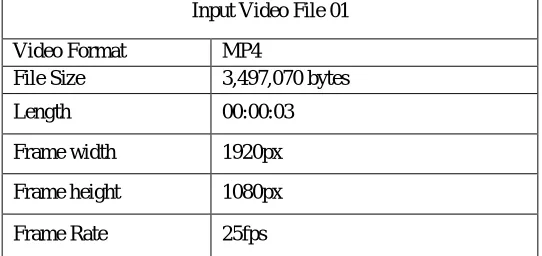
The main process of comparison is to compare the videos with different algorithms. The algorithms are compared with the file mentioned on table 1. The input file is 3 seconds video which has 1920x1080 with 25fps. Initially the file has 3,497,070 bytes/3.33 Mb.
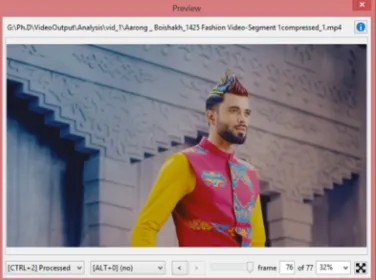
[image:3.612.91.279.331.471.2]Figure 1: Video sequence 01 Input at frame no 76
Figure 2: HEVP’s output at frame 76 Figure 3: Skin Tone Based HEVP’s output at frame 76
Here we have three pictures. First one figure 1 is the original input video which is at 76th frame. After compressing the video by
HEVP algorithm, the output compressed video produce the frame 76th looks like in figure 2. By next, the input video is compressed
by skin tone based HEVP and the resultant image of frame 76th is shown on figure 3. In these three variations, it’s much difficult to
find the difference to human eye.
[image:3.612.327.520.333.472.2] [image:3.612.190.424.582.712.2]Figure 5: STB HEVP - PSNR Gain Ratio for Video sequence 01
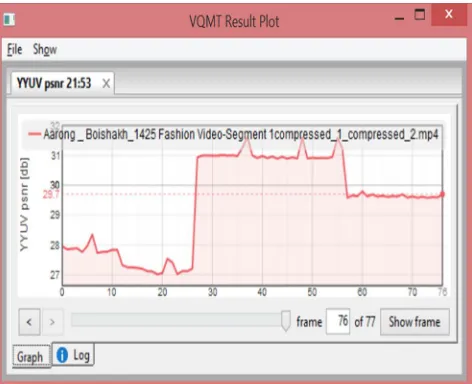
The figure 4 shows the input video sequence with the HEVP algorithm’s compressed video sequence. Likewise figure 5 shows the
input video sequence with the STB HEVP algorithm’s compressed video sequence. Figure 4 shows the PSNR value of 76th frame
which has the PSNR value of 35. Figure 5 shows the PSNR value of 76th frame.
Input Video File 02
Video Format MP4
File Size 2,093,979 bytes
Length 00:00:03
Frame width 1920px
Frame height 1080px
[image:4.612.189.425.76.268.2]Frame Rate 29fps
Table 2: Input video file 02 for comparison
[image:4.612.164.448.483.717.2]In the above table, the algorithms is been compared with a file which comprises of 3 seconds of video. It has 1920*1080 px with the rate 29fps and its initial size is found to be 2,093,979 bytes.
Figure 7: HEVP’s output at frame 51 Figure 8: Skin Tone Based HEVP’s output at frame 51
[image:5.612.135.479.302.502.2]First figure 6 is an input original video which is at the frame no 51 and the second figure 7 is the one which is been compressed by HEVP algorithm and the third figure 8 is the output by the skin tine based HEVP algorithm.
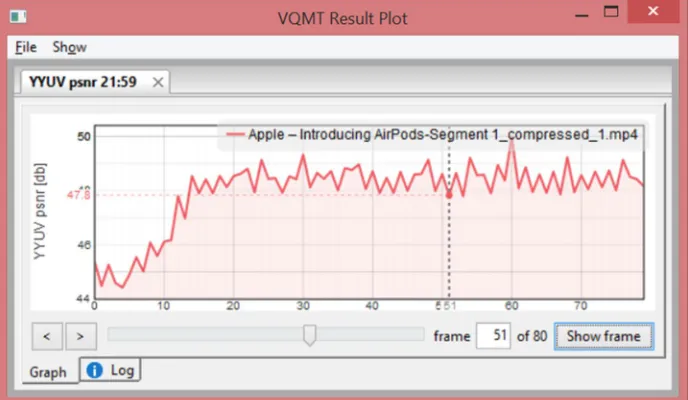
Figure 9: HEVP - PSNR Gain Ratio for Video sequence 02
[image:5.612.131.482.526.718.2]The above figure 9 shows the PSNR gain ratio of HEVP’s algorithm and the figure 10 shows the PSNR gain ratio of STB HEVP’s algorithm.
Input Video File 03
Video Format MP4
File Size 3,497,070 bytes
Length 00:00:03
Frame width 1920px
Frame height 1080px
[image:6.612.183.436.112.218.2]Frame Rate 25fps
Table 3 Input video file 03 for comparison
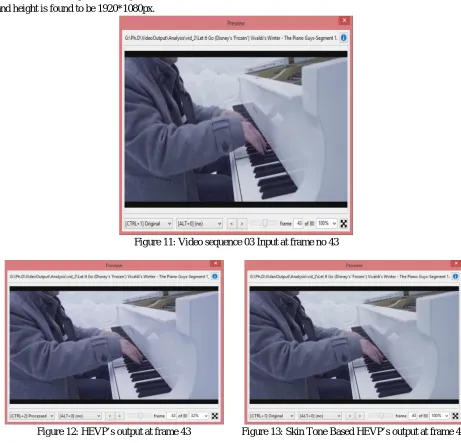
[image:6.612.70.531.244.687.2]The above table is the comparison of algorithms with the file that is of 3 seconds and its size is 3,497,070 with the rate of 25fps. The width and height is found to be 1920*1080px.
Figure 11: Video sequence 03 Input at frame no 43
Figure 12: HEVP’s output at frame 43 Figure 13: Skin Tone Based HEVP’s output at frame 43
.
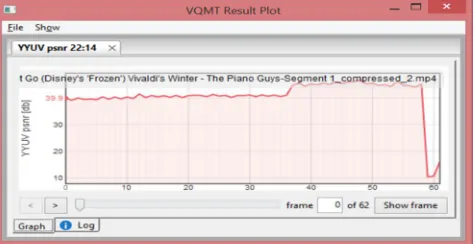
[image:6.612.191.423.264.478.2]Figure 14 : HEVP - PSNR Gain Ratio for Video sequence 03
Figure 15: STB HEVP - PSNR Gain Ratio for Video sequence 03
The above figure 14 shows the PSNR gain ratio of the HEVP’s algorithm and the figure 15 shows the PSNR gain ratio of STB HEVP’s algorithm.
Input Video Input File Size HEVP Output File Size STB-HEVP Output
File Size
1 3,497,070 3,120,124 2,903,140
2 2,093,979 1,999,161 1,883,608
[image:7.612.189.427.217.339.2]3 3,497,070 3,291,126 3,288,721
Table 5: Estimation Results of HEVP and STB-HEVP algorithms
Input Video
HEVP
PSNR Compression
Ratio
Compression Factor
Saving Percentage
1 34.64503 0.892 1.121 10.77%
2 47.75748 0.954 1.048 4.52%
3 47.75748 0.941 1.062 5.88%
[image:7.612.78.515.381.711.2]Input Video
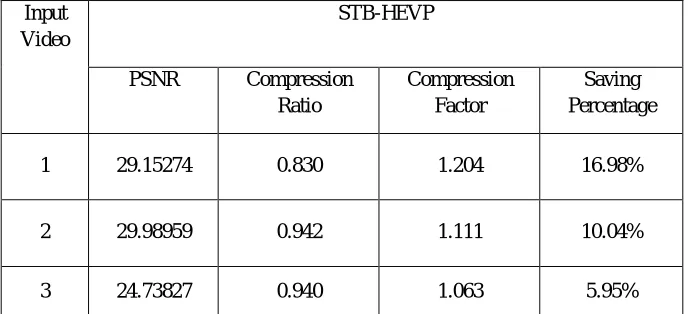
STB-HEVP
PSNR Compression
Ratio
Compression Factor
Saving Percentage
1 29.15274 0.830 1.204 16.98%
2 29.98959 0.942 1.111 10.04%
[image:8.612.135.480.77.234.2]3 24.73827 0.940 1.063 5.95%
Table 7: Result Analysis of STB-HEVP Algorithm in Video Sequences
VI. CONCLUSION
In this paper we have compared two compression algorithms HEVP, and Skin Tone Based HEVP using our test bed which consists of variant visuals and we evaluate the algorithms using different aspects like, compression ratio, saving percentage storage. We found that HEVP is the best algorithm while we have the product based, animation based and non-skin visuals. In some cases, it works well if the video has very little skin area. The skin tone based HEVP algorithm is performing well on commercial videos which has more artists in a frame. In conclude, the HEVP algorithm provide a better video quality than STB HEVP. But the compression is not better than the STB HEVP. Vice versa, STB HEVP provides a good compression ratio than the HEVP. In the future, more compression techniques will used and compared over a large data set of video files until reach to the best compression technique.
REFERENCES
[1] Pu, I.M., 2006, Fundamental Data Compression, Elsevier, Britain
[2] S. Gaurav Vijayvargiya and R. P. Pandey, “A Survey : Various Techniques of Image Compression,” vol. 11, no. 10, 2013.
[3] Arup Kumar Bhattacharjee, Tanumon Bej, and Saheb Agarwal, “Comparison Study of Lossless Data Compression Algorithms for Text Data \n,” IOSR J.
Comput. Eng., vol. 11, no. 6, pp. 15–19, 2013.
[4] S. Porwal, Y. Chaudhary, J. Joshi, and M. Jain, “Data Compression Methodologies for Lossless Data and Comparison between Algorithms,” vol. 2, no. 2, pp.
142–147, 2013.
[5] T. Europe, “An Introduction to Fractal Image Compression,” Outubro, no. October, p. 20, 1997.
[6] Arup Kumar Bhattacharjee, Tanumon Bej , Saheb Agarwal, "Comparison Study of Lossless Data Compression Algorithms for Text Data", IOSR Journal of
Computer Engineering (IOSR-JCE)e-ISSN: 2278-0661, p- ISSN: 2278-8727Volume 11, Issue 6 (May. - Jun. 2013), PP 15-19
[7] Roy Jackson Monteiro, Dhanush J.K and Nausheeda B.S, "Comparison Of Various Segmentation Algorithms In Image Processing", International Journal of
Latest Trends in Engineering and Technology Special Issue SACAIM 2016, pp. 241-247 e-ISSN:2278-621X
[8] Arushi Chhabra, Ankit Gupta and Akila Victor, "Comparison of Image Segmentation Algorithms", IJETTCS, Volume 2, Issue 3, May – June 2013, ISSN
2278-6856
[9] Sujata Saini1 and Komal Arora2-“A Study Analysis on the Different Image Segmentation Techniques”, International Journal of Information and Computation
Technology, Volume 4, ISSN 0974-2239, Number 14- pp 1445-1452, 2014.
[10] RozyKumari, Narinder Sharma-,”A Study on the Different Image Segmentation Technique” International Journal of Engineering and Innovative Technology