Intervention for Dyslexia
A review of published evidence on the impact of specialist dyslexia teaching
Chris Singleton
University of Hull
Contents
EXECUTIVE SUMMARY...6
ACKNOWLEDGEMENTS ... 13
1 INTRODUCTION ... 14
1.1 AIMS AND SCOPE... 14
1.1.1 Remit ... 14
1.1.2 Limitations ... 14
1.1.3 The author... 15
1.2 DEFINITIONS OF DYSLEXIA... 16
1.2.1 United Kingdom... 16
1.2.2 United States of America ... 17
1.3 WHAT IS ‘SPECIALIST DYSLEXIA TEACHING’? ... 18
1.3.1 The nature of the problem... 18
1.3.2 Historical overview... 18
1.3.3 Current perspectives on specialist dyslexia teaching ... 18
1.3.4 Conclusions ... 21
1.3.5 Wider roles of the specialist dyslexia teacher ... 22
1.4 VISUAL STRESS AND DYSLEXIA... 23
1.4.1 Visual dyslexia? ... 23
1.4.2 The implications of visual stress for reading development... 24
1.4.3 Relationship between visual stress and dyslexia ... 24
1.5 METHODS AND MEASURES... 26
1.5.1 Methodology ... 26
1.5.2 Standard scores ... 26
1.5.3 Effect size ... 27
1.5.4 Ratio gain ... 27
1.6 STRUCTURE OF THE REVIEW... 28
2 INTERVENTION STUDIES IN THE US AND THE REST OF THE WORLD ... 29
2.1 STAGES OF INTERVENTION IN THE USA ... 29
2.2 SECONDARY INTERVENTION STUDIES... 29
2.2.1 Swanson’s (1999) meta-analysis ... 30
2.2.2 Vellutino, Scanlon, Sipay et al. (1996) ... 30
2.2.3 Torgesen et al. (1999)... 31
2.2.4 Scammacca et al. (2007) review ... 32
2.2.5 Foorman et al. (1997)... 33
2.2.6 Schneider, Roth and Ennemoser (2000) ... 33
2.2.7 Vadasy et al. (2002)... 34
2.2.8 Mathes et al. (2005)... 34
2.2.9 Ryder, Tunmer and Greaney (2008) ... 35
2.2.10 Frost & Sørensen (2007) ... 36
2.2.11 Vaughn and Roberts (2007) review ... 36
2.3 CRITICAL ISSUES IN SECONDARY INTERVENTION... 37
2.3.1 Long-term effects ... 37
2.3.2 Who should deliver intervention: teachers or teaching assistants? ... 38
2.4 CONCLUSIONS ON SECONDARY INTERVENTION... 39
2.5 TERTIARY INTERVENTION STUDIES... 40
2.5.2 Rashotte, McPhee and Torgesen (2001) ...42
2.5.3 Reviews and analyses by Torgesen (2005a & 2005b) ...43
2.5.4 Alexander et al. (1991) ...44
2.5.5 Lovett et al. (1994) ...45
2.5.6 Wise, Ring and Olson (1999)...45
2.5.7 Lovett et al. (2000) ...45
2.5.8 O’Connor and Wilson (1995)...45
2.5.9 Torgesen et al. (2003) ...45
2.5.10 Torgesen et al. (2004) ...47
2.6 FLUENCY...47
2.7 SPELLING...48
2.8 WRITING...49
2.9 CRITICAL ISSUES IN TERTIARY INTERVENTION...50
2.9.1 Number of hours of intervention...50
2.9.2 Degree of impairment...51
2.9.3 Group size...51
2.9.4 Age...52
2.10 CONCLUSIONS ON TERTIARY INTERVENTION...53
3 UK INTERVENTION STUDIES...55
3.1 STAGES OF INTERVENTION IN ENGLAND...55
3.2 RATIONALE FOR THE SELECTION OF STUDIES...55
3.3 REVIEW OF STUDIES...56
3.3.1 AcceleRead AcceleWrite...56
3.3.2 Interactive Assessment and Teaching (IA&T) ...57
3.3.3 Lexia ...58
3.3.4 London Borough of Sutton study ...59
3.3.5 Phono-Graphix ...59
3.3.6 Phonology with Reading...60
3.3.7 Read Write Inc...61
3.3.8 Reading Intervention ...61
3.3.9 SIDNEY ...63
3.3.10 THRASS ...63
3.3.11 Toe by Toe ...63
3.3.12 Summary...64
3.4 STUDIES IN UK SPECIALIST DYSLEXIA SCHOOLS AND TEACHING CENTRES...71
3.4.1 Hornsby and Miles (1980)...71
3.4.2 East Court School...71
3.4.3 Dyslexia Action...72
3.5 CONCLUSIONS...73
4 SCREENING AND ASSESSMENT ...76
4.1 IDENTIFYING CHILDREN WITH DYSLEXIA...76
4.1.1 Intelligence and discrepancy ...76
4.1.2 Predictors of reading difficulty and dyslexia ...76
4.1.3 Response to intervention ...78
4.2 ISSUES IN SCREENING...80
4.2.1 The purpose of screening...80
4.2.2 Screening in education ...80
4.2.3 The accuracy of screening instruments ...81
4.2.4 Teacher training issues ...83
4.3 SCREENING TESTS...84
4.3.1 Scope ...84
4.3.2 Types of screening test ...84
4.3.4 Computer-based screening tests for dyslexia ... 88
4.3.5 Dyslexia Profiling Tests... 90
4.3.6 Identifying visual stress ... 92
4.4 CONCLUSIONS... 93
5 READING RECOVERY... 95
5.1 INTRODUCTION... 95
5.1.1 Scope... 95
5.1.2 What is Reading Recovery? ... 95
5.1.3 Rationale and pegagogy ... 96
5.1.4 Reading Recovery and the teaching of early reading... 97
5.1.5 Pressures to increase phonics in Reading Recovery ... 97
5.1.6 The place of phonics currently in Reading Recovery in the UK... 98
5.2 EVALUATIONS OF READING RECOVERY IN THE REST OF THE WORLD... 100
5.2.1 Large-scale international evaluations and reviews... 100
5.2.2 RCT and quasi-experimental studies of Reading Recovery ... 101
5.3 READING RECOVERY IN THE UK ... 104
5.3.1 Reading Recovery in the UK before Every Child a Reader (ECaR)... 104
5.3.2 Every Child a Reader (ECaR) ... 105
5.4 QUASI-EXPERIMENTAL RESEARCH STUDIES ON READING RECOVERY IN THE UK ... 106
5.4.1 The London and Surrey study, 1992–96 ... 106
5.4.2 Every Child a Reader in London, 2005–06 ... 107
5.4.3 Comparing the effects of Reading Recovery and phonologically based schemes 108 5.5 LONG-TERM EFFECTS... 109
5.5.1 Long-term follow-ups of Reading Recovery in England... 110
5.5.2 Key Stage 1 results of Reading Recovery children in England, 2003– 07... 111
5.5.3 Reading Recovery children’s standardised reading test results... 117
5.6 CONCLUSIONS... 118
5.6.1 The efficacy of Reading Recovery... 118
5.6.2 Reading Recovery as an intervention for children with dyslexia ... 118
6 COMPUTER TECHNOLOGY AND SUPPORT OF OLDER DYSLEXIC PUPILS 121 6.1 DYSLEXIC DIFFICULTIES IN SECONDARY SCHOOL... 121
6.2 USE OF COMPUTERS IN INSTRUCTION... 122
6.2.1 The advantages of computer assisted learning (CAL) for dyslexics... 123
6.2.2 Speech feedback... 124
6.2.3 Integrated Learning Systems ... 125
6.3 RESEARCH ON COMPUTER-BASED INTERVENTIONS WITH DYSLEXIC CHILDREN... 125
6.4 STUDIES OF ASSISTIVE TECHNOLOGY WITH OLDER DYSLEXIC STUDENTS... 128
6.5 CONCLUSIONS... 128
Intervention for Dyslexia
A review of published evidence on the impact of specialist dyslexia teaching
Chris Singleton
May 2009
Executive Summary
Aims and scope (Chapter 1)
1) This review has been commissioned by the Steering Committee for the ‘No To Failure’ project and funded by the Department for Children, Schools and Families. The aim was to summarise published research evidence of the impact of
specialist teaching on progress and outcomes for children aged from 5 to 18 with dyslexia/specific learning difficulties.
2) The following definition of dyslexia was been adopted for the purposes of this review:
Dyslexia primarily affects the skills involved in accurate and fluent word reading and spelling.
Characteristic features of dyslexia are difficulties in phonological awareness, verbal memory and verbal processing speed.
Dyslexia occurs across the range of intellectual abilities.
It is best thought of as a continuum, not a distinct category, and there are no clear cut-off points.
Co-occurring difficulties may be seen in aspects of language, motor co-ordination, mental calculation, concentration and personal organisation, but these are not, by themselves, markers of dyslexia.
A good indication of the severity and persistence of dyslexic difficulties can be gained by examining how the individual responds or has responded to well founded intervention.
3) In the UK, ‘specialist dyslexia teaching’ may be regarded as an umbrella term for the approaches that are used by teachers who have undergone specialist training and attained qualifications in the teaching of children and adults with dyslexia. These approaches may be summarised as being systematic, multisensory and phonologically based. Criteria of (a) tuition being additional to that normally provided, and (b) focused directly on developing literacy skills, were also
imposed on the review. Accordingly, indirect methods and ‘alternative therapies’ for dyslexia are not considered here.
4) Dyslexia is sometimes confused with visual stress, especially where the
presuppose any neurological link between dyslexia and visual stress. However, recent studies indicate that visual stress is more prevalent in people with dyslexia than in the rest of the population, which is probably because visual sensitivity is heightened as a result of the dyslexic’s poor reading strategies, thus
exacerbating visual stress reactions.
5) Visual stress interferes with the ability to read for any reasonable duration. Children who suffer from this problem tend to avoid reading, to the detriment of their progress in reading fluency and reading comprehension. The most widely used, and generally effective, treatment for visual stress is that of coloured tints, in the form of either acetate overlays or tinted lenses. This is not an appropriate treatment for dyslexia, but the increased prevalence of visual stress amongst people with dyslexia indicates that teachers should be especially vigilant for the signs of visual stress in dyslexic pupils (see also paragraph 30).
6) Few of the studies in this field conform to methods that may be described as ‘gold standard’ (i.e. randomised control trials), but most may be considered as conforming to a ‘silver standard’ (i.e. well-constructed quasi-experimental studies). Wherever possible, effect sizes of findings are quoted. Effect size is a
well-established method of reporting the magnitude of a result. Cohen’s d is used as the standard effect size measure throughout this review. However, it is
important to note that effect size will depend on the type of control group used. If the control group has also received treatment, effect sizes will be smaller than if it was untreated. Where it has not been possible to report effect sizes, ratio gains (i.e. rates of monthly gain) have been reported instead (and sometimes additionally to effect sizes).
7) Research studies on interventions for dyslexia carried out the UK, and in the USA and other countries, are considered in separate chapters because of differences in school systems and approaches to special educational needs.
Studies of secondary intervention (Chapter 2)
8) ‘Secondary intervention’ is a generic term for the provision of more intensive instruction given individually or in groups to failing readers in the first 3-4 years of schooling. The term does not refer to intervention given in secondary school.
9) There have been several important reviews and meta-analyses of the impact of secondary intervention in the USA and other countries. Over 100 studies are covered by these reviews, the results of which are summarised in this report. In addition, eight high-quality studies of secondary intervention programmes using phonological approaches with children with dyslexia or learning disabilities are considered in more detail.
10) The results of the reviewed studies indicate that such interventions are beneficial for children with dyslexia, even when instruction is provided by non-teachers, provided they have received adequate training, and even when instruction is given to small groups of children (up to 4–5 children per group).
12) The most effective studies were found to share the following essential elements: (i) explicit training in phonological awareness, (ii) strong focus on phonological decoding and word-level work, (iii) supported and independent reading of progressively more difficult texts, (iv) practice of comprehension strategies while reading texts, and (v) instruction that is systematic and intensive.
13) Long-term studies show that systematic phonological secondary interventions continue to have benefit for the literacy development of most children whose reading is impaired. However, a proportion (probably between 1.5% and 3%) of children remain below target levels and will thus require further help.
Studies of tertiary intervention (Chapter 2)
14) ‘Tertiary intervention’ is a generic term referring to the most intensive special education given from age 8–9 onwards and typically delivered 1:1. The term does not refer to intervention given at the tertiary stage of education, i.e. further and higher education. Twelve high-quality studies carried out in the USA that applied such methods are reviewed here.
15) The results of tertiary interventions indicated that children with dyslexia or learning disabilities are generally able to benefit significantly and substantially from intensive phonologically-based instruction. Growth rates were most marked in phonic decoding skills. Text reading accuracy and reading comprehension of these children can be accelerated but reading fluency of these students tends to remain weak or poor.
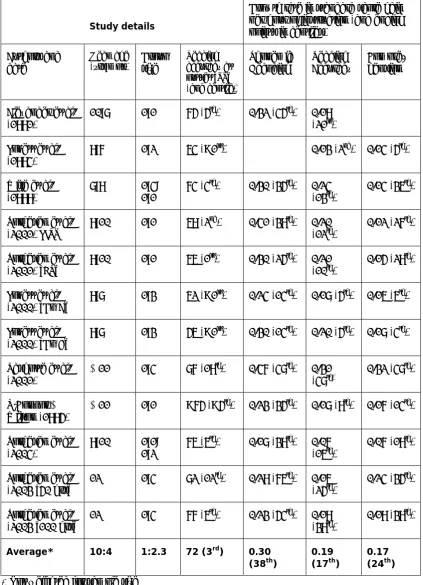
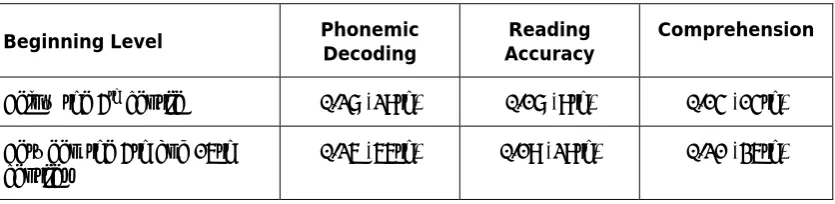
16) On average, children in tertiary intervention start with reading skills at the 3rd centile and at the end of the interventions have reading accuracy at the 17th centile, phonic decoding skills at the 38th centile and reading comprehension at the 24th centile.
17) Provided instruction is high-quality and sufficiently intensive, there is evidence that similar results can be achieved with small-group instruction as in 1:1 instruction.
18) The studies of both secondary and tertiary interventions from around the world show that phonologically-based elements (including phonics) are key to their success.
UK studies of intervention (Chapter 3)
19) Thirty-one published UK studies of interventions for dyslexic children or very poor readers using eleven different phonologically-based programmes are reviewed, together with four published studies of the effectiveness of teaching provided by schools or organisations that specialise in phonologically-based intervention for dyslexic pupils.
20) The results of UK studies demonstrate that, in general, systematic
(0.56 for reading accuracy, 0.91 for reading comprehension, and 0.59 for spelling). It should be noted, however, that very few of these schemes have been evaluated specifically with children who have dyslexia.
21) Studies of large samples of older dyslexic pupils in UK specialist schools and teaching centres have found the literacy progress of these dyslexic pupils is significantly accelerated, and in many cases they achieve well within the normal range. However, the rates of gain tend to be more modest (ratio gains in the range 0.86–2.0) and, in some cases, further efforts will be necessary for them to catch up with their peers. It should be noted that these organisations tend to take children with the most severe difficulties and co-morbid conditions, and hence slower rates of progress are to be expected. Dyslexic pupils who do not receive intervention generally decline steadily in literacy relative to their peers and hence, arguably, the achievement of ratio gains of 1.0 or greater represents substantial progress for these ‘hard to teach’ pupils.
Screening and assessment (Chapter 4)
22) The chief purpose of screening and/or assessment is to identify children who require intervention. Identification of children with dyslexia was traditionally carried out by educational psychologists using approaches that relied on the identification of a discrepancy between IQ and attainments in literacy.
23) In response to research evidence, reliance on discrepancy has declined in favour of using measures of cognitive factors associated with dyslexia, such as
phonological processing, verbal memory, and information processing speed. Teachers are now using tests that measure these factors and, increasingly, undertake the identification of dyslexic children.
24) There are many published studies on the early predictors of reading difficulties. The strongest early predictors include verbal memory, phonological awareness, letter identification, object naming and general language skills. Use of screening tests assessing these skills is probably the best way to identify children at risk of reading failure at the earliest stages of schooling. As children get older, phonic decoding, text reading fluency and spelling are also valuable indicators.
25) Issues concerning the validity and accuracy of screening tests are discussed. Misclassification errors in screening, i.e. false positives (‘false alarms’) and false negatives (‘misses’), need to be minimised as these have implications for children’s education and for the proper allocation of educational resources. Training of specialist dyslexia teachers should include instruction regarding the limitation of screening and how to judge the usefulness of educational tests.
27) An approach to the identification of dyslexia that involves screening, or early assessment, using a range of cognitive and early literacy measures that are known to be good predictors, is consistent with the SEN Code of Practice.
28) The child’s response to an intervention (RTI) can also play a part in the identification process as well as helping determine the severity of a child’s difficulties. However, although this approach can be useful in identifying children with severe dyslexia because they are harder to remediate, it is probably less helpful in the identification of dyslexic pupils whose inherent phonological difficulties are mild, and hence such cases could slip through the net.
29) Although the correlation between early reading ability and later reading ability is relatively high (usually in the region 0.6–0.7), poor early reading ability per se is not by necessarily a very good predictor of later literacy difficulties in individual cases. Hence screening for poor reading skills without taking into account cognitive predictors risks letting dyslexic children slip through the net.
30) When carrying out assessment it is important to distinguish between dyslexia and visual stress. Visual stress has generally been identified either by the child reporting symptoms or making a judgment that text is easier to read with a certain colour rather than another. These approaches can be unreliable (especially with younger children), but an objective computerised method of screening for visual stress based on visual search tasks has recently been developed.
Reading Recovery (Chapter 5)
31) A specific remit of the review was to address the question: ‘What evidence is there that Reading Recovery is, or is likely to be, an appropriate method of intervention for children with dyslexia?’
32) Reading Recovery is a 1:1 intervention programme for young struggling readers, delivered by specially trained teachers. Originally based on the whole-language approach, Reading Recovery traditionally de-emphasised decoding in favour of teaching strategies for recognising words in the context of meaningful text reading and writing.
33) There are tensions between the theory behind Reading Recovery – in which reading is regarded as the integration of information from semantic, syntactic, graphophonic and visual sources – and the ‘simple’ view of reading, in which a distinction is drawn between word recognition and reading comprehension. Since the ‘simple’ view of reading is the theoretical framework that currently underpins Wave 1 phonics teaching, it is difficult to understand current government
endorsement of Reading Recovery as a Wave 3 intervention because this endorsement is in conflict with what the National Strategies team is now promoting as quality first teaching.
instruction in phonics, it cannot be claimed that such phonics teaching is systematic or comprehensive.
35) International reviews of Reading Recovery have mostly been positive, concluding that, although costly, Reading Recovery generally resulted in significant gains in reading. It has also been noted that it was less effective in maintaining those gains and it would be an unwise strategy to shift all resources for remediation into Reading Recovery because some students would be likely to require additional or continuing support.
36) Independent research studies show benefits for many children on Reading Recovery programmes. However, comparisons of the ratio gains made by children in Reading Recovery and in systematic phonologically based interventions appear on balance to favour the latter.
37) Since 2005, the Every Child a Reader initiative (ECaR) has been providing Reading Recovery within a broader programme to increasing numbers of Year 1 pupils in England. The ECaR annual reports show that about 85% of enrolled children successfully complete the programme and are raised to at least the average reading level of their class. Over a third of these pupils, who, when they started the programme, were among the lowest achievers in their classes,
progress to achieving Level 2b (the national target level) or better in Key Stage 1 National Curriculum assessments in reading. A quasi-experimental study in London has provided further support for the approach.
38) Analysis of National Curriculum assessment results of children on Reading Recovery programmes over the period 2003–2007 does not support the view that Reading Recovery in England and Wales achieves its stated goal for “children to develop effective reading and writing strategies in order to work within an average range of classroom performance”. Only 12%–15% of Reading Recovery children completing their programmes between 2003 and 2007
achieved a Level 2a or above in Key Stage 1 Reading National Curriculum assessments, the level at which children can tackle unfamiliar words and have therefore developed a self-sustaining word recognition system.
39) Literature searches failed to uncover any published evaluations of Reading Recovery being used with dyslexic pupils. To decide the question whether Reading Recovery actually works for children with dyslexia therefore requires further research. However, dyslexic children, by definition, have specific problems in acquiring effective knowledge of letter-sound relationships and of the rules that govern these, and in order to become independent readers who can tackle unfamiliar words, they are likely to need more rather than less intensive instruction in phonics. In consequence, it is unlikely that Reading Recovery – in which the teaching of phonics is less than systematic and which enables only a rather small proportion of children taught by this method to tackle unfamiliar words – would be an effective intervention for dyslexia.
Dyslexia in older pupils and use of computer technology (Chapter 6)
41) Dyslexic students can be effectively supported in secondary schools using a variety of techniques, including (i) differentiation in writing activities with
emphasis on systematic drafting and redrafting, (ii) peer tutoring, (iii) specialised spelling support, (iv) raising awareness of subject teaching staff, and (v) use of computer technology.
42) Computers can be used as part of the instructional process in order to help children learn basic skills and curriculum-related material (commonly known as ‘computer assisted learning’ or CAL, for short), and also to facilitate reading, writing and the organisation of information by means of technologies such as text-to-speech, voice input and planning tools. The principal advantages of CAL for dyslexic learners are that it enhances motivation, provides individualised instruction, provides immediate informative feedback, creates an active learning environment, and can monitor the pupil’s performance.
43) The impact of computer assisted learning on the development of literacy in children with dyslexia or learning disabilities has been found to vary from study to study. There is little evidence that large-scale Integrated Learning Systems are helpful for pupils with dyslexia, but smaller-scale, more carefully targeted CAL programs can have significant impact on reading and spelling, particularly when programs incorporate speech feedback. In addition, CAL can have motivational benefits for children with dyslexia.
Acknowledgements
I would like to express my gratitude to the following people, who greatly assisted me with the preparation of this review.
The members of the Steering Committee of the ‘No To Failure’ Project (Lynn Greenwold, Judi Stewart, Shirley Cramer, Kate Griggs and Graeme Snow), who commissioned me to undertake the review in the first place and who gave me their encouragement
throughout.
Greg Brooks, whose detailed compilation of UK intervention studies in the 3rd edition of the report ‘What works for pupils with literacy difficulties?’ (Brooks, 2007) was invaluable in the preparation of Chapter 3. Greg also helped me by proving detailed annotations and extremely useful critical observations on the first and second drafts of this review, and by assisting me in revising Chapter 5.
Maggie Snowling, whose incisive comments on the first draft sharpened my thinking on many of the important issues and enabled me to clarify many points.
Jim Rose and my fellow members of the DCSF Dyslexia Expert Advisory Group set up to assist Jim in the preparation of a review of provision for dyslexic pupils in schools in England (Maggie Snowling, Greg Brooks, Morag Stuart, Rea Reason, John Rack, Bob Burden, Geraldine Price, Mark Sherin and Yvonne Griffiths), who devoted time to reading the first draft and to discussing it with me.
Jean Gross, Director of Every Child a Reader, who provided detailed critical comments on the first draft, especially on Chapter 5, and also her colleague Julia Douëtil, who provided a critical analysis of the arguments in Chapter 5 and drew my attention to some studies of Reading Recovery and Every Child a Reader of which I had previously been unaware.
Staff in the Special Educational Needs and Disability Division of the Department for Children, Schools and Families, who facilitated the work in numerous ways, and who gave helpful feedback on the first draft of the review.
Mike Vickars, who painstakingly proofread the first draft.
Last, but by no means least, my wife Brenda, who, recognising the potential importance of this work for the education of dyslexic children, gave me unselfish and dedicated moral support during the intensive period of research and writing.
1 Introduction
1.1 Aims and scope
This review has been commissioned by the Steering Committee for the ‘No To Failure’ project and funded by the Department for Children, Schools and Families. The aim is to summarise published research evidence on the impact of specialist teaching on
progression and outcomes for children from aged 5 to 18 with dyslexia/specific learning difficulties (SpLD). This review will, in turn, form part of the evidence to be considered by Jim Rose in the review of, and recommendations on, dyslexia provision in schools that he has undertaken on instructions from the Secretary of State for Children, Schools and Families (DCSF), and which is scheduled to be submitted in April 2009.
1.1.1 Remit
The scope of this review, as set by the commissioning remit, is as follows:
a summary of published evidence on the impact of specialist teaching on progression and outcomes for children with dyslexia
a summary of published evaluations of Reading Recovery both within ECaR and more generally
a summary of whatever published evidence there may be on the impact of Reading Recovery specifically on the progression of children with dyslexia
a review of the evidence as to the extent to which the methodologies used were as robust as recommended in the review ‘What works for pupils with literacy difficulties?’ (Brooks, 2007)
questions about the range of screening tools available, and the varied definitions of dyslexia that are associated with them
any research evidence suggesting that reading is the main difficulty that arises for children with dyslexia at KS1, whereas other difficulties additionally emerge at KS2.
1.1.2 Limitations
This review aims to be thorough and authoritative but cannot be considered exhaustive or comprehensive. Because of the restricted time-span of this commission and the limited resources available to the author, it has not been possible to search the
international literature as intensively as would normally be expected, nor to follow up all publications uncovered by searches, nor to undertake a systematic review in the full technical sense. It has not even been possible to report on every publication in the field that was located and examined. Nevertheless, and with those reservations, every
The remit calls for conclusions to be drawn regarding the key questions, and hence conclusions have been drawn wherever possible, using all the evidence presented. Undoubtedly there will be other evidence on these issues that might have been included, but, because of the limitations outlined above, the focus has been on the major strands of research in the field and with emphasis on studies employing robust methods that have yielded the most trustworthy scientific evidence.
A key part of the remit was to restrict the review to published evidence. Although the schools and organisations that provide specialist dyslexia teaching will almost certainly have data on the progress of their pupils, regrettably very little of this has been published.
1.1.3 The author
Since this is an evaluative review some comment on the qualifications of the author are appropriate. The author is Senior Lecturer in Educational Psychology at the University of Hull, PhD in psychology, Associate Fellow of the British Psychological Society, and a Chartered Psychologist. In addition, he was director of the Psychological Assessment Unit at the University of Hull for over 10 years. He is also Research Director of Lucid Research Limited, which develops and publishes educational software.
The author has been working in the fields of dyslexia and literacy difficulties as an academic, published researcher and independent practitioner for more than 25 years and is very familiar with the published literature. As an editor/associate editor of the Journal of Research in Reading for 16 years, he is also accustomed to evaluating
research in these fields. In particular, he has been editor of several special issues of the Journal of Research in Reading, including ‘Dyslexia in Literate Adults’ (1997), ‘Computers and Literacy’ (2000), ‘Assessment of Literacy’ (2004), ‘Visual Factors in Reading’ (2005, subsequently published in book form), and ‘New Developments in Literacy and
Technology’ (2009). Other major publications in this context include ‘Computers and Dyslexia’ (Singleton, 1994) and ‘The Psychological Assessment of Reading’ (Beech and Singleton, 1997). He has also co-authored over a dozen computerised psychological tests that have been published by Lucid Research Limited and which are used in UK schools and elsewhere in the world.
During the late 1990s the author was chair of the National Working Party on Dyslexia in Higher Education, which was commissioned by Department for Education and Skills (DfES) and the Higher Education Funding Councils for England, Scotland and Wales to investigate and report on policy and provision for dyslexic students in universities, and to make recommendations on good practice. The report of that working party (Singleton, 1999) was influential in establishing consistency of good practice in identifying and supporting dyslexic students across all UK universities.
1.2 Definitions of dyslexia
Space (and time) precludes a discussion regarding the nature of dyslexia in these pages. Interested readers seeking authoritative overviews are referred to Snowling (2000), Vellutino et al. (2004), and Vellutino and Fletcher (2005). However, how dyslexia is (or should be) defined is highly pertinent in determining which studies to include and which to exclude. This review encompasses research carried out elsewhere in the world, and may be contrasted, for example, with that of Brooks (2007), which was confined to UK studies. The vast majority of non-UK studies covered in these pages were carried out in the USA and hence it is also necessary to address the issue of how dyslexia is defined in each of these two countries. In the UK, where dyslexia has never been legally defined (although it is a legally recognised disability) the approach has been somewhat different to that adopted in the USA, where dyslexia has been the subject of (controversial) legal definition and debate at Congressional level. In both countries, however, there have been many different published definitions as well as vigorous debate about how the condition should be defined (e.g. Lyon, 1995; Miles, 1995; Singleton, 2008a; Tønnessen, 1997).
In this review, studies of samples that meet either the chosen UK definition of dyslexia (see Section 1.2.1) or the definition of ‘Learning Disability’ in the USA (see Section 1.2.2) have been included. However, as will be seen in Chapter 3, the majority of UK studies have not clearly identified the children in the samples as having ‘dyslexia’. To have excluded studies that did not explicitly use the label ‘dyslexia’ (or specific learning difficulties) would have seriously limited the scope of the review. Thus in order to examine as fully as possible the range of intervention programmes that meet the definition of ‘specialist dyslexia teaching’ given in Section 1.3, this review also includes studies in which the children have significant difficulties in some or all aspects of literacy (below standard score 85, or at least one standard deviation below the mean).
1.2.1 United Kingdom
Although dyslexia has been a legally-recognised disability in the UK for almost forty years (Chronically Sick and Disabled Persons Act 1970, Section 27), and is referred to in the Special Educational Needs Code of Practice (DfES, 2001, paragraphs 7:55 and 7:58), there is no legal definition of dyslexia in this country. A variety of definitions of dyslexia have been produced by different academic, professional and lay organizations (for discussion see Singleton, 2008a, pp.5-9) but consideration of these is outside the scope of this review. Instead, the following definition of dyslexia, to which the author
subscribes, has been adopted for the purposes of this review. This definition has been agreed by the DCSF Expert Advisory Group on Dyslexia.
Dyslexia primarily affects the skills involved in accurate and fluent word reading and spelling.
Characteristic features of dyslexia are difficulties in phonological awareness, verbal memory and verbal processing speed.
Dyslexia occurs across the range of intellectual abilities.
Co-occurring difficulties may be seen in aspects of language, motor co-ordination, mental calculation, concentration and personal organisation, but these are not, by themselves, markers of dyslexia.
A good indication of the severity and persistence of dyslexic difficulties can be gained by examining how the individual responds or has responded to well founded intervention.
1.2.2 United States of America
In the USA, the International Dyslexia Association proposed the following definition of dyslexia, which has been widely accepted:
“Dyslexia is one of several distinct learning disabilities. It is a specific language-based disorder of constitutional origin characterized by difficulties in single word decoding” (Lyon, 1995, p. 7)
However, in the USA the term ‘dyslexia’ does not have a legal meaning; instead the term ‘Learning Disabilities’ is used (typically abbreviated to ‘LD’), which was defined in US federal law as:
“A severe discrepancy between achievement and intellectual ability in one or more of the areas: (1) oral expression; (2) listening comprehension; (3) written expression; (4) basic reading skills; (5) reading comprehension; (6) mathematics calculation; or (7) mathematics reasoning. The child may not be identified as having a specific learning disability if the discrepancy between ability and achievements is primarily the result of: (1) a visual, hearing or motor handicap; (2) mental retardation; (3) emotional
disturbance; or (4) environmental, cultural, or economic disadvantage.” (US Office of Education, 1977, p. G1082)
The use of an IQ–achievement discrepancy criterion began to be popular during the 1970s (Rutter & Yule, 1975, Singleton, 1977) and subsequently found its way into definitions of specific reading disorder in the two international professional manuals on diagnosis: DSM-IV and ICD-10. For many years IQ–achievement discrepancy was commonly used by educational psychologists for identifying dyslexia or specific learning disabilities (see Singleton, 1987, 1988). However, subsequent research findings have undermined its validity (for review, see Stuebing et al., 2002). In particular, there is little evidence that the long-term development of poor readers who are IQ–achievement discrepant is substantially different to that of poor readers who are not IQ–achievement discrepant (Shaywitz et al., 1999), nor does IQ–achievement discrepancy reliably
distinguish between those who are difficult to remediate and those who are more easily remediated (Vellutino et al., 2000; Meyer, 2000). Consequently, IQ–achievement discrepancy is no longer the bedrock for identification of LD in the US (or of dyslexia in the UK, for that matter), although on both sides of the Atlantic strong cases have been made in favour of retaining the use of IQ assessment as part of the identification process (see Kavale, 2005; Thomson, 2003).
1.3 What is ‘specialist dyslexia teaching’?
1.3.1 The nature of the problem
Current research evidence shows that children with dyslexia experience substantial problems in mapping letters on to sounds and, consequently, these children have difficulties in learning how to decode written or printed words by application of phonic rules that depend on this mapping ability (Snowling, 2000; Vellutino & Fletcher, 2005; Vellutino et al., 2004). The vast majority of specialist teaching approaches for dyslexia are designed directly to address the dyslexic child’s difficulties in learning to decode using phonics (see Torgesen, 2005b).
1.3.2 Historical overview
Most approaches currently in use can be traced back to pioneering work in the 1940s by Gillingham and Stillman, who were guided by the principles developed by their mentor, the neurologist Samuel Orton, during the 1930s. Although Orton’s theories about dyslexia have long been superseded, the principles behind the teaching methods of Gillingham and Stillman have stood the test of time and now form the basis for many teaching programmes.
Gillingham and Stillman’s teaching textbook was first published in 1946, and by 1969 was in its fifth edition. The following quotation sums up their method succinctly:
“The technique…is based upon the constant use of association of all of the following – how a letter or word looks, how it sounds and how the speech organs or the hand in writing feels when producing it.” (Gillingham & Stillman, 1969, p. 17)
This technique has sometimes been referred to as the ‘Orton-Gillingham approach’ but is now generally referred to simply as ‘multisensory teaching’, as explained by the
International Dyslexia Association:
“Multisensory teaching is simultaneously visual, auditory, and kinesthetic-tactile to enhance memory and learning. Links are consistently made between the visual (what we see), auditory (what we hear), and kinesthetic-tactile (what we feel) pathways in
learning to read and spell. Teachers who use this approach teach children to link the sounds of the letters with the written symbol. Children also link the sound and symbol with how it feels to form the letter or letters.” (IDA, 2000)
The methods used by Gillingham and Stillman were extremely systematic and involved a great deal of repetition. Summing up this approach, Rawson (1968), an early advocate of specialist dyslexia teaching, emphasized that multisensory teaching programmes for dyslexics needed to be structured, sequential, cumulative and thorough, principles that have since become firmly enshrined in mainstream specialist teaching for dyslexics.
1.3.3 Current perspectives on specialist dyslexia teaching
Teacher Status (ATS). In general, courses leading to AMBDA are postgraduate diploma (Level 7), and those leading to ATS are postgraduate certificate (Level 5). These training courses cover topics such as:
The concept of dyslexia
Definition and identification of dyslexia
Theory and research on dyslexia
Legal and statutory frameworks
Co-morbid difficulties
Assessment tools and techniques
Screening
Teaching resources, including use of ICT
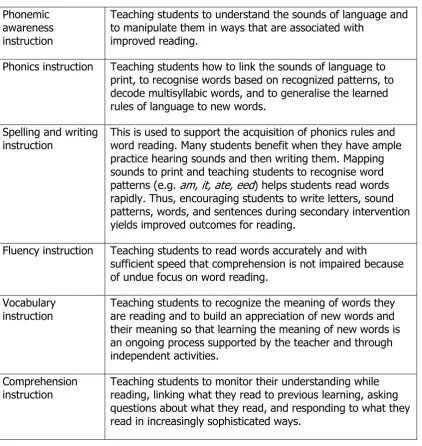
Structured phonics programmes
Design of individual multisensory teaching programmes
Emotional and behavioural issues and self-esteem
Strategies for effective writing
Developing memory strategies
Study skills
Revision strategies and preparation of exams
Special arrangements for GCSE and ‘A’ level examinations
Working with parents and other professionals.
Structured multisensory phonics tuition is a core feature of specialist dyslexia teaching, except where the teacher is supporting older pupils or students at college or university, where the principal focus is more likely to be on writing, study skills, and preparation for examinations. Thomson (1990) reviewed a range of established UK multisensory
teaching programmes for teaching dyslexics, including ‘Alpha to Omega’ (Hornsby and Shear, 1974) and the Hickey language training course (Hickey, 1977; Augur & Briggs, 1992) – which were the first UK systems based on Gillingham-Stillman – but also
subsequent publications such as the Bangor Teaching Programme (Miles, 1989) and the Aston Portfolio (Aubrey et al., 1981). Thomson identified the following features common to all these programmes:
Progressive Small Steps Logical Overlearning.
The last of these points (overlearning) refers to the systematic use of repetition, both within and between lessons, in the attempt to ensure that newly acquired skills and material are automatised, consolidated in memory, so that they can be readily applied or recalled when needed, and will not be disrupted or confounded by subsequent lesson material.
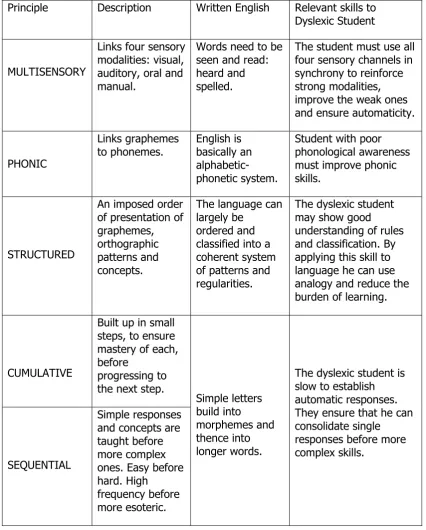
For many years the Hickey programme was the principal basis for phonologically-based teaching provided by the Dyslexia Institute until Walker and Brooks (1996) developed the variant called the Dyslexia Institute Literacy Programme (DILP), which remains the basis for teaching provided by Dyslexia Action.1 Like Thomson, Walker and Brooks (1996) also emphasise the importance of overlearning. Walker (2000) has specified five key principles of specialist teaching for children with dyslexia and has outlined the reasons behind these (see Table 1).
In a similar review, Townend (2000) stresses the importance of teaching phonological awareness, specifying that a specialist teaching programme for children with dyslexia should incorporate the following:
Structure – i.e. logical progression of elements with small steps teaching and explicit links being made between steps.
Multisensory – i.e. active and interactive integration of visual, auditory, kinaesthetic and tactile elements.
Reinforcement – i.e. reinforcement of all skills through regular practice to provide automatic access to all components of learning.
Skill teaching – i.e. teaching should concentrate on the development of useful and transferable skills rather than on learning facts and information, which would create unnecessary burdens on memory.
Metacognition – i.e. encouraging the student to think about what strategies and approaches would be best for them to use in different circumstances.
Thus according to all three authors who have reviewed this field – Thomson, Walker and Townend, all of whom have been professionally engaged in specialist dyslexia teaching themselves for many years – as well as being multisensory and phonologically based, the key features of specialist dyslexia teaching are that it is ‘structured’, ‘cumulative’ and ‘sequential’. For convenience these last three features may be summed up in one term: systematic.
1 Dyslexia Action is an educational charity that was established in 2006 following the merger of
Table 1. Why use multisensory teaching? (from Walker, 2000, p. 102)
Principle Description Written English Relevant skills to
Dyslexic Student
MULTISENSORY
Links four sensory modalities: visual, auditory, oral and manual.
Words need to be seen and read: heard and spelled.
The student must use all four sensory channels in synchrony to reinforce strong modalities, improve the weak ones and ensure automaticity.
PHONIC
Links graphemes
to phonemes. English is basically an alphabetic-phonetic system.
Student with poor phonological awareness must improve phonic skills.
STRUCTURED
An imposed order of presentation of graphemes, orthographic patterns and concepts.
The language can largely be
ordered and classified into a coherent system of patterns and regularities.
The dyslexic student may show good understanding of rules and classification. By applying this skill to language he can use analogy and reduce the burden of learning.
CUMULATIVE
Built up in small steps, to ensure mastery of each, before
progressing to the next step.
SEQUENTIAL
Simple responses and concepts are taught before more complex ones. Easy before hard. High frequency before more esoteric. Simple letters build into morphemes and thence into longer words.
The dyslexic student is slow to establish automatic responses. They ensure that he can consolidate single responses before more complex skills.
1.3.4 Conclusions
multisensory phonics tuition, and furthermore to restrict the selection of studies and programmes to those to where teaching is:
i) additional to that normally provided (otherwise it cannot be considered specialist, nor an intervention, and neither would it qualify as ‘special educational provision’ under the terms of the Education Act 1996); and
ii) focused directly on developing literacy skills, and
iii) systematic, i.e. there must be a predetermined pattern of teaching and learning activities, based on the child’s needs and difficulties, that conforms to a set structure and in which elements are introduced in a logical sequence of cumulative steps.
Consequently, this review does not encompass indirect methods designed to remediate children with dyslexia, such as teaching study strategies, nor what are often referred to as ‘alternative therapies’. Alternative therapies include taking vitamins or dietary
supplements, training primitive reflexes, eye occlusion (patching) and developing balance and motor skills. For reviews and critiques of these indirect or alternative approaches see Bishop (2007; 2008), Fawcett (2002b), and Rack et al. (2007). These reviews show that such methods generally have a weak (or non-existent) evidence base and poor efficacy, and often rely on the superficial attractiveness of a promised instant (and comparatively effortless) ‘cure’ compared with the considerably lengthier and more difficult intervention necessitated by sustained specialist teaching. Unlike almost all other scientific commentators in the field, Fawcett is hesitant to reject what she refers to as ‘complementary therapies’ for dyslexia and sees a potential role for them alongside traditional phonologically-based treatments. Note that Fawcett (2002b) classes coloured overlays/lenses as ‘complementary therapies’ for dyslexia when, in fact, they are
treatments for visual stress, a neurological phenomenon that is quite distinct from dyslexia although it is rather more common in dyslexic people than in the rest of the population (see Section 1.4).
With the exception of Reading Recovery, which is an explicit part of the remit, this review has therefore not considered direct methods for teaching of literacy that are not principally phonically based, as this cannot be considered to come under the heading ‘specialist dyslexia teaching’. Several such methods have been reviewed by Brooks (2007) and many produce good results with poor readers, although it would appear that none has been specifically applied to dyslexics. Brooks (2007) also reviews a variety of phonically based approaches for which there do not seem to be any published studies that have included known dyslexic participants. However, since these other phonically based approaches, by their very nature, have the potential to be usefully applied to dyslexics, they have been considered in this review.
1.3.5 Wider roles of the specialist dyslexia teacher
pupils are going to be identified and enabled to achieve their best, most notably
screening and assessment, which is dealt with in Chapter 4. However, a distinction may perhaps be drawn between specialist dyslexia teaching, which is concerned specifically with improving the literacy skills of dyslexic pupils and which has been defined above, and supporting dyslexic pupils, which takes us into the wider realms of enabling dyslexic pupils to become independent learners who can access the whole curriculum. The latter activity includes a range of educational activities, including helping pupils to develop study and organisational skills (e.g. mind-mapping, revision strategies) and to use assistive technology (e.g. text-to-speech aids, spelling checkers), arranging special provision for examinations (e.g. additional time, use of a word processor), providing guidance for class and subject-specialist teachers in ways that work can be
differentiated for dyslexic pupils in the mainstream classroom, and liaising with parents regarding how they can help the child to overcome their difficulties. These are roles that trained specialist dyslexia teachers should be particularly well qualified to fulfil, but it cannot be claimed that these additional educational functions are the exclusive remit of the specialist dyslexia teacher. Special educational needs coordinators (SENCos), if appropriately trained, can also undertake these roles, and indeed often do so in relation to children who have special educational needs but who do not have dyslexia.
Furthermore, there is a strong case for some of these educational activities (e.g. focus on study and organisational skills) being made available to all pupils, not just those with special educational needs.
To fully review evidence on such a broad-ranging list of ways in which dyslexic pupils may be supported is clearly outside the scope of this review, but useful overviews can be found in Reid (2003) and Townend and Turner (2000). However, some pertinent aspects of wider support for older dyslexic learners are discussed in Chapter 5.
1.4 Visual stress and dyslexia
1.4.1 Visual dyslexia?
The term ‘visual dyslexia’ is occasionally encountered in the published literature as well as in the websites of a few optometric practices and companies selling products which purport to treat reading problems that may have a visual cause. It will be noted that there is no mention of vision or visual processes in the definition of dyslexia given in Section 1.2.1. The reason for this is that, although visual factors clearly impact on reading (see Cornelissen and Singleton, 2007), evidence for a role of vision or visual processing in dyslexia is weak. Hence the term ‘visual dyslexia’ is contradictory and misleading, but, because of the potential for misunderstanding, it is necessary to address the matter in this review.
The characteristics of visual stress fall into two categories: firstly, discomfort (e.g. sore, tired eyes; headaches; photophobia); secondly, visual-perceptual distortions and illusions (e.g. illusions of shape, motion, and colour in the text; transient instability of focus; double vision). These reactions were first noted independently by Meares (1980) and Irlen (1983), who also both observed that the unpleasant effects can usually be alleviated by using colour, in the form of either acetate sheets placed over the text (‘coloured overlays’) or tinted spectacles. Since its discovery, the condition has been given various labels (some more appropriate than others), including ‘Irlen syndrome’, ‘Meares-Irlen syndrome’ (sometimes abbreviated to MIS), ‘visual discomfort’, ‘scotopic sensitivity syndrome’ and, as we have already seen, ‘visual dyslexia’. However, ‘visual stress’ is now generally recognised as the most appropriate term for the phenomenon (see Evans, 2001; Singleton and Henderson, 2007a; Wilkins, 2003).
1.4.2 The implications of visual stress for reading development
Visual stress interferes with the ability to read for any reasonable duration, and thus children who suffer from this problem tend to avoid reading. As a result, they lack the amount of practice that is essential for the development of fluent decoding of text and good reading comprehension (Tyrrell et al.., 1995). Practice enables decoding to become automatic, reading eye movements to become smooth and disciplined, and the brain to cope with processing and understanding large amounts of text. Consequently, although visual stress can occur in normal readers it is more often observed in poor readers (Jeanes et al., 1997). If visual stress is not identified and dealt with early on, children are at risk of remaining unskilled readers, particularly when trying to
understand longer and more complex texts (Singleton, 2009).
Because visual stress can be a cause of special educational needs, teachers should be vigilant for the signs of this problem. There is also a strong case for screening children for visual stress, as in most cases it can be easily identified and readily treated. The most widely used treatment for visual stress is that of coloured tints either in the form of acetate overlays (the cheapest and easiest solution to implement in the classroom) or tinted lenses. The latter treatment is more expensive and requires assessment and prescription by an orthoptist, but provides a solution that is generally more convenient. However, it is important that the correct tint is selected in order to obtain optimum benefit (Wilkins, 2003). In most cases use of coloured tints reduces the unpleasant symptoms and makes reading more comfortable, thus increasing reading rate and amount of reading that children are willing to engage in (Bouldoukian et al.., 2002; Jeanes et al., 1997; Tyrrell et al., 1995; Whiteley & Smith, 2001; Wilkins & Lewis, 1999; Wilkins et al., 2001). There is also evidence that coloured tints gradually bring about improvements in reading accuracy and comprehension (Robinson & Foreman, 1999). It is important to note that screening for visual stress is different to screening for dyslexia; this issue is discussed in Section 4.3.6.
1.4.3 Relationship between visual stress and dyslexia
coloured overlay as the criterion for assessing susceptibility to visual stress, Kriss and Evans (2005) found that 45% of dyslexic children read 5% faster with an overlay,
compared with 25% of non-dyslexic control children; when a more conservative criterion of 8% increase in reading speed with an overlay was applied, these figures dropped to 34% and 22% respectively. Singleton and Henderson (2007b) found that 41% of dyslexic children in their sample showed high susceptibility to visual stress; the corresponding figure for the non-dyslexic control group was 23%. White et al. (2006) found that 35% of their sample of dyslexic children aged 8–12 years met criteria for visual stress, while only 18% of the non-dyslexic control group matched for non-verbal IQ met criteria for visual stress.
One theory of visual stress links the condition directly with dyslexia, the hypothesis being that both dyslexia and visual stress are mediated by deficits in the magnocellular visual system (Stein, 2001). However, the evidence on this is rather weak (see Everatt et al., 1999; Raymond and Sorensen, 1998; Singleton, 2008b; Singleton & Henderson, 2007b; Skottun, 2000, 2005; White et al., 2006). The theory of visual stress that has the most empirical support is that the condition is the result of a general over-excitation of the visual cortex due to hypersensitivity to contrast or pattern glare (see Evans, 2001; Wilkins, 2003). According to this theory, visual stress is not biologically connected with dyslexia, but is a normal consequence of variation in human sensitivity to certain types of visual stimulus. Wilkins’s theory is that the visual cortex functions normally until strong physiological stimulation, such as geometric repetitive patterns or stripes, results in stimulation of neurons that are close together. Repetitive patterns and stripes create square-wave on-off neural signals similar to those caused by flashing lights. Because these neurons share connections with neural systems that inhibit activation, normal inhibitory processes will be compromised if they all fire together because the availability of inhibitory neurotransmitter is reduced. The outcome is the triggering of other neurons that signal movement or colours, which are consequently experienced as illusions or hallucinations. In other words, the visual cortex works normally until stimulation is too strong, whereupon a catastrophic non-linear failure of inhibition occurs, which spreads to other neurons (Wilkins, 1995; Wilkins, Huang & Cao, 2004). The neurological effect is similar to that seen in migraine and photosensitive epilepsy.
Singleton (2008b) has suggested that the link between dyslexia and visual stress may not necessarily be causal. Visual stress discourages inclination to practise reading, which will create a ‘Matthew effect’ (Stanovich, 1986), i.e. the gap between good and poor readers will progressively widen as a function of differences in reading experience. It is likely that the dyslexic person’s lack of automaticity in word recognition (e.g. due to underlying deficits in phonology or memory) forces them to adopt techniques for processing text (e.g. detailed scrutiny of individual ‘problem’ words) that increase their sensitivity to the physical characteristics of the print. In turn, this will naturally tend to make the effects of visual stress worse. Indeed, Singleton (2009) has suggested that any factors that make reading more difficult, such as poor decoding skills or dyslexia, poor lighting condition, glare (e.g. from sunlight or excessively bright lighting),
1.5 Methods and measures
1.5.1 Methodology
The ideal, or ‘gold standard’, method for evaluating the effectiveness of interventions is the randomised control trial (RCT), in which children are randomly assigned to either an intervention group or a control group (or possibly to an alternative treatment group). Measures of performance or ability should be made at the outset of the study (pre-test), at the end of the study (post-test) and possibly at some later time (delayed post-test or follow-up). The persons delivering the intervention and those administering post-tests should, as far as possible, be ‘blind’ regarding which group they are working with. Most of the US studies reported in this review have used RCT (although rarely have they met al.l the ‘gold standard’ criteria); unfortunately, few of the UK studies have even used control groups, so are far from the ‘gold standard’. There has been criticism of many of the US studies of phonological interventions for failing to comply fully with criteria for RCT (Troia, 1999). On the other hand, in practice, strict adherence to ‘gold standard’ criteria is difficult, if not impossible, in this area of research. In particular, the teachers delivering the intervention may often realise what group they are working with.
Haslum (2007) has discussed some of the problems of ‘gold standard’ research and considers some alternative approaches. Similarly, whilst admitting that RCT is the ideal,
Carter and Wheldall (2008) argue that we should not ignore educational research based on other research designs. These authors point out that:
“…in an ideal world, we would limit ourselves to perhaps a few dozen gold standard randomised control trials when evaluating educational interventions. Unfortunately few (if any) educational interventions would even approach this standard of evidence. Rather than simply discarding the vast majority of evidence and drawing conclusions based on a minimal number of studies, one approach would be to examine all the best evidence that is available and weight it in terms of its quality. That is, we give better-quality evidence a higher weighting in making decisions.” (Carter and Wheldall, 2008, p. 13).
In addition to preferring (rather than insisting on) evidence from ‘gold standard’ studies, Carter and Wheldall (2008) suggest that it is sensible to consider a somewhat lesser standard of evidence, which they call the ‘silver standard’. This standard applies where there is an absence (or dearth) of gold standard evidence, but where nevertheless the intervention is (a) consistent with existing scientific evidence, theory and practice, and (b) supported by evidence from well-constructed quasi-experimental studies (e.g. where assignment to groups is not random, or where there is no true ‘control group’). In the present review, studies that meet Carter and Wheldall’s ‘silver standard’ have been included as well as those that meet the traditional ‘gold standard’.
1.5.2 Standard scores
Standard (or standardised) scores, which usually have a mean (average) of 100 and a standard deviation2 of 15, are the ideal form of measurement as they are
age-independent and test-age-independent and enable a proper comparison between different groups and different studies to be made. Most of the US studies included in this review
have reported standard scores; unfortunately, few of the UK studies have done so, sometimes because the tests used do not provide tables of norms in standard score form. Because they are normally distributed (i.e. in a bell-shaped curve), standard scores are also the most appropriate basis for analysing data using parametric statistics, which, for their integrity, rely on the fact that data are drawn from a population in which scores are distributed normally. Unlike nonparametric statistics, parametric statistics not only permit calculation of the level of statistical significance3 of a finding, but also the calculation of statistical interactions between variables (e.g. group and time), which enables a statistical significance to be placed on the relative impact of an intervention (e.g. on the group receiving the intervention compared with the control group).
1.5.3 Effect size
Statistical significance indicates the confidence that we can have that the finding is genuine. However, the fact that a given finding is statistically significant does not necessarily mean that it is important. A finding of a small difference between two conditions may well be statistically significant but is probably trivial. Therefore a measure of the size of the difference is crucial. Effect size is the name given to a number of statistical measures of the magnitude of a difference, whether over time within the same group or between groups. The most commonly employed measure of effect size used in education and psychology is Cohen’s d (Cohen, 1988), and this is the one used throughout this review. Cohen’s d is a measure of the difference between two scores divided by the standard deviation (either a pooled standard deviation based on data from both the groups, or the standard deviation of the control group). In an intervention study involving a treated group and an untreated (control or comparison) group, for example, the effect size can be calculated by dividing the difference in standard score gains between the groups by the standard deviation of the untreated group at post-test. In the absence of a control group, Brooks (2007) suggests that using the standard deviation of the standardisation sample for the test is a sensible
alternative. Effect sizes of around 0.2 are usually regarded as ‘small’, of 0.5 as ‘medium’ and 0.8 or greater as ‘large’. An effect size of 1.0 means than the treated group has gained an amount equivalent to one standard deviation compared with the untreated group, which is an impressive level of improvement.
However, effect size will depend on the type of control group used. If the control group has also received treatment, effect sizes will be smaller than if it was untreated.
1.5.4 Ratio gain
Many UK studies report results not in standard scores but in reading and spelling ages, from which ratio gains can be calculated in order to evaluate the effectiveness of the intervention. Ratio gain is the gain in reading (or spelling) age made by a group during a chronological time span, expressed as a ratio of that time span (Topping & Lindsay, 1992). A ratio gain of 1.0 means that the child’s skills are developing at a normal pace, but they will not be catching up with their peers. Brooks (2007) suggests that ratio gains
3 Statistical significance is a measure of the probability (p) that a given finding could have
of less than 1.4 are of ‘doubtful educational significance’, between 1.4 and 2.0 of ‘modest impact’, between 2.0 and 3.0 of ‘useful impact’, between 3.0 and 4.0 of ‘substantial impact’ and above 4.0 of ‘remarkable impact’ (Brooks. 2007, p.289).
However, Brooks (2007) points out that ordinary teaching (i.e. no intervention) does not enable children with literacy difficulties to catch up, and hence it is fair to presume that, in the absence of control or comparison groups, and where effect sizes cannot be calculated, findings of ratio gains in excess of 2.0 may be taken as good evidence in support of the method employed. Indeed, several studies have shown that, without help, dyslexic pupils progress at around only 5 months per calendar year in reading (ratio gain 0.42) and 3 months in spelling (ratio gain 0.25) (Thomson, 1990, 2001; see also Rack and Walker, 1994). Arguably, in cases of dyslexia the achievement of ratio gains of 1.0 or greater represents substantial progress for these individuals, even though they may still have literacy skills below levels required to access the curriculum.
1.6 Structure of the review
Because the school system and the approach to special educational needs are rather different in the UK compared with the USA and other countries, research studies on interventions for dyslexia in these two categories have been considered in separate chapters. Chapter 2 is devoted to intervention studies carried out in the USA and the rest of the world, and Chapter 3 to intervention studies carried out in the UK. Because many studies carried out in the USA were found to meet the ideal methodological standards (see Section 1.5) it was feasible to disregard others that do not meet those standards. In the UK, however, surprisingly few studies meet the ideal methodological standards (which probably has important implications for research funding) and hence the evaluation of these has necessarily had to be somewhat different.
2 Intervention studies in the US and
the rest of the world
2.1 Stages of intervention in the USA
In the United States, three-tiered public health models have been applied to education. Tier 1 refers to the provision of high-quality initial literacy instruction with regular benchmark assessments to identify children who are not responding appropriately to that instruction (Vaughn & Roberts, 2007). Some researchers have also included
universal screening within Tier 1 in order to identify individuals for preventive treatment (e.g. Berninger, Winn et al., 2008; Fuchs & Fuchs, 2007). Tier 2, often referred to generically as ‘secondary intervention’, corresponds to the provision of more intensive instruction given individually or in groups to failing readers in the early years (i.e. grades K–3).4 ‘Tier 3’ or ‘tertiary intervention’ refers to the most intensive special education given from grade 4 onwards and typically delivered 1:1 (Fuchs et al., 2008). The terms ‘secondary intervention’ and ‘tertiary intervention’ have been adopted in this review because they are considered to be the most appropriate and are also the terms most generally encountered in the international research literature. However, it is important not to confuse the term ‘secondary intervention’ with ‘intervention in secondary school’ nor to confuse the term ‘tertiary intervention’ with intervention given at the tertiary stage of education, i.e. further and higher education.
Syntheses of the research literature on the effects of different instructional methods on children with dyslexia, learning disabilities (LD), severe reading difficulties and children at risk of reading failure conclude that persistent deficits in word recognition and comprehension are amenable to remedial training (e.g. Foorman et al., 1998; Lyon Fletcher, Fuchs & Chabra, 2006; Swanson 1999; Torgesen, 2005a, 2005b; Vellutino and Scanlon, 1991). For the sake of clarity, research studies on secondary intervention and tertiary intervention will be considered under separate subheadings in this review.
2.2 Secondary
intervention
studies
There have been several important reviews and meta-analyses of the impact of
secondary intervention, of which the following have been identified as being particularly noteworthy and therefore are summarised in this section: Swanson (1999), Scammacca et al. (2007), and Vaughn and Roberts (2007). In addition, research studies that are most pertinent to the present inquiry have been individually summarised in appropriate places in the text.
4 Grades in the US school system start with Kindergarten (K) at age 5–6; Elementary school
2.2.1 Swanson’s (1999) meta-analysis
Swanson (1999; see also Swanson & Hoskyn, 1998) carried out a meta-analysis of secondary intervention studies for children with LD published in English between 1963 and 1997. A total of 92 studies that fulfilled criteria for analysis were located; the criteria applied were that the studies:
included a measure of word recognition and/or reading comprehension
had at least one control condition
yielded sufficient quantitative data to permit calculation of effect sizes
used participants who were of average intelligence
had an intervention that was above-and-beyond normal classroom teaching.
Each study was classified into one of four different intervention models:
direct instruction alone
strategy instruction alone
combined direct instruction and strategy instruction
neither direct instruction nor strategy instruction.
Examples of direct instruction techniques included focus on decoding, individualised instruction, small steps, repeated practice and frequent feedback. Examples of strategy instruction techniques included focus on understanding, general study strategies (e.g. underlining, note taking, summarising, generating questions), metacognition, and relating new concepts to concepts already known by the student. The results of the meta-analysis showed that an approach which combined elements of both direct and strategy instruction (e.g. Harris & Pressley, 1991; Johnson, Graham & Harris, 1997) positively influences reading comprehension performance, with a mean effect size of