BROMOCRIPTINE MESYLATE- EFFERVESCENT FLOATING
TABLETS
B. Raja Narender*1 and B. Mounika2
1
M. Pharm (PHD), Sree Chaitanya Institute of Pharmaceutical SCIENCES, Thimmapoor,
Karimnagar, T.S-505527.
2
M. Pharm, Sree Chaitanya Institute of Pharmaceutical Sciences, Thimmapoor, Karimnagar,
T.S-505527.
ABSTARCT
In the present research work was carried out to formulate
Bromocriptine Mesylate- Effervescent Floating Tablets by using
various polymers. Among all the formulations the formulations
prepared by using Methocel K15 were unable to produce desired drug
release; they were unable to retard drug release up to 12 hours. The
formulations prepared with Methocel K4 M retarded the drug release up
to 12 hours in the concentration of 7.5 mg (BR3). The formulations
prepared with Gellan gum were also retarded the drug release for more
than 12 hours. Hence they were not considere. The optimized
formulation dissolution data was subjected to release kinetics, from the
release kinetics data it was evident that the formulation followed peppas
mechanism of drug release.
KEYWORDS: Bromocriptine mesylate, Gellan gum, Methocel K4 M, Methocel K15 M and
Floating tablets.
INTRODUCTION
Controlled release dosage forms is the part of modified drug release dosage form which
covers a wide range of prolonged action which provide continuous release of their active
ingredients at predetermined rate and predetermined time.[1,2] Since many drugs are well
absorbed in the upper part of the gastrointestinal tract, such high variability may lead to
non-uniform absorption and makes the bioavailability unpredictable. Hence a beneficial delivery
system would be one which possesses the ability to control and prolong the gastric emptying
Volume 8, Issue 8, 781-793. Research Article ISSN 2277– 7105
*Corresponding Author
Dr. B. Raja Narender
M. Pharm (PHD), Sree
Chaitanya Institute of
Pharmaceutical SCIENCES,
Thimmapoor, Karimnagar,
T.S-505527. Article Received on 01 May 2019,
Revised on 21 May 2019, Accepted on 12 June 2019
time and can deliver drugs in higher concentrations to the absorption site (i.e. upper part of
the small intestine) Out of various controlled drug delivery systems floating drug delivery
system utilizes principle of gastric retention time of the dosage forms at the stomach and
upper part of the small intestine and suitable for the drug having site-specific absorption from
the above sites and control the delivery of active ingredients. Floating Drug Delivery System
(FDDS) have a bulk density less than gastric fluids and so remain buoyant in the stomach
without affecting the gastric emptying rate for a prolong period of time. While the system is
floating on the gastric content, the drug is released slowly at the desired rate from the system.
AIM AND OBJECTIVE
Aim of the Work
Aim of the study is to formulate and evaluate Bromocryptine mesylate effervescent tablets
using different polymers Methocel K 4M, Methocel K 15M, Gellan gum and Sod.
Bicarbonate, Mag.stearate, Talc indifferent ratios.
METHODOLOGY
Analytical method development
Determination of absorption maxima
A solution containing the concentration 10 µg/ ml drug was prepared in 0.1N HCl UV
spectrum was taken using Double beam UV/VIS spectrophotometer. The solution was
scanned in the range of 200 – 400.[1,3]
Preparation calibration curve
100mg of Bromocriptine mesylate pure drug was dissolved in 100ml of 0.1N HCl (stock
solution) 10ml of solution was taken and make up with100ml of 0.1N HCl (100μg/ml).[5] From this 10ml was taken and make up with 100 ml of 0.1N HCl (10μg/ml). The above
solution was subsequently diluted with 0.1N HCl to obtain series of dilutions Containing
1,2,3,4 and 5μg/ml of Bromocriptine mesylate per ml of solution. The absorbance of the
above dilutions was measured at 266 nm by using UV-Spectrophotometer taking 0.1N HCl as
blank. Then a graph was plotted by taking Concentration on X-Axis and Absorbance on
Y-Axis which gives a straight line Linearity of standard curve was assessed from the square of
correlation coefficient (R2) which determined by least-square linear regression analysis.
Drug – Excipient compatibility studies
Fourier Transform Infrared (FTIR) spectroscopy
Preformulation parameters
The quality of tablet, once formulated by rule, is generally dictated by the quality of
physicochemical properties of blends.[6,7] There are many formulations and process variables
involved in mixing and all these can affect the characteristics of blends produced. The various
characteristics of blends tested as per Pharmacopoeia.
Angle of repose
Bulk density
Tapped density
Measures of powder compressibility
Formulation development of Tablets[8]
All the formulations were prepared by direct compression. The compression of different
formulations are given in Table 6.3. The tablets were prepared as per the procedure given
below and aim is to prolong the release of Bromocriptine mesylate. Total weight of the tablet
was considered as 300mg.
Procedure
1)Bromocriptine mesylate and all other ingredients were individually passed through sieve
no 60.
2)All the ingredients were mixed thoroughly by triturating up to 15 min.
3)The powder mixture was lubricated with talc.
4)The tablets were prepared by using direct compression method.
Optimization of Sodium bicarbonate concentration
Sodium bicarbonate was employed as effervescent gas generating agent. It helps the
formulation to float. Various concentrations of sodium bicarbonate were employed; floating
lag time and floating duration were observed. Based on that, the concentration of sodium
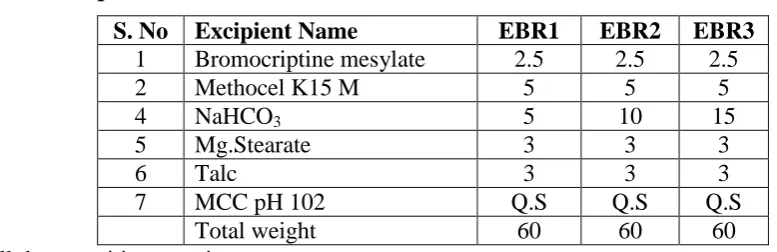
Table. 1: Optimization sodium bicarbonate concentration.
S. No Excipient Name EBR1 EBR2 EBR3
1 Bromocriptine mesylate 2.5 2.5 2.5
2 Methocel K15 M 5 5 5
4 NaHCO3 5 10 15
5 Mg.Stearate 3 3 3
6 Talc 3 3 3
7 MCC pH 102 Q.S Q.S Q.S
Total weight 60 60 60
All the quantities were in mg.
Based on the floating lag time and floating duration the concentration of sodium bicarbonate
was optimised.
Table. 2: Formulation composition for floating tablets.
Formulation No.
Bromocriptine mesylate
Methocel K 4 M
Methocel K 15 M
Gellan gum
NaHCO3 Mag.
Stearate
Talc MCC pH
102
BR1 2.5 2.5 --- --- 10 3 3 QS
BR2 2.5 5 --- --- 10 3 3 QS
BR3 2.5 7.5 --- --- 10 3 3 QS
BR4 2.5 --- 2.5 --- 10 3 3 QS
BR5 2.5 --- 5 --- 10 3 3 QS
BR6 2.5 --- 7.5 --- 10 3 3 QS
BR7 2.5 --- --- 2.5 10 3 3 QS
BR8 2.5 --- --- 5 10 3 3 QS
BR9 2.5 --- --- 7.5 10 3 3 QS
All the quantities were in mg, Total weight is 60 mg.
Evaluation of post compression parameters for prepared Tablets
The designed compression tablets were studied for their physicochemical properties like
weight variation, hardness, thickness, friability and drug content.
In vitro Buoyancy studies[9,10]
The in vitro buoyancy was determined by floating lag time, and total floating time. (As per
the method described by Rosa et al) The tablets were placed in a 100ml beaker containing
0.1N HCl. The time required for the tablet to rise to the surface and float was determined as
floating lag time (FLT) and duration of time the tablet constantly floats on the dissolution
medium was noted as Total Floating Time respectively (TFT).
In vitro drug release studies
Dissolution parameters
Dissolution Medium -- 0.1 N HCl
RPM -- 75
Sampling intervals (hrs) -- 0.5,1,2,3,4,5,6,7,8,10,11,12
Temperature -- 37°c + 0.5°c
As the preparation was for floating drug release given through oral route of administration,
different receptors fluids are used for evaluation the dissolution profile.
Procedure
900ml 0f 0.1 HCl was placed in vessel and the USP apparatus –II (Paddle Method) was
assembled. The medium was allowed to equilibrate to temp of 37°c + 0.5°c. Tablet was
placed in the vessel and the vessel was covered the apparatus was operated for 12 hours and
then the medium 0.1 N HCl was taken and process was continued from 0 to 12 hrs at 50
rpm.[14] At definite time intervals of 5 ml of the receptors fluid was withdrawn, filtered and
again 5ml receptor fluid was replaced. Suitable dilutions were done with receptor fluid and
analyzed by spectrophotometrically at 266 nm using UV-spectrophotometer.
Application of Release Rate Kinetics to Dissolution Data
Various models were tested for explaining the kinetics of drug release. To analyze the
mechanism of the drug release rate kinetics of the dosage form, the obtained data were fitted
into zero-order, first order, Higuchi, and Korsmeyer-Peppas release model.
RESULTS AND DISCUSSION
Analytical Method
Graphs of Bromocriptine mesylate was taken in Simulated Gastric fluid (pH 1.2) at 266 nm.
Table. 3: Observations for graph of Bromocriptine mesylate in 0.1N HCl (266 nm).
Conc [µg/l] Abs
1 0.131
2 0.232
3 0.377
4 0.519
5 0.629
Fig. 1: Standard graph of Bromocriptine mesylate in 0.1N HCl.
Drug – Excipient compatability studies
[image:6.595.146.399.337.498.2]Fourier Transform-Infrared Spectroscopy[11,12]
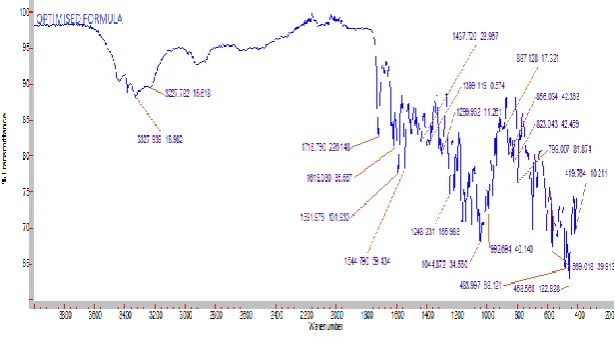
Fig. 2: FT-TR Spectrum of Bromocriptine mesylate pure drug.
[image:6.595.144.452.553.721.2]From the results of FTIR studies it was evident that the drug and excipients does not have any
interactions.
Table. 4: Preformulation parameters of powder blend.
Formulation Code
Angle of Repose
Bulk density (gm/ml)
Tapped density (gm/ml)
Carr’s index (%)
Hausner’s Ratio
BR1 24.02 0.51 0.55 16.34 1.11
BR2 25.82 0.53 0.61 16.18 0.99
BR3 23.24 0.51 0.67 17.32 0.68
BR4 24.23 0.56 0.62 17.61 1.04
BR5 25.21 0.52 0.65 16.88 1.22
BR6 24.11 0.55 0.62 17.26 1.07
BR7 26.06 0.57 0.67 16.33 0.85
BR8 26.52 0.42 0.58 17.91 1.14
BR9 25.49 0.52 0.61 17.64 1.18
Pre-formulation parameters of blend
Tablet powder blend was subjected to various pre-formulation parameters. The angle of repose
values indicates that the powder blend has good flow properties. The bulk density of all the
formulations was found to be in the range of 0.42 to 0.57 (gm/cm3) showing that the powder
has good flow properties. The tapped density of all the formulations was found to be in the
range of 0.55 to 0.67 showing the powder has good flow properties. The compressibility
index of all the formulations was found to be ranging” between 16 to 18 which show that the
powder has good flow properties. All the formulations has shown the hausner ratio ranging
between 0 to 1.2 “indicating the powder has good flow properties.
Optimization of sodium bicarbonate concentration
Three formulations were prepared with varying concentrations of sodium bicarbonate. The
formulation containing sodium bicarbonate in 75mg concentration “showed less floating lag
time of 4 min and the tablet was in floating condition for more than 12 hours.
Quality Control Parameters For tablets
Tablet quality control tests such as weight variation, hardness, and friability, thickness, and
drug release studies in different media were performed on the tablets.
Table. 5: Invitro quality control “parameters for tablets. Formulation code Weight variation(mg) Hardness (kg/cm2) Friability (%loss) Thickness (mm) Drug content (%) Floating lag time (min)
BR1 62.5 3.5 0.53 4.8 98.34 4.1
BR2 65.4 3.2 0.52 3.9 99.67 4.4
BR3 58.6 3.4 0.53 3.9 98.42 4.2
BR4 60.6 3.5 0.54 3.9 99.74 4.0
BR5 69.4 3.4 0.55 3.7 98.16 4.2
BR6 60.7 3.2 0.48 3.5 99.54 4.4
BR7 62.3 3.1 0.50 3.4 98.23 4.4
BR8 61.2 3.3 0.48 3.7 98.58 4.6
BR9 58.3 3.5 0.52 3.6 98.72 4.5
Invitro quality control parameters for tablets: All the parameters such as weight variation,
friability, hardness, thickness and drug content were found to be within limits.
[image:8.595.86.511.373.727.2]
In-Vitro Drug Release Studies
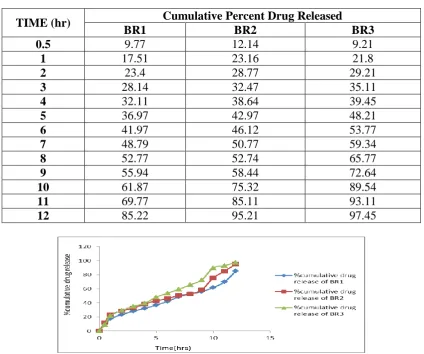
Table. 6: Dissolution Data of Bromocriptine mesylate Tablets Prepared With Methocel
K4M In Different Concentrations.
TIME (hr) Cumulative Percent Drug Released
BR1 BR2 BR3
0.5 9.77 12.14 9.21
1 17.51 23.16 21.8
2 23.4 28.77 29.21
3 28.14 32.47 35.11
4 32.11 38.64 39.45
5 36.97 42.97 48.21
6 41.97 46.12 53.77
7 48.79 50.77 59.34
8 52.77 52.74 65.77
9 55.94 58.44 72.64
10 61.87 75.32 89.54
11 69.77 85.11 93.11
12 85.22 95.21 97.45
Fig. 4: Dissolution profile of Bromocriptine mesylate floating tablets (BR1, BR2, BR3
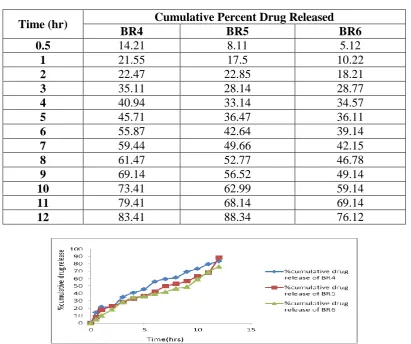
Table. 7: Dissolution Data of Bromocriptine mesylate Tablets Prepared With Methocel
K15M In Different Concentrations.
Time (hr) Cumulative Percent Drug Released
BR4 BR5 BR6
0.5 14.21 8.11 5.12
1 21.55 17.5 10.22
2 22.47 22.85 18.21
3 35.11 28.14 28.77
4 40.94 33.14 34.57
5 45.71 36.47 36.11
6 55.87 42.64 39.14
7 59.44 49.66 42.15
8 61.47 52.77 46.78
9 69.14 56.52 49.14
10 73.41 62.99 59.14
11 79.41 68.14 69.14
12 83.41 88.34 76.12
Fig. 5: Dissolution profile of Bromocriptine mesylate floating tablets (BR4, BR5, BR6
formulations).
Table. 8: Dissolution Data of Bromocriptine mesylate Tablets Prepared With Gellan
gum In Different Concentrations.
Time (hr) Cumulative Percent Drug Released
BR7 BR8 BR9
0.5 2.11 6.12 18.51
1 8.15 15.45 22.15
2 15.21 20.47 28.55
3 29.54 25.44 32.14
4 33.47 30.14 38.74
5 37.64 35.79 42.44
6 42.55 40.78 48.71
7 48.31 45.88 58.64
8 53.11 60.22 66.54
9 56.47 63.48 71.24
10 62.44 69.47 82.14
11 68.21 73.44 86.14
[image:9.595.134.463.549.776.2]Fig. 6: Dissolution profile of Bromocriptine mesylate floating tablets (BR7, BR8, BR9
formulations).
From the dissolution data it was evident that the formulations prepared with Methocel K4M
retarded the drug release in the concentration of 7.5 mg showed required release pattern i.e.,
retarded the drug release up to 12 hours and showed maximum of 97.45% in 12 hours
(Formulation BR3) with good floating lag time and floating buoyancy time. The formulations
prepared with Guar gum showed more retardation even after 12 hours they were not shown
total drug release. Hence they were not considered.
Application of Release Rate Kinetics to Dissolution Data: Various models were tested for
explaining the kinetics of drug release. To analyze the mechanism of the drug release rate
kinetics of the dosage form, the obtained data were fitted into zero-order, first order, Higuchi,
and Korsmeyer-Peppas release model.
[image:10.595.142.461.68.213.2]
Table. 9: Release kinetics data for optimised formulation (BR6).
Cumulative (%)
Release Q Time ( T ) Root (T)
Log (%)
Release LOG (T)
Log (%) Remain
0 0 0 2.000
9.21 0.5 0.000 0.964 0.000 1.958
21.8 1 1.000 1.338 0.000 1.893
29.21 2 1.414 1.466 0.301 1.850
35.11 3 1.732 1.545 0.477 1.812
39.45 4 2.000 1.596 0.602 1.782
48.21 5 2.236 1.683 0.699 1.714
53.77 6 2.449 1.731 0.778 1.665
59.34 7 2.646 1.773 0.845 1.609
65.77 8 2.828 1.818 0.903 1.534
72.64 9 3.000 1.861 0.954 1.437
89.54 10 3.162 1.952 1.000 1.020
93.11 11 3.317 1.969 1.041 0.838
[image:10.595.67.536.528.763.2]Fig. 7: Zero order release kinetics graph.
Fig. 8: Higuchi release kinetics graph.
Fig. 9: Kars mayer peppas graph.
From the above graphs it was evident that the formulation BR3 was followed peppas
mechanism.
5. CONCLUSION
In the present research work was carried out to formulate Bromocriptine Mesylate-
Effervescent Floating Tablets by using various polymers. Initially analytical method
development was done for the drug molecule. Absorption maxima was determined based on
that calibration curve was developed by using different concentrations. Gas generating agent
sodium bicarbonate concentration was optimized. Then the formulation was developed by
using different concentrations of polymers of various polymers. The formulation blend was
subjected to various preformualation studies, flow properties and all the formulations were
found to be good indicating that the powder blend has good flow properties. Among all the
formulations the formulations prepared with Methocel K4 M retarded the drug release up to 12
hours in the concentration of 7.5 mg (BR3) The formulations prepared by using Gellan gum
were unable to produce desired drug release, they were unable to retard drug release up to 12
hours. The formulations prepared with Methocel K 15M were also retarded the drug release
for more than 12 hours. Hence they were not considered. The optimized formulation
dissolution data was subjected to release kinetics, from the release kinetics data it was evident
that the formulation followed peppas mechanism of drug release.
BIBLOGRAPHY
1. Afshan Meherose and G. Udaya Bhanu Formulation And In-Vitro Evaluation Of Floating
Effervescent Tablets Of Ranitidine Hydrochloride IJPSR, 2015; 6(12).
2. Mohammed Asif Hussain Mahender B Maimuna Anjum Formulation and Evaluation of
effervescent floating matrix tablets of Ofloxacin Int. J. Drug Dev. & Res., January -
March 2014; 6(1): 188-198.
3. Rakesh Pahwa, Lovely Chhabra, Avneet Kaur Lamba, Sumit Jindal and Arvind Rathour
Formulation and in-vitro evaluation of effervescent floating tablets of an antiulcer agent
Journal of Chemical and Pharmaceutical Research, 2012; 4(2): 1066-1073.
4. Md. Haider Ali1, Mohiuddin Ahmed Bhuiyan2, Md. Selim Reza3 and Samira Karim1
Formulation and In vitro Evaluation of Oral Floating Tablets of Salbutamol Sulphate:
Comparison with Effervescent Tablets Dhaka Univ. J. Pharm. Sci., December, 2016;
5. C Haranath, J Raveendra Reddy, N Devanna. Formulation and In-Vitro Evaluation of
Effervescent Floating Tablets of an Antibacterial Drug. Inventi Impact: Pharm Tech,
2016; (4): 145-151.
6. Akhlak Ahmed, Narendra Kr. Goyal and Pramod K. Sharma Effervescent Floating Drug
Delivery System: A Review Global Journal of Pharmacology, 2014; 8(4): 478-485.
7. Ali Raza, Nadeem Irfan Bukhari, Sabiha Karim y, Muhammad Ahsan Hafiz, Uzma Hayat
Floating tablets of minocycline hydrochloride: Formulation, in-vitro evaluation and
optimization Future Journal of Pharmaceutical Sciences, 2017; 3: 131e139.
8. K.Chaitanya, Sellappan Velmurugan Formulation And Evaluation Of Levodopa
Effervescent Floating Tablets Int J Pharm Pharm Sci., 7(5): 189-193.
9. Komuravelly Someshwar Kalyani Chithaluru, Tadikonda Ramarao K. K. Kalyan Kumar
Formulation and evaluation of effervescent floating tablets of tizanidine hydrochloride
Acta Pharm, 2011; 61: 217–226.
10.Harsharan Pal Singh, Ashmeet Kaur, Ishpreet Kaur Formulation and evaluation of
effervescent floating tablet of famotidine with natural polymer chitosan Asian Pac. J.
Health Sci., 2014; 1(4): 517-523.
11.Ali Kadivar, Behnam Kamalidehghan, Hamid Akbari Javar, Ehsan Taghizadeh Davoudi,
Nurul Dhania Zaharuddin, Bahareh Sabeti, Lip Yong Chung, Mohamed Ibrahim Noordin
Formulation and In Vitro, In Vivo Evaluation of Effervescent Floating Sustained-Release
Imatinib Mesylate Tablet PLOS ONE | DOI:10.1371/journal.pone.0126874 June 2, 2015
12.S. R. Dawange, S. S. Khadabadi, S. S. Saboo Formulation and Evaluation of Floating
Tablets of Verapamil Hydrochloride by using Gastroretentive Technology Int. J. Pharm.
Sci. Rev. Res., September-October 2015; 34(1): Article No. 42: 263-269.
13.Chordiya Mayur Ashok, Gangurde Hemant Hiraman, K. Senthilkumaran Formulation
And In Vitro Evaluation Of Effervescent Floating Matrix Tablet Of Propafenone Hcl
World Journal of Pharmacy and Pharmaceutical Sciences, 2(6): 5348-5362.
14.Ajay Kumar, Ashni Verma, Geetika Sharma, Rupinder Saini, Shivani Sharma, Sukhdev
Singh, Upendra K Jain, Mandeep Sharma Formulation and Characterization of
Effervescent Floating Matrix Tablets of Famotidine Hydrochloride Asian Journal of