Psychology Dissertations Department of Psychology
Summer 8-11-2011
Food for Thought: A Strengths-Based Approach to
Examining the Biomedical and Psychological
Health of Latino Migrant and Seasonal Farm
Workers in Georgia
Joanna R. Weinberg
Georgia State University
Follow this and additional works at:https://scholarworks.gsu.edu/psych_diss Part of thePsychology Commons
This Dissertation is brought to you for free and open access by the Department of Psychology at ScholarWorks @ Georgia State University. It has been accepted for inclusion in Psychology Dissertations by an authorized administrator of ScholarWorks @ Georgia State University. For more information, please [email protected].
Recommended Citation
Weinberg, Joanna R., "Food for Thought: A Strengths-Based Approach to Examining the Biomedical and Psychological Health of Latino Migrant and Seasonal Farm Workers in Georgia." Dissertation, Georgia State University, 2011.
FOOD FOR THOUGHT: A STRENGTHS-BASED APPROACH TO EXAMINING THE BIOMEDICAL AND PSYCHOLOGICAL HEALTH OF
LATINO MIGRANT AND SEASONAL FARM WORKERS IN GEORGIA
by
JOANNA WEINBERG
Under the Direction of Christopher Henrich, Ph.D.
ABSTRACT
worker expectations were found to be assets associated with better psychological health
outcomes. Farm worker expectations was also found to be a protective factor for physical health such that having accurate expectations buffered the relationship between MSFW stress and adverse biomedical health. Results show the usefulness of the resilience framework, and highlight the importance of establishing prevention, intervention, and policy efforts for MSFWs that aim to increase assets and minimize risk in this population.
FOOD FOR THOUGHT: A STRENGTHS-BASED APPROACH TO EXAMINING THE BIOMEDICAL AND PSYCHOLOGICAL HEALTH OF
LATINO MIGRANT AND SEASONAL FARM WORKERS IN GEORGIA
by
JOANNA WEINBERG
A Dissertation Submitted in Partial Fulfillment of the Requirements for the Degree of
Doctorate of Philosophy in the College of Arts and Sciences
Georgia State University
Copyright by Joanna Rose Weinberg
FOOD FOR THOUGHT: A STRENGTHS-BASED APPROACH TO EXAMINING THE BIOMEDICAL AND PSYCHOLOGICAL HEALTH OF
LATINO MIGRANT AND SEASONAL FARM WORKERS IN GEORGIA
by
JOANNA WEINBERG
Committee Chair: Christopher Henrich
Committee: Julia Perilla Lisa Armistead Gabriel Kuperminc
Electronic Version Approved:
Dedication
Acknowledgements
First, I would like to thank Dr. Julia Perilla, my advisor, mentor, professor, advocate, and friend. This dissertation was made possible by your unwavering support and selfless dedication to this research. Your ability to close the chasm that often exists between the community and academia as well as your ability to effortlessly and naturally find the strengths in others is extraordinary. As an emerging clinical psychologist, it is my hope that I will be able to effectively incorporate your invaluable lessons in my work with both individuals and communities. Thank you Julia. My sincere and deepest appreciation to my chair, Dr.
Christopher Henrich, who went well above the ‘‘call of duty’’ to be available to me throughout the completion of this milestone. Your dedication to students as well as your patience in
explaining statistics is legendary and one in a million. I would also like to deeply thank Dr. Lisa Armistead and Dr. Gabriel Kuperminc for their continued assistance with this dissertation and for serving as excellent committee members.
My most sincere appreciation to the Moultrie research team: Rebecca, Griselda, Viviana, Reyna, George, Vecky, Regina, Lillie, Matt, Alvina, and Julia for selflessly sacrificing your time and energy to help collect data. This dissertation would not have been possible without you. In addition, my gratitude to the Ellenton Migrant Health Clinic, particularly Cynthia Hernandez and Don Jose, and the Farm Worker Family Health Program for valuing this research and allowing me to collect data.
A special thank you to a few individuals who have not only stood by my side throughout the journey of graduate school, but who eased the sometimes excruciating process of completing this milestone. To the talented women of Gathering Wild, thank you for helping me rediscover my love of dance. Spending every Sunday with you all undoubtedly helped me keep balance in my life. Carrie Lippy, your guidance, emotional availability, and unwavering belief in my abilities helped me throughout this process more than you will ever know. Carrie Runnels, you lived up to every and any expectation one could have that comes with being a best friend. You are an amazing and selfless woman that brought comfort, fun, love, and Pepper to my years in graduate school. To my brother and sister, thank you for your continued belief in me. You both made me feel like my success was your success. To my parents, words cannot not express my gratitude for your endless love and support. I learned to fight for social justice and strive for tikkun olam because of you. Lastly, Louis, thank you for the wonder that you have been in my life. You understand me, support me, and believe in me with the sensitivity that only you are capable of.
Table of Contents
Dedication ... iv
Acknowledgements ... v
List of Tables ... x
List of Figures ... xi
Introduction ... 1
Literature Review ... 3
Migrant and Seasonal Farm Worker Definition... 3
Demographic Data on the U.S. and Georgia MSFW Population ... 4
Migratory Streams ... 6
Regional Differences ... 6
Physical Health of MSFWs ... 7
Measures of Physical Health ... 9
Gap in MSFW Physical Health Literature ... 10
Psychological Health ... 10
Prevalence Rates of Psychological Disorders. ... 11
Depression... 11
Anxiety. ... 13
Ethno-specific illness. ... 14
Gap in MSFW Psychological Health Literature ... 15
Resilience ... 15
Resilience in MSFW Research. ... 17
Risk Factors: MSFW Stress. ... 18
MSFW Asset Variables... 21
Gaps in MSFW Literature: Interaction Effects. ... 24
Current Study... 25
Hypothesis 1: Risk and Asset Predictors of Health Outcomes (Replication). ... 26
Hypothesis 2: AdditionalAsset Predictors of Health Outcomes. ... 26
Hypothesis 3: Protective Factors that Moderate the Relationship between Stress and Health Outcomes. ... 26
Methods ... 27
Setting ... 27
Measures ... 30
Measure Adaptation. ... 30
Overview of Measures. ... 33
Dependent Variables ... 34
Biomedical Health. ... 34
Depressive Symptoms. ... 35
Anxiety. ... 36
Nervios. ... 37
Self-Rated Physical Health. ... 37
Risk Variable ... 38
MSFW Stress. ... 38
Asset Variables ... 40
Social Support. ... 40
Calling Home. ... 40
Religiosity. ... 40
Positive Well-Being. ... 40
Farm Worker Expectations. ... 41
Demographic and Descriptive Information. ... 42
Procedure ... 42
Recruitment and Informed Consent. ... 42
Data Collection. ... 43
Results ... 45
Data Analysis Plan ... 45
Preliminary Analyses ... 47
Primary Analyses: Description of the Sample of Georgia MSFWs. ... 53
Physical Health ... 54
Biomedical Health Status. ... 54
Self-Rated Health. ... 57
Psychological Health ... 59
Psychological Health Status. ... 59
Nervios. ... 59
Primary Analyses: Regression Models. ... 60
Depressive Symptoms. ... 63
Anxiety. ... 64
Discussion... 66
Demographic Characteristics. ... 67
Implications for Health Status ... 69
Physical Health. ... 69
Psychological Health Status. ... 72
Nervios. ... 73
Risk, Asset, and Protective Factors for MSFW Health Outcomes ... 74
Biomedical Health. ... 74
Psychological Health. ... 76
Limitations and Future Directions. ... 84
List of Tables
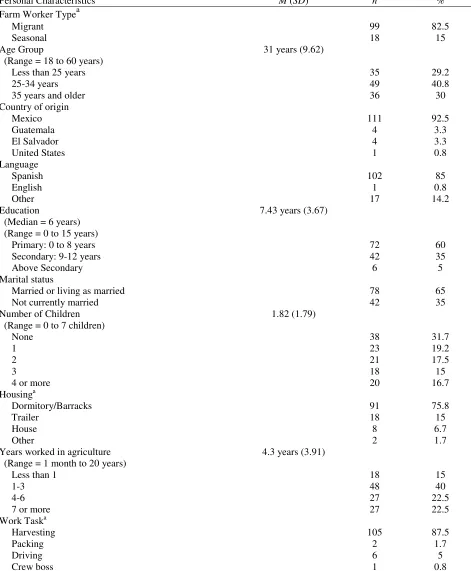
Table 1. Personal Characteristics of MSFW Study Participants, Southwest GA, 2010 (N = 120)
31
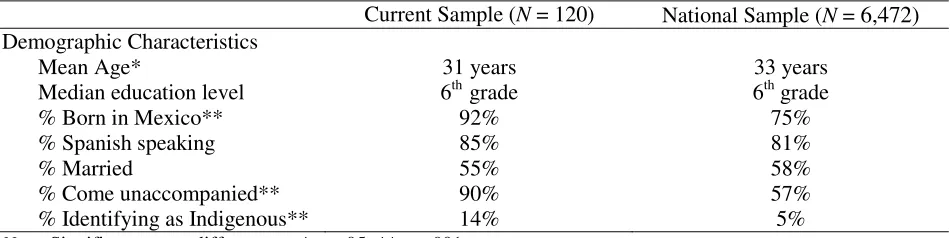
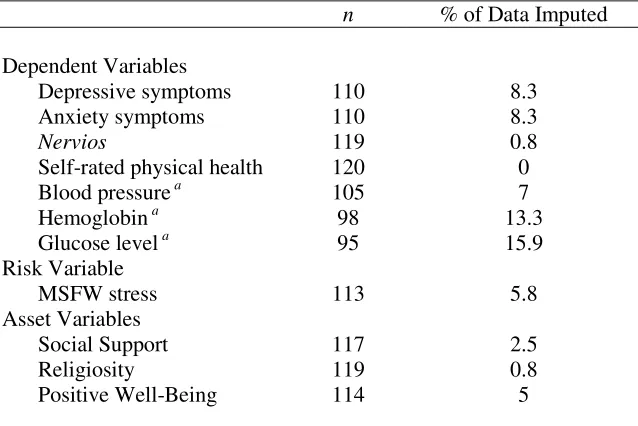
Table 2. Comparative Summary of MSFWs Demographic Characteristics 32 Table 3. Summary of Missing Data at Scale Level for Continuous Variables of Interest
(N=120)
48
Table 4. Correlation Matrix of Study Variables 51
Table 5. Differences in Depressive Symptoms, Anxiety, and Biomedical Health amongst Dichotomous Study Variables
52
Table 6. Differences in Depressive Symptoms, Anxiety, and Biomedical Health between Camp Sites
52
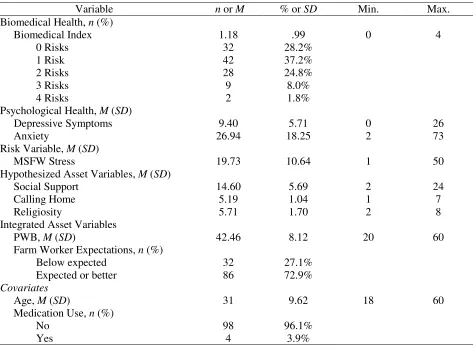
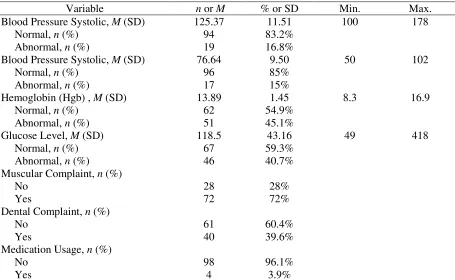
Table 7. Descriptive Statistics for Variables used in the Primary Analyses 54 Table 8. Prevalence Rates of Biomedical and Self-Rated Health Outcomes Across
Samples
56
Table 9. Descriptive Statistics for Physical Health Information and Biomedical Markers using FWFHP Norms
57
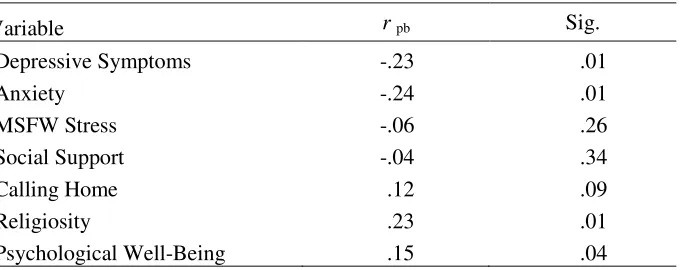
Table 10. Point-Biserial Correlation Analyses for Self-Rated Health and Continuous Study Variables
58
Table 11. Point-Biserial Correlation Analyses for Nervios and Continuous Study Variables
60
List of Figures
Figure 1. The Relationship between MSFW Stress and Biomedical Health as Moderated by Farm Worker Expectations
Introduction
Migrant and seasonal farm workers (MSFWs), many of whom migrate from Mexico and Central America, live under adverse circumstances and are exposed to numerous occupational and environmental hazards. Due to the nature and demands of their work, MSFWs face a multitude of physical and psychosocial stressors including poverty, substandard living conditions, malnutrition, exposure to hazardous chemicals, migrant status, separation from family, long work days, discrimination, and language and cultural barriers (Hansen & Donohoe, 2003; Magaña & Hovey, 2003; Arcury & Quandt, 2009). These adverse conditions can place MSFWs at increased risk for experiencing depression, anxiety, and stress; all of which can have serious physical health implications (Vega, Warheit, & Palacio, 1985; Magaña & Hovey, 2003; Hovey & Seligman, 2005; Grzywacz, 2009; Hiott et al., 2008).
Despite the dependence of the US on its agricultural products and, hence, on the people who work the land, MSFWs are an invisible population not only in the communities in which they live and work, but in their absence from the psychological literature. In Georgia alone it is estimated that over 100,000 MSFWs live and work in the state at some point during the year (Larson, 2008). This population, primarily males born in Mexico and Central America, is largely responsible for Georgia’s 11.3 billion dollar agricultural industry (University of Georgia, 2009). Yet little is known about the psychological functioning and physical health status of these workers.
(Vega et al., 1985; De Leon Siantz, 1990; Hovey & Magaña, 2000, 2002b; Grzywacz, 2009). Although limited, studies on the physical health status of MSFWs also indicate poor outcomes with MSFWs being at increased risk for chronic diseases such as heart disease, stroke, asthma, and diabetes (Villarejo, 2003; Villarejo et al., 2010).
Although there has been an increase in the volume of MSFW health outcomes research over the past 20 years (Hovey, 2001b; Villarejo, 2003), studies have largely focused on
understanding this population using deficit-based approaches; a foci which highlights the presence of negative symptoms while ignoring positive attributes. For example, most studies have examined prevalence rates of psychological disorders, psychosocial risk factors associated with distress, and/or specific stressors inherent to the MSFW life. There are only a few studies to date that incorporate principles of resilience and examine protective factors that may buffer the difficult life and work conditions of MSFWs.
To this end, the present study utilizes a resilience framework to examine the
psychological and biomedical health of MSFWs in South Georgia, a state where relatively little research with this population has been conducted. In addition to describing and better
understanding the health of Georgia’s MSFWs, this study addresses a gap in the research by identifying asset and protective factors that mitigate undesirable health outcomes in this population. Attention to factors that promote healthy development and functioning has the potential to inform policy and guide interventions and health care workers on how to work with the existing strengths of this community. Furthermore, although previous research has
conducted with MSFWs to simultaneously examine correlates of both psychological health and biomedical health status as measured by physical exam.
To provide a context for this study, the literature review presents a background of what is already known about the lives and labor of farm workers in the United States and Georgia as well as existing gaps in the literature. The introductory section provides an overview of the demographic characteristics, and biomedical and psychological health status of MSFWs. The next section describes resilience and the framework that was utilized in the present study, followed by an overview of research that elucidates potential risk and asset variables associated with health outcomes among MSFWs. The literature review concludes by highlighting gaps in current knowledge and discussing how the present study aims to address them.
Literature Review
Migrant and Seasonal Farm Worker Definition
According to federal guidelines, a migrant farm worker is a person whose principal employment is in agriculture on a seasonal basis. This worker establishes a temporary home for purposes of employment. Whether it is from farm to farm, within a state, between states, or even crossing national borders, some sources estimate that migrant farm workers change locations between 11-13 times a year (NCFH, 2003b). Similar, but yet distinct from the migrant worker is the seasonal farm worker. This agricultural worker does not travel to multiple locations, but rather remains in one location throughout an annual farming cycle.
international shuttle migrants (30%), i.e., workers who travel internationally to a location and then work within a 75-mile radius of that locale. Although follow-the-crop migrants embody the popular concept of hired farm workers, national estimates indicate that only 8% of all hired farm workers “follow-the-crop” (Ageuirre International, 2005a), with the estimate being slightly higher at 13% for farm workers located in the Eastern regions of the United States.
Notably, these estimates do not include farm workers with H-2A visas. The H-2A visa program allows U.S. growers to hire foreign-born workers for a specified time period, normally less than one year. It purportedly benefits both U.S. growers and farm workers such that growers are able to legally secure needed workers, and farm workers are required to be provided set wages, housing that meets federal standards, transportation to and from worker’s home country or next working location, food security, and working conditions that meet all safety standards. In 2007, Georgia, with 6,781 workers H2-A certified, was the second leading H-2A worker state next to North Carolina (DOL, 2007).
Demographic Data on the U.S. and Georgia MSFW Population
majority come to the U.S. unaccompanied by either a spouse or children (57%). The median education level is 6th grade and as such, literacy levels are low in both Spanish and English. Although farm workers are vital to the United States’ multi-billion dollar agricultural industry, the majority of MSFWs earn annual wages under $12,500 a year , with more than half of the MSFW households earning less than $10,000 a year (Hansen & Donohoe, 2003). Notably, these earnings do not take into account the financial obligations MSFWs often have for family
members in their home communities and the remittances that are typically sent by these farm workers (Vallejos, Quandt, & Arcury, 2009).
Roughly half (52%) of all hired crop farm workers lack legal authorization to work in the United States and as most growers do not provide any type of medical coverage to their farm worker employees, the majority of MSFWs are uninsured (Carroll et al. 2005). Furthermore, those workers who do qualify for federal assistance programs such as Medicaid, Food Stamps, WIC, etc., only qualify in one state at a time and must reapply in each state in which they work. Given the transitory nature of their employment, most workers have to move to another state before they can receive the benefits of these programs.
With regard to the MSFWs residing in Georgia, a thorough review of the published literature reveals that the last report detailing the demographic characteristics of this population was published in 1995 (Winders et al., 1995). According to this report, farm workers in Georgia were predominately unaccompanied, younger men from Mexico who had limited English
proficiency. Most lacked transportation, worked long hours, received low wages, and were unaware of U.S. governmental resources. Although not a comprehensive state wide
their families in South Georgia, suggested that the majority of the population served by the program is either undocumented or working under the H-2A visa program (Connor, Rainer, Simcox, & Thomisee, 2007).
Migratory Streams
There are three main routes, also referred to as “migratory streams,” that MSFWs follow throughout a season. These include a West Coast stream, a Central U.S. stream, and an East Coast stream. Farm workers traveling the streams typically begin in the southern states during late fall and winter, and move “upstream” reaching the northern states by late summer or early fall. Migrants following the East Coast stream typically start in Florida and travel north through states east of the Appalachian Mountains including Georgia, the Carolinas, and Virginia, and end in New York and New England. However, given that only 8% of the farm workers nationally actually migrate by “following-the-crop,” the three-stream approach does not necessarily fit the description of the traveling patterns of most migrant farm workers. Thus, researchers have started referring to the regions in which MSFWs live (i.e., Western U.S., Central U.S., Eastern U.S.) when describing the population (Arcury & Quandt, 2009). MSFWs living in Georgia are thus considered to be located in the Eastern region of the United States.
Regional Differences
Several distinguishing features differentiate the regions in which MSFWs are located. With regard to agriculture, work in the Eastern U.S. is predominantly hand labor and focuses on harvesting crops common to the region such as apples, peaches, citrus fruit, berries, vegetables, mushrooms, Christmas trees, and tobacco (Arcury & Marín, 2009).
a non-traditional receiving community as it does not have a historically large rural Latino population (Arcury & Marín, 2009). It has only been in recent years that Latino MSFWs have become the primary source of labor in the Eastern regions of the United States (Rothenberg, 1998; Arcury & Marín, 2009). Thus, Eastern Latino farm workers do not have the same levels nor quality of human services, social networks, and availability of resources that reflect their culture such as foods, recreational facilities, and Spanish speaking media, as might be found for those MSFWs living in the Western United States (Grzywacz, 2009).
Besides geographic, demographic, agricultural, and ethnic differences, other
characteristics differentiate the regions. For example, when compared to MSFWs living in the Western U.S., MSFWs in the eastern region are more likely to live in housing provided by their employer; housing that is often found to be substandard and located in remote areas (Vallejos, Quandt, & Arcury, 2009). Also, in comparison to national estimates, there are a greater percentage of workers in the Eastern U.S. who follow-the-crop, are unmarried, and come unaccompanied as opposed to traveling with family (Aguirre International, 2005ab; Trotter, 1985). Taken together, these differentiating characteristics likely translate into a group of people more at risk for social isolation with fewer support resources and services available.
Physical Health of MSFWs
cancer (Villarejo & Baron, 1999; Villarejo, 2003; Hansen & Donohoe, 2003). Poor nutrition coupled with food insecurity (i.e., insufficient money to obtain sufficient food supply), obesity, high cholesterol, and hypertension are also prevalent and suggest that MSFWs are at elevated risk for heart disease, diabetes mellitus, and other chronic diseases (NCFH, 2003abc; Quandt et. al., 2004; Villarejo et. al., 2000). Not surprisingly, infant mortality rate is greater than the national average and life expectancy is considerably shorter (i.e., 49 years versus the national average of 75 years) (Sandhaus, 1998).
Several studies have documented the range of health challenges experienced by MSFWs in Georgia. According to an investigation conducted by the Georgia Migrant Health Program (1993), common health problems found in the Georgia MSFW population included hypertension, vision and dental problems, iron deficiency, tuberculosis, upper-respiratory infections, and gastrointestinal difficulties. Similarly, Tedders et al. (1998) found that hypertension,
gastrointestinal problems, dental problems, musculoskeletal problems, and diabetes were the top 5 health related problems of MSFWs as reported by more than 200 physicians caring for MSFWs in Georgia.
Despite the high occurrence of illness, culturally competent, affordable healthcare
Measures of Physical Health
Much of the health services research conducted with MSFWs relies on self-reported health status as the sole method for assessing physical health (Ward, 2007; Villarejo, 2003). This method is advantageous in that it allows for the assessment of those aspects of health that are only known by the individual, such as level of pain. Commonly assessed with a one item question (i.e., “How would you rate your health?”), this means of measurement has the advantage of being easy and inexpensive to administer and has been shown to correlate with subsequent mortality (Ward, 2007).
Based on this one-item self-report measure of physical health, MSFWs have been found to rate their health as poorer when compared to the general U.S. population (Ward, 2007). In a study conducted with MSFWs in Wisconsin, 33.6% of the workers surveyed stated that they felt their health was “fair” or “poor” compared with 9.4% of the U.S. population. In contrast, 40.2% of the U.S. population said that their health was “excellent,” whereas only 13.3% of migrant farm workers felt they were in good health (Slesinger and Ofstead, 1993).
Although there are advantages to using self-report measures of physical health, there are also disadvantages. For example, a self-report measure does not capture asymptomatic aspects of health such as high blood pressure. Given the difficulty of accessing this population, as well as the transient nature of their work, there are only a few cross-sectional health status studies that have included a physical examination as a means of measuring health data; one of them being the California Agricultural Workers Health Survey (CAWHS) undertaken in California in 1999 (Villarejo et al., 2010). Findings from this study suggest that overall, MSFWs have an elevated prevalence of biomedical indicators of chronic disease (i.e., high blood pressure, cholesterol, BMI, blood glucose, and low hemoglobin) when compared to the general U.S. and Mexican-American population.
Gap in MSFW Physical Health Literature
Given that self-report measures can overlook asymptomatic indicators of chronic health conditions, the inclusion of direct biomedical markers of health is warranted. Furthermore, given that no studies to date have been conducted with Georgia MSFWs that a) incorporate physical examinations as a method of measuring physical health; b) examine their biomedical health status and prevalence of risk indicators; or c) examine correlates of biomedical health, there is a great need to utilize biomedical markers when assessing and studying the physical health of this population.
Psychological Health
(Grzywacz, 2009). Notably, in addition to the detriments of poor physical health, indicators of poor psychological health such as elevated depressive symptoms and anxiety likely contribute to occupational injuries, decreased work productivity, and suicidal behavior (Grzywacz et al., 2010).
Prevalence Rates of Psychological Disorders.
In 1985, Vega, Warheit, & Pabacio conducted the first study exploring the psychological health of Mexican MSFWs (Vega, Warheit, & Pabacio, 1985). Using the Health Opinion Survey (HOS; MacMillan, 1957), Vega et al. found elevated levels of general psychological distress in a sample of 501 Mexican-American MSFWs located in Fresno, California. Although an important first step in documenting MSFW psychological health, Vega et al.’s use of the HOS has been cited as a major limitation (Alderete, Vega, Kolody, & Aguilar-Gaxiola, 1999; Hovey & Magaña, 2000; Hovey & Magaña, 2002b; Hovey & Magaña, 2002c; Magaña & Hovey, 2003). The HOS is a screening measure of general psychological risk, thus its resulting total score has functional limitations for differentiating specific psychological disorders. Consequently, most of the subsequent studies on MSFW psychological health have used measures that examine the prevalence of specific disorders and symptomatology; most frequently depression and anxiety.
Thus far, studies with MSFWs using the CES-D have typically found an increased prevalence of depressive symptoms when compared to the general population. For purposes of comparison, in the general population approximately 18% to 20% of people score in the
depressed range on the CES-D. In one of the first studies using the CED-S with MSFWs, 41% of a sample of Mexican migrant farm worker (MFW) mothers located in Texas met caseness for depression (de Leon Siantz, 1990). Hovey and Magaña (2000) measured the prevalence of depressive symptoms in a sample of 45 male (n=25) and female (n=20) Mexican MFWs in Ohio and Michigan. In their sample, 38% of the individuals were deemed to be depressed and no differences in prevalence rates were found between the men and women. In another study by Hovey and Magaña (2002b), 39% of their sample of MFWs (N=75) in Ohio and Michigan scored as depressed. Again, no gender differences were found between the males (n=37) and females (n=38). In North Carolina, Grzywacz et al. (2006b) reported that 40% of their sample of 60 male Latino MFWs was depressed. Additional research conducted in North Carolina by Hiott et al. (2008) found that out of 125 male Latino MFWs, 42% met caseness for depression. Thus, for MSFWs living in central and eastern regions of the U.S., the frequency of individuals meeting caseness for depression as measured by the CES-D is 18% to 22% higher than the rates found in the general population.
Contrary to these relatively high depression levels, in a sample of 1001 Mexican men and women MFWs located in Fresno, California, only 21.1% of the men (n=500) scored in the depressed range on the CES-D; a rate more in line with the general population (Alderete, Vega, Kolody, & Aguilar-Gaxiola, 1999). Notably, California, with its relatively large Latino
living in Fresno County at the time of the Alderete et al.’s study was of Mexican descent (U.S. Bureau of the Census, 2001). Given that the rates of depression for the MSFWs in the
Midwestern and Eastern U.S. were elevated, ranging from 38% to 42%, it is possible that the sizable number of Latinos located in the Fresno area, coupled with California’s status as a traditional receiving state translates into a greater number of available services and support networks.
Anxiety. Previous studies also suggest that MSFWs may be at risk for developing anxiety-related disorders. Many researchers have assessed the prevalence of anxiety symptoms with the Anxiety subscale of the Personality Assessment Inventory (PAI). Similar to the CES-D, the PAI has a designated symptom threshold which represents a potentially significant level of anxiety that may impair functioning. As measured by the PAI anxiety scale, impairment is thought to be present in 16% of the general population (Morey, 1991). Hovey and Magaña have used the PAI in multiple studies (2000, 2002a, 2002c, 2003) to assess the prevalence of anxiety symptoms in samples of MFWs located in Ohio and Michigan. In each of their samples, they found a relatively higher percentage of MFWs who reached the impaired range on the anxiety scale (i.e., 28% to 31%) than would be expected in the general population. Researchers in North Carolina have also used the PAI to measure the prevalence of anxiety symptoms in male MFWs and have found rates of impairment ranging from 17% to 39% (Grzywacz et al., 2006b; Hiott, Grzywacz, Davis, Quandt, & Arcury, 2008; Hiott, Grzywacz, Arcury, & Quandt, 2006).
some point in their life. Notably, these prevalence rates are markedly lower than those found in the general population (19.2% for men and 30.5% for women; Kessler et al., 1994), further supporting the likelihood of differential outcomes across geographic regions.
Ethno-specific illness. In addition to depression and anxiety, several studies have examined the prevalence of a number of ethno-specific diseases such as nervios (nerves), aires
(headaches, dizziness, body aches, and/or fatigue caused by exposure to the cold when the body is warm), susto (fright illness caused by a traumatic event), empacho (gastrointestinal illness), mal de ojo or “evil eye”(hex caused by jealousy or envy of another that typically effects children), and mollera caida (sunken fontanel on a baby’s skull). In a bi-national (Mexico and U.S.) sample of 467 farm workers, Mines, Mullenax, and Saca (2001) found that 12% of
respondents reported suffering from one of the above ethno-specific diseases. Of those affected, 20% reported experiencing two or more of these diseases during their lifetime.
understood as a “cry for help” and often a precursor to more serious psychological illness (Salgado de Snyder, Diaz-Perez, & Ojeda, 2000). Although the prevalence rate of nervios was not provided in either the BHS or CAWHS study, additional research has found prevalence rates ranging from 9.5% to 42.4% for men in the general Mexican population (Salgado de Snyder, Diaz-Perez, & Ojeda, 2000; Weller et al., 2008), 41% for MSFW residing along the US-Mexico border (Weigel et al., 2007), and 15.4% for Latino men in a convenience sample taken from a South Texas primary care clinic (Bayles & Katerndahl, 2009).
Gap in MSFW Psychological Health Literature
Although the amount of physical and psychological health research done with the MSFW population has increased in recent years (Villarejo, 2003; Hovey, 2001; Grzywacz, 2009), few published studies have been conducted with the MSFW population in Georgia. Of those that have been published, the foci of much of this research has been on physical health issues in MSFW adults (Perilla, Wilson, Wold, & Spencer, 1998) and their children (Wilson, Pitman, & Wold, 2000a), as well as descriptions of community health nursing experiences in the MSFW camps of South Georgia (Bechtel, 1995; Wilson, Wold, Spencer, & Pittman, 2000b; Connor et al., 2007; Connor, Layne & Thomisee, 2010). Given that MSFWs living in Georgia are likely to experience similar stressors and conditions as workers in other eastern region states, it is
probable that prevalence rates of psychological conditions would be similar as well. However, no studies have been conducted to date examining the psychological health status of the MSFWs in Georgia.
Resilience
example, although 40% of MSFWs in North Carolina met caseness for depression, 60% did not. Why are the majority of MSFWs functioning well despite exposure to significant adversity in their work and living environments? What are the factors that help to keep some protected from experiencing the effects of adversity? How do you improve the health, well-being, and
functioning of more MSFWs? This line of questioning, while largely absent in the MSFW literature, is consistent with resilience theoretical models and research.
Resilience refers to the culmination of dynamic and multidimensional processes through which individuals exhibit good outcomes, despite the presence of adversity (Kuperminc et al., 2009). Although once conceptualized as an anomaly, resilience is now better understood as being common; resulting from “ordinary” human adaptive processes (Masten, 2001).
significant adversity on multiple levels, it is similarly appropriate to define risk evasion in terms of the absence of pathology or low levels of symptoms and impairment.
In variable-focused resilience models, emphasis is placed on elucidating potential risk, asset, and protective factors that are related to specified outcomes (whereas person-focused models concentrate on identifying individuals with resilient outcomes and comparing them to others who do not). As outlined by Masten (2001), risk factors are variables that have significant statistical links to negative functioning. Whereas assets variables are associated with better outcomes across levels of risk (i.e., main effects), protective factors are variables that interact with risk factors to reduce their negative influence on functioning (i.e., interactions).
Resilience in MSFW Research. As reviewed above, MSFWs are a population with elevated prevalence rates of psychological distress and poor physical health status. The harsh conditions of their work and life make them an appropriate population to study resilience; however, the majority of studies conducted with this population have taken a deficit-approach to understanding functioning; focusing on disease, prevalence rates of disorders, and indicators of distress.
Notably, risk and asset factors are usually continuous variables that can be
conceptualized as two sides of the same coin (Masten, 2001). For example, in the MSFW literature social support has been identified as both a risk factor (i.e., those who have low social support are at increased risk of psychological distress) and asset (i.e., those who have high social support are at decreased risk of psychological distress). Thus, although researchers have
Notably, only a limited number of studies have addressed the MSFW population’s strengths and positive life functioning. One such study of resilience comes from a longitudinal study conducted by Parra-Cordona and colleagues (2006). Findings from a series of qualitative interviews with Latino migrant families in Michigan indicated that despite the many challenges inherent to the MSFW lifestyle, participants expressed positive perceptions of their lives.
Notably, researchers found that participants’ report of positive life aspects did not preclude them from exposure to the negative experiences associated with the migrant lifestyle, but rather suggested that participants were able to derive meaning from the adversity they faced. This was suggested by their high level of perceived life satisfaction as well as multiple reports of
discrimination, work place injustices, and continuous relocation.
Although there are several studies to date that have identified indicators of well-being among MSFWs, to our knowledge, no studies have purposefully utilized a resilience framework, (i.e., identifying risk, asset and protective factors), to examine the psychological and physical functioning of MSFWs. Given that the study of resilience is promising and gaining wide support, a shift in focus will likely have direct implications for improving the lives of MSFWs.
The following sections will outline risk and asset variables that have been identified in the MSFW and extant literature as being associated with physical and psychological health.
2006b), and occupational hazards (Hansen & Donohue, 2003; May, 2009). MSFW stress (i.e., stress resulting from the stressors associated with the farm-worker lifestyle) is a risk factor that has gained attention in the MSFW literature in recent years.
Similar to findings from the general population, MSFW stress has been found to be related to depression, anxiety, nervios and poorer perceptions of physical health (Hovey & Seligman, 2005; Mysyk, England, & Gallegos, 2008; Ward & Tanner, 2010). One of the first studies to examine MSFWs’ self-perceptions of experienced stressors was conducted by Magaña & Hovey (2003). Based on data obtained from in-depth interviews conducted with 75 MSFWs (38 female, 37 male), researchers identified 18 stressors commonly experienced by MSFWs in the Ohio/Michigan area and found that the stressors “rigid work demands” and “poor housing conditions” were significantly related to increases in anxiety (medium to large effect size) and “low family income/living in poverty” and “rigid work demands” were significantly related to increases in depressive symptoms (small to medium effect size). Findings from this study, were then used to create the Migrant Farm Worker Stress Inventory (MFWSI), a 39-item self-report instrument that assesses exposure to and the severity of stressors inherent in migrant farm work (the most recent version of the scale can be found at the author’s website:
http://www.psimh.com/research-clinical-instruments). In a sample of MSFWs located in western Colorado, greater stress scores on the MFWSI were linked to higher levels of hopelessness, depression, anxiety, and suicidality (Hovey & Seligman, 2005). In addition to negative psychological health outcomes, stress as measured by the MFWSI, has also been found to be related to decreases in health-related quality of life (Ward & Tanner, 2010).
(2008) conducted a study with 125 Latino male MFWs located in east central North Carolina. Using the MFWSI, researchers found 5 discrete domains of stressors: legality and logistics, social isolation, work conditions, family concerns, and substance abuse by others. Of these specific categories of stressors, Hiott et al. found that both the stress of social isolation and working conditions was independently associated with increased anxiety and depression.
Mysyk, England, & Gallegos (2008) examined the precedents associated with nervios
that are specific to the MSFW lifestyle. In their qualitative study with 30 MSFWs located in Canada, participants identified 5 causes of nervios. Similar to the findings on psychosocial stress predictors of depressive and anxiety symptoms, researchers found that the stressors: relocation, homesickness, communication barriers, aversive working conditions (i.e., time pressure,
uncertainty, heat), and poor work relations (e.g., competition between co-workers), were related to the presence of nervios.
In addition to the established relationship between MSFW stress and psychological health, considerable evidence exists in the general population literature supporting the
association between chronic stress and adverse physical health outcomes. For example, there is strong support for a stress-elicited increase in coronary artery disease (Cohen, Janicki-Deverts, & Miller, 2007). In a review of the literature Rozanski (2005) identified a number of stressors, such as limited social support, work stress, poverty, and racism that have been found to be linked to cardiovascular disease morbidity and mortality. Furthermore, in a meta-analysis conducted by Kivima and colleagues (2006), researchers estimated an approximate 50% increase in
cardiovascular disease risk associated with high levels of work stress.
system. Psychological stress has not only been linked with an accelerated progression of HIV (Cohen, Janicki-Deverts, & Miller, 2007), but a positive relationship between stress and the occurrence of subsequent, relatively transient symptoms such as flu, sore throat, headaches, and backaches has been found as well (Cohen et al., 1998; DeLongis, Folkman, & Lazarus, 1988).
Specific to the MSFW literature, in a study conducted with 80 MSFWs located in
Maryland, New Jersey, and Southeastern Pennsylvania regions, Ward and Tanner (2010) found a significant relationship between MSFW stress as measure by the MFWSI and diminished
physical health. Other studies that have utilized the one-item measure of perceived health to explore the relationship between stress and physical health have had contrasting findings. For example, in a study conducted with 151 MSFWs in North Carolina, no significant relationship was found between MSFW stress and perceived health status (Kim-Godwin & Bechtel, 2004). Although a significant relationship between stress and biomedical indicators of physical health has been identified in the general population literature, this association has not been examined in the MSFW literature. Thus, using a multi-method approach (e.g., self-report measures and biomedical indicators) to assess the relationship between MSFW stress and physical health is needed in MSFW research to advance understanding in this area.
MSFW Asset Variables. In addition to risk factors associated with elevated
their family in Mexico had less anxiety compared with those who were ambivalent but called less often. Similarly, as discussed previously, researchers have hypothesized that the divergent prevalence of depression and anxiety found across U.S. regions may be due to the differential support networks available in each area. The sizeable number of Latino’s in the Western U.S. may translate into increased availability and prevalence of culturally supportive resources such as Spanish radio/television stations, availability of indigenous food, etc. Furthermore, Hovey & Magaña (2001, 2002abc) have consistently found that individuals reporting increased social support as well as increased connection to religion and spirituality have better psychological health outcomes. These findings are further supported by Finch & Vega (2003) who found that greater numbers of peers and family members in the U.S. as well as increased religious support helped protect against the harmful effects of discrimination on physical health. Thus, facilitating contact with family members in the homeland and increasing social ties in the U.S. migrant community through the use of church and/or positive recreational activities may help to buffer against some of the negative experiences inherent in the lives and labor of MSFW; especially those located in the Eastern Unites States.
effort and energy when encountering trying situations. Prior research with eudaimonic well-being has found a positive relationship with several indices of good health (Ryff et al., 2004), and Ryff and Singer (1998) have shown that eudaimonic living leads to the activation of
particular physiological mechanisms that promote healthy immune functioning and robust health. Positive Well-Being (PWB) has been described as similar to eudaimonic well-being. Based on six specific aspects of human attainment—autonomy, personal growth,
self-acceptance, life purpose, mastery, and positive relatedness—and measured by the Positive Well-Being Scale (Ryff, 1989), PWB has been associated with various physical health outcomes as measured by diverse biomedical markers (Ryff et al., 2004). Findings indicated numerous significant inverse associations between PWB and adverse cardiovascular factors (e.g., weight, waist to hip ratios, cholesterol and HbA1c) and neuroendocrine factors (e.g. cortisol levels and epinephrine). Furthermore, under stressful conditions, Miquelon & Vallerand (2006) found that PWB promoted positive physical health. Similar to physical health findings, PWB has also been found to be negatively related to psychological difficulties (Ryff & Keyes, 1995).
Thus, given that in the general population, eudaimonic well-being/PWB has been widely found to be inversely associated with poor physical health outcomes and to protect against the adverse effects of stress, it is likely that PWB will serve as both a potential asset and protective factor in the MSFW population. Although there is considerable support and potential for its inclusion in MSFW research, there are no published studies to date that have assessed this construct in this population.
Another asset variable that has the potential to be negatively related to poor health
expectations about their experiences or were things worse than expected? Taking a deficit-based approach, there is support in the MSFW research that farm workers whose experience were worse than expected may be at risk for increased psychological difficulties. For example, Mines, Mullenax, and Saca (2001) found that for many of the farm workers in their bi-national sample, expectations of life in the United States were greater than the reality. Although researchers did not quantify the relationship between unmet expectations and psychological distress in their study, support for this association was found by Vega, Kolody, and Valle (1987). Their findings indicated that frustrations surrounding unfulfilled expectations about economic efficacy were related to increases in depressive symptoms. Although both authors’ findings suggest that unfilled expectations might be a stressor linked to negative psychological health outcomes, no studies have examined whether having accurate expectations is related to decreased levels of distress.
Gaps in MSFW Literature: Interaction Effects. Relevant to the examination of potential protective factors in the MSFW population, only a few studies have hypothesized and examined interaction effects (e.g., Grzywacz et al., 2006b; Hiott et al., 2008; Hiott et al., 2006; Finch, Frank, & Vega, 2004; Grzywacz et al., 2007; Finch & Vega, 2003). In a thorough review of the Latino MSFW literature only one study was found (i.e., Finch & Vega, 2003) to examine potential protective factors that buffer against the adverse stress-health relationship. Specifically, Finch and Vega (2003) found that social support moderated the (main) effect of discrimination on self-reported physical health. Aside from this study, no other studies were found that
health in the examination of resilience within this population, identifying potential protective factors that buffer this deleterious relationship is imperative.
Current Study
There is a call to conceptualize MSFW health in a more holistic way (Ward, 2007) looking not only at the prevalence of illness, but at well-being and healthy development. As reviewed above, the majority of physical and psychological health studies conducted with MSFWs have examined the prevalence of disease and disorder; with few taking a strengths-based approach. In addition to the strengths-strengths-based gap in the MSFW literature, few published studies have been conducted with the MSFWs in Georgia. Given the unique stressors inherent to MSFWs living in Eastern regions of the U.S., it is essential to examine factors that may buffer the negative effects of MSFW stress on psychological and physical health. As such, the current study aims to utilize a resilience framework with the purpose of identifying factors that are associated with healthy functioning among Latino male MSFWs in Georgia. Furthermore, given the dearth of MSFW research that examines physical health using biomedical indicators, the present study utilizes a multi-method approach (e.g., self-report measures and biomedical indicators) when assessing the health status and correlates of physical health in this population.
Based on the gaps identified in the literature review, this study had the following objectives:
2. To replicate, integrate and build upon previous research to examine risk, asset, and protective variables that are associated with health outcomes in this
population.
Hypothesis 1: Risk and Asset Predictors of Health Outcomes (Replication).Based on previous MSFW literature, it was hypothesized that MSFW stress, social support, calling home, and religiosity would be associated with health outcomes. Specifically, it was believed that MSFW stress would be positively related to depressive symptoms, anxiety, nervios, self-rated health status, and adverse biomedical health outcomes (i.e., increased blood pressure and glucose levels, and decreased Hemoglobin levels) such that increases in stress would be related to
increases in negative health outcomes. It was also hypothesized that asset variables including social support, calling home, and religiosity would be negatively related to depressive symptoms, anxiety, nervios, self-rated health status, and biomedical health outcomes, whereby increases in hypothesized asset variables would be related to decreases in negative health outcomes.
Hypothesis 2: AdditionalAsset Predictors of Health Outcomes. In addition to psychosocial variables that have been identified as assets previously in the MSFW literature, the current study aims to integrate general population and MSFW literature to examine other
potential asset variables. In accordance with extant literature, it was believed that PWB and accurate expectations would be negatively related to MSFW health outcomes, such that as integrated asset variables increase, negative health outcomes decrease.
Hypothesis 3: Protective Factors that Moderate the Relationship between Stress and
adversity or risk level. Given the findings from MSFW and general population literature, it was believed that these variables would also act as protective factors, moderating the relationship between MSFW stress and negative health outcomes. Specifically, it was hypothesized that social support, calling home, religiosity, PWB, and accurate farm worker expectations would moderate the stress-health relationship, whereby individuals with high MSFW stress and high levels of psychosocial support (i.e., social support, calling home, religiosity, PWB, and accurate expectations) would have significantly better health outcomes than individuals with high MSFW stress and low levels of psychosocial support.
Methods
Setting
Data collection was conducted in Moultrie, Georgia. Moultrie is located in Southwest, rural Georgia and is in the center of Colquitt County. Out of Georgia's 159 counties, Colquitt County has ranked first in total agricultural production value for the past 4 years; bringing in over $443 million in 2009 (University of Georgia, 2009). According to the most up to date 2009 Farm Gate Value Report, Colquitt County led the state in vegetable production ($129.6 million), and came second in cotton production ($42.1 million), fifth in broiler production ($374.9
million), and eleventh in peanut ($12.1 million) and tobacco production ($2.1 million). Given that the county has traditionally been a state leader in agricultural production, the amount of farm workers needed to sustain this industry is substantial.
estimated that 59,614 migrant farm workers and their families and 57, 505 seasonal farm workers and their families lived in the state during some part of the year. Specific to this study, the GA-MSFW EPS estimated that approximately 7,549 farm workers (3,843 migrant farm workers and 3,707 seasonal farm workers) resided in Colquitt County at some point in 2008, with the highest numbers present in the summer months of June and July (Larson, 2008).
In Colquitt County, migrant health care services are primarily provided through the Ellenton Migrant Health Clinic, a small federally funded clinic who is the sole provider of primary health care services for MSFWs and their families for four Georgia counties. Given the large influx of farm workers needing medical services during the peak harvest seasons in June and July, the Ellenton Migrant Health Clinic has partnered with the Farm Worker Family Health Program (FWFHP) since 1993 to provide additional medical support, services, and outreach to the area’s MSFWs. Specifically, the FWFHP is a two-week intensive biomedical and
psychological health service collaborative among several universities and colleges in the state of Georgia (Georgia State University, Emory University, Valdosta State University, and University of Georgia among others) and the Ellenton Migrant Health Clinic. As part of the FWFHP, students and faculty supervisors spend one or two weeks each summer providing physical health examinations and screenings, physical therapy, dental care, psychological crisis intervention and assessment, and educational presentations to approximately 500 adult migrant individuals, the majority of whom are male. Given that MSFWs typically work from sun rise to sun set, the FWFHP offers evening clinics typically at the workplace or housing areas of the workers.
Participants
The sample included 120 Latino male farm workers employed at seven different work sites located throughout Colquitt County. The target population for the current study was both migrant (n = 99) and seasonal farm workers (n = 18). In order to optimize the limited time that many farm workers spend in Georgia and the limited funding available for this study, a non-probability convenience sample was used. Inclusion criteria included: men, age 18 years or older whose principle employment was farm work. Participants needed to be participating in the FWFHP and residing in Colquitt County.
The current sample was comprised of predominately younger (M = 31 years, SD = 9.62), Latino men (Table 1). With the exception of one participant who was born in the United States, the sample consisted of foreign born individuals. The majority of participants were from Mexico (92.5%), with a few from Guatemala (3.3%), and El Salvador (3.3%). Most participants (85%) endorsed Spanish as their first language, with the remaining participants preferring indigenous languages such as Nahuatl, Zapoteco, Tojolab'al, Otomí, or Mayan Dialects.
The median education level in the sample was 6th grade, with approximately 18% completing the 12th grade and 5% completing some college. Sixty five percent of participants reported being married or living as married and 68% had 1 or more children. Although over half of the sample of the men reported being married or living as married, only 6.7% had partners in the U.S and only 5.8% had a child in the U.S. Common among migrant farm workers living in the Eastern regions of the U.S. (Gentry et al., 2007), most men (75.8%) reported living in dormitory styled barracks located adjacent to fields in which they worked.
less than 1 year. The majority of participants (87.5%) harvested vegetables (most commonly cucumbers, squash, cabbage, melon, and peppers), with the remaining participants working as packers, drivers, and crew bosses.
As shown in Table 2, with several exceptions, the current sample of MSFWs is relatively different in comparison to the national demographic characteristics profile of hired farm workers (U.S. DOL, 2005). Compared to national estimates, the current sample was younger (31years vs. 33 years), and a larger percent was born in Mexico (92% vs. 75%), came to the U.S.
unaccompanied by a spouse or child (90% vs. 57%), and identified as indigenous (14% vs. 5%).
Measures
Measure Adaptation. Given the unique demographic profile of MSFWs (e.g., generally Spanish speaking and lower levels of formal education and functional literacy), designing valid and reliable measures for use among this population can be challenging (Mines, Mullenax, & Saca, 2001). Several recommendations have been offered in the MSFW literature thus far.
Grzywacz et al., (2009), conducted cognitive testing with a sample of 40 MSFWs located in Texas and Florida. Cognitive testing is a technique used by researchers to understand how participants think about and respond to instrument questions. Findings from the study indicated that survey items should be short and direct. When items were long, participants often reported that it sounded as if there was more than one question being asked and frequently requested the item to be re-read for clarification. Findings also highlight the need for creating questions that use the common vernacular of the population. Participants in this study frequently reported that some of the translated measures used higher “class” language and did not resemble the language used in regular conversations among farm workers. On several occasions, the cultural
Table 1
Personal Characteristics of MSFW Study Participants, Southwest GA, 2010 (N = 120)
Personal Characteristics M (SD) n %
Farm Worker Typea
Migrant 99 82.5
Seasonal 18 15
Age Group 31 years (9.62)
(Range = 18 to 60 years)
Less than 25 years 35 29.2
25-34 years 49 40.8
35 years and older 36 30
Country of origin
Mexico 111 92.5
Guatemala 4 3.3
El Salvador 4 3.3
United States 1 0.8
Language
Spanish 102 85
English 1 0.8
Other 17 14.2
Education 7.43 years (3.67)
(Median = 6 years) (Range = 0 to 15 years)
Primary: 0 to 8 years 72 60
Secondary: 9-12 years 42 35
Above Secondary 6 5
Marital status
Married or living as married 78 65
Not currently married 42 35
Number of Children 1.82 (1.79)
(Range = 0 to 7 children)
None 38 31.7
1 23 19.2
2 21 17.5
3 18 15
4 or more 20 16.7
Housinga
Dormitory/Barracks 91 75.8
Trailer 18 15
House 8 6.7
Other 2 1.7
Years worked in agriculture 4.3 years (3.91) (Range = 1 month to 20 years)
Less than 1 18 15
1-3 48 40
4-6 27 22.5
7 or more 27 22.5
Work Taska
Harvesting 105 87.5
Packing 2 1.7
Driving 6 5
Crew boss 1 0.8
a
Table 2
Comparative Summary of MSFWs Demographic Characteristics
Current Sample (N = 120) National Sample (N = 6,472) Demographic Characteristics
Mean Age* 31 years 33 years
Median education level 6th grade 6th grade
% Born in Mexico** 92% 75%
% Spanish speaking 85% 81%
% Married 55% 58%
% Come unaccompanied** 90% 57%
% Identifying as Indigenous** 14% 5%
Note. Significant group difference at *p < .05, **p < .001
one case (e.g. one item included the word “inútil” to capture feeling uselessness; however, participants reported that this word is used to insult someone who is lazy). Finally, researchers found that some measures were irrelevant and had the potential for measurement error given the unique context of MSFWs lives and daily demands. For example, survey questions assessing the functional impact of depression as number of work days missed may be inappropriate as MSFWs often work regardless of health status to avoid pay loss. Researchers conclude by cautioning against using simple, direct translations of surveys that are created for use with the general U.S. population. Instead, researchers highlight the need for selecting measures designed for specific use in MSFW population. When this option is not available, adaptation is recommended to ensure that the meaning and content of the translated items are culturally relevant and applicable to MSFWs.
that when possible, response categories should be given in terms of number of days instead of vague quantifiers.
In accordance with these findings, measures used in the current study have been carefully selected and adapted for specific use with MSFWs (see Appendix A for full survey). Adaptations included: 1) making complex items shorter and more direct, 2) rewording items and using
colloquial terms common to Latino MSFWs, 3) removing items that were irrelevant to the intended target sample, and 4) revising response categories to be as explicit as possible.
Similarly, where available, researchers utilized measures that have been designed for specific use with the MSFW population (i.e., stress scale) and/or previously used in MSFW psychological health research (i.e., CES-D, PAI, social-support, and religious coping).
Overview of Measures. PWBis a new construct that, to our knowledge, has not yet been used with MFSWs; thus, this study is the first to measure this concept in this population. The MSFW Stress Scale was adapted for the current study, based on findings from Magaña & Hovey (2003) and Snipes et al., (2007). The remaining measures used in this study have been found in prior research to be reliable and valid for use with Latino immigrants and/or with MSFWs. Existing validated Spanish language versions of the depression, anxiety, nervios, religiosity, and stress scales were used. All other scales and items included in the survey (i.e., social support, psychological well-being, and demographic and descriptive information) as well as the consent form, were translated into Spanish (Mexican) through the double translation procedure (Brislin, 1980), with the help of two bilingual individuals.
consent. This consideration was important to the researchers given that data collection occurred during the peak of the harvesting season in which the men had typically just come off of working a 12+ hour day in the fields. Therefore, to respect participants’ time and energy, short-form versions of scales as well as scales with fewer items were used when possible.
Dependent Variables
Biomedical Health. Indicators of biomedical health were derived from the physical health screening and biomarker data collection provided through the FWFHP. The specific markers selected for inclusion have well established associations with chronic illness and include: systolic and diastolic blood pressure, hemoglobin level, and glucose level.
Systolic and diastolic blood pressures are markers of hypertension, a well-known risk factor for heart disease, stroke, and kidney disease. Blood pressure (B/P) was measured via the readings from a mercury sphygmomanometer with the respondent in a seated position. Normal B/P values range from 90-120 mmHg for systolic and 60-80 mmHg for diastolic (US Department of Health and Human Services). According to the norms used by the FWFHP, an individual was considered to be at risk for hypertension if B/P was at or above 135 mmHg systolic or 85 mmHg diastolic.
cirrhosis of the liver, and/or kidney failure. High levels of Hgb (> 18) may be related to congenital heart disease and/or dehydration (Zuckerman, 2001).
A human’s blood glucose level is tightly regulated by the metabolic system and indicates the amount of glucose (sugar) present in the blood stream at a given time. Abnormal glucose levels (i.e., levels above or below normal values) may be an indicator of a diabetic condition, which is itself a risk factor for a variety of illnesses including heart disease, stroke, and memory deficits. A blood glucose test was used to measure the amount of glucose present in the blood stream. According to the norms used by the FWFHP, normal glucose levels fall between 70 and 115 mg. Glucose levels < 70 are indicative of hypoglycemia and glucose levels >115 are
indicative of hyperglycemia.
Results of the health screen, including B/P, Hgb, and glucose biomarkers, were recorded on the FWFHP Adult Clinical Checklist (see Appendix B). Participants’ were given a score of “1” if their result on a specific biomarker fell in the “abnormal” range (i.e., B/P systolic: ≥ 135 mmHg; B/P diastolic: 85 mmHg; Hgb: < 14 and/or >18; Glucose: < 70mg and/or >115mg) and given a score of “0” if their results fell in the “normal” range.
Depressive Symptoms.Depressive symptoms were measured with the Boston x 4
2006a). The Boston x 4 assesses frequency of depressive symptoms within the previous week using the four-point response set of the original CES-D. Response options include 0 (“less than 1 day”), 1 (“1–2 days”), 2 (“3–4 days”), and 3(“5–7 days”). A total depressive symptoms score was calculated by summing responses to all 10 items and ranged from 0 to 30. It is suggested that individuals scoring higher than 10 are at risk of experiencing clinically significant
depressive symptoms (Grzywacz et. al., 2006a).
The full 20-item version of the CES-D (Radloff, 1977) is one of the most widely used measures of psychological distress in community samples. It has demonstrated adequate internal consistency (α = 0.80-0.90) and construct validity among Mexican-American samples (Golding & Aneshensel, 1989; Golding, Aneshensel & Hough, 1991) and MSFW samples (Alderete et. al., 1999; Hovey & Magaña, 2000, 2002b; Magaña & Hovey, 2003; Grzywacz et, al., 2006b; Hiott et. al., 2008). Additionally, the Boston x 4 scale has been found reliable (α = .79 [95% CI = 0.76
0.81]) and valid for use with Latino immigrants as well as with MSFWs (Grzywacz et. al., 2006a; Grzywacz et. al., 2009). The Cronbach Alpha reliability estimate for the Boston x 4 in the current study was .73.
Anxiety. Anxiety was measured with the Anxiety scale of the Personality Assessment Inventory (PAI; Morey, 1991). This 24-item scale measures clinical features of anxiety
If it was not true, a score of “0” was given for the item. If the item was positively endorsed, participants were then asked to rate the degree to which the item was true for them on a 1 (“A little”) to 4 (“A lot”) scale. A visual depiction of the scale was given to anchor responses (see Appendix A). A total anxiety symptoms score was calculated by summing responses to all 24 items. Total scores range from 0 to 72, whereby higher scores indicated higher levels of anxiety.
The PAI anxiety scale has been found to have adequate internal consistency reliability (α
= 0.80– 0.91), test–retest reliability (r = 0.85–0.88), and construct validity among general, Mexican-American, and MSFW samples (Morey, 1991; Rogers, Flores, Ustad, & Sewell, 1995; Fantoni-Salvador & Rogers, 1999; Hovey & Magaña, 2000, 2002abc; Magaña & Hovey, 2003; Grzywacz et al., 2006b; Hiott et al., 2008). The Cronbach Alpha reliability estimate for the measure in the current study was .91.
Nervios. The prevalence and severity of nervios was assessed by self-report: “Have you suffered from nervios/nerves in the past month?” (En el mes pasado usted ha padecido de nervios?). Previous researchers have used this question as a way to assess for the prevalence of
nervios (Salgado de Snyder et al., 2000; Weigel et al., 2007; Weller et al., 2008). Participants who had not experienced nervios in the last month were given a score of 0. Participants who endorsed experiencing nervios were asked to rate the severity of symptoms experienced on a 1 (“A little”) to 4 (“A lot”) scale, whereby higher scores indicate greater severity of nervios
symptoms.
found this question (and similar variations in phrasing of this question) to be a predictor of morbidity, mortality, and health care utilization (Goldman, Glei, & Chang, 2004).
Risk Variable
MSFW Stress. MSFW stress was measured with a 16-itemed, adapted version of the Mexican Farmworker Stress Scale (MFSS) developed by Snipes et al. (2007). The MFSS is a 23-item instrument created specifically for use with the Mexican immigrant farm worker population. The scale assesses MSFW stress occurring in the last month in the areas of work, family, and community. Items are rated on a 5 point scale from 1 (“Not at all”) to 5 (“Yes, most of the
time”). The MFSS has demonstrated adequate internal consistency (α=0.91), test-retest reliability (r=.84), and construct validity in an independent sample of Mexican immigrant farm workers.
10 questions that prompted responses indicating moderate levels of stress or higher in Snipes et al., (2007) study.
In addition to removing items to increase relevancy for the current sample, 4 items were added from the Migrant Farm Worker Stress Inventory (MFWSI; Magaña & Hovey, 2003). The MFWSI is a 39-item instrument based on the top stressors identified from in-depth interviews with MSFWs. The following items from the MFWSI were included in the current scale: “It is difficult to be away from my friends” (#1 identified stressor), “I do not have reliable
transportation” (#6 identified stressor), “Sometimes I feel that my housing is inadequate” (#7 identified stressor), and “I worry about being deported” (#11 identified stressor). With the addition of these stressors, the current scale included items that related to the top eight stressors identified by 24% or more of the male participants in Magaña & Hovey’s (2003) study.
Furthermore, the current scale included items related to the stressors identified by the men in the research conducted by Mysyk et al. (2008) (i.e.. relocation, homesickness, communication barriers, working conditions, work relations), as well as the stressors identified by Lackey (2008) as causes of depression (i.e. separation from loved ones, discrimination and harassment, long hours and multiple jobs, not having a job or receiving bad pay, social isolation).
In addition to adapting the scale items, response categories of the original MFSS were revised to assess the severity of stress that resulted from each of the stressors, versus the