University of South Carolina
Scholar Commons
Theses and Dissertations
2016
Exploring Teacher Readiness: What Features of
Professional Development Enhance Motivation to
Implement Technology Innovations?
Robert S. Markle University of South Carolina
Follow this and additional works at:https://scholarcommons.sc.edu/etd
Part of theClinical Psychology Commons, and theCommunity Psychology Commons
This Open Access Dissertation is brought to you by Scholar Commons. It has been accepted for inclusion in Theses and Dissertations by an authorized administrator of Scholar Commons. For more information, please [email protected].
Recommended Citation
Exploring Teacher Readiness: What Features of Professional Development Enhance Motivation to Implement Technology Innovations?
by
Robert S. Markle
Bachelor of Science, 2009 Clemson University
Master of Arts
University of South Carolina, 2013
Submitted in Partial Fulfillment of the Requirements
For the Degree of Doctor of Philosophy in
Clinical-Community Psychology
College of Arts and Sciences
University of South Carolina
2016
Accepted by:
Abraham Wandersman, Major Professor
Mark Weist, Committee Member
Kimberly Hills, Committee Member
Mitchell Yell, Committee Member
Acknowledgements
There are a host of individuals who provided input into the development of this
dissertation. I would like to thank Abraham Wandersman for always being a “critical
friend” and making sure my work is of the utmost quality, Mark Weist for always having
my back and being incredibly supportive and insightful with suggestions, Bret Kloos for
his unique perspective that always makes me look at things in a different way, Pam Imm
for her never-ending support and positivity, and any others who helped contribute to this
Abstract
Several studies suggest that if evidence-based school innovations are to be
successful, schools must possess adequate capacity to implement them with quality. This
paper utilizes a framework of organizational readiness called R=MC2, positing that
readiness to implement with quality consists of three components: general capacities,
innovation-specific capacities, and motivation. Specifically, this paper investigates
whether certain key characteristics of professional development (active learning,
integration, time for practice, collaboration, tailoring, coaching, and provision of
feedback) can impact teacher motivation to implement novel educational practices. The
paper answers two major research questions: 1) Which characteristics of quality
professional development (PD) are related to each of the components of motivation
described in the R=MC2 model? and 2) Is motivation a significant mediator of the
relation between quality professional development and teacher implementation of new
practices? Data for this study were collected from a district-wide one-to-one computing
initiative in a Southeastern school district. The purpose of the initiative was to provide
each student in grades 3-12 with a personal laptop or tablet, with the goal of increasing
personalized, authentic, collaborative, and tech-integrated (PAC-Tech) learning in the
district. Data were collected from two sources: 1,509 teachers completed a survey
relating to PD at their school, their motivation to implement the initiative, and their use of
PAC-Tech learning in the classroom. In addition, four district-level Technology
schools as a secondary source of data. Mediation analyses revealed that motivation was a
significant mediator of the relation between PD quality and teacher implementation
quality. Using multi-level regression, analyses suggest that the most influential
characteristics of PD on motivation are 1) integration of new ideas with teachers’ existing
knowledge, 2) tailoring PD to teachers’ individual needs and preferences, 3) providing
opportunities for collaboration among teachers, and 4) providing consistent feedback to
teachers. Thus, the present results predict that schools that design PD that integrates new
and familiar concepts to make it easy for teachers to learn a new practice, that allow
teachers to work together in learning that practice, that provide feedback to teachers
during the learning process, and that survey teachers about their specific needs,
preferences, and learning styles are more likely to secure buy-in and support from
teachers for a particular innovation. Further, this buy-in is subsequently related to the
likelihood and quality of teacher implementation of that innovation. These results are
likely to be of interest to schools and school districts seeking to enhance implementation
of educational innovations and increase teacher buy-in for using novel, evidence-based
Table of Contents
Acknowledgements ... iii
Abstract ... iv
List of Tables ... vii
List of Figures ... viii
Chapter 1: Introduction ...1
Chapter 2: Method ...42
Chapter 3: Results ...49
Chapter 4: Discussion ...57
References ...67
Appendix A: PD Quality Items for Teacher Survey ...81
Appendix B: Motivation Items for Teacher Survey ...83
Appendix C: PAC Learning Items for Teacher Survey ...87
List of Tables
Table 3.1: Regression Coefficients (β) and Standard Errors (SE) for PD Quality
Characteristics and Motivation Components ...51
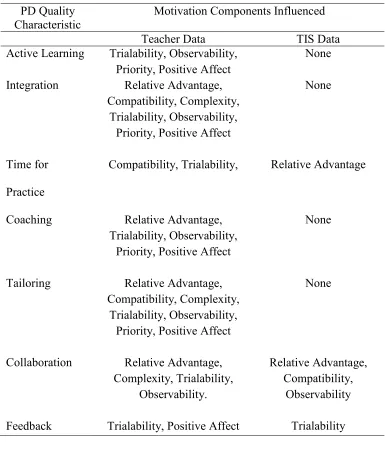
Table 3.2: Summary of Significant Relationships between PD Quality and Motivation Components ...52
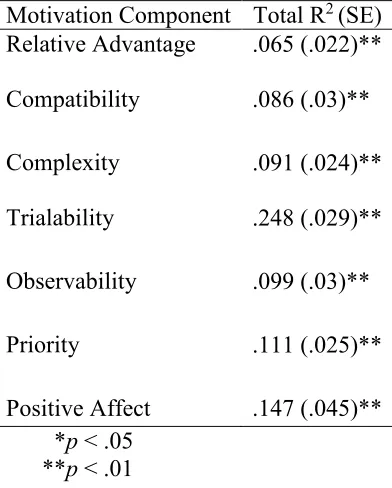
Table 3.3: Total Variance Accounted for in Each Motivation Component by All Seven PD Quality Characteristics ...52
Table 3.4: Regression Coefficients (β) and Standard Errors (SE) for PD Quality
Characteristics and Motivation Components for TIS Data ...54
Table 3.5: Summary of Significant Relationships between PD Quality and Motivation Components for TIS Data ...55
List of Figures
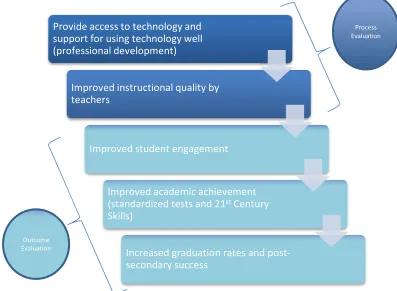
Figure 1.1: Logic model for 1TWO1 initiative ...36
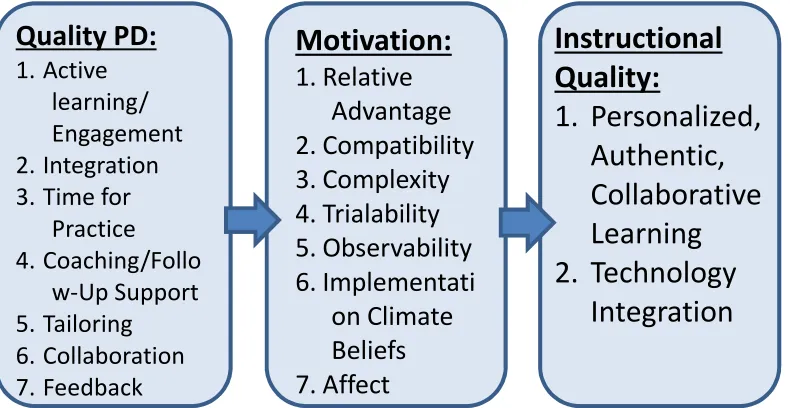
Figure 1.2: Proposed mediating role of motivation in the relation between quality PD and improved instructional quality ...37
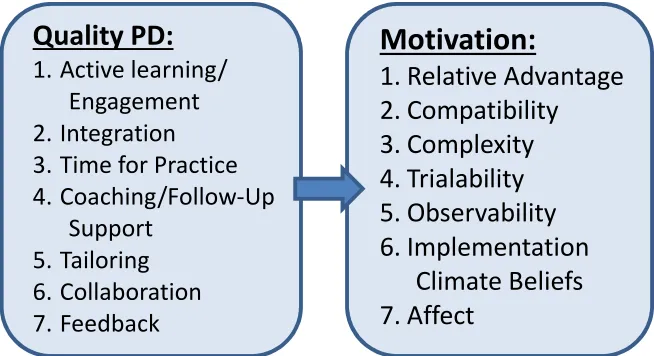
Figure 2.1: Relationships between PD characteristics and motivation components ...45
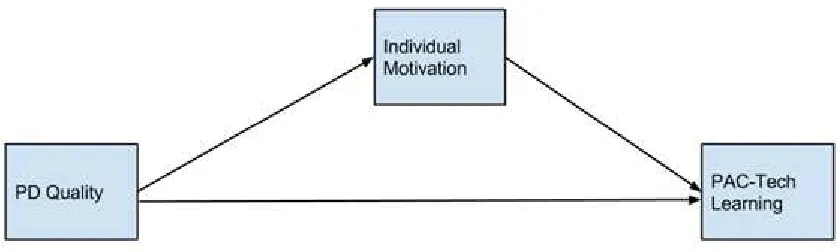
Figure 2.2. Path model showing relationships between PD quality, motivation, and
instructional quality outcomes ...46
CHAPTER 1: INTRODUCTION
The Importance of Quality Implementation in Schools
Over the past two decades, there has been a large movement to increase the
number of evidence-based practices utilized in schools to improve educational outcomes
such as student engagement, academic achievement, physical health, mental health,
teacher use of instructional strategies, and parent involvement in school activities, among
many others. Several education agencies, including the federal government, have called
for schools to incorporate practices that have research support (Crespi & Politikos, 2004;
Franklin & Hopson, 2004; Hoagwood, 2001, 2003; No Child Left Behind Act, 2001).
Although thousands of school officials have taken note of this movement and have
attempted to implement evidence-based innovations, the number of schools that
successfully obtain the same positive outcomes that were demonstrated in research trials
is far fewer than the number of schools who adopt them (Elliot & Mihalic, 2004; Gager
& Elias, 1997; Gottfredson & Gottfredson, 2002). A nationwide survey of 3,691
school-based programs indicated that only half of prevention programs and one fourth of
mentoring programs were being implemented according to quality standards that were
used in research trials (Gottfredson & Gottfredson, 2002). Further, only 47% of services
to families, 69% of counseling programs, and 78% of prevention programs lasted longer
benefit from an analysis of the school’s capacities as well as stakeholder buy-in
prior to beginning implementation.
It is evident from the number of failed school programs that merely adopting a
practice that has research supporting its effectiveness without considering
implementation capacity is not sufficient for producing successful outcomes (Fixsen,
Naoom, Blase, & Friedman, 2005). Fixsen and colleagues (2005, 2009) note that
diffusion and dissemination alone do not lead to outcomes and call for a greater focus on
post-adoption events including staff selection, pre-service and in-service training,
ongoing coaching and consultation, staff evaluation, and data-informed decision making
systems in order to increase the likelihood that an innovation will achieve its goals.
Along the same lines, several implementation researchers have posited that in addition to
choosing evidence-based practices, organizations must also possess sufficient “readiness”
to implement these practices successfully (Armenakis & Harris, 2009; Backer, 1995;
Drzensky, Egold, & Van Dick, 2012; Holt, Armenakis, Harris, & Field, 2006; Rafferty,
Jimmieson, & Armenakis, 2013; Weiner, Amick, & Lee, 2008). Many implementation
frameworks focus on the importance of building general capacities (e.g., strong
leadership, resources, relationships, funding) and innovation-specific capacities (e.g.,
innovation-specific knowledge, skills, and abilities, program champions, implementation
climate supports) to achieve readiness (Wandersman et al., 2008). This proposal seeks to
add to the implementation science literature by positing that in addition to general
capacity and innovation-specific capacity, schools that wish to successfully obtain their
desired outcomes must also possess adequate motivation to implement innovations with
capacity, innovation-specific capacity, and motivation. This concept can be remembered
using the heuristic “R=MC2” (readiness equals motivation times general capacity times
innovation-specific capacity; Scaccia et al., 2015).
Why Focus on Motivation?
Although the general and innovation-specific capacities needed to undertake a
given innovation (i.e., staff, funding, resources) are typically concrete and identifiable,
the factors needed to create staff motivation for implementing new practices (e.g., strong
relationships, favorable attitudes, positive climate) are often less tangible. As a result,
school leaders may have a more difficult time measuring the degree of motivation that is
present among their staff and may not have the knowledge or training that prepare them
to promote antecedents of motivation (Barnett & McCormick, 2003; Davis & Wilson,
2000). Given the difficulty associated with promoting staff motivation for adopting new
practices in schools, the current proposal focuses on the motivation component of the
readiness heuristic as it applies to school environments.
Several studies have investigated precursors of individual motivation to use
innovations (Greenhalgh, Robert, MacFarlane, Bate, & Kyriakidou, 2004; Rogers, 2003;
Schoenwald & Hoagwood, 2001; Scaccia et al., 2015). One widely cited theory is
Rogers’ (2003) work on diffusion of innovations. Although Rogers’ work focuses
mainly on how innovations diffuse throughout a society, many of the concepts can be
applied to understanding why and how people in an organization decide to implement
new practices. Rogers (2003) posits that diffusion of innovations is affected by five
major innovation characteristics: relative advantage (the extent to which users can see a
(the extent to which an innovation is perceived as consistent with an individual’s goals
and values, as well as past and current experiences), complexity (perceptions of
simplicity and ease of use), trialability (the degree to which users feel they are able to
experiment with an innovation before fully committing to implementing it), and
observability (the extent to which positive outcomes of the innovation can be observed).
In addition to these five components, Scaccia and colleagues (2015) added a sixth
component, priority (perceptions of the extent to which innovation use is expected,
prioritized, and meriting attention over other innovations). Despite the wealth of
literature on innovation diffusion, however, no research has examined the extent to which
these six factors impact teacher motivation to implement school innovations.
The Role of Professional Development
Within school environments, professional development (PD) activities present an
ideal opportunity to affect motivation for implementing new practices (Abrami, Poulsen,
& Chambers, 2004; Thoonen, Sleegers, Oort, Peetsma, & Geijsel, 2011). For the
purposes of the current study, professional development is defined as “processes and
activities designed to enhance the professional knowledge, skills, and attitudes of
educators so that they might, in turn, improve the learning of students” (Guskey, 2000, p.
16). PD is the major process by which school staff members receive information about
new developments in education and learn new skills for implementing evidence-based
practices designed to help their students succeed. Despite the purpose of PD, however,
not all PD is of equal quality. Researchers have suggested there are several elements
that, when incorporated into PD, are likely to increase teachers’ implementation of new
opportunities, integration of familiar and novel ideas, follow-up support, time for
practice, tailoring content to staff needs and interests, opportunities for collaboration, and
provision of constructive feedback (Darling-Hammond, Wei, Andree, Richardson, &
Orphanos, 2009; Desimone, Porter, Garet, Yoon, & Birman, 2002a; Thoonen et al., 2011;
Wei, Darling-Hammond, & Adamson, 2010). Despite evidence that the presence of these
characteristics is linked to subsequent changes in teachers’ classroom instruction, very
few studies of professional development have attempted to elucidate the mechanisms by
which this effect operates. Some have suggested that teacher motivation may be a
mediating factor in the relation between PD quality and instructional quality (Abrami et
al., 2004; Thoonen et al., 2011). However, no studies have investigated how professional
development may impact teacher motivation (as defined within the framework of
organizational readiness) to implement innovations.
Purpose of the Current Study
Even though PD (which encompasses training and technical assistance) is a
critical component for quality implementation (Meyers et al., 2012) and there is
substantial evidence identifying the characteristics that make PD effective
(Darling-Hammond, et al., 2009), few studies have investigated specific mechanisms by which
characteristics of quality PD increases teachers’ level of implementation of innovations.
Given the gaps in the current literature concerning the role of motivation in the
implementation of school innovations, the current study aims to (1) determine the extent
to which characteristics of quality PD enhance specific components of teacher motivation
is a significant mediating factor in the relation between quality professional development
and improved adherence to quality technology-related instruction.
The following literature review provides a more thorough background on the
above ideas, including the concept of organizational readiness, the factors that contribute
to individual motivation to implement new practices, and the key elements of quality
professional development.
What is Organizational Readiness?
Organizational readiness is a concept that is used to delineate the factors that are
necessary for organizations to successfully implement innovations (Weiner, 2009). As
stated above, Scaccia and colleagues (2015) proposed the heuristic “R=MC2” (readiness
is equal to motivation times general capacity times innovation-specific capacity) to
explain the relationship between the three major components necessary for organizational
readiness. Although the purpose of the current study is to examine motivation
specifically, a description of the three readiness components is provided below for
contextual purposes.
General capacity. General capacity refers to the processes that are necessary for
an organization to run smoothly so that they can implement any innovation successfully.
General capacities include aspects of organizational functioning such as leadership,
resources, relationships, funding, and organizational structure, and can be divided into
human, technical, fiscal, and evaluative categories. Human capacities are the leadership
and skills needed for an organization to get things done, technical capacities are those
that require being able to use various program tools and materials (such as
resources, and evaluative capacities include the skills and knowledge needed to collect
data and evaluate organizational progress.
Innovation-specific capacity. Innovation-specific capacity consists of the
human, technical, and fiscal conditions necessary to implement a particular innovation
with quality (Flaspohler, Duffy, Wandersman, Stillman, & Maras, 2008; Livet &
Wandersman, 2005). These capacities include innovation-specific knowledge, skills, and
abilities, program champions, and implementation climate supports that are needed for a
given innovation to be successful. As each innovation requires its own unique
knowledge, skills, abilities, and supports to be implemented well, organizations must
ensure that they possess sufficient innovation-specific capacities for the innovations they
wish to use. One innovation-specific capacity of particular note with respect to
motivation is the implementation climate surrounding a given innovation.
Implementation climate refers to the extent to which the innovation is supported,
prioritized, and meriting attention in an organization. Positive implementation climate is
characterized by the presence of comprehensive, well-informed, and demonstrable
management support (Klein & Knight, 2005). As described below, implementation
climate is an innovation-specific capacity that can impact priority, a component of
motivation to implement innovations.
Motivation. Motivation can be conceptualized as the perception of incentives or
disincentives that contribute to the desirability of implementing new organizational
practices (Scaccia et al., in press). For the purposes of the current paper, motivation
includes both the desirability for implementing change in general as well as the
lies at the heart of motivation, it is useful to examine both cognitive and affective factors
within individuals that contribute to the desirability of implementing change (Rafferty et
al., 2013). Cognitive factors include perceptions of the personal or organizational value
of change, perceived difficulty of change, and perceived support for the change, both
generally and in regard to a specific innovation (Bennett & Bennett, 2003; Dingfelder &
Mandell, 2011; Emmons, Weiner, Fernandez, & Tu, 2012; Lai & Chen, 2011;
Greenhalgh et al., 2004; Gustafson et al., 2003; Rogers, 1995). Affective factors include
emotions that may accompany these thoughts about change, such as feelings of
enjoyment, trust, hope, pride, interest, frustration, fear, and anger (Carr, Schmidt, Ford, &
DeShon, 2003; Rafferty et al., 2013). In addition, level of excitement and enthusiasm for
change also play into the affective component of motivation. These subcomponents of
motivation are described in detail in the following section of this proposal.
Prior to discussing the factors that contribute to motivation, however, it is relevant
here that some distinctions should be made regarding concepts relevant to motivation and
readiness. First, some authors have suggested that there is a distinction between
individual and organizational motivation (Rafferty et al., 2013; Marshak, 2004;
Whelan-Barry et al., 2003). Rafferty and colleagues (2013) propose that just as individuals may
possess different levels of motivation to implement new practices, organizations as a
whole may also exhibit varying levels of motivation to implement these practices based
on the shared motivation of the individuals within the organization. Some evidence
suggests that organizational and individual factors interact to promote teacher change
such that organizational conditions (including leadership and PD opportunities) impact
2011; Thoonen et al., 2011). Since the purpose of this study is to examine effects of
professional development on teacher motivation to implement a new technology
initiative, the current study focuses on individual motivation, rather than organizational
motivation.
A second distinction that should be made regarding motivation is that unlike
capacity, each of the components of motivation (see next section) are perceptions rather
than an objective reality (Armenakis, Bernerth, Pitts, & Walker, 2007; Eby, Adams,
Russell, and Gaby, 2000; Holt, Armenakis, Feild, & Harris, 2007). As Holt and
colleagues (2007) state, motivation in the context of readiness is “the extent to which an
individual or individuals are cognitively and emotionally inclined to accept, embrace, and
adopt a particular plan to purposefully alter the status quo” (p. 235). These perceptions
are derived from an individual’s personal experiences and are conveyed by interpersonal
networks (Rogers, 2003). Because motivation among organizational staff often changes
over time, evaluators must periodically assess individual motivation and determine how
to enhance it if it is low.
Finally, it is important to note that motivation does not exist in a vacuum, separate
from other readiness components (Thoonen et al., 2011; Weiner, 2009). In fact, the
current paper proposes that motivation, general capacity, and innovation-specific capacity
are interdependent and can reciprocally influence one another (Scaccia et al., in press).
For example, when an organization receives a grant that provides additional funding and
resources to implement an innovation (an innovation-specific capacity), service providers
funding was obtained. Therefore, increases and decreases in capacity may directly lead
to increases or decreases in motivation.
What Contributes to Motivation?
Research has identified several components that contribute to the motivation to
implement novel practices in organizations (Emmons et al., 2012; Greenhalgh et al.,
2004; Rogers, 2003; Rafferty et al., 2013). Based upon motivation literature, the
cognitive components reviewed in this paper include: relative advantage, compatibility,
complexity, observability, trialability, and priority. Affective factors reviewed in this
paper include emotions and attitudes toward change, both positive and negative, such as
feelings of enjoyment, trust, hope, pride, interest, consternation, surprise, and annoyance.
In readiness terms, it is important to note that some of these factors include components
of general and innovation-specific capacity, which can influence motivation, as described
above. The influence of each of these factors on motivation to implement innovations is
discussed below.
Relative advantage. For individuals to be motivated to implement an innovation,
they must perceive the benefit/cost ratio of implementing the innovation to be greater
than the benefit/cost ratio of their current practice (Aubert & Hamel, 2001; Greenhalgh et
al., 2004). Therefore, relative advantage is the extent to which an innovation and its
associated activities are perceived as being superior and more advantageous than the
current activities being performed. Available evidence suggests that relative advantage is
one of the best predictors of the rate of adoption of an innovation (Rogers, 2003).
Perceived benefits of innovations might include anticipated positive outcomes for the
prestige or accolades that may accompany certain highly regarded evidence-based
innovations, while perceived costs may include extra time, effort, and anticipated
negative outcomes. In addition, perceptions of costs and benefits of an innovation can
change over time as a result of individuals receiving more information about the
innovation, building skills to implement the innovation, or feeling that they have support
from others who help them in implementing the innovation.
Compatibility. Compatibility is the extent to which an innovation is perceived as
consistent with an individual’s goals and values, as well as past and current experiences
(Rogers, 1995). The more compatible a new practice is with an individual’s current
practices and with the individual’s values, the greater the motivation to implement the
practice (Aubert & Hamel, 2001; Denis, Hebert, Langley, Lozeau, & Trottier, 2002).
Although it is clear that individuals in an organization each have different personal goals
and values, there are often shared values within an organization. For example, teachers
in a school often highly value their planning period, because it is one of the only times
during the day when they can plan for lessons away from the responsibilities of managing
students. An innovation that requires teachers to use time allotted for their planning
period to work with students is likely to be received poorly and motivation for its use
would remain low. Thus, organizational leaders must take steps to design innovations
that are compatible with shared values of their employees if they wish for those
innovations to be successfully implemented.
Organizations must also be careful to design and use innovations that are
consistent and integrated with previously adopted ideas (Gustafson et al., 2003). Older
which a new practice builds upon older practices and existing initiatives is a key
determinant of individual motivation to implement the new practice (Darling-Hammond
et al., 2009). In school settings, research suggests that new initiatives that take into
account the context of the school and school system including existing resources,
curriculum guidelines, and accountability systems (such as state and federal standards)
are more likely to have an impact on teacher learning and motivation (Penuel, Fishman,
Yamaguchi, & Gallagher, 2007; Supovitz, Mayer, & Kahle, 2000). Thus, training for
new innovations must link the new procedures and ideas with current practices to
demonstrate the relevance of the innovation and to ensure a smooth transition in the way
that the practitioner changes their current behavior. However, problems may arise when
individuals experiment with new innovations but still apply old methods that are not
compatible with the new innovation (Rogers, 1995). Organization leaders who feel a
need to implement radical changes may find best results occur when they do so gradually
and in stages, first introducing a new practice that is highly compatible with the old
practice, then slowly transitioning to another practice that is compatible with the one
before it, and so on down the line until the final result looks nothing like the original
practice (Rogers, 1995). This method allows for significant change but does so in a
manageable way that does not overwhelm the individuals who are implementing the
innovation.
Complexity. Needless to say, innovations that are perceived by users as simple
are more likely to foster motivation to use them than innovations that are perceived as
complex (Plsek, 2003; Rogers, 1995). It is important to remember that it is the
than any objective standard of complexity. Thus, it is not sufficient for change agents to
introduce an innovation that they themselves perceive as simple. Instead, change agents
must assess the potential users’ perceptions of simplicity/complexity, and tailor their
innovation to these perceptions. Perceived complexity of an innovation can be reduced
by providing thorough training and technical assistance with opportunities for
demonstration rather than purely didactic instruction, active rather than passive learning,
and direct practical experience (Plsek, 2003). One way to increase the perceived
simplicity of an innovation is to break the larger implementation process down into
smaller and simpler parts that can each be executed incrementally. Dividing an
implementation process into smaller components increases motivation by reinforcing
individuals after each smaller part is successfully completed. This process of
implementing innovations in a piecemeal fashion has demonstrated success in several
contexts including healthcare (Plsek, 2003).
Trialability. Trialability is the degree to which users feel they are able to
experiment with an innovation before fully committing to implementing as part of their
routine practice. In organizations, service providers need time to learn and practice an
innovation under their own conditions to reduce any apprehensions, work out the “kinks,”
and seek answers to questions that may arise in the implementation process. According
to Rogers (1995), early adopters of an innovation typically place a higher value on
trialability than later adopters because they are pioneering its use, compared with later
adopters who can use the early adopters’ behaviors as a model to guide their practice.
Thus, when first introducing an innovation, change agents must provide opportunities for
innovation is introduced but not fully implemented due to low motivation or low
capacity, it becomes much more difficult to introduce future innovations in that
organization because service providers can become averse to the change process
(Greenhalgh et al., 2004).
Organizational policies often require service providers to implement new
innovations but provide very little time for practicing the use of new knowledge and
skills required by the innovation before needing to implement it. The consistent adoption
of new educational trends in schools is a prime example of how organizational leaders
can introduce many new innovations but provide very little time for organizational staff
to practice before fully implementing them. Teachers often have very little time to plan
and practice during the school day, but are required to keep up with the latest pedagogical
trends and implement them relatively quickly. As a result, teachers often become
stressed, dissatisfied with the work climate at their school, and may only partially
implement an innovation so that it is not carried out with quality. In turn, student
outcomes may suffer, leading the school administrators to adopt even more new
innovations to combat the problem. Thus, a cycle of inadequate training, poor teacher
implementation, and poor student outcomes continues.
An additional consideration with trialability is that some innovations are more
difficult to practice than others. Innovations that require interacting with another person
and responding to that person’s behaviors often require several people to act out a
practice scenario. Thus, it is critical that change agents provide these opportunities for
simulated practice as part of the training and technical assistance associated with the
learning is one of the best predictors of teacher implementation of innovations as well as
student outcomes (Gerard, Varma, Corliss, & Linn, 2011; Ingvarson, Meiers, & Beavis,
2005; Loucks-Horsley, Stiles, Mundry, Love, & Hewson, 2010; see below for ideal
characteristics of professional development).
Observability. Observability refers to the visibility of the results of an
innovation. Generally speaking, the greater the extent to which the positive outcomes of
an innovation are visible to both the implementers as well as outside observers, the
greater the motivation to use that innovation. Observability encompasses both the
meaningfulness of the results as well as the immediacy with which the results are visible.
Innovations that allow outside observers to view large, positive effects of an innovation
increase motivation for service providers to implement it. In this way, observability
functions as a personal incentive for service providers in that they may wish to receive
praise for their efforts and feel pride for being associated with a successful endeavor. In
addition to meaningfulness of results, speed with which innovation results are observed
also plays an important role in determining motivation. If results are able to be observed
quickly, motivation is typically higher because the temporal relation between the change
in practice and observed results creates an association between process and outcome,
reinforcing motivation and commitment to the innovation. This property of relative
advantage is a major reason why preventive innovations and large-scale organizational
changes often have a very slow rate of adoption. Large-scale innovations, especially
those involved with prevention, often do not achieve results until years after they are
initially adopted. Thus, it is difficult for individuals working within the organizations to
When implementing innovations with delayed results, organizations are advised to find
ways in which “small wins” can be demonstrated to the innovation’s users to reinforce
their current efforts and indicate that progress is being made.
Observability also includes the extent to which the service provider perceives that
other individuals within their organization and in other similar organizations use the
innovation. The observation that a large number of people are implementing the
innovation or have favorable attitudes toward the innovation communicates a powerful
social norm that the innovation is desirable. As individuals gauge the quality of their
own practices by comparing their actions to the actions of others, it is difficult to resist
using an innovation when many of one’s colleagues are buying in. If change agents can
demonstrate that (1) others are using the innovation and (2) others are obtaining positive
outcomes as a result of the innovation, they can bolster service providers’ motivation for
change. These actions incorporate some of the most effective and widely used principles
of marketing: to sell a product or idea, advertisers can demonstrate that others are on the
“bandwagon,” and provide potential consumers with a picture of how their situation
would be improved if they buy the idea or product. These properties of motivation are a
testament to the importance of measuring process and outcomes of an innovation so that
benefits can be demonstrated. Not only are process and outcome evaluation important for
ensuring that clients benefit from an innovation, but they are also essential for creating
motivation among service providers within the organization. Thus, observability has a
large potential to increase motivation and therefore, use of innovations (Denis et al.,
Priority. For the purposes of the current paper, priority is defined as the extent to
which innovation use is expected, prioritized, and meriting attention over other
innovations. Although priority can be considered an innovation-specific capacity,
evidence suggests that priority beliefs also play a role in motivation to implement
innovations (Carr, Schmidt, Ford, & DeSchon, 2003; McCormick, Steckler, & McLeroy,
1995; Nystrom, Ramamurthy, & Wilson, 2002; Parker et al., 2003; West & Anderson,
1996). For example, McCormick and colleagues (1995) found that the priority placed on
innovations was positively associated with the extent to which teachers implemented
tobacco prevention curricula. When thinking about implementing change, service
providers consider how people in their organization view and supports change in general
as well as how they view and supports the change associated with the specific innovation
at hand (Greenhalgh et al., 2004). Overall, service providers are more likely to be
motivated to change their practices if they perceive that the organization’s leaders
generally encourage and support change, experimentation, and continuous quality
improvement in all endeavors. However, the feeling of priority and positive climate
surrounding specific innovations is also important and often occurs within smaller teams
who are responsible for implementing the innovation (Ekvall, 1996). Regarding a
particular innovation, if the leaders within the organization make their grand vision clear
and provide the support (e.g., time, resources, technical assistance, involvement of all
staff in decision making) necessary to achieve that vision, then motivation for change is
likely to be enhanced (Ekvall, 1996; Nystrom, Ramamurthy, & Wilson, 2002; West &
Champions and key opinion leaders. An organization’s climate for implementing
innovations is also influenced by champions and opinion leaders, who can impact the
perceptions of priority with respect to a particular innovation (Locock, Dopson,
Chambers, & Gabbay, 2001; Markham, 1998; Shane, 1995). Champions and key opinion
leaders are examples of innovation-specific capacities that can directly influence service
providers’ motivation to use innovations. Champions are individuals in an organization
who believe in the potential of an innovation and work to increase the ease with which
service providers are able to implement it. Examples of champion efforts include
increasing communication between service providers and official leaders, working to
adapt the management’s rules and policies to give service providers more freedom to
problem solve, and creating intra-organizational coalitions to enhance formal and
informal networks (Shane, 1995). Often, these individuals are not in official leadership
positions, but still exert a high degree of influence on service providers within the
organization. Research suggests that if the number of innovation supporters outnumbers
or is more strategically placed than the innovation’s opponents, service providers are
more likely to be motivated to implement it (Champagne, Denis, Pineault, &
Contandriopoulos, 1991; Gustafson et al., 2003; Rogers, 1995).
Key opinion leaders are individuals within an organization who have a high
degree of influence on the beliefs and actions of their colleagues (Locock et al., 2001;
Fitzgerald, Ferlie, Wood, & Hawkins, 2002; Greenhalgh et al., 2004). Although key
opinion leaders are not necessarily the same as champions, it is possible for individuals to
act as both of these types of leaders. According to Locock and colleagues (2001), there
their authority and status, whereas peer opinion leaders exert influence as a result of their
credibility and common experiences with service providers. Based on their assessment of
an innovation, opinion leaders can either enhance or detract from service providers’
motivation to implement that innovation (Locock, 2001). Thus, identifying key opinion
leaders and designing an innovation to secure the buy-in of these individuals is an
important task for change agents.
Affective factors. Evidence from social psychological research suggests that
cognitive and affective attitudes differentially affect behavior (Hidi, Renninger, & Krapp,
2004; Lawton, Conner, & McEachan, 2009). In essence, what service providers think
about an innovation may differ from how they feel about it. For example, an employee
may hold the cognition that an innovation will ultimately be positive for their own job as
well as the organization as a whole (high relative advantage), but may still have feelings
of fear about abandoning their old routines and their ability to learn new skills. In these
situations, one of these processes tends to win out and will be a better predictor of
behavior. Thus, sometimes cognitions are more predictive of behavior and sometimes
affect is more predictive of behavior (Hidi & Renninger, 2006; Lawton et al., 2009).
Therefore, it is important to examine both cognitive and affective components of
motivation to implement innovations. Consistent with this idea, Rafferty and colleagues
(2013) maintain that in addition to cognitive processes, the assessment of motivation for
change in organizations should also incorporate affective antecedents of motivation by
using discrete emotion items that capture individual positive affect concerning a specific
change event. This includes emotions such as enjoyment, trust, hope, and pride as well
discrete emotions, Liu and Perrewe (2005) maintain that motivation is also associated
with the level of arousal, or the degree of excitement and enthusiasm for change. When
positive emotions such as hope, joy, and pride are coupled with a high level of
enthusiasm and cognitions that the change will be beneficial, easy, and supported, service
providers are highly likely to be motivated and initiate change processes.
How Does Professional Development Affect Teacher Motivation?
In the field of education, the professional development that is provided to school
staff is a key component of successful implementation of innovations. Guskey (2000)
defines professional development as “processes and activities designed to enhance the
professional knowledge, skills, and attitudes of educators so that they might, in turn,
improve the learning of students” (p. 16). A wealth of evidence has linked quality
professional development with teacher change and higher student performance
(Darling-Hammond et al., 2009; Desimone et al., 2002a; Wei et al., 2010). Further, a large body
of research has identified the specific characteristics of PD that lead to teachers’ use of
innovations and positive student outcomes (Darling-Hammond et al., 2009; Desimone et
al., 2002a; Thoonen et al., 2011; Wei et al., 2010; Yoon, Duncan, Lee, Scarloss, &
Shapley, 2007), but few studies have examined how these characteristics are related to
subcomponents of motivation such as observability, trialability, relative advantage,
complexity, compatibility, and climate, which can affect use of skills in the classroom.
Identifying how the characteristics of high quality PD affect teachers’ motivation has the
potential to illuminate the mechanisms behind this relationship and can inform the
development of PD in ways that maximize teacher motivation to implement new
innovation-specific capacity, thereby leading to enhanced motivation to implement the
innovation. The current section reviews the characteristics of high quality PD identified
in the PD literature and discusses the way in which these characteristics might enhance
the various components of motivation.
Active learning and engagement. Active learning opportunities are experiences
that allow teachers to be active participants in their own learning and acquisition of skills.
Active learning in professional development includes activities such as being observed
and receiving feedback, practicing in simulated conditions, collaboratively developing
lesson plans and reviewing student work, and presenting or leading discussions (Birman,
Desimone, Porter, & Garet, 2000). Numerous studies support the benefits of active
learning for professional development for increasing teacher knowledge and skills
(Desimone et al., 2002a; Gerard, Varma, Corliss, & Linn, 2011; Ingvarson, Meiers, &
Beavis, 2005; Lieberman, 1996; Loucks-Horsley et al., 2010). When teachers are
engaged in the discussion, planning, and practice of new ideas and skills, they retain
more knowledge and transfer a greater percentage of the skills into their classrooms
(Garet, Porter, Desimone, Birman, & Yoon, 2001; Desimone et al., 2002a).
Another variable that serves to increase teacher engagement is the use of
innovation-specific PD, rather than generalized PD that is not focused on a particular
pedagogical strategy (Cohen & Hill, 2001; Desimone et al., 2002). Cohen and Hill
(2001) found that PD that emphasized pedagogy specific to a particular innovation was
far more effective in changing teachers’ practice than PD that focused on general
pedagogical strategies, suggesting that teachers need specific information that helps them
instead of offering a PD workshop that centers around the question “What is
project-based learning?,” PD facilitators could offer a workshop that centers around a more
specific action, such as “How to facilitate project-based learning using Google sites.”
The latter method of teaching skills is far more specific and gives teachers a tangible tool
they can use to implement the pedagogical strategy of project-based learning. Desimone
and colleagues (2002a) investigated the influence of innovation-specific PD related to
technology use in the classroom and found that when opportunities for active learning are
combined with the use of innovation-specific technology use strategies, teachers are
significantly more likely to implement these strategies in the classroom than when either
one of these strategies is used in isolation.
Evidence from research on the role of relative advantage and complexity in the
diffusion of innovations would suggest that the increased innovation use associated with
active learning and innovation-specific PD occurs through the influence of these
activities on teacher motivation (Aubert & Hamel, 2001; Bandura, 1997). Active
learning experiences and receiving specific information about an innovation may lead
teachers to perceive a greater degree of trialability in the innovation, a lower level of
complexity, and, if the active learning involves collaboration, a greater degree of support
from colleagues and PD facilitators. In addition, active learning experiences have the
potential to foster greater positive affect among teachers by increasing interest,
enjoyment, and enthusiasm for the innovation. The greater motivation, in turn, may
increase teachers’ implementation of new practices in their classrooms. Although no
studies have investigated how these PD qualities relate to teacher motivation, the current
Integration of old and new ideas. Effective PD facilitates the transfer of
knowledge and skills into the classroom. One way to accomplish this transfer is by
integrating new knowledge and skills with familiar ideas and important goals, a finding
that is consistent with the idea of compatibility in enhancing motivation (Rogers, 1995).
Evidence indicates that when PD aligns with teachers’ personal goals as well as state and
district curriculum standards, teachers are more likely to use new educational practices
(Darling-Hammond et al., 2009; Desimone et al., 2002a; Hirsh, 2009). Specifically,
Desimone and colleagues (2002a) found that the more teachers felt that PD was
commensurate with their personal goals and state and district standards, the more likely
they were to use computers in their classroom. Based on this premise, the
knowledge-integration framework (KIF) advocates four major processes that have been demonstrated
to enhance teacher learning: eliciting existing ideas, adding new ideas, using evidence to
distinguish among ideas, and reflecting and integrating ideas (Linn, 1995; Sisk-Hilton,
2009). Eliciting ideas involves examining teachers’ beliefs that they have developed as a
result of their training and experience in the profession (Gerard et al., 2011). Every
teacher has a set of ideas about their own capabilities, the capabilities of their students,
what constitutes effective pedagogy, and the best ways to use technology to enhance
student learning. These ideas are based on teachers’ perceptions of student success,
standardized test scores, and feedback from students, parents, administrators, and other
colleagues (Davis, 2004). Eliciting ideas as part of PD involves asking questions about
teaching practices and opening ideas up for discussion and debate so that they can be
After eliciting existing ideas, quality PD adds new ideas that build upon or refine
the old ones. Often, this involves collaborating with peers to develop lesson plans,
watching videos of the new ideas in action, or having teachers role-play as students so
that they learn the material as their students would. As is the case with general learning,
new ideas introduced during PD must be linked to the existing ideas that were elicited
earlier in PD or they are likely to be forgotten and will not transfer into the classroom
(Borko, 2004). Further, PD has a greater chance of transferring into practice if PD
facilitators can demonstrate how potential new practices and ideas improve student
engagement, achievement, and standardized test scores in order to pique motivation for
implementing the new practices (Tosa & Martin, 2010).
Although adding ideas allows teachers to become familiar with them, it is often
not sufficient to ensure that teachers incorporate these ideas into their teaching practices.
As existing habits and routines can be difficult to break, the third step in the knowledge
integration framework involves assisting teachers in distinguishing between more
effective and less effective teaching practices. This process often involves helping
teachers to collect data on how teaching practices affect students’ learning and
engagement in their classrooms. The final step is to help teachers reflect on what they
have learned in PD and to guide them in integrating all of their knowledge into a coherent
practice. For example, PD for technology must provide information on how teachers can
integrate the use of technology tools (such as web applications) with their pre-existing
knowledge of the way that students learn (Mishra & Koehler, 2006; Niess, 2005). This
may involve giving teachers opportunities to practice using technology to provide
allow students to grasp traditional concepts in an entirely new way. Along with active
learning and time for practice (see below), this integration of new and old ideas facilitates
use of new instructional methods and contributes to significant improvements in student
learning outcomes. Taken together, these findings support evidence from the
implementation science literature indicating that an innovation’s compatibility with older
ideas and current goals increases motivation to implement new practices (Denis et al.,
2002; Gustafson et al., 2003). Teachers may take comfort in knowing that a new change
will not be stressful because it builds on current practice, leading to positive emotions
surrounding the innovation. Although these findings suggest that integration is
important, few studies have examined the causal process by which integration increases
use of innovations, and none have examined whether this component of PD operates by
enhancing motivation.
Practice and Collaboration. Much of the professional development that takes
place in schools and school districts is conducted in a “workshop” format, occurring
outside the classroom and involving didactic presentation about new information and
ideas (Wei et al., 2010). Despite the prevalence of this kind of PD, a growing body of
evidence suggests that this method is often inadequate for ensuring that teachers transfer
knowledge and skills effectively into their classroom instruction (Garet, Porter,
Desimone, Birman, & Yoon, 2001; Loucks-Horsley & Matsumoto, 1999; Penuel et al.,
2007). Although traditional workshop formats can be useful in many instances, PD often
needs to be supplemented by what Garet and colleagues (2001) term “reform” methods,
which include mentoring and coaching, collaborative groups in which teachers can talk
knowledge and skills (Joyce & Showers, 2002). Using a national sample of teachers,
Garet and colleagues (2001) found that teachers who had more opportunities to
participate in reform PD activities, including more contact hours with PD coaches and
more collaboration with colleagues, were more likely to gain new knowledge and skills
than teachers who did not have these opportunities. Greater knowledge and skills were,
in turn, associated with greater changes in teacher practice, reinforcing the idea that
trialability can improve motivation and use of innovations in the classroom. Therefore,
there is evidence that reform PD facilitates the transfer of knowledge and skills into
tangible instructional changes.
Despite the association of reform PD methods with greater time for practice and
more effective transfer of skills, Penuel, Fishman, Yamaguchi, & Gallagher (2007)
maintain that it is not the type of PD (workshop or individual coaching) that matters so
much as it is the design. The key variable for PD according to Penuel and colleagues
(2007) is “proximity to practice,” meaning that when teachers are given time to
experiment and practice for their classroom instruction, they are more likely to use
innovations in their classrooms, regardless of whether they attend a workshop or receive
coaching (Darling-Hammond & McLaughlin, 1995). Thus, Penuel and colleagues
acknowledge that workshops are sometimes designed using more effective reform
methods that allow for practicing new skills, while coaching is sometimes conducted
using less effective traditional methods that are less conducive to practice. Taken
together, these findings suggest that regardless of PD type (i.e. workshop or coaching),
reform activities that occur in the classroom and allow for practice, collaboration, and
findings are consistent with the notion of trialability, and corroborate the results of
studies that show trialability is related to motivation for using innovations (Ovretveit et
al., 2002; Yetton, Sharma, & Southon, 1999).
Continuous support and feedback. Another consistent finding throughout the
PD literature involves the duration of the PD over the long-term (i.e. how long support
for new practices is provided over the years). Because innovations often require large
changes in teacher behavior, teachers may only have the capacity to implement small
pieces of a new innovation into their current practice or avoid using the new method
altogether (Coburn, 2004). The difficulties of large-scale change call for “cycles” of
persistent PD that allows for teachers to gradually implement the pieces of an innovation,
reflect on their practices, and continue implementing more of the innovation until they
are proficient (Blumenfield, Fishman, Krajcik, Marx, & Soloway, 1991).
Overwhelmingly, research suggests that when teachers receive PD related to a specific
innovation that is sustained beyond just one school year, they are far more likely to use
that innovation effectively in their classrooms (Desimone et al., 2002; Garet et al., 2001;
Gerard et al., 2011; Ingvarson, Meiers, & Beavis, 2005; Penuel et al., 2007; Supovitz &
Turner, 2000). Though this may be an indirect effect, the time span of a PD program
increases the amount of time teachers spent meeting informally with other teachers to
engage in activities such as joint lesson planning or developing curriculum materials
(Ingvarson et al., 2005). In terms of motivation to use new practices, introducing
innovations in a piecemeal fashion and providing continued support likely increases
compatibility and trialability, decreases complexity, and conveys a climate of long-term
In a meta-analysis of 43 studies on professional development programs for
technology, Gerard and colleagues (2011) found that programs that supported teachers
for one or fewer years had little impact on teachers’ effective use of technology,
regardless of the degree of support they provided for teachers. The authors noted that this
was likely due to a steep learning curve and first year “hiccups” related to technical and
instructional issues. These results suggest that many innovations encounter an initial
period in which “growing pains” are experienced, but that persistence and continued
support beyond the first year significantly increase the success of the innovation over the
long term. In three rare cases, PD programs that were more short-term were able to
facilitate effective use of technology, but this only occurred when teachers had time to
cultivate new practices, test the practices in their classroom, examine outcomes with
colleagues, and evaluate and refine their practices (Tan & Towndrow, 2009; Trautmann
& MaKinster, 2010; Yerrick & Johnson, 2009). Consistent with the notion of trialability,
these findings suggest that sustaining support for an innovation over time and providing
opportunities for teachers to experiment, practice, receive feedback, and refine their
methods is associated with greater innovation success.
Research on teacher support suggests that long-term support should consist of
in-classroom coaching in addition to group-oriented PD (Darling-Hammond et al., 2009).
Regardless of how much planning, preparation, and learning teachers undergo when they
are implementing new practices, it is when they are actually implementing in the
classroom that they encounter the largest issues and possess the greatest fears, doubts,
and concerns about the change (Guskey, 2000). It is during this process of classroom
performance. Individual assistance or coaching includes answering questions, providing
encouragement, reinforcing what the teacher does well, and exerting positive pressure to
persist until the new practice becomes habitual (Guskey, 1994). Available research
demonstrates that the extent to which teachers receive individual assistance and
follow-up sfollow-upport after learning about new practices is related to their use of the innovation
(Ingvarson, Meiers, & Beavis, 2005). Across 80 different professional development
programs, Ingvarson and colleagues discovered that the level of follow-up support and
ongoing assistance they received in their classrooms significantly increased teachers’
knowledge and use of novel educational practices. Thus, bolstering teachers’
innovation-specific capacities by providing ongoing technical assistance and feedback likely leads to
increased trialability, compatibility, and decreased complexity, leading to greater
motivation to implement new instructional innovations.
Another necessary component of long-term support involves providing specific
and constructive feedback to teachers. Although time for practice and experimentation
with a new practice facilitates learning and skill acquisition, research suggests that
teachers can only improve so much by experimenting on their own (Bronkhorst, Meijer,
Koster, & Vermunt, 2011; Ericsson, 2006; Marzano, 2011). The actualization of true
expertise arises only when teachers can receive high quality feedback and guidance from
someone who is already familiar with how to implement the practice. Consistent with
this idea, evidence indicates that teachers are more motivated to persevere with a new
practice if they receive specific feedback demonstrating that the practice actually works
for helping students to learn better (Guskey, 1994; Ingvarson, Meiers, & Beavis, 2005).
new instructional practices were most strongly dependent upon the extent to which they
encountered evidence that student learning outcomes have improved as a direct result of
the new practice. Ingvarson and colleagues’ finding provides support for the hypothesis
that the observability of an innovation is positively related to innovation use. Despite
benefits of feedback, however, opportunities for feedback are rarely provided (Invgarson
et al., 2005), suggesting that schools and districts must work to identify barriers to
providing effective feedback to teachers and develop plans for overcoming these
challenges. Identifying barriers to the observability of an innovation may require
collaboration between principals, teachers, and district officials to revise the school
schedule, change teachers’ planning times, create new staff positions within the school,
or revise existing staff’s job descriptions to include this kind of follow-up support.
Tailoring. Rather than employing a “one size fits all” approach, several studies
suggest that offering PD opportunities that are customized to teachers’ needs and allow
for teacher-centered learning has positive effects on teacher performance in the classroom
as well as teacher satisfaction with their jobs (Blase & Blase, 2000; Desimone, Porter,
Birman, Garet, & Yoon, 2002b; Nir & Bogler, 2008). There are several methods that
schools can use to ensure that PD is meeting teachers’ individual needs. One method
involves conducting a needs assessment and using the results to determine strengths and
weaknesses for each teacher. Teachers can then be placed into learning teams based on
their interests and skills levels. This arrangement can help to facilitate peer coaching and
collaboration (Hinson, Laprairie, & Cundiff, 2005), which in turn enhances learning and
motivation for implementation in the classroom (Garet et al., 2001; Ingvarson et al.,
perceptions of support, compatibility, and trialability, as well as feelings of confidence,
satisfaction, and gratitude.
Another option for tailoring PD to teachers’ needs is to involve teachers directly
in the design and provision of PD in their school (Ball, 1996; Blase & Blase, 2000;
Desimone et al., 2002b). In a survey of over 800 teachers in the U.S., Blase and Blase
(2000) found evidence that allowing teachers to have a degree of control over the
planning and implementation of PD activities is linked with motivation to participate in
PD. As one teacher in their study stated, “by giving us voice and choice, we are more
motivated to go to in-services and learn new things that we can try out” (p. 135).
Desimone and colleagues (2002b) studied 363 school districts and found when teachers
are involved in the planning of PD at both the school and district levels, there is a
significantly greater likelihood that the PD will involve high quality PD characteristics
(greater reform methods, active learning, longer time-span, opportunities for
collaboration), which are related to greater motivation to implement practices in the
classroom. In sum, research suggests that involving teachers in designing policies and
procedures that affect them serves to empower teachers and increase ownership of their
own PD, resulting in higher motivation for implementing new practices they learn as part
of their training.
Evaluation. Quality PD incorporates evaluation methods to ensure accountability
and continuous quality improvement (Desimone et al., 2002b; Garet et al., 2001).
Determining the strengths and weaknesses of PD helps to provide direction toward next
steps for enhancing the effectiveness of PD. In their nation-wide study of 363 school
efforts are significantly related to increased opportunities for active learning and
increased tailoring of PD. However, very few schools and districts actually engage in
continuous quality improvement activities, as Desimone and colleagues found that only
18% of teachers are in districts that currently collect data on performance indicators that
have been established to guide PD efforts. In addition, less than 25% of districts are
aware of their state’s indicators for PD and the federal requirement to develop them.
Moreover, the districts that do establish performance indicators typically offer minimal
guidance to schools about how to collect and use data to inform PD efforts. The lack of
PD evaluation across the nation underscores the need for quality assurance and
accountability processes to ensure that teachers are able to effectively use new knowledge
and skills in their classrooms. By collecting data to evaluate PD, schools can identify the
areas in which their PD is lacking and take actions to improve it.
Evaluation of PD can be divided into process evaluation and outcome evaluation.
Process evaluation assesses the methods used to conduct PD (such as the format of the
PD), whereas outcome evaluation assesses the impact of the PD (teacher use of the
innovation, student outcomes). There are several ways to evaluate the PD process,
including a brief assessment after each PD interaction, soliciting vocal feedback from
teachers by interview or group discussion, or evaluation by a neutral party who observes
the PD activities. Each of these methods has pros and cons. Teacher surveys allow for
more information but are subject to misinterpretation or inaccurate information.
In-person vocal feedback is easier to interpret than survey responses but may induce
desirability bias if the PD facilitator is present. A neutral observer has a more objective
provided throughout the school year. Thus, each method provides something the others
cannot. An ideal strategy is to use a combination of these methods, although many
schools may lack the capacity for thorough evaluation of PD.
In addition to process indicators, there are several types of outcomes that provide
information about the effectiveness of PD, including both teacher and student outcomes.
Although the short-term goal of PD is to affect teacher behavior, the ultimate objective is
to improve student outcomes. To achieve this goal, it is imperative that schools collect
data on both teacher and student outcomes to assess the impact of their PD. Shaha,
Lewis, O’Donnell, and Brown (2004) discuss three major types of outcomes at both the
teacher and student levels that are relevant to PD: learning impacts, attitudinal impacts,
and resource impacts. Comparisons can be drawn between these three impacts of PD and
the notions of capacity and motivation. Learning impacts are measures of knowledge
gained, skills achieved, or teaching-relevant behaviors acquired and (Lewis & Shaha,
2003). Attitudinal impacts are the affective attitudes that teachers and students hold and
are a critically important component of motivation (Killion, 2002). Though attitudes are
often overlooked in favor of actual learning outcomes, they are equally important in
determining the likelihood of behavior change and should not be overlooked (Lawton et
al., 2009). Finally, resource impacts include any resources gained or lost in the process
of PD (Guskey, 2002). Resources impacts result in changes in general and
innovation-specific capacity such as participation time, time spent preparing, or loss of productivity.
Evaluating resource impacts allows schools to understand the sacrifices that are being
made by teachers in order to achieve behavior change and may help put slow progress in