Review Article
CODEN: IJPNL6
“Considering Various Components
for Rational Development of Solid
Dispersion with
Better Affectivity”
Poonam Mogal*, Deeliprao Derle
M.V.P.S’College of pharmacy, Na
shik-2, Maharashtra, India
*Corresponding author e-mail: [email protected]
Received on: 12-06-2017; Revised on: 18-06-2017; Accepted on: 30-06-2017
ABSTRACT
The goal of pharmaceutical preparation investigation is to utilize to the full of every bang-up properties while overcoming as many another as manageable unsought properties of existent operational drugs & formed drug molecules. The choice of accepted applied science & technology in the formulation is habitually favored to maintain a time table and success rate requirements in industry. But in numerous cases new excipients for formulation or delivery technologies are required to formulate coveted clinically significant improvements, for differentiation in the market and to those fortifying for industrial protection. This is important aspect influencing development and industrialization is the scale-up in the production of formulation excipients and delivery systems. A methodical consideration of the processes taking place at a molecular stage is crucial for the logical development of solid dispersions. The parameters like manufacturing certain thermodynamic properties of BCS class II drugs, factors that affects stability of the system, physicochemical properties of drug in solid dispersion, mechanisms responsible solubility & dissolution rate enhancement as well as mechanisms to make the system stable, for choosing the right polymeric carrier & the solubilizing formation techniques all these should be well thought-out before forming solid dispersion. Systematically done workings come out to be indispensable for enhancing potential of many existing & outdated copious BCS class 2/4 drugs as well as new chemical entities.
Keywords: solid dispersion, poorly soluble, method, polymer, mechanism
INTRODUCTION
Administration by oral route is the most favorable as well as ordinarily made use of route for drug delivery owing to its simplicity of administration, elevated patient conformity, easy on the pocket feature, smallest amount sterility constraint plus suppleness in the devising dosage type. So, there is need to develop bioequivalent oral dosage forms for efficient delivery of therapeutic agent. For this purpose different approaches are being utilized in drug development process.
Bioequivalent oral dosage form are gaining lots of attention due number of reasons such as the soaring expenses & period caught up in innovative drug progress, patent termination designed for a major
numeral of drugs, simplicity of built-up & organized accessibility of expertise for the manufacture of orally administered drugs (1).
It has been stated that about 70% of NCE discovered during the drug discovery programmes have poor bioavailability (2-4). Therefore, it’s making it as
challenging task for formulation scientist to make the drug more bioavailable for showing targeted therapeutic action by NME (5-9).
Combinatorial chemistry and high throughput screening (HTS) has led to the creation of millions of new compounds having high affinity to prospective target receptors that tend to have high molecular weight and poor solubility in recent times. The
pharma industry in today’s world is due to lot of
International Journal of Pharmacy
technological advancements creating millions of new chemical compounds (10).
Hence, lot of attention has been paid for solubility as well as dissolution enhancement of poorly soluble drugs in research and development process. Consequently, enhancing solubility using pharmaceutical awareness will assist both medicinal chemist & druggist for making (NME) molecule useful as therapeutic agent rather than throwing it away for its poor solubility (11).
Treating with poorly soluble drugs as therapeutic agents often present lots of complications like elevated dose of drug which pilot to amplified drug induced toxicity, then the rate of drug administration is as well increased leading to decreased patient compliance and furthermore rising of side effects associated with it (12).
Poor water solubility is severe apprehension when theoretical dose of drug molecule is unable for dissolving it inside the presented quantity of GIT fluid in body of patient (13, 14).
An improved thoughtfulness of types of polymers, different preparation methods, with molecular contacts of drug and polymer is decisive in favour of scheming proficient & stable drug delivery system approximating solid dispersion.
An enhanced solid-form stability & supersaturation creation with continuation will guide us to deliver a system conferring advantageous plus expected properties & a realistic selection for solubilizing the
“difficult to solubilize” drugs (15)
Different pharmaceutical interventions
Over a period of time, diverse pharmaceutical formulations techniques are employed to improve oral bioavailability of BCS class 2 drugs. They make use of previously official excipients plus generally regarded as safe (GRAS) material and hence reducing the expenditure & development period.
Attempts have been done for enhancing solubility & dissolution ultimately oral bioavailability of poorly soluble drugs using different pharmaceutical interventions.
The foremost techniques for attaining the better oral bioavailability of poorly soluble drugs incorporates both older and comparatively newer approaches which are emerging in past decennium are micronization, (16), Nanoparticles (17), cocrystal (18), crystal engineering, solid dispersion (19), cyclodextrin (20), selfmicroemulsifying drug delivery system (21), and liposomes.
Solid dispersions are primed using the a variety of
techniques involving combination of matrix & a drug, rather on a molecular stage, by solvent evaporation method (22), Fusion method (23), Hot melt extrusion (24), Supercritical fluid technology (SCF) (25), Dropping method (26) Electrostatic Spinning Method (27), Coprecipitation method (28)
Based on the pharmaceutical dosage type, quite a few methods are accessible that are designed for the solubility augmentation of poorly water soluble drugs. Amongst copious ways of enhancing drug dissolution, dispersion of drug in carrier is solitary technique.
By cautiously choosing the inert carrier required for solid dispersion system it is also possible to control rate of release such as controlled released or immediate release formulation.
solid dispersions comprised of poorly soluble drug along with hydrophilic carrier matrix or polymer. Hence, they posses both drug and extensively studied polymer in optimized ratios that decreases need for toxicity study as compared to other approaches where different combination of lipid or polymer matrix are used which requires toxicity study to be done.
Solid dispersion can also be used for drugs having high crystallization propensity as well as with large
drug’s ratio which decreases high excipient burden in
final product (29).
Other approaches like micronization have tendency to agglomerate that decreases the dissolution since
there is the reduction in particle’s effectual surface
area due to agglomeration.
Nanosizing also increases surface free energy of particles which also tends to decrease by spontaneous agglomeration of them with each other (30). Solid dispersions are offering manifested solubility & dissolution rate enhancement by its virtuousness of particle size reduction & enhanced effective surface area made available for dissolution as well as improved wetting by polymer or better dispersibility of drug in carrier matrix.
The solid dispersions also forms stable solid system by entrapment of drug in polymeric matrix (31). In the recent years, controlled release formulations are also getting lot of acclaimation for its decreased frequency of administration and releasing drug at fixed rate.
stored in desiccators or the moisture in the environment has to be controlled to prevent it from getting moisture or forming sticky mass again. Polymers and inert carriers discussed in this paper are synonymous, with the latter being the broad term. Even so, choosing a carrier is thought-provoking because of insufficiency of the key apprehension of the fundamental interactions occurring inside the solid dispersion systems plus the deficiency of effectual techniques for screening carriers to be used. This article will review carriers utilized in solid dispersion based formulations. In addition, the mechanisms concerned in the solubility and dissolution rate enhancement will be elaborated. The reasons for poor solubility, permeability & ultimately poor oral absorption will also be disscussed. BCS classification and its use for the drug formulators and facilitation for poorly soluble drugs development will be discussed.
Then, the meaningful insights will be given on the mechanisms responsible for dissolution rate enhancement, theories of solid dispersion and interactions of carriers and drugs. Understanding different solubility enhancing methods & carriers for solid dispersions based formulations will likewise be given.
Bioavailability setback for oral route
Therapeutical effectivity of a poorly soluble drug reckon upon the bioavailability & finally upon the solubility of drug molecules (32). The rate & extent of drug absorption is dominated by transferral of the drug to site of action as ascertained by its pharmaceutic preparation. It is controlled by the solubility of drug & on permeability of drug through gut membrane to reach portal vein to systemic circulation. But drugs are mostly hydrophobic with poor solubility which leads to poor bioavailability in the body (7).
Accomplishable reasons for inadequate oral absorption
many studies are conducted to evaluate the reasons
for drug’s poor oral assimilation like if aqueous
solubility is less than 100μg/ml or if it has high
crystal energy (melting point >200 0C) which means strong intermolecular bonding higher energy to break the crystal leading to poor water solubility. It has been studied that if drug has poor dissolution with intrinsic dissolution rate less than 0.1 mg/cm2/min then the drug made available at site of action is less. The permeability of drug through gut wall depends a lot on the size of drug molecules i.e. if it has more than 500 (High) molecular weight, then they are difficult to transfer across it. High lipophilicity (log P>3) of drug also makes it poorly
bioavailabile (8).
Understanding poor water solubility
Solubility of a component is depends on its physicochemical properties with analogous molecules that have similar activeness named as Structure-activity relationship.
Meylan & Howard derived an equation describing the water solubility of a component. It states that solubility depends alot on melting point (MP) as well as the octanol-water partition coefficient of a component.
Log S = 0.342 - 1.03log P - 0.011(Tm-25) +∑fi
(n=1450; R2=0.960; fi=factor)
Calculation of the solubility of a component S = solubility, P = partition coefficient; Tm = melting
point; Σfi = summation of all correction factors.
Thus, solubility of drug decreases with increase in melting point of drug as well as log P (partition coefficient of drug) (8).
Solubility related elements restricting oral assimilation
Different factors are related with solubility that are responsible for poor bioavailability of drugs such as compounds that have adequate thermodynamic solubility (>60ug/ml), dissolution kinetics in gastric or intestinal simulated medium, pKa (slight shift), dissolution rate (for unionised drug form).
Main factors that are contributing to the compound low aqueous solubility and thus poor oral bioavailability is given by general solubility equation by Jain & coworkers:
Where SW solid is the molar aqueous solubility, MP is the melting point (widely used to assess crystal lattice energy), and Ko/w is the octanol–water partition coefficient of the compound.
It clearly demonstrates that decreasing lipophilicity by one log P unit or decreasing melting point by 100°C will increase compound aqueous solubility by
∼10-fold (7,8).
Permeability related elements restricting oral assimilation
The diffusion of drug through gut membrane depends on the physical and chemical properties of the drug molecule.
Polar van der Walls surface area (Inverse) relationship exists.
The molecular flexibility of drug molecule through gut membrane depends on the no. of Rotatable bonds (7, 8, and 33)
Optimisation of oral bioavailability is a progressing test for the pharmaceutical and biotechnology industries. The number of potential drug candidates requiring in vivo evaluation has significantly increased with the advent of combinatorial chemistry.
The biopharmaceutics classification system (BCS) A foundation for categorizing drugs settled on the two leading factors that affect oral absorption such as solubility and permeability as described by Amidon (1995).
BCS acts as directive & important predictive means developed by them in facilitating drug formulation process.
‘The permeability requirement states that the
permeability of the drug is commensurate with >90% absorption from a solution. The solubility requirement is that the dose-to-solubility ratio (D:S) of the drug must be <250 mL over a pH range of 1 to 7.5, and the dissolution requirement for the drug product is that dissolution must be >85% complete
within 30 min’ (34).
It is employed to modify the efficiency of drug improvement process for decent choosing of the dosage form & bioequivalence study. It is utilized to advise a class of immediate release (IR) solid dosage forms, for that bioequivalence might be analyzed supported on its in vitro dissolution test. BCS is also used to demonstrate excipient’s outcome on drug
permeability (35).
The BCS classes are as under: Class 1: High solubility and high permeability; Class 2: Low solubility and high permeability; Class 3: High solubility and low permeability; Class 4: Low solubility and low permeability.
BCS as a directive means for pharmaceutical manufacturing. BCS usage cut down the necessity for clinical study in life cycle management and manufacture of nonproprietary compounds. It also aids in distinguishing prospective absorption difficulty that may arise subsequent to oral administration. BCS assist for emphasising on more economical processes with tapering drug improvement timeline. It helps in choosing parallel & for first preparation approaching in drug development (33, 36). Biowaivers is give for some products as stated in BCS; they approve the drug depending on its vitro dissolution study instead of need of bioequivalence study in human (37). BCS classification has been adopted by many agencies worldwide for facilitating drug development process like “US ) to lay down “drugability” guiding
principle for NME. Where it anticipates poor absorption & permeation only after if that molecule has > 5 H-bond donors, 10 H-bond acceptors, molecular weight is > 500, plus the calculated Log P (CLog P) is > 5. The maximal flow due to absorption is close to the solubility multipliplied by the permeability of drug.
Dissolution is crucial process as it alters the existent drug concentration in solution all over period of time (35, 38).
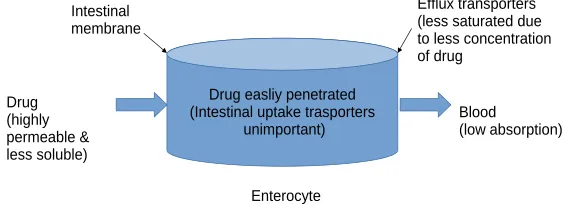
Figure 1: Schematic representation for BCS class 2 drug’s absorption mechanism
Largely New Molecular Entities Are Class 2 drug molecules
The high permeableness of these molecules let primed accession into the intestine membranes & uptake transporters won’t have any consequence on
its absorption. The reduced solubility will end the
concentrations approaching into the enterocytes, &
thus opposing efflux transporters’ impregnation in
intestine. Accordingly, efflux transporters impact the magnitude of oral bioavailability & the proportion of absorption for Class 2 drug molecules. Interaction of transporter & enzyme in the gut is crucial mainly for Class 2 drug molecules which are substrates of Drug easliy penetrated
(Intestinal uptake trasporters unimportant)
Enterocyte Intestinal
membrane
Drug (highly permeable & less soluble)
CYP3A & Phase 2 conjugation enzymes such as UDP-glucuronosyltransferases (UGTs) (39-41). It is likely that Class 4 compounds might be substrates for both absorptive and efflux transporters. But many times Class 4 compounds are not classified properly due to insufficient data about their in vivo behaviour due to transporter effects. After oral administration, noteworthy interactions will take place for Class 2 which is substrates equally for intestinal enzymes like CYP3A, UGTs as well as intestinal apical efflux transporters such as P-glycoprotein, MRP2, and BCRP whose simultaneous inhibition may give synergestic effect giving undesirable toxic reactions. Wu and Benet suggested that permeability part should b altered for route of elimination in facilitating the predictions in a Biopharmaceutics Drug Disposition Classification System (BDDCS) as only BCS class 1& 2 are metabolized to larger extent than BCS class 3&4 (38). The Biopharmaceutics Classification System (BCS) and the Biopharmaceutics Drug Disposition Classification System (BDDCS) are implements which go ahead of molecular structure along with judge together physical, chemical & biological character which bang drug absorption & disposition (8).
Pharmaceutical surfactants are capable of using as imitate for in vivo solubilization of poorly soluble drugs in micelle & emulsion systems. Thus, for predicting the in vivo performance of a dosage form for establishing IVIVCs, the in vitro outcomes can be utilizes as surrogated system (35).
Solid dispersion based drug delivery system Sekiguchi and Obi, first of all suggested the solid dispersion as a solubility enhancing method by the use of hydrophilic carriers for poorly aqueous soluble drug (42) Solid dispersion concept was then initiated to be used in the 1971 by Chiou and Riegelman who described the term to the researchers for the first time.
Chiou & Riegelman dicussed the word solid
dispersion like “the dispersion of one or more active
ingredients in an inert carrier matrix at solid-state
prepared by the melting (fusion), solvent or
melting-solvent method” (43).
Later, in 1985, Corrigan elaborated further about the
solid dispersion system as the ‘‘Product formed by
converting a fluid drug-carrier combination to the
solid state’’ (44).
Noyes (1997) and Nernst (1994) described the term
of solid dispersion as “a family of dosage forms whereby the drug is dispersed in a biologically inert matrix, usually with a view to enhancing oral
bioavailability” (45).
Benefits of solid dispersion are formation particles with decreased particle size possess larger surface area, consequent in an augmented dissolution rate leading to better bioavailability. The solid dispersion approache is advantageous than others because its simple to prepare, easy scale up, less stability constraints & is also economical (32).
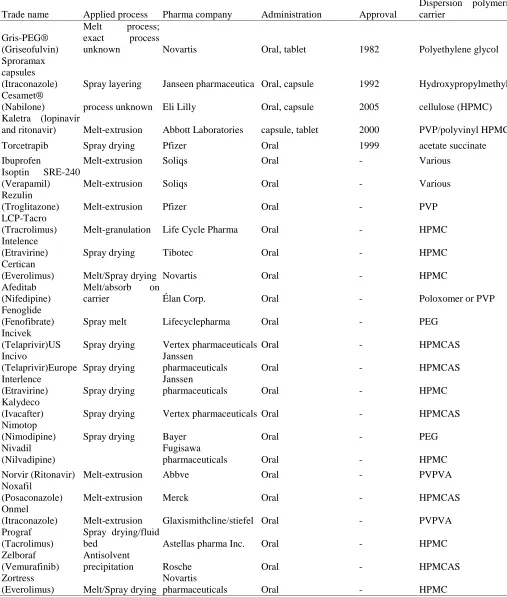
Solid dispersions are mainly prepared into oral solid dosage form due to prospective bigger moneymaking industry plus easy to manufacture & good stability. The various medicinal products on the market have been formulated using different technology platforms for generating nano-crystals and overview of which are provided in Table 1.
The various solid dispersed products in the marketplace have been developed utilizing various techniques for making solid dispersion a summary of are given in Table 1.
Work done on the in vitro & in vivo action of dispersed drug in polymeric matrix have displayed where it rendered biopharmaceutical benefit through augmenting dissolution rate (24), apparent solubility (25).
Enhancement of dissolution kinetics is explained by the well recognized Noyes-Whitney equation, whereas augmented apparent solubility is determined by using the Kelvin-Ostwald-Freundlich equation.
Table 1 Examples of Solid Dispersions on the market.
Trade name Applied process Pharma company Administration Approval
Dispersion polymeric carrier
Gris-PEG® (Griseofulvin)
Melt process; exact process
unknown Novartis Oral, tablet 1982 Polyethylene glycol
Sproramax capsules
(Itraconazole) Spray layering Janseen pharmaceutica Oral, capsule 1992 Hydroxypropylmethyl Cesamet®
(Nabilone) process unknown Eli Lilly Oral, capsule 2005 cellulose (HPMC)
Kaletra (lopinavir
and ritonavir) Melt-extrusion Abbott Laboratories capsule, tablet 2000 PVP/polyvinyl HPMC
Torcetrapib Spray drying Pfizer Oral 1999 acetate succinate
Ibuprofen Melt-extrusion Soliqs Oral - Various
Isoptin SRE-240
(Verapamil) Melt-extrusion Soliqs Oral - Various
Rezulin
(Troglitazone) Melt-extrusion Pfizer Oral - PVP
LCP-Tacro
(Tracrolimus) Melt-granulation Life Cycle Pharma Oral - HPMC
Intelence
(Etravirine) Spray drying Tibotec Oral - HPMC
Certican
(Everolimus) Melt/Spray drying Novartis Oral - HPMC
Afeditab (Nifedipine)
Melt/absorb on
carrier Élan Corp. Oral - Poloxomer or PVP
Fenoglide
(Fenofibrate) Spray melt Lifecyclepharma Oral - PEG
Incivek
(Telaprivir)US Spray drying Vertex pharmaceuticals Oral - HPMCAS
Incivo
(Telaprivir)Europe Spray drying
Janssen
pharmaceuticals Oral - HPMCAS
Interlence
(Etravirine) Spray drying
Janssen
pharmaceuticals Oral - HPMC
Kalydeco
(Ivacafter) Spray drying Vertex pharmaceuticals Oral - HPMCAS
Nimotop
(Nimodipine) Spray drying Bayer Oral - PEG
Nivadil (Nilvadipine)
Fugisawa
pharmaceuticals Oral - HPMC
Norvir (Ritonavir) Melt-extrusion Abbve Oral - PVPVA
Noxafil
(Posaconazole) Melt-extrusion Merck Oral - HPMCAS
Onmel
(Itraconazole) Melt-extrusion Glaxismithcline/stiefel Oral - PVPVA
Prograf (Tacrolimus)
Spray drying/fluid
bed Astellas pharma Inc. Oral - HPMC
Zelboraf (Vemurafinib)
Antisolvent
precipitation Rosche Oral - HPMCAS
Zortress
(Everolimus) Melt/Spray drying
Novartis
pharmaceuticals Oral - HPMC
Methods for preparing solid dispersions
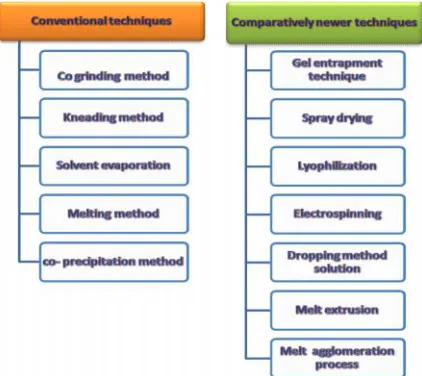
Methods for the preparing of solid dispersions can be broadly classified into conventional (older) and comparatively newer technique (using technological advancement). A roughly the methods can be classified for preparing of solid dispersions are depicted in Figure 2 (16, 23, 28).
Conventional methods
Different conventional methods are being utilized for preparing solid dispersions like melting, solvent or solvent evaporation technique where particle size reduction as well as improved wetting by polymer or better dispersibility of drug in carrier matrix is achieved leading to increased solubility and dissolution of poorly soluble drug.
Many conventional techniques like co-grinding, kneading method, solvent evaporation, melting or coprecipitation techniques have been utilized since the discovery of solid dispersion. The preparation of solid dispersion using melting/ fusion method was also studied in detail.
Drug & carrier are blended by mortar and pestle. For achieving a uniform dispersion the mixture is heated up at or preceding the melting point of every component in the system. It is then allowed to cool down for getting congealed mass which is later crushed & sieved (46).
While in solvent evaporation technique, both drug and polymer are dissolved in common organic solvent which is then evaporated to get solid mass. The obtained solid mass then crushed & sieved further (47).
The other much simpler techniques without using solvent or without using any heat energy are also prepared by simply grinding drug and polymer together using mortar and pestle or using ball mill in some cases. This simple co grinding also has shown to increase the solubility of poorly soluble drug in many studies done earlier (48). The solid dispersions are also produced using negligible amount of solvent in case of kneading technique where water is added in small quantity to make to paste like consistency. Drug is then incorporated into the paste & kneading is done for some time which is then dried & powder is made after passing it through sieve (49).
Comparatively newer techniques
In recent years there has been lot of technological advancement which is also reflected in the method of solid dispersion preparations. Many comparatively newer techniques are employed for getting better results, easy scale up as well as reducing time of manufacturing of products like gel entrapment technique, spray drying, lyophilization,
electrospinning, dropping method, melt extrusion, melt agglomeration technique.
In this method, drug is get entrapped in the gelling agent like Hydroxyl propyl methyl cellulose. HPMC is usually made soluble in organic solvent forming a transparent gel. Then drug is made soluble in gel by sonication or magnetic stirrer for some times. The solvent is made evaporated & dried mass then crushed & sieved (50). The advanced technique of conventional melting or fusion technique is melt extrusion method where use of newer technique like melt extruder (Hot) is generally being used. In this method, solid dispersions are generated by hot-stage extrusion using a co-rotating twin-screw extruder, concentration of drug in the dispersions is kept(40%w/w). It is used for preparing different dosage forms like sustained-release pellets etc. (51). There is one more variation of melting process i.e. melt agglomeration process which is usually used to prepare solid Dispersion in which binder is acting as carrier. They are produced through binder, excipient & drug mixed & heated together at a temperature over the melting point of binder otherwise through spraying a dispersal of drug in melted binder lying on the heated excipient by means of a higher shear mixer (52).
Ulrich in 1997 developed different kind of method for generating round shaped particles form molten mass of dispersed system. In lab practice, it is prepared by pippeting out the drop of molten mass of solid dispersion onto a plate that cooled down to rounding of particles. Thus, it provides simple approach plus enhancing the dissolution rate without using any organic solvent and eliminating drawbacks of solvent evaporated methods (53).
In the techniques that involves use of advanced technology like electrospinning prepares solid dispersion through combination of two techniques i.e. solid dispersion technique with nanotechnology. The solution of drug & polymer is subjected to a potential between 5 and 30 kV. When electrical forces predominate all over the surface tension of the drug/polymer mixture at the air interface, fibers of submicron diameters is generated. After evaporation of solvent, the prepared fibers could be gathered on a screen to give a nonwoven fabric, or they can be accumulated on a spinning rotating shaft (54). The much advanced and widely used for other industries as well is the lyophilization or freeze drying technique.
particles size of drug for solubility and dissolution enhancement is spray drying. Where the drug and polymer are made soluble in organic solvent & the
solvent is evaporated using atomization by spray dryer nozzele & immediate evaporation by hot air (56).
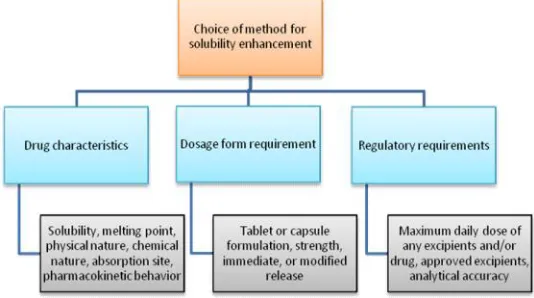
Figure 2: Division of solubility enhancing methods Solid dispersions on the market
Gris-PEG®, the first Solid dispersion product of Griseofulvin & Polyethylene glycol was made available in the market in 1982 prepared by means of the Melt process (57).
Afterwards, other products were made available in market as depicted in Table 1. The regular of the products are for oral administration. There are at present relatively a lot of therapeutic products by means of solid dispersions in later stage of clinical trial.
A dispersed system is defined as a mixed biphasic organization in which the inner phase is scattered inside the continuous phase (35). Dispersed systems are classified as suspensions and emulsions lying on the physical state of the component phase. A different categorization scheme is base on the dimension of the scattered particle inside the dispersal medium. The particle sizes of the dispersed phase vary noticeably range as of atomic/molecular size to >1µm. scattered system, base lying on size, are classify like molecular, colloidal or coarse dispersions.
Inhibition of crystalization in solid dispersion system
The means through which the solubility along with dissolution rate of the drug is enlarged are the particle dimension of the drug is shortened to submicron dimension otherwise in the direction of the molecular dimension in solid solution attainment by the system. The particle size decrease typically enhance the rate of dissolution also the transformed state as of crystal to amorphous which is the elevated free energy form
& thus very soluble and then at last the wettability of the drug is improved via the inert carrier.
Apart from of these capabilities, the appliance of solid dispersion in pharmaceutical production units has definite limits.
There are different forms of drugs existing like crystalline or amorphous form which differ in their internal arrangement as well as properties like solubility or dissolution.
The crystal types of a drug offer the benefit of elevated physical or else chemical immovability. Nevertheless, the lattice energy obstruction is a key limitation in the dissolution of crystal form of drug molecule.
The other formless state i.e. amorphous shows disorderliness in arrangement in contrast to crystal state. In addition, amorphous form have elevated free force (thermodynamic dynamic energy) giving the drug an elevated noticeable aqueous solubility (58). The amorphous drug addition to medium leads to rapid dissolution that looked like a peak that follows a decline in solubility caused by devitrification and is identified as “spring and parachute effect,” posing substantial challenge throughout dissolving process (59,60).
In the solid dispersion system, the amorphous form of the drug often tends to crystallize to attain lower energy state.
In the process of crystallization, primary stage formation of nuclei that taking place at a lesser heats furthermore, the subsequent movement is the crystal enlargement requiring elevated heat.
As for crystallization to start, supersaturated solution of drug is required along with energy of activation for overcoming the elevated interfacial tension among tiny particles.
In this supersaturated state of without nuclei is the metastable region where intelligent selection of carrier or polymer could enlarge this zone through raising in the level of supersaturating or lessening in interfacial energy (62).
Inhibition of crystalization
Polymers which are augmenting water solubility (through inhibition of the dissolved drug from precipitating) can hold back the nucleation rate via lessening the liberated drug molecule accessible for nuclei (31). Polymer also increases the viscosity of the system which may alter the frequency of atomic. By making the system more viscous, polymeric carriers also change the molecular transportation at nucleus plane (63).
Furthermore, polymeric carrier possesses adequately elevated configurationally large entropy owing to its intricated plus supple structure and high molecular weight as well as their capability of existing as many conformers which diminishing the likelihood of drug recrystallizing in the system because of lowering free energy (64).
It has been worked that when Plasdone S-630 used as polymeric carrier for solid dispersion preparation of efavirenz found to show antiplasticization by making system more viscous with diminishing the dispersal of drug molecule necessary to form crystal network (65). The polymeric carrier is undergoing the plasticizing effect & enhancing the Tg of the drug (66).
Before developing the solid dispersion formulation,
it’s imperative to approximate the appropriateness of a drug for preparing solid dispersion. Glass forming ability (GFA) along with vulnerability can give a qualitative guess of the propensity of a drug to go through devitrification moreover that illuminate its appropriateness, based on physical stability. GFA (inversely related to crystallising ability) & fragility might be measured as markers of existence anticipation of solid dispersion for long term storage (67,68).
Accordingly, polymers are preventing devitrification, in this manner maintaining the capability (soluble & stable form) of the high energy form in shelf
existence in the manufactured formulated system (69). Subsequent to drugs dispersion in the polymer matrix, numerous homonuclear & heteronuclear interactions take part in the system. It is estimated that for ideal mixing, drug have to be uniformly distributed in the polymeric carrier but mostly it is not the case (70, 71).
A stronger drug-polymer interaction is commonly favoured resulting in approving exothermic integration through augmented configurationally entropy state (72).
Mechanism between drug & polymeric carrier Subsequent to drugs dispersion in the polymer matrix, the drug molecules may interact with the polymer molecules through some weaker interactions like H-bond formation, van der Waals interaction, electrostatic force, ionic force, or else hydrophobic interactions (73).
These weaker forces existing between drug and polymers impart the stabilizing action for drug molecules through restriction of molecular mobility which are responsible for physical stability of the system (74, 75). This bond formation between drug and polymer has been performing imperative role for overall performance of drug and polymer in many reported studies (76).
There has been demonstrated role of steric consequence in restricting the mobility of drug particles by polymer. However, some polymers react stereo selectively whiles other not (77). In many reported studies H-bonding has been identified as the interactive force between drug and polymer leading to increase in solubility as well as maintaining the amorphous phase of drug through inhibition of molecular mobility (78). The other studied have also confirmed the formation of H-bonding between carbonyl group of drug and hydroxyl functional group of polymer using various characterization techniques (79).
Many polymers have been identified to show the reduction of molecular mobility or inhibiting the amorphous structure relaxing propencity by solid dispersion (80, 81). The concentration of polymer has also shown to affect the time of relaxation where increasing polymer concentration also increases the relaxation time & thus improving the stability of the system (82).
Mechanism of dissolution
the key knowledge of the dissolution process is indispensable. Consequently, importance is given in explaining few thoughts connected to the releasing activity of drug for development in the statement of a more than basic knowledge of the dissolution process & aiding in intelligent designing of the related dosage forms. There are presently, certain acknowledged possible mechanisms of increased dissolving processes are available.
Particle dimension diminution plus decreasing particles aggregate
It deals with uncovered effective surface area that is
increased by reducing the particle size of drug. It’s
been stated that particle size diminution is usually achieved in case of formation of eutectic or solid solution system which directs the relation between the types of solid dispersion system formation with releasing of the drug.
Particles are made available in dissolution media in isolated physical form and decreasing particles
aggregating to each other. The polymeric carrier’s
wetting property for the drug particles is also been stated as one mechanism for solubilization of drug.
Augmented solubility or release rate of the drug Different polymeric carriers also shown to enhance the solubility & in particularly cyclodextrins are shown to form solubilized complex of drug. Some forms of drug like high energetic amorphous form have shown to increase solubility of drug & dissolution.
But again there are two thought processes regarding the mechanism of dissolution explanation one was discussed by Corrigan (83,84) using dissolution enhancement by PEG as a carrier in contrast other explanation was given by Dubois and Ford (85) & in another study Craig and Newton (86) also explained the polymer controlled dissolution.
Corrigan (83) recommended that carrier-dominated dissolving can be explained using the conceptualization defined by Higuchi (87, 88) for dissolving binary system.
Both constituent after exposing to media their dissolution is dependent on respective solubilites & diffusion coefficients (D) in the dissolving solvent. But it is also stated that surface layer present at interface of dissolution frontal side and medium will have lower concentration of quickly liquifying element that crates loaded surface layer of one element through which diffusion of remaining component needs to be done to reach bulk solvent. It has been modeled & acknowledged that the dissolving rate of the minor element is generally ascertained through the constituent present in large
quantity & in many cases the drug is present as minor constituent.
And this dependence on % loading of components is contradicted by Dubois and Ford (1985) who found that for phenacetin drug (5% drug loading) & indomethacin (10% drug loading), the dissolution rate was dominated by carrier in the system and not on the % of drug loading. The logic given for this type of behaviour was that it may be because of difference in diffusion coefficient otherwise the dispersal difference of 2 drugs inside the polymer. However, this finding was then again questioned by Lloyd et al. (89, 90) that if carrier is dominating the process then changing the forms of drug physically really do not make any sense for rate of dissolution. For this the researcher assessed the dissolution of solid dispersions of paracetamol with PEG 6000 with various drug size fractions in the first formulation process as well as various preparing techniques for changing the physical forms of the paracetamol.
The study indicated that high drug release was obtained through the bigger size fraction binary
system but when they determined the drug’s
concentration at the dissolution surface, it was found that the solid dispersion had settled in solidification (cool down process) after melting.
Thus it was then corrected and study concluded that the dissolving rates were not dependent on preparation conditions or starting particle size. In another study (91) the dependence of dissolution rate on the particle size of griseofulvin was once again demonstrated. Later on the study undertakeen by other researchers (92) for finding association between
the solid state constitution, drug’s solubility &
dissolving rate for solid dispersions of para-aminobenzoates with PEG 6000 and found them relating linearly to each other with dissolution can be dominated by drug.
Thus, there seems to be different mechanism responsible for dissolution rate with higher drug load shown by Higuchi (87) & used by Corrigan (83) gave some idea. The two sets of mechanism i.e. drug controlled & carrier controlled dominance for dissolution rate was then later modelled by Craig informing about drug behaviour in the dissolving process. For that the author assumed that accumulated polymer (rich) layer at the dissolving surface (low drug loading) is present through which the drug is necessarily passing for going into the bulk medium. The two possibilities are considered drug dominated & carrier dominated rate of dissolution. For carrier dominated system, it was stated that drug dissolves quickly in polymer concentrated layer so
the time has become viscous decreasing the drug’s
diffusion in bulk medium. So, the polymeric release in bulk medium becomes the rate controlled step. For drug dominated system, it was explained that drug is diffusing slowly in polymeric layer & is discharging as intact solid particle which itself explains dependence of dissolution rate on physical properties of drug than that of polymer. For this type of behaviour of some drugs, reason stated was that inclination of the some drugs for dissolving into the polymer rich layer.
The log- linear relation between drug solubility in concentrated solution for cosolvent system was given by Yalkowsky (93) in 1972 but it’s still applicable for
many systems & explains that drug is highly soluble in polymer rich layer (viscous layer making slow diffusion) & polymer dominates the rate of dissolution.
Hence, it was concluded that dissolution depend on
the drug’s rate of dissolving in concentrated polymer layer which in turn depends on its solubility in it. The other aspect i.e.mechanical agitation present during dissolution process has to be given due attention because constant stirring is regulary changing the hydrodynamic layer around particles & increasing physical contact with dissolution medium leading to increased drug release.
Moreover, modifying the physical form of drug also changes dissolution through dissolution of drug in diffusional polymeric layer. In many systems, combinations of mechanism have also been explained where partial diffusion in polymeric layer along with releasing whole solid particle in medium may
involve. Craig’s model concluded that measuring drug’s solubility in polymeric solutions possibly
render a way of anticipating the dissolving mechanism (94).
This seems quite promising in area of solubility & dissolution rate understanding for rational design of drugs.
Now that in previous part we have seen the interactions between drug and polymer occurring
during preparation of solid dispersion, the other important mechanism responsible for dissolution has to be considered. In this, the interaction of drug-polymer against aqueous dissolution media is important (95). During process of dissolution, numerous diverse intricated processes arise concurrently (96). For amorphous system, the dissolution occurs by “spring and parachute”i.e. increase in solubility followed by sharp decrease. A super saturation (spring) phase is produced when at first dissolution of drug and polymer takes place, subsequently drug concentration decreases in the medium by absorption or else precipitation (parachute).
The drug first dissolves along with the soluble polymer matrix to generate a supersaturated solution (spring) followed by decline in drug concentration in the media due to either absorption or precipitation (parachute) (97). The particles may dissolve quickly producing a greatly super saturation phase that follows the creation of drug clustering (amorphous or crystal form) surrounded by the polymeric matrix. In other case, drug & polymer may be released gradually though drug present as amorphous in the undissolved particles. Thirdly, gradual release of the drug and polymer takes place where the drug may go through crystal formation mostly at the plane of undissolved solid dispersed particles owing to plasticization by water (61).
Mechanism of increased dissolution rate
The different mechanisms have been projected by quite a few of researchers in support of the augmentation of the dissolution rate by using solid dispersion. Molecular dispersion of drug in carrier matrix accomplishes higher particle size reduction that leads to increase in effective surface area available for dissolution. For breaking crystal lattice zero energy is required as drug is being made solvable by water soluble polymers which also increases it wettability in the process (98).
Factors for drug concentration at dissolution It is important to mention here that the free drug concentration in the dissolution media is dependent on the aqueous solubility of the crystalline or amorphous drug which in turn depends on many factors including, but not limited to, drug crystallization rate, drug-polymer interaction, and drug-polymer ratio.
The accomplishment dependent on the capability of the polymer to uphold supersaturated state to
sufficiently longer time with no precipitation for assisting drug absorption.
Mechanism for supersaturation by polymer The mechanism of how the polymer delays supersaturation is not completely understood and needs further research. However, as discussed previously, it is generally believed that drug-polymer interactions play a major rolein inhibiting crystallization either by interfering with the nucleation process or by inhibiting crystal growth.
Figure 4: Types of solid dispersion systems Types of solid dispersion systems
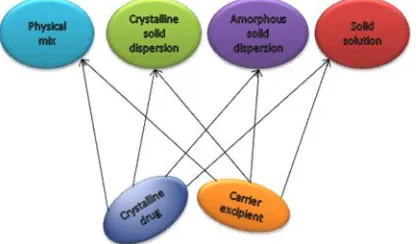
On the ground of the dispersion of the drug molecules in the carrier array, solid dispersions can be separated into different forms. The types of solid dispersion usually used are eutectic, solid solution, crystalline solution, amorphous.
As discovered by Chiou and Riegelman (1971), eutectic system is mixture of 2 components in a peculiar proportion generating a microfine dispersion of the two components amid a simultaneous reduction in melting point i.e. having a melting point that is in between the melting points of the single constituents (43). The eutectic mixture generally comes from melting the drug and carrier & latter cooling where carrier lowers the melting point of drug (99,100).
This has been a preferred rationalization for numerous systems, mostly due to DSC study which have repeatedly reported to give an idea about an eutectic melting point & a lowering of the melting points of the main components.
Conversely, a little watchfulness is requisite in this analysis for some reasons. Eutectic system is actually a mixture of microfine solid dispersions while some separate component may also present (101).
Certainly, in the process of cooling from melted system, the components are solidifying at different rates keeping the system richer in residual component till eutectic composition is attained where remaining liquor will harden as a fine dispersion. Thus while
interpreting the results it is essential to keep in mind the complex (mix) nature of eutectic system. The second issue is that PEG is used for several studies with molecular weight of 4000–20,000 and they suffer from one drawback that they exist as more than one crystalline forms with multiple melting points in the region of 55–65 °C (102, 103). The reason for dual meting point was given that it has chain folded forms (104).
Thirdly, it is arguably essential to compare the melting behavior of the solid dispersion to that of a physical mix of the drug and carrier, as many studies have indicated that the phase diagrams of the two systems may be extremely similar (42, 43).
The other possibility is that of formation of solid solution i.e. drug is dissolved in solid component (carrier)
Solid solutions are categorized as substitutional where solute molecule substitutes a solvent molecule, interstitial where solute molecule is existing in the openings & amorphous that has solute haphazardly scattered in an amorphous carrier.
Practically, mostly such systems are prone to demonstrate simply fractional miscibility, for this
reason the drug may only be in ‘solution’ at small
lowered or broadened which should be accompanied by XRD studies to check the crystallinity of drug. The drug is also present as dispersed form in glassy matrix. Such systems are formed with amorphous polymeric carrier like povidone and are most likely in a lot of systems of semicrystalline polymer like polyethylene glycol (105, 106).
Though the solid dispersion system appears to be simple chemically, but the nature of solid dispersed system presents many questions.
Solid dispersion is prepared by several methods that involve handling like combining carrier matrix with a drug rather on a molecular level. The carrier matrix & drug are in general immiscible that are made miscible using various solubility enhancing techniques. Solid dispersion illustrates an immense diversity describing state of the solid dispersion & the technique to fabricate them. Amongst current technique, solid dispersion (SD) is solitary of the accepted method to augment the solubility and dissolution rate of poorly aqueous soluble drug.
Figure 5: Mechanisms for solid dispersion in different solubility enhancing methods
Various types of the carriers used for solubilization
In solid dispersion technique the drug and polymer or inert carrier are made soluble in common solvent or melted together that changes drug’s particle size to micron level thus increasing effective surface area available for dissolution. The solubility of the drug is also increased by increased wetting by water soluble carrier as well as solubilization and better dispersion of drug by carrier. Hence, the use of carrier is
beneficial for improving solubility as well as dissolution of poorly soluble drug. For this purpose, various types of carriers are being used such as natural polymers, semi synthetic polymers or synthetic polymers. It has been reported that various carriers like PEG, PVP, HPMC, gelucires, eudragit, chitosan, sugars, urea, mannitol & cyclodextrins are utilized for solubility & dissolution improvement of poorly soluble drugs.
Solid dispersion technique has been successfully utilized for solubility & dissolution improvement of poorly soluble drugs such as nimesulide (107), Rofecoxib (108), Aripiprazole (109), glibenclamide (110), nifedipine (111), Curcumin (112,113),
Meloxicam (114), flunarizine (115), Dihydroartemisinin (116), hesperetin and naringenin (117), praziquantel (118), Tolbutamide (119), Felodipine (120).
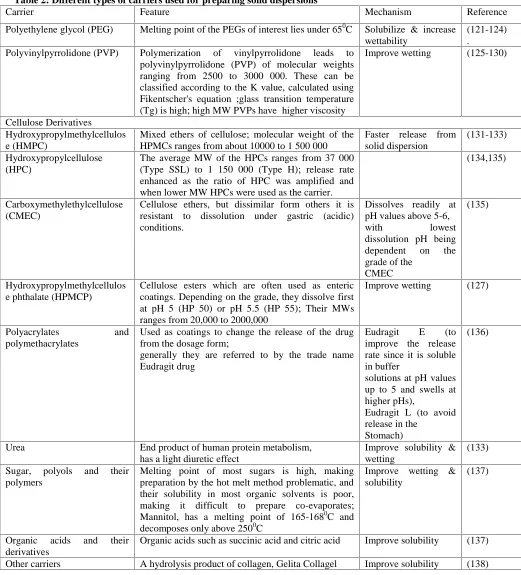
Table 2: Different types of carriers used for preparing solid dispersions
Carrier Feature Mechanism Reference
Polyethylene glycol (PEG) Melting point of the PEGs of interest lies under 650C Solubilize & increase wettability
(121-124) .
Polyvinylpyrrolidone (PVP) Polymerization of vinylpyrrolidone leads to polyvinylpyrrolidone (PVP) of molecular weights ranging from 2500 to 3000 000. These can be classified according to the K value, calculated using Fikentscher's equation ;glass transition temperature (Tg) is high; high MW PVPs have higher viscosity
Improve wetting (125-130)
Cellulose Derivatives
Hydroxypropylmethylcellulos e (HMPC)
Mixed ethers of cellulose; molecular weight of the HPMCs ranges from about 10000 to 1 500 000
Faster release from solid dispersion
(131-133)
Hydroxypropylcellulose (HPC)
The average MW of the HPCs ranges from 37 000 (Type SSL) to 1 150 000 (Type H); release rate enhanced as the ratio of HPC was amplified and when lower MW HPCs were used as the carrier.
(134,135)
Carboxymethylethylcellulose (CMEC)
Cellulose ethers, but dissimilar form others it is resistant to dissolution under gastric (acidic) conditions.
Dissolves readily at pH values above 5-6,
with lowest
dissolution pH being dependent on the grade of the
CMEC
(135)
Hydroxypropylmethylcellulos e phthalate (HPMCP)
Cellulose esters which are often used as enteric coatings. Depending on the grade, they dissolve first at pH 5 (HP 50) or pH 5.5 (HP 55); Their MWs ranges from 20,000 to 2000,000
Improve wetting (127)
Polyacrylates and
polymethacrylates
Used as coatings to change the release of the drug from the dosage form;
generally they are referred to by the trade name Eudragit drug
Eudragit E (to improve the release rate since it is soluble in buffer
solutions at pH values up to 5 and swells at higher pHs),
Eudragit L (to avoid release in the
Stomach)
(136)
Urea End product of human protein metabolism,
has a light diuretic effect
Improve solubility & wetting
(133)
Sugar, polyols and their polymers
Melting point of most sugars is high, making preparation by the hot melt method problematic, and their solubility in most organic solvents is poor, making it difficult to prepare co-evaporates; Mannitol, has a melting point of 165-1680C and decomposes only above 2500C
Improve wetting & solubility
(137)
Organic acids and their derivatives
Organic acids such as succinic acid and citric acid Improve solubility (137)
Comparative studies of different solubility enhancing methods & reasons behind difference In the recent times solubility is enhanced by using number of solid dispersion techniques such as. Physical mixing, kneading method, solvent evaporation, spray drying, microwave irradiation, melting technique, hot melt extrusion etc. But very few comparative studies are done with unified experimental settings for drawing useful information regarding reasons behind difference for particular class of drug. There should be protocol for particular class of drug.
The studies discovered that spray-dried powder go through little sorption at higher relative humidity with crystallization taking quickly as compared to the tantamount freeze-dried powder owing to varied crystallizing rates for freeze-dried & spray-dried amorphous lactose (139).
These findings proposed that spray-dried materials shows varied crystallizing activity in comparison to freeze-dried powders, signifying the consequence of change in process or preparation methods on the
material’s activity.
A fundamental inquiring in this procedure is to interpret the consequence of preparation condition on the crystallising activity, a number of studies have been conducted to examine the amorphous to crystal form transforming activity for powder storage at close to regular condition for lactose.
In case of spray drying many aspects has been studied in the formulation area. Study conducted by Chiou, & Langrish about finding the variable mainly affecting crystallzing property of final powder material & found that air inlet temperature is the responsible parameter for it (140).
In spray drying, During the SD process, liquid feed is atomized into hot air to produce dried particles exposing it to different stress like atomizing (shear) stress, hot air stress & removal of solvent. In the spray freeze drying process, a solution is added which undergoes atomization & in turn get frozen in liquid nitrogen & thus results in lyophilization. In this process material have different stresses like atomizing (shear), freezing & removal of solvent. It has been seen that many reported studies are restricted to in vitro studies for different techniques & have missed in vivo studies which refrains the meaningful comparisons between them. Thus there is strong need to have direct comparisons of various formulation approaches of solubility, dissolution rate as well as improvement in oral bioavailability. Munjal & coworkers had one such kind of comparison for various formulation approaches for the solubility as well as bioavailability enhancement of Curcumin using different formulation approaches in same lab settings & thus enabling direct
comparisons. They stated that solid dispersion of Curcumin with polyvinyl pyrrolidon creates amorphous dispersion where Curcumin is existing as
“molecularly dispersed” in polymer matrix & the
carrier was able to increase biological half-life & oral absorption of Curcumin by solid dispersion (141). HP-β-CD inclusion complex of Curcumin is was also found to increase its solubility and GIT stability due to complexation. These findings, and the comparison between the experimental data and the model predictions, suggest that the subsequent re-crystallization step is significant within the spray dryer itself (142).
These types of comparisons in single studies help in guiding & subsequently developing solid dispersions as well as minimizing time and cost involved in formulation development along with intelligent method & formulation selection.
Solid dispersions are stabilize system according to energy state obtained & so, the alternative of the preparation process has a major effect on the exterior morphology & on the complicated constitution of the drugs comparative to each other.
This is an effect of difference in the extent of disarray of the initial substance, power contribution, development duration; drug–carrier mixture along with formulation constituent’s extent of
responsiveness to the method borne pressure. Diverse preparative techniques could cause in diverse molecular relaxation period that resulting in diverse molecular mobility along with ultimate stability during storage (143).
Different works are being dedicated for analyzing consequences of preparation technique on the solid state characteristics, particle topology, moisture content, dissolution rate & oral absorption. Sugimoto used comparative study for solid dispersion of nifedipine- polyethylene glycol 6000-HPMC system using spray drying & co-grinding technique where co grinding found to show higher dissolution rate as compared to amorphous spray dried poweder. The logic given was that in spray drying the crystal lattice arrangement of the nifedipine is shattered by suspension in the feed solvent preceding to amorphous form creation while co-grinding is a gradual reduction procedure in which crystal organization is slowly exhausted owing to mechanical stress (144).
Another study compared the hydrocortisone–PVP ASD prepared by spray drying and freeze drying (146).
Rapid evaporated dispersed system generated amorphous particles (spherical particle) in spray drying while quick freezing in freeze drying creates asymmetrical & flake forms.
Solid dispersion prepared by spray drying exhibits a lesser surface area plus high moistures content as compared to sds prepared by freeze drying which
resulting in elevated hydrocortisone’s release as of
sd prepared by freeze drying (147).
Solvent evaporation & SCM for preparation of carbamazepine–PVP K30 solid dispersions were evaluated by either Gelucire 44/14 or Vitamin E TPGS & it was found that SCM exhibited elevated intrinsic dissolution rate for carbamazepine–PVP K30 solid dispersions but after addition of Gelucire 44/14 or TPGS small augmentation of dissolution was reported (148).
When solvent evaporation was compared with SCM by means of felodipine–HPMC-surfactant system then no distinction was observed in amorphicty where SCM displayed enhanced saturated solubility no other difference were found during dissolution studies (149).
For investigating the influence of the preparation technique on the surface exposure of the solid dispersed particles, the study was undertaken where, HPMC and PVP K30 were used as polymeric carriers & solid dispersions were formed through spray drying & rota-evaporation.Spray dried solid dispersions exhibited more surface expose than that prepared with gradually dried out rota-evaporation process leading to increased dissolution (150). Among all the techniques existing, spray drying & HME are generally utilized to the largest part on industrial scale.
HME is a solvent free method where drug polymer combination undergoes melting/fusion owing to collective outcome of the higher barrel temperature & mechanical stress engaged through the integrating screw elements & extruding across the die opening. Both methods are well-known on a manufacturing level, they are similar feasible option for producing solid dispersion. Though, some parameters are used express the preference between the developing techniques.
Those comprises of the drug characteristics like its solubility in the solvent or polymeric carrier, log P measure & decomposition temperature. Spray drying is having the benefit of being utilized for thermolabile as well as high melting drug also. Furthermore, in starting of formulation developmet, spray drying is first method of choice due to less quantity of drug to be used for the processing. The
uniformity of the solid dispersions produced using HME or spray drying is dependent on the process
variavles plus drug & carrier’s parameters. It’s been
found that HME exhibited high dynamic miscibility of miconazole & Kollicoat IR than that obtained with spray dried material (151).
Conversely, poorly soluble felodipine as solid dispersion showed better dissolution with PVP and HPMC-AS at various drug:polymeric proportions, where spray drying found to show better miscibility than HME product (152).
Spray dried product showed amorphicity at high drug load also in contrast to the HME dispersed produccts. Spray dried felodipine showed higher dissolution rate.
It is stated that as HME process needs an extra downstream step of extrudate milling which can be causative variable for amorphous solid dispersion to become destabilized.
Patterson & coworkers examined the effect of formulation technique on the physical, chemical properties of the glass solutions (solid dispersed systems) of poorly soluble drugs like carbamazepine, dipyridamole, & indomethacin using PVP K30 (153). Identical drug:polymer in proportion of 1:2 (w/w) was utilized for preparation methods like ball-milling, spray drying & HME. Tests acquired in these methods showed amorphicity & dis[layed only one respective Tg pointing towards its uniformity (miscibility). However, in dispersive Raman microscopy pointed towards the existence of carbamazepine agglomeration in the dispersed product formed using ball milling showing its uniformity. For steadiness of solid dispersions, the residual solvent quantity is a crucial parameter in spray dried products.
Conversely, HME products, spray dried felodipine–
PVP and felodipine– HPMC-AS dispersed systems showed unstablility after exposing them to 40°C/75% RH during 8 week period (153).
Analogous observance was noted for drug molecule X-PVP VA64 (1:2 w/w) dispersed product (154).
Other physical characteristics like powder’s density,
surface area, and topology & flow properties also showed differentiation (154). Final dosage form execution also gets affected by this differentiation. Antipyrine dispersed system was prepared using HPMC employing spray drying & rota-evaporation/milling.
The used methods produced particles of different sizes that exhibited assorted gelling activity.
Carriers
As discussed in earlier sections, carriers are crucial ingredients of the solid dispersion system. Its selection impacts micro level characteristics of dispersed system like drug–carrier miscibility, intermolecularly interacting phenomena and for example relaxation time related to the amorphous form. The other physical properties responsible for preparation of final dossage forms like flow properties etc are also affected by carrier selection for preparation of solid dispersion. Representative polymeric carrier properties like material constitution, molar weight, molar composition, solution/fusion viscosity, kinetic & thermodynamic property like solubility of peculiar drug molecule in a polymeric carrier, solubility in range of solvents, solubility characteristics, melt point, Tg & H-donor/acceptor number should be given due attention (156).
In regulative outlook, GRAS (Generally regarded as safe) position of the additive or excipient is vital. Founded on the constitution, solid dispersion may be separated into 4 generations with usage of particular polymeric carrier for them (157).
Crystalline foremost generation solid dispersion used urea & sugars such as sorbitol and mannitol. Following generation solid dispersion used amorphous polymeric carrier that has synthetic source like poly(vinylpyrrolidone) (PVP), polyethylene glycol (PEG), crospovidone (PVP-CL), poly(1- vinylpyrrolidone-co-vinyl acetate) (PVP VA), and polymethacrylates. Cellulose derivatives like hydroxypropyl methylcellulose (HPMC), hydroxypropylcellulose (HPC), hydroxypropyl methylcellulose phthalate (HPMCP), hydroxylpropyl methylcellulose acetate succinate (HPMC-AS) & another additives like starch (corn starch, potato starch) and sugar glass (trehalose, sucrose, inulin) are used.
Third generation carriers utilized for preparing solid dispersion are surfactants like Poly(ethylene glycol)-block-poly(propylene glycol)-block-poly(ethylene glycol) (poloxamer), glyceryl dibehenate (Compritol 888 ATO), lauroyl polyoxyl-32 glycerides (Gelucire), inulin lauryl carbamate (Inutec SP1) and polyvinyl caprolactam-polyvinyl acetate-polyethylene glycol graft copolymer (Soluplus). Fourth generation polymeric carriers used for solid dispersion used are ethyl cellulose, hydroxypropyl cellulose, Eudragit RL, Eudragit RS, poly (ethylene oxide) (PEO) and poly(acrylic acid) (carbopol) to get controlled released product. Pectin & chitosan are also utilized for solid dispersion preparation.
In latest times, the supersaturated state maintaining quality of carrier which includes the concentration & time period characteristics. And that's why supersaturation preservation prospective of the carrier is an important guiding feature in the carrier choice. The high absorption has been connected with holding up high concentration during dissolution that is above than the thermodynamic solubility in prepared formulation
Polymeric carriers could suppress precipitating
through adsorption onto the nuclei’s surface & impede crystal’s growing via steric stabilizing plus
blocking entree to the progressive surface (158, 159).
Inclusion complexation
Cyclodextrins are widely looked upon excipients for solubility as well as bioavailability enhancement purpose.
The inside part of cyclodextrin is comparatively lipophilic while the outside part is relatively hydrophilic.
They are capable of incorporating apolar unit or parts of drug to inner hydrophobic cavity hence drug is made soluble by inclusion complexation that results in improved stableness, advanced aqueous solubility, & improved bioavailability with weakened unwanted side effects (160-162).
Globally, initial CD-containing pharmaceutical product, prostaglandin E2/βCD (Prostarmon E™sublingual tablets), was made available in market
in Japan in 1976. Afterward, the primary European CD-based pharmaceutical product, piroxicam/βCD
(Brexin® tablets), was made available in market & in 1997, the primary US-approved product, itraconazole/2-hydroxypropyl-βCD oral solution
(Sporanox ®) was made accessible. Globally, 35 diverse drug molecules are at present available in market like solid or solution-based CD complex formulations.
Cyclodextrins
![Figure 3: Schematic demonstration of different ways of dissolution in different solid dispersion systems[Adapted from (15)]](https://thumb-us.123doks.com/thumbv2/123dok_us/1431411.1657007/11.612.76.363.556.684/figure-schematic-demonstration-different-dissolution-different-dispersion-adapted.webp)