SURFACE MODIFICATION OF TITANIUM DIOXIDE FOR
NOBEL WHITE PIGMENT WITH CONDENSED PHOSPHORIC
ACID TREATMENT
Hiroaki Onoda
[a]*and Aki Matsukura
[a]Keywords: Titanium dioxide; condensed phosphate; photocatalytic activity; particle size
Photocatalytically active titanium dioxide is used as a white pigment in cosmetics; however, it may promote a certain degree of sebum decomposition on the skin exposed to ultraviolet radiation (sunlight). In this work, titanium dioxide was shaken with various condensed phosphate solutions to synthesize a novel white pigment for cosmetic applications. Titanium dioxide particles were added to various solutions at a P/Ti molar ratio of 1:1, and then shaken in water at 80ºC for 1 h. The chemical composition, powder properties, photocatalytic activity, color phase, and smoothness of the produced powders were studied. The obtained materials exhibited the XRD peaks of titanium dioxide, although the peak intensities were weakened by the formation of a surface layer of titanium phosphate. These samples consisted of particles with sub-micrometer sizes, and the photocatalytic activity of the powders was reduced sufficiently to prevent the degradation of sebum on the skin. The suitable condensed phosphate for condensed phosphoric acid treatment of titanium oxide was sodium triphosphate from the whiteness and smoothness of powders.
* Corresponding Authors Fax: +81-75-703-5653 E-Mail: [email protected]
[a] Department of Informatics and Environmental Sciences, Kyoto Prefectural University, 1-5, Shimogamo Nakaragi-cyo, Sakyo-ku, Kyoto 606-8522, Japan
Introduction
Titanium dioxide is a widely used white pigment in cosmetic applications.1 TiO2 is well known to exhibit photocatalytic activity; therefore, photocatalytic decomposition of sebum on the skin exposed to ultraviolet radiation (sunlight) might occur. To suppress this effect, various technical processes have been investigated and applied. For example, composite particles of titanium dioxide and silicon oxide have been used.2 However, these particulate materials are too harsh for use on the human facial skin, and milder materials are required for application as a white pigment in cosmetics. Furthermore, microfine titanium dioxide has been reported to adsorb through the skin.3 Thus, a new white pigment without adsorption ability is required.
Phosphates have been used to modify the surface of ceramic materials, catalysts, adsorbents, fluorescent materials, dielectric substances, biomaterials, and metals, and have various other applications, including as fertilizers, detergents, and food additives, and in fuel cells and pigments.4,5 Phosphate materials are well known to have a high affinity for living organisms. Therefore, as components of novel white pigments, phosphates can be expected to have useful applications in cosmetics. Phosphates are easily transformed to condensed phosphates by hydrolysis and dehydration reactions at higher temperatures.6.7 Polyphosphates have a chain structure in which the PO4 unit shares two oxygen atoms. Formation of the condensed phosphates is affected by various conditions such as nature and ratio of the cations in the starting phosphate, the
reaction temperature, time, atmosphere, and so on.8-10 It is not as easy to obtain condensed phosphates in high yield, and their properties differs importantly from those of orthophosphates. The condensed phosphates are potential candidates to be used as novel functional materials.11
Small homogeneous particles in several hundred nanometer sizes are suitable for cosmetic applications might have a shortcoming, entering the pores in the skin.3 The optimum size of white pigment particles for use in cosmetics is difficult to determine because pore sizes are affected by not controllable factors such as age, gender, and climate. Furthermore, the use of overly large particles is inappropriate as it results in cracking of the coatings when applied to the skin. It is, therefore, important to control the particle size of pigments. In previous studies,12,13 titanium phosphates without photocatalytic activity with particle sizes larger than 10 µm were prepared from titanium chloride and titanium sulfate. Because these particles were too large, a better process is required to produce smaller white pigment particles. Our goal in this work was to obtain photocatalytically inactive white pigment particles with sub-micrometer sizes, and we, therefore, aimed to produce titanium dioxide particles with titanium phosphate coatings.
In this work, titanium dioxide was shaken with various condensed phosphoric acids. The chemical composition and other important properties such as size, photocatalytic activity, color and smoothness of the precipitates and their thermally treated products were studied with a view to their application possibilities in cosmetics.
Experimental
orthophosphates. Therefore, in our present work, sodium pyrophosphate and sodium triphosphate were synthesized from sodium dihydrogen phosphate and disodium hydrogen phosphate raw materials. Sodium pyrophosphate, Na4P2O7, was synthesized in a known way by heating disodium hydrogen phosphate (Na2HPO4) at 400 ºC for 5 h.14 In order to synthesize sodium triphosphate (Na5P3O10) a mixture of disodium hydrogen phosphate (Na2HPO4) and sodium di-hydrogen phosphate (NaH2PO4) with a Na2HPO4/NaH2PO4 ratio of 2/1 was heated at 400 ºC for 5 h.15 These condensed phosphates were formed according to the following equations:
2Na2HPO4 → Na4P2O7 + H2O (1)
2Na2HPO4 + NaH2PO4 → Na5P3O10 + 2H2O (2)
Sodium polyphosphate, NaPO3, was synthesized by heating sodium dihydrogen phosphate, NaH2PO4 at 700ºC for 2 h, with subsequent quenching. The sodium polyphosphate is known as inorganic phosphate polymer with ca. polymerization degree of 110.16
NaH2PO4 →NaPO3 + H2O (3)
Various sodium condensed phosphate solutions (phosphorus; 0.1 mol L-1) were prepared with sodium pyrophosphate (Na4P2O7), triphosphate (Na5P3O10), and polyphosphate (NaPO3). Pyrophosphoric acid (H4P2O7, phosphorus; 0.1 mol L-1), triphosphoric acid (H5P3O10, phosphorus; 0.1 mol L-1), and polyphosphoric acid (HPO3, phosphorus; 0.05 mol L-1) were prepared with cation exchange resin (DOWEX TM 50WX8, 100-200 mesh) and each condensed phosphate. Because sodium polyphosphate had low solubility, phosphorus - 0.1 mol L-1 of polyphos-phoric acid was not obtained.
Titanium dioxide was added to 50 mL of the above phosphate or phosphoric acid solution at a P/Ti molar ratio of 1:1 in a glass tube, which was then shaken in water at 80 ºC for 1 h (rate of shaking; 100 min-1). The powder samples were decanted, washed with water, and dried at 50 ºC for about 1 week. All chemicals were of commercial purity (Wako Chemical Industries Ltd., Osaka, Japan) and were used without further purification.
The crystalline phase compositions of these materials were analyzed using X-ray diffraction (XRD, MiniFlex; Rigaku Corp., Akishima, Japan) using monochromatic CuKα radiation. The samples were heat treated at 100 ºC in air for 1 h in an electric furnace to remove any adsorbed water, and the thermally treated products were analyzed by XRD and X-ray photoelectron spectroscopy (XPS, JPS-9010; JEOL, Akishima, Japan).
Scanning electron microscopy (SEM, JSM-5510LV; JEOL, Akishima, Japan) images were used to assess the particle shapes and sizes in the materials produced by phosphoric acid treatment and in the products obtained after thermal treatment at 100°C. The particle size distributions of the synthesized materials were measured in a usual way
using a centrifugal precipitation with a particle size distribution analyzer (SA-CP3L, Shimadzu Corp., Kyoto, Japan).
The cosmetic properties of the products were assessed according to their photocatalytic activity, color phase, and smoothness. The photocatalytic activities of the samples were estimated from the decomposition of methylene blue under 365 nm irradiation.17,18 Each sample (0.01 g) was placed in a solution of methylene blue (4 mL, 1.0 × 10⁻⁵ mol L-1), and then irradiated (Compact UV Lamp P/N 95-0021-13). The decrease of the absorption at about 660 nm was estimated after 20, 40, 60, 80, 100, and 120 min. The color of phosphate pigments was estimated from the ultraviolet– visible (UV–Vis) reflectance spectra (UV2100; Shimadzu Corp., Kyoto, Japan) (reference compound: BaSO4). The whiteness of the pigments was also estimated with a TES135 plus color analyzer (TES Electrical Electronic Corp, Taipei, Taiwan). The particle smoothness was measured on artificial leather with a KES-SE objective friction analyzer to evaluate the surface friction properties (Kato Tech Co. Ltd., Kyoto, Japan). The sample powders were spread on the leather, and then a sensor was run over the powders. The MIU and MMD values were calculated, respectively, from the power to move the sensor and the pitching of the sensor. The MIU and MMD values represent the slipping resistance (coefficient of kinetic friction) and roughness of powders (dispersion of the coefficient of kinetic friction), respectively. These parameters are unitless because they are related to the coefficients of friction and scattering, respectively.
Results and discussion
Chemical composition and powder properties of precipitates
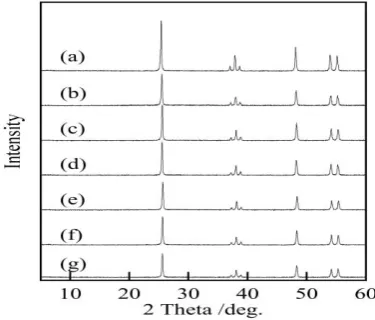
Figure 1 presents the XRD patterns of the samples treated with various condensed phosphoric acids and then heated at 100 ºC. Each of the treated samples retained the peak pattern observed for untreated titanium dioxide, although the peak intensities were weakened by the condensed phosphoric acid treatment. This reduction in peak intensity results from the reaction of titanium dioxide on the surface of the particles with condensed phosphoric acid to form titanium phosphate.
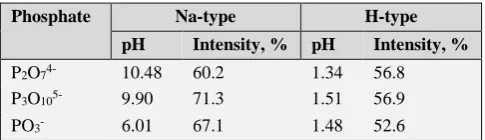
Table 1. pH of treatment solution and ratios of XRD peak intensities of samples treated with various condensed phosphoric acids for 1 h, and then heated at 100ºC for 1 h
Phosphate Na-type H-type pH Intensity, % pH Intensity, %
P2O74- 10.48 60.2 1.34 56.8 P3O105- 9.90 71.3 1.51 56.9 PO3- 6.01 67.1 1.48 52.6
Figure 1. XRD patterns of the samples treated with various condensed phosphoric acids for 1 h and then heated at 100 ºC for 1 h; (a) original TiO2, (b) Na4P2O7, (c) Na5P3O10, (d) NaPO3, (e) H4P2O7, (f) H5P3O10, and (g) HPO3.
Figure 2. XPS spectra of the samples treated with various condensed phosphoric acids for 1 h, and then heated at 100 ºC for 1 h; (a) original TiO2, (b) NaPO3, (c) H4P2O7, (d) H5P3O10, (e) HPO3, and (f) NaHPO4.
A value of “100 %” indicates that the intensity of the titanium dioxide peak was unchanged by the condensed phosphoric acid treatment, whereas a lower value indicates a reaction between titanium dioxide and condensed phosphoric acid. The treatment solutions prepared with cation exchange resin indicated lower pH values. Samples treated with the cation exchange resin had the lower intensity ratio of XRD peak, much reacted with condensed phosphoric acid. Titanium dioxide was easy to react with the condensed phosphoric acid at lower pH values. This is corresponding with the orthophosphoric acid treatment in previous work.19
Figure 2 shows the XPS spectra of the samples treated with various condensed phosphoric acids. The peak at a binding energy of ~133 eV can be attributed to P2p electrons. The spectrum of untreated titanium dioxide showed no peak in this region, whereas the spectrum of NaH2PO4 displayed a strong peak (Fig. 2a, 2f). The distinct peak at ~133 eV in the treated samples (Fig. 2b-2e) demonstrated that the samples
treated with condensed phosphoric acid contain phosphorus. The XPS results supported the formation of titanium phosphate in the form of titanium dioxide particles with a titanium phosphate coating.
Figure 3. SEM images of the samples treated with various condensed phosphoric acids for 1 h, and then heated at 100 ºC for 1 h; (a) Na4P2O7, (b) Na5P3O10, (c) NaPO3, (d) H4P2O7, (e) H5P3O10, and (f) HPO3.
Regarding particle shape, spherical particles are desirable for cosmetic applications. Figure 3 displays SEM images of the samples prepared by condensed phosphoric acid treatment and then heated at 100 ºC. None of the samples had particles with well-defined shapes, and the particles formed aggregates that were larger than 10 µm. Figure 4 presents the particle size distributions of the treated samples and then heated at 100 ºC. Because all the samples contained particles smaller than 1 µm, the aggregates observed in the SEM images dispersed by stirring before the particle size distribution measurement. The untreated titanium dioxide sample had a maximum ratio at 0.4 µm. However, the samples treated with condensed phosphoric acid had a maximum ratio at 0.3 µm, demonstrating that the average particle size was reduced by the condensed phosphoric acid treatment. Pigments with average sizes in the sub-micrometer range are used for cosmetics. Therefore, based on particle size, all the samples are suitable as pigments in cosmetics.
Cosmetic properties of samples
Figure 5 shows the photocatalytic activity of the samples prepared by treatment with various condensed phosphoric acid and heated to 100°C. Under UV irradiation, titanium dioxide photocatalyzes the decomposition of methylene blue (Fig. 5b). This photocatalytic activity of titanium dioxide was inhibited by the condensed phosphoric acid treatment (Fig. 5c–5g). Because the solution with NaPO3 became clouded, the photocatalytic activity of NaPO3 could not be estimated. Titanium phosphate, which is the expected product of the phosphoric acid treatment on the surface of the particles, has been shown to possess no photocatalytic activity [12,13]. Thus, it can be assumed that the formation of titanium phosphate on the surface of the titanium dioxide particles causes the suppressed photocatalytic activity. The suitable condensed phosphate was not clear from the photocatalytic activity because the difference between the kinds of condensed phosphates was small.
Figure 5. Photocatalytic activity of the samples treated with various condensed phosphoric acids for 1 h, and then heated at 100 ºC for 1 h; (a) blank, (b) original TiO2, (c) Na4P2O7, (d) Na5P3O10, (e) H4P2O7, (f) H5P3O10, and (g) HPO3.
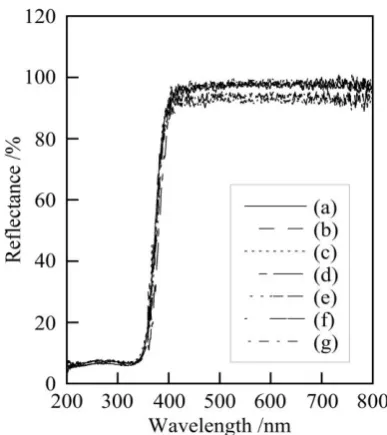
Figure 6. UV–Vis reflectance spectra of the samples treated with various condensed phosphoric acids for 1 h, and then heated at 100 ºC for 1 h; (a) original TiO2, (b) Na4P2O7, (c) Na5P3O10, (d) NaPO3, (e) H4P2O7, (f) H5P3O10, and (g) HPO3.
Table 2. Whiteness of samples treated with various condensed phosphoric acids for 1 h and then heated at 100 ºC for 1 h (original TiO2; 95.96)
Phosphate Na-type H-type
P2O74- 97.59 95.26 P3O105- 99.33 96.85
PO3- 97.20 97.31
Figure 6 shows the UV–Vis reflectance spectra of the samples prepared by treatment with condensed phosphoric acids. All the samples prepared in this study displayed high reflectance in the visible light range. Samples prepared with cation exchange resin indicated lower reflectance than those without that. The absorbance in the ultraviolet region had little change by condensed phosphoric acid treatment. The color of the sample powders was also estimated using the L*a*b* color space. Table 2 shows the whiteness of the samples prepared under various conditions, as given by the L* values. All the samples showed L* values greater than 95; therefore, these materials are suitable as white pigments. These results are consistent with the UV–Vis reflectance measurements described above.
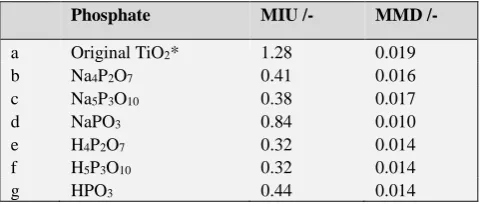
Table 3. Smoothness of samples treated with various condensed phosphoric acids for 1 h and then heated at 100 ºC for 1 h
Phosphate MIU /- MMD /-
a Original TiO2* 1.28 0.019 b Na4P2O7 0.41 0.016 c Na5P3O10 0.38 0.017
d NaPO3 0.84 0.010
e H4P2O7 0.32 0.014 f H5P3O10 0.32 0.014
g HPO3 0.44 0.014
*; without treatment.
Conclusion
Titanium dioxide was shaken in various condensed phosphoric acids. The obtained materials retained the XRD peaks of titanium dioxide, although the peak intensities were weakened by the condensed phosphoric acid treatment. All the samples treated with condensed phosphoric acid had particles with sub-micrometer sizes. The photocatalytic activity of samples was reduced by the condensed phosphoric acid treatment. The suitable condensed phosphate for condensed phosphoric acid treatment of titanium oxide was sodium triphosphate from the whiteness and smoothness of powders.
Acknowledgements
The authors are grateful to Dr. Takeshi Toyama, Nihon University, Japan for the smoothness measurements. The authors also thank Dr. Nobuyuki Takeuchi, Kyoto Institute of Technology, Japan for the measurements of the X-ray photoelectron spectra.
References
1Samontha, A., Shiowatana, J., Siripinyanoud, A., Anal. Bioanal.
Chem., 2011, 399, 973-978. https://doi.org/10.1007/s00216-010-4298-z
2Nohynek, G. J., Dufour, E. K., Arch. Toxicol., 2012, 86, 1063-1075. https://doi.org/10.1007/s00204-012-0831-5
3Crosera, M., Prodi, A., Mauro, M., Pelin, M., Florio, C., Bellomo, F., Apostoli, G., Palma, G. D., Bovenzi, M., Campanini, M., Filon, F. L., Int. J. Environ. Res. Public Health, 2015, 12, 9282-9297. https://doi.org/10.3390/ijerph120809282
4Weng, W., Otaibi, R. A., Alhumaimess, M., Conte, M., Bartley, J. K., Dummer, N. F., Hutchings, G. J., Kiely, C. J., J. Mater.
Chem., 2011, 21(40), 16136-16146.
https://doi.org/10.1039/c1jm12456k
5Zhou, X., Bai, H., Ma, H., Li, H., Yuan, W., Du, H., Zhang, P., Xin, H., Mater. Character., 2015, 108, 22-28.
https://doi.org/10.1016/j.matchar.2015.08.012
6Averbuch-Pouchat, M. T., Durif, A., Topics in Phosphate
Chemistry, World Scientific Publishing Co. Pte. Ltd., Singapore, 1996.
7Hammas, I., Horchani-Naifer, K., Ferid, M., J. Rare Earths, 2010,
28(3), 321-328.
https://doi.org/10.1016/S1002-0721(09)60106-X
8Raynaud, S., Champion, E., Bernache-Assollant, D., Thomas, P.,
Biomater.,2002, 23(4), 1065-1072.
https://doi.org/10.1016/S0142-9612(01)00220-4
9Boonchom, B., Danvirutai, C., Maensiri, S., Mater. Chem. Phys.,
2008, 109(2-3), 404-410.
https://doi.org/10.1016/j.matchemphys.2007.12.018
10Rathan, S. V., Govindaraj, G., Solid State Sci., 2010, 12(5), 730-735. https://doi.org/10.1016/j.solidstatesciences.2010.02.030
11Onoda, H., Nariai, H., Moriwaki, A., Maki, H., Motooka, I., J.
Mater. Chem., 2002, 12(6), 1754-1760.
https://doi.org/10.1039/b110121h
12Onoda, H., Yamaguchi, T., J. Mater. Chem., 2012, 22(37), 19826-19830. https://doi.org/10.1039/c2jm33952h
13Onoda, H., Fujikado, S., Toyama, T., J. Adv. Ceram., 2014, 3(2), 132-136. https://doi.org/10.1007/s40145-014-0103-3
14Onoda, H., Yamaguchi, T., J. Adv. Ceram., 2014, 3(4), 326-331.
https://doi.org/10.1007/s40145-014-0124-y
15Onoda H., Yamaguchi T., Advances Mater. Chem. Phys., 2013,
3(1), 1-6. https://doi.org/10.4236/ampc.2013.31001
16Miyajima, T., Maki, H., Kodaka, H., Ishiguro, S., Nariai, H., Motooka, I., Phosphorus Res. Bull., 1996, 6, 281-284.
https://doi.org/10.3363/prb1992.6.0_281
17Eskizeybek, V., Sari, F., Gülce, H., Gülce, A., Avci, A., Appl.
Catal. B, 2012, 119-120, 197-206.
https://doi.org/10.1016/j.apcatb.2012.02.034
18Lin, B., Li, X., Xu, B., Chen, Y., Gao, B., Fan, X., Microp.
Mesop. Mater., 2012, 155, 16-23.
https://doi.org/10.1016/j.micromeso.2012.01.009
19Onoda, H., Matsukura, A., Mater. Res. Bull., 2015, 66, 151-155.
https://doi.org/10.1016/j.materresbull.2015.02.052
20Xianjuan, L., Haiquan, X., Jing, C., Juncai, S., Yuxiang, Y., Xiangnong L., Glass Phys. Chem., 2011, 37(3), 330-342.
https://doi.org/10.1134/S1087659611030084