International Journal of Emerging Technology and Advanced Engineering
Website: www.ijetae.com (ISSN 2250-2459, ISO 9001:2008 Certified Journal, Volume 9, Issue 2, February 2019)
43
Adaptive Beamforming Algorithm Using Smart Antenna for
Mobile Communication
Yojna Chourasia
1, Prof. Prabhat sharma
21MTech Scholar, 2Associate Professor,Department of Electronics and Communication, OIST Engineering College, Bhopal (M.P.), India
Abstract—The selection of smart antenna framework is a
guarantee to the arrangements of the remote correspondence debilitations like wasteful use of recurrence range, week signal due to multipath engendering, and so on. The keen reception apparatus works in conjunction with advanced flag processor which is dependable to modify different parameters of the framework keeping in mind the end goal to eliminate obstruction signals and to upgrade gathering in the coveted direction(s). In this paper, an endeavor is made to create different adaptive beamforming calculations that prompt general change in the execution of the smart antenna.
Keywords—Beamforming, smart antenna, Adaptive.
I. INTRODUCTION
Smart antennas otherwise called versatile exhibit radio wires, computerized reception apparatus clusters, numerous receiving wires and, as of late, MIMO) are reception apparatus clusters with savvy flag preparing calculations used to distinguish spatial flag marks, for example, the course of landing (DOA) of the flag, and utilize them to ascertain beamforming vectors which are utilized to track and find the reception apparatus shaft on the portable/target. Keen receiving wires ought not be mistaken for reconfigurable reception apparatuses, which have comparable abilities yet are single component radio wires and not radio wire clusters.
[image:1.612.340.543.232.384.2]Brilliant reception apparatus methods are utilized strikingly in acoustic flag preparing, track and sweep radar, radio space science and radio telescopes, and for the most part in cell frameworks like W-CDMA, UMTS, and LTE. Brilliant radio wires have numerous capacities: DOA estimation, beamforming, obstruction nulling, and steady modulus conservation. The brilliant radio wire framework gauges the course of landing of the flag, utilizing systems, for example, MUSIC (Different Flag Arrangement), estimation of flag parameters through rotational invariance strategies (ESPRIT) calculations, Lattice Pencil technique or one of their subsidiaries. They include finding a spatial range of the receiving wire/sensor cluster, and computing the DOA from the pinnacles of this range.
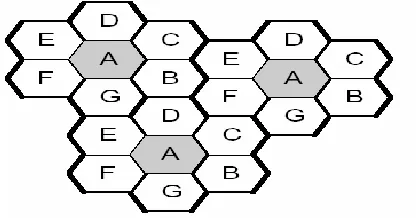
Figure 1: Part of a series on Antennas
Smart antenna apparatus frameworks are likewise a characterizing normal for MIMO frameworks , for example, the IEEE 802.11n standard. Traditionally, a smart antenna radio wire is a unit of a remote correspondence framework and performs spatial flag handling with various receiving wires. Numerous radio wires can be utilized at either the transmitter or recipient. As of late, the innovation has been reached out to utilize the various reception apparatuses at both the transmitter and beneficiary; such a framework is known as a different info numerous yield (MIMO) framework.
[image:1.612.339.548.541.650.2]International Journal of Emerging Technology and Advanced Engineering
Website: www.ijetae.com (ISSN 2250-2459, ISO 9001:2008 Certified Journal, Volume 9, Issue 2, February 2019)
44 II. BACKGROUND
The first smart antennas were created for military
correspondences and knowledge gathering. The
development of cell phone in the 1980s pulled in enthusiasm for business applications. The move up to advanced radio innovation in the cell phone, indoor remote system, and satellite telecom ventures made new open doors for brilliant receiving wires in the 1990s, finishing in the improvement of the MIMO (various info different yield) innovation utilized as a part of 4G remote systems.
These are radio wire exhibits with multi channels computerized beamforming, as a rule by utilizing FFT.
The hypothesis of the 'computerized radio wire exhibits' (DAA) began to rise as a hypothesis of multichannel estimation. Its starting points return into strategies created in the 1920s that were utilized to decide heading of the entry of radio flags by an arrangement of two receiving wires in light of the stage contrast or amplitudes of their yield voltages. In this manner, the evaluation of the headings of landing of a solitary flag was led by pointedtype marker readings or as indicated by the Lissajous bends, drawn by pillar on the oscilloscope screen.
III. PROBLEM FORMULATION
Smart-antenna transceivers are substantially more unpredictable than customary base-station handsets. The reception apparatus exhibit needs isolate handset chains for every radio wire component in the cluster, and precise ongoing adjustment for every one of them. In addition, the receiving wire bar shaping is computationally escalated, which implies that savvy reception apparatus base stations must be outfitted with great advanced flag processors. This tends to expand the framework costs for the time being; be that as it may, since the advantages exceed the costs, it will be less expensive over the long haul.
For a smart receiving wire to have a sensible pick up, a variety of reception apparatus components is fundamental. Subsequently, this implies a direct exhibit comprising of 10 components with a between component dividing of λ/2, working at 2 GHz, would be around 70 cm wide. This may posture issues, because of the developing open interest for less-noticeable base stations.
IV. ARCHITECTURE OF SMART ANTENNA SYSTEM
Frequency reconfigurable reception apparatuses can change progressively their recurrence of activity.
They are especially valuable in circumstances where a few interchanges frameworks merge in light of the fact that the different radio wires required can be supplanted by a
solitary reconfigurable recieving wire. Recurrence
reconfiguration is for the most part accomplished by adjusting physically or electrically the reception apparatus measurements utilizing RF-switches, impedance stacking or tunable materials.
Radiation pattern reconfiguration
Radiation design reconfigurability depends on the purposeful adjustment of the round appropriation of radiation design. Pillar controlling is the most broadened application and comprises in guiding the bearing of greatest radiation to expand the reception apparatus pick up in a connection with cell phones. Example reconfigurable reception apparatuses are generally composed utilizing mobile/rotatable structures or including switchable and responsively stacked parasitic components.. In most recent 10 years, metamaterial-based reconfigurable radio wires have picked up consideration due their little shape factor, wide bar directing reach and remote applications.
Polarization reconfiguration
Polarization reconfigurable recieving wires are fit for exchanging between various polarization modes. The capacity of exchanging between level, vertical and roundabout polarizations can be utilized to lessen polarization crisscross misfortunes in versatile gadgets. Polarization reconfigurability can be given by changing the harmony between the distinctive methods of a multimode structure.
Compound reconfiguration
Compound reconfiguration is the ability of at the same time tuning a few reception apparatus parameters, for example recurrence and radiation design. The most widely recognized utilization of compound reconfiguration is the mix of recurrence readiness and pillar checking to give enhanced ghostly efficiencies. Compound reconfigurability is accomplished by joining in a similar structure diverse
single-parameter reconfiguration procedures or by
reshaping progressively a pixel surface.
V. ADAPTIVE ANTENNA APPROACH
The versatile radio wire frameworks approach
International Journal of Emerging Technology and Advanced Engineering
Website: www.ijetae.com (ISSN 2250-2459, ISO 9001:2008 Certified Journal, Volume 9, Issue 2, February 2019)
45 By acclimating to a RF situation as it changes (or the spatial cause of signs), versatile radio wire innovation can progressively modify the flag examples to close endlessness to advance the execution of the remote framework.
Versatile exhibits use modern flag handling calculations to ceaselessly recognize wanted signs, multipath, and meddling signs and in addition ascertain their bearings of entry. This approach consistently refreshes its transmit methodology in view of changes in both the coveted and meddling sign areas. The capacity to track clients easily with primary flaps and interferers with nulls guarantees that the connection spending plan is continually augmented in light of the fact that there are neither miniaturized scale parts nor predefined designs.
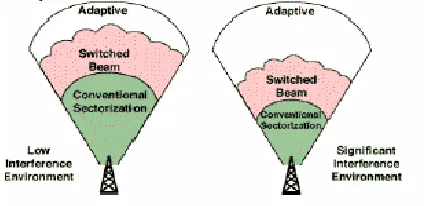
[image:3.612.61.273.440.543.2]Figure 3 shows the relative scope territory for ordinary sectorized, exchanged shaft, and versatile recieving wire frameworks . The two kinds of keen reception apparatus frameworks give critical increases over ordinary sectored frameworks. The low level of impedance on the left speaks to another remote framework with bring down infiltration levels. The huge level of impedance on the privilege speaks to either a remote framework with more clients or one utilizing more forceful recurrence reuse designs. In this situation, the obstruction dismissal capacity of the versatile framework gives fundamentally more scope than either the regular or exchanged pillar framework.
Figure 3: Coverage Patterns for Switched Beam and Adaptive Array Antennas
Relative Advantages/Tradeoffs of Exchanged Shaft and Versatile Exhibit Frameworks integration─ Exchanged pillar frameworks are customarily intended to retrofit generally sent cell frameworks. It has been generally actualized as an extra or appliqué innovation that brilliantly tends to the requirements of develop systems.
[image:3.612.348.554.450.587.2]In correlation, versatile cluster frameworks have been conveyed with an all the more completely incorporated approach that offers less equipment repetition than exchanged shaft frameworks however requires new form out. extend/coverage─ Exchanged shaft frameworks can build base station go from 20 to percent over ordinary sectored cells, contingent upon ecological conditions and the equipment/programming utilized. The additional scope can spare an administrator generous foundation expenses and means bring down costs for purchasers. Likewise, the dynamic changing from pillar to shaft monitors limit in light of the fact that the framework does not send all signs every which way. In correlation, versatile exhibit frameworks can cover a more extensive, more uniform zone with a similar power levels as an exchanged pillar framework. Exchanged pillar arrangements work best in insignificant to direct co channel impedance and experience issues in recognizing a coveted flag and an interferer. In the event that the meddling sign is at roughly the focal point of the chose shaft, and the client is far from the focal point of the chose pillar, the meddling sign can be improved significantly more than the coveted flag. In these cases, the quality is debased for the client. Versatile cluster innovation at present offers more thorough obstruction dismissal. Additionally, in light of the fact that it transmits a vast, as opposed to limited, number of mixes, its smaller concentration makes less impedance to neighboring clients than an exchanged bar approach.
Fig.4: Beam forming Lobes and Nulls that Switched Beam (Red) and Adaptive Array (Blue)
International Journal of Emerging Technology and Advanced Engineering
Website: www.ijetae.com (ISSN 2250-2459, ISO 9001:2008 Certified Journal, Volume 9, Issue 2, February 2019)
46 At the point when the portable client enters a specific large scale part, the exchanged pillar framework chooses the miniaturized scale segment containing the most grounded flag.
A. spatial division numerous entrance (SDMA)—
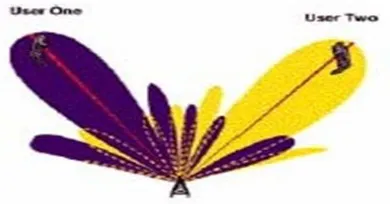
[image:4.612.331.554.107.451.2]Among the most refined uses of brilliant recieving wire innovation is SDMA, which utilizes propelled preparing systems to, basically, find and track settled or portable terminals, adaptively directing transmission signals toward clients and far from interferers. This versatile exhibit innovation accomplishes prevalent levels of obstruction concealment, making conceivable more proficient reuse of frequencies than the standard settled hexagonal reuse designs. Fundamentally, the plan can adjust the recurrence allotments to where the most clients are found.
Figure 5: Fully Adaptive Spatial Processing, Supporting Two Users on the Same Conventional Channel Simultaneously in the Same Cell
[image:4.612.73.268.326.428.2]All through the call, the framework screens flag quality and changes to other settled smaller scale areas as required. The versatile radio wire checks its radiation design until the point when it is settled to the ideal course (toward which the flag to-commotion proportion is augmented). Toward this path the most extreme of the example is in a perfect world toward the coveted flag. Savvy radio wires comprise of in excess of a reception apparatus.
Figure 6: Active communication using smart antenna and bi beam activated
Figure 7: Plot of The Output Polar And Space Radiation Pattern
International Journal of Emerging Technology and Advanced Engineering
Website: www.ijetae.com (ISSN 2250-2459, ISO 9001:2008 Certified Journal, Volume 9, Issue 2, February 2019)
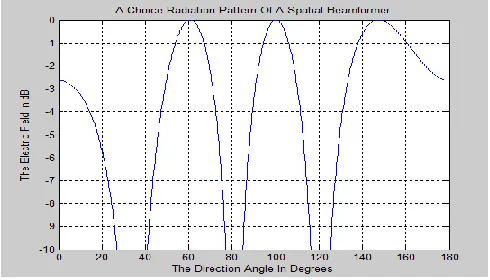
[image:5.612.48.293.211.351.2]47 Numerous non directional radio wires, for example, monopoles and dipoles, emanate square with control in every single flat course, with the power dropping off at higher and bring down edges; this is called an omnidirectional example and when plotted resembles a torus or doughnut.
Figure 8: Radiation Pattern of a spatial beamformer
REFERENCES
[1] Allhg. makrishna et.al, ―Hybrid Adaptive Beamforming Algorithms for Smart Antennas‖ IEEE 2017.
[2] Araun, Karl Ferdinand (11 December 1909). "Nobel Lecture: Electrical Oscillations and Wireless Telegraphy". Nobelprize.org. Nobel Media AB 2013. Retrieved 21 Oct 2013.
[3] ailloux, Robert J. (2006). "Chapter 17: A History of Phased Array Antennas". In Sarkar, Tapan K.; et al. History of Wireless. John Wiley & Sons. pp. 567–603. ISBN 978-0-471-71814-7.
[4] ugill, Peter J. (1999). Global Communications Since 1844: Geopolitics and Technology. Johns Hopkins University Press. p. 143. ISBN 0-8018-6039-3.
[5] ouglas, Alan (1990). "The Legacies of Edwin Howard Armstrong". Proceedings of the Radio Club of America. 64 (3). Retrieved October 21, 2013.
[6] ilson, Robert W. (1991). "Chapter 1: Discovery of the Cosmic Microwave Background". In Blanchard, Alain; et al. Physical Cosmology. Editions Frontieres. p. 3. ISBN 2-86332-094-7. [7] History of Network Transmission". About.ATT.com. Retrieved 21
October 2013. "Early U.S. Navy Experimental Radars". History.Navy.Mil. Department of the Navy—Naval Historical Center. Retrieved 23 October 2013.
[8] lark, Robert M. (2011). The Technical Collection of Intelligence. CQ Press. p. 179. ISBN 978-1-483-30495-3.
[9] chonauer, Scott (5 February 2003). "Cold War relic 'Bull Ring' is being dismantled at Rota". Stars and Stripes. Retrieved 21 October 2013.
[10] cAleer, Neil (2013). Sir Arthur C. Clarke: Odyssey of a Visionary: The Biography. RosettaBooks. ISBN 978-0-795-33297-5.
[11] Carlo (August 2012). "Evolution of AESA Radar Technology". Microwave Journal, Military Microwaves Supplement. Retrieved October 23, 2013.
[12] Fenn, Alan J.; et al. (August 2000). "The development of phased-array radar technology". Lincoln Laboratory Journal. 12 (2). Retrieved October 23, 2013.
[13] John Pike (6 March 2000). "AN/FPS-115 PAVE PAWS Radar". FAS.org. Federation of American Scientists. Retrieved 23 October 2013.