6
I
January 2018
Constitute a Compact Aquaponics System in Indian
Premises and Confront Hurdles to Assemble This
System.
Rakhi Das1, Shriparna Saxena2. 1
Research Scholar, Department of Zoology and Applied aquaculture, Barkatullah University, Bhopal, M.P. India.
2
Assistant Professor, Faculty of Department of Zoology and Applied Aquaculture, Barkatullah University, Bhopal, M.P. India.
Abstract: Aquaponics is now a new name of farming system which conjugate the aqua farming and agro farming in one thread. In India where weather act as a king role for crop production there aquaponics can be solve the problem very expeditiously. Construction of developed aquaponics farming system is quite bit different than traditional aqua farming and agro farming systems. Developed Nutrient Film Technology and Floating Raft technology are fabricate here only to achieve right information about construction cost and durability of this system in Indian premises. Recycle of nutrient water from one system to another system is the main theme of this farming system. Fish, bacteria, and plant are the three main components which regulates the total system. Two 120 gallon capable fish rearing tank, 90 litre capable two clarifier tank, two 90 litre capable biological filter tank, 4”size four regular available polyvinyl chloride pipe and 40 litre water tank which are divided by two equal size are used for plant medium to running this system mechanically. Information about input cost of contriving this system and facing challenges to assemble this system will be very effectual for our native agro farmers and country fisherman’s who are really dependent on the weather for their farming.
Key words: Aquaponics, Construction, Input cost, recycle of nutrient water.
I. INTRODUCTION
In India, our agro production are crucially dependent on weather. [1] Continuous fluctuation of climate are seriously effect on world food security in general. Crop production under normal conditions are largely determined by weather during the growing season. Most of the time farmer’s crop production input cost is higher than their output benefit. Adopt of Aquaponics system can be handle the problem functionally. Aquaponics is a one kind of intensive farming system. Combination of agro farming and aqua farming is the main theme of this system.
Which initiate to establish of this system in India. Our province people are now facing a severe toxic free food problem due to increase of pollution rate in environment. Use of pesticide for crop production destroy the fertility of land. Leaching of these pesticides in natural water body reduce the shelf life of aquatic organisms.[2]In Aquaponics system, pollution is drastically reduced because the waste water are recycle instead of being dumped into the ground water. The fish and plants are cultivate in a healthy condition. Organic Food can be produced without the loss of valuable flatlands to adopt this system. The whole aquaponics system mainly control the three major component. Fish, bacteria and plant are control this whole process systematically. Fish rearing tank playing an initial part to start-up phase of this procedure. In any closed aquaculture system fish are fed with artificial feed to get optimum production. Water are regularly discharge to avoid fouling condition create by uneaten food and fish waste. [3] In aquaponics system waste water seem as a nutrient. In this system ammonia rich waste water recycle from fish tank to clarifier tank and then to biological filter tank where ammonia oxidising bacteria converts ammonia into nitrite and nitrite oxidising bacteria converts nitrite into nitrate, Nitrate rich water pass through the plant medium for plant growth because nitrate is an essential element of plant growth. Plant take up the nutrient and pass the recycle clean water from plant medium to fish rearing tank again. Aquaponics is a soil lees culture technique for plant production. [4] This farming system bears initial start-up cost rather than traditional farming system. But this system longevity is much higher than traditional farming system
II. PROPOSED METHODOLOGY
A. Types of Aquaponics technology which are adopt
1) Nutrient film Technology.
B. Experimental Design
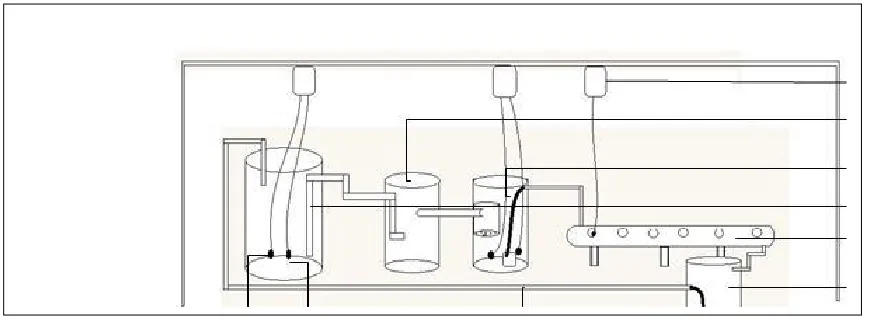
To develop this systems two circular rearing fish tanks (120 gallon capable) are used as a main culture medium. The fish rearing tank are mechanically join with clarifier tank (90 litre capable) by 2’’thick PVC pipes. Clarifier tank are used for settling of ammonia rich waste and supernatant water supplied from clarifier tank to Biological filter tank by 2’’ thick PVC pipes, where ammonia oxidizing bacteria convert ammonia into nitrite and then nitrite oxidizing bacteria convert nitrite into nitrate. Biological filter tanks are playing a specific role in whole of the mechanical systems. It’s a power house of bacteria which derives the whole procedure silently. Water pump are place in biological filter tank for pump up the nutrient rich nitrate from biological tank to plant medium. Recycled waterwhen flush out the plant medium, plants root strip the nitrate and release healthy water pass out to the fish rearing tank. Three Air pumps are used in each unit system. Air pumps are join with fish rearing tank, biological filter tank and then plant medium. Casually air pump only used in fish rearing tank for produce oxygen to maintain normal breathing process of fish. But uses of air pump in biological filter tank promote the growth of heterotrophic bacteria and help to run the whole cycle obstacle free. Air pumps are provided in plant medium for well oxygenation of plant root which is necessary for their optimum growth.
C. Water Resources
Two types of fresh water sources are used to operate this system continuously. One fish tank is join with rainwater harvested water source and another is join with locally available tap water source. This is done only for observation of which type of water will be regulate the operation successfully. In rainy season after 4 days of heavy rain, water was collected in a plastic tank by following simple cloth netting technique. Tap water was treated by running air pumps in tap water tank at 48 hours continuously for getting chlorine free water. High chlorine can kill the fish, destroy the bacterial growth in biological filter tank and also can damage the plant root seriously. Water is the vital source to operate any kind of farming systems. Regular recycling of the water in this system, maintain the water cost smartly. Only 5% water will be added in this systems when water will be evaporate by evaporation process.
D. Confront hurdles to establish aquaponics system in Indian premises
construction of aquaponics is a task of complex. Basically Aquaponics is a fusion of science, it knocking the door of maximum field of science. Aquaponics condensed the Fisheries science, Mechanical engineering, Botany, Physics, Limnology, Chemistry, Microbiology, Environmental science under in one roof. To fabricate of compact aquaponics system in India mainly those specific problem will be face are categorised in below:
1) In whole Aquaponics system water are recycle from rearing tank to plant medium through PVC pipes following the law of
gravity. The accurate measurement of pipe from one tank to another tank is difficult. Plumbing the pipe line and given a connection channel one tank to another tank is a long time process.
2) Those type of 4’’ PVC pipes generally found in India, they are mainly used for drainage the rain water in home. These pipes are
not much heavier to tolerate the pressure when circular drill belt are drive on them to create a plant hole. Sometimes they are broke by heavy pressure. Connection of inlet and outlet channel through these pipes are tricky process.
3) Leakage is the main problem in whole process, because of 2’’ PVC pipes are not want to fit with plastic tank for their circular
body surface. Tank connector cannot stop the leakage without 2’’ uniseal. Which is not found in India naturally.
4) In India summer season, the fish rearing tank becomes too hot because of heavy sunlight and water evaporation rate is higher
[image:3.612.92.528.562.722.2]than any season. So maintenncecost are high at that time.
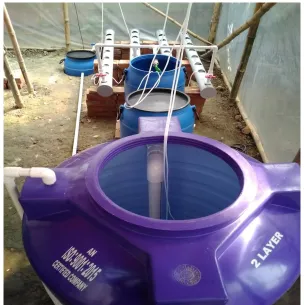
Fig.2is the Building system of nutrient film aquaponics system
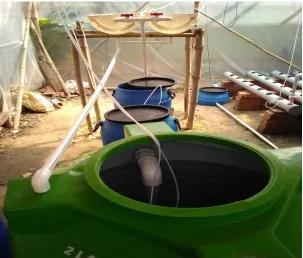
[image:4.612.82.531.418.701.2]Fig. 4 is the building system of floating raft aquaponics system
III. RESULT AND DISCUSSION
Construction cost of aquaponics system is higher than any other traditional farming system. But In traditional farming system maintenance of water supply cost, plant seed cost, land ploughing cost, labour cost, fertilizer cost, pesticide cost are sometimes higher than their benefit. Once an aquaponics system is build-up it can be run after 10 years with little sum investment. But In traditional farming systems crop production cost is necessary for every year. Any Drought season, heavy rainfall, flood, can cause drastic change to crop production in India at any time. When fabricate a compact aquaponics system, then accurate model with necessary plumbing tools will be assemble first. After construction of whole aquaponics system, leakage chance will be possible. So using of glue gun can be solve the problem at this situation. It’s a one kind of polymer plastic gum which can be stop any leakage for life time. When aquaponics system is running then leakage will be destroy the whole system procedure because that time change of water will be not possible. Bacterial colony will be damage after changing of water. When bacteria don’t break down the ammonia then nitrate will be absent in medium and growth rate of plant will be stop. So monitoring the leakage problem again and again for minimum 7 days before start up the aquaponics system. Which is essential to avoid any default situation when system are running.
List of significant Accessories Total cost of whole systems in Indian
premises (Rupees)
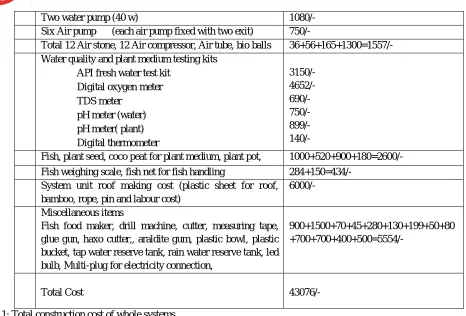
Two circular rearing Fish tank (120 gallon capable) 6000/-
Two clarifier tank (90 litre capable) 800/-
Two biological filter tank with two bucket (90 litre capable)
950/-
4’’ PVC pipes used as a nutrient film medium for plant growth
1720/-
40 litre drum are divided by two equal size which serve as a floating tray for plant growth
270/-
Plumbing material cost of two systems (2’’ pipe, 2’’ Elbow, 2’’ tank connector, 3/4’’ pipe, 3/4 ‘’Elbow, 3/4’’ T, 3/4’’ tank connector, ball valve.
Two water pump (40 w) 1080/-
Six Air pump (each air pump fixed with two exit) 750/-
Total 12 Air stone, 12 Air compressor, Air tube, bio balls 36+56+165+1300=1557/-
Water quality and plant medium testing kits
API fresh water test kit
Digital oxygen meter
TDS meter
pH meter (water)
pH meter( plant)
Digital thermometer
3150/- 4652/- 690/- 750/- 899/- 140/-
Fish, plant seed, coco peat for plant medium, plant pot, 1000+520+900+180=2600/-
Fish weighing scale, fish net for fish handling 284+150=434/-
System unit roof making cost (plastic sheet for roof, bamboo, rope, pin and labour cost)
6000/-
Miscellaneous items
Fish food maker, drill machine, cutter, measuring tape, glue gun, haxo cutter,, araldite gum, plastic bowl, plastic bucket, tap water reserve tank, rain water reserve tank, led bulb, Multi-plug for electricity connection,
900+1500+70+45+280+130+199+50+80 +700+700+400+500=5554/-
[image:6.612.67.533.66.382.2]Total Cost 43076/-
Table. 1: Total construction cost of whole systems
IV.CONCLUSION
Fluctuation of climate always defect the crop productivity in India. Farmers invest their money for crop production but don’t get return as much as they invest. To get rid from this situation Aquaponics system can handle the problem effectively. Mechanical construction part of Aquaponics system are hardy and laborious also. Lack of proper design method, plumbing materials, proper knowledge of microbes, water quality, soil less plant culture technique, Fish culture, Flow rate of water from one systems to another system make the system task ofcomplex for common people of India. If systems skill will be provided to the common farmers and training will be given to them according this field basis, they will be capable to produce more crops from past. To adopt this system they can earn two crops from one field.
V. ACKNOWLEDGEMENT
The present work is support by the Jawaharlal Nehru memorial fund through Ph. D fellowship given basis. All the financial help are continued when the experiments are running.
REFERENCES
[1] R. K. Mall, R. Singh, A. Gupta, G. Srinivasan, L. S. Rathore, “Impact of climate change on Indian agriculture” Central ground water board, New Delhi-110001 [2] S. jones, “Evolution of Aquaponics”, Aquaponics journal, Vol.6, No.1, 2002
[3] J. E. Rackocy, D. S. Bailey, R. C. Shultz, J. J. Danaher, “ A commercial- scale aquaponics system developed at the university of Virgin Islands”, Agriculture experiment station, University of Virgin Islands, PR 1, Box 10,000, Kingshill, VI 00850 U.S
[4] Somerville, C. Cohen, M. Pantanella, E. Stankus, A, Lovatelli. A, “Small scale aquaponics food production. Integrated fish and plant farming”, FAO Fisheries and Aquaculture Technical paper, No. 589, Rome, FAO. 262 pp, 2014
[5] J. E. Rackocy, D. S. Bailey, R. C. Shultz, E. C. Thoman, “update on Tilapia and vegetable production in the UVI aquaponic system”, Agriculture experiment station, University of Virgin Islands, PR 2, Box 10,000, Kingshill, VI 00850 U.S. 2004