T he N a tu re , Im p a c t an d D ev elo p m en t
of C u sto m er-O rie n ted B ehaviour:
a C a se S tu d y in a n Ic e la n d ic S e rv ic e C o n te x t
by
Svafa Gronfeldt
A thesis submitted to the Department of Industrial Relations at the London School of Economics and Political Science in the fulfilment of the requirements for a
UMI Number: U615206
All rights reserved
INFORMATION TO ALL USERS
The quality of this reproduction is dependent upon the quality of the copy submitted.
In the unlikely event that the author did not send a complete manuscript and there are missing pages, these will be noted. Also, if material had to be removed,
a note will indicate the deletion.
Dissertation Publishing
UMI U615206
Published by ProQuest LLC 2014. Copyright in the Dissertation held by the Author. Microform Edition © ProQuest LLC.
All rights reserved. This work is protected against unauthorized copying under Title 17, United States Code.
ProQuest LLC
789 East Eisenhower Parkway P.O. Box 1346
(
H £ S £ S
F
ABSTRACT
The Nature, Impact and Development of Customer-Oriented Behaviour: A Case Study in an Icelandic Service Context
For the last few decades the importance of customer orientation for the success of service organisations has been emphasised in the academic and applied literatures. While the importance of the concept remains largely beyond dispute, scholars have suggested various definitions and applications of the concept to enhance service delivery. The purpose of this thesis is to examine an explicit behavioural perspective (COBEH) where the focus is not on an untangle service orientations of employees, but on the extent to which employees engage in direct behaviours specifically designed to benefit customers.
This study was designed to examine empirically, for the first time, the nature, impact and development of the COBEH construct. First, the nature of COBEH was examined by a series of employee surveys from various service industries. The construct was examined in relation to the already established organisational citizenship behaviour (OCB) construct to determine if and to what extent the constructs are related and predictive of employee service-related behaviours. In this part of the study there were 2693 participants from seven Icelandic service organisations. Secondly, the impact of COBEH was examined by using employee and customer survey data from one of the seven participating service organisations (N=103). Employees’ self-reported customer-oriented behaviour was compared with customer perceptions of the corresponding employee performance. Data on employee service performance was provided by two customer surveys including 900 customer responses in each survey. The employee and customer surveys provided a unique opportunity to match employee self-reports and customer perceptions. Thirdly, the
development of COBEH was empirically tested by using both the employee and customer surveys where the antecedents of COBEH were examined (N=1190) and the impact of a customer service training programme on COBEH and the suggested antecedents were tested (N=71). Hence, this study addressed a gap in the literature between human resource practices and individual performance and establishes the COBEH construct as a valid and reliable predictor of customer perception of service outcomes.
The results presented in this thesis show that the COBEH phenomenon is related to organisational citizenship behaviour (OCB) and that contrary to the OCB construct, it is predictive of customers’ perceptions. COBEH is constructed of two related but separate sub-dimensions: helping behaviours directed at customers and continuous improvement efforts to enhance service delivery. The results suggest that the type of service may affect the construct’s factor structure. The results confirm previous findings regarding the suggested antecedents of COBEH, but provide additional information regarding the differences in the underlying conditions for the two sub-dimensions. Both dimensions are impacted by motivational and capacity factors, but the two sub-dimensions are not a function of the exact same antecedents. A significant interaction was detected between employee willingness and capacity in regards to employee customer-oriented behaviours: as job capacity increases, the impact of employee willingness to engage in efforts on behalf of customers decreases. Organisations wanting to develop customer-oriented behaviours to enhance service delivery must take into consideration differences in the impact of the antecedents on the sub dimensions and strategically use selection, socialisation, service training programmes and supportive managerial practices to create the conditions necessary for such behaviours to be cultivated and maintained. Furthermore, the results confirm the positive impact of customer-oriented behaviours on customer service perceptions, establishing the construct as a valid predictor of perceived service quality.
ACKNOW LEDGEM ENTS
Over the duration of this thesis, many people have contributed their valuable
knowledge, time and support in order for the study to be completed. First of all,
the IM Gallup Organisation in Iceland, which so generously supported me in
this effort and made this thesis possible. In addition, my sincere thanks go out to
my family and to the people of Gallup for their endless motivational support
and concern and to my partners for understanding that "not everything can be
counted, and not everything that counts can be counted." (Einstein)
Secondly, the valuable information provided by the seven participating service
organisations, the Shell group in particular, contributed greatly to the dynamic
design of the study. And last, but certainly not least, I would like to thank my
supervisor, Dr. Riccardo Peccei, for his endless patience and guidance over the
duration of the study, for he practices w hat he preaches and demonstrates the
unique helping behaviours which are the very topic of this thesis and in the
T a b le o f C o n t e n t s
Abstract...ii
Acknowledgements...iii
List of Figures...viii
List of Tables...ix
Chapter 1 INTRODUCTION... 1
1.1 Different approaches to customer orientation... ...2
1.2 Contribution of the study...8
1.2.1. The nature of customer-oriented behaviour...10
1.2.2 The impact of customer-oriented behaviour...13
1.2.3 The development of customer-oriented behaviour...14
1.3 Thesis chapter structure... 17
Chapter 2 RESEARCH DESIGN...20
2.1 The participating company... 20
2.1.1 The Royal Dutch Shell Group...22
2.1.2 Working at Shell... 23
2.1.3 Shell service... 24
2.1.4 Shell service initiative... 25
2.2 Other participating companies... ...27
2.3 Methods... 29
2.3.1 Focus groups... 30
2.3.2 Employee surveys... 32
2.3.3 Customer surveys...34
2.3.4 Supervisors’ evaluations... 36
2.3.5 Evaluation of the training... 37
2.4 Procedures... 39
2.4.1 Questionnaire development and translation... 39
2.4.2 Compliance... 41
2.5 Limitations of the study... 42
Chapter 3 CUSTOMER ORIENTATION: Conceptual Issues...47
3.1 Definitions of customer orientation... 47
3.1.1 Systemic approach to customer orientation... 48
3.1.2 Attitudinal approach to customer orientation...51
3.1.3 Behavioural focus on customer orientation... 53
3.2 Customer oriented behaviour - COBEH... 55
3.2.1 Pro-social behaviours... 59
3.2.2 Organisational citizenship behaviours...60
3.2.3 Organisational spontaneity...63
3.2.4 COBEH identified... 64
3.3 Continuous improvement... r....67
3.4 Summary...72
Chapter 4 EMPERICAL TESTING OF COBEH...74
4.1 COBEH scale and measurement... 75
4.1.1 COBEH items and means...76
4.2 COBEH operationalised...77
4.3 COBEH consistency over time and across industries... 79
4.3.1 COBEH descriptive statistics of participating companies...80
4.3.2 COBEH factor consistency across service industries...83
4.4 COBEH - a separate construct... 89
4.4.1 Shell study: COBEH and OCB compared...90
4.4.2 Shell study: Joint analysis of OCB and COBEH... 93
4.4.3 Shell study: Interrelation between OCB and COBEH... 95
4.5 Cross-sectional data... 96
4.5.1 Cross-sectional data: OCB and COBEH statistics...97
4.5.2 Cross-sectional data: Joint analysis of OCB and COBEH... 98
5.5.3 Cross-sectional data: Interrelation between OCB and COBEH....101
4.6 Summary... 104
4.6.1 COBEH operationalisation and stability...104
Chapter 5 VALIDATION OF THE COBEH CONSTRUCT... 108
5.1 Establishing validity... 110
5.2 Measuring service quality...111
5.2.1 Customer service measures...114
5.2.2 Customer service descriptive results... 117
5.3 Relation of COBEH and OCB to customer perceptions... 119
5.3.1 COBEH relation to customers’ perceptions... 121
5.3.2 OCB relation to customers’ perceptions... 122
5.3.3 The relation of helping behaviour to customer perceptions 123, 5.3.4 The relation of continuous improvement to customers’ percep... 125
5.3.5 Helping behaviour reflects customer perceptions...126
5.4 Supervisors’ evaluations of employee customer orientations... 128
5.4.1 Supervisors’ evaluations and the COBEH construct... 134
5.4.2 Employee, supervisors and customer perceptions...135
5.4.3 Supervisors’ evaluations and employee self-reports ...139
5.4.4 Supervisors’ evaluations focus on continuous improvement 140 5.5 Summary...142
Chapter 6 THE ANTECEDENTS OF CUSTOMER ORIENTED BEHAVIOUR...145
6.1 COBEH core model... 147
6.2 Model testing... 154
6.2.1 Factor structure of model items... 155
6.2.2 Descriptive statistics of model items... 160
6.3 Results of regression analysis for COBEH model at Shell...164
6.3.1 Intercorrelation of model items... 165
6.3.2 Antecedents of COBEH at Shell...166
6.3.3 Antecedents of helping behaviours at Shell... ;...169
6.3.4 Antecedents of continuous improvement efforts at Shell... .I..172
6.4 COBEH antecedents: Cross-sectional sample... 176
6.4.1 Model variables: Cross-sectional sample... 177
6.4.2 Description of model variables: Cross-sectional sample... 178
6.4.3 Antecedents of COBEH: Cross-sectional sample... 179
6.4.4 Antecedents of COBEH by type of service... 183
6.4.5 Antecedents of helping behaviours by type of service... 188
6.4.4 Antecedents of continuous improvement by type of service... 191
6.5 Willingness and capacity interaction...192
6.5.1 Interaction of willingness and capacity to provide service... 193
6.6 Summary... 198
Chapter 7 THE IMPACT OF TRAINING ON COBEH... 203
7.1 Customer service training...206
7.1.1 Training programme design and objectives... 207
7.1.2 Participants in the Shell service training...211
7.2 Evaluation of the training... 212
7.2.1 Reaction to and immediate outcome of the training... 214
7.2.2 Intermediate level of the training...217
7.2.3 Final level of the evaluation of th e ... 218
7.2.4 The Training Impact Model... 220
7.3 The impact of the training on COBEH... 225
7.3.1 Descriptive statistics... 226
7.3.2 The impact of training participation on COBEH...229
7.3.3 The indirect effect of training on COBEH...232
7.3.4 The impact of training evaluation on COBEH... 234
7.4 Changes in reported levels of customer-oriented behaviour... 236
7.5 The link between COBEH and customer perceptions... 241
7.6 Summary...243
Chapter 8 DISCUSSION AND CONCLUSIONS...248
8.1 The nature of the COBEH phenomenon... 251
8.1.1 COBEH dimensionality... 252
8.1.2 The relation of COBEH and OCB...253
8.2 Managerial implications... 258
8.2.1 The drivers of COBEH...259
8.2.2 The impact of service training on COBEH... 263
8.3 Step-by-step approach to the application of COBEH... 266
8.4 Final conclusion... 271
8.5 Recommendations for future research...270
References ... 274
LIST OF FIG U RES
Figure 1 Shell research design... 30
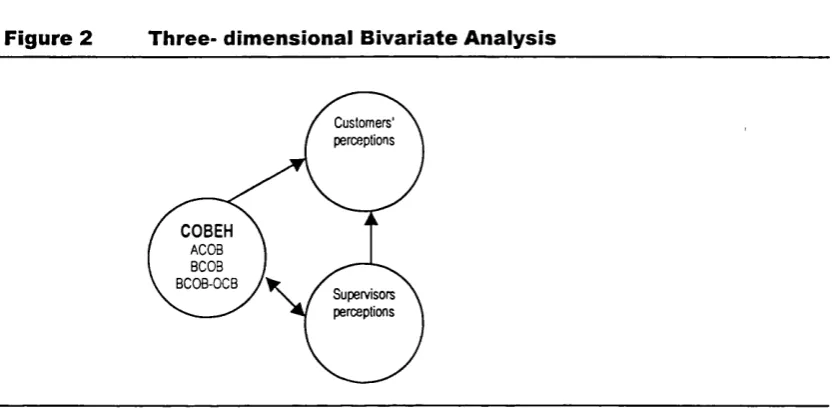
Figure 2 Three-dimensional bivariate analysis... 109
Figure 3 Core model of COBEH...149
Figure 4 COBEH interaction of model variables... 196
Figure 5 Helping behaviour interaction of model variables... 197
Figure 6 Training Impact Model...222
i Figure 7 Cross-tabulation of sample groups: COBEH...237
LIST OF TABLES
Table 1 Shell COBEH items... ... 76
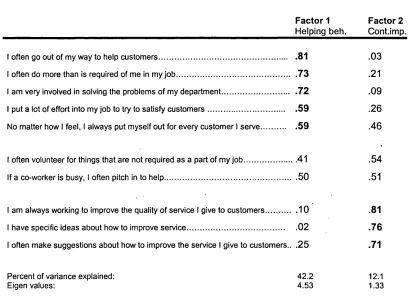
Table 2 COBEH factor analysis at Shell...78
Table 3 Companies’ descriptive statistics... 82
Table 4 COBEH factor structure at Shell...84
Table 5 Cross-sectional COBEH factor analysis... 86
Table 6 Software developers’ COBEH factor structure...87
Table 7 Shell OCB items...92
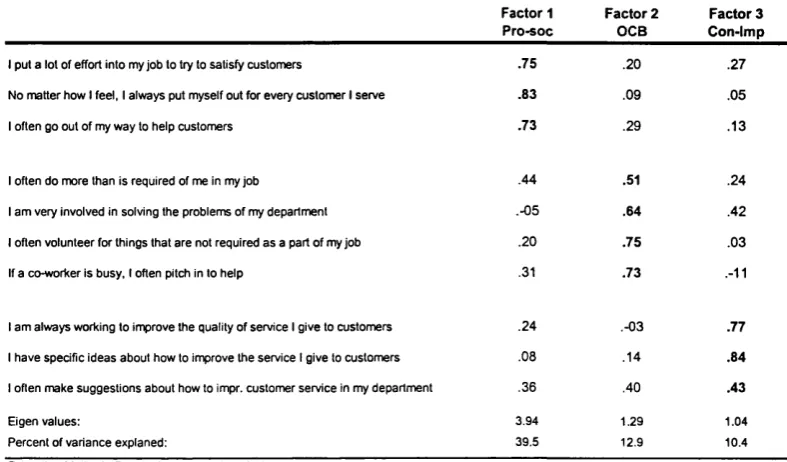
Table 8 OCB factor analysis at Shell... 92
Table 9 OCB and COBEH factor matrix at Shell...94
Table 10 OCB and COBEH correlations... 96
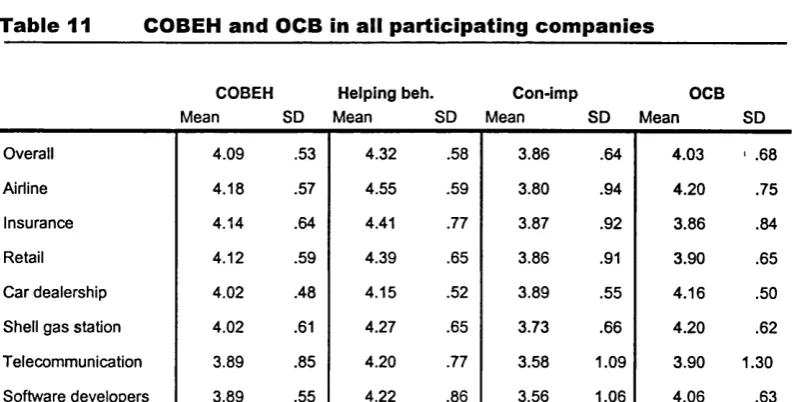
Table 11 COBEH and OCB in all participating companies... 98
Table 12 Cross-sectional sample: COBEH and OCB factor matrix...99
Table 13 COBEH and OCB at the car dealership... 100
Table 14 Cross-sectional sample: OCB and COBEH correlation... 102
Table 15 Service questionnaire items... ... 114
Table 16 Customer perceptions of the service at Shell... 118
Table 17 COBEH - customer service correlation matrix...121
Table 18 Typical rater errors... 130
Table 19 Factor analysis of Shell supervisors evaluations of COBEH... 134
Table 20 Supervisors’ evaluations and customer perceptions...137
Table 21 Shell supervisors’ evaluations and employee perceptions...139
Table 22 Factor matrix for motivational variables... 157
Table 23 Factor matrix for capacity variables... 159
Table 25 Intercorrelations of model variables... 166
Table 26 Regression results for COBEH factors at Shell... 167
Table 27 Description of model variables: cross-sectional sample... 179
Table 28 Regression results: Cross-sectional sample... 180
Table 29 Descriptive of model variables... 184
Table 30 Antecedents of COBEH by type of service... 186
Table 31 Antecedents of helping behaviours by type of service... 190
Table 32 Antecedents of continuous improvement by type of service... 192
Table 33 Intercorrelation of WILL and CAP and multiplicative item '....195
Table 34 Regression results: WILL and CAP interaction...195
Table 35 The COBEH of control and contrast groups...212
Table 36 Immediate reaction to the training... 216
Table 37 Supervisors’ evaluations of employee COBEH... 218
Table 38 Repeated employee evaluation of the training...219
Table 39 Difference in means of model variables at times 1 and 2 ... 227
Table 40 Final test of the Training Impact Model...230
Table 41 Direct and indirect impact of training...236
Table 42 Impact of training evaluation on COBEH... 236
Table 43 The link between service training and customer perceptions....'... 242
1 .0 In tro d u c tio n
In today's marketplace, customer service orientation and the capacity of
front-line w orkers are believed to be the keys to service organisations'
success or failure in responding to increased com petition and various
external conditions. The global market, increased com petition and technical
developm ent have called attention to the grow ing im portance of the
employee initiative, organisational innovation, flexibility, and productivity
i
as a response to pressures to adapt to external changes in the corporate
environm ent (Quinn & Gagnon, 1986). Furthermore, scholars have pointed
out that globalisation, advanced technology and com m unication have forced
service organisations to acquire a competitive advantage by placing an
emphasis on factors that are not as easy to copy as price or technology -
namely the quality of service, based on full utilisation of the hum an
resources in front-line service.
The external pressure on service organisations has consequently increased
dem and for flexibility and initiative on the part of the front-line service
w orker resulting in a call for more individualised service. M anagem ent
control and bureaucratic solutions that standardise service through a set of
flexibility necessary for meeting and pro-actively foreseeing shifts in
consum ers' dem ands or expectations in a rapidly changing m arket place.
Thus, increased attention has been given to employees' custom er orientation
and its effect in a service context.
1.1 D ifferen t a p p ro a c h e s to c u s to m e r o rie n ta tio n
O ver the past 30 years, the importance of developing a strong customer
orientation am ong all employees of a service organisation has been
em phasised in the management, quality and customer care literature (Brown,
1993; Heskett, et al, 1997; Lovelock, 1988; Rosenthal et al, 1998; Schneider and
Bowen, 1995). While the importance of customer orientation rem ains largely
beyond dispute, scholars have not reached a consensus on how the
phenom enon should be defined, operationalised and applied.
One of the ways the concept has been approached is in the systemic w ay of
the classical w riters on quality (Juran, 1974, Deming, 1982), w here custom er
orientation is emphasised as an aspect of hum an nature to be uniform ly
"released" by appropriate systems and structures. How ever, Bowen and
Schneider (1988) have argued that the unpredictability of the custom er
service provision" problematic in nature as well as having a negative im pact
on the required flexibility and individualised care needed in today's
competitive markets. An alternative perspective taking this argum ent into
consideration can be found in the customer care literature w here custom er
orientation has been defined both in attitudinal and behavioural terms.
Schlesinger and Heskett (1991) defined the concept of custom er orientation
as "positive service attitudes" which refer to variable psychographic
characteristics and values congruent w ith the organisational service norms.
This perspective is congruent with the core of m arketing thoughts for the
past 30 years where the emphasis is on universal com pany activities aim ed
tow ards cultivating a long-term m utually beneficial relationship w ith
customers (Kotler, 1980). However, such generalised service attitudes are
am biguous and difficult to define in organisational settings. Furtherm ore,
any attem pt to examine the nature and impact of such generalised attitudes
on organisational success and performance is ultim ately problematic. A nd as
Hellriegel, et al. (1992) have pointed out: "while there is little doubt that
attitudes are related to behaviour, it is now w idely accepted that a simple,
direct link between attitudes and behaviour frequently does not exist" (p.
87). O n this note, is the more tangible approach to custom er orientation by
employee behaviours and they argue that sales related service behaviour will
lead to custom er satisfaction. Although Saxe and W eitz's (1982) approach is
less am biguous than the attitudinal approach to customer orientation, tw o
im portant points m ust be made. First, their approach can be viewed as too
narrow or specific for m any service tasks or organisations. According to
them the concept of customer orientation is operationalised by an emphasis
on the extent to which employees try to help customers make purchase
decisions w ith the purpose of satisfying customers. However, customer
orientation can transpire in a variety of behaviours other than sales oriented
tasks. Second, employees m ay engage in certain types of behaviours, but
w hether or not those behaviours (sales related behaviours) will lead to
custom er satisfaction cannot be assum ed, as suggested by Saxe and Weitz
(1982). The quest for the fulfilment of customer needs w ith the view to
achieve custom er satisfaction is a complex issue that depends not only on
certain behaviours exhibited by employees but also on a variety of factors
both from w ithin service organisations as well as in their external
environm ents.
Peccei and Rosenthal (1997) have suggested another behavioural perspective
w here the em phasis is not only on a psychological state or a general positive
custom er orientation), but on the actual extent to which individuals engage
in behaviours designed to satisfy customers (customer-oriented behaviours).
Their focus on the concept of customer-oriented behaviours (COBEH) is
twofold: first, on certain helping or pro-social behaviours directed at
custom ers and second on the extent to which employees pro-actively engage
in continuous improvem ent efforts designed to enhance service delivery.
Unlike the quality literature, the COBEH perspective does not assume that
employees have a natural propensity to provide custom ers w ith quality
service and that proper service systems or processes will ultim ately ensure
such quality. The assum ption is not m ade that the systems themselves will
necessarily prom ote the type of service behaviours am ong employees needed to
ensure custom er satisfaction. Similarly, the COBEH perspective, unlike the
attitudinal views on customer orientation, does not autom atically assume a
link betw een employees' general service attitudes or good will tow ards
custom ers and employees actual service behaviours. The COBEH
perspective is behaviourally based and less ambiguous than the attitudinal
perspectives. The focus of the perspective is on m easurable service
behaviours that provide an opportunity for a tangible com parison w ith
custom er perceptions of the provided services. In other w ords, the extent to
customers (regardless of their general attitudes or organisational service
systems) can be exam ined in relation to custom ers' evaluations of the
employees' perform ance during the em ployee-custom er contact.
Furtherm ore, the COBEH perspective's dynam ic dim ensionality (the focus
both on helping behaviours directed at custom ers and on continuous
im provem ent efforts designed to enhance service quality) draw s the
attention not only to current service perform ance (helping behaviour), but
also to the organisations' future success and com petitiveness through
continuous service im provem ent, thus em bedding the core ideology of both
the service and quality literature.
As suggested above, the various approaches to custom er orientation can be
view ed as either having merely an indirect link to perform ance or, like the
quality literature, underestim ating the complexity of the m anifestation of
customer orientation am ong service providers. H ow ever, the behaviourally
based COBEH perspective developed by Peccei and Rosenthal (1997):
■ Does not assume a direct link betw een general service attitudes or
service systems and service behaviour designed to prom ote custom er
satisfaction.
■ Focuses on the extent of tangible service behaviours directed tow ards
customers;
■ Allows for a comparison of employee custom er-oriented behaviours
and customer perceptions of employee service perform ance;
■ Is dynamic, i.e. embeds both a short-term focus on helping behaviour
towards current customers and a long-term focus on continuous
service im provem ent efforts designed to satisfy future customers.
These attributes suggest certain advantages of the COBEH perspective.
However, little research has been conducted regarding the phenom enon of
customer-oriented behaviours. The initial w ork of Peccei and Rosenthal
(1997) is based on as single study conducted in one service organisation in
Britain. Further research is needed regarding the usability of the concept of
customer-oriented behaviour (COBEH) to enhance service delivery; its
nature or conceptualisation; its impact on customers' satisfaction; and its
developm ent across service sectors, all of which are central to the research
1.2 C o n trib u tio n o f th e s tu d y
A consensus can be found in the literature reg ard in g the im portance of
employee custom er orientations for service organisations. How ever, a
consensus has not been reached regarding if an d how these orientations of
employees actually are translated into tangible behaviours positively
perceived by customers - and as a consequence prom oting the organisation's
service delivery. Previous research regarding custom er orientation suggests
that the COBEH perspective, contrary to alternative perspectives, can be
expected to be an appropriate vehicle to examine the link betw een the extent
of employees' service related behaviours directed tow ards custom ers and
customer service perceptions. However, as m entioned above, little research
has been conducted in relation to the initial scales designed by Peccei and
Rosenthal (1997) to m easure customer-oriented behaviour and the relation of
such behaviours to other related types of pro-social behaviours, such as
organisational citizenship behaviour.
One of the m ain purposes of this thesis is to exam ine the relation betw een
employees' individual customer orientations and organisational service
outcomes as perceived by customers. The COBEH perspective bears
potential for such an analysis mainly due to the focus on the extent of
provides an opportunity for a research design th at includes both em ployees'
self-reported service-related behaviours and custom ers' perceptions of the
service. However, due to the lack of empirical research on the
conceptualisation of employees' custom er-oriented behaviours and the lack
of systematic efforts to examine the validity and reliability of scales used to
capture such behaviours, the first aim of this thesis is to empirically re
examine the initial COBEH scale (1997) over a range of service industries
before the construct can be used in this study. Once validity and reliability
have been established, the second aim of the thesis is to attem p t to use the
COBEH scales to empirically examine the im pact of custom er-oriented
behaviours on service outcomes.
To the extent (1) that the COBEH scales are valid and reliable m easures of
employees' customer-oriented behaviours, and (2) that empirical test
conducted as a part of this study, suggest their im portance for custom ers'
positive service perceptions; then the third and final aim of the thesis is to
explore the developm ent of the phenom enon by exam ining the antecedents
of customer-oriented behaviour and the im pact of custom er service training
on such behaviours. Hence, the study aims to contribute to the academic
impact and developm ent of customer-oriented behaviours in a service
context. Each of these aims is discussed in slightly grater detail below.
1.2.1 T hesis contribution: The nature of custom er-oriented behaviour
The first aim of the study is to contribute to a better understanding of the
nature of customer-oriented behaviour (COBEH). The COBEH phenom enon
can be viewed as a form of pro-social organisational behaviour (see Brief &
Motowidlo, 1986) and has been defined as "the relative propensity of an
individual to engage in continuous im provem ent and to exert effort on the
job for the benefit of customers" (Peccei and Rosenthal, 1997, p. 69). In
existing models, COBEH has been operationalised as one construct.
However, theoretically the definition contains two constructs or sub
dimensions (which originated from the quality and service literature) that are
both alleged to be vital to organisational performance. The first sub
dimension relates to continuous im provem ent efforts w hich are essentially
directed inwards and manifested in the num ber of suggestions and ideas
employees have on how to improve service provision - consequently,
effecting the long-term performance and preservation of the organisation in a
competitive marketplace. The second sub-dim ension focuses on helping or
pro-social behaviours. In previous studies, such behaviour has been
manifested in employees7 efforts on behalf of customers, their disregard for
their ow n personal comfort, and dedication directed tow ards m eeting
custom ers' needs to ensure customer satisfaction.
H elping behaviours and continuous im provem ent efforts are theoretically
distinguishable as two separate constructs. However, in the existing models
of custom er-oriented behaviours the COBEH construct has been
operationalised as one construct. This study will empirically re-examine the
factor structure of the COBEH phenom ena in a variety of service industries
to explore the nature of the construct further. Also, a re-exam ination of
COBEH across service industries provides an opportunity to explore possible
differences in the construct's factor structure in relation to different types of
services and organisational situations.
The second contribution of this study regarding the nature of customer-
oriented behaviours concerns the relation between COBEH and related
constructs that are also designed to capture helping behaviours in
organisational settings. Close similarities exist betw een custom er-oriented
behaviour (COBEH) and organisational citizenship behaviour (OCB) - a
construct focusing on general helping behaviours w ithin organisations that
has a well established history in the organisational literature (Graham, 1991;
the exertion of effort on behalf of others, b u t empirical investigation is
needed to confirm customer-oriented behaviour (COBEH) as a separate
construct.
This thesis sets out to examine to w hat extent the tw o constructs (COBEH
and OCB) capture separate employee behaviours an d orientations.
Therefore, the scales used to capture organisational citizenship behaviour
and custom er-oriented behaviour are empirically exam ined in relation to
their factor structure, inter-correlation and customer perceptions of service
outcomes to examine the extent to which the constructs overlap.
The two constructs are expected to be closely related, b u t exam ination of
factor structure and inter-correlation provides inform ation regarding the
extent of the constructs7 separate identity. Furtherm ore, the correlations
betw een customer-oriented behaviours and organisational citizenship
behaviours w ith customers' perceptions provide im portant additional
inform ation as to w hether one or both of the constructs are predictive of
levels of customer satisfaction and hence provide an indication of the
constructs' shared or unique service related attributes.
1.2.2 T hesis contribution: The impact of customer-oriented behaviour
The second m ain aim of this study is to contribute to the analysis of the
potential impact of COBEH on organisational service outcomes. The
im portance of the full involvem ent of front-line staff in problem-solving and
continuous im provem ent activities and helping behaviours, beyond and
above em ployees' job descriptions, has been emphasised in the quality and
m anagem ent literature (Bowen, 1994; George, 1994). However, this
im portant im pact sill rem ains insufficiently examined in the literature.
Hence, the purpose of this study is to empirically examine the relation
betw een employee custom er-oriented behaviours and service outcomes as
perceived by customers. In other words, to examine the extent to which
em ployees' self-reported service-related efforts actually translate into and
involve behaviours th at are positively perceived by customers. The impact
of the overall COBEH construct as well as the impact of the two sub
dim ensions (helping behaviours and continuous im provem ent efforts) is
tested in relation to custom ers' perceptions of im portant issues of customer
care.
Furtherm ore, if the results of the statistical tests regarding the validity of the
self-reported COBEH construct suggest that the construct can be used in an
im portant questions arise. H ow robust is COBEH as a construct? Many
organisations use supervisor's evaluations as the only means of assessing
em ployee perform ance and in this study, a three-pronged approach was
used to assess how applicable or robust the COBEH construct is by
conducting a series of statistical tests to examine the relation betw een self-
reported custom er oriented behaviour, supervisors' evaluations, and
custom ers' perceptions of the services provided.
1.2.3 T hesis contribution: The developm ent of custom er-oriented behaviour
The third and final aim of this study is to contribute to the understanding of
the development and application of custom er-oriented behaviours in service
settings. In other words, what are the antecedents of COBEH, and w hat are
the factors w ithin service organisations that can contribute to the
developm ent of customer-oriented behaviour am ong front-line staff? Clearly,
this importance and contribution of the third p art of the thesis depends
largely on the potential strength of the suggested im pact of customer-
oriented behaviours. That is to say, an understanding of the antecedents and
developm ent of the COBEH becomes all the more im portant to the extent
that employees' customer-oriented behaviour can indeed be show n to have a
The thesis aims to contribute to our understanding of the antecedents and
the developm ent of COBEH in three m ain ways. First, through a re
exam ination of the previously identified antecedents of custom er oriented
behaviour (Peccei & Rosenthal, 1997), b u t now in a variety of service settings
to see if the relevant behaviours are a consequence of the same antecedents
across different service industries. Studies on the antecedents of employees'
custom er oriented-behaviour have only been conducted in Britain using a
sam ple of superm arket employees perform ing relatively simple tasks and
services. Further research is needed to examine w hether custom er-oriented
behaviours are impacted by the same antecedents or m ust be developed
differently in relation to task complexity or the type of service provided by
employees.
The second contribution of the study regarding the developm ent of COBEH
is to examine separately the antecedents of the tw o sub-dim ensions of
custom er-oriented behaviours. Existing m odels of custom er-oriented
behaviour have examined its possible antecedents draw ing on organisational
theory and the m anagem ent literature. How ever, the w ork has been focused
on the antecedents of employees' custom er-oriented behaviours as a whole,
not on the suggested com ponents of the construct - helping behaviours and
distinctive an d the question rem ains if organisations w illing to enhance their
em ployees' custom er-oriented behaviours can use the sam e m anagerial and
organisational practices to prom ote employees' helping behaviour and
sim ultaneously cultivate the conditions necessary for em ployees' active
participation in continuous service im provem ent efforts.
The third and final contribution involves an exam ination of the impact of one
of the m ost comm only used m ethods of service developm ent, a custom enare
program m e on employees' custom er-oriented behaviours, in a major
Icelandic service organisation. Custom er service training program m es of the
type exam ined here, in fact, represent one of the m ost com m on m ethods
used by contem porary service organisations to try to enhance service
delivery. H ow ever, little organised research has been done on the
effectiveness of such interventions (Peccei & Rosenthal, 1997; Peccei &
Rosenthal, 2000). Thus, this study will attem pt to examine the effectiveness
of a custom er service training program m e w here the initiative and the full
involvem ent of the front line was em phasised w ith the purpose of creating
conditions necessary for a flexible service tailored to custom er needs. In this
thesis, a close look will be taken at all these issues, both theoretically and
1.3 T h e s is c h a p t e r s tr u c tu r e
As outlined above, the contribution of the thesis is m ainly three fold: First, to
the conceptualisation and understanding of custom er-oriented behaviour,
and second to the debate regarding the im pact of em ployees' custom er
oriented behaviours in service organisations focusing on particular on the
link betw een the customer-oriented behaviour of front-line staff and
custom ers' perceptions and satisfaction w ith the service received. Both of
these are im portant issues to be addressed before the COBEH perspective
can be regarded as a valuable addition to other related perspectives already
established in the literature. Furtherm ore, the thesis also attem pts to
examine the antecedents of custom er-oriented behaviour an d w ays in w hich
such behaviour can be developed am ong service employees. In accordance
w ith the outlined contributions above, the thesis is organised into three m ain
parts. In each chapter an overview of theoretical issues is p rovided as w ell as
detailed descriptions of m ethods, statistical analyses an d corresponding
results of research conducted for this thesis.
In the first p art of the thesis, following this introduction, the research design
of the study is presented (chapter two) and the participating com panies
introduced. Also, data collection, research m ethods and statistical analyses
discussed an d developm ent of related constructs exam ined. The results of
statistical tests designed to examine the COBEH factor structure and the
constructs' relation to organisational citizenship behaviour will be presented
in chapter four. In the second part of the thesis (in chapter five), the
reliability, content validity and convergent validity of the COBEH construct
will be exam ined through a com parative analysis of data on customer--
oriented behaviours, collected by m ultiple m ethods and the im pact of such
behaviour examined. In the third and final p art of the thesis, the antecedents
of custom er-oriented behaviour are presented and the m odel developed by
Peccei and Rosenthal (1997) re-tested across service sectors and results
reported in chapter six. Further exam ination into the developm ent of
em ployees' custom er-oriented behaviours is then presented in chapter seven,
w here the results of a statistical analysis of the im pact of a custom er service
program m e on employees' custom er-oriented behaviours and customer
perceptions are presented. In the eighth and final chapter, academic and
organisational implications of the research regarding the nature, im pact and
developm ent of custom er-oriented behaviour will be discussed.
In sum, the purpose of this thesis is to examine the conceptualisation of the
COBEH construct designed to m easure custom er-oriented behaviour; to
w hat extent it can be regarded as a separate construct an d a valid predictor
of customers' perceptions of provided services; how robust the construct is;
and to w hat degree antecedents and organisational initiatives im pact the
extent of employees m otivation and capacity to engage in continuous
im provem ent and helping behaviours designed to benefit custom ers. In
addition, this study attem pts to link the custom er-oriented behaviours of
employees to custom ers' perception of employee perform ance in o rd er to
examine the im pact of such behaviours on custom ers' perception of service
quality. Consequently, the study attem pts to fill a gap in the academ ic and
applied literatures regarding the role and im pact of custom er-oriented
behaviours on custom er care as well as to provide an insight into the
effectiveness of a commonly used organisational initiative in the service
2 .0 R e s e a r c h D esig n a n d M e th o d o lo g y
This study was designed to examine one of the suggested key determ inants
of service organisations7 success - custom er-oriented behaviours, an d to
evaluate the developm ent and potential im pact of such behaviours on
custom ers7 perceptions of organisations7 service perform ance. The purpose
of this chapter is to provide an overview of the research design an d m ethods
used to examine the COBEH phenom ena an d its links to em ployee
perform ance and customers7 perceptions. Also, the chapter provides an
overview of the participating companies, the applied m ethods and statistical
analysis are described, and the location, duration an d potential lim itations of
the study are discussed.
2.1 T h e p a rtic ip a tin g c o m p a n y
The challenge for this study was to find a participating com pany w hich w as
both undertaking an organisational-wide service training program m e and
willing to provide the access necessary to conduct em ployee, supervisor and
customer surveys needed for the study. Furtherm ore, the com pany h ad to
have service units of a manageable size to allow for m atching of em ployee
and customer perceptions. From a practical point of view, the num ber of
employees and the size of the participating com pany's service facilities had
to be limited in order to link employees' self-reported custom er-oriented
behaviours w ith the customers' perceptions of the perform ance of each
individual employee. For m ost types of services, custom ers cannot be
expected to rem ember which employees they received the service from.
Therefore, the researcher had to control the employee-custom er contact by
m onitoring closely which employee came in contact w ith which custom er at
the time of the service transaction. If a service unit is small, the linking of an
employee self-report and a custom er's perception of the service is more
manageable. To link the data files accurately the tim e of each custom er's
transaction was m atched w ith the w ork schedule of each service unit (and
controlled for potential absenteeism or replacements in the employee group).
The national affiliate of the Royal Dutch Shell G roup in Iceland fulfilled all
requirem ents set forth for the research design of the thesis: the company
regularly m easured customer satisfaction, the m anagem ent was planning a
service training program m e, and each service unit could be defined into 1-2
person groups. The groups were w orking on shifts th at easily allowed for
matching of employee self-reported behaviours and custom er perceptions of
these same behaviours. From a practical view point, the size of the Shell
2.1.1 The Royal Dutch Shell Group
There are over 1,700 active companies in the Royal D utch Shell G roup
carrying on a w ide variety of activities ranging from operation of gas stations
to oil rigs and laboratory complexes. In Iceland, w here this study w as
conducted, there were 70 Shell franchised gas stations. Eighteen of the
stations were solely owned and operated by the local Shell group. The other
stations are ow ned by individuals and operated locally by station ow ners
w ithout the direct co-operation of Shell regarding h u m an resources,
m arketing or financial management. The Shell group only served as their
vendor or provider of goods. The stations included in this study w ere those
ow ned and operated by the national Shell group (18).
Financially the Shell group has been very stable, show ing substantial profits
for the last five years (Shell Annual Report 1999). All participating stations
operated as a team of stations w ith unified hum an resource practices, service
standards, m arketing, and financial m anagem ent systems, th u s providing an
excellent case for comparisons of attitudinal and behavioural differences.
The num ber of employees operating the stations at the tim e of the study w as
117, providing both full service and self-service options at all the stations.
Every station had a supervisor and 3 to 22 service providers w orking on
shifts, and each employee was assigned a designated service u n it or sector
(one to two employees per unit). The gender ratio was 81 m en and 36
wom en; 65 percent of the employees were under the age of 35, b u t w hich on
average was 26 years. About one-third of the front-line w orkers h ad been
w orking for the company longer than five years. One of every ten em ployees
had w orked less than one year at the company.
2.1.2 Working at Shell
As in many other companies in service industries the Shell front-line service
providers were paid m inim um wages and benefits. The em ployees were
selected from a limited pool of applicants, but standardised selection and
socialisation procedures are exercised at the company. Employees who
participated in the study were all in direct contact w ith customers. The jobs
at the stations could be categorised into outdoor duties and indoor duties,
w here the responsibilities included assistance to the custom ers, such as
pum ping gas, changing windshield wipers, checking the oil, etc. (outdoors)
and accepting paym ent and selling food and beverages as well as various
other types of assistance a customer requires from a gas station (in-doors).
Information collected as a part of this study (surveys and focus groups)
employees w here comm itted to the organisation. H ow ever, em ployees
perceived that providing good service to custom ers was n o t well rew ard ed
or recognised by the organisation. Employees reported enjoying dealing
w ith customers and believed they should alw ays m ake the custom ers'
interests and needs a priority. Job pressure w as only perceived to be a
problem at three of the largest stations, which also resulted in a higher
employee turnover rate at those stations. More detailed inform ation on
employee attitudes tow ards their workplace as well as inform ation on
custom ers' perceptions of the service at Shell are discussed in chapters four
and five of this thesis in relation to employees' custom er-oriented behaviours
and the potential antecedents of these orientations.
2.1.3 Shell service
The Gallup Organisation in Iceland regularly conducts surveys for Shell,
m easuring customer satisfaction and quality of service. These surveys have
show n a high satisfaction ratio am ong customers and about 28 percent of
customers could be characterised as highly loyal custom ers (using Shell as
their only provider of petrol and related products). O ver 90 percent of
customers have reported satisfaction w ith the service provided - about 70
percent of w hom were very satisfied (Gallup, 1998,1999).
The m anagem ent of Shell emphasises the importance of quality service: "In
the small, competitive m arket a competitive advantage can not be achieved
by the m eans of price or position, but only by the means of quality service."
(Shell Director of M arketing, 1999) In the past few years, a num ber of
practices and procedures have been implemented at Shell to enhance service
delivery, such as service standards, quality standards and regular service
m easures.
2.1.4 Shell service initiative
Prior to this study the Shell m anagem ent had planned a major service
initiative in the form of extensive service training program m es for all front
line staff and their supervisors. Shell had conducted a num ber of service
training program m es, but they were not held regularly. Prior training
program m es were mostly seminars designed to prom ote em ployees'
know ledge regarding product attributes. The last training session was
undertaken 18 m onths before the new programme.
The objective of the new training programme at Shell was to gain a
competitive advantage in a small, but highly competitive m arket. The prices,
compatible, but a difference in the quality of service provided had been
identified (Gallup, 1996, 1997). Com parative custom er surveys including
responses from all major gas companies in Iceland indicated th at the
appearance of the Shell stations and the speed of service at the stations were
superior to others, but the Shell staff was perceived to be less flexible and the
service un-personal. An extensive customer service-training program m e for
front-line staff was designed to attem pt to enhance employees' interpersonal
skills and involvement, to explain customers' and m anagem ent expectations,
discuss Shell service standards, and motivate employees to provide more
personalised and flexible service. In addition, one third of the training
program m e's time was used to enhance employee p roduct know ledge and
selling techniques.
The duration of the program m e was eight hours for employees and twenty
hours for supervisors. The trainers were veteran Shell front-line workers,
supervisors and consultants. An evaluation of the training (which took place
in September 1998) was conducted both immediately after the training and
three m onths (see chapter seven).
2 .2 O th e r p a rtic ip a tin g c o m p a n ie s
As discussed above, the link betw een em ployee orientations and
perform ance can be established w hen data sets from employee self-reports
an d custom ers' perceptions can be matched. The size of the Shell w orking
groups m et these criteria. How ever, the study aim ed not only to compare
an d contrast em ployee and custom er data but also to track possible changes
in behaviours and perceptions over the duration of 12 m onths (before and
after an organisational-wide service training program m e). Therefore, the
initial size of the sample (N=104) could be expected to dim inish over the
duration of the study, due to employee turnover, absenteeism and failure to
participate in the employee surveys as well as individuals' absence from the
custom er service program m e.
A small sam ple minimises the possibilities for statistical analysis and
generalizability of results. Therefore, to validate the results of this study,
specifically regarding the conceptualisation of COBEH and the impact of
suggested antecedents on the construct, data were collected in co-operation
w ith the Gallup Organization in Iceland in six additional service
organisations to supplem ent the data from the Royal Shell Group. The
purpose was to examine more closely the consistency of COBEH's factor
citizenship behaviour (OCB), using data from a variety of service
organisations.
In order to collect data from a wide range of companies an agreem ent was
m ade w ith the G allup Organization and six of G allup's clients in Iceland to
participate in the study. G allup's role was to collect employee data
regarding custom er-oriented behaviours, organisational citizenship
behaviours and the antecedents of COBEH using previously validated scales
from the Shell study. The data were collected as a part of the Gallup annual
employee surveys at the participating companies. Also, Gallup collected
data on custom er service perceptions at Shell as a part of Shell's quarterly
service measures. After the data collection, G allup's role was completed and
a joint data file of the findings (all the participating companies) was created
to allow for a cross-sectional analysis of the data.
The six additional participating companies were different in size and
represented different types of services industries. They were all located in
Iceland, though three of the companies operated internationally. Gallup
distributed questionnaires (paper and pencil) among the employees of the six
companies that included: an international airline (N=806), an international
car dealership (N=89), a telecommunication company (N=1142), an insurance
com pany (N=170), international software developers (N=66), and a chain of
retail stores (N=320). Due to the need to m aintain confidentiality about
issues relating to the companies a m ore detailed location or description of
these organisations cannot be disclosed.
In the following chapters of this thesis, the results from these surveys will be
presented and implications in relation to previous findings discussed. The
data files w ith responses from all of the em ployee surveys provided an
opportunity to examine the conceptualisation of COBEH and its antecedents
w ith a large sam ple size which enhances greatly the generalizabilty of the
results regarding the conceptualisation and developm ent of customer-
oriented behaviour in a w ide service context.
2 .3 M eth o d s
The m ain elements of the research design, fieldw ork and data collection
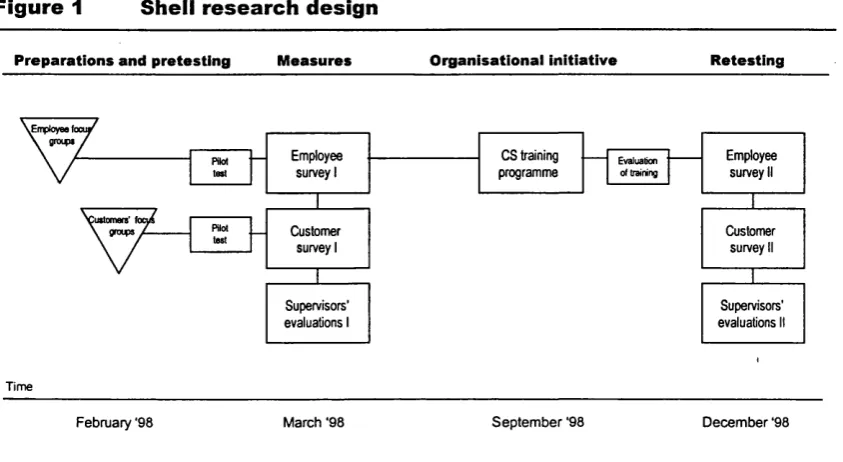
carried out w ithin Shell are show n schematically in figure 1. Each element,
focus groups, employee and customer surveys, supervisors' evaluations,
Figure 1 Sh ell resea rch d esig n
Preparations and pretesting M easures Organisational initiative R etesting
Pilot Pilot E valuation of training Supervisors' evaluations II Customer survey II Customer survey I Supervisors’ evaluations I Employee survey II Employee survey I CS training programme
February '98 March ‘98 September ‘98 December ‘98
2.3.1 Focus groups
The first step in the data collection procedures w as to hold focus groups
involving Shell employees and customers. Before adm inistering employee
surveys at Shell, three employee focus groups (N=29) w ere held to collect
qualitative inform ation about organisational culture, custom er service
behaviours, employee m anagem ent relations, and organisational structure.
Employees were random ly selected to participate in the focus groups
including employees of all ages from all service units in the company. The
employees were asked to discuss various issues in the w orking and service
environm ents. The aim of the focus groups was to exam ine employees'
term inology in Icelandic to enhance the validity and reliability of the
[image:42.595.18.440.131.362.2]translated em ployee questionnaire to be used in the later p a rt of the research.
In addition, qualitative m ethods allowed for an in-depth exam ination of
underlying organisational issues. As Judd et al., (1991) have pointed out, the
"interview er has the freedom to explore reasons an d m otives and to probe
further in directions that w ere unanticipated" (p. 261) prior to the study.
In addition, custom er focus groups w ere used to insure a com prehensive
i
exam ination of service issues relevant to the particular com pany and its
custom ers as well as an accurate term inology in the custom er surveys to be
carried out at later stages in the study. Four focus groups w ere conducted
(N=36) and the participants were random ly selected from Shell's current
customers. The prerequisite was that the participants had to have
experienced Shell service in the preceding m onth. Age and gender of the
customers were congruent w ith the com pany's custom er age and gender
ratios. The results of the focus groups' discussions w ere then used to, adapt
the com pany's new customer service training program m e to better
emphasise issues im portant for m eeting custom ers' expectations and needs
2.3.2 Employee surveys
The second step in the research process w as a com prehensive data collection
process including both employee surveys at Shell and in six other Icelandic
service organisations. The purpose of all of the em ployee surveys w as to
collect data on employees' self-reported custom er oriented behaviours, their
organisational citizenship behaviours and the suggested antecedents of
COBEH (see Appendix).
Of the surveys, the Shell survey w as the m ost com prehensive one and
included additional items regarding various organisational factors. The Shell
questionnaire contained 104 statem ents adapted from previously validated
scales m easuring a num ber of relevant employee attitudes, perceptions and
behaviours such as: job satisfaction, job conditions, com m itm ent, extrinsic
well-being, employee-m anagem ent relations, custom er service issues and
competencies as well as customer service oriented behaviour (see Appendix).
The Shell employee survey (paper-and-pencil) was conducted twice, first
before the service training program m e and then nine m onths later or three
m onths after the program m e had been completed.
The tw o employee surveys at Shell were conducted at the 18 gas stations
ow ned and operated by the Shell group in Iceland and in the other six
participating companies. Front-line service providers participated in the
surveys. Before the im plem entation of the questionnaires, a pilot test was
conducted to ensure accurate term inology of the translated questionnaires.
Slight changes were m ade in term inology regarding organisational
com m itm ent and calculative orientation as a result of the pilot tests (the
Icelandic w ords and phrases used to m easure these item s w ere changed to
better fit the level of understanding of the participants. See Appendix). In
the first Shell survey (N=103), the response rate w as 94 percent an d in the
second survey the response rate was 85 percent.
In the six other participating companies, employees participated in one
employee survey (paper-and-pencil) focusing on custom er-oriented
behaviour, organisational citizenship behaviour and COBEH antecedents
(see Appendix). The data were collected over the duration of the Shell study.
The response rates w ere 80-94% depending on the size an d location of the
companies (larger companies w ith more than one location had a lower
2.3.3 Customer surveys
In addition to the employee surveys at Shell and the other six service
organisations, the collection of customer data at Shell w as the th ird step in
d ata collection for this study. The customer surveys w ere conducted before,
during, and after the Shell service training program m e, to m onitor possible
changes in customers' service perceptions at Shell follow ing the program m e.
Also, customer perceptions w ere needed to examine the im pact of customer-
oriented behaviours on customers' perceptions of service outcom es land for
the comparison of customer-oriented behaviour and organisational
citizenship behaviour in a service context. Key dim ensions of service quality
identified in the service and m arketing literature w ere used to construct a
questionnaire for m easuring customer perceptions (see Appendix).
The first customer survey at Shell was conducted by the G allup O rganization
in Iceland six m onths before the customer service training program m e was
announced and the second one three m onths after front-line w orkers had
com pleted their training. Three m onths were designated as an appropriate
w aiting period before conducting the second survey due to possible effects of
participation in the training sessions. Davies (1989) has pointed out that if
training involves developm ent of interpersonal skills of some type, then the
repeated m easure should be conducted at least three m onths after the
completion of the program m e so that the participants have had an
opportunity to p u t into practice w hat they have learned.
The data in the custom er surveys were collected by telephone from a sample
of 900 customers each time, m easuring customer perceptions of the service at
all 18 gas stations. The response rates were 80 percent for the first survey
and 75 percent for the second survey. Custom ers included in the surveys
were random ly selected from the stations' custom er base and on-sight at
every station to insure that custom ers' perceptions from all stations were
represented in the study. T-tests of the two sam ples from every station
(from customer base and on-site) did not reveal a statistical difference
betw een the samples.
In sum, the customer survey data provided an opportunity to compare
employee self-reported customer-oriented behaviour to both supervisor and
customer perceptions of the employees' behaviours. The aim of the research
design was to provide evidence to confirm or discard the COBEH constructs'
convergent validity and to provide an opportunity to empirically test the
impact of customer-oriented behaviour on service outcom es in organisational
2 .3 .4 S u pervisors’ evalu ation s
Supervisors are in m any cases an organisation's only providers of em ployee
perform ance evaluations. In spite of the m any im plications of supervisors'
evaluations, over 90 percent of businesses having perform ance appraisal-
program m e use the immediate supervisor as the rater or appraiser
(Henderson, 1980). Due to the w idespread application of supervisor
evaluationsof employee performance an exam ination of if and to w h at extent
supervisors' evaluations of employees' custom er orientation can be utilised
to predict customer perceptions of the service provided is compelling. This
forth step in the study's data collection provided an opportunity for a three-
dimensional approach to the examination of the COBEH construct th ro u g h a
com parison of supervisors' evaluations of their employees custom er-oriented
behaviours and employee self-assessment of their ow n behaviours. In
addition a m easure of customer perceptions of the em ployee-custom er
contact provided an opportunity to com pare not only supervisors'
evaluations to employee self-reported behaviours b u t also to custom er
perceptions of those behaviours (as described above).
Supervisors at nine of the 18 Shell stations participated in this study and
evaluated their employees individually on the same six statem ents as their
employees rated their own customer-oriented behaviour. In addition to the
six COBEH statements the supervisors were asked to evaluate the overall
service success of each employee.
To minimise the risk of rater error the supervisors participated in a short
sem inar on performance appraisals (held by HRM consultants w orking for
Shell) before they filled out the questionnaire. The d ata provided by the
supervisors were used to examine the relation betw een supervisors'
evaluations and employee self-reported data and the relations of the data to
customer perceptions. The supervisors repeated the evaluation three m onths
after the customer service training had been conducted in connection w ith
the second customer and employee surveys.
/ 2.3.5 Evaluation of training
A lack of empirical evidence supporting the effectiveness of various hum an
resource program m es undertaken by organisations to enhance service
delivery is evident in the hum an resource and service m anagem ent
literature. Therefore the fifth and final step included in the research design
of this study attem pted to monitor the effectiveness of such a program m e at
Shell and the impact of employee training participation on the extent of their