http://www.scirp.org/journal/ajps ISSN Online: 2158-2750
ISSN Print: 2158-2742
Evaluation of Wheat Varietal Performance
under Different Nitrogen Sources
Aaqil Khan
1,2*, Ahmad Khan
2, Jincai Li
1, Muhammad Irfan Ahmad
1, Alam Sher
1, Arif Rashid
3,
Waqar Ali
41School of Agronomy, Anhui Agricultural University, Hefei, China
2Department of Agronomy, Faculty of Crop Production Sciences, The University of Agriculture, Peshawar, Pakistan
3Department of Crop Biotechnology, Anhui Agricultural University, Hefei, China 4Depatment of Chemistry, Bacha Khan University, Charsadda, Pakistan
Abstract
Nitrogen fertilization plays a very important role for crop productivity. New developed wheat varieties need proper fertilization for improved crop produc-tivity. The present study was carried out to quantify, the effects of nitrogen derived from urea and FYM on the four newly developed wheat varieties i.e. Siran-2009, Ata Habib, Janbaz-2009 and Pirsabak-2008 for yield improve-ment, quality and soil fertility status. The N treatments were control, 100% of the recommended nitrogen from urea as well as FYM, and 50% from each source. The experiment was carried out at New Developmental Farm, Khyber Pakhtunkhwa Agricultural University Peshawar Pakistan, during Rabi 2011- 12. Results of the data showed that Janbaz-2009 was more responsive to bio-logical yield (11,011 kg∙ha−1), grain yield (4339 kg∙ha−1), and nitrogen use effi-ciency (14.8%), whereas Siran-2010 performed better for grain N contents (2.31%). Plots having both urea and FYM had improved biological yield (11,958 kg∙ha−1), and grain yield (4901 kg∙ha−1). Urea application had im-proved straw N contents (0.92%) in addition to Mix application of urea and FYM (0.93%). Mix application of both sources and sole FYM had higher grains N content (2.25%), whereas control plots in addition to mix application had improved nitrogen use efficiency (14.8%). Siran-2010 and Janbaz-2009 performed better in FYM and mix FYM and urea plots for most of the para-meters. It was concluded from the experiment that Janbaz-2009 had improved yield and yield components, whereas Siran-2010 had improved the grain N content. Similarly, Mix application of FYM and urea had improved crop productivity, soil fertility and grains as well as straw N content. Thus wheat varieties Janbaz-2009 sown in mix FYM and urea is recommended for general cultivation in agro-climatic condition of Peshawar.
How to cite this paper: Khan, A., Khan, A., Li, J.C., Ahmad, M.I., Sher, A., Rashid, A. and Ali, W. (2017) Evaluation of Wheat Varietal Performance under Different Ni-trogen Sources. American Journal of Plant Sciences, 8, 561-573.
https://doi.org/10.4236/ajps.2017.83039 Received: January 27, 2017
Accepted: February 21, 2017 Published: February 24, 2017 Copyright © 2017 by authors and Scientific Research Publishing Inc. This work is licensed under the Creative Commons Attribution International License (CC BY 4.0).
http://creativecommons.org/licenses/by/4.0/
Keywords
Wheat (Triticum avestium L.), Yield, Urea, Farm Yard Manure
1. Introduction
Wheat (Triticum aestivum) is the most important food crop of the world, which occupied the largest crop area and has greater production than any other crop. In Pakistan, wheat is an important cereal crop and occupies about 65% of the total cropped area with an average yield of 2833 kg∙ha−1[1]. Lack of inputs man-agement for wheat crop is one of the many reasons for its lower productivity. [2]
to feed the ever-increasing human population. Achieving high yield of the po-tential wheat cultivars need quantification of adequate and balance nutrients. Nitrogen (N) is one of the primary nutrients, an integral part of the plant tissues and has both direct and indirect effects on the crop performance [3]. However, both excess and deficiency of N have adverse effects on the crop growth and de-velopment [4]. Higher N fertilization causes imbalance in N system, result in lower productivity and ultimately more N losses [5]. Losses of N depend on its source, and it is believed that urea and urea containing fertilizers have higher potential N losses than other nitrogen sources due to enzyme urease, which re-sult in hydroxylation of urea in to ammonia (NH3) and carbon dioxide. Soil in-corporated organic residues believed to improve soil bulk density, total porosity, macro and micro pores, soil water retention and soil hydraulic conductivity compared with untreated soil [6]. Manures are natural sources of plant nutrients
ef-ficiency and wheat productivity in agro-climatic conditions of Peshawar.
2. Materials and Methods
Field experiment on “Effect of N sources on the production of wheat varieties” was conducted at New Developmental Research Farm of Khyber Pakhtunkhwa Agricultural University Peshawar during 2011-12. The following factors and their levels were studied in the experiment. (Table 1)
Factor A: Varieties (Main plot) V1 Siran-2010
V2 Atta-habib V3 Janbaz-2009 V4 Pirsabak-2008 Factor B: N sources (Sub plot)
The experiment was carried out in randomized complete block design in split plot arrangement with four replications. Newly developed wheat varieties were allotted to main plot and N sources to sub plots. The sub plot size was 5 × 3 m2 having ten rows with row to row distance of 30 cm and row length of 5 m. FYM was soil incorporated 25 days before sowing, whereas urea N was applied in split half at sowing and other half after first irrigation. Recommended basal doses of P2O5 and K2O at the rate of 60 kg∙ha−1 each was applied at the time of sowing. All the agronomic and cultural practices including irrigation, weeding, hoeing etc. were practiced uniformly for all the treatment in each replication.
Data was recorded on the following parameters:
2.1. Biological Yield
Biological yield was recorded by harvesting the six central rows in each subplot and was sun dried. After drying it was weighed and was converted to kg∙ha−1 us-ing the formula:
(
1)
Biological yield in six central rowsBiological yield kg ha 10 000
No. of rows row lenght
R R
−
⋅ = ×
− × × ,
2.2. Grain Yield
Grain yield from six central rows was recorded for each subplot after threshing the grain from the dried samples harvested for biological yield. Sample data for grain yield was converted into kg·ha−1 using the following formula:
(
1)
Grain yield in six central rowsGrain yield kg ha 10 000
No.of rows row lenght
R R
−
⋅ = ×
[image:3.595.207.539.671.736.2]− × × ,
Table 1. The integrated N treatments consisting of inorganic and organic nitrogen.
Treatment % N derived from urea % N derived from FYM Pool N (kg∙ha−1)
T0 0 0 0
T1 100 0 120
T2 0 100 120
2.3. Harvest Index (%)
Harvest index was calculated using the following formula:
( )
Grain yieldHarvest index % 100
Biological yield
= ×
2.4. Soil Total Nitrogen
Soil total nitrogen for each treatment was determined following kjeldahl proce-dure [11] at the end of the experiment.
2.5. Plant Nitrogen Analysis
To determine grains and straw nitrogen contents, samples were randomly taken from the seed lots and straw of each subplot after harvesting and threshing. Both plant tissue and mature grains was dried in oven at 50˚C till constant weight, and then was grinded by KINEMICE tissue grinder using 0.2 mm sieve and was store in the laboratories for further analysis.
2.6. Nitrogen Contents
Kjeldahl method was used for the determination of N content both in straw and mature grains according to the procedure outlined by [12].
2.7. Nitrogen Use Efficiency
Nitrogen use efficiency is the wheat grain yield (Gw) per unit of N supply (Ns), and was calculated by formula (Gw/Ns). Nitrogen supply was calculated as N applied as fertilizer plus total nitrogen uptake in control plots [13].
2.8. Statistical Analysis
Data obtained for each parameter was subjected to analysis of variance tech-nique appropriate for two factors randomize complete block design with split plot arrangements, to detect the significant differences among the treatments. Least significant difference (LSD) test [14] was carried out to separate the treat-ment means. Special planned mean comparisons was also made to achieve the specific goals of the research (Table 2).
3. Result and Discussion
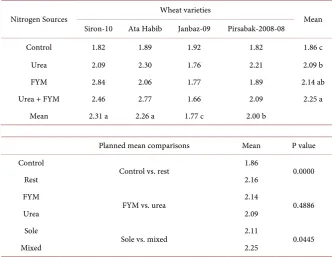
3.1. Nitrogen Content in Grains
(2.25) nitrogen content in grain in plots where Urea with FYM and lowest was recorded in variety Janbaz 1.77% shown in Table 3. Among planned mean comparisons control plots showed less content of nitrogen in grains (1.86%) than treated plots (2.16%). As compared to rest. 50% of recommended nitrogen derived from (urea + FYM) having maximum Nitrogen content in grains (2.25%) as compare to sole treated plots (2.11%) These results are in close agreement with the finding of [3][15]-[20].
Table 2. Soil physical and chemical properties at selected experimental site.
Soil Property Soil layers (cm) 0 - 15 15 - 30 Sand (%) 43.6 45.2
Silt (%) 45.5 33.4 Clay (%) 13 9
pH 7.36 7.63 Organic matter (%) 1.06 1.32 NO3-N (mg∙kg−1) 7 5
Total nitrogen (%) 0.148 0.096 P (mg∙kg−1) 1.98 1.19
K (mg∙kg−1) 110 112
Sulfur (mg∙kg−1) 3 3
Table 3. Nitrogen content (%) in grains of wheat varieties in response to sources of ni-trogen.
Nitrogen Sources Wheat varieties Mean Siron-10 Ata Habib Janbaz-09 Pirsabak-2008-08
Control 1.82 1.89 1.92 1.82 1.86 c Urea 2.09 2.30 1.76 2.21 2.09 b FYM 2.84 2.06 1.77 1.89 2.14 ab Urea + FYM 2.46 2.77 1.66 2.09 2.25 a
Mean 2.31 a 2.26 a 1.77 c 2.00 b
Planned mean comparisons Mean P value Control
Control vs. rest 1.86 0.0000
Rest 2.16
FYM
FYM vs. urea 2.14 0.4886
Urea 2.09
Sole
Sole vs. mixed 2.11 0.0445
Mixed 2.25
[image:5.595.206.539.453.710.2]3.2. Nitrogen Content in Straw
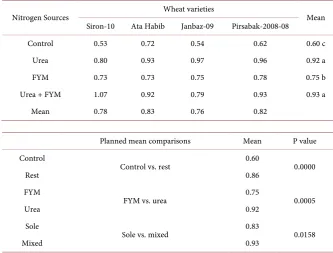
Nitrogen content in straw was significantly affected by different sources of ni-trogen and interaction between varieties and these nini-trogen sources, while re-sponse of variety were found non-significant. Planned mean comparisons i.e. control vs. rest, urea vs. FYM and sole vs. mixed were found significant (Table 4). Higher value for Nitrogen content in straw (0.93%) was examined in urea + FYM in plots statistically at par with those plots are fertilized with Urea fertil-izer. Among planned mean comparisons in plots where the level of treatment was zero having less nitrogen content in straw (0.60%) as compared rest of the plots (0.86%). Plots having FYM has lower nitrogen content in straw (0.75%) than those plots where urea was applied alone (0.92%).Combination of (urea + FYM) gave maximum nitrogen content in straw (0.93) as compare to sole appli-cation of nitrogen sources (0.83%). Interactive response of wheat varieties with different nitrogen sources showed that Sirn-2010 wheat variety were more posi-tively responsive in plots where both urea and FYM contributing 50% of N, whereas all other three varieties had higher straw nitrogen contents in plots having urea alone These results are supported by the findings of [21].
3.3. Nitrogen Use Efficiency (%)
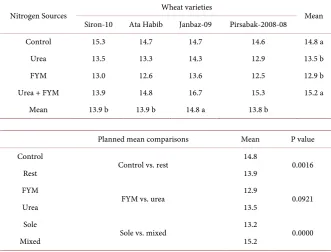
[image:6.595.205.539.448.701.2]Table 5 results are demonstrated that Nitrogen use efficiency (NUE) was sig-nificantly affected by wheat varieties and nitrogen sources while interaction be-tween wheat varieties and nitrogen sources were non-significant. Planned mean
Table 4. Nitrogen content in straw (%) of wheat varieties in response to sources of nitro-gen.
Nitrogen Sources Wheat varieties Mean Siron-10 Ata Habib Janbaz-09 Pirsabak-2008-08
Control 0.53 0.72 0.54 0.62 0.60 c Urea 0.80 0.93 0.97 0.96 0.92 a FYM 0.73 0.73 0.75 0.78 0.75 b Urea + FYM 1.07 0.92 0.79 0.93 0.93 a
Mean 0.78 0.83 0.76 0.82
Planned mean comparisons Mean P value Control
Control vs. rest 0.60 0.0000
Rest 0.86
FYM
FYM vs. urea 0.75 0.0005
Urea 0.92
Sole
Sole vs. mixed 0.83 0.0158
Mixed 0.93
Table 5. Nitrogen use efficiency (%) of wheat varieties in response to sources of nitrogen.
Nitrogen Sources Wheat varieties Mean Siron-10 Ata Habib Janbaz-09 Pirsabak-2008-08
Control 15.3 14.7 14.7 14.6 14.8 a Urea 13.5 13.3 14.3 12.9 13.5 b FYM 13.0 12.6 13.6 12.5 12.9 b Urea + FYM 13.9 14.8 16.7 15.3 15.2 a
Mean 13.9 b 13.9 b 14.8 a 13.8 b
Planned mean comparisons Mean P value Control
Control vs. rest 14.8 0.0016
Rest 13.9
FYM
FYM vs. urea 12.9 0.0921
Urea 13.5
Sole
Sole vs. mixed 13.2 0.0000
Mixed 15.2
LSD value for N source at p ≤ 0.05 = 0.7036; LSD value for wheat varieties at p ≤ 0.05 = 0.7374; Interaction (V × N) = NS; Means followed by same letter(s) within the same category are statistically non-significant using LSD test at P ≤ 0.05.
comparisons control vs. rest and sole vs. mixed were significant while Urea vs. FYM was not significant (Table 4) for NUE. Nitrogen use efficiency was higher for Janbaz-2009 (14.8%) compared to all other wheat verities where no statistical differences were observed for NUE. Combined application of urea and FYM, contributing 50% of the recommended N had higher NUE (15.2%) than sole ap-plication of urea (13.5%) and/or FYM (12.9%). However NUE in control were not statistically different than plots having both urea and FYM. The interaction between verity and sources of nitrogen was positive. The highest nitrogen use ef-ficiency was observed in wheat cultivar Janbaz (14.8) at par with Siron-10 (13.9). Planned mean comparison showed that in sole plots 13.2% had lower NUE than mixed (FYM vs Urea) plots (15.2%). Our results are in line with the finding of
[20][22].
3.4. Biological Yield (kg
∙
ha
−1)
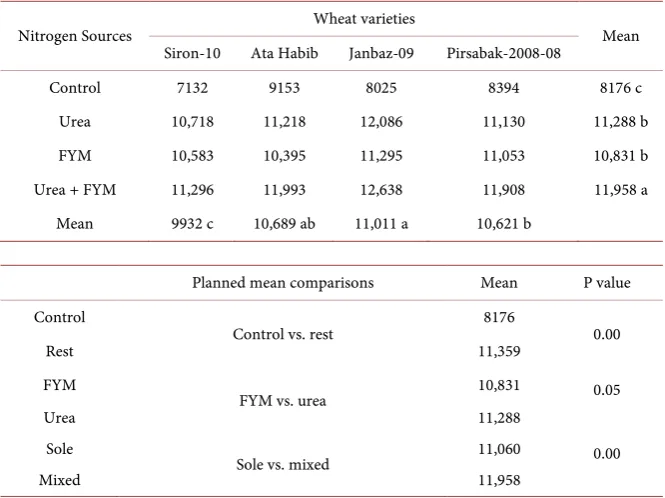
Table 6. Biological yield of wheat varieties in response to sources of nitrogen.
Nitrogen Sources Wheat varieties Mean Siron-10 Ata Habib Janbaz-09 Pirsabak-2008-08
Control 7132 9153 8025 8394 8176 c Urea 10,718 11,218 12,086 11,130 11,288 b FYM 10,583 10,395 11,295 11,053 10,831 b Urea + FYM 11,296 11,993 12,638 11,908 11,958 a
Mean 9932 c 10,689 ab 11,011 a 10,621 b
Planned mean comparisons Mean P value Control
Control vs. rest 8176 0.00
Rest 11,359
FYM
FYM vs. urea 10,831 0.05
Urea 11,288
Sole
Sole vs. mixed 11,060 0.00
Mixed 11,958
LSD value for N source at p ≤ 0.05 = 461.3; LSD value for wheat varieties at p ≤ 0.05 = 371.1; Interaction (V × N) = *
Biological yield (11,288 kg∙ha−1) was higher in urea applied plots as compared to FYM incorporated plots. Mixed (urea + FYM) plots gave greater biological yield (11,958 kg∙ha−1) than sole application. These results are confirm with finding [18][20].
3.5. Grain Yield (kg
∙
ha
−1)
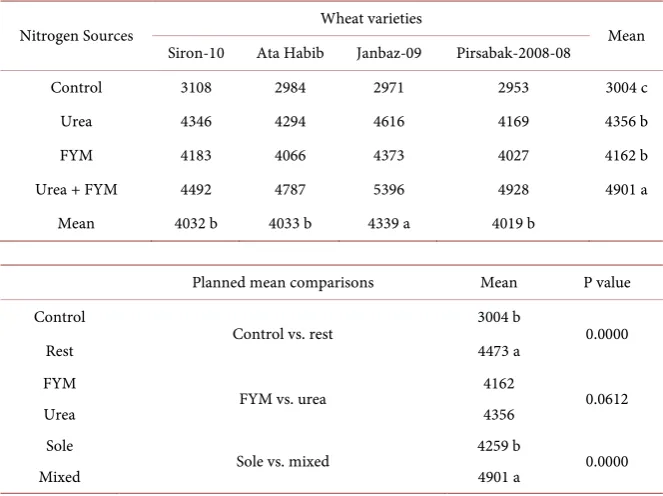
Table 7. Grain yield of wheat varieties in response to sources of nitrogen.
Nitrogen Sources Wheat varieties Mean Siron-10 Ata Habib Janbaz-09 Pirsabak-2008-08
Control 3108 2984 2971 2953 3004 c Urea 4346 4294 4616 4169 4356 b FYM 4183 4066 4373 4027 4162 b Urea + FYM 4492 4787 5396 4928 4901 a
Mean 4032 b 4033 b 4339 a 4019 b
Planned mean comparisons Mean P value Control
Control vs. rest 3004 b 0.0000
Rest 4473 a
FYM
FYM vs. urea 4162 0.0612
Urea 4356
Sole
Sole vs. mixed 4259 b 0.0000
Mixed 4901 a
LSD value for N source at p ≤ 0.05 = 203; LSD value for wheat varieties at p ≤ 0.05 = 226; Interaction (V × N) = NS; Means followed by same letter (s) within the same category are statistically non significant using LSD test at P ≤ 0.05.
3.6. Harvest Index (%)
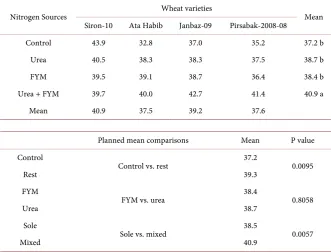
Harvest index were significantly affected by nitrogen sources, whereas wheat va-rieties and interaction response were non-significant. Among planned mean comparisons control vs. rest and sole vs. mixed were significant, whereas urea vs. FYM were not significant shown in Table 8. The higher harvest index (40.9%) was noted in urea + FYM incorporated plots whereas lower harvest index (37.2%) was recorded in plots where no application was applied. In planned mean comparisons control plots had lower harvest index (37.2%) than plots (39.3%) where application was applied. Combined application of (urea + FYM) had resulted in greater harvest index (40.9%) as compare to sole application of N sources (38.5%). Harvest index was higher in fertilized plots over the control. Crop fertilization had significantly affected both grain yield and biological yield in non-proportional way, and thus quantified for the variation in the significant harvest index. Our results agree the finding of [28], who were of the opinion that crop fertilization had significant effects on the harvest index. No significant var-iations among the varieties were observed for harvest index.
3.7. Nitrogen Content in Soil
Table 8. Harvest index of wheat varieties in response to sources of nitrogen.
Nitrogen Sources Wheat varieties Mean Siron-10 Ata Habib Janbaz-09 Pirsabak-2008-08
Control 43.9 32.8 37.0 35.2 37.2 b Urea 40.5 38.3 38.3 37.5 38.7 b FYM 39.5 39.1 38.7 36.4 38.4 b Urea + FYM 39.7 40.0 42.7 41.4 40.9 a
Mean 40.9 37.5 39.2 37.6
Planned mean comparisons Mean P value Control
Control vs. rest 37.2 0.0095
Rest 39.3
FYM
FYM vs. urea 38.4 0.8058
Urea 38.7
Sole
Sole vs. mixed 38.5 0.0057
Mixed 40.9
LSD value for N source at p ≤ 0.05 = 1.909; LSD value for wheat varieties at p ≤ 0.05 = NS; Interaction (V × N) = NS.
Table 9. Nitrogen content in soil (%) after wheat varieties harvest in response to sources of nitrogen.
Nitrogen Sources Wheat varieties Mean Siron-10 Ata Habib Janbaz-09 Pirsabak-2008-08
Control 0.05 0.04 0.05 0.04 0.05 d Urea 0.05 0.06 0.07 0.05 0.06 c FYM 0.07 0.06 0.05 0.09 0.07 b Urea + FYM 0.08 0.08 0.08 0.08 0.08 a
Mean 0.06 0.06 0.06 0.07
Planned mean comparisons Mean P value Control
Control vs. rest 0.05 0.0000
Rest 0.07
FYM
FYM vs. urea 0.07 0.0441
Urea 0.06
Sole
Sole vs. mixed 0.06 0.0004
Mixed 0.08
LSD value for N source at p ≤ 0.05 = 0.0071; LSD value for wheat varieties at p ≤ 0.05 = NS; Interaction (V × N) = **; Means followed by same letter (s) within the same category are statistically non-significant using LSD test at P ≤ 0.05.
[image:10.595.205.539.407.661.2]content in soil (0.05%) as compared to rest of the plots (0.07%). Comparing sole sources of N, FYM has higher nitrogen content in soil (0.07%) than urea applied plots (0.06%). Combined application of urea and FYM had resulted in greater N content in soil (0.08%) than using the sole sources of N (0.06%). Interactive re-sponse of varieties and nitrogen sources showed that Sirn-2010, Janbaz-2009 and Ata Habib had higher soil total N content in plots where both FYM and urea was applied, whereas Pirsabak-2008 were more responsive in FYM applied plots. These findings were in close conformity with result of [15][16].
References
[1] MINFAL (2011) Agriculture Statistics of Pakistan. Govt. of Pakistan, Ministry of Food, Agriculture and Livestock. Economic Wing, Islamabad.
[2] Mikhail, A.S. and Jamieson, P.D. (2007) Deconvoluting Nitrogen Use Efficiency in Wheat: A Simulation Study. European Journal of Agronomy, 26, 283-294.
https://doi.org/10.1016/j.eja.2006.10.009
[3] Malhi, S.S., Lemke, R., Wang, Z.H. and Chhabra, B.S. (2006) Tillage, Nitrogen and Crop Residue Effects on Crop Yield, Nutrient Uptake, Soil Quality, and Greenhouse Gas Emissions. Soil and Tillage Research, 90, 171-183.
https://doi.org/10.1016/j.still.2005.09.001
[4] Fan, M.F., Jiang, R., Liu, X., Zhang, F., Lu, S., Zeng, X. and Christie, P. (2005) Inte-ractions between Non-Flooded Mulching Cultivation and Varying Nitrogen Inputs in Rice-Wheat Rotations. Field Crops Research, 91, 307-318.
https://doi.org/10.1016/j.fcr.2004.08.006
[5] Abril, A., Baleani, D., Casado-Murillo, N. and Noe, L. (2007) Effect of Wheat Crop Fertilization on Nitrogen Dynamics and Balance in the Humid Pampas, Argentina. Agriculture, Ecosystems & Environment, 119, 171-176.
https://doi.org/10.1016/j.agee.2006.07.005
[6] Shaaban, S.M. (2006) Effect of Organic and Inorganic Nitrogen Fertilizer on Wheat Plant under Water Regime. Journal of Applied Sciences Research, 2, 650-656. [7] David, C., Jeuffroy, M.H., Laurent, F., Mangin, M. and Meynard, J.M. (2005) The
Assessment of AZODYN-ORG Model for Managing Nitrogen Fertilization of Or-ganic Winter Wheat. European Journal of Agronomy, 23, 225-242.
https://doi.org/10.1016/j.eja.2004.08.002
[8] Rasool, R., Kukal, S.S. and Hira, G.S. (2007) Soil Physical Fertility and Crop Per-formance as Affected by Long Term Application of FYM and Inorganic Fertilizers in Rice-Wheat System. Soil and Tillage Research, 96, 64-72.
https://doi.org/10.1016/j.still.2007.02.011
[9] Torbert, H.A., Potter, K.N. and Morrison Jr., J.E. (2001) Tillage System, Fertilizer Nitrogen Rate, and Timing Effect on Corn Yields in the Texas Blackland Prairie. Agronomy Journal, 93, 1119-1124. https://doi.org/10.2134/agronj2001.9351119x
[10] Khan, M.A., Hussain, I., Baloch and Sayal, O.U. (2001) Evaluation of Wheat Varie-ties for Grain Yield in D.I. Khan. Sarhad Journal of Agriculture, 17, 41-46.
[11] Bremnerand, J.M. and Mulvaney, C.S. (1982) Nitrogen Total. In: Miller, A.L. and Keeney, D.R., Eds., Method of Soil Analysis, Part 2, 2nd Edition, American Society of Agronomy, Madison, 395-622.
[12] Westerman, R.L. (1990) Soil Testing and Plant Analysis. 3rd Edtion, SSSA, Madi-son, 534-587.
An Evaluation of Cropping System Differences in Productivity. Agronomy Journal, 85, 898-905. https://doi.org/10.2134/agronj1993.00021962008500040022x
[14] Jan, M.T., Shah, P., Hoolinton, P.A., Khan, M.J. and Sohail, Q. (2009) Agriculture Research: Design and Analysis. Department of Agronomy, Agricultural University Peshawar, Peshawar.
[15] Gangwar, K.S., Singh, K.K., Sharma, S.K. and Tomar, O.K. (2006) Alternative Till-age and Crop Residue ManTill-agement in Wheat after Rice in Sandy Loam Soils of Indo-Gangetic Plains. Soil & Tillage Research, 88, 242-252.
https://doi.org/10.1016/j.still.2005.06.015
[16] Warkentin, B.P. (2000) Tillage for Soil Fertility before Fertilizers. Canadian Journal of Soil Science, 80, 391-393. https://doi.org/10.4141/S99-108
[17] Nakamoto, T., Yamagishi, J. and Miura, F. (2006) Effect of Reduced Tillage on Weeds and Soil Organisms in Winter Wheat and Summer MaIze Cropping on Hu-mic Andosols in Central Japan. Soil & Tillage Research, 85, 94-106.
https://doi.org/10.1016/j.still.2004.12.004
[18] Shah, Z. and Ahmad, M.I. (2006) Effect of Integrated Use of Farm Yard Manure and Urea on Yield and Nitrogen Uptake of Wheat. Journal of Agricultural and Bio-logical Science, 1, 60-65.
[19] Aulakh, M.S., Khera, T.S., Doran, J.W., Singh, K. and Singh, B. (2000) Yield and Nitrogen Dynamics in a Rice-Wheat System Using Green Manure and Inorganic Fertilizer. Soil Science Society of America Journal, 64, 1867-1876.
https://doi.org/10.2136/sssaj2000.6451867x
[20] Woyema, A., Bultosa, G. and Taa, A. (2012) Effect of Different Nitrogen Fertilizer Rates on Yield and Yield Related Traits for Seven Durum Wheat Cultivars Grown at Sinana, South Eastern Ethopia. African Journal of Food, Agriculture, Nutrition and Development, 12, 6079-6094.
[21] Halvorson, A.D., Wienhold, B.J. and Black, A.L. (2001) Tillage and Nitrogen Fer-tilization Influences on Grain and Soil Nitrogen in a Spring Wheat-Fallow System. Agronomy Journal, 93, 1130-1135. https://doi.org/10.2134/agronj2001.9351130x
[22] Lopez-Bellido, L., Lopez-Bellido, R.J., Castillo, J.E. and Lopez-Bellido, F.J. (2001) Effects of Long-Term Tillage, Crop Rotation and Nitrogen Fertilization on Bread- Making Quality of Hard Red Spring Wheat. Field Crops Research,72, 197-210.
https://doi.org/10.1016/S0378-4290(01)00177-0
[23] Ortega, R.A., Peterson, G.A. and Westfall, D.G. (2002) Residue Accumulation and Changes in Soil Organic Matter as Affected by Cropping Intensity in No-Till Dry Land Agro Ecosystems. Agronomy Journal, 94, 944-954.
https://doi.org/10.2134/agronj2002.9440
[24] Badaruddin, M., Reynolds, M.P. and Ageeb, O.A.A. (1999) Wheat Management in Warm Environments: Effect of Organic and Inorganic Fertilizers, Irrigation Fre-quency, and Mulching. Agronomy Journal, 91, 975-983.
https://doi.org/10.2134/agronj1999.916975x
[25] Hossain, S.M.A., Kamal, A.M.A., Islam, M.R. and Mannan, M.A. (2002) Effects of Different Levels of Chemical and Organic Fertilizers on Growth, Yield and Protein Content of Wheat. Journal of Biological Sciences, 2, 304-306.
https://doi.org/10.3923/jbs.2002.304.306
[26] Zhai, B. and Li, S. (2006) Study on the Key and Sensitive Stage of Winter Wheat Responses to Water and Nitrogen Coordination. Agricultural Sciences in China, 5, 50-56. https://doi.org/10.1016/S1671-2927(06)60019-9
Wheat Genotypes. Advances in Environmental Biology, 6, 756-762.
[28] Kwaw-Mensah, D. and Al-Kaisi, M. (2006) Effects of Tillage, Nitrogen Source and Rate on Corn Response in Corn-Soybean Rotation. Agronomy Journal, 98, 507-513.
https://doi.org/10.2134/agronj2005.0177
Submit or recommend next manuscript to SCIRP and we will provide best service for you:
Accepting pre-submission inquiries through Email, Facebook, LinkedIn, Twitter, etc. A wide selection of journals (inclusive of 9 subjects, more than 200 journals)
Providing 24-hour high-quality service User-friendly online submission system Fair and swift peer-review system
Efficient typesetting and proofreading procedure
Display of the result of downloads and visits, as well as the number of cited articles Maximum dissemination of your research work