scale in the context of early internationalizing firms from
an emerging economy
MOSTAFIZ, M.D.Imtiaz <http://orcid.org/0000-0002-4362-4521>, SAMBASIVAN, Murali and GOH, See Kwong
Available from Sheffield Hallam University Research Archive (SHURA) at:
http://shura.shu.ac.uk/25223/
This document is the author deposited version. You are advised to consult the publisher's version if you wish to cite from it.
Published version
MOSTAFIZ, M.D.Imtiaz, SAMBASIVAN, Murali and GOH, See Kwong (2019). Psychometric evaluation of Dynamic Managerial Capability scale in the context of early internationalizing firms from an emerging economy. Asia-Pacific Journal of Business Administration.
Copyright and re-use policy
See http://shura.shu.ac.uk/information.html
Psychometric evaluation of Dynamic Managerial Capability scale in the context of early
internationalizing firms from an emerging economy
Abstract
Purpose: The research aims to perform a psychometric evaluation of dynamic managerial
capability (DMC) scale in the context of early internationalizing firms from an emerging
economy. Drawing on DMC theory, this study validates the measurement scales to
operationalize DMC of entrepreneurs as managerial human capital, managerial social capital,
and managerial cognition.
Design/methodology: Sample firms were drawn from the apparel industry in Bangladesh, an
emerging economy. Data was collected from entrepreneurs in two waves through a
questionnaire-based survey. One hundred and eighty-five firms responded during the first wave
and 223 firms responded during the second wave. The first wave of data was used to conduct
exploratory factor analysis (EFA) to uncover the underlying dimensions of DMC and the data
from the second wave was used to test the validity of the DMC scale through confirmatory factor
analysis (CFA).
Findings: EFA suggested a 3-dimension scale which was supported by CFA. The findings of the
study demonstrate that DMC is a valid and reliable scale to capture the individual-level
capability of entrepreneurs.
Originality/value: DMC is rooted in three underlying attributes as managerial human capital,
managerial social capital, and managerial cognition. It is advisable to the practitioner and
researcher to operationalize DMC as a second-order construct in future studies.
Keywords: dynamic managerial capability; managerial human capital; managerial social
Introduction
Dynamic managerial capability (DMC) refers to the capabilities of the top-level manager to
create, extend and reconfigure resources and competencies of a firm (Adner & Helfat, 2003).
There are ongoing debates on the correlation between DMC and dynamic capability (DC).
Scholars define DMC as individual-level capability, whereas DC is related to the firm-level
capability (Helfat & Martin, 2015). DMC contributes to the capabilities of top-level managers to
transform organizational DC to effective resources of the firm (Barreto, 2010). In this research,
the term manager and entrepreneur are used interchangeably. It is because the early
internationalizing firms in emerging economies are operated by the founder who typically plays
the role of the CEO (Cerrato & Piva, 2015). Three underlying attributes are conceptualized to
theorize DMC and the attributes are managerial human capital (MHC), managerial social capital
(MSC), and managerial cognition (MC) (Helfat & Martin, 2015). These three attributes assist a
top manager to sense, seize and transform opportunities to respond to strategic changes
(Andersson & Evers, 2015; Teece, 2007). Majority of researches on DMC have been at the
conceptual level. This research paucity indicates the need for psychometric evaluation of the
attributes of DMC.
DMC is a sophisticated, unidimensional capability and challenging to measure directly.
The context plays a significant role in understanding DMC. None of the attributes of DMC is an
innate and inherent quality of top managers. These attributes require continuous attention and
practices to respond to strategic changes. Gradually, top managers develop this capability to create economic value for the organization (Harris & Helfat, 2013). Country’s economic
condition, government’s participation, legal policies influence the development process of the
have a higher level of academic qualification and better training than managers from emerging
economies (Tabares, Alvarez, & Urbano, 2015). Managers in developed economies have a
higher level of network engagement and global mindset to ensure success in the international
market (Nummela et al., 2014). All three attributes of DMC are interlinked and complement each
other to develop managerial skill, ability, and competencies to handle challenges in a volatile
business environment (Helfat & Martin, 2014).
MHC refers to “capabilities derived from skill, knowledge, and experiences possessed by
the manager of a firm” (Adner & Helfat, 2003:1016). The conceptualization of human capital is
based on the explanation of Becker (1964). Author has claimed that MHC is derived from the
educational background, training activities, prior managerial and entrepreneurial experiences.
MSC refers to the network relationships of top-level managers. Adler and Kwon (2002) posit that “social networking is analogous to other resources such as physical and human capital that
can create value” (p. 1018). It is not necessary that the social network has to be manifested from
outside the firm; it can also emerge from inside the firm through formal and informal
relationships. Adner and Helfat (2003) have argued that the external networks (directorships) can
help the manager to obtain vital information and create a network for future directorships, which
in turn can improve the performance of the firm. MC concentrates on the capacity of the
manager to process the information, by which the sensory input is reduced, stored, transformed,
recovered, elaborated and used (Neisser, 1967). Walsh (1995) and Elstein and Schwarz (2002)
posit that the MC is a mental process of decision-making and problem-solving capacity of the
manager through learning, understanding, reasoning and thinking. Adner and Helfat (2003) have
entrepreneurs. The knowledge structure of international entrepreneur is driven by a set of beliefs
which are distinctively different from traditional entrepreneurs. The inventory of knowledge
structure delivers international commitment and vision and influence these entrepreneurs to
behave pro-actively while internationalizing (Nummela et al. (2004). When domestic
entrepreneurs tend to mature first in the local markets, international entrepreneurs focus on
accelerated internationalization to create footprints in the international market (Weerawardena et
al. 2007).
Augier and Teece (2009), Martin (2011), and Kor and Mesko (2013) have highlighted the
importance of DMC of entrepreneurs in achieving superior firm performance as each attribute of
DMC has a pronounced effect. The defining feature of psychometric assessment is its empirical
foundation and this assessment is critical to understand the psychological states/abilities
(Atkinson, 2001). According to Granpeesheh et al. (2014), psychometric assessment of scales is
evaluated in terms of construct validity and reliability. The assessment helps to assure the
researcher that the information contained in the scale is reliable and valid. The reliability and the
validity of the DMC scale also shed light on international entrepreneurship literature by
providing measurement scales for future empirical research (Andersson & Evers, 2015). A
unidimensional scale is proposed in this study, which complements the theorization by Helfat
and Martin (2014). Authors argue that the operationalization of DMC should be conducted as a
uni-dimensional scale on the immediate outcome to identify the overall effects on firm
performance. The psychometric properties evaluation of DMC scale has not been addressed by
researchers. This study has attempted to fulfil this research gap. In doing so, academic research
on DMC will benefit by having a valid scale to operationalize DMC and capture the preeminent
foundation, we perform a psychometric evaluation of the DMC scale as a unidimensional
construct in the context of early internationalizing firms from an emerging economy. In doing
so, this research contributes to the study by Adner and Helfat (2003) and early
internationalization literature related to the context of emerging economies (Knight & Liesch,
2016).
Theoretical Background
The theory of DMC is an extension of the resource-based view (RBV) and dynamic capability
theory (DC). RBV highlights the importance of valuable, rare, inimitable, and non-substitutable
(VRIN) resources and competency of the firms to achieve competitive advances (Barney, 1991).
However, the propositions of RBV are generic because they have failed to answer the
mechanism to develop VIRN. DC has fulfilled that research gap by proposing the mechanism of
creating the resource base to deliver a competitive advantage (Teece, Pisano & Shuen, 1997).
Empirical studies profoundly recognize DC to explain the performance of the firms. However,
theoretical disputes arise when it comes to distinguishing individual-level capability and
firm-level capability.
While DC constitutes VRIN base of competitive advantage in the international market,
DMC advances the configuration and deployment process to achieve strategic goals (Makadok,
2001). The capabilities and the competencies to achieve strategic goals reside within the top
managers and entrepreneurs (Adner & Helfat, 2003). For example, the export performance of a
firm is influenced by individual resources such as effective decision-making capability of
entrepreneurs (MHC) (Kyvik et al., 2013; Oura, Zilber, & Lopez, 2016); networking capability
of entrepreneurs (MSC) (Adler & Kwon, 2002); and making the decision to export (MC)
the effect of DMC as the individual-level capabilities of an entrepreneur while analyzing the
success or failure of early internationalizing firms.
Adner and Helfat (2003) originally defined DMC as “the capabilities with which managers build, integrate, and reconfigure organizational resources and competencies” (p. 1012).
Later, substantial development has been done to complement the original definition. Helfat et al.
(2007) note DMC as the “capacity of the managers to create, extend, or modify the resource base of the organization” (p. 3). Later, O'Reilly and Tushman (2008) argued that DMC is the ability of
managers to “ ensure learning, integration, and when required, reconfiguration and
transformation-all aimed at sensing and seizing opportunities as market evolves” (p. 189). Harris
and Helfat (2013) expand DMC and highlight the ability of the manager to respond to external
challenges, along with the ability to reconfigure internal resource and competencies. It is also
mentioned in the earlier literature that DMC enables the manager to continuously sense, seize,
and transform opportunities in an extremely volatile market (Mostafiz, Sambasivan, & Goh,
2019b). However, none of the studies has provided unidirectional effects of DMC on strategic
changes (Helfat & Martin, 2015).
Majority of the studies on DMC are at the conceptual level, which has increased the need
for empirical investigation (Helfat & Martin, 2015). The attributes of DMC complement each
other and similar antecedents may contribute simultaneously to these attributes (Beck &
Wiersema, 2013). For instance, Helfat and Martin (2015) argue that “managerial cognition
affects the development of human capital by influencing the search for, and absorption of,
information during education, training, and work experience, as well as how managers interpret and utilize this information” (p. 1287). In addition, Ployhart and Moliterno (2011) develop the
of individual’ knowledge, skills, abilities, and other characteristics by explicating an emergence
enabling process that amplifies and transform individual cognition into valuable human capital resources” (p. 128). Besides, the managerial cognition also drives the manager to strengthen their
social networking through related and positive behavioural practices; however, not limited to, but
social capital also complements the development of managerial human capital. For instance,
Leitch, McMullan, and Harrison (2013) provide evidence that skill development (component to
human capital) is benefited from the manager's social ties with the participants in the program. It
could be vice-versa as managers seek to create a new network to tap the skills and expertise of
other executives and embrace knowledge spillovers. This knowledge may influence managerial
knowledge structure, belief system and mental model to respond to the external challenges,
opportunities, and strategic actions.
Various types of strategic actions get complimented by DMC. For instance, Sirmon and
Hitt (2009) provide evidence that DMC enhances investment and resource deployment capability
of firms. According to Eggers (2012), the importance of DMC is in improving the quality of the
new product. Ringov (2013) shows the effects of DMC in developing better fund performance in
the dynamic market. In terms of firm-level capability, Tushman, Smith, Wood, Westerman, and O’Reilly (2010) argue that DMC improves innovation capability of the firm. In a similar vein,
Martin (2011) argues that DMC increases the capability to launch a new product, reconfigure
business unit resources, establish new business and elevate financial performance. Current
research also highlights the importance of DMC in the international business context. For
instance, Mostafiz, Sambasivan, and Goh (2019a); Mostafiz et al. (2019b) show the effect of
DMC, after dropping managerial capital, in achieving superior performance in foreign market
operationalized as a second-order variable in a unidimensional model. As of now, existing
research shows paucity in operationalizing DMC as a second-order construct. This study
attempts to contribute to the existing literature by providing knowledge on the psychometric
evaluation of DMC attributes in early internationalizing from emerging economy context.
Measurement of attributes of DMC
Davidsson and Honig (2003) and De Carolis et al. (2009) have proposed four items to measure
MHC. These items include previous academic qualification, previous entrepreneurial experience,
previous managerial experience, and previous training experience. Previous studies have shown
the importance of MHC in management research. Heterogeneity in MHC creates more value in
firm performance (Campbell et al., 2012). Different kinds of skills from MHC facilitate multiple
operational and strategic level decision-making skills, such as asset bootstrapping (Dimov,
2010).
MSC (Managerial Social Capital) in management research is operationalized based on
managerial tie, trust, and solidarity. Peng and Luo (2000) and Li et al. (2008) have proposed
reflective dimensional factors such as political ties and business ties. McAllister (1995), Mayer
et al. (1995), and Johnson et al. (1996) have proposed managerial trust between the members of
the networks. Atuahene-Gima and Murray (2007) have proposed managerial solidarity to capture
the worth of the network and the participation of the member in the network.
The concept of MC (Managerial Cognition) is contextual. Kor and Mesko (2013) have conceptualized MC based on the firm’s dominant logic. MC is the managerial mindset and belief
system to respond to strategic changes. International entrepreneurs need a global mindset to
operate business internationally and achieve superior success. Nummela et al. (2004) have
pro-activeness, commitment to internationalization, and international entrepreneurial vision. The
effects of global mindset to achieve international performance in international business are well
researched.
Methods
A cross-sectional survey was conducted to collect data for analysis. A sample of 600 firms
operating in the apparel industry of Bangladesh was selected using the random sampling method.
The first wave of data was collected from 185 firms and data from 168 firms was used for
exploratory factor analysis (EFA). The second wave of data was collected from 223 firms and
data from 205 firms was used for confirmatory factor analysis (CFA). The respondents in this
study were entrepreneurs of international firms. These firms were registered in Bangladesh
garment manufacturers and exporters association (BGMEA) and Bangladesh knitwear
manufacturers and exporters association (BKMEA). Listed firms in BGMEA and BKMEA were
internationalized from inception and generated total revenue from the international market
(Faroque and Morrish, 2016). The data was collected between April 2017 and September 2017.
Assessment of face validity
Face validity of DMC was assessed in two stages. In stage one, ten entrepreneurs were asked to
comment on the appropriateness, relevance, difficulties, and ambiguity of the items. Since these
measurement items were adopted from the previous study, the level of ambiguities and
difficulties were low. In stage two, ten entrepreneurs were given the scale, and they were
directed to determine the importance of the items using a 5-point Likert scale (1= not important
and 5= completely important). Item impact score (importance * frequency ratio) was calculated
based on the responses. An item impact score of more than 1.5 was considered suitable and
Assessment of content validity
Content validity was assessed in two stages. In stage one, a qualitative assessment was done.
Ten experts (four entrepreneurs and six doctorate students in international business) assessed and
commented on the wording, item allocation and the scaling of the DMC’s attributes. The process
of qualitative content validity was conducted based on the guidelines by Colton and Covert
(2007), and the scales were revised based on the experts’ comments and feedback.
In stage two, a quantitative assessment was performed. Accordingly, the content validity
ratio (CVR) and the content validity index (CVI) were computed to assess the content validity of
the items. CVR highlights the essentiality of the items. Accordingly, ten experts who participated
in the face validity assessment were invited to evaluate the essentiality of DMC's items on a
three-point Likert scale. The scale included: not essential – 1, useful but not essential – 2, and
essential - 3. Based on the guidelines by Lawshe (1975), CVR was computed as follows: CVR =
(ne – (N/2))/(N/2) where N represents the total number of experts and ne represents the number of experts who scored ‘essential’ for the intended items of DMCs. Lawshe (1975) suggested that a
minimum acceptable score of CVR was 0.62 when the number of experts was 10.
CVI indicates the degree of relevancy, simplicity and the clarity of the items in the scale.
This study asked the ten experts to rate relevancy, simplicity, and clarity of the DMC's items on a
four-point Likert scale (1 = not relevant; 4 = highly relevant). This study calculated CVI for
individual items based on the guidelines by Polit and Beck (2006). CVI value of the items higher
than or equal to 0.78 was considered adequate and appropriate (Polit and Beck, 2006). Table 1
Assessment of construct validity
Internal consistency of the constructs was assessed through Cronbach’s alpha and construct
reliability (CR). An alpha value and CR score of more than 0.7 are considered adequate (Hair et
al., 2010). EFA was performed by following maximum likelihood estimation to assess the
construct validity of DMC scales by using SPSS version 24. It is recommended that the
minimum threshold sample size for EFA analysis should be higher or equal to 5-10 times the
number of items (Hair et al., 2010). Responses obtained during the first wave were used for EFA.
During the period of data collection for EFA analysis, we administered 300 questionnaires. We
received responses from 185 entrepreneurs. After handling the missing values, 168 responses
were used to perform EFA analysis. Varimax rotation procedure was used in the EFA analysis.
We used the Kaiser-Meyer-Olkin (KMO) test and Bartlett's test of Sphericity to assess the
appropriateness of the study sample. Eigenvalues and scree plot were used to determine the
number of components. This study limited the threshold of factor loading to 0.50 (Hair et al.,
2010).
The second wave of data was used to perform CFA analysis. Three hundred
questionnaires were distributed to firms different from the first wave and 223 firms responded.
After handling the missing value, 205 valid cases were used for CFA analysis, which was
performed using IBM AMOS version 24 (Arbuckle, 2013). This two-step process of performing
EFA and CFA was suggested by Kline (2000). Multiple model fit indices were used to measure
the adequacy of the measurement model, such as X2 goodness of fit indices, normed X2 (CMIN/df
< 3), root-mean-square error of approximation (RMSEA < 0.08), standardized root-mean-square
residual (SRMR < 0.1), comparative fit index (CFI > 0.90), goodness-of-fit index (GFI > 0.90),
Schreiber et al., 2006). Convergent validity and discriminant validity assessments were
conducted by using construct reliability and Fornell and Larcker (1981) criterion, respectively
(Ho, 2013).
Results
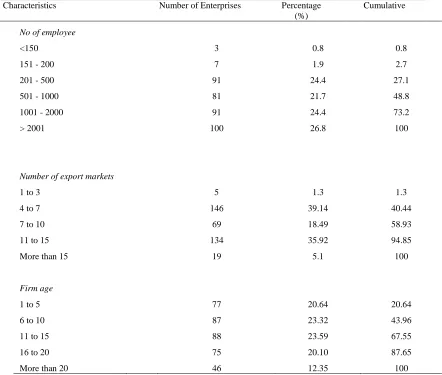
The overall response rate was 65%, including the first and second waves. Table 1 highlights the
characteristics of the data. More than 50% of the firms had more than 1000 employees, and more
than 98% of the firms were operating in more than four international markets. About 20.6% of
the firms were young and less than five years old.
(Table 1 goes here)
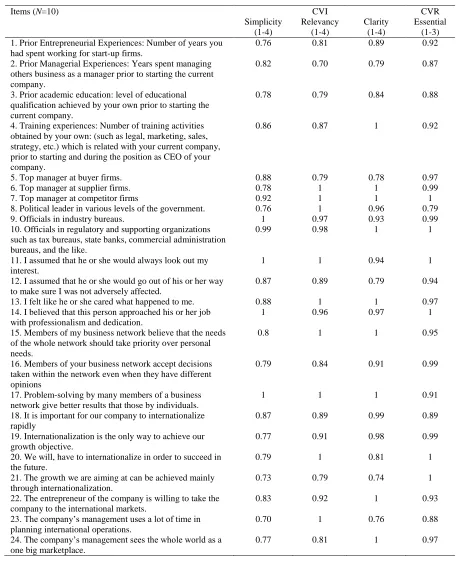
Table 2 highlights the results of CVR and individual CVI score for 24 items of DMC. Ten experts evaluated and assessed the DMC’s scale in terms of simplicity, relevancy, clarity and
essentiality. The impact score of each of the 24 items is more significant than 1.5. Both CVR
and individual CVI scores of DMC scale are higher than 0.62 and 0.78, respectively. Therefore,
no item was excluded from the DMC scale.
(Table 2 goes here)
EFA and CFA analyses
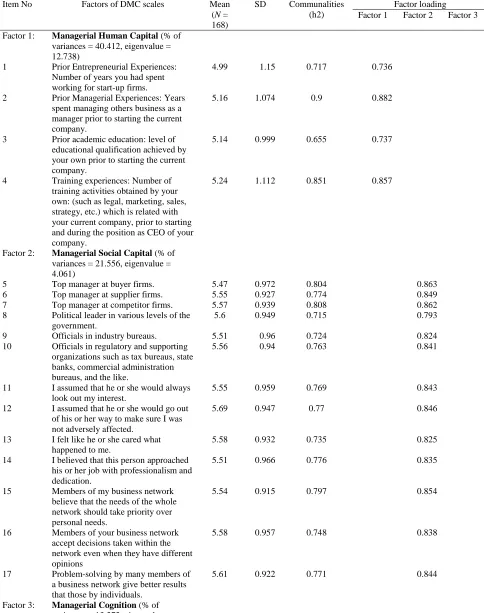
The KMO score of the EFA analysis was 0.931. This result indicates the adequacy level of data and sample size in the EFA analysis. The Bartlett’s Test of Sphericity test results (X2 = 4445.911,
df = 276, p-value = 0.000) indicate the appropriateness of the model. These two tests help the
study to establish the suitability of the data for EFA. Table 3 highlights the results of the EFA
analysis. The total variance explained by the three factors was 75.24%. The factor loading of the
(Table 3 goes here)
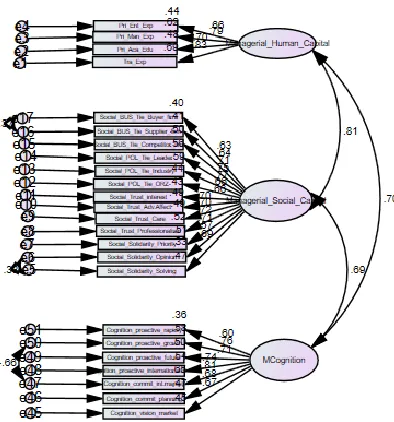
Figure 1 represents the measurement model for the CFA analysis. The measurement model
provides an adequate goodness-of-fit index. The model fit indices are: Chi-square = 491.088,
CMIN/df = 1.996, CFI = 0.907, IFI = 0.908, GFI = 0.843, SRMR = 0.0534, RMSEA (90% C.I.)
= 0.070. (0.061-0.079). Standardized estimates of all items from CFA analysis are higher than
0.50. Table 4 represents the results of construct validity.
(Figure 1 goes here)
(Table 4 goes here)
The AVE (average variance extracted) of factor 1, factor2, and factor 3 are 0.514, 0.482, and
0.508, respectively. This result confirms the convergent validity. The square root of AVE of each
factor is higher than the correlation of that factor with other factors, and this confirms that there
is no sign of discriminant validity (Fornell and Larcker, 1981). The CR score and alpha
reliability score of each factor are higher than 0.70; therefore, internal consistency is established
(Hair et al., 2010). The results of CFA analysis indicate good reliability and validity of DMC’s
scale.
Discussion
The current study aimed to perform a psychometric assessment of DMC scale in the context of
early internationalizing firms from an emerging economy. The scale was tested for face validity,
content validity and construct validity. Based on the EFA analysis, three attributes emerged in
line with the recommendation by Adner and Helfat (2003), Helfat and Martin (2014) and
Andersson and Evers (2015). None of the previous studies conceptualized DMC with any other
The first attribute (factor) identified by EFA analysis was MHC (managerial human
capital). Human capital in DMC captures education, experience, knowledge, skills (Wright et al.,
2014). Context plays a significant role in MHC, which leads to the development of tacit
knowledge and explicit knowledge (Kim & Lee, 2010; Bailey and Helfat, 2003; Castanias and
Helfat, 1991). Both tacit and explicit knowledge are relevant to sensing and seizing new
opportunities. In an emerging economy, entrepreneurs do not create opportunity; however, they
are more prone to identify new opportunities (Faroque and Morrish, 2016; Mostafiz,
Sambasivan, & Goh, 2019). MHC helps entrepreneurs to sense multiple types of opportunities
which are shaped by entrepreneurs absorptive capability (Cohen and Levinthal, 1990).
Concerning seizing and reconfiguring new opportunities, entrepreneurs from emerging
economies are opportunistic. The investment decision and market commitments differ based on the entrepreneurs’ learning and expertise (Helfat and Martin, 2014).
The second factor identified in EFA analysis was MSC (managerial social capital), which
captures social networking, quality and value of that networking to the entrepreneurs. The
sources of the network include formal, informal, internal, and external relationships of
entrepreneurs. MSC highlights the importance of brokerage positions, new links of individuals in
different industries and communities and these help managers and entrepreneurs to obtain
diversified information (Burt, 1992). External social ties of entrepreneurs provide them access to
resources and new opportunities (Pfeffer and Salancik, 1978). These resources include sources of
financing, skilled employees, investment opportunities, and unique sources of raw materials.
Trust and solidarity also facilitate power and advantageous positions in the network, which in
turn enable entrepreneurs to have control over resources. The concept of controlling the resource
increases influences in the organization (Coleman, 1988). According to Blyler and Coff (2003), “firms would be unable to acquire, recombine, and release resources” (p. 680) without
entrepreneurs’ and top managers’ social capital. Therefore, MSC helps entrepreneurs to sense,
seize and reconfigure new opportunities.
The third factor identified by EFA analysis was MC (Managerial Cognition). MC
captures the mindset and belief system of an entrepreneur. Kor and Mesko (2013) have
conceptualized MC of managers from a managerial dominant logic perspective. Andersson and
Evers (2015) have proposed a global mindset as MC of international entrepreneurs in an early
internationalization research setting. The global mindset has been proposed by Nummela et al.
(2004) to capture entrepreneurial pro-active behaviours of internationalization, international
commitment, and global vision. MC is a set of mental models and beliefs (Eggers and Kaplan,
2013; Walsh, 1995), emotions (Hodgkinson and Healey, 2011), and mental process (Helfat and
Peteraf, 2015).
MHC and MSC facilitate a large amount of information and sources that entrepreneurs
confront, but MC helps them to employ "knowledge structures to represent their information worlds” (Walsh, 1995, p.280). The knowledge structures such as commitment decision, proactive
behaviour, and vision make entrepreneurs optimistic and influence their biases and heuristics
which in turn facilitate them to anticipate market changes and the outcomes of strategic decisions
(Garbuio et al., 2011). Context plays a significant role when entrepreneurs want to transfer
knowledge structure between industries. The presence of higher cognitive capability in managers
enable them to create an association between different knowledge structures in multiple different
contexts (Gavetti, 2012). This ability of managers facilitates them to sense excellent market
al., 2012). MC in DMC includes reasoning and problem solving (international commitment),
attention (international vision), and emotion and perception (proactive behaviour). Based on the
preceding arguments, we submit that MHC, MSC, and MC are reliable and valid attributes of
DMC in the context of early internationalizing firms in emerging economies.
Besides direct effects, the three attributes have interaction effects between each other
(Adner and Helfat, 2003). For example, prior experiences of entrepreneurs complement all three
attributes (Beck and Wiersema, 2013). Educational qualification and prior experience affect MC
in terms of developing knowledge structure; the cognition level of entrepreneurs facilitate them
to gain relevant experience to improve their human capital (Helfat and Martin, 2014). This
concept supports the emerging enabling process of entrepreneurs to explain the emergence of an
individual's knowledge abilities, skills, and other interpersonal characteristics (Ployhart and
Moliterno, 2011). This process amplifies and develops entrepreneurial cognition into crucial
human capital resources. Similarly, information and knowledge delivered from social capital
improve MHC (Castanias and Helfat, 2001). In addition, MC as entrepreneurs' proactive
behaviour helps them to seek for new network and ties, which are also affected by perception
and attention of entrepreneurs.
Drawing on DMC theory, this study contributes to the development of the measurement
scale of DMC by conducting the psychometric evaluation. This study contributes to the body of
knowledge on DMC (Adner & Helfat, 2003) from the context of the early internationalized firm
in an emerging economy. The applicability of the finding of this study is not limited to emerging
economy; this measurement scale will complement a vast array of future research on any
economy. Managers are optimistic, which lead them to explore new opportunities. DMC is a
economic value continuously. All three components of DMC are equally crucial for the manager.
Therefore, the concurrent development of all three attributes is necessary to achieve success in
various strategic actions. The market is extremely volatile where failure is natural and success is
rare.
Conclusions, limitations and directions for future research
This research aims to perform a psychometric evaluation of dynamic managerial capability
(DMC) scale in the context of early internationalizing firms from an emerging economy. The
psychometric evaluation was performed through EFA and CFA based on the data obtained from
two waves of respondents. The findings of the study demonstrate that DMC is a valid and
reliable scale to capture the individual-level capability of entrepreneurs.
This study is not without limitations. First, in the CFA model, error terms were
correlated leading to measurement errors. The emergence of such errors may be due to the (1)
presence of similar words in multiple items and (2) negatively and positively worded statements
which have not been understood by the respondents (Harrington, 2008). This study is not free
from these types of errors. Second, the respondents have been only from one industry and from
one country. The future research can (1) conduct the study among multiple industries and
multiple countries, (2) empirically test the effects of the interaction between the three attributes,
and (3) conduct longitudinal research to redefine, verify and evaluate the adequacy of the scale in
a sophisticated research setting.
Reference
Adler PS and Kwon SW. (2002) Social capital: prospect for a new concept. Academy of Management Review 27 (1): 17-40.
Andersson S and Evers N. (2015) International opportunity recognition in international new ventures—a dynamic managerial capabilities perspective. Journal of International Entrepreneurship 13 (3): 260-276.
Antonelli C, Crespi F and Scellato G. (2013) Internal and external factors in innovation persistence. Economics of Innovation and New Technology 22 (3): 256-280.
Arbuckle JL. (2013) IBM SPSS Amos 22 User’s Guide: IBM Corporation.
Atkinson L. (2001) Intellectual Functioning, Assessment of, In N.J. Smelser & P. B. Baltes (Eds.), International Encyclopedia of the Social & Behavioral Sciences, Oxford: Pergamon.
Atuahene-Gima K and Murray JY. (2007) Exploratory and exploitative learning in new product development: A social capital perspective on new technology ventures in China. Journal of International Marketing 15 (2): 1-29.
Augier M and Teece DJ. (2009) Dynamic capabilities and the role of managers in business strategy and economic performance. Organization Science 20 (2): 410.
Bailey EE and Helfat CE. (2003) External management succession, human capital, and firm performance: An integrative analysis. Managerial and Decision Economics 24 (4): 347-369.
Barney JB. (1991) Special theory forum The resource-based model of the firm: Origins, implications , and prospects. Journal of Management 17 (1): 97-98.
Barreto I. (2010) Dynamic Capabilities: A review of past research and an agenda for the future.
Journal of Management 36 (1): 256-280.
Beck JB and Wiersema MF. (2013) Executive decision making: Linking dynamic managerial capabilities to the resource portfolio and strategic outcomes. Journal of Leadership & Organizational Studies 20 (4): 408-419.
Beck, J. B. and Wiersema, M. F. (2013), "Executive decision making: Linking dynamic managerial capabilities to the resource portfolio and strategic outcomes.", Journal of Leadership & Organizational Studies, Vol. 20, pp. 408-419.
Blyler M and Coff RW. (2003) Dynamic capabilities, social capital, and rent appropriation: Ties that split pies. Strategic Management Journal 24 (7): 677-686.
Burt RS. (1992) Structural holes : the social structure of competition, Cambridge, Mass.: Cambridge, Mass. : Harvard University Press.
Campbell BA, Coff R and Kryscynski D. (2012) Rethinking sustained competitive advantage from human capital. Academy of Management Review 37 (3): 376-395.
Castanias RP and Helfat CE. (1991) Managerial resources and rents. Journal of Management 17 (1): 155-171.
Castanias RP and Helfat CE. (2001) The managerial rents model: Theory and empirical analysis.
Journal of Management 27 (6): 661-678.
Cerrato D and Piva M. (2015) The Effect of Global Orientation on the Performance of International New Ventures: Evidence from Italy. Management International Review 55 (6): 857-883.
Cohen WM and Levinthal D. (1990) Absorptive capacity: A new perspective on learning and innovation. Administrative Science Quarterly 35 (1990): 128-152.
Coleman JS. (1988) Social capital in the creation of human capital. American Journal of Sociology 94: S95-S120.
Davidsson P and Honig B. (2003) The role of social and human capital among nascent entrepreneurs. Journal of Business Venturing 18 (3): 301–331.
De Carolis DM, Litzky BE and Eddleston KA. (2009) Why networks enhance the progress of new venture creation: The influence of social capital and cognition. Entrepreneurship Theory and Practice 33 (2): 527-545.
Dimov D. (2010) Nascent entrepreneurs and venture emergence: Opportunity confidence, human capital, and early planning. Journal of Management Studies 47 (6): 1123-1153.
Elstein AS and Schwarz A. (2002) Clinical problem solving and diagnostic decision making: Selective review of the cognitive literature. British Medical Journal 324 (7339): 729-732. Eggers, J. P. (2012), "All experience is not created equal: Learning, adapting, and focusing in product portfolio man- agement.", Strategic Management Journal, Vol. 33, pp. 315-335. Eggers JP and Kaplan S. (2013) Cognition and capabilities: A multilevel perspective. The
Academy of Management Annals 7 (1): 295-340.
Faroque AR and Morrish SC. (2016) Networks, Dynamic International Opportunity Recognition and Performance Among International New Ventures. In Looking Forward, Looking Back: Drawing on the Past to Shape the Future of Marketing. Springer International Publishing, Sham: 795-804.
Fornell C and Larcker DF. (1981) Evaluating structural equation models with unobservable variables and measurement error. Journal of Marketing Research 18 (1): 39-50.
Garbuio M, King AW and Lovallo D. (2011) Looking inside psychological influences on structuring a firm’s portfolio of resources. Journal of Management 37 (5): 1444-1463. Gary MS, Wood RE and Pillinger T. (2012) Enhancing mental models, analogical transfer, and
performance in strategic decision making. Strategic Management Journal 33 (11): 1229-1246.
Gavetti G. (2012) PERSPECTIVE—Toward a behavioral theory of strategy. Organization Science 23 (1): 267-285.
Granpeesheh D, Tarbox J, Najdowski AC, et al. (2014) Evidence-based treatment for children with autism: the CARD model, Oxford: Elsevier.
Hair JF, Anderson RE, Babin BJ, et al. (2010) Multivariate data analysis: A global perspective
Upper Saddle River, NJ: Pearson.
Hajizadeh E and Asghari M. (2011) Statistical methods and analyses in health and biosciences a research methodological approach. Tehran: Jahade Daneshgahi Publications: 395. Harrington D. (2008) Confirmatory factor analysis, New York: Oxford University Press.
Harris D and Helfat C. (2013) Dynamic managerial capabilities. In M. Augier & D. Teece (Eds.), Palgrave encyclopedia of strategic management. Basingstoke, England: Palgrave Macmillan.
Harris R and Li QC. (2008) Exporting, R&D, and absorptive capacity in UK establishments.
Oxford economic papers 61 (1): 74-103.
Helfat CE and Martin JA. (2014) Dynamic Managerial Capabilities: Review and Assessment of Managerial Impact on Strategic Change. Journal of Management 41 (5): 1281-1312. Helfat CE and Peteraf MA. (2015) Managerial cognitive capabilities and the microfoundations of
dynamic capabilities. Strategic Management Journal 36 (6): 831-850.
Ho R. (2013) Handbook of univariate and multivariate data analysis with IBM SPSS. : CRC press.
Hodgkinson GP and Healey MP. (2011) Psychological foundations of dynamic capabilities: Reflexion and reflec- tion in strategic management. Strategic Management Journal 32 (13): 1500-1516.
Hooper D, Coughlan J and Mullen M. (2008) Structural equation modelling: Guidelines for determining model fit. Articles, 2.
Johnson JL, Cullen JB, Sakano T, et al. (1996) Setting the stage for trust and strategic integration in Japanese-US cooperative alliances. Journal of International Business Studies 27 (5): 981-1004.
Kim, S., & Lee, H. (2010). Factors affecting employee knowledge acquisition and application capabilities. Asia-Pacific Journal of Business Administration, 2(2), 133-152.
Kline P. (2000) A psychometrics primer, Free Assn Books.
Knight, G. A. and Liesch, P. W. (2016), "Internationalization: From incremental to born global",
Journal of World Business, Vol. 51 No. 1, pp. 93-102.
Kor YY and Mesko A. (2013) Dynamic managerial capabilities: Configuration and orchestration of top executives capabilities and the firm's dominant logic. Strategic Management Journal 34 (2): 233-244.
Kyvik O, Saris W, Bonet E, et al. (2013) The internationalization of small firms: The relationship between the global mindset and firms’ internationalization behavior. Journal of International Entrepreneurship 11 (2): 172-195.
Lawshe CH. (1975) A quantitative approach to content validity. Personnel psychology 28 (4): 563-575.
Leitch, C. M., McMullan, C. and Harrison, R. T. (2013), "The development of entrepreneurial leadership: The role of human, social and institutional capital", British Journal of Management, 20 (Issue Supplement), Vol. 24 No. 3, pp. 347-366.
Li JJ, Poppo L and Zhou KZ. (2008) Do managerial ties in China always produce value? Competition, uncertainty, and domestic vs. foreign firms. Strategic Management Journal
29 (4): 383-400.
Maasoumi R, Lamyian M, Montazeri A, et al. (2013) The sexual quality of life-female (SQOL-F) questionnaire: Translation and psychometric properties of the Iranian version. Reprod Health 10 (1): 25-31.
Makadok R. (2001) Toward a synthesis of the resource‐based and dynamic‐capability views of rent creation. Strategic Management Journal 22 (5): 387-401.
Martin JA. (2011) Dynamic managerial capabilities and the multibusiness team: the role of episodic teams in managerial leadership groups. Organization Science 22 (1): 118-140. Mayer RC, Davis JH and Schoorman FD. (1995) An integrative model of organizational trust.
Academy of Management Review 20 (3): 709-734.
McAllister DJ. (1995) Affect-and cognition-based trust as foundations for interpersonal cooperation in organizations. Academy of Management Journal 38 (1): 24-59.
Mostafiz, I., Sambasivan, M., & Goh, S. K. (2019). Measurement Scale of International Opportunity Identification in Early Internationalization Firms. Asia-Pacific Journal of Business Administration.
Mostafiz, I., Sambasivan, M. and Goh, S. K. (2019b), "Impacts of Dynamic Managerial Capability and International Opportunity Identification on Firm Performance",
Multinational Business Review, Vol. 27 No. 4.
Neisser U. (1967) Cognitive psychology, New York: Appleton-Century-Crofts.
Nummela N, Saarenketo S, Jokela P, et al. (2014) Strategic decision-making of a born global: A comparative study from three small open economies. Management International Review
54 (4): 527-550.
Nummela N, Saarenketo S and Puumalainen K. (2004) A Global Mindset - A Prerequisite for Successful Internationalization? Canadian Journal of Administrative Sciences 21 (1): 51-64.
O'Reilly, C. and Tushman, M. (2008), "Ambidexterity as a dynamic capability: Resolving the innovator's dilemma", Research in Organizational Behavior, Vol. 28, pp. 185-206. Oxtorp LA. (2014) Dynamic managerial capability of technology-based international new
ventures—a basis for their long-term competitive advantage. Journal of International Entrepreneurship 12 (4): 389-420.
Oura MM, Zilber SN and Lopes EL. (2016) Innovation capacity, international experience and export performance of SMEs in Brazil. International Business Review 25: 921-932. Peng M and Luo Y. (2000) Managerial ties and firm performance in a transition economy: The
nature of a micro macro link. . Academy of Management Journal 43 (3): 486–501. Pfeffer J and Salancik GR. (1978) The external control of organisations. . New York: 175.
Ployhart RE and Moliterno TP. (2011) Emergence of the human capital resource: A multilevel model. Academy of Management Review 36 (1): 127-150.
Polit DF and Beck CT. (2006) The content validity index: are you sure you know what's being reported? Critique and recommendations. Research in nursing & health 29 (5): 489-497. Ringov, D. (2013), "Dynamic capabilities and firm performance: The role of routinization,
managerial discretion and environmental dynamism. ", Working paper, ESADE Business School, Ramon Llull University, Barcelona, Spain.
Schreiber JB, Nora A, Stage FK, et al. (2006) Reporting structural equation modeling and confirmatory factor analysis results: A review. The Journal of educational research 99 (6): 323-338.
Sirmon, D. G. and Hitt, M. A. (2009), "Contingencies within dynamic managerial capabilities: Interdependent effects of resource investment and deployment on firm performance.",
Strategic Management Journal, Vol. 30 No. 13, pp. 1375-1394.
Tabares A, Alvarez C and Urbano D. (2015) Born Globals From the Resource-Based Theory: a Case Study in Colombia. Journal of Technology Management & Innovation 10 (2): 154-165.
Teece DJ. (2007) Explicating dynamic capabilities: The nature and microfoundations of (sustainable) enterprise performance. Strategic Management Journal 28 (13): 1319-1350. Teece DJ. (2009) Dynamic capabilities and strategic management. New York: Oxford University
Press.
Teece DJ, Pisano G and Shuen A. (1997) Dynamic capabilities and strategic management.
Strategic Management Journal 18: 509-533.
Walsh JP. (1995) Managerial and organization cognition: Notes from a trip down memory lane.
Organization Science 6 (1): 280-321.
Weerawardena J, Mort GS, Liesch PW, et al. (2007) Conceptualizing accelerated internationalization in the born global firm: A dynamic capabilities perspective. Journal of World Business 42 (3): 294-306.
Wright PM, Coff R and Moliterno TP. (2014) Strategic human capital crossing the great divide.
List of tables
Table 1 Data characteristics of the sample (N = 373)
Characteristics Number of Enterprises Percentage (%)
Cumulative
No of employee
<150 3 0.8 0.8
151 - 200 7 1.9 2.7
201 - 500 91 24.4 27.1
501 - 1000 81 21.7 48.8
1001 - 2000 91 24.4 73.2
> 2001 100 26.8 100
Number of export markets
1 to 3 5 1.3 1.3
4 to 7 146 39.14 40.44
7 to 10 69 18.49 58.93
11 to 15 134 35.92 94.85
More than 15 19 5.1 100
Firm age
1 to 5 77 20.64 20.64
6 to 10 87 23.32 43.96
11 to 15 88 23.59 67.55
16 to 20 75 20.10 87.65
Table 2 CVR and individual CVI for the DMC scale items
Items (N=10)
Simplicity (1-4) CVI Relevancy (1-4) Clarity (1-4) CVR Essential (1-3) 1. Prior Entrepreneurial Experiences: Number of years you
had spent working for start-up firms.
0.76 0.81 0.89 0.92
2. Prior Managerial Experiences: Years spent managing others business as a manager prior to starting the current company.
0.82 0.70 0.79 0.87
3. Prior academic education: level of educational qualification achieved by your own prior to starting the current company.
0.78 0.79 0.84 0.88
4. Training experiences: Number of training activities obtained by your own: (such as legal, marketing, sales, strategy, etc.) which is related with your current company, prior to starting and during the position as CEO of your company.
0.86 0.87 1 0.92
5. Top manager at buyer firms. 0.88 0.79 0.78 0.97 6. Top manager at supplier firms. 0.78 1 1 0.99 7. Top manager at competitor firms 0.92 1 1 1 8. Political leader in various levels of the government. 0.76 1 0.96 0.79 9. Officials in industry bureaus. 1 0.97 0.93 0.99 10. Officials in regulatory and supporting organizations
such as tax bureaus, state banks, commercial administration bureaus, and the like.
0.99 0.98 1 1
11. I assumed that he or she would always look out my interest.
1 1 0.94 1
12. I assumed that he or she would go out of his or her way to make sure I was not adversely affected.
0.87 0.89 0.79 0.94
13. I felt like he or she cared what happened to me. 0.88 1 1 0.97 14. I believed that this person approached his or her job
with professionalism and dedication.
1 0.96 0.97 1
15. Members of my business network believe that the needs of the whole network should take priority over personal needs.
0.8 1 1 0.95
16. Members of your business network accept decisions taken within the network even when they have different opinions
0.79 0.84 0.91 0.99
17. Problem-solving by many members of a business network give better results that those by individuals.
1 1 1 0.91
18. It is important for our company to internationalize rapidly
0.87 0.89 0.99 0.89
19. Internationalization is the only way to achieve our growth objective.
0.77 0.91 0.98 0.99
20. We will, have to internationalize in order to succeed in the future.
0.79 1 0.81 1
21. The growth we are aiming at can be achieved mainly through internationalization.
0.73 0.79 0.74 1
22. The entrepreneur of the company is willing to take the company to the international markets.
0.83 0.92 1 0.93
23. The company’s management uses a lot of time in planning international operations.
0.70 1 0.76 0.88
24. The company’s management sees the whole world as a one big marketplace.
Table 3 EFA factor loadings of items in the DMC with three factors Item No Factors of DMC scales Mean
(N = 168)
SD Communalities (h2)
Factor loading Factor 1 Factor 2 Factor 3
Factor 1: Managerial Human Capital (% of variances = 40.412, eigenvalue = 12.738)
1 Prior Entrepreneurial Experiences: Number of years you had spent working for start-up firms.
4.99 1.15 0.717 0.736
2 Prior Managerial Experiences: Years spent managing others business as a manager prior to starting the current company.
5.16 1.074 0.9 0.882
3 Prior academic education: level of educational qualification achieved by your own prior to starting the current company.
5.14 0.999 0.655 0.737
4 Training experiences: Number of training activities obtained by your own: (such as legal, marketing, sales, strategy, etc.) which is related with your current company, prior to starting and during the position as CEO of your company.
5.24 1.112 0.851 0.857
Factor 2: Managerial Social Capital (% of variances = 21.556, eigenvalue = 4.061)
5 Top manager at buyer firms. 5.47 0.972 0.804 0.863 6 Top manager at supplier firms. 5.55 0.927 0.774 0.849 7 Top manager at competitor firms. 5.57 0.939 0.808 0.862 8 Political leader in various levels of the
government.
5.6 0.949 0.715 0.793
9 Officials in industry bureaus. 5.51 0.96 0.724 0.824 10 Officials in regulatory and supporting
organizations such as tax bureaus, state banks, commercial administration bureaus, and the like.
5.56 0.94 0.763 0.841
11 I assumed that he or she would always look out my interest.
5.55 0.959 0.769 0.843
12 I assumed that he or she would go out of his or her way to make sure I was not adversely affected.
5.69 0.947 0.77 0.846
13 I felt like he or she cared what happened to me.
5.58 0.932 0.735 0.825
14 I believed that this person approached his or her job with professionalism and dedication.
5.51 0.966 0.776 0.835
15 Members of my business network believe that the needs of the whole network should take priority over personal needs.
5.54 0.915 0.797 0.854
16 Members of your business network accept decisions taken within the network even when they have different opinions
5.58 0.957 0.748 0.838
17 Problem-solving by many members of a business network give better results that those by individuals.
5.61 0.922 0.771 0.844
18 It is important for our company to internationalize rapidly
5.61 0.929 0.62 0.738
19 Internationalization is the only way to achieve our growth objective.
5.71 0.898 0.741 0.823
20 We will, have to internationalize in order to succeed in the future.
5.72 0.997 0.739 0.835
21 The growth we are aiming at can be achieved mainly through
internationalization.
5.74 0.943 0.691 0.791
22 The entrepreneur of the company is willing to take the company to the international markets.
5.67 0.97 0.732 0.836
23 The company’s management uses a lot of time in planning international operations.
5.7 1.002 0.737 0.837
24 The company’s management sees the whole world as a one big marketplace.
Table 4 Validity and reliability
Cronbach alpha Construct reliability Factor 1 Factor 2 Factor 3
Factor 1 0.826 0.759 0.717
Factor 2 0.922 0.920 0.611 0.694
Factor 3 0.869 0.878 0.639 0.639 0.713
List of figure