A STUDY TO ISOLATE AND SPECIATE CANDIDA IN COMPLETE DENTURE WEARERS AND
ITS RELATION TO DENTURE HYGIENE
Dr. Amit Anthony, Dr. Shilpa Shetty,
Department of Prosthodontics, SDM College of Dental Sciences and Hospital,
Dharwad 580009, Karnataka state, India
ARTICLE INFO ABSTRACT
Objective:
(DIS) in denture wearers in this part of India albicans to non albicans
Materials and
questionnaire followed by clinical evaluation. The denture agent which was applied on fitting
Based on
were tabulated and subjected to statistical analysis (chi assessed with concentrated oral
processing and sensitivity tests to widely used antifungal agents like Results:
resistance to common antifungal drugs was established. Conclusion:
of denture hygiene and use of dentures while antifungal resistant NAC is a
Copyright©2017, Amit Anthony et al,This is an open access article distributed under the Creative Commons Att
distribution, and reproduction in any medium, provided the original work is properly cited.
INTRODUCTION
Candidiasis is a curse of the prosthesis and the only spell against it is denture hygiene. Edentulous condition makes it necessary that people wear dentures which results in changes in the oral micro- environment. Studies have shown that majority of denture wearing population are failing to maintain their denture hygiene (Sadig, 2010) which is an important etiologic factor in a condition known as denture induced stomatitis (DIS) which manifests as erythematous, edematous mucosa confined to denture bearing area. Studies have shown that 70% of individuals with clinical signs of denture stomatitis
exhibit fungal growth, (Sadig et al., 2010) the most common
oral yeast infection caused by members of the
The genus candida is predominated by the species Candida albicans but there are various other species which are together known as the non albicans Candida (NAC). A lot of attention is being paid to NAC these days owing to their presence in systemic infections in vulnerable elders (Meurman
Larone, 1987).
*Corresponding autour: Dr. Gouri V Anehosur,
Department of Prosthodontics, SDM College of Dental Sciences and Hospital, Dharwad 580009, Karnataka state, India
ISSN: 0975-833X
Article History:
Received 15th March, 2017
Received in revised form
10th April, 2017
Accepted 21st May, 2017
Published online 30th June, 2017
Citation: Dr. Amit Anthony, Dr. Shilpa Shetty, Dr. Gouri V Anehosur and Dr. Lekha, K.
denture wearers and its relation to denture hygiene”, International Journal of Current Research
Key words:
Denture hygiene, Candidia albicans, Non albicans candida, Antifungal resistance.
RESEARCH ARTICLE
A STUDY TO ISOLATE AND SPECIATE CANDIDA IN COMPLETE DENTURE WEARERS AND
ITS RELATION TO DENTURE HYGIENE
Dr. Amit Anthony, Dr. Shilpa Shetty, * Dr. Gouri V Anehosur and Dr. Lekha
Department of Prosthodontics, SDM College of Dental Sciences and Hospital,
Dharwad 580009, Karnataka state, India
ABSTRACT
Objective: The purpose of this study was to determine the prevalence of
(DIS) in denture wearers in this part of India and to analyse the shift in epidemiology from Candida albicans to non albicans Candida (NAC) species and their antifungal resistance.
Materials and Methods: Our study included 30 patients who were subjected to
questionnaire followed by clinical evaluation. The denture hygiene was assessed using a disclosing agent which was applied on fitting surface of maxillary dentures to assess the
Based on Budtz- Jorgensen’s index, dentures were rated as: Excellent, Fair, Poor.
were tabulated and subjected to statistical analysis (chi- squared test). Oral candida colonization was assessed with concentrated oral rinse technique. The mouth rinse was collected and sent for further processing and sensitivity tests to widely used antifungal agents like
Results: A significant correlation between DIS and poor denture hygiene (85%) resistance to common antifungal drugs was established.
Conclusion: Our study indicated that the predisposing factors to DIS are
of denture hygiene and use of dentures while sleeping. Also, a shift in epidemiology towards antifungal resistant NAC is a worrying trend in context of their tendency to cause fungaemia.
is an open access article distributed under the Creative Commons Attribution License, which distribution, and reproduction in any medium, provided the original work is properly cited.
Candidiasis is a curse of the prosthesis and the only spell against it is denture hygiene. Edentulous condition makes it necessary that people wear dentures which results in changes environment. Studies have shown that e wearing population are failing to maintain which is an important etiologic factor in a condition known as denture induced stomatitis (DIS) which manifests as erythematous, edematous Studies have shown that 70% of individuals with clinical signs of denture stomatitis ) the most common oral yeast infection caused by members of the genus Candida. The genus candida is predominated by the species Candida albicans but there are various other species which are together NAC). A lot of attention paid to NAC these days owing to their presence in
Meurman et al., 2007;
,
Department of Prosthodontics, SDM College of Dental Sciences and Hospital, Dharwad 580009, Karnataka state, India.
Therefore, the need for this study was to determine the prevalence of DIS in denture wearers in this part of India and to analyse the shift in epidemiology of candida species through isolation and speciation and also to determine their antifungal resistance. This was done by asse
levels and denture induced stomatitis objectively and subjectively via a questionnaire; isolation and speciation of candida; to correlate denture hygiene and to assess sensitivity of candida species to antifungal drugs.
MATERIALS AND METHODS
The study included 30 old complete denture wearers visiting the Department of Prosthodontics in SDM College of Dental Sciences and Hospital, Dharwad. The study was initiated after obtaining ethical clearance from the Institutional Review Board. The purpose of the study was explained to all participants and the informed consent was obtained. To standardize the effect of diurnal variations, the investigations were carried out at midmorning at least 2 h after drinking, eating or any oral hygiene procedure. A m
questionnaire (Annexure-1) was presented to the participants.
International Journal of Current Research
Vol. 9, Issue, 06, pp.52675-52679, June, 2017
Dr. Amit Anthony, Dr. Shilpa Shetty, Dr. Gouri V Anehosur and Dr. Lekha, K., 2017. “A study to isolate and speciate candida in complete
International Journal of Current Research, 9, (06), 52675-52679. Available online at http://www.journalcra.com
z
A STUDY TO ISOLATE AND SPECIATE CANDIDA IN COMPLETE DENTURE WEARERS AND
Anehosur and Dr. Lekha, K.
Department of Prosthodontics, SDM College of Dental Sciences and Hospital,
The purpose of this study was to determine the prevalence of denture induced stomatitis to analyse the shift in epidemiology from Candida Candida (NAC) species and their antifungal resistance.
Our study included 30 patients who were subjected to multiple choice hygiene was assessed using a disclosing surface of maxillary dentures to assess the quantity of plaque. Jorgensen’s index, dentures were rated as: Excellent, Fair, Poor. The observations squared test). Oral candida colonization was inse technique. The mouth rinse was collected and sent for further processing and sensitivity tests to widely used antifungal agents like voriconazole and fluconazole.
A significant correlation between DIS and poor denture hygiene (85%) and emerging
Our study indicated that the predisposing factors to DIS are associated with the method sleeping. Also, a shift in epidemiology towards worrying trend in context of their tendency to cause fungaemia.
ribution License, which permits unrestricted use,
this study was to determine the prevalence of DIS in denture wearers in this part of India and to analyse the shift in epidemiology of candida species through isolation and speciation and also to determine their antifungal resistance. This was done by assessing the denture hygiene levels and denture induced stomatitis objectively and subjectively via a questionnaire; isolation and speciation of candida; to correlate denture hygiene and to assess sensitivity of candida species to antifungal drugs.
AND METHODS
The study included 30 old complete denture wearers visiting the Department of Prosthodontics in SDM College of Dental Sciences and Hospital, Dharwad. The study was initiated after obtaining ethical clearance from the Institutional Review of the study was explained to all participants and the informed consent was obtained. To standardize the effect of diurnal variations, the investigations were carried out at midmorning at least 2 h after drinking, eating or any oral hygiene procedure. A multiple choice 1) was presented to the participants.
INTERNATIONAL JOURNAL OF CURRENT RESEARCH
The questionnaire had 3 parts for recording the demographic data
Objective and subjective problems in relation to the
denture
Denture hygiene habit practiced by the
This was followed by clinical evaluation for presence of denture induced stomatitis and papillary hyperplasia and graded as mild or moderate. The cleanliness of the dentures was assessed using Budtz- Jorgensen’s index of denture cleanliness. Examination was made using a disclosing agent which was applied on fitting surface of maxillary dentures to disclose the plaque and its quantity. Based on staining the dentures (Fig-1) were divided into 3 groups:
Excellent: None or only few spots of plaqu
Fair: More extended plaque, less than half of denture
base covered by plaque.
Poor: More than half of the denture base covered by
plaque.
The observations were tabulated and subjected to statistical analysis (chi- squared test). Oral Candida
assessed with concentrated oral rinse technique. Each participant was given 10ml of sterile phosphate buffer saline solution (0.1M, 7.2 pH) and was asked to rinse mouth for 60s with this solution. The mouth rinse was collected in sterile container and was sent to Department of Microbiology in SDM College of Medical Sciences, Dharwad, for further processing
(Boparai et al., 2014; Arirachakaran et al.,
samples were then inoculated onto chromagar plates. The oral rinse was centrifuged prior to plating. A drop of oral rinse sample was taken using an inoculating loop and spread across the plate. The plates were then inoculated for 48 h at 37°C. The number of colonies on each plate was counted after 48 h incubation and number of colony forming units were counted and tabulated (Fig-2). The suspected growth of candida species was confirmed by Gram’s staining. Speciation of each isolate was performed by Germ Tube Test and depending on the morphology of growth on corn meal agar. Confi
species was done by axonometric plate method of sugar assimilation test. The sensitivity of these candida isolates to widely used clinical antifungal agents like voriconazole and fluconazole was performed.
RESULTS
A total of 30 participants, 70% males and 30% females were examined. DIS occurred in 36.6%participants. However, no significant difference in DIS incidence as related to age or gender of the participants was found. A significant association was seen between presence of denture stomati
hygiene habits and sleeping with dentures (Table
objective assessment of hygiene levels majority of participants with poor denture hygiene showed greater incidence of DIS
(85%). (Table-2) The methods of cleaning dentures included
brushing, soaking in water/solution or brushing and soaking. Participants who practiced denture hygiene by brushing as well as soaking showed least incidence of DIS (47%). (Table majority of participants used to keep their dentures in water when not in use (93%). Those who left in open or kept it moist with wet cotton or wet cloth showed definite presence of DIS. The questionnaire had 3 parts for recording the Participants
Objective and subjective problems in relation to the
Denture hygiene habit practiced by the participants
This was followed by clinical evaluation for presence of denture induced stomatitis and papillary hyperplasia and graded as mild or moderate. The cleanliness of the dentures Jorgensen’s index of denture Examination was made using a disclosing agent which was applied on fitting surface of maxillary dentures to disclose the plaque and its quantity. Based on staining the
None or only few spots of plaque
More extended plaque, less than half of denture
More than half of the denture base covered by
The observations were tabulated and subjected to statistical Candida colonization was assessed with concentrated oral rinse technique. Each participant was given 10ml of sterile phosphate buffer saline solution (0.1M, 7.2 pH) and was asked to rinse mouth for 60s with this solution. The mouth rinse was collected in sterile ontainer and was sent to Department of Microbiology in SDM College of Medical Sciences, Dharwad, for further processing
et al., 2013). Oral rinse samples were then inoculated onto chromagar plates. The oral ntrifuged prior to plating. A drop of oral rinse sample was taken using an inoculating loop and spread across the plate. The plates were then inoculated for 48 h at 37°C. The number of colonies on each plate was counted after 48 h colony forming units were counted 2). The suspected growth of candida species was confirmed by Gram’s staining. Speciation of each isolate was performed by Germ Tube Test and depending on the morphology of growth on corn meal agar. Confirmation of species was done by axonometric plate method of sugar assimilation test. The sensitivity of these candida isolates to widely used clinical antifungal agents like voriconazole and
0% males and 30% females were examined. DIS occurred in 36.6%participants. However, no significant difference in DIS incidence as related to age or gender of the participants was found. A significant association was seen between presence of denture stomatitis and denture hygiene habits and sleeping with dentures (Table-1). On objective assessment of hygiene levels majority of participants with poor denture hygiene showed greater incidence of DIS The methods of cleaning dentures included shing, soaking in water/solution or brushing and soaking. Participants who practiced denture hygiene by brushing as well as soaking showed least incidence of DIS (47%). (Table-3) A majority of participants used to keep their dentures in water se (93%). Those who left in open or kept it moist with wet cotton or wet cloth showed definite presence of DIS.
Figure
Figure
Table 1. Association between presence of denture stomatitis and sleeping with dentures
Sleeping with denture Stomatitis
Absent
Yes 3
no 16
[image:2.595.326.539.573.635.2]total 19
Table 2. Association between denture hygiene and DIS
Method of cleaning Stomatitis
Mild
Brushing only 1
Soaking in Water 1
Brushing and Soaking 17
[image:2.595.318.546.665.726.2]Total 19
Table 3. Association between method of cleaning denture and DIS
Budtz- Jorgensen’s index
[image:2.595.345.524.755.798.2]Excellent Fair Poor Total
Table 4. Budtz –Jorgensen’s index
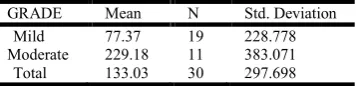
GRADE Mean
Mild 77.37
Moderate 229.18
Total 133.03
Figure 1.
Figure 1.
Association between presence of denture stomatitis and sleeping with dentures
Stomatitis Total
Absent Present
3 3 6
16 8 24
19 11 30
Association between denture hygiene and DIS
Stomatitis Total
Mild Moderate
1 2 3
1 1 2
17 8 25
19 11 30
Association between method of cleaning denture and DIS
Stomatitis Total
Mild Moderate
9 1 10
10 2 12
0 8 8
19 11 30
Jorgensen’s index and DIS
N Std. Deviation
19 228.778
11 383.071
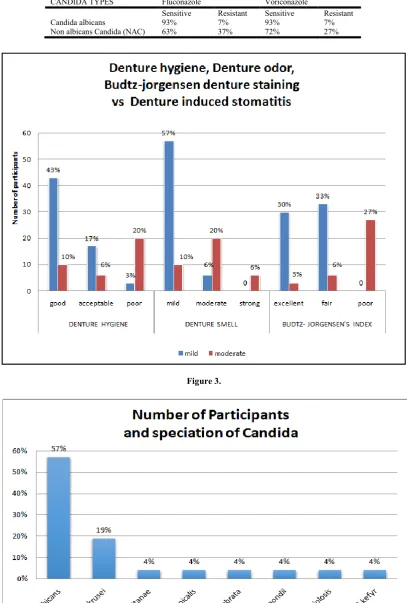
Table 6. Antifungal sensitivity of Candida albicans and NAC to Fluconazole and Voriconazole
CANDIDA TYPES Fluconazole Voriconazole
Sensitive Resistant Sensitive Resistant
Candida albicans 93% 7% 93% 7%
Non albicans Candida (NAC) 63% 37% 72% 27%
Figure 3.
Figure 4.
[image:3.595.94.502.83.687.2]According to Budtz-Jorgensen’s index of staining a definite presence of DIS was seen in dentures which were rated poor. (Table-4) A positive correlation was established between denture hygiene, denture odor, Budtz- Jorgensen staining with denture stomatitis (Fig-3). On isolation the predominant species was found to be C. albicans (57%). The rest was formed by group of various other species of candida together known as the Non Albicans candida among which Candida krusei was the predominant species (19%). (fig-4) The results of our study showed a higher value of mean colony forming unit in participants who slept with their dentures (340.33); dentures where hygiene levels were rated poor (310); also in those dentures which were rated poor according to Budtz- Jorgensen’s index (307.50). The results of our study showed no significant co-relation between the type of cleansing agent and mean CFU number. A significant relation between mean CFU number and denture stomatitis was also established. (Table-5) The results of the sensitivity tests showed a majority of C. albicans being sensitive to commonly used antifungal agents (Table-6). However, NAC species have shown higher resistance to fluconazole and voriconazole.
DISCUSSION
Previous studies of different populations have shown a variation in the prevalence of denture stomatitis from 11 to
67% (Kulak‐Ozkan et al., 2002; Sadig, 2010; Budtz‐Jörgensen
et al., 1972). Different diagnostic criteria or differences in the groups could explain the variation. The present study showed a
prevalence of 36.6% which was similar to Ozkan et al,2 and
Sahebjamee et al., (2010) and differ greatly from the 65%
found by Budtz-Jorgensen et al., 1975 and the 50% found by
Sadig et al., 2010 The differences may be explained by
different diagnostic criteria or differences in the groups such as age, sample size or even the influences of other factors such as drugs or diseases. Symptom-free oral carriage of candida organism has been recognized for many years and the reported prevalence in clinically normal mouths of healthy adults range from 3 to 48%. In our study significant candidal colonization was identified in 73 % of participants irrespective of presence or absence of DIS. This disparity may reflect differences in sampling technique, the sites sampled and the selection of participants. The correlation between poor denture cleanliness and denture stomatitis was statistically significant. This finding supports those of Budtz-Jorgensen and Bertram, 1970; Kulak
Ozkan, 2002 and Sadig et al., 2010 Because denture plaque is
an important factor in stomatitis in participants who wear dentures, cleaning of dentures and the removal of plaque are obviously important steps in the maintenance of good oral health. The relationship between frequency of denture cleaning, denture stomatitis and yeast colonization showed that more stomatitis and yeast colonization was seen in participants who wore dentures throughout the day as found in our study
and also by Sadig (Sadig et al., 2010). Effective plaque
removal requires a degree of manual dexterity that is often lacking, especially among older adults. The finding of our survey is similar to those of earlier workers that many older adults apparently do not know how to keep dentures clean
(Budtz-Jorgensen and Bertram et al., 1970; Kulak Ozkan,
2002; Sadig, 2010). It is clearly an important duty of the dental profession, at a time when the older population is rapidly rising, to ensure that the denture wearing public know how to clean their dentures properly. The predominant candida species among denture wearers were C. albicans, C. krusei, C. tropicalis, C. lucitone, C. guellermondi, C. kefyr, C.
parapsiolosisis. This was different from the report by Prakash
et al., 2015 and Arirchakaran et al., 2013 in which C. tropicalis was predominant species among NAC and other reports
wherein C. glabrata was the dominant species (Vanden
Abbeele et al., 2008). In our study C. krusei and C.
guiellermondii were found to be less susceptible to common antifungal drugs than C. albicans. Thus identification of candida species has been found to be increasingly important for determining the appropriate course of treatment. However, it is not clear yet whether species co-existence plays an integral or antagonistic role in pathogenesis and virulence. Furthermore, the co-existence of mixed species could complicate treatment modalities. Whether the co-existence of species is limited to certain combinations of species, and whether the co-existence is mutually beneficial, have yet to be
determined (Arirachakaran et al., 2013). A significant
epidemiological shift to higher isolation of NAC species was noticed. The high usage of fluconazole appears to have played a role in this shift, however, it may be recognised that other events like participant’s specific risk factors might have also
contributed for selection of few species (Oberoi et al., 2012).
Decreased susceptibility to fluconazole with cross resistance to voriconazole in the background of high azole consumption may limit the use of these agents as empirical therapy for candida before species identification and results of antifungal susceptibility testing are known.
Conclusion
Our study indicated that the predisposing factors to DIS are associated with the method of denture hygiene and use of dentures while sleeping. This makes it important that we as dentists provide post insertion denture hygiene instructions and motivate them to brush their dentures and soak them in water when not in use and to avoid wearing their dentures during sleeping. Proper education and motivation would improve the quality of life of the denture wearing population. Our study shows a shift in epidemiology towards NAC which is a worrying trend in context of their tendency to cause fungaemia. Also, the rise of resistant species makes it important that changes need to be made in the present regimen for treatment of fungal infection. This also makes the role of a dentist important as oral cavity is the most common route for systemic candida infections.
The following conclusions were drawn from our study:
36.6% of participants from our sample size showed the
presence of DIS
A positive correlation was established between denture
odour, denture hygiene, and denture staining with DIS.
The commonly isolated species in our sample group
were: C. albicans (57.6%), C. krusei (19.2%), C. tropicalis, C. lucitone, C. guellermondi, C. kefyr, C. parapsiolosisis constituting the rest.
The predominantly isolated NAC species in our study
was found to be C. krusei
The candida colonization was found to be less in the
participants who use to wear their dentures throughout the day and practiced the habit of sleeping with the denture.
C.albicans was found to be quite susceptible to the
antibiotics used in our study.
Among NAC, C. krusei, C. guiellermondii were found
The limitations encountered in our study were:
A limited sample size. The study needs to be done on a
larger sample size.
The presence of DIS must be evaluated among diabetic
and nondiabetic individuals
C.albicans and NAC percentage needs to be evaluated
in diabetic and nondiabetic
Antifungal susceptibility of C. albicans and NAC needs
to be studied in diabetic and nondiabetic participants
The next step would be analytical studies with larger
subject cohorts to determine, if preferential co-existence of particular candida species can be linked to increased risk of denture stomatitis or its severity.
Acknowledgement
We would like to thank Indian Council of Medical Research (ICMR) for funding this study with reference id 2015-05596.
REFERENCES
Arirachakaran, P., Piboonratanakit, P., Kiatkroekkrai, P., et al. 2013. Prevalence of oral Candida carriage in denture
wearers. Chulalongkorn University Dental Journal,
32(2):101-102.
Boparai, N.K., Amasi, U.N., Patil, R., et al. 2014. To assess candidal colonization and species diversity in the oral cavity of diabetic and nondiabetic denture wearers and correlation with the presence of candida on finger tips of
the patients: An in vivo study. Indian Journal of Health
Sciences, 7(1):45-51.
Budtz-Jörgensen, E., Bertram, U. 1970. Denture stomatitis I.
The etiology in relation to trauma and infection. Acta
Odontologica Scandinavica, 28(1):71-92.
Budtz‐Jörgensen, E., LöE, H.A. 1972. Chlorhexidine as a denture disinfectant in the treatment of denture stomatitis.
European Journal of Oral Sciences, 80(6):457-464. Budtz‐Jörgensen, E., Stenderup, A., Grabowski, M. 1975. An
epidemiologic study of yeasts in elderly denture wearers.
Community dentistry and oral epidemiology, 3(3):115-119. Kulak‐Ozkan, Y., Kazazoglu, E., Arikan, A. 2002. Oral
hygiene habits, denture cleanliness, presence of yeasts and
stomatitis in elderly people. Journal of oral Rehabilitation,
29(3):300-304.
Larone, D.H., Larone, D.H. 1987. Medically important fungi: a guide to identification. New York: Elsevier.
Meurman, J.H., Siikala, E., Richardson, M., et al. 2007. Non-Candida albicans Non-Candida yeasts of the oral cavity. Communicating current research and educational topics and trends in Applied Microbiology, 1(1):719-731.
Oberoi, J.K., Wattal, C., Goel, N., et al. 2012. Non-albicans Candida species in blood stream infections in a tertiary care
hospital at New Delhi, India. Indian Journal of Medical
Research, 136(6):997-1003.
Prakash, B., Shekar, M., Maiti, B., et al. 2015. Prevalence of Candida spp. among healthy denture and nondenture
wearers with respect to hygiene and age. The Journal of the
Indian Prosthodontic Society, 15(1):29-32.
Sadig, W. 2010. The denture hygiene, denture stomatitis and
role of dental hygienist. International Journal of Dental
Hygiene, 8(3):227-231.
Sahebjamee, M., Shabestari, S.B., Asadi, G., et al. 2011. Predisposing factors associated with denture induced
stomatitis in complete denture wearers. Journal of
Dentistry, Shiraz University of Medical Sciences, 11:35-39. Vanden Abbeele, A., De Meel, H., Ahariz, M., et al. 2008. Denture contamination by yeasts in the elderly.
Gerodontology, 25(4):222-228.