Ear Pattern Recognition and Compression
using SURF and SVM
Ummer Akber Tali
1, Ashish Sharma
2M.Tech Student, Dept. of CSE, BIMT, Mehli, Shimla (H.P), India1 Assistant Professor, Dept. of CSE, BIMT, Mehli, Shimla (H.P), India2
ABSTRACT: Biometric can be defined as the set of methods which are used to measure the physical and behavioral traits of a person for identification and verification. There are several application areas where biometrics can be used. There are two types of application: identification or recognition and authentication or verification. In this paper for Recognition, Ear pattern is used. It is a biometric used for human identification in which PCA is used. PCA is an ear image compression technique, in which eigen ears are preferred. The features are extraction using the PCA technique. And after feature extraction, the recognition is performed on these features to recognize the individual. SVM classifier is a classifier which is used in this paper for performing the recognition function and SURF is used for matching the input image with the database and comparison is done between the previous and the proposed approach on the basis of results obtained after matching.
KEYWORDS: recognition, PCA, biometric, SURF, compression, SVM
I. INTRODUCTION
Biometric consists of set of techniques generally used to estimate the physical as well as behavioural traits of an individual for identification and authentication of a person. Physical biometrics involve face recognition, retina scan and iris scan, hand print and all of these biometrics are very common and accessible than behavioural biometrics. which involve hand writing, signature, typing pattern and gait recognition.
Both Physical and Behavioural methods are further divided into two types; invasive and non-invasive. In invasive technique we require cooperation from the user to attain the information which is required for the comparison of feature extracted with the information already stored in the database, whereas in non-invasive technique there is no requirement of any user cooperation because the information is obtained without informing anything about our work and the subject does not realize anything about it. The biometric systems are most pertinent in security, robotics, and medical aspirations. In such fields face recognition, iris scan, retina scan and finger print can be used.
Fig 1: Structure of the external ear
In early years some researchers have started considering the complication related to computations of ear image recognition. The research show that ear pattern recognition is pertinent to a great extent.
II. RELATED WORK
In “A survey on Ear Biometrics” [1] the authors considered two main stages of an ear recognition system: first is the detection stage and second is the features used for recognition. The current ear detection and recognition systems have reached a certain level of ability.
The researches done in the previous years gave us the idea use the ear for human identification [2]. Researchers have advocated that the anatomy of outer ear seems different for each person and it does not change throughout the ages. Although nobody has proved that ear of every human being is different, studies in [12], [13] gave supported evidence to it.
III.RESEARCH METHODOLOGY
The methodology which is followed in this paper use mathematical modelling for position estimation and use MATLAB as simulation tool to analyze the performance of the proposed approach and to obtain the comparison with all the existing methods. In this method a training dataset and testing dataset of ear images is used. The compression of image or dimensionality reduction of image is obtained after embellishing image by removing the noise. The basic methodology flow chart is shown in Fig 1 below:
Fig 2: Flow Chart
A. Pre-processing
In the pre-processing step, conversion is done from the image to grey scale, and then histogram equalization, and Gaussian filtering is performed. This step is imperative for the noise removal and for image smoothening.
A.1 Conversion to grey scale:
This involves mapping colour RGB triplets into a single value which represents the grey scale intensity. Each colour pixel is described by the intensities for red, green, and blue.
A weighted average of these values is estimated as the grey scale intensity as shown below:
I=0.21R+0.72G+0.07B
A weighted average is used for human recognition. Humans are more susceptible to green than other colours therefore green coloUr carries the largest weight as compared to red and blue.
A.2 Histogram Equalization:
This involves transformation of the histogram of image so as to increase the contrast. The intensities will be uniformly distributed on the histogram.
A.3 Gaussian filtering
INPUT IMAGE
DATA IMAGE PREPROCESSING
DETECT THE REGIONOF INTEREST
FEATURE EXTRACTION BY PCA
Filtering in the pre-processing is done to reduce noise. Gaussian Filtering is used to reduce the noise in the images by minimizing the intensity variation among the pixels. It uses a 2D sliding window matrix (kernel) that gradually traverses the image and utilises the values of pixel contained in the sliding window to replace the value of centre pixel.
The equation used for the Gaussian function is:
𝐺(𝑥, 𝑦)= 1
2𝜋𝜎2𝑒 𝑥 2+𝑦 2
2𝑥𝜎 2
This function is used to set values of the sliding window and performs the sum of products.
B. Feature Extraction
Feature extraction deals with isolating distinct features of the ear in the image. PCA method is used for the extraction of features for image.
B.1 Principal Component Analysis (PCA)
In this approach, firstly the principal components is obtained and then these components are used as transformation matrix for the transformation of training set images and test images to PCA space
Each and every pixels of an image are taken row by row from top to bottom and then they again converted to row vector which contain the intensity values or grey scale of that image. By concatenating these row vectors a single matrix is transformed. Every image is depicted by row in that matrix. Two separate matrices are transformed for test image set and training image set. Both the training and test images are undergone this same process.
After this the covariance matrix is calculated for training set images in which image is depicted by each row and pixel position is depicted by columns. Covariance between two variables will be positive if both the variables vary above their expected value but if one varies above its expected value and second diversify below its expected value then there will be negative covariance. For calculating the covariance;
𝐶𝑜𝑣 𝑥𝑖, 𝑥𝑗 = 𝐸 𝑥𝑖−µ𝑖 𝑥𝑗µ𝑗
𝑓𝑜𝑟 𝑖 𝑎𝑛𝑑 𝑗 = 1,2,3 … … . 𝑛
where E is the mathematical expression and µ𝑖 = 𝐸𝑥𝑖, and x is training image matrix. If the order of matrix x is (m x
n), where n represents columns for number of pixels per image and m represents rows to represent number of images. Then the order of new resulted covariance matrix is (n x n).
Transformation to the PCA space: The resulting matrix A is formed by sorting the eigenvectors used as a transformation matrix to transform the images to the PCA space. This is done by substituting the values in the formula given below;
𝑌 = 𝐴(𝑝 − 𝑚𝑥)𝑡
Where P expresses a vector representing image and 𝑚𝑥 states the mean value of each pixel position of all training set
images. The calculated vector y is the image which is transformed to PCA space. That is defined as principal component transform. Now all the images in the training set are transformed into the PCA space. With the help of the above transformation, we consider a new test image t which helps us in identification of training set. Same transformation is applied to test image.
𝑟 = 𝐴(𝑇 − 𝑚𝑥)𝑡
The vector r is the mapping of that image to the PCA space.
Dimensionality reduction:The size of eigenvector matrix is (n x n), we concludes that there are n eigenvectors (where n is the number of pixel per image) and by transformation to PCA space we got a n dimensional space. To compress that space, its dimensionality has to be decreased or reduced and for this we can take the top k eigenvectors corresponding to top k highest eigen values which will help in transforming matrix 𝐴𝑘. Calculate the size of the transformation matrix.
For example, suppose the size of an image in the database is 70×40 that is there are 2800 pixels per image. After the transformation to PCA space and the reduction in dimensionality, the size of the image of new reduced transformation matrix, will approx 1400 pixel per image which is half of 2800.
This is the main process that is pursued in all the experiments where PCA transformation is used.
C. Recognition
Recognition is the final act of classifying an ear image as belonging to a certain individual. It involves using the set of features that were extracted and comparing them to the database to determine which image matches the closest to it. Recognition is done using support vector machine (SVM).
C.1 Support Vector Machine (SVM)
SVM is a classification method which was introduced by Vapnik in the year 1992. This classifier is mainly used in bioinformatics and other disciplines due to its many advantages like highly accurate, can process the high-dimensional data such as gene expression. It belongs to the general category of kernel methods. A kernel method depends on the data obtained through dot-products. In this case, kernel function is used which computes a dot product in possibly high dimensional feature space. There are two advantages
First, it has the ability to generate non-linear decision boundaries.
Second, by using kernel functions the user is allowed to apply a classifier to data with no obvious fixed-dimensional vector space representation, examples of such data in bioinformatics are sequence, either DNA or protein, and protein structure, etc.
The main aim is to provide the user with an instinctive understanding of the choices regarding which kernel is to be used and provide guidelines related to general usage. SVM has been used successfully in many real-world problems like gait recognition, text categorization, image classification, bioinformatics i.e. for Protein classification, Cancer classification etc. And SVM has its successful application in hand-written character recognition.
D. Matching
Surf is used in various systems for performing matching operation. It is a robust local feature detector and is good at handling images with rotation and blurring. But it is not good at handling viewpoint and illumination changes. Analysis shows that SIFT is three times slower than SURF. It approximates the schemes which are previously proposed with respect to uniqueness, repeatability, and robustness and yet can be computed and compared much faster as compared with other matching techniques.
IV.EXPERIMENTAL RESULTS
Fig 3 PSNR, MSE, Entropy and BER graphs
Fig 5 Comparison between previous and proposed approach
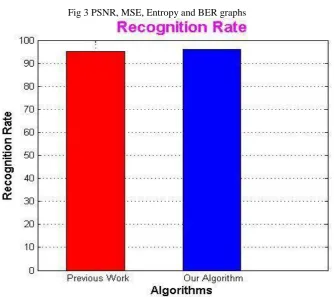
Fig 6 Comparison between Recognition Rate between previous and our algorithm
Fig 4 shows the comparison between all the parameters of both previous and proposed approaches. This shows that the approach which is proposed in this paper is a better approach than that of previous.
The approach which is proposed in this paper is more decisive and potent when compared with the previous used technique.
III. CONCLUSION
Image restoration processes consist of a collection of techniques. With the increasing demands of visual surveillance systems, human identification at a distance has recently gained more interest. Ear is a potential behavioral feature and many allied studies have demonstrated that it has a rich potential as a biometric for recognition. This thesis has described a simple but effective method for automatic person recognition from Ear. Ear pattern recognition and compression concludes that the values by using parameters PSNR,Recognition Rate MSE, BER and entropy is giving better results than the previous base paper results. The results are better and with increasing efficiency and error free. Although accomplished under some simplified assumptions like previous work, this work has been proven to be an encouraging progress to ear pattern recognition.
IV. FUTURE SCOPE
This thesis is limited to acquiring or retrieving single image from group of database images .We can extend our research work on the different images or more than one image simultaneously. Also in future more parameters like by enhancing the number of pixels quality can be considered. We can further apply new formulas or algorithm for the feature extraction and recognition to enhance the accuracy.
Even though current ear detection and recognition systems have reached a certain level of maturity, their success is limited to controlled indoor conditions. For example, to the best of our knowledge, ear biometrics has yet to be tested outdoors. In addition to variation in brightness, there are other open research issues which involve obstructions due to hair, ear symmetry, ear classification, ear print forensics and ear individuality.
REFERENCES
[1] Abaza, A. Ross, C. Hebert, M. A. F. Harrison and M. Nixon “A Survey on Ear Biometics” ACM Computing Surveys, vol. 45 no. 2, 2013.
[2] Mohamed Ibrahim Saleh, “Using Ears for Human Identification”, M. S. thesis, Virginia Polytechnic Institute and State University, 2007.
[3] Ajay Kumar, Chenye Wu, “Automated Human Identification Using Ear Imaging”, Department of Computing, The Hong Kong Polytechnic
University, June 2011.
[4] Anika Pflug, Christoph Busch, “Ear Biometrics: A Survey of Detection, Feature Extraction and Recognition Methods”, July 2012.
[6] Prakash S, Gupta P, “An Efficient Ear Localization Technique”, Image and Vision Computing, 2012.
[7] M. Choras, “Ear Biometrics Based on Geometric Feature Extraction”, Electronic Letters on Computer Vision and Image Analysis, pp. 84-95,
2005.
[8] B. Moreno, A. Sanchez, and J. F. Velez, "On the Use of Outer Ear Images for Personal Identification," in Proc. IEEE International Carnahan
Conf. on Security Technology, pp. 469-476, 1999.
[9] D. J. Hurley, M. S. Nixon, and J. N. Carter, "Force Field Feature Extraction for Ear Biometrics," Computer Vision and Image Understanding,
vol. 98, pp. 491-512, June 2005.
[10] M. Burge and W. Burger, “Ear biometrics”, chapter 13, Biometrics: Personal Identification in Networked Society. Kluwer Academic
Publishers, 2002.
[11] John D. Bustard, Mark S. Nixon, “Robust 2D Ear Recognition and Registration based on SIFT Point Matching”, Department of Electronics
and Computer Science, University of Southampton.
[12] A. Bertillon, La Photographie Judiciaire, avec un Appendice sur la Classification et l’Identification Anthropometriques, Gauthier-Villars,
Paris, 1890.
[13] A. Iannarelli, Ear Identification, Paramount Publishing Company, 1989.
[14] B. Bhanu and H. Chen, "Human Ear Recognition in 3D," in Proc. Workshop Multimodal User Authentication, 2003, pp. 91-98.
[15] B. Moreno, A. Sanchez, and J. F. Velez, "On the Use of Outer Ear Images for Personal Identification," in Proc. IEEE International Carnahan
Conf. on Security Technology, 1999, pp. 469-476.
[16] D. J. Hurley, M. S. Nixon, and J. N. Carter, "Force Field Feature Extraction for Ear Biometrics," Computer Vision and Image Understanding,
vol. 98, pp. 491-512, June 2005.
[17] Face and profile image databases F and G, computer vision research Laboratory at the University of Notre Dame.
[18] H. Chen and B. Bhanu, "Contour Matching for 3D Ear Recognition," in Proc. Seventh IEEE Workshop on Application of Computer Vision,
2005, pp. 123-128.
[19] K. Chang, K. W. Bowyer, S. Sarkar, and B. Victor, "Comparison and Combination of Ear and Face Images in Appearance-based Biometrics,"
IEEE Trans. Pattern Analysis and Machine Intelligence, vol. 25 pp. 1160-1165, Sept. 2003.
[20] K. Messer, J. Matas, J. Kittler, J. Luettin, and G. Maitre, "XM2VTSDB: the extended M2VTS Database," in Proc. Audio and Video Based
Person Authentication, Washington DC, 1999.
[21] M. Á. Carreira-Perpiñán, “Compression Neural Networks for Feature Extraction: Application to Human Recognition from Ear Images” (in
Spanish), M.S. thesis, Faculty of Informatics, Technical University of Madrid, Spain, 1995.
[22] M. Turk, A. Pentland. ”Eigenfaces for Recognition”. Journal of Cognitive Neuroscience, Vol 3, No. 1, pp. 71-86, 1991.
[23] P. J. Phillips, H. Moon, S. A. Rizvi, and P. J. Rauss, “The FERET Evaluation Methodology for Face-Recognition Algorithms”, IEEE Trans.
Pattern Analysis and Machine Intelligence, Vol. 22, No. 10, Oct. 2000, pp.1090-1104.
[24] P. J. Phillips, H. Moon, S. A. Rizvi, and P. J. Rauss, “The FERET Evaluation Methodology for Face-Recognition Algorithms”, IEEE Trans.
Pattern Analysis and Machine Intelligence, Vol. 22, No. 10, Oct. 2000, pp.1090-1104.
[25] P. Yan and K.W. Bowyer, “A Fast Algorithm for ICP-Based 3D Shape Biometrics,” Proc. IEEE Workshop Automatic Identification
Advanced Technologies, pp. 213-218, 2005.
[26] P. Yan and K.W. Bowyer, “An Automatic 3D Ear Recognition System,” Proc. Third International Symp. 3D Data Processing, Visualization,
and Transmission, pp. 213-218, 2006.
[27] P. Yan and K.W. Bowyer, “Ear Biometrics Using 2D and 3D Images,” Proc. IEEE Conf. Computer Vision and Pattern Recognition Workshop
Advanced 3D Imaging for Safety and Security, 2005.
[28] P. Yan and K.W. Bowyer, “ICP-Based Approaches for 3D Ear Recognition,” Proc. SPIE Conf. Biometric Technology for Human
Identification, pp. 282-291, 2005.
[29] P. Yan and K.W. Bowyer, “Multi-Biometrics 2D and 3D Ear Recognition,” Proc. Audio and Video-Based Biometric Person Authentication,
pp. 503-512, 2005.
[30] P. J. Grother, R. J. Micheals and P. J. Phillips, “Face Recognition Vendor Test 2002 Performance Metrics”, Proc. fourth International Conf. on
Audio Visual Based Person Authentication, 2003, pp. 937-945.
[31] P. Yan and K. W. Bowyer, “Empirical Evaluation of Advanced Ear Biometrics”, Proc. IEEE Conf. Computer Vision and Pattern Recognition
Workshop Empirical Evaluation Methods in Computer Vision, 2005, pp. 41-48.
[32] T. Lindeberg, "Feature detection with automatic scale selection". International Journal of Computer Vision, vol. 30, no. 2, pp. 79 –116, 1998.
[33] M. Burge and W. Burger. “Ear Biometrics in Computer Vision”. Proc. 15th International Conf. of Pattern Recognition, vol. 2, pp. 822–826,
2000.
[34] P. Yan and K. W. Bowyer, “Empirical Evaluation of Advanced Ear Biometrics”, Proc. IEEE Conf. Computer Vision and Pattern Recognition
Workshop Empirical Evaluation Methods in Computer Vision, 2005, pp. 41-48.
[35] [35] Zhixuan Ding, Lin Zhang , and Hongyu Li “A Novel 3d Ear Identification Approach Based On Sparse Representation