© 2015, IJCSMC All Rights Reserved
270
Available Online atwww.ijcsmc.comInternational Journal of Computer Science and Mobile Computing
A Monthly Journal of Computer Science and Information Technology
ISSN 2320–088X
IJCSMC, Vol. 4, Issue. 1, January 2015, pg.270 – 274
RESEARCH ARTICLE
PERFORMANCE ANALYSIS OF
HYBRID RENEWABLE POWER
SYSTEM WITH SIMULATION
ABSTRACT:
This project depicts the performance analysis of a renewable energy based hybrid power system for improving power quality because optimal utilization of primary energy sources will increase the level of supply reliability. According to increase demand of energy in world the science is developing the different energy generation systems, which can supply energy to the world under economic and environmental friendly conditions .So that, in society to ensure the quality of life the energy is an essential requirement.
In this project we are going to design and simulate the power system containing more than two conventional energy forms i.e. solar, wind, diesel, fuel energy are combined together for the economic operation of energy generation.
By using various graphs, we can analyse that the power output of new hybrid model is higher and more efficient than the power output of the wind/PV hybrid model.
Keywords-Hybrid Power System, Wind Power System, Fuel Cell
Ms. Pranita V. Rathod ME Scholar
(Deptt.Of Electrical Engineering G. H. Raisoni College of Engineering & Management Amravati – 444701 (M. S.) [email protected]
Prof. C. M. Bobade Associate Professor
© 2015, IJCSMC All Rights Reserved
271
INTRODUCTION:Hybrid power systems combine two or more energy conversion devices, or two or more fuel for the same device, that when integrate overcome limitation inherent in either. In this project we present a hybrid system that combines wind turbines, photovoltaic, diesel generator system and fuel cells for the production of energy for a remote load. The wind turbines and solar panels are used as the main energy sources, Diesel generator systems are used for power generation and fuel cells are used to store the produced energy.
Due to variation in output power of solar panel, wind turbine and fuel cell, Diesel engine is also coupled to ensure reliable supply under all conditions. Regenerative cycle of fuel cell helps to dump excess energy from DC bus. The results show that the proposed hybrid power system can effectively manage the optimal utilization of primary energy sources and improves the power quality in an islanding as well as grid connected mode. A hybrids programme can create market opportunities for emerging technologies before they are mature, achieving higher reliability can be accomplished with redundant technologies and /or energy storage. Some hybrid systems typically include both, which can simultaneously improve the quality and availability of power. Although the energy of sun and wind has been used by mankind for millennia modern applications of renewable energy technologies have been under serious development for only about 20 years. Hybrid systems are more economic, reliable and fuel efficient systems. The system consists of PV panels, wind power system and fuel cell system. Electrolyzer is used to absorb the rapidly fluctuating output power with load and generate hydrogen. The generated hydrogen is stored in the hydrogen tank and used as fuel for fuel cells, which reduces the fuel cost.
The PEM type fuel cells used in this study have the following advantages: electricity is produced without environmental pollution, they are commonly available, have relatively low cost for small applications, they operate at low temperatures and are mostly recycled. Wind turbines have long life and high efficiency. The solar panels have long life, zero maintenance and reliable operation. Wind turbine and solar panel hybrid energy systems have proven to be a popular area of research and development. Nowadays, the benefits of solar panels are being exploited, and governments assist in this regard, through subsidies, and other incentive.
METHODOLOGY:
In this deals with the description of the different components such a solar/wind/fuel cells and there various parameters.
STAND ALONE SYSTEM
Solar power system:
© 2015, IJCSMC All Rights Reserved
272
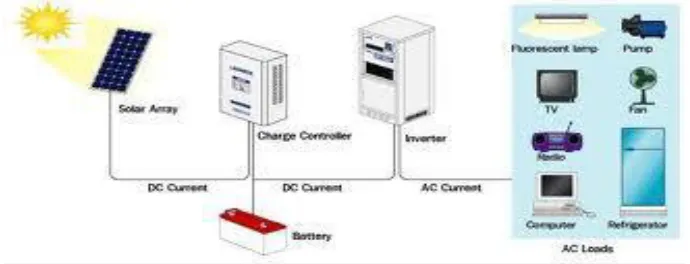
Figure 2: Functional View of standalone Solar system
Wind Power System:
A wind turbine is a device that converts kinetic energy from the wind into electrical power . A wind turbine used for
charging batteries may be referred to as a wind charger. A quantitative measure of the wind energy available at any
location is called the Wind Power Density (WPD) It is a calculation of the mean annual power available per square
meter of swept area of a turbine, and is tabulated for different heights above ground. Calculation of wind power
density
includes the effect of wind velocity and air density. Wind turbines are designed to exploit
the wind energy that exists at a location.
Aerodynamic modeling is used to determine the optimum towerheight, control systems, number of blades and blade shape.
© 2015, IJCSMC All Rights Reserved
273
Figure 3: Types of wind turbines (Savonius VAWT, Modern HAWT & GDarrieus VAWT)
Fuel Cell:
A fuel cell is a device that uses hydrogen as a fuel to produce electrons, protons, heat and water. Fuel cells are
electrochemical devices that convert the chemical energy of a reaction directly into electrical energy. The fuel cell
must provide competitive, reliable, and quality power without emitting pollutants such as oxides of nitrogen, carbon
or sulphur. It must respond quickly to changes in load and have low maintenance requirements as well as a long cell
life.
Figure 4: Functional View of standalone Fuel cell system
In the schematic of fuel cell, gaseous fuels are fed continuously to the anode, and an oxidant i.e. oxygen from air, is
fed continuously to the cathode compartment, the electrochemical reactions take place at the electrodes to produce
an electric current. A fuel cell is individual small unit of around 1.2V. A group of units are connected in series and
© 2015, IJCSMC All Rights Reserved
274
operated alone have efficiencies of about 40-55%. Fuel cell technology is based upon the simple combustion
reaction (1):
2H2+O2↔2H2O ……… (1)
Backup & Storage System:
A diesel generator is the combination of a diesel engine with an electric generator (often an alternator) to generate
electrical energy. This is a specific case of engine-generator. Diesel generating sets are used in places without
connection to the power grid, as emergency power-supply if the grid fails, as well as for more complex applications
such as peak-lopping, grid support and export to the power grid. Sizing of diesel generators is critical to avoid
low-load or a shortage of power and is complicated by modern electronics, specifically non-linear low-loads. A battery bank
is the result of joining two or more batteries together for a single application. By connecting batteries in series,
parallel & series and parallel, you can increase the voltage or amperage, or both.
CONCLUSION:
In this paper, a renewable energy based hybrid power system, its energy management and control system is
proposed. It is modeled for an isolated load/grid connected load using static converters. Diesel engine is also
coupled to ensure the reliable supply under all conditions. This proposed system facilitates improvement in power
quality which ensures continuous and reliable supply to loads. Therefore, this system can tolerate the rapid changes
in load and environmental conditions and suppress the effects of these fluctuations and provides optimum utilization
of available resources.
REFERENCES
:-[1]STANLEY R.BULL,“RENEWABLE ENERGY TODAY AND TOMORROW”,PROCEEDINGS OF THE IEEE,VOL.89,NO. 8AUGUST 2001.
[2]J.BHAGWAN REDDEY,D.N.REDDY “PROBABLISTIC PERFORMANCE ASSESSMENT OF A ROOF TOP WIND,SOLAR PHOTO VOLTAIC HYBRID ENERGY SYSTEM”.
[3]R.CHEDID &H.AKIKI,“A DECISION SUPPORT TECHNIQUE FOR THE DESIGN OF HYBRID SOLAR-WIND POWER SYSTEM”,IEEETRANSACTION OF ENERGY CONVERSION VOL.13,NO.1,MARCH 1998.
[4]D.B.NELSON,M.H.NEHRIR, AND C.WANG,“UNIT SIZING AND COST ANALYSIS OF STAND-ALONE HYBRID
WIND/PV/FCPOWER SYSTEMS,”RENEWABLE ENERGY, PP.1641-1656,2006.
[5]M.A.LAUGHTON,“FUEL CELLS”,ENGINEERING SCIENCE AND EDUCATION JOURNAL,FEBRUARY 2002