Rethinking Fiscal Decentralization Policies in Developing Economies: A Case Study of Ghana
by
Micheal Boateng, Master of Arts
Geography Department
A thesis submitted in partial fulfillment of the requirements for the degree of
Master of Arts
Faculty of Social Sciences Brock University St. Catharines, Ontario
i
Abstract
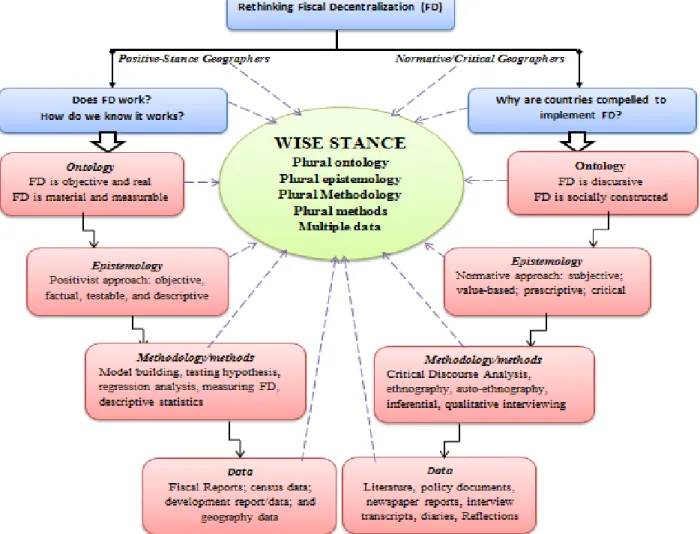
This thesis invites geographers to pay more attention to public policy research by addressing the need to rethink fiscal decentralization policies in Ghana. By applying ―Simandan‘s wise stance in human geography‖ and ―Grix‘s building blocks of social research design‖, I developed a conceptual framework that unites two incommensurable ontological and epistemological research positions in geography— the positive and normative positions. I used the framework to investigate two key research questions. First, does fiscal decentralization actually work in Ghana? Through quantitative analysis of empirical revenue and expenditure data (1994-2011) of local governments in Ghana, this study reveals significant issues of inefficiency, inequity, and unaccountability. Local governments generate less revenue, and therefore depend largely on central government transfers for developing their jurisdictions. Worse yet, these transfers are highly unpredictable in terms of amount and timing. Even though a multivariate regression analysis revealed that these transfers are apolitical, the actual disbursement formula tends to focus on equality instead of equity. Additionally, the unclear expenditure assignments in each locality make accountability difficult. In view of these problems, I addressed the question: why is fiscal decentralization held out as a good thing in Ghana? By drawing lessons from Foucault‘s and Escobar‘s critical discourse analysis, I traced a genealogy of Ghana‘s fiscal decentralization. I found that the policy is held out as a good thing in Ghana because of the triangular operation of multiplicities of power, knowledge, and truth regimes at the local, national and international scale. I concluded that although nation-states remains a necessary causal link in fiscal decentralization policy process in Ghana, direct and indirect international involvement have profound effect on these policies. Therefore, rethinking fiscal decentralization involves acknowledging the complex intermingling effects that global, national, and local territories produce. Keywords: Fiscal decentralization, Ghana, Mixed Methods, local government
ii
Acknowledgments
This thesis was produced with the immeasurable support of many. I appreciate the academic opportunity and support from Brock University, the Faculty of Graduate Studies, the Graduate Student‘s Association at Brock University, and sincerely thank all individual contributions to the success of this thesis. However, I will like to convey my deepest gratitude to my Faculty Liaison and thesis supervisor, Dr. Jeff Boggs. He always provided timely written feedback for all chapters of this thesis. He was always available when I needed his advice and guidance. Jeff took time out of his busy schedule to meet and discuss my research regularly. With the help of his constructive criticisms and suggestions, my writing has improved a lot. Jeff was flexible and accommodated my needs as an international student. For that I am very grateful.
I am also very grateful to my committee members Prof. Anthony Shaw and Prof. Chris Fullerton. The suggestions and questions they rose during my proposal defense and afterwards really shaped this thesis. Also, I want to thank Prof. Dragos Simandan for his support. In his role as the Graduate Program Director (GPD), Dragos reviewed my progress report and send me the much needed encouragement to work harder. He always reminded me of the ‗first draft reduced tuition provision‘ as a way of motivating me to finish quickly. I also benefited immensely from Dragos‘ Theory Class. His insight on critical geographical theories really shaped my thesis. His ‗wise stance‘ paper provided a basis for my conceptual framework. I thank you Dragos. Of equal importance is the knowledge imparted to me by Prof. Mike Ripmeester in his Critical Methodology class. Marilynes‘ Advanced Geomatics and Jeffs‘ Quantitative Analysis course fed into my methodology and analysis. I therefore thank Marilyne, Jeff, Mike and Dragos for imparting some of their geographical knowledge to me through their courses.
I thank everyone in the Brock Geography Department including Professors David, Phil, Ebru, and Catherine. To my course mates and friends of the Geography department: Lisa, Rick, Oscar, Pushpal, Tanisha, Mert, Pius, Sara, Heather, Kerrie and David I say thank you for the friendship, support and the sharing of ideas throughout the period that we have known one another. Finally, I want to acknowledge the continued assistance of Virginia for helping me with my schedule, contracts and all other administrative support; to Loris, for his encouragement; to Dimitri for helping me whenever I struggled with technology; and to Stella for posting my progress on the department website.
iii
Table of Contents
CHAPTER 1 – INTRODUCTION...1
CHAPTER 2 — FISCAL DECENTRALIZATION: CONCEPTUAL REVIEW AND ITS OVERVIEW IN GHANA………...7
2.1 INTRODUCTION: ...7
2.2 THE MEANING AND FORMS OF DECENTRALIZATION...7
2.3 GEOGRAPHICAL ARGUMENTS FOR DECENTRALIZATION: ...11
2.4 THEORETICAL JUSTIFICATION OF FISCAL DECENTRALIZATION………...12
2.5 DECENTRALIZATION IN GHANA: THE LOCAL GOVERNMENT SYSTEM………..14
2.6 FISCAL DECENTRALIZATION IN GHANA...……….………...16
2.6.1 Sources of Revenue for Financing Local Government in Ghana………....17
2.6.1.1 The Internally Generated Fund/ Owned-Source Revenue…….……….…..17
2.6.1.2 Central Government Grants and Transfers……….…….19
2.6.1.3 The District Development Fund……….…...22
2.6.1.4 Non-Governmental Organization (NGOs) Sources……….……...23
2.6.2 Expenditure on Fiscal Decentralization…...……….………….23
CHAPTER 3 — LITERATURE REVIEW: ...25
3.1 INTRODUCTION……….. ...25
3.2 UNDERSTANDING THEORIES IN GEOGRAPHY: POSITIVE, NORMATIVE OR WISE APPROACHES ...25
3.2.1 Positive Stance: An Approach Used to Evaluate Fiscal Decentralization Policies……….……….25
3.2.1.1 Does Fiscal Decentralization Work? Theoretical Argument in the Literature……….…………...27
3.2.1.2 Does Fiscal Decentralization Work? A Review of Positive Empirical Approaches………….………...31
3.2.2 Normative Stance: Exploring Why Countries Implement Fiscal Decentralization………...………...….42
3.2.2.1 Why Countries feel compelled to implement fiscal decentralization: The Literature………..………….…45
3.2.2.2 Arturo Escobar‘s Contribution to Geography and its Relevance to Understanding Fiscal Decentralization Policies in Developing Countries………..………..…..51
iv
CHAPTER 4 — METHODOLOGY………...59
4.1 INTRODUCTION……… ...59
4.2. DOCUMENTARY QUANTITATIVE RESEARCH……….………...60
4.2.1 Data Sources for Documentary Analysis……….…….………....61
4.2.2 Propositions and Analytical Framework……….….………...65
4.2.3 Multivariate Regression Analysis: DACF Disbursement Determinants.......69
4.2.4 Justification for Quantitative Analysis of Documentary Research...72
4.2.5 Summary Table for Quantitative Analysis……...……….………...73
4.3 DISCOURSE ANALYSIS………..………...74
4.3.1 Context of fiscal decentralization……….……….....75
4.3.2 Data Sourcesfor CDA………..………..76
4.3.3 Data Sampling for CDA…………..………..……….76
4.3.4 Data Analysis for CDA………..………....78
4.3.5 Relevance of CDA to this Research Project………..………....….79
CHAPTER 5 – RESULTS AND DISCUSSIONS...81
5.1 INTRODUCTION………...………...81
5.2. DOES FISCAL DECENTRALIZATION ACTUALLY WORK IN GHANA?... …....…..…...81
5.2.1 Are MMDAs efficient in generating revenue (IGFs) within their jurisdictions?...……….…..……..…...82
5.2.2 The Disbursement of DACF in Ghana versus Equity Issues………...……...……89
5.2.3 Multivariate Regression Analysis: DACF Disbursement Determinants………...………...…..93
5.3.4 MMDAs Expenditure Functions………...……….…..97
5.3 DISCOURSE ANALYSIS OF FISCAL DECENTRALIZATION IN GHANA……..………..101
5.3.1 Genealogy of Decentralization: Power, Knowledge and Truth in the Histories of Local Government in Ghana…….101
5.3.1.1 Colonial Administration Decentralization Discourses………......102
5.3.1.2 Post-Independent Decentralization Discourses………..…...107
5.3.2 Policy Design Process for Fiscal Decentralization in Ghana……….……..116
5.3.2.1 Composite Budget: The Way Forward for Ghana?...122
5.3.3 Summary of CDA………..………....124
CHAPTER 6 – CONCLUSION: RECOMMENDATIONS AND FUTURE RESEARCH ...127
6.1 Contributions to the Fiscal Decentralization Literature and Suggestions for Future Research…...127
6.2 Contribution to Geographical Knowledge Production………...129
v
APPENDICES………....145
Appendix I: Detailed IGF performances of MMDAs per region in Ghana (1994-2004)…….….……....145
Appendix II: Preliminary Multivariate Regression Analysis………...149
Appendix III: Detailed Datasets for DACF formula-based calculations……….……….151
List of Tables Table 4.1: Summary Table for Quantitative Analysis………....73
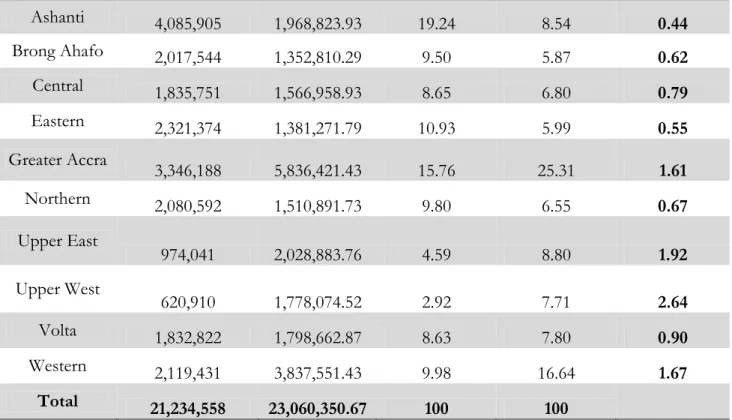
Table 5.1: Distribution Quotient for IGF Performance Per Region (2004-2010)...………...87
Table 5.2: Co-efficient from Linear Regression Models Predicting DACF (N=300, 360)…...…………..95
Table 5.3: MMDAs Socio-economic improvement from 1997 to 2003………...99
Table 5.4: Stakeholders influence on Ghana‘s Fiscal Decentralization policy & practice…………...…...119
Table 5.5: Commissions and Committees into local government reforms in Ghana….……....125
List of Figures Figure 2.1: Forms of Decentralization...10
Figure 2.2: Map of Ghana……….. ...14
Figure 2.3: Local Government Structure of Ghana...16
Figure 3.1: Conceptual Framework for Rethinking Fiscal Decentralization Policies...56
Figure 5.1: Proportions of MMDAs Per Capita Revenue: IGF versus External Funds...83
Figure 5.2: Map of Ghana Showing Average IGF Performance per MMDA (2005-2010)…..……….…84
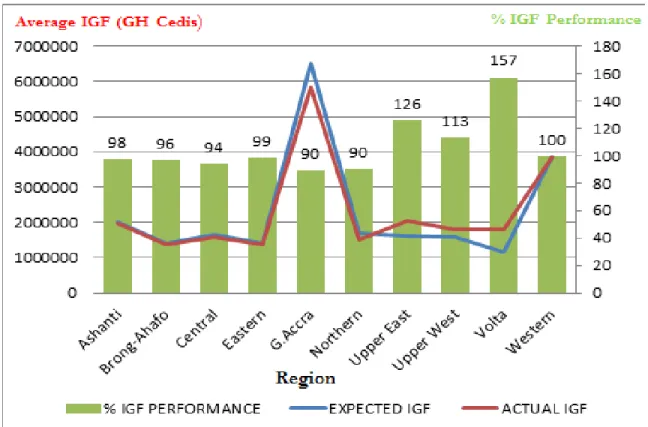
Figure 5.3: Average IGF Performance per MMDA (2005-2010)……….…..….…………...85
vi
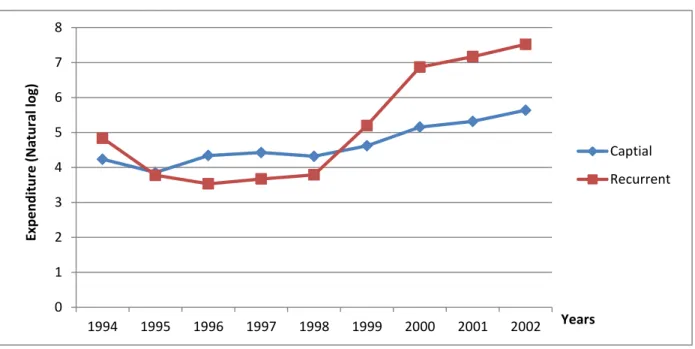
Figure 5.5 Trends in MMDAs Expenditure 1994-2002….……….………...98 Figure 5.6: The Axes of Decentralization Discourse in Ghana………..………...124
List of Plates
1
CHAPTER ONE INTRODUCTION
It is especially important in the effort to frame public policy in a way that is properly responsive to human needs and predicaments. The question is always: How will the general rule work in practice?
Elliot Richardson
Underlying the words of Richardson is a fundamental geographic idea: that the practicality of public policy varies across space. Differences in culture, economy, politics, and physical geography across space may inhibit the generalizability or practicality of public policy. I evaluate this claim by examining the practicality of fiscal decentralization1 in the context of Ghana. I am focusing on fiscal decentralization
because of two main reasons. First, I recognize that finance is the ‗lifeblood‘ of policy (Asibuo, 2000). Therefore, the success of other forms of decentralization policies2
depends largely on effective fiscal decentralization policies. Second, fiscal decentralization is a timely research topic because it is increasingly evident as a key variable in both recent policy documents and practice of developing economies in attempts to redefine and improve governance (Smoke, 2001; 2003). Developing countries have endorsed fiscal decentralization policies based on its theoretical appeal (World Bank, 2000; Bardhan and Mookherjee, 2006). But the question of ‗will the general rule work in practice?‘ has been given less attention in geographic research.
The impact of geographers on such policy research has been limited compared to other social, political and environmental scientists. Such limitation can be attributed to the emphasis on linguistic and theoretical issues to the neglect of practical social
1 Fiscal decentralization involves transferring revenue and expenditure functions from central to sub-national level of
local government.
2
research in the last two decades (Martin, 2001). In relation to this research project, there is an extensive literature that examines the relationship between fiscal decentralization and its effects on growth, income distribution, poverty, and corruption (e.g., see Martinez-Vazquez and McNab, (2003) and the articles in the 2009 special issue 2 of Environment and Planning: C journal). However, only one study examines in depth the role that the discipline of geography can play in fiscal decentralization research (see Canavire-Bacarreza and Martinez-Vazquez, 2012). I argue that all policies (including fiscal decentralization policies) are of geographical concern because they are designed in a given space, and implemented through time3.
Consequently, space and time are two essential concepts within the geography discipline (Thrift, 1996; Massey, 1999).
Therefore, this research project is partly inspired by the need to re-emphasize practical policy studies in geography. My argument is that as Geographers, we need to develop a sense of intellectual cohesion around key social issues and problems, bringing the different theoretical and methodological approaches together to bear on key social policy problems. As Geographers, we should avoid allowing (or even exploiting) our diversity of approaches to form non-communicating cliques and specialisms within the discipline. We also need to pay more attention to detailed empirical work on
3 Thrift (1977:448) confirms the importance of space and time in the discipline of Geography when he noted that ―the
essential unit of geography is not spatial; it lies in regions of time-space and in relation of such units to the larger spatio-temporal configurations. Geography is the study of these configurations‖. Again, in his book on Spatial Formations, Thrift (1996: 1) wrote that ‗it is neither space nor time that is central to the study of human interaction order, but time-space‘. He enforced this point by later suggesting a dyadic conception of time and space; ‗TimeSpace‘ (May and Thrift, 2001:3). Another popular geographer called Doreen Massey points out the essence of treating space and time equally. She wrote that ―not only would I argue that we need to think in terms of space-time/time-space, but also I would propose that any conceptualization of space has a (logically) necessary corollary in a particular ‗matching‘ conceptualization of time‖ (Massey, 1999; 264). Treating Space and Time together is difficult, because each have diverse conceptualization by virtue of the great diversity of ontologies and epistemologies within the geography discipline. However, for the purpose of this research project, I consider space and time together, but as given categories, instead of their being socially constructed. Thus, to better understand fiscal decentralization policies in Ghana involves more than understanding where and for what reasons the policies were implemented (spatial components). It involves concurrently looking at ‗the where‘ (spatial) and the timing (the period of policy design and implementation, as well as the aftermath of such policies).
3
public policies, where greater attention is directed to methodology and the quality of evidence. Therefore, apart from reevaluating the appropriateness of fiscal decentralization in Ghana, this research project demonstrates the feasibility of integrating seemingly incommensurable research methods to understand social issues.
Having established my research intentions, it is worth mentioning that the basic theory of fiscal decentralization postulates public sector allocative efficiency, equity and accountability as benefits (Tiebout, 1956; Oates, 1972). However, differences in the degree to which countries have devolved fiscal resources and expenditure responsibilities to local and regional governments‘ present researchers with a puzzle. Some authors such as Treisman (2006), Arzaghi and Henderson (2005), Panizza (1999), Oates (1972), among others, have proposed plausible models for the determinants of fiscal decentralization. To these authors, the origins of fiscal decentralization are the outcome of myriads of factors: history, culture, politics, and even physical geography. For instance, in Eastern European Countries (EECs) such as Russia, political and economic failures of the autocratic, highly centralized socialist regimes motivated fiscal decentralization reforms while in Latin America, fiscal decentralization has been used as a tool to reinforce the transition to democracy (Rodríguez- Pose and Krøijer, 2009; Artana, 2007). For many developing countries, fiscal decentralization is used as a possible way of escaping from the traps of ineffective and inefficient governance, macroeconomic instability and inadequate economic growth (Bird, 2010; Bird and Vaillancourt, 2008; Smoke, 2001; 2003). Therefore, it is worthy to find out what really compelled Ghana to implement fiscal decentralization, and with what results.
Additionally, one missing piece of the research puzzle and another reason for this research project is that most scholarly literature on public policy (hence fiscal
4
decentralization) neglects its wider context and practice. They tend to focus solely on state institutions, the policies and its implementation processes (Hills and Hupe, 1993; 2006). The same applies to a number of published papers on fiscal decentralization policies of Ghana (Ankamah, 2012; Ahwoi, 2010; Antwi-Bosiako, 2010). However, the impact of such public policies goes beyond the institutions of the state. Policies often seek to target groups of people. There are positive or negative impacts on people‘s lives. In addition, public policy is not isolated from the rest of society. Cultural norms and trends, and the reactions of citizens and media do influence the course of public policy. Events of local, national and international significance influence the policy decisions as well as their implementation.
I argue that a way of thinking about fiscal decentralization — a way not centered on institutions, or structures, or procedures — opens up the possibility of fresh insights into solving the research puzzle presented above. I support my argument by using Foucault‘s (1980) ideas on the production of discourse. Foucault raises questions about the practices of government and how public policy is formed, shaped and reshaped. Analysis of discourses has the potential to show the link between political rhetoric, and how discourses are created and maintained. Foucault‘s take on discourses is insightful when applied to the discourses on policy in the Third World4.
Advancing on Foucault‘s meaning of discourse, a vital deduction for my research is that discourse is not about saying ‗yes‘ or ‗no‘, when asked a seemingly simple question such as: Is fiscal decentralization efficient or not? Foucauldian discourse analysis involves identifying why the question arises. It is about discussing why society makes any of the ‗yes‘ or ‗no‘ choices and the effect of the choices made (Huxley,
4 Foucault provided two meanings of the term discourse. First, discourse includes all forms of representation and not
merely written and spoken words. Second, discourse is not simply about something (fiscal decentralization, politics, efficiency) but constitute those things (Cresswell, 2009).
5
2009). Discourse is about examining why fiscal decentralization is a common theme in policy documents. It is about how and why sub-themes like efficiency, equity, and accountability exist in Ghana‘s fiscal decentralization policy documents.
From the foregoing discussion, I raise two key questions in attempt to rethink fiscal decentralization policies, using Ghana as a case study. These are:
Why was Ghana compelled to implement fiscal decentralization?
Has fiscal decentralization actually worked in Ghana?
The first question of why points to the spatial component of this research5. The
second question relates to the concept of time as it seeks to look at the aftermath of fiscal decentralization policy in Ghana. The rest of the research project is designed to address these two questions. In chapter two, I address fiscal decentralization as a concept, and present a brief overview of its policy in Ghana. In chapter three, I survey literature that addresses questions similar to the two main questions of this research project — why are developing economies compelled to adopt fiscal decentralization? and do fiscal decentralization policies actually work? I identify methodologies employed in the literature reviewed in both chapters and situate my methodology for addressing the two key questions. I conclude chapter three by establishing a conceptual framework for my research project. In chapter four, I establish a methodology for addressing the two main research questions based on my framework and lessons from methodogies presented in the literature. I present my findings and analysis in chapter five. My conclusion, recommendations and future research are captured in chapter six.
6
CHAPTER TWO
FISCAL DECENTRALIZATION: CONCEPTUAL REVIEW AND ITS OVERVIEW IN GHANA
2.1 Introduction
In this chapter, I review the literature on fiscal decentralization. I start by explaining the meaning, forms, and theoretical appeal for decentralization in general. I then discuss fiscal decentralization. Finally, I narrow my scope of discussion to Ghana‘s decentralization system6 and focus on the country‘s fiscal decentralization policies.
2.2 The Meaning and Forms of Decentralization
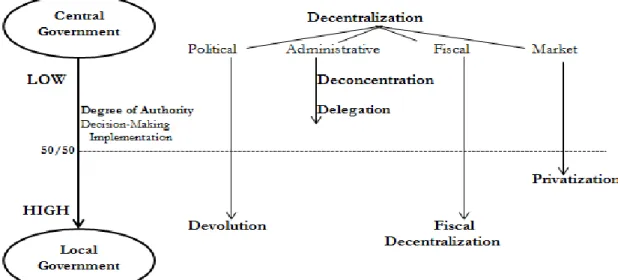
Decentralization defies a single meaning. As a concept, decentralization is used differently in the literature. Some of the meanings tend to be more general, emphasizing shifting decision-making power and authority from central government to local level of governments (Asfaw et al 2007; Dauda, 2006). Others suggest partial or total distribution of decision-making authority and power, and specific functions from central government to the local levels (Ezeani, 2004). A commonly cited meaning of decentralization is provided by Rondinelli et al (1989), and it specifies the transfer of planning, decision-making, or administrative authority from central governments to local units. On the basis of the degree of power transferred from central government to lower levels, various forms of decentralization may be identified. I notice little agreement in the literature as to the different forms of decentralization. However, Rondinelli's model which involves four forms of decentralization namely deconcentration, devolution, delegation and privatization
7
(Rondinelli 1980) remains the most frequently cited conceptual framework in the field.
De-concentration is a type of administrative decentralization that involves a transfer of administrative authority and responsibility to lower sub-national institutions without decision-making authority (Rondinelli and Cheema, 1983). Manor (1999) finds that de-concentration is a very useful first step because it permits the deployment of bureaucratic capacity in the field. He cautioned against what happened in the Philippines where local governments were elected before any meaningful de-concentration had taken place. As a result, newly elected mayors hired readily-available low-skilled staffs. Notwithstanding, deconcentration is often described as a tool used by the central government to establish more control at the local level since the local governments only implement the agenda set by the central government.
The second form of decentralization is delegation. Delegation is also a type of administrative decentralization. It involves semi-autonomous transfer of decision making and implementation authority from the central to the local government (Rondinelli and Cheema, 1983). Delegation normally implies a transmission of tasks and administrative responsibilities related to specific functions, usually defined by central authorities. In this sense, the decentralization of tasks does not necessarily mean a shift of decision making authority. This is because the local agents are only given the role of executing decisions that have previously been made at a central level (Lauglo 1995).
8
Another form of decentralization is privatization or market decentralization. Privatization involves government giving up responsibility for certain functions and transferring them to private enterprises so as to ensure increased competitiveness and efficiency (Savas, 2000; Lauglo, 1995). Privatization is premised on the assumption that efficiency and competition is best achieved by the private sector, which is not always the case.
The form of decentralization that was introduced in Ghana‘s 1992 constitution (recent) is termed as devolution or political decentralization. Sub-national governments within a devolved decentralized system are autonomous in decisions making and implementation within their jurisdiction. Their total decision-making and implementation authority is usually backed by law (Ezeani, 2004; Rondinelli and Cheema, 1993). This is the form of decentralization that is entrenched in the 1992 constitution of the Republic of Ghana. All local governments in Ghana are legally mandated to carry out executive, deliberative and legislative functions in their locality7,
while the regional and central government play supervisory roles. It is worth mentioning that the central level has three arms of government performing similar roles—executive, legislature and judiciary arms.
The form of decentralization that is relevant to this research project is fiscal decentralization (FD). FD focuses on the fundamental problem of allocating expenditure and revenue responsibilities among levels of government (Shah, 1994).
7 Deliberative function involves Local Governments (MMDAs) initiating, discussing, and formulating local level
development plans. With their executive authority/functions, they execute plans, programs and strategies for the effective mobilization of the resources necessary for the overall development of the district. Their legislative function ensures ready access to the courts and public tribunals in the district for the promotion of justice (362). Also, they initiate, sponsor or carry out studies as may be necessary for the discharge of any of the functions conferred by this law or any other enactment (See Section 10 of Ghana‘s Local Government Act—Act 462 for a full list of these 3 functions).
9
Some authors refer to FD as the devolution of authority for public finances and the delivery of governments services from the national to sub-national levels (Tanzi, 1996). Others reason that FD is a requirement for, and basis of implementing all other forms of decentralization (Asibuo, 2000). Their argument is that the success of all policy designs, institutional arrangement, and implementation depends fundamentally on finance. Of course, finance is very vital in every undertaking. It played a key role in this research project. That partly explains why this research project focuses on FD.
There are two basic interrelated themes under fiscal decentralization. The first is about the distribution of revenue mobilization and expenditure responsibility under the centralized / decentralization alternatives. Here, the question of ―who collects and gets what?‖ in terms of revenue and expenditure becomes an issue between the central and local government (Musgrave, 1983). Second, is the issue of the degree of financial autonomy of local governments relative to the degree of their dependency on central transfers (Davey, 2003). I discuss these two key themes in chapter six.
10
Literature reviewed on the five forms decentralization indicates how degrees of decentralization relate to levels of central control. Figure 2.1 depicts the forms of decentralization and their consequent degree of central and local level authority. Where the central authorities wish to exercise control, they may choose de-concentration or a delegated system rather than a devolved one.
2.3 Geographical Arguments for Decentralization
In the literature, decentralization is justified as providing economic, social and political benefits8. All these justifications have geographical manifestations. Therefore, as a
Geographer, I focus on the relationship between decentralization and geography. This relationship is usually presented as a straightforward one in the literature. The logic presented is that the higher the level of geographical complexity and ethnic diversity, the higher the relative gain from moving to a decentralized system of public good provision (Arzaghi and Henderson, 2002; Panizza, 1999). This is because differences in geography, the degree of geographical fragmentation, are alleged to have an effect on both preferences and access to public service provision. In terms of access, geographical fragmentation works as a spatial decay factor for centrally provided public goods (Canavire-Bacarreza and Martinez-Vazquez, 2012). That is, centralized
8 The economic justification of decentralization argues from the dimension of maximizing welfare and efficiency (Bird
2010; Tanzi, 2000; Loockwood, 2002 and Besley & Coate, 2003). For instance, Bird (2010) asserts that from a neo-classical economics perspective, the most important potential benefit from decentralization is the increased efficiency, and a consequent welfare gain that comes from moving governance closer to the people.
Also, decentralization is argued to be a tool for enhancing grassroots participation, with social and political benefits. Participation of the locals is associated with the idea that development is for, with, or by the people (Dick-Sagoe, 2012). Socially, participation enables self -actualization, enhances social solidarity in decentralized localities, and serves as a tool for human development (Dick-Sagoe, 2012). Participation also has political values. Participation in local politics is evident through local election of local government representatives. The argument for electing locals as government representative is two-fold. First, the elected know exactly the locals‘ needs, and hence may represent or address those needs accordingly. Second, the elected becomes accountable to the locals. Some authors argue that accountability plays a key role since decentralization may be the best way to create incentives for politicians to differentiate adequately between the needs of different groups of their citizens and therefore optimize the provision of public goods (Seabright, 1996).
11
provision of collective goods suffers from distance decay as one move away from the center.
However, I acknowledge that the relationship between decentralization and geography is not a simple one. As Lora et al. (2003) argue, geography plays a fundamental role on the economic and social development as well as the institutional design of countries; yet, this effect could be enhanced (or diminished) in the presence of better physical infrastructure or communications. Other authors are more optimistic. For instance, Canavire-Bacarreza and Martinez-Vazquez (2012) reveal in a recent study that there is a strong correlation between geographical factors and fiscal decentralization. They acknowledged that while the development of infrastructure (in transportation, communications, etc.) tends to reduce the effect of geography on decentralization, their effect is rather small and often statistically insignificant. All these differing arguments point to the discursive nature of decentralization policies. Consequently, I focus on fiscal decentralization in attempt to simplify the complexity between geography and fiscal decentralization.
2.4 Theoretical Justification of Fiscal Decentralization
The theoretical appeal for fiscal decentralization draws largely on the foundational contributions by Stigler (1957), Musgrave (1959), Oates, (1972) and Marlow (1989). Just like decentralization, all these appeal have geographical manifestations. The core logic of the theoretical appeal is based on the following: if growth and poverty issues are to be taken into account, one should be concerned about efficiency-supplying services up to the point at which the welfare benefit to society matches its cost (Ebel and Yilmaz, 2002). Consequently, fiscal decentralization is an issue of considerable
12
practical importance facing many developing economies and has been championed by international bodies such as the International Monetary Fund and World Bank (World Bank, 2003). I briefly review some of the arguments of these scholars.
According to Marlow (1989), the degree of fiscal decentralization affects public finance in two main ways. First, fiscal decentralization increases competition in the public sector, leading to a relatively lower tax burden. The point Marlow makes is that with people and capital being geographically mobile in pursuit of fiscal gains, the greater the numbers of alternative tax jurisdictions, the less likely that ‗excessive‘ taxes will be levied. The second point is that fiscal centralization restricts local governments‘ ability to generate revenue since a growing national share of total government money weakens the relative significance of local governments.
After conducting an empirical study for 42 countries, Oates (1972) argued that fiscal decentralization would tend to increase total public resource mobilization through taxation. His study reveals a strong and statistically significant negative association between fiscal centralization and tax revenue. The quantitative method used involved regressing tax revenue (size of public sector) on a fiscal centralization ratio (central revenue as proportion of the total)9. In another but related empirical study, Oates
(1985) explored the same issue again for 43 countries (18 industrial and 25 developing). The results proved that for the entire sample, the rank correlation between the size of the public sector and the extent of centralization is strong and significantly negative. In other words, more centralized governments have a smaller public sector. In contrast, a relatively decentralized public sector is typically large in terms of revenue mobilization. The two multi-country studies by Oates lend support
9 Some scholars point out dangers of fiscal decentralization, and argue the possibility that centralized delivery of services
might enable scale economies and that this in turn means that a centralized government needs less tax money than a decentralized government (Prude‘homme, 1995; Klagge and Martin, 2005)
13
to the claims that fiscal decentralization improves efficiency in tax revenue generation. My analysis evaluates some of these claims by answering the two basic questions of this research. I provide an overview of decentralization in Ghana with emphasis on fiscal decentralization before my analysis (chapter five).
2.5 Decentralization in Ghana: The Local Government System
This research project is a case study of Ghana, a tropical country situated on the west coast of Africa and located between latitudes 4° N and 11º N and longitude 1° 12' east and 3° 15' west of the equator (Figure 2.2).
Figure 2.2: Map of Ghana Showing Regions and MMDAs
14
Ghana has a multi-party democratic political system10 with a presidency, a cabinet, a
parliament, an independent judiciary system and a vibrant free press. These constitute the central level, with day-to-day functions administered through an established bureaucracy—ministries, departments and agencies. For administrative and political purposes, Ghana is divided into ten regions. The country also has a local government structure (see figure 2.2 for administrative fragmentation). Local government in Ghana is as old as colonial rule. It can be traced to the British Indirect Rule System, which centered on native authorities made up of Traditional Chiefs or local royalty (Ayee, 1999). However, devolution (political decentralization) did not occur until the 1988 Provisional National Defense Council (PNDC) Local Government Law 207, which was the landmark legislation that provided the legal framework for the start of Ghana‘s local government system of today. In the current Constitution of 1992, the PNDC Law 207 has been strengthened as an entrenched provision in Chapter Twenty, while Article 240 specifically provides the broad framework for Ghana‘s decentralization (Adusei-Asante and Hancock, 2012). In the last decade, the passages of other relevant laws have also augmented Article 24011.
Ghana‘s local government structure consists of Regional Coordinating Council (RCC) coordinating between the national government and Metropolitan Municipal and District Assemblies (MMDAs). The MMDAs have within them sub-urban, zonal and town councils (see figure 2.3). Currently, there are 216 MMDAs. The details of the MMDAs per region are indicated in Figure 2.3. Within the structure, MMDAs appear to be the most ‗influential‘ as they are entrusted with wide political, administrative,
10 There are two dominant parties in Ghana: the National Democratic Congress (NDC), and the New Patriotic Party
(NPP). These two parties combined obtain about 99% of the total votes cast during each 4-year periodic elections. Therefore, I use only these two parties in my analysis.
11 These include but are not limited to : the Local Government Act, 1993 (Act 462); the Local Government Service Act
2003 (Act 656); the District Assemblies Common Fund Act 455, the National Development Planning Systems Act 480 and the Metropolitan, Municipal and District Assemblies Standing Orders (Constitution of the Republic of Ghana 1992; Kyei Baffour 2009; Antwi– Boasiako 2010; Ahwoi 2010)
15
and fiscal authority at the local level (Gyimah–Boadi 2009). My research project focuses on the practicality of the fiscal authority given to the MMDAs.
Figure 2.3: Local Government Structure of Ghana
2.6 Fiscal Decentralization in Ghana
In other to ensure that MMDAs discharge their mandated responsibilities, Section 240 (2, c) of Ghana‘s Local Government Act, 1993 (Act 462) provides that each MMDA shall have a sound financial base with adequate and reliable sources of revenue (Asibuo, 2000). Specifically, MMDAs under the ―new local government act, 1993‖ (Act 462) are empowered to collect revenue and make expenditure decisions so as to
16
carry out their assigned functions including development (Ayee, 1999). I briefly highlight some of their revenue sources.
2.6.1 Sources of Revenue for Financing Local Government in Ghana
Local Government finance provisions are defined in Article 245 and 252 of the 1992 Constitution and Section 34, Part VII and Part VIII of Act 462. The MMDAs in Ghana are financed from three main sources:
1. Internally generated fund (IGF), that is from the MMDAs sources;
2. Central government transfers to MMDAs, which also takes several forms; 3. Financial assistance from donor agency including non-governmental
agencies and voluntary private organizations to the district (Decentralization policy review final report, February 2007).
2.6.1.1 The Internally Generated Fund/ Owned-Source Revenue
Autonomous financial responsibility has been recognized as the core of the concept of decentralization (Rondinelli et al 1984). Therefore, the 1992 constitution designates the MMDAs as the rating authority and empowers them to levy and collect local taxes so as to carry out their assigned functions. The various forms of taxes are:
Local taxes: Local taxes are either general rates that are levied uniformly within the entire district for general purposes or special rates that are levied over a particular area of the district for the purposes of undertaking specific approved projects. Examples of rates include the basic rate and the property rates.
17
Basic rates are general rates payable by all eligible payers above eighteen (18) years. This rate charged is by law, and determined by a rate assessment committee of the MMDAs. Section 95(1) of the Local Government Act indicates that ―a District Assembly shall make and levy sufficient rates to provide for that part of total estimated expenditure to be incurred by it during the period in respect of which the rate is levied and which is to be met out of money raised by rates‖ Allowing each MMDA to decide its rate might produce an interesting geography. In practice however, the Ministry of Local Government and Rural Development has pegged the rates for all MMDAs, again reinforcing the question of whether or not what is documented theoretically can actually be practiced.
Property rates are taxes levied by MMDAs on landed properties or immovable properties owned privately in their jurisdiction. The amount is paid based on the assessed value of the property, which is multiplied by a per cedi payable rate depending on the category of property.
Fees and fines: In accordance with the section 27 of the Local Government Act of 1988 (PNDC Law 207) and within the guidelines set by the central government, MMDAs levies fees on a range of items. User fees are charged for real use of local public services and facilities. Currently, the list of services from which MMDAs charge users is extensive. Examples are market tolls, lorry park fees, and public latrine fees.
Licenses and rents: Licenses are rights given by local authorities to individuals that allow them to undertake all kinds of economic and social transactions. These license charges are used by the MMDAs essentially to carry out developmental projects in the district. Examples of this are beer and wine sellers, and self-employed artisans (Korkor and Kroes, 1992).
18
The owned-source revenue provisions are available to ensure a more self-reliant political and administrative decentralization. Such revenue sources are designed to discourage existing tendencies towards over-dependence on external sources of finance and control of central government thus enhancing the discretionary autonomy of the MMDAs. Interestingly, the central government maintains the exclusive authority to raise the most lucrative and easy to gather taxes, such as income taxes (Ahwoi, 2000). For this reason, many local governments are highly constrained in their ability to raise revenue. Here again, I raise the main question: will the generally documented rule for fiscal decentralization work in practice?
2.6.1.2 Central Government Grants and Transfers
Grants are non-compulsory receipts from a higher order government, an international organization or a foreign government. There are two basic types of grants, namely general and specific grants. General grants are used to support either general expenditure or finance a budget in accordance to the recipient‘s preference while specific grants are tied to specific objectives and handed down according to specific guidelines. Central government grants to local governments are an integral part of the local government revenue structure. For many MMDAs, financial transfers from the government remain the most significant revenue source. The major ones are the:
(i)The District Assembly Common Fund (DACF)
The DACF is a major source of information/data for my empirical analysis. This is partly because it forms the bulk of MMDAs finance. Also, data is readily available for analysis. The DACF is a statutory arrangement backed by the 1992 Constitution of Ghana in Article 252 (clause 1 and 2) and the District Assemblies Common Fund Act,
19
2003 (Act 455). The Act stipulates an annual allocation of not less than 5% (currently 7.5%) of the total revenues of Ghana to MMDAs. The amount is paid in quarterly installments.
The DACF is the source of funds mainly geared towards the finance of capital projects. In principle, there is no control on the use of the funds but in practice, guidelines are issued which in turn limits the freedom of the MMDAs (Appiah, 1999). The distribution of the fund is therefore based on the recommendation of the administrator of the fund which has to be approved by parliament before disbursement to the MMDAs can proceed (Osei-Akoto et al, 2007). According to Fynn (2011), there are five main factors that influence DACF sharing among the MMDAs. These factors include:
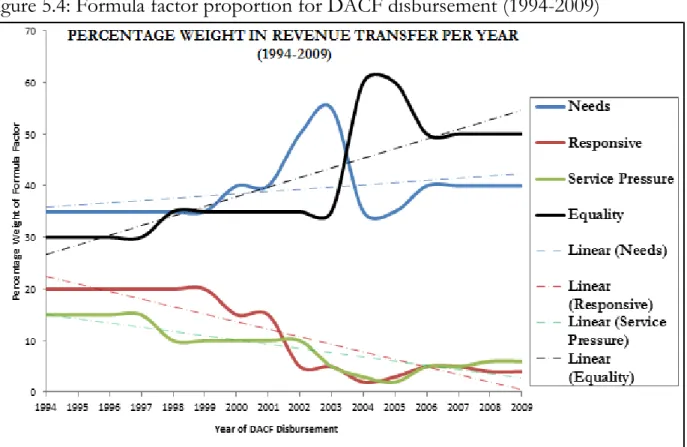
The Reserve Factor is an outright deduction before the formula is applied. This reserve includes: Members of Parliament (MPs) fund, Regional Coordinating Councils (RCCs), Reserve (Contingency and Monitoring). Monies used to pay for the allocation of the fund comes from the reserves. In the guidelines prepared by the Ministry of Local Government and Rural Development (MLGRD), the reserve is 10% of the DACF and the remaining 90% disbursed to MMDAs as governed by the guidelines and formulae. Apparently, 35% of the DACF allocated to MMDAs is earmarked for specific purposes and the remaining 65% of the funds must first and foremost cater for construction of facilities at both the district and community levels where they are lacking (Local Government Act 462, 1993).
The Equality Factor ensures that the MMDAs have access to specified funds. It involves a straightforward division of a portion of the fund by the total number of MMDAs in Ghana.
The Needs Factor is meant to address the current imbalances in development. It involves health, education, water availability, and water quality indicators.
20
The Responsiveness Factor is designed to motivate the MMDAs to generate and collect more internal revenue. Therefore, a percentage increase in MMDAs owned-source revenue will cause an increase in the responsive factor of the DACF.
The Service Pressure Factor assists in improving existing services, which, as a result of population pressures, are deteriorating faster than predicted.
The DACF has increased, instead of reducing the control of the center over the MMDAs‘ functions. The decisions of the DACF have been usurped by the central government so that the MMDAs remain initiators without finance to implement their decisions (Aryee, 2003). Consequently, the introduction of the DACF has made the MMDAs reliant on DACF proceeds rather than acting as an incentive to mobilize resources locally. The MMDAs also suffer from irregularity in the disbursement of DACF funds, lack of transparency and lack of discretion afforded to district authority over the allocation of funds. Antwi-Boasiako (2010) observed that even though local governments are given autonomy over finance, the central government dictates how money should be spent at the local level. MMDAs have very little fiscal autonomy. They derive approximately 85% of their budget from donors and central transfers. The largest source is the DACF, which is mostly spent on salaries. While salaries are completely non‐discretionary, DACF transfers are often discretionary in practice. Here lies the question of motive for implementing the DACF: Is it to enhance political decentralization or reduce it? Are there any factors that can affect such transfers, such as ―pork-barrel politics‖? My analysis in chapter five examines these questions.
21
The DACF comes with associated problems such as delays in the release of funds as well as other mandatory deductions at the source. These mostly limit the efficiency of the MMDAs and also slow their work processes in the implementation of projects. Again, the question: ―will the general rule work in practice?‖ can be raised. My analysis will highlight the implication of some of these problems.
(ii) Ceded Revenue
Revenue sources that used to be tapped by the central government, but have been transferred to the MMDAs in pursuit of decentralization are termed as ceded revenue. These sources are entertainment duty, casino, revenue, gambling, betting, advertisements and daily transport tax. The ceded revenue is centrally collected by the Internal Revenue Service (IRS) and the total ceded revenue is transferred to the Ministry of Local Government and Rural Development which shares it among the MMDAs using a formula approved annually by cabinet or parliament.
2.6.1.3 The District Development Fund
The District Development Fund (DDF) was established in 2006 as an alternative to Internal Generated Fund to support MMDAs programs. The Fund is being operated by a secretariat working under a Board appointed by the MMDAs. The DDF is a pool of funds from donor communities (mostly developed countries and international organizations), with a component contribution from the Government of Ghana to support existing development agenda of the MMDAs.
22
2.6.1.4 Non-Governmental Organization (NGOs) Sources
Other sources of revenue are NGOs and voluntary private organizations. They often fund local developmental projects based on self-help initiatives and local contributions in cash, kind and labor. While these sources have been important in implementing several local projects in many developing countries, there are often preconditions for assistance such as project type, size and need orientation, local project implementation ability, proper financial accountability and ensuring permanent information of the voluntary donors to preserve their willingness to help (Appiah, 1999). I now shift my focus towards how MMDAs revenue is utilized.
2.6.2 Expenditure Fiscal Decentralization
Expenditure assignments are the first pillar in the framework of Fiscal Decentralization (FD). A clear delineation of service delivery responsibilities for each tier of government is of critical importance for efficiency and accountability. Problems in the assignments of expenditures may lead to: poor accountability as it is hard to judge the responsible agent and place a clear responsibility; duplication of efforts; conflicts between tiers of governments; dissatisfied citizens; and ultimately hesitation and resistance to continue and deepen the decentralization process.
The expenditure function in Ghana‘s fiscal decentralization is based on the ‗principle of subsidiarity‘, which suggest that functions should be assigned to the lowest level of government that is capable of efficiently undertaking the task. MMDAs have two major expenditure classification systems: the main and supplementary budget expenditure classifications. The main budget of the expenditure classification covers seven major expenditure headings namely, personnel emoluments; traveling and
23
transport expenditure; general expenditure; maintenance, repairs and renewals; miscellaneous expenditure; subventions and capital expenditure. The supplementary expenditure classification covers five major sectoral headings namely, education; health and sanitation; local government and rural development; agriculture and; economic activities. I discuss these components in chapter five. I now shift my focus to a review of relevant literature in chapter three.
24
CHAPTER THREE LITERATURE REVIEW 3.1 Introduction
This chapter is a literature survey that addresses the two main questions of this research project: ‗do fiscal decentralization policies actually work?‘ and ‗why are developing economies compelled to adopt fiscal decentralization?‘ This survey involves identifying the methodologies employed, and the conclusions reached by authors examining the reasons why countries implement fiscal decentralization. I draw lessons from the methodologies identified, and use those lessons to guide my methodology. I also review the aftermath of the implementation of fiscal decentralization policies. I conclude this chapter by establishing a conceptual framework for rethinking fiscal decentralization policies. Before addressing the two questions, let me briefly draft a theoretical foundation for the questions.
3.2 Understanding Theories in Geography: Positive, Normative or ‘A Wise’ Approach
It is not uncommon for geographers (economic geographers, demographers, etc.) to act as advisors on government policies. In this role, they do not only report research findings but also make recommendations. It is vital then to understand when geographers make objective-evidence based statements about how the world works, and when they are making value-judgments about what policies should be enacted. In this sense, geographers are faced with two basic policy questions: descriptive factual questions, and prescriptive value-based questions. A similar set of policy questions also emerge in this research project. First, does fiscal decentralization work, and the related epistemological question, how do we know it works (i.e., what is the material factual evidence?) Second, why do countries feel compelled to implement fiscal
25
decentralization, and the related question, why is fiscal decentralization held out as a good thing? The first question draws on positive understandings of theory, whereas the second one draws on normative understandings of theory. Let me expand these two ways of understanding theorization in geography further and relate it to the fiscal decentralization literature.
3.2.1 Positive Stance: An Approach Used to Evaluate Fiscal Decentralization Policies
In his paper ―Alternatives to Positive Economic Geography,‖ King (1976: 300) highlighted three suppositions of the role of positive understanding of theory in economic geography. First, the methodological approach of natural science can be adapted directly to geography, where the geographer is viewed as taking the stance of an ―observer of social reality‖. The geographer in such observer position assumes that the world works in a particular way, and outcomes are not really right or wrong, but instead simply are. Second, the goal of the positive economic geographer is to derive laws and theories, using principles of natural science to arrive at objective testable conclusions, a goal that was popularized during the 1950s Quantitative Revolution in geography12. Here, the geographer becomes an ―analyst or interpreter of his subject matter‖.
Third, the geographer generates ‗value-free‘ and ‗neutral‘ research. To sum it up, a researcher who takes up a positive stance assumes an objective observer or analyst position, uses scientifically proven or verifiable research procedures (like hypothesis testing of empirical data) to explore a real or material world out there, and seeks to develop or verify theories or model. For fiscal decentralization studies, the positive
12The theoretical change towards positivist approaches in geography was championed by geographers such as Kimble
26
approach is used to evaluate a set of assumptions or theories about the policy13. What
are these theoretical arguments?
3.2.1.1 Does Fiscal Decentralization Work? Theoretical Arguments in the Literature
A number of scholarly literatures exploring the practicality of fiscal decentralization policies assume the positive stance to understanding theory. Usually, their point of departure is some existing theories, assumptions or even suggestions in the literature about what may or may not cause fiscal decentralization to work. Such existing theories suggest a number of possible reasons why some countries are more fiscally decentralized than others. Basically these reasons can be reduced to three factors: geographical (including territorial size and cultural/ethnic diversity), historical (i.e. institutional inertia and colonial legacy), and economic. I briefly review literature on these factors to see how they have been evaluated using the positivist stance in research.
Geographical Factors
Territorial Size of a Country: The relationship between fiscal decentralization and spatial extent of a country is usually presented as a straightforward one in the literature. The main argument is that fiscal decentralization will be greater in territorially larger states (Treisman, 2006). The key is that certain central supervisory functions cannot be provided as effectively in territorially extensive countries. As John Stuart Mill asserts:
13 It should be noted that this is the norm in economics as well, the discipline most responsible for the theories justifying
fiscal decentralization. Most economic geographers no longer adhere to this position. However, for the purposes of checking the internal validity of claims about fiscal decentralization, it is useful that I adopt a positivist mindset. I am actually taking the theorists who have created models that suggest fiscal decentralization will ‗work‘ at their word, and using the tools that those theorists understand as the most appropriate ways to assess or falsify (in the Popperian sense of the word) these theories.
27
‗There is a limit to the extent of country which can advantageously be governed, or even whose government can be conveniently superintended, from a single center‘ (Mill, 1991). For Mill, this constituted a reason for fiscal decentralization in large countries such as the USA and Canada.
Ethnic/Cultural Diversity: The theory here is that the more ethnically diverse a country is, the more likely it will adopt fiscal decentralization. The logic presented is that the higher the level of ethnic diversity, the higher the relative gain from moving to a decentralized system of public good provision and finance (Arzaghi and Henderson, 2002; Panizza, 1999). This is because culture diversity is alleged to have an effect on both preferences and access to public service provision. In terms of access, ethnic diversity works as a spatial decay factor for centrally provided public goods (Canavire-Bacarreza and Martinez-Vazquez, 2012). The second set of theoretical arguments originates with practical politics. Where ethnic divisions are politicized, especially in territorially compact countries, decentralizing authority over such contentious policy issues as education and culture may help prevent ethnic clashes. Such policy decentralization is a key feature of consociational democracy14 (Lijphart, 1993). Such
policies must have some fiscal component to be credible. Thus, to preserve stability, central elites in more ethnically divided societies may choose a higher level of fiscal decentralization.
Historical Factors
Colonial legacy: The British and French are among the major powers that have colonized many countries in the world within the last two centuries. They introduced systems of government and administration that reshaped political life of their
28
colonies. The styles and strategies of political control differed markedly. Various writers have contrasted the British willingness to introduce indirect government by devolving considerable decision making power to elected legislatures of colonial settlers, to the French who controlled every decision of their colonies in the early 19th
Century (Tocqueville, 2000; 1833). When they withdrew from their colonies more than a century later, Britain was more prone than other empires to leave behind federal/fiscal structures. Similar to France, the tradition in Spain‘s overseas dominions is usually seen as one of over-centralization, with considerable powers of taxation and expenditure held by the capital city. As a result, Spain‘s legacy to Latin America was a tradition of extreme centralization in governmental decision making (Nickson, 1995: 15). In the post-independence years, local government was neglected and even suppressed. As Wiarda and Kline (1996: 45) noted, Latin America‘s ―local governments had almost no power to tax or to administer local social programs‖.
Institutional Inertia/Democracy: Democracy is alleged to strengthen local government‘s fiscal autonomy for two main reasons. First, democracy enhances participation in a fiscally strong local government society (Treisman, 2006). Second, fiscally strong local governments might serve as a check on abusive central authorities (Tocqueville, 1969). More recently, the fall of authoritarian governments has led to either spontaneous dissipation of central power or the deliberate assertion of local rights. In Eastern European Countries (EECs) such as Russia, political and economic failures of the autocratic, highly centralized socialist regimes motivated fiscal decentralization reforms while in Latin America, fiscal decentralization has been used as a tool to reinforce the transition to democracy (Rodríguez-Pose and Krøijer, 2009; Artana, 2007). Burki et al (1999: 1) argue that fiscal decentralization in Latin America since the early 1980s has been ―part of a broader trend toward democracy in the region‖.
29 Economic Factor
Economic development: Fiscal decentralization is assumed to be positively related to economic development for two reasons. First, fiscal decentralization may itself be ‗a superior good, the demand for which is likely to grow with per capita income‘ (Tanzi, 2000). As people become richer, more educated, and more urbanized, they may have more time and a greater motivation to participate in making local political decisions. They may also become more skilled at organizing to pressure the central government to devolve authority and fiscal resources. A second reason is that increases in development may induce a shift in tastes towards public goods and services that are most efficiently provided locally. Musgrave (1969: 797) suggested that as societies grow more affluent, provision of public goods becomes more efficient at local or regional scale. Also, as population density rises with urbanization, the risks of crime or accident may also rise at a disproportionate rate, requiring greater proportional of public spending on policemen, firemen, and health inspectors to achieve the same level of public safety (Treisman, 2006). In effect, some economically developed societies might use fiscal decentralization as a policy to efficiently meet the increasingly diverse consumption needs of their economies.
Having discussed the key arguments for fiscal decentralization, I now shift my focus to considering how researchers have evaluated these claims for fiscal decentralization. However before I shift the focus of the literature review, it is worth mentioning that other authors raise questions about these theoretical appeals. For instance, Lora et al. (2003) argue that the effect of geography (territorial size and ethnic diversity which ties into the ‗distance decay‘ principle) on policies like fiscal decentralization could be enhanced (or diminished) in the presence of better physical infrastructure or communications. In other words, these policies reduce the ‗friction of distance,‘ that is, the cost and timeliness of movement and communication. Also, the use of fiscal
30
decentralization to reduce ethnic clashes within countries is not guaranteed. This is because central governments may be more interested in retaining fiscal resources at the center instead of decentralizing such resources to avoid ethnic clashes. And, even if they do decentralize fiscal resources and decisions, this may fail to prevent ethnic violence, as in the case of Lebanon in 1975 (Treisman, 2006). In the same way, democracy is not always positively linked to fiscal decentralization as there are prominent examples of highly centralized yet democratic countries (e.g., France).
3.2.1.2 Does Fiscal Decentralization Work? A Review of Positive Empirical Approaches
A number of scholars have empirically tested the theoretical arguments of fiscal decentralization using positivist quantitative methodology. Specifically, the scholars have explored the relationship between fiscal decentralization and its theoretical determinants and implications (geography, politics/democracy, economic growth, equity, efficiency, accountability, poverty etc.). In this review, I focus on these literatures: Canavire-Bacarreza and Martinez-Vazquez (2012), Morgue et al (2012), Treisman (2006), and other economic literature. In these literatures, I identify the methodology and data author(s) used to measure fiscal decentralization, and what the policy seeks to achieve. I also point out some strengths and weakness in their approach where necessary.
First, I consider the empirical research of Canavire-Bacarreza and Martinez-Vazquez (2012)on the role of geography as a determinant of fiscal decentralization. Their point of departure was two theoretical models built by Panizza (1999) and Arzaghi and
31
Henderson (2002)15. Based on the models, they develop a hybrid model that suggest
that geographical differences (which they refer to as geographical fragmentation and ethnic fractionalization) are expected to have an effect on both preferences and access to public service provision. They propose that preferences are due to differences in the physical environment (altitude and climate), while access is based on the economic costs of provision or distribution due to distance decay.
To confirm or refute their proposition, they use regression analysis. In terms of data, they put together an unbalanced panel dataset for 91 countries for the period 1960-2007 from secondary sources. One problem with their data was missing observations on some variables, which lead to variation in sample size across estimations. They average the values for 5 year periods in order to smooth the data over the macro-economic cycle and also focus on the long run effects.
Prior to measuring fiscal decentralization, Canavire-Bacarreza and Martinez-Vazquez (2012) acknowledge that in practice, the data available to them do not allow for measuring true levels of fiscal autonomy, especially at the cross-country level. They therefore estimate fiscal decentralization as the percentage of revenues and expenditures of the sub-national governments relative to the total revenues and expenditures of the entire public sector of the selected countries. They collect data
15 Panizza‘s (1999) model suggest that the size of a country has a close relation with the level of heterogeneity of
preferences and therefore an increase in the size of the country will decrease the marginal benefits from fiscal centralization. Arzaghi Arzaghi and Henderson (2002) model the creation of sub-national governments (under restricted mobility) as being determined by balancing the fixed costs of sub-national administration with the "spatial decay" of goods provided from the center. For a benevolent government, their model predicts that adoption of decentralized structures is promoted by (1) larger income, (2) larger population, (3) higher spatial decay of local public services provided to the hinterland by the central government, (4) higher relative income in the hinterland region, (5) larger population share of the hinterland, and (6) lower fixed costs of government for the hinterland region. Sub-national governments are thought to be more responsive to the local constituencies than the central government. Even though they do not explicitly model the role of geography again it is quite intuitive that spatial decay in the provision of public goods can be related to intensity of physical geography.
32
available from 1960 to 200716. The data was sourced from the Government Financial
Statistics publication by the International Monetary Fund. They argue that the use of large sample cross-country datasets will offset any effect that missing data may have on their regression analysis, and even support their argument with the literature (Letelier, 2005). However, I argue that there is a trade-off be