© 2016, IRJET ISO 9001:2008 Certified Journal Page 1672
Nails Used as Biomarkers for Fluoride Exposure
Chandrakanth R
1,
Sadashiva Murthy BM
2,Nandlal B
31M.Tech. Scholar, Department of Environmental Engineering, Sri Jayachamarajendra College of Engineering, JSS
Technical Institution Campus, Manasagangothri, Mysuru- 570006, Karnataka, India [email protected]
2Professor, Department of Environmental Engineering, Sri Jayachamarajendra College of Engineering, JSS
Technical Institution Campus, Manasagangothri, Mysuru- 570006, Karnataka, India [email protected]
3Professor, Pedodontics and Preventive Dentistry, JSS Dental College and Hospital, Mysore- 570015, Karnataka,
India
---***---Abstract
-Fluorosis is caused when the drinking water withfluoride level more than 1.50 ppm is consumed continuously. Fluorosis cripples the young and old alike. It is also known to induce aging. Fluorosis may be dental or skeletal. As per the previous studies more than 15 states are suffering with excess fluoride in drinking water. Fluorosis is incurable; but, it can be controlled. Defluoridation is method of reducing the fluoride content in the water to an acceptable limit. Fluoride is typically added to drinking water to reduce tooth decay. To be effective, the level of fluoride in drinking water needs to be strictly controlled. To protect children from dental fluorosis, the fluoride level in drinking water standard maintained at 4 mg/L for primary and for secondary 2 mg/L as per U.S. EPA. The levels of fluoride were determined in human nails, and ground water. The levels of fluoride were determined in both finger and toe nails and ground water samples with respect to age groups. The sample collection and preparation were carried out using standard procedures. The fluoride content in nail clippings was determined by the dry ashing method. The concentrations fluoride was determined using Ion-Selective Electrode. As per previous studies showed that the concentration of fluoride was higher in some district like
Ballary, Raichur, Tumakur and Chitradurga. For this study
samples were collected from some places of Karnataka
.
Key Words: Biomarker; Dry ashing; Fluoride, Ion
selective electrode and nail clippings.
1. INTRODUCTION
Fluoride is a natural component of the
biosphere, the 13th most abundant element in the
© 2016, IRJET ISO 9001:2008 Certified Journal Page 1673 monitoring level of various biomarkers available in
human body. Fluoride biomarkers can be classified under the categories: contemporary (urine, plasma and saliva), recent (nails and hair) and historic markers (bone and teeth).For this study biomarker used nails, it can be obtained non-invasively; collection of nails is more accepted by the subject. Nails have been used as biomarkers of acute, sub chronic, and chronic exposure to Fluoride. The user-friendly technique for the measurement of nail fluoride and its ease of establishment at a basic rural/urban laboratory setting suggest that nails clippings have a strong potential for use as a biomarker in epidemiological surveys.
Biomarkers of fluoride exposure in human body: This
study describes the availability of various biomarkers which can used to assess fluoride level in human body. They are mainly teeth, bone, nail, hair, plasma, urine, saliva. Studies have been conducted both in animals and humans to provide evidence regarding accuracy of these biomarkers in determining fluoride exposure.
Use of toenail Fluoride levels as an indicator for the risk of hip and forearm fractures in women by
Feskanich et al., (1998), studied the relation between fluoride intake and risk of osteoporotic fractures remains unclear. The lack of individual measures of long-term fluoride intake has limited epidemiologic studies. We used toenail fluoride in this study as a measure of long-term intake to evaluate the relation between fluoride intake and subsequent risk of hip and distal forearm fractures. Between 1982 and 1984, we collected toenail clippings from 62,641 women in the Nurses' Health Study who were free from cancer, heart disease, stroke, and previous hip or forearm fracture. We identified fracture cases (53 proximal femurs and 188 distal forearms) through subsequent biennial
mailed questionnaires and matched controls to cases on year of birth. The odds ratio of hip fracture among women in the highest quartile of toenail fluoride [> 5.50 parts per million (ppm)], compared with those in the lowest quartile (> 2.00 ppm), was 0.8 (95% confidence interval = 0.2-4.0), with adjustment for menopausal status, postmenopausal hormone use, caffeine intake, and alcohol consumption. The corresponding adjusted odds ratio for forearm fracture was 1.6 (95% confidence interval = 0.8-3.1). Further adjustment for body mass index, smoking status, and calcium and vitamin D intake did not alter these results.
Environmental and Individual Factors Associated with Nail Fluoride Concentration by
finger-© 2016, IRJET ISO 9001:2008 Certified Journal Page 1674 and toenail Fluoride focuses. Subjects of more
established age bunches (30–40 and 50–60 years) from D and E indicated higher nail Fluoride fixations than the others. Females exhibited higher nail Fluoride focus than guys. Water Fluoride fixation, age, sexual orientation and topographical region impacted the Fluoride centralization of finger-and toenails, and consequently ought to be considered when utilizing this biomarker of presentation to foresee hazard for dental fluorosis.
Fingernail fluoride: a technique for observing
fluoride presentation by Whit ford et al., (1999) - This
work depended on the utilization of fingernail clippings as a biomarker for the sub ceaseless introduction to fluoride. The outcomes give information on components that may influence the grouping of fluoride in fingernail clippings as decided with the terminal after HMDS-encouraged dispersion. The accompanying variables had just minor or no consequences for the focuses: (1) the surface region of the clippings (in place, minced or documented into powder) that were set into the dispersion dishes; (2) absorbing deionized water for up to 6 h; (3) absorbing fluoridated water (1.0 ppm) for 2 h, and (4) evacuation of the natural material of nails by dry ashing. Fingernail fluoride focuses were roughly half higher than those in toenails. A 1-month time of expanded fluoride admission by one of the creators brought about critical increments in fingernail fluoride focuses after a slack time of roughly 3.5 months. The fluoride fixations in fingernail clippings got from three gatherings of Brazilian kids were straightforwardly identified with the focuses in the drinking water (0.1, 1.6 or 2.3 ppm). The outcomes demonstrate that: (1) HMDS-encouraged
dissemination totally isolates fluoride from in place nail clippings, so the requirement for ashing or other preparative techniques is deterred; (2) fingernail fluoride is gotten primarily from the systemic flow, and (3) fluoride admission is reflected by the fixations in fingernails.
Fingernails and Toenails as Biomarkers of Sub endless Exposure to Fluoride from Dentifrice in 2-to
3-Year-Old Children by Correa Rodrigues et al., (2004)-
In this work they assessed the utilization of fingernails and toenails as biomarkers of sub endless presentation to Fluoride from Fluoride dentifrice in 2-to 3-year-old youngsters. Ten 2-to 3-year-old youngsters utilized a fake treatment dentifrice (without Fluoride) for 28 days, Fluoride dentifrice (1,570 ppm Fluoride as monofluorophosphate) for the accompanying 28 days, and after that fake treatment dentifrice for an extra 28 days, and afterward came back to their typical dentifrices. Fingernails and toenails were cut at regular intervals, amid the trial time frame and for an extra 22 weeks. Nail Fluoride was dissected by cathode taking after hexamethyldisiloxane-encouraged dissemination. There were no critical contrasts amongst fingernail and toenail Fluoride fixations. Mean top F fixations happened 16 weeks subsequent to beginning the utilization of Fluoride dentifrice. Results recommend that fingernails and toenails might be reasonable biomarkers of sub endless presentation to Fluoride fromFluoride dentifrice in little kids.
2. MATERIALS AND METHODS
:
© 2016, IRJET ISO 9001:2008 Certified Journal Page 1675 than fifty percent of the irrigation requirements of
the nation.
For this study, both fluoridated and non-fluoridated areas were selected with naturally occurring fluoride in drinking water. Fluoridated areas selected are Dasarahalli madhugiri taluk (Tumakur) and pavagada (water F level >4.4), and non-fluoridated and Manjunathapuram, Mysore. Regions of Pavagada Taluk and Madhugiri Taluk have well documented as fluoridated areas. Both water and nail were collected. The regions of Magadii Taluk, Chitradurga Taluk and Mysore Taluk have moderate fluoride levels. This study includes both genders samples, who were born and grew up in same village or municipality. The people of maximum selected are aged between 16-28 years. Except for the drinking water, there were no other sources of fluoride exposure in the villages.
Sample collection: Nail clippings from both the hands and toe were collected in plastic pouches and ground water also collected.
Analysis of Fluoride: To quantitatively transfer the Fluoride within the nail clippings into a solution which can be placed in contact with the Fluoride electrode, the direct acid extraction method was used. For this, each nail clipping was cleaned with deionized water using an interdental brush to remove surface contamination and kept in a muffle furnace at 400ºC for 12 hr. The resultant ash was weighted and dissolved in 1 mL of 0.25 M HCl for 2 hr. Then TISAB II is prepared as per standard procedure. The solution was then neutralized and buffered with addition of 1 mL TISAB II. The final volume of the solution was built to 10 ml with deionized water held at a pH 5–5.5. F concentration in each of the prepared solutions was estimated with the help of an F ion specific electrode. Deionized water was used for all measurements.
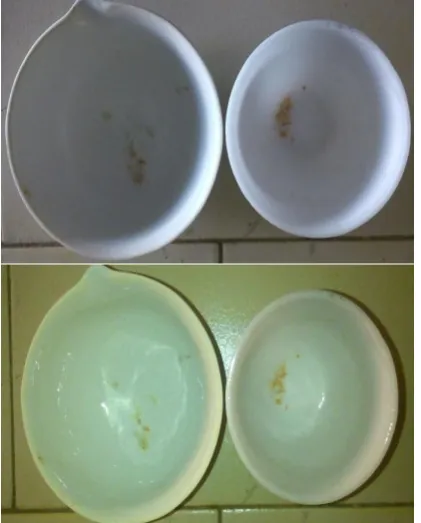
[image:4.595.308.520.96.351.2]Figure 1: Collected nail sample before ashing
Figure 2: After ashing nail sample
And for ground Water samples were diluted with equal quantities of TISAB ll(Total Ionic Strength Adjustment
[image:4.595.308.519.378.640.2]© 2016, IRJET ISO 9001:2008 Certified Journal Page 1676 determined using a combination fluoride- ion-selective
electrode.
3. RESULTS AND DISCUSSION
The study group of 16 individual from Pavagada Taluk (Karnataka), 18 from Dasarahalli Madhugiri Taluk and 17 from Manjunathapura (Mysuru Taluk, Karnataka). As a preliminary analysis of the data did not reveal any significant effect of sex distribution with regard to any of the study parameters. The majority of the individuals were aged 16 - 28 year.
The Fluoride concentration (ppm) found in nail ash tended to increase with increased Fluoride exposure from using drinking water with higher Fluoride levels has shown in the table.
Table: Mean sFluoride concentrations (ppm) in Nail ash sample with water fluoride levels and its significance.
sample
Dasarah alli, Madhugi ri taluk (n=18)
Pavagada
Taluk
(n=16)
Manjunathapur a, Mysuru,
(n=17)
Water Fluoride level, PPM
>5 4.4 0.437
Nail floride level, PPM
38.85 7.3 1.493
Level of
significance
P=0.001 P=0.003 p<0.001
A significant positive linear correlation was found between the water Fluoride levels and the nail ash Fluoride levels in different regions (table).
In this study, the mean Fluoride concentration in the nail samples differed significantly depending on water Fluoride levels and showed a strong positive linear correlation with it. The difference was significant although the variation in water Fluoride levels in different regions. The Fluoride concentrations in the nail samples of Dasarahalli madhugiri taluk (Tumakur) and pavagada( water Fluoride level >4.4) were significantly higher than the normal fluoride level in nails of manjunathapura mysuru ( water Fluoride levels of <1) as shown in Table.
© 2016, IRJET ISO 9001:2008 Certified Journal Page 1677 chronic Fluoride exposures. The toe nail Fluoride
values are also responsive to even slight differences in drinking water Fluoride concentration. The user-friendly technique for the measurement of nail Fluoride and its ease of establishment at a basic rural/urban laboratory setting suggest that toe nail clippings have a strong potential for use as a biomarker in epidemiological survey.
4. CONCLUSION
Biological markers are identified for different diseases and conditions to provide better estimates of exposure dose specific to individuals and to provide better estimates of the relevant exposure dose to target tissues. Biomarkers of exposure may be used to improve knowledge of the extent of population exposures to various exogenous agents through surveillance techniques and also participant compliance with treatment regimens in intervention trials. Different fluoride markers may aid in the prevention of future disease i.e. fluorosis by providing reasonable evidence of impending disease at early stage (pre-clinical stage), these biomarkers can help to reflect the severity, magnitude or degree of disease, facilitate risk prediction and classification of people based on risk levels, thus promoting application of preventive measures like defluoridation. Certain corrective measures can be suggested based upon the research done so far like reducing the amount of dentifrice used during tooth brushing, and/or using a low-fluoride dentifrice for children at risk for dental fluorosis but at low risk for caries and a closer monitoring of the concentrations of fluoride added to water, salt, milk or any other food product as well as
defluoridation of communities with above-optimal natural fluoride levels in the drinking water.
In the present investigation both finger and toe nails used as biomarker, the mean Fluoride content of nails clippings always exceeded that of water by a significant margin, perhaps due to a very long duration of Fluride exposure in the study areas. This increases the validity of nails Fluoride level as a biomarker of chronic Fluoride exposure and even as a potential indicator for clinical fluorosis. The nails Fluoride values are also responsive to even slight differences in drinking water Fluoride concentration. The user-friendly technique for the measurement of nails Fluoride and its ease of establishment at a basic rural/urban laboratory setting suggest that nails clippings have a strong potential for use as a biomarker in epidemiological surveys. However, due to the many limitations in this study, more research with larger sample sizes is needed to arrive at any definite conclusion
REFERENCES
[1} Corraa Rodrigues M.H, de Magalhães Bastos J.R, Rabelo Buzalaf M.A, Fingernails and Toenails as Biomarkers of Subchronic Exposure to Fluoride from Dentifrice in 2- to 3-Year-Old Children (2004).
[2] Feskanich D, Owusu W, Hunter DJ, Willett W, Ascherio A, Spiegelman D, Morris S, Spate VL, Colditz G, Use of toenail fluoride levels as an indicator for the risk of hip and forearm fractures in women (1998)
© 2016, IRJET ISO 9001:2008 Certified Journal Page 1678 [4] Levy FM, Bastos JR, Buzalaf MA, Nails as biomarkers of
fluoride in children of fluoridated communities (2004.)
[5] Zoran Mandinic, Marijana Curcic, Biljana Antonijevic, Momir Carevic, Jelena Mandic, Danijela Djukic-Cosic, Charles P. Lekic, Fluoride in drinking water and dental fluorosis,. Science of the Total Environment 408 (2010) 3507–3512.
[6] Choubisa SL. Endemic fluorosis in southern Rajasthan, India. Fluoride 2001; 34(1):61-70.
BIOGRAPHIES
Description: CHANDRAKANTH R M.Tech. Scholar, Department of Environmental Engineering, Sri Jayachamarajendra College of Engineering, JSS Technical Institution Campus, Manasagangothri, Mysuru- 570006, Karnataka, India