Assessing the effectiveness of climate change programmes and project implementation in Papua New Guinea
A Thesis
Submitted in Partial Fulfillment of the Requirements for the Degree of
Master of Science in Geography at the University of Canterbury
by
Peter Konam Bosip
Abstract
Acknowledgement
It has been a journey for me to achieve this goal in advancing my academic career and I am indebted to the kindness and support from individuals, organisations and communities that have assisted in every way in this study. For technical advise, support and commenting on my thesis writing: my supervisors Professor Eric Pawson, and Dr. Garth Robert Cant of the University of Canterbury.
My heartfelt thank you to the staff at International Student Support Service in University of Canterbury for their unselfish support and advise; namely, Sarah Beaven, Stephen Harte, Mohammad Zeiden and Heather Knox. Also my thank you to Dr. John Duguman of the University of Papua New Guinea and Dr. Richard Hindmarsh of Griffith University for their guidance and provision of reference materials; a community volunteer of Upper Riccarton Methodist Church for proofreading sections of my manuscript; Kenn Mondia and Rufus Mahuru of Partners with Melanesians, Theresa Kas, and Manuai Matawai of The Nature Conservancy for responding positively to my emails and making contacts with communities of OnaKeto and Pere for my field work; and to Damien Ase and Godfrey Yerua for supporting me in my wish to continue studies here in New Zealand.
I thank my sponsor NZAid for providing me the opportunity through its Development Scholarship to study in New Zealand; the Geography Department Research Grant Committee and the Pro Vice-Chancellor (Research) for their financial support to assist me in conducting my field work in Papua New Guinea; and Dame Meg Taylor for supporting air travel between Port Moresby and Goroka.
My sincere appreciation to my beloved wife Christina and our children, Johnny Kare, Verolyne Konsy, Garth Kulangie and Cicinurus Kopunamb for their compassion, fun and support for the entire study period. I also extend my warm gratitude to Elizabeth Cant and the congregation members of Upper Riccarton Methodist Church, Christchurch for their prayers and support.
Participant organisations and individuals for supporting field work in Papua New Guinea or data collection on the subject:
A very special acknowledgement to my father and mother inlaw: Arnold and Ovin Mek of Malapau peles (Kokopo) for their endless support, both in PNG and New Zealand whenever I and my family needed support. With their kind assistance, many foreseeable stresses had been relieved and that enabled me to concentrate on my studies.
Finally but not the least, I would like to acknowledge and dedicate this thesis to those who have nurtured and supported me throughout my life and study: my poster parents-Maria Margaret Wulum, and late Wasnite Paulus Numanjinga; my parents - Michael Bosip Konam and late mum Maria Susanna Mol. Without you I would not have been where I am now.
Table of Contents
Abstract ... ii
Acknowledgement ... iii
Table of Contents ... v
List of Tables ... viii
List of Figures ... viii
Appendices ... ix
Acronyms ... ix
Chapter 1: Introduction ... 1
1.1 Background to research - climate change in Papua New Guinea ... 1
1.2 Country overview... 3
1.3 Research aim and objectives ... 6
1.4 Rationale for this study and the selection of case studies ... 7
1.5 Scope of the study ... 10
1.6 Outline of the thesis and organization of chapters ... 10
1.7 Research interests and self confessions ... 12
Chapter 2: Conceptual frameworks for understanding climate change in PNG and enabling mechanisms for successful adaptation: a review ... 16
2.1 The meaning of climate change adaptation and its conceptual issues: a PNG perspective ... 17
2.2 Overview of climate change issues in PNG ... 19
2.3 The political system ... 22
2.3.1. PNG’s political and governance system ... 22
2.3.2. The government’s service delivery mechanism ... 24
2.4 Overview of the pros and cons of centrally versus community driven projects ... 26
2.5 Chapter summary and conclusion ... 29
Chapter 3: Global climate change politics and PNG’s undertakings locally: An analysis 30 3.1. Introduction ... 30
3.2. PNG’s position in the international climate change debates and dealings ... 31
3.3. The viable option for climate change response areas: Mitigation or adaptation ... 36
3.4. Why PNG Government works with NGOs ... 39
3.5. Chapter summary ... 45
Chapter 4: Research Methodology... 46
4.1 Introduction ... 46
4.2 Qualitative research ... 47
4.3 Qualitative research design: Case Studies ... 49
4.3.1 Case Study Procedure ... 51
4.3.2 Formulation of the research questionnaire ... 52
4.3.3 Contact and field engagement ... 53
4.3.4 Selection of case study sites ... 58
4.3.5 Field engagement in a multilingual context... 59
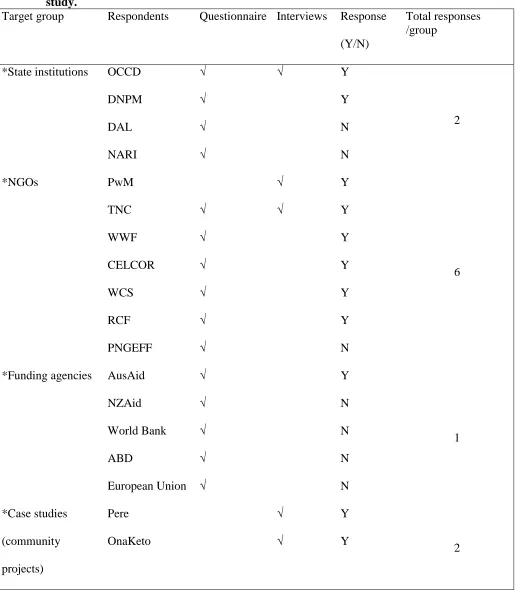
4.4 Target groups and data collection ... 60
4.5 Data collection procedure ... 62
4.5.1 Key Informants ... 63
4.5.4 Direct observations and story telling ... 67
4.6 Data Analysis ... 68
4.7 Research challenges and human ethical considerations... 70
4. 8 Chapter summary ... 72
Chapter 5: Understanding climate change knowledge ... 73
5.1 Introduction ... 73
5.2. Rural communities’ understanding/description of climate change ... 74
5.3. Climate change impacts on livelihoods: knowing the information source ... 78
5.4. Climate change issues experienced locally ... 82
5.5. Collaborative opportunity ... 87
5.6 Chapter summary ... 91
6.0 Strategies to deal with climate change ... 92
6.1. Introduction ... 92
6.2. Current implementation plans ... 94
6.3. Timeframe for implementation ... 102
6.4. Important variables that can encourage community participation ... 104
6.5. Institutional capacity for project implementation ... 107
6.6. Priority adaptation project for Pere and OnaKeto communities ... 110
6.7. Chapter summary ... 112
7.0 Adaptive variables: a community response to climate change ... 113
7.1. Introduction ... 113
7.2. Success stories: practitioners’ perspectives ... 114
7.2.1. The case studies ... 115
7.2.2. The state institutions, NGOs and funding agencies ... 118
7.3. Problems encountered in implementing strategies: case studies’ perspectives ... 122
7.4. Suggestions to strengthen future climate change adaptation projects in PNG 124 7.4.1. The case studies perspective ... 125
7.4.2. The state institutions, NGOs and donor agencies perspectives ... 128
7.5. Chapter summary ... 131
Chapter 8: Climate change adaptation in Papua New Guinea ... 132
8.1 The progress and challenges experienced ... 133
8.1.1 Government of Papua New Guinea ... 133
8.1.2 Stakeholder involvement: the NGOs ... 137
8.1.3 Project Implementation: The local communities of Pere and OnaKeto ... 138
8.2 Reflection on the sustainability of climate change adaptation projects in PNG ... 139
8.3 Policy implications and recommendations ... 141
8.3.1 Governance and accountability ... 141
8.3.2 Adaptation strategies ... 142
8.4 Conclusion ... 144
8.5 Future studies ... 145
References ... 147
Appendices ... 154
Appendix 4-1: Letter of acceptance from Pere village & OKPF ... 154
Appendix 4-2: Community introductory session plan ... 156
Appendix 4- 4: Questionnaire for international funding agencies, NGOs, government
department of PNG and their programme offices online ... 162
Appendix 4- 5: Human Ethics Committee Approval ... 165
Appendix 4- 6: Explanatory notes to questionnaires ... 166
List of Tables
Table 3-1: Summaries of programme and project goals by NGOs working in Papua New Guinea ... 42 Table 4-1. Summary of responses from the target data collection sources in this study. . 61 Table 5-1: The generalized summaries of communities’ description of climate change. 75 Table 5-2: Pere and OnaKeto villagers’ sources of climate change information regarding impacts on their livelihoods. ... 80 Table 5-3: Outline of the main issues that threaten wellbeing as understood by NGOs and state institutions that promote climate adaptation projects in PNG ... 82 Table 5-4: General outline of climate change related issues experienced locally. ... 84 Table 6-1: The current communities’ plans to cope with environmental changes triggered by climate variability ... 94 Table 6-2: The focused climate adaptation activity each participating group anticipates implementing towards achieving effective adaptation ... 101 Table 6-3: The length of time each participating group has been involved in climate change issues up till July 2011... 104 Table 6-4: Organisations’ and groups’ perspectives on the incentives that can encourage communities to take part in climate adaptation activities ... 106 Table 6-5: Summary of priority adaptation activities for Pere and OnaKeto villages .... 111 Table 7-1: Summary of successful adaptation initiatives by the rural communities ... 117 Table 7-2: Characteristics that are seen to impede successful adaptation in Pere and OnaKeto ... 124 Table 7-3: The case studies’ suggested parameters for strengthening adaptation in the future for PNG ... 127 Table 7-4: State institutions, NGOs and donors’ three suggested parameters that can strengthen adaptation in PNG ... 131
List of Figures
Figure 1-1: Map of Papua New Guinea with the names of provincial capitals (map
modified from a Google map, January 2012). ... 5 Figure 1-2: Location map of OnaKeto villages (Kenangi, Fatau and Mangiro) in
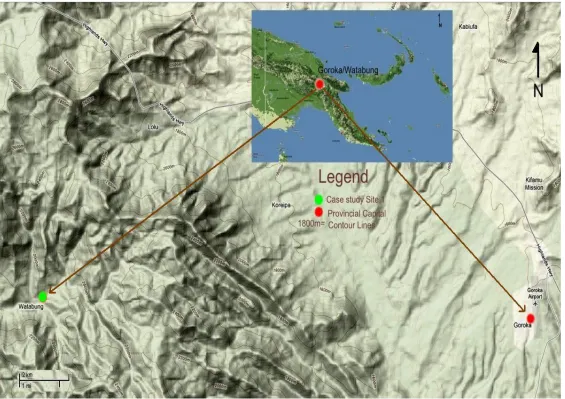
Watabung District of Eastern Highlands Province where the interviews were conducted (map modified from a Google map, January 2012). ... 8 Figure 1-3: Location map of Pere village, Manus Province where interviews were
conducted (map modified from a Google map, January 2012). ... 9 Figure 1-4: Location map of my home township where I was raised and started my high school education (map modified from a Google map, January 2012). ... 13 Figure 3-1: The stakeholders with their relationship to the climate change action
Figure 5-2. A cemetery in Pere village is already at the high-tide zone, threatened by a
rising sea level. (source: author, July 2011) ... 85
Figure 5-3. An example of a seawall built of local materials to prevent shoreline erosion that threatens the Pere village setting (source: author, July 2011). ... 86
Figure 5-4: Pere Village freshwater supply: the reservoir and the water pump shed as shown were funded by the French Government in 1997 (source: author, July 2011). ... 87
Figure 6-1. Wild taro seedlings grown in a water-logged area, Pere village (source: author, July 2011) ... 98
Figure 6-2. One of the reforested areas of land in OnaKeto villages to restore biodiversity while stopping soil erosion and reducing CO2 gas concentration in the atmosphere (source: author, August 2011)... 100
Appendices
Appendix 4-1: Letter of acceptance from Pere village & OKPF ... 154Appendix 4-2: Community introductory session plan ... 156
Appendix 4- 3: In-depth interview questions sample ... 160
Appendix 4- 4: Questionnaire for international funding agencies, NGOs, government department of PNG and their programme offices online ... 162
Appendix 4- 5: Human Ethics Committee Approval ... 165
Appendix 4- 6: Explanatory notes to questionnaires ... 166
Appendix 6- 7: Information sheet & Consent form for participants ... 167
Acronyms
ADB Asian Development Bank
AOSIS Alliance of Small Island Nations AusAid Australian Development Aid BPNG Bank of Papua New Guinea
CELCOR Center for Environmental Law & Community Rights
CO2 Carbon dioxide
DAL Department of Agriculture and Livestock DEC Department of Environment and Conservation DNPM Department of National Planning and Monitoring
DPLLGA Department of Provincial & Local Level Government Affairs ENSO El Nino Southern Oscillation
EU European Union
GHG greenhouse gas
GoAustralia Government of Australia
IPO Interdecadal Pacific Oscillation ITCZ Inter Tropical Convergence Zone LDCs Least Developed Countries LLG Local Level Government LMMA Locally Managed Marine Areas
NAPAs National Adaptation Programme of Actions NARI National Agricultural Research Institute NGO Nongovernment Organisation
NSW New South Wales-Australia NZAid New Zealand Development Aid
OCCD Office of Climate Change and Development OKPF OnaKeto Peoples Foundation
PNG Papua New Guinea
PNGEFF Papua New Guinea Eco-forestry Forum PwM Partners with Melanesians
REDD Reducing Emissions from Deforestation and forest Degradation RCF Research and Conservation Foundation
SPCZ South Pacific Convergence Zone TNC The Nature Conservancy
UN United Nations
UNEP United Nation Environment Programme
UNFCCC United Nation Framework on Climate Change Conventions UPNG University of Papua New Guinea
USA United States of America
WB World Bank
Chapter 1: Introduction
1.1 Background to research - climate change in Papua New
Guinea
Climate change is a “hot topic” in the 21st
These events have been described by climatologists as the direct effect of global warming, and many have predicted more disastrous events will recur within a short span of time. From socioeconomic and political perspectives, some political leaders have described such events as having detrimental impacts on the wellbeing of human lives. For example, the Pakistan flooding disaster was stressed by the UN Secretary General as more disastrous and affecting the livelihoods of many more people than ever before, while the Prime Minister of Australia has claimed the flooding impact as the most extreme in seventy years (Government of Queensland, n.d). More reports of climate related disasters that are happening elsewhere have been reported in print and digital media. The European heat-wave of 2003 is another case example. This covered large parts of Europe, extending from June to mid August, with an increased temperature of plus seven degrees Celsius over monthly mean temperatures. The IPCC1 (2007) believes that increases in monthly mean temperatures and carbon dioxide concentration will eventually force the mean climatic conditions to change so that the earth faces irreversible and catastrophic system feedback. Thus the consensus view from many countries in the years since 2007 is that global average anthropogenic greenhouse gas emissions should be cut down to as low as 50 percent by the year 2050 (IPCC, 2007).
The discussions on the idea of cutting down greenhouse gases are still ongoing, while examples of impacts experienced are prevalent in both first and third world countries. However, it is highly likely that the societies in the first world will be more resilient than
1
The Intergovernmental Panel on Climate Change (IPCC) is the leading international body for the assessment of climate change and provides the world with a clear scientific view on the current state of knowledge in climate change and its potential environmental and socio-economic impacts
developing ones. This may be the case because first world nations have the finance and improved technologies to enable them to adapt to climatic adversities, whereas the developing nations are disadvantaged in these terms. Papua New Guinea (PNG) for example, is a developing island nation and there are reports of increasing incidences of malaria outbreaks in the highlands (cooler) regions due to increasing monthly mean temperatures in recent times. Additionally, the prolonged dry season of 1997 (lasting almost a year) caused a country-wide drought while heavy rainfall and flooding were recorded in some parts of the country which had never previously experienced them (AusAid, 2007; DNPM, 2010a; World Bank, 2011:2; NARI, 2011). Such changes in weather patterns, degradation in biodiversity and disturbance to livelihoods are an obvious indication that climate change is happening. However, as the impact of changing climate varies from place to place, so does the response mechanism employed to reduce the impacts. To help understand PNG’s country situation, section 1.2 provides an overview of the geographical, social, political and economic information on how PNG is positioned to address climate and adaptation issues in a profound manner. Chapters 2 and 3 will then provide an overview of the conceptual frameworks of climate change and the political influence PNG has abroad, and assess the priority climate change response initiatives it should take.
1.2 Country overview
600 smaller islands and archipelagos. Of the 600 islands, there are four main ones (Manus, New Britain, Bougainville and New Ireland - Figure 1-1) that have a provincial status of their own. PNG is the largest of the Pacific Island States and shares a political land boundary with Indonesia (West Papua) to the west (Kini, 2010; National Strategic Plan Taskforce, 2011). Furthermore, PNG has a geographically rough terrain with ‘vast mountains and valleys running through the middle of the mainland’ (Reilly, 2000:174). Such a geophysical nature creates severe difficulties in terms of isolation, access and transport.
Because of the mainly rural based population and the declining national economic performance in recent years (Webster & Duncan, 2010), responding to climate change poses an additional problem. Hence, this study attempts to assess the actions that are taking place to reduce vulnerability. Sections 1.3 to 1.7 elaborate in detail the reasons why this study has been undertaken.
1.3 Research aim and objectives
The aim of this study is to gain insights into the implementation of climate change adaptation programmes and projects in Papua New Guinea. At the same time, it will provide new information around experiences and understanding of five different stakeholder2 groups which are directly participating in climate change programmes. Furthermore it will seek to contribute to the information that practitioners, decision-makers, and policy-makers need for better planning in the future.
In order to achieve this aim, three main research objectives guided this study. These are: (1) To investigate the climate change knowledge and issues at international, national and community levels.
(2) To understand the adaptation strategies that the funding agencies, national government agencies, NGOs and government program offices and the local communities have for implementation in PNG.
(3) To identify the most important variables that can make vulnerable communities in PNG be more responsive to climate change in the future.
1.4 Rationale for this study and the selection of case studies
Since PNG started taking the initiative in 2008 to address climate change issues locally (DNPM, 2010a), the government has focused mainly on setting up policy frameworks. However, no climate adaptation projects were initiated until mid 2009, when some of the rural communities, with support from NGOs, decided to start some projects that were related to livelihood issues across the country.
mangrove planting, protection of coral reefs and growing of drought and saline resistant food crops.
Figure 1-2: Location map of OnaKeto villages (Kenangi, Fatau and Mangiro) in Watabung District of Eastern Highlands Province where the interviews were conducted (map modified from a Google map, January 2012).
community oriented climate change projects; hence, they will provide the opportunity for similar projects to be implemented more successfully elsewhere.
1.5 Scope of the study
The scope of this study is to seek qualitative insights into the experiences of climate change implementation programmes and projects in PNG. In particular, it seeks insights into the way the implementation aspect is carried out, by comparing the policy frameworks that are established by the government of PNG with community implemented projects. As such, the study focused on:
Gathering insights and in-depth experiences from two case study projects with contrasting geographical boundaries.
The views discussed in this study are mostly from key stakeholders that participate in PNG’s climate change adaptation programmes and projects: the international funding agencies; the government departments of PNG, programme offices and research institutions that are set up by the PNG government; the NGOs; and community-based organizations.
1.6 Outline of the thesis and organization of chapters
collaboration for successful project implementation. It also tries to clarify the complexity of the definition of climate change adaptation and the justification of its meaning in the PNG context.
Chapter 3 analyses PNG’s strengths and weaknesses in international climate change dealings and debates, the viable option for national climate action and the reasons why its government works closely with NGOs in implementing adaptation activities.
Chapter 4 discusses the methodological approach taken. It outlines the number of considerations undertaken to gather field data. Most importantly, it was designed to ensure the research met ethical standards; an appropriate questionnaire was designed and data collected and analysed for presentation.
Part 2 presents the findings of this study. This part is divided into three main chapters presenting the field work carried out with each research participant and focusing on the main themes that stand out from the participants’ experiences of adaptation initiatives in PNG.
1.7 Research interests and self confessions
A good qualitative study is one which ‘reflects the history, culture and personal experiences of the researcher’ (Cresswell, 2007:46). Research interest and self confessions in this study are more than simply an autobiography. With me as the main thrust of the data collection and analysis throughout the research I acknowledge that I bring certain values and insights from my experiences in working on biodiversity conservation and resource management as a Papua New Guinean, which could influence the manner in which data is collected and interpreted. Nevertheless I will introduce myself and what I have been doing before taking up postgraduate studies, to clarify the ways in which I could influence the research process and how I managed these.
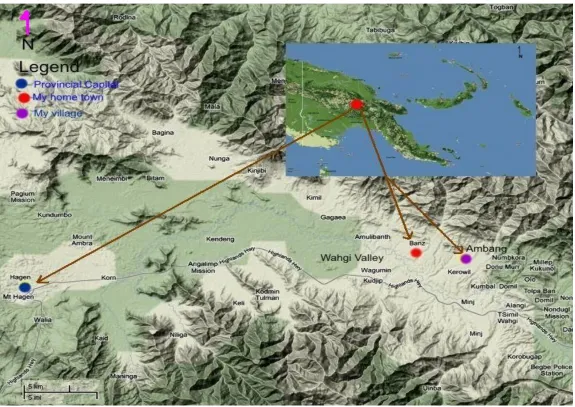
Figure 1-4: Location map of my home township where I was raised and started my high school education (map modified from a Google map, January 2012).
Taking this course further strengthened my hope of helping my community and country to keep the environment, which is its life supporting system, safe and healthy for people’s survival. During the years 1994 to 1995, while I was in my third and final year of studies, there was an ongoing movement in PNG and abroad for environmental sustainability. There were discussions under the auspices of the United Nations where a declaration was made in Rio de Janeiro in 1992 to protect and conserve biodiversity in an attempt to maintain the ecosystem.
These movements prompted the government of PNG and the United Nation Environment Programme to develop and introduce the concept of an “integrated conservation and development programme”. This was a programme that could be trialled in PNG because of customary land tenureship, where the local landowners want socioeconomic development provided the environment and its biodiversity can be conserved. At the same time, there was a growing movement by environmental NGOs in PNG to take a complementary role to help the government’s Department of Environment and Conservation to implement the integrated conservation and development programme.
greater-scale’ I mean developing plans, identifying programme and project activities, writing proposals to donors for funding support, communicating the information to the host communities, conducting training to build their capacities and execute planned activities to achieve the anticipated project or programme goals.
I held a number of senior positions in NGO circles and also helped many rural communities throughout PNG. In those positions, I experienced numerous highs and lows while working in the field. I was dismayed when seeing that the important pillars such as income generation opportunities, health and education facilities, transportation and communication networks that constitute a sustainable livelihood were not adequately addressed by any means or interventions. This was attributed to the PNG government’s lack of financial and skilled people to take on the issues and address them profoundly. In this case, there was little attention given to help the remote and severely impacted people whenever there was a resource made available. The issue of funding and having skilled persons to help rural people plan and make decisions on how they can improve their livelihoods remained the same after I left for postgraduate studies to further my career. To this day I know that PNG is far behind in addressing the growing social, environmental and economic issues, because of the lack of priority given to them by respective governments over time.
contribute in any way possible to support the PNG Government’s policies by identifying deficiencies in addressing climate change issues, and especially in identifying effective ways of addressing the climate change issues in PNG.
Chapter 2: Conceptual frameworks for understanding
climate change in PNG and enabling mechanisms for
successful adaptation: a review
2.1 The meaning of climate change adaptation and its
conceptual issues: a PNG perspective
The central theme for this study is climate change adaptation and the literature selected for review is mainly focused on adaptation issues and experiences. It is therefore important to discuss the use of the term ‘adaptation’.
identity, or feedbacks of that system while maintaining the option to develop’ (Nelson et al., 2007:397).
All the definitions given by different climate and social scientists are interrelated and relate well to many the purpose of promoting or engaging in climate change adaptation activities. Like many other societies, Papua New Guinean communities have adapted for centuries to climatic trends and extremes (Mercer, 2010: 247). Across the world, people have adapted to climate change over time and will continue to do so in the current situation because climate is part of the wider environmental landscape of human habitation (Adger, 2003:388). However, it is important to note as well that adaptation varies at different scales. For example, at the community level, it will include strategies to improve ‘agricultural systems such as crop diversification, or introduction of hazard resistant crop varieties; risk assessments and associated plans; the protection of natural resources; early warning systems; education and awareness measures and protection of water resources’ (Mercer, 2010:249). At the national level for the least developed nations, it would include the National Adaptation Program of Actions. NAPAs, a UNFCCC established programme for Least Developed Countries (LDCs to identify priority activities that correspond to their urgent and immediate needs to adapt to climate change (UNFCCC, n.d). And the programme aims at provision of technical and financial support to protect vulnerable communities (Mercer, 2010).
2011.1). In many parts of Africa for example, the adaptation discourse is still predominantly focused on responding to the predicted impacts of future climate change rather than addressing the underlying factors that determine chronic poverty, vulnerability, and adaptive capacity, that is, the ability to undertake adaptations or systems changes (Petra & Kathleen, 2011). The situation may be similar for PNG where climate change adaptation is defined as the response to the ‘perceived socio-ecological and economic impact the climate would have on their livelihoods’ (Mercer, 2010:247).
2.2 Overview of climate change issues in PNG
The climate in PNG is governed by a number of factors, including the trade winds and the movement of the South Pacific Convergent Zone (SPCZ), a zone of high pressure rainfall that migrates across the Pacific south of the equator. Moreover, it is highly variable yearly and is also strongly influenced by El Nino conditions, which bring drought to the drier areas of the country (World Bank, 2011:3). However, despite natural climatic variations, a distinction can be made between climate changes which have happened and those that are expected.
As for the past and the present experiences, indications are that global climatic change has brought some alarming concerns to the people of PNG. The most notable changes and impacts on the people and their environment are experienced in the northern coastline of the country. The northern coastal villages and rural coastal population are vulnerable to coastline flooding and sea level rise (DNPM 2010; World Bank, 2011). The coastal areas, including islands and many coral atolls, are low-lying and it is estimated that 2,000 coastal villages are vulnerable to climate induced flooding risks in the near future (World Bank, 2010).
the coming years based on studies of the effects of climate change on disease prevalence (Wickham et al., 2010:76; DNPM, 2010b). Furthermore, climate models predict that El Nino Southern Oscillation (ENSO) events - the see-saw pattern of reversing surface air pressure between the eastern and western tropical Pacific (http://www.sciencedaily.com/articles/e/el_nino-southern_oscillation.htm) that triggers prolonged droughts over the land surface. For example, the 1997 ENSO event brought severe hardship to rural people across the country. Similar situation may occur again, and can become more frequent. The ENSO event will also impact oceanic water temperature and will seriously affect marine life. The most affected would be the corals of which bleaching would be a common occurrence (Wickham et al., 2010:76; OCCD, 2010; DNPM, 2010b:4). The 1997 drought that was brought about by the ENSO event demonstrated that agricultural crops can wither, water resources can reduce in quantity, and increase incidence of environmental health problems because they are highly vulnerable to climate variability (Initial National Communication Papua New Guinea, 2000).
strategy established by the United Nations with a set target for every nation to achieve improved socioeconomic standards by the year 2015. Thus, identifying an effective way of addressing vulnerability and adaptation in PNG would set a precedent for protecting human wellbeing.
2.3 The political system
This section highlights the context within which the climate change adaptation programmes and project are implemented while providing an avenue for critiquing the effectiveness of the current system. Essentially, it elaborates on the current and existing political and governance system and analyzes the service delivery mechanism to provide the background information for understanding how the government’s planned programmes are implemented in PNG.
2.3.1. PNG’s political and governance system
delivery service mechanism, that is, the bureaucracy which extends from the national departments to district management bodies.
Together with a well defined system of governance and service delivery to the public, PNG also holds the record in developing countries for having ‘maintained an unbroken record of democracy’ while ‘having held competitive elections since 1964’ (Reilly & Phillpot, 2002:907). Outwardly, PNG has a stable system of governance. However, at the parliamentary and bureaucratic levels, parliament has also been unstable since 1975. This instability is reflected in successive votes of no-confidence, changes of prime ministers and ministers and, subsequently, the change of departmental heads from the national to district levels. The change in bureaucratic level affects the delivery of services because, most often cronies are appointed to a senior position without merit. Potentially these changes and appointments have impeded the implementation of planned programmes because, whenever someone new came in, he or she has had differing views and practice to instill and implement, hence cannot continue from its predecessor. Ironically it has led to unstable management of the nation’s socioeconomic, political and other aspects of development (DNPM, 2010a, 2010b; Initial National Communication Papua New Guinea, 2000; Wickham, et al., 2010).
it has not been possible for basic services to reach all the rural populace. In an attempt to overcome this problem the government has established a decentralized system of governance. The main purpose of decentralization as articulated in the Organic Law on Provincial and Local Level Government of 1977 was the division of the powers and responsibilities of government among national, provincial and local levels. This is a critical element of Papua New Guinea’s political and administrative structure, and one which has important implications for governance generally and for service delivery in all sectors of government (Axline, 1986). However, this system of governance is described as very complex and costly to run effectively (Wickham, et al., 2010).
2.3.2. The government’s service delivery mechanism
contains the list of deliverables which reflects the central government’s medium term development plans. Furthermore, provincial governments, after receiving funding from the national government, then disburse these funds to district and the local level governments based on the budget contained in their five-year rolling plans. The district government plans while incorporating the central government’s medium term development strategies, it also includes provincial government’s internal activities to service the province. Such an arrangement, ideally, creates an avenue for coordination and management of the nation’s development programme activities.
However, although it has set up the provincial and local level governments with significant responsibilities and funds in an attempt to improve service delivery, the government lacks institutional capacity to effectively deliver its programme activities (DNPM, 2004). This is attributed to the poorly developed infrastructure that results in an unequal distribution of services. The road network is limited owing to the remoteness and rugged terrain and many areas are reached by air. However, the poor maintenance resulted in many airstrips being closed (Axline, 1986; Wickham et al., 2010). As a consequence, a large part of the rural sector remains relatively inaccessible, and the lives of the people have changed little from colonial days (Wickham, et al., 2010).
2009). The areas for improved service delivery with strategic directions include Education, Health, Infrastructure, Non-renewable Resources, Agriculture, Fisheries, Forestry, Disaster Management, Environment, Community Development, Village Courts, Land Mediation, Commerce and Industry, and Land and Physical Planning (DPLLGA, 2009:1-13). The outcome of these strategies is yet to be made known, but perhaps it provides a guide to ensure there is improvement in the performance of the provincial and local level governments for effective service delivery.
2.4 Overview of the pros and cons of centrally versus
community driven projects
In the climate change arena, initial approaches to oversee climate change adaptation are generally framed through policies and developing technology that can reduce vulnerability, or improve skills and knowledge in better land use management for sustainable livelihoods (Ayers & Forsyth, 2009:25). Such an approach is taken by the central agency, which is the arm of the government. In most cases centrally driven projects are focused on policy creation or regulations to build capacity and actions that implement operational decisions (Adger, Arnell & Tompkins, 2005:79; Ayers & Forsyth, 2009:25). The main intention of government driven initiatives are to protect the state’s citizens as it is their national responsibility to do so. However, state-led programmes have been criticised by academic observers and community development specialists, when commenting on approaches to climate change adaptation, as overtly focusing on policies and technological developments (Adger, Arnell & Tompkins, 2005). Thus, ‘the scale of governance remain bounded’ where little consideration is given to acknowledge and support local communities to plan and implement tasks that can enhance risk reduction whilst improving daily sustenance needs on a timely basis (Wilson, 2012:184)
local people know and understand their local situation well, and too, self initiative will lead to taking ownership; management and maintenance of the livelihood support projects (Osbahr, Twyman, Adger & Thomas, 2010)
However, though the people are in control and actively participating in development initiatives that will determine their wellbeing, there also exist challenges and uncertainties. The challenges and uncertainties includes: lack of capacity to respond to or reduce vulnerability and building resilience, if it a disaster related project; most often communities become too dependent on information and expertise from outside that they cannot act upon their own local knowledge (IIED, 2009:23). In such cases, a project can be seen to have been driven by outside influence and often fail to continue when outside expertise is no longer present. From my personal experience during the years 1996 to 2007 as a conservation practitioner, I have witnessed that a lot of community led conservation projects failed because, they depended fairly too much on scientific and community development expertise from elsewhere. When the outside supports are no longer present, the local people could no longer manage to continue with the projects.
impedes progress (Devina, n.d) and the situation gives opportunity for a credit to be given to government as their projects are implemented without hassle, provided needed funds and expertise are there. That is, government driven projects have specific plans and activities to implement with a set timeframe whilst the communities often lack needed resources such as finance or skilled human resource. At the same time, communities more often cannot settle their disagreement over what task is to be given priority for quite a while especially when conflict of interest exists within the community groups.
Given that both centrally and community driven projects have a fair advantages and disadvantages, a way forward would be to have a wider stakeholder consultation, planning and implementation of initiatives (Callaghan & Colton, 2008). Such a process should help overcome the number of issues discussed in the above paragraphs.
2.5 Chapter summary and conclusion
making vulnerable communities adaptable to climate change is through the support and promotion of community driven projects.
Community driven projects can prove successful unless the initiative is from the people who are really affected. Hence they know and understand the issue well. In essence they can manage to define and create an adaptive environment for their safe living. Hence, if the government of PNG wants to protect its people, it will have to take a prudent approach in making sure the decentralization system works while creating mechanisms to appreciate and promote community-driven developmental projects. However, the challenge involves in making life easier and better remains. In climate change and adaptation initiatives undertaken by PNG, both at the national and community level, the task of addressing the issue profoundly remains. Some of the critical challenges PNG faces in particular are, climate change politics and the country’s obligation to address the key issue that affects the nation is discussed in chapter 3.
Chapter 3: Global climate change politics and PNG’s
undertakings locally: An analysis
3.1. Introduction
discusses PNG’s position from the lens of its contributions and the impact it has on the global climate debates and dealings. Then, the importance of the local actions and how PNG is attempting to address the existing climate change issue as a priority are discussed in section 3.3. In this section, a distinction is made between the two common approaches to addressing climate change: adaptation and mitigation so as to highlight the reasons for PNG to give prominence to a particular climate change response action then embarking on both. Section 3.4 discusses the important role environmental NGOs play, both locally, nationally and internationally in climate change adaptation that attracts the government to work closely with them; while section 3.5 sums up the chapter.
3.2. PNG’s position in the international climate change debates
and dealings
Caribbean, Indian Ocean, Mediterranean, Pacific and South China Sea’ (Kaluwin, 2010:11).
Being a member of the AOSIS has enabled PNG to be part of the international dealings and debates. Kaluwin (2010:12) states that ‘PNG and its AOSIS group was a very influential political bloc during INC sessions, which included other UN agreements’ such as biodiversity and the Montreal Protocol. The negotiations on climate change are now under the auspices of the UN Framework on Climate Change Conventions (UNFCCC), a framework adopted by the INC. PNG has been involved in almost every UNFCCC organized meeting. Recently it has played a valuable leadership role in promoting international discussions on reducing emissions from deforestation and forest degradation (GoPNG & GoAustralia, 2009) through establishment of a Coalition of Rainforest Nations. The main focus for the group is to protect tropical rainforest by promoting environmental sustainability through innovative strategies which integrate social, economic, and scientific rationales (www.rainforestcoalition.org/about.aspx).
been no major political commitment honoured so far by the developed and industrialized nations. For example, as Benwell (2008:546) argues, ‘a range of political considerations determines which environmental targets will be adopted, the means of achieving them and the timing of undertaking’. In other words, the decision to adopt environmental targets and then to choose emissions trading as the means to achieving them is not a straightforward step from scientific and economic theory to policy outcome (Benwell, 2008). Furthermore, Brown (2010:300) supports Benwell’s considerations that ‘progress on climate change can be achieved only through political and economical convergence’. This means that climate change policy must overlap with other political goals, and that political and technological innovations developed to address climate change must be competitive (Brown, 2010). Hence, CO2 reduction goals are achieved through political and technological innovation while economic growth is maintained
countries like China and India do not want to support the call to reduce carbon emissions because they will not want to halt their growing economy as the changes in their approach to improving their economy would have increase cost while the productivity will be low (Howard, 2009). Thus the issue of finding a common ground to cut CO2 emissions while maintaining economic growth remains a challenge for both developed and developing nations.
PNG, and other smaller developing nations, are mostly caught in the middle of the politics being played by the industrialized nations. For instance, there have been a number of commitments made in the climate change dealings such as the Kyoto Protocol to reduce Greenhouse Gas (GHG) emissions by 2012. Those commitments have not been honoured except by the European countries and the 2011 UNFCCC meeting in Durban saw progress hitting a stumbling block. China for example, could not agree to cut its GHG emissions to 50 percent by 2050 (UNFCCC, 2011: Durban Climate Change Conference). Conversely, there are some countries such as the European Union which make financial commitments to support developing countries such as PNG to implement some of the climate change agreements. To date there are mix reactions and responses from all the countries towards addressing climate change. Thus the impact of changing climate continuous to grow exponentially and affects both human and environmental wellbeing.
people devise strategies to cope with the changing climate (EU, 2007). With such support at hand, PNG has adopted a methodology for reducing emissions from deforestation and forest degradation. REDD is a worldwide programme and is for every rainforest nations to participate. Essentially, REDD programme is an effort to create a financial value for the carbon stored in forests, offering incentives for developing countries to reduce emissions from forested lands and invest in low-carbon paths to sustainable development (http://www.un-redd.org/AboutREDD/tabid/582/Default.aspx). This concept was proposed by PNG in Canada and during COP 11, in 2005. Hence, the adoption and promotion of REDD concept by PNG and other developing rainforest nations was agreed to and recommended for action by the COP 13 meeting in Bali in 2007 (Kaluwin, 2010:21). In order to move forward with implementation of the REDD and other climate change reduction programmes, PNG moved on to establish the Office of Climate Change and Development in 2008. The OCCD was established to develop a national climate change policy and coordinate and facilitate mitigation, adaptation, and other climate change reduction programmes (OCCD, n.d; Kaluwin, 2010). REDD option forms part of both adaptation and mitigation programme as it will help in storing of carbon dioxide; an act that will reduce global warming and reducing sea level rise as well and protecting food supply base for plants and animals to replenish.
the political debates are ongoing in all climate talks, PNG will have to take proactive action locally like other countries do to support and protect its citizens. Thus, section 3.3 further discusses the possible option that PNG can take to address climate change locally.
3.3. The viable option for climate change response areas:
Mitigation or adaptation
So far PNG has embarked on the two main ‘Work Programmes’ to address climate variability and its impact through either policy intervention or through direct action. The two approved programmes are adaptation and mitigation, while technology and financing forms part of the programme as a support mechanism (OCCD, n.d). The following sections discuss the differences between adaptation and mitigation and consider whether PNG’s main goal in addressing climate change is to target adaptation or mitigation.
mitigation effort might include emission reductions for sectors and an emissions trading scheme. For PNG, such an effort will come with an economic cost and that includes the purchase and installation of technology that would retain carbon dioxide, while switching to the use of clean energy such as solar, wind turbine and biofuel that is of course expensive compared to the hydrocarbon fuel which is currently used. Certainly there are costs for switching technologies, but the country’s own assessment indicates that the initial costs of these measures will eventually be reduced by the co-benefits in terms of reduced air pollution, biodiversity protection and energy security (OCCD, n.d).
example, through implementation of the REDD concept can enhance forest sinks and biodiversity protection. This approach in turn would support human lives through provision of clean air, water, wildlife and plants for daily sustenance or amenity purposes.
3.4. Why PNG Government works with NGOs
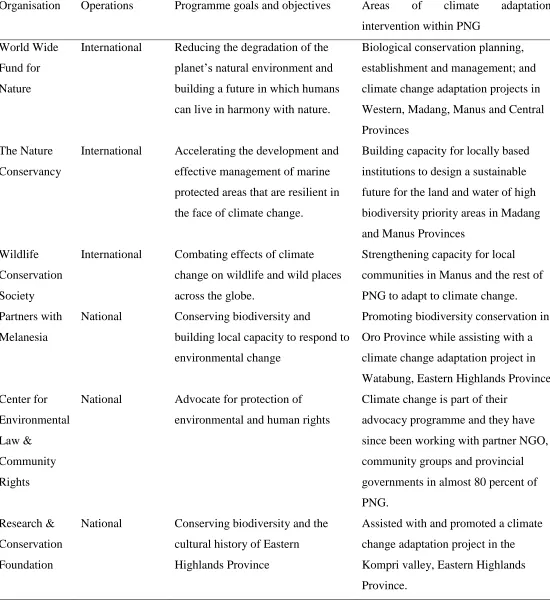
Nongovernmental organisations have been playing a prominent role in conjunction with the government in response to climate variability and hazards issues in PNG. Their names and list of programme goals, including their geographical areas of interventions are summarised and presented in Table 3-1. The main focus of this section is to highlight the some of the reasons why PNG government works with NGOs towards addressing climate change and socioeconomic related development issues. In addition to the importance of NGO’s work, a brief overview of the contradictions that exists in their programme of work is discussed.
their targeted issue of concern are discussed in the following paragraphs to put into perspective the reasons why the government’s working with them.
Before discussing the strengths of environmental NGOs that work in partnership PNG government, it is equally important to highlight some of the drawbacks as this will be a fair approach to analyzing the aspects in which the government and the local communities work in partnership with NGOs. The drawback in the work of NGO often varies with individual organizations and their geographical areas of interventions. Moreover, their roles are complex and they can be assessed in different ways, but generally, some of the common problems associated with their work are: financial and organizational sustainability, accountability and transparency of their operations; and the credibility of aid sourced by NGOs for their work (Fowler, 2000; Low & Davenport, 2002; Bendell, 2006; Allard & Martinez, 2008). As Low and Davenport (2002) further stated, environmental NGOs are basically donor funded and they do not seem to have local financial support, in particular from local government and business organization to sustain their essential services such as maintenance of projects implementation, and operational costs including staff salary. When such situation exists, many quality project staff leaves. At the same, the work with the people stops. In return the village people are left with incomplete task where they cannot be able to do it themselves because they too lack funds and expertise to do it.
(Bendell, 2006:ix). Such criticisms are serious and in most cases demote the cooperation from local people and groups who support the project implementation. There are other concerns on, conflict of interest and lack of transparency in the work of both environmental and humanitarian NGOs (Bendell, 2006). For example, in 2004, Sri Lankans have protested against corrupt aid distribution while a NGO coordinator in Indonesia was arrested for alleged corruption in relief effort. Similar case exists in PNG where resource or land owners tend to blame NGOs for using their community for self gains and not giving the funds directly to them.
Furthermore, NGOs have been criticized for promoting western aid system with foreign programme goals when the local society has different agenda to promote (Fowler, 2000). The general notion is that, western development framework does not capture local development aspirations and is in conflict, thus, enable the communities to reject and become passive participant in a community project.
Table 3-1: Summaries of programme and project goals by NGOs working in Papua New Guinea
Organisation Operations Programme goals and objectives Areas of climate adaptation intervention within PNG
World Wide Fund for Nature
International Reducing the degradation of the planet’s natural environment and building a future in which humans can live in harmony with nature.
Biological conservation planning, establishment and management; and climate change adaptation projects in Western, Madang, Manus and Central Provinces
The Nature Conservancy
International Accelerating the development and effective management of marine protected areas that are resilient in the face of climate change.
Building capacity for locally based institutions to design a sustainable future for the land and water of high biodiversity priority areas in Madang and Manus Provinces
Wildlife Conservation Society
International Combating effects of climate change on wildlife and wild places across the globe.
Strengthening capacity for local communities in Manus and the rest of PNG to adapt to climate change. Partners with
Melanesia
National Conserving biodiversity and
building local capacity to respond to environmental change
Promoting biodiversity conservation in Oro Province while assisting with a climate change adaptation project in Watabung, Eastern Highlands Province Center for
Environmental Law &
Community Rights
National Advocate for protection of environmental and human rights
Climate change is part of their advocacy programme and they have since been working with partner NGO, community groups and provincial governments in almost 80 percent of PNG.
Research & Conservation Foundation
National Conserving biodiversity and the cultural history of Eastern Highlands Province
They also have dense and extensive networks which is different from those of the typical government, and they are often more cost-effective than their private or public partners. Subsequently, they are the interface between citizens, government and multilateral organisations such as United Nation Environment Programme (UNEP, 2007). Moreover, environmental NGOs have been shown to be visible and to carry out successful work in the areas of human rights, health and environmental protection, and in their areas of concern they serve as an early warning mechanism or monitor of official agreements (Allard & Martinez, 2008; http://beta.adb.org/features/ngos-provide-better-health-care-services-papua-new-guinea). Their strengths have led multilateral institutions to direct more funding through them (Bendell, 2006) and for these reasons the government of PNG has opted to work with them.
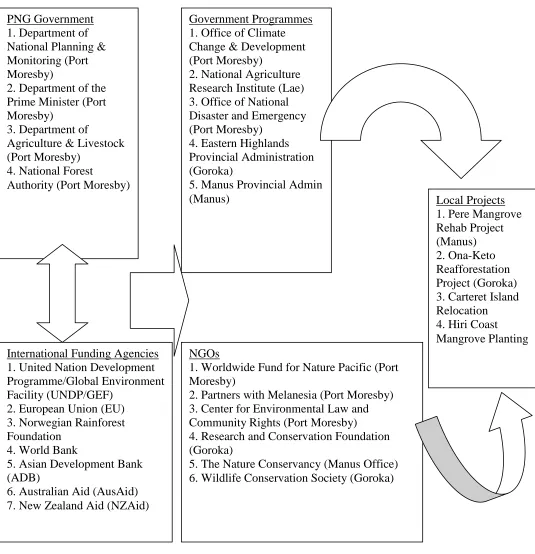
Figure 3-1: The stakeholders with their relationship to the climate change action programme and projects in PNG as indicated with direction of the arrows.
PNG Government 1. Department of National Planning & Monitoring (Port Moresby)
2. Department of the Prime Minister (Port Moresby)
3. Department of
Agriculture & Livestock (Port Moresby)
4. National Forest
Authority (Port Moresby)
International Funding Agencies 1. United Nation Development Programme/Global Environment Facility (UNDP/GEF)
2. European Union (EU) 3. Norwegian Rainforest Foundation
4. World Bank
5. Asian Development Bank (ADB)
6. Australian Aid (AusAid) 7. New Zealand Aid (NZAid)
Government Programmes 1. Office of Climate Change & Development (Port Moresby)
2. National Agriculture Research Institute (Lae) 3. Office of National Disaster and Emergency (Port Moresby)
4. Eastern Highlands Provincial Administration (Goroka)
5. Manus Provincial Admin (Manus)
NGOs
1. Worldwide Fund for Nature Pacific (Port Moresby)
2. Partners with Melanesia (Port Moresby) 3. Center for Environmental Law and Community Rights (Port Moresby) 4. Research and Conservation Foundation (Goroka)
5. The Nature Conservancy (Manus Office) 6. Wildlife Conservation Society (Goroka)
3.5. Chapter summary
Papua New Guinea is proactive in climate change debate and dealings through its association with AOSIS and Coalition for Rainforest Nations. It involves itself in almost all of UNFCCC’s organised meetings and plays an important role in promoting the REDD agenda in international discussions. However, because of indifference between the regional power blocs, politically and economically, because those with resources are hardly going to forego them, most of the agreements or declarations are not institutionalized.
Chapter 4: Research Methodology
4.1 Introduction
This chapter describes the investigative technique employed in this study. The study used qualitative methods to gauge the experiences and insights from stakeholders at various levels that were involved in promoting climate change adaptation projects in PNG. The process included the administering of questionnaires on-line, in-depth field interviews, and direct observation; and where necessary, visiting the various webpages, including written documents for comparing the data collected. The information obtained from each participating group included: the knowledge and understanding of climate change; the strategies employed to address the climate change issue; and their views on how to make the impacted communities become aware of and adjust to the changing climate.
analysis section, there is an outline of the steps employed to sort out the data in order to make it easy to draw narratives. And finally, Section 4.7 provides a description of the ethical standard required for the research, and Section 4.8 sums up the methodological aspect of this study.
4.2 Qualitative research
complexities, context, and significance of peoples’ understanding of their lives (McGuirk & O’Neill, 2010:191).
Furthermore, it is becoming a norm that ‘qualitative research in geography is now used to address a huge range of issues, events, and places and that these studies utilize a variety of methods’ (Winchester & Rofe, 2010:8). Hence, as Crang (2005b:225) suggests, there is a rigorous and well-laid epistemological foundation about qualitative methods in geography and it can be used widely but with caution as it comes with ‘a certain conventionality of approaches’; and Winchester and Rofe (2010:8) further add that the weight of qualitative analysis rests on a limited range of conventional techniques. In reflecting this view, Davies and Dweyer (2007) assert that interviews, textual analysis, and associated observationally based ethnographies embody a suite of methods that remains the backbone of qualitative research in human geography’ (Winchester & Rofe, 2010:8). From this standpoint, the employment of qualitative techniques in this study was firmly grounded on the concept of ontology and epistemology, so the insights gathered would highlight the day to day experiences of the vulnerable communities.
observations, on-line administration of responses to questionnaires and in-depth interviews.
Nevertheless, in employing the qualitative methods in this research, several considerations needed to be taken into account before accepting the general qualitative research paradigm. That is, one has to bear in mind that ‘qualitative researchers use an emerging qualitative approach of inquiry, the collection of data is in a natural setting sensitive to people and places under study and the data analysis is inductive and establishes patterns or themes’ (Cresswell, 2007:37). This is because the employment of qualitative research in this study basically stemmed from the issues of climate change adaptation projects in PNG. The implementation aspect of the adaptation projects needed to be evaluated to provide insights into the feasibility and viability of strategies that are put in place. Thence, drawing descriptive examples from Bradshaw and Stratford (2010), the following basic characteristics generally connected with qualitative inquiry were adopted for this study: naturalistic inquiry, inductive analysis, holistic perspective, qualitative data, personal contact and insight, unique case orientation, context sensitivity, empathetic neutrality and design flexibility.
4.3 Qualitative research design: Case Studies
the research sought information on the experiences of individuals and the meaning of events and places through the employment of four main types of qualitative research that are employed in ‘human geography, such as oral (primary interview-based), textual (documentary, creative and landscape), observational’ and questionnaires (Winchester & Rofe, 2010:8). In every aspect research was designed based on the issues that were experienced or present. Hence, the method, the indication of form, quantity, and scope of the study were obtained from the main research question related to the topic and objective of the research. The design also evolved over time based on the data collected or available throughout the process. Although I am from PNG and had previous experience in working with rural communities as well as an understanding of the system of governance from the central to the local level, the topic of this research was new. Thus, I have had to read existing literature on qualitative research and take into account some of the emerging issues in qualitative research in human geography before contemplating the research itself.
4.3.1 Case Study Procedure
There are varying definitions of a case study but a concise definition given by Gerring as quoted by Baxter (2010:81) is ‘an intensive study of a single unit for the purpose of understanding a larger class of (similar) units’. It is further elaborated by Gregory and others that a case study ‘epitomizes a process or complex set of processes in context, thereby demonstrating how theoretical tools can be applied to the social world’ (Gregory, Johnston, Pratt, Watts, & Whatmore, 2009:91). However, Baxter (2010:81) warns that care must be taken not to blend ‘sample size’ with the ‘quality of the case study research’. In this case, consideration must also be given to multi-case studies associated with temporal and spatial comparison. Thus, as Baxter (2010:81) recommends, case study research can also be defined as ‘the study of a single instance or a smaller number of instances of a phenomenon in order to explore in-depth nuances of the phenomenon and the contextual influences on and explanations of that phenomenon’. Since this study seeks to understand the local communities’ attitudes towards climate change and the adaptation concept, the case study concept was adopted. That is, the concept would help me to better understand the issues that are dealt with by the local people in implementing climate change adaptation projects.
of analysis; selection of case studies; field contact; the use of interview language and the research challenges.
4.3.2 Formulation of the research questionnaire
In the process of formulating the research questions, I acknowledge that similar researches have been conducted by ‘fellow geographers and other colleagues’ before me (Bradshaw & Stratford, 2010:70). They set the scene that involves established disciplines with relatively defined and stable areas of interest, theory, and research methods and techniques. Therefore as member of the interpretive community, the choice of the research topic and my approach to conducting the study were very much influenced by past research experiences (Bradshaw & Stratford, 2010). Moreover, the aim of the research has shaped the way the research was designed and the questions asked. That is, the decision to go ahead with a questionnaire was based on careful reflection on detailed research objectives, consideration of existing and alternative information sources, and appropriate ethical contemplation attuned to the Pere and OnaKeto communities’ cultural context for this research (McGuirk & O’Neill, 2010). The following paragraphs highlight the necessary considerations given in formulating generic questions for case study interviews and the online administered questionnaires.
the local communities. The type of information needed was clustered into three main objectives, based on the research topic. Under each objective, there were sets of questions formulated that directly correspond to the objectives.
The first objective looks at gaining insight into the climate change knowledge and issues of each group. The second objective looks at the strategies each group had to address climate change vulnerability; while the third and final objective attempts to get expert opinion on what they understood to be the best approach to addressing climate change challenges and how that could promote sustainable livelihoods. The research and field data gathering question was then arranged into two sets. The first set was targeted at key respondents that could not be reached for face-to-face interviews. They were then sent the questionnaire with specific instructions and guides to follow through emails. The second set was for those who would be interviewed face-to-face and the researcher took the structured questionnaires to the field, asking the participants and noting the responses for transcriptions.
4.3.3 Contact and field engagement