RP-HPLC METHOD DEVELOPMENT AND VALIDATION OF
DESVENLAFAXINE SUCCINATE MONOHYDRATE IN TABLET
DOSAGE FORM
*Ratna Kailas Pingle, Kishor Salunkhe, Sanjay Chaudhari
Department of Quality Assurance, Amrutvahini College of Pharmacy, Sangamner, Ahemadnagar.
ABSTRACT
The objective of this work was to develop and validate simple, rapid and accurate chromatographic method for determination of Desvenlafaxine succinate in solid dosage form. This RP-HPLC method was based on Reversed Phase High Performance Liquid Chromatography, on Kromasil C-18, (250 mm × 4.6 mm, 5.0 μm) , using Acetonitrile: Ammonium Phosphate buffer (pH 3.0) (70:30 v/v) as the mobile phase, at a flow rate of 1 mL/min at ambient temperature. Quantification was achieved by UV detection at 220 nm over a concentration range of 20-160 μg/mL for Desvenlafaxine succinate. The mean retention time for Desvenlafaxine succinate was found to be 2.44 min. The amount of Desvenlafaxine succinate
estimated as percentage label claim was found to be 99.67.
Key words: RP-HPLC, Desvenlafaxine succinate, marketed formulation.
1. INTRODUCTION
Desvenlafaxine succinate is a newer antidepressant drug, which is chemically 1-[(1RS)-2- (Dimethylamino)-1-(4-hydroxyphenyl) ethyl] cyclohexanol succinate monohydrate. Desvenlafaxine succinate is a structurally novel SNRI (serotonin - norepinephrine reuptake inhibitor) useful for the treatment of MDD (major depressive disorder). Desvenlafaxine (O-desmethyl venlafaxine) is the major active metabolite of the antidepressant venlafaxine, a medication used to treat major depressive, generalized anxiety and panic disorders. Desvenlafaxine succinate is not official in any pharmacopoeia.
Volume 3, Issue 6, 657-674. Research Article ISSN 2277 – 7105
Article Received on 16 May 2014,
Revised on 15 June 2014, Accepted on 22 July 2014
*Correspondence for
Author
Ms. Ratna Kailas Pingle
Department of Quality
Assurance, Amrutvahini
College of Pharmacy,
Literature survey revealed that few methods of HPLC and most of were by UV spectrophotometric and some LC-MS methods were reported for the estimation of Desvenlafaxine Succinate in human plasma and all reported methods for the estimation of Desvenlafaxine Succinate were gave retention time 5-6 min. In the present investigation, I report the Methods for Determination of Desvenlafaxine Succinate in Tablet Dosage form.
2. MATERIALS AND METHODS
2.1 Materials: Pharmaceutical grade of Desvenlafaxine succinate was kindly gifted from Religare Pharma, Nasik. The commercially available marketed tablet Desnilla OD 50 (Mankind) containing 50 mg Desvenlafaxine was used and it was procured from the local market. All the solvents and chemicals used were Water, Dibasic ammonium phosphate , Phosphoric acid , Acetonitrile are of HPLC grade were used in the present investigation from Merk, fine chemicals, Mumbai.
2.2 Method
2.2.1 Instrument: Chemito HPLC system isocratic (model LC-6600) having UV detector and column heater. Data collection and analysis were performed using LC Solution software. Separation was achieved on Kromasil C-18 (250 mm × 4.6 mm, 5.0 μ). The column was supported Inertsil ODS C 18 (250 mm × 4.6 mm, 5 μ) . The peaks were checked with the UV detector.All weighing were done on electronic balance Essae FB200. pH meter used for adjusting pH was Digital pH Meter pH System Equiptronics EQ-611 and ultrasonicator of make PCi was used for study.
2.2.2 Buffer preparation: Accurately weigh and transfer about 660 mg of Dibasic ammonium phosphate dissolved in 1000 ml with water. Adjust the pH 3.0 with phosphoric acid
2.2.3 Preparation of mobile phase : Mix Acetonitrile and buffer in the ratio of 70:30 v/v solutions.
2.2.4 Preparation of Diluent: Mobile phase is used as Diluent.
2.2.6 Preparation of Sample solution: Weigh 20 tablets and determine its average weight. Crush 20 tablets to fine powder and mix thoroughly. Weigh powder equivalent to 50 mg of Desvenlafaxine in to 50 ml volumetric flask, dissolve by 30 ml of diluent, sonicate for 20-25 minutes, cool and make up the volume up to the mark with diluent and filter through 0.45 μ membrane filter discarding first few ml.Dilute 5 ml of this solution 50 ml with diluent.
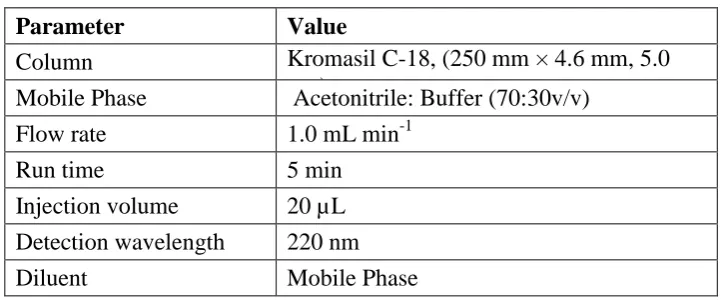
[image:3.595.117.480.257.407.2]2.2.7 Chromatographic Conditions: The detailed chromatographic conditions are shown in Table 1.
Table: 1 chromatographic condition
Parameter Value
Column Kromasil C-18, (250 mm × 4.6 mm, 5.0 µm)
Mobile Phase Acetonitrile: Buffer (70:30v/v) Flow rate 1.0 mL min-1
Run time 5 min Injection volume 20 µL Detection wavelength 220 nm Diluent Mobile Phase
2.2.8 System Suitability: Separation variable was set and mobile phase was allowed to saturate the column at 1.0 ml/min. After complete saturation of column, five replicates of working standard of Desvenlafaxine Succinate Monohydrate were injected. The results of system suitability shown in table 2.
Table: 2. Results of System suitability parameters
Parameter Desvenlafaxine Succinate Monohydrate
Area 5358.758
% RSD 0.27
Theoretical plates 2767 Retention time 2.5 Peak Tailing 1.647
3. METHOD VALIDATION
the above solution to 50 ml with diluent and mix.A typical chromatogram obtained from a standard solution is shown in "Fig. 1".
Fig. 1.Chromatogram of standard Desvenlafaxine Succinate Monohydrate
3.2 Analysis of Formulation: Weigh 20 tablets and determine its average weight. Crush 20 tablets to fine powder and mix thoroughly.
Weigh powder equivalent to 50 mg of Desvenlafaxine in to 50 ml volumetric flask, dissolve by 30 ml of diluent, sonicate for 20-25 minutes, cool and make up the volume up to the mark with diluent and filter through 0.45 μ membrane filter discarding first few ml.Dilute 5 ml of this solution 50 ml with diluent. A typical chromatogram obtained from formulation is shown in "Fig. 2".
The assay of Tablet was established with present chromatographic condition developed and it was found more accurate and precise.Assay results of formulation are shown in Table 3.
Table: 3. Assay results of Desvenlafaxine Sr.
No.
Lable Claim
(mg) Area % Found
1 50 5564.126 100.59 2 50 5457.752 99.52 3 50 5411.325 99.10 4 50 5449.441 99.37 5 50 5550.700 100.78 6 50 5443.608 99.26
Average 99.77
SD 7.36
%RSD 0.14
3.3 Validation: The newly developed method was validated according to the ICH guidelines with respect to specificity, linearity, accuracy, precision and robustness. System suitability was established by injecting standard solution. The chromatograms were checked for the appearance of any extra peaks. No chromatographic interference from the tablet excipients was found. Method precision was determined using six-independent test solutions. The accuracy of the method was evaluated with the recovery of the standards from excipients. Three different quantities of the authentic standards were prepared. The mixtures were analyzed using the developed HPLC method. Linearity test solutions were prepared. To determine the robustness of the method, the final experimental conditions were purposely altered and the results were examined. The flow rate was varied by (±) 0.2 mL min-1, the percentage of mobile phase was varied by (±) 2%, column temperature was varied by (±) 50C, pH was varied by (±) 0.2 pH unit.
a. Specificity
Table: 4. Results of specificity
Name Of Solution R.T. (Min.)
Diluent Straight Line Placebo Straight Line
Standard Standard peak observed at 5 min.
Fig. 3. Chromatogram of the Diluent
Fig.4. Chromatogram of the Placebo
Based on obtained results it is concluded that there is no interference observed due to diluents and placebo at the retention time of main peak (2.5) in standard solution.
b. Linearity
- 160 μg/ ml. The correlation coefficient (‘r2’) values were 0.999. The linearity results are shown in table 5.And Linearity curve of Desvenlafaxine is shown in "Fig.5".
Table: 5. Linearity of Desvenlafaxine Succinate Monohydrate
Sr. No. Sample Identity Conc. in µg/ml Area
1 20% 20 1143.518
2 40% 40 2287.036
3 60% 60 3430.554
4 80% 80 4660.096
5 100% 100 5517.590
6 120% 120 6649.576
7 140% 140 7882.196
8 160% 160 8948.144
Intercept 1122
Correlation coefficient 0.999
Fig.5. Linearity curve of Desvenlafaxine c. Precision
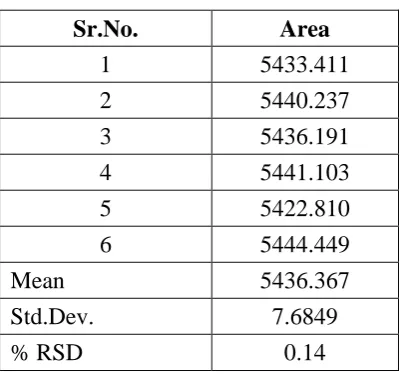
1. System Precision To check the system precision , desvenlafaxine succinate working standard solution was prepared as follows and peak response measured in six replicates. The mean and relative Standard deviation was calculated. The results are presented in the following result Table 6. Weigh accurately about 75.84 mg of Desvenlafaxine Succinate Monohydrate ( Equivalent to 50mg of Desvenlafaxine) in to 50 ml volumetric flask, add 30
y = 1122x R² = 0.999
0.000 1000.000 2000.000 3000.000 4000.000 5000.000 6000.000 7000.000 8000.000 9000.000 10000.000
ml of diluent and sonicate for 5 min. Make up the volume with diluent .Dilute 5 ml of the above solution to 50 ml with diluent and mix.
Table: 6 System Precision of Desvenlafaxine
Sr.No. Area
1 5433.411 2 5440.237 3 5436.191 4 5441.103 5 5422.810 6 5444.449 Mean 5436.367 Std.Dev. 7.6849 % RSD 0.14
2. Repeatability
The assay method was carried out on six test preparation from the same sample for Desvenlafaxine Succinate and the percentage assay were calculated. The mean and relative standard deviation of the results was calculated and the obtained results are presented in Table 7
Table: 7. Repeatability of Desvenlafaxine
Sample No. Area Wt. of Sample
in mg
Avg. Wt. in mg % Assay
Sample 1 5564.126 232 230 100.59 Sample 2 5457.752 230 230 99.52 Sample 3 5411.325 229 230 99.10 Sample 4 5449.441 230 230 99.37 Sample 5 5550.700 231 230 100.78 Sample 6 5443.608 230 230 99.26
Mean 99.87
% RSD 0.76
3. Intermediate Precision
Table: 8. Intermediate Precision
Conditions Analyst I Analyst II
Date Of Analysis 6/12/13 7/12/13
Name Of Analyst A B
HPLC Used LC6600 LC6600
Column Used RPPL/CL/ 012 RPPL/CL/ 014
Table: 9. Intermediate Precision(Assay Result of Analyst II )
Test Sample Area Mean % Assay
Desvenlafaxine Succinate
5582.911 5589.857 99.78
5596.802
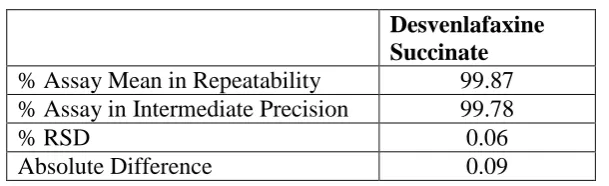
Table: 10. Intermediate Precision(Comparative Results)
Desvenlafaxine Succinate
% Assay Mean in Repeatability 99.87 % % Assay in Intermediate Precision 99.78 %
% RSD 0.06 %
Absolute Difference in assay of analyst I & II 0.09%
Table: 11 Accuracy (recovery) of Desvenlafaxine Succinate Monohydrate Sr.
No.
Sample Identity
Amount added in mg
Area Amount recovered in mg
% Recovered
1 80%- Set -1 61.06 4472.4
59 61.06 100.65 2 80%- Set- 2 61.06 4475.0
55 61.10 100.71 3 80%- Set -3 61.06 4471.1
59 61.04 100.62 4 100%- Set -1 75.84 5340.1
19 75.22 99.19 5 100%- Set -2 75.84 5362.6
98 75.54 99.61 6 100%- Set -3 75.84 5348.4
96 75.33 99.34 7 120%- Set -1 91.00 6089.9
8 120%- Set -2 91.00 6089.8
27 90.66 99.63 9 120%- Set -3 91.15 6122.8
90 91.15 100.17 Average 99.678
SD 0.5582741 %RSD 0.56
d. Accuracy
Recovery studies were performed by adding 60.67mg, 75.84 mg and 91.00 mg of Desvenlafaxine Succinate Monohydrate in placebo (80,100 and 120 % of quantification concentration) . The resulting sample solutions were injected and chromatograms were recorded. At each of the levels, three determinations were performed and results were obtained. The results obtained are shown in Table 11
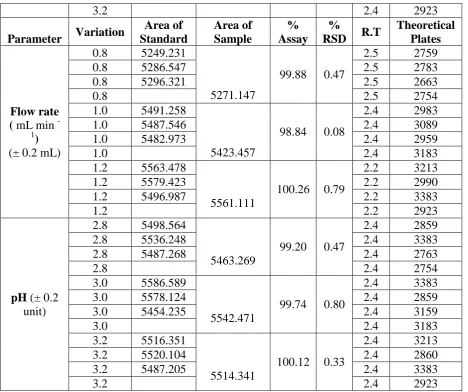
Table:12. Robustness study of Desvenlafaxine Succinate
Parameter Variation Area of Standard Area of Sample % Assay %
RSD R.T
Theoretical Plates
Flow rate ( mL min
-1
)
(± 0.2 mL)
0.8 5249.231
5271.147 99.88 0.47
2.5 2759
0.8 5286.547 2.5 2783
0.8 5296.321 2.5 2663
0.8 2.5 2754
1.0 5491.258
5423.457 98.84 0.08
2.4 2983
1.0 5487.546 2.4 3089
1.0 5482.973 2.4 2959
1.0 2.4 3183
1.2 5563.478
5561.111 100.26 0.79
2.2 3213
1.2 5579.423 2.2 2990
1.2 5496.987 2.2 3383
1.2 2.2 2923
pH (± 0.2 unit)
2.8 5498.564
5463.269 99.20 0.47
2.4 2859
2.8 5536.248 2.4 3383
2.8 5487.268 2.4 2763
2.8 2.4 2754
3.0 5586.589
5542.471 99.74 0.80
2.4 3383
3.0 5578.124 2.4 2859
3.0 5454.235 2.4 3159
3.0 2.4 3183
3.2 5516.351
5514.341 100.12 0.33
2.4 3213
3.2 5520.104 2.4 2860
3.2 5487.205 2.4 3383
e. Robustness
Robustness of the method was determined by making slight changes in the chromatographic conditions as per ICH guidelines. It was observed that there were no marked changes in the chromatograms, which demonstrated that the RP-HPLC method developed and System suitability parameters were found to be within acceptable limits. Results are shown in Table 12 indicating that the test method was robust for all variable conditions. Hence the method was sufficiently robust for normally expected variations in chromatographic conditions.
4. RESULT AND DISCUSSION 4.1 RESULT
The present work was aimed to develop an analytical method determination of
Desvenlafaxine Succinate monohydrate and its validation.The details of Formulation Taken for analysis are shown in Table 13.
Table: 13. Formulation Taken for analysis
Drug Strength Batch no Company
Desvenlafaxine Succinate 50 mg PLD1002 Mankind
After considering the solubility and spectral features of the drug, mobile phase was selected as diluent and after a number of trials ACN: buffer (pH 3.0) in the ratio of 70:30 was selected as mobile phase. The details selection of mobile phase are shown in Table 14.
Table: 14. Selection of Mobile Phase
Mobile Phase Observation Result
Methanol Low resolution Mobile phase rejected. Buffer: Acetonitrile (50:50 v/v) Very low resolution Mobile phase rejected Buffer: Acetonitrile (65:35 v/v) Poor resolution Mobile phase rejected Acetonitrile: Buffer (70:30 v/v) Good resolution Mobile phase accepted
The UV detector response of Desvenlafaxine Succinate was studied and the best wavelength was found to be 220 nm showing highest sensitivity.
Table: 14 Chromatographic condition
Parameter Value
Column Kromasil C-18, (250 mm × 4.6 mm, 5.0 µm)
Mobile Phase Acetonitrile: Buffer (70:30v/v) Flow rate 1.0 mL min-1
Run time 5 min Column Temperature 250C Injection volume 20 µL Detection wavelength 220 nm Diluent Mobile Phase
For determination of Desvenlafaxine Succinate monohydrate series of mixed standards were prepared in different concentration 20 -160 μg/ ml.
The developed method is validated for following parameters. a. Linearity
b. Accuracy c. Precision d. Robustness
a. Linearity
The results of linearity analysis indicates that the drug components are linear with respect to the concentration range mentioned in the Table 15
Table: 15 Statistical Data of Linearity
Data for Linearity Desvenlafaxine Succinate monohydrate
Correlation Coefficient (r2) 0.999
Y-Intercept 1122
Linearity Range (µg/mL) 20 - 160
b. Accuracy
Accuracy was studied by standard addition method and result show that the percent recovery was found within the acceptable limit, data is shown in Table 16
Table: 16 Statistical data of accuracy
Statistical data Desvenlafaxine Succinate monohydrate
Assay % Mean 99.67 %
SD 0.5582741
c. Precision
[image:13.595.147.452.164.257.2]Precision was determined to assure the repeatability of the method. The R.S.D. was found less than 2.0% results are shown in Table 17
Table: 17 Statistical data of precision
Desvenlafaxine Succinate
% Assay Mean in Repeatability 99.87 % Assay in Intermediate Precision 99.78
% RSD 0.06
Absolute Difference 0.09
d. Robustness
To determine the robustness of the method, the final experimental conditions were purposely altered. The flow rate was varied by (±) 0.2 mL min-1, the percentage of mobile phase was varied by (±) 2%, pH was varied by (±) 0.2 pH unit. and results of the same are shown in Table 17
Table: 18 Statistical data of Robustness
Parameter Variation
Area of Standard Area of Sample % Assay %
RSD R.T
Theoretical Plates
Flow rate ( mL min
-1
)
(± 0.2 mL)
0.8 5249.231
5271.147
99.88 0.47
2.5 2759
0.8 5286.547 2.5 2783
0.8 5296.321 2.5 2663
0.8 2.5 2754
1.0 5491.258
5423.457
98.84 0.08
2.4 2983
1.0 5487.546 2.4 3089
1.0 5482.973 2.4 2959
1.0 2.4 3183
1.2 5563.478
5561.111
100.26 0.79
2.2 3213
1.2 5579.423 2.2 2990
1.2 5496.987 2.2 3383
1.2 2.2 2923
pH (± 0.2 unit)
2.8 5498.564
5463.269
99.20 0.47
2.4 2859
2.8 5536.248 2.4 3383
2.8 5487.268 2.4 2763
2.8 2.4 2754
3.0 5586.589
5542.471
99.74 0.80
2.4 3383
3.0 5578.124 2.4 2859
3.0 5454.235 2.4 3159
3.0 2.4 3183
[image:13.595.65.537.416.790.2]Table : 19 Column Response.
Parameter Column C8 Column C18
Retention Time 4.657 2.448
Area 5851.605 5397.235
[image:14.595.66.535.69.461.2]Peak Sharp Sharp
Table: 20. Summary of validation parameter
Validation parameters Acceptable Limit Results
Linearity (r2) Linear , r2 ≥ 0.99 0.999
Precision (%RSD) RSD NMT 2 % 0.76 Repeatability
Accuracy by recovery study (%found) 98 % -102% 99.67 % Robustness(%RSD) Variation
Flow rate ( mL min 1)
0.8 RSD NMT 2 % 0.47
1.0 0.08
1.2 0.79
pH (± 0.2 unit) 2.8 0.47
3.0 0.80
3.2 2.4 2923
Parameter Variation
Area of Standard Area of Sample % Assay %
RSD R.T
Theoretical Plates
Flow rate ( mL min
-1
)
(± 0.2 mL)
0.8 5249.231
5271.147
99.88 0.47
2.5 2759
0.8 5286.547 2.5 2783
0.8 5296.321 2.5 2663
0.8 2.5 2754
1.0 5491.258
5423.457
98.84 0.08
2.4 2983
1.0 5487.546 2.4 3089
1.0 5482.973 2.4 2959
1.0 2.4 3183
1.2 5563.478
5561.111
100.26 0.79
2.2 3213
1.2 5579.423 2.2 2990
1.2 5496.987 2.2 3383
1.2 2.2 2923
pH (± 0.2 unit)
2.8 5498.564
5463.269
99.20 0.47
2.4 2859
2.8 5536.248 2.4 3383
2.8 5487.268 2.4 2763
2.8 2.4 2754
3.0 5586.589
5542.471
99.74 0.80
2.4 3383
3.0 5578.124 2.4 2859
3.0 5454.235 2.4 3159
3.0 2.4 3183
3.2 5516.351
5514.341
100.12 0.33
2.4 3213
3.2 5520.104 2.4 2860
3.2 5487.205 2.4 3383
3.2 RSD NMT 2 % 0.33 Tablet Analysis (% Found) 99.77 %
4.2 DISCUSSION
Selection of Wavelength: The UV detector response of Desvenlafaxine Succinate was studied and the best wavelength was found to be 220 nm showing highest sensitivity.
Selection of Mobile Phase:Initially to estimate Desvenlafaxine Succinate number of mobile phases in different ratios were tried as mentioned below, taking into consideration the system suitability parameters like RT, tailing factor, No. of theoretical plates and HETP, the mobile phase found to be most suitable for analysis was ACN: buffer (pH 3.0) in the ratio of 70:30.
Selection Of Column: First C-8 (250 mm × 4.6 mm, 5 μm) was used for analysis. Then Kromasil C-18 (150 mm × 4.6 mm, 5 μm) was used. On comparing the response of both the columns we found that Kromasil C-18 (250 mm × 4.6 mm, 5 μm) column was the most suitable one, since it produced symmetrical peaks with very good sensitivity .Column C18 gives peak at 2.447 min while Column C8 gives peak at 4.657 at same mobile phase . Hence we concluded that C18 is less expensive than C8 as it required less mobile phase and give peak at less retention time .Column response is shown in Table 19
Methanol individually, Methanol and buffer in mixture are used for the study but it did not give good resolved peaks. The effect of changing the ratio of organic modifier on the selectivity and retention times of the test solutes was investigated using mobile phases containing Buffer and ACN in different concentration. Therefore ACN was the organic modifier of choice giving symmetrical narrow peaks. Ratio less than 10 % of organic resulted in peaks with more tailing, whereas ratios higher than 50 % resulted in decreased resolution.
Effect of Flow Rate The effect of flow rate on the formation of peak of the compound was studied and a flow rate of 1 ml min-1 gives for good separation in a reasonable time.
Effect of Temperature
The effect of Temperature on the formation, separation and resolution was studied by varying the Temperature from 20-300C; we found that there was no change in peak response at decided temperature range.
concern the maximum RSD found was to be less than 2. Hence all the validation parameters are within the acceptable limit. So, method can be used for the routine analysis of Desvenlafaxine Succinate.
5. CONCLUSION
Modern medicines for human use are required to comply with specific standards and regulation set forth by the concerned authorities. The efficacy and safety of medicinal products can only be assured by analytical monitoring of its quality.
Therefore, the quality control laboratory is considered as the backbone of the pharma industries with ever-increasing need for the development of analytical techniques for drug formulation.
In the present research work, a successful attempt was made for determination of Desvenlafaxine Succinate in Tablet dosage form by High Performance Liquid Chromatography (HPLC). The method was developed by experimentation, based on literature survey and ascertained by statistical parameter of sampling. The simplicity, rapidity, reproducibility and economy of the proposed method completely fulfill the objective of this research work.
In the present work, application of RP-HPLC for analysis of selected drug formulation was successfully attempted using Chemito LC-6600.
The developed RP-HPLC method was validated for simultaneous estimation of Desvenlafaxine Succinate using linearity, accuracy, precision and robustness. The %RSD for all parameters was found to be less than two, which indicates the validity of method and assay results obtained by this method are in fair agreement.
Desvenlafaxine Succinate good resolution, which can be well understood, looking at the validation data for the developed method are given in Table 20 as follows
6. ACKNOWLEDGEMENTS
The authors wish to thank Religare Pharma, Nasik for providing the gift sample of Desvenlafaxine Succinate. Also thankful to Mr. K. S. Salunkhe & Mr. R. Kachave for providing the necessary facilities to carry out the research work.
7. REFERENCES
1. Sharma B.K.; Instrumental Methods of Chemical Analysis; Goel Publishing House; Meerut; 19th ed.; 2000: 1-5
2. Gray N., Calvin M., Bhatia B.K.; Instrumental methods of analysis; CBS Publishers and Distributors; 1sted.; 2009: 5-10.
3. Christian G.D.; Analytical Chemistry; 6th ed.; 2007: 1-5.
4. Day R.A., Underwood A.L.; Quantitative Analysis; PHI Learning Pvt. Ltd.; 6thed.; 2009: 1-2.
5. Higson S.P.; Analytical Chemistry; Oxford university press; 1st ed.; 2005: 3-5.
6. Indian Pharmacopoeia; Government of India Ministry of Health & Family Welfare; Published by the Indian Pharmacopoeia Commission; Ghaziabad; Vol. П, Vol. Ш; 2010: 1386,1387,2227,2228.
7. The Merck Index - an Encyclopedia of chemicals; Drugs and biological; Published by Merk Research Laboratories; 13th ed.; 2001: 753, 1686, 1687.
8. Sweetman S.C.; Martindale The Complete Drug Reference; Published by Pharmaceutical press; 34th ed.; 2005: 786,787,792,793,806.
9. ICH Steering Committee, ICH Q2B Validation of Analytical Procedures ,Methodology, European Agency for the Evaluation of Medicinal Products, International Commission on Harmonisation, London (CPMP/ICHJ/281/95), 1996
10.Sunil Kumar Dubey, R.N. Saha, Hemanth Jangala, S. Pasha,Journal of Pharmaceutical Analysis, Volume 3, Issue 6, December 2013, Pages 466-471
11.G. Abirami, T. Vetrichelvan, Validated Analytical method Development of Desvenlafaxine succinate in solid dosage form by RP-HPLC and HPTLC methods.
12.Department of pharmaceutical analysis, Adhiparasakthi College of Pharmacy, Melmaruvathur-603 319, Kanchipuram district, Tamilnadu, India. American Journal Of Pharmatech Research ,RESEARCH ARTICLE Am. J. PharmTech Res. 2013; 3(1) ISSN: 2249-3387
Desvenlafaxine And Clonazepam In Bulk & Tablet Formulation By Rp-Hplc Method Department of Pharmaceutical Analysis, Nimra college of Pharmacy , Vijayawada, A.P, India. Faculty of Pharmaceutical Analysis, Chaitanya college of pharmacy, Markapur, A.P, India. Faculty of Pharmaceutical Chemistry, M.M.U College of pharmacy, Ramanagaram, Karnataka.