
doi: 10.11648/j.ajop.20200801.12
ISSN: 2330-8486 (Print); ISSN: 2330-8494 (Online)
Simulation and Analysis Method of Different Back Metals
Contact of CH
3
NH
3
PbI
3
Perovskite Solar Cell Along with
Electron Transport Layer TiO
2
Using MBMT-MAPLE/PLD
Ali Husainat
1, *, Warsame Ali
2, Penrose Cofie
2, John Attia
2, John Fuller
2, Abdalla Darwish
31
Department of Electrical and Computer Engineering, Prairie View A&M University, Prairie View, USA
2Department of Electrical and Computer Engineering, Faculty of Electrical Engineering, Prairie View A&M University, Prairie View, USA 3School of Science, Technology, Engineering and Mathematics (STEM), Faculty of Physics, Dillard University, New Orleans, LA, USA
Email address:
*
Corresponding author
To cite this article:
Ali Husainat, Warsame Ali, Penrose Cofie, John Attia, John Fuller, Abdalla Darwish. Simulation and Analysis Method of Different Back Metals Contact of CH3NH3PbI3 Perovskite Solar Cell Along with Electron Transport Layer TiO2 Using MBMT-MAPLE/PLD. American
Journal of Optics and Photonics. Vol. 8, No. 1, 2020, pp. 6-26. doi: 10.11648/j.ajop.20200801.12 Received: January 30, 2020; Accepted: February 11, 2020; Published: February 24, 2020
Abstract:
Many different photovoltaic technologies are being developed for better solar energy conversion. Until now, crystalline Si solar cell represents the dominant photovoltaic technology with a market share of more than 94% with an efficiency between (15%-20%). Organic-inorganic halide Perovskite Solar Cell (PSC) has emerged as the most promising candidate for the next generation high-efficiency solar cell technology that attracted interest from researchers around the world due to their high efficiency of more than 24.% in a short period from (2008-2019) and low fabrication cost. In this paper, we designed a lead-based PSC model with a cell structure of Glass/FTO/TiO2/CH3NH3PBI3/Spiro-OMeTAD/(Au, Ag, Al, Cu, Cr,Cu-graphite alloy, and Pt) and analyzed the structure with different contact materials using Solar Cell Capacitance Simulator (SCAPS-1D) which is well adopted by many researchers to study and analyze the hybrid solar cell. Using the software allows researchers to inexpensively and promptly, the effect of the absorber and the contact materials on the performance of the proposed solar cell model. We also studied the bandgap of the active layer, defect density, thickness, operating temperature, and the fabrication method of the model. Furthermore, the adoption of multibeam multi-target MAPLE and PLD or with acronym MBMT-MAPLE/PLD techniques as a new fabrication method in our simulation program mentioned above. A promising result was achieved. Efficiencies of 27.25%, 26.52%, 18.90%, 25.66%, 22.77%, 27.25%, and 27.25% were obtained for the devices with Au, Ag, Al, Cu, Cr, Pt, and Cu-graphite alloy, respectively. The effect of the work function on the back contact has a significant influence over the FF and efficiency.
Keywords: Inorganic Materials Modeling, Organic Materials, Perovskite Solar Cell, Photovoltaics, Simulation, MAPLE,
PLD1. Introduction
The fastest developing renewable energy globally is solar-generated electricity, whereby the net solar generation is increasing by approximately 8.3% annually [1]. China has recorded the highest progression rates, followed closely by Japan and the USA, with the fourth to sixth positions being held by European nations, namely the United Kingdom (UK), Germany, and France in that order [2]. Ninety-eight percent
share of this new type, a new approach has to offer an appropriate mix of reduced manufacturing costs, high conversion efficiency, as well as outstanding stability in different environmental conditions. Recently, the progress in hybrid organic-inorganic metal halide perovskite, methylammonium halide perovskite CH3NH3MX3 or
MAMX3 (MA = CH3NH3, M = Pb or Sn, X = Cl, Br, and I)
or merely perovskite, solar cells can potentially turn out to be among the foremost know-hows in PV business because of their high efficiency and reduced low fabrication costs. Due to exhaustive research measures worldwide for the past decade at the laboratory scale, the outstanding performance of perovskite-based solar cells is now equivalent to silicon-based solar cells [6-8]. German mineralogist Gustav Rose first discovered calcium titanate or calcium titanium oxide (CaTiO3) in 1839. The name of the mineral perovskite was named after Russian Mineralogist Lev A. Perovski (1792-1856) [9]. In hybrid organic-inorganic metal halide perovskite (CH3NH3MX3), CH3NH+ features as an organic
cation, M is a divalent metal cation (Pb2+ or Sn2+), while X is a monovalent halide anion (Cl−1, Br−1, or I−1). Due to their outstanding optoelectronic properties and potential solution-processed synthesis, these resources have been researched to constitute new resources for organic-based light-emitting diodes, as well as field-effect transistors (FET) [10-14].
Figure 1. Crystal structure of Hybrid organic-inorganic metal halide perovskite with chemical formula ABX3 [1]
Figure 2. Same as Figure 1, but different view: Many ABX3 compounds
adopt the perovskite structure, with A ions occupying large, 12-fold coordinated sites; B ions are in octahedral coordination by X [16].
Figure 3. CaTiO3 Perovskite - TETRAGONAL phase: each titanium atom bonds to six nearest-neighbor oxygen atoms [16].
Any material that has a similar crystal structure to the mineral CaTiO3 (Figure 1, Figure 2, and Figure 3) at a
different transition state is called perovskite. The figures above depict a graphic illustration of the generic ABX3 perovskite
crystal configuration for a hybrid organic-inorganic halide perovskite [15]. The A position entails an organic citation (CH3NH3+), B entails a metal citation (Pb+ or Sn+), and X
being a halide anion (Cl− or Br− or I−). The mixture of organic-inorganic lead halide perovskite composite was initially used in 2009 as visible-light sensitizers for photovoltaic cells with a 3.8% efficiency for X= Br and 3.1% for X=I, at one sun illumination [17]. In 2011, another role of perovskite entailed being a sensitizer in quantum dot sensitized solar cells, where it generated an efficiency rate of 6.5% [18]. These two performances portrayed the prospect of employing perovskite for solar cells despite their unstable nature, due to a liquid electrolyte presence. In 2012 an initial study was conducted, and the first solid-state perovskite solar cell was fabricated with a recorded efficiency of 9.7% [19], whereas another science publication report on solid-state perovskite solar cell, occurred in the same year with an efficacy of 10.9% [20]. The years after this era have recorded an increase in solar cell performance with 2015 marking the best efficiency mark of 22.1% [6]. The perovskite solar cell growth has depicted a remarkable trend within a diminished time and is deemed to be the most momentous scientific revolution in the PV industry [22-24]. Vapor-based and solution-based deposition are the two main deposition techniques employed in the construction of high-grade perovskite thin films. The deposition methodology that is based on solutions is not only cost-efficient but also attuned with the method of manufacture, which entails flexible substrates [25-27]. On the contrary, the deposition method that is vapor-based is an industrial production method with a prospect for the business-end of perovskite solar cells [28-29]. In either instance, the deposition techniques are comparatively quick and use minimal material quantity. This reason endears scientific communities towards the perovskite solar cells sector. The hybrid organic-inorganic metal halide perovskite-based material portrays various remarkable electrical and optical features that suit photovoltaic uses.
inflated short circuit current density (JSC) beginning from ∼300
nm thick films [30-31]. Methylammonium triiodide Urbach’s energy is ∼15 meV, nearing high-quality GaAa’s Urbach energy [32]. Methylammonium lead tri-iodide’s bandgap is estimated at 1.5 eV [33], and the incorporation of other halide ions within the range of 1.5 to 2.3 eV can aid in its tuning [34]. An extremely high open-circuit voltage (VOC) is attained from
perovskite solar cells compared to its bandgap as well as other thin-film solar cells [34-35]. A study by Wolf et al. [31], according to Eperon et al. (2014) [31], discovered extremely sharp concentration brink with insignificant deep defect states and slightest nonradiative rearrangement loss. There are three critical attributes possessed by perovskite materials, for instance, high hole and electron mobilities ranging from 10-60 cm2 V-1s−1 [36-38], long diffusion durations (>1 micro m); as well as long carrier lifetime reaching levels of 1.07 µs [39]. Additional studies by Chen et al. (2016) [40] established more long diffusion lengths and carrier lifetimes, reaching up to 30 µs and 23 µm for polycrystalline films and 3 ms and 650 µs for single crystals, respectively. All these variables account for the high Voc degrees characteristics of perovskite solar cells. Despite the high photo-conversion efficiency derived from perovskite solar cells, there is still a serious challenge regarding the solar cells’ stability in ambient environments, and developments are quite slow and yet it is the main deterrent to their commercialization.
Due to the high volatility of the leading materials constituting perovskite solar cells, the organic species can not only leak from perovskite films and mix with humidity, but their ecological adaptability also reduces at merely somewhat elevated temperatures. For hybrid organic-inorganic solar cells, when conducting current-voltage calculations, the output depends on the way that bias current is applied to solar cells where it does not occur in normal inorganic solar cells, such as CIGS, Si, GaAs, and CIGS. [40-42]. Eventually, environmental worries surround the deployment of hazardous materials, for instance, perovskite and lead in perovskite solar cells.
Perovskite solar cell (PSC) has a high potential of leading thin-film technology as it shows a rapid efficiency increase in just a few years at laboratory level figure 10. Silicon-based solar cells have been dominating the solar market for many years with 94% market share, with an efficiency of only between 12%-17.5%, which led to an extensive search for new solar material for better efficiency. Hybrid organic-inorganic perovskite solar cells gained a lot of researchers’ attention worldwide with a lab efficiency of 3.8% in 2009 to 24.00% in 2019 for single-junction solar cells. Perovskite material has a unique characteristic such as high absorption coefficient, high charge carrier mobility (i.e., 20cm2 V-1S-1), long diffusion length for electron and hole, and a carrier lifetime. Perovskite solar cells offer a combination of low-cost lab fabrication and device performance [41-42]. Furthermore, perovskite solar cell has the optical and electrical property to absorb not only the visible light but also the NR as well, comparing to silicon solar cells which can absorb only the visible light spectrum. As of mid-2019,
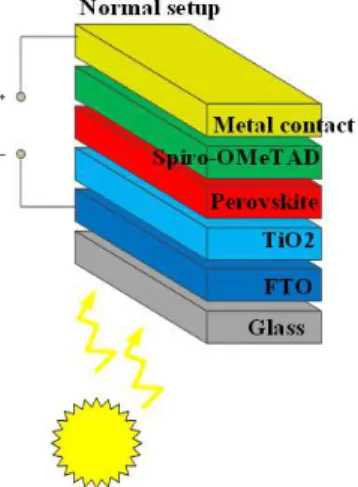
perovskite solar cell lab efficiency has passed 24%, which makes it a promising better efficient cell to silicon. In this study, we have used a simulation program called SCAPS 1D (a Solar Cell Capacitance Simulator 1 D). In order to model a new fabrication method to the PSC layers, as shown in figure 17 called multi-beam multi-target matrix-assisted pulsed laser evaporation/ plus laser deposition or with the acronym (MBMT-MAPLE/PLD) that produces a uniform and fewer pinholes or defects in the absorber layer film, which decreases the carriers recombination mechanism. Figure 6 shows the solar device is a lead-based PSC model with a cell structure of Glass/FTO/TiO2/CH3NH3PBI3/Spiro-OMeTAD/
(Au, Ag, Al, Cu, Cr, Cu-graphite alloy, and Pt). To optimize the PSC for optimum efficiency, we must optimize the following parameters such as 1-Solvent to film optimization. 2-Band gap optimization. 3-Electron and hole transport material optimization. 4- deposition techniques that will be discussed later. We have also examined the effect of the absorber layer thickness, electron transport layer TiO2, hole
transport layer SPIRO-OMeTAD, work function of different back contacts, and the defect in the active layer on the overall performance of the perovskite solar cell, using Solar Cell Capacitance Simulator (SCAPS-1D) which is well adopted by many researchers to study and analyze the hybrid solar cell. Using the software allows researchers to inexpensively and promptly the effect of the absorber layer, defect density, and the contact materials on the performance of the proposed solar cell model. The optimum thickness of 500nm was concluded for the perovskite active layer for maximum efficiency. A promising result was achieved in table 1. In order to model the perovskite solar cell, we used real experiment data in the simulator to analyze the perovskite solar cell. Research work will continue to improve efficiency in terms of simulation and implementation.
2. Perovskite Structure
The structure of the hybrid organic-inorganic metal halide perovskite thin layer solar cell device closely resembles that of the dye-sensitized solar cell (DSSCs), only that it is a little bit modified [17-18]. The DSSC procedure involves the deposition of a porous TiO2 film onto SnO2: F, which is then
covered with dye particles and the structure immersed into a fluid electrolyte set in the metal conductor, for instance, platinum (Pt) [46]. For the metal conductor, a detached metal (Pt) plate is developed, encompassing a thin iodine electrolyte layer covering a conducting sheet. The pair of metallic pieces are then wrapped together to deter the leakage of the electrolyte. Kim et al. (2012) [19], manufactured the first solid-state perovskite solar cells by gathering MAPbI3
onto sub-micron dense mesoporous TiO2 film and finalized
sphere of device execution using mesoporous structures [23, 43-45]. Also, to fabricate mesoporous solar cells TiO2 films,
a high annealing temperature is required, which could not only be costly but also time and energy consuming. As previously stated, that MAPbX3 possesses a comparatively
long charge carrier diffusion length which indicates that both holes and electrons can easily be transported to their respective contacts without the need of addition TiO2
mesoporous layer, which cut on the fabrication time and cost as well [43]. Hence, rather than being restricted to mesoporous configurations, researchers began to focus on planar device structures where the perovskite thin film is placed onto a compressed electron transport layer (ETL) as
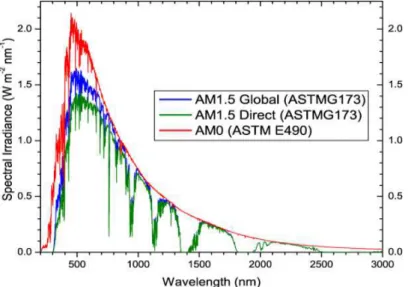
opposed to a mesoporous layer. Through a dual-source vapor layering procedure, planar perovskite configurations managed to attain an efficiency rate of 15.4% in 2013; the current uppermost productivity derived from this form of structure is approximately 20% [25-26]. In both forms of device configurations, there is a possibility of illuminating solar cells through either the ETL layer to generate an n-i-p structure or the hole transport layer (HTL) to produce a p-i-n structure or inverted. Perovskite material is a direct bandgap between 1.3ev and 2.2 eV, which gives it the optical property to harvest and convert near-infrared (NIR) and ultraviolet (UV) light into visible light, which can be utilized by the perovskite active layer as shown in figure 4 [46-48]
Figure 4. Standard solar spectral (source PVeducation.com).
In the 1990s, scientists discovered that halide perovskite could convert light into electricity. Due to this discovery, the light-emitting diodes (LED) were made. Perovskite structure has four possible phases, such as 1) α is cubic structure phase accrue at T > 327 K. 2) β is a tetragonal structure phase accrue at T< 327° K, 3) γ is orthorhombic structure phase accrue at T=160° K. 4) δ is a polyhedral phase structure which is a none perovskite phase [49-50].
The tolerance factor giving by equation (1):
√ (1)
In order to maintain the cubic structure of the perovskite layer, the tolerance factor should be close to one, where RA, RB, and RX
are the radius of the ions. In order to have a stable perovskite, the tolerance factor must be in the range of 0.7< T < 1, which maintains and hold the bond between both cations. Cation A >> cation B to have a stable perovskite structure. Therefore, Methylammonium (MA+) ion is one of the best organic material options. The transformation of perovskite depends on the tilting and rotation of BX6 [47-49].
This comparison makes the perovskite a promising candidate. The primary goal of designing a highly efficient solar cell is to optimize the power conversion efficiency (PCE) to cost ratio. Furthermore, and due to this rapid research and improvement of the perovskite family, MAPbBr3, MAPbCl3,
and MAPbI3 Methylammonium lead iodide (MAPbI3) is the
one that proved to be the best perovskite material due to its excellent electrical and optical properties, low-temperature solution processability, long lifetime, and ferroelectricity. The efficiency of the perovskite solar cell can be further improved through different design techniques to not only the absorber layer but to all other six layers, as shown in Figure 6 [16].
Figure 7 shows the energy levels of the device Layers; it must be in this position for a smooth transfer of the electrons
and holes through their transport layers to the electrodes. Figure 6. Perovskite solar cell normal setup [16].
Figure 7. Energy Levels of the Device Layers [16].
2.1. Mesoporous Scaffold Structure
There are two classes of these structures based on the angle of incidence of the light on the solar cells. The pioneering employment of perovskite solar cells was dependent on mesoporous n-i-p configuration, and to-date is still extensively employed to manufacture high achievement solar cells. Within the mesoporous n-i-p configuration, a sheet of approximately 50-70nm thick solid ETL (TiO2) is
placed on the tin oxide (FTO: SnO2: F) doped with fluorine
and coated glass substrate. A 150-300 nm thick mesoporous metal oxide (TiO2 or Al2O3) occupied with perovskite covers
the ETL. Approximately 300 nm perovskite is progressively placed before the placement of a 150-200 nm HTL (Spiro-OMeTAD) and back contact metal (Au). An overturned p-i-n mesoporous construction in perovskite solar cells can similarly be attained [51]. A typical device configuration of mesoporous inverted p-i-n is made up of the following arrangement, FTO/compact NiOx/nanocrystal NiO/perovskite/PCBM/ electrode. Within the mesoporous n-i-p construction, electron transference between mesoporous and comparative conductive TiO2 or insulating Al2O3
scaffolds is employed to enable electron transport amid the perovskite absorber as well as the FTO conductor [36]. A widespread hole-blocking in the mesoporous construction is critical to (1) prevent the current leakage between two contacts, (2) increase the photon absorption because of light scattering, and (3) improve the carriers’ collection [52]. For optimum light absorption and maximizing carrier’s generation, there is a need to reduce the resistance and increase the shunting pathways by adding a perovskite covering coating that is usually preferred on top of the mesoporous construction. Also, in case of a mesoporous configuration that is denser, the perovskite resources restrained within the openings lack enough space for adequate grain development, therefore eventually reducing the device performance and dropping the VOC and JSC
[53-54]. Hence, the mesoporous TiO2‘s thickness not only
defines the hole filling portion and perovskite particles but also establishes the current conveyance rate as well as the collection efficiency at the interface of perovskite/TiO2. The
parameters 59 [54].
Figure 8. (A) a colored picture of scanning electron microscope (SEM) perovskite solar cell using a polymer-templated nucleation and growth (PTNG) method, (B) J-V curve of the perovskite solar cell prepared by PTNG method 59 [54-55].
2.2. Planar Structure
The mesoporous scaffold layer in the planar construction of perovskite solar cells is removed, and only the perovskite absorber layer is sandwiched between the HTL and ETL. The planar configuration is considered an evolution of the mesoporous device structure. The simplicity of the new planar device structure of perovskite solar cells has fascinated researchers within the field of thin-film PV cells. Within the n-i-p planar configuration, the ETL side is used to illuminate the solar cell while in the p-i-n planar construction, illumination from the HTL side. The initial positive demonstration of planar configuration had a minimal efficacy of 4% because of the inferior film superiority and insufficient photon absorption of the perovskite film 60 [56]. Currently, the planar construction depicts an efficiency performance that resembles the mesoporous structure. The original solar cell configuration in both instances is made up of glass/ TCO /ETL /perovskite / HTL /metal and glass /TCO /HTL /perovskite /ETL /metal, respectively [56-57]. There has been a heightened efficiency associated with planar n-i-p solar cells with emerging progress that have driven the current efficiency to 19% [58]. The perovskite solar cell’s
J-V curves lack congruence when scanned from front to back and back to front contrasting with other normal solar cells, for instance, CGTS, CdTe, and Si. The n-i-p planar structure figure (9B) portrays more of this characteristic. The inverted p-i-n planar figure (9C) configuration is similar in characteristics to organic solar cells. The classic organic-based transport films, for instance, [poly(3,4-ethylene dioxythiophene) polystyrene sulfonate] (PEDOT: PSS) and fullerene derivative [[6,6]-phenyl-C61-butyric acid methyl ester (PCBM)] are directly applied similar to ETL and HTL sheets of perovskite solar cells. Likewise, rather than employing the FTO substrate, the p-i-n construct prefers the indium oxide doped with a tin (ITO) substrate. The enhanced choice of fullerene derivatives has immensely enhanced the efficacy of the p-i-n planar construct from an initial 3.9% to the current 18.9% [59-61]. The typically used HTLs in the p-i-n configuration entails PEDOT: PSS, PTAA (poly-triarylamine), and NiOx and ETLs are PCBM, PC61BM, C60, ZnO, as well as their blends [62-65]. The current-density voltage features with J-V limits and external quantum efficiency (EQE) information of perovskite solar cells in a planar structure are shown in figure 9 [66].
3. Device Optimization
The development of solar cell device optimization is an ongoing process, and in order to make an efficient solar cell, each layer needs to be optimized. Since some of the layers in the perovskite solar are already well studied and optimized, emphasize has been focused on developing the technology of fabricating the thin film of three main layers ETL, the perovskite absorber layer, and HTL. Figure 10 shows an upsurge in solar efficiency from 3.8% to above 24.1% in the past nine years alone is majorly attributed to the creation of the n-i-p mesoporous configuration due to world research efforts, comparing to other thin-film technologies, particularly and silicon solar cells in general. In the case of optimizing the absorber layer,
Figure 10. Comparison of the lab efficiencies of Silicon, thin-film, and Perovskite over the years. Source: International Tin Research Institute.
(A)
(B)
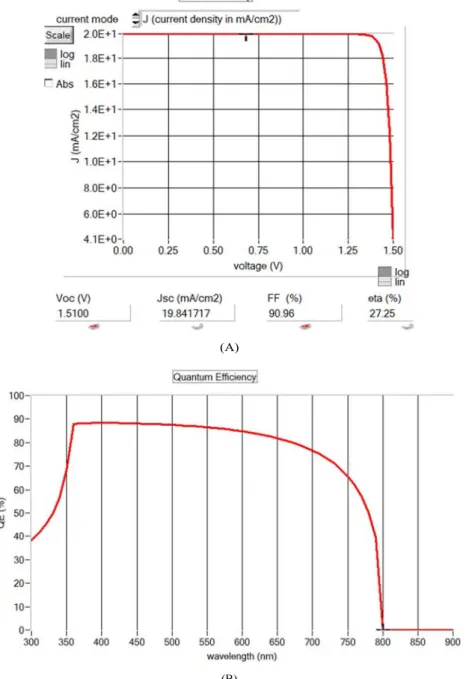
The focus is on selecting the appropriate precursor solution and the processing methods of making a thin film to obtaining smooth, pin-hole free perovskite films consist of large grains with good crystallinity and the interference with other layers free of a defect to minimize the recombination effects. The following optimization has achieved by using the SCAPS 1D simulator based on the MBMT-MAPLE/PLD method of making ETL, perovskite absorber, and HTL thin films a smooth and pin-hole free with a minimum defect. Figure 11(A) shows an efficiency of 27.25% reached, with a Voc and Jsc of 1.51V and 19.841717 mA/cm2 respectively, and external quantum efficiency (EQE) as shown in figure 11(B) using Au as a contact layer, other contact layers were used also, and the results were obtained and listed in table 1. Device optimization is a vital process in the development of these solar cells in the quest for effective performance, and every layer ought to be optimized. Specific importance is, nonetheless, directed towards optimization of the key films, namely the substrate, ETL, HTL, as well as perovskite absorber layer and the contacts. Furthermore, it has attained an efficiency of above 24.1% within a very brief duration, quite a remarkable increase when equated to the advancement attained within other thin-film technologies. Regarding the utilization of the absorber film, the emphasis has been on regulating the precursor solution, the composition of perovskite, film processing, and solution dispensation, as well as the interface, features with the ultimate goal of attaining even, pin-hole free perovskite layers made up of large grains with desirable crystallinity. The below optimization was undertaken to enhance the perovskite solar cells’ absorber layer.
3.1. Solvent to Film Optimization
The solvent engineering approach to the use of blended solvents or/and anti-solvent is an efficient but simple method for achieving satisfactory perovskite film morphology in the pursuit of high-perovskite solar cells [67-68]. The perovskite film manufacturing process involves the preparation of a precursor solution by liquefying it in a mixture of dimethyl sulfoxide (DMSO) and γ-butyrolactone (GBL) and spin coating using one or two-step methods. Among the widely used solvents, DMSO is used for the manufacture of metal-halide multiplexes owing to its reliable coordination with MX2. Kim et al. (2014) [69] also used a mixture of N, N-dimethylformamide (DMF), and GBL to produce a perovskite layer with enhanced layer superiority. In the making of films, anti-solvents, for example, toluene is used for removing excess solvents, e.g., DMSO and DMF for a fast sleeve of the perovskite substrate until substantial growth occurs [70]. The application of toluene to the film manufacturing process produces small-particle and dense perovskite films. The fast-deposition crystallization (FDC) process was demonstrated by Xiao et al. (2014) [71] to produce extremely even perovskite film using the MAPbI3
DMF spin-coating solution and instantaneously accompanied
by the aggregation of chlorobenzene to cause crystallization. This technique involves the accelerated solubility reduction of MAPbI3 with fast nucleation and growth arising from the
introduction of the second solvent [72]. The FDC-manufactured film produces a large grain and maximum surface exposure relative to partial exposure by conventional spin coating. A new notion of solution-solution separation was proposed for the processing of high-grade perovskite films at room temperature [73]. This technique involves a spin-coating perovskite surface in a solution with a vigorous boiling point, such as N-methyl-2-pyrrolidone (NMP), accompanied by an immediate transition of the wet film to low boiling point solvents such as diethyl ether for the crystallization of even perovskite films. Xylene and benzene are other anti-solvents used in the processing of high-grade film; the diagram below demonstrates the structural and morphological description of MAPbI3 films collected from
different deposition processes.
Figure 12. Morphology regulation of hybrid organic-inorganic metal halide perovskite material: SEM images of CH3NH3PbI3 developed from (A) one-step
spin coating, (B) two-step spin coating, (C) one-step spin coating with toluene treatment, (D) toluene-treated film thermal annealing [83], (E) solvent-solvent extraction technique [72], (F) vapor-assisted deposition technique [26], (G) vapor deposition technique [27], (H) fast deposition crystallization method [74].
3.2. Band Gap Optimization
It has been established that chemical modification of the anions organic-inorganic metal halide perovskite can tune the bandgap over a wide range of the solar spectrum. For instance, the bandgap of the perovskite can be chemically tuned to cover nearly the whole invisible solar spectrum from 1.5eV for MAPbI3 to 2.3eV for
MAPb(BrxI1−x)3 when x = 1, with a unique variation in photo-conversion efficiency (PCE) of perovskite solar cells [82]. Apart from tuning the bandgap of the material, the inception of Br also increases the stability of the material in a humid environment (Koh et al., 2014) [83]. The cation’s alteration of perovskite’s bandgap can also be tuned through the switching of Methylammonium with a formamidinium ion (FA) to develop formamidinium lead halide [(HC(NH2)2PbI3] perovskite configuration having to possess
a bandgap of the perovskite [84-85]. Pellet et al. (2014) formulated an alloy of MAxFA1−xPbI3 to advance the
absorption to an extended spectral range as well as improve the thermal stability. In the same light, Yang et al. (2015) [6] manufactured high efficacy solar cells by employing intramolecular interchange with the absorber: (MAPbBr3)x(FAPb3)1−x.
3.3. Electron and Hole Transporting materials Optimization
Perovskite / HTL and perovskite / ETL interfaces provide efficient charge separation for external electrodes. Appropriate HTL and ETL materials maintain a low surface and boundary load recombination that represents a high level of load quality. The most common metal oxide ETL need for
high-performance perovskite solar cells is made up of mesoporous and planar TiO2. The speeds the charge transmits
to TiO2 ETL film from the perovskite absorber layer are high.
Likewise, due to the low transport and mobility properties, TiO2 has strong recombination levels for electrons [86]. As
ETL films in perovskite solar cells, nanorods, zinc oxide (ZnO), as well as nanoparticles resulted in productivities as high as 15.9 percent and 11.1 percent [87-88]. Mesoporous ETL layers have also used other metal oxides in perovskite solar cells, such as Al2O3, SiO2, ZrO2, and SrTiO3 [89-91]. In
planar architecture, zinc oxide was used as a thick ETL coating with an effectiveness of 15.7% [92]. Baena et al. (2014) [93] used SnO2 as an ETL and fabricated highly
efficient planar perovskite solar cell with an efficiency of 18 percent A planar n-i-p device layout involves other largely inorganic ETL materials such as TiO2-graphene, CdS, and
CdSe [94, 95, 96]. ETLs in solar perovskite cells often use products from ETL organic solar cells. Despite the admirable transport characteristics of organic HTL materials, they lack stability, unlike inorganic HTL materials, which have long-term stability and are also cost-effective, but their shortcomings are their low efficiency compared to organic HTLs. Inorganic HTL products contain Cu: NiOx, CuSCN, NiO, CuO, and the pyrite of iron, which called iron sulfide (FeS2) [97-98].
4. Deposition Techniques
cells, such as regulated morphology, thickness uniformity, high surface coverage with no or limited pinholes, substrate phase purity, and high crystallinity. For example, the high crystallinity of the film defines the efficiency of the carriers' separation, the charge transport, and the duration of diffusion of the load carrier [99-100]. In order to establish these requirements, the content structure engineering, the film processing process, the crystallization control, the required substrate selection, and the selection of solvents/additives are carefully performed. The essence of the surface morphology of the ground defines the consistency of the film produced on it. Perovskite film is of high quality when the substrates of concern are mesoporous, regardless of TiO2, Al2O3, or NiO,
and provides excellent system performance [101]. The crystal size of the mixed halide perovskite (MAPbI3−xClx) is
reduced to < 100 nm in the mesoporous Al2O3 relative to
about 500 nm in the planar form, resulting in an increase in the JSC of the solar cells [102]. Various techniques for deposition of high-quality perovskite thin films are used, such as single-step solution deposition [20], two-step solution deposition [24], two-step vapor-assisted deposition [26] and thermal vapor deposition [27].
4.1. Single-Step Deposition
The organic and inorganic compounds are co-deposited either via thermal or solvent evaporation procedures [103-105]. The one-step solution procedure entails dissolving a blend of MX2 (M = Pb or Sn and X = I, Br, and Cl) and
Methylammonium iodide (MAI) or formamidinium iodide (FAI) in a carbon-based solvent and the solution combination is spun coated onto the relevant substrate. The resultant film is annealed at 100–150°C to generate the final perovskite phase. The composition variation involved in the deposition
procedure employed in manufacturing high-performance solar cells is derived from MAI poor to MAI rich in PbI2 in the ratio of 1:23:1 [106-107]. The modified precursor composition would need to maintain the required phase purity, crystal structure, and morphology throughout modification in processing time and temperature [108-109].
4.2. Two-Step Sequential deposition
The formula entails the spin covering of an MX2 seed layer
onto the substrate, which is then immersed into MAI or FAI/isopropanol solvent, or an additional spin coating is prepared for FAI or MAI onto an MX2 grid to develop a
hybrid organic-inorganic metal halide perovskite film [24, 110]. The superiority of the two-step procedure is derived from the fact that it offers a more uniform and regulated film and has been widely employed in solar cell manufacturers [6, 24, 101]. Furthermore, there are some problems in the two- step process, such as incomplete perovskite conversion and surface roughness in some cases, although the concerns have been greatly simplified with the introduction of new technologies [103].
4.3. Two-Step Vapor Assisted deposition
This technique has been revised by Chen et al. (2013) [26], who described it as the MX2 layer through a vapor deposition
method to better regulate the grain size and morphology of the perovskite film. Further, there is a disadvantage to using this deposition technique. First, it takes a long time to make the perovskite thin film, and second, the performance of the film is not efficient due to then one- uniformity of the perovskite thin film.
Figure 13. Deposition methods for perovskite thin films, including (A) single-step solution deposition, (B) two-step solution deposition, (C) two-step hybrid deposition, and (D) thermal vapor deposition [103]
4.4. Thermal Vapor deposition
This technique employs a dual source for MX2 and MAI/
FAI with various heating components to establish perovskite layers [28]. This technique offers a high-grade perovskite thin layer with a uniform thickness and of pin-hole-free film. The initial planar heterojunction MAPbI3−xClx solar cell was
4.5. PLD Method
The discovery of the first laser by Maiman in 1960 set the stage for laser-assisted film. Also, the utilization of the ruby laser by Smith and Turner in 1965 set the stage for the entire process. Breech and Cross studied the excitation of atoms and laser vaporization to deliver more quality films. The main breakthrough then came in the 1980s when the laser technology was ascertained by researchers, thus affirming the quality of films deposited. Since then, pulsed laser deposition techniques have been used widely in the creation of high-quality crystalline films. Pulsed laser deposition is a comprehensive blueprint that involves a high-power laser beam being concentrated in a vacuum to strike a material that is deposited [111]. PLD is also called a physical vapor deposition (PVD) technique. Consequently, the material is vaporized, thus becoming a thin film that is deposited on a substrate, for example, fluorine-doped tin oxide (FTO) facing the target. However, the process can only take place where there is a background gas, for instance, oxygen needed in depositing oxides [112]. Also, the process can operate in an ultra-high vacuum because it avails the right conditions for the thin films to be deposited. Film growth and laser-target interaction involve complex processes, which will be highlighted as the text progresses. First and foremost, the laser pulse is absorbed by the target, and then the remaining energy is converted. The energy is converted to electronic excitation and then into mechanical, thermal, and chemical energy, which leads to evaporation, ablation, plasma formation, and exfoliation. Finally, the ejected species expand in the form of the plume to the surrounding vacuum while containing many energetic species such as atoms, molecules, electrons, ions clusters, particulates, and molten globules. Therefore, the discussion will break down the pulsed laser deposition process into four main stages, which will be explained at length in the paper.
Figure 14. Pulsed Laser Deposition chamber [120].
Figure 14 shows a plus laser deposition of aluminum oxide (Al2O3) target sets on a white rotating disk to grow a thin
film of aluminum oxide on strontium titanate (SrTiO3)
substrate which is glowing red due to the hot plate of 650C that sets to crystalline the desired film. This how we build up one atomic layer at a time, such as perovskite solar cell, which consists of 6 layers.
Figure 15. Plasma plume of Al2O3 target material [120].
Figure 15 shows a plasma plume it is an extension to figure 14, as you can see from the picture a purple plasm plume ejected from SruO3 target, which the result of the laser
pulse interaction with Al2O3 and the result is a visible purple
cloud or mist will be deposited on the SrTiO3 substrate to
create alumina thin film
(A)The Process
The process of pulsed laser deposition mainly contains four main stages, as follows. One, there is laser absorption and ablation of the target material. Two, there is the creation of the plasma and the dynamic of the plasma. Three, the ablated material is deposited on a hot substrate, and finally, the film grows on the substrate surface. Each of these measures is critical to the crystallinity, uniformity, and stoichiometry of the desired thin film. Also, there are Monte Carlo techniques that are widely used in modeling the PLD process.
Figure 16. Configuration of a PLD chamber, as seen in figure 14 [120].
(B)Creation of plasma and Laser ablation
electrons from the bulk material. Then free electrons move aggressively in the electromagnetic field until they collide with atoms of the bulk material. Eventually, they transfer some of their energy to the lattice of the target material within the surface, after the collision the surface of the target heated up and start vaporizing which called laser ablation of the plasma plume
(C)Constant Change of the Plasma
The material expands depending on the vector and recoil of the target surface. The material that is parallel to the vector expands in the plasma hence increasing the background pressure [113]. Consequently, the background pressure of the PLD chamber controls the distribution of the plume. cosn(x) law enhances the calculation of the plume density, which depends on the pressure of the chamber. The following stages can be used in explaining the reasons why the shape of the plume expands with pressure.
First and foremost, the splitting or separation of high energetic ions from low energetic ions in the intermediate stage helps in affirming the process. Time of flight data (TOF) can also help in explaining why the shape of the plume depends on the pressure of the background. Secondly, in the vacuum stage, the plume is almost too narrow to cause any scattering concerning the background gases. The plume is forward-directed and narrow; thus, it does not depend much on the background gases. Thirdly, in a high-pressure region, significant diffusion is expected, and the expansion of the material after hitting the target surface. Also, the background gas is vital, and it influences the stoichiometry of the final film that is deposited in the substrate. Therefore, it is imperative to note that increasing the pressure of the background gas can be enhanced by reducing the speed of high energetic ions or species, thus resulting in the expansion of the plasma plume [114].
(D)Ablation Material Deposited
The section is essential in determining the film that is deposited on the substrate in the long run. The material that is ablated hits the substrate surface differently depending on the pressure, and it may lead to damage on the surface and the deposited film. The emitted particles create a region, which eventually creates a source for the condensation of more particles. Then, a high rate of condensation helps in realizing thermal equilibrium, which facilitates the process. The substrate surface is also affected by the ablation materials, which flow into the surface, thus affecting the growth of the film in the long run. The growth of the film depends on the following growth parameters.
Firstly, surface temperature controls the nucleation density, which later affects the deposited film on the substrate. An increase in temperature leads to a decrease in the nucleation density, which is favorable for the deposited film. Carbon (IV) Oxide laser can be used in heating the surface, thus enhancing the decrease of nucleation density. Secondly, the substrate surface where the film is deposited is also vital in determining the quality. The miscut or roughness of the substrate determines the growth of the film, which is deposited. Thirdly, the background pressure and the presence
of gas like oxygen helps in facilitating growth because of the formation of oxides. Low oxygen background will affect the density of nucleation hence leading to low film quality.
Moreover, laser parameters such as laser energy also affect the growth and quality of the film. Pulse laser deposition depends on the nucleation density, which is controlled by laser parameters and supersaturation. Eventually, the parameters officiate the deposition of smooth, quality films on the substrate surface. Therefore, the following growth modes are orchestrated through the laser parameters and other factors highlighted above [115]. Layer by layer growth mode has a goal of coalescence that helps in the generation of large density necessary i8n the growth of films. Islands nucleate more on the surface as more material is added until a perfect density is reached.
Then, the materials continue to grow until they start running into one another hence coalescence. Eventually, when more material is added, they diffuse, and then the process is repeated. Two, there is step flow growth where atoms diffuse before they can go through nucleation. The mode operates best under very high temperatures or high miscut substrate surfaces. The substrates have miscuts associated with the crystal, which leads to the development of atomic steps. Finally, there is the 3D growth mode, which is almost like the previous model only that a new layer is added to the first one. Moreover, the substrate surface becomes rougher since more materials are added.
(E)Deposition rates of films and Influencing Factors
Target material and temperature of the substrate because they control the nucleation density, which affects the film deposited. The pulse energy of the laser and repetition rate of laser affect the target material, thus controlling the rate of deposition. Moreover, the distance from target to substrate affects the movements of the material and how they hit the substrate surface. Most importantly, the type of gas and pressure in the background chamber affects the rate of deposition and quality of the film. For example, oxygen helps in the formation of oxides, which is key to increasing the nucleation density [116].
4.6. MBMT-MAPLE/PLD Technique
technique has been over-utilized in the deposition of different kinds of nitrides, oxides, and carbides in the last thirty years. It is also used when thin films are being fabricated, including those that are comprised of semiconductors, electro-optic BaTiO3, and piezoelectric materials, among others [117]. There were many deficiencies in those thin films which were supposed to be addressed before they are made suitable to be applied commercially. Smith and Turner used the technique to prepare the semiconductor and a dielectric film. In their work, they demonstrated stoichiometry transfer between the deposited film and the target. The results showed the deposition rates to be about 0.1nm for every pulse. The target droplets were observed to occur on the surface of the substrate. Even though the results proved to be encouraging to a considerable degree, the PLD technique employed tends to be among the most unsuitable techniques used in making composite films from materials which differ in nature and that are among the reasons why a single laser beam can never be considered enough to be employed in a wide range of materials. A new PLD variant, now known as the concurrent multi-beam multi-target PLD, has seen a further improvement to make it more suitable in a variety of processes. When making nano-composite films a single laser beams among those being used and the target ought to completely suit the process during polymer host deposition like in the case of MAPLE. A polymer solution in a frozen state is used as the laser target in the MAPLE [117]. The solvent concentration and that of the solution are identified based on the polymer’s ability to completely dissolve and result in a dilute solution devoid of precipitates. Secondly, the solvent absorbs the laser beam energy; the solute does not. Lastly, there is no hint of a photochemical reaction that is observed when the solute and the solvent react. The interaction between laser radiation and the organic material’s matter in the MAPLE is a photothermal process. The
conversion of the laser beam energy to thermal energy resulted in heating the polymer, which causes the solvent to vaporize. Also, the polymer molecules get enough kinetic energy as they collide with the solvent molecules as they evaporate as they enter the gas phase. The selection of appropriate MAPLE conditions (laser energy and wavelength, pulse repetition rate, type of solvent, the concentration of polymer solution, temperature, and background gas and its pressure) will result in a deposition process with no significant degradation of the polymer. The MAPLE deposition is carried over layer by layer, while the concentration of the polymer solution remains constant in the ablated target. When a substrate is positioned directly in the path of the plume, the film starts to form, from the evaporated polymer molecules on a substrate placed in the path of the plume. Instantly solvent molecules and particles are removed from the chamber by a vacuum pump, to eliminate any possible contaminations to the forming film. In the case of the fabrication of polymer nanocomposites, MAPLE targets are usually prepared as nano-colloids of additives of interest in the initial polymer solutions. Combining materials of a different nature, such as polymers and inorganic substances, with the same goal and ablating them with the same laser beam, rarely results in fair-quality nano-composite films. The energy and wavelength of the laser beam cannot fit all the components of the mixture. The target dictates the proportion of the components in the film, and it cannot interfere with the process. The concurrent multi-beam multi-target deposition method could be improved through MAPLE polymer targets and in organic PLD targets. All of them should be concurrently ablated through laser beams with varying wavelengths. This technique may also be referred to as a multi-beam target MAPLE and PLD; the acronym for the method is MBMT-MAPLE/PLD.
5. Experimental Details: Simulation and
Analysis Approach of Perovskite Solar
Cells
Simulation can show the physical operation, the viability of a proposed physical model and is an essential way of understanding the device operation, and how the device parameters affect the physical operation and performance of the solar cell devices instantly without the need to wait for long or spend money prior seen a result. There are various simulation models used throughout the photovoltaics technology (AMPS, COMSOL MULTIPHYSICS, GPVDM, SCAPS, SILVACO, and TCAD). In this paper, we use the SCAPS 1D simulator to model the perovskite-based solar cells [16]; we can define up to 7 semiconductor layers. SCAPS 1D can be used to simulate PSC because it has a very intuitive operation window diversified models for grading, defects, recombination, and generation. Once all parameters defined, it behaves like a real-life counterpart. The following differential equations in one dimension, are applied [16]:
ℇ[ − − + − + ] (2)
Poisson’s Equation
!,# $%!& + $'! ! + $%(& − $'( ( (3)
Transport equations
)!,# *'!,#+!,# (4)
Diffusion Length
'!,# [,- ./ %!,# (5)
Diffusivity
!,# 0 12+ 3
!− 4! + 0 15+ 3#− 4# (6)
Continuity equation
678 !- .[9 ,::;<+ 1/] (7)
Where : is the electrostatic potential, q is an elementary charge, ℇ is the permittivity, n is the density of free electron,
p is the density of free hole, is the ionized donor (doping
density), is the ionized acceptor (doping density),
?@ ℎB CD BE ℎFGB EB @? H, is the electron trapped density, Ln,p is the diffusion length of electron and holes, '!,# ?@ ℎB BGBI CF , ℎFGB '?JJK@?L? H , %! is the electron mobility, +! is the electron lifetime, n,p is the electron/ hole concentration, E is the electric field, !,# is the concentration gradient for the electrons/holes, 3!,# is the optical generation rate, 4!,# is the recombination rate [16], Voc is the open-circuit voltage, is the ideality factor,
M BN ⁄$ is the thermal voltage, 9 ) is the solar cell light
generated current, and 9 0 is the reverse saturation current.
PSC used in the simulation is an n-i-p structure laid between the n-type semiconductor Titanium Oxide (TiO2) as an
Electron Transport Layer (ETL) and p-type Spiro-OMeTAD as a Hole Transport Layer (HTL). A SnO2: F as Fluorine
doped Tin Oxide (FTO) is the transparent conductive oxide (TCO), and Au (Gold) as conductor Figure 6 [16]. Solar Cell Capacitance Simulator (SCAPS) is used to simulate PSCs. SCAPS -1D is one of the most widely used device simulators in inorganic solar cells. The simulator uses the three main differential equations 1) Poisson’s equation, 2) transport equation, and 3) continuity equation, which is developed by a group of researchers at the University of Gent, Belgium.
5.1. Photovoltaic Characteristics used for Device Modeling
In order to study the PSC, the SCAPS-1D simulator used Figure 18 to show the input panel to start defining the solar cell different layers. Figure 6 shows PSC structure with different layers, such as a contact layer is gold (Au) with a work function of 5.1eV, different contact layers were used, and the work function value and the simulation results are listed in table 1, and table 2, respectively. Also, Spiro-OMeTAD as Hole Transport Layer (HTL), and a p-type with total defect density Nt of 1X1015 cm-3. The active layer CH3NH3PBI3 or
called the absorber layer, which is the heart of the device [19-20]. It is an n-type material, the density set 9x1020cm-3, and the energetic distribution is Gaussian type, which has a characteristic energy value of 0.1 eV and capture cross-section for the electrons and holes are 2x10-14 cm2 and a defect density of 2.5x1013 cm-3, which give a carrier diffusion length for electrons and holes of 1.1µm. The Electron Transport Layer (ETL) is an n-type with total defect density Nt of 1X1015 cm-3.
The simulations were performed under the Standard Test Condition (STC) AM1.5G, 1000 W/m2, and T= 300 K.
Table 1. Photovoltaic characteristics of PSC used in the simulation [16]..
Characteristics SnO2: F TiO2 CH3NH3PBI3 Spiro-OMeTAD
Thickness (nm) 500 100 100-1000 300
bandgap (eV) Eg 3.5 3.2 1.55 2.9
electron affinity (eV) χ 4 4.26 3.9 2.2
dielectric permittivity O r 9 38-108 30 3
CB effective density of states (1/cm3) 2.20X10¹⁷ 2.00X10¹⁸ 2.20X10¹⁸ 2.50X10¹⁸
VB effective density of states (1/cm3) 2.20X10¹⁶ 1.80X10¹⁹ 1.00X10¹⁸ 1.80X10¹⁹
electron thermal velocity (cm/s) 1X10⁷ 1X10⁷ 1X10⁷ 1X10⁷
hole thermal velocity (cm/s) 1X10⁷ 1X10⁷ 1X10⁷ 1X10⁷
electron mobility (cm²/Vs) 20 2.X104 2.20 2.00X10-04
Characteristics SnO2: F TiO2 CH3NH3PBI3 Spiro-OMeTAD
shallow uniform donor density ND (1/cm3) 1X10¹⁵ 6X10¹⁹ 9X10²⁰ 0
shallow uniform acceptor density NA (1/cm3) 0 0 0 1X10²²
Nt Total (cm-3) 1X10¹⁵ 1X10¹⁵ 8.50X10¹³ 1X10¹⁵
Contacts Au, Ag, Al, Cu, Cr, Pt and Cu-graphite alloy Work function (5.1, 4.7, 4.3, 4.65, 4.5, 5.65, 5 eV)
Figure 18. SCAPS-1D definition panel with PSC cell layers name [16].
Figure 18 shows the SCAPS-1D Solar definition panel as it consists of 7 layers that can be defined with different materials and parameters
5.2. Results and Discussion
In this study, we observed the thickness of the absorber layer, which has a very high absorption coefficient up to 105cm-1. It is a very critical parameter that affects the PSC performance, and it is electrical properties such as (Jsc, Voc, FF, and PCE), the short-circuit current density, the open-circuit voltage, Fill Factor and the power conversion efficiency, respectively. As the absorber thickness (vary from 100 to 1000 nm). The default parameters for the other layers set, as mentioned in Table 1. As shown in Figure 11, which shows the optimal cell performance around the thickness of 500nm for the active layer, and then decreases slightly. While VOC increases to an optimal value at 400nm and then
decreases afterward. For fill factor, it increases slowly when the thickness increases. The behavior of the efficiency is very similar to Voc, increasing to an optimal value between 300nm and 500nm, and then decreases with the thickness increase. Also the EQE it decreases as the thickness of the absorber layer increases, which is an indication of electron trapping mechanism, Another critical property is the charge carriers in the perovskite active layer have a longer diffusion
length than 500nm as the case of our model, where the electron and hole can reach their corresponding electrode before they recombine, which can enhance the efficiency [16]. Moreover, Voc is defined by equation (8). More excess carrier’s concentration gives a higher value of 9 ) , while 9 0 stays at a low level because of not much recombination in the cell. This is the reason why Voc increases for the first time. Fill Factor is defined as the ratio of the maximum generated power to the product of Voc and Isc when the thickness is less than 500nm. However, the PCE is increasing, with the thickness increases to some degree. The internal power depletion is also increasing after 500 nm. While the thickness of more than 500 nm, we start noticing the decreasing effect on the PCE, which caused more recombination to happen because of the increasing number of traps and because more and more excess carriers cannot reach the electrodes. In this case, thicker absorber brings drops of Voc and PCE. In this simulation, the performance of a solar cell is dominated by two factors, 1) How efficient is the active layer can absorb the photon. 2) How fast the charge carrier can move to the corresponding electrode [22-23].
6. Conclusion
modeling of PSC. SCAPS-1D [24] simulator. The researchers widely use this program from around the world for modeling all types of solar cells. We have used different types of contacts such as Au, Ag, Al, Cu, Cr, Pt, and Cu-graphite alloy
as a contact layer with a work function of 5.1eV, 4.7eV, 4.3eV, 4.65eV, 5.65eV, and 5eV respectively.
SPIRO-OMeTAD, CH3NH3PBI3 as an absorber layer with a different
thickness between 100nm to 1000nm, the results are shown in Table 2. Figure 11 shows a 500nm thickness is an optimal thickness for the absorber with an efficiency shown in table 2, and TiO2 as ETL. Also, the EQE decreases as the thickness
of the absorber layer increases, which is an indication of electron trapping mechanism.
Figure 19. Shows the simulation results of different contacts material parameters at 500nm thickness of CH3NH3PBI3 semiconductor.
Table 2. Shows the simulation results.
Sample at 500nm Voc (V) Jsc (mA/cm²) FF PCE%
Au 1.51 19.841 90.96 27.25
Ag 1.505 19.841 88.77 26.52
Al 1.396 19.838 68.23 18.9
Cu 1.504 19.841 85.97 25.66
Cr 1.503 19.840 76.33 22.77
Pt 1.51 19.841 90.96 27.25
Cu-graphite alloy 1.51 19.841 90.96 27.25
Acknowledgements
We want to thank Dr. Marc Burgelman and his staff at the University of Gent, Belgium, for the freely distributed SCAPS-1D simulator and Dr. A. M. Darwish and his staff from Dillard University, Department of physics, New Orleans, LA, USA, for conducting PLD experiments at his laboratory.
References
[1] K. P. Bhandari and R. J. Ellingson, “An Overview of Hybrid Organic-Inorganic Metal Halide Perovskite Solar Cells,” A Comprehensive Guide to Solar Energy Systems, pp. 233–254, 2018.
[2] Resources.solarbusinesshub.com, “Global Market Outlook for Solar Power 2016-2020 - Solar Business Hub,” Resources,
Jul-2016. [Online]. Available:
https://resources.solarbusinesshub.com/solar-industry- reports/item/global-market-outlook-for-solar-power-2016-2020. [Accessed: 28-Jan-2020].
[3] K. P. Bhandari, J. M. Collier, R. J. Ellingson, and D. S. Apul, “Energy payback time (EPBT) and energy return on energy invested (EROI) of solar photovoltaic systems: A systematic review and meta-analysis,” Renewable and Sustainable
Energy Reviews, vol. 47, pp. 133–141, 2015.
[4] Z. Song, C. L. Mcelvany, A. B. Phillips, I. Celik, P. W. Krantz, S. C. Watthage, G. K. Liyanage, D. Apul, and M. J. Heben, “A techno-economic analysis of perovskite solar module manufacturing with low-cost materials and techniques,”
Energy & Environmental Science, vol. 10, no. 6, pp. 1297– 1305, 2017.
[5] S. K. Wallace, D. B. Mitzi, and A. Walsh, “The Steady Rise of Kesterite Solar Cells,” ACS Energy Letters, vol. 2, no. 4, pp. 776–779, 2017.
[6] W. S. Yang, J. H. Noh, N. J. Jeon, Y. C. Kim, S. Ryu, J. Seo, and S. I. Seok, “High-performance photovoltaic perovskite layers fabricated through intramolecular exchange,” Science, vol. 348, no. 6240, pp. 1234–1237, 2015.
[7] C.-H. Chiang, M. K. Nazeeruddin, M. Grätzel, and C.-G. Wu, “The synergistic effect of H2O and DMF towards stable and
20% efficiency inverted perovskite solar cells,” Energy & Environmental Science, vol. 10, no. 3, pp. 808–817, 2017. [8] H. Tan, A. Jain, O. Voznyy, X. Lan, F. P. G. D. Arquer, J. Z.
Fan, R. Quintero-Bermudez, M. Yuan, B. Zhang, Y. Zhao, F. Fan, P. Li, L. N. Quan, Y. Zhao, Z.-H. Lu, Z. Yang, S. Hoogland, and E. H. Sargent, “Efficient and stable solution-processed planar perovskite solar cells via contact passivation,” Science, vol. 355, no. 6326, pp. 722–726, 2017. [9] “Contributed Papers in Specimen Mineralogy: 38th Rochester
Mineralogical Symposium: Part 1,” Rocks & Minerals, vol. 87, no. 2, pp. 171–174, 2012.
[10] D. B. Mitzi, “ChemInform Abstract: Synthesis, Crystal Structure, and Optical and Thermal Properties of (C4H9NH3)2MI4 (M. Ge, Sn, Pb).,” ChemInform, vol. 27, no.
26, 2010.
[12] D. B. Mitzi, C. D. Dimitrakopoulos, and L. L. Kosbar, “Structurally Tailored Organic−Inorganic Perovskites: Optical Properties and Solution-Processed Channel Materials for Thin-Film Transistors,” Chemistry of Materials, vol. 13, no. 10, pp. 3728–3740, 2001.
[13] K. Chondroudis and D. B. Mitzi, “Electroluminescence from an Organic−Inorganic Perovskite Incorporating a Quaterthiophene Dye within Lead Halide Perovskite Layers,”
Chemistry of Materials, vol. 11, no. 11, pp. 3028–3030, 1999. [14] J. Ribierre, T. Aoyama, T. Muto, and P. André, “Hybrid
organic-inorganic liquid bistable memory devices,” Organic Electronics, vol. 12, no. 11, pp. 1800–1805, 2011.
[15] D. Wang, M. Wright, N. K. Elumalai, and A. Uddin, “Stability of perovskite solar cells,” Solar Energy Materials and Solar Cells, vol. 147, pp. 255–275, 2016.
[16] A. Husainat, W. Ali, P. Cofie, J. Attia, and J. Fuller, “Simulation and Analysis of Methylammonium Lead Iodide (CH3NH3PbI3) Perovskite Solar Cell with Au Contact Using
SCAPS 1D Simulator,” American Journal of Optics and Photonics, vol. 7, no. 2, p. 33, 2019.
[17] A. Kojima, K. Teshima, Y. Shirai, and T. Miyasaka, “Organometal Halide Perovskites as Visible-Light Sensitizers for Photovoltaic Cells,” Journal of the American Chemical Society, vol. 131, no. 17, pp. 6050–6051, 2009.
[18] J.-H. Im, C.-R. Lee, J.-W. Lee, S.-W. Park, and N.-G. Park, “6.5% efficient perovskite quantum-dot-sensitized solar cell,”
Nanoscale, vol. 3, no. 10, p. 4088, 2011.
[19] H.-S. Kim, C.-R. Lee, J.-H. Im, K.-B. Lee, T. Moehl, A. Marchioro, S.-J. Moon, R. Humphry-Baker, J.-H. Yum, J. E. Moser, M. Grätzel, and N.-G. Park, “Lead Iodide Perovskite Sensitized All-Solid-State Submicron Thin Film Mesoscopic Solar Cell with Efficiency Exceeding 9%,” Scientific Reports, vol. 2, no. 1, 2012.
[20] M. M. Lee, J. Teuscher, T. Miyasaka, T. N. Murakami, and H. J. Snaith, “Efficient Hybrid Solar Cells Based on Meso-Superstructured Organometal Halide Perovskites,” Science, vol. 338, no. 6107, pp. 643–647, 2012.
[21] “Newcomer Juices Up the Race to Harness Sunlight,” Science, vol. 342, no. 6165, pp. 1438–1439, 2013.
[22] S. S. Shin, E. J. Yeom, W. S. Yang, S. Hur, M. G. Kim, J. Im, J. Seo, J. H. Noh, and S. I. Seok, “Colloidally prepared La-doped BaSnO 3 electrodes for efficient, photostable perovskite solar cells,” Science, vol. 356, no. 6334, pp. 167– 171, 2017.
[23] A. Ummadisingu, L. Steier, J.-Y. Seo, T. Matsui, A. Abate, W. Tress, and M. Grätzel, “The effect of illumination on the formation of metal halide perovskite films,” Nature, vol. 545, no. 7653, pp. 208–212, 2017.
[24] J. Burschka, N. Pellet, S.-J. Moon, R. Humphry-Baker, P. Gao, M. K. Nazeeruddin, and M. Grätzel, “Sequential deposition as a route to high-performance perovskite-sensitized solar cells,”
Nature, vol. 499, no. 7458, pp. 316–319, 2013.
[25] D. Liu and T. L. Kelly, “Perovskite solar cells with a planar heterojunction structure prepared using room-temperature solution processing techniques,” Nature Photonics, vol. 8, no. 2, pp. 133–138, 2013.
[26] Q. Chen, H. Zhou, Z. Hong, S. Luo, H.-S. Duan, H.-H. Wang, Y.
Liu, G. Li, and Y. Yang, “Planar Heterojunction Perovskite Solar Cells via Vapor-Assisted Solution Process,” Journal of the American Chemical Society, vol. 136, no. 2, pp. 622–625, 2013. [27] M. Liu, M. B. Johnston, and H. J. Snaith, “Efficient planar
heterojunction perovskite solar cells by vapour deposition,”
Nature, vol. 501, no. 7467, pp. 395–398, 2013.
[28] C.-W. Chen, H.-W. Kang, S.-Y. Hsiao, P.-F. Yang, K.-M. Chiang, and H.-W. Lin, “Efficient and Uniform Planar-Type Perovskite Solar Cells by Simple Sequential Vacuum Deposition,” Advanced Materials, vol. 26, no. 38, pp. 6647–6652, 2014.
[29] W.-J. Yin, T. Shi, and Y. Yan, “Unique Properties of Halide Perovskites as Possible Origins of the Superior Solar Cell Performance,” Advanced Materials, vol. 26, no. 27, pp. 4653– 4658, 2014.
[30] M. Solomon and A. Johnson, “New Research in Solar Cells: Urbach Tails and Open Circuit Voltage,” Elements, vol. 11, no. 1, 2015.
[31] S. D. Wolf, J. Holovsky, S.-J. Moon, P. Löper, B. Niesen, M. Ledinsky, F.-J. Haug, J.-H. Yum, and C. Ballif, “Organometallic Halide Perovskites: Sharp Optical Absorption Edge and Its Relation to Photovoltaic Performance,” The Journal of Physical Chemistry Letters, vol. 5, no. 6, pp. 1035–1039, 2014.
[32] G. E. Eperon, S. D. Stranks, C. Menelaou, M. B. Johnston, L. M. Herz, and H. J. Snaith, “Formamidinium lead trihalide: a broadly tunable perovskite for efficient planar heterojunction solar cells,” Energy & Environmental Science, vol. 7, no. 3, p. 982, 2014.
[33] Y. Li, B. Ding, Q.-Q. Chu, G.-J. Yang, M. Wang, C.-X. Li, and C.-J. Li, “Ultra-high open-circuit voltage of perovskite solar cells induced by nucleation thermodynamics on rough substrates,” Scientific Reports, vol. 7, no. 1, 2017.
[34] W. Tress, N. Marinova, O. Inganäs, M. K. Nazeeruddin, S. M. Zakeeruddin, and M. Graetzel, “Predicting the Open-Circuit Voltage of CH3NH3PbI3 Perovskite Solar Cells Using
Electroluminescence and Photovoltaic Quantum Efficiency Spectra: the Role of Radiative and Non-Radiative Recombination,” Advanced Energy Materials, vol. 5, no. 3, p. 1400812, 2014.
[35] C. Wehrenfennig, G. E. Eperon, M. B. Johnston, H. J. Snaith, and L. M. Herz, “High Charge Carrier Mobilities and Lifetimes in Organolead Trihalide Perovskites,” Advanced Materials, vol. 26, no. 10, pp. 1584–1589, 2013.
[36] T. Leijtens, S. D. Stranks, G. E. Eperon, R. Lindblad, E. M. J. Johansson, I. J. Mcpherson, H. Rensmo, J. M. Ball, M. M. Lee, and H. J. Snaith, “Electronic Properties of Meso-Superstructure and Planar Organometal Halide Perovskite Films: Charge Trapping, Photodoping, and Carrier Mobility,”
ACS Nano, vol. 8, no. 7, pp. 7147–7155, 2014.
[37] D. Shi, V. Adinolfi, R. Comin, M. Yuan, E. Alarousu, A. Buin, Y. Chen, S. Hoogland, A. Rothenberger, K. Katsiev, Y. Losovyj, X. Zhang, P. A. Dowben, O. F. Mohammed, E. H. Sargent, and O. M. Bakr, “Low trap-state density and long carrier diffusion in organolead trihalide perovskite single crystals,” Science, vol. 347, no. 6221, pp. 519–522, 2015. [38] D. Kiermasch, P. Rieder, K. Tvingstedt, A. Baumann, and V.
![Figure 3. CaTiO3 Perovskite - TETRAGONAL phase: each titanium atom bonds to six nearest-neighbor oxygen atoms [16]](https://thumb-us.123doks.com/thumbv2/123dok_us/8024582.2125526/2.892.69.432.894.1067/figure-catio-perovskite-tetragonal-titanium-nearest-neighbor-oxygen.webp)
![Figure 9. Schematic diagram of perovskite solar cell in the (A) n-i-p mesoporous, (B) n-i-p planar, (C) p-i-n planar, and (D) p-i-n mesoporous structures [16].](https://thumb-us.123doks.com/thumbv2/123dok_us/8024582.2125526/6.892.116.777.886.1123/figure-schematic-diagram-perovskite-mesoporous-planar-mesoporous-structures.webp)

![Figure 13. Deposition methods for perovskite thin films, including (A) single-step solution deposition, (B) two-step solution deposition, (C) two-step hybrid deposition, and (D) thermal vapor deposition [103]](https://thumb-us.123doks.com/thumbv2/123dok_us/8024582.2125526/10.892.215.679.723.957/deposition-perovskite-including-solution-deposition-deposition-deposition-deposition.webp)
![Figure 14. Pulsed Laser Deposition chamber [120].](https://thumb-us.123doks.com/thumbv2/123dok_us/8024582.2125526/11.892.534.751.218.405/figure-pulsed-laser-deposition-chamber.webp)
![Figure 17. The schematic of the MBMT-MAPLE/PLD system [117].](https://thumb-us.123doks.com/thumbv2/123dok_us/8024582.2125526/13.892.202.689.759.1120/figure-schematic-mbmt-maple-pld.webp)
![Table 1. Photovoltaic characteristics of PSC used in the simulation [16]..](https://thumb-us.123doks.com/thumbv2/123dok_us/8024582.2125526/14.892.69.435.567.878/table-photovoltaic-characteristics-psc-used-simulation.webp)
